
Chief of Defence Staff (CDS)
- 09 May 2026
In News:
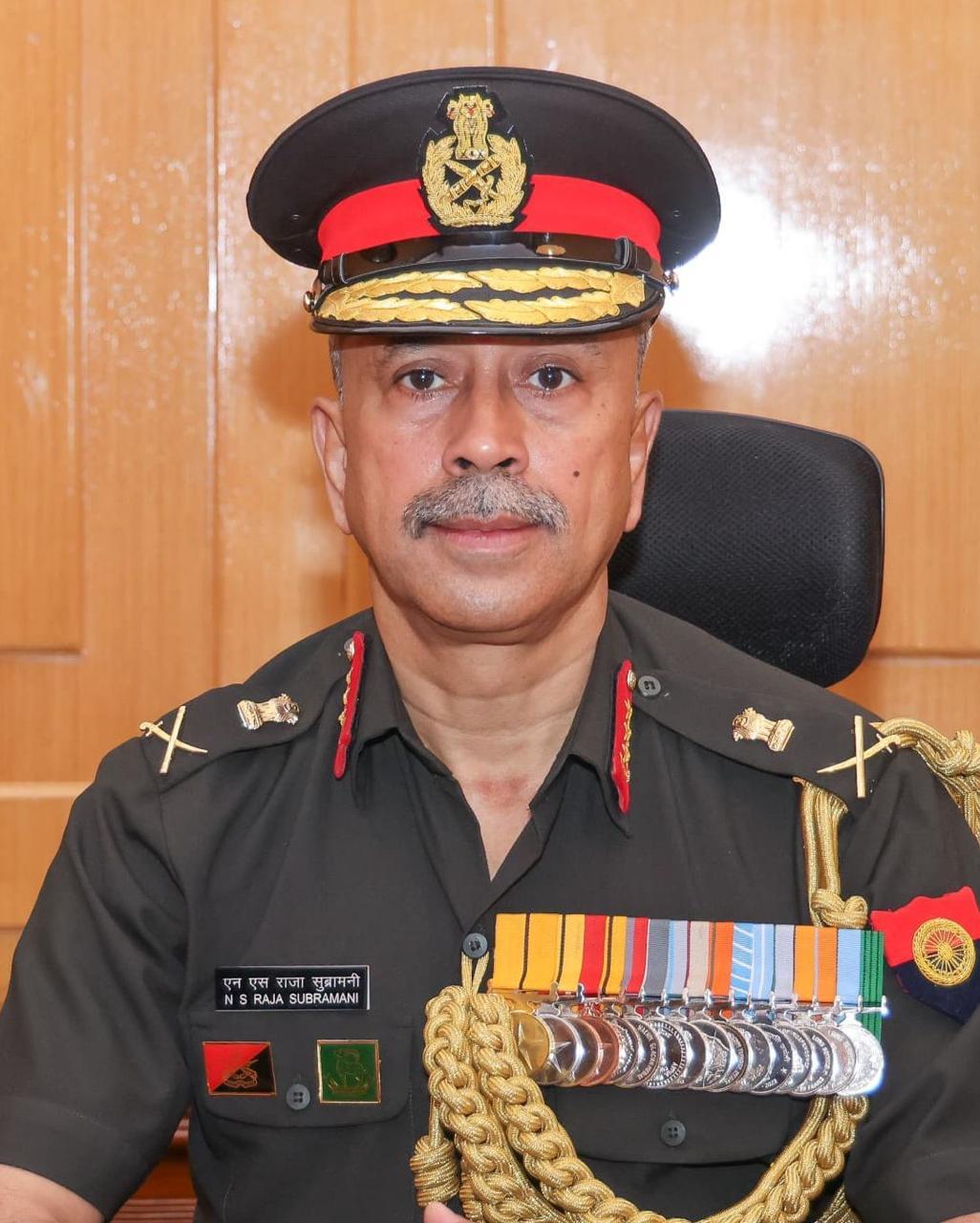
In a significant transition within India’s top military echelons, the Government of India has appointed Lieutenant General NS Raja Subramani as the next Chief of Defence Staff (CDS). Set to succeed General Anil Chauhan on May 30, 2026, Lt Gen Subramani brings a wealth of strategic experience to a role designed to revolutionize the Indian Armed Forces through integration and modernization.
About Lt Gen NS Raja Subramani
Lieutenant General NS Raja Subramani is a distinguished officer with a career spanning over four decades. Commissioned into the 8th Battalion of the Garhwal Rifles in December 1985, his trajectory reflects a blend of operational command and high-level strategic planning.
- Educational Excellence: An alumnus of the National Defence Academy (NDA) and Indian Military Academy (IMA), he has pursued advanced studies at the Joint Services Command Staff College (UK) and the National Defence College. His academic credentials include a Master’s Degree from King’s College London and an M.Phil in Defence Studies.
- Strategic Experience: Before his appointment as CDS, he served as the Military Adviser in the National Security Council Secretariat (NSCS) starting in September 2025, providing him with a holistic view of India's national security architecture.
Understanding the CDS: Role and Institutional Framework
The Chief of Defence Staff is the highest-ranking uniformed officer in the Indian Armed Forces, acting as a bridge between the political leadership and the military. The CDS holds three primary concurrent roles:
- Principal Military Adviser: Provides single-point military advice to the Union Defence Minister on all tri-services matters.
- Permanent Chairman of the Chiefs of Staff Committee (COSC): Leads the committee comprising the heads of the Army, Navy, and Air Force to ensure functional harmony.
- Secretary of the Department of Military Affairs (DMA): Heads a dedicated department within the Ministry of Defence created to handle military-specific administrative and structural tasks.
Historical Context:
The necessity for a CDS emerged from the lessons of the 1999 Kargil War. The Kargil Review Committee, led by K. Subrahmanyam, highlighted critical gaps in inter-service coordination. While a Group of Ministers (GoM) echoed the recommendation for a CDS in 2001, political and bureaucratic hurdles delayed the appointment for nearly 20 years.
The post was finally institutionalized on December 24, 2019, with General Bipin Rawat taking charge as India’s first CDS on December 31, 2019.
Mandate and Key Functions
The overarching objective of the CDS is to foster "Jointness"—a state where the three services operate as a single cohesive unit rather than independent entities. Key responsibilities include:
- Theatre Commands: The CDS is the primary driver behind the creation of Integrated Theatre Commands, which aim to unify the Army, Navy, and Air Force under a single operational commander for specific geographical regions.
- Unified Procurement and Planning: Rationalizing the acquisition of weapon systems to avoid duplication and ensure that the needs of all three services are met through a common budgetary framework.
- Indigenous Manufacturing: Strengthening the "Atmanirbhar Bharat" initiative by promoting Positive Indigenisation Lists and supporting domestic defence production.
- Joint Training and Logistics: Establishing common doctrines, joint training facilities, and integrated logistics nodes to optimize resource utilization and manpower.