
Cell Broadcast System (CBS)
- 06 May 2026
In News:
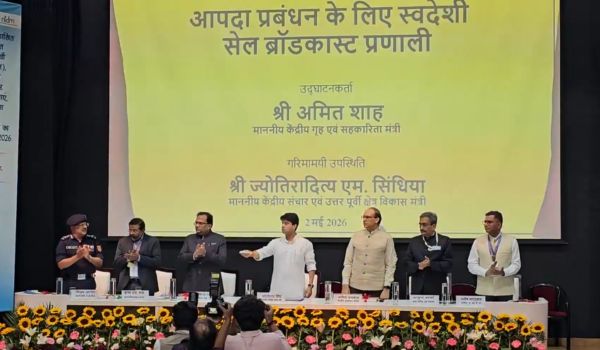
In a significant stride toward a "Disaster Resilient India," the Ministry of Communications recently launched the indigenously developed Cell Broadcast System (CBS). Developed by the Centre for Development of Telematics (C-DOT) in collaboration with the National Disaster Management Authority (NDMA), this technology marks a paradigm shift from a reactive to a proactive disaster management framework.
What is the Cell Broadcast System (CBS)?
The Cell Broadcast System is a mobile communication technology that allows the government to send critical, un-queued emergency alerts to all mobile devices within a specific geographical area. Unlike traditional Point-to-Point SMS, CBS is a one-to-many service.
- Developer: Centre for Development of Telematics (C-DOT).
- Protocol: Based on the Common Alerting Protocol (CAP), a global standard recommended by the International Telecommunication Union (ITU).
- Integration: It is integrated with the SACHET platform (India’s National Disaster Alert Platform), which consolidates alerts from various agencies like IMD, CWC, and INCOIS.
Core Mechanism: How it Works
CBS functions by broadcasting messages from a central platform to designated Base Transceiver Stations (BTS) or cell towers. These towers then transmit the alert to every active handset within their signal radius.
- No Queuing: Unlike SMS, which is delivered individually and can be delayed by network congestion, CBS messages are delivered to millions of users simultaneously.
- Network Independence: It does not require the recipient’s phone number or internet connectivity. As long as a phone is connected to a cell tower, it will receive the alert.
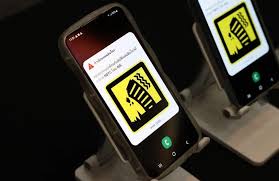
- Override Capabilities: The alerts bypass "Silent" or "Do Not Disturb" modes, appearing as a pop-up with a distinct loud siren and vibration to ensure immediate attention.
Key Features of the Indigenous CBS
|
Feature |
Deion |
|
Precise Geo-Targeting |
Alerts can be narrowed down to a single cell tower, a neighborhood, or scaled to an entire state. |
|
Multilingual Support |
Alerts are disseminated in English, Hindi, and local regional languages to ensure inclusivity. |
|
Accessibility |
Includes a "Read-Aloud" capability for the visually impaired and distinct tones for the hearing impaired. |
|
Device Compatibility |
Works across all generations of mobile technology, from 2G to 5G. |
|
Data Privacy |
Since it is a broadcast and does not require phone numbers, it does not track or store personal user data. |
CBS vs. Traditional SMS: A Comparative Analysis
- Bandwidth Efficiency: SMS uses the signaling channel which can crash during emergencies due to high traffic; CBS uses a dedicated broadcast channel.
- Speed: SMS is delivered in a "store and forward" manner (queuing), whereas CBS is "near real-time."
- Targeting: SMS targeting depends on the database of phone numbers; CBS targets anyone within the physical reach of a radio cell.
Significance for India’s Disaster Management
- Zero Lead Time Disasters: Highly effective for "now-casting" events like flash floods, lightning strikes, landslides, and gas leaks where every second counts.
- Technological Sovereignty: By developing this indigenously, India joins a select group of nations (like the USA and Japan) with homegrown emergency alert capabilities, reducing dependency on foreign vendors.
- Last-Mile Connectivity: Ensures that even the most remote populations with basic handsets receive life-saving information.
- Strengthening National Security: Provides a verified, official channel for government-to-citizen communication, which helps in curbing rumors and panic during crises.
Cell Broadcast System
- 03 Jul 2025
In News:
The Department of Telecommunications (DoT), in collaboration with the National Disaster Management Authority (NDMA), is piloting a Cell Broadcast (CB) system to enhance emergency communication and deliver real-time disaster alerts across India.
What is the Cell Broadcast System?
Cell Broadcasting is a telecommunication technology that enables mobile network operators to send geographically targeted text alerts to all mobile devices in a specific area. Unlike traditional SMS, CB messages are broadcast simultaneously to all phones within a cell tower’s coverage, ensuring instant delivery even during network congestion.
Key Features and Benefits:
- Instantaneous alerts during emergencies like earthquakes, tsunamis, lightning strikes, and industrial disasters.
- Indigenously developed by the Centre for Development of Telematics (C-DOT).
- Language inclusivity: Messages can be broadcast in multiple Indian languages.
- Particularly effective in high-density areas and during network overloads.
Integration with Existing Systems:
This CB system complements the existing Integrated Alert System (SACHET), which:
- Has delivered over 6,899 crore SMS alerts.
- Covers all 36 States and Union Territories.
- Supports 19 Indian languages.
- Is based on the Common Alerting Protocol (CAP) as recommended by the International Telecommunication Union (ITU).
Once fully deployed, the Cell Broadcast system will strengthen India’s disaster preparedness, ensuring wider, faster, and more inclusive dissemination of critical alerts.