
Borjuli Wetland
- 05 Jul 2026
In News:
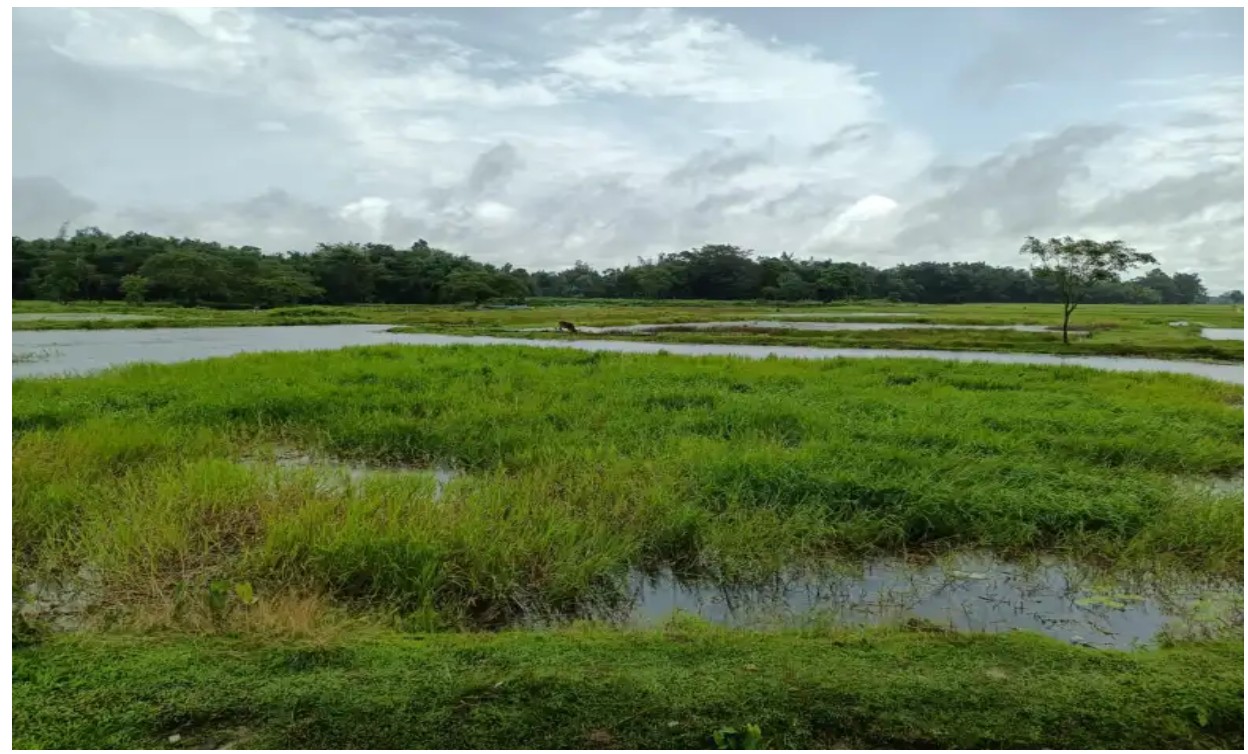
The Borjuli Wetland in Sonitpur district, Assam, has been notified as a Biodiversity Heritage Site (BHS) to conserve Oryza rufipogon, a wild rice species regarded as the evolutionary ancestor of cultivated rice.
Borjuli Wetland
- The Borjuli Wetland is a biologically rich freshwater marsh and swamp ecosystem located in the floodplains of the Brahmaputra River in Sonitpur district, Assam.
- Fed by seasonal monsoon runoff and local water channels, it functions as a natural gene pool for several native plant species, particularly wild rice.
- The wetland is globally significant because it harbours Oryza rufipogon, the wild progenitor of cultivated rice (Oryza sativa). Over centuries, this wild species has naturally evolved resistance to several pests, diseases, flooding and saline conditions, making it an invaluable genetic resource for developing climate-resilient and high-yielding rice varieties.
- The site serves as an in-situ conservation area, where species are protected within their natural habitat. The conservation programme is supported by the ICAR–National Bureau of Plant Genetic Resources (ICAR-NBPGR) and the Assam State Biodiversity Board, enabling long-term preservation of genetic diversity essential for food security and sustainable agriculture.
Biodiversity Heritage Sites (BHS)
A Biodiversity Heritage Site (BHS) is a unique and ecologically important area notified for conserving rich biological diversity, rare species, traditional crop varieties, wild relatives of cultivated plants, sacred groves, wetlands and other ecologically fragile ecosystems.
BHSs are notified by State Governments under Section 37 of the Biological Diversity Act, 2002, in consultation with local bodies and Biodiversity Management Committees (BMCs).
Unlike National Parks or Wildlife Sanctuaries, declaration as a Biodiversity Heritage Site does not extinguish community ownership or traditional livelihood rights. Instead, it promotes conservation through community participation while encouraging the sustainable use of biological resources.
The sites are technically guided by the National Biodiversity Authority (NBA) and managed through local Biodiversity Management Committees to ensure long-term ecological conservation.