
AMUR FALCONS
- 22 Sep 2024
In News:
An order issued by the District Magistrate directed the owners of air guns to deposit their hunting weapons at the offices of respective village authorities.
Amur Falcons: An Overview
Scientific Classification:
- Common Name: Amur Falcon
- Scientific Name: Falco amurensis
- Family: Falconidae
Physical Characteristics:
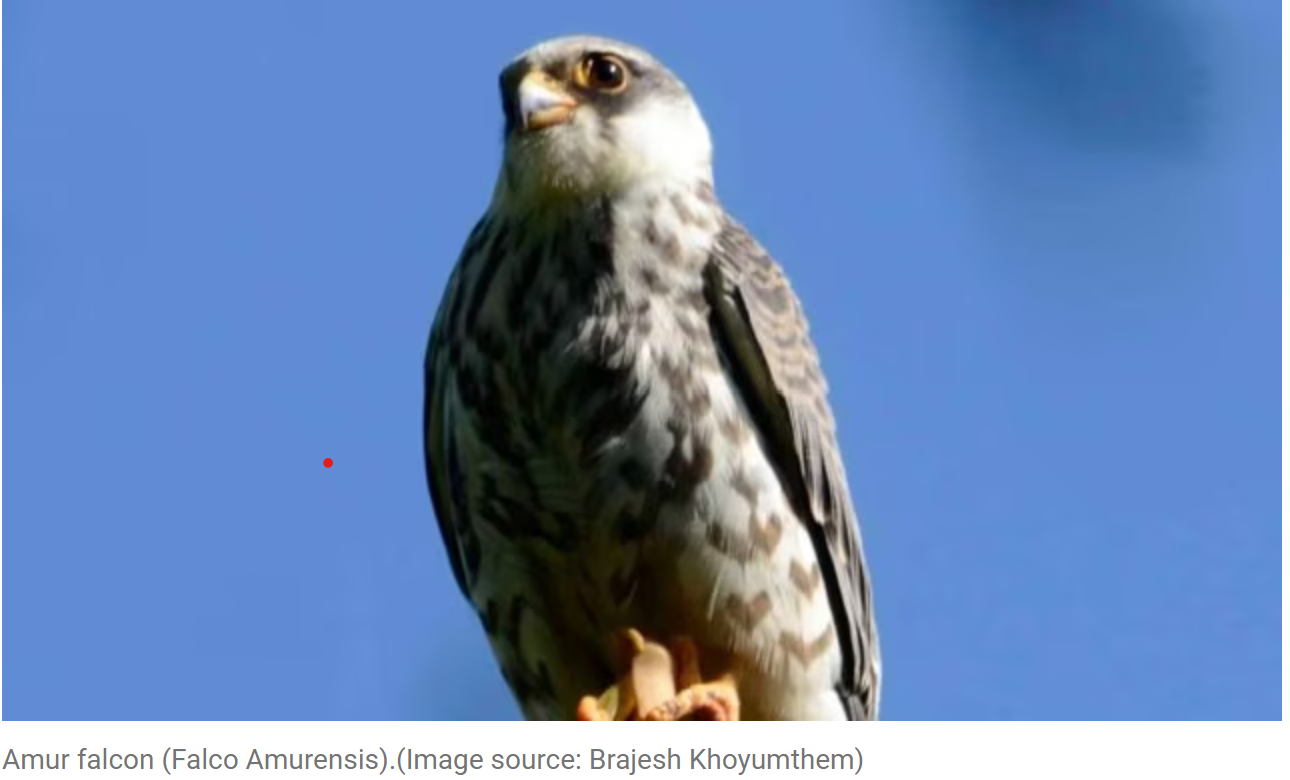
- Size: Small raptors, approximately 28-30 cm in length.
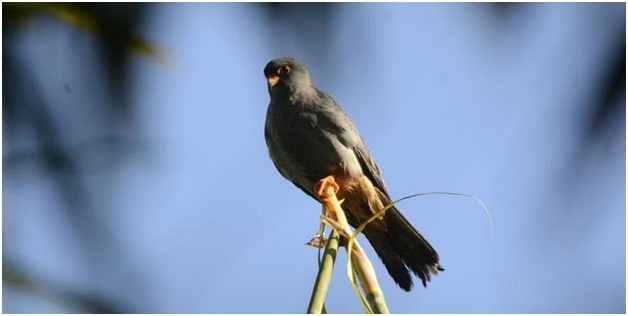
- Distinctive Features: Dark plumage with white wing linings; reddish-orange eyes and feet.
Migration Patterns:
- Breeding Grounds: Southeastern Russia and northern China.
- Migratory Route: They leave their breeding areas in autumn, traveling south to round the Himalayas, stopping in Nagaland, and then heading towards the Western Ghats before crossing the Indian Ocean to reach South Africa.
- Distance: These falcons undertake an incredible journey of around 22,000 kilometers annually, making them one of the most remarkable long-distance migrants among raptors.
Diet:
- Primarily insectivorous, they also consume small vertebrates when available.
Conservation Status:
- IUCN Status: Least Concern
- Legal Protection:
- Wildlife Protection Act, 1972: Schedule IV
- Convention on Migratory Species (CMS): Appendix II
Recent Conservation Efforts:
- Ban in Manipur: The Tamenglong district administration has imposed a ban on hunting, catching, killing, and selling Amur falcons in preparation for their migratory arrival.
- Tagging Program: In 2016, radio transmitters were used to monitor their migration routes.
- Awareness Initiatives: An annual ‘Amur Falcon Festival’ in Tamenglong district promotes awareness and celebrates these migratory birds.
Threats:
- Amur falcons face various threats including habitat loss, hunting, and illegal trapping.
Cultural Significance:
- Locally known as ‘Kahuaipuina’ in Manipur and ‘Molulem’ in Nagaland, these birds hold ecological and cultural significance, particularly in regions that serve as critical stopover points during migration.
Summary
The Amur falcon is a small but remarkable migratory raptor known for its long-distance travels from its breeding grounds in Asia to Africa. Conservation efforts in India, particularly in the Tamenglong district of Manipur, aim to protect these birds from hunting and habitat loss, ensuring their continued survival and highlighting their importance in the ecosystem.
Manipur to Conduct Census of Amur Ffalcon (The New Indian Express)
- 14 Oct 2023
Why in the News?
The Manipur Forest Department will conduct the first-ever Amur falcon census. This initiative in India is one of the several programs the agency is running to safeguard migrating birds.
About Amur Falcon:
- The Amur Falcon, a diminutive member of the falcon family locally known as Akhuipuina, predominantly frequents Manipur and Nagaland.
- Originating from southeastern Siberia and northern China, these birds embark on extensive migrations in vast formations to winter in Southern and East Africa, covering a one-way journey of approximately 20,000 km through India twice a year.
- In terms of conservation, the Amur Falcon is safeguarded by the Wildlife Protection Act of 1972, listed under Schedule IV.
- Hunting or possession of its meat is subject to legal repercussions, including imprisonment for up to three years, a fine of up to 25,000, or bonds.
- Initiating a conservation effort in 2018, the forest department employed radio tagging to study the birds' migratory routes.
- As per the International Union for Conservation of Nature (IUCN), the Amur Falcon is categorized as "Least Concern."
- Despite this, the species faces threats such as illegal trapping and killing during migration, along with habitat loss due to agricultural practices and land reclamation.