
‘Lion’ Species Spotlight Programme
- 16 May 2026
In News:
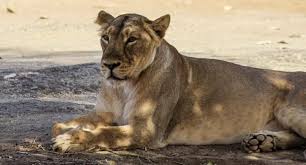
The Union Ministry of Environment, Forest and Climate Change (MoEFCC) inaugurated the ‘Lion’ Species Spotlight Programme at Sasan Gir, Gujarat. Serving as a crucial technical curtain-raiser ahead of the International Big Cat Alliance (IBCA) Summit, this forum highlights India's field leadership in protecting the Asiatic Lion (Panthera leo persica), a critical apex predator.
Biological Profile and Key Distinctive Characteristics
The Asiatic Lion is a genetically distinct subspecies and stands as the only wild lion population existing outside the African continent.
Morpho-Behavioral Distinctions
- Longitudinal Belly Fold: The most definitive physical trait of the Asiatic Lion is a prominent, longitudinal fold of skin running along its abdomen, which is highly rare or absent in African lions.
- Mane Density: Shorter and more moderate compared to African males, leaving the ears of the Asiatic male clearly visible.
- Size and Coloration: Slightly smaller than African lions (males: 160–190 kg; females: 110–120 kg). The fur ranges from ruddy-tawny to sandy or buff-grey, often with a distinctive silvery sheen.
- Social Structure: They live in smaller prides. Males exhibit more solitary or tightly paired bachelor behavior, associating with females primarily for mating or large kills.
Geographic Distribution and Population Dynamics
Spatial Matrix & The Greater Gir Landscape
- Current Abode: The Gir National Park and Wildlife Sanctuary in Gujarat’s Saurashtra region remains its exclusive primary natural habitat globally. The ecosystem consists of dry deciduous forests and open, thorny grassy scrublands.
- Range Expansion: Due to successful conservation and community protection, the population has expanded into the Greater Gir Landscape, covering adjacent human-dominated districts like Amreli, Bhavnagar, and Gir Somnath.
- The "Second Home" Insurance: To safeguard the species against localized, catastrophic threats like forest fires or viral epidemics (e.g., Canine Distemper Virus), the government is developing the Barda Wildlife Sanctuary as a second home for natural dispersal.
Demographic Trends
- According to the 16th Lion Population Estimation, the wild population has successfully grown to 891 individuals, marking a robust 32% population increase over the previous census baseline.
Statutory Protection and Legal Safeguards
The Asiatic Lion is protected under the highest tiers of domestic and international wildlife legislation:
- Wild Life (Protection) Act, 1972: Categorized under Schedule I, granting it maximum statutory protection against hunting, poaching, and habitat alteration.
- IUCN Red List of Threatened Species: Listed globally as Vulnerable, reflecting its status as a single, geographically restricted wild population.
- CITES: Classified under Appendix I, strictly prohibiting any commercial international trade of the species, its body parts, or derivatives.
Strategic Conservation Paradigms: Project Lion
Launched in 2020, ‘Project Lion’ focuses on a landscape-based conservation strategy divided into three core operational areas:
- Habitat Restoration: Systematically clearing invasive alien plant species from the dry deciduous scrublands and managing local water holes to strengthen the wild ungulate prey base.
- Eco-Medicine & Wildlife Health: Establishing state-of-the-art veterinary centers, mobile health vans, and strict disease surveillance networks to prevent epidemiological shocks.
- Community-Led Conservation: Investing in local communities through programs like the Gadhvi network (local wildlife trackers) to foster human-wildlife co-existence, minimize retaliatory conflicts, and secure traditional migratory corridors.
Ecological Significance
As an apex predator, the Asiatic Lion is vital for regulating the population density of large herbivores (nilgai, sambar, chital). By preventing overgrazing, these big cats maintain the health of the Saurashtra dry deciduous forest ecosystem, protect native forest cover, and secure localized soil and water tables.