
India Adds Two New Ramsar Sites
- 01 Feb 2026
In News:
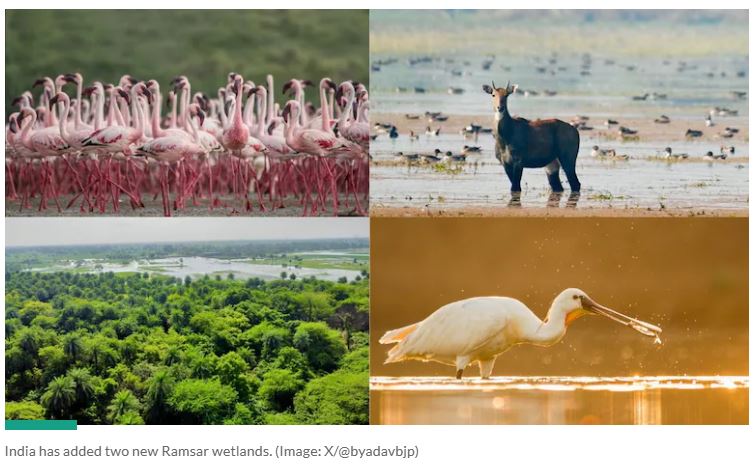
India has recently expanded its network of internationally recognised wetlands by designating two additional sites as Ramsar wetlands - the Patna Bird Sanctuary in Uttar Pradesh and Chhari-Dhand in Gujarat ahead of World Wetlands Day observed on 2 February. This brings the total number of Ramsar Sites in the country to 98, reflecting a significant increase from 26 sites in 2014 and underscoring India's growing commitment to wetland protection and biodiversity conservation.
Ramsar Convention: An Overview
The Ramsar Convention is an international treaty signed in 1971 in Ramsar, Iran, aimed at conserving wetlands and promoting their sustainable use. India became a signatory in 1982 and has progressively expanded its list of designated wetlands that meet criteria for ecological significance. Designation as a Ramsar Site recognises a wetland’s importance for biodiversity, water security, climate resilience, and ecosystem services.
Newly Designated Ramsar Sites
1. Patna Bird Sanctuary (Uttar Pradesh)
- Location & Ecosystem: Situated in eastern Uttar Pradesh, the sanctuary comprises freshwater marshes, grasslands, and woodland patches, embedded within an agricultural landscape.
- Biodiversity Value: The mosaic of habitats supports rich biodiversity and has been recognised as an Important Bird and Biodiversity Area (IBA) by BirdLife International.
- Flora and Fauna:
- Around 178 species of birds, including migratory and resident species
- Approximately 252 species of plants
- Ecological Significance: The wetland acts as a critical refuge for avifauna, contributing to regional ecological stability and supporting ecosystem services such as groundwater recharge.
2. Chhari-Dhand Wetland (Gujarat)
- Location & Nature: Located in the Kutch region of Gujarat, Chhari-Dhand is a seasonal saline wetland, positioned between the Banni grasslands and the salt flats of Kutch.
- Avifaunal Importance: It serves as an important wintering and stopover site for migratory waterfowl.
- Key Species Supported:
- Critically endangered sociable lapwing
- Vulnerable common pochard
- Annual congregation of common cranes (Grus grus)
- Ecological Role: The wetland sustains unique saline ecosystem biodiversity and supports pastoral and local livelihoods indirectly.