
UNESCO Intergovernmental Committee for the Safeguarding of Intangible Cultural Heritage
- 11 Dec 2025
In News:
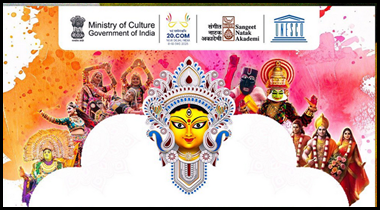
- India is hosting the 20th session of the UNESCO Intergovernmental Committee for the Safeguarding of the Intangible Cultural Heritage (ICH) in New Delhi. This is the first time India is hosting a session of this Committee.
- The session is being held at the Red Fort complex, symbolically bringing together India’s tangible and intangible heritage. The Ministry of Culture and Sangeet Natak Akademi are the nodal agencies organising the event.
What is Intangible Cultural Heritage (ICH)?
As defined by UNESCO, Intangible Cultural Heritage includes:Practices, knowledge, skills, expressions, objects, and cultural spaces that communities recognise as part of their cultural identity.
These traditions are:
- Transmitted across generations
- Continuously recreated
- Closely linked to identity, diversity, and creativity
Examples include oral traditions, performing arts, rituals, festivals, traditional craftsmanship, and indigenous knowledge systems.
UNESCO 2003 Convention on ICH
The Convention for the Safeguarding of the Intangible Cultural Heritage was adopted by UNESCO in 2003 at its General Conference in Paris.
Objectives of the Convention:
- Safeguard intangible cultural heritage
- Ensure respect for communities and practitioners
- Raise awareness at local, national, and global levels
- Promote international cooperation and assistance
India ratified the Convention in 2005, marking its formal commitment to protecting living traditions.
Intergovernmental Committee for Safeguarding of ICH
The Intergovernmental Committee is the key body that implements the 2003 Convention.
Composition:
- 24 Member States
- Elected for 4-year terms by the General Assembly of States Parties
India is currently a member of the Committee (2022–2026).
Key Functions:
- Monitor implementation of the Convention
- Recommend safeguarding measures and best practices
- Prepare plans for using the Intangible Cultural Heritage Fund
- Examine periodic reports from States Parties
- Decide on:
- Inscription of elements on UNESCO’s ICH Lists
- Granting international assistance
Significance of Intangible Cultural Heritage
- Cultural Identity & Continuity:ICH strengthens community identity and connects generations.
- Social Cohesion:Shared traditions promote harmony and mutual respect in diverse societies.
- Livelihoods & Economy:Crafts, performing arts, and festivals support artisans, rural economies, and cultural tourism.
- Traditional Knowledge Systems:Indigenous ecological knowledge, healing practices, and agricultural traditions offer sustainable solutions relevant to climate change and biodiversity.
- Education & Intergenerational Learning:ICH carries local histories, values, and skills that enrich learning and cultural literacy.
- Cultural Diplomacy & Soft Power:Elements such as yoga, classical arts, festivals, and crafts enhance India’s global cultural presence.
India’s Role and Contributions
India has played an active role in global ICH safeguarding:
- Served on the Intergovernmental Committee for multiple terms
- Developed national-level documentation, inventories, and safeguarding programmes
- Supports practitioners through schemes under the Ministry of Culture and initiatives of the Sangeet Natak Akademi
India has 15 elements inscribed on UNESCO’s Representative List of the Intangible Cultural Heritage of Humanity, covering performing arts, rituals, craftsmanship, and knowledge traditions.
Importance of Hosting the 20th Session
Hosting the session allows India to:
- Showcase its community-based safeguarding model
- Promote international cooperation and joint nominations
- Increase global visibility of lesser-known traditions
- Strengthen cultural diplomacy and soft power
- Link heritage with sustainable development, livelihoods, and tourism