
Western Tragopan
- 14 Dec 2025
In News:
Recent studies indicate that suitable habitats for the Western Tragopan exist in Jammu & Kashmir, but habitat fragmentation and human disturbance continue to threaten the species. Meanwhile, a captivebreeding programme at Sarahan Pheasantry (Himachal Pradesh) has helped stabilise its numbers.
About Western Tragopan
- Common Name: Western Tragopan
- Scientific Name:Tragopan melanocephalus
- Also known as Jujurana or “King of Birds”
- State Bird of Himachal Pradesh
- One of the world’s rarest pheasants
Habitat & Distribution
- Found in the Western Himalayas at elevations of 2,400–3,600 metres
- Prefers:
- Moist temperate forests
- Dense undergrowth
- Ringal bamboo thickets
- Rhododendron shrubs
- Conifer forests
Key Strongholds
- Great Himalayan National Park (Himachal Pradesh)
- Kazinag and Limber areas in Jammu & Kashmir
- Pockets in Uttarakhand and northern Pakistan
Populations now survive only in small, fragmented pockets.
Population Status
- IUCN estimates 3,000–9,500 mature individuals remain
- Entire global population forms a single fragile sub-population
- Around a quarter of the population occurs in the Western Himalayas and northern Pakistan
Key Characteristics
Male
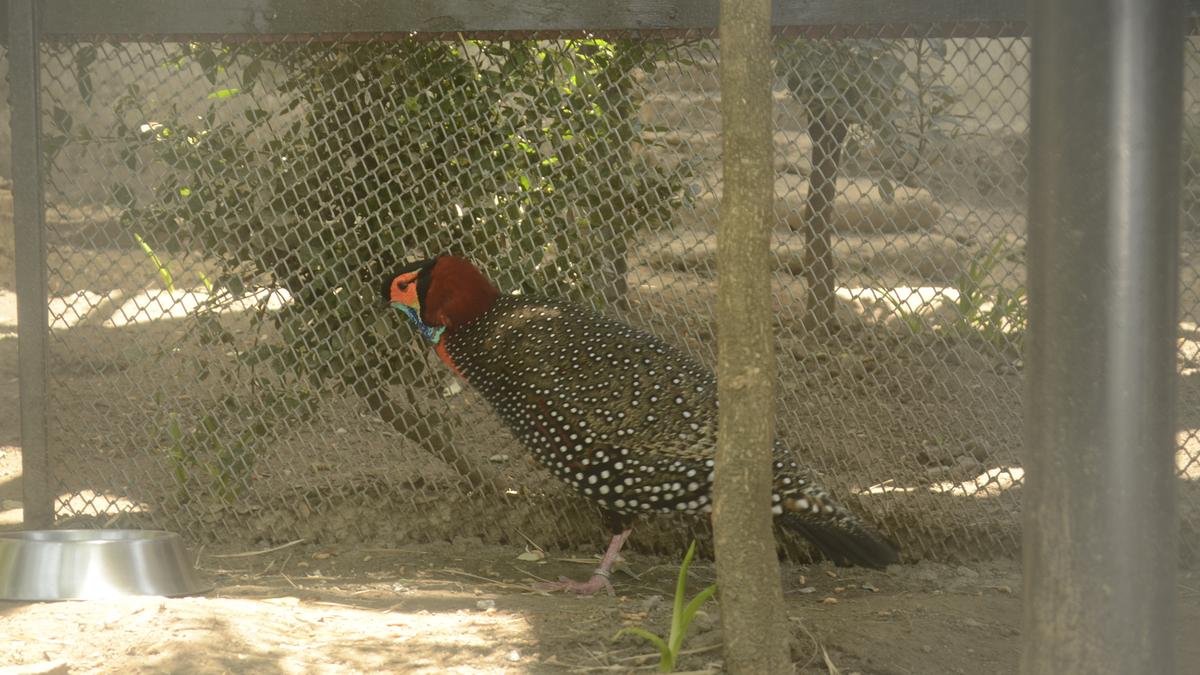
- Velvet-black head
- Bright crimson breast
- White-spotted body
- Distinctive blue and orange facial wattles used in courtship displays
Female
- Smaller, brown and camouflaged
- Immature males resemble females
Behaviour
- Ground-dwelling and shy
- Most active at dawn and dusk
- Diet includes berries, seeds, buds, shoots, and insects
Breeding
- Breeding season: May–June
- Lays 3–5 eggs in well-hidden nests
Threats
- Habitat loss due to forest degradation
- Fragmentation of temperate forests
- Human disturbance (grazing, tourism, infrastructure)
- Hunting and poaching
These pressures reduce safe breeding areas and isolate populations.
Conservation Status
- Listed as Vulnerable on the International Union for Conservation of Nature (IUCN) Red List
- Recognised as a flagship and indicator species of high-altitude forest ecosystem health
Conservation Efforts
- Captive Breeding: The Sarahan Pheasantry in Himachal Pradesh has successfully bred 40+ Western Tragopans, creating an insurance population against extinction.
- Habitat Protection: Protected areas like Great Himalayan National Park and forest reserves in J&K are critical for wild populations.
However, reintroduction into natural habitats remains challenging due to ongoing habitat disturbance.