
Horn-Eyed Ghost Crab
- 10 Dec 2025
In News:
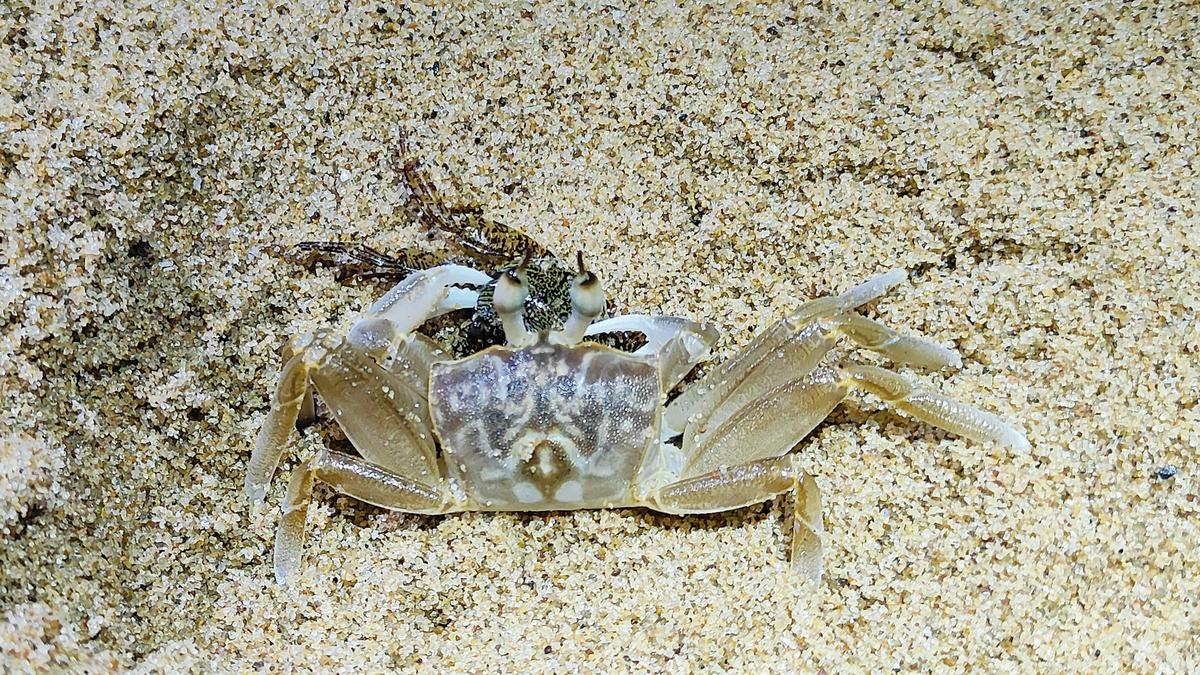
Researchers recently documented unusual predatory behaviour of a horn-eyed ghost crab at Rushikonda Beach, Visakhapatnam, drawing attention to the ecological role of ghost crabs in coastal ecosystems.
Taxonomy
- Belongs to the genus Ocypode
- Commonly known as ghost crabs due to their pale colour and rapid, almost “vanishing” movements on beaches
Habitat
- Found primarily in sandy intertidal zones
- Builds deep burrows above the high-tide line on beaches
- Most active during dawn, dusk, and night, avoiding daytime heat
Distribution
- Occurs widely across the Indo-Pacific region
- Range extends from the east coast of Africa to the Philippines, and from Japan to the Great Barrier Reef
- Absent in the Red Sea
- Six species of ghost crabs have been recorded along the Indian coastline
Physical and Behavioural Features
- Pale, sand-coloured body helps in camouflage against predators
- Possesses long legs adapted for fast sideways running
- The term “horn-eyed” refers to eye stalks that may appear elongated or horn-like
- Known for agile hunting and burrow-dwelling behaviour
Feeding Habits
Although traditionally considered scavengers, recent observations show active predation.
Diet includes:
- Clams
- Snails
- Marine worms
- Isopods
- Shrimps
- Insects
- Other crabs, including small hermit crabs
This highlights their role not just as scavengers but also as important predators in beach ecosystems.
Ecological Role
Horn-eyed ghost crabs are considered:
- Keystone species in sandy shore ecosystems
- Bio-indicators of coastal health
Why important?
- Their burrowing activity aerates sand and influences sediment structure
- Their feeding controls populations of smaller invertebrates
- Healthy ghost crab populations generally indicate less-disturbed beaches
Threats
Ghost crabs are sensitive to environmental disturbances. Major threats include:
- Coastal pollution
- Beach tourism and human trampling
- Changes in sediment patterns due to erosion or construction
- Rising sea temperatures
- Altered tidal cycles due to climate change
Such pressures may force them to shift habitats in search of food and suitable burrowing sites.