
African Penguin
- 13 Dec 2025
In News:
A recent scientific study reported that over 60,000 African penguins died of starvation between 2004 and 2011 after a sharp collapse in sardine stocks off southern Africa. The die-off was particularly severe around Dassen Island and Robben Island.
About the African Penguin
- Common Name: African Penguin
- Scientific Name:Spheniscus demersus
- One of the 18 penguin species globally
- Among the smallest penguins and strong swimmers
- Flightless, adapted to marine life
Distinctive Features
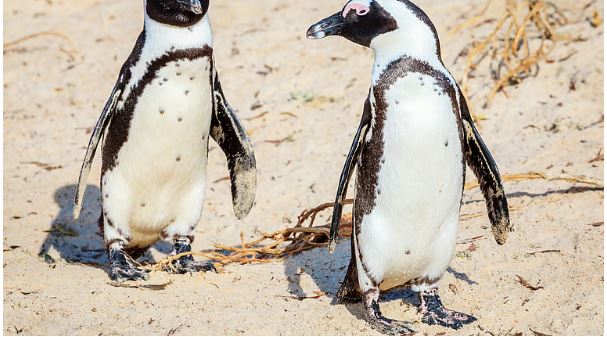
- Black facial mask and unique black chest-spot patterns (like fingerprints)
- Pink glands above the eyes help regulate body temperature (become pinker when hot)
Habitat & Distribution
- Found along the coasts of Namibia and South Africa
- Lives on sandy beaches and rocky shores, unlike Antarctic penguins
- Usually forages within 40 km of the shore
- Comes ashore for breeding, moulting, and resting
Breeding & Life Cycle
- Traditionally breeds in burrows dug into guano, which protect from heat
- Average lifespan: ~20 years in the wild
Annual Moult (Critical Survival Phase)
- Occurs once a year and lasts about 21 days
- Penguins remain on land and cannot enter the sea to feed
- They must build fat reserves before moulting
- During moult, they can lose nearly 50% of body mass
- After moulting, they need reliable food supply to regain strength
What Caused the Mass Starvation?
The study linked penguin deaths to collapse of sardine populations, their primary prey.
Key Findings
- Nearly 62,000 penguins died between 2004–2011
- Sardine stocks fell to ~25% below peak abundance
- Fishing pressure was extremely high, especially west of Cape Agulhas
- Exploitation rates peaked at 80% in 2006
- Large sardine catches occurred close to penguin colonies, reducing food access
Impact on Penguins
- Birds failed to build fat reserves before moult
- Post-moult weakened condition reduced their ability to catch prey
- Increased mortality due to starvation
Role of Climate Change
- Climate change is altering ocean temperatures and currents
- This affects distribution and availability of sardines
- Combined effect of overfishing + climate change intensifies food scarcity
Conservation Status
- Listed as Critically Endangered by the International Union for Conservation of Nature (IUCN)
- Reclassified from Endangered to Critically Endangered in 2024
Conservation Concerns & Measures Needed
- Need for better fisheries management near penguin foraging areas
- Protection of key feeding grounds
- Long-term recovery of sardine biomass
- International conservation efforts under agreements like the African-Eurasian Migratory Waterbirds Agreement