
UDISE 2025–26 & Performance Grading Index (PGI) 2.0
- 09 Jul 2026
In News:
The Ministry of Education has released the UDISE 2025–26 Report and the Performance Grading Index (PGI) 2.0 for States/UTs. The reports indicate improvements in dropout rates, student retention, teacher strength and school infrastructure, while highlighting persistent challenges in learning outcomes and inter-state disparities.
About UDISE and PGI
The Unified District Information System for Education Plus (UDISE ) is the Government of India's official digital database for school education, maintained by the Ministry of Education. It provides comprehensive data on school infrastructure, enrolment, teachers, facilities and learning environment based on information uploaded by schools with valid UDISE codes.
The Performance Grading Index (PGI) 2.0, developed by the Department of School Education & Literacy (DoSEL), evaluates the performance of States and Union Territories across six domains—Learning Outcomes, Access, Infrastructure & Facilities, Equity, Governance Process, and Teacher Education & Training—through a 10-tier grading framework.
Key Findings of UDISE 2025–26
The report records encouraging progress in school education. Dropout rates declined from 2.3% to 1.8% at the preparatory stage and from 8.2% to 7.0% at the secondary stage, reflecting improved access to schools and targeted interventions. However, Ladakh, Gujarat, Chhattisgarh and Karnataka reported the highest secondary-level dropout rates.
Student retention also improved, with middle-level retention increasing to 83.7% and secondary-level retention rising to 51.9%. Despite this progress, only about half of the students entering Class I reach Class XII, indicating significant attrition during higher schooling.
The Gross Enrolment Ratio (GER) at the secondary level increased from 68.5% to 71.7%, suggesting greater participation in secondary education.
Teacher availability improved significantly, with the total number of school teachers crossing 1.02 crore for the first time. Women constitute 54.9% of the teaching workforce. Improved teacher availability has also resulted in favourablePupil-Teacher Ratios (PTR) of 10:1 at the foundational stage, 12:1 at the preparatory stage, 17:1 at the middle stage and 21:1 at the secondary stage, all well within the NEP 2020 benchmark of 30:1.
School infrastructure also showed progress. Computer access increased to 69.9%, internet connectivity to 67.4%, while access to drinking water, toilets and electricity approached universal coverage. Accessibility for children with disabilities improved, with 58.2% of schools now equipped with ramps and handrails. However, the availability of playgrounds declined slightly to 81.9%, raising concerns regarding physical education.
Key Findings of PGI 2.0
The PGI 2025–26 reveals that no State or Union Territory achieved any of the top three performance grades, indicating that substantial improvements are still required in school education.
Chandigarh emerged as the best performer by securing the 'Uttam-3' grade. Delhi, Kerala, Punjab, and Dadra & Nagar Haveli & Daman & Diu were placed in the 'Prachesta-1' category.
Among individual domains, Punjab led in Learning Outcomes, Kerala topped Access and jointly led Teacher Education & Training with Lakshadweep, while Tamil Nadu ranked highest in Equity.
At the lower end of the rankings, Uttar Pradesh, Bihar, West Bengal, Madhya Pradesh, Jharkhand, Jammu & Kashmir and several North-Eastern States remained in the aspirational category. The gap between the highest scorer (Chandigarh – 766) and the lowest (Meghalaya – 525.7) narrowed to 31.4%, compared to 51% in 2017–18, indicating gradual reduction in regional disparities.
Significance
The reports highlight steady progress in improving school access, teacher availability, digital infrastructure and student retention, reflecting the growing emphasis on data-driven educational governance. At the same time, persistent challenges such as learning outcomes, secondary-level attrition, regional disparities and uneven educational quality underscore the need for sustained policy attention to achieve the objectives of the National Education Policy (NEP) 2020.
Way Forward
Future reforms should focus on improving foundational learning, reducing secondary-level dropout, strengthening teacher quality, bridging regional disparities and enhancing digital as well as sports infrastructure. Greater use of UDISE and PGI data for evidence-based planning can help States design targeted interventions and improve educational outcomes.
NITI Aayog Report on the School Education System in India
- 08 May 2026
In News:
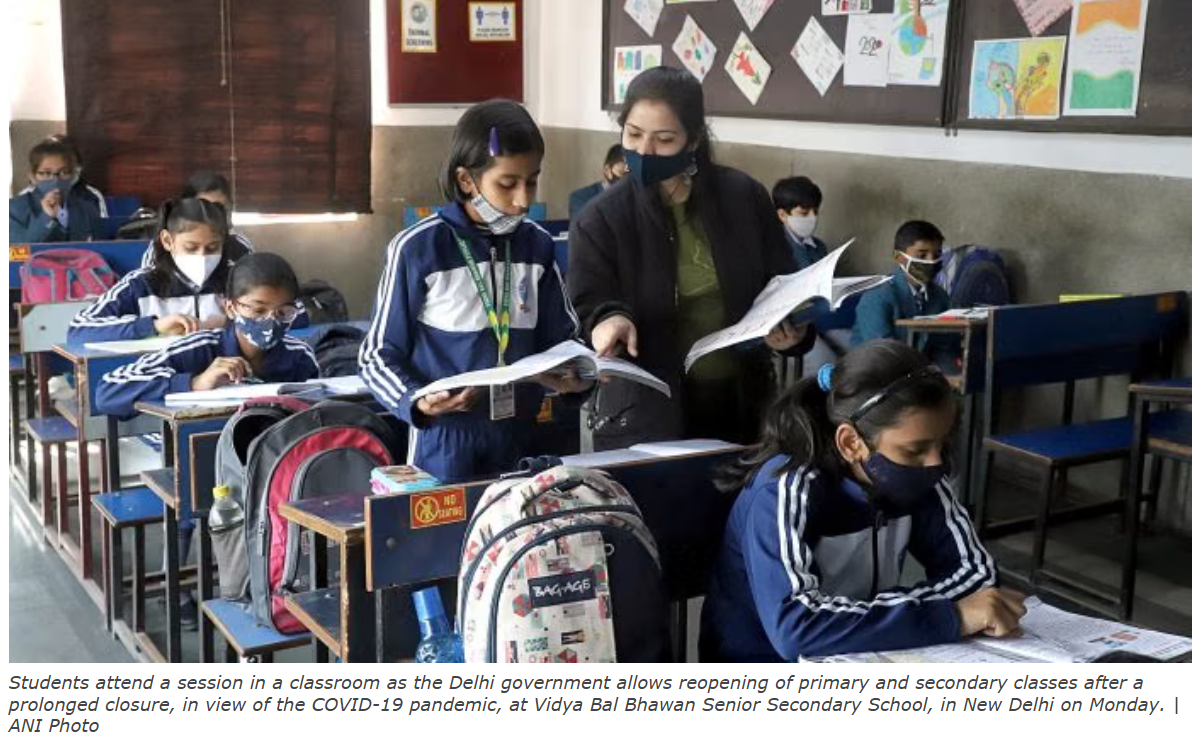
NITI Aayog has recently unveiled a landmark policy report titled ‘School Education System in India: Temporal Analysis and Policy Roadmap for Quality Enhancement’. Analyzing a decade of data (2014-15 to 2024-25), the report provides a strategic assessment of the world’s largest education system. As India moves toward its Viksit Bharat @2047 vision, the document serves as both a scorecard and a blueprint for achieving equity and excellence in learning.
Landscape and Scale of the Indian School System
India manages an unprecedented educational infrastructure, characterized by its massive reach and diverse management.
- Scale and Reach: The system oversees 14.71 lakh schools catering to over 24.69 crore students, supported by a dedicated workforce of 1.01 crore teachers.
- Dominance of the State: Government schools form the backbone of the system, accounting for 68.1% of all institutions and serving nearly half (49.2%) of the total student population.
- Enrolment Trends: While elementary enrolment has achieved near-universal status, the Gross Enrolment Ratio (GER) for higher secondary education remains a challenge at 58.4%.
Evolution of the Educational Framework
The journey of Indian education has transitioned from ancient traditionalism to rights-based modernism:
- Foundational Milestones: Early post-independence initiatives like the Mudaliar Commission (1952) and the Kothari Commission (1964-66) laid the constitutional groundwork for free and universal education.
- Rights-Based Inclusion: The Sarva Shiksha Abhiyan (2001) and the landmark Right to Education (RTE) Act (2009) transformed elementary education into a justiciable right.
- Modern Integration: In 2018, Samagra Shiksha unified the framework from pre-primary to senior secondary. Currently, the National Education Policy (NEP) 2020 has introduced a 5 3 3 4 structure, aligning pedagogy with cognitive developmental stages.
Key Achievements of the Last Decade
The period between 2014 and 2025 has seen a shift from rapid physical expansion to resource optimization and digital growth.
- Infrastructure Strengthening: Basic amenities have seen a surge. For instance, functional electricity in schools jumped from 55.96% in 2014-15 to 91.9% in 2024-25.
- Digital Leap: Internet connectivity has expanded dramatically, rising from a mere 8.05% to 63.5% over the decade.
- Universal Elementary Access: National GER stands strong at 90.9% for primary and 90.3% for upper primary levels.
- Consolidation Strategy: The system is moving toward efficiency. The total number of schools decreased from 15.58 lakh to 14.71 lakh through school rationalization and merging under-enrolled units to optimize teacher deployment and resources.
Critical Challenges and Systemic Gaps
Despite infrastructural gains, the report flags several "second-generation" challenges that hinder quality outcomes.
- The Pyramidal Structure Gap: There is a significant scarcity of higher-grade schools. While there are 7.3 lakh primary schools, there are only 1.64 lakh higher secondary schools, creating a bottleneck that hinders student transition.
- High Secondary Dropouts: The gains in primary retention dissipate at later stages. The secondary dropout rate stands at 11.5%, contrasting sharply with the primary rate of 0.3%.
- The Learning Crisis: Foundational mastery remains elusive. According to ASER 2024, nearly 50% of Grade 5 children in rural India struggle to read a Grade 2 level text, indicating a system still struggling with rote learning over conceptual understanding.
- Inefficient "Small Schools": More than one-third of schools have fewer than 50 students, leading to administrative and economic inefficiencies.
- Digital Inequity: Tech integration is geographically skewed; while 95% of schools in Chandigarh have smart classrooms, the figure drops to less than 5% in Meghalaya.
Strategic Recommendations for Quality Enhancement
NITI Aayog proposes a multifaceted roadmap to address these hurdles:
- Structural Reform: Shift toward Composite Schools (Grades 1-12) to ensure students can complete their entire schooling in a single campus, reducing transition dropouts.
- Independent Oversight: Establish State School Standards Authorities (SSSAs) to independently regulate safety, infrastructure, and learning quality.
- Pedagogical Shift: Adopt competency-based assessments and the "Teaching at the Right Level" approach to ensure foundational literacy and numeracy (FLN) before moving to advanced topics.
- Teacher Empowerment: Move beyond general recruitment to specialized subject training and structured career progression paths.
- Inclusive Technology: Expand broadcast-based learning and digital tools specifically tailored for children with special needs and migrant populations.
Conclusion
India has successfully built the physical "access" to education, but the focus must now pivot decisively toward "success" in learning. Transitioning from a pyramidal, fragmented structure to a consolidated, quality-driven framework is essential. The NITI Aayog roadmap emphasizes that only by bridging the gap between enrollment and actual learning can India develop the human capital necessary to realize the dream of a developed nation by 2047.
CAPF (General Administration) Bill, 2026
- 31 Mar 2026
In News:
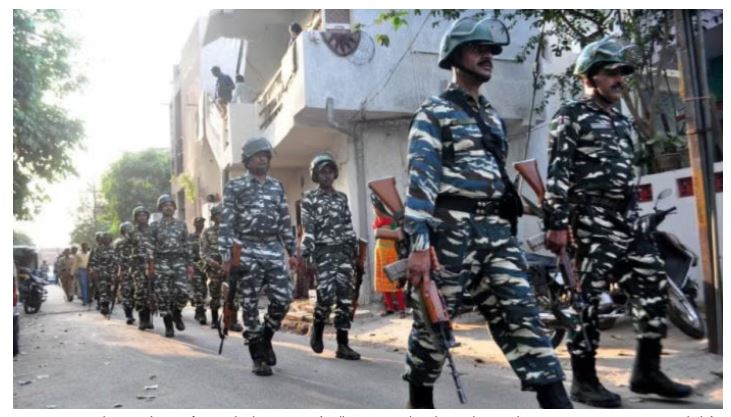
The Union Government recently introduced the Central Armed Police Forces (General Administration) Bill, 2026 in the Rajya Sabha. This legislative move seeks to codify the leadership structure of India’s primary internal security forces, specifically institutionalizing the role of Indian Police Service (IPS) officers in commanding these organizations.
Objectives and Scope of the Bill
The Bill provides a formal regulatory framework for the recruitment, promotion, and service conditions of Group ‘A’ General Duty Officers (GAGDOs) and other personnel within the CAPFs. It aims to provide "legislative clarity" to the long-standing practice of IPS leadership, ensuring a structural link between the Union and the States.
Forces Covered:
- Central Reserve Police Force (CRPF)
- Border Security Force (BSF)
- Central Industrial Security Force (CISF)
- Indo-Tibetan Border Police (ITBP)
- Sashastra Seema Bal (SSB)
Key Features: The "IPS Earmarking"
The most significant aspect of the Bill is the explicit reservation of senior leadership positions for IPS officers on deputation, overriding previous judicial observations:
- Director General (DG) & Special DG: 100% reserved for IPS.
- Additional Director General (ADG): Minimum 67% reserved for IPS.
- Inspector General (IG): 50% reserved for IPS.
- Rule-Making Supremacy: The Central Government is empowered to frame rules for recruitment and service conditions, with a "notwithstanding clause" that overrides existing laws or prior court orders.
- Protection of Benefits: It ensures that all existing financial benefits granted to Group ‘A’ cadre officers (prior to the Act) are protected.
The Rationale: Why These Changes?
The government justifies the Bill based on federal synergy and operational ethos:
- Inter-Agency Coordination: IPS officers serve as a vital bridge between the Union’s armed forces and State police departments. Since senior State posts (ADGs/DGs) are held by the IPS, their presence in CAPFs facilitates seamless coordination during internal security crises.
- Maintaining "Civil Power" Character: As noted in the Sanjay Prakash (2025) case, the IPS presence is seen as vital to maintaining the functional ethos of CAPFs as forces that "assist civil power" rather than purely military entities.
- National Integration: Reflecting Sardar Patel’s vision, the IPS provides a unifying thread across the federal structure, bringing diverse field experience from various States to national border and industrial security.
- Legislative Supremacy: The Bill asserts that service policy is the domain of the Executive and Legislature, rectifying what the government perceives as "judicial overreach" regarding deputation quotas.
Challenges and Critical Concerns
The Bill has met with significant criticism, primarily from the CAPF cadre officers:
- Career Stagnation: High quotas for the IPS limit the promotion avenues for direct-entry CAPF officers (GAGDOs). Many cadre officers wait decades for promotions while the top tiers are legally reserved for outsiders.
- The "Parachuting" Perception: Critics argue that IPS officers, often coming from district policing backgrounds, may lack the specialized expertise required for border guarding (BSF) or specialized industrial security (CISF).
- Judicial Conflict: The Bill appears to directly nullify the Sanjay Prakash (2025) ruling, which instructed a progressive reduction of IPS deputation at the IG level. This may lead to further legal challenges regarding the principle of Judicial Review.
- Organised Group ‘A’ Service (OGAS) Status: There is ongoing friction regarding whether the mandatory IPS quotas dilute the administrative rights and financial benefits theoretically guaranteed under the OGAS status granted to CAPF cadres.
Way Ahead: Balancing Aspirations
To ensure the internal stability of these forces, the government must adopt a balanced approach:
- Timely Cadre Reviews: Regular reviews are needed to increase the total number of senior posts so that both IPS and cadre officers have growth opportunities.
- Specialized Induction: IPS officers deputed to CAPFs should undergo mandatory, force-specific induction training (e.g., specialized border management for BSF).
- Strengthening OGAS Rights: Ensuring that the financial and administrative parity of being an "Organised Service" is fully realized by CAPF cadre officers to reduce resentment.