
Mahatma Gandhi Gram Swaraj Initiative (MGGSI)
- 02 Feb 2026
In News:
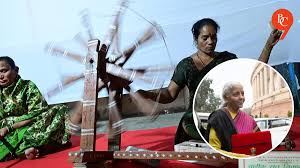
The Union Budget 2026–27 introduced the Mahatma Gandhi Gram Swaraj Initiative (MGGSI) as a focused intervention to revitalise India’s traditional rural industries. The programme seeks to strengthen khadi, handloom, and handicrafts by improving competitiveness, market access, and sustainability of artisan livelihoods. In doing so, it draws inspiration from the Gram Swaraj vision of Mahatma Gandhi, which emphasised self-reliant villages built on local production and decentralized economic power.
Objectives and Target Groups
MGGSI is designed to make traditional sectors economically viable in a modern market environment while preserving India’s craft heritage. It focuses on:
- Weavers and artisans in khadi, handloom, and handicrafts
- Village industries and rural micro-enterprises
- Beneficiaries under the One District One Product (ODOP) initiative
- Rural youth, encouraging them to view traditional industries as viable careers
The initiative recognises that these sectors not only sustain livelihoods but also represent cultural capital and employment-intensive growth, particularly in labour-surplus rural regions.
Addressing Structural Challenges
Traditional craft sectors suffer from long-standing bottlenecks:
- Fragmented supply chains that raise costs and reduce efficiency
- Inconsistent quality standards, limiting access to premium and export markets
- Weak branding and marketing, leading to dependence on middlemen
- Limited integration with modern retail and e-commerce platforms
MGGSI aims to address these constraints through institutional support, quality standardisation, design innovation, and better market linkages. It encourages artisans to adopt modern production techniques and tools without compromising traditional craftsmanship.
Market Access and Branding
A core pillar of MGGSI is improving global and domestic market access. The initiative promotes:
- Professional branding and packaging
- Entry into organised retail chains
- Access to export markets
- Integration with digital and online marketplaces
This shift from subsistence production to market-oriented enterprise aligns with the broader “Vocal for Local” philosophy and the push to strengthen MSMEs as engines of inclusive growth.
Link to Gandhi’s Gram Swaraj Vision
Gandhi’s concept of Gram Swaraj envisioned villages as self-sufficient republics, economically independent and socially cohesive. However, contemporary rural India faces challenges such as agrarian distress, migration, inequality, and weak non-farm employment opportunities, which prevent villages from achieving that ideal.
MGGSI attempts to reinterpret Gram Swaraj for the 21st century by:
- Promoting local production for wider markets
- Generating non-farm rural employment
- Reducing distress migration
- Enhancing economic self-reliance through village industries
Thus, instead of isolation, the modern approach combines local production with global connectivity.