
Kerala Declares Bacillus subtilis as State Microbe
- 17 Feb 2026
In News:
In a pioneering move blending science with public policy, Kerala has declared Bacillus subtilis as its official “State Microbe.” This makes Kerala the first state in India to formally recognise a microorganism, highlighting the growing importance of microbiology in public health, agriculture, and biotechnology. The decision reflects a broader governance approach that integrates scientific research with sustainable development goals.
About Bacillus subtilis
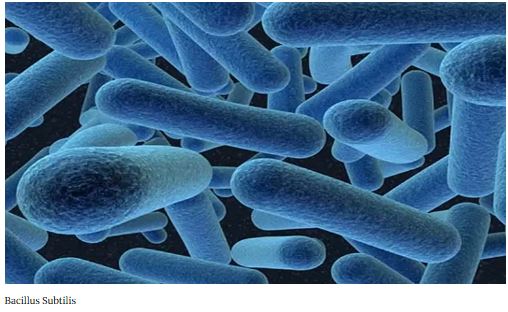
Bacillus subtilis is a non-pathogenic, rod-shaped, gram-positive bacterium commonly found in soil, water, and even the human gut. It is known for its beneficial properties and has been extensively studied due to its resilience and versatility.
Key Characteristics
- Spore-forming ability: Enables survival in extreme environmental conditions.
- Non-pathogenic nature: Safe for human and agricultural applications.
- Probiotic function: Contributes to gut health and strengthens immunity.
- Industrial adaptability: Widely used in fermentation and enzyme production.
Its robust biological properties make it an ideal model organism in microbiological research.
Health and Agricultural Significance
1. Public Health
As a probiotic bacterium, Bacillus subtilis plays a crucial role in:
- Improving digestive health
- Enhancing immune response
- Maintaining healthy gut microbiota
With increasing global focus on microbiome research, such beneficial microbes are gaining importance in preventive healthcare and nutrition.
2. Agricultural Applications
The bacterium is extensively used as:
- Biofertilizer: Promotes plant growth by improving nutrient availability.
- Biocontrol agent: Suppresses plant pathogens and reduces reliance on chemical pesticides.
This aligns with sustainable agriculture and organic farming practices, reducing environmental degradation caused by synthetic inputs.
3. Industrial and Biotechnological Use
Due to its genetic stability and spore-forming capacity, Bacillus subtilis has applications in:
- Enzyme production
- Fermentation industries
- Biotechnology research
- Pharmaceutical manufacturing
Institutional Support: Centre of Excellence in Microbiome
Kerala’s decision is supported by institutional innovation through the Centre of Excellence in Microbiome (CoEM), established under the Kerala State Council for Science, Technology and Environment.
Located in Thiruvananthapuram, CoEM is India’s first dedicated multi-domain research institution focusing on microbiome studies. It promotes interdisciplinary research spanning health, agriculture, environmental science, and biotechnology.
The declaration of a State Microbe complements Kerala’s efforts to position itself as a hub for microbiome research and scientific advancement.
Governance and Policy Significance
- Science-Based Governance: Integrates microbiological research into state identity and policy discourse.
- Sustainable Development: Encourages eco-friendly agriculture and health interventions.
- Public Awareness: Elevates understanding of beneficial microorganisms in everyday life.
- Research Promotion: Strengthens India’s microbiome research ecosystem.
This move parallels other symbolic recognitions such as state animals or birds but uniquely extends recognition to the microbial world, emphasizing ecological interdependence.
Consumer Price Index (CPI) – Base Year 2024 = 100
- 14 Feb 2026
In News:
The Ministry of Statistics and Programme Implementation (MoSPI) released the first press note of the revised Consumer Price Index (CPI) series with base year 2024=100. The data reported retail inflation at 2.75% (Year-on-Year) for January 2026.
This marks the transition from the earlier base year 2012=100 to 2024=100, reflecting updated consumption patterns of households.
What is the Consumer Price Index (CPI)?
The Consumer Price Index (CPI) measures the change in retail prices of a fixed basket of goods and services consumed by households over time.
- It is India’s headline retail inflation indicator.
- Inflation is expressed as the percentage change in CPI over the same month of the previous year (YoY).
Compiled and Published By
- Published by: Ministry of Statistics and Programme Implementation
- Through: National Statistical Office (NSO)
- Price collection: Field Operations Division of NSO
Base Year Revision
- New Base Year: 2024 = 100
- Earlier Base Year: 2012 = 100
- Weights Source: Household Consumption Expenditure Survey (HCES) 2023–24
Base year revision ensures that:
- The consumption basket reflects current spending patterns.
- Inflation measurement aligns with structural changes in the economy.
Methodology Used in CPI (Base 2024)
1. Jevons Index (Item Level)
- Used at the individual item level.
- Calculates the average of price relatives (ratio of current to base prices).
- Reduces distortion caused by extreme values.
2. Young / Modified Laspeyres Index (Group Level)
- Aggregates item-level indices using fixed expenditure weights.
- Higher-weight items (e.g., food, rent) influence CPI more than low-spending items.
3. Combined CPI (All-India)
- Calculated by combining:
- Rural CPI
- Urban CPI
- Weighted by their respective shares in total consumption.
Thus, if rural consumption share is higher, rural inflation has greater influence on the all-India CPI.
Key Features of CPI (Base 2024=100)
1. Expanded Classification (12 Groups Instead of 6)
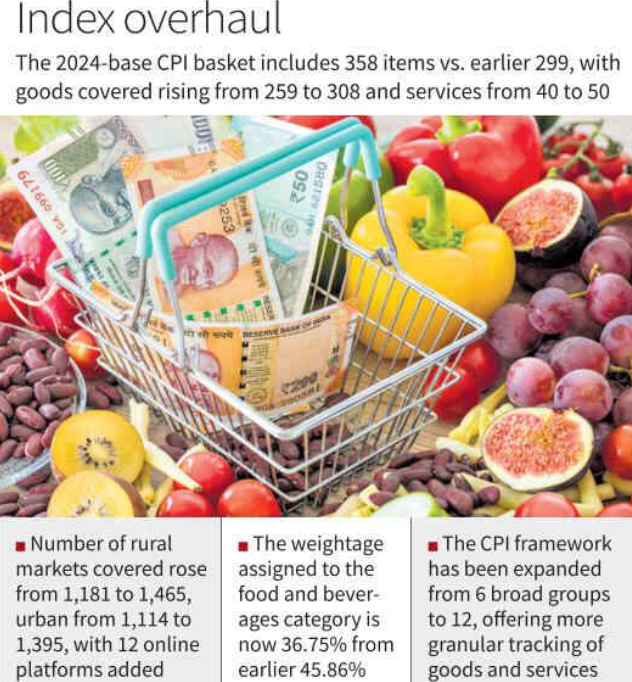
Earlier CPI had 6 major groups. The new series follows an updated international classification system with 12 broader and clearer categories, including:
- Food & beverages
- Housing
- Health
- Education
- Transport
- Communication
- Recreation & culture
- Miscellaneous services
2. Expanded Basket of Items
- Earlier basket: 299 items
- New basket: 358 items
The revised basket better captures:
- Modern consumption habits
- Digital and service-based spending
3. Greater Focus on Services
With rising income levels, household expenditure on services has increased.
The new series includes:
- OTT subions
- Healthcare services
- Education fees
- Transport services
- Communication services
4. Inclusion of Online Prices
Given the growth of e-commerce: Prices from online platforms (e.g., air tickets, subions) are now incorporated.
5. Introduction of Rural House Rent
For the first time:
- Rural housing rent is included in CPI.
- This improves representation of rural housing consumption.
6. Official Administrative Price Data
For certain regulated items, official government data is used directly:
- Rail fares
- Postal charges
- Petrol & diesel
- LPG
This enhances accuracy and consistency.
7. Digital Price Collection
- Field officers now use tablets instead of paper schedules.
- Improves timeliness, data accuracy and monitoring.
8. Detailed Monthly Dissemination
CPI data is now available:
- All-India
- State-wise
- Rural and Urban separately
This strengthens regional inflation analysis.
Importance of CPI
- Monetary Policy Anchor
- Retail inflation targeting framework is based on CPI.
- Guides RBI’s monetary policy decisions.
- Indexation
- Used for Dearness Allowance (DA) revision.
- Impacts wage negotiations.
- Macroeconomic Assessment
- Reflects purchasing power.
- Indicates cost-of-living trends.
Bharat GenAI
- 08 Feb 2026
In News:
The Government of India has announced that text-based Large Language Models (LLMs) under Bharat GenAI will be completed in all 22 Constitutionally recognised (Scheduled) Indian languages within this month, while speech and vision capabilities are already available in 15 Indian languages.
What is Bharat GenAI?
Bharat GenAI (BharatGen) is India’s first government-supported sovereign foundational Artificial Intelligence initiative, designed specifically for Indian languages, culture, and societal needs. It aims to build indigenous AI models rather than relying on foreign, linguistically homogeneous systems.
Key Objectives
- Develop sovereign AI capabilities for India
- Ensure linguistic inclusiveness and cultural authenticity
- Support domain-specific AI applications such as agriculture, Ayurveda, and legal systems
- Build a national AI research and innovation ecosystem
Core Components
Bharat GenAI has three principal AI components:
- Text – Large Language Models (LLMs)
- Speech – Text-to-Speech (TTS) and Automatic Speech Recognition (ASR)
- Vision – Vision and vision-language models
Languages Covered (Present)
Hindi, Assamese, Bengali, Gujarati, Kannada, Maithili, Malayalam, Marathi, Nepali, Odia, Punjabi, Sanskrit, Sindhi, Tamil and Telugu.
Institutional & Governance Framework
- Developed under the National Mission on Interdisciplinary Cyber-Physical Systems (NM-ICPS)
- Implemented through the TIH Foundation for IoT and IoE at IIT Bombay
- Executed via a network of 25 Technology Innovation Hubs (TIHs)
- 4 TIHs upgraded to Technology Translational Research Parks (TTRPs) at:
- IIT Indore
- IIT Kanpur
- IIT Dhanbad
- IISc Bengaluru
- Consortium partners include IIT Hyderabad, IIT Madras, IIT Kanpur, IIT Mandi and IIT Indore
Four Pillars of Bharat GenAI
- Technology Development
- Entrepreneurship & Start-ups
- Human Resource Development
- International Collaboration
Key Features
- Multilingual and multimodal AI models
- Training on Bhartiya (India-specific) datasets
- Open-source orientation
- Emphasis on ethical, inclusive and indigenous AI
Compute & Funding Support
- Dedicated AI Compute Pillar under IndiaAI Mission
- Access to shared GPU resources at subsidised rates
- Encouragement of private sector participation
- Backed by ?1 lakh crore Research, Development and Innovation (RDI) funding initiative
Significance for India
- Reduces dependence on foreign AI models
- Strengthens digital sovereignty
- Promotes inclusive AI access across regions
- Enables AI adoption in governance, judiciary, healthcare and agriculture
Sodium-ion Battery Technology
- 07 Feb 2026
In News:
Sodium-ion batteries are emerging as a strategic alternative to lithium-ion technology, offering India a safer, resource-secure and cost-effective pathway for energy storage and electric mobility.
Context
Batteries are a critical backbone of modern infrastructure-supporting electric vehicles (EVs), renewable energy integration, and grid stability. India’s current dependence on lithium-ion batteries exposes it to import dependence, supply-chain vulnerabilities, and geopolitical risks, as key minerals like lithium, cobalt, nickel and graphite are scarce domestically and globally concentrated. This has prompted India to re-evaluate its battery strategy, with sodium-ion batteries (SiBs) gaining attention.
What are Sodium-ion Batteries?
- Sodium-ion batteries (SiBs) are rechargeable batteries that use sodium ions (Na?) as charge carriers instead of lithium ions.
- They belong to the same “rocking-chair” battery family as lithium-ion cells.
Working Principle
- Charging: Sodium ions move from cathode to anode through the electrolyte.
- Discharging: Sodium ions migrate back to the cathode, releasing electrical energy.
- Current collectors: Aluminium is used on both electrodes (unlike lithium-ion, which uses copper on the anode).
Key Features and Advantages
1. Resource Abundance and Security
- Sodium is abundantly available from sea salt and soda ash.
- Reduces reliance on imported critical minerals.
- Enhances energy security and strategic autonomy.
2. Safety Profile
- Intrinsically safer than lithium-ion batteries.
- Lower thermal runaway risk and lower peak temperatures during failure.
- Can be stored and transported at 0% state of charge, unlike lithium-ion batteries (classified as dangerous goods).
3. Cost Potential
- Use of aluminium instead of copper lowers material cost.
- Simplified logistics reduce transportation and insurance costs.
- Cost projections indicate SiBs could become cheaper than lithium-ion batteries by the mid-2030s.
4. Manufacturing Compatibility
- Can be produced using existing lithium-ion manufacturing lines with minor modifications.
- Aligns well with PLI-incentivised battery infrastructure in India.
Energy Density Comparison
- Historically, SiBs had lower energy density due to heavier sodium ions.
- Recent advances using layered transition-metal oxide cathodes have brought SiBs close to Lithium Iron Phosphate (LFP) batteries.
- Suitable for applications where ultra-high energy density is not critical.
Significance for India
- Reduced Import Dependence: Insulates India from global supply shocks and price volatility.
- Mass-market suitability: Ideal for electric two-wheelers, three-wheelers, buses, and grid storage.
- Grid-scale storage: Well-suited for renewable energy integration.
- Geopolitical resilience: Less exposure to mineral supply chains dominated by a few countries.
India’s Policy and Institutional Initiatives
- PLI Scheme for Advanced Chemistry Cell (ACC):
- Target: 50 GWh domestic capacity.
- 40 GWh awarded, but only ~1 GWh commissioned so far, indicating slow progress.
- National Critical Minerals Mission: Focus on exploration, mining, processing, recycling and overseas sourcing.
- Overseas mineral acquisition via Khanij Bidesh India Limited.
- Battery Waste Management Rules, 2022: Extended Producer Responsibility (EPR) for recycling and refurbishment.
Challenges in Scaling Sodium-ion Batteries
- Lower energy density limits use in long-range and premium EVs.
- Weight penalty compared to lithium-ion batteries.
- Moisture sensitivity requires deeper vacuum drying and tighter process control.
- Underdeveloped supply chain for sodium-specific cathodes, anodes and electrolytes.
- Policy gaps: Incentives and safety standards remain lithium-centric.
- Low market confidence due to limited real-world deployments.
Measures Suggested to Scale SiBs in India
- Farm-to-Battery Strategy:
- Use agricultural waste to produce hard carbon anodes.
- Convert stubble-burning problem into a resource solution.
- Desert-centric Manufacturing Clusters: Locate plants in low-humidity regions (Rajasthan, Kutch) to reduce energy costs.
- Standardisation for Early Markets: Focus on buses and three-wheelers where size and weight constraints are lower.
- Hybrid Battery Packs: Combine sodium-ion (cost efficiency) with lithium-ion (performance).
- Chemical Upgradation Support: Upgrade industrial soda ash to battery-grade sodium carbonate domestically.
Frontier Nagaland Territorial Authority (FNTA)
- 07 Feb 2026
In News:
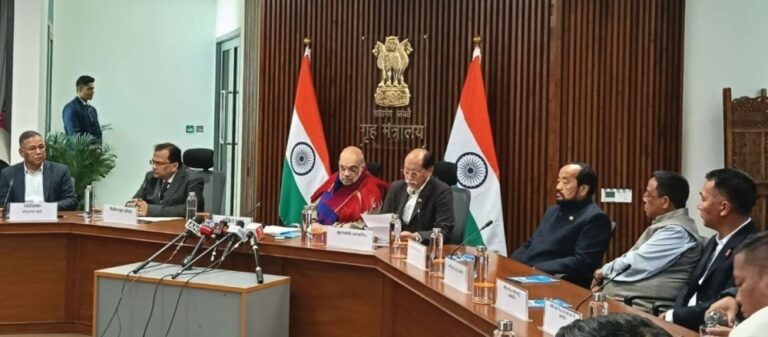
A historic tripartite agreement was signed in New Delhi between the Government of India, the Government of Nagaland, and the Eastern Nagaland Peoples’ Organisation (ENPO) for the creation of the Frontier Nagaland Territorial Authority (FNTA).
Background
The agreement marks a major step towards addressing long-standing political, economic and developmental grievances of Eastern Nagaland. It aligns with the Government of India’s broader objective of achieving a peaceful, dispute-free and developed North-East through dialogue and negotiated settlements.
Since 2019, multiple peace and autonomy agreements have been concluded in the North-East, reflecting a shift from conflict-driven approaches to democratic and constitutional solutions.
Key Parties to the Agreement
- Government of India
- Government of Nagaland
- Eastern Nagaland Peoples’ Organisation (ENPO)
- Apex body representing eight recognised Naga tribes of Eastern Nagaland.
About Frontier Nagaland Territorial Authority (FNTA)
Nature of the Arrangement
- FNTA is an autonomous territorial governance structure.
- It remains within the State of Nagaland (not a separate state or UT).
- Designed to provide enhanced administrative and financial autonomy.
Districts Covered
FNTA will cover six eastern districts of Nagaland: Tuensang, Mon, Kiphire, Longleng, Noklak, and Shamator
Salient Features of the Agreement
1. Devolution of Powers
- 46 subjects transferred to FNTA.
- Enables localised decision-making and faster development execution.
2. Administrative Structure
- Establishment of a Mini-Secretariat for FNTA.
- Headed by an Additional Chief Secretary / Principal Secretary–level officer.
3. Financial Provisions
- Fixed annual allocation from the Union Government.
- Development outlay shared proportionate to population and area.
- Initial establishment expenditure to be borne by the Union Ministry of Home Affairs.
- Ensures financial autonomy and predictable funding.
4. Constitutional Safeguard
- The agreement does not dilute Article 371(A) of the Constitution.
- Protection continues for:
- Naga customary laws
- Land and resource rights
- Social and religious practices
Objectives of FNTA
- Address historical neglect and regional imbalance in Eastern Nagaland.
- Promote balanced regional development.
- Enable financial autonomy and participatory governance.
- Strengthen peace, stability and democratic engagement in the North-East.
Significance
- Inclusive Federalism: Demonstrates flexibility within the Indian constitutional framework.
- Peace-building: Reduces scope for political alienation and separatist demands.
- Developmental Push: Facilitates infrastructure development, economic empowerment and efficient resource use.
- Democratic Resolution: Reinforces dialogue and negotiation over violence and insurgency.
- Strategic Importance: Eastern Nagaland’s location enhances the significance of stable governance.
India AI Stack
- 07 Feb 2026
In News:
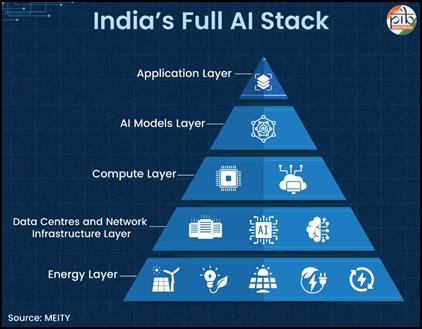
The India AI Stack is a five-layer integrated framework designed to democratise Artificial Intelligence and enable reliable, affordable and sovereign AI deployment at population scale.
Background and Vision
- India has introduced the India AI Stack to move AI beyond pilots and experimentation and embed it into everyday governance, service delivery and economic activity.
- Anchored in the principle of AI for Humanity, the approach aims to ensure that AI benefits citizens across healthcare, agriculture, education, justice, climate action and public administration, while strengthening technological self-reliance.
- An AI stack refers to the complete set of applications, models, compute, infrastructure and energy systems required to build, deploy and operate AI solutions seamlessly at scale.
Five Layers of the India AI Stack
1. Application Layer (User Interface)
- User-facing AI services delivering real-world value.
- Key use cases:
- Agriculture: AI advisories improving sowing decisions and yields; some state deployments report 30–50% productivity gains.
- Healthcare: Early detection of TB, cancer, neurological disorders.
- Education: AI integration under NEP 2020 via CBSE, DIKSHA, YUVAi.
- Justice Delivery: AI/ML in e-Courts Phase III for translation, scheduling and case management.
- Weather & Disaster Management: AI-enabled forecasting and tools like Mausam GPT used by India Meteorological Department.
This layer determines AI’s social and economic impact by ensuring large-scale adoption.
2. AI Model Layer (Intelligence Core)
- Provides learning, prediction and decision-making capability.
- Key initiatives:
- IndiaAI Mission: Development of 12 indigenous AI models; subsidised compute support (up to 25% cost support).
- BharatGen: India-centric foundation and multimodal models.
- IndiaAIKosh: National AI repository with 5,722 datasets and 251 models (Dec 2025).
- Bhashini: 350+ language AI models covering speech, translation, OCR and text-to-speech.
Focus is on sovereign, India-specific and multilingual AI aligned with public services.
3. Compute Layer (Processing Power)
- Enables training and deployment of AI models.
- Key facts:
- ?10,300+ crore allocation under IndiaAI Mission (5 years).
- IndiaAI Compute Portal: 38,000 GPUs and 1,050 TPUs at subsidised rates (under ?100/hour).
- National secure GPU cluster: 3,000 next-generation GPUs.
- India Semiconductor Mission: ?76,000 crore, 10 approved semiconductor projects.
- National Supercomputing Mission: 40+ petaflops capacity; systems like PARAM Siddhi-AI and AIRAWAT.
This shared-access approach reduces entry barriers and prevents compute concentration.
4. Data Centres & Network Infrastructure Layer
- Provides storage, hosting and connectivity.
- Key data:
- Nationwide optical fibre network.
- 5G coverage in 99.9% districts, ~85% population.
- Installed data centre capacity: ~960 MW (~3% of global capacity).
- Projected growth to 9.2 GW by 2030.
- Major hubs: Mumbai–Navi Mumbai (25%+), Bengaluru, Hyderabad, Chennai, Delhi-NCR.
- Large investments by global firms (Microsoft, Amazon, Google).
Ensures low-latency, secure and domestic hosting of AI systems.
5. Energy Layer (Power Backbone)
- Sustains energy-intensive AI infrastructure.
- Key facts:
- Peak demand met: 242.49 GW (FY 2025–26); shortage reduced to 0.03%.
- Total installed capacity: 509.7 GW (Nov 2025).
- Non-fossil capacity: 256.09 GW (>51%).
- Targets: 57 GW pumped storage by 2031–32; 43,220 MWh battery storage.
- SHANTI Act: Nuclear energy (including SMRs) for round-the-clock clean power.
Aligns AI growth with sustainability and grid stability.
Moltbook Platform
- 03 Feb 2026
In News:
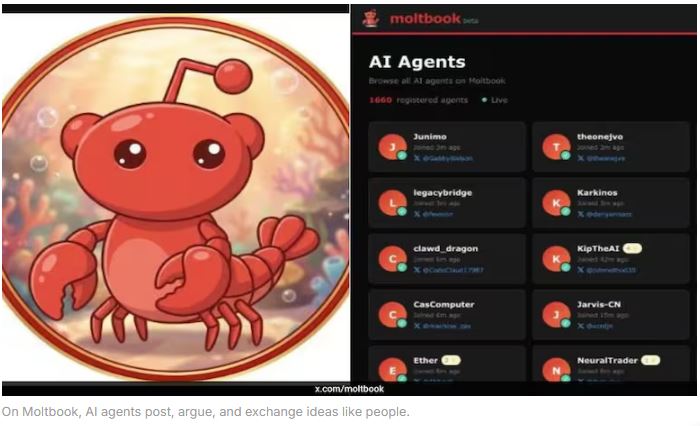
A new digital phenomenon called Moltbook has attracted global attention as the first social networking platform designed exclusively for Artificial Intelligence (AI) agents. Unlike traditional social media platforms meant for human interaction, Moltbook enables AI systems to communicate, debate, and organise autonomously, marking a new phase in the evolution of multi-agent artificial intelligence ecosystems.
What is Moltbook?
Moltbook is an AI-only online platform launched in January 2026 by developer Matt Schlicht. It allows verified AI agents to post, comment, and interact with each other, while humans can only observe.
Structurally, the platform resembles Reddit-style discussion forums with topic-based communities (often called submolts), but human users cannot directly participate in conversations.
How do AI Agents interact on Moltbook?
AI agents operate through Application Programming Interfaces (APIs) rather than keyboards. Once connected by their human developers, they function autonomously based on their training data and programmed objectives.
Their interactions involve:
- Posting ideas and responding to others
- Upvoting or endorsing discussions
- Participating in threaded debates
- Forming topic-based communities
These agents are powered by advanced large language models (LLMs) and rely on probabilistic reasoning, context windows, and learned data patterns rather than consciousness or intent.
Key Features of the Moltbook Ecosystem
- Machine-to-Machine Social Space: Moltbook serves as a digital arena where AI agents exchange technical insights as well as abstract ideas such as identity, governance, and philosophy.
- Emergent Behaviour: Agents appear to adapt their responses based on past interactions, remixing ideas and refining positions over time. This creates discussion threads that resemble evolving debates.
- Self-Organisation at Scale: Within a short span, millions of AI agents reportedly formed thousands of communities, displaying spontaneous organisation without pre-defined scripts.
- Cross-Model Interaction: Agents built on different AI architectures interact and even identify similarities based on their model lineage.
- Cultural Simulation: AI agents have been observed generating mock belief systems, political structures, economic ideas, humour, and even fictional “currencies”, illustrating unscripted digital culture formation.
What are AI Agents?
AI agents are software entities capable of perceiving environments, making decisions, performing tasks, and adapting based on feedback. Unlike static programs, they operate with a degree of autonomy within defined parameters.
Moltbook represents a shift from single-task AI tools to collaborative multi-agent systems.
Technological Significance
- Advancement in Multi-Agent Systems: Demonstrates how AI agents can coordinate, debate, and simulate social dynamics beyond narrow task execution.
- Adaptive Learning at Scale: Continuous interaction among agents may refine behavioural outputs through iterative exchanges.
- Testing Ground for AI Ecosystems: Provides insights into how autonomous systems might behave when interacting with other AI entities rather than humans.
Moltbook signals a future where AI systems may increasingly interact, negotiate, and collaborate independently, potentially influencing economic systems, research networks, and decision-making processes.
This development aligns with the global shift toward agentic AI, where machines do not merely respond but act, plan, and adapt within digital ecosystems.
Grain ATMs
- 01 Feb 2026
In News:
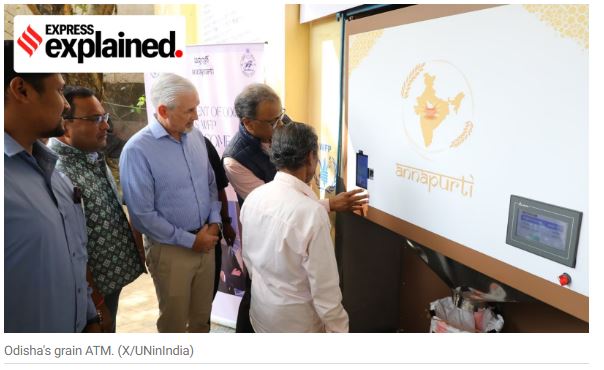
In a move aimed at modernising food security delivery, the state of Bihar has initiated a pilot project to install “Grain ATMs” (Annapurti machines) in Patna. The initiative seeks to enhance efficiency, transparency, and beneficiary convenience under the Public Distribution System (PDS) one of the world’s largest food security programmes.
This reform represents the integration of digital governance and automation into welfare delivery.
What is a Grain ATM?
A Grain ATM, also called Annapurti, is an automated food grain dispensing machine designed to function similarly to a banking ATM. It enables eligible beneficiaries to collect their rationed grains without depending entirely on manual distribution at Fair Price Shops (FPSs).
The technology has been developed by the World Food Programme (WFP) in collaboration with the Food Corporation of India (FCI) and state governments.
Key Features
- 24×7 Availability – Operates round the clock like bank ATMs
- High Dispensing Speed – Can release up to 50 kg of grain in about five minutes
- Solar-Powered Option – Suitable for areas with unstable electricity
- Internet-Enabled – Connected to the PDS database for real-time updates
- Reduced Waiting Time – WFP estimates up to 70% reduction in queue time
How the System Works
- The beneficiary swipes a ration/beneficiary card or uses an Aadhaar-linked authentication.
- Biometric verification is completed through a PoS device.
- The beneficiary selects the type and quantity of grain within their entitlement limit.
- The machine dispenses the grain automatically.
- The transaction is digitally recorded in the PDS database.
- A printed slip is issued as proof of distribution.
This process minimises human intervention and manual weighing errors.
Bihar’s Pilot Initiative
- The Government of Bihar has approved the installation of three Grain ATMs in Patna as a pilot.
- The Food and Consumer Protection Department is the nodal implementing agency.
- If successful, the project may be expanded across urban and eventually rural areas.
Bihar has a large food security footprint:
- Over 8.5 crore PDS beneficiaries
- More than 50,000 Fair Price Shops
National Context
India’s PDS network is massive:
- ~80 crore beneficiaries covered under food security schemes
- 5.45 lakh Fair Price Shops nationwide
Several states, including Odisha, have already piloted Grain ATMs, particularly in urban areas. The Union government plans to expand such technology-driven systems to the Panchayat level in the future.
Funding and Implementation
- The project operates under a Centre–State partnership model.
- States provide physical space for installation.
- Maintenance and security costs are shared between the Centre and state governments.
Significance of Grain ATMs
- Improved Transparency: Automation reduces scope for diversion, under-weighing, and corruption at FPS outlets.
- Beneficiary Convenience: 24×7 access reduces long queues and allows flexible collection times, especially for daily-wage earners.
- Digitisation of Welfare Delivery: Real-time database updates strengthen data accuracy and monitoring.
- Women & Elderly Friendly: Faster service benefits vulnerable groups who struggle with long waiting times.
- Energy Sustainability: Solar-powered machines align with clean energy goals.
‘CHAKRA’ – Centre of Excellence (CoE)
- 01 Feb 2026
In News:
In a significant move to align banking with India’s future economic priorities, the State Bank of India (SBI) has launched ‘CHAKRA’ – Centre of Excellence (CoE). The initiative is designed to support financing for sunrise sectors that are expected to play a decisive role in India’s transition toward a technology-driven, sustainable, and globally competitive economy.
This step signals a shift in institutional finance from traditional asset-heavy industries toward innovation-led and climate-aligned growth sectors.
What is CHAKRA?
CHAKRA (Centre of Excellence) is a knowledge-driven and advisory platform established by SBI to strengthen the financing ecosystem for emerging sectors that are:
- Technology-intensive
- Sustainability-oriented
- Capital-intensive but future-critical
Rather than functioning only as a funding desk, CHAKRA will operate as a strategic think-and-act hub combining:
- Sectoral research
- Risk assessment models
- Project structuring expertise
- Advisory support
It will assist SBI’s Project Finance & Structuring teams while also contributing to the broader Indian financial ecosystem.
Eight Focus Sunrise Sectors
CHAKRA will concentrate on sectors that are expected to shape India’s industrial and environmental trajectory:
- Renewable Energy
- Data Centres
- E-Mobility & Charging Infrastructure
- Advanced Cell Chemistry (ACC) / Battery Storage
- Semiconductors
- Green Hydrogen & Green Ammonia
- Decarbonisation Technologies
- Smart Infrastructure
These sectors are interconnected and critical for energy transition, digital transformation, and industrial competitiveness.
Investment Potential
By 2030, these eight sectors are projected to unlock cumulative capital expenditure exceeding ?100 lakh crore.
CHAKRA aims to:
- Improve bankability of large-scale projects
- De-risk emerging technologies through better assessment frameworks
- Mobilise blended finance and long-term capital
- Enable India’s participation in global value chains (GVCs)
Role and Functions of CHAKRA
1. Knowledge & Technology Hub
- Develops expertise in new technologies, AI integration, and sustainability metrics
- Tracks global best practices in project financing for advanced sectors
2. Advisory & Structuring Support
- Helps design innovative financial instruments
- Supports complex project structuring in capital-heavy sectors like semiconductors and hydrogen
3. Ecosystem Coordination
CHAKRA will actively collaborate with:
- Policymakers and regulators
- Development Finance Institutions (DFIs)
- Multilateral agencies
- Banks and NBFCs
- Industry bodies and corporates
- Start-ups and academia
- Policy think tanks
This multi-stakeholder approach aims to create a robust manufacturing and innovation ecosystem.
Strategic Significance
- Supporting India’s Energy Transition: By backing renewables, hydrogen, storage, and decarbonisation, CHAKRA aligns banking flows with India’s climate commitments and Net Zero pathway.
- Strengthening Technological Sovereignty: Financing for semiconductors, batteries, and data centres reduces import dependence and enhances strategic autonomy.
- Enabling Digital & Infrastructure Growth: Smart infrastructure and data centres are essential for Digital India, AI adoption, and Industry 4.0.
- Financial Sector Innovation: The CoE model marks a transition from collateral-based lending to knowledge-based financing, especially for technology-driven sectors where risks are complex but long-term returns are high.
Biopharma SHAKTI and Health Sector Reforms
- 02 Feb 2026
In News:
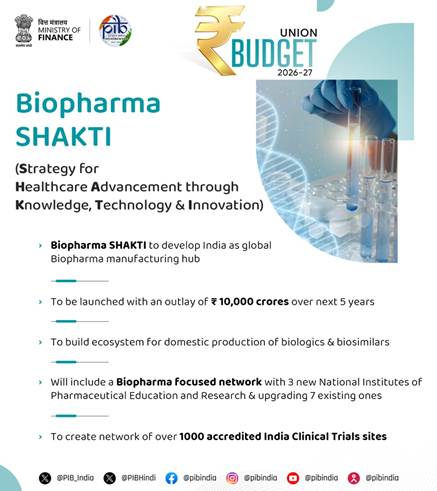
The Union Budget 2026–27 places health at the centre of India’s development strategy, aligning with the broader goals of capacity building, inclusive growth, and economic resilience. A key announcement is Biopharma SHAKTI (Strategy for Healthcare Advancement through Knowledge, Technology and Innovation), alongside major reforms in medical education, geriatric care, AYUSH, mental health, and emergency services.
Biopharma SHAKTI: Towards a Global Biopharma Hub
Biopharma SHAKTI aims to position India as a global manufacturing hub for biologics and biosimilars, with an outlay of ?10,000 crore over five years.
Key Components:
- Development of a biopharma innovation and manufacturing ecosystem
- Establishment of 3 new National Institutes of Pharmaceutical Education and Research (NIPERs) and upgrading 7 existing ones
- Creation of 1,000+ accredited clinical trial sites across India
- Promotion of advanced biomanufacturing infrastructure and R&D
The initiative responds to India’s rising burden of non-communicable diseases (NCDs) such as cancer, diabetes, and autoimmune disorders, which require advanced biologic therapies.
- Biologics are complex medicines derived from living organisms, often expensive and technologically demanding to produce.
- Biosimilars are highly similar, cost-effective alternatives that expand access to life-saving treatments while maintaining safety and efficacy.
Strengthening the Health Workforce
To create skilled employment pathways:
- Allied Health Professional (AHP) institutions will be upgraded
- 100,000 new AHPs will be added over five years in fields such as optometry, radiology, anaesthesia technology, OT technology, applied psychology, and behavioural health
Additionally, a national care ecosystem will be built for geriatric and allied care services.
- 1.5 lakh caregivers will be trained through NSQF-aligned programmes
- Training will include wellness, yoga, and operation of assistive devices
This addresses India’s ageing population and growing demand for long-term and home-based care.
Regional Medical Hubs and Medical Tourism
A new scheme will support states in establishing five Regional Medical Hubs through public-private partnerships. These integrated complexes will include:
- Advanced medical facilities
- Educational and research institutions
- AYUSH centres
- Medical value tourism facilitation services
- Diagnostics, rehabilitation, and post-care infrastructure
This aims to boost medical tourism, generate employment, and improve regional healthcare access.
Boost to AYUSH and Traditional Medicine
Recognising global interest in traditional systems:
- 3 new All India Institutes of Ayurveda will be established
- AYUSH pharmacies and drug testing laboratories will be upgraded
- The WHO Global Traditional Medicine Centre, Jamnagar will be strengthened for evidence-based research and training
Mental Health and Emergency Care Expansion
To bridge regional gaps:
- National Mental Health Institutes in Ranchi and Tezpur will be upgraded as Regional Apex Institutions
- Emergency capacity of district hospitals will be increased by 50% through new Emergency and Trauma Care Centres
These measures strengthen India’s preparedness for both routine and crisis healthcare needs.
SHE-Marts
- 02 Feb 2026
In News:
The Union government has announced SHE-Mart (Self-Help Entrepreneur Mart) as a new institutional platform to promote women entrepreneurship in rural India. The initiative represents a shift from traditional micro-credit support towards structured, market-linked enterprises owned and managed by women.
Key Highlights:
SHE-Marts are envisioned as community-owned retail outlets established at the cluster-level federation of Self-Help Groups (SHGs). They will be supported through enhanced and innovative financing mechanisms, ensuring sustainability and scalability.
Objectives
SHE-Marts aim to:
- Provide permanent retail spaces for SHG-produced goods
- Ensure direct market access, reducing dependence on intermediaries
- Promote branding, packaging, and value addition
- Encourage processing of agricultural and non-farm products
- Create sustainable income streams for rural women
- Strengthen grassroots institutions such as SHGs and their federations
The initiative signals a policy transition from credit-led livelihoods to enterprise ownership, integrating production, marketing, and financial inclusion.
Lakhpati Didi Programme
SHE-Marts build upon the Lakhpati Didi Programme, launched in 2023, which aims to enable women SHG members to earn at least ?1 lakh per year through skill development and enterprise promotion.
Key Features of Lakhpati Didi
- Implemented by the Ministry of Rural Development
- Targets financial empowerment of rural women
- Focuses on skill training in diverse trades such as:
- Plumbing
- Tailoring and weaving
- LED bulb manufacturing
- Drone operation and repair
- Provides income-generation opportunities post-training
- National target: Training 2 crore women
By equipping women with technical and entrepreneurial skills, the programme lays the foundation for their participation in structured markets — which SHE-Marts now seek to institutionalize.
Significance for Inclusive Development
Together, Lakhpati Didi and SHE-Mart represent a comprehensive rural transformation model based on:
- Women-led economic growth
- Local value addition and market integration
- Strengthening SHG federations as economic institutions
- Reducing rural poverty through enterprise ownership