
The Precarious City: Navigating the Crisis of India’s Urban Informal Workforce
- 24 Apr 2026
In News:
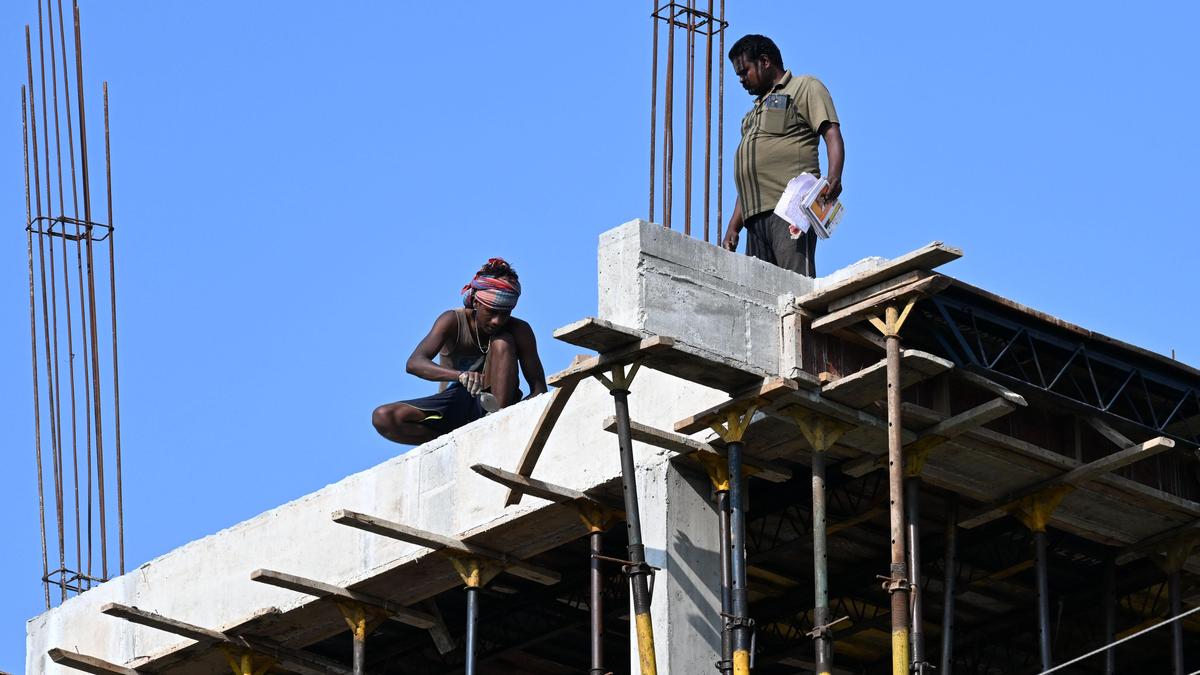
Recent worker protests in industrial hubs like Noida have once again brought to the fore the structural vulnerabilities of India’s informal sector. As urban centers transition from traditional industrial hubs to survival-oriented service spaces, the informal workforce—comprising nearly 90% of India’s total labor force—faces an existential crisis characterized by economic exclusion and spatial marginalization.
The Informal Sector: Scope and Economic Significance
The informal sector encompasses economic activities that function outside the ambit of formal regulatory and institutional frameworks. It is a heterogeneous mix including self-employed individuals, daily wage laborers, street vendors, and unregistered micro-enterprises.
- Dominance in Livelihood: Despite the push for formalization, the informal sector remains the backbone of the Indian economy. Even in urban landscapes, formal salaried positions are scarce, leaving the majority of migrants and residents dependent on unstable, low-paying work.
- Structural Vulnerabilities: These workers typically lack written contracts, job security, and any form of institutional social protection. This makes them the first victims of economic shocks, as seen during global pandemics or local industrial downturns.
The Urban Shift: From Production to Survival
India’s urban economic structure is undergoing a profound transformation. The decline of large-scale formal industries—symbolized by the historical closure of textile mills in Mumbai and Ahmedabad—has led to a fragmented labor market.
- The Survival Economy: Cities are increasingly becoming spaces for "social reproduction" rather than industrial production. This means the urban economy is now focused on basic survival needs like housing, food, and low-end services.
- Spatial Marginalization: Approximately 40% of the urban poor live in slums or informal settlements. These areas often lack basic sanitation and legal recognition, forcing workers into hazard-prone environments.
- The Rent Trap: A significant portion of an informal worker's income—often up to 50%—is consumed by rent in these precarious settlements. This leaves little for nutrition, health, or education.
Key Challenges and Policy Gaps
Despite its scale, the informal sector suffers from systemic neglect in urban planning and financial policy.
- Privatization of Essentials: Economic reforms have shifted the state’s role from a service provider to a market facilitator. The resulting privatization of water and electricity has increased the cost of living for those least able to afford it.
- Financial Exclusion and Debt: Lacking collateral, workers are often shunned by formal banking systems. This forces them into the clutches of local moneylenders, leading to a cycle of chronic indebtedness.
- Low Bargaining Power: The fragmented nature of urban labor prevents collective bargaining, leaving workers at the mercy of volatile market demands and predatory middle-men.
Institutional Response and Government Initiatives
The government has launched several flagship initiatives to bridge the formal-informal divide:
- Code on Social Security (2020): A legislative attempt to extend life and disability insurance, maternity benefits, and old-age protection to unorganized workers.
- e-Shram Portal: A national database of unorganized workers designed to facilitate better policy targeting and the seamless delivery of welfare benefits.
- PM SVANidhi: A micro-credit scheme providing collateral-free working capital loans to street vendors to help them resume livelihoods post-disruption.
However, challenges such as digital illiteracy, complex registration processes, and implementation bottlenecks at the local level continue to hinder the reach of these schemes.
The Way Ahead: Towards Inclusive Urban Governance
To address the precariousness of urban labor, a shift in governance philosophy is required:
- Integrating Workers into Governance: Moving beyond top-down policies, cities need inclusive structures such as workers’ councils. These platforms allow informal workers to participate in urban decision-making and advocate for their rights.
- Securing Housing and Services: Urban planning must prioritize affordable housing and protected access to essential services to reduce the "survival cost" of city life.
- Formalization with Protection: While formalizing the economy is a long-term goal, the immediate priority must be providing a "social floor"—a minimum level of social security that stays with the worker, regardless of their employment status.
Conclusion
The protests in Noida are a symptom of a deeper malaise in India’s urban growth story. A truly "Viksit Bharat" (Developed India) cannot be built on the back of an invisible and exploited informal workforce. Recognizing the informal sector not as a transient phase but as a permanent, vital part of the urban fabric is the first step toward creating resilient and inclusive cities.