
Rat-Hole Mining Tragedy in Meghalaya
- 07 Feb 2026
In News:
The recent explosion in an illegally operating rat-hole coal mine in East Jaintia Hills district, Meghalaya, which claimed 25 lives, is not an isolated accident but a tragic manifestation of systemic governance and regulatory failure. Despite a clear ban on rat-hole mining by the National Green Tribunal (2014) and its subsequent affirmation by the Supreme Court, the practice continues unabated, exposing deep-rooted institutional apathy, weak enforcement, and socio-economic vulnerability.
Nature of the Incident
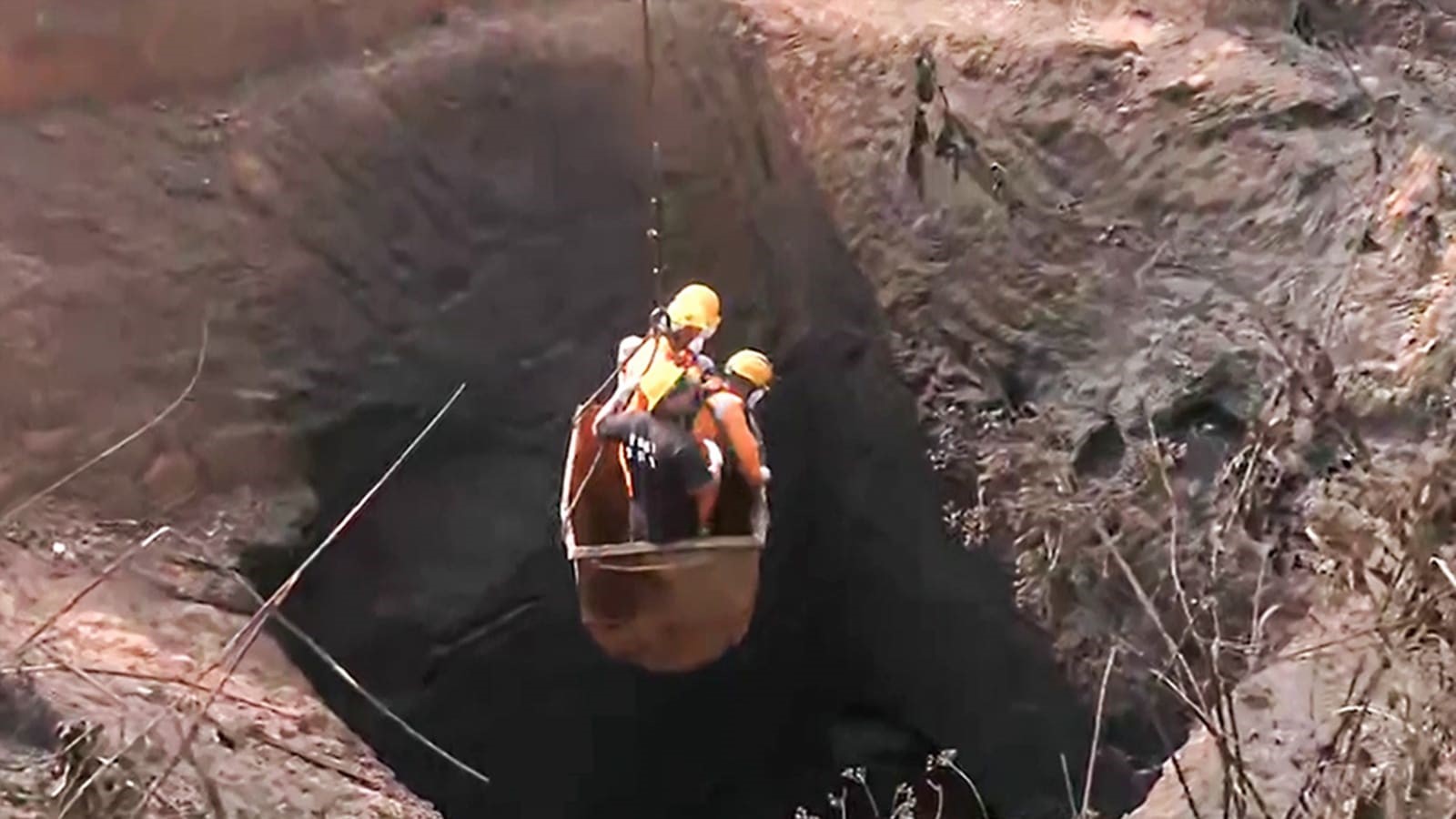
The blast occurred in the remote Thangkso area, characterised by poor connectivity and difficult terrain. Rescue operations by the NDRF, SDRF and Special Rescue Teams revealed the hazardous mine structure: five vertical shafts nearly 100 feet deep, branching into narrow horizontal tunnels measuring barely 2 feet by 3 feet, forcing miners to crawl. Several bodies were recovered up to 350 feet inside these tunnels. Rescue efforts were severely constrained by water accumulation, mudslides, dripping-induced rockfalls and extremely confined spaces-conditions that underline the inherent dangers of rat-hole mining.
Rat-Hole Mining: Structural and Environmental Concerns
Rat-hole mining is a primitive method involving manual extraction of coal through narrow pits and tunnels. It persists in Meghalaya due to community and private land ownership patterns under the Sixth Schedule, which are often exploited to bypass regulatory oversight. The practice violates the Mines and Minerals (Development and Regulation) Act, 1957, and causes severe environmental damage, including acid mine drainage, water contamination, land subsidence and biodiversity loss. Crucially, it operates without any worker safety mechanisms, making fatalities almost inevitable.
Legal and Administrative Dimensions
Following the incident, FIRs were registered under culpable homicide, the MMDR Act, and the Explosive Substances Act, with two mine owners arrested. Judicial oversight has been persistent: the Justice (Retd.) B.P. Katakey Committee, appointed by the Meghalaya High Court, has repeatedly flagged widespread illegal mining, particularly in East Jaintia Hills. Its findings are alarming-over 22,000 illegal mine openings in the district alone and more than 25,000 across Meghalaya. The High Court itself has remarked that “no one in the state, except the court, is taking the issue very seriously.”
A Pattern, Not an Aberration
This tragedy follows earlier disasters: the 2018 Ksan incident where 15 miners drowned, and the Umpleng incident that killed five. Such recurring fatalities point to a systemic regulatory collapse, not isolated lapses. Governance deficits, local complicity, informal protection networks, and lack of political will have allowed illegal mining to thrive.
Key Challenges Highlighted
- Governance failure: Weak enforcement of judicial orders and lack of accountability.
- Terrain and accessibility: Remote, difficult geography impedes regulation and rescue.
- Informal labour exploitation: Migrant and economically vulnerable workers operate without contracts, insurance or social security.
- Disaster management gaps: Absence of early-warning systems and monitoring in hazardous informal sectors.
- Constitutional complexity: Sixth Schedule autonomy and community land ownership create regulatory ambiguities.
Way Forward
A multi-pronged response is imperative:
- Strict enforcement and monitoring using satellite surveillance and independent mining regulators.
- Institutional accountability, fixing responsibility of district officials with time-bound compliance reporting.
- Formalisation of mining, introducing regulated, scientific alternatives alongside alternative livelihood programmes.
- Environmental restoration through mine-closure plans and application of the Polluter Pays Principle.
- Worker safety frameworks, ensuring compliance with labour laws, insurance coverage and community awareness.
Conclusion
The Meghalaya rat-hole mining tragedy is a stark reminder that judicial bans alone cannot substitute for effective governance. The continued loss of lives reflects a failure to uphold the right to life (Article 21) and the duty to protect the environment (Article 48A). Unless systemic reforms replace episodic reactions, such disasters will continue to recur, turning governance neglect into a persistent human and ecological crisis.
Rat-hole mining
- 13 Jan 2025
In News:
In Dima Hasao district of Assam, at least nine workers aged between 26 and 57 were trapped in a coal “rat-hole” mine after it was flooded with water. Three miners trapped in a flooded coal mine were confirmed dead, while six remained stuck. Later an Indian Navy team, including deep-sea divers, arrived at the site, where the water level inside the pit is 200 feet deep.
Key Takeaways:
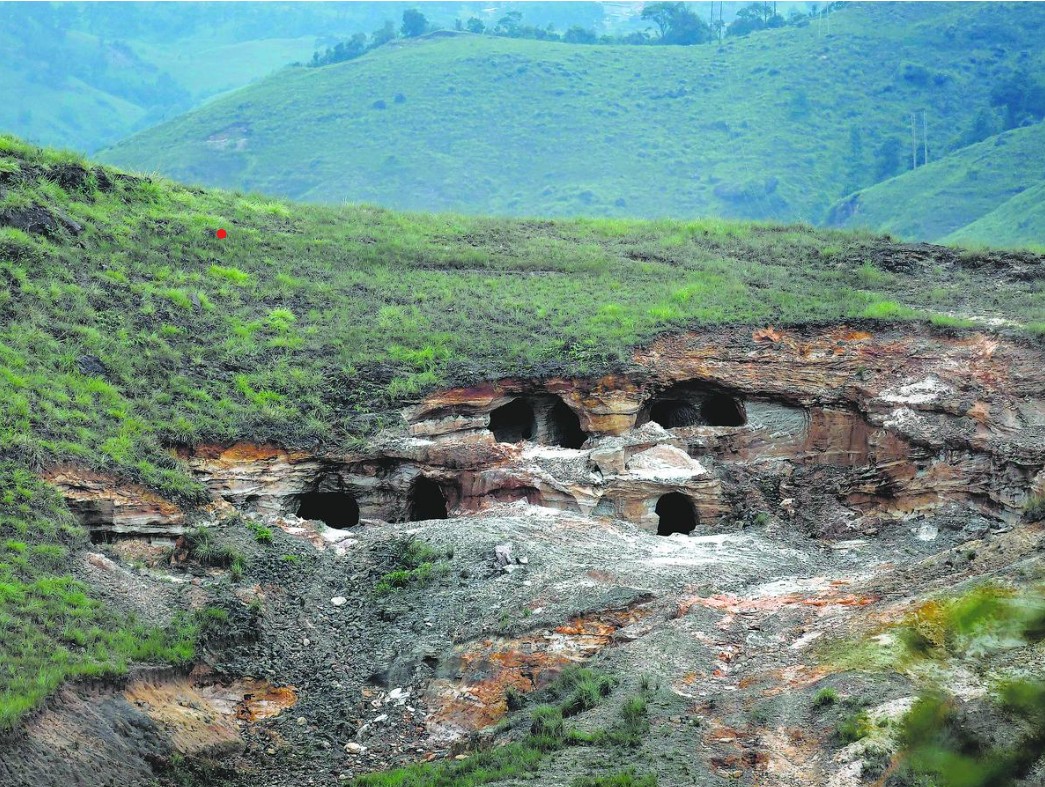
- Rat-hole mining is a method of extracting coal from narrow, horizontal seams, prevalent in Meghalaya. The term “rat hole” refers to the narrow pits dug into the ground, typically just large enough for one person to descend and extract coal.
- Once the pits are dug, miners descend using ropes or bamboo ladders to reach the coal seams. The coal is then manually extracted using primitive tools such as pickaxes, shovels, and baskets.
- Types of Rat-hole mining:
- Side-cutting mining: In the side-cutting procedure, narrow tunnels are dug on the hill slopes and workers go inside until they find the coal seam. The coal seam in the hills of Meghalaya is very thin, less than 2 m in most cases.
- Box-cutting mining: In the other type of rat-hole mining, called box-cutting, a rectangular opening is made, varying from 10 to 100 sqm, and through that a vertical pit is dug, 100 to 400 feet deep. Once the coal seam is found, rat-hole-sized tunnels are dug horizontally through which workers can extract the coal.
- Concerns associated with Rat-hole mining: Rat-hole mining poses significant environmental and safety hazards. This method of mining has faced severe criticism due to its hazardous working conditions, and numerous accidents leading to injuries and fatalities.
- The mines are typically unregulated, lacking safety measures such as proper ventilation, structural support, or safety gear for the workers. Additionally, the mining process can cause land degradation, deforestation, and water pollution. Despite attempts by authorities to regulate or ban such practices, they often persist due to economic factors and the absence of viable alternative livelihoods for the local population.
- Notably, the National Green Tribunal (NGT) banned Rat-hole mining in 2014, and retained the ban in 2015, on grounds of it being unscientific and unsafe for workers. The order was in connection with Meghalaya, where this remained a prevalent procedure for coal mining. The state government then appealed the order in the Supreme Court.
Role of Rat-Hole Mining in Uttarkashi Tunnel Rescue
- The rat-hole mining practice, banned for being unsafe, helped in the rescue operation of 41 workers trapped in the collapsed Silkyara-Barkot tunnel in Uttarakhand in 2023.
- Rat-hole miners were called in after the auger machine that was drilling through the debris broke. Rescuers then tried cutting through the blade stuck inside the rescue pipes and removing it piece by piece. As large metal pieces hindered the machine drilling, the rescuers went ahead with rat-hole mining.
- It was a test of grit and perseverance – for men on both sides of the 57 metres of debris – as the rescue operation suffered one setback after another. In the end, it was miners who dug through the last 12 metres and reached the trapped men.
Rat-Hole Mining in Uttarkashi Tunnel Rescue (Indian Express)
- 28 Nov 2023
Why is it in the News?
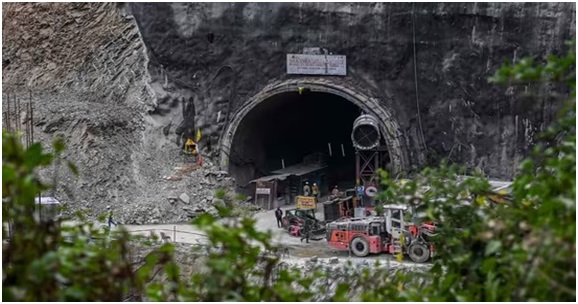
Experts in Uttarakhand have resorted to ‘rat-hole’ mining to help rescue 41 workers trapped inside the collapsed Silkyara tunnel.
Context:
- Rat hole mining, a controversial and outlaw mining practice is back in the spotlight nearly 9 years after it was banned by the National Green Tribunal (NGT) over severe environmental impacts and unsafe labour conditions.
- The rat hole mining technique is being used to extract the 41 construction workers trapped inside a collapsed Uttarakhand tunnel after modern machinery failed to execute the rescue operation.
- The attempt to free 41 trapped workers in the collapsed Silkyara-Barkot tunnel encountered a significant setback as the auger joint of the debris-drilling machine broke.
What is Rat-hole Mining?
- Rat hole mining is a method of extracting coal from narrow, horizontal seams, prevalent in Meghalaya.
- The term “rat hole” refers to the narrow pits dug into the ground, typically just large enough for one person to descend and extract coal.
- Once the pits are dug, miners descend using ropes or bamboo ladders to reach the coal seams.
- The coal is then manually extracted using primitive tools such as pickaxes, shovels, and baskets.
- The rat-hole mining is broadly of two types.
- The first type is a side-cutting procedure, in the side-cutting procedure, narrow tunnels are dug on the hill slopes and workers go inside until they find the coal seam.
- The coal seam in the hills of Meghalaya is very thin, less than 2 m in most cases.
- In the other type of rat-hole mining, called box-cutting, a rectangular opening is made, varying from 10 to 100 sqm, and through that a vertical pit is dug, 100 to 400 feet deep.
- Once the coal seam is found, rat-hole-sized tunnels are dug horizontally through which workers can extract the coal.
Environmental and Safety Concerns Associated with Rat-hole mining:
- Rat hole mining poses significant safety and environmental hazards.
- The mines are typically unregulated, lacking safety measures such as proper ventilation, structural support, or safety gear for the workers.
- Additionally, the mining process can cause land degradation, deforestation, and water pollution.
- This method of mining has faced severe criticism due to its hazardous working conditions, environmental damage, and numerous accidents leading to injuries and fatalities.
- Despite attempts by authorities to regulate or ban such practices, they often persist due to economic factors and the absence of viable alternative livelihoods for the local population.
When and Why was Rat-hole Mining Banned?
- This rat-mining method has faced severe criticism due to its hazardous working conditions, environmental damage, and numerous accidents leading to injuries and fatalities.
- Experts have opined that the mines are typically unregulated, lacking safety measures such as proper ventilation, structural support, or safety gear for the workers, thereby creating a rather harmful environment for the rat-miners.
- The National Green Tribunal (NGT) banned the practice in 2014 and retained the ban in 2015.
- The NGT observed, “It is also informed that there is umpteen number of cases where by virtue of rat-hole mining, during the rainy season, water flooded into the mining areas resulting in the death of many individuals including employees/workers."
How Rat-hole Mining has Helped in Uttarakhand Tunnel Rescue Operation?
- The state-of-the-art American auger machine drilled roughly 47-48 meters of a horizontal tunnel.
- After that, it’s driller tool broke inside the drilled passage and authorities said that the damage was beyond repair.
- The rescue teams then resorted to manual drilling – a safer but time-consuming option. However, they brought in a team of rat hole mining experts who completed the remaining task in less than two days.
- The rat hole miners went inside the steel pipe being pushed inside the rubble through which trapped workers were pulled out and drilled a horizontal passage.
- The process was somewhat similar to the digging of a narrow tunnel for coal mining.
What are the Other Methods Used to Rescue the Trapped Workers in the Silkyara Tunnel?
- Vertical drilling: Vertical drilling is done through a boring machine, digging straight down from the ground using electrical tools and equipment.
- In the case of the Uttarakhand tunnel collapse, a vertical drill had been boring into the ground and an 800-mm pipe had been inserted to bring out the trapped workers.
- Auger mining (horizontal drilling): A horizontal auger machine or a directional drill is a specialised tool designed to drill horizontal bores or create underground tunnels without disturbing the ground.
- These machines are used to lay down water and gas pipes and to dig a tunnel.
- However, the auger machine in the case of the Uttarakhand tunnel collapse failed to free the trapped workers as it hit metal obstructions and eventually broke down, beyond repair.
What is a Horizontal Auger Machine?
- A horizontal auger machine, also known as a horizontal boring machine or directional drill, is a specialized tool designed for creating horizontal bores or underground tunnels without causing surface disruption.
- It typically features a rotating helical screw blade, referred to as an auger, attached to a central shaft or drill, facilitating penetration through rotation.
- Applications: Widely utilized in construction, utility installations (such as laying pipes or cables), and various infrastructure projects.
- Working Mechanism: Positioned at the starting point of the bore, often on the surface, the machine comprises a drill head with an auger or a drill string.
- The rotating auger at the front of the machine cuts through soil, rock, or other underground materials.
- The rotation is powered by hydraulic or mechanical systems.
- As the auger progresses, it removes the material from the tunnel.
- The removal process is usually facilitated by a drilling fluid or mud pumped through the drill string.
- The drilling fluid serves multiple purposes, including lubricating the drilling process, cooling the cutting head, and transporting excavated material back to the surface.