
Faster EV Adoption and Battery Localisation: A Path to Energy Security

- 04 Sep 2026
In News:
A recent study by the International Council on Clean Transportation (ICCT) has highlighted the potential of faster electric vehicle (EV) adoption and domestic battery-cell manufacturing to substantially reduce India’s dependence on imported oil and batteries. The study assesses different EV and battery-localisation pathways for 2024–2050, linking transport electrification with India’s energy security, manufacturing capabilities and decarbonisation goals.
Key Findings of the ICCT Study
The study examines three EV adoption pathways—Baseline, Momentum and Ambitious—along with varying degrees of domestic battery-cell manufacturing.
- Under the Ambitious pathway, combined faster EV adoption and high battery localisation could reduce India’s annual oil and battery import bill from about $153 billion to $28 billion by 2050, implying potential savings of up to $125 billion annually.
- Faster EV adoption alone could generate around $94 billion in annual savings, even if battery cells continue to be imported.
- Greater domestic battery manufacturing could provide an additional $31 billion in annual savings.
- Annual EV battery demand could reach approximately 573 GWh by 2050, highlighting the strategic importance of developing domestic battery-cell manufacturing capacity.
- The benefits of electrification become even greater when global crude oil prices rise, as EVs reduce India's exposure to volatile petroleum import costs.
Significance for India
1. Energy Security: India is highly dependent on imported crude oil. Transport electrification can reduce petroleum demand and limit vulnerability to geopolitical disruptions and international price shocks.
2. Atmanirbhar Bharat: Domestic battery production can strengthen indigenous value chains in cells, battery packs, electric mobility and associated components, reducing import dependence.
3. Decarbonisation: Electrification of road transport can reduce fossil-fuel consumption and contribute to India's long-term net-zero transition.
4. Industrial Competitiveness: Rising battery demand creates opportunities for domestic manufacturing, technological innovation, employment and integration into global clean-energy supply chains.
Challenges
EV transition also faces challenges including high upfront costs, charging infrastructure gaps, grid requirements, dependence on critical minerals, battery recycling and limited domestic cell-manufacturing capacity. Moreover, electrification delivers greater climate benefits when accompanied by increasing shares of renewable electricity.
Way Forward
India needs an integrated EV strategy combining faster vehicle electrification with domestic battery manufacturing, critical-mineral security, charging infrastructure, renewable-energy expansion and battery recycling. Policies such as the Production Linked Incentive (PLI) scheme for Advanced Chemistry Cell (ACC) batteries can be complemented by investments in R&D and mineral supply chains.
Conclusion
The ICCT findings demonstrate that EV adoption is not merely a climate-policy instrument but also an energy-security and industrial-policy opportunity. A coordinated transition towards electric mobility and domestic battery manufacturing can reduce India's exposure to oil-price volatility, strengthen domestic manufacturing and support its broader objectives of energy security, Atmanirbhar Bharat and sustainable development.
India–Australia Long-Term Uranium Supply Agreement
- 21 Jul 2026
In News:
India has signed a long-term uranium supply agreement with Australia, operationalising the India–Australia Civil Nuclear Cooperation Agreement, signed nearly 12 years ago. The agreement follows similar long-term uranium supply deals with Canada and Kazakhstan, reflecting India's strategy to diversify fuel sources and support its expanding nuclear power programme.
Why is the Agreement Important?
India has set an ambitious target of expanding its civil nuclear power capacity to 100 GWe by 2047. Achieving this goal requires a reliable supply of nuclear fuel, particularly as domestic uranium production is insufficient to meet future demand. The agreement strengthens India's long-term energy security while reducing dependence on a limited number of suppliers.
The exact quantity of uranium oxide (yellowcake) and the duration of the agreement have not been disclosed.
India's Uranium Requirement
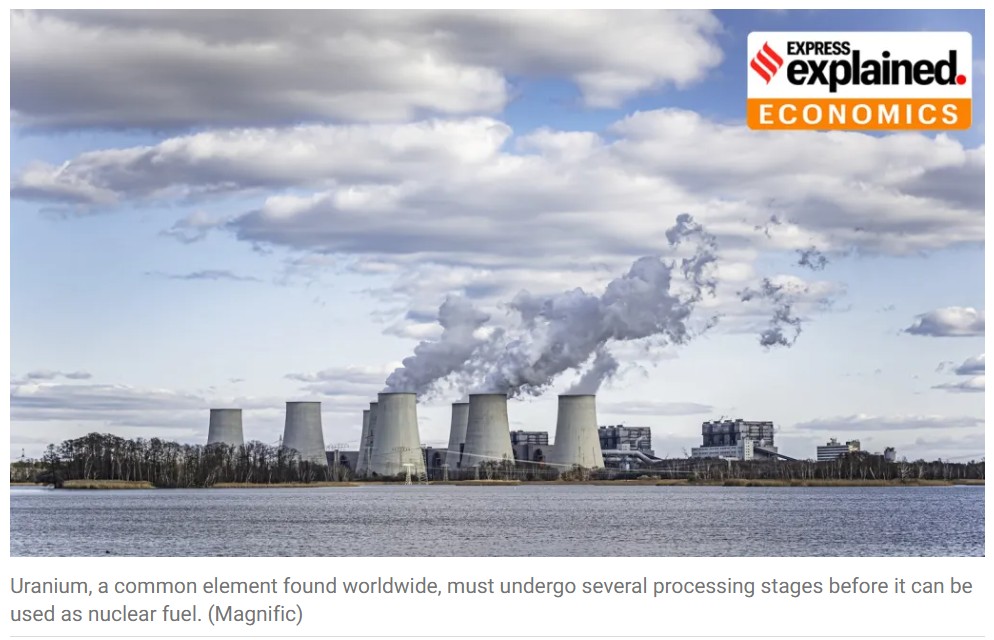
Uranium is processed through several stages before it becomes usable nuclear fuel, including mining and milling, conversion, enrichment (where required), and fuel fabrication.
India's Pressurised Heavy Water Reactors (PHWRs) use natural uranium, sourced through a combination of domestic production and imports. However, the country's Light Water Reactors (LWRs) at Tarapur and Kudankulam rely entirely on imported enriched uranium.
Although India possesses about 4.3 lakh tonnes of uranium oxide reserves spread across several states, domestic production currently meets the fuel requirement for only 2.4 GWe out of the country's 8.7 GWe installed nuclear capacity. The remaining requirement is met through imports.
A Ministry of Power committee has estimated that by 2047, India will require an additional 8,029 tonnes of natural uranium and 1,045 tonnes of enriched uranium annually to support the planned expansion.
NSG Waiver and Expanding Import Network
India's ability to import uranium became possible after receiving the 2008 Nuclear Suppliers Group (NSG) clean waiver, making it the only non-signatory to the Nuclear Non-Proliferation Treaty (NPT) permitted to engage in international nuclear commerce.
Besides Australia, India has recently concluded long-term uranium supply arrangements with:
- Canada (Cameco Corporation)
- Kazakhstan (Kazatomprom)
It also imports uranium from Russia and Uzbekistan, while France and the United States have supplied uranium products in recent years.
Between 2008–09 and 2024–25, India imported 18,842.6 metric tonnes of uranium products. In 2024–25, imported uranium contributed to 39,180 million units out of the total 56,631 million units of nuclear electricity generated.
Challenges
Despite possessing significant uranium reserves, India's ore is generally of low grade, making domestic mining and processing three to four times more expensive than importing uranium.
However, growing global demand for nuclear energy could increase international uranium prices in the future. Therefore, the government has been advised to simultaneously strengthen domestic uranium production through expansion of the Uranium Corporation of India Limited (UCIL) to enhance long-term energy security.
Significance
The Australia agreement strengthens India's fuel security for its expanding nuclear programme and supports the target of 100 GWe nuclear capacity by 2047. It also diversifies uranium imports, reduces supply risks, and complements India's broader strategy of expanding clean, low-carbon energy while balancing import dependence with increased domestic production.
Strait of Hormuz and India's Energy Security
- 16 Jul 2026
In News:
US President Donald Trump withdrew his proposal to impose a 20% fee on commercial vessels transiting the Strait of Hormuz, replacing it with a proposal centred on trade and investment agreements. The reversal followed widespread criticism over the proposal's legality, feasibility and potential impact on global trade.
About the Strait of Hormuz
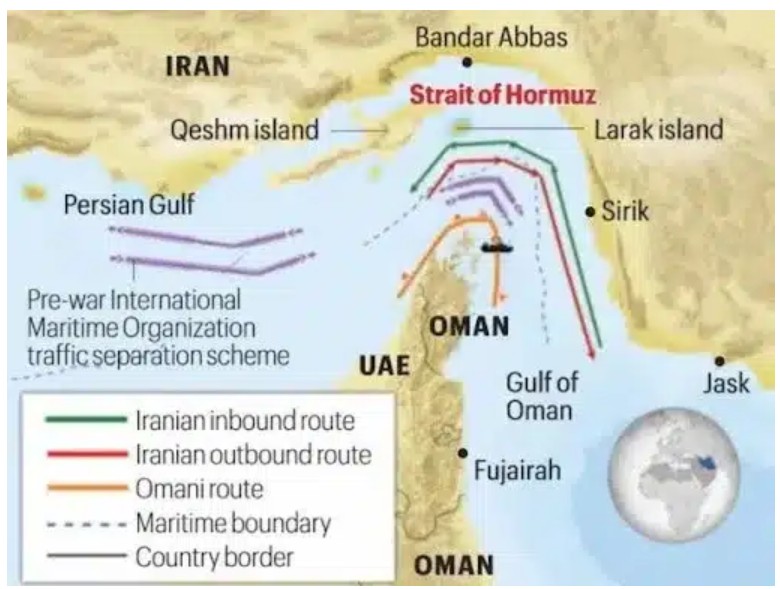
The Strait of Hormuz is one of the world's most strategically important maritime chokepoints, connecting the Persian Gulf with the Gulf of Oman and the Arabian Sea. It serves as the primary export route for crude oil and natural gas from major Gulf producers to global markets, making uninterrupted navigation through the strait vital for global energy security.
The US Proposal and Its Withdrawal
The US had proposed imposing a 20% "United States Reimbursement Fee" on commercial cargo transiting the Strait of Hormuz, arguing that the fee would compensate the US for providing maritime security in the region.
However, the proposal faced several practical and legal challenges:
- No clarity on how the fee would be calculated.
- Potential sharp increase in global shipping and energy costs.
- Questions regarding enforcement under international law.
- Uncertainty over the US's ability to guarantee uninterrupted maritime security.
Amid strong international criticism, the proposal was withdrawn within a day.
International Legal Concerns
The International Maritime Organization (IMO) stated that there is no legal basis for imposing mandatory transit charges on vessels passing through international straits.
Under the United Nations Convention on the Law of the Sea (UNCLOS), straits used for international navigation enjoy the principle of transit passage, under which ships and aircraft have the right to pass continuously and expeditiously without the payment of transit tolls.
Although neither the United States nor Iran has ratified UNCLOS, these principles are widely regarded as customary international law.
Strategic Contest over the Strait
The controversy reflects the broader geopolitical competition between the United States and Iran over influence in the Strait of Hormuz.
Recent developments include:
- An interim US-Iran understanding (June 2026) temporarily improving vessel movement.
- Renewed tensions leading to a decline in commercial transits.
- Iran asserting its role as the "guardian" of the Strait while claiming sovereignty over parts of the waterway.
- Continued military confrontation affecting commercial navigation.
Implications for India
India is particularly vulnerable to disruptions in the Strait because of its heavy dependence on energy imports from West Asia.
According to the source:
- Around 40% of India's crude oil imports transit through the Strait of Hormuz.
- Nearly 60% of LNG imports and 90% of LPG imports also pass through the Strait.
- India imports over 88% of its crude oil, around 60% of LPG, and nearly 50% of natural gas.
The proposed 20% transit fee would have significantly increased India's energy import costs. According to the article:
- A $75/barrel crude oil price could have increased to over $90/barrel after the proposed fee.
- The fee alone could have added about $9 billion annually to India's oil import bill.
- Every $1 increase in crude oil prices raises India's annual oil import bill by up to $2 billion.
Higher energy prices could also worsen inflation, the current account deficit, fiscal pressures and exchange rate stability.
India's Response
India has consistently supported the principle of free and uninterrupted navigation through international waterways.
To manage supply disruptions, India has:
- Diversified crude oil sourcing.
- Prioritised energy security despite higher import costs.
- Temporarily rationed gas supplies to certain industries during periods of disruption.
- Continued advocating for open sea lanes and stability in West Asia.
India’s Green Resurgence: Achieving Global Leadership in Renewable Energy
- 12 May 2026
In News:
India has secured its position as the world’s third-largest country in installed renewable energy (RE) capacity, trailing only China and the United States. According to the Renewable Energy Statistics 2026, India recently surpassed Brazil, marking a significant milestone in its journey toward the Viksit Bharat @2047 vision and its commitment to the Paris Agreement.
As of early 2026, India’s non-fossil fuel capacity has crossed 283.4 GW, accounting for more than 50% of the total installed power capacity—a target achieved five years ahead of the 2030 schedule.
Key Pillars of Growth: Solar and Wind Dominance
The transition is primarily fueled by a record-breaking expansion in solar and wind infrastructure. In the fiscal year 2025-26 alone, India added 55.3 GW of non-fossil capacity, the highest annual increase in its history.
- Solar Surge: Solar energy remains the fastest-growing sector, with installed capacity reaching 150.26 GW (a 53-fold increase since 2014). This growth is driven by utility-scale projects and a massive push for Distributed Renewable Energy (DRE), including rooftop solar and the PM-KUSUM scheme.
- Wind Momentum: Wind capacity has climbed to 56.09 GW, with 2025-26 witnessing a record annual addition of over 6 GW.
- Energy Mix: In July 2025, renewables met a historic 51.5% of India’s peak electricity demand, proving that green energy is now a backbone of the national grid, rather than just a supplementary source.
The Morgan Stanley Insight: Manufacturing vs. Imports
While the installation pace is world-leading, a recent report by Morgan Stanley underscores a critical strategic challenge: the upstream supply chain.
1. The Manufacturing Leap: India has successfully scaled its "downstream" manufacturing. Solar module production capacity has skyrocketed from 2.3 GW in 2014 to approximately 172 GW in 2026. This allows India to meet much of its domestic demand for finished panels and even look toward exports.
2. The Upstream Bottleneck: The "upstream" components—polysilicon, ingots, and wafers—remain a point of vulnerability. India still sources 60–80% of these critical materials from China. Morgan Stanley warns that until India localizes the production of solar cells (currently at ~25-27 GW) and the raw wafers, its energy transition will remain susceptible to global supply chain shocks and geopolitical tensions.
Policy Catalysts and Future Outlook
The government has deployed a mix of fiscal and regulatory tools to sustain this momentum:
- PLI Schemes: Production Linked Incentives are being utilized to bridge the gap in cell and wafer manufacturing.
- Green Hydrogen Mission: With an outlay of nearly ?20,000 crore, India aims to produce 5 MMT of green hydrogen by 2030, integrating RE into heavy industries like steel and shipping.
- Grid Modernization: Significant investments in Green Energy Corridors and smart metering are ensuring that the intermittent nature of solar and wind does not destabilize the national grid.
The Strait of Hormuz: A Historical Chokepoint of Imperial Power and Energy Security

- 30 Apr 2026
In News:
In April 2026, the Strait of Hormuz re-emerged as the primary flashpoint in the escalating West Asia conflict. Following US-Israeli strikes, Iran restricted passage through the waterway, prompting a naval blockade by the Donald Trump administration. While these events are contemporary, they represent the latest chapter in a long history of imperial competition over a maritime chokepoint that controls the world’s energy pulse.
Strategic Geography: The Gateway of Trade
Connecting the Persian Gulf with the Gulf of Oman and the Arabian Sea, the Strait of Hormuz has historically linked the economies of India, Persia, Arabia, and East Africa. Its control has always dictated the flow of global wealth, shifting from spices and silk in the 16th century to petroleum in the 20th and 21st centuries.
The Era of Colonial Rivalry (16th – 18th Century)
1. Portuguese Dominance (1515–1622): The Portuguese Empire, led by its quest for "Spice and Soul," recognized the strait's value early. In 1515, they seized Hormuz Island, establishing the Castelo de Nossa Senhora da Conceição. Their model was one of direct military dominance, turning the island into a fortified toll point to tax trade routes. However, this high-cost militarized approach eventually became unsustainable.
2. The Dutch Interlude: By the 17th century, the Dutch East India Company (VOC) challenged the Portuguese. Operating as a quasi-sovereign power, the Dutch dominated trade from Bandar Abbas. Their decline in the 18th century—driven by corruption, high administrative costs, and the Fourth Anglo-Dutch War—created a power vacuum that the British were quick to fill.
3. The Anglo-Safavid Alliance: The turning point for British influence occurred in 1622 when the English East India Company allied with the Safavid ruler, Shah Abbas I, to expel the Portuguese, ending nearly a century of Iberian control.
British Hegemony and the "Trucial" Model
To safeguard maritime routes to British India (specifically Bombay), the United Kingdom adopted a more sophisticated and cost-effective model of control than the Portuguese.
- Suppression of Maritime Tribes: In 1809 and 1819, Britain launched naval campaigns against the Al Qawasim (Al Qasimi) confederation—a powerful maritime Sunni tribal group—accusing them of piracy to justify the destruction of their fleets.
- The Trucial System: Rather than direct colonization, Britain established a Treaty System with local Arab rulers. These sheikhdoms became known as the Trucial States (the precursors to the modern United Arab Emirates).
- Indirect Control: Under this arrangement, local rulers maintained internal autonomy while Britain controlled their foreign policy and defense. This ensured the strait remained a secure British corridor for the flow of Indian resources and British manufactured goods without the burden of heavy administration.
The 20th Century: The Pivot to Energy Security
At the dawn of the 20th century, the strategic value of the Strait of Hormuz underwent a fundamental shift from trade protection to energy security.
- The Oil Breakthrough: In 1908, George Bernard Reynolds discovered oil at Masjed Soleyman in Persia—the first major commercial strike in the region.
- The State Stakeholder: Recognizing oil as the future of naval power (transitioning from coal to oil under Winston Churchill), the British government acquired a 51% stake in the Anglo-Persian Oil Company (established 1909) by 1914.
- End of an Era: Britain maintained its treaty-based dominance until 1971, when it formally withdrew from the region, leading to the independence of the Trucial States and the modern geopolitical configuration of the Gulf.
Conclusion
The Strait of Hormuz has evolved from a 16th-century spice toll-gate into a 21st-century energy jugular. The current 2026 naval blockade is not an isolated event but a continuation of a 500-year-old struggle to control the world’s most vital maritime "choke." Understanding this history is essential for navigating the complex geopolitical landscape of modern West Asia.
Toward E100: The Strategic Roadmap for 100% Ethanol Blending in India
- 29 Apr 2026
In News:
India is currently at a pivotal junction in its energy transition, with the Union government aggressively advocating for 100% ethanol blending (E100). This initiative is not merely an environmental project but a strategic maneuver to achieve energy self-reliance, reduce the massive fiscal burden of fossil fuel imports, and provide a sustainable alternative for the automotive sector.
Understanding E100 and Flex-Fuel Technology
E100 refers to the use of pure ethanol as a standalone fuel for internal combustion engines. While promising, the transition from the current E20 (20% blend) to E100 presents significant technical and thermodynamic challenges.
- Energy Density Gap: Ethanol possesses roughly 45–55% less energy per litre compared to petrol. Consequently, E20 fuel already results in a 6–7% drop in mileage, a concern that scales significantly with higher blends.
- Engine Modification: Most vehicles currently on Indian roads are optimized for E20. Transitioning to E100 necessitates Flex-Fuel Vehicles (FFVs). These vehicles require:
- Corrosion-Resistant Systems: Ethanol is hygroscopic (absorbs water) and corrosive to standard rubber and plastic fuel lines.
- Advanced Sensors: "Smart" Engine Control Units (ECUs) are needed to detect the ethanol-to-petrol ratio and adjust fuel injection and ignition timing in real-time.
- Optimized Combustion: Since ethanol has a higher octane rating but lower calorific value, engines must be tuned for higher compression ratios.
The Feedstock Dilemma: 1G vs. 2G Ethanol
India’s ethanol journey has historically relied on First-Generation (1G) sources, primarily sugarcane molasses. However, this has raised the "food vs. fuel" debate and highlighted environmental trade-offs.
- Sustainability Concerns: Sugarcane is a water-intensive crop, often cultivated in water-stressed regions. The heavy use of fertilizers and pesticides further complicates its environmental footprint.
- The 2G Pivot: To mitigate these risks, the government is shifting focus toward Second-Generation (2G) ethanol. This involves using lignocellulosic biomass, such as rice straw and corn cobs.
- Pollution Mitigation: 2G ethanol production offers a dual benefit—it provides a value chain for crop residues, potentially eliminating stubble burning, a primary cause of winter smog in North India.
- Circular Economy: Integrating municipal solid waste and sewage into the feedstock mix aligns with the broader goal of a circular economy.
Regulatory Catalysts: CAFE III Norms
The transition to E100 is being indirectly accelerated by the Corporate Average Fuel Efficiency (CAFE) norms.
- CAFE III (Effective April 1, 2027): These upcoming regulations will be approximately 30% stricter than current limits. While they do not explicitly mandate ethanol, they penalize manufacturers based on the average CO? emissions of their entire fleet.
- Incentivizing Blends: To meet these stringent targets without transitioning entirely to electric vehicles (EVs), automakers are likely to adopt high-ethanol blends (E85/E100) to lower the carbon intensity of their internal combustion engine (ICE) portfolios.
Challenges and Policy Bottlenecks
Despite the rapid progress—moving from 2% blending in 2014 to a nationwide E20 rollout—several hurdles remain:
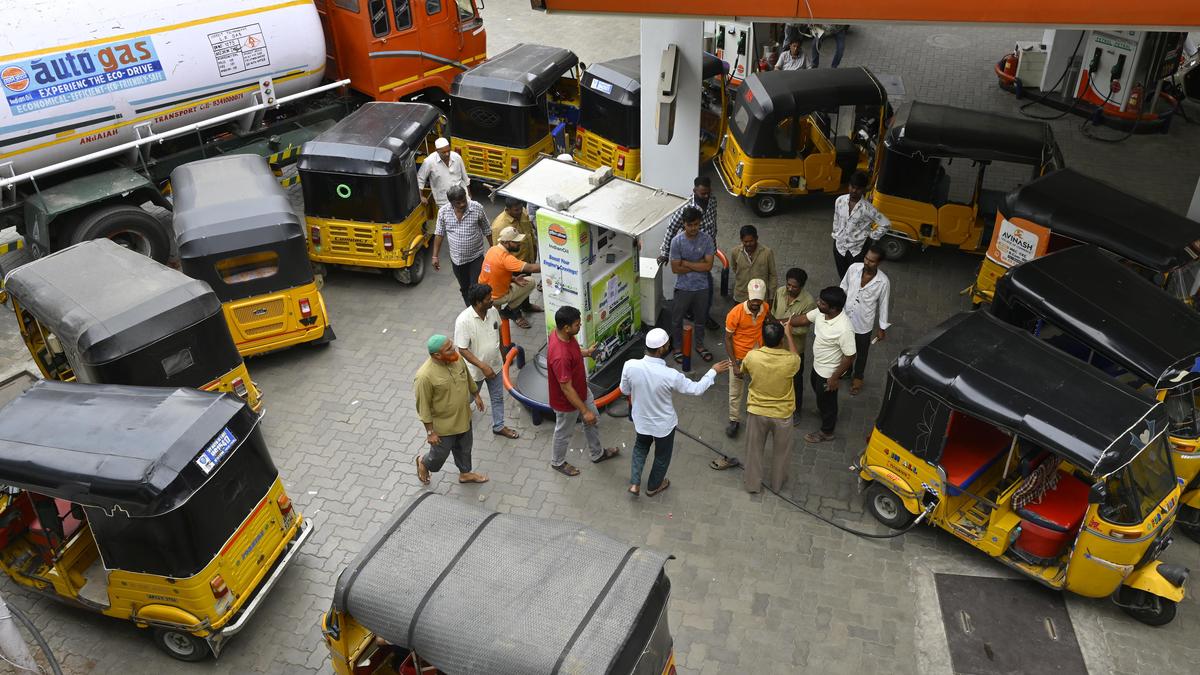
- Infrastructure Gaps: High-blend ethanol requires dedicated storage tanks and specialized dispensing pumps at retail outlets to prevent contamination and corrosion.
- Pricing Viability: Ethanol production remains cost-competitive only through government-administered pricing and subsidies. Without these, it often remains more expensive to produce than petrol.
- Consumer Acceptance: Public resistance persists due to the mileage penalty. For E100 to succeed, the price at the pump must be significantly lower than petrol to compensate for the lower fuel efficiency.
Conclusion
E100 represents a vital component of India’s Viksit Bharat @2047 vision. While technical and infrastructure bottlenecks are substantial, the convergence of environmental necessity, agricultural surplus, and stringent emission norms like CAFE III suggests that Flex-Fuel technology will be a cornerstone of India’s future mobility.
Strait of Hormuz Disruption and India’s Energy Security
- 02 Mar 2026
In News:
Escalating tensions involving Iran, the United States, and Israel have disrupted shipping movements through the Strait of Hormuz, the world’s most critical energy chokepoint. Although no formal closure has been declared, heightened military activity and security risks have led insurers, traders, and shipping firms to suspend operations, with numerous oil tankers anchored in Gulf waters. The situation raises serious concerns for India’s energy security, given its heavy dependence on West Asian energy supplies.
Strategic Importance of the Strait of Hormuz
The Strait of Hormuz connects the Persian Gulf to the Gulf of Oman and the Arabian Sea and handles nearly one-fifth of global petroleum and LNG trade. Approximately 15 million barrels of crude oil per day pass through this narrow corridor. Even if alternative Gulf pipelines operate at full capacity, a significant portion of global supply would remain exposed in the event of sustained disruption.
Thus, any instability in this region directly affects global oil prices and supply chains.
India’s Energy Dependence
India is the world’s third-largest oil consumer and imports over 88% of its crude oil requirements. Roughly 2.5–2.7 million barrels per day, accounting for about half of India’s crude imports, transit through the Strait of Hormuz. India also relies heavily on West Asia for LPG and LNG supplies, making uninterrupted maritime flows crucial for economic stability.
Impact on India
1. Crude Oil: Manageable in the Short Term
India is relatively better prepared to handle short-term crude disruptions due to:
- Refiners holding over 10 days of crude inventory
- Around one week of fuel stocks
- Availability of Strategic Petroleum Reserves (SPR)
Additionally, India can diversify imports by sourcing crude from Russia, the United States, West Africa, and Latin America. Russian supplies, including cargoes in floating storage, offer flexibility.
However, even if supply continuity is maintained, price volatility remains a major concern. Brent crude has already crossed $72 per barrel, and prolonged conflict could push prices beyond $100 per barrel, increasing inflationary pressures and widening India’s current account deficit.
2. LPG: A Greater Vulnerability
India imports 80–85% of its LPG requirements, largely from Gulf suppliers via the Strait. Unlike crude oil, India does not maintain substantial strategic LPG reserves. A prolonged disruption could therefore affect domestic cooking fuel supplies and increase subsidy burdens.
3. LNG: Limited Structural Cushion
Around 60% of India’s LNG imports transit through the strait. LNG markets are tighter compared to crude oil, and spot cargo availability is limited. In case of extended disruption, India may face difficulties in securing alternative supplies, affecting power generation and industrial output.
Price Outlook and Duration
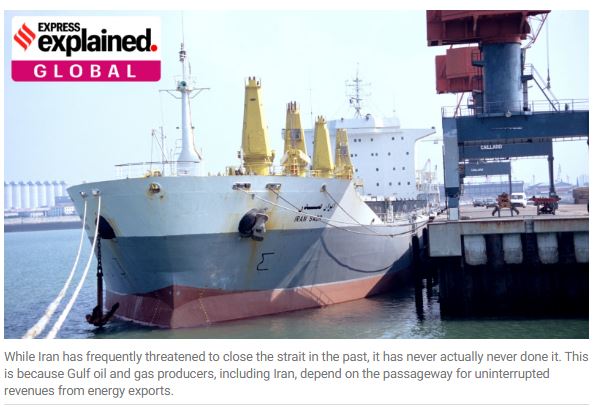
The extent of impact will depend on the duration and intensity of the conflict. Escalation may add a “war premium” to oil prices. However, a full closure remains unlikely because Gulf producers including Iran depend heavily on energy exports for revenue. This mutual economic interdependence reduces the probability of a prolonged, total blockade.
Conclusion
The Strait of Hormuz crisis highlights India’s structural vulnerability to geopolitical disruptions in West Asia. While diversified crude sourcing and strategic reserves provide short-term resilience, LPG and LNG dependence remain key risk areas. The episode reinforces the need for long-term strategies including energy diversification, expansion of strategic reserves, renewable energy transition, and strengthened maritime security diplomacy. Ensuring energy security will remain central to India’s economic and strategic stability in an increasingly volatile global order.
Strait of Hormuz Crisis and Global Energy Security
- 24 Feb 2026
In News:
Rising tensions between the United States and Iran have pushed international oil prices to a six-month high, with Brent crude crossing $71 per barrel, over 12% higher in a month. Although recent nuclear talks in Geneva showed limited progress, the absence of a breakthrough and heightened American military presence in West Asia have intensified market anxiety. Any escalation, particularly involving the Strait of Hormuz, could significantly disrupt global energy supplies and destabilize the fragile global economy.
The Strait of Hormuz: A Strategic Chokepoint
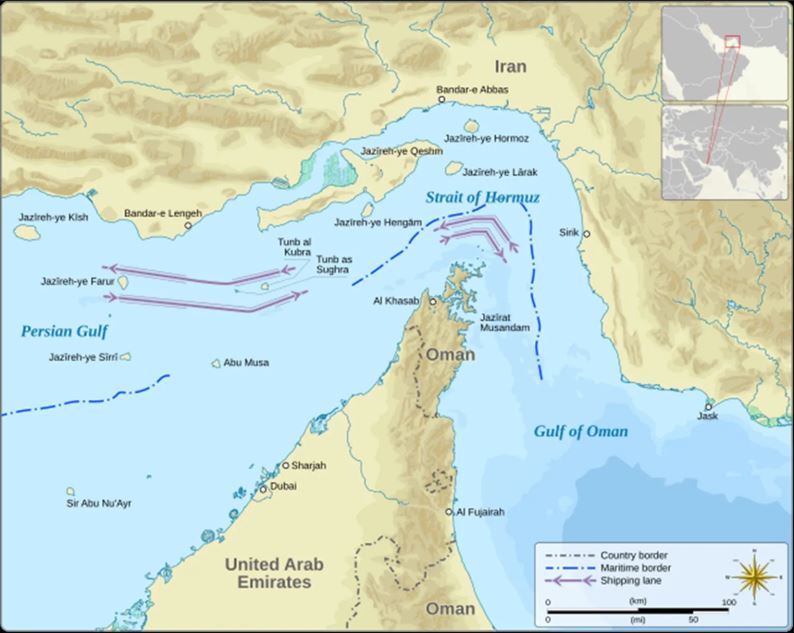
- The Strait of Hormuz, a narrow waterway between Iran and Oman connecting the Persian Gulf to the Gulf of Oman and the Arabian Sea, is widely regarded as the world’s most critical oil transit chokepoint.
- Nearly one-fifth of global petroleum consumption and about 20% of global LNG trade pass through it daily-approximately 15 million barrels of crude oil. Major Gulf producers such as Saudi Arabia, Iraq, UAE, and Kuwait depend heavily on this route for exports.
- Oil markets fear that in the event of US military strikes, Iran may retaliate by disrupting shipping through the Strait. While Iran has frequently threatened to block the Strait, a complete blockade would be strategically risky. It could alienate China-its key oil buyer-damage ties with Oman, and invite international military retaliation. Nonetheless, if Tehran perceives an existential threat, escalation cannot be ruled out.
Limited Alternatives and Escalation Risks
Although some Gulf states possess bypass pipelines, their capacity is limited. Even at full utilization, nearly 9 million barrels per day (around 9% of global demand) would remain vulnerable during a major disruption. Additionally, threats extend beyond Hormuz. Proxy attacks from Yemen targeting vessels in the Bab el-Mandeb Strait-another key chokepoint linking the Red Sea and the Arabian Sea-add to systemic risks for global energy flows.
Possible Oil Price Scenarios
Experts outline four potential escalation scenarios:
- Targeted disruption of Iranian oil exports: Prices may rise by $10–12 per barrel due to supply gaps, particularly affecting China.
- Disruption of Strait of Hormuz flows: Prices could exceed $90 per barrel if up to 20% of global oil trade is throttled.
- Attacks on Iranian oil infrastructure: Prolonged supply loss could push prices beyond $100 per barrel.
- Wider regional conflict involving Gulf producers: Oil prices could surge past $130 per barrel, rivaling spikes seen during major geopolitical crises.
Thus, oil market volatility is now a central strategic variable in US-Iran calculations.
Implications for India
- India, the world’s third-largest crude oil consumer, is highly vulnerable. It imports over 88% of its oil requirements, amounting to nearly 2 billion barrels annually. Every $1 increase in crude prices adds approximately $2 billion to India’s annual import bill, exerting pressure on the current account deficit, inflation, and fiscal management.
- Crucially, more than 40% of India’s crude imports transit through the Strait of Hormuz. Any disruption would directly threaten India’s energy security, refinery operations, and broader economic stability. Higher oil prices could also weaken the rupee, increase fuel subsidies, and raise transportation and food costs.
Strategic Dilemma and Way Forward
The situation presents a complex dilemma. While confrontation may risk energy disruptions and price spikes, inaction could embolden geopolitical adversaries. For India, diversification of energy sources, expansion of strategic petroleum reserves, increased renewable energy adoption, and diplomatic engagement in West Asia remain critical policy priorities.
In conclusion, the Strait of Hormuz crisis underscores the interconnectedness of geopolitics and energy security. Even localized tensions in West Asia have global economic consequences, making stability in this maritime corridor vital not only for the region but for energy-dependent economies like India.