
Institutionalising Artificial Intelligence for Culture and Languages in India
- 10 Feb 2026
In News:
India is increasingly leveraging Artificial Intelligence (AI) as a strategic instrument for preserving cultural heritage, strengthening linguistic diversity and enabling inclusive development. Recent policy initiatives reflect a shift from passive archival preservation to active cultural participation, positioning AI as “Technology for Humanity”.
Rationale: Cultural Diversity and Digital Inclusion
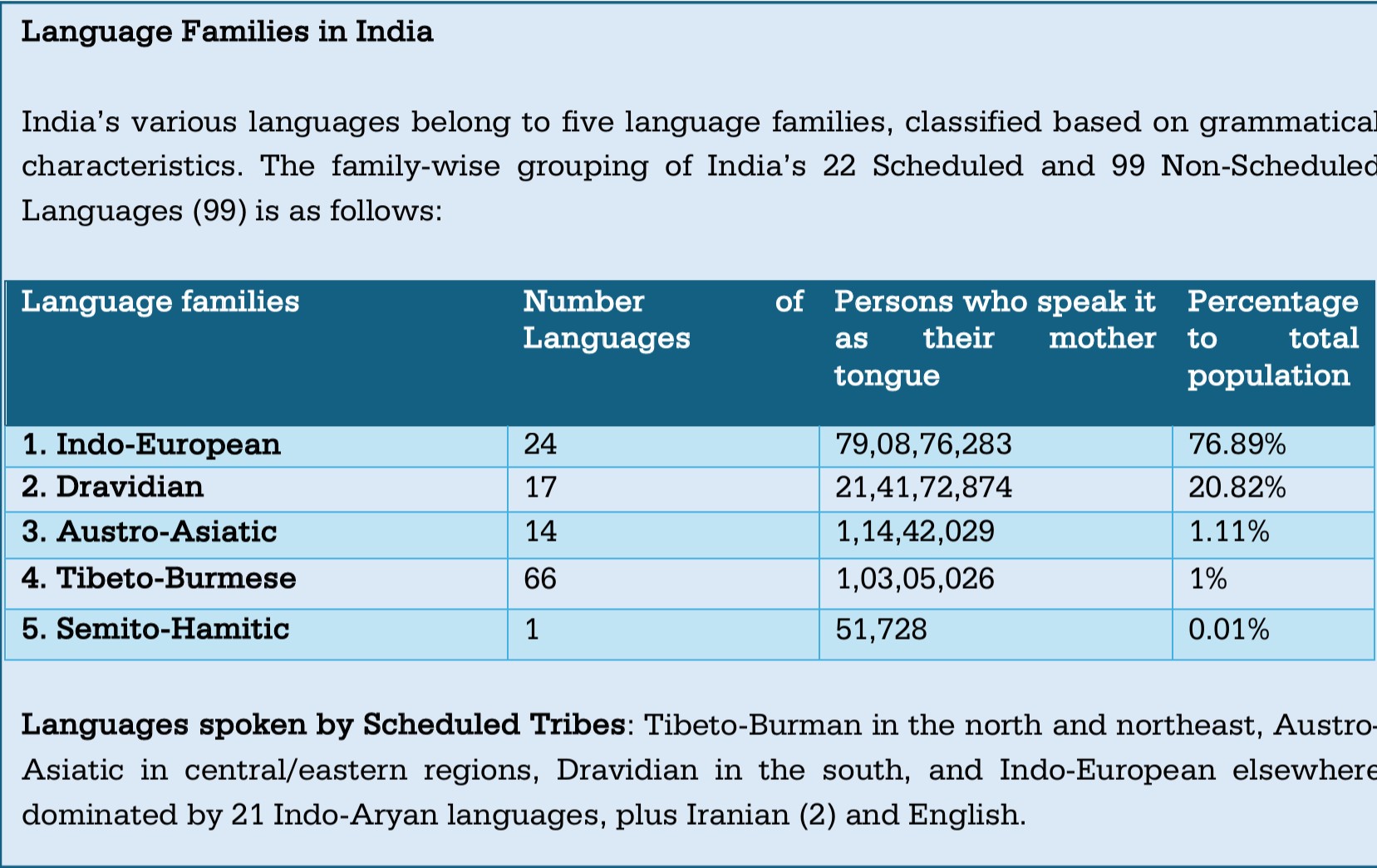
India’s linguistic landscape is vast and complex. As per Census 2011, India has 22 Scheduled languages and 99 Non-Scheduled languages, besides hundreds of tribal and mother tongues. This diversity, while culturally enriching, has historically created barriers in digital access, governance and knowledge dissemination.
AI is being deployed to bridge these divides by enabling multilingual access, voice-based interaction and enhanced discoverability of cultural and knowledge assets.
Language as Digital Public Infrastructure
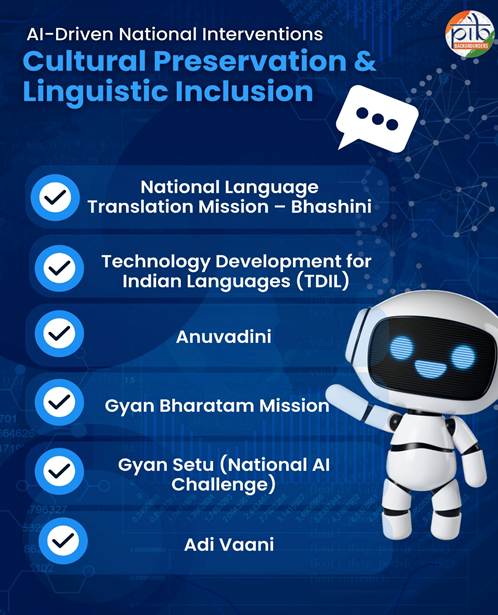
BHASHINI (National Language Translation Mission)
Launched in 2022, BHASHINI functions as a foundational multilingual AI infrastructure.
Key data:
- Supports voice services in 22 languages
- Provides text services in 36 languages
- Hosts 350 AI models and datasets
- Has processed over 4 billion language inferences
BHASHINI demonstrated real-time translation at Kashi Tamil Sangamam 2.0 and powered the multilingual “Kumbh Sah’AI’yak” chatbot at Maha Kumbh 2025, providing assistance in 11 languages.
Technology Development for Indian Languages (TDIL)
TDIL laid the groundwork for:
- OCR for Indian s
- Machine translation
- Speech-to-text and text-to-speech systems
It enabled scalable Indian language computing and supports platforms like BHASHINI.
Anuvadini (AICTE)
An AI-driven multilingual translation platform that:
- Translates technical and academic textbooks
- Strengthens Indian languages as mediums of higher education
- Integrates with repositories like e-KUMBH
AI for Cultural Heritage and Knowledge Systems
Gyan Bharatam Mission (2024–31)
- Approved outlay: ?482.85 crore
- Over 44 lakh manus documented in the Kriti Sampada repository
- Uses AI-based Handwritten Text Recognition (HTR) and metadata extraction
- Aims to create a National Digital Repository
This marks a transition from physical archives to shared digital access.
Gyan-Setu National AI Challenge
Focused on:
- Manu digitisation
- deciphering
- Knowledge dissemination
It generated deployable AI prototypes for heritage preservation.
Adi Vaani (Tribal Language Platform)
- Covers languages such as Santali, Bhili, Mundari and Gondi (beta phase)
- Enables real-time translation and speech tranion
- Supports subtitling of public advisories in tribal languages
This addresses the challenge of low-resource language datasets and oral traditions.
Economic Empowerment and Cultural Participation
AI is integrating artisans into digital value chains by:
- Enabling multilingual catalogues for GI-tagged products
- Providing voice-based digital interfaces for low-literacy users
- Supporting AI-based tagging for authenticity and provenance
This enhances market access while preserving cultural identity.
Key Challenges
- Digital literacy and infrastructure gaps in rural and tribal regions
- Limited datasets for endangered languages
- Manus held in private collections
- Authenticity and intellectual property concerns
- Need for offline-capable AI systems
Way Forward
Policy discourse, including NITI Aayog’s recommendations, emphasises:
- Expanding language AI as core digital public infrastructure
- Developing open-source AI models
- Creating verifiable digital credentials for artisans
- Promoting multi-stakeholder collaboration
Conclusion
With initiatives such as BHASHINI (2022) and the ?482.85 crore Gyan Bharatam Mission (2024–31), India is institutionalising AI as a guardian of its civilisational heritage. By aligning technological progress with linguistic inclusion and livelihood generation, India is transforming AI from a tool of automation into an instrument of cultural resilience and social empowerment.
Heritage Conservation Architect
- 17 Dec 2025
In News:
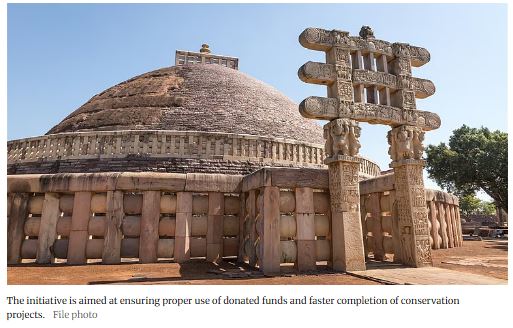
The Ministry of Culture has initiated a new framework to empanel heritage conservation architects to strengthen the scientific conservation and restoration of monuments protected by the Archaeological Survey of India (ASI). The move is aimed at improving the quality, accountability, and speed of conservation projects, especially those supported by private and corporate funding.
Who is a Heritage Conservation Architect?
A heritage conservation architect is a specialised professional trained in preserving historic structures using methods that respect original materials, design, and cultural significance. Their role goes beyond regular architectural practice, as it requires adherence to internationally accepted conservation principles such as minimal intervention, reversibility, and authenticity.
The Initiative Explained
The Ministry has begun creating a national panel of ASI-approved conservation architects. This panel will serve as a vetted pool of experts who can be engaged for conservation projects at protected monuments.
The reform is closely linked to the National Cultural Fund (NCF), which was established in 1996 to mobilise public and private funds, including Corporate Social Responsibility (CSR) contributions, for safeguarding India’s cultural heritage. Under the revised framework, donors can now directly engage empanelled architects for projects funded through the NCF.
Key Features of the Reform
A central feature of the initiative is greater flexibility for donors. Private entities and corporates funding conservation can choose architects from the ASI-approved panel for monuments they wish to support. This is expected to encourage higher private participation and faster project execution.
However, ASI oversight remains mandatory. All conservation works, regardless of funding source, will be monitored by ASI to ensure adherence to scientific conservation standards and legal safeguards under heritage protection laws.
Empanelled architects will have clearly defined responsibilities. These include preparing Detailed Project Reports (DPRs), designing conservation strategies, providing project management assistance, and supervising the execution of works.
The actual on-ground restoration will be carried out by agencies selected by donors, but only after due approval from ASI. This ensures that while funding and execution may involve private actors, technical integrity and regulatory control remain with the government.
Eligibility and Tenure
To qualify for empanelment, architects must demonstrate prior experience in conserving or restoring heritage structures that are over 100 years old. This ensures that only professionals with relevant technical expertise handle sensitive monuments.
Empanelment will initially be valid for three years, subject to annual performance review, creating a system of accountability and quality assurance.
Significance
This initiative represents a shift toward a public–private partnership model in heritage conservation. It seeks to combine professional expertise, private funding, and state oversight to address long-standing challenges such as funding shortages, project delays, and uneven conservation quality.
If implemented effectively, the system can enhance preservation outcomes while ensuring that India’s vast architectural heritage is conserved using globally accepted scientific methods.
Conclusion
The empanelment of heritage conservation architects under ASI supervision is a structural reform that balances professionalisation, accountability, and stakeholder participation. It reflects a modern approach to heritage management where conservation is treated not merely as maintenance, but as a specialised, knowledge-driven discipline essential for safeguarding India’s cultural legacy.
150 years of Vande Mataram
- 12 Dec 2025
In News:
The commemoration of 150 years of Vande Mataram has revived discussion on its literary origins, nationalist role, and continuing political debate. The song occupies a unique position in India’s freedom struggle and constitutional history, symbolising patriotic devotion while also reflecting the complexities of cultural and religious diversity.
Origins and Literary Context
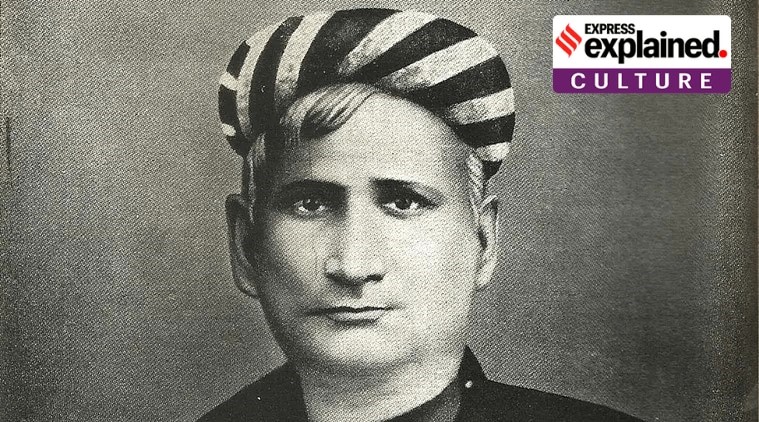
Vande Mataram was composed around 1875 by Bankim Chandra Chattopadhyay and later included in his novel Anandamath (1882). The novel, set against the backdrop of the late 18th-century Sanyasi resistance, portrays ascetic warriors (Santanas) devoted to liberating the motherland. The “Mother” symbolised the nation rather than a literal deity, represented through three images: the glorious past, the suffering present, and a rejuvenated future India. Thus, the song fused spiritual imagery with emerging anti-colonial nationalism.
Transformation into a Nationalist Symbol
By the early 20th century, Vande Mataram evolved from a literary hymn into a mass political slogan. It became central to the Swadeshi Movement after the 1905 Partition of Bengal, energising boycott campaigns and protest marches. Leaders such as Sri Aurobindo and Rabindranath Tagorepopularised it; Tagore famously sang it at the 1896 Calcutta session of the Indian National Congress. The British administration viewed the chant as seditious, often responding with bans, arrests, and repression—thereby enhancing its symbolic power as an expression of resistance.
Debates over Religious Imagery
Despite its unifying nationalist appeal, certain later stanzas invoked imagery associated with Hindu goddesses such as Durga, which some Muslim leaders considered exclusionary. In the 1930s, as the freedom movement sought broader communal unity, the Indian National Congress addressed these concerns. In 1937, the Congress Working Committee resolved that only the first two stanzasdeemed free from sectarian referenceswould be used at official gatherings. This compromise reflected the leadership’s attempt to balance cultural heritage with inclusive nationalism.
Constitutional Position
At the dawn of Independence, the Constituent Assembly faced the task of choosing national symbols. On 24 January 1950, Assembly President Rajendra Prasad announced that Jana Gana Mana would be the National Anthem, while Vande Mataram, owing to its historic role in the freedom struggle, would enjoy “equal honour and status.” This dual recognition sought to preserve unity while acknowledging the emotional and historical significance of the song.
Cultural Legacy
Musically, Vande Mataram has been rendered in various classical and modern forms, from early compositions by Jadunath Bhattacharya and performances by Tagore to orchestral, cinematic, and contemporary adaptations. Its continued presence in public life illustrates how national symbols evolve across generations while retaining core historical meaning.
Conclusion
Vande Mataram embodies the intersection of literature, nationalism, and constitutional values. Its journeyfrom a novelistic hymn to a freedom slogan and finally to a constitutionally honoured national songhighlights India’s effort to reconcile cultural memory with pluralism.
Heritage Management and Conservation in India
- 06 Oct 2025
In News:
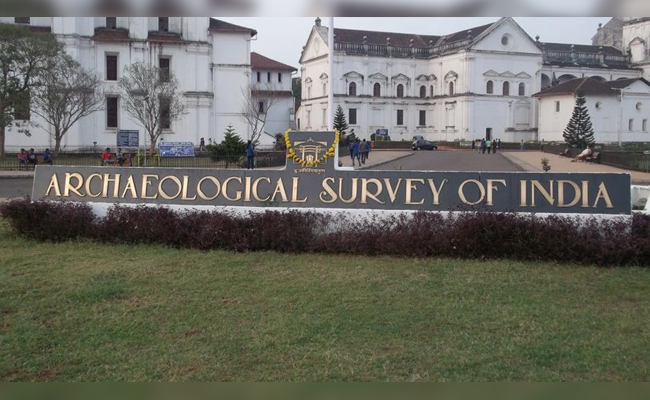
- India’s rich cultural and architectural legacy, reflected in thousands of ancient monuments and archaeological sites, has long been under the stewardship of the Archaeological Survey of India (ASI).
- Established in 1861, the ASI functions under the Ministry of Culture and enforces the Ancient Monuments and Archaeological Sites and Remains Act, 1958, and the Antiquities and Art Treasures Act, 1972.
- However, with over 3,700 protected monuments under its care, the ASI’s capacity constraints have often resulted in delays and maintenance backlogs.
- Recognizing this challenge, the government has initiated a landmark policy shift to introduce public-private partnerships (PPP) in heritage conservation — marking a major reform in India’s cultural governance.
The Policy Shift
- For the first time, the core conservation of protected monuments will no longer be ASI’s exclusive domain. Under the new model, private players, corporates, and public sector undertakings can directly fund and implement conservation projects under ASI’s supervision. This move seeks to expand capacity, accelerate timelines, and leverage private expertise, while retaining strict professional and regulatory oversight.
- All projects will be monitored by the ASI and must comply with the National Policy for Conservation of Ancient Monuments, Archaeological Sites and Remains (2014). The initiative aims to balance modernization and preservation by fostering collaboration between government, industry, and civil society.
Institutional Framework and Implementation
- The reforms will operate through the National Culture Fund (NCF), established in 1996 with an initial government corpus of ?20 crore.
-
- The NCF enables donors to contribute directly to heritage projects and offers 100% CSR tax exemptions, incentivizing private participation.
-
- To ensure professional standards, the Ministry of Culture will empanel conservation architects of national repute, who will guide donors in planning and executing projects. The Detailed Project Reports (DPRs) will require ASI approval before implementation.
- Private donors, guided by these architects, can hire external implementing agencies experienced in restoring structures over 100 years old. Initially, a list of 250 monuments requiring urgent conservation will be released for donor selection.
Track Record of the National Culture Fund
Since its inception, the NCF has mobilized around ?140 crore in corporate and public donations, supporting over 100 conservation projects. Notable examples include:
- Bhuleshwar Temple (Pune),
- British Residency (Hyderabad),
- Group of Monuments at Mandu,
- Purana Qila and Red Fort site museums (New Delhi),
- Ongoing work at Vikramshila (Bihar), Deobaloda (Chhattisgarh), and Singorgarh Fort (Madhya Pradesh).
Significance and Safeguards
- The PPP model represents a shift from state monopoly to collaborative stewardship, ensuring accountability, transparency, and efficiency.
- The ASI retains its supervisory authority, maintaining consistency with India’s constitutional framework, where heritage conservation falls under both Union and State jurisdictions, as outlined in the Seventh Schedule and Article 253.
- Qualified conservation architects, empanelled through due diligence, will ensure technical integrity, while all financial contributions must pass through the NCF to prevent misuse. The government views this as a cautious, phased reform, initially assigning private players a supplementary role to test the model’s viability.
Comparison with Past Initiatives
Unlike the earlier ‘Adopt a Heritage’ scheme, which allowed corporates to develop tourist amenities such as cafes and restrooms as “monument mitras,” the current initiative extends to core conservation work. This marks a decisive evolution from heritage promotion to heritage preservation.
Conclusion
India’s new heritage management framework reflects a pragmatic blend of Aatmanirbhar Bharat, cultural preservation, and corporate participation. By integrating private sector efficiency with ASI’s institutional expertise, the model promises to make heritage conservation financially sustainable, technologically advanced, and socially participatory — ensuring that India’s timeless legacy endures through collective stewardship.
Documenting India’s Endangered Languages
- 18 Aug 2025
Context:
India is home to one of the world’s richest linguistic landscapes, with the 2011 Census recording over 2,800 mother tongues, of which 1,369 were classified as recognized languages. However, many languages remain vulnerable: those spoken by fewer than 10,000 people are categorized as endangered.
According to the Scheme for Protection and Preservation of Endangered Languages (SPPEL) of the Central Institute of Indian Languages (CIIL), 117 endangered languages have been identified, and efforts are underway to document nearly 500 lesser-known languages in the future.
The Case of the Toda Tribe
The Toda tribe of the Nilgiri Hills in Tamil Nadu exemplifies India’s efforts at language preservation. Toda is a proto-South Dravidian language without a native script, spoken by only a few thousand people today. Traditionally oral, it encapsulates the community’s myths, rituals, and ecological knowledge. Under SPPEL, Toda elders have collaborated with linguists to record stories, songs, and vocabulary, producing primers in the Tamil script for schoolchildren and uploading digital archives to Sanchika, CIIL’s online repository launched in 2025. This initiative not only preserves linguistic material but also strengthens cultural identity.
Government and Institutional Efforts
SPPEL employs a systematic process of recording, transcription, grammar construction, cultural documentation, and digital archiving. Advanced tools—such as high-end audio-video equipment and linguistic analysis software—are used to create bilingual dictionaries, pictorial glossaries, and ethno-linguistic profiles.
Complementary schemes also support linguistic diversity. The Ministry of Tribal Affairs, through the TRI-ECE initiative, has funded AI-based translation tools to convert Hindi/English text into tribal languages. The Ministry of Culture promotes folk and tribal arts through programs such as the National Mission for Cultural Mapping and the Rashtriya Sanskriti Mahotsavs, while the Sahitya Akademi organizes annual tribal writers’ meets. These interventions align with the National Education Policy 2020, which emphasizes multilingual education.
Global Perspective
The erosion of linguistic diversity is not unique to India. UNESCO estimates that nearly half of the world’s 7,000 languages are endangered, with the loss of each language erasing irreplaceable cultural heritage. Recognizing this, UNESCO has declared 2022–2032 as the International Decade of Indigenous Languages, urging global stakeholders to act. The International Day of the World’s Indigenous Peoples (August 9) further highlights indigenous rights and cultural preservation.
Technology has emerged as both a challenge and a solution. While AI systems often appropriate indigenous knowledge without consent, initiatives such as New Zealand’s Te Hiku Media for M?ori and Polynesian reef conservation projects demonstrate AI’s potential for revitalization. In India, the integration of AI into language preservation efforts reflects this global trend.
Way Forward
Preserving endangered languages is critical for safeguarding traditional ecological knowledge, oral heritage, and cultural diversity. India’s multilingual character—where 22.9 crore people are bilingual and 8.6 crore are trilingual—creates opportunities for inclusive education models that protect minor languages while enabling wider communication. Community-driven documentation, AI-enabled tools, and government support can ensure continuity across generations.
As UNESCO Director-General Audrey Azoulay has noted, “Language is what makes us human. When people’s freedom to use their language is not guaranteed, this limits their freedom of thought and expression.” For India, the preservation of endangered languages is not merely cultural—it is a matter of equity, identity, and sustainable development.
National Handloom Day and the Legacy of the Swadeshi Movement

- 09 Aug 2025
In News:
Every year on 7th August, India celebrates National Handloom Day, commemorating the launch of the Swadeshi Movement (1905), which emerged as a response to the Partition of Bengal by Lord Curzon. The movement marked a turning point in India’s struggle for self-reliance by promoting indigenous industries, especially handlooms, as an instrument of economic resistance against colonial rule.
Historical Background: Swadeshi Movement
The Calcutta Townhall meeting of 1905 formally initiated the Swadeshi Movement. Its key methods included:
- Boycott of British goods like Manchester cloth and Liverpool salt, encouraging Indian-made products.
- National Education, leading to the founding of institutions such as Bengal National College and Bengal Technical Institute.
- Formation of Samitis, e.g., Swadesh Bandhab Samiti led by Ashwini Kumar Dutta.
- Use of festivals and cultural symbols, such as Raksha Bandhan by Rabindranath Tagore, to foster unity.
- Social reform agenda, linking Atma Shakti (self-strength) with campaigns against caste oppression, dowry, and alcoholism.
The movement evolved from a moderate phase led by Surendranath Banerjee to a radical phase under Lal-Bal-Pal, demanding Swaraj through boycott, passive resistance, and mass mobilization.
Impact
- Political: The 1906 INC session under DadabhaiNaoroji declared Swaraj as the ultimate goal. However, ideological differences caused the Surat split (1907).
- Economic: Boosted Indian industries like handloom and textiles, with enterprises such as Bengal Chemicals and Lakshmi Cotton Mills. Imports declined significantly between 1905–1908.
- Social & Cultural: Rabindranath Tagore composed Amar Sonar Bangla, later Bangladesh’s national anthem. Artists like Abanindranath Tagore infused nationalism into Indian art. Women actively boycotted foreign goods and promoted indigenous crafts.
- Administrative Response: Rising unrest compelled the British to annul the Partition of Bengal in 1911.
Contemporary Relevance
The ideals of Swadeshi find resonance in India’s current policies:
- Atmanirbhar Bharat Abhiyan (2020): Aims for self-reliance with a ?20 lakh crore stimulus (~10% of GDP). It emphasizes local for global and vocal for local.
- Make in India: Improved FDI inflows from USD 45 bn (2015) to USD 81.04 bn (2024–25). Exports reached USD 437 bn in 2024, including global dominance in pharmaceuticals and vaccine production.
- PLI Schemes: Covering 14 sectors to boost domestic manufacturing and exports.
- Revival of Khadi: KVIC reported a 347% rise in production and 447% rise in sales (2013–2025), generating employment for 1.94 crore people.
Role of Handloom Sector in India’s Economy
- Employment: Largest cottage industry employing 35 lakh workers, 72% of whom are women.
- Sustainability: Handloom products are eco-friendly and preserve cultural heritage.
- Exports: India contributes 95% of global handwoven fabric and exported USD 10.94 bn worth of cotton yarn, fabrics, and made-ups in FY23.
- Initiatives:
- National Handloom Development Programme (NHDP) for raw materials, design, and marketing.
- Raw Material Supply Scheme (RMSS): 15% yarn subsidy.
- Pradhan Mantri MUDRA Yojana (PMMY): Low-interest loans to weavers.
- Workshed Scheme: Financial aid for family-based weaving units.
- Geographical Indication (GI): 104 registered handloom products.
- GeM Platform: 1.8 lakh weavers onboarded for direct sales.
Conclusion
National Handloom Day is not merely a tribute to India’s textile heritage but also a reminder of the Swadeshi spirit of self-reliance, sustainability, and economic nationalism. From the fight against colonial exploitation to the vision of Atmanirbhar Bharat, the movement underscores the enduring power of indigenous industries in shaping India’s economic and cultural identity.
Jyotiba Phule: Pioneer of Social Justice and Emancipation
- 13 Apr 2025
Introduction:
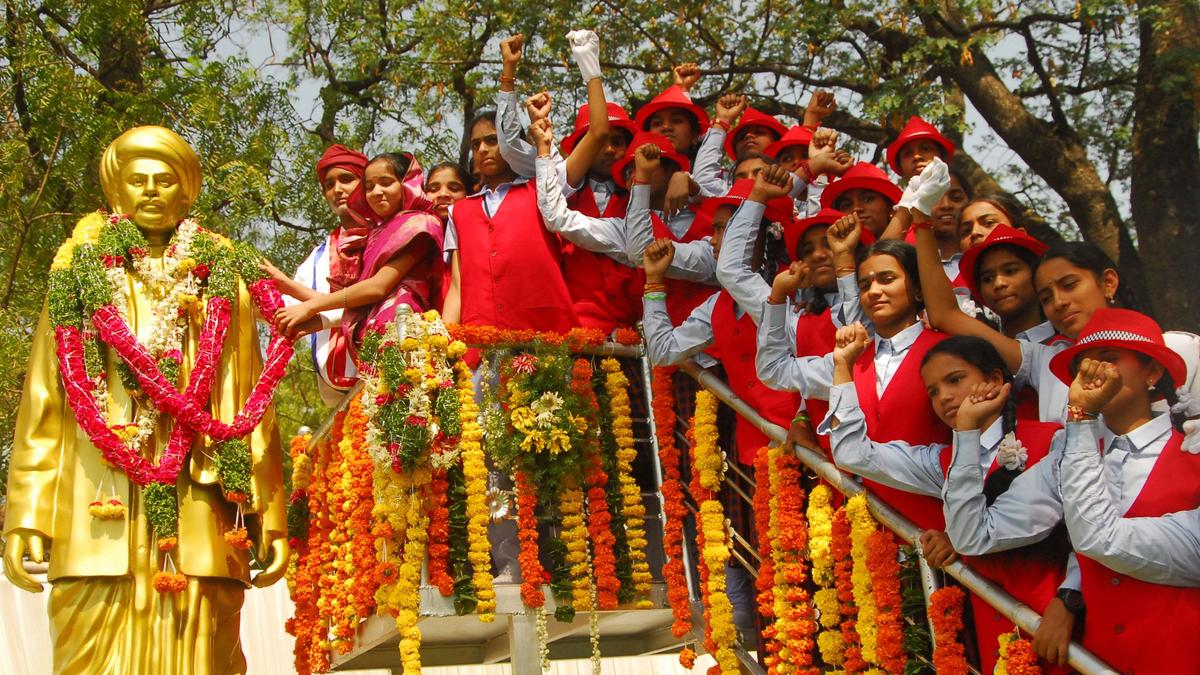
Jyotiba Phule (1827–1890) stands out as one of the foremost social reformers of 19th-century India, whose contributions to education, caste reform, women's rights, and rationalist thought continue to influence contemporary debates on social justice.
Born into the Mali casteinMaharashtra, Phule’s awakening began in 1848 after facing caste-based humiliation at a Brahmin wedding. That same year, inspired by Cynthia Farrar (a Christian missionary) and rationalist Thomas Paine, he and his wife Savitribai Phule established India’s first school for girls. By 1851, they had opened 18 schools, and later, night schools for workers and women—challenging both gender and caste hierarchies in education.
Phule’s activism extended beyond education. In 1873, he founded the SatyashodhakSamaj (Society of Truth Seekers), an organization aimed at eradicating caste-based oppression and challenging Brahminical dominance. His work Gulamgiri (Slavery) (published in 1873) likened the condition of Dalits and Shudras to that of African-American slaves, emphasizing systemic subjugation through religious orthodoxy.
Phule argued for compulsory primary education, particularly for the rural poor. In his Statement to the Education Commission, he recommended scholarships, annual prizes, and mandatory schooling up to age 12, noting that agricultural poverty kept children away from education.
In his agrarian treatise ShetkaryancheAsud (Farmer’s Whip), Phule proposed:
- Employing army personnel in public works like dams and bunds.
- Returning village pasture lands from the Forest Department.
- Importing cattle for meat to preserve draught animals crucial to agriculture.
These proposals reflected his commitment to economic upliftment of farmers and sustainable agricultural practices.
Phule’s spiritual views evolved toward rational humanism. Though he respected the equality-based ethics in Islam and Christianity, his final philosophical work, Sarvajanik Satya Dharma Pustak, rejected all sectarian religious texts and called for a universal spiritual order. He questioned caste sanctity, ridiculed the notion of sacred superiority, and criticized the irrationalities in scriptural justifications.
He strongly supported women’s rights, defended PanditaRamabai’s conversion, and denounced polygamy, arguing for gender parity in both religious and social spheres. He wrote, “How would men feel if women married more than one man?”
Despite opposition from Bal Gangadhar Tilak and orthodox Hindu nationalists, Phule remained focused on uplifting the oppressed, even bailing Tilak out of jail at one point—illustrating his commitment to justice over personal differences.
Phule’s legacy remains crucial in modern India’s quest for social equity. His efforts to democratize education, dismantle caste, and promote inclusive governance laid the groundwork for India's later constitutional and social reforms.
Port Blair renamed as Sri Vijaya Puram
- 14 Sep 2024
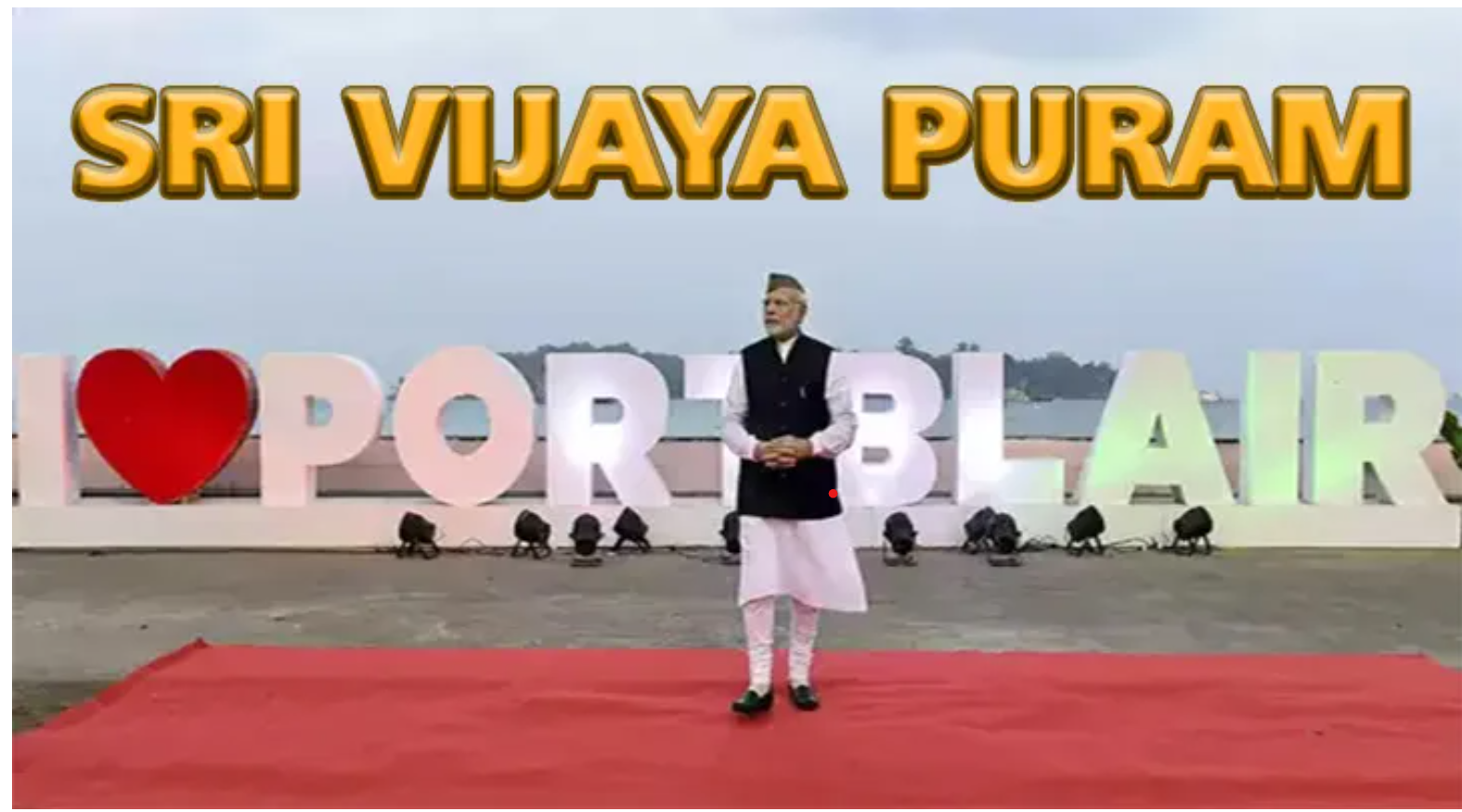
Port Blair to be Renamed Sri Vijaya Puram: A Move to Erase Colonial Echoes
Union Home Minister Amit Shah announced on Friday that Port Blair, the capital city of the Andaman and Nicobar Islands, will be renamed Sri Vijaya Puram. This decision is part of a broader effort to “free the nation from colonial imprints,” Shah explained. In a post on X, he emphasized that while the current name carries colonial connotations, the new name, Sri Vijaya Puram, represents the triumph of India's freedom struggle and acknowledges the Andaman & Nicobar Islands’ pivotal role in that struggle.
Shah further highlighted the strategic importance of the islands, which historically served as a naval base for the Chola Empire and are now envisioned as a key element in India’s strategic and developmental plans. Port Blair, named after British naval surveyor Archibald Blair, will henceforth be known as Sri Vijaya Puram, aligning with Prime Minister Narendra Modi’s vision to remove colonial legacies.
The Origin of Port Blair’s Name
Port Blair, the gateway to the Andaman and Nicobar Islands, was named after Archibald Blair, a lieutenant in the Bombay Marine. Blair conducted a thorough survey of the islands after joining the Bombay Marine in 1771. His expedition, which began in December 1778, was crucial in mapping the Andaman Islands. Initially, Blair named the natural harbor Port Cornwallis, in honor of Commodore William Cornwallis. Later, the harbor was renamed Port Blair.
Blair’s survey was highly valued by the East India Company (EIC), leading to the islands’ colonization. The primary motivation was to create a secure harbor to monitor Malay pirates and provide refuge for shipwrecked individuals. Over time, the islands were established as a penal colony, receiving numerous convicts who performed forced labor.
In 1792, the EIC relocated the colony to Port Cornwallis, but it was soon abandoned due to disease and high mortality rates. The Revolt of 1857 brought an influx of prisoners, leading to the reestablishment of Port Blair as a penal colony. The harsh conditions led to numerous deaths, and the area became notorious for its brutal treatment of prisoners, including freedom fighters like Veer Damodar Savarkar. The infamous Cellular Jail, or Kaala Paani, was built by 1906 to house political prisoners.
Historical Significance of the Andaman Islands
Historical records indicate that the Andaman Islands were strategically significant during the 11th century, particularly for the Chola Empire under Emperor Rajendra I. The islands were used as a naval base in the Chola campaign against Srivijaya, a kingdom in present-day Indonesia. An inscription from Thanjavur dating to 1050 CE refers to the islands as Ma-Nakkavaram land, which may have influenced the modern name Nicobar.
Historian Herman Kulke, in his book "Nagapattinam to Suvarnadwipa," describes the Chola invasion of Srivijaya as a notable event, reflecting the complex interactions between India and Southeast Asia. Various scholars offer differing interpretations of the invasion, ranging from a response to trade disruptions to an extension of Chola expansionism.
In summary, the renaming of Port Blair to Sri Vijaya Puram represents a significant shift in recognizing the historical and strategic importance of the Andaman and Nicobar Islands, aligning with India's broader goals of addressing colonial legacies and honoring its rich history.
India’s HIV/AIDS Response

- 01 Apr 2024
Why is it in the News?
April 1, 2004, marked a significant moment in India's fight against HIV/AIDS as Free Antiretroviral Therapy (ART) was introduced for Persons Living with HIV (PLHIV).
Context:
- April 1, 2004, stands as a landmark moment in India's approach to addressing the HIV/AIDS epidemic, as Free Antiretroviral Therapy (ART) was introduced for Persons Living with HIV (PLHIV).
- This initiative, conceived in response to the pressing issues of access and affordability, has emerged as a crucial intervention in the fight against the disease.
- As we commemorate this day, it is imperative to delve into the progression and significance of India's free ART program, shedding light on its transformative impact on the nation's response to the HIV/AIDS crisis.
HIV/AIDS's Emergence and Initial Challenges:
- Inception of a Global Health Crisis: The emergence of HIV/AIDS in the early 1980s signaled the onset of a widespread health emergency with profound implications for populations worldwide.
- Originally detected among groups in the United States, the disease swiftly traversed borders, reaching nations like India and beyond.
- This era was characterized by uncertainty, anxiety, and a lack of comprehension regarding the novel virus, initially dubbed GRID (Gay-Related Immune Deficiency), later renamed HIV (Human Immunodeficiency Virus) and its associated illness AIDS (Acquired Immunodeficiency Syndrome).
- Absence of Effective Treatments Resulting in Dire Consequences: During the initial stages of the epidemic, HIV/AIDS was synonymous with a dire prognosis, largely due to the absence of viable treatment options.
- Marginalized communities, including men who have sex with men, intravenous drug users, and commercial sex workers, bore the brunt of the disease's impact.
- However, as time progressed, it became evident that HIV/AIDS transcended boundaries of gender, sexual orientation, and socioeconomic status, affecting individuals from diverse backgrounds.
- Pervasive Social Stigma: In addition to its grave health implications, HIV/AIDS precipitated significant social stigma and discrimination.
- Individuals living with HIV/AIDS encountered marginalization, employment loss, and social exclusion from both their communities and families.
- This pervasive stigma compounded the challenges associated with managing HIV/AIDS and impeded effective epidemic control efforts.
- Limited Treatment Accessibility and Exorbitant Costs of Available ART: Despite the escalating recognition of HIV/AIDS as a global health threat, access to treatment remained scant, particularly in low- and middle-income nations such as India.
- The approval of the first antiretroviral drug, AZT (zidovudine), by the US Food and Drug Administration (US FDA) in March 1987 marked a significant milestone.
- HAART (Highly Active Antiretroviral Therapy) represented a breakthrough in disease management, combining multiple antiretroviral drugs to suppress viral replication and bolster immune response.
- However, the exorbitant expenses associated with HAART, reaching up to $10,000 annually per patient, rendered it inaccessible to the majority of individuals living with HIV/AIDS, especially those residing in resource-constrained settings.
The Introduction of Free ART in India and its Impact:
- In response to the pressing issues of limited access and affordability of HIV/AIDS treatment, the Indian government embarked on a significant initiative.
- On April 1, 2004, the government initiated the provision of Free Antiretroviral Therapy (ART) for Persons Living with HIV (PLHIV).
- The introduction of Free ART aimed to dismantle barriers to treatment and extend life-saving medication to all PLHIV, irrespective of their financial means.
- By offering ART at no cost, the government endeavored to ensure that access to treatment would not be hindered by financial constraints, thereby addressing a crucial gap in healthcare accessibility.
Its Role in Curbing the Epidemic
- Enhanced Treatment Accessibility: Over the past two decades, the initiative has undergone substantial expansion, witnessing a surge in the number of ART centers from less than 10 to approximately 700, catering to around 1.8 million PLHIV.
- This proliferation has facilitated heightened treatment access for individuals living with HIV/AIDS nationwide, including those residing in remote and underserved regions.
- A notable outcome of the Free ART endeavor has been the remarkable enhancement in health outcomes observed among PLHIV.
- Significant Reduction in Mortality Risk and Transmission Rates: Timely and effective treatment accessibility has transfigured HIV/AIDS from a dire prognosis to a manageable chronic ailment for many.
- By suppressing viral load and bolstering immune response, ART has not only extended the lifespan of PLHIV but also augmented their quality of life.
- Moreover, the Free ART initiative has played a pivotal role in curbing HIV transmission rates by ensuring treatment access for PLHIV, thereby thwarting virus dissemination within communities.
- Research indicates that efficacious ART can substantially mitigate HIV transmission risk, contributing to the overall decline in HIV prevalence.
- Broader Societal Benefits: Beyond its direct impact on individuals grappling with HIV/AIDS, the Free ART initiative has yielded wider societal advantages.
- By mitigating the disease burden and forestalling fresh infections, the initiative has alleviated the societal and economic repercussions of HIV/AIDS on families, communities, and healthcare systems.
- Supplementary Measures and Patient-Centric Approach: The success of India's ART program extends beyond free medication provision.
- Complementary initiatives, such as complimentary diagnostic services, prevention of parent-to-child transmission programs, and management of opportunistic infections, have played pivotal roles in curbing the HIV epidemic.
- Furthermore, the program has adopted a patient-centric strategy, furnishing stable PLHIV with two to three months' worth of medicines to minimize clinic visits and enhance treatment adherence.
Challenges and Future Prospects:
- Delayed Initiation and Attrition in Care: A notable portion of patients presents with advanced HIV illness, evidenced by low CD4 counts, impacting treatment efficacy.
- Furthermore, attrition in care remains a concern, as some patients discontinue treatment upon feeling well, leading to interruptions and potential drug resistance development.
- Logistical Hurdles and Infrastructure Deficiencies: Remote and underserved regions, including those with rugged terrain, encounter hurdles in accessing vital medications and healthcare provisions.
- Fortifying the logistical network and infrastructure for dispensing ART drugs is imperative to sustain uninterrupted treatment access for all PLHIV.
- Involvement of the Private Sector: While the public sector assumes a pivotal role in HIV/AIDS treatment provision, fostering collaboration with the private sector is crucial.
- Leveraging the resources and infrastructure of private healthcare entities can expand ART accessibility and reach marginalized populations, including urban dwellers.
- Interconnected Health Program Integration: Augmenting integration with other health initiatives, encompassing hepatitis, non-communicable ailments, and mental health, holds paramount importance.
- Given PLHIV's propensity for concurrent ailments, comprehensive and integrated healthcare services necessitate intersectoral collaboration within the healthcare spectrum.
- Realization of Ambitious NACP Phase 5 Objectives: The ongoing fifth phase of the National AIDS Control Programme (NACP) sets forth ambitious targets, envisaging an 80% reduction in annual new HIV infections and AIDS-related mortalities by 2025.
- Achieving these milestones demands concerted endeavors to escalate testing, enhance treatment coverage, and secure viral suppression among PLHIV.
Conclusion
India's free ART initiative has successfully combated HIV/AIDS, demonstrating the power of accessible healthcare. Its achievements emphasize the importance of political will, funding, community engagement, and patient-centered care in tackling infectious diseases. Lessons from this program will guide future public health endeavors, improving outcomes for all