
Great Nicobar Project
- 22 Feb 2026
In News:
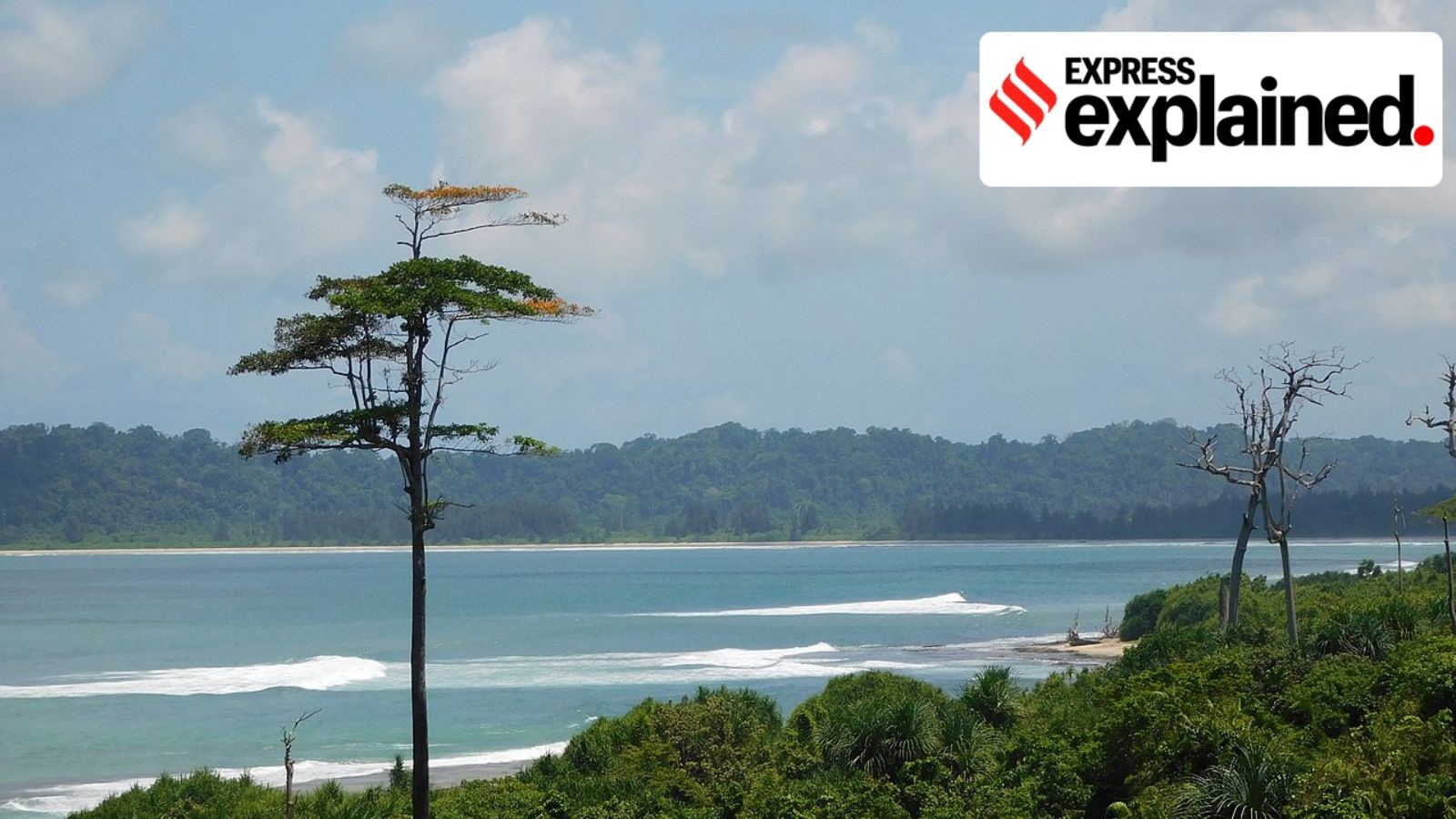
The National Green Tribunal (NGT) has approved the ?81,000-crore Great Nicobar mega infrastructure project, citing its strategic importance and environmental safeguards. The project covers 166 sq km of Great Nicobar Island (910 sq km), home to Indira Point, India’s southernmost location. It involves diversion of ~130 sq km of forest land and felling of over one million trees, raising significant ecological concerns.
Core Components
The project, initially conceptualised by NITI Aayog and implemented by ANIIDCO, rests on four pillars:
- Integrated Township (≈149 sq km) – Residential, commercial, tourism, logistics and defence infrastructure.
- Transshipment Port at Galathea Bay – Strategically located near the Malacca Strait; projected capacity of 14.2 million TEUs annually.
- Dual-use International Airport (8.45 sq km total allocation) – Second air facility after INS Baaz; requires 4.2 sq km land acquisition, affecting 379 families.
- 450-MVA Gas and Solar Power Plant (0.39 sq km) – To ensure reliable energy supply.
Land reclamation includes 2.98 sq km (port) and 1.94 sq km (airport), requiring 33.35 million cubic metres of construction material.
Strategic Importance
Great Nicobar lies close to the Malacca Strait, through which ~94,000 ships pass annually, accounting for ~30% of global trade and ~one-third of global maritime oil trade. The port aims to compete with Colombo, Hambantota, Port Klang and Singapore, reducing India’s dependence on foreign transshipment hubs.
The island hosts the Andaman and Nicobar Command (since 2001), India’s only tri-services command—and INS Baaz Naval Air Station at Campbell Bay. Defence infrastructure is included in the first construction phase, strengthening India’s Indo-Pacific posture.
Environmental and Social Concerns
Great Nicobar is part of the Sundaland biodiversity hotspot and largely falls under the Great Nicobar Biosphere Reserve. The project led to denotification of Galathea Bay Wildlife Sanctuary and a megapode sanctuary. The endemic Nicobar megapode faces habitat loss, while Galathea Bay is a key nesting site for leatherback turtles.
Indigenous communities are also affected:
- Shompen tribe (~250 people) – Semi-nomadic and highly vulnerable to external exposure.
- Nicobarese community – Many displaced during the 2004 tsunami; resettlement concerns persist.
The island’s population is projected to increase from ~8,500 (2011 Census) to 6.5 lakh by 2050, raising concerns of ecological strain and demographic transformation.
Conclusion
The Great Nicobar Project represents a high-stakes strategic initiative combining maritime trade ambition, defence expansion and geopolitical positioning. However, its implementation in a fragile ecological zone necessitates strict environmental safeguards, transparent governance and protection of tribal rights to ensure sustainable and inclusive development.