
16th Finance Commission (2026–31)
- 28 Feb 2026
In News:
The 16th Finance Commission (FC), chaired by Dr. Arvind Panagariya, submitted its report for the period 2026–27 to 2030–31, which was tabled in Parliament on February 1, 2026. As a constitutional body under Article 280, the Finance Commission recommends the distribution of tax revenues between the Centre and the States and provides grants to local governments. The latest recommendations reflect continuity in vertical devolution while significantly enhancing support for urban local bodies amid India’s accelerating urbanisation.
Vertical Devolution: Share of States
The Commission has recommended that 41% of the divisible pool of central taxes be devolved to states, maintaining the level set by the 15th Finance Commission.
The divisible pool excludes:
- Cost of tax collection
- Revenues from cesses and surcharges
By retaining the 41% share, the Commission balances fiscal consolidation needs of the Centre with states’ expenditure responsibilities.
Horizontal Devolution: Criteria Among States
The 16th FC revised the weightage assigned to various criteria for distributing tax shares among states:
- Income Distance: 42.5% (reduced from 45%)
- Population (2011 Census): 17.5% (increased from 15%)
- Demographic Performance: 10% (reduced from 12.5%)
- Area: 10% (reduced from 15%)
- Forest Cover: 10% (unchanged)
- Contribution to GDP: 10% (newly introduced)
- Tax and Fiscal Effort: Removed (earlier 2.5%)
The introduction of GDP contribution marks a shift toward recognising economic productivity, while still preserving redistributive principles through income distance.
Major Boost to Urban Local Governments
A significant highlight of the report is enhanced financial backing to Urban Local Bodies (ULBs).
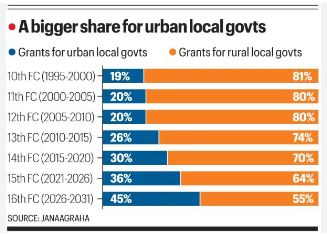
- Share of grants to urban local governments increased to 45%
- (Up from 36% under the 15th FC and 26% under the 13th FC)
- Recommended allocation: ?3.56 lakh crore
- More than double the 15th FC’s ?1.55 lakh crore
- Nearly 15 times the post-2011 Census allocation under the 13th FC
Since the 10th FC, grants to local bodies have been a regular feature following the 73rd and 74th Constitutional Amendments. The 16th FC’s enhanced allocation reflects recognition of growing urban governance demands.
Uneven State-Level Outcomes
Due to the population-based distribution formula, states witnessed varied increases:
- Kerala: Over 400% increase
- Maharashtra: Over 300% increase
- Odisha: 13% increase
- Bihar: 8% reduction
These variations underscore ongoing tensions in balancing demographic realities and fiscal equity.
Urbanisation and Policy Imperatives
India’s urban population is projected to reach 41% by 2031. The 2011 Census recorded urbanisation at 31%, though alternative estimates (e.g., World Bank, 2015) suggest much higher levels. Data discrepancies complicate planning and fiscal projections.
The 16th FC’s higher allocation acts as a financial cushion against potential upward revisions in urbanisation in Census 2027. If urbanisation rises to, say, 48%, the enhanced funding framework would prevent under-preparedness in urban infrastructure and service delivery.
Conclusion
The 16th Finance Commission reinforces fiscal federalism by maintaining stable vertical devolution while recalibrating horizontal distribution criteria. Its substantial increase in grants to urban local governments signals recognition of India’s structural urban transition. However, uneven state allocations and persistent data gaps highlight the complexity of aligning demographic change with fiscal design. The recommendations represent a calibrated approach toward strengthening both cooperative federalism and grassroots governance in a rapidly urbanising economy.
India’s New GDP Series (Base Year 2022–23): A Major Statistical Reform
- 27 Feb 2026
In News:
The Ministry of Statistics and Programme Implementation (MoSPI) is releasing a new series of National Accounts Statistics (NAS) with 2022–23 as the base year, replacing the 2011–12 base year. The revised series aims to improve the accuracy and granularity of estimates of Gross Domestic Product (GDP) and Gross Value Added (GVA), reflecting structural changes in the Indian economy over the past decade.
Rationale for Revision
Since the previous base year revision in 2015, India’s economy has undergone significant transformations:
- Expansion of the digital economy and e-commerce
- Increased formalisation following the GST regime
- Shifts in consumption, employment, and production patterns
- Rapid growth of financial and service sectors
Updating the base year ensures better measurement of real growth, improved sectoral representation, and stronger evidence-based policymaking.
Key Structural Improvements
1. Sectoral Measurement Reforms
- Private Corporate Sector: Earlier, a company’s entire GVA was attributed to its dominant sector. The new approach allocates GVA based on activity-wise revenue shares, improving sectoral accuracy.
- General Government Sector: Inclusion of housing services provided to government employees and better coverage of local bodies and autonomous institutions enhances government output estimation.
2. Better Estimation of the Household Sector
The household sector—one of India’s largest contributors to GVA—will now be estimated using annual data from:
- Annual Survey of Unincorporated Sector Enterprises (ASUSE)
- Periodic Labour Force Survey (PLFS)
This replaces earlier extrapolation methods with direct annual estimation.
3. Improved Consumption Estimates
Private Final Consumption Expenditure (PFCE) will be derived from:
- Household Consumer Expenditure Surveys
- Production-side data
- Administrative datasets
This strengthens measurement of domestic demand.
Integration of Administrative Data
- Expanded use of GST data for regional output estimation and corporate value addition.
- Identification of active companies through tax records.
- Use of RBI’s Statistical Tables Relating to Banks in India (STRBI) for banking sector estimates.
- Replacement of proxy methods for private NBFCs with actual financial data from the Ministry of Corporate Affairs.
These changes improve financial sector GVA estimation and reduce reliance on assumptions.
Informal Sector and Agriculture
Greater use of ASUSE improves coverage of informal enterprises, insurance agents, and Gross Fixed Capital Formation (GFCF) in the unincorporated sector.
Agriculture estimation is strengthened using updated methodologies and data from institutions such as:
- Central Marine Fisheries Research Institute
- Central Inland Fisheries Research Institute
- Grassland and Fodder research bodies
This improves measurement of livestock, fisheries, and fodder output.
Methodological Upgrade: Double Deflation
One of the most significant reforms is the shift from a single deflator to a double deflator method.
- Earlier: Same inflation rate applied to inputs and outputs, causing growth distortions.
- Now: Separate deflators for inputs and outputs, ensuring more accurate real GVA estimates.
This reduces statistical discrepancies and improves credibility.
Additionally, Supply and Use Tables (SUTs) will be integrated, improving consistency between production and expenditure approaches.
International Alignment
India currently follows the System of National Accounts (SNA 2008). With the UN adopting SNA 2025, India plans to align with updated global standards in future revisions.
Challenges
- Complexity of double deflation and data integration.
- Back-series reconstruction may take nearly a year.
- State-level data quality variations.
- Need for greater transparency to avoid credibility debates seen in past revisions.
Conclusion
The 2022–23 base year revision represents one of India’s most comprehensive statistical overhauls in over a decade. By integrating richer datasets, modern methodologies, and improved sectoral coverage, the new GDP series aims to enhance policy reliability and international comparability. Its success, however, will depend on transparent implementation, timely back-series release, and sustained strengthening of India’s statistical ecosystem.
India–Israel Relations in a Volatile West Asian Landscape
- 26 Feb 2026
In News:
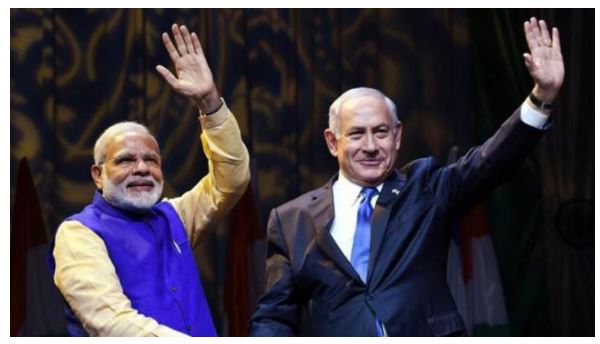
Prime Minister Narendra Modi’s official visit to Israel — his first since the landmark 2017 visit — comes at a time of heightened regional instability. While the 2017 visit marked the first-ever trip by an Indian Prime Minister to Israel after the establishment of diplomatic ties in 1992, the current engagement unfolds amid a fragile Gaza ceasefire and rising tensions involving Iran and the United States. The visit underscores both the maturity of bilateral ties and India’s evolving West Asia strategy.
Historical Evolution of Ties
India recognised Israel in 1948 but delayed full diplomatic relations for over four decades due to domestic political sensitivities and solidarity with the Palestinian cause. A decisive shift occurred in January 1992 when Prime Minister P.V. Narasimha Rao established full diplomatic relations. Palestinian leader Yasser Arafat publicly respected India’s sovereign decision, easing the transition.
Even before formal ties, limited defence cooperation existed. Israel supplied weapons during the 1962 India–China war and provided critical precision-guided munitions during the 1999 Kargil conflict, strengthening mutual trust.
Consolidation Phase (2000–2014)
The early 2000s saw growing political engagement. High-level visits, including that of Israeli Prime Minister Ariel Sharon in 2003, institutionalised defence and security cooperation. Strategic ties expanded quietly, even as public discourse focused on agriculture, science and technology.
Transformation After 2014
After 2014, India–Israel ties were brought into the open. PM Modi’s 2017 visit marked a diplomatic departure by delinking Israel from Palestine in scheduling protocol, signalling strategic autonomy. Subsequent reciprocal visits, including PM Netanyahu’s 2018 visit to India, deepened engagement.
In recent years, cooperation has expanded beyond defence to include:
- Cybersecurity
- Artificial Intelligence
- Agriculture and water management
- Advanced technologies
- Negotiations toward a Free Trade Agreement
India and Israel also signed defence agreements in 2025, reflecting growing operational coordination.
Strategic Significance for India
- Defence and Security Partner: Israel is among India’s top defence suppliers and a key source of advanced military technology.
- Technology and Innovation: Collaboration in AI, precision agriculture, and water conservation supports India’s development priorities.
- Economic Connectivity: Israel is a critical partner in the proposed India–Middle East–Europe Economic Corridor (IMEC).
- Indo-Abraham Accords Context: The normalisation of ties between Israel and several Arab states under the Abraham Accords has reshaped regional alignments.
Emerging Geopolitical Challenges
The October 7, 2023 Hamas attack triggered a prolonged Gaza war, resulting in heavy casualties and destruction. Though a US-backed ceasefire currently holds, tensions persist.
Simultaneously, the June 2025 Israel–Iran conflict and US strikes on Iranian nuclear facilities have escalated regional volatility. Iran remains an important partner for India, particularly for energy security and connectivity projects like Chabahar Port.
India’s Diplomatic Balancing Act
India must carefully navigate:
- Its strong defence ties with Israel
- Energy and connectivity interests involving Iran
- Strategic partnerships with Gulf nations
- Broader West Asian stability
The visit reflects India’s attempt to pursue multi-vector diplomacy — strengthening strategic partnerships while maintaining regional balance.
Conclusion
PM Modi’s visit to Israel highlights the transformation of India–Israel relations from cautious engagement to open strategic partnership. However, in a deeply polarised West Asian environment, India must balance strategic cooperation with diplomatic prudence to safeguard its long-term geopolitical and economic interests.
India’s Nationwide HPV Vaccination Drive
- 25 Feb 2026
In News:
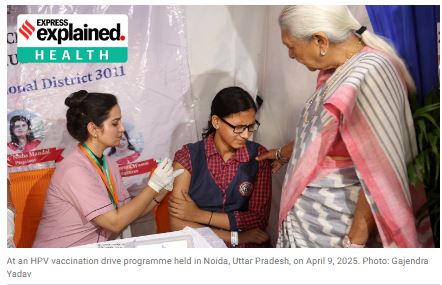
The Union Government is set to launch a nationwide single-dose HPV vaccination drive targeting 14-year-old girls to reduce the burden of cervical cancer in India. The campaign represents a major public health intervention aimed at preventing a vaccine-preventable cancer that remains a leading cause of mortality among Indian women.
Cervical Cancer Burden in India
- Cervical cancer is the second most common cancer among Indian women. India accounts for nearly 20% of global cervical cancer cases, with approximately 1.25 lakh new cases and 75,000 deaths annually.
- Nearly 90% of cervical cancer cases are caused by persistent infection with high-risk strains of the Human Papillomavirus (HPV), a common sexually transmitted infection. Among at least 14 cancer-causing strains, HPV types 16 and 18 account for nearly 70% of cases worldwide.
- Given that HPV-related cancers are largely vaccine-preventable, mass immunisation offers a transformative opportunity to reduce cancer-related morbidity and mortality.
Features of the Nationwide HPV Vaccination Drive
Target Group
- All 14-year-old girls across India
- Approximately 1.15 crore girls annually become eligible
Implementation Strategy
- 90-day nationwide campaign for rapid coverage
- Beneficiaries to book appointments via the U-Win digital platform, modelled on Co-Win
- Post-campaign integration into the Routine Immunisation Programme at Health and Wellness Centres
The focus on early adolescence ensures vaccination before sexual debut, when immune response is strongest and long-lasting.
Vaccine Choice and Supply Mechanism
Vaccine Used
- Gardasil, manufactured by MSD Pharmaceuticals
- Backed by strong global safety and efficacy evidence
Role of GAVI
- 2.6 crore doses to be supplied over two years
- 1 crore doses already delivered
Indigenous Vaccine – Cervavac
India’s domestically developed vaccine by the Serum Institute of India is currently not being used because:
- It is awaiting WHO prequalification
- ICMR is evaluating its effectiveness as a single-dose regimen
A transition to Cervavac may occur after regulatory approvals.
Why Single-Dose Vaccination?
In 2022, the WHO’s Strategic Advisory Group of Experts (SAGE) recommended a single-dose schedule for girls and women up to 20 years of age, citing “strikingly high efficacy” among 9–14-year-olds.
- Women above 21 years: Two doses (6 months apart)
- Immunocompromised individuals (e.g., HIV): Ideally three doses
The single-dose strategy enhances feasibility, reduces costs, and improves coverage in low- and middle-income countries.
Public Health Significance
1. Direct Cancer Prevention: Studies show HPV vaccines significantly reduce cervical cancer incidence, beyond merely preventing infection or pre-cancerous lesions.
2. Herd Immunity: Vaccinating girls reduces HPV transmission to boys, lowering risks of anal, penile, vaginal, vulvar, and throat cancers.
3. Global Evidence: Australia, which introduced HPV vaccination in 2007 (and extended to boys in 2013), saw:
- HPV prevalence drop from 22.7% to 1.5% among young women
- Significant decline even among unvaccinated older women
This demonstrates strong direct and indirect protection.
India’s Previous Experience
This is not India’s first HPV initiative:
- Sikkim (2018): Achieved over 95% coverage
- Punjab (2016): Over 97% coverage in initial districts
- Delhi (2016): Limited uptake due to hospital-based delivery model
These experiences underline the importance of accessibility and community mobilisation.
Conclusion
The nationwide HPV vaccination drive marks a decisive step toward cervical cancer elimination in India. By combining global evidence, digital platforms, GAVI support, and integration into routine immunisation, India is aligning with global best practices.
If effectively implemented with sustained awareness campaigns and equitable access, the initiative could significantly reduce mortality, ease healthcare burdens, and advance India toward the broader goal of preventive, women-centric public health transformation.
Strait of Hormuz Crisis and Global Energy Security
- 24 Feb 2026
In News:
Rising tensions between the United States and Iran have pushed international oil prices to a six-month high, with Brent crude crossing $71 per barrel, over 12% higher in a month. Although recent nuclear talks in Geneva showed limited progress, the absence of a breakthrough and heightened American military presence in West Asia have intensified market anxiety. Any escalation, particularly involving the Strait of Hormuz, could significantly disrupt global energy supplies and destabilize the fragile global economy.
The Strait of Hormuz: A Strategic Chokepoint
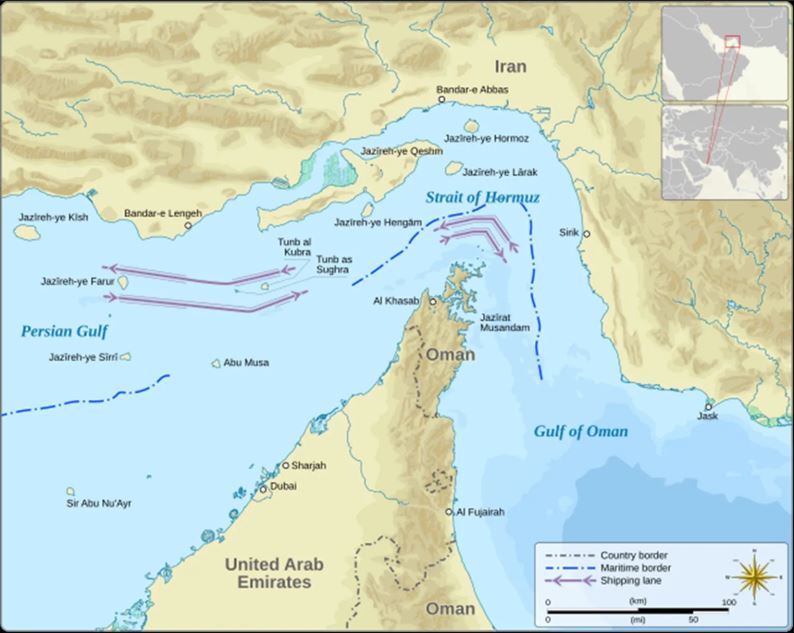
- The Strait of Hormuz, a narrow waterway between Iran and Oman connecting the Persian Gulf to the Gulf of Oman and the Arabian Sea, is widely regarded as the world’s most critical oil transit chokepoint.
- Nearly one-fifth of global petroleum consumption and about 20% of global LNG trade pass through it daily-approximately 15 million barrels of crude oil. Major Gulf producers such as Saudi Arabia, Iraq, UAE, and Kuwait depend heavily on this route for exports.
- Oil markets fear that in the event of US military strikes, Iran may retaliate by disrupting shipping through the Strait. While Iran has frequently threatened to block the Strait, a complete blockade would be strategically risky. It could alienate China-its key oil buyer-damage ties with Oman, and invite international military retaliation. Nonetheless, if Tehran perceives an existential threat, escalation cannot be ruled out.
Limited Alternatives and Escalation Risks
Although some Gulf states possess bypass pipelines, their capacity is limited. Even at full utilization, nearly 9 million barrels per day (around 9% of global demand) would remain vulnerable during a major disruption. Additionally, threats extend beyond Hormuz. Proxy attacks from Yemen targeting vessels in the Bab el-Mandeb Strait-another key chokepoint linking the Red Sea and the Arabian Sea-add to systemic risks for global energy flows.
Possible Oil Price Scenarios
Experts outline four potential escalation scenarios:
- Targeted disruption of Iranian oil exports: Prices may rise by $10–12 per barrel due to supply gaps, particularly affecting China.
- Disruption of Strait of Hormuz flows: Prices could exceed $90 per barrel if up to 20% of global oil trade is throttled.
- Attacks on Iranian oil infrastructure: Prolonged supply loss could push prices beyond $100 per barrel.
- Wider regional conflict involving Gulf producers: Oil prices could surge past $130 per barrel, rivaling spikes seen during major geopolitical crises.
Thus, oil market volatility is now a central strategic variable in US-Iran calculations.
Implications for India
- India, the world’s third-largest crude oil consumer, is highly vulnerable. It imports over 88% of its oil requirements, amounting to nearly 2 billion barrels annually. Every $1 increase in crude prices adds approximately $2 billion to India’s annual import bill, exerting pressure on the current account deficit, inflation, and fiscal management.
- Crucially, more than 40% of India’s crude imports transit through the Strait of Hormuz. Any disruption would directly threaten India’s energy security, refinery operations, and broader economic stability. Higher oil prices could also weaken the rupee, increase fuel subsidies, and raise transportation and food costs.
Strategic Dilemma and Way Forward
The situation presents a complex dilemma. While confrontation may risk energy disruptions and price spikes, inaction could embolden geopolitical adversaries. For India, diversification of energy sources, expansion of strategic petroleum reserves, increased renewable energy adoption, and diplomatic engagement in West Asia remain critical policy priorities.
In conclusion, the Strait of Hormuz crisis underscores the interconnectedness of geopolitics and energy security. Even localized tensions in West Asia have global economic consequences, making stability in this maritime corridor vital not only for the region but for energy-dependent economies like India.
Great Nicobar Project

- 22 Feb 2026
In News:
The National Green Tribunal (NGT) has approved the ?81,000-crore Great Nicobar mega infrastructure project, citing its strategic importance and environmental safeguards. The project covers 166 sq km of Great Nicobar Island (910 sq km), home to Indira Point, India’s southernmost location. It involves diversion of ~130 sq km of forest land and felling of over one million trees, raising significant ecological concerns.
Core Components
The project, initially conceptualised by NITI Aayog and implemented by ANIIDCO, rests on four pillars:
- Integrated Township (≈149 sq km) – Residential, commercial, tourism, logistics and defence infrastructure.
- Transshipment Port at Galathea Bay – Strategically located near the Malacca Strait; projected capacity of 14.2 million TEUs annually.
- Dual-use International Airport (8.45 sq km total allocation) – Second air facility after INS Baaz; requires 4.2 sq km land acquisition, affecting 379 families.
- 450-MVA Gas and Solar Power Plant (0.39 sq km) – To ensure reliable energy supply.
Land reclamation includes 2.98 sq km (port) and 1.94 sq km (airport), requiring 33.35 million cubic metres of construction material.
Strategic Importance
Great Nicobar lies close to the Malacca Strait, through which ~94,000 ships pass annually, accounting for ~30% of global trade and ~one-third of global maritime oil trade. The port aims to compete with Colombo, Hambantota, Port Klang and Singapore, reducing India’s dependence on foreign transshipment hubs.
The island hosts the Andaman and Nicobar Command (since 2001), India’s only tri-services command—and INS Baaz Naval Air Station at Campbell Bay. Defence infrastructure is included in the first construction phase, strengthening India’s Indo-Pacific posture.
Environmental and Social Concerns
Great Nicobar is part of the Sundaland biodiversity hotspot and largely falls under the Great Nicobar Biosphere Reserve. The project led to denotification of Galathea Bay Wildlife Sanctuary and a megapode sanctuary. The endemic Nicobar megapode faces habitat loss, while Galathea Bay is a key nesting site for leatherback turtles.
Indigenous communities are also affected:
- Shompen tribe (~250 people) – Semi-nomadic and highly vulnerable to external exposure.
- Nicobarese community – Many displaced during the 2004 tsunami; resettlement concerns persist.
The island’s population is projected to increase from ~8,500 (2011 Census) to 6.5 lakh by 2050, raising concerns of ecological strain and demographic transformation.
Conclusion
The Great Nicobar Project represents a high-stakes strategic initiative combining maritime trade ambition, defence expansion and geopolitical positioning. However, its implementation in a fragile ecological zone necessitates strict environmental safeguards, transparent governance and protection of tribal rights to ensure sustainable and inclusive development.
Re-examining Higher Judicial Reform

- 21 Feb 2026
In News:
A recent Private Member’s Bill in Parliament has proposed constitutional amendments to promote diversity in higher judicial appointments and to establish regional benches of the Supreme Court. The proposals revive longstanding debates on judicial independence, social representation and access to justice within India’s constitutional framework.
Constitutional Framework of Judicial Appointments
The Constitution lays down a consultative model for appointing judges. Under Article 124, judges of the Supreme Court are appointed by the President after consultation with the Chief Justice of India (CJI). Article 217 governs High Court appointments, requiring consultation with the CJI, the Governor and the Chief Justice of the concerned High Court. Article 130 provides that the seat of the Supreme Court shall be in Delhi or any other place decided by the CJI with Presidential approval.
Originally, appointments were executive-led with judicial consultation. However, concerns over safeguarding judicial independence led to a shift in power towards the judiciary.
Evolution of the Collegium System
The collegium system emerged through judicial interpretation:
- First Judges Case (1981): Upheld executive primacy.
- Second Judges Case (1993): Established judicial primacy in appointments.
- Third Judges Case (1998): Clarified collegium composition and functioning.
The Supreme Court collegium comprises the CJI and four senior-most judges; for High Courts, the CJI and two senior-most judges. The government may return recommendations once, but if reiterated, it is bound to appoint.
In 2014, Parliament enacted the 99th Constitutional Amendment to create the National Judicial Appointments Commission (NJAC), including judicial and executive members. In 2015, the Supreme Court struck it down, holding that judicial independence is part of the basic structure. Consequently, the collegium system continues, despite criticism regarding opacity, lack of accountability and allegations of nepotism.
Diversity in the Higher Judiciary
The present debate focuses on under-representation of marginalised groups. Between 2018 and 2024, roughly 20% of appointees to the higher judiciary reportedly belonged to SC, ST and OBC communities. Women constitute less than 15% of appointments, and religious minorities less than 5%.
The Bill proposes constitutionally mandating due representation for SCs, STs, OBCs, women and religious minorities in proportion to their population. This marks a shift from a purely merit-centric approach to a socially representative model.
The issue implicates two constitutional values:
- Judicial Independence – protecting courts from external influence.
- Substantive Equality and Social Justice – ensuring institutions reflect India’s pluralism.
A diverse judiciary may enhance public confidence, enrich constitutional interpretation and improve sensitivity in adjudication.
Proposal for Regional Benches
The Bill also proposes regional benches of the Supreme Court in New Delhi, Kolkata, Mumbai and Chennai. Currently, the Court sits only in Delhi. With pendency exceeding 90,000 cases (January 2026), litigants from distant States face cost and accessibility barriers.
The proposed benches would exercise full jurisdiction except for constitutional matters, which would remain with the Constitution Bench in Delhi. Notably, under Article 130, such benches can be established by the CJI with Presidential approval without constitutional amendment. Law Commission reports and parliamentary committees have previously recommended similar measures.
Way Forward
Ensuring diversity primarily rests with reforms within the collegium—greater transparency, objective criteria and publicly available data can strengthen legitimacy. A future model may consider a broad-based appointments commission balancing independence and accountability, drawing from comparative experiences such as the U.K. and South Africa.
On regional benches, a phased approach could improve access to justice and reduce pendency while preserving institutional coherence. Ultimately, reforms must harmonise independence, equality and efficiency within the constitutional scheme.
Reframing India’s Foreign Policy in an Era of Eroding Multilateralism
- 23 Feb 2026
In News:
The Prime Minister’s recent acknowledgment in the Rajya Sabha of an emerging “new world order” reflects a significant inflection point in global politics. The post-1945 rules-based multilateral system is under visible strain due to unilateralism, great power rivalry, institutional paralysis, and the rise of minilateral groupings. For India, this moment presents both strategic risks and transformational opportunities.
Changing Global Order: Key Features
1. Rise of Unilateralism and Power Politics: Major powers increasingly privilege national interest over multilateral commitments. The withdrawal of the United States from several international institutions, growing tariff wars, and the strategic use of sanctions and supply chains illustrate a shift from rule-based governance to coercive geopolitics. Trade and technology are now instruments of power.
2. Institutional Paralysis: The UN Security Council remains gridlocked due to veto politics, failing to respond effectively to crises such as Ukraine and Gaza. The WTO’s dispute settlement system has weakened, encouraging unilateral trade barriers justified on “national security” grounds.
3. Rise of China and Parallel Architectures: China has built alternative institutions such as the Belt and Road Initiative (BRI), the New Development Bank (NDB), and RCEP, challenging Western-led norms. Control over rare earths, manufacturing, and emerging technologies enhances Beijing’s leverage.
4. Shift to Minilateralism: Flexible, issue-based coalitions like QUAD, AUKUS, I2U2, and regional FTAs are replacing universal platforms. This reflects a preference for functional cooperation over slow consensus-driven multilateralism.
5. Weaponisation of Interdependence: Supply chains, financial systems (e.g., SWIFT), semiconductors, and energy flows have become tools of coercion, redefining power in the digital and technological age.
Evolution of India’s Foreign Policy
India’s diplomacy has evolved through distinct phases:
- Non-Alignment (1947–1964): Moralpolitik based on Panchsheel and decolonization. The 1962 war exposed its limits.
- Strategic Realism (1964–1991): Security-driven alignment (1971 Indo-Soviet Treaty) and nuclear assertion (Pokhran-I, 1974).
- Economic Diplomacy (1991–2000): LPG reforms, Look East Policy, and integration into global markets.
- Multi-Alignment (2000–2014): India–US Civil Nuclear Deal, BRICS, G20 participation.
- Assertive Multi-Vector Strategy (2014–Present): Issue-based partnerships-participation in QUAD alongside defence ties with Russia (S-400); leadership of the Global South (G20 AU inclusion); expansion of minilateral initiatives; promotion of Digital Public Infrastructure (DPI) and ethical AI governance.
India increasingly positions itself as a “Vishwa Bandhu”, a bridge between the West and the Global South - aspiring to emerge as a stabilising “Third Pole.”
Emerging Challenges
- China Factor: Border tensions, trade asymmetry, maritime expansion in the Indian Ocean, and rare earth leverage remain structural concerns.
- Transactional Trade Environment: Bilateralism and coercive tariff diplomacy undermine predictability.
- Neighbourhood Volatility: Political instability and China’s investment-led diplomacy challenge India’s regional influence.
- Technology and Energy Dependence: Dependence on foreign semiconductor ecosystems, AI platforms, and critical minerals exposes vulnerabilities.
- Expectation–Responsibility Gap: Rising global stature demands clearer normative positions.
The Way Forward: Reframing Strategy
India must align foreign policy with the developmental vision of Viksit Bharat 2047. Key priorities include:
- De-risking supply chains through friend-shoring and critical mineral partnerships.
- Building endogenous technological capacity in AI, semiconductors, quantum technologies, and cyber security.
- Aggressive trade diversification across Asia, Africa, and emerging markets.
- Maintaining strategic autonomy while preserving defence-energy ties with Russia.
- Repositioning BRICS and Global South platforms toward economic cooperation.
Conclusion
The erosion of multilateralism is not merely a systemic breakdown but a strategic opening. By combining domestic capacity-building with flexible, interest-based partnerships, India can transition from a balancing power to an autonomous centre of global influence—emerging as a stabiliser in an increasingly fragmented world order.
India’s Aviation Sector: The Case for Data-Driven Oversight

- 20 Feb 2026
In News:
India’s aviation sector has emerged as one of the fastest-growing in the world, marked by rising passenger traffic, expansion of low-cost carriers, and rapid airport infrastructure development across metros and tier-2 cities. However, regulatory mechanisms have not kept pace with this expansion.
The growing complexity of algorithm-based pricing and market concentration makes a strong case for data-driven oversight, moving beyond reactive crisis management to proactive, evidence-based regulation.
Structural Transformation of India’s Aviation
- Rapid rise in domestic air travel.
- Dominance of low-cost carriers.
- Expansion of airport infrastructure under public-private partnerships.
- Increasing use of dynamic revenue management systems for pricing.
While operational data on passenger numbers, fleet size, and freight movement is regularly tracked, systematic monitoring of fare behaviour and market conduct remains limited.
Why Data-Driven Oversight is Needed
1. Dynamic Pricing and Algorithmic Markets
Airline fares fluctuate in real time based on:
- Demand patterns
- Seat inventory
- Competitor pricing
- Seasonal variation
- Route-level market share
This makes it difficult to distinguish between legitimate demand-driven price increases and potential market power abuse.
2. Limits of Crisis-Based Regulation
Recent fare spikes in India have triggered:
- Temporary fare caps
- Requests for data submission
- Post-facto investigations
However, ad hoc interventions are reactive and do not substitute for continuous, structured oversight. Often, data collected is retrospective and insufficient for robust analysis.
3. Volume-Focused Oversight
Current regulatory practice largely tracks traffic volumes rather than pricing behaviour. In a market increasingly driven by algorithmic decision-making, this creates regulatory blind spots.
Importance of Data Transparency
(a) Identifying Route-Level Market Power
If routes dominated by a single airline consistently show higher fares compared to competitive routes, it may signal structural pricing power.
(b) Tracking Entry and Exit Effects
- Entry of a new airline → Fares usually decline.
- Exit of a competitor → Fares often increase.
Systematic data collection enables regulators to measure competitive intensity.
(c) Monitoring Peak-Period Pricing
Holiday seasons provide natural tests of pricing conduct. Disproportionate fare increases on routes with high market share may indicate dominance leverage.
(d) Algorithmic Accountability
When pricing outcomes are observable and periodically reviewed, airlines are incentivised to embed compliance safeguards within revenue management systems. Transparency acts as a deterrent without constant state intervention.
Global Best Practice: The U.S. DB1B Model
The United States’ Airline Origin and Destination Survey (DB1B), maintained by the Bureau of Transportation Statistics (BTS), provides a model for structured transparency.
- Collects ticket-level data since 1995.
- Covers a 10% random sample of domestic tickets each quarter.
- Tracks fares, routes, and carrier details.
The DB1B database enables:
- Long-term pricing trend analysis
- Competition assessment
- Empirical research
- Transparent policymaking
Adopting a similar 10% sampling framework in India could expand the role of the Directorate General of Civil Aviation (DGCA) from volume tracking to behaviour monitoring.
Addressing Industry Concerns
- Proprietary Algorithms: A sampling framework monitors outcomes, not algorithmic code.
- Technical Burden: Airlines already maintain digital databases; quarterly reporting is feasible.
- Risk of Implicit Coordination: Delayed and aggregated release of data can prevent real-time collusion risks.
Way Forward
- Institutionalise periodic, structured fare data collection.
- Build analytical capacity within regulatory bodies.
- Shift from temporary fare caps to continuous oversight.
- Promote competition while safeguarding consumer interests.
- Strengthen inter-agency coordination between aviation and competition authorities.
Conclusion
India’s aviation growth is a major economic achievement. However, rapid expansion without robust data infrastructure risks regulatory vulnerabilities. The solution lies not in heavy-handed control but in structured transparency and analytical regulation.
In an increasingly algorithm-driven aviation market, regulatory institutions must evolve toward data-centric governance to ensure fair competition, consumer protection, and sustainable sectoral growth.
India–France Special Global Strategic Partnership (2026)
- 19 Feb 2026
In News:
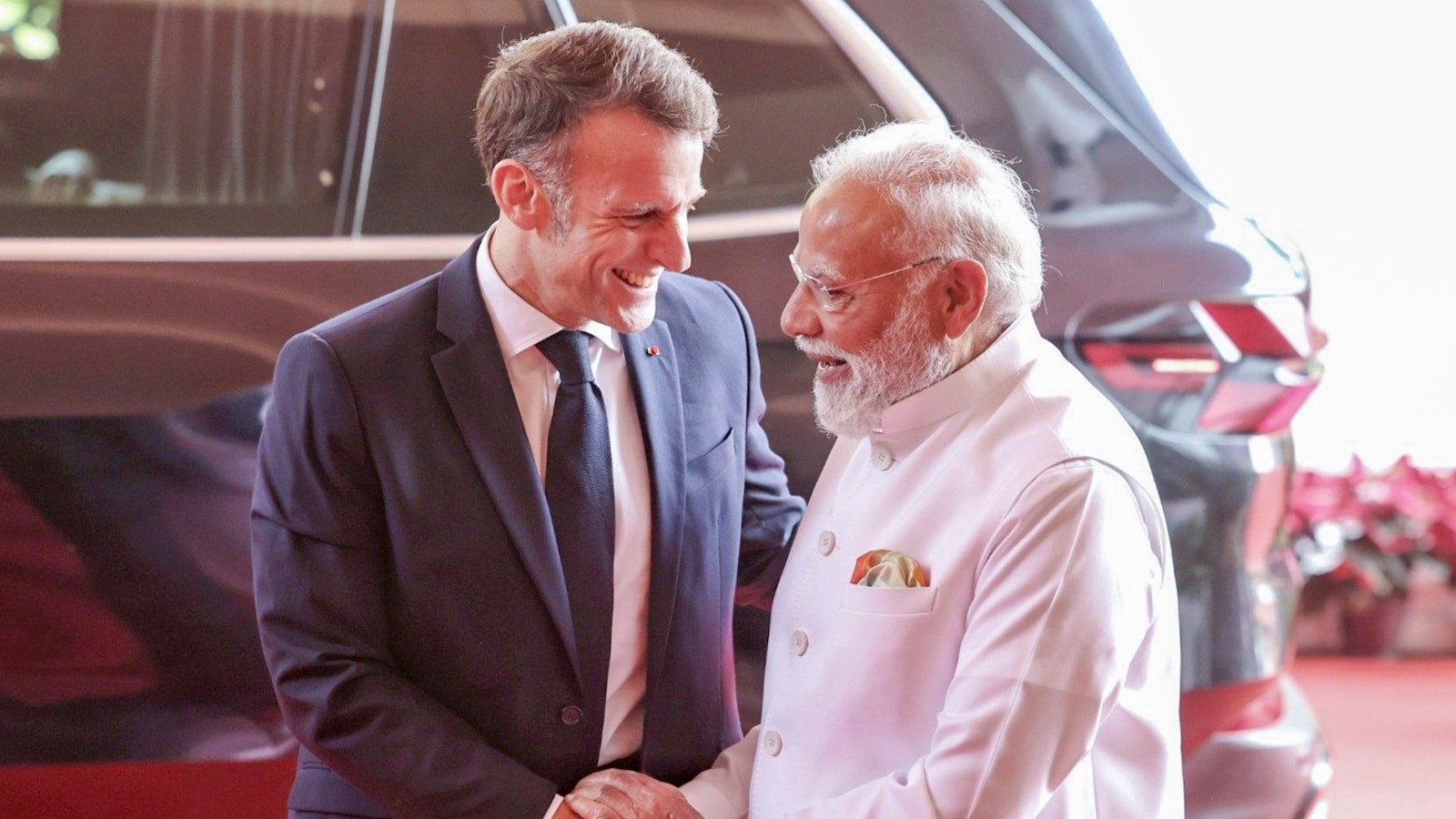
The February 2026 visit of the French President to India marked a historic upgrade of bilateral ties to a “Special Global Strategic Partnership”, deepening cooperation across defence, nuclear energy, space, artificial intelligence, trade, and Indo-Pacific security. The decision builds upon 25 years of the India–France Strategic Partnership (established in 1998) and the Horizon 2047 Roadmap.
Background of the Strategic Partnership
India and France established a Strategic Partnership in 1998 based on three pillars:
- Respect for strategic autonomy
- Non-interference in internal affairs
- Avoidance of alliance entanglements
Over time, defence cooperation became the core driver of ties, with France emerging as India’s second-largest arms supplier after Russia.
Key Outcomes of the 2026 Upgrade
A total of 21 outcomes were announced across multiple sectors.
1. Defence and Strategic Cooperation
- Finalisation of the contract for 26 Rafale-Marine fighter jets.
- Inauguration of the H125 helicopter final assembly line (Tata-Airbus) in Karnataka—the first private sector helicopter manufacturing facility in India. The first “Made in India” H125 is expected by 2027.
- Joint venture between BEL and Safran for production of precision-guided missiles (Hammer missiles).
- Establishment of a Joint Advanced Technology Development Group on critical and emerging technologies.
- Reciprocal deployment of officers between Indian and French land forces.
- Regularisation of an annual Foreign Ministers’ Dialogue.
2. Civil Nuclear Cooperation
- Strengthened cooperation on Small Modular Reactors (SMRs) and Advanced Modular Reactors (AMRs) under a 2025 Declaration of Intent.
- Continued collaboration on the Jaitapur Nuclear Power Plant project.
- Support for India’s target of achieving 100 GW nuclear capacity by 2047, alongside reforms under the SHANTI Act (2025).
3. Space and Aerospace
- Agreement to hold the third India–France Strategic Space Dialogue in 2026.
- Continued cooperation between ISRO and CNES, including the joint TRISHNA satellite mission for thermal infrared imaging.
- India’s participation in France’s International Space Summit (2026).
4. Artificial Intelligence and Innovation
- Launch of the India–France Innovation Network and the India–France Year of Innovation.
- Establishment of Indo-French Centres for Digital Sciences and AI in Health (including collaboration between AIIMS, Sorbonne University, and Paris Brain Institute).
- Cooperation in advanced materials, biotechnology, and digital science research.
5. Trade and Economic Relations
- Bilateral trade reached €12.67 billion (2024–25).
- France is India’s third-largest EU trading partner and the 11th largest foreign investor (cumulative FDI of €9.79 billion since 2000).
- Amendment to Double Taxation Avoidance Agreement.
- Cooperation in startups (T-Hub and Nord France).
6. Indo-Pacific and Multilateral Cooperation
- Strengthened engagement under the Indo-Pacific Oceans Initiative (IPOI) and Indian Ocean Rim Association.
- Coordination in trilateral formats with Australia and UAE.
- France reiterated support for India’s permanent membership in the UN Security Council.
- Convergence on global issues: Ukraine (respect for sovereignty), Gaza (two-state solution), and marine biodiversity (BBNJ Treaty).
Key Challenges
- Delays in defence procurement and localisation negotiations.
- Trade barriers, including Sanitary and Phytosanitary (SPS) measures.
- Divergences on AI governance (EU GDPR model vs India’s flexible digital framework).
- Differences over Russia–Ukraine conflict and sanctions.
- Visa and mobility restrictions for Indian professionals.
Way Forward
- Accelerate joint defence manufacturing under Atmanirbhar Bharat.
- Expand cooperation in green hydrogen, renewables, and critical minerals.
- Leverage India–EU FTA to balance trade flows.
- Deepen AI, digital, and biotechnology partnerships.
- Enhance educational and cultural exchanges (target: 30,000 Indian students in France by 2030).
Conclusion
The elevation to a Special Global Strategic Partnership reflects the maturity and multidimensional character of India–France ties. With defence, nuclear energy, AI, space, and Indo-Pacific cooperation at its core, the partnership has emerged as a pillar of strategic autonomy and global stability. Sustained dialogue to address procurement delays, regulatory divergences, and geopolitical sensitivities will be critical to unlocking its full potential by 2047.
AI in Education: Bharat EduAI Stack and Bodhan AI Initiative

- 18 Feb 2026
In News:
The Government of India has announced the integration of Artificial Intelligence (AI) tools into teaching from the next academic session, spanning pre-primary to higher education. Anchored in the launch of Bodhan AI and the development of the Bharat EduAI Stack, the initiative seeks to create a sovereign, multilingual AI ecosystem for education. It represents a structural shift toward embedding technology within public education as Digital Public Infrastructure (DPI), aligned with the vision of the National Education Policy (NEP) 2020.
Policy Context: AI and NEP 2020
AI has emerged as a transformative technology across sectors such as healthcare, governance, agriculture, and education. In schooling, AI can enable:
- Personalised learning pathways
- Real-time assessments and feedback
- Automated grading
- Intelligent tutoring systems
- Language translation and speech recognition
However, most global AI tools are English-centric and built on foreign platforms, limiting accessibility in India’s multilingual environment. NEP 2020 emphasises foundational literacy and numeracy, multilingual education, adaptive learning, and integration of emerging technologies—providing policy backing for AI adoption in classrooms.
Institutional Framework
The initiative is anchored at the Centre of Excellence in AI for Education at IIT Madras, announced in the Union Budget with an allocation of ?500 crore. To operationalise this vision, a not-for-profit entity, Bodhan AI, has been established as the technological backbone.
Bodhan AI will develop the Bharat EduAI Stack as a Digital Public Infrastructure—similar in principle to UPI for payments. Rather than building end-user applications, it will create foundational AI building blocks that edtech firms, state governments, and institutions can integrate into their systems.
Bharat EduAI Stack: Key Components
The EduAI Stack will include:
- AI models trained in Indian languages
- Automatic speech recognition systems
- Speech synthesis tools
- Language understanding and diagnostic models
These models will be deployed on sovereign infrastructure to reduce dependence on global AI platforms. Applications developed by edtech companies can “plug into” this stack, enabling scalable deployment across schools.
Likely Applications
1. Personalised Learning for Students: AI-driven voice-based exercises can be delivered via phones, tablets, or laptops. The system can provide instant feedback, generate customised worksheets, and identify learning gaps, especially crucial for foundational literacy and numeracy.
2. Support for Teachers and Parents: AI-generated dashboards will assist teachers in tracking performance and designing remedial interventions. Parents can access insights into student progress.
3. Administrative and Policy Use: Aggregated data analytics can help districts and states assess school performance, enabling evidence-based resource allocation and policy decisions.
Funding and Sustainability
The initial funding stems from the Union Budget allocation for the Centre of Excellence. Over time, sustainability is expected through:
- Maintenance contributions from state governments
- Equity participation from start-ups using the infrastructure
- Collaborations with edtech firms
The long-term vision resembles an open, community-driven ecosystem akin to open-source platforms.
Ethical and Implementation Concerns
- Data Privacy: Student inputs and voice recordings constitute personal data. Safeguards must align with the Digital Personal Data Protection Act to prevent misuse or public storage of sensitive data.
- Screen Time: Voice-based tools are prioritised to limit excessive screen exposure.
- Digital Divide: Effective rollout requires device access, connectivity, and teacher capacity-building, especially in rural and remote regions.
Significance
The Bharat EduAI Stack represents a paradigm shift toward sovereign AI capability in education. By strengthening multilingual access, supporting teachers rather than replacing them, and creating scalable digital infrastructure, the initiative can enhance learning outcomes and reduce regional disparities. If implemented effectively, it could position India as a global leader in inclusive and public-oriented educational technology innovation.
IndiaAI Mission 2.0
- 17 Feb 2026
In News:
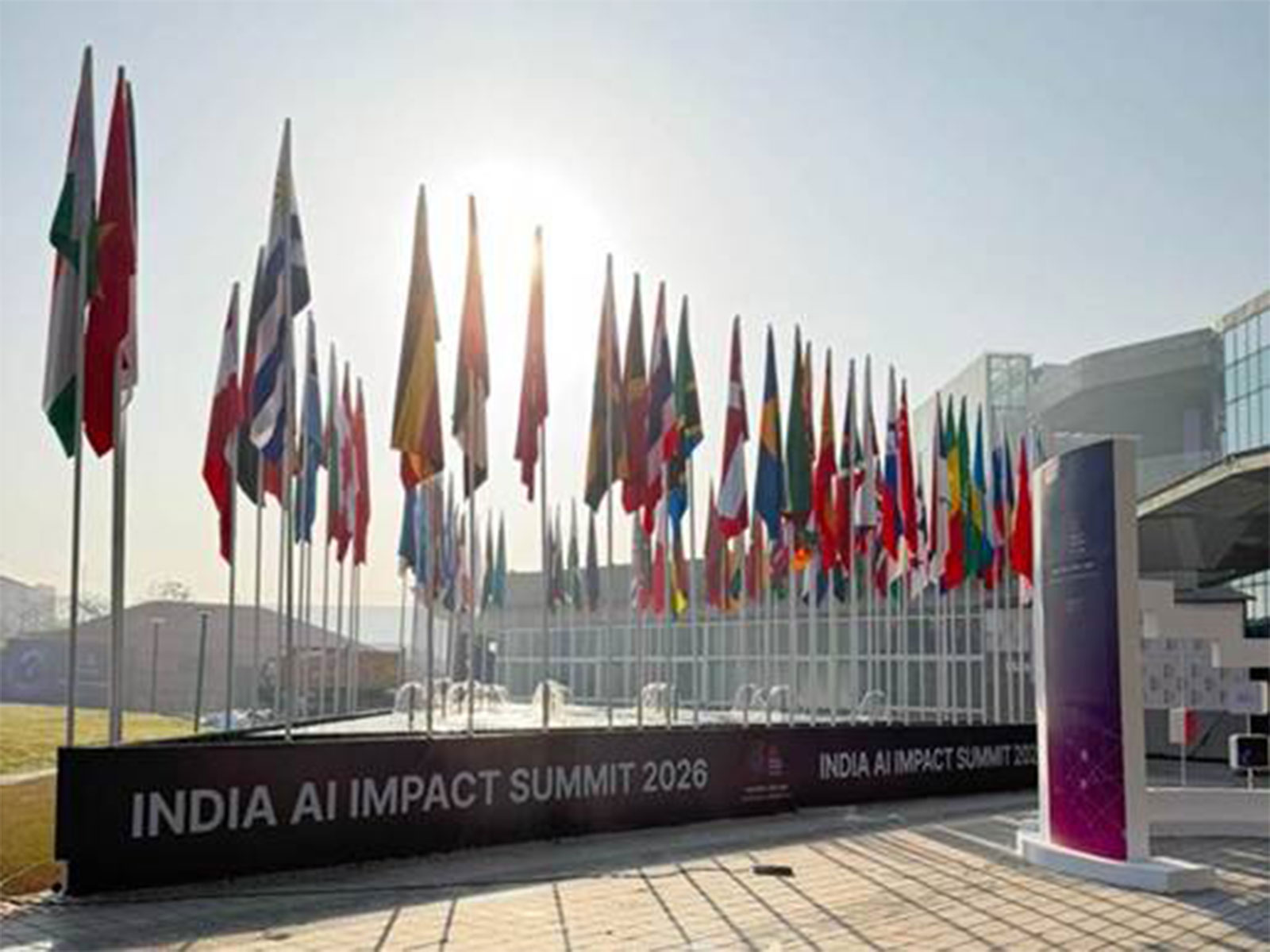
IndiaAI Mission 2.0, unveiled by the Union IT Minister at the India AI Impact Summit 2026 in Bharat Mandapam, signals a strategic evolution in India’s artificial intelligence policy framework. Moving beyond initial infrastructure building, the renewed mission focuses on indigenous research and development, MSME integration, sovereign AI capabilities, and large-scale diffusion of AI technologies. It aligns technological advancement with domestic economic priorities and the broader vision of positioning India among the world’s leading AI nations.
Strategic Shift: From Capacity Creation to Innovation Diffusion
The first phase of India’s AI efforts emphasized building compute capacity and foundational infrastructure. Mission 2.0 transitions toward:
- Accelerating indigenous AI research and development
- Enabling sector-wide adoption, particularly among MSMEs
- Strengthening domestic value creation across the AI stack
This marks a shift from “infrastructure availability” to “innovation scalability and economic integration.”
MSME-Focused AI Stack: A UPI-Like Model
A key feature of Mission 2.0 is the creation of a common digital AI platform, conceptualized on the lines of the Unified Payments Interface (UPI). The objective is to provide a bouquet of ready-to-use AI tools for micro, small and medium enterprises (MSMEs).
Through this shared platform:
- MSMEs can seamlessly access AI applications.
- Sector-specific solutions will enhance productivity and competitiveness.
- Barriers related to cost and technical complexity are reduced.
Given the centrality of MSMEs in employment generation and exports, embedding AI in this segment can significantly improve global integration and efficiency.
Expanding Compute Infrastructure and Democratizing Access
India plans to expand its AI compute capacity by adding 20,000 GPUs to the existing base of 38,000 GPUs. Unlike models where AI infrastructure is concentrated in a handful of corporations, India’s approach emphasizes broad-based and equitable access.
Several sovereign AI models launched at the summit reportedly performed competitively on global benchmarks, indicating progress in domestic capability building.
This expansion strengthens India’s ability to support startups, academic institutions, and enterprises without overreliance on foreign infrastructure providers.
Investment Momentum and Global Standing
India is now ranked among the top three AI nations globally, according to international assessments such as Stanford’s AI index. The government projects that over $200 billion in investments could flow into the AI ecosystem over the next two years.
These investments are expected across all five layers of the AI stack:
- Hardware (chips and compute)
- Infrastructure
- Foundational models
- Platforms
- Applications
Such capital infusion can catalyse innovation-led growth and job creation.
Sovereign AI: Beyond Model Development
Mission 2.0 broadens the concept of sovereign AI beyond developing domestic language models. It includes:
- Indigenous chip development
- Control over infrastructure and compute systems
- Development of scalable AI applications
The goal is to ensure strategic autonomy and reduce dependence on foreign technological gatekeepers.
AI, Workforce Transition, and Copyright Concerns
Acknowledging concerns about AI’s impact on India’s IT services sector, the government has emphasized upskilling through collaboration among government, industry, and academia.
Additionally, the government supports fair remuneration for news publishers whose content is used to train AI systems. A DPIIT committee has proposed a mandatory blanket licensing framework with statutory royalty provisions potentially making India the first country to institutionalize such a regime.
Conclusion
IndiaAI Mission 2.0 represents a comprehensive policy recalibration—integrating infrastructure expansion, sovereign capability, MSME empowerment, investment mobilisation, and regulatory innovation. By combining technological ambition with inclusive economic objectives, the mission positions AI not merely as a technological tool, but as a driver of structural transformation and strategic autonomy in India’s development trajectory.
Refurbished Medical Devices
- 16 Feb 2026
In News:
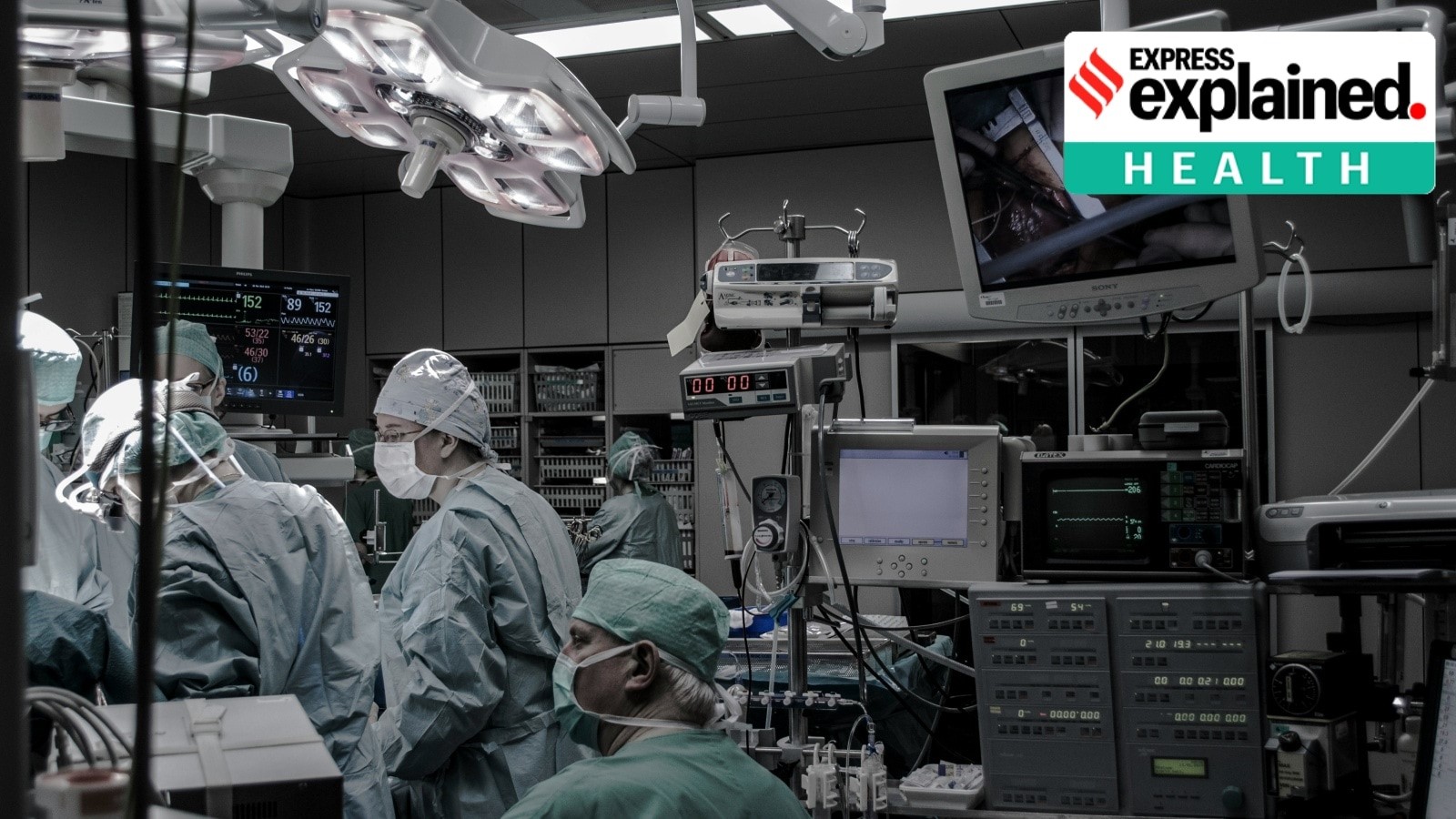
The Government has constituted a committee under the Ministry of Health and Family Welfare (MoHFW) to draft a comprehensive policy on refurbished medical devices. The panel will define their scope, establish safety and performance assessment mechanisms, determine remaining useful life, and recommend disposal standards. The core policy challenge is not whether refurbished devices should be permitted, but how to regulate them while balancing healthcare affordability, patient safety, and Make in India objectives.
What are Refurbished Medical Devices?
Refurbished devices are previously used medical equipment restored to original operating standards and resold at lower prices.
They primarily include high-value capital equipment such as:
- MRI machines
- CT scanners
- PET-CT systems
- Robotic surgical systems
- Advanced endoscopy units
Cost Advantage (Key Data)
- 1.5T MRI:
- New: ?4–8 crore
- Refurbished: ?1–3.5 crore
- PET-CT system:
- New: ?20 crore
- Refurbished: ?60 lakh–3.5 crore
- CT scanner:
- New: ?2–4 crore
- Refurbished: ?20 lakh–2.5 crore
These price differentials significantly enhance diagnostic access in Tier-2 and Tier-3 cities, district hospitals and standalone centres, supporting decentralisation of healthcare.
India’s Import Dependence
Despite growth under Make in India, India remains dependent on imports for advanced imaging technologies due to technological complexity and global supply chain dominance.
Refurbished equipment is typically sourced from US, Germany, Japan and the Netherlands, where hospitals upgrade systems before end-of-life.
- Estimated size of refurbished segment: ?1,500 crore
- Share of total medical equipment market: ~10%
- Total medical device imports (last year): ?76,000 crore
- Medical electronics imports: ?48,000 crore
Current Regulatory Framework: Policy Gaps
1. Absence of Dedicated Pathway
- No separate licensing provision under Medical Devices Rules, 2017.
- All devices notified as “drugs” in 2020, but refurbished category undefined.
- No statutory distinction between “used,” “refurbished,” “reconditioned,” or “remanufactured.”
2. Governance under Waste Rules
Imports are regulated primarily under the Hazardous and Other Wastes (Management and Transboundary Movement) Rules, 2016.
Clearances required from:
- MoEFCC (expert committee)
- CDSCO (technical inputs)
- DGFT (import authorisation)
In December 2022, import of certain high-end used equipment was permitted under strict conditions.
3. Regulatory Conflict
- November 2025: MoEFCC approved several refurbished devices for reuse.
- January 2025: CDSCO stated refurbished devices cannot be imported for sale due to absence of licensing provisions.
This created legal inconsistency between environmental and medical device regulators, raising concerns over policy coherence and patient safety.
Industry Divide: Competing Perspectives
International Manufacturers (MTAI)
- Oppose blanket bans.
- Advocate regulated imports aligned with global standards.
- Argue refurbished devices improve affordability, training access, and complement industrial initiatives like Electronics Repair Services Outsourcing.
Domestic Manufacturers (AiMeD)
- Seek strong regulatory safeguards benchmarked to global norms.
- Raise concerns over:
- Unclear usage history
- Limited traceability
- Shorter lifespan
- Risk of India becoming a dumping ground for end-of-life equipment
- Estimate ?12,000–15,000 crore unauthorised trade in pre-owned devices.
Core Policy Dilemma
India faces a three-way balancing act:
- Healthcare Access – Affordable diagnostics for smaller cities.
- Patient Safety & Regulatory Oversight – Clear licensing, traceability, lifecycle standards.
- Industrial Self-Reliance – Protecting domestic innovation and long-term technological capability.
Way Forward
A coherent policy must:
- Define refurbished categories clearly.
- Establish lifecycle assessment and certification standards.
- Align with global regulatory benchmarks.
- Ensure OEM accountability and service traceability.
- Integrate environmental, trade and health regulations into a unified framework.
A balanced regulatory model can simultaneously expand access to advanced diagnostics and strengthen India’s ambition for technological self-reliance in medical devices, aligning public health priorities with industrial development.
SHANTI Act
- 14 Feb 2026
In News:
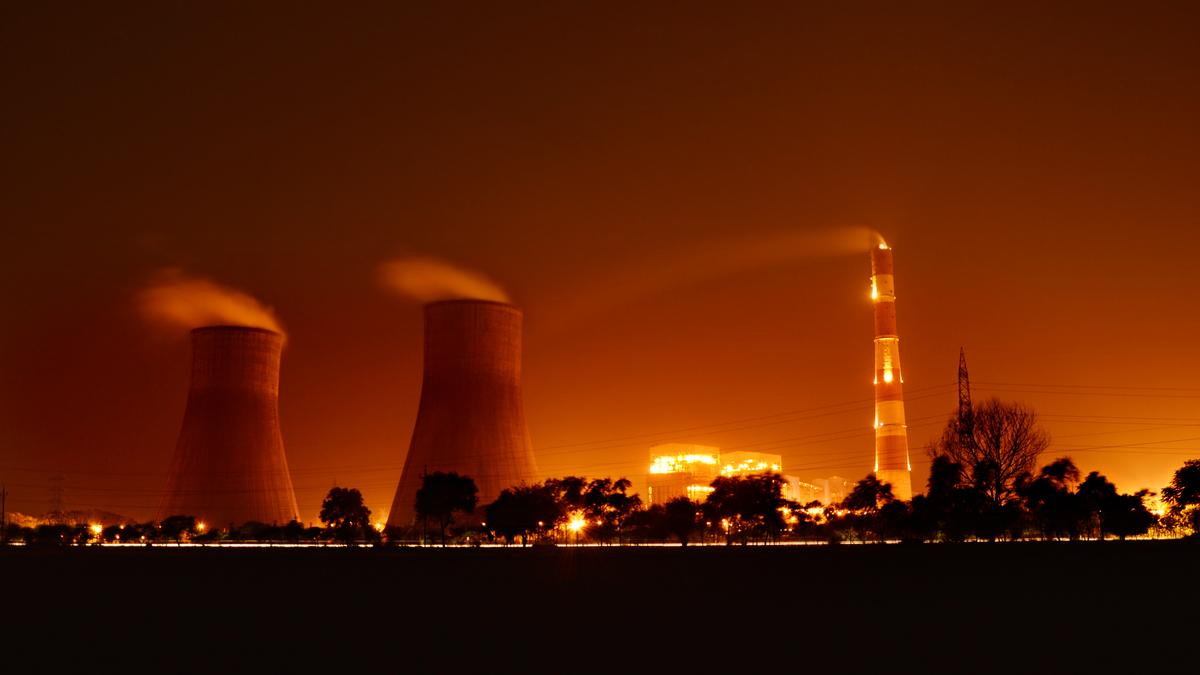
The SHANTI Act, recently passed by Parliament, marks a major structural shift in India’s nuclear energy governance. By opening the sector to private players and overhauling the nuclear liability regime, it seeks to revive nuclear expansion while aligning India’s framework with global norms. However, it has simultaneously triggered debate on safety, accountability, and risk distribution.
Background: India’s Nuclear Liability Framework
India’s nuclear liability architecture was governed by the Civil Liability for Nuclear Damage Act (CLNDA), 2010, enacted after India joined the Convention on Supplementary Compensation for Nuclear Damage (CSC). The law aimed to ensure prompt compensation in the event of a nuclear accident while maintaining accountability.
A distinctive feature of the CLNDA was the “right of recourse,” allowing the operator to seek compensation from suppliers if an accident resulted from defective equipment or services. Section 46 further allowed victims to pursue remedies under other laws, including criminal law. While this strengthened victim protection, international suppliers argued that it created unlimited liability exposure, discouraging investment.
Despite ambitious targets—10 GW by 2000 and 20 GW by 2020—actual nuclear capacity reached only 2.86 GW in 2000 and 6.78 GW in 2020. Nuclear power currently contributes around 3% of India’s electricity generation. High capital costs, liability uncertainties, and safety concerns have constrained growth.
Key Features of the SHANTI Act
1. Opening the Sector to Private Participation: The Act permits private entities to operate nuclear power plants, ending the Union government’s exclusive control under the Atomic Energy framework. This represents a paradigm shift in India’s state-led nuclear model.
2. Removal of Supplier Liability: The Act eliminates the operator’s right of recourse against suppliers, effectively indemnifying them. Liability is channelled exclusively to the operator, in line with international practice. Clause 46 of the CLNDA is omitted, restricting victims’ ability to seek additional remedies under other laws.
3. Liability Caps: Operator liability is capped between ?100 crore (small plants) and ?3,000 crore (large plants). Total liability, including the Centre’s contribution, is limited to 300 million Special Drawing Rights (approximately ?3,900 crore).
4. Regulatory Framework: The Act provides statutory backing to the Atomic Energy Regulatory Board (AERB), though concerns remain about its independence since appointments are linked to the Atomic Energy Commission.
Concerns and Critiques
Historical nuclear disasters such as Three Mile Island accident, Chernobyl disaster, and Fukushima Daiichi nuclear disaster revealed vulnerabilities linked to design flaws, emergency failures, and communication lapses. The economic costs were staggering—Fukushima alone is estimated at nearly ?46 lakh crore, while Belarus assessed Chernobyl-related losses at around ?21 lakh crore. In comparison, India’s liability cap of ?3,900 crore is negligible.
Critics argue that such caps create moral hazard by insulating operators and suppliers from the full financial consequences of accidents. The Act also indemnifies operators for accidents caused by “grave natural disasters,” diluting India’s earlier principle of absolute liability for hazardous industries. Given that Fukushima was triggered by a tsunami, treating natural disasters as unforeseeable risks is contentious.
Economic and Strategic Dimensions
Globally, nuclear projects involve massive capital costs. Two Westinghouse AP1000 reactors in the U.S. reportedly cost about $18 billion each. India aims to scale nuclear capacity to 100 GW by 2047, with private and foreign participation expected to accelerate investment. However, emerging technologies such as small modular reactors remain largely untested and potentially cost-intensive.
Conclusion
The SHANTI Act seeks to unlock private investment and integrate India into global nuclear supply chains. While it addresses industry concerns and aligns liability norms internationally, it also redistributes risk toward operators and potentially victims. Balancing energy security, regulatory independence, financial prudence, and public safety will determine whether the reform strengthens India’s nuclear future or exposes it to long-term vulnerabilities.
Ladakh Telescope Expansion: Advancing India’s Observational Astronomy

- 13 Feb 2026
In News:
The Union Budget 2026 has approved the establishment of two major telescope facilities in Ladakh—the National Large Solar Telescope (NLST) and the National Large Optical–Near Infrared Telescope (NLOT) along with the upgradation of the existing Himalayan Chandra Telescope (HCT).
Operated by the Indian Institute of Astrophysics (IIA), these projects aim to strengthen India’s capacity in frontline space science, solar physics, and cosmology while consolidating Ladakh’s status as the country’s premier astronomy hub.
Ladakh, particularly the Hanle region located at over 4,000 metres above sea level, offers exceptional observing conditions like high altitude, cold desert climate, minimal atmospheric water vapour, and extremely low light pollution. The presence of the Hanle Dark Sky Reserve, India’s first, ensures protection of natural night skies through strict lighting regulations. These factors enable year-round observations, unlike many mainland observatories affected by monsoons, thereby maximizing scientific output.
National Large Solar Telescope (NLST)
The NLST, a 2-metre aperture solar telescope, will be installed near Pangong Tso in Merak. Operating in visible and near-infrared wavelengths, it is expected to be completed within 5–6 years. With a spatial resolution of about 50 km and millisecond-level temporal resolution, NLST will enable high-precision studies of solar dynamics, magnetic fields, flares, and coronal mass ejections.
Understanding these processes is crucial for space-weather forecasting, as solar disturbances can disrupt satellites, communication networks, power grids, and space missions. NLST will complement India’s space-based solar mission, Aditya-L1 (launched in 2023), and join the historic Kodaikanal Solar Observatory (1899) and Udaipur Solar Observatory (1975) as India’s third ground-based solar facility. Strategically, it fills a longitudinal gap in global solar observation networks, enhancing India’s contribution to heliophysics.
National Large Optical–Near Infrared Telescope (NLOT)
The NLOT, to be located in Hanle, will be a 13.7-metre class segmented-mirror telescope, placing it among the world’s largest optical–infrared observatories. Its primary mirror will consist of 90 hexagonal segments functioning as a unified optical surface, enabling collection of faint cosmic light with high precision.
Projected to be operational within a decade, NLOT will facilitate cutting-edge research in exoplanets, stellar and galactic evolution, supernovae, and the origins of the universe. Its infrared capability allows observation of distant and dust-obscured objects, critical for studying early cosmic epochs.
India’s technical expertise gained from its participation in the Thirty Meter Telescope (TMT) project where it contributes mirror segments and segment-support assemblies will aid in constructing NLOT’s advanced optical systems. Importantly, domestic ownership ensures greater observation time for Indian scientists, overcoming the limitations of competitive international access.
Upgradation of the Himalayan Chandra Telescope (HCT)
Operational since 2001, the 2-metre HCT has contributed significantly to transient astronomy, including supernova studies. The planned upgrade to a 3.7-metre segmented mirror system will enhance sensitivity and expand its optical–infrared capabilities. The upgraded HCT will work synergistically with global facilities such as LIGO-India (gravitational-wave observatory in Maharashtra) and the Square Kilometre Array (radio telescope in Australia and South Africa), enabling multi-messenger astronomy.
Significance
Together, NLST, NLOT, and the upgraded HCT represent a transformative investment in India’s scientific infrastructure. They strengthen India’s strategic autonomy in high-end research, support capacity building in precision engineering, and position the country and the Global South more prominently in global astronomy. Complemented by a new COSMOS planetarium in Andhra Pradesh for outreach and education, the initiative reflects a comprehensive vision that integrates research excellence, technological self-reliance, and public scientific engagement.
Regulating Synthetic Media: India’s Amendments to the IT Rules, 2021

- 12 Feb 2026
In News:
The Union Government has notified amendments to the Information Technology (Intermediary Guidelines and Digital Media Ethics Code) Rules, 2021, effective February 20, 2026, aimed at regulating AI-generated (synthetic) content and significantly compressing takedown timelines for unlawful material. The reforms seek to address the growing challenge of non-consensual deepfakes, intimate imagery and AI-driven misinformation, while strengthening intermediary accountability under the IT Act, 2000.
Key Amendments
1. Sharp Reduction in Takedown Timelines
The amendments drastically compress content removal timelines:
- Court/Government-declared illegal content: 3 hours (earlier 24–36 hours)
- Non-consensual intimate imagery/deepfakes: 2 hours (earlier 24 hours)
- Other unlawful content: 3 hours (earlier 36 hours)
The government argues that earlier timelines failed to prevent virality and that major platforms possess sufficient technological capacity for rapid moderation. However, critics highlight operational challenges in determining “illegality” within such narrow windows, raising concerns of defensive over-censorship.
2. Mandatory Labelling of AI-Generated Content
The Rules introduce a legal definition of “Synthetically Generated Information (SGI)”—audio, visual or audiovisual content artificially created or altered using computer resources in a manner that appears real.
Key provisions include:
- AI-generated content must be labelled “prominently”.
- The earlier proposal mandating labels to occupy 10% of image space has been diluted.
- Platforms must require user disclosure of AI-generated content.
- Intermediaries must proactively deploy reasonable technical measures to prevent unlawful synthetic content.
Routine editing and good-faith quality enhancements are excluded from the definition, narrowing regulatory scope.
Safe Harbour and Intermediary Liability
Under Section 79 of the IT Act, 2000, intermediaries enjoy “safe harbour” protection from liability for user-generated content, provided they exercise due diligence. The amendments clarify that failure to act against unlawful synthetic content may amount to a breach of due diligence, potentially leading to loss of safe harbour protection. This significantly increases compliance pressure on digital platforms.
Administrative and Federal Dimensions
The amendments also permit States to appoint multiple authorised officers for issuing takedown directions, reversing earlier restrictions. This strengthens decentralised enforcement and enhances administrative responsiveness in populous states.
Trigger Events and Global Context
The urgency of regulation follows global controversies, including AI platforms generating non-consensual intimate images. Such incidents raised concerns regarding privacy violations, gender dignity, misinformation and democratic integrity. India’s amendments thus align with broader international debates on AI governance and platform accountability.
Constitutional and Governance Concerns
The reforms operate at the intersection of competing constitutional values:
- Article 21 (Right to Privacy and Dignity): Faster removal of non-consensual deepfakes strengthens protection of personal dignity.
- Article 19(1)(a) (Freedom of Speech): Extremely short timelines may chill legitimate expression, as platforms could resort to precautionary takedowns.
Key challenges include determining illegality within hours, technological burden on smaller intermediaries, risks of over-removal, and the need for clarity in law enforcement communications.
Way Forward
To ensure balanced regulation:
- Develop clearer standards for determining illegality.
- Establish independent review or appellate mechanisms.
- Strengthen indigenous AI detection tools under national AI initiatives.
- Harmonise implementation with the Digital Personal Data Protection framework.
- Build capacity of state enforcement authorities.
Conclusion
India’s amended IT Rules mark a decisive shift toward proactive regulation of AI-driven digital harms. While the framework strengthens privacy and platform accountability, its long-term success depends on calibrated enforcement, institutional safeguards against overreach and technological readiness to balance innovation with constitutional freedoms.
India–Seychelles Relations
- 11 Feb 2026
- multilateral platforms such as CSC and IORA
- Enhancing digital governance cooperation
Conclusion
India–Seychelles relations are transitioning from a primarily defence-oriented framework to a comprehensive strategic partnership integrating sustainability, digital transformation and inclusive growth. As maritime neighbours in the Indian Ocean, their collaboration contributes to peace, security and resilient development in the Western Indian Ocean Region, reinforcing India’s aspiration to be a responsible regional partner in the Indo-Pacific.
Institutionalising Artificial Intelligence for Culture and Languages in India
- 10 Feb 2026
In News:
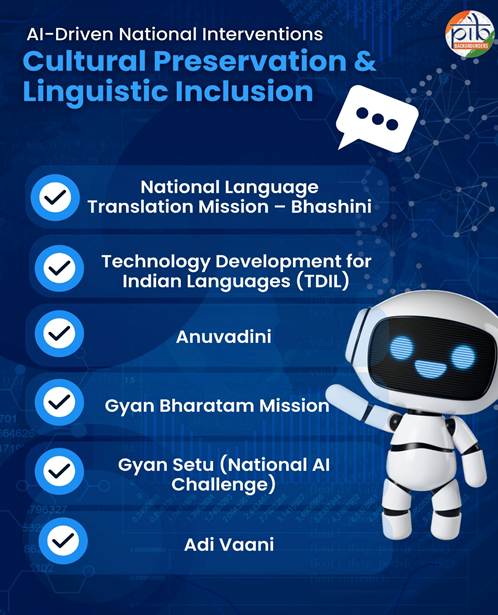
India is increasingly leveraging Artificial Intelligence (AI) as a strategic instrument for preserving cultural heritage, strengthening linguistic diversity and enabling inclusive development. Recent policy initiatives reflect a shift from passive archival preservation to active cultural participation, positioning AI as “Technology for Humanity”.
Rationale: Cultural Diversity and Digital Inclusion
India’s linguistic landscape is vast and complex. As per Census 2011, India has 22 Scheduled languages and 99 Non-Scheduled languages, besides hundreds of tribal and mother tongues. This diversity, while culturally enriching, has historically created barriers in digital access, governance and knowledge dissemination.
AI is being deployed to bridge these divides by enabling multilingual access, voice-based interaction and enhanced discoverability of cultural and knowledge assets.
Language as Digital Public Infrastructure
BHASHINI (National Language Translation Mission)
Launched in 2022, BHASHINI functions as a foundational multilingual AI infrastructure.
Key data:
- Supports voice services in 22 languages
- Provides text services in 36 languages
- Hosts 350 AI models and datasets
- Has processed over 4 billion language inferences
BHASHINI demonstrated real-time translation at Kashi Tamil Sangamam 2.0 and powered the multilingual “Kumbh Sah’AI’yak” chatbot at Maha Kumbh 2025, providing assistance in 11 languages.
Technology Development for Indian Languages (TDIL)
TDIL laid the groundwork for:
- OCR for Indian s
- Machine translation
- Speech-to-text and text-to-speech systems
It enabled scalable Indian language computing and supports platforms like BHASHINI.
Anuvadini (AICTE)
An AI-driven multilingual translation platform that:
- Translates technical and academic textbooks
- Strengthens Indian languages as mediums of higher education
- Integrates with repositories like e-KUMBH
AI for Cultural Heritage and Knowledge Systems
Gyan Bharatam Mission (2024–31)
- Approved outlay: ?482.85 crore
- Over 44 lakh manus documented in the Kriti Sampada repository
- Uses AI-based Handwritten Text Recognition (HTR) and metadata extraction
- Aims to create a National Digital Repository
This marks a transition from physical archives to shared digital access.
Gyan-Setu National AI Challenge
Focused on:
- Manu digitisation
- deciphering
- Knowledge dissemination
It generated deployable AI prototypes for heritage preservation.
Adi Vaani (Tribal Language Platform)
- Covers languages such as Santali, Bhili, Mundari and Gondi (beta phase)
- Enables real-time translation and speech tranion
- Supports subtitling of public advisories in tribal languages
This addresses the challenge of low-resource language datasets and oral traditions.
Economic Empowerment and Cultural Participation
AI is integrating artisans into digital value chains by:
- Enabling multilingual catalogues for GI-tagged products
- Providing voice-based digital interfaces for low-literacy users
- Supporting AI-based tagging for authenticity and provenance
This enhances market access while preserving cultural identity.
Key Challenges
- Digital literacy and infrastructure gaps in rural and tribal regions
- Limited datasets for endangered languages
- Manus held in private collections
- Authenticity and intellectual property concerns
- Need for offline-capable AI systems
Way Forward
Policy discourse, including NITI Aayog’s recommendations, emphasises:
- Expanding language AI as core digital public infrastructure
- Developing open-source AI models
- Creating verifiable digital credentials for artisans
- Promoting multi-stakeholder collaboration
Conclusion
With initiatives such as BHASHINI (2022) and the ?482.85 crore Gyan Bharatam Mission (2024–31), India is institutionalising AI as a guardian of its civilisational heritage. By aligning technological progress with linguistic inclusion and livelihood generation, India is transforming AI from a tool of automation into an instrument of cultural resilience and social empowerment.
AI Impact Summit 2026

- 09 Feb 2026
In News:
India will host the AI Impact Summit 2026, marking the first time a major global AI governance forum is being held in the Global South. The summit represents a significant shift in the international discourse on artificial intelligence, from narrow concerns of safety and regulation to broader questions of development, equity, and long-term societal impact.
Evolution of Global AI Governance Forums
The New Delhi summit builds upon a sequence of international engagements on AI governance. The Bletchley Park AI Safety Summit (2023) primarily focused on identifying catastrophic AI risks and resulted in the Bletchley Declaration. The Seoul Summit (2024) expanded the agenda to include innovation and inclusivity, while the Paris AI Action Summit (2025) shifted attention towards implementation and economic opportunities. Each phase has progressively widened the scope from risk containment to practical deployment. India’s summit seeks to carry this evolution forward by anchoring AI governance in developmental priorities.
India’s Distinctive Vision
Unlike earlier summits dominated by regulatory anxieties of advanced economies, India is framing the conversation around “People, Planet, and Progress.” The focus is on deploying AI solutions to address real-world challenges such as employment transitions, sustainability, and service delivery—especially in developing countries. This approach reflects India’s dual identity: an emerging AI power and a representative voice of the Global South seeking a more equitable share in the global AI value chain.
Scale, Participation and Agenda
Described by Union IT Minister Ashwini Vaishnaw as the largest such gathering so far, the summit is expected to witness participation from over 100 countries, including 15–20 heads of government, 50+ ministers, and 40+ CEOs of leading global and Indian technology firms. Narendra Modi will inaugurate the event and engage with global industry leaders through a CEO roundtable.
The summit will follow a multi-stakeholder format, bringing together governments, industry, researchers, civil society, and international institutions. Working groups will deliberate on AI’s impact on jobs, trust and safety frameworks, and sector-specific applications across healthcare, industry, and governance.
India’s Domestic AI Push
A key feature of the summit will be the launch of indigenous AI language models under the IndiaAI Mission (?10,370 crore), including both foundational and small language models. The event will also showcase over 500 AI startups and host around 500 parallel sessions, underscoring India’s ambition to emerge as a global AI innovation hub.
Geopolitics and China’s Participation
India has extended an invitation to China, signalling a pragmatic approach to AI governance despite geopolitical sensitivities. China’s participation follows precedents set at earlier summits and coincides with signs of easing bilateral tensions, such as the resumption of direct flights and partial relaxation of rare-earth export restrictions affecting Indian manufacturers. The summit’s non-binding, host-driven format allows India strategic flexibility in shaping participation.
Structural Constraints: Hardware and Energy
Despite its ambitions, India faces critical constraints. The absence of domestically manufactured advanced computing hardware, particularly GPUs, limits AI self-reliance. Prospective gains from an interim India–US tech trade deal and tax holidays for data centres aim to mitigate this gap. Energy requirements pose another challenge, with the government exploring nuclear power as a long-term solution for energy-intensive AI data centres.
Conclusion
The AI Impact Summit 2026 represents India’s attempt to redefine global AI governance through a development-first lens. By aligning technology with inclusivity, sustainability, and economic opportunity, India seeks not only a larger share of the AI pie but also a more representative and balanced global AI order, one that reflects the aspirations and constraints of the developing world.
Denotified Tribes and the Quest for Constitutional Recognition
- 08 Feb 2026
In News:
The renewed demand by Denotified, Nomadic and Semi-Nomadic Tribes (DNTs) for constitutional recognition and a separate column in the 2027 Census has brought long-standing issues of historical injustice, administrative invisibility and socio-economic exclusion back into national focus. These demands are not merely symbolic; they seek to correct structural gaps that have persisted since the colonial era.
Historical Background
Denotified Tribes are communities that were once labelled as “criminal tribes” under the colonial Criminal Tribes Act, 1871. The law empowered the British administration to brand entire communities as criminal by birth, subjecting them to constant surveillance, restricted mobility and deep social stigma. Amendments in 1924 further institutionalised this discrimination. After Independence, the Act was repealed in 1952 and the affected communities were officially “denotified”. However, the removal of the legal label did not erase entrenched prejudice. The stigma of criminality continued through policing practices, social exclusion and economic marginalisation.
Socio-Economic Conditions
Today, DNTs remain among the most deprived sections of Indian society. Many follow nomadic or semi-nomadic lifestyles, which severely limits access to land ownership, stable housing, ration cards, caste certificates and welfare schemes. Educational indicators are particularly alarming, with studies and official committees reporting extremely low literacy and school completion rates in several DNT communities. Livelihoods are often confined to informal labour, traditional occupations or seasonal migration, exposing them to exploitation, insecure incomes and lack of social protection.
Administrative Classification Gaps
Unlike Scheduled Castes (SCs) and Scheduled Tribes (STs), DNTs do not enjoy a dedicated constitutional schedule. Over time, some communities were absorbed into SC, ST or OBC categories, while others were left completely unclassified. The Idate Commission (2017) identified around 1,200 denotified, nomadic and semi-nomadic communities, of which nearly 267 were not included in any constitutional category. Even those included within SC, ST or OBC lists often struggle to access benefits due to competition with relatively better-off groups. The absence of reliable population data has resulted in policy invisibility and weak targeting of welfare measures.
Government Measures and Their Limits
The Union government has introduced schemes such as the Scheme for Economic Empowerment of DNTs (SEED), covering education, health insurance, housing and livelihood support. However, implementation has been weak. Between 2020 and 2025, actual expenditure under SEED remained far below allocations, largely due to the absence of proper DNT certification by States and Union Territories. This highlights governance and delivery failures rather than lack of need.
Current Demands and Significance
In the context of the 2027 Census, DNT communities have demanded a separate Census column and code to ensure explicit enumeration. The Ministry of Social Justice and Empowerment has recommended their inclusion to the Office of the Registrar General of India, which has agreed in principle. However, community leaders argue that inclusion without a distinct category risks continued statistical erasure.
There is also a growing call for constitutional recognition through a separate Schedule, similar to SCs and STs. Additionally, demands for sub-classification within DNTs seek to acknowledge graded backwardness between settled and nomadic groups, drawing support from recent Supreme Court of India judgments permitting sub-classification within reserved categories.
Way Forward
A separate Census entry would generate credible population data, enabling targeted welfare policies, adequate budgetary allocation and improved political representation. Constitutional recognition would acknowledge historical injustice and provide a firm legal basis for affirmative action. Without these reforms, Denotified Tribes risk remaining trapped between categories—unable to compete within existing reservation frameworks, yet lacking an identity of their own. Addressing their demands is thus essential to fulfilling the constitutional promise of equality, dignity and social justice.
Rat-Hole Mining Tragedy in Meghalaya

- 07 Feb 2026
In News:
The recent explosion in an illegally operating rat-hole coal mine in East Jaintia Hills district, Meghalaya, which claimed 25 lives, is not an isolated accident but a tragic manifestation of systemic governance and regulatory failure. Despite a clear ban on rat-hole mining by the National Green Tribunal (2014) and its subsequent affirmation by the Supreme Court, the practice continues unabated, exposing deep-rooted institutional apathy, weak enforcement, and socio-economic vulnerability.
Nature of the Incident
The blast occurred in the remote Thangkso area, characterised by poor connectivity and difficult terrain. Rescue operations by the NDRF, SDRF and Special Rescue Teams revealed the hazardous mine structure: five vertical shafts nearly 100 feet deep, branching into narrow horizontal tunnels measuring barely 2 feet by 3 feet, forcing miners to crawl. Several bodies were recovered up to 350 feet inside these tunnels. Rescue efforts were severely constrained by water accumulation, mudslides, dripping-induced rockfalls and extremely confined spaces-conditions that underline the inherent dangers of rat-hole mining.
Rat-Hole Mining: Structural and Environmental Concerns
Rat-hole mining is a primitive method involving manual extraction of coal through narrow pits and tunnels. It persists in Meghalaya due to community and private land ownership patterns under the Sixth Schedule, which are often exploited to bypass regulatory oversight. The practice violates the Mines and Minerals (Development and Regulation) Act, 1957, and causes severe environmental damage, including acid mine drainage, water contamination, land subsidence and biodiversity loss. Crucially, it operates without any worker safety mechanisms, making fatalities almost inevitable.
Legal and Administrative Dimensions
Following the incident, FIRs were registered under culpable homicide, the MMDR Act, and the Explosive Substances Act, with two mine owners arrested. Judicial oversight has been persistent: the Justice (Retd.) B.P. Katakey Committee, appointed by the Meghalaya High Court, has repeatedly flagged widespread illegal mining, particularly in East Jaintia Hills. Its findings are alarming-over 22,000 illegal mine openings in the district alone and more than 25,000 across Meghalaya. The High Court itself has remarked that “no one in the state, except the court, is taking the issue very seriously.”
A Pattern, Not an Aberration
This tragedy follows earlier disasters: the 2018 Ksan incident where 15 miners drowned, and the Umpleng incident that killed five. Such recurring fatalities point to a systemic regulatory collapse, not isolated lapses. Governance deficits, local complicity, informal protection networks, and lack of political will have allowed illegal mining to thrive.
Key Challenges Highlighted
- Governance failure: Weak enforcement of judicial orders and lack of accountability.
- Terrain and accessibility: Remote, difficult geography impedes regulation and rescue.
- Informal labour exploitation: Migrant and economically vulnerable workers operate without contracts, insurance or social security.
- Disaster management gaps: Absence of early-warning systems and monitoring in hazardous informal sectors.
- Constitutional complexity: Sixth Schedule autonomy and community land ownership create regulatory ambiguities.
Way Forward
A multi-pronged response is imperative:
- Strict enforcement and monitoring using satellite surveillance and independent mining regulators.
- Institutional accountability, fixing responsibility of district officials with time-bound compliance reporting.
- Formalisation of mining, introducing regulated, scientific alternatives alongside alternative livelihood programmes.
- Environmental restoration through mine-closure plans and application of the Polluter Pays Principle.
- Worker safety frameworks, ensuring compliance with labour laws, insurance coverage and community awareness.
Conclusion
The Meghalaya rat-hole mining tragedy is a stark reminder that judicial bans alone cannot substitute for effective governance. The continued loss of lives reflects a failure to uphold the right to life (Article 21) and the duty to protect the environment (Article 48A). Unless systemic reforms replace episodic reactions, such disasters will continue to recur, turning governance neglect into a persistent human and ecological crisis.
Carbon Capture, Utilisation and Storage (CCUS) in India
- 06 Feb 2026
In News:
The Union Budget’s allocation of Rs. 20,000 crore over five years for Carbon Capture, Utilisation and Storage (CCUS) marks a significant policy intervention to address emissions from India’s hard-to-abate industrial sectors. The move reflects a strategic recognition that achieving India’s net-zero emissions target by 2070 will not be possible through renewable energy transition alone, especially amid continued industrialisation and infrastructure expansion.
Understanding CCUS
CCUS refers to a suite of technologies that aim to prevent carbon dioxide (CO2)—the principal driver of climate change from entering the atmosphere. The process involves:
- Capturing CO2 from industrial processes such as cement, steel, power generation, refineries and chemicals
- Transporting CO2 through pipelines or other means
- Storing CO2 securely in deep geological formations, or
- Utilising CO2 by converting it into fuels, chemicals or construction materials
Importantly, CCUS is not a single technology but a value chain involving diverse capture methods, materials, transport systems and storage solutions.
Global Status and Climate Relevance
Although CCUS technologies have existed for decades, global deployment has been limited due to high costs, safety concerns, and scale-up challenges. Currently, only about 50 million tonnes of CO2 are captured annually worldwide—less than 0.5% of global emissions of nearly 40 billion tonnes.
However, with global emissions remaining stubbornly high, climate assessments increasingly agree that there is no credible pathway to limiting global warming or achieving net-zero by 2050 without large-scale CCUS adoption. Consequently, CCUS projects are expanding mainly in the United States, Europe and China.
India’s CCUS Journey
India’s CCUS push gained momentum after it announced its net-zero by 2070 commitment at the 2021 Glasgow climate summit. Since then:
- Pilot and demonstration projects have begun in the steel, cement and chemical sectors
- Potential large-scale capture and geological storage sites have been mapped
- Dedicated Centres of Excellence, such as at Indian Institute of Technology Bombay and Jawaharlal Nehru Centre for Advanced Scientific Research, are leading indigenous research
While the underlying science of CCUS is well understood, significant innovation is still required in engineering design, materials, transport logistics and storage safety to make systems affordable, efficient and scalable under Indian conditions.
Policy and R&D Roadmap
In December, the Department of Science and Technology released a CCUS R&D Roadmap for 2030, identifying key technology, financing and policy bottlenecks that have slowed adoption. A major gap highlighted was the lack of funding for field-level testing and scale-up, where commercial risks are highest.
Significance of the Rs. 20,000 Crore Budget Allocation
The five-year budgetary support is designed to:
- Bridge the “valley of death” between laboratory success and commercial deployment
- Raise technology readiness levels of CCUS systems
- Enable scale-up to capture or store 100–500 tonnes of CO2 per day, which is necessary for economic viability
Experts expect that this funding could allow multiple CCUS technologies to reach commercial deployment within five years, transforming India’s industrial decarbonisation landscape.
Economic and Strategic Benefits
CCUS is particularly critical for hard-to-abate sectors such as cement and steel, where:
- A majority of CO2 emissions arise from chemical processes, not fuel combustion
- Renewable electricity alone cannot eliminate emissions
Accordingly, CCUS represents the only viable large-scale decarbonisation route for these industries.
The Budget explicitly targets CCUS applications in power, steel, cement, refineries and chemicals, which together account for the bulk of India’s industrial emissions.
From a trade perspective, CCUS adoption can help Indian exporters navigate emerging carbon-based trade barriers, such as the Carbon Border Adjustment Mechanism (CBAM) of the European Union. Lower embedded emissions would enhance the global competitiveness of Indian products.
Challenges Ahead
Despite strong policy intent, several challenges remain:
- High upfront capital costs and uncertain returns
- Need for long-term monitoring and liability frameworks for CO2 storage
- Limited transport infrastructure for captured CO2
- Regulatory clarity on ownership and responsibility for stored carbon
Addressing these issues will require coordinated action across ministries, industry, academia and financial institutions.
Conclusion
The Rs. 20,000 crore CCUS allocation represents a structural shift in India’s climate strategy, acknowledging the limits of energy transition alone and embracing industrial decarbonisation technologies. If effectively implemented, CCUS can reconcile India’s development imperatives with its climate commitments, safeguard export competitiveness, and enable a credible pathway towards net-zero by 2070. Sustained policy support, technological innovation and regulatory certainty will determine whether this budgetary push translates into long-term climate and economic gains.
Death Penalty in India
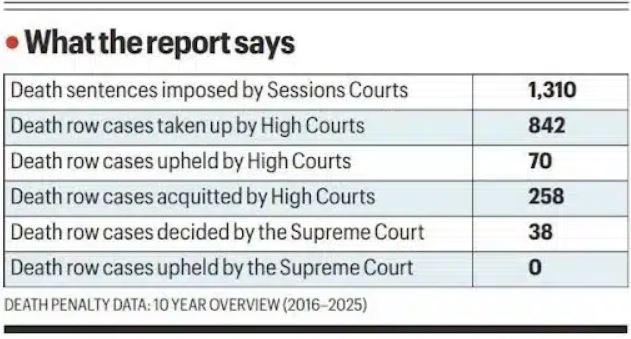
- 05 Feb 2026
In News:
A decade-long empirical study (2016–2025) by the Square Circle Clinic in collaboration with NALSAR University of Law highlights deep systemic flaws in the administration of the death penalty in India. The findings have renewed debate on due process, fairness in sentencing, and the constitutional limits of capital punishment, making the issue central to discussions on criminal justice reform.
Legal and Constitutional Framework
The death penalty remains legally valid in India but is restricted to the “rarest of rare” cases under criminal law, now reflected in the Bharatiya Nyaya Sanhita. A Sessions Court’s death sentence must be confirmed by the High Court, and further appeal lies before the Supreme Court.
Constitutionally, the punishment has been upheld as compatible with Article 21 (Right to Life) provided the procedure is fair, just and reasonable. Challenges under Articles 14 and 19 have also failed, though courts have insisted on strict procedural safeguards. Clemency powers under Article 72 allow the President to pardon or commute death sentences.
Judicial doctrine has evolved through landmark cases. In Jagmohan Singh (1973), the constitutionality of the death penalty was upheld. In Bachan Singh (1980), the Supreme Court introduced the “rarest of rare” doctrine, later elaborated in Machhi Singh (1983). In Mithu v. State of Punjab (1983), mandatory death penalties were struck down as unconstitutional, reinforcing the need for judicial discretion and individualized sentencing.
Key Findings of the 2016–2025 Study
The study reveals a stark contrast between trial courts and appellate courts. Over the last ten years, trial courts imposed more than 1,300 death sentences, yet High Courts confirmed only about 70. Of these, the Supreme Court upheld none in the cases it decided. Instead, acquittals and commutations dominate appellate outcomes.
In 2025 alone, Sessions Courts awarded 128 death sentences in 94 cases. High Courts overturned nearly 90% of the sentences they reviewed. The Supreme Court acquitted accused persons in over half of the cases it decided that year. Such trends indicate not isolated errors but a systemic pattern of erroneous or unjustified convictions at the trial stage.
Despite low confirmation rates, India’s death row population stood at 574 persons as of December 31, 2025 — the highest since 2016. This paradox reflects frequent sentencing at the trial level combined with prolonged appellate processes.
Due Process and Evolving Supreme Court Jurisprudence
The Supreme Court has increasingly emphasised procedural safeguards in capital sentencing. In 2022, it mandated that trial courts must consider psychological evaluations, probation officer reports, and prison conduct records before imposing death.
In Vasanta Sampat Dupare v. Union of India (2025), the Court declared that sentencing hearings are an essential part of a fair trial under Articles 14 and 21. Non-compliance with the 2022 guidelines was treated as a constitutional violation, enabling reopening of sentencing even after appeals were exhausted. This marks a shift toward mitigation-centred and rights-oriented sentencing.
Persistent Failures at the Trial Court Level
The study shows that in 2025, Sessions Courts failed to comply with the Supreme Court’s sentencing guidelines in over 95% of cases. Sentencing hearings were often conducted on the same day as conviction or within a few days, leaving no time to gather mitigating evidence. This haste undermines individualized sentencing and increases the risk of wrongful convictions.
Emerging Concern: Life Imprisonment Without Remission
As appellate courts commute death sentences, they increasingly impose life imprisonment without remission or fixed long-term sentences. The report cautions that this category lacks a clear statutory framework and may be arbitrary. Such sentences, by removing the possibility of release, raise concerns about human dignity and the right to hope under Article 21.
Legislative–Judicial Disconnect
While the higher judiciary has grown cautious in confirming death sentences, legislative bodies have expanded the list of capital offences over the past decade. This divergence highlights tension between retributive legislative trends and rights-based judicial scrutiny.
Socio-Legal Patterns
Death row populations are concentrated in a few states, with Uttar Pradesh having the highest numbers, followed by Gujarat, Haryana, Maharashtra, Kerala, and Karnataka. Women constitute a small but notable proportion of death row inmates. Most death sentences arise from murder cases, including those involving sexual offences.
Way Forward
Reform must focus on strengthening trial-level due process, enforcing Supreme Court guidelines, improving legal aid, and building judicial capacity on mitigation and sentencing. A statutory framework is needed to regulate life imprisonment without remission. Aligning legislative policy with constitutional values of proportionality, fairness, and dignity is essential.
Conclusion
The study underscores that wrongful death penalty convictions in India are systemic rather than accidental. Although appellate courts increasingly act as safeguards of constitutional rights, persistent procedural lapses at the trial stage undermine justice. In a constitutional democracy, the legitimacy of capital punishment depends not merely on its legality but on scrupulous adherence to fairness, due process, and human dignity.
Union Budget 2026–27: Charting India’s Path to Growth, Inclusion and Resilience
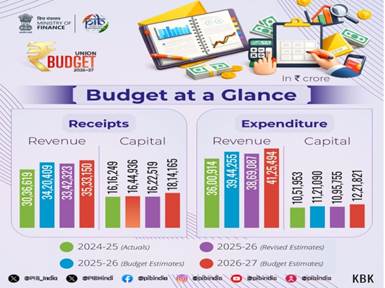
- 04 Feb 2026
In News:
The Union Budget 2026–27 was presented in Parliament by the Nirmala Sitharaman, marking her ninth consecutive Budget and the first to be prepared in Kartavya Bhawan. The fiscal blueprint is structured around three core duties or “Kartavyas” that reflect the government’s strategic priorities: accelerating and sustaining economic growth, building human capacities and fulfilling aspirations, and ensuring inclusive development across regions and communities. This framework signals an integrated approach to achieve Viksit Bharat by 2047 amid global uncertainties and domestic structural challenges.
Macro-Fiscal Framework and Priorities
For the financial year 2026–27, the Budget projects total expenditure at ?53.5 lakh crore, with non-debt receipts estimated at ?36.5 lakh crore and net tax receipts at ?28.7 lakh crore. The fiscal deficit is targeted at 4.3% of GDP, marginally lower than the revised estimate of 4.4% for 2025–26, underscoring a continued commitment to fiscal consolidation. The debt-to-GDP ratio is projected to decline to 55.6%, indicating gradual improvement in fiscal metrics.
First Kartavya: Growth, Competitiveness and Infrastructure
The Budget places strong emphasis on strengthening India’s growth engine through investment-led strategies and sector-specific interventions. Public capital expenditure is significantly enhanced to ?12.2 lakh crore, reinforcing the infrastructure build-out across transport, logistics, waterways and urban connectivity. Seven high-speed rail corridors are proposed as growth connectors, while 20 new national waterways are slated to be operational in the coming five years.
Manufacturing and strategic sectors receive focused support. The Biopharma SHAKTI initiative, with an outlay of ?10,000 crore, aims to position India as a global biopharmaceutical hub. The India Semiconductor Mission 2.0 and expanded electronics components manufacturing scheme are designed to enhance technological sovereignty and supply chain resilience. Rare earth corridors in mineral-rich states will facilitate mining, processing and value chain development. Initiatives such as the Textile Expansion and Employment Scheme and Mega Textile Parks will boost traditional and technical textiles through cluster-based financing and technology upgradation.
Special focus is accorded to legacy industry revival, with targeted schemes to modernise 200 industrial clusters, and to developing Champion SMEs backed by a ?10,000 crore growth fund. Infrastructure risk mitigation funds and monetisation of CPSE real estate are expected to catalyse private investment.
Second Kartavya: Human Capital and Aspirational Growth
The second Kartavya underscores investment in human capital. A High-Powered Education–Employment–Enterprise Standing Committee will align skill development with employment outcomes, particularly in services and future sectors. New allied health institutions and regional medical hubs are proposed to strengthen healthcare capacity and position India as a medical tourism destination. Traditional systems of medicine will be reinforced with new institutes for Ayurveda.
Education infrastructure will be expanded with university townships near industrial corridors and girls’ hostels across districts to improve access and equity. Creative industries under the Orange Economy will be catalysed through AVGC labs in schools and colleges, targeting employment generation in animation, gaming and visual effects.
Third Kartavya: Inclusive Development and Last-Mile Participation
Inclusivity is central to the third Kartavya. Major schemes are unveiled to boost farm incomes, including integrated development of reservoirs, a Coconut Promotion Scheme and Bharat-VISTAAR, an AI-enabled multilingual platform to improve agricultural decision-making. Efforts to empower divyangjan through skilling initiatives and the expansion of mental health infrastructure, including NIMHANS-2, reflect a broader social inclusion agenda.
Regional disparities are addressed through targeted infrastructure in Purvodaya States and the North-East, including tourism circuits and e-buses to enhance sustainable connectivity. Fiscal transfers through the 16th Finance Commission amount to ?1.4 lakh crore, reinforcing cooperative federalism.
Conclusion
The Union Budget 2026–27 balances growth imperatives with inclusive outcomes, reinforcing infrastructure, manufacturing, human capital, and regional equity. Anchored in the Three Kartavyas, it strives to consolidate India’s macroeconomic stability while enabling citizens to actively participate in and benefit from the development process.
Delhi Declaration 2026
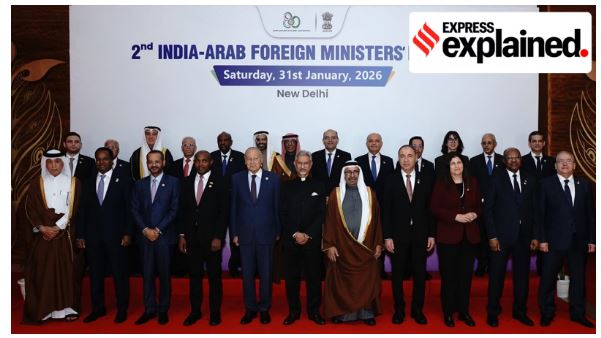
- 03 Feb 2026
In News:
The Delhi Declaration emerged from the second India–Arab Foreign Ministers’ Meeting hosted by India, which brought together all 22 members of the League of Arab States a decade after their first ministerial dialogue. Convened amid intensifying regional rivalries and conflict, the declaration clarifies where India and Arab states align and where they prefer strategic silence. It underscores India’s calibrated West Asia policy: norm-based, stability-oriented, and carefully balanced across competing power centres.
Support for Sovereignty and Recognised Governments
A central theme is the reaffirmation of the sovereignty, unity, and territorial integrity of conflict-affected states such as Sudan, Libya, and Somalia. By rejecting external interference and backing internationally recognised governments, India and Arab partners signal a preference for order over fragmentation. This stance places New Delhi closer to the mainstream Arab position that favours reconciliation and state institutions, rather than legitimising parallel authorities or breakaway entities.
Yemen and Maritime Security
On Yemen, the declaration explicitly condemns attacks on Red Sea navigation and reiterates support for Yemen’s unity. The sharper language on maritime security reflects shared concern over trade disruptions and aligns India with a stability-first approach in a theatre marked by proxy competition. For India—heavily dependent on energy imports and sea lanes, secure shipping is a core national interest.
Cautious Engagement on Syria
The text is restrained on Syria, limiting references to counter-terrorism against the Islamic State. This mirrors India’s low-key, diplomatic engagement with evolving political realities in Damascus while avoiding premature endorsement of any faction. The emphasis remains on counter-terror cooperation and humanitarian stability rather than regime politics.
Israel–Palestine: Norms over New Frameworks
Instead of endorsing novel diplomatic architectures, the declaration backs the long-standing Arab Peace Initiative (2002), land for peace, with a Palestinian state based on pre-1967 lines alongside Israel. While supporting efforts to end violence in Gaza, India and Arab states stop short of embracing any new, sweeping blueprint. The reiteration of Palestinian sovereignty reflects continuity in India’s position, even as it maintains strong bilateral ties with Israel.
Strategic Silence on Iran
Notably absent is any direct reference to escalating U.S.–Iran tensions. This omission appears deliberate, allowing capitals to manage sensitive bilateral equations without public positioning. For India, which seeks to preserve energy ties and connectivity options while navigating sanctions exposure, discretion helps sustain diplomatic flexibility.
Economic and Institutional Pillars
Beyond geopolitics, the declaration advances cooperation across five institutional pillars—economy, energy, education, media, and culture, first framed in 2002. With India–Arab trade exceeding $240 billion, economic interdependence anchors the partnership. Energy security, diaspora linkages, and cultural exchanges add durable ballast to political dialogue.
What It Reveals About India’s West Asia Policy
The Delhi Declaration crystallises India’s approach: engage all sides, avoid zero-sum alignments, and privilege internationally recognised norms that reduce conflict spillovers. Partnerships remain transactional and compartmentalised, ensuring that deep bilateral ties do not translate into bloc politics. In a region of fluid rivalries, India positions itself as a steady, pragmatic actor—supporting sovereignty, maritime security, and incremental diplomacy while leaving space to manoeuvre on the most combustible fault lines.
India–EU Free Trade Agreement
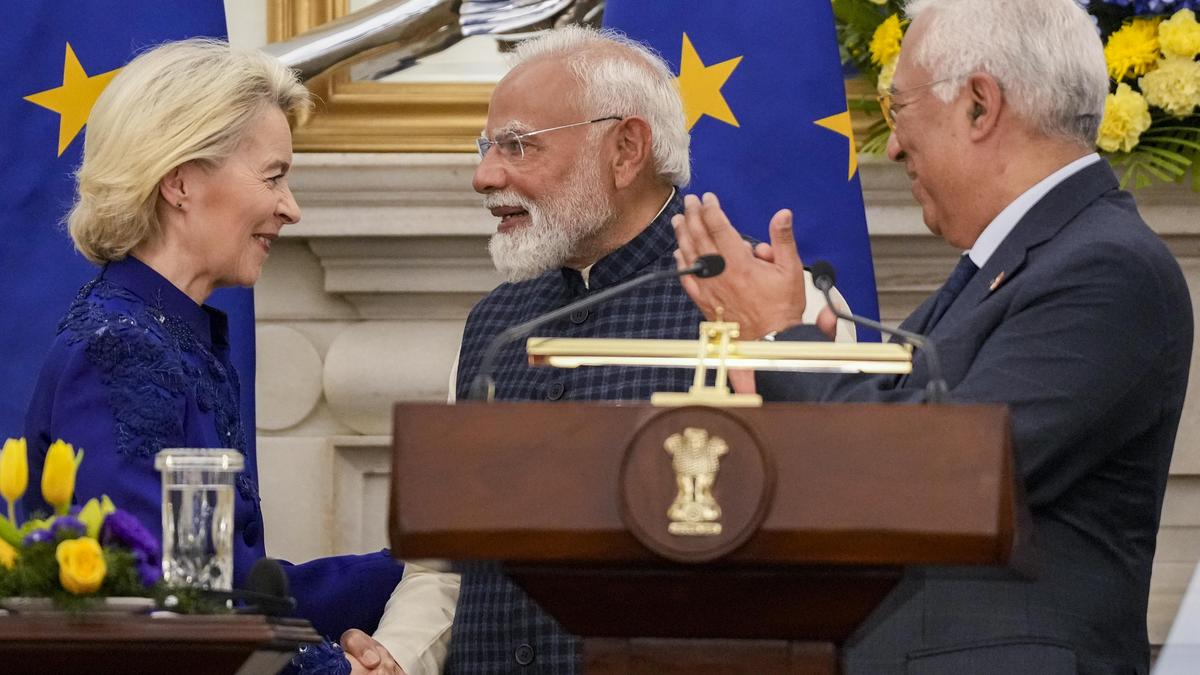
- 01 Feb 2026
In News:
After nearly two decades of intermittent negotiations, India and the European Union have concluded talks on a comprehensive Free Trade Agreement (FTA). Often termed the “mother of all deals,” the agreement reflects both the scale of economic engagement and the careful balancing of ambition with domestic sensitivities.
Why the India–EU FTA Is So Significant
The agreement links two major economic blocs, India, one of the world’s fastest-growing large economies, and the EU, one of the largest integrated markets. The EU accounts for nearly 12% of India’s total trade, making it a more significant partner than many of India’s recent FTA counterparts combined.
Bilateral merchandise trade has crossed $136 billion, while services trade stands above $80 billion, underlining the strategic depth of economic interdependence. Given Europe’s high purchasing power and regulatory influence, deeper access to this market holds structural importance for India’s export-led growth strategy.
What India Gains
1. Near-Complete Tariff Elimination on Exports: The EU will remove duties on a vast majority of tariff lines, covering almost the entire value of India’s exports. Immediate tariff elimination on a large share of goods, along with phased reductions on others, provides Indian exporters with predictable and preferential market access.
2. Boost to Labour-Intensive Sectors: Sectors such as textiles, apparel, leather, footwear, marine products, toys, sports goods, and gems & jewellery, which employ large workforces, stand to gain significantly. These industries often face high EU tariffs, and their removal improves price competitiveness, especially at a time when access to other markets like the US faces uncertainties.
3. Agricultural and Processed Food Access: Products like tea, coffee, spices, grapes, fruits, vegetables, and processed foods gain improved access, benefiting India’s agri-export diversification strategy.
4. Services Market Openings: The EU has expanded commitments across numerous services sectors, including IT/ITeS, professional services, education, and business services. This strengthens India’s position as a global services hub.
What India Concedes
1. Tariff Liberalisation with Safeguards: India has agreed to reduce or eliminate tariffs across most tariff lines, but largely through phased reductions and quota mechanisms to protect sensitive domestic sectors.
2. Automobiles and Wine: High duties on European wine and automobiles will be gradually reduced, but only within strict quota limits. Mass-market vehicles and cheaper wines remain protected, indicating India’s calibrated approach to liberalisation.
Sensitive Sectors Kept Outside
India excluded politically sensitive agricultural sectors such as dairy, poultry, beef, cereals, edible oils, and tobacco. The EU also shielded certain products like sugar, rice, milk powder, and poultry, highlighting mutual protection of vulnerable sectors.
Key Challenges and Unresolved Issues
- Carbon Border Adjustment Mechanism (CBAM): The EU’s CBAM, which imposes carbon-linked costs on imports, remains a concern for Indian exporters in carbon-intensive sectors. Although India secured assurances of equal treatment, CBAM could erode some tariff advantages unless domestic industry transitions toward greener production.
- Domestic Reform Imperative: To fully benefit, India must improve logistics, regulatory certainty, contract enforcement, and infrastructure. Without complementary domestic reforms, preferential market access may not translate into sustained export expansion.
Strategic Significance
Beyond trade, the FTA strengthens India–EU ties in a period of geopolitical and supply chain realignment. It supports:
- Diversification away from overdependence on single markets
- Integration into global value chains
- Greater collaboration in technology, sustainability, and standards
Conclusion
The India–EU FTA represents a structural shift in India’s trade policy—from cautious protectionism toward calibrated integration with major advanced markets. While the agreement opens vast opportunities for exports and services, its ultimate success will depend on India’s ability to enhance domestic competitiveness and navigate emerging regulatory challenges such as CBAM.
Union Budget 2026–27: Growth, Inclusion and Structural Transformation
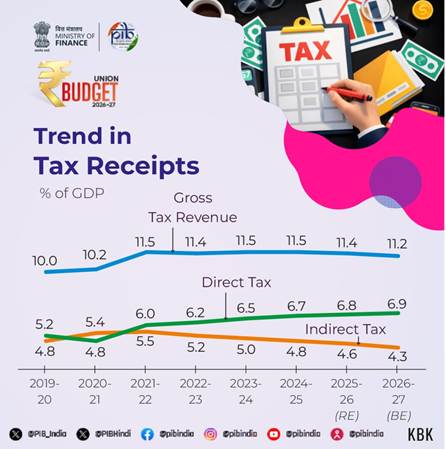
- 02 Feb 2026
In News:
The Union Budget 2026–27 is anchored in a threefold developmental framework accelerating economic growth, building human capacity, and ensuring inclusive participation. At a time when the global economy faces supply chain realignments, technological disruption, and resource insecurity, the Budget attempts to position India as a resilient, innovation-driven, and socially inclusive economy.
I. Growth Strategy: Investment-Led and Technology-Driven
A defining feature of the Budget is the continued emphasis on public capital expenditure, raised to ?12.2 lakh crore. This reinforces the government’s belief that infrastructure spending crowds in private investment, enhances productivity, and generates employment.
The push spans:
- High-speed rail corridors and freight infrastructure
- Expansion of National Waterways for cost-effective logistics
- Development of City Economic Regions (CERs) to leverage urban agglomeration benefits
These measures reflect a shift from isolated project-based development to integrated regional growth planning.
The Budget also promotes strategic manufacturing and high-technology sectors. The Biopharma SHAKTI initiative (?10,000 crore outlay) aims to develop domestic capabilities in biologics and biosimilars, reducing import dependence while addressing India’s rising non-communicable disease burden. This aligns with the broader push toward knowledge-intensive industrialisation.
Simultaneously, the ?10,000 crore SME Growth Fund recognises MSMEs as drivers of employment and innovation, moving beyond survival support toward scaling globally competitive firms.
II. Human Capital: From Demographic Dividend to Skilled Workforce
The Budget acknowledges that economic growth without skill formation risks jobless expansion. Hence, it invests in education, skilling, and sector-specific workforce creation.
- AVGC labs in schools and colleges support India’s emerging digital content industry.
- Establishment of girls’ hostels in STEM districts addresses gender gaps in higher education.
- A National Institute of Hospitality and guide training scheme link skilling with tourism-led growth.
Healthcare is treated not only as welfare but also as an employment-intensive care economy. The proposal for Regional Medical Hubs integrates healthcare delivery, research, and medical tourism, positioning India as a global health services destination.
III. Inclusive Growth and Social Sector Interventions
The third pillar of the Budget centres on inclusion. Schemes such as Bharat VISTAAR, an AI-based multilingual agricultural advisory, aim to democratise digital infrastructure for farmers, thereby reducing information asymmetry and climate risk.
Similarly, SHE-Marts build on SHG-based mobilisation to promote women’s entrepreneurship, signalling a shift from credit access to market integration and enterprise ownership.
Mental health infrastructure expansion, regional development in the Northeast, and targeted tourism circuits indicate an attempt to address geographical and social imbalances.
IV. Fiscal Prudence with Growth Orientation
Despite higher expenditure, fiscal consolidation remains on track:
- Fiscal deficit projected at 4.3% of GDP
- Debt-to-GDP ratio on a declining trajectory
This suggests a calibrated approach where growth-enhancing capex is prioritised while maintaining macroeconomic credibility.
V. Tax Reforms: Simplification and Competitiveness
The introduction of the New Income Tax Act (2025) aims to simplify compliance and reduce litigation. Rationalisation of penalties, decriminalisation of minor offences, and automated safe harbour provisions for IT services improve the ease of doing business.
In a bid to attract global capital, tax incentives for data centres, cloud services, and non-resident investors indicate a strategy to integrate India into global value chains in digital and high-tech domains.
VI. Trade Facilitation and Industrial Policy
Customs reforms reduce duties on inputs for critical minerals, clean energy, aviation, and pharmaceuticals, supporting domestic manufacturing. Digitisation of cargo clearance, AI-based risk assessment, and warehouse reforms enhance trade efficiency and logistics competitiveness.
Conclusion
The Union Budget 2026–27 reflects a structural transition in India’s development model—from consumption-led growth to investment, innovation, and inclusion-led expansion. By combining infrastructure investment, industrial policy, human capital formation, and digital governance, the Budget attempts to align short-term growth impulses with the long-term goal of Viksit Bharat. The key challenge lies in effective implementation and coordination with states, which will determine whether these ambitions translate into broad-based socio-economic transformation.