
Carbon Capture, Utilisation and Storage (CCUS) in India
- 06 Feb 2026
In News:
The Union Budget’s allocation of Rs. 20,000 crore over five years for Carbon Capture, Utilisation and Storage (CCUS) marks a significant policy intervention to address emissions from India’s hard-to-abate industrial sectors. The move reflects a strategic recognition that achieving India’s net-zero emissions target by 2070 will not be possible through renewable energy transition alone, especially amid continued industrialisation and infrastructure expansion.
Understanding CCUS
CCUS refers to a suite of technologies that aim to prevent carbon dioxide (CO2)—the principal driver of climate change from entering the atmosphere. The process involves:
- Capturing CO2 from industrial processes such as cement, steel, power generation, refineries and chemicals
- Transporting CO2 through pipelines or other means
- Storing CO2 securely in deep geological formations, or
- Utilising CO2 by converting it into fuels, chemicals or construction materials
Importantly, CCUS is not a single technology but a value chain involving diverse capture methods, materials, transport systems and storage solutions.
Global Status and Climate Relevance
Although CCUS technologies have existed for decades, global deployment has been limited due to high costs, safety concerns, and scale-up challenges. Currently, only about 50 million tonnes of CO2 are captured annually worldwide—less than 0.5% of global emissions of nearly 40 billion tonnes.
However, with global emissions remaining stubbornly high, climate assessments increasingly agree that there is no credible pathway to limiting global warming or achieving net-zero by 2050 without large-scale CCUS adoption. Consequently, CCUS projects are expanding mainly in the United States, Europe and China.
India’s CCUS Journey
India’s CCUS push gained momentum after it announced its net-zero by 2070 commitment at the 2021 Glasgow climate summit. Since then:
- Pilot and demonstration projects have begun in the steel, cement and chemical sectors
- Potential large-scale capture and geological storage sites have been mapped
- Dedicated Centres of Excellence, such as at Indian Institute of Technology Bombay and Jawaharlal Nehru Centre for Advanced Scientific Research, are leading indigenous research
While the underlying science of CCUS is well understood, significant innovation is still required in engineering design, materials, transport logistics and storage safety to make systems affordable, efficient and scalable under Indian conditions.
Policy and R&D Roadmap
In December, the Department of Science and Technology released a CCUS R&D Roadmap for 2030, identifying key technology, financing and policy bottlenecks that have slowed adoption. A major gap highlighted was the lack of funding for field-level testing and scale-up, where commercial risks are highest.
Significance of the Rs. 20,000 Crore Budget Allocation
The five-year budgetary support is designed to:
- Bridge the “valley of death” between laboratory success and commercial deployment
- Raise technology readiness levels of CCUS systems
- Enable scale-up to capture or store 100–500 tonnes of CO2 per day, which is necessary for economic viability
Experts expect that this funding could allow multiple CCUS technologies to reach commercial deployment within five years, transforming India’s industrial decarbonisation landscape.
Economic and Strategic Benefits
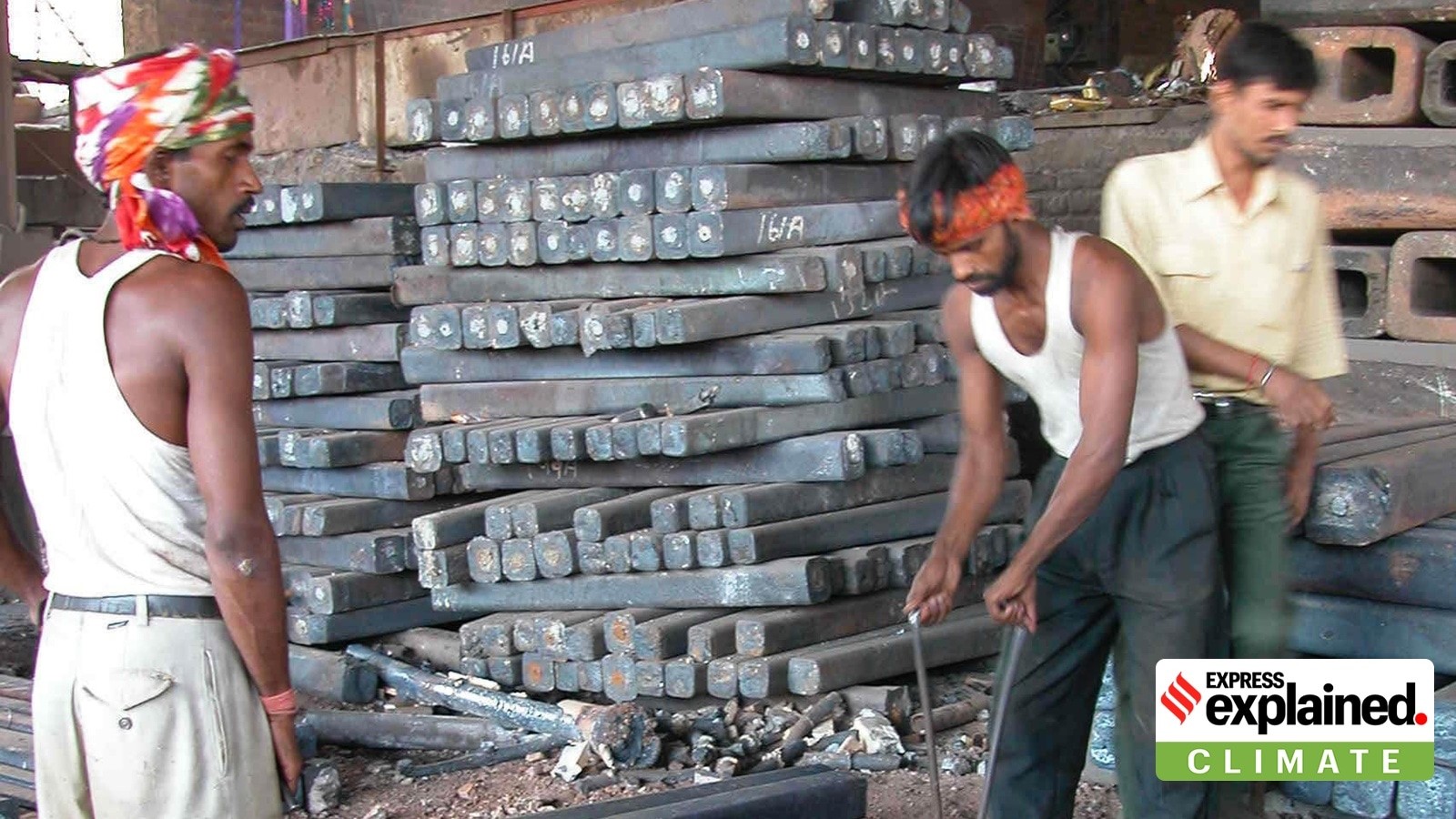
CCUS is particularly critical for hard-to-abate sectors such as cement and steel, where:
- A majority of CO2 emissions arise from chemical processes, not fuel combustion
- Renewable electricity alone cannot eliminate emissions
Accordingly, CCUS represents the only viable large-scale decarbonisation route for these industries.
The Budget explicitly targets CCUS applications in power, steel, cement, refineries and chemicals, which together account for the bulk of India’s industrial emissions.
From a trade perspective, CCUS adoption can help Indian exporters navigate emerging carbon-based trade barriers, such as the Carbon Border Adjustment Mechanism (CBAM) of the European Union. Lower embedded emissions would enhance the global competitiveness of Indian products.
Challenges Ahead
Despite strong policy intent, several challenges remain:
- High upfront capital costs and uncertain returns
- Need for long-term monitoring and liability frameworks for CO2 storage
- Limited transport infrastructure for captured CO2
- Regulatory clarity on ownership and responsibility for stored carbon
Addressing these issues will require coordinated action across ministries, industry, academia and financial institutions.
Conclusion
The Rs. 20,000 crore CCUS allocation represents a structural shift in India’s climate strategy, acknowledging the limits of energy transition alone and embracing industrial decarbonisation technologies. If effectively implemented, CCUS can reconcile India’s development imperatives with its climate commitments, safeguard export competitiveness, and enable a credible pathway towards net-zero by 2070. Sustained policy support, technological innovation and regulatory certainty will determine whether this budgetary push translates into long-term climate and economic gains.