
CAPF (General Administration) Bill, 2026
- 31 Mar 2026
In News:
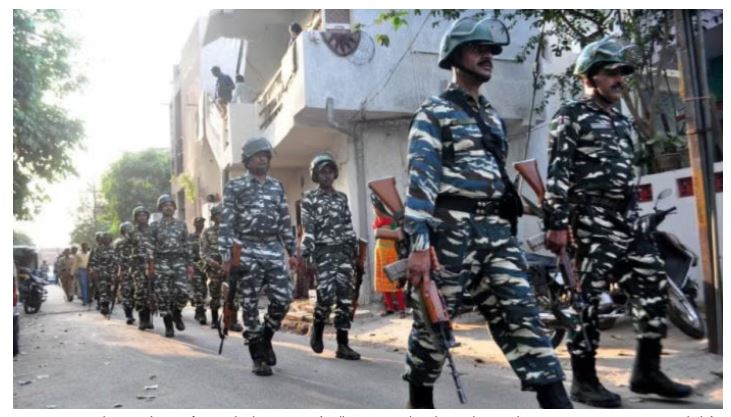
The Union Government recently introduced the Central Armed Police Forces (General Administration) Bill, 2026 in the Rajya Sabha. This legislative move seeks to codify the leadership structure of India’s primary internal security forces, specifically institutionalizing the role of Indian Police Service (IPS) officers in commanding these organizations.
Objectives and Scope of the Bill
The Bill provides a formal regulatory framework for the recruitment, promotion, and service conditions of Group ‘A’ General Duty Officers (GAGDOs) and other personnel within the CAPFs. It aims to provide "legislative clarity" to the long-standing practice of IPS leadership, ensuring a structural link between the Union and the States.
Forces Covered:
- Central Reserve Police Force (CRPF)
- Border Security Force (BSF)
- Central Industrial Security Force (CISF)
- Indo-Tibetan Border Police (ITBP)
- Sashastra Seema Bal (SSB)
Key Features: The "IPS Earmarking"
The most significant aspect of the Bill is the explicit reservation of senior leadership positions for IPS officers on deputation, overriding previous judicial observations:
- Director General (DG) & Special DG: 100% reserved for IPS.
- Additional Director General (ADG): Minimum 67% reserved for IPS.
- Inspector General (IG): 50% reserved for IPS.
- Rule-Making Supremacy: The Central Government is empowered to frame rules for recruitment and service conditions, with a "notwithstanding clause" that overrides existing laws or prior court orders.
- Protection of Benefits: It ensures that all existing financial benefits granted to Group ‘A’ cadre officers (prior to the Act) are protected.
The Rationale: Why These Changes?
The government justifies the Bill based on federal synergy and operational ethos:
- Inter-Agency Coordination: IPS officers serve as a vital bridge between the Union’s armed forces and State police departments. Since senior State posts (ADGs/DGs) are held by the IPS, their presence in CAPFs facilitates seamless coordination during internal security crises.
- Maintaining "Civil Power" Character: As noted in the Sanjay Prakash (2025) case, the IPS presence is seen as vital to maintaining the functional ethos of CAPFs as forces that "assist civil power" rather than purely military entities.
- National Integration: Reflecting Sardar Patel’s vision, the IPS provides a unifying thread across the federal structure, bringing diverse field experience from various States to national border and industrial security.
- Legislative Supremacy: The Bill asserts that service policy is the domain of the Executive and Legislature, rectifying what the government perceives as "judicial overreach" regarding deputation quotas.
Challenges and Critical Concerns
The Bill has met with significant criticism, primarily from the CAPF cadre officers:
- Career Stagnation: High quotas for the IPS limit the promotion avenues for direct-entry CAPF officers (GAGDOs). Many cadre officers wait decades for promotions while the top tiers are legally reserved for outsiders.
- The "Parachuting" Perception: Critics argue that IPS officers, often coming from district policing backgrounds, may lack the specialized expertise required for border guarding (BSF) or specialized industrial security (CISF).
- Judicial Conflict: The Bill appears to directly nullify the Sanjay Prakash (2025) ruling, which instructed a progressive reduction of IPS deputation at the IG level. This may lead to further legal challenges regarding the principle of Judicial Review.
- Organised Group ‘A’ Service (OGAS) Status: There is ongoing friction regarding whether the mandatory IPS quotas dilute the administrative rights and financial benefits theoretically guaranteed under the OGAS status granted to CAPF cadres.
Way Ahead: Balancing Aspirations
To ensure the internal stability of these forces, the government must adopt a balanced approach:
- Timely Cadre Reviews: Regular reviews are needed to increase the total number of senior posts so that both IPS and cadre officers have growth opportunities.
- Specialized Induction: IPS officers deputed to CAPFs should undergo mandatory, force-specific induction training (e.g., specialized border management for BSF).
- Strengthening OGAS Rights: Ensuring that the financial and administrative parity of being an "Organised Service" is fully realized by CAPF cadre officers to reduce resentment.