
Scheduled Caste Status and Religious Conversion
- 27 Mar 2026
In News:
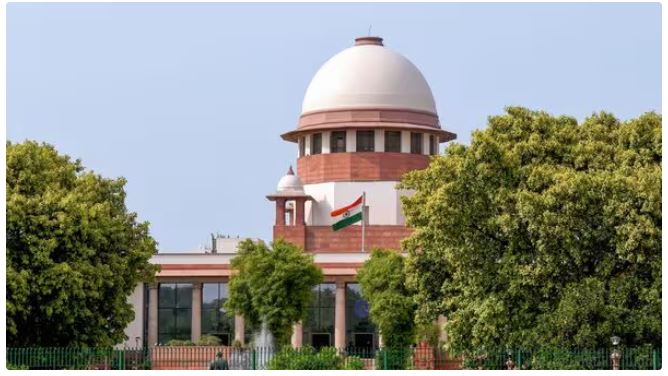
In a recent judgment, the Supreme Court of India reaffirmed that Scheduled Caste (SC) status is restricted to individuals professing Hinduism, Sikhism, or Buddhism, and is lost upon conversion to other religions. This ruling has reignited debates on social justice, equality, and the religion-linked nature of affirmative action in India.
Constitutional and Legal Framework
The legal basis for SC status lies in Article 341 of the Constitution, which empowers the President to specify Scheduled Castes through a Presidential Order, subject to parliamentary modification.
The Constitution (Scheduled Castes) Order, 1950 restricts SC status to persons professing Hinduism, with later amendments extending it to Sikhs (1956) and Buddhists (1990).
Importantly, SC status is state-specific, meaning recognition depends on whether a particular caste is notified in a given state or union territory.
Supreme Court’s Recent Ruling
In Chinthada Anand v. State of Andhra Pradesh (2026), the Court clarified that conversion to religions such as Christianity or Islam leads to the immediate and complete loss of SC status, irrespective of a person’s birth-based caste identity.
The Court emphasised that “professing” a religion involves actively practising it. Since religions like Christianity and Islam do not recognise caste hierarchies in doctrine, claiming SC status while professing these religions was held to be inconsistent.
Consequently, individuals who convert are no longer eligible for reservation benefits or legal protections under laws such as the SC/ST (Prevention of Atrocities) Act, 1989.
Reconversion and Exceptions
The Court allowed for restoration of SC status upon reconversion to Hinduism, Sikhism, or Buddhism, but only if strict proof of genuine reconversion and acceptance by the original caste community is established.
In contrast, Scheduled Tribe (ST) status is not linked to religion, and individuals may retain ST benefits after conversion if their tribal identity and customs persist.
Judicial Precedents
Earlier rulings have shaped this position. In C.M. Arumugam (1976), the Court recognised caste as a social phenomenon but required proof of continued discrimination after conversion.
In Soosai v. Union of India (1985), SC status was denied to Dalit Christians due to lack of sufficient empirical evidence of continued discrimination.
In K.P. Manu (2015), the Court permitted restoration of SC status after reconversion, subject to community acceptance.
Debate on Extending SC Status Beyond Religion
The issue remains contentious, with competing perspectives:
- Arguments for Inclusion highlight that caste-based discrimination persists even after conversion, creating a “double disadvantage” for Dalit converts. They also point to the inconsistency, as OBC and ST categories are religion-neutral.
- Arguments against Inclusion emphasise that SC status was historically designed to address untouchability within the Hindu social order, and extending it could dilute benefits for existing SC communities. Concerns are also raised regarding administrative difficulties in identifying caste within religions that formally reject it.
Role of Commissions
Various commissions have examined the issue. The Kaka Kalelkar Commission and Mandal Commission acknowledged the persistence of backwardness among converts.
The Justice Ranganath Mishra Commission (2007) recommended delinking SC status from religion.
More recently, the Justice K.G. Balakrishnan Commission (2022) has been tasked with examining whether SC status should be extended to Dalit converts based on empirical evidence.
Way Forward
Addressing this issue requires a data-driven and balanced approach. Policymaking must be guided by empirical evidence on whether caste-based discrimination persists across religions.
There is also a need to reconsider whether affirmative action should be based on social and educational backwardness rather than religious identity, aligning SC criteria with the religion-neutral approach of STs and OBCs.
At the same time, strengthening universal anti-discrimination frameworks is essential to protect vulnerable groups irrespective of religious affiliation.
Conclusion
The Supreme Court’s ruling reaffirms the existing constitutional position linking SC status to specific religions. However, the broader debate highlights tensions between constitutional provisions, evolving social realities, and the goals of substantive equality.
A nuanced, evidence-based legislative response will be crucial to ensure that social justice remains inclusive while preserving the integrity of affirmative action policies.