
UN IGME 2025 Report on Child Mortality
- 24 Mar 2026
In News:
The United Nations Inter-agency Group for Child Mortality Estimation (UN IGME) recently released its 2025 report, 'Levels and Trends in Child Mortality'. While the report underscores a concerning global deceleration in child survival progress since 2015, it distinguishes India as a leading global "exemplar." India’s sustained, large-scale interventions have resulted in a monumental decline in mortality rates, positioning the country as a primary driver of Southern Asia’s rapid progress.
Global Landscape: A Study in Concentration and Deceleration
The report reveals that despite a 50% reduction in under-five deaths since 2000, the pace of improvement has slowed by 60% since 2015.
- The Burden: In 2024, approximately 4.9 million children died before age five, with 2.3 million (nearly 50%) occurring in the neonatal period (first 28 days).
- Geographic Disparity: Mortality remains heavily concentrated in Sub-Saharan Africa (58%) and Southern Asia (25%).
- Malnutrition as a Primary Driver: For the first time, the report integrated direct causes, identifying Severe Acute Malnutrition (SAM) as the direct cause of 5% of deaths among children aged 1–59 months, though its indirect impact as an immunity-weakener is far greater.
- Adolescent Risks: The report highlights a shift in mortality causes for the 5–24 age group—girls aged 15–19 primarily succumb to self-harm, while boys in the same bracket die mostly in road accidents.
India’s Performance: Statistical Milestones
India’s progress has outpaced the Southern Asian regional average (32.8 per 1,000 live births), reflecting a robust transition in public health.
|
Indicator |
1990 Status |
2024 Status |
% Decline |
|
Under-5 Mortality Rate (U5MR) |
127 / 1,000 |
26.6 / 1,000 |
~79% |
|
Neonatal Mortality Rate (NMR) |
57 / 1,000 |
16.7 / 1,000 |
~70% |
|
Infant Mortality Rate (IMR) |
- |
23.3 / 1,000 |
- |
|
Maternal Mortality Ratio (MMR) |
130 / Lakh (2014) |
97 / Lakh |
Within reach of SDG target (<70) |
Key Drivers of India’s Success
India’s "Exemplar" status is attributed to a multi-layered strategy focusing on institutionalization and grassroots delivery:
- Institutional Deliveries: Schemes like Janani Suraksha Yojana (JSY) and JSSK have incentivized hospital births, ensuring skilled attendance.
- Specialized Care Infrastructure: The expansion of Special Newborn Care Units (SNCUs) and the Tele-SNCU hub-and-spoke model have provided critical care in remote areas.
- Preventive Interventions: Mission Indradhanush under the Universal Immunization Programme (UIP) has closed the gap in vaccine coverage.
- Nutritional Legal Framework: The National Food Security Act (2013) and POSHAN Abhiyaan address the biological "silent multiplier" of mortality—malnutrition.
- Grassroots Management: The IMNCI protocol empowers ASHA and Anganwadi workers for early diagnosis of pneumonia and diarrhea.
Persistent Challenges and Structural Bottlenecks
Despite the accolades, the "last mile" to achieving SDG 3.2 (U5MR < 25; NMR < 12) remains steep:
- The Neonatal Bulge: 63% of India's under-five deaths occur in the first 28 days. Prematurity and birth asphyxia require high-quality intrapartum care (care during labor), which remains inconsistent.
- The Malnutrition-Anemia Loop: 52.2% of pregnant women in India are anemic (NFHS-5), leading to low-birth-weight babies with compromised immunity.
- Regional and Social Inequality: While Kerala and Tamil Nadu mirror developed nations, the "BIMARU" states (UP, Bihar, MP, Rajasthan) face infrastructure deficits and social barriers like low maternal education and poverty.
- WASH Deficits: Post-neonatal deaths are still driven by pneumonia and diarrhea, linked to inadequate Water, Sanitation, and Hygiene (WASH) infrastructure in rural belts.
The Way Forward: Strategic Recommendations
To meet the 2030 SDG targets, India must double its current pace of progress:
- Focus on the "Golden Minute": Intensify training for frontline staff in neonatal resuscitation and promote Kangaroo Mother Care (KMC) and Breast Milk Banks.
- Quality over Access: Shift focus from mere institutional delivery to "Quality of Care" through the LaQshya program to improve labor room standards.
- Nutritional Quality: Transition POSHAN 2.0 focus from calorie-centrism to micronutrient density and the "First 1,000 Days" window.
- Aspirational District Strategy: Divert resources and mobile health units to tribal and remote areas to eliminate the "Golden Hour" delay in emergency pediatric care.
- Digital Integration: Scale the U-WIN platform for real-time immunization and health tracking.
Conclusion
India’s journey from a high-burden nation to a "global exemplar" is a testament to the power of targeted public health policy. However, child survival is not merely a medical goal but a prerequisite for realizing India’s demographic dividend. Achieving a converged approach across Health, Nutrition, and WASH sectors will be the final step in breaking the cycle of mortality and ensuring every child survives and thrives.
Women’s Political Participation in India
- 15 Mar 2026
In News:
Women’s political participation refers to the involvement of women in electoral and governance processes, including voting, campaigning, political mobilization, and holding elected office. In recent decades, India has witnessed a significant transformation in women’s electoral participation, with female voter turnout reaching near parity with men in the 2019 and 2024 Lok Sabha elections. However, despite this progress, a participation–representation gap persists, as women remain underrepresented in legislative bodies.
Key Trends in Women’s Political Participation
1. Electoral Turnout: The Silent Revolution
Women’s participation in voting has risen dramatically over time.
- The gender gap in Lok Sabha turnout narrowed from 11.2% in 1967 to almost zero in 2019 and 2024.
- In several state assembly elections since 2011, women’s turnout has surpassed men’s by about 2% on average.
This trend reflects increasing political awareness, improved voter registration, and targeted outreach by electoral authorities.
2. Legislative Representation
Despite strong voter participation, women remain underrepresented in legislative bodies.
- In the 2024 Lok Sabha, women hold 74 seats (about 13.6%), slightly lower than the 78 seats recorded in 2019, which was the highest ever.
- Women candidates also remain a small share of total contestants, despite an increasing number of women entering elections.
This demonstrates a clear gap between political participation as voters and representation as policymakers.
3. Candidature and Electoral Success
While fewer women contest elections, data shows that their success rate is relatively higher.
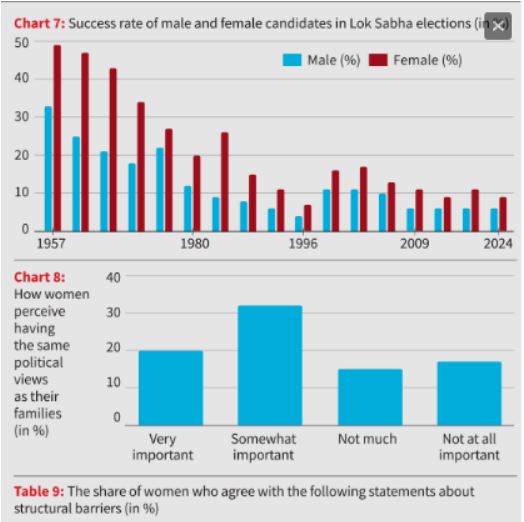
- In the 2024 elections, about 9% of women candidates won, compared to around 6% of male candidates.
This challenges the common assumption among political parties that women candidates are less “electable”.
Dimensions of Women’s Political Participation
1. Campaign Participation
Women are increasingly involved in political campaigning, including rallies and door-to-door canvassing.
Participation in election meetings has increased to around 16%, indicating that women are gradually moving from private spaces into the public political arena.
2. Grassroots Leadership
Reservation in local governance has significantly expanded women’s political presence.
The 73rd and 74th Constitutional Amendment Acts mandate 33% reservation for women in Panchayati Raj Institutions (PRIs) and Urban Local Bodies, with some states increasing it to 50%.
Today, India has over 1.4 million elected women representatives in local governments, creating a strong pipeline for future political leadership.
3. Independent Voting Behaviour
Women voters increasingly exercise independent political choices rather than voting according to family preferences.
- In 2024, about 50% of women reported voting independently, reflecting growing political autonomy.
4. Issue-Based Voting
Women voters are increasingly influenced by policy-oriented welfare schemes rather than traditional caste or party loyalties. For example, welfare programmes such as direct benefit schemes targeting women have significantly shaped electoral outcomes in several states.
Initiatives to Promote Women’s Political Participation
1. Nari Shakti Vandan Adhiniyam (128th Constitutional Amendment Act): This legislation provides 33% reservation for women in the Lok Sabha and State Legislative Assemblies, aiming to improve representation in higher legislatures.
2. Reservation in Local Governance: The 73rd and 74th Constitutional Amendments institutionalised women’s representation at the grassroots level, transforming local governance.
3. Electoral Participation Initiatives: The Systematic Voters’ Education and Electoral Participation (SVEEP) programme by the Election Commission of India promotes voter awareness, especially among women and marginalized groups.
4. Political Literacy Initiatives: Political literacy clubs in schools and colleges aim to encourage young women’s engagement with democratic institutions and public policy.
Challenges to Women’s Political Representation
1. The Electability Myth
- Political parties often hesitate to nominate women candidates, believing they are less likely to win elections.
- In the 2024 elections, women accounted for around 10% of total candidates, despite having higher success rates.
2. Patriarchal Social Norms: Deep-rooted gender norms often limit women’s participation in public life and require them to seek family approval before entering politics.
3. Domestic Responsibilities: Women frequently face a double burden of household work and caregiving, leaving less time and resources for political engagement.
4. Criminalisation and High Cost of Politics: The increasing role of money and muscle power in elections creates barriers for women candidates, who often have fewer financial and political resources.
5. Information and Digital Access Gap: In some regions, lower literacy levels and limited access to digital political discourse hinder women’s ability to engage fully with political processes.
Way Forward
- Timely implementation of women’s reservation in Parliament and state legislatures after delimitation.
- Internal party reforms, including voluntary quotas for women candidates and leadership positions.
- Capacity-building programmes to help women leaders from Panchayats transition to higher political offices.
- Ensuring a safe political environment, including stricter action against harassment and defamation of women leaders.
- Economic empowerment, as financial independence enables women to participate more effectively in politics.
Conclusion
India has made remarkable progress in closing the gender gap in voter turnout, marking a democratic transformation in political participation. However, true gender equality in politics requires bridging the gap between participation and representation. Structural reforms like the Women’s Reservation Act, combined with social change and institutional support, are essential to ensure that women are not merely voters but equal participants in shaping India’s governance and policy-making.
Rising Participation and Casualties of Women in Left-Wing Extremism
- 27 Jun 2025
Context:
There has been a sharp surge in the number of women Maoist cadres killed in anti-Naxal operations in Chhattisgarh since 2024. This rise has coincided with the intensification of counter-insurgency efforts under the Ministry of Home Affairs’ (MHA’s) renewed push to eliminate Left-Wing Extremism (LWE) by March 2026.
Behind these numbers lies a disturbing narrative of coercion, indoctrination, gender-based exploitation, and the systemic use of women and children as tools in extremist strategies.
Trends in Women Maoist Casualties (2024–2025)
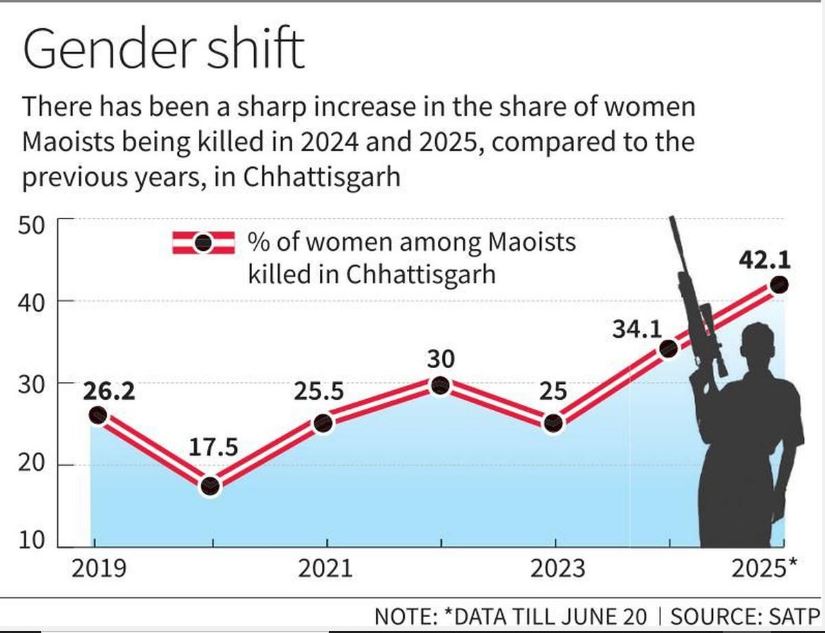
- 2024: Out of 217 Maoists killed, 74 were women (~34%)
- 2025 (till June 20): Out of 195 killed, 82 were women (~42%)
- Comparison with previous years:
- 2019: 65 total killed | 17 women
- 2020: 40 total | 7 women
- 2021: 51 total | 13 women
- 2022: 30 total | 9 women
- 2023: 20 total | 5 women
This data indicates a doubling of women fatalities as a proportion of total casualties in Maoist operations since the launch of targeted operations.
Recruitment Through Coercion: Bal Dastas and Gendered Exploitation
According to the MHA, Maoists have been increasingly recruiting young Adivasi girls and forming “Bal Dastas” (child squads) in Chhattisgarh and Jharkhand. Key observations include:
- Parental coercion: Many impoverished tribal families are forced to give up their girl children under threats and pressure.
- Ideological indoctrination: Children are brainwashed to adopt Maoist ideology from an early age.
- Gendered exploitation: Although the Maoists outwardly reject patriarchy, the representation of women in leadership roles such as the Polit Bureau and Central Committee remains negligible.
- Use of women as foot soldiers and human shields, exposing them disproportionately to fatal encounters with security forces.
Underlying Issues: Security, Society, and Maoist Strategy
- Deliberate Alienation Strategy:
- Maoists systematically attack schools and educational infrastructure.
- As per MHA, education fosters critical thinking and alternate livelihoods, which are seen as a threat to Maoist influence.
- Civilian and Infrastructure Loss:
- Since 2019:
- 725 civilians killed in LWE violence.
- 263 incidents of attacks on economic infrastructure recorded.
- Since 2019:
- Socio-Economic Backdrop:
- Lack of education, healthcare, livelihood options, and state presence in remote tribal areas fuel Maoist recruitment.
- Women and children from these regions become the most vulnerable and easily exploited demographic.
Security Forces' Perspective and Response
- Initial recruitment of women was largely based on coercion and misinformation.
- Once inside the Maoist ranks, women face physical, mental, and emotional exploitation.
- Maoists use women primarily as human shields and expendable foot soldiers.
However, the security forces are increasingly pursuing a sensitive, gender-aware approach, prioritizing:
- Voluntary surrender schemes
- Gender-sensitive rehabilitation policies offering:
- Education
- Vocational training
- Healthcare access
- Social reintegration pathways
Way Forward: A Multi-Pronged Strategy
- Strengthen Surrender and Rehabilitation Frameworks:
- Expand socio-economic reintegration schemes tailored for women ex-cadres.
- Ensure psycho-social counselling, particularly for minors and survivors of exploitation.
- Enhance State Presence and Welfare Delivery:
- Accelerate development of infrastructure, education, and healthcare in LWE-affected districts.
- Promote community policing and tribal leadership in governance processes.
- Child Protection Measures:
- Strengthen child protection systems, including monitoring of Bal Dastas.
- Empower and engage Anganwadi workers, school teachers, and local NGOs in vulnerable zones.
- Gender-Sensitive Counter-Insurgency Doctrine:Train forces in humane engagement, protection of rights, and de-escalation tactics when dealing with women and child cadres.
Bridging the Gender Gap: Insights from “Women and Men in India 2024”
- 09 Apr 2025
In News:
The Ministry of Statistics and Programme Implementation (MoSPI) recently released the 26th edition of “Women and Men in India 2024: Selected Indicators and Data”, a flagship publication that offers a gender-disaggregated statistical portrait of India. This comprehensive document provides valuable insights into the progress, challenges, and opportunities in achieving gender equality across various socio-economic spheres.
Purpose and Scope
Drawing from official statistics across Ministries and Departments, the publication covers vital areas such as population dynamics, education, health, economic participation, and political representation, highlighting disparities and gains across gender lines. It also reflects urban-rural divides and regional variations, thus enabling data-driven policymaking for inclusive development.
Education: Moving Towards Gender Parity
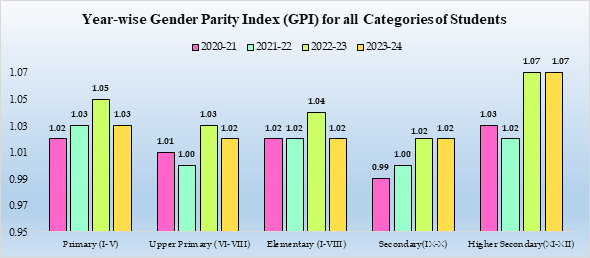
India has shown consistent improvements in Gender Parity Index (GPI) in education. Primary and higher secondary levels have maintained high GPI values, indicating strong female enrolment rates. While upper primary and elementary levels witnessed some fluctuations, they largely remained close to parity, demonstrating the impact of initiatives like Beti Bachao, Beti Padhao and expanding access to girls’ education.
Labour Force and Financial Inclusion
Women’s Labour Force Participation Rate (LFPR) has seen a marked improvement, rising from 49.8% in 2017-18 to 60.1% in 2023-24 (usual status for ages 15+). This indicates a gradual integration of women into the formal and informal workforce, though structural and cultural barriers persist.
In the financial sector, women now own 39.2% of all bank accounts and contribute 39.7% of total deposits. Their participation is especially prominent in rural India, where they make up 42.2% of account holders, showcasing the success of financial inclusion efforts under the Pradhan Mantri Jan Dhan Yojana.
Digital and Entrepreneurial Engagement
A notable trend is the sharp rise in DEMAT accounts, suggesting increased retail participation in capital markets. From March 2021 to November 2024, the total DEMAT accounts quadrupled from 33.26 million to 143.02 million. While men still dominate in terms of numbers, female participation also grew fourfold, rising from 6.67 million to 27.71 million in this period.
Encouragingly, female-led proprietary establishments across sectors such as manufacturing, trade, and services have shown a rising trend over 2021–24, indicating growing entrepreneurial confidence.
Additionally, startups with at least one woman director recognized by DPIIT rose from 1,943 in 2017 to 17,405 in 2024, underscoring the rise of women in innovation and enterprise.
Political Participation and Electoral Empowerment
Electoral data reflects the deepening roots of women’s political empowerment. The number of total electors rose from 173.2 million in 1952 to 978 million in 2024, with increasing female voter registration. Female voter turnout, which was 67.2% in 2019, stood at 65.8% in 2024. Notably, the gender gap in voting has narrowed, with female turnout surpassing male turnout in 2024, signaling a positive shift in political engagement.
Conclusion
The “Women and Men in India 2024” report is more than a statistical compendium—it is a mirror to India’s gender realities. While progress is evident in domains like education, financial inclusion, and entrepreneurship, persistent gaps remain. For India to achieve true gender equity, these insights must inform targeted, data-driven policies that empower women across all sectors, making gender equality central to the nation’s development discourse.
Maternity Leave as a Constitutional and Reproductive Right
- 25 May 2025
Background:
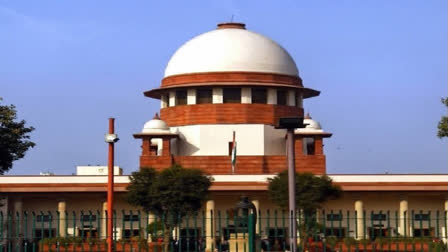
In a landmark ruling in K. Umadevi v. Government of Tamil Nadu (May 2025), the Supreme Court (SC) affirmed that maternity leave is not merely a welfare measure but a constitutional and reproductive right of women. Setting aside the Madras High Court’s judgment, the apex court extended maternity benefits to a government school teacher for her third child, rejecting the Tamil Nadu government's policy that restricts such benefits to only the first two children.
Background of the Case:
The petitioner, a teacher employed in a Tamil Nadu government school, was denied maternity leave for her third biological child, citing Fundamental Rule 101(a) which limits benefits to women with fewer than two surviving children. Notably, the child in question was from her second marriage, while the earlier two children were in the custody of her former husband and born before her employment. The single bench of the High Court had ruled in her favour, finding the state rule inconsistent with the Maternity Benefit Act, 1961 and invalid under Article 254 (repugnancy with central law). However, a division bench reversed this decision, prompting an appeal to the SC.
Key Observations by the Supreme Court:
- Maternity leave is integral to a woman’s reproductive autonomy and thus protected under Article 21 of the Constitution, which ensures personal liberty.
- It is also aligned with Directive Principles of State Policy (Article 42) that mandate the state to ensure humane work conditions and maternity relief.
- The SC emphasized that reproductive rights are recognized under international human rights law, including the rights to health, privacy, dignity, equality, and non-discrimination (as per the Universal Declaration of Human Rights).
- The Court clarified that population control, though a valid public policy goal, cannot override the constitutional guarantee of reproductive choice and health.
Reaffirming the Maternity Benefit Act, 1961 (Amended 2017):
- The Act applies to workplaces with 10 or more employees, including both public and private sectors.
- Provides 26 weeks of paid maternity leave for women with fewer than two surviving children, and 12 weeks for the third or subsequent child.
- Also covers adoptive and commissioning mothers with 12 weeks of leave.
- Ensures job security, access to crèche facilities in establishments with 50+ employees, and promotes work-from-home options during or after pregnancy.
Significance of the Judgment:
- The verdict ensures gender equity in the workforce by reinforcing women’s right to combine motherhood with professional aspirations.
- It highlights the need to harmonize state policies with central welfare legislation and constitutional mandates.
- It reflects the Court's broader jurisprudence, such as in Suchita Srivastava v. Chandigarh Administration, which had affirmed a woman’s reproductive choices as part of her autonomy.
Implications for Policy and Governance:
This judgment strengthens women’s workforce participation by addressing a key dropout point—childbirth. It serves as a precedent for inclusive, rights-based policy design and calls for reviewing restrictive service rules across states. It aligns with India's commitments under international human rights frameworks and the Sustainable Development Goals (SDG 5: Gender Equality).
In conclusion, the Supreme Court’s verdict elevates maternity leave to a constitutionally protected right, advancing both social justice and women’s empowerment in India’s democratic framework.
UN Women’s Report 2025
- 12 Mar 2025
Context:
Marking the 30th anniversary of the Beijing Declaration and Platform for Action (1995)—a landmark global framework for achieving gender equality—the UN Women’s Report 2025 presents a sobering assessment of the status of women’s rights worldwide. Released ahead of International Women’s Day 2025, the report reflects a disturbing pattern: while there has been measurable progress, recent years have witnessed an alarming backlash against gender equality in many parts of the world.
Key Findings
- Backsliding of Women’s Rights: Nearly one in four countries reported a backlash against women’s rights, often linked to democratic erosion and rise of authoritarian or conservative forces. The report warns of "anti-rights actors" systematically working to undermine legal and policy gains made over decades.
- Escalation in Gender-Based Violence
The world continues to grapple with high levels of violence against women:
-
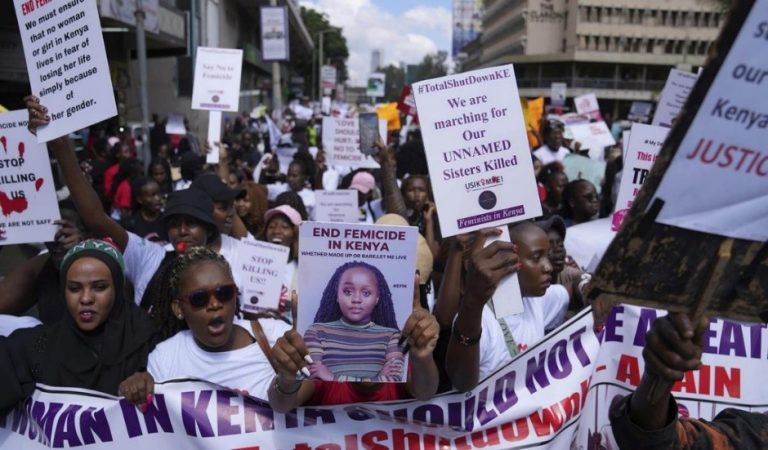
- A woman or girl is killed every 10 minutes by an intimate partner or family member.
- Conflict-related sexual violence has risen 50% since 2022, with 95% of victims being women and girls.
These trends point to both persistent patriarchal norms and the failure of protective systems, especially in conflict and humanitarian settings.
- Legal and Political Disempowerment
Despite notable legislative progress:
- Women globally have only 64% of the legal rights enjoyed by men.
- Only 87 countries have ever had a female head of state.
- Women occupy just 26% of parliamentary seats, even though this figure has doubled since 1995.
These gaps reflect the structural barriers and gender biases embedded in political systems and governance.
- Economic and Health Inequities
- 10% of women and girls live in extreme poverty.
- Young women (ages 15–24) face limited access to family planning, impacting health and autonomy.
- Maternal mortality has remained stagnant since 2015, reflecting uneven healthcare access.
Positive Developments
Despite the challenges, there are signs of progress:
- 88% of countries now have laws against violence towards women.
- Most countries have banned workplace discrimination.
- 44% of countries are working to improve education and training for women.
- Female legislative representation has more than doubled since 1995.
UN Women’s Roadmap for Gender Equality (2030)
To address setbacks and accelerate progress, the report outlines a five-pronged strategy:
- Digital Inclusion – Ensure equitable access to digital technologies.
- Social Protection – Invest in universal healthcare, education, and safety nets.
- Zero Gender-Based Violence – Strengthen laws, services, and public awareness.
- Equal Decision-Making – Promote women's leadership in all sectors.
- Gender-Sensitive Crisis Response – Integrate gender priorities in humanitarian aid.
Conclusion
The UN Women’s Report 2025 underscores a critical paradox: legal and policy advancements coexist with deep-rooted inequalities and growing resistance to gender justice. As UN Secretary-General António Guterres aptly noted, “Instead of mainstreaming equal rights, we’re seeing the mainstreaming of misogyny.” Achieving SDG 5 (Gender Equality) by 2030 demands sustained political will, democratic resilience, and transformative reforms. For India and the global community, this is both a warning and an opportunity—to reaffirm their commitment to gender justice and inclusive development.
Glass Ceiling Cracks: Women's Rising Role in the 2024 Lok Sabha Elections
- 28 Dec 2024
Introduction:
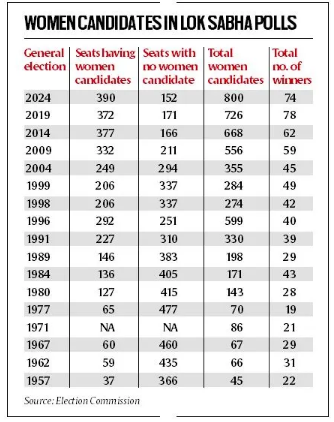
The 2024 Lok Sabha elections marked a significant step forward for women’s participation in Indian politics. With 800 women candidates contesting across 390 constituencies, this was the highest ever since the 1957 general elections. This surge in women candidates has been a positive reflection of the evolving role of women in India's democratic processes.
Increase in Women Candidates:
- A total of 800 women candidates participated in the 2024 elections, up from 726 in 2019.
- The number of constituencies with no female candidate dropped to a historic low of 152, from 171 in 2019.
- However, despite the rise in participation, only 74 women won, while 629 forfeited their deposits.
Regional Variations:
- The highest number of women candidates were from Maharashtra (111), followed by Uttar Pradesh (80) and Tamil Nadu (77).
- Some constituencies, like Baramati, Secunderabad, and Warangal, saw the highest participation of women, with eight candidates each.
Voter Turnout and Gender Dynamics:
- Women voters surpassed men in voter turnout for the second consecutive time, with 65.78% women casting their vote in 2024, compared to 65.55% of men.
- Assam’s Dhubri recorded the highest female voter turnout at 92.17%, reflecting increased female engagement in the electoral process.
Electoral Data and Gender Insights:
- In 2024, there were 47.63 crore female electors out of 97.97 crore total voters, making up 48.62% of the electorate, a slight increase from 2019.
- The number of female electors per 1,000 male voters reached 946, up from 926 in 2019, showing growing electoral inclusivity.
Challenges and Progress:
- Despite the gains in women’s representation, there remain several constituencies without any female candidates, notably in states like Uttar Pradesh (30 constituencies), Bihar (15), and Gujarat (14).
- Though women's participation has risen, the number of women who win remains disproportionately low, reflecting the challenges they face in a patriarchal political landscape.
Inclusion and Diversity:
- The 2024 elections also saw greater inclusivity, with a rise in third-gender electors, which increased by 23.5% to 48,272.
- Voter turnout among transgender voters nearly doubled, reaching 27.09% compared to 14.64% in 2019.
- Additionally, the number of persons with disabilities (PwD) electors increased to 90.28 lakh, showcasing broader electoral inclusivity.
Conclusion:
The 2024 Lok Sabha elections witnessed a remarkable increase in women’s participation, both as voters and candidates. While the journey toward full gender parity in politics continues, the trends from these elections indicate a growing shift toward more inclusive electoral processes. The data released by the Election Commission further underlines this progress, showing the increasing role of women in shaping India’s democratic future.
Bank Credit to Women Self-Help Groups (SHGs)
- 21 Dec 2024
Introduction
The Deendayal Antyodaya Yojana – National Rural Livelihoods Mission (DAY-NRLM) is a flagship program by the Ministry of Rural Development (MoRD) that aims to reduce poverty by empowering women, especially through Self-Help Groups (SHGs). These SHGs have been instrumental in improving financial inclusion, providing access to credit, and enhancing the economic and social status of women across India. The program has made significant strides in mobilizing women, improving their access to financial services, and facilitating entrepreneurial ventures in rural areas.
Key Features and Initiatives of DAY-NRLM
- Self-Help Groups (SHGs):
- Formation: DAY-NRLM supports the creation and strengthening of SHGs, primarily focusing on rural women from economically disadvantaged backgrounds.
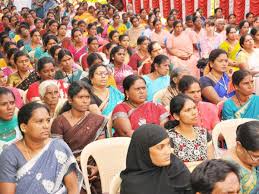
- Mobilization: As of 2024, over 10.05 crore women have been mobilized into 90.87 lakh SHGs across India.
- Objective: The main goal is to reduce poverty through empowerment by providing access to financial services and sustainable livelihoods.
- Start-up Village Entrepreneurship Programme (SVEP):
- Support for Rural Enterprises: SVEP, a sub-scheme under DAY-NRLM, encourages SHG women and their families to set up small-scale businesses.
- Impact: As of October 2024, 3.13 lakh rural enterprises have been supported under this initiative.
- State-wise Distribution: The program has supported enterprises across various states, with notable contributions from Andhra Pradesh (27,651 enterprises), Kerala (34,569), and Uttar Pradesh (28,904).
- Banking Correspondent Sakhis:
- Role: Women in SHGs are trained as Banking Correspondent Sakhis to enhance access to banking services such as deposits, credit, remittances, pensions, and insurance in rural areas.
- Current Deployment: 1,35,127 Sakhis have been deployed under DAY-NRLM, empowering women to be financial intermediaries in their communities.
- Financial Support for SHGs:
- Revolving Fund: SHGs receive funds ranging from Rs. 20,000 to Rs. 30,000 to boost their operations and financial stability.
- Community Investment Fund: SHGs can avail of up to Rs. 2.50 lakh under the Community Investment Fund to strengthen their financial position.
- Interest Subvention: To make bank loans more affordable, DAY-NRLM provides interest subvention to SHGs, reducing their overall credit costs.
- Online Marketing Platform:
- www.esaras.in: This online platform allows SHGs to market their products, improving their access to broader markets and enhancing their income-generating potential.
Impact of DAY-NRLM and SHGs
- Financial Inclusion: SHGs play a vital role in financial inclusion by providing access to banking services, loans, and insurance to women, especially in rural and remote areas.
- Credit Mobilization: As of November 2024, SHGs have leveraged Rs. 9.71 lakh crore in bank credit, thanks to the capitalization support provided by DAY-NRLM, including Revolving Funds and Community Investment Funds.
- Empowerment of Women: SHGs have significantly contributed to the empowerment of women, providing them with financial independence, social support, and the ability to make decisions in their households and communities.
Challenges Faced by SHGs
- Beneficiary Identification: Ensuring that the most marginalized individuals are included in SHGs can be challenging.
- Training Gaps: There is a lack of quality training programs and expert trainers to build the capacity of SHG members.
- Financial Literacy: Many SHG members have limited knowledge of formal financial services, hindering effective financial management.
- Market Linkages: Poor integration with markets limits the growth potential of SHGs, especially in terms of product sales and business expansion.
- Community Support: Insufficient business environment support and value chain linkages pose challenges to SHG sustainability and growth.
Government Initiatives Supporting SHGs
- SHG-Bank Linkage Programme (SBLP): Launched by NABARD in 1992, this initiative aims to link SHGs with formal banking institutions, facilitating financial inclusion.
- Mission for Financial Inclusion (MFI): A broader initiative to ensure that rural populations have access to affordable financial services such as savings, credit, insurance, and pensions.
- Lakhpati Didi Initiative: Launched in 2023, this initiative empowers SHG women to adopt sustainable livelihood practices and aim for an annual household income exceeding Rs. 1 lakh.
Role of SHGs in Rural Development
- Women Empowerment: SHGs have emerged as a powerful tool for empowering women through financial independence, social security, and the ability to make informed decisions.
- Economic Growth: SHGs foster small-scale entrepreneurship, thereby creating local businesses that contribute to rural economic growth.
- Social Cohesion: By promoting collective action, SHGs provide a social support system that helps in addressing common issues faced by their members, such as health, education, and safety.
Future Prospects and Way Forward
- Technological Integration: SHGs should leverage advanced digital platforms for transaction management, record-keeping, and communication, enhancing efficiency and accessibility.
- Reducing Informal Borrowing: Linking SHGs with formal financial institutions will reduce reliance on informal lenders, promoting financial inclusion.
- Inclusive Approach: SHGs should adopt an inclusive model to ensure that members from diverse socio-economic backgrounds are fairly represented and benefit equally.
- Training and Capacity Building: There is a need for more Community Resource Persons (CRPs) who can guide SHGs in beneficiary identification, financial management, and scaling their activities.
Current Representation of Women in CAPFs
- 04 Dec 2024
In News:
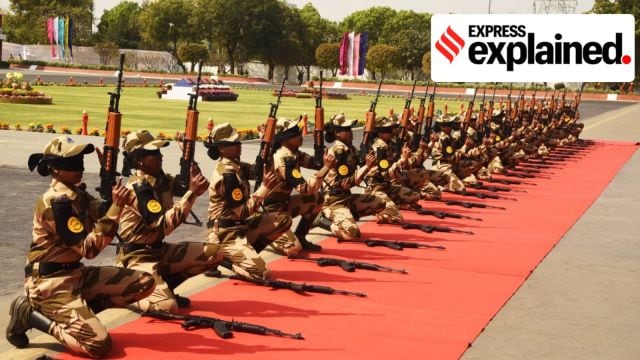
The Central Armed Police Forces (CAPFs) of India, comprising forces like CRPF, BSF, CISF, and others, play a crucial role in maintaining internal security. Women’s participation in these forces has been historically limited, but recent efforts have focused on increasing their representation. As of 2024, women constitute only 4.4% of the total personnel in CAPFs, highlighting the slow progress despite various initiatives.
Current Representation and Changes Over Time
- Overall Representation: Women make up 4.4% of the 9.48 lakh-strong CAPFs. Within this, the Central Industrial Security Force (CISF) has the highest representation at 7.02%, followed by the Sashastra Seema Bal (SSB) at 4.43%, Border Security Force (BSF) at 4.41%, Indo-Tibetan Border Police (ITBP) at 4.05%, Assam Rifles at 4.01%, and Central Reserve Police Force (CRPF) at 3.38%.
- Growth of Women Personnel: From 15,499 women in 2014, the number has tripled to 42,190 in 2024, reflecting a steady increase in recruitment. However, the percentage remains low despite these gains.
- Recruitment Trends: In 2024, 835 women were recruited, with 5,469 more in the process. In 2025, 4,138 women are expected to be recruited.
Government Efforts and Parliamentary Committee Recommendations
- Policy Measures: The government has introduced several steps to encourage women’s participation in CAPFs, such as reservations in constable-level positions: one-third for CRPF and CISF, and 14-15% for border forces like BSF, SSB, and ITBP.
- Challenges in Recruitment: Despite these policies, recruitment has not kept pace with the targets. The 2022 Parliamentary Committee on Home Affairs expressed disappointment over the “abysmally low” number of women in CAPFs, noting that women made up only 3.68% of the forces at that time.
- Recommendations by Parliamentary Committees:
- The Home Affairs Committee recommended fast-tracking phase-wise recruitment of women, particularly in CISF and CRPF.
- The Standing Committee on Personnel (2023) suggested “soft postings” for women to avoid difficult working conditions, especially in remote or strenuous terrains. It also called for reservations for transgender individuals.
- In 2024, further steps like fee waivers, relaxed physical standards, and provisions for maternity and child care leave were introduced to make the work environment more inclusive.
Reasons Behind Low Representation
- Cultural Barriers: Traditional gender roles and societal expectations deter many women from pursuing careers in security forces.
- Work Environment: The demanding nature of the job, which includes postings in remote areas and high-risk operations, makes it less appealing, especially for women with family responsibilities.
- Infrastructure Issues: Lack of adequate accommodation, sanitation facilities, and safety measures for women are deterrents to joining and retaining female personnel.
Conclusion and Future Outlook
Although the representation of women in CAPFs has seen improvement, it remains below expectations due to persistent challenges. The government’s continuous focus on recruitment reforms, better working conditions, and policy incentives will be crucial to achieve gender parity in these forces. As societal attitudes evolve and the infrastructure improves, more women may be encouraged to serve in these vital security roles. Future efforts must include targeted recruitment drives and creating a more inclusive and supportive environment to enhance women’s participation in CAPFs.
The Need for More Women in Politics
- 15 Nov 2024
In News:
India, the world's largest democracy, is at a crucial juncture where women’s active political participation is essential for holistic development and true democratic engagement. The year 2024 demands increased involvement of women in politics to address issues of gender inequality and ensure comprehensive policy representation.
Current Status of Women’s Political Representation in India
Women in Parliament
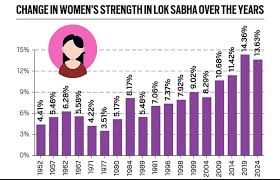
- Initial Representation: In 1952, women accounted for only 4.41% of the Lok Sabha. This gradually rose to around 14.36% in the 2019 elections.
- Recent Trends: In the 2024 elections, women made up approximately 16% of the Lok Sabha, with 74 women MPs, 43 of whom are first-time representatives.
Women in State Legislatures
- Representation in state legislative assemblies remains low, with the highest percentages in Chhattisgarh (14.4%), West Bengal (13.7%), and Jharkhand (12.4%).
Global Comparison
- According to the Inter-Parliamentary Union (IPU), India ranks lower than many countries in terms of female representation in parliament, with global averages standing at 26.1%. India lags behind several African and South Asian nations.
Importance of Women’s Political Empowerment
- Enhancing Governance and Accountability: Political empowerment of women ensures better representation of gender-sensitive issues, promoting accountability in governance.
- Breaking Patriarchal Norms: Increasing women’s participation helps challenge the patriarchal structure that dominates Indian politics and promotes inclusive governance.
- Policy and Social Impact: Women in politics are more likely to advocate for policies that address issues like health, education, and gender equality, leading to improved societal welfare.
- Economic Benefits: Studies suggest that women in political leadership tend to improve economic outcomes for their constituencies by prioritizing social infrastructure.
Barriers to Women’s Political Participation
- Gender Gaps in Political Ambition: Women are less likely to pursue political careers due to gender conditioning, family pressures, and stereotypes about leadership abilities.
- Patriarchal Culture: A deeply ingrained patriarchal society hampers women’s political involvement, with male-dominated party structures and social norms limiting opportunities.
- High Election Costs: The financial burden of running for office often discourages women from contesting elections due to unequal access to resources.
- Male Gatekeepers in Politics: Political parties often show a preference for male candidates, especially for higher-profile positions, hindering the rise of women leaders.
- Criminalisation and Corruption in Politics: Growing criminalisation in politics and lack of political education further alienates women from the political process.
Key Legislative and Constitutional Measures for Women’s Political Empowerment
Legislative Measures
- Nari Shakti VandanAdhiniyam (2023): Provides 33% reservation for women in the Lok Sabha and state assemblies.
- 73rd and 74th Amendments (1992): Introduced 33% reservation for women in Panchayats and Municipalities.
- Gender-Neutral Rules: Lok Sabha adopted gender-neutral rules in 2014, promoting inclusivity in legislative procedures.
Constitutional Provisions
- Article 14 and 15: Ensure equality and non-discrimination, fundamental to women’s political participation.
- Article 243D: Mandates 33% reservation for women in Panchayats.
International Commitments
- CEDAW (1979): Advocates for women’s participation in political and public life.
- Beijing Platform (1995) and SDGs (2015): Call for removing barriers to women’s participation in politics.
Measures for Promoting Women’s Political Participation
- Quotas and Reservations: Ensuring mandatory quotas for women candidates in party tickets and legislative bodies can help bridge gender gaps.
- Capacity Building and Training: Offering political training programs for women can empower them with the skills and resources necessary for effective political participation.
- Strengthening Grassroots Movements: Support for Self-Help Groups (SHGs) and Panchayati Raj Institutions (PRIs) can build leadership among women at the local level.
- Supportive Political Ecosystem: Political parties should be encouraged to nominate women for higher office positions, such as the Rajya Sabha or state legislative councils.
- Raising Public Awareness: Public awareness campaigns focusing on the importance of women in politics can shift societal attitudes and garner wider public support.
Conclusion:
As India moves forward, the active participation of women in politics is not merely a matter of equity but an essential building block for a vibrant, inclusive, and effective democracy. Through structural reforms, public awareness, and the promotion of female leadership, India can strengthen its democratic framework, ensuring that all citizens, regardless of gender, have an equal stake in shaping the nation's future.
Women Entrepreneurship Platform
- 01 Oct 2024
In News:
Telangana has become the first state in India to establish a chapter of NITI Aayog’s Women Entrepreneurship Platform (WEP), aimed at promoting and supporting women entrepreneurs across various sectors.
Overview of WEP
- Objective: To provide women entrepreneurs access to resources, tools, and networks for business growth.
- Previous Operation: WEP was primarily a Central Government initiative before this chapter's establishment.
Launch Details
- Event: The WEP Telangana Chapter was launched in Hyderabad.
- Key Figures:
- NITI Aayog CEO BVR Subrahmanyam
- State IT and Industries Secretary Jayesh Ranjan
- Co-chair of WEP Sangeetha Reddy
Customised Support for Women Entrepreneurs
- Services Offered:
- Digital skilling
- Access to financial services
- Mentorship
- Market linkages
- Implementation Body: WE Hub will serve as the nodal body for the scheme in the state, leveraging its expertise to empower women entrepreneurs.
Importance of Women Entrepreneurship
- Economic Impact: Emphasis the crucial role of women entrepreneurship in India's economic future.
- Challenges Addressed: The initiative aims to overcome barriers faced by women entrepreneurs in finances, mentoring, and marketing.
Future Expansion Plans
- Vision for Growth:
- Principal Economic Advisor Anna Roy outlined plans to expand WEP to tier 2 and 3 cities.
- The initiative aims to build an inclusive entrepreneurial ecosystem through a hub-and-spoke model.
WE Bridge Initiative
- Leadership: WE Hub CEO Sita Pallacholla appointed as mission director for the WEP Telangana Chapter.
- State’s Advantages: Telangana was chosen for its supportive environment for entrepreneurship in Self-Help Groups (SHGs) and its robust innovation ecosystem.
- WE Bridge: Introduced as a single-window platform for women entrepreneurs in the state.
Benefits of the Partnership
- Access to Resources: The collaboration with NITI Aayog will enhance opportunities for women, providing access to funding, technology, and networks.
- Mentoring Emphasis: Sangeetha Reddy highlighted the critical role of mentoring in business success.
Objectives of WEP Telangana
- Skill Empowerment: Enhance digital technology and financial literacy among women entrepreneurs.
- Mentorship Connections: Link women entrepreneurs with industry leaders for guidance in business development, marketing, and scaling.
- Market Access: Facilitate connections with potential investors and industry partners through WE Hub’s extensive network.
Supreme Court Affirms Women's Right To Child Care Leave
- 26 Apr 2024
Why is it in the News?
On Monday, a Supreme Court bench headed by Chief Justice of India D Y Chandrachud said, “Participation of women in the workforce is a matter not just of privilege but a constitutional entitlement protected by Article 15 of the Constitution.
Context:
- Recent data indicates that while 45% of India's graduates are women, only approximately 10% of educated women pursue long-term careers.
- However, amidst these challenges, there are instances of women advocating for their rights.
- For instance, a young mother from Himachal Pradesh recently petitioned the Supreme Court for the right to care for her child, who required her presence.
- Chief Justice of India DY Chandrachud emphasized that women's participation in the workforce is a constitutional entitlement, and denying mothers childcare leave violates this principle.
- The petitioner, an assistant professor at a government college, highlighted that the Himachal Pradesh government had refused her childcare leave, despite her child's medical needs.
- The Supreme Court's intervention underscored that the state, as an employer, must address such concerns and uphold the rights of working mothers.
Protection Under the Constitution and Employer Responsibilities Concerning Women's Employment:
Constitutional Safeguards:
- Article 15 of the Indian Constitution stands as a pillar of gender equality, prohibiting discrimination based on sex and allowing for affirmative action to address historical disparities.
- The recent Supreme Court recognition of Article 15 underscores the constitutional imperative to foster a fair and inclusive society, particularly in matters of women's workforce participation.
- By affirming women's right to work without prejudice, the court reinforces the foundational principles of equality and non-discrimination enshrined in the Constitution.
Employer Responsibility:
- Employers, especially the government as role models, carry a significant duty to cultivate a supportive environment for female employees.
- Beyond mere legal compliance, employers must actively address the unique challenges women face in juggling work and caregiving responsibilities.
- The denial of childcare leave, as highlighted in the recent Supreme Court case, signifies a failure to acknowledge and respect women's rights in the workplace.
- The court's stance emphasizes that employers cannot overlook the specific needs of women employees and underscores the importance of proactive measures such as offering childcare assistance, flexible work arrangements, and gender-sensitive policies.
- By fulfilling these obligations, employers not only advance gender equality but also foster a more productive, inclusive, and supportive work culture.
Obstacles to Women's Participation in the Workforce:
Unbalanced Domestic Responsibilities:
- Women in India shoulder a disproportionate share of unpaid domestic and caregiving duties, including household chores and looking after family members.
- This unequal distribution of responsibilities consumes considerable time and effort, often hindering women's capacity to engage in paid employment outside their homes.
"Marriage" and "Motherhood" Setbacks:
- Women commonly encounter setbacks in their careers due to societal norms regarding marriage and motherhood.
- Marriage can lead to disruptions like relocation or increased household duties, affecting women's career trajectories and earning potential.
- Likewise, motherhood often results in temporary career breaks or reduced work hours to manage childcare, limiting opportunities for professional growth and financial independence.
Inadequate Support Infrastructure:
- The scarcity of affordable childcare options, along with insufficient support services like paid parental leave and flexible work arrangements, adds to the challenges faced by women in balancing work and family commitments.
- The absence of adequate support infrastructure may compel women to prioritize caregiving over employment, particularly when alternative care arrangements are lacking.
Legal Framework for Women’s Participation in the Workforce:
Legislative Advances:
- India has taken significant strides in enacting laws to uphold women's rights and foster gender equality in workplaces.
- These laws encompass provisions for maternity benefits, childcare services, and safeguards against gender discrimination in employment practices.
- Recent legislative changes have broadened maternity leave entitlements and mandated childcare facilities at workplaces, underscoring a commitment to bolstering women's engagement in the workforce.
Gender-Neutral Measures:
- Initiatives to render legal provisions gender-neutral represent a positive stride toward acknowledging caregiving duties as a shared responsibility among parents.
- By extending childcare benefits to all employees, regardless of gender, these reforms aim to challenge traditional gender norms and encourage greater equity in caregiving responsibilities within families.
Challenges in Implementing Legal Frameworks for Women's Workforce Participation:
Underfunded Welfare Schemes:
- Government-led initiatives, such as the National Crèches Scheme, face underfunding and inadequate infrastructure, limiting their ability to provide essential childcare services to marginalized communities.
- Without sufficient financial resources and institutional support, these schemes struggle to meet the demand for affordable and quality childcare services, particularly in underserved regions.
Lack of Enforcement and Monitoring:
- Effective enforcement mechanisms and regular monitoring of compliance are crucial for ensuring that employers adhere to legal requirements related to women's workforce participation.
- However, enforcement agencies often face challenges like limited resources, bureaucratic inefficiencies, and a lack of coordination between government departments, hindering their ability to enforce labour laws and address violations promptly.
Coverage Limitations:
- Existing laws often have a limited scope, with certain provisions only applying to formal sector establishments or workplaces with a minimum number of employees.
- This approach excludes many women working in the informal sector or smaller enterprises, leaving them without access to crucial maternity benefits and childcare support.
Way Forward
Collective Responsibility:
- State: The government plays a key role in setting legal and policy frameworks that promote gender equality.
- This includes enacting supportive laws, providing incentives for employers to adopt family-friendly policies, and investing in social infrastructure such as childcare facilities and education programs.
- Employers: Companies can significantly impact women's workforce participation through their practices and policies.
- Employers should adopt inclusive hiring practices, provide equal opportunities for career advancement, offer flexible work arrangements, and implement family-friendly policies like paid parental leave and on-site childcare facilities.
- Communities: Communities play a crucial role in challenging traditional gender norms and stereotypes.
- Community-based organizations, educational institutions, and grassroots initiatives can raise awareness, provide support for working mothers, and advocate for policy changes that promote gender equality.
Policy Integration:
- Integrating gender considerations into broader policy frameworks is essential for mainstreaming gender equality across all sectors of society.
- Key strategies include implementing gender-responsive budgeting, conducting gender impact assessments of policies and programs, and ensuring women's voices are heard in decision-making processes.
- By addressing these aspects, we can create a more inclusive society where women can fully participate in the workforce and achieve their potential.
Conclusion
In conclusion, achieving full participation of women in the workforce requires a comprehensive and collaborative approach involving the state, employers, and communities. By enacting supportive policies, promoting inclusive practices, challenging traditional gender norms, and integrating gender considerations into broader policy frameworks, we can create an enabling environment for women to thrive in their careers. It is through these concerted efforts that we can build a more equitable society and harness the immense potential that women bring to the workforce.
Addressing the Persistent Issue of Gender Pay Disparity

- 20 Mar 2024
Why is it in the News?
A recent World Bank Group report highlighted that women globally earn only 77 cents for every dollar earned by men, underscoring the persistent gender pay gap where women, on average, earn less than men.
Context:
- The World Bank Group's recent report sheds light on the persistent issue of the gender pay gap, revealing that women globally earn only 77 cents for every dollar their male counterparts earn.
- This disparity has been a contention, with critics sometimes questioning its existence.
- However, the International Labour Organisation regards the gender pay gap as a tangible indicator of inequality between men and women.
- While various reports present different figures, it is crucial to acknowledge the underlying factors that contribute to this gap and work towards eradicating them to achieve equitable pay for all individuals, regardless of gender.
How is the Gender Pay Gap Calculated?
- The International Labour Organization (ILO) defines the gender pay gap as the difference between the average wage levels of all working women and men in the labor market, whether they are paid a monthly salary, hourly wage, or daily wage.
- It is crucial to note that this gap does not exclusively represent the wage disparity between men and women with similar qualifications and job responsibilities.
- Rather, it encompasses the overall earnings difference between all working women and men.
- While the concept of "equal pay for equal work" advocates for equitable compensation for men and women with the same qualifications and job duties, the gender pay gap reflects broader income disparities.
- There is no single, universally agreed-upon method for calculating the gender pay gap.
- Different organizations and studies may produce varying figures due to their distinct approaches.
- Understanding the various factors contributing to the gender pay gap and addressing them through appropriate policies and initiatives is vital for achieving gender equality in the workforce and ensuring fair compensation for all workers.
Methodological Differences and the Persistence of the Gender Pay Gap:
- The variation in reported gender pay gaps can be attributed to the distinct methodologies employed by different organizations and studies.
- For instance, Pew Research used hourly wages to calculate the disparity. At the same time, the US Bureau of Labor Statistics utilized weekly wages, considering only full-time workers, defined as those working at least 35 hours per week.
- Such differences in approach can lead to varying estimates of the gender pay gap.
- Despite these discrepancies in methodology, it is essential to recognize that the gender pay gap is a persistent issue in most countries and industries.
- While the extent of the gap may differ across studies, the underlying reality is that income disparities between men and women continue to be a prevalent challenge.
What are the Root Causes of the Gender Pay Disparity?
- The gender pay gap can be attributed to several interconnected factors that perpetuate income inequality between men and women.
- Firstly, women's lower labor force participation rate is influenced by prevailing gender stereotypes and societal expectations about gender roles.
- The International Labour Organization (ILO) reveals that the global labor force participation rate for women stands at just under 47%, compared to 72% for men.
- In India, the 2011 Census reported a workforce participation rate of 25.51% for women, against 53.26% for men.
- Secondly, even when women join the workforce, they are often concentrated in lower-paying sectors or job roles.
- The ILO's Women in Business and Management report found that fewer women occupy management and leadership positions, particularly at higher levels.
- They are more likely to work in support functions such as human resources and financial administration, leading to a lower average salary compared to male managers.
- A Georgetown University survey in 2013 further highlighted that the top 10 highest-paying professions, primarily in engineering and computer science, were dominated by men, while women were overrepresented in the 10 lowest-paying professions, such as arts and education.
- Additionally, women are more likely to work part-time due to limited full-time employment opportunities and family responsibilities.
- In 73 countries, based on 2018 data, women outnumbered men as part-time workers.
- The ILO explains that part-time work often lacks proportional benefits to full-time positions, impacting women's overall remuneration over time.
- Other institutional and socioeconomic factors, such as the traditional view of men as breadwinners, lower investments in women's education, and concerns over safety in commuting and the workplace, also contribute to the gender pay gap.
- Addressing these underlying issues and promoting gender equity in the workforce is essential to bridging the gender pay gap and achieving fair compensation for all individuals.
Understanding the Implications of the Gender Pay Gap:
- Analyzing the gender pay gap through various demographic factors reveals patterns that provide valuable insights into income disparities between men and women.
- For example, women in their mid-30s and 40s often experience a decline in earnings compared to men in similar positions and professions.
- Critiques of the 77% statistic argue that it overlooks the "motherhood penalty," where unmarried women earn 95 cents or more for every dollar a man makes.
- This penalty suggests that women face career growth setbacks when they take breaks to raise children, highlighting an area requiring attention to promote equal opportunities.
- The 2023 Sveriges Riksbank Prize in Economic Sciences winner, Claudia Goldin, extensively researched pay equality and argued that traditional gender roles force men to "step up" in their careers while women "step back" for family responsibilities.
- This dynamic ultimately disadvantages both genders, as men miss out on family time, and women sacrifice their careers.
- Efforts to close the gender pay gap, such as implementing maternity and paternity leave policies and flexible work arrangements, have shown promise in reducing income disparities.
- However, the pace of progress varies, emphasizing the need for continued attention and innovation in promoting equal opportunities for all workers.
Conclusion
The gender pay gap continues to pose significant challenges across nations and industries. Examining demographics and career stages reveals important patterns that underline disparities between men's and women's earnings. Addressing inequalities, such as the "motherhood penalty," and transforming traditional work structures are vital for achieving equal opportunities. While policies like parental leave and flexible work arrangements have shown promise, sustained commitment to innovation and reform is crucial for fostering lasting progress and a more equitable professional environment.
The Role of NFHS Data in Formulating Policies for Women's Financial Inclusion
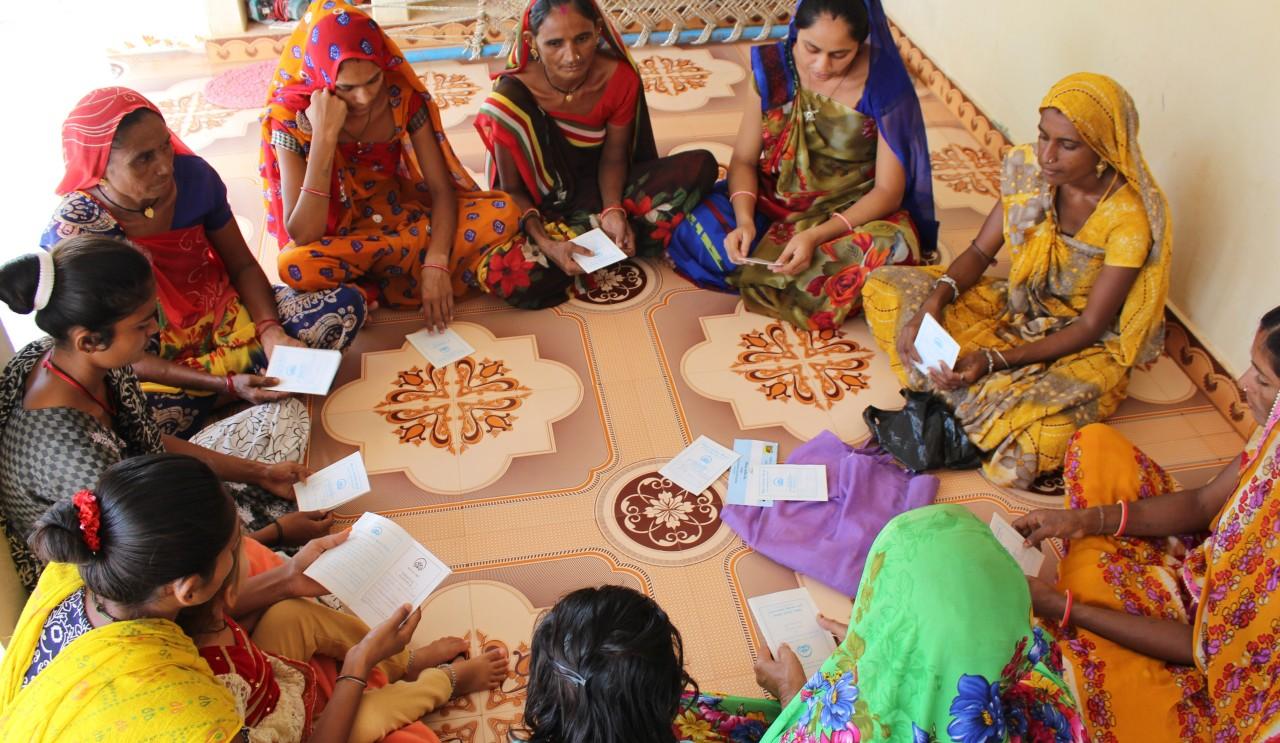
- 19 Mar 2024
Why is it in the News?
Financial inclusion awareness programmes must give special attention to women in households not headed by women.
Context:
- Financial inclusion is a key driver for realizing a more sustainable and inclusive future, as it directly influences the achievement of eight out of the 17 United Nations' Sustainable Development Goals (SDGs).
- Despite its importance, inequalities continue to exist, with India's subpar performance in the Global Gender Gap Report 2023 underscoring significant gaps in the economic realm.
- To address these disparities, particularly for women in India, it is vital to conduct a comprehensive evaluation of the complex aspects of financial inclusion.
- Insights can be drawn from multiple sources such as the World Bank's Global Findex Database and the National Family Health Survey (NFHS), ultimately paving the way for targeted interventions and improved financial access for all.
What is Financial Inclusion?
- Financial inclusion is a method of offering banking and financial services to individuals.
- It aims to include everybody in society by giving them basic financial services regardless of their income or savings.
- It focuses on providing financial solutions to the economically underprivileged.
- The term is broadly used to describe the provision of savings and loan services to the poor in an inexpensive and easy-to-use form.
- It aims to ensure that the poor and marginalized make the best use of their money and attain financial education.
- With advances in financial technology and digital transactions, more and more startups are now making financial inclusion simpler to achieve.
The Role of Financial Inclusion in Advancing Women's Empowerment:
- Financial inclusion not only facilitates women's access to bank accounts but also drives broader economic participation and empowerment.
- By offering women avenues for savings, credit, and investment, financial inclusion empowers them to manage risks, build assets, and seize socio-economic opportunities.
- In doing so, it bolsters women's resilience to economic uncertainties, fosters greater household welfare, and promotes economic stability, thereby illustrating its pivotal role in driving gender equity and sustainable development.
Insights from NFHS Data on Women's Financial Inclusion Progress:
- The NFHS data offers a comprehensive understanding of the multi-faceted dimensions of financial inclusion among women in India.
- Over the past two decades, several indicators point towards a significant improvement in women's economic empowerment and access to financial services including:
Financial Autonomy and Decision-making:
- A notable aspect highlighted by the NFHS surveys is the increasing financial autonomy among women.
- There has been a marked shift towards greater control over financial resources, with more women possessing self-operated bank accounts and playing an active role in financial decision-making within their households.
- This trend signifies a positive step towards women's economic independence, contributing to their overall empowerment and well-being.
Awareness and Utilization of Micro-Credit Programs:
- Micro-credit schemes have emerged as a key facilitator of financial assistance for women entrepreneurs and small business owners in rural India.
- The NFHS data indicates a growing awareness of these programs among women, with an increasing number utilizing micro-credit facilities to support their economic activities.
- This underscores the importance of targeted interventions and support mechanisms in promoting women's access to formal credit sources, fostering entrepreneurship, and generating income at the grassroots level.
Access and Utilization of Formal Banking Services:
- An analysis of factors such as education, occupation, and household characteristics reveals key determinants of women's financial inclusion.
- The NFHS data emphasizes the pivotal role of education in enabling women's awareness and utilization of financial services.
- Similarly, occupation and access to electronic media also significantly influence women's access to formal banking channels and digital financial tools.
- These insights underscore the need for targeted interventions and policy measures to address disparities and barriers, ensuring inclusive financial access, particularly among marginalized and vulnerable groups of women.
Advances in Global Financial Inclusion and India:
- Financial inclusion has become a key enabler of economic growth and development worldwide, with India demonstrating substantial progress in this arena.
- According to the World Bank's Global Findex Database, there has been a significant increase in adult ownership of bank accounts globally between 2011 and 2020.
- India's commendable growth of 42 percentage points during this period exemplifies the success of targeted interventions promoting financial access, particularly for marginalized communities such as women.
- This upward trend emphasizes the importance of continued efforts in fostering inclusive financial systems to ensure sustainable development and shared prosperity.
The Influence of Government Initiatives on Financial Inclusion:
- India's commitment to advancing financial inclusion has resulted in substantial progress, particularly in reducing the gender gap in account ownership.
- The introduction of the Pradhan Mantri Jan Dhan Yojana (PMJDY) in 2014 played a pivotal role in this achievement, offering universal access to banking services, including savings accounts, remittances, and overdrafts to underserved communities such as women in rural and urban areas.
- By January 2024, PMJDY had facilitated the opening over 28 crore accounts for women, significantly contributing to bridging the gender gap in financial access.
- Furthermore, government initiatives like the Deendayal Antyodaya Yojana and the National Rural Livelihood Mission (DAY-NRLM) have been instrumental in fostering women's economic empowerment and participation in the formal financial sector.
- These schemes provide opportunities for skill development, entrepreneurship training, and access to credit, enabling women to establish and sustain livelihoods.
- In addition, social protection programs such as the Pradhan Mantri Awas Yojana and Pradhan Mantri Matru Vandana Yojana offer financial assistance and support during critical life stages such as pregnancy and homeownership.
- Collectively, these initiatives have played a vital role in promoting women's economic independence and overall well-being, underscoring the importance of continued efforts towards inclusive financial systems.
Challenges and Way Forward:
- While significant progress has been made in advancing financial inclusion, several challenges remain, requiring concerted efforts and multi-stakeholder collaboration to address. Key areas of focus include:
- Enhancing Financial Literacy: Despite the expansion of banking services, a significant proportion of the population, particularly in rural and marginalized communities, lack adequate knowledge and understanding of financial products and services.
- By promoting targeted education and awareness campaigns, we can empower individuals to make informed financial decisions and fully utilize available resources.
- Bridging the Digital Divide: The potential of digital financial services to enhance access and convenience is immense.
- However, disparities in internet connectivity, smartphone ownership, and digital literacy create barriers to their effectiveness.
- Expanding digital infrastructure and promoting digital literacy initiatives are critical to ensuring equitable access to digital financial services for all segments of society.
- Promoting Inclusivity of Marginalized Communities: Systemic barriers continue to hinder the meaningful participation of marginalized communities, including women, minorities, and persons with disabilities in the financial ecosystem.
- These barriers are multifaceted, encompassing social, cultural, and economic factors.
- To overcome these challenges, tailored interventions and affirmative action programs are necessary, fostering an enabling environment that promotes their inclusion and empowerment.
- Advancing through Collaboration: A collaborative approach involving multiple stakeholders, including government agencies, financial institutions, civil society organizations, and grassroots initiatives, is indispensable in advancing financial inclusion.
- By coordinating efforts, leveraging resources, and implementing holistic solutions, we can collectively navigate the path ahead, overcoming challenges, and ensuring inclusive and sustainable financial systems for all.
Conclusion
Advancing financial inclusion for women in India is essential for fostering inclusive growth and sustainable development. While initiatives like PMJDY and DAY-NRLM have made significant strides, concerted action is necessary to tackle remaining disparities and fully leverage women's economic potential. By emphasizing education, digital literacy, and tailored awareness initiatives, India can unlock fresh opportunities for women's economic empowerment, thereby advancing the agenda of inclusive growth and prosperity.
Can a justice system without women bring justice to women?
- 08 Mar 2024
Why is it in the News?
The latest India Justice Report (IJR) points out that the gender gap remains wide in each of the subsystems that make up the justice delivery system — police, judiciary, prisons, legal aid, and human rights commissions.
Background:
- Diversity stands as a fundamental cornerstone of institutional efficacy globally, with gender inclusivity serving as a pivotal measure of dedication to this principle.
- As International Women’s Day is celebrated today (8th March), it becomes imperative to assess the status of gender diversity within India's justice delivery system, as underscored in the recent findings of the India Justice Report (IJR).
- The data underscores a stark gender disparity within different subsystems, prompting inquiries into the extent of justice institutions' dedication to cultivating inclusivity.
Gender Disparities in India's Justice Delivery System as Revealed by the India Justice Report (IJR):
- Systemic Inequities: The IJR underscores pervasive gender gaps within every facet of the justice delivery system, encompassing the police, judiciary, prisons, legal aid, and human rights commissions.
- This comprehensive analysis illuminates the systemic nature of the issue, indicating that gender disparities are not isolated incidents but rather entrenched throughout the justice system.
- Quotas and Limited Progress: While quotas have aided in women's inclusion, their impact appears concentrated in lower-level positions within the justice system.
- Despite affirmative action measures, women's representation in higher-ranking roles remains disproportionately low.
- Numerical Underrepresentation: The IJR's analysis reveals a stark reality, with only approximately three lakh women active in the justice delivery system.
- This numerical underrepresentation not only indicates inadequate representation but also suggests underlying structural barriers hindering women's full participation.
- Gender Disparity in the Judiciary: Within the judiciary, data indicates a concerning trend where women's presence diminishes significantly as one ascends the hierarchy.
- While women comprise 35% of subordinate judges, this percentage drastically declines to 13% in high courts, with a notable lack of women in the Supreme Court.
- Leadership Void: The absence of a female Chief Justice of India, despite decades of existence, underscores persistent barriers preventing women from ascending to the highest echelons of the judiciary.
- Similarly, women's representation in chief justice positions in high courts remains disproportionately low.
- NHRC's Gender Imbalance and Limited Women Representation: The NHRC, entrusted with upholding fairness and justice, demonstrates a glaring lack of gender diversity, having never had a female commissioner.
- This absence of women in decision-making roles within a human rights commission highlights institutional disregard for gender representation.
- Similar gender imbalances extend to state commissions, with few women serving as members or holding leadership positions, emphasizing the systemic nature of gender disparity within these crucial institutions.
What are the Potential Factors Contributing to Disparity?
- Institutional Apathy and Lack of Initiative: The absence of women in pivotal roles within these commissions reflects not only a numerical deficit but also a lack of proactive efforts to address and rectify this imbalance.
- Findings from the IJR suggest a notable apathy within these institutions, where fostering gender diversity is often overlooked or relegated to a secondary concern.
- Complacency: State commissions, akin to the NHRC's shortcomings, fail to exemplify gender inclusivity.
- The IJR's data paints a discouraging picture, with only a few commissions demonstrating a willingness to appoint women to decision-making positions.
- The absence of proactive measures perpetuates an institutional culture indifferent to the value of diverse perspectives and experiences.
- Deflection of Responsibility: Decision-makers within these institutions often deflect responsibility instead of addressing the root causes of gender disparity.
- Excuses citing "difficulties" in "accommodating" more women serve as common deflection tactics, diverting attention from the urgent need to challenge existing institutional structures and cultures hindering women's entry and retention.
What are the Possible Benefits of Diversity Within the Justice Delivery System?
- Global Research Insights: Research worldwide consistently highlights the positive outcomes of diverse and inclusive work environments.
- The IJR echoes this global perspective, emphasizing that the integration of women and other diversities can reshape institutional culture within the justice system.
- It challenges conventional practices by introducing fresh perspectives, experiences, and methodologies that contribute to a more comprehensive understanding of complex issues.
- Internal Cultural Transformation: Incorporating women into traditionally male-dominated institutions disrupts established norms and cultivates a culture of openness.
- This transformation extends beyond numerical representation, fostering the integration of diverse viewpoints, communication styles, and problem-solving approaches.
- Women, as essential contributors, can drive a shift towards more collaborative, empathetic, and innovative decision-making processes.
- Improved Public Perception: Inclusive institutions not only benefit internally but also enhance public trust and perception.
- A justice delivery system that mirrors the diverse population it serves becomes more responsive, credible, and reflective of societal values.
- This alignment between the institution and the public fosters trust and inclusivity, strengthening the legitimacy and effectiveness of the justice system.
Way Forward:
- Institutional Readiness: Initiating institutional change necessitates preparedness. Justice administrators are urged to proactively tackle systemic obstacles impeding women's inclusion.
- This entails conducting a thorough assessment of current structures, policies, and practices to identify and dismantle barriers obstructing women's full and equitable participation at all levels of the justice system.
- Leading Through Example: The absence of a female Chief Justice of India and the scarcity of women in judiciary leadership roles underscore the imperative for a transformative shift.
- Institutions must actively advocate for and facilitate women's ascension to leadership positions, challenging entrenched biases and breaking the glass ceiling that historically hindered their advancement.
- Reassessing Recruitment and Retention Strategies: There is a pressing need to critically reassess recruitment and retention practices within the justice delivery system.
- This entails a comprehensive review of hiring procedures, promotion criteria, and initiatives to ensure gender-equitable treatment throughout individuals' careers.
Conclusion
To achieve justice, barriers must be dismantled, equal opportunities ensured, and the institutional biases perpetuating gender disparities acknowledged. Upholding equality mandates justice institutions to address systemic impediments hindering women's inclusion, transcending superficial measures. Decision-makers must lead by example, reassess practices, and implement strategies fostering gender balance and inclusivity within the justice system.
A women’s urban employment guarantee act
- 04 Mar 2024
Why is it in the News?
Recently, there has been growing concern about the urban employment scenario for women in India, revealing a significant gap between the demand for employment and the opportunities available to urban women.
Context:
- According to the Periodic Labour Force Survey (PLFS), there has been a notable rise in women's workforce participation in India, increasing from 22% in 2017-18 to 35.9% in 2022-23.
- Despite this growth, India's female labor force participation rate (FLFPR) remains lower than the global average of 47% and lags behind countries like China, which boasts an FLFPR of 60%.
- While there has been progress, the FLFPR in India still presents a considerable gap.
Rural Areas:
- The FLFPR in rural areas has shown significant improvement, rising to 41.5% in 2022-23 from 24.6% in 2017-18.
Urban Areas:
- In urban regions, the FLFPR has also experienced growth, increasing to 25.4% in 2022-23 from 20.4% in 2017-18.
- However, women's employment rates in urban areas stood at 22.9% in the last quarter of 2023.
What is the Current Situation (Unmet Employment Demand)?
- The current landscape highlights a substantial unmet demand for employment among urban women, indicating a disparity between urban and rural areas.
- Urban areas exhibit a notably higher proportion of unemployed women actively seeking employment compared to their rural counterparts, with an unemployment rate of 9% in urban regions versus 4% in rural regions.
Two Categories of Unemployment:
- Unemployment manifests in two forms: individuals actively seeking employment and those desiring to work but not engaging in active job-seeking.
- Underutilized Potential: Approximately 25% of urban women have attained higher secondary education, a stark comparison to the 5% in rural areas, suggesting significant untapped potential.
- The low urban employment rates among women underscore the underutilization of their skills and qualifications.
- Role of MGNREGA and Deendayal Antyodaya Yojana National Rural Livelihood Mission (DAY-NRLM): Initiatives like MGNREGA and DAY-NRLM have played a vital role in empowering women financially in rural settings, with over half of the MGNREGA workforce comprising women.
- However, urban settings present unique challenges. Social norms, safety concerns, and inadequate transportation options pose significant barriers to urban women's workforce participation.
Causes of Urban Unemployment Among Women in India:
- Challenges of Social Norms and Safety: Urban women face barriers to entering the workforce due to entrenched social norms, safety concerns, and inadequate transportation options, which hinder their participation.
- Gender-Based Occupational Segregation: Gender-based segregation of occupations and sectors persists in India, leading to limited growth in job opportunities for women and reduced participation rates.
- Economic Impacts: The rapid adoption of new technologies in response to the pandemic has resulted in widespread unemployment, particularly due to business closures and job losses.
- This has widened the skill gap among job seekers.
- Population Growth: The increasing population and labor force contribute to rising unemployment in India, making it challenging for economic growth to keep pace with population expansion.
- Insufficient Investment: Insufficient investment in unorganized sectors, Micro, Small, and Medium Enterprises (MSMEs), and rural development exacerbates unemployment among women.
- Combined with safety concerns and regressive social norms, this leads to underemployment or unemployment.
- Financial Burden: Calculations suggest that funding 150 days of work per year at ?500 daily wages would cost around 1.5% of the GDP. Factoring in material and administrative expenses, this could increase to around 2%.
Proposed Solutions:
- Government Initiatives: The government has introduced protective provisions in labor laws to ensure equal opportunities and a supportive work environment for women.
- Need for Women's Urban Employment Guarantee Act (WUEGA): To address urban unemployment comprehensively, there is a call for a national-level Women's Urban Employment Guarantee Act (WUEGA) and a Decentralized Urban Employment and Training Scheme akin to MGNREGA for rural women.
Vision for Women's Urban Employment Guarantee Act (WUEGA):
- The vision for WUEGA entails women comprising at least 50% (ideally 100%) of the program management staff, fostering gender inclusivity and empowerment at all levels of decision-making.
- Involving women and local communities in program management can enhance the constitutional principle of decentralization, ensuring grassroots participation and ownership.
- Every worksite under WUEGA would be equipped with essential facilities, including childcare services, to support working mothers and promote their participation in the workforce.
- Job opportunities provided by WUEGA will be accessible within a 5-km radius of each participant's residence, with free public transportation available for women, ensuring ease of access to employment opportunities
What are Some Key Urban Employment Initiatives?
- Atmanirbhar Bharat Rojgar Yojana (ABRY): Launched under Atmanirbhar Bharat package 3.0, ABRY incentivizes employers to create new employment opportunities while providing social security benefits and addressing employment loss during the Covid-19 pandemic.
- Pradhan Mantri Garib Kalyan Rojgar Abhiyaan (PMGKRA): PMGKRA focuses on providing immediate employment and livelihood opportunities to distressed individuals, emphasizing the creation of public infrastructure and livelihood assets in rural areas.
- Deendayal Antyodaya Yojana-National Urban Livelihoods Mission (DAY-NULM): DAY-NULM aims to alleviate poverty and vulnerability among urban poor households by facilitating access to self-employment and skilled wage employment opportunities.
- Women-led Waste Management: In Karnataka, women-led initiatives in waste management have empowered women to manage waste collection and drive 'Swacch' vehicles, leading to successful outcomes and increased acquisition of driving licenses among women.
- Pradhan Mantri Rojgar Protsahan Yojana (PMRPY): PMRPY incentivizes employers to generate new employment opportunities, thereby contributing to job creation across various sectors.
- National Career Service (NCS) Project: NCS offers comprehensive career-related services including job matching, career counseling, vocational guidance, and information on skill development courses, internships, and apprenticeships.
- PM Street Vendor’s AtmaNirbhar Nidhi (PM SVANidhi): PM SVANidhi provides collateral-free working capital loans up to ?10,000 with a one-year tenure to approximately 50 lakh street vendors, enabling them to restart their businesses post the Covid-19 lockdown.
Way Forward:
- Existing urban work opportunities, such as plantation and harvesting reeds on floating wetlands, should be expanded and tailored to local needs through inclusive community consultations.
- Introducing incentives, such as automatic inclusion in welfare boards, can serve as a mechanism to provide essential benefits like maternity entitlements, pensions, and emergency funds, thereby promoting economic security and social welfare for women.
- Closing gender gaps and empowering women align with the Sustainable Development Goals, underscoring not just ethical and constitutional obligations but also the potential for women's increased workforce participation to drive economic growth.
- Addressing societal norms and challenges that hinder women's workforce participation is crucial for fostering an inclusive and equitable work environment.
- Furthermore, the implementation of additional initiatives and policies aimed at promoting women's participation in the workforce will play a pivotal role in advancing the female labor force participation rate in India.
Gender Gap In STEMM and Government Efforts to Address It (Indian Express)
- 13 Feb 2024
Why is it in the News?
Principal Scientific Advisor to the Government of India Prof Ajay Kumar Sood launched Science for Women-A Technology & Innovation (SWATI), a portal aimed at representing girls in STEMM (Science, Technology, Engineering, Mathematics & Medicine).
Background:
- Gender inequality in the science sector has persisted as a significant issue, prompting a series of interventions to rectify this imbalance.
- Hence, delving into the trajectory of endeavours to narrow the gender divide in Indian science becomes crucial, particularly with the introduction of SWATI (Science For Women- A Technology & Innovation).
- This portal seeks to establish an extensive repository of female scientists across the nation, marking a significant milestone in this ongoing journey.
What is the SWATI Portal?
- SWATI Portal is a pioneering initiative aimed at establishing a unified online platform dedicated to showcasing Indian Women and Girls in STEMM (Science, Technology, Engineering, Mathematics & Medicine).
- The database hosted on the SWATI Portal serves as a valuable resource for informing policy decisions aimed at addressing gender disparities in STEMM fields.
- Developed, hosted, and maintained by the National Institute of Plant Genome Research (NIPGR), New Delhi, SWATI Portal stands out as the first-of-its-kind initiative in India.
Objectives:
- To significantly expand the scope of representation, encompassing every Indian woman in science across various career stages and disciplines, spanning both academia and industry.
- Facilitating robust and enduring research on equality, diversity, and inclusivity issues in India through the establishment of a comprehensive and searchable database.
- Sections within the portal include categories such as Icons (Padma/Shanti Swarup Bhatnagar/Stree Shakti Science Samman awardees), Directors, Secretaries, Academy Presidents, Faculty from Indian Universities, and personnel from autonomous organizations including S&T Ministry, CSIR, DBT, DST, MHRD, UGC, GATI, and KIRAN.
The 2004 INSA Report and the Systematic Discrimination in Indian Science:
- Recognition of Disparity: In 2004, the Indian National Science Academy (INSA) released a pivotal report that reshaped discussions on gender disparities in Indian science.
- This landmark document departed from conventional discourse by not only highlighting the gender gap but also delving into the complex layers of discrimination, including caste-related issues.
- Notably, the report garnered governmental endorsement, marking a significant acknowledgement of the imperative to investigate and rectify gender imbalances in the scientific domain.
- A nuanced Approach to Gender Disparity: The report transcended simplistic narratives, unveiling evidence of workplace bias rooted not only in gender but also in caste dynamics.
- This holistic perspective offered insights into the multifaceted challenges encountered by women in science, challenging prevalent assumptions that attributed the gender gap solely to familial responsibilities.
- Of particular significance was the collaboration between scientists and social scientists, fostering a deeper understanding of the societal dimensions of gender disparities within the scientific realm.
- This interdisciplinary synergy represented a departure from the traditional isolation of the scientific community from social science discourse on gender equality.
- Proposed Solutions and Recommendations: Advocating for proactive measures, the report underscored the need for collective action from policymakers, academia, and the scientific community to redress gender imbalances.
- By providing a comprehensive analysis of the hurdles faced by women in science, the INSA report laid the groundwork for subsequent initiatives, transcending surface-level assessments.
- Its recommendations influenced the trajectory of gender-related endeavours in the Indian scientific landscape, catalyzing a series of initiatives aimed at fostering inclusivity and equity.
Next Steps and Obstacles: Handling the Complicated Environment:
- National Conference of Women Scientists: Concurrently, the Department of Science and Technology (DST) convened a national conference in 2008, gathering over a thousand women scientists in response to the INSA report.
- During this event, the Science and Technology Minister unveiled ambitious support measures, including flexible work arrangements, childcare facilities, research grants, and housing options.
- However, the execution of these pledges encountered obstacles, with the envisioned standing committee failing to materialize, resulting in the delayed realization of promised advancements.
- IASc Report on Women's Attrition in Science: In 2010, IASc conducted a comprehensive survey on the factors contributing to women leaving the scientific field.
- The findings, based on responses from approximately 800 scientists, unveiled a multifaceted array of reasons, with women emphasizing organizational challenges alongside familial and societal pressures.
- These challenges included inflexible schedules, inadequate infrastructure, and pervasive discrimination, underscoring the necessity for systemic reforms rather than attributing departures solely to individual choices.
- Launch of "Lilavati's Daughters": Following the INSA report, the Indian Academy of Sciences (IASc) published "Lilavati's Daughters" in 2008, a compilation aimed at spotlighting the accomplishments of women in science and dispelling stereotypes.
- Discrepancies Between Intentions and Actions: The disparity between announced initiatives and their implementation underscored bureaucratic obstacles impeding progress.
- The stalling of the proposed standing committee exemplified bureaucratic hurdles that hindered the translation of well-intentioned policies into tangible outcomes for women in science.
Newer Strategies to Tackle Gender Disparity in Indian Science:
- Gender Advancement for Transforming Institutions (GATI): GATI introduces a progressive approach to addressing gender disparities, departing from conventional methods.
- Its charter, reflecting evolving gender discourse, embraces more inclusive language and practices.
- Recognizing transgender identities and advocating for gender-neutral parental leave, GATI acknowledges the diverse spectrum within the scientific community.
- Science, Technology, and Innovation Policy (STIP) 2020: The draft STIP 2020 signifies a shift towards a more inclusive science policy paradigm.
- By integrating provisions for transgender inclusion and advocating for gender-neutral parental leave, STIP 2020 aims to foster an environment supportive of scientists across genders.
- SWATI: Science for Women- A Technology & Innovation: SWATI, unveiled on International Women's Day 2021 by the former Department of Biotechnology (DBT) chief, Renu Swarup, promises to be a pioneering platform.
- Initially described as a portal dedicated to women scientists in DBT and its Autonomous Institutions, SWATI holds potential as a vital resource for advancing gender equality in the scientific sphere.
- However, detailed information about SWATI has been scarce until recent developments.
Is SWATI a Fresh Start or a Familiar Cycle?
- The introduction of SWATI signifies a commitment to integrating women into the domains of science and technology, recognizing their invaluable contributions.
- However, scepticism arises from past initiatives that initially generated excitement but ultimately faltered.
- Despite this, several aspects of SWATI instill optimism. The platform's inclusivity extends to all genders beyond the male binary, emphasizing support for scientists with diverse gender identities.
- Unlike previous endeavours, SWATI adopts a flexible approach, eschewing rigid criteria such as mandatory PhD qualifications, and acknowledging the diverse roles women play in science, regardless of formal degrees.
Conclusion
While the introduction of SWATI offers hope for progress in gender equity within Indian science, it's crucial to maintain a balance of optimism and caution. The effectiveness of SWATI will be determined by its transformation from a concept into a resilient and transparent platform capable of comprehensively addressing the multifaceted challenges confronting women in the scientific realm.
Women participation in NREGS continues to rise, by 59% this fiscal (Indian Express)
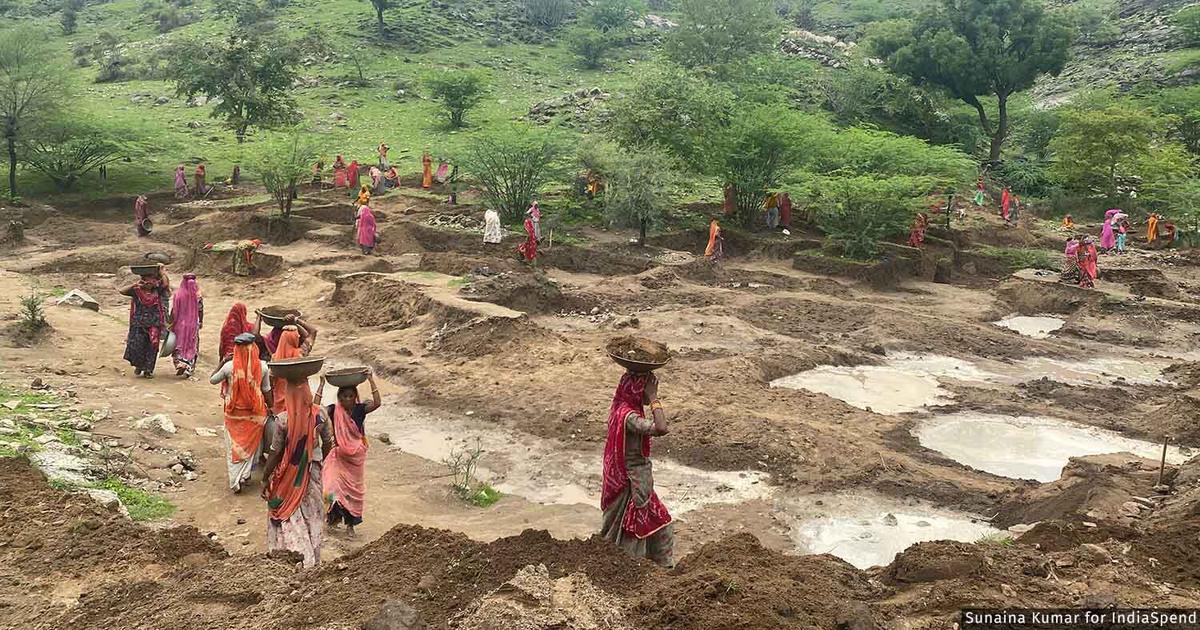
- 26 Dec 2023
Why is it in the News?
As per the Periodic Labour Force Survey (PLFS), published by the Ministry of Statistics and Programme Implementation, the female Labour Force Participation Rate has increased in the country in recent years.
News Summary:
- Recent data highlights a significant surge in women's engagement in the Mahatma Gandhi National Rural Employment Guarantee Scheme (MGNREGS), reaching its highest point in a decade.
- In the fiscal year 2022-23, women accounted for 57.47% of person-days, showcasing a notable increase from the previous year's 54.82%.
- Analyzing the broader landscape, statistics from the NREGS portal for the period up to December 24, 2023, reveal that out of a total of 238.62 crore person-days, women contributed 141.37 crore person-days, constituting an impressive 59.25%.
- The Periodic Labour Force Survey (PLFS), conducted by the Ministry of Statistics and Programme Implementation, provides further insights into the evolving dynamics of female labor force participation in the country.
- Notably, the Female Labour Force Participation Rate (LFPR) has witnessed a substantial uptick in recent years, particularly in rural areas.
- In the rural context, the LFPR soared to 30.5% in 2022-23 (July-June), a significant leap from 18.2% recorded in 2017-18.
- Complementing this positive trend, the female unemployment rate has experienced a noteworthy decline, dropping to 1.8% in 2022-23 from 3.8% in 2017-18.
- These statistics collectively underscore a positive trajectory in women's participation and employment, signaling progressive changes in the socio-economic landscape.
What is Mahatma Gandhi National Rural Employment Guarantee Act (MGNREGA)?
- The National Rural Employment Guarantee Act (NREGA) came into effect in September 2005.
- In 2009, an amendment renamed the Act to the Mahatma Gandhi National Rural Employment Guarantee Act (MGNREGA).
- Mandate: MGNREGA is designed with the primary objective of offering a minimum of 100 days of guaranteed wage employment within a financial year to every rural household whose adult members willingly engage in unskilled manual labor.
- The operationalization of this guarantee is facilitated through the Mahatma Gandhi National Rural Employment Guarantee Scheme (Mahatma Gandhi NREGS).
- Funding Structure: As a Centrally-Sponsored Scheme, MGNREGS receives joint financial backing from both the Central government and the State governments.
- This collaborative funding approach underscores the shared commitment to addressing rural employment challenges.
- Administrative Oversight: The Ministry of Rural Development is the overseeing authority responsible for the implementation and management of MGNREGS, emphasizing the central role of rural development in realizing the objectives of this significant initiative.
Key Characteristics of the Program:
- Enshrined Legal Entitlement: MGNREGA establishes a legal assurance for wage employment, granting every rural household the right to enroll in the program. Notably, the scheme mandates that at least one-third of its beneficiaries must be women. Legal provisions are in place to address situations where work is not provided on demand or when there are delays in wage payments, ensuring accountability and fair compensation.
- Demand-Driven Structure: This initiative operates on a demand-driven framework, responding to the explicit requests for work from wage-seekers. The provision of employment is triggered by the expressed demand, creating a responsive system that aligns with the needs of the community.
- Decentralized Implementation Model: State governments wield the authority to establish rules and modify relevant state schemes, fostering a decentralized mode of implementation. Gram Panchayats (GPs) play a crucial role by executing at least 50% of the work in terms of cost. Decision-making processes, including plans for works, site selection, and the order in which each task is initiated, occur in open assemblies of the Gram Sabha, ensuring community involvement and transparency.
- Parliamentary Accountability: An Annual Report, compiled by the Central Employment Guarantee Council (CEGC), detailing the outcomes of MGNREGA, is mandated to be presented annually to the Parliament by the Central Government. The CEGC, established under Section 10 of MGNREGA, is chaired by the Union Minister for Rural Development.
- Nationwide Coverage: MGNREGA extends its coverage across the entire country, with the exception of districts that boast a one hundred percent urban population, reflecting its comprehensive reach and impact.
Key Accomplishments of the MGNREGA Scheme:
Achievements in 2022-23:
- Employment opportunities were provided to 11.37 crore households.
- A total of 289.24 crore person-days of employment were generated, with specific allocations as follows:
- 56.19% for women
- 19.75% for Scheduled Castes (SCs)
- 17.47% for Scheduled Tribes (STs).
What are the Challenges in Implementing the Scheme?
- Delay and Insufficiency in Funds Disbursement: Many states have not adhered to the mandated 15-day wage disbursement timeline under MGNREGA.
- Moreover, workers face a lack of compensation for delayed wage payments, transforming the scheme into a supply-based program.
- Consequently, worker interest in participating has waned.
- Evidence, including a Ministry of Finance admission, points to insufficient funds as a key factor behind delays in wage payments.
- Caste-Based Disparities: Notable discrepancies in payment delays exist along caste lines.
- While 46% of payments to Scheduled Caste (SC) workers and 37% to Scheduled Tribe (ST) workers were completed within the stipulated seven days, non-SC/ST workers experienced a dismal 26% compliance.
- The adverse effects of caste-based disparities are particularly pronounced in economically challenged states like Madhya Pradesh, Jharkhand, Odisha, and West Bengal.
- Ineffective Role of Panchayati Raj Institutions (PRIs): Gram Panchayats, lacking autonomy, struggle to implement the act efficiently. Limited decision-making authority hampers their effectiveness in executing MGNREGA.
- High Number of Incomplete Projects: Delays in project completion and irregular project inspections pose challenges to MGNREGA.
- Additionally, concerns regarding the quality of work and asset creation persist within the scheme.
- Fabrication of Job Cards: Issues related to the existence of fake job cards, inclusion of fictitious names, missing entries, and delays in updating job cards contribute to administrative challenges within the program.
Way Forward
- Enhanced Coordination among Government Departments: Improved collaboration is essential among various government departments and the development of a streamlined mechanism for the allocation and measurement of work.
- This will contribute to a more efficient and transparent execution of projects.
- Addressing Gender Pay Disparities: Efforts should be directed towards rectifying discrepancies in payouts, particularly addressing the gender pay gap.
- Currently, women in the sector earn, on average, 22.24% less than their male counterparts, emphasizing the need for gender-inclusive policies and fair remuneration practices.
- Prompt Commencement of Public Works: State governments should ensure the prompt initiation of public works in every village.
- Workers arriving at worksites should be swiftly provided with employment opportunities, minimizing delays and optimizing the scheme's effectiveness.
- Empowering Gram Panchayats: Gram Panchayats should be equipped with ample resources, authority, and responsibilities to sanction works, meet demands for employment, and authorize timely wage payments.
- This empowerment is crucial to eliminate delays in payments and enhance the efficiency of grassroots administration.
- Convergence with Other Government Initiatives: MGNREGA should be strategically aligned and integrated with other government schemes, such as the Green India initiative and Swachh Bharat Abhiyan.
- This convergence will maximize the impact and effectiveness of these programs, fostering a synergistic approach towards holistic rural development.
Violence Against Women (United Nations)
- 25 Nov 2023
Why is it in the News?
- The International Day for the Elimination of Violence Against Women is observed worldwide on November 25 each year, as designated by the United Nations General Assembly.
- 2023 theme of Elimination of Violence against Women: This year’s theme, "UNITE! Invest to prevent violence against women and girls", emphasises the need to fund prevention strategies proactively to stop gender-based violence.
Violence Against Women:
- According to United Nations (UN) data, one in three women worldwide experience physical or sexual violence, mostly by an intimate partner, affecting approximately 736 million women globally.
- This alarming trend extends beyond traditional settings, seeping into workplaces and online spaces, further exacerbated by post-pandemic repercussions, conflicts, and climate change.
- Violence against women and girls is a human rights violation, and the immediate and long-term physical, sexual, and mental consequences for women and girls can be devastating, including death.
- Violence negatively affects women’s general well-being and prevents women from fully participating in society.
- It impacts their families, their community, and the country at large.
- It has tremendous costs, from greater strains on health care to legal expenses and losses in productivity.
Statistics on Violence against Women in India:
- Intimate Partner Violence (IPV) is recognised as a pervasive social issue and a significant public health challenge.
- Recent global estimates indicate that over 25% of women of reproductive age, who have ever been in a relationship, have faced physical, sexual, or both forms of IPV—reaching an average of 35% in South Asia.
- According to the National Library of Medicine, 32% of ever-married Indian women reported experiencing physical, sexual, or emotional violence from their husbands.
- In India, the prevalent spousal violence are physical (28%), emotional (14%) and sexual (6%).
- The National Crime Records Bureau (NCRB) reported 428,278 cases of crimes against women in 2021, marking a 15.3% increase from 2020 (371,503 cases).
- The majority of these cases under the Indian Penal Code were classified as:
- "cruelty by husband or his relatives" (31.8%)
- "assault on women with intent to outrage her modesty" (20.8%)
- "kidnapping and abduction of women" (17.6%), and "rape" (7.4%).
- The crime rate, registered per lakh women population, rose to 64.5 in 2021 from 56.5 in 2020.
History of Elimination of Violence against Women:
- It dates back to 1981 when women’s rights activists began marking 25 November as a day against gender-based violence.
- This day pays homage to the Mirabal sisters—three Dominican political activists brutally murdered in 1960 by order of the country’s ruler, Rafael Trujillo (1930-1961).
- In a significant stride towards combating violence against women, the UN General Assembly, in December 1993, adopted the Declaration on the Elimination of Violence against Women, laying the groundwork for global efforts to eradicate such violence.
- In February 2000, the UN General Assembly, officially designated 25 November as the International Day for the Elimination of Violence Against Women.
- This resolution urged governments, international organizations and NGOs to unite in organizing activities annually on this date, fostering public awareness and collective action to address and eliminate violence against women and girls worldwide.
Factors Influencing Violence:
- Men's Predisposing Factors: Men are more likely to engage in violence if they have low education, a history of maltreatment in childhood, witnessed domestic violence against their mothers, misuse alcohol, hold unequal gender views supporting violence, and possess a sense of entitlement over women.
- Women's Vulnerability Factors: Women are more likely to face intimate partner violence if they have lower education, witnessed their mothers being abused, experienced childhood abuse, and hold attitudes accepting violence, male privilege, and the subordinate status of women.
- Effective Interventions: Advocacy and empowerment counseling, along with home visitation, show promise in preventing or reducing intimate partner violence against women.
- Impact of Conflict and Displacement: Situations of conflict, post-conflict, and displacement can worsen existing violence, including by intimate partners and non-partner sexual violence.
Root Causes of Violence Against Women:
- Gender Disparity: Gender inequality deeply ingrained in society exposes women to various forms of violence.
- Discriminatory gender norms and stereotypes contribute to structural inequality.
- Psychiatric Morbidity: Psychiatric morbidity encompasses both physical and psychological deterioration due to mental or psychological conditions, often linked to alcohol consumption.
- Regular alcohol consumption by husbands correlates strongly with poor mental health in women. Alcohol serves as a situational factor, heightening the risk of violence by diminishing inhibitions and impairing judgment.
- Sociodemographic Factors: Patriarchy is a significant contributor to violence against women.
- Higher economic status and perceived power of women to challenge traditional gender roles increase the risk of violence.
- Family Factors: Exposure to harsh physical discipline and witnessing parental violence during childhood predicts victimization and perpetration of violence in adulthood.
- Traditional and Cultural Practices: Female genital mutilation leads to severe physical and psychological consequences.
- Acid attacks, driven by family disputes or rejection of marriage proposals, cause disfigurement and trauma.
- "Honour killings" in various countries uphold the family reputation, justifying violence for reasons like alleged adultery or disapproved relationships.
- Early marriages, with or without consent, undermine the health and autonomy of girls, constituting a form of violence.
- Judiciary and Law Enforcement: An insensitive, inefficient, and corrupt judicial system and law enforcement machinery fail to deter various forms of crimes.
- Sociocultural Factors: Deep-rooted stereotypes confining women to primary roles of marriage and motherhood persist.
- The stigma associated with unmarried, separated, or divorced status perpetuates gender-based violence.
- The custom of dowry remains prevalent in Indian marriages, contributing to the problem
Impact of Violence Against Women:
- Health Ramifications: Violence, regardless of its form, profoundly affects women's physical, mental, sexual, and reproductive health.
- Adverse consequences extend to self-esteem, work capacity, and decision-making abilities concerning fertility.
- Economic Implications: Violence against women carries significant economic repercussions for both individual households and the nation.
- Direct Costs: These include the loss of income, productivity, healthcare expenses, and the cost of social services.
- Indirect Costs: Impact on child well-being, female and child mortality, and the intergenerational social and psychological toll.
- Development Challenges: Violence acts as a barrier to women's participation in development and planning programs at both micro and macro levels.
- It restricts women's freedom to act or move freely, hindering their access to and experience of the benefits of development.
- Violence poses a challenge to poverty alleviation programs, impeding the equitable distribution of resources.
- Rights Impediment: Any form of violence against women obstructs the realization of their fundamental rights as outlined in Article 14, 21, 19, and 32 of the Indian Constitution.
Way Forward to Addressing Gender-Based Violence:
- Gender-Based Legislation: Enact and rigorously enforce legislation that promotes gender equality, addressing discrimination against women in marriage, divorce, custody laws, inheritance laws, and asset ownership.
- Financial Empowerment: Enhance women's access to paid employment opportunities, fostering financial independence.
- National Plans and Policies: Develop and allocate resources for national plans and policies dedicated to addressing violence against women comprehensively.
- Enhanced Crime Surveillance: Improve the systems for collecting crime surveillance data specifically related to violence against women.
- Capacity Building and Training: Provide comprehensive training to service providers and law enforcement officers, enabling them to effectively handle cases of violence against women.
- Prevention of Recurrence: Implement strategies to prevent the recurrence of violence by early identification of women and children experiencing abuse and offering appropriate referrals and support.
- Promotion of Egalitarian Norms: Integrate the promotion of egalitarian gender norms into life skills and comprehensive sexuality education curricula for young people.
- Gender-Based Surveys: Generate evidence on effective strategies and the magnitude of the issue by conducting population-based surveys.
- Include violence against women in demographic and health surveys, surveillance, and health information systems.
Women, Marriage and Labour Market Participation (The Hindu)

- 26 Oct 2023
Why is it in the News?
- With the high percentage of married women in the working-age population, there is growing concern about the economic impact of their non-participation in India's workforce.
- Women who work have better economic opportunities and more household decision-making authority.
- The work of Nobel laureate Claudia Goldin draws attention to differences in women's employment outcomes.
What is the Labour Force Participation Rate (LFPR)?
- The Labour Force Participation Rate (LFPR) is an important indicator in labor market studies because it represents the proportion of a country's working-age population that is either employed or actively looking for work.
- The female labor force participation rate (FLFPR) is the percentage of working-age women who are currently employed or looking for work.
Data on Women’s Labour Participation:
- In 2022, the global LFPR for women was 47.3%.
- Women's LFPR decreased in developing nations;
- For example, in India it fell from 28% in 1990 to 24% in 2022.
- Based on data from India's NSSO Periodic Labour Force Survey (PLFS) for individuals aged 25 to 49, the following trends have been noted::
- Compared to the Usual Principal and Subsidiary Status (UPSS) status, married women exhibit a significantly lower employment proportion under the Usual Principal Status (UPS) status.
- Marriage has a significant impact on women's labor-force outcomes.
- The female labor force participation rate (FLFPR) among married women between the ages of 25 and 49 decreased by 5% in 2022–2023.
- The FLFPR for this group decreased to 45% in 2022–2023 from 50% in 2004–05.
- Most of the FLFPR decline is concentrated in the 25–29 age range.
What is the Periodic Labour Force Survey?
- The Periodic Labour Force Survey (PLFS) was introduced by the NSO in April 2017 in response to the growing need for labor force data to be available at more frequent intervals.
- PLFS aims to accomplish two main goals:
- to estimate, for the urban areas only in the CWS, the major employment and unemployment indicators (i.e., the worker population ratio, labor force participation rate, and unemployment rate) in a brief period of three months.
- to annually estimate the indicators of employment and unemployment in both CWS and usual Status in both rural and urban areas.
What is NSSO?
- The National Sample Survey Office (NSSO) is an organization within the Government of India's Ministry of Statistics and Programme Implementation.
- It is in charge of carrying out extensive nationwide sample surveys on a range of socioeconomic topics.
- The NSSO was established in 1950 to meet the data needs of post-independence India.
- The National Sample Survey (NSS) Commission, which is composed of state officials, academics, and subject-matter experts, provides overall direction for the organization's operations.
- Regular "rounds" of surveys are carried out by the NSSO, and they typically last for a year. These rounds are usually named after the year they begin, such as "68th round" or "75th round."
- In 2019, the NSSO merged with the Central Statistics Office (CSO) to form the National Statistical Office (NSO) in order to streamline and consolidate the country's statistical system.
What is the reason behind the decline/low participation rate of women in labor force?
- Movement of Production: According to economist Claudia Goldin (1994), adult women's LFPR shows a U-shaped pattern during periods of economic expansion.
- She also mentioned that the shift in production from the family farm, small business, and home to the larger market is the reason for the initial drop in the participation rate.
- Marriage Issues: When married women indicate a desire to enter the workforce, the problem gets worse.
- Women's LFPR tends to decline after marriage for a variety of reasons.
- When comparing the Usual Principal Status (UPS) to the Usual Principal and Subsidiary Status (UPSS), married women exhibit a significantly lower employment proportion, according to the PLFS data (25 to 49 years).
- The age range of 25 to 29 is where the majority of the decline in the female LFPR is found.
What are the Problems Faced by Married Women?
- Growing Family Obligations: Due to women's lower educational attainment and restricted mobility, there is a growing social disapproval of women working outside the home, which in turn leads to an increase in family obligations.
- Marriage Increases Domestic Responsibilities: In addition to increasing women's domestic responsibilities, the institution of marriage places numerous social and cultural constraints on them that limit their ability to engage in the workforce.
- Social Elements: Women's limited labor participation is also influenced by a number of other societal factors, including their location and affiliations with particular castes and religions.
- The level of wealth in their home and the social norms that are in place regarding women working outside the home also influence how many women enter the workforce.
Other challenges faced by married women:
- When women choose to return to the workforce after marriage, they typically show a preference for jobs that are located close to their homes and provide more flexibility.
- Due to a number of social restrictions, women also face gender-asymmetrical professional costs.
- It causes gender differences in decisions about fertility, age at marriage, income inequality, and premarital career choices.
- It has been noted that women in higher social classes typically fulfill home duties in order to conform to strict social norms.
- Women from lower socioeconomic classes are more likely to work, mainly due to financial limitations brought on by poverty.
- When compared to their more educated counterparts, women who are illiterate are more likely to enter the workforce following marriage.
- According to empirical research on the distribution of female labor across various industry sectors in India, the agricultural sector continues to be the most popular choice for women seeking employment.
What can be solutions to promote greater participation of married women in the labour market?
- Offering Child Care Services: By helping women handle their caregiving duties, this program will allow them to dedicate enough time to gainful employment.
- It is also crucial to invest in the establishment of childcare services in office buildings through cooperative models and in industrial corridors with industry associations.
- Public crèches can be run in worksite clusters like labor nakas, close to markets, industrial areas, and densely populated low-income residential areas.
- Additionally, the establishment of work environments that give precedence to the requirements and welfare of female employees, the supply of safe modes of transportation, and the growth of opportunities for part-time employment would function as inducers for increased female participation in the Indian labor market.
Government Initiatives to increase female labor participation rate:
The government has targeted the issue by taking various prominent steps to increase the female labour participation rate which includes:
- Enactment of the Maternity Benefit (Amendment) Act, 2017 which provides for enhancement in paid maternity leave from 12 weeks to 26 weeks.
- Provisions for mandatory crèche facility in establishments having 50 or more employees.
- Issue of an advisory to the States under the Factories Act, 1948 for permitting women workers in the night shifts with adequate safety measures.
Conclusion
- Married women's lower participation in the labor force and their propensity to leave the workforce after marriage are caused by a variety of factors.
- In light of this, it is critical to consider appropriate strategies for advancing women's empowerment during this period of rapid economic expansion.
- Empowering women in the workforce is not only economically necessary, but also a crucial first step toward achieving gender equality and inclusive economic growth.
Women’s Reservation Bill Introduced in Loksabha (Indian Express)
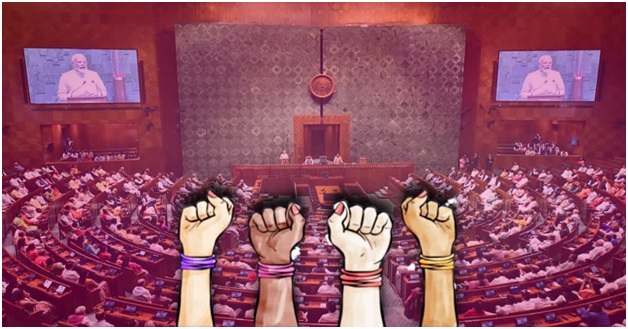
- 20 Sep 2023
Why is it in News?
The One Hundred Twenty-Eight Amendment Bill 2023, also known as the Women Reservation Bill, has been presented in the Lok Sabha. This bill aims to allocate one-third of all seats for women in both the Lok Sabha and state legislative assemblies.
The Historical Background of the Women's Reservation Bill:
- The demand for political reservation for women has been a longstanding one, dating back to the pre-independence era.
- Various committees have advocated for women's political reservation.
A Brief Journey of Women's Political Reservation:
- During the National Movement, in 1931, three women's organizations sent a letter to the British Prime Minister requesting political reservation for women.
- In the Constituent Assembly debates, the issue of women's reservation was discussed.
- However, it was rejected on the premise that a democracy should provide representation to all groups.
- In 1971, the Committee on the Status of Women in India and in 1988, the National Perspective Plan for Women both recommended reserving seats for women in local bodies.
- These recommendations led to the 73rd and 74th amendments to the Constitution, which mandate that all State governments reserve one-third of seats for women in local bodies.
- Nonetheless, the matter of reservation in the Parliament and Legislative Assemblies remained unresolved until the introduction of the Women's Reservation Bill.
Historical Progression of the Women's Reservation Bill:
- 1996: The Women's Reservation Bill made its debut in 1996 as the 81st Constitutional Amendment Bill under the Deve Gowda government.
- It was referred to a parliamentary select committee led by Geeta Mukherjee. However, the Bill expired with the dissolution of the Lok Sabha due to a lack of consensus, particularly regarding reservation for OBC women.
- 1999: The NDA government revived the Bill in the 13th Lok Sabha and presented it twice in 2003.
- Unfortunately, these attempts to pass the bills were unsuccessful, resulting in their expiration.
- 2004: The UPA government incorporated the reservation bill into its Common Minimum Programme and placed it in the Rajya Sabha to prevent it from lapsing once more.
- 2010: The Women's Reservation Bill, initially introduced as the 108th Constitutional Amendment Bill in 2008, was successfully passed in the Rajya Sabha but lapsed in the Lok Sabha.
- Its most vocal opponents included the RJD, the JD(U), and the SP, who advocated for 33% reservation for backward groups within the 33% women's quota.
Arguments in Support of the Bill:
- Enhancing Women's Political Representation: India ranks lower than 140 other nations in terms of women's representation in national legislatures, as per the Inter-Parliamentary Union (IPU) 'Women in Parliament' Report (2021).
- Despite some increase in women's representation in the Lok Sabha since independence (around 16% in the 17th Lok Sabha), India lags behind several African and South Asian countries like Nepal, Pakistan, and Sri Lanka.
- Empowering Women's Leadership for Change: Studies on panchayats have demonstrated the positive impact of women's reservation on women's empowerment and resource allocation.
- For instance, a former woman Sarpanch of Dhani Mayan Khan GP in Haryana established a training center for women and ensured that every village child attended school.
- Advancing the Decriminalization of Politics: Reserved seats for women could contribute to the decriminalization of Indian politics.
- Currently, in the Lok Sabha, 159 MPs have declared serious criminal cases against them, including rape, murder, attempted murder, kidnapping, and crimes against women.
- Addressing Crimes Against Women: The Women's Reservation Bill can play a role in addressing crimes against women in society, potentially leading to a decrease in cases like the Nirbhaya Rape Case.
- Aligning Representation with Vote Share: Despite an increase in women's vote share, their representation in political positions has not kept pace.
- Women in India vote at a rate similar to men, but their representation in political roles remains significantly lower.
- Breaking the Patriarchal Nature of Indian Politics: Indian politics has traditionally been patriarchal, with top party positions and positions of power predominantly held by men.
- The Women's Reservation Bill has the potential to challenge and transform this patriarchal aspect of Indian politics.
- Challenging Stereotypes: An increase in women politicians can help break stereotypes that limit women to the role of 'homemakers,' fostering a broader acceptance of women as lawmakers.
Arguments Opposing the Bill:
- Lack of Separate OBC Reservation: The Bill reserves seats separately for Scheduled Castes and Scheduled Tribes women within the existing one-third quota of seats.
- However, it does not provide separate reservation for OBC women, who constitute 60% of the female population.
- Exclusion from Rajya Sabha and Legislative Councils: The Bill does not extend reservations to women in the Rajya Sabha and the Legislative Councils, limiting its scope.
- Potential Misuse with Proxy Candidates: Some argue that the introduction of women's reservations could lead to the emergence of 'MP and MLA Patis,' where individuals use their wives as proxy candidates for reserved seats, wielding the actual power.
- Contradiction with Equality Principles: Opponents contend that the idea of women's reservation contradicts the principle of equality enshrined in the Constitution.
- They argue that such reservations could perpetuate the unequal status of women, as they might not be perceived as competing based on merit.
- Heterogeneity of Women: Women are a diverse group with varied backgrounds and interests, unlike caste groups.
- Consequently, the same arguments used to justify caste-based reservations may not be directly applicable to women.
- Women's interests are interconnected with other social, economic, and political strata.
- Restricting Voter Choice: Critics argue that reserving seats for women could limit voter choices.
- Instead of reservations, opponents of the Bill have proposed alternative approaches, such as women's reservation within political parties and the implementation of dual-member constituencies, where each constituency has two MPs, with one being a woman.
Key Provisions of the Women Reservation Bill 2023:
- Reservation of one-third of all seats for women in the Lok Sabha, state legislative assemblies, and the legislature of the National Capital Territory of Delhi.
- Within this allocation, one-third of the seats will be reserved for scheduled castes and scheduled tribes.
- The reservations will remain in effect for 15 years from the law's commencement.
- However, Parliament has the authority to extend the reservation period beyond 15 years through legislation.
- Reserved seats may be subject to rotation.
- This means that seats designated for women will not remain fixed but will rotate after each election cycle.
- The provisions will come into effect only after a delimitation exercise is carried out for this purpose.
- Delimitation will be based on the data collected in the first census conducted after the bill's passage.
- The amendment will be implemented following the dissolution of the respective house or legislative assembly and will not impact any existing representation.
- For instance, even after the Bill's passage, one-third women's representation will not be immediately applicable.
- It will become effective as each state completes its assembly term and holds elections.
What Steps Can Be Taken Moving Forward?
In addition to the Women's Reservation Bill, India should consider implementing the following reforms to enhance the political empowerment of women:
- Institutionalizing Intra-Party Democracy: Encourage intra-party democracy to broaden the pool of women candidates within political parties.
- Strengthening Women's Agencies and Organizations: Support and reinforce women's agencies and organizations to contribute to the creation of a progressive society with equal opportunities for all citizens.
- Promoting Women's Participation at the Panchayat Level: Enhance women's participation at the panchayat level by strengthening women's self-help groups.
- Encouraging Girls' Participation in College/University Politics: Promote the active involvement of girls in college/university student political parties and political debates to nurture future women leaders.
Mains Question:
- What are the key provisions and potential challenges associated with the Women's Reservation Bill 2023, and how can these challenges be addressed to ensure effective implementation and increased political empowerment of women in India? (15M)