
RBI’s “Goldilocks Phase” and Repo Rate Cut
- 11 Dec 2025
In News:
The Monetary Policy Committee (MPC) of the Reserve Bank of India (RBI) reduced the repo rate by 25 basis points (bps) to 5.25%, taking total rate cuts in 2025 to 125 bps. The RBI described current macroeconomic conditions as a “Goldilocks phase”a rare combination of low inflation and strong growth.
What is a Goldilocks Phase?
A Goldilocks economy refers to a situation where:
- Economic growth is strong but not overheating
- Inflation is low and stable, without risk of deflation
It represents an ideal macroeconomic balance where demand is healthy, supply constraints are manageable, and price stability allows supportive monetary policy.
India’s Current Indicators (2025–26):
- GDP growth: 8.2% in Q2 (July–September)
- CPI inflation: 1.7% average in Q2, falling to 0.3% in October
- Inflation fell below the RBI’s lower tolerance band (2%) for the first time under the Flexible Inflation Targeting (FIT) framework
Repo Rate – Key Concept
The repo rate is the interest rate at which commercial banks borrow short-term funds from the RBI by selling securities with an agreement to repurchase them later.
Policy Role:
- Higher repo rate → Costlier loans → Slower demand → Controls inflation
- Lower repo rate → Cheaper loans → Higher borrowing → Boosts growth
It is the primary tool of monetary policy transmission.
Flexible Inflation Targeting (FIT) in India
India follows a Flexible Inflation Targeting regime.
- Target: 4% CPI inflation
- Tolerance Band: ±2% (2% to 6%)
- Inflation control is the primary mandate, but RBI retains flexibility to support growth in the short term.
The current disinflation has given RBI policy space to prioritize growth.
Why Did RBI Cut the Repo Rate?
1. Sustained Disinflation: Inflation dropped sharply and persistently, even breaching the lower band of 2%. This reduced concerns about price instability.
2. Strong Growth Momentum: Robust GDP growth created a cushion, allowing rate cuts to prolong the expansion without overheating.
3. Countering Global Headwinds: Global trade slowdown, geopolitical tensions, and financial volatility threaten exports and investment. Lower rates support domestic demand.
4. Policy Consistency: Just as RBI tightens when inflation is persistently high, it eases when inflation remains too low—aligning with the FIT framework.
RBI’s Evolving Currency Approach
Despite the rupee weakening past ?90 per US dollar, the RBI has shown greater tolerance for currency flexibility, intervening only to curb excess volatility, not defend specific levels. This reflects a shift toward a more market-determined exchange rate regime.
Likely Economic Implications
Growth Boost: Lower borrowing costs encourage:
- Household consumption
- Business investment
- Credit expansion
Inflation Risks: Higher liquidity may later create demand-pull inflation, but RBI expects inflation to remain within the 2–6% band.
External Sector Effects
- Weaker rupee may improve export competitiveness
- Imports may become costlier, widening trade deficit
Impact on Savers: Lower acknowledges:
- Reduced returns on deposits and savings instruments
Forward Outlook
RBI has indicated that:
- Growth may moderate in the second half of the year
- Inflation forecasts have been revised downward
- Further measured easing remains possible if disinflation persists
However, risks remain from:
- Global economic slowdown
- Trade disruptions and tariffs
- Geopolitical instability
The current Goldilocks phase offers a policy window, but sustaining it requires balancing growth support with vigilance against future inflationary pressures.
RBI Monetary Policy Committee (MPC) cuts Repo Rate
- 09 Feb 2025
In News:
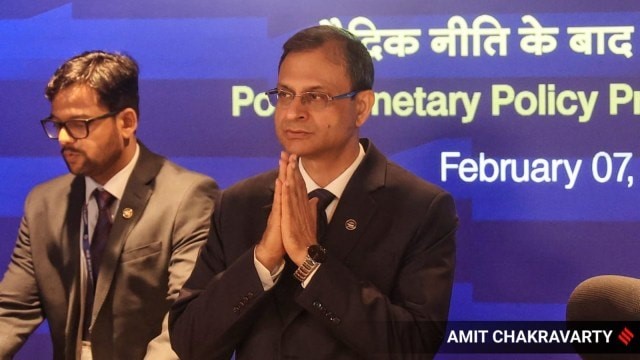
In a landmark decision during its February 2025 meeting, the Reserve Bank of India’s (RBI) Monetary Policy Committee (MPC) reduced the repo rate by 25 basis points, from 6.5% to 6.25%, marking the first rate cut in five years (since May 2020). This move follows the Union Government’s recent cut in personal income tax, aimed at boosting consumption.
What is the Monetary Policy Committee (MPC)?
The MPC is a six-member statutory body responsible for setting India’s monetary policy. Its primary objective is price stability while ensuring economic growth. It meets bi-monthly to assess economic indicators and modify key policy rates like the repo rate, which influences overall borrowing and lending costs in the economy.
Key Highlights from the MPC Decision:
Repo Rate Cut:
- Reduced to 6.25% from 6.5%.
- Objective: Stimulate credit growth, investment, and consumer demand.
- Expected Impact: Lower EMIs for borrowers, reduced interest rates on EBLR and MCLR-linked loans.
GDP Growth Outlook (FY26):
- RBI projects 6.7% GDP growth for FY26.
- This is slightly higher than the FY25 estimate of 6.4%, and in line with the Economic Survey’s projection of 6.3–6.8%.
- Growth recovery is attributed to calibrated fiscal consolidation and stable private consumption.
Inflation Projections (CPI-based):
- FY26 Inflation Estimate: 4.2%
- Q1: 4.5%
- Q2: 4.0%
- Q3: 3.8%
- Q4: 4.2%
- CPI inflation had already dropped to 5.22% in December 2024, aided by easing food prices.
- RBI emphasized continued transmission of past policy measures and food price moderation as drivers of disinflation.
Broader Monetary Policy Context
- RBI will maintain a “neutral” policy stance to remain flexible amid evolving macroeconomic conditions.
- RBI Governor Sanjay Malhotra stressed that the inflation-targeting framework has helped stabilize prices, especially post-pandemic.
- The policy space was created by the simultaneous drop in inflation and moderate growth, allowing support for the economy without derailing price stability.
Cybersecurity & Digital Measures
- Additional Factor Authentication (AFA) introduced for international digital payments.
- Launch of exclusive domains:
- "bank.in" for Indian banks
- "fin.in" for the wider financial sector
These aim to bolster digital transaction security amid rising cyber fraud.
Forex & External Sector Outlook
- RBI reiterated that it does not target exchange rate levels, intervening only to curb excessive volatility.
- Ongoing global challenges include:
- Strengthening of the US dollar
- Higher bond yields
- Geopolitical tensions
- Threat of trade wars
- These have led to capital outflows, currency depreciation, and increased financial market volatility.
Conclusion
The RBI’s rate cut signals a strategic shift towards supporting economic growth amid global uncertainties. With a moderate inflation outlook and improving macroeconomic indicators, the decision is expected to boost domestic demand and investment, while reinforcing RBI’s commitment to price and financial stability.
RBI’s Liquidity Infusion of ?1.5 Lakh Crore

- 04 Feb 2025
In News:
In January 2025, the Reserve Bank of India (RBI) announced its largest monetary easing since the COVID-19 pandemic, unveiling a multi-pronged plan to inject over ?1.5 lakh crore into the money markets.
This move aims to address liquidity shortfalls caused by RBI’s forex interventions and signal possible easing in the upcoming monetary policy review.
Context: Why Liquidity Infusion Was Needed
- Forex Intervention: RBI sold over $50 billion from its foreign exchange reserves to stabilise the rupee, in response to large-scale equity sell-offs by Foreign Institutional Investors (FIIs).
- Impact: These interventions reduced rupee liquidity, tightened short-term interest rates, and raised borrowing costs.
- Liquidity Deficit: Market estimates pegged the shortfall at ?3 lakh crore.
Key Liquidity Measures Announced by RBI
- Government Bond Buy-Back: ?60,000 Crore
- Conducted in three tranches on January 30, February 13, and February 20, 2025.
- Objective: To inject liquidity into the banking system by repurchasing government securities before maturity.
- 56-Day Variable Rate Repo Auction: ?50,000 Crore
- Scheduled for February 7, 2025.
- Enables banks to borrow short-term funds by offering government securities as collateral at a market-determined interest rate.
- USD/INR Buy-Sell Swap Auction: $5 Billion
- A six-month forex swap in which RBI borrows dollars in exchange for rupees and agrees to buy them back later.
- Helps stabilize the rupee without draining rupee liquidity.
Significance of the Measures
- Monetary Transmission: With adequate liquidity, any potential repo rate cut will be more effectively transmitted through lower lending rates, boosting investment and consumption.
- Financial Stability: By calming money markets and moderating borrowing costs, RBI strengthens confidence amid global uncertainties.
- Rupee Management without Liquidity Squeeze: The forex swap allows rupee liquidity to remain intact while addressing exchange rate volatility.
Governor’s Focus Areas:
In a meeting with private sector bank heads ahead of the February monetary policy review, RBI Governor Sanjay Malhotra highlighted the following priorities:
- Financial Stability & Inclusion
- Enhanced Digital Literacy and Credit Access
- Improved Customer Service & Grievance Redressal
- Cybersecurity & IT Risk Management
- Monitoring of Third-party Service Providers
- Countering Rising Digital Fraud
RBI brings back 102 tonnes gold from BoE; 60 per cent reserves in India

- 04 Nov 2024
In News:
England over the past two-and-a-half years, reflecting a strategic shift in its approach to safeguarding gold reserves. This move marks a significant increase in the RBI's domestic gold holdings.
Rise in the RBI's Domestic Gold Holdings
- Current Status (September 2024):The RBI's domestic gold reserves have grown to 510.46 metric tonnes, up from 295.82 metric tonnes in March 2022.
- Reduction in Gold Held Abroad:The gold held under the custodianship of the Bank of England has decreased to 324 metric tonnes from 453.52 metric tonnes in March 2022.
- Gold as a Share of Foreign Exchange Reserves:The proportion of gold in India's total foreign exchange reserves increased from 8.15% in March 2024 to 9.32% in September 2024.
Gold Kept in the Bank of England
- Overview of the Bank of England's Gold Vault:The Bank of England is home to one of the largest gold vaults in the world, second only to the New York Federal Reserve, housing around 400,000 bars of gold.
- India’s Gold Held Abroad:The RBI continues to retain 324 metric tonnes of its gold with the Bank of England and the Bank for International Settlements (BIS).
- Additional Gold Management:Around 20 tonnes of gold are managed through gold deposit schemes.
- Strategic Role of London’s Gold Market:Storing gold in London provides immediate access to the global London bullion market, enhancing liquidity for India’s gold assets.
Historical Context of India’s Gold Holdings
- 1991 Balance of Payments Crisis:During a financial crisis in 1991, India had to send 47 tonnes of gold to the Bank of England to secure loans for repaying international creditors.
RBI’s Strategy to Bring Gold Back to India
- Global Trend of Central Banks Buying Gold:Since the imposition of U.S. sanctions on Russia in 2022, central banks globally have been increasing their gold reserves as a hedge against inflation and to reduce reliance on the U.S. dollar. India has outpaced other G20 nations in this trend, surpassing Russia and China in gold purchases.
- De-dollarisation:This shift is part of a broader strategy of de-dollarisation, aiming to diversify away from the U.S. dollar amidst rising gold prices and growing geopolitical tensions.
Significance of Repatriating Gold to India
- Sign of Economic Strength
- Recovery from the 1991 Crisis:The decision to repatriate gold reflects a significant improvement in India's economic position, a stark contrast to the 1991 economic crisis when India had to pledge gold for financial survival.
- Optimizing Financial Resources
- Reducing Storage Costs:Storing gold domestically allows the RBI to save on storage fees paid to foreign custodians, such as the Bank of England.
- Strategic Significance
- Enhanced Resilience Amid Global Instability:By repatriating its gold, India enhances its strategic autonomy and strengthens its economic position in a world of rising uncertainties and currency volatility.
RBI's Capacity to Safeguard Gold Domestically
- Increasing Domestic Storage Capacity:The RBI has been increasing its domestic capacity for gold storage to accommodate rising reserves and reduce dependence on foreign gold safekeeping facilities.
- Current Foreign Exchange Reserves:As of October 2024, India’s total foreign exchange reserves stand at $684.8 billion, sufficient to cover over 11.2 months of imports.
Diversification of Foreign Exchange Reserves
- Mitigating Currency Risks:By increasing gold reserves, India diversifies its foreign exchange holdings, reducing reliance on any single currency and shielding itself from global currency fluctuations and economic volatility.
- Gold as a Stable Asset:Gold serves as a stable asset, providing a safeguard against global economic shocks, and balances India’s reserves portfolio.
Gold as a Hedge against Inflation
- Preserving Wealth amid Inflation:Gold is traditionally viewed as a hedge against inflation, maintaining or appreciating in value when other currencies weaken. By increasing its gold reserves, India positions itself to better withstand the adverse effects of inflation and ensure long-term financial stability.
Conclusion
The repatriation of gold by the RBI reflects a strategic move to bolster India's economic strength and diversify its financial assets. The decision to bring gold back to India not only signifies an improvement in India's economic fundamentals but also aligns with global trends of central banks increasing their gold reserves to ensure long-term stability and reduce reliance on the U.S. dollar.
Indian banks reports card: Asset quality improves to fresh 10-year high, balance sheet grows by highest in 9 years (The Hindu)
- 28 Dec 2023
Why is it in the News?
Indian banks continued to show improvement in their asset quality, with the gross non-performing asset (GNPA) ratio reaching a new decadal low as of September-end, according to a report by the Reserve Bank of India (RBI).
Key Points from the 'Trend and Progress of Banking in India' Report:
- The Gross Non-Performing Assets (GNPA) ratio of Scheduled Commercial Banks (SCBs) reached a decade-low of 3.9% by the end of March 2023, further declining to 3.2% by the end of September 2023.
- In the fiscal year 2022-23, approximately 45% of the reduction in Gross Non-Performing Assets (GNPAs) of SCBs was attributed to recoveries and upgrades.
- The consolidated balance sheet of banks witnessed a notable growth of 12.2% in 2022-23, marking the highest in 9 years.
- The share of Public Sector Banks (PSBs) in the consolidated balance sheet decreased from 58.6% in March 2022 to 57.6% in March 2023, while private banks saw an increase from 34% to 34.7%.
- As of March 2023, PSBs accounted for 61.4% of total deposits and 57.9% of total advances.
- With inflation persisting above the target, there is a possibility that monetary policy could remain in restrictive territory for an extended period.
- Acknowledging the growing interconnectedness between banks and Non-Banking Financial Companies (NBFCs), the report suggests that NBFCs diversify their funding sources and reduce reliance on bank funding.
- The central bank expresses concerns about banks lending to borrowers with influence, highlighting moral hazard issues that may compromise pricing and credit management.
- The Indian banking system is well-positioned for improvement, boasting better asset quality, high capital adequacy, and robust profitability.
- The financial indicators of NBFCs are anticipated to strengthen further, contributing to the overall resilience of the financial sector.
What are Non-Performing Assets (NPAs)?
- Non-performing assets (NPAs) refer to loans or advances in which the principal or interest payments have been overdue for a period exceeding 90 days.
- In the context of banks, loans are considered assets due to the significant income generated through interest payments.
- When borrowers, whether individuals or corporations, fail to meet their interest obligations, the asset turns 'non-performing' for the bank, as it ceases to contribute to the bank's earnings.
- As per the Reserve Bank of India (RBI) guidelines, banks must publicly disclose their NPAs and report them to the RBI regularly.
The classification of NPAs includes:
-
- Substandard assets: Loans that have been non-performing for up to 12 months.
- Doubtful assets: Assets that have remained in the substandard category for a period of 12 months.
- Loss assets: Assets deemed uncollectible, with little value, making their continuation as bankable assets unwarranted.
- NPA Provisioning involves setting aside a certain percentage of the loan amount as a provision.
- The standard rate of provisioning in Indian banks ranges from 5-20%, depending on the business sector and borrower's repayment capacity.
- In the case of NPAs, Basel-III norms require 100% provisioning.
Key metrics for understanding the NPA situation include Gross NPA (GNPA) and Net NPA (NNPA):
- GNPA: Represents the total value of gross NPAs for a bank in a specific quarter or financial year.
- NNPA: Obtained by subtracting the provisions made by the bank from the gross NPA, providing the precise value of NPAs after specific provisions.
- NPA Ratios express NPAs as a percentage of total advances, offering insights into the recoverability of total advances. For example:
- GNPA ratio: The ratio of total GNPA to total advances.
- NNPA ratio: Utilizes net NPA to determine the ratio to total advances, considering the specific provisions made by the bank.
Government and RBI Initiatives to Address NPAs:
To tackle the issue of Non-Performing Assets (NPAs), the Indian government has implemented a series of comprehensive measures in collaboration with the Reserve Bank of India (RBI).
- Establishment of a Bad Bank: National Asset Reconstruction Ltd (NARC), operates as an asset reconstruction company with the primary objective of purchasing distressed loans from banks, thereby alleviating them of the burden of NPAs.
- Once acquired, NARC endeavors to sell these problematic loans to distressed debt buyers.
- Additionally, the government has established the India Debt Resolution Company Ltd (IDRCL) to facilitate the sale of stressed assets in the market.
- Empowering Banks through the SARFAESI Act, 2002: The Securitization and Reconstruction of Financial Assets and Enforcement of Security Interest (SARFAESI) Act, enacted in 2002, empowers banks and financial institutions to take possession of collateral assets and execute their sale for the recovery of outstanding dues.
- Crucially, this process does not necessitate intervention from the court.
- The SARFAESI Act also provides provisions for enforcing security interests, allowing banks to issue demand notices to defaulting borrowers.
- Holistic Approach with the Insolvency and Bankruptcy Code (IBC), 2016: The Insolvency and Bankruptcy Code (IBC) establishes a comprehensive framework for the resolution of insolvency and bankruptcy in India.
- It is designed to expedite the resolution process for stressed assets, fostering a creditor-friendly environment.
- Under the IBC, both debtors and creditors have the authority to initiate insolvency proceedings against defaulting borrowers.
- The creation of the National Company Law Tribunal (NCLT) and the Insolvency and Bankruptcy Board of India (IBBI) ensures effective oversight of the resolution process.
Significance of NPA Recovery:
- The recovery of NPAs assumes paramount importance in safeguarding the interests of depositors and stakeholders.
- Emphasizing compromise settlements, the focus should be on achieving maximum dues recovery with minimal expenses and within an expedited timeframe.
- In the pursuit of compromise settlements, public sector banks are urged to prioritize the interests of the tax-paying public over the borrowers.
- This aligns with the broader goal of ensuring that resolutions serve the greater public good.
RBI Increases Risk Weights on Unsecured Loans (Business Standard)
- 29 Nov 2023
Why is it in the News?
Context:
- The Reserve Bank of India (RBI) recently issued regulatory measures to banks and NBFCs to increase risk weights associated with consumer credit and bank credit by an additional 25 percentage points.
- Currently, at 100% risk weight, loans to consumers will see an increase to 125%, excluding loans for housing, education, vehicles, and against gold.
- This would be applicable to unsecured personal loans, credit cards, and lending to NBFCs.
- The directions are expected to result in higher capital requirements for lenders and thereby, an increase in lending rates for consumers.
What is ‘Risk Weights'?
- Risk weight is capital required to be set aside, stipulated by the Reserve Bank of India for Banks, or National Housing Bank for housing finance companies, that has to be made by banks for giving the loan.
- In other words, it is the amount (depicted as a percentage of loan disbursed) that institutions need to set aside for assets.
- The risk weight is a function of the risk perception the apex bank has on loans for different sectors.
- It is applicable to all categories of retail (personal, home, car, and education loans) as well as corporate lending.
- The one that often impacts borrowers directly, and the most, is the risk weight on home loans.
- It is an essential tool for banks to manage this risk.
Why do risk weights matter?
- Risk weights are pivotal in banking regulation, as they dictate the capital set aside for different loan types, reflecting their risk profiles.
- Unsecured loans, perceived as riskier, have higher weights, thus requiring more capital.
- Home loans, for instance, attract a risk weight of 35-50%, depending on the size of the loan.
- In comparison, personal loans will now have a risk weight of 125%.
Why were the Changes by RBI Deemed Necessary?
- Governor Shaktikanta Das had flagged concerns about the “high growth” in “certain components of consumer credit.” while presenting the monetary policy statement in October this year.
- He advised banks and NBFCs to “strengthen their internal surveillance mechanisms, address the build-up of risks, if any, and institute suitable safeguards, in their own interest.”
- The governor said these were being closely monitored by the apex banking regulator for “any signs of incipient stress.”
- Rating agency Moody’s also put forth that higher risk weights are intended to “dampen lenders’ consumer loan growth appetite.”
- The unsecured segment, it adds, has grown rapidly in the past few years, exposing financial institutions to a potential spike in credit costs in the event of a sudden economic or interest rate shock.
- RBI’s latest figures stipulate that unsecured personal loans have increased approximately 23% on a year-over-year basis, as of September 22 this year.
- Outstanding loans from credit cards increased by about 30% during the same period.
- Major concerns emerge for loans below Rs 50,000 – these carry the utmost default risk.
- Delinquencies in this segment stood at 5.4% as of June this year.
- Ratings agency S&P in their assessment held that borrowers in this segment are often highly leveraged and may have other lending products.
- According to Moody’s, several NBFCs that until now focused on secured lending categories (such as infrastructure, real estate, and vehicle loans) have pivoted to riskier segments.
What are the main concerns?
- The primary concerns are about how these changes might affect the amount of money banks have and how well they can make a profit.
- Having enough money, called capital adequacy, is crucial for banks.
- It helps them handle unexpected problems or risks in their business without losing too much money.
- A recent report from S&P, which is a group that studies these things, says that if banks are more careful and focus on managing risks, it could make their loans safer.
- However, it predicts that a measure called Tier-1 capital adequacy, which is like the best kind of money banks have, might go down a bit—about 60 basis points.
- This is important because Tier-1 capital helps banks deal with losses right away.
- S&P thinks that this might make banks that don't have a lot of this kind of money think about getting more.
- Also, it noticed that government-owned banks generally have less of this important money than big private banks.
- But, the report says that finance companies might face the biggest impact because they could end up borrowing more from banks, and it might affect how much good money they have.
How It will affect Consumers?
- As the risk weightage goes up, banks may become more careful about giving loans to consumers, especially those seen as having a higher risk.
- This could make it harder for some people to get credit cards or personal loans.
- Even those who still qualify for credit might face stricter terms and conditions.
- Experts suggest that by increasing the risk weightage, the RBI is trying to handle the increasing number of people not repaying their loans and the risks connected to unsecured loans.
- Lenders will now have to consider the higher credit risk in this type of loan, which could make lending more expensive.
- As a result, borrowers taking out these loans may face higher costs.
Way Forward
Banks and NBFCs may need to review their approaches to risk and lending specifically for unsecured loans. This could involve placing greater emphasis on evaluating creditworthiness and exploring alternative strategies to effectively handle risk while still providing loans. Financial institutions might also consider diversifying their loan portfolios by placing more emphasis on secured lending or exploring other creditworthy segments. This approach aims to balance the effects of the heightened risk-weighting associated with unsecured loans.
What is the Capital Adequacy Ratio (CAR)?
- The Capital Adequacy Ratio (CAR) is a financial metric used to evaluate a bank's stability and risk management.
- Calculated as a percentage, it compares a bank's capital—comprising Tier-1 and Tier-2 capital—to its risk-weighted assets.
- Tier-1 capital includes core elements like common equity
- Tier-2 capital consists of supplementary items.
- Regulatory authorities, such as the RBI, establish minimum CAR requirements to ensure banks can absorb potential losses.
- A higher CAR reflects greater financial resilience, emphasizing a bank's ability to navigate economic challenges and adhere to regulatory standards.
Why the Monetary Policy Committee (MPC) Is Expected to Sustain the Repo Rate Pause: Insights into RBI's Policy (Indian Express)
- 03 Oct 2023
Why is it in the News?
- The Reserve Bank of India's Monetary Policy Committee (MPC) is going to meet from October 4 to 6.
- During this meeting, it is expected that the MPC will not change the repo rate, which is currently at 6.5 percent.
- This will be the fourth time in a row that they keep it the same.
- The reason for this decision is that inflation, which is measured using the consumer price index (CPI), is staying high.
- Additionally, it's likely that the central bank will stick to its plan of reducing the amount of money in the economy, which is known as a 'withdrawal of accommodation' stance.
- This is done to control inflation and prevent it from getting worse.
- On the other hand, if they were to take an 'accommodative stance,' it would mean that the central bank is willing to increase the money supply in order to boost economic growth.
Why is RBI likely to keep things the same in its policy?
Domestic Challenges:
- Consumption Concerns: There are worries about people buying less due to high food prices.
- Monsoon Trouble: The monsoon season hasn't been consistent, which is affecting crops like kharif.
- Higher Interest Rates: Interest rates are up, which can impact borrowing and spending.
- Inflation is still high, at 6.8 percent. While it's expected to drop, there's some concern about the kharif crop, especially pulses, which could make prices go up.
- The RBI Governor has also pointed out that frequent food price increases can make it harder to control inflation.
External Challenges:
- Rising Oil Prices: Oil prices worldwide have gone up, averaging nearly $89 per barrel. This is a 12.6 percent increase since the last policy.
- Russia-Ukraine War: The conflict between Russia and Ukraine is causing problems in the supply chains for many goods.
Is there going to be a revision in the GDP growth prediction?
- According to experts, it's unlikely that the RBI will alter its GDP forecast in the upcoming monetary policy announcement.
- The basic factors supporting growth still look positive, but there's a significant question mark regarding how a poor monsoon might affect agricultural production.
- Additionally, there's anticipation of an ongoing economic slowdown in Europe and China, which could lead to reduced exports and potential challenges for rural demand due to this year's weak monsoon.
Will there be any announcements regarding liquidity measures?
- According to experts, it's unlikely that the RBI will introduce any specific liquidity measures at this time, as the current liquidity situation is already tight.
- Furthermore, the RBI is in the process of reversing the incremental cash reserve ratio (I-CRR), which was introduced in the August policy.
- I-CRR is an extra cash reserve that banks have to maintain on top of the standard cash reserve ratio (CRR), which is the portion of deposits that banks must keep with the RBI.
- The RBI declared the discontinuation of I-CRR on September 8.
- However, despite the gradual withdrawal of I-CRR, there has been a liquidity deficit in the system since mid-September due to quarterly tax outflows and GST payments.
- Additionally, interventions in the foreign exchange market aimed at supporting the rupee may have slightly absorbed some rupee liquidity.
What is the Monetary Policy Committee (MPC)?
- According to Section 45ZB of the revised RBI Act of 1934, the central government has the authority to establish a six-member Monetary Policy Committee (MPC).
- The MPC's main responsibility is to decide the policy interest rate necessary to achieve the inflation target. The first MPC was formed in September 2016.
- Members of MPC
- As per the amended RBI act, the MPC is composed of the following members:
- The RBI Governor, who serves as its ex officio chairperson.
- The Deputy Governor responsible for monetary policy.
- An officer from the Bank nominated by the Central Board.
- Three individuals appointed by the central government.
Functions of MPC:
- Setting Policy Interest Rates: The primary role of the MPC is to determine policy interest rates, specifically the repo rate.
- Inflation Targeting: The government has set a current inflation target, which is a Consumer Price Index (CPI) inflation goal of 4% with a tolerance range of +/- 2%.
- Economic Analysis and Forecasting: The MPC conducts comprehensive analysis and forecasting of various economic indicators, including inflation, GDP growth, employment, fiscal conditions, and global economic trends.
- Decision-Making: The MPC convenes at least four times a year to assess the direction of monetary policy.
Non-performing Assets (NPAs) and Wilful Defaulters (Indian Express)
- 23 Sep 2023
Why is it in News?
The Reserve Bank of India (RBI) has put forth a proposal that requires lenders to categorize a borrower as a "wilful defaulter" within six months of their account being declared a non-performing asset (NPA). Previously, the RBI did not have a specific timeframe for identifying such borrowers.
Context:
- The RBI defines wilful defaulters as individuals or entities that have the means to repay a bank's dues but deliberately do not, or divert bank funds.
- A "large defaulter" refers to someone with outstanding dues of Rs 1 crore or more, whose account has been categorized as doubtful or a loss.
- A "wilful defaulter" is a borrower or guarantor who has committed wilful default, with an outstanding amount of Rs 25 lakh or more.
According to the RBI's draft guidelines:
- Lenders must assess the "wilful default" aspect for all accounts with outstanding amounts of Rs 25 lakh and above or as per RBI notifications.
- The process of classifying or declaring a borrower as a wilful defaulter should be completed within six months of the account becoming an NPA.
- An Identification Committee, established by lenders, must scrutinize evidence of wilful default.
- Lenders must investigate the wilful default aspect thoroughly before transferring the credit facility to other lenders or asset reconstruction companies (ARCs).
Other aspects of the RBI's draft guidelines include:
- No additional credit facility should be extended by any lender to a wilful defaulter or any entity associated with them.
- This prohibition on additional credit lasts for up to one year after the wilful defaulter's name is removed from the List of Wilful Defaulters (LWD) by the lenders.
- Wilful defaulters are ineligible for credit facility restructuring.
- These guideline revisions come after reviewing instructions and considering various judgments and orders from the Supreme Court and High Courts.
What is Non-Performing Assets (NPAs)?
- Non-Performing Assets, often referred to as NPAs, represent loans or advances for which the principal or interest payments have remained overdue for a period of 90 days or more.
- For banks, loans are considered assets because the interest they generate is a significant source of income.
- However, when customers, whether individuals or corporations, are unable to make interest payments, these assets become "non-performing" for the bank as they cease to generate income.
- Therefore, the RBI defines NPAs as assets that no longer generate income for banks. Banks are required to disclose their NPA figures to the public and report them to the RBI periodically.
- Classification of Assets: According to RBI guidelines, banks must further categorize NPAs into three types:
- Substandard assets: These are assets that have been NPAs for less than or equal to 12 months.
- Doubtful assets: Assets that have remained in the substandard category for 12 months.
- Loss assets: These are considered uncollectible and of such minimal value that keeping them as bankable assets is not justified, although some minimal recovery value may exist.
- NPA Provisioning: Provisioning for a loan refers to setting aside a certain percentage of the loan amount as a reserve. The standard rate of provisioning in Indian banks ranges from 5-20%, depending on the business sector and the borrower's repayment capacity. However, in the case of NPAs, 100% provisioning is required in accordance with Basel-III norms.
- GNPA and NNPA: Two key metrics help us understand a bank's NPA situation.
- GNPA (Gross Non-Performing Assets) represents the total value of gross NPAs a bank has in a specific quarter or financial year.
- NNPA (Net Non-Performing Assets) subtracts the provisions made by the bank from the gross NPA, providing the exact value of NPAs after specific provisions.
- NPA Ratios: NPAs can also be expressed as percentages of total advances, indicating the proportion of advances that are not recoverable.
- For instance:
- GNPA ratio is the ratio of the total GNPA to the total advances.
- NNPA ratio uses net NPA to calculate the ratio to the total advances.
Impact of NPAs and the Current Situation with Future Projections for India:
- Effects of NPAs: Banks face a shortage of funds for lending to other productive sectors in the economy.
- To maintain their profit margins, banks may need to raise interest rates.
- Reduced investments could lead to an increase in unemployment rates.
- Banks have the option to retain NPAs in their books with hopes of recovery, make provisions for them, or write off the loans entirely as bad debt.
- Present State of NPAs in India: According to the latest RBI Financial Stability Report, the gross NPA ratio of scheduled commercial banks (SCBs) reached a 10-year low of 3.9% in March 2023.
- Both gross and net NPA ratios have declined significantly from their peak levels of 11.5% and 6.1% in March 2018 to 3.9% and 1.0% in March 2023, respectively.
- A contributing factor to the reduction in gross NPAs in 2022-23 was the substantial write-offs undertaken by banks.
- Future Projection for India: Based on stress test results, it is anticipated that the GNPA ratio for all SCBs may improve to 3.6% by March 2024.
- However, in the event of a deterioration in the macroeconomic environment, leading to medium or severe stress scenarios, the GNPA ratio could potentially rise to 4.1% and 5.1%, respectively.
Mains Question:
- Evaluate the impact of rising NPAs on the Indian economy, including effects on bank lending, interest rates, and employment. Elucidate the current NPAs situation in India and discuss future projections in light of recent trends. (10M)