
With elections in at least 83 countries, will 2024 be the year of AI freak-out?
- 19 Feb 2024
Why is it in the News?
Regulatory panic could do more harm than good. Rather than poor risk management today, rules should anticipate the greater risks that lie ahead.
Context:
- The year 2024 will see 4.2 billion people go to the polls, which, in the era of artificial intelligence (AI), misinformation and disinformation may not be the democratic exercise intended.
- The Global Risks Report 2024 named misinformation and disinformation a top risk, which could destabilise society as the legitimacy of election results may be questioned.
- Therefore, it is crucial to scrutinise the possible drawbacks of swiftly formulated regulations to counter AI-driven disinformation during this crucial period.
What are the Major Challenges Arising from Hasty Regulatory Responses to AI?
Escalation of Disinformation: Unintended Ramifications of Resource Allocation
- The surge in disinformation, demonstrated by manipulated videos impacting political figures, presents a formidable obstacle.
- For instance, consider the case of Tarique Rahman, a leader of the Bangladesh Nationalist Party, whose manipulated video suggested a reduction in support for Gaza's bombing victims—an action with potential electoral repercussions in a Muslim-majority country.
- Meta, the parent company of Facebook, exhibited delayed action in removing the fabricated video, raising concerns about the effectiveness of content moderation.
- Moreover, the reduction in content moderation staff due to widespread layoffs in 2023 exacerbates the challenge.
- The pressure to prioritize interventions in more influential markets may leave voters in less prominent regions, such as Bangladesh, vulnerable to disinformation, potentially leading to a global surge in disinformation due to the focus on catching misinformation from powerful governments.
Reinforcement of Industry Dominance: Amplifying Concentration and Ethical Concerns
- While well-intentioned, AI regulations risk bolstering industry concentration. Mandates such as watermarking (which are not foolproof) and red-teaming exercises (which are expensive) may inadvertently favour tech giants, as smaller companies encounter compliance obstacles.
- Such regulations could further entrench the power of already dominant players by erecting barriers to entry or rendering compliance unfeasible for startups.
- This concentration not only consolidates power but also raises apprehensions regarding ethical lapses, biases, and the centralization of consequential decisions within a select few entities.
Navigating Ethical Quagmires: Pitfalls of Sincere Guidelines
- The formulation of ethical frameworks and guidelines introduces its own complexities.
- The question of whose ethics and values should underpin these frameworks gains prominence in polarized times. Divergent perspectives on prioritizing regulation based on risk levels add layers of complexity, with some viewing AI risks as existential threats while others emphasize more immediate concerns.
- The absence of laws mandating audits of AI systems raises transparency issues, leaving voluntary mechanisms vulnerable to conflicts of interest.
- In the Indian context, members of the Prime Minister's Economic Advisory Council have even argued that the concept of risk management itself is precarious concerning AI, given its non-linear, evolving, and unpredictably complex nature.
Navigating the Complexity of AI Regulation: Strategies for Policymakers
- Acknowledge and Address Democracy's Inherent Challenges Alongside AI Threats:
- Before delving into the intricacies of AI-related risks, policymakers must acknowledge the persistent challenges facing democracy globally.
- Instances of unjust political imprisonments, threats to electoral processes, and disruptions to communication networks underscore the vulnerability of democratic systems.
- Furthermore, the enduring issues of vote-buying and ballot-stuffing tarnish the integrity of elections.
- These entrenched challenges within the democratic process provide context for evaluating the novelty of AI threats.
- Strike a Balance Between Addressing AI Risks and Implementing Sensible Regulation:
- The rush among regulators to enact AI regulations ahead of the 2024 elections, following the AI fervour of 2023, underscores the need for caution.
- While it is essential to confront the emerging threats posed by AI, hastily devised regulations may inadvertently worsen the situation.
- Policymakers must carefully consider the potential for unintended consequences and the complexities inherent in regulating a swiftly evolving technological landscape.
- It is crucial for regulators to appreciate the delicate balance required to manage AI risks without unintentionally creating new challenges or hindering democratic processes.
- Prepare for Future Challenges: Policymakers must adopt a forward-thinking approach to AI regulation, anticipating and formulating rules that not only address current risks but also proactively tackle future challenges.
- Recognizing the rapid evolution of technology, regulatory frameworks must evolve accordingly.
- By planning several steps ahead, regulators can contribute to the resilience of democratic processes, ensuring that voters in elections beyond 2024 benefit from an adaptive, proactive, and effective regulatory environment.
How Major Tech Companies Join Hands to Combat AI Misuse in Elections?
- On February 16th, 2024, a major step was taken in the fight against AI misuse in elections.
- 20 tech giants, including Microsoft, Google, Meta, and Adobe, signed a voluntary agreement called the "Tech Accord to Combat Deceptive Use of AI in 2024 Elections."
- This agreement marks a significant step towards collective action against the potential manipulation of democratic processes through deepfakes and other AI-generated content.
Key features of the Tech Accord:
- Collaborative detection and labelling: Companies pledge to develop tools and techniques for identifying and labelling deepfakes, fostering transparency and facilitating content removal.
- Transparency and user education: The accord emphasizes transparency in company policies regarding deepfakes and aims to educate users on identifying and avoiding them, raising public awareness about the technology's capabilities and limitations.
- Rapid response and information sharing: The signatories commit to sharing information and collaborating on takedown strategies for identified deepfakes, aiming for faster removal and a unified front against malicious actors.
- Additional measures: The agreement includes further commitments to invest in threat intelligence, empower candidates and officials with reporting tools, and collaborate on open standards and research.
However, critical analysis reveals potential limitations:
- Voluntary nature: The accord's voluntary character raises concerns about its enforceability and long-term effectiveness.
- Companies may prioritize competing interests over their goals.
- Technical challenges: Deepfake detection remains an evolving field with limitations.
- Continuous innovation by malicious actors can outpace detection capabilities.
- Potential for bias: Concerns exist about potential biases in detection algorithms, particularly regarding marginalized groups, further complicating the issue.
- Freedom of expression and censorship: Balancing the need for content moderation with upholding freedom of expression requires careful consideration and potential legal challenges.
Conclusion
Balancing immediate concerns with long-term implications, and addressing AI-related electoral risks requires careful regulatory foresight. While the Tech Accord offers promise in combatting AI-driven election interference, its effectiveness depends on rigorous implementation and continuous adaptation to evolving threats. Ongoing research and dialogue are crucial to address ethical concerns and ensure a balanced approach to safeguarding democracy and individual rights.
WTO dispute settlement body revival faces delays over country differences: GTRI (Indian Express)
- 22 Jan 2024
Why is it in the News?
Reinstating a fully functional WTO dispute settlement body to resolve trade disputes between countries could take longer than expected as there continue to be wide differences between developed and developing countries over the issue, a GTRI report said recently.
Context:
- According to the GTRI report, an economic think tank, restoring a fully functional WTO dispute settlement body may take longer due to significant differences between developed and developing countries on the issue.
- This comes as the 164-member World Trade Organization (WTO) will gather next month in Abu Dhabi for the 13th ministerial conference (MC) to resolve different issues such as reforms in dispute settlement mechanisms, agriculture-related matters, etc.
Highlights of the GTRI Report:
- Escalating Protectionism: The absence of a functional dispute settlement body has fueled a surge in protectionist measures.
- Since 2017, the US has obstructed the appointment of new judges to the WTO's seven-member appellate court, citing perceived harm to its interests.
- Delicate Balancing Act: Addressing India's appeals for an effective appellate body, special and differential treatment (S&DT) provisions, and fairness must be delicately balanced with the concerns of other members.
- This includes considerations such as transparency and legal certainty, demanding significant compromise and negotiation.
- Complex Consensus Building: Reforming the dispute settlement system proves challenging as developed and developing nations hold divergent priorities and concerns.
- Achieving a consensus requires navigating through intricate negotiations.
- Disproportionate Impact on the US: The proper functioning of the WTO Appellate Body disproportionately affects the US, given that over a quarter of all WTO disputes involve challenges to US laws or measures.
What is the Global Trade Research Initiative (GTRI)?
- Global Trade Research Initiative (GTRI) is a research Group focused on Climate Change, technology and trade
- GTRI aims to create high-quality and jargon-free outputs for governments and industry from the perspective of development and poverty reduction.
- Mr Ajay Srivastava is the Founder of GTRI.
What is the World Trade Organization?
- The World Trade Organization (WTO) is an international organization that deals with the rules of trade between countries.
- It was founded in 1995 as a successor to the General Agreement on Tariffs and Trade (GATT), which, since 1948, had governed trade rules until the establishment of the WTO.
- The WTO describes its principal function as being to provide a forum for its members to negotiate on trade issues.
- It operates a body of rules in the form of WTO agreements.
- It provides a dispute settlement mechanism (DSM) to resolve disagreements over the rules between members.
- The WTO has many roles:
- It operates a global system of trade rules, acts as a forum for negotiating trade agreements, settles trade disputes between its members and it supports the needs of developing countries.
- All major decisions are made by the WTO's member governments:
- either by ministers (who usually meet at least every two years) or by their ambassadors or delegates (who meet regularly in Geneva).
- Decision-making:
- All major decisions within the WTO are made by its member governments.
- The top decision-making body is the Ministerial Conference, which typically convenes every two years.
- Day-to-day decisions are overseen by the General Council, which meets regularly in Geneva.
- Membership
- The WTO has over 160 members, representing 98% of world trade.
- Joining the WTO requires aligning economic and trade policies with its rules and negotiating entry terms with the existing membership.
- Budget:
- The WTO derives most of the income for its annual budget from contributions by its members.
- These contributions are based on a formula that takes into account each member's share of international trade.
- Director-General:
- Ngozi Okonjo-Iweala is the seventh Director-General of the WTO.
- She took office on 1 March 2021, becoming the first woman and the first African to serve as Director-General.
- Her term of office will expire on 31 August 2025.
- The primary purpose of the WTO is to open trade for the benefit of all.
About the WTO Dispute Settlement Body (DSB):
- The WTO Dispute Settlement Body (DSB) deals with disputes between WTO members.
- It was created in Article 2 of the Dispute Settlement Understanding (DSU) administers World Trade Organization (WTO) dispute settlement proceedings.
- The DSB consists of all WTO members, usually represented by Ambassadors or equivalent.
- It makes decisions on trade disputes between governments that are adjudicated by the Organization.
- The DSB has the sole authority to establish “Panels” of experts to consider the case and to accept or reject the Panels’ findings or the results of an appeal.
- The DSB uses a special decision procedure known as "reverse consensus" or "consensus against" that makes it almost certain that the Panel recommendations in a dispute will be accepted.
- The process requires that the recommendations of the Panel should be adopted "unless" there is a consensus of the members against adoption.
- The DSB monitors the implementation of the rulings and recommendations and has the power to authorize retaliation when a country does not comply with a ruling.
Why is the WTO Dispute Settlement Body (DSB) Inoperative?
- The WTO's dispute settlement system faces a critical challenge as its appeals mechanism is currently non-operational.
- The root cause lies in the United States objection to the appointment of new judges to the Appellate Body, citing concerns about judicial overreach.
- Consequently, a significant number of panel reports are left in limbo, with appeals going unanswered and disputes lingering without resolution.
- This impasse creates a formidable obstacle for WTO members seeking to enforce their obligations through complaints against measures they perceive as violations.
Conclusion
The WTO's dispute resolution mechanism grapples with a formidable crisis, rendering it largely nonfunctional due to the U.S.'s opposition to new Appellate Body judges. This impasse leaves disputes unresolved, severely limiting members' ability to enforce obligations. As the organization grapples with this crisis, finding a resolution becomes paramount to restore the efficacy of international trade agreements and uphold the WTO's core principles.
India and Japan Converge in Southeast Asia (The Hindu)
- 23 Nov 2023
Why is it in the News?
The Philippines is now exploring Japan and India as alternative partners for development and security cooperation.
Concerns between the China and Philippines:
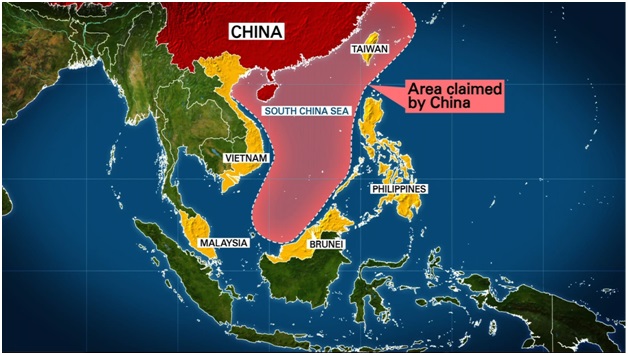
- The relationship between the Philippines and China has been strained for decades due to long-standing territorial disputes in the South China Sea.
- The Philippines claims sovereignty over several islands and reefs in the South China Sea, while China maintains a sweeping claim over the entire area, known as the "nine-dash line."
- These competing claims have led to numerous incidents of Chinese vessels blocking or harassing Philippine fishing boats and military vessels.
- In 2012, the Philippines filed an arbitration case against China under the United Nations Convention on the Law of the Sea (UNCLOS) challenging the legality of China's nine-dash line claim.
- In 2016, the Permanent Court of Arbitration ruled in favor of the Philippines, finding that China's nine-dash line claim had no legal basis.
- However, China has refused to accept the ruling.
- The South China Sea is a strategically important waterway, with an estimated $3.3 trillion in trade passing through it annually.
- It is also believed to be rich in natural resources, including oil and gas.
- The ongoing territorial disputes have raised tensions in the region and have the potential to escalate into conflict.
- In addition to the territorial disputes, there have been other issues that have strained relations between the Philippines and China including China's militarization of the South China Sea, its fishing practices in Philippine waters, and its human rights record.
Bilateral Relations Between India and the Philippines:
India and the Philippines have enjoyed a warm and cordial relationship since establishing diplomatic ties in 1949, shortly after both countries gained independence. The relationship is rooted in shared values of democracy, pluralism, and the rule of law, as well as a growing economic partnership.
Political and Strategic Cooperation:
- India and the Philippines have maintained regular high-level visits and engagements, fostering a strong political and strategic partnership.
- The two countries have cooperated on a range of issues, including maritime security, counterterrorism, and defense.
- Intensification of relations with the Philippines resulted from India’s Look East Policy (1992) and further diversified with the Act East Policy (2014).
Economic Partnership:
- India and the Philippines have a growing economic partnership, with bilateral trade reaching over $3 billion in 2022.
- India is currently the Philippines' fifteenth-largest trading partner.
- The two countries have signed several agreements to enhance economic cooperation, including the Comprehensive Economic Partnership Agreement (CEPA), which is expected to further boost trade and investment.
Cultural and People-to-People Exchanges:
- Both countries have active diaspora communities that contribute to cultural exchange and people-to-people linkages.
- India and the Philippines have signed agreements on cultural cooperation and education exchange.
Recent Developments:
- In recent years, India and the Philippines have elevated their relationship to a "Strategic Partnership."
- This reflects the growing convergence of their interests in the Indo-Pacific region and their commitment to promote a rules-based international order.
Key Areas of Cooperation:
- Maritime Security: India and the Philippines have a shared interest in maintaining peace and stability in the maritime domain.
- The two countries have conducted joint naval exercises and collaborated on maritime surveillance and information sharing.
- Counterterrorism: India and the Philippines have pledged to cooperate in combating terrorism and preventing the spread of violent extremism.
- They have shared intelligence and expertise in counterterrorism operations and training.
- Defense Cooperation: Key developments include the BrahMos missile deal, the establishment of a resident Defense Attache office in Manila, and the consideration of India's proposal for a concessional Line of Credit to fulfill the defense needs of the Philippines.
- Additionally, collaboration extends to maritime domain awareness (MDA), joint patrols, and the exchange of information.
- The two countries have also conducted joint military exercises to enhance interoperability and strengthen defense ties.
Japan and India's Involvement in Southeast Asia:
- Free and Open Indo-Pacific: A joint effort to counter China's growing assertiveness in the Indo-Pacific region.
- Free and Open Indo-Pacific is an umbrella term that encompasses Indo-Pacific-specific strategies of countries with similar interests in the region.
- Japan's Free and Open Indo-Pacific aligns with India's Indo-Pacific Oceans Initiative.
- Partnership with ASEAN: Strengthening economic, political, and cultural ties with ASEAN member nations.
- Infrastructure Development: Japan's Partnership for Quality Infrastructure involvement in Southeast Asian projects (ports, roads, and energy facilities).
- India also expresses interest in regional infrastructure projects.
- Connectivity Projects: Both nations actively promote connectivity, with India contributing through projects like the Trilateral Highway (connecting India, Myanmar, and Thailand).
- Economic Assistance: Providing economic assistance and development aid to support socio-economic growth in Southeast Asia.
- Assistance includes financial support, capacity building, and technology transfer.
- Security Cooperation: Engaging in security dialogues and joint military exercises with Southeast Asian countries.
- Collaborating on common security challenges such as maritime security and counter-terrorism.
- Human Resource Development: Joint efforts in human resource development programs, including scholarships and training opportunities.
- Aimed at enhancing skills and knowledge across various sectors.
- Regional Forums: Active participation in regional forums like the East Asia Summit (EAS) and ASEAN Regional Forum (ARF).
- Addressing regional challenges and fostering dialogue on a variety of issues.
India-Japan Relations:
The roots of the relationship trace back to ancient times when Buddhism was introduced to Japan in the 6th century. A robust partnership emerged from India's Look East Policy, evolving into a 'Special Strategic and Global Partnership' in 2014.
- Economic Cooperation: Strong trade and investment ties with significant bilateral investments.
- Initiatives like Delhi Mumbai Industrial Corridor (DMIC) and Neemrana Industrial Park for Japanese firms.
- Collaboration in the automobile sector, exemplified by Maruti Suzuki.
- Infrastructure Investment: Japan International Cooperation Agency (JICA) plays a pivotal role in investing in India's infrastructure projects.
- Contributions range from the Delhi Metro to water and sanitation projects.
- Strategic Cooperation: Shared commitment to a free, open, and inclusive Indo-Pacific.
- Highlighted in Japan's National Security Strategy (NSS-2022) and 2021 Acquisition and Cross-Servicing Agreement (ACSA).
- Defence Collaboration: Steadily growing cooperation in response to regional security challenges.
- Initiatives like the 2015 Agreements on the transfer of defence Equipment and Technology..
- In terms of security, India and Japan constantly engage in varied platforms ranging from regular bilateral military exercises and two-plus-two meetings to multilateral frameworks such as the Quad and the G20.
- Technology Partnership: Collaboration on cutting-edge technologies like robotics, artificial intelligence, and renewable energy.
- Examples include the India-Japan Digital Partnership (I-JDP) and cooperation in nuclear technology.
- Regional and Global Cooperation: Active collaboration on climate change, counterterrorism, and United Nations reforms.
- Joint development of the Asia-Africa Growth Corridor for economic collaboration and capacity-building in African countries.
- Cultural and People-to-People Ties: Promotion of tourism, educational exchanges, and scholarships.
- Initiatives like the Japan Exchange and Teaching (JET) Programme and the India-Japan Global Partnership Summit foster personal bonds between citizens.
Accordingly, as India is significantly deepening and broadening its ties with Southeast Asian countries, such as the Philippines, India should consider taking its third-country developmental model with Japan into the sub-region of the greater Indo-Pacific at a time when resident countries are looking for alternative sources of development and security amidst the polarising dynamics of the U.S.-China power competition.
Canada Needs to See India – Not Just the Diaspora (Indian Express)
- 22 Sep 2023
Why is it in News?
The Canadian Prime Minister's statement in Parliament, accusing Indian agents of the death of Hardeep Singh Nijjar, has significantly strained India-Canada relations. Rebuilding trust will necessitate a thorough and open political dialogue on the role and politicization of Canada's Indian diaspora and its impact on bilateral relations.
Recent Developments Leading to the Current Standoff:
- Death of Khalistan Tiger Force (KTF) Chief:
- Hardeep Singh Nijjar, wanted by the Indian government, was killed in a shooting in Surrey in June.
- The National Investigation Agency (NIA) had announced a Rs 10 lakh reward for Nijjar in 2022, accusing him of conspiring to kill a Hindu priest in Jalandhar, Punjab.
- G20 Summit Discussions:
- During the G20 Summit in Delhi, the Canadian PM and the Indian PM discussed Khalistani extremism.
- The Canadian PM raised concerns about foreign interference in Nijjar's murder and sought India's cooperation in the investigation.
- The Indian PM expressed deep concerns about ongoing anti-India activities by extremist elements in Canada.
- Canadian Parliament Statement and Diplomatic Expulsions:
- Canada's PM accused "agents of the Indian government" in Nijjar's killing.
- Canada expelled the top Indian diplomat, the head of RAW, from the country.
- In response, the Indian government summoned the High Commissioner of Canada and expelled a senior Canadian diplomat from India.
The Evolution of India-Canada Relations:
- During the Cold War:
- During the Cold War, India and Canada enjoyed a positive relationship, driven by their shared Commonwealth status and common views on the importance of the United Nations, multilateralism, and global development.
- However, differences arose during Cold War conflicts like Korea, Hungary, and Vietnam, straining relations. India's pursuit of a nuclear program also added complexity.
- Post-Cold War (1980s):
- Increasing immigration from India began to improve relations, but limited opportunities for trade and security cooperation hindered substantial diplomatic engagement.
- Post-1998:
- Significant efforts were made to reinvigorate the relationship after 1998 when Canada rejected India's nuclear status.
- Current Status:
- Today, the focal point of the relationship is investment and trade.
- However, it's important to note that certain segments of the diaspora community harbor strong negative sentiments towards India, reject its territorial integrity, and aim to fragment it.
Canada's Role in Straining India-Canada Relations:
- Failure to Address Anti-India Activities:
- Canada's reluctance to take action against anti-India activities on its soil has contributed to the deterioration of relations.
- The Canadian PM's emphasis on the rule of law overlooks the impact of individuals like Nijjar and his separatist associates, who have engaged in activities affecting both Canada and India.
- Instances of violence against Indian diplomats were not adequately addressed, and some individuals continued vandalizing places of worship in Canada while disregarding Indian legal processes, as seen during the farmer protests.
- Appeasement of Diaspora Politics:
- The Canadian government, both Liberal and Conservative parties, has shown sympathy toward Khalistani groups and other diaspora elements, influencing its foreign policy.
- These policies have accommodated diaspora groups using Canadian soil for activities that pose risks to the interests and security of other nations, notably India.
Significance and Hurdles in Engaging with the Indian Diaspora:
- Importance to the Indian Economy and Strategic Relations:
- The current Indian government has intensified diaspora engagement, encouraging them to invest in India's economic development.
- Wealthy NRIs play a crucial role in sending remittances, establishing networks, and contributing ideas to India.
- Diaspora support has strengthened India's strategic alliances, including with the US, and has furthered national initiatives like Make in India and Digital India.
- Challenges:
- The Indian government is concerned about the views of pro-Khalistan groups within the diaspora, which challenge India's territorial integrity and criticize its treatment of ethnic minorities.
- These challenges are growing, posing a significant issue for Indian foreign policy that traditionally had a strategic perspective on most diaspora groups.
- Indian PM's foreign visits are increasingly met with civil society groups advocating for human rights.
- Recent pro-Khalistan protests in the US, UK, Canada, and Australia have become
- increasingly contentious and sometimes violent.
Realigning India's Diaspora Engagement:
- The digital age has reshaped the way Indian immigrants connect with their homeland, influencing their political views, language preferences, and ideological inclinations.
- Ideas disseminated online can have cross-border consequences, as evident in the Khalistani context.
- In the era of social media, the impact and influence of diaspora groups are magnified.
- India should move beyond conventional approaches that emphasize engaging and mobilizing the Indian diaspora for national objectives.
- It's essential to recognize that certain groups actively oppose India's interests and foreign policy goals.
Steps to Improve India-Canada Relations:
- Focus on Engaging India, Not Diaspora Politics:
- The root cause of strained India-Canada relations lies in a problematic form of diaspora politics, where Canadian political parties engage with and appease groups involved in anti-India activities.
- Canadian governments should prioritize national security and foreign policy interests over short-term electoral gains, moving away from this type of diaspora politics.
- Ottawa should engage with New Delhi without viewing it solely through the lens of diaspora politics.
- Establish a Political Agreement:
- India is essential for Canada's Indo-Pacific strategy to remain relevant.
- Both nations have shared interests in upholding the international order, managing China's rise, collaborating on climate change, global health, and addressing challenges related to digital technologies.
- Addressing these challenges requires a political agreement that considers how both countries perceive Canada's Indian diaspora and curbs any negative influences, particularly those fueling India's separatist agenda.
In conclusion, bridging the gap between Ottawa and Delhi requires addressing India's concerns and establishing direct communication with India. This divide should be measured not only in terms of geography but also in terms of mindset.