
International Big Cat Alliance (IBCA)
- 09 May 2026
In News:
India is set to host the inaugural International Big Cat Alliance (IBCA) Summit in New Delhi from June 1st to 2nd, 2026.
Core Vision and the Delhi Declaration
The summit operates under the evocative theme: “Save Big Cats, Save Humanity, Save Ecosystem.” This underscores the ecological reality that big cats are "umbrella species"; by protecting their vast habitats, we inherently safeguard biodiversity, water security, and carbon sinks essential for human survival.
A primary outcome of this gathering will be the adoption of the ‘Delhi Declaration’. As the first global framework of its kind, the declaration aims to institutionalize:
- Transboundary Cooperation: Recognizing that wildlife does not adhere to political borders.
- Landscape-based Approaches: Moving beyond fragmented protected areas to holistic ecosystem management.
- Shared Priorities: Harmonizing anti-poaching protocols and habitat restoration efforts across range countries.
Genesis and Institutional Framework
The IBCA was envisioned by the Prime Minister of India in 2023, coinciding with the 50th anniversary of Project Tiger. Following its formal approval by the Union Cabinet in February 2024, the alliance was established through the National Tiger Conservation Authority (NTCA) under the Ministry of Environment, Forest & Climate Change (MoEFCC).
The IBCA is designed as a centralized global platform that serves three critical functions:
- Knowledge Repository: A digital and technical hub for sharing best practices in conservation.
- Expertise Exchange: Facilitating the transfer of technology and scientific research between nations.
- Financial Resource Mobilization: Funding localized conservation initiatives in developing range countries.
Target Species and Membership
The alliance focuses on the conservation of seven major big cat species: the Tiger, Lion, Leopard, Snow Leopard, Cheetah, Jaguar, and Puma. Out of these, India is the only nation in the world to provide a natural home to five of these species (excluding the Jaguar and Puma).
Currently, the alliance boasts 24 member countries and 5 observer countries (Kazakhstan, Namibia, Thailand, Ecuador, and Vietnam). Eligibility is inclusive, extending to all United Nations member countries, regardless of whether they are "range countries" (nations where these cats naturally reside) or "non-range countries" interested in supporting the cause.
The Crisis and the Need for IBCA
The initiative arises from an urgent ecological crisis. Big cat populations worldwide are plummeting due to:
- Habitat Loss and Fragmentation: Expanding infrastructure and agriculture are shrinking the territories these predators require.
- Poaching and Illegal Trade: High demand for body parts in various markets remains a persistent threat.
- Human-Wildlife Conflict: As habitats shrink, interactions between humans and predators often lead to retaliatory killings.
- Climate Change: Shifting weather patterns are altering the prey base and vegetation of sensitive ecosystems like the Himalayas (home to the Snow Leopard).
Financial Commitment and Future Outlook
To ensure the alliance’s initial viability, the Government of India has committed Rs. 150 crore for the period of 2023-2028. Beyond this initial corpus, the IBCA is actively exploring diverse funding streams, including bilateral and multilateral aid, as well as contributions from international donor organizations and the private sector.
For India, the IBCA is an extension of its domestic success with Project Tiger and Project Lion. By leading this alliance, India transitions from a regional conservation player to a global steward, providing a template for how the Global South can lead in environmental preservation through South-South cooperation and indigenous conservation models.
International Big Cat Alliance (IBCA)
- 18 Jun 2025
In News:
The first General Assembly of the International Big Cat Alliance (IBCA) was held in New Delhi, marking a significant moment in global biodiversity governance. Chaired by Union Environment Minister Bhupender Yadav, who was unanimously elected President of the IBCA, the event underscored India’s leadership in international wildlife conservation diplomacy.
What is IBCA?
- The International Big Cat Alliance (IBCA) is a multinational initiative launched by India in March 2024 to conserve the world’s seven major big cat species—Tiger, Lion, Leopard, Snow Leopard, Cheetah, Jaguar, and Puma—through collective action, knowledge exchange, and capacity building.
- It is coordinated by the National Tiger Conservation Authority (NTCA) under the Ministry of Environment, Forest and Climate Change (MoEFCC).
- The Alliance was conceptualized following Prime Minister Narendra Modi’s announcement during the 50th anniversary of Project Tiger in April 2023.
Objectives of IBCA
- Promote global collaboration for the protection and conservation of big cats.
- Replicate successful conservation practices across member nations.
- Create a common pool of financial, technical, and institutional resources.
- Address gaps in capacity building, financing, and data sharing.
- Link conservation efforts with livelihood enhancement and climate resilience in big cat habitats.
- Strengthen efforts against poaching and illegal wildlife trade through joint surveillance and data exchange.
Membership
- 95 Range Countries (where the species naturally occur) are eligible to join.
- By September 2024, 25 countries including Bangladesh, Nigeria, Peru, and Ecuador had joined.
- Membership is open to all UN member states through a Note Verbale.
- The IBCA attained legal status after five countries—Nicaragua, Eswatini, India, Somalia, and Liberia—signed the Framework Agreement.
Key Functions of IBCA
- Shared Repository: Compilation of proven conservation strategies for scalable, science-based solutions.
- Training and Capacity Building: Organizes technical workshops and institutional exchanges.
- Scientific and Policy Support: Funds research, drives policy reforms, and raises awareness.
- Technological Innovation: Introduces advanced tools to tackle habitat degradation and prey base decline.
- Sustainable Livelihoods: Integrates conservation with community-based development models.
- Anti-Poaching Collaboration: Facilitates real-time data sharing and joint actions against wildlife trafficking.
Highlights from the 2025 General Assembly
- Venue: New Delhi, India
- Participating Nations: Ministerial delegations from nine countries including Bhutan, Cambodia, Kazakhstan, Liberia, Suriname, Somalia, Republic of Guinea, Eswatini, and India.
- Institutional Milestones:
- India ratified as the permanent headquarters of IBCA.
- The Headquarters Agreement was formally ratified, enabling the establishment of IBCA offices in India.
- Leadership: Bhupender Yadav, India’s Environment Minister, was elected as the first President of IBCA.
- Funding Commitment: India pledged ?150 crore (2023–28) to support IBCA’s establishment, coordination, and conservation activities.
Significance for India and the Global South
- Reinforces India’s role as a conservation leader and soft power in environmental diplomacy.
- Positions India as the epicentre for global big cat conservation, akin to its leadership in tiger conservation under Project Tiger.
- Encourages South-South cooperation in biodiversity preservation.
- Aligns with global commitments like CBD, CITES, and SDG 15 (Life on Land).
International Big Cat Alliance (IBCA)
- 19 Mar 2025
In News:
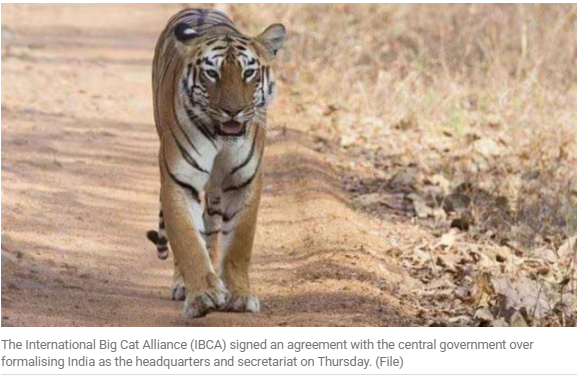
The International Big Cat Alliance (IBCA), a treaty-based intergovernmental organisation dedicated to the conservation of seven major big cat species, has officially signed an agreement with the Government of India, establishing India as the permanent host of its headquarters and secretariat.
Background and Launch
- Launched: April 2023 by Prime Minister Narendra Modi during the 50th anniversary celebrations of Project Tiger.
- Objective: To facilitate global cooperation for the conservation of seven big cats:Tiger, Lion, Leopard, Snow Leopard, Cheetah, Puma, andJaguar.
- The IBCA is implemented through the National Tiger Conservation Authority (NTCA) under the Ministry of Environment, Forest and Climate Change (MoEFCC).
International Status and Membership
- The IBCA became a treaty-based intergovernmental alliance after five countries ratified the framework agreement:India, Liberia, Eswatini, Somalia, andNicaragua.
- India formally joined the IBCA in September 2023.
- The alliance is open to all UN Member States, including:
- Range countries (where big cats are native), and
- Non-range countries that wish to support conservation efforts globally.
Headquarters and Agreement
- On March 28, 2024, the Union Cabinet approved the establishment of the IBCA headquarters in India.
- An agreement was signed in May 2024 between the IBCA and the Indian government, outlining:
- Privileges and immunities for IBCA personnel,
- Visa facilitation, and
- Operational and legal provisions for the headquarters.
Funding and Support
- India has committed a total of ?150 crore (2023–2028) for:
- Creating a corpus fund,
- Building infrastructure, and
- Meeting recurring expenditures over five years.
INDIA JOINS THE INTERNATIONAL BIG CAT ALLIANCE (IBCA)
- 21 Sep 2024
In News:
India formally joined the International Big Cat Alliance (IBCA), launched by Prime Minister Narendra Modi on April 9, 2023, during the 50th anniversary of Project Tiger.
- Objective: The IBCA aims to conserve the world's seven big cat species: tiger, lion, leopard, snow leopard, cheetah, jaguar, and puma, focusing on their protection and natural habitats.
- Founding Members: India joins Nicaragua, Eswatini, and Somalia as founding members of the IBCA, which will collaborate with 24 countries and nine organizations.
- Headquarters: The IBCA will be headquartered in India, facilitating efforts to protect big cats and their ecosystems.
Purpose and Goals of IBCA
- Conservation Focus: The alliance addresses common challenges in the protection of the seven big cats, promoting sustainable resource use and tackling climate change.
- Collaboration and Support: The IBCA will provide a platform for member nations to share knowledge, expertise, and support recovery efforts in potential habitats.
- Mobilization of Resources: The alliance aims to mobilize financial and technical resources for effective conservation strategies based on global experiences.
Background and Evolution
- Inception: PM Modi proposed an international initiative against poaching and illegal wildlife trade in 2019, advocating for collaboration among tiger range countries.
- Extension of Project Tiger: The IBCA serves as an extension of India's long-standing commitment to wildlife protection, initially exemplified by the launch of Project Tiger in 1973.
Big Cat Species Overview
- Tiger (Endangered)
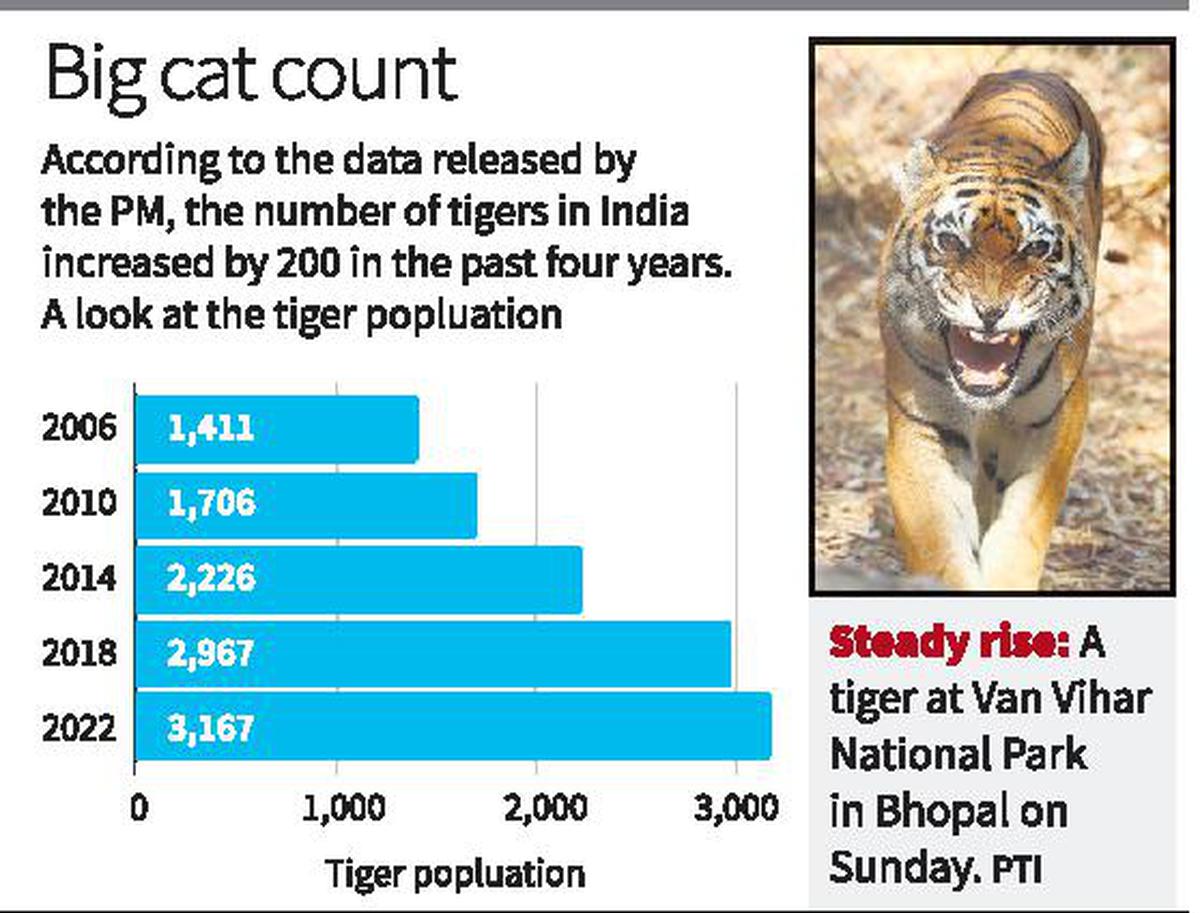
- Population: Approx. 3,167 in India, accounting for over 75% of the global population.
- Threats: Habitat loss, poaching, and climate change impacting their territory.
- Lion (Vulnerable)
- Population: Estimated 700 in India.
- Threats: Habitat reduction and targeted poaching.
- Leopard (Near Threatened)
- Population: Around 13,000 in India, with approximately 250,000 globally.
- Threats: Habitat loss and human-wildlife conflict.
- Snow Leopard (Vulnerable)
- Population: 400-700 in India, with global estimates of 4,000-6,500.
- Threats: Poaching, habitat loss, and human disturbances.
- Cheetah (Vulnerable)
- Population: Declined to less than 7,000 globally; declared extinct in India in 1952.
- Threats: Habitat loss, climate change, and illegal trafficking.
- Jaguar (Near Threatened)
- Population: Approximately 173,000 globally, primarily in South America.
- Threats: Deforestation, illegal hunting, and habitat fragmentation.
- Puma (Near Threatened)
- Population: Estimated 50,000, experiencing a decline.
- Threats: Habitat loss and human-wildlife conflict.
Future Initiatives
- Translocation Efforts: Following successful cheetah translocations from Namibia and South Africa, India plans to explore similar initiatives for other big cats.
- Global Cooperation: The IBCA will strengthen conservation efforts by working with a broader network of range countries to combat poaching and promote habitat preservation.
India to set up International Big Cat Alliance
- 01 Mar 2024
Why is it in the News?
The Union Environment Ministry plans to set up and coordinate an International Big Cat Alliance (IBCA), along the lines of the International Solar Alliance, an India-headquartered initiative to promote solar installations globally.
About the International Big Cat Alliance (IBCA):
- The idea of the International Big Cat Alliance (IBCA) was first given by Prime Minister Modi during his speech on the occasion of Global Tiger Day in 2019.
- He called for developing an alliance of global leaders to curb poaching in Asia.
- The alliance was formally announced on April 9, 202, in Mysuru, as India commemorated the completion of 50 years of Project Tiger.
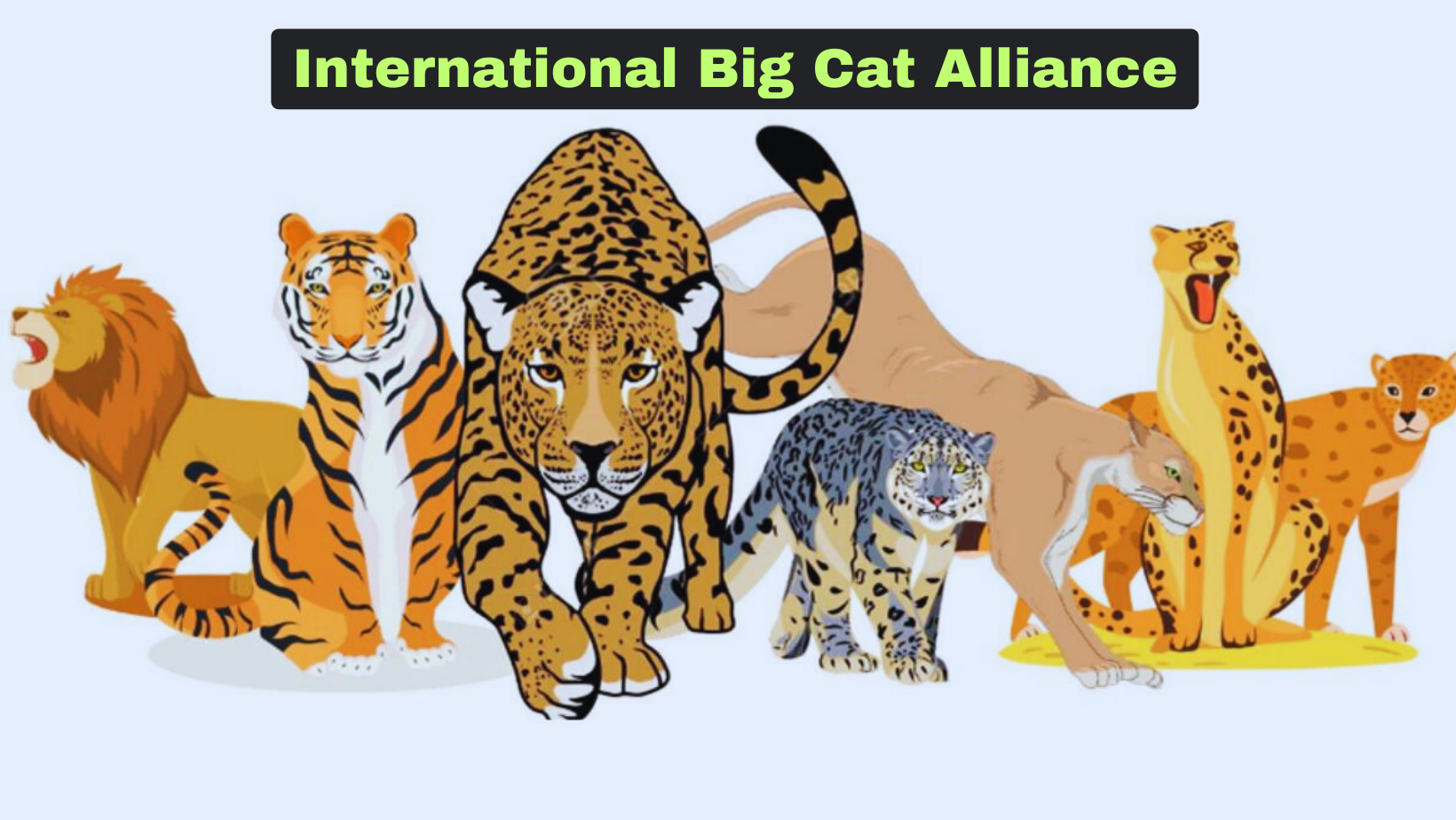
- The alliance will focus on the conservation of seven big cats, which include Tiger, Lion, Leopard, Snow Leopard, Puma, Jaguar, and Cheetah. Out of these, five are found in India.
- Membership to the IBCA is open to 97 'range' countries, encompassing the natural habitats of these big cats, as well as other interested nations and international organizations.
- The alliance aims to facilitate cooperation among countries to advance the conservation agenda for mutual benefit.
- Operating with a multifaceted approach, the IBCA endeavours to establish robust linkages across various domains, including knowledge sharing, capacity building, networking, advocacy, financial and resource support, research, technical assistance, education, and awareness.
- Governance of the alliance consists of a General Assembly comprising all member countries, a Council comprised of seven to fifteen member countries elected by the General Assembly for a five-year term, and a Secretariat.
- The IBCA Secretary General, appointed by the General Assembly upon the Council's recommendation, serves a specific term.
- To support its initiatives, the IBCA has secured initial funding of Rs. 150 crore from the Government of India for the period spanning from 2023-24 to 2027-28.