
Project Astra
- 20 May 2024
Why is it in the News?
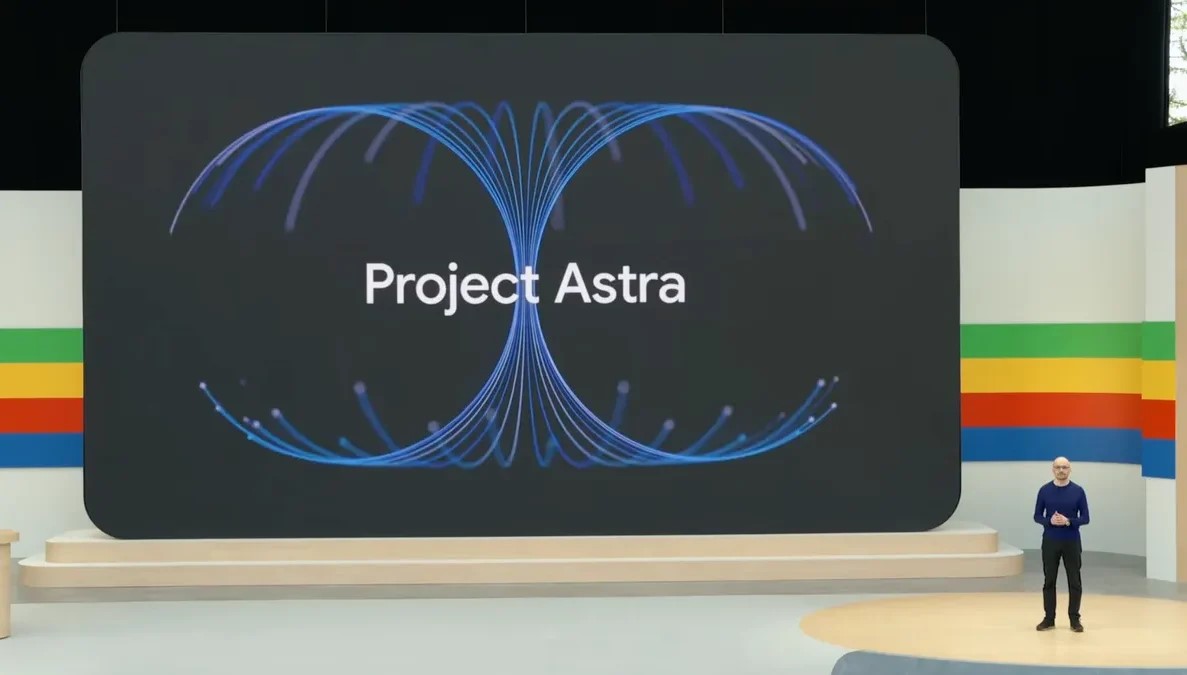
Recently, during the company's annual developer conference, Google unveiled an early version of Project Astra.
What is Project Astra?
- Project Astra is an experimental “multimodal” AI assistant developed by Google DeepMind.
- It's designed to be a versatile tool that can understand and respond to information from the real world through various means, like text, voice, images, and even videos.
- This makes it different from current AI assistants that mostly rely on internet searches and user input.
- Building on Google’s Gemini language model, Astra has multimodal capabilities to perceive visuals, sounds, and other real-world inputs.
- The aim is to create a universal AI helper that seamlessly assists us in daily life by comprehending the actual environment through sight and sound, not just text.
- Astra represents Google’s vision for next-gen AI assistants.
Key Features of Google's Project Astra:
- Visual Understanding: Astra can interpret and analyze visual input from its camera feed.
- It identifies objects, reads text, and describes scenes and environments in detail, allowing users to show Astra something and ask questions about it.
- Voice Interaction: Astra supports natural conversation without the need to repeatedly use wake words.
- It comprehends context and facilitates back-and-forth dialogue, even allowing users to interrupt its responses.
- Remembering Context: Astra retains memory of previous conversation parts, objects it has seen, and information provided by the user.
- This contextual awareness enhances the fluidity of interactions.
- Multimodal Integration: Astra integrates visual and auditory inputs to form a comprehensive understanding of the current situation, correlating what it sees and hears to fully grasp the context.
- Real-Time Assistance: Astra delivers real-time assistance by rapidly processing sensor data and queries, ensuring a responsive and interactive user experience.
What are Multimodal AI Models?
- Multimodal AI models are advanced artificial intelligence systems that process and integrate multiple types of data inputs, such as text, images, audio, and video, to develop a comprehensive understanding of context.
- By combining these different modalities, these models enhance their ability to interpret complex scenarios more accurately than unimodal systems.
- For instance, in autonomous vehicles, multimodal AI uses data from cameras, lidar, radar, and GPS for better navigation.
- In healthcare, these models integrate medical images with patient history for improved diagnostics.
- Applications also include virtual assistants, which understand and respond to spoken commands while recognizing objects in images, and educational tools that combine text, video, and interactive content for richer learning experiences.
- Multimodal AI models are often implemented using deep learning techniques, which allow the model to learn complex representations of the different data modalities and their interactions.
- As a result, these models can capture the rich, diverse information present in real-world scenarios, where data often comes in multiple forms.
AlphaFold 3
- 09 May 2024
Why is it in the News?
Google Deepmind has unveiled the third major version of its “AlphaFold” artificial intelligence model, designed to help scientists design drugs and target diseases more effectively.
About AlphaFold 3:
- AlphaFold 3 is a major advancement in artificial intelligence created by Google's DeepMind in collaboration with Isomorphic Labs.
- It's essentially a powerful tool that can predict the structures and interactions of various biological molecules such as:
- Predict structures of biomolecules: Unlike previous versions that focused on proteins, AlphaFold 3 can predict the 3D structure of a wide range of molecules, including DNA, RNA, and even small molecules like drugs (ligands).
- This is a significant leap in understanding how these molecules function.
- Model molecular interactions: AlphaFold 3 goes beyond just structure prediction.
- It can also model how these molecules interact with each other, providing valuable insights into cellular processes and disease mechanisms.
The potential applications of AlphaFold 3 are vast. It has the potential to revolutionize fields like:
- Drug discovery: By understanding how drugs interact with their targets, researchers can design more effective medications.
- Genomics research: AlphaFold 3 can help scientists understand the function of genes and how mutations can lead to disease.
- Materials science: By modelling the interactions between molecules, scientists can design new materials with specific properties.
- AlphaFold 3 is a significant breakthrough and is freely available for non-commercial use through AlphaFold Server.
- This makes this powerful tool accessible to researchers around the world, potentially accelerating scientific advancements.
Google Deepmind’s new AI that can play video games with you
- 16 Mar 2024
Why is it in the News?
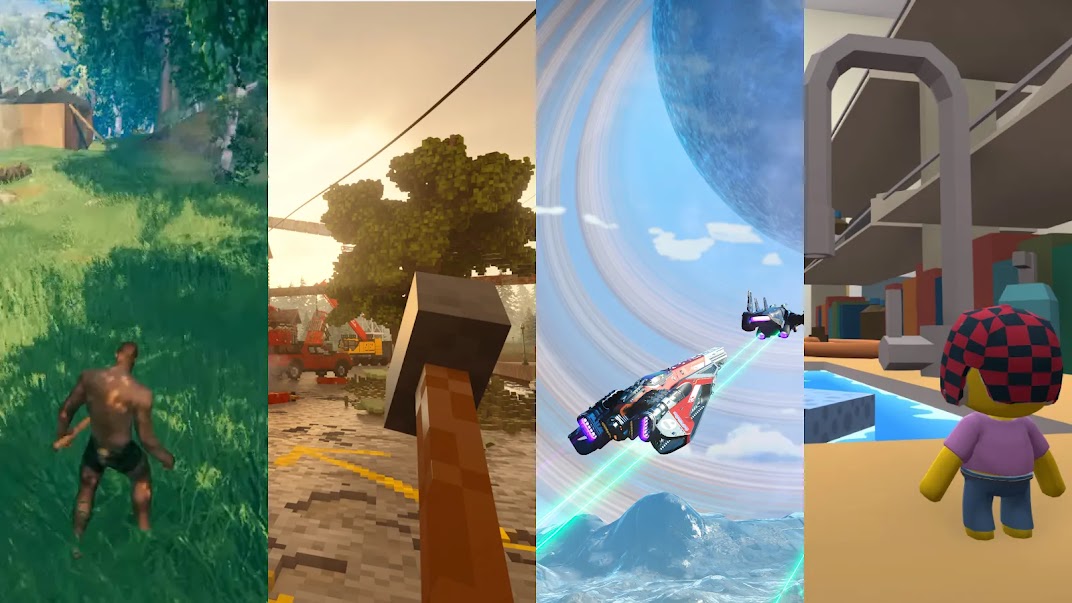
Google DeepMind recently revealed its latest AI gaming agent called SIMA or Scalable Instructable Multiworld Agent, which can follow natural language instructions to perform tasks across video game environments.
What is SIMA?
- Scalable Instructable Multiworld Agent (SIMA) is an AI Agent, which is different from AI models such as OpenAI’s ChatGPT or Google Gemini.
- AI models are trained on a vast data set and are limited when it comes to working on their own.
- On the other hand, an AI Agent can process data and take action themselves.
- SIMA can be called a generalist AI Agent that is capable of doing different kinds of tasks.
- It is like a virtual buddy who can understand and follow instructions in all sorts of virtual environments – from exploring mysterious dungeons to building lavish castles.
- It can accomplish tasks or solve challenges assigned to it.
- It is essentially a super-smart computer program that can be thought of as a digital explorer, having the ability to understand what you want and help create it in the virtual world.
How does SIMA work?
- SIMA can understand commands as it has been trained to process human language.
- So when we ask it to build a castle or find the treasure chest, it understands exactly what these commands mean.
- One distinct feature of this AI Agent is that it is capable of learning and adapting.
- SIMA does this through the interactions it has with the user.
- The more we interact with SIMA, the smarter it gets by learning from its experiences and improves over time.
- This makes it better at understanding and fulfilling user requests.
- Based on the current stage of AI development, it is a big feat for an AI system to be able to play even one game.
- However, SIMA goes beyond that and can follow instructions in a variety of game settings.
- This could potentially introduce more helpful AI agents for other environments.
Google unveils Genie AI which can create video games from text and image prompts
- 28 Feb 2024
Why is it in the News?
Recently, Google DeepMind unveiled Genie, a novel model capable of creating interactive video games based solely on textual or image prompts.
What is Genie AI?
- Genie is a foundation world model that is trained on videos sourced from the Internet.
- The model can “generate an endless variety of playable (action-controllable) worlds from synthetic images, photographs, and even sketches.”
- It is the first generative interactive environment that has been trained in an unsupervised manner from unlabelled internet videos.
- When it comes to size, Genie stands at 11B parameters and consists of a spatiotemporal video tokenizer, an autoregressive dynamics model, and a simple and scalable latent action model.
- These technical specifications let Genie act in generated environments on a frame-by-frame basis even in the absence of training, labels, or any other domain-specific requirements.
What does Genie do?
- Genie is a new kind of generative AI that enables anyone – even children – to dream up and step into generated worlds similar to human-designed simulated environments.
- It can be prompted to generate a diverse set of interactive and controllable environments although it is trained on video-only data.
- It is a breakthrough as it makes playable environments from a single image prompt.
- According to Google DeepMind, Genie can be prompted with images it has never seen.
- This includes real-world photographs, and sketches, allowing people to interact with their imagined virtual worlds.
- When it comes to training, they focus more on videos of 2D platformer games and robotics.
- Genie is trained on a general method, allowing it to function on any type of domain, and it is scalable to even larger Internet datasets.
Why is it Important?
- The standout aspect of Genie is its ability to learn and reproduce controls for in-game characters exclusively from internet videos.
- This is noteworthy because internet videos do not have labels about the action that is performed in the video, or even which part of the image should be controlled.
- It allows you to create an entirely new interactive environment from a single image.
- This opens up many possibilities, especially new ways to create and step into virtual worlds.
- With Genie, anyone will be able to create their own entirely imagined virtual worlds.
How Google DeepMind’s AI breakthrough could revolutionise chip, and battery development (Indian Express)
- 08 Dec 2023
Why is it in the News?
Earlier this year, a South Korean laboratory unveiled a significant advancement that holds promise as a potential solution to the energy crisis.
What is Google DeepMind's Project?
- Google has introduced the Graph Networks for Materials Exploration (GNoME), an AI tool developed by DeepMind.
- Leveraging Artificial Intelligence, GNoME successfully predicted the structures of over 2 million new materials.
- The potential applications span diverse sectors, including renewable energy, battery research, semiconductor design, and enhanced computing efficiency.
How does GNoME operate?
- GNoME functions as an advanced graph neural network model (GNN), where input data takes the form of a graph resembling connections between atoms.
- The model employs 'active learning,' initially training on a small specialized dataset and later incorporating new targets for machine learning with human assistance.
- This adaptability suits the algorithm well for material discovery, as it involves identifying patterns not present in the original dataset.
Operational Mechanism of GNoME:
- GNoME employs two pipelines for discovering stable materials with low energy.
- The structural pipeline generates candidates with structures akin to known crystals, while the compositional pipeline follows a more randomized approach based on chemical formulas.
- Outputs from both pipelines undergo evaluation using established Density Functional Theory calculations, contributing to the GNoME database and guiding subsequent rounds of active learning.
- Consequently, the model has significantly improved its precision rate for predicting material stability, reaching around 80%, up from an initial 50%.
- DeepMind's research, encompassing 380,000 stable predictions, is equivalent to nearly 800 years of knowledge, facilitating further breakthroughs in materials discovery for researchers.
What is the Significance of GNoME?
- This breakthrough in artificial intelligence dramatically expands the inventory of 'stable materials,' multiplying it by tenfold in a single stride.
- These materials encompass inorganic crystals crucial for a spectrum of modern technologies, from computer chips to batteries.
- Stability is paramount for these crystals, as any instability could lead to decomposition.
- While the synthesized and tested processes still lie ahead, DeepMind has shared a curated list of 381,000 crystal structures from the predicted 2.2 million, offering a promising foundation for advancing new technologies.
- In comparison, human experimentation over the last decades has revealed the structures of around 28,000 stable materials, catalogued in the Inorganic Crystal Structures Database, representing a noteworthy advancement in material discovery.