
ATC Automation Failure at Delhi IGI Airport
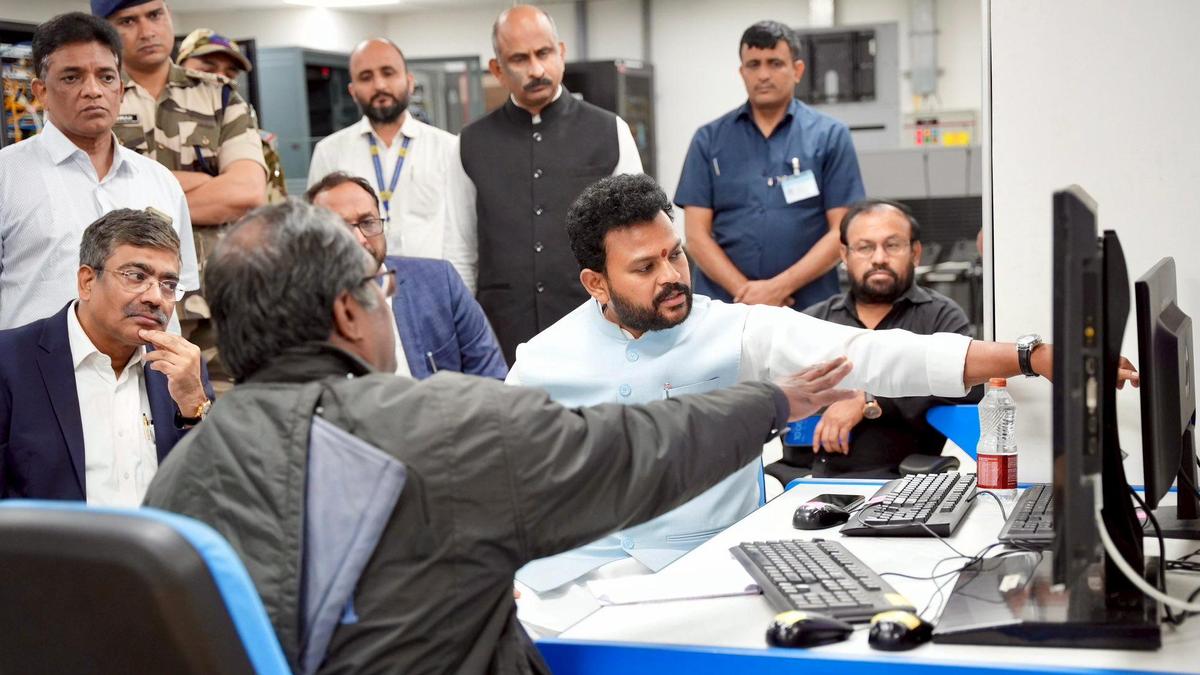
- 20 Nov 2025
In News:
In November 2025, air traffic operations at Indira Gandhi International Airport, India’s busiest aviation hub, were severely disrupted due to a prolonged technical failure in the Automatic Message Switching System (AMSS). The outage, which lasted for more than 24 hours, delayed over 800 flights and had cascading effects across the national aviation network. While flight safety was not compromised, the incident exposed critical vulnerabilities in India’s air traffic control (ATC) automation infrastructure and underscored the urgency of systemic modernisation.
Role of AMSS in Air Traffic Management
AMSS functions as the core communication backbone of ATC operations in major Indian metros such as Delhi, Mumbai, Chennai and Kolkata. It automatically receives, stores and routes vital aeronautical messages via the Aeronautical Fixed Telecommunications Network (AFTN) and its modern successor, the Aeronautical Message Handling System (AMHS). These messages include flight plans, departure and arrival updates, NOTAMs, meteorological data and coordination messages between airlines and controllers. Crucially, AMSS feeds data into the Flight Data Processing System (FDPS), which enables ATC automation.
When AMSS failed at Delhi, controllers could see aircraft on radar but lacked access to flight plan data such as routes, altitudes and timings. As a result, more than 2,500 daily aircraft movementsincluding scheduled flights and overflightshad to be managed manually, significantly slowing operations and increasing workload.
Causes and Vulnerabilities
Preliminary assessments point to synchronisation failure between primary and standby servers, delayed system switchover and corrupted message queues. These issues were aggravated by structural weaknesses in the system: legacy server architecture supplied by a foreign vendor, outdated message-switching software, limited redundancy and poor integration with automation and network routers. A shortage of specialised local technical expertise further delayed resolution.
The incident corroborated warnings raised earlier by the Air Traffic Controllers’ Guild and echoed in the Parliamentary Standing Committee’s 380th Report (August 2025), which flagged performance degradation, system lag and outdated functionalities in ATC automation at major airports.
Broader Implications
India’s air traffic systems lag behind global benchmarks such as Federal Aviation Administration and Eurocontrol, which deploy AI-enabled conflict detection, predictive traffic flow analytics and seamless real-time data sharing. In India, the absence of such tools forces Air Traffic Controllers to compensate manually, increasing cognitive load and the risk of human error. With air traffic volumes growing rapidly, these technological gaps constrain airspace capacity and operational efficiency.
Compounding concerns were reports of possible GPS spoofing incidents around the same time, prompting an inquiry by national security authorities. Though no direct causal link was established, the coincidence highlighted the need for resilient systems capable of handling concurrent technological disruptions.
Government Response and Way Forward
The Ministry of Civil Aviation directed the Airports Authority of India to conduct a root-cause analysis, install additional backup servers and accelerate migration from AMSS to a modern, nationwide AMHS-based system with automatic failover. Plans also include deploying ADS-B ground stations, enhancing automation tools and shifting towards satellite-based navigation.
Conclusion
The Delhi IGI ATC glitch was not merely a technical failure but a systemic warning. It revealed the risks of operating critical national infrastructure on aging technology amid surging traffic volumes. For India to sustain safe, efficient and globally competitive aviation growth, urgent, comprehensive modernisation of air traffic managementcombining redundancy, advanced analytics and skilled manpoweris indispensable.