
Surrogacy (Regulation) Act, 2021: Legal Framework and Recent Supreme Court Intervention
- 14 Jul 2026
In News:
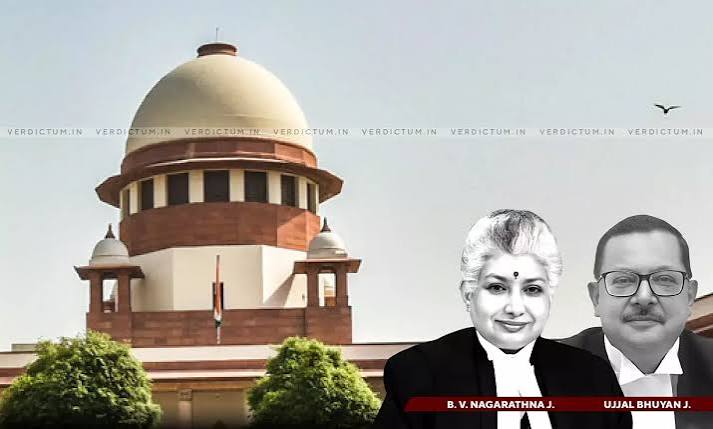
The Supreme Court recently protected the reproductive rights of a woman suffering from Mayer Rokitansky Kuster Hauser (MRKH) Syndrome by staying the operation of a rule under the Surrogacy (Regulation) Rules, 2022, which prohibited the use of donor gametes for surrogacy. The Court observed that the amendment appeared to be inconsistent with the objectives of the Surrogacy (Regulation) Act, 2021.
What is Surrogacy?
The Surrogacy (Regulation) Act, 2021 defines surrogacy as an arrangement in which a woman carries and gives birth to a child with the intention of handing over the child to the intending couple after birth.
The Act permits only altruistic surrogacy, where no monetary compensation is provided beyond medical expenses and insurance. Commercial surrogacy, including any form of sale, exploitation or trafficking of women or children, is prohibited.
A child born through surrogacy is deemed to be the biological child of the intending couple for all legal purposes.
Key Provisions of the Act
Eligibility of the Intending Couple
The intending couple must:
- Be legally married for at least five years.
- Wife should be 25–50 years and husband 26–55 years.
- Have no living biological, adopted or surrogate child, except where the existing child suffers from a life-threatening illness or severe physical or mental disability.
- Obtain Certificates of Eligibility and Essentiality, including proof of infertility certified by a District Medical Board, a Magistrate's order regarding parentage and custody, and 16 months of insurance for the surrogate mother.
Eligibility of the Surrogate Mother
The surrogate must:
- Be a close relative of the intending couple.
- Be a married woman with at least one biological child.
- Be 25–35 years of age.
- Act as a surrogate only once in her lifetime.
- Obtain medical and psychological fitness certificates.
Regulatory Framework
The Act provides for the establishment of the National Surrogacy Board (NSB) and State Surrogacy Boards (SSBs) to regulate surrogacy clinics, enforce standards and investigate violations. Commercial surrogacy, sale of embryos, abandonment of surrogate children and exploitation attract penalties of up to 10 years' imprisonment and a fine up to ?10 lakh.
Recent Supreme Court Case
The petitioner was diagnosed with MRKH Syndrome, a rare congenital condition involving the absence of the uterus and ovaries, making natural conception impossible.
The couple had initiated gestational surrogacy using donor eggs before the March 2023 amendment to the Surrogacy Rules, which mandated that intending couples must use their own gametes, effectively prohibiting donor gametes.
The petitioner argued that:
- The amendment could not be applied retrospectively.
- It contradicted the objectives of the Surrogacy Act, 2021, which recognises congenital conditions such as the absence of the uterus as valid grounds for gestational surrogacy.
- The restriction violated a woman's right to parenthood.
The Union Government contended that surrogacy under the Act requires the child to be genetically related to the intending couple.
Supreme Court's Observations
The Court held that the amendment appeared prima facie inconsistent with the parent legislation. It observed that the Surrogacy Act is fundamentally woman-centric, recognising medical conditions that make pregnancy impossible. The Court further noted that requiring genetic linkage with both parents would defeat the purpose of permitting gestational surrogacy in such exceptional cases. It also clarified that a child conceived through the husband's gametes would still satisfy the requirement of being genetically related to the intending couple.
Regulating Synthetic Media: India’s Amendments to the IT Rules, 2021

- 12 Feb 2026
In News:
The Union Government has notified amendments to the Information Technology (Intermediary Guidelines and Digital Media Ethics Code) Rules, 2021, effective February 20, 2026, aimed at regulating AI-generated (synthetic) content and significantly compressing takedown timelines for unlawful material. The reforms seek to address the growing challenge of non-consensual deepfakes, intimate imagery and AI-driven misinformation, while strengthening intermediary accountability under the IT Act, 2000.
Key Amendments
1. Sharp Reduction in Takedown Timelines
The amendments drastically compress content removal timelines:
- Court/Government-declared illegal content: 3 hours (earlier 24–36 hours)
- Non-consensual intimate imagery/deepfakes: 2 hours (earlier 24 hours)
- Other unlawful content: 3 hours (earlier 36 hours)
The government argues that earlier timelines failed to prevent virality and that major platforms possess sufficient technological capacity for rapid moderation. However, critics highlight operational challenges in determining “illegality” within such narrow windows, raising concerns of defensive over-censorship.
2. Mandatory Labelling of AI-Generated Content
The Rules introduce a legal definition of “Synthetically Generated Information (SGI)”—audio, visual or audiovisual content artificially created or altered using computer resources in a manner that appears real.
Key provisions include:
- AI-generated content must be labelled “prominently”.
- The earlier proposal mandating labels to occupy 10% of image space has been diluted.
- Platforms must require user disclosure of AI-generated content.
- Intermediaries must proactively deploy reasonable technical measures to prevent unlawful synthetic content.
Routine editing and good-faith quality enhancements are excluded from the definition, narrowing regulatory scope.
Safe Harbour and Intermediary Liability
Under Section 79 of the IT Act, 2000, intermediaries enjoy “safe harbour” protection from liability for user-generated content, provided they exercise due diligence. The amendments clarify that failure to act against unlawful synthetic content may amount to a breach of due diligence, potentially leading to loss of safe harbour protection. This significantly increases compliance pressure on digital platforms.
Administrative and Federal Dimensions
The amendments also permit States to appoint multiple authorised officers for issuing takedown directions, reversing earlier restrictions. This strengthens decentralised enforcement and enhances administrative responsiveness in populous states.
Trigger Events and Global Context
The urgency of regulation follows global controversies, including AI platforms generating non-consensual intimate images. Such incidents raised concerns regarding privacy violations, gender dignity, misinformation and democratic integrity. India’s amendments thus align with broader international debates on AI governance and platform accountability.
Constitutional and Governance Concerns
The reforms operate at the intersection of competing constitutional values:
- Article 21 (Right to Privacy and Dignity): Faster removal of non-consensual deepfakes strengthens protection of personal dignity.
- Article 19(1)(a) (Freedom of Speech): Extremely short timelines may chill legitimate expression, as platforms could resort to precautionary takedowns.
Key challenges include determining illegality within hours, technological burden on smaller intermediaries, risks of over-removal, and the need for clarity in law enforcement communications.
Way Forward
To ensure balanced regulation:
- Develop clearer standards for determining illegality.
- Establish independent review or appellate mechanisms.
- Strengthen indigenous AI detection tools under national AI initiatives.
- Harmonise implementation with the Digital Personal Data Protection framework.
- Build capacity of state enforcement authorities.
Conclusion
India’s amended IT Rules mark a decisive shift toward proactive regulation of AI-driven digital harms. While the framework strengthens privacy and platform accountability, its long-term success depends on calibrated enforcement, institutional safeguards against overreach and technological readiness to balance innovation with constitutional freedoms.
Supreme Court on Tribunal Reforms Act, 2021
- 21 Nov 2025
In News:
In a landmark judgment delivered in November 2025, the Supreme Court of India struck down key provisions of the Tribunal Reforms Act, 2021, holding them unconstitutional for violating the principles of judicial independence, separation of powers, and equality before law. The Court also directed the Union Government to establish a National Tribunal Commission (NTC) within four months, terming it an “essential structural safeguard” for the tribunal system.
Background: Tribunal Reforms Act, 2021
The Tribunal Reforms Act was enacted in August 2021, soon after the Supreme Court had struck down the Tribunal Reforms (Rationalisation and Conditions of Service) Ordinance, 2021. The Act sought to:
- Abolish several specialised tribunals and transfer their functions to High Courts.
- Centralise appointments and service conditions of tribunal members.
- Fix short tenures (4 years), impose a minimum age of 50 years, and empower the executive to frame rules on salaries and allowances.
The stated objectives were efficiency, uniformity, and rationalisation. However, critics argued that it enhanced executive dominance over tribunals where the Union Government is often the largest litigant.
Supreme Court’s Key Findings
A Bench led by the Chief Justice held that the Act amounted to an impermissible “legislative override” of binding Supreme Court judgments, particularly the Madras Bar Association (MBA) IV & V cases. The Court noted that Parliament had merely “repackaged” provisions already struck down, without curing the underlying constitutional defects.
The Court struck down provisions that:
- Reintroduced a 4-year tenure, undermining security of office.
- Fixed a minimum age of 50 years, excluding younger advocates and experts.
- Allowed the executive to choose from a panel of names, diluting the role of independent selection committees.
- Tied service conditions of tribunal members to those of civil servants.
The Bench emphasised that norms on tenure, age limits, qualifications, and appointment procedures are not abstract judicial preferences but constitutional requirements flowing from Articles 323A and 323B, read with Article 14 and the basic structure doctrine.
National Tribunal Commission: Court’s Direction
The Court directed the Centre to establish a National Tribunal Commission within four months. The NTC is envisaged as an independent body responsible for:
- Appointments and evaluation of tribunal members.
- Administration, infrastructure, and staffing of tribunals.
- Ensuring uniform standards and insulating tribunals from day-to-day executive control.
Until a fresh, constitution-compliant law is enacted, the safeguards laid down in the MBA judgments will continue to govern tribunal functioning.
Significance of the Judgment
- Reaffirmation of Judicial Independence: The ruling reinforces that tribunals, though statutory, perform core judicial functions and must remain free from executive influence.
- Limits on Parliamentary Power: While Parliament can legislate on tribunals, it cannot nullify or bypass constitutional defects identified by the Supreme Court through re-enactment.
- Protection of Separation of Powers: By rejecting executive dominance in appointments and service conditions, the Court preserved the balance among organs of the State.
- Institutional Reform through NTC: The judgment revives the long-pending idea of a National Tribunal Commission as a systemic solution rather than ad hoc reforms.
Way Forward
The verdict underscores the need for a fresh tribunal law aligned with constitutional principles—ensuring reasonable tenure (at least five years), transparent and merit-based appointments, and institutional autonomy. Strengthening tribunals through the NTC, rather than weakening them or overburdening High Courts, is essential for delivering speedy, specialised, and impartial justice.
Conclusion
The Supreme Court’s decision is a decisive assertion of constitutional supremacy and a reminder that efficiency-driven reforms cannot come at the cost of judicial independence. By striking down the Tribunal Reforms Act, 2021, and mandating the creation of a National Tribunal Commission, the Court has laid down a principled roadmap for sustainable and constitutionally compliant tribunal reform in India.
National Health Mission (NHM): 2021–2024
- 24 Jan 2025
In News:
The Union Cabinet reviewed the progress under NHM (2021–24), underscoring significant gains in public health infrastructure, disease control, and healthcare accessibility, particularly during and after the COVID-19 pandemic.
About NHM:
- Launched: 2013, integrating NRHM (2005) and NUHM (2012).
- Objective: Universal access to equitable, affordable, and quality healthcare services.
- Focus: Vulnerable populations, rural and urban poor.
- Implementation: Ministry of Health & Family Welfare supports states and UTs.
Key Achievements (2021–2024):
1. Human Resource Expansion
- 12.13 lakh healthcare workers added, including doctors, nurses, CHOs, and AYUSH practitioners.
- Ni-kshay Mitras: 1.56 lakh volunteers supported 9.4 lakh TB patients.
- Progressive annual engagement:
- FY 2021–22: 2.69 lakh
- FY 2022–23: 4.21 lakh
- FY 2023–24: 5.23 lakh
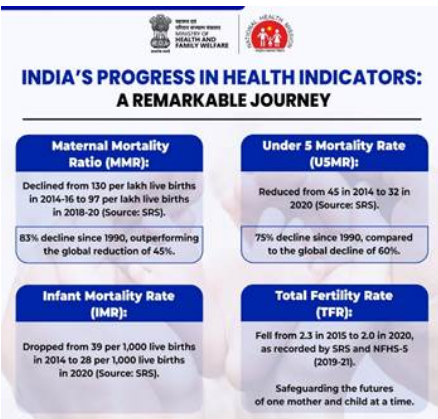
Maternal and Child Health
- Maternal Mortality Ratio (MMR): Dropped by 83% since 1990 (from 130 to 97 per lakh live births).
- Under-5 Mortality Rate (U5MR): Reduced from 45 (2014) to 32 (2020).
- Infant Mortality Rate (IMR): Declined from 39 (2014) to 28 (2020).
- Total Fertility Rate (TFR): Reduced from 2.3 (2015) to 2.0 (2020).
Disease Control and Elimination
- Tuberculosis (TB):
- Incidence: From 237 (2015) to 195 (2023) per 1,00,000.
- Mortality: Decreased by 21.4% (from 28 to 22).
- Kala-azar: Target achieved in all endemic blocks (<1 case/10,000 population by 2023).
- Sickle Cell Anemia: 2.61 crore people screened under the National Elimination Mission.
- Malaria:
- Cases fell in 2021 but rose in 2022 and 2023.
- Deaths declined continuously.
Immunization Campaigns
- COVID-19: Over 220 crore doses administered (2021–2024).
- Measles-Rubella: 97.98% coverage, vaccinating 34.77 crore children under IMI 5.0.
- Digital Health: U-WIN platform launched in 2023 for real-time vaccination tracking in 65 districts.
Healthcare Infrastructure
- 7,998 health facilities certified under National Quality Assurance Standards (NQAS).
- Ayushman Arogya Mandirs: 1.72 lakh operational, with 1.34 lakh offering 12 essential services.
- 24×7 services: At 12,348 PHCs and 3,133 FRUs.
- Mobile Medical Units (MMUs): Expanded to 1,424 units, MMU Portal operational.
Specialized Health Initiatives
- Pradhan Mantri TB Mukt Bharat Abhiyan: Volunteer-driven TB patient support.
- Pradhan Mantri National Dialysis Programme:
- Delivered 62.35 lakh hemodialysis sessions to 4.53 lakh patients in FY 2023–24.
- Sickle Cell Mission: Major tribal health initiative targeting elimination by 2047.
National Programs Under NHM
- RMNCH+A: Reproductive, Maternal, Newborn, Child, and Adolescent Health.
- Communicable Disease Control: TB, malaria, leprosy, HIV/AIDS.
- Non-Communicable Diseases (NCDs): Cancer, diabetes, hypertension.
- Other Initiatives: Rashtriya Bal Swasthya Karyakram (RBSK), PM National Dialysis Programme, Ayushman Bharat (AB-PMJAY).
Alignment with SDG Goals
- NHM achievements indicate India is on track to meet SDG-3 targets (Good Health and Well-being), especially in maternal and child mortality reduction.