
QS Asia University Rankings 2026
- 08 Nov 2025
In News:
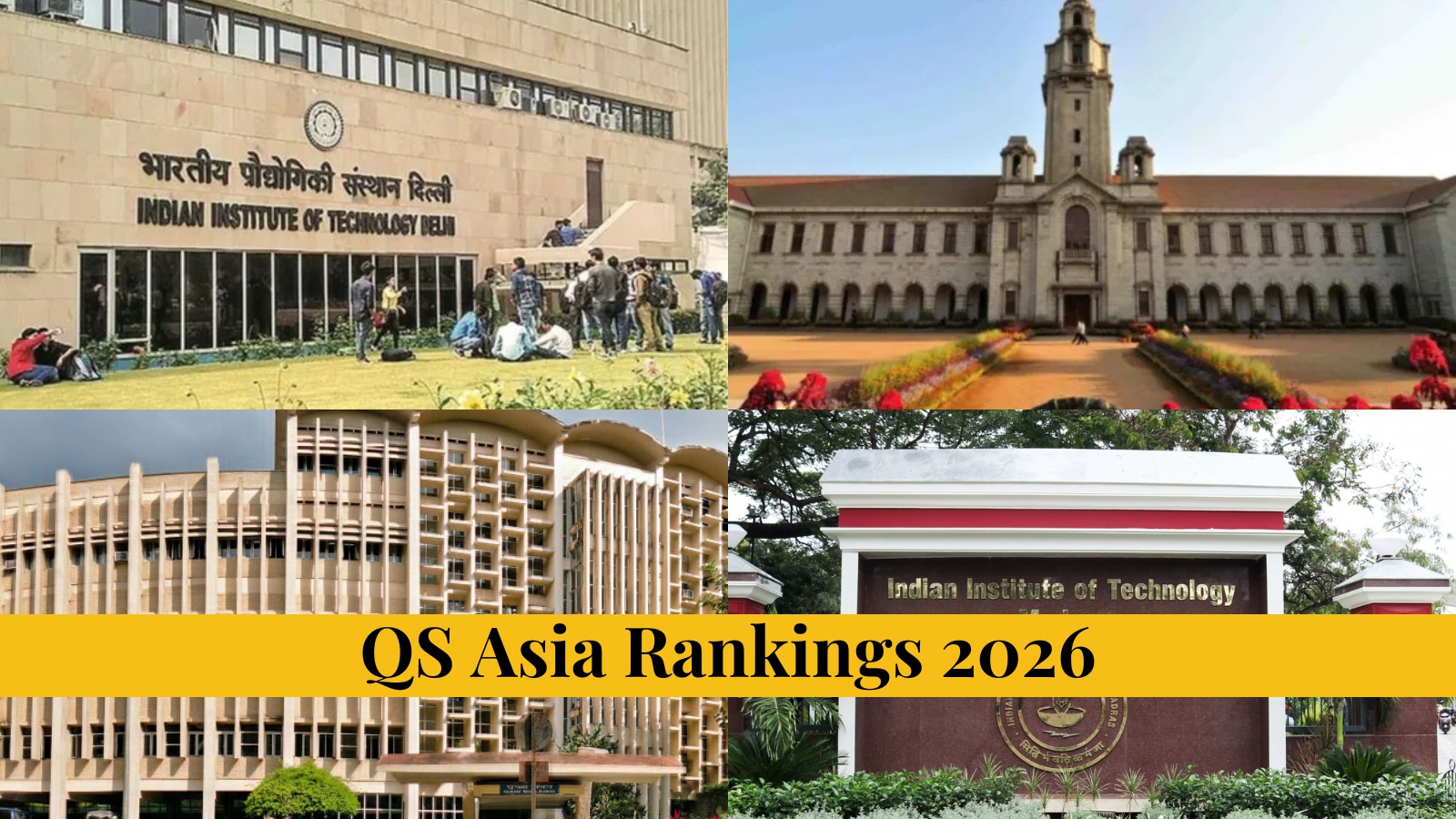
The QS World University Rankings: Asia 2026, released by QS Quacquarelli Symonds, highlight a paradox for Indian higher education. While absolute scores of Indian institutions have improved, nine of the top ten Indian universities—including seven IITs—have slipped in rankings, reflecting intensifying competition from East and Southeast Asia.
Key Highlights of QS Asia Rankings 2026
Top Asian Universities
- The University of Hong Kong secured the 1st rank, overtaking Peking University (China).
- National University of Singapore (NUS) and Nanyang Technological University (NTU) shared 3rd position.
- Dominance of Hong Kong, Mainland China, and Singapore in the top 10.
- Universities from South Korea and Malaysia entered the top 20, indicating regional upward mobility.
QS described the trend as a “clear eastward concentration of top performance”, driven by sustained investments in research and internationalisation.
Performance of Indian Institutions
Ranking Trends
- IIT Delhi remained India’s best-ranked institution for the second consecutive year but fell 15 places to rank 59.
- IIT Bombay recorded the steepest decline, dropping 23 places to rank 71.
- IIT Madras, Kanpur, and Kharagpur witnessed their lowest rankings in recent years.
- Chandigarh University emerged as the only Indian institution to improve, rising from 120 to 109.
Overall, 67% of Indian institutions featured in 2025 slipped in 2026 rankings, despite score improvements.
Reasons Behind India’s Relative Decline
1. Intensifying Regional Competition
- Universities in China, Hong Kong, Singapore, South Korea, and Malaysia outperformed India in:
- Research impact
- Faculty resources
- Global academic engagement
- Large-scale state-backed R&D investments and strong international collaboration networks boosted regional peers.
2. Expanded Ranking Scope
- 1,529 institutions ranked in 2026, with 552 new entrants.
- China added 261 institutions, India added 137, increasing volatility and competition.
- India now has 294 universities ranked, second only to China.
Decline in Key Performance Metrics for Indian Institutions
Research Impact (Citations per Paper)
- IIT Delhi: 31.5, IIT Bombay: 20.0, IIT Madras: 20.3
- Leading Asian universities score 90+, indicating higher global research visibility.
- Reflects fewer highly cited and internationally co-authored papers.
Faculty–Student Ratio
- IIT scores range from 16.5 (IIT Kharagpur) to 40.9 (IIT Delhi).
- Top Asian universities score in the 80–90 range.
- Indicates large class sizes and faculty shortages.
Internationalisation Indicators
- Poor performance in:
- International Student Ratio (ISR)
- International Faculty presence
- IIT ISR scores range from 2.5 to 12.3, compared to 100 for some global leaders.
- Structural disadvantage due to limited foreign student and faculty inflow.
Areas of Strength for Indian Institutions
Despite rank declines, Indian institutions perform strongly in:
- Academic reputation
- Employer reputation
- Staff with PhD
- Papers per faculty
These metrics consistently fall in the 80–90 score range, reflecting strong domestic credibility and teaching capacity.
Comparative Regional Trends
- China & Hong Kong: Sustained dominance through massive R&D funding and institutional autonomy.
- South Korea: Universities like Yonsei and Korea University show steady upward movement due to global partnerships.
- Malaysia: Institutions such as Universiti Malaya and Universiti Putra Malaysia improved through better faculty-student ratios and internationalisation.
Conclusion
The QS Asia Rankings 2026 underline a critical challenge for India: improving absolutely but falling relatively. As Asian peers surge ahead through research excellence and global engagement, India must bridge gaps in research impact, faculty resources, and internationalisation. Achieving the NEP 2020 vision is essential for transforming Indian universities into globally competitive, innovation-driven institutions.