
Operation Sindoor: Redefining India’s National Security Architecture
- 07 May 2026
In News:
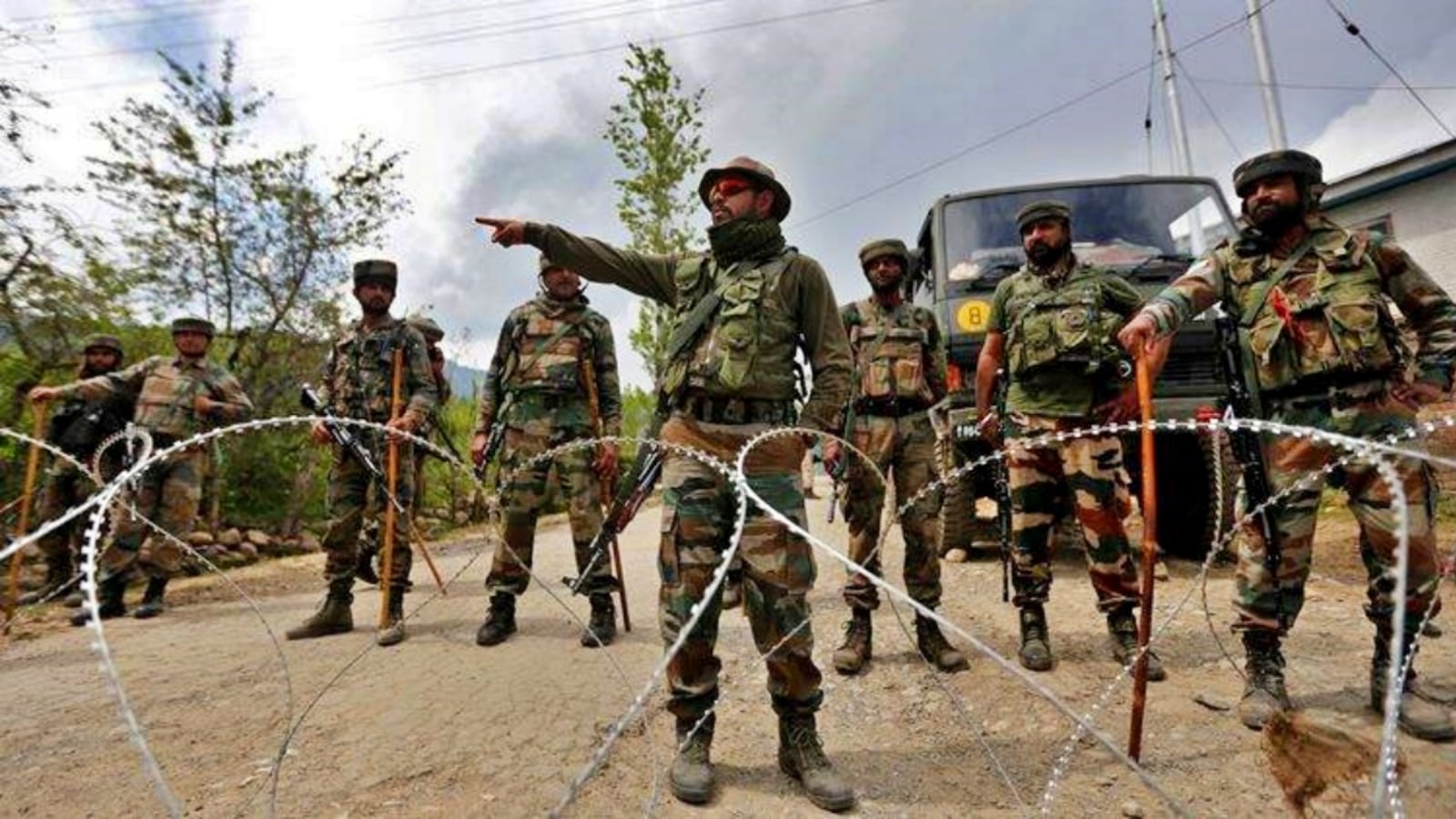
Marking the one-year anniversary of Operation Sindoor, the Indian armed forces have undergone a fundamental transformation in their strategic and operational posture. This milestone represents more than a single military victory; it signifies India's formal transition from "strategic restraint" to a proactive doctrine of "Defensive Offense."
Understanding Operation Sindoor (May 2025)
Operation Sindoor was a multi-dimensional military offensive launched on the night of May 7–8, 2025. It was a direct response to a heinous terror attack in Pahalgam, Jammu & Kashmir, where the Pakistan-backed group 'The Resistance Front' (TRF) killed 26 tourists.
- The Kinetic Strike: Utilizing Rafale jets armed with SCALP missiles and HAMMER bombs, the Indian Air Force (IAF) decimated nine major terror launchpads across Pakistan and Pakistan-occupied Jammu & Kashmir (PoJK). The operation resulted in the elimination of over 100 terrorists, including top handlers from LeT and JeM.
- Neutralizing the "Nuclear Bluff": By striking deep into mainland Pakistan (including radar hubs in Lahore and airbases like Sargodha) without triggering a nuclear response, India successfully operated within the "grey zone," debunking the adversary's nuclear blackmail.
- Non-Military Leverage: In a historic move, India held the 1960 Indus Waters Treaty (IWT) in abeyance, using upstream control as a strategic lever. This was coupled with total economic isolation, the closure of the Attari-Wagah border, and a global diplomatic offensive to present forensic evidence of state-sponsored terror.
Post-Operation Strengthenings: Resilience and High-Tech Posture
A year later, the lessons of Operation Sindoor have been institutionalized through massive infrastructure and technological upgrades.
- Subterranean Warfare Infrastructure: The military has prioritized the construction of large-scale underground command and control centers at the Command and Corps levels. These hardened facilities are equipped with C4I2SR systems, ensuring operational continuity even during saturation strikes.
- Hardened Logistics: To safeguard vital assets, the armed forces are deploying 3D-printed bunkers for rapid troop protection, alongside hardened subterranean storage for fuel, ammunition, and medical supplies along the Western borders.
- Evolution of Integrated Air Defense: Under Mission Sudarshan Chakra, India is building an impenetrable "iron dome." This includes the Army’s Akashteer, the Air Force’s IACCS, and the Navy’s TRIGUN networks.
- Offensive Air Defense: Following the IAF’s record surface-to-air kill of a Pakistani platform from 300 km during the conflict, India is fast-tracking the long-range S-400 Triumf and the indigenous Project Kusha.
- Strategic Dual-Use Infrastructure: National highways (like the Purvanchal Expressway) have been fitted with Emergency Landing Fields (ELFs), and border airfields have been converted for seamless civil-military dual use.
The Strategic Doctrine: The Doval Doctrine & PRAHAAR
Operation Sindoor crystallized the "Doval Doctrine," which treats non-state actors and their state sponsors as a single accountable entity. This is supported by the Ministry of Home Affairs' new national counter-terrorism strategy, PRAHAAR:
- P – Prevention: Intelligence-led approach via the Multi Agency Centre (MAC).
- R – Responses: Rapid neutralization of threats by the NSG and state forces.
- A – Aggregating Capacities: Modernization of weaponry and training standardization.
- H – Human Rights: Balancing security with the Protection of Human Rights Act (1993).
- A – Attenuating Conditions: De-radicalization frameworks involving community leaders.
- A – Aligning International Efforts: Using Extradition Treaties and MLATs to deny safe havens.
- R – Recovery and Resilience: A "whole-of-society" approach to ensure swift normalcy post-incident.
Conclusion
Operation Sindoor has fundamentally altered the South Asian security calculus. By calling the nuclear bluff and integrating hard power with economic and water diplomacy, India has established a new benchmark for counter-terrorism. The focus now rests on Atmanirbharta (Self-Reliance), with indigenous systems like Project Kusha and Akash forming the backbone of a sovereign, resilient defense framework that prioritizes punitive retaliation over passive defense.
Redrawing India’s Welfare Architecture: Placing Universal Basic Income at the Centre

- 12 Nov 2025
In News:
India is entering a phase where rapid economic growth coexists with deepening inequality, labour precarity, and technological disruption. Automation, the expansion of the gig economy, climate-related displacement, and rising mental health stress are reshaping livelihoods faster than policy can adapt. In this context, Universal Basic Income (UBI)-once dismissed as utopian-has re-emerged as a serious policy option to modernise India’s welfare architecture.
What is Universal Basic Income?
A Universal Basic Income is a periodic, unconditional cash transfer to all citizens, irrespective of income, employment status, or social category. Its defining features are universality, unconditionality, and direct transfer, ideally delivered through Aadhaar-linked Direct Benefit Transfer (DBT). Unlike targeted welfare schemes, UBI treats income security as a citizenship right, not as charity or conditional assistance.
Why India Needs to Revisit UBI
India’s welfare state is extensive but fragmented, with hundreds of schemes plagued by leakages, duplication, and exclusion errors. While digital infrastructure has improved delivery, complexity remains high. A UBI offers a simple income floor, reducing administrative burdens and bypassing stigma attached to poverty-targeted benefits.
The economic rationale is compelling. Despite high GDP growth, inequality has reached historic levels. According to the World Inequality Database (2023), India’s wealth Gini is around 75, with the top 1% owning about 40% of national wealth. Growth has not translated into well-being, reflected in India’s low ranking in the World Happiness Report (2023). Nobel laureate Joseph Stiglitz has long cautioned that GDP alone fails to capture quality of life, equity, and sustainability.
At the same time, automation adds urgency. Estimates from the McKinsey Global Institute suggest large-scale job displacement globally by 2030, with India’s informal and semi-skilled workforce particularly vulnerable. A UBI can act as a transition buffer, sustaining consumption and allowing time for reskilling.
Evidence from Pilots
Empirical evidence strengthens the case. India’s SEWA-led Madhya Pradesh pilot (2011–13) showed improvements in nutrition, school attendance, and small enterprise activity. International experiments in Finland, Kenya, and Iran reported better food security, mental well-being, and resilience, without reducing willingness to work or triggering runaway inflation.
Beyond Economics: Reworking the Citizen-State Relationship
A UBI has a normative value. It shifts welfare from paternalistic, scheme-based patronage to a rights-based social contract. By reducing dependence on ad hoc freebies, it can temper populist politics and empower citizens to demand better governance outcomes-schools, healthcare, rule of law, and environmental stewardship-rather than transactional giveaways.
UBI also recognisesunpaid care work, largely performed by women, which remains invisible in conventional economic metrics. By providing unconditional income security, it expands agency rather than fostering dependency.
Challenges and the Way Forward
Legitimate concerns remain. A modest UBI equivalent to the poverty line could cost around 5% of GDP, raising questions of fiscal sustainability. Universality may dilute redistributive impact, and digital divides could exclude the most vulnerable. Inflation risks also need careful management through supply-side readiness.
A phased and calibrated approach offers a pragmatic path: begin with vulnerable groups (women, elderly, informal workers), integrate UBI withrather than abruptly replaceschemes like PDS and MGNREGA, and finance it through progressive taxation and rationalisation of inefficient subsidies. Strengthening the JAM trinity and grievance redressal is essential.
Conclusion
UBI is not a panacea. It will not automatically create jobs or fix public services. But as a foundational income floor, it can reduce insecurity, mitigate inequality, and restore dignity in an era of uncertainty. The real question facing India is no longer whether it can afford a UBI, but whether it can afford the democratic and social costs of mass economic insecurity without one.
Inauguration of BAPS Temple in UAE by PM Modi: Exploring Its Unique Features, Architecture, and Significance (Indian Express)

- 14 Feb 2024
Why is it in the News?
During his two-day visit to UAE, Prime Minister Modi will inaugurate the BAPS Swaminarayan temple in Abu Dhabi, the first Hindu temple in the Gulf nation.
Context:
- Prime Minister Modi on Wednesday inaugurated the (BAPS) temple, the first-ever Hindu temple in the United Arab Emirates (UAE).
- The iconic stone temple is located in Abu Mureikhah, near Al Rahba off the Dubai-Abu Dhabi Sheikh Zayed Highway.
- The inauguration of the 108-ft high temple marks a significant moment for the Hindu community in UAE and the two countries’ bilateral ties.
What is BAPS?
- Bochasanwasi Shri Akshar Purushottam Swaminarayan Sanstha (BAPS) is a socio-spiritual Hindu organisation founded on the principles of practical spirituality.
- The temple was built by the organisation, a denomination of the Swaminarayan Sampradaya, a Vaishnav sect of Hinduism.
- With over 3,850 centres globally, BAPS has garnered national and international recognition, including affiliation with the United Nations.
- Through vows of abstinence and purity, BAPS fosters a foundation for humanitarian endeavours, caring for societies, families, and individuals.
What Does BAPS Do?
- The BAPS Swaminarayan Sanstha views spirituality as its core mission. Through gradual steps, it strives to draw individuals closer to God.
- In collaboration with BAPS Charities, the organization extends its outreach globally, addressing diverse humanitarian needs.
- From education to healthcare and environmental concerns, practical solutions are offered to real-world problems, impacting lives on both macro and micro scales.
- BAPS has a network of around 1,550 temples across the world, including the Akshardham temples in New Delhi and Gandhinagar, and Swaminarayan temples in London, Houston, Chicago, Atlanta, Toronto, Los Angeles, and Nairobi.
Who is Swami Narayan?
- Bhagwan Swaminarayan’s life and work have not only influenced communities in Gujarat, India but have affected change throughout the world.
- He reestablished Hindu Sanatan Dharma, cleansing traditions and rituals of the impurities that had seeped in over time.
- His contributions have been hailed by Hindus and dignitaries of other faiths as truly transforming the lives of millions of individuals.
- He improved societal standards and, most importantly, the innate nature of people, eradicating them from lust, anger, greed, and envy.
- Bhagwan Swaminarayan’s teachings transcended borders, rejuvenating Hindu traditions worldwide.
What are the Features of the (BAPS) Temple?
- The Abu Dhabi temple is a traditional stone Hindu temple with seven shikhars.
- Built in the traditional Nagar style, the temple’s front panel depicts universal values, stories of harmony from different cultures, Hindu spiritual leaders and avatars.
- Spread over 27 acres, the temple complex is on 13.5 acres
- The 13.5 acres of land was gifted by Sheikh Mohammed Bin Zayed Al Nahyan, the President of the UAE in 2019.
- The height of the temple is 108 ft, its length 262 ft and its width 180 ft.
- While the external facade uses pink sandstone from Rajasthan, the interior uses Italian marble.
- A total of 20,000 tonnes of stones and marble were shipped in 700 containers for the temple.
- More than Rs 700 crore was spent on the temple’s construction.
- The temple has two central domes, Dome of Harmony and Dome of Peace, emphasizing human coexistence through the carvings of earth, water, fire, air, and plants.
- A Wall of Harmony, one of the largest 3D-printed walls in the UAE, features a video showcasing key milestones of the temple’s construction.
- The word ‘harmony’ has been written in 30 different ancient and modern languages.
- The seven shikhars (spires) are representative of the seven Emirates of the UAE.
- Other amenities include an assembly hall with a capacity of 3,000 people, a community centre, exhibitions, classrooms, and a majlis venue.
What are the Key Architectural Features?
- The temple was judged the Best Mechanical Project of the Year 2019 at the MEP Middle East Awards, and the Best Interior Design Concept of the Year 2020.
- Among the key architectural features are 96 bells and galumphs installed around the path leading to the temple.
- These 96 bells are a tribute to Pramukh Swami Maharaj’s 96 years of life.
- Nano tiles have been used, which will be comfortable for visitors to walk on even in the hot weather.
- On the top left of the temple is a stone carving of the scene of Pramukh Swami Maharaj envisioning the temple in Abu Dhabi in 1997.
- Non ferrous material (which is more vulnerable to corrosion) has been used in the temple.
- While many different types of pillars can be seen in the temple, such as circular and hexagonal, there is a special pillar, called the ‘Pillar of Pillars’, which has around 1,400 small pillars carved into it.
- Buildings surrounding the temple are modern and monolithic, with their colour resembling sand dunes.
- Deities from all four corners of India have been featured in the temple.
- These include Lord Ram, Sita, Lakshman and Hanuman, Lord Shiv, Parvati, Ganpati, Kartikeya, Lord Jagannath, Lord Radha-Krishna, Akshar-Purushottam Maharaj (Bhagwan Swaminarayan and Gunatitanand Swami), Tirupati Balaji and Padmavati and Lord Ayappa.
- The temple also has some special features, like a ‘holy river’ surrounding it, for which waters from Ganga and Yamuna have been brought in.
- The river Saraswati has been depicted in the form of white light.
- A Varanasi-like ghat has been created where the ‘Ganga’ passes.
- Apart from 15 value tales from Indian civilisation, stories from the Maya civilisation, Aztec civilisation, Egyptian civilisation, Arabic civilisation, European civilisation, Chinese civilisation and African civilisation have been depicted.
What is the Significance of the Temple?
- A Muslim king donated land for a Hindu Mandir, where the lead architect is a Catholic Christian, the project manager a Sikh, the foundational designer a Buddhist, the construction company a Parsi group, and the director comes from the Jain tradition.
Religious Significance:
- First Hindu stone temple in Abu Dhabi: This marks a historic milestone for the Hindu community in the UAE, providing them with a dedicated place of worship and cultural centre.
- Symbol of religious tolerance: The temple's inauguration signifies the UAE's growing acceptance and appreciation of religious diversity, fostering interfaith dialogue and understanding.
Cultural Significance:
- Strengthens India-UAE ties: The temple stands as a symbol of the strong cultural and diplomatic relations between India and the UAE, promoting mutual understanding and cooperation.
- Promotes Indian culture: The temple serves as a platform to educate the UAE community about Indian art, architecture, and traditions, fostering cultural exchange and appreciation.
Social Significance:
- Provides a sense of belonging: The temple offers a space for the Hindu community to gather, celebrate festivals, and connect with their cultural roots, fostering a sense of belonging and identity.
- Promotes social integration: The temple's open-door policy welcomes people of all faiths, encouraging social interaction and understanding between different communities in the UAE.
- Strengthens social fabric: The temple's emphasis on values like compassion, service, and community engagement contributes to strengthening the social fabric of UAE society.
Overall, the BAPS Swaminarayan Mandir in Abu Dhabi represents a significant step forward in religious tolerance, cultural exchange, and community building in the UAE. It serves as a testament to the growing understanding and appreciation between India and the UAE, and its impact will be felt for generations to come.