
Ayushman Sahakar Scheme

- 13 Feb 2026
In News:
Ayushman Sahakar (2020) enables cooperative societies to access NCDC loans (up to 90% of project cost) for healthcare infrastructure, with a 1% interest rebate for women-majority cooperatives.
The National Cooperative Development Corporation (NCDC), a statutory body set up under an Act of Parliament in 1963 and functioning under the Ministry of Cooperation—notified the Ayushman Sahakar Scheme in 2020. The scheme aligns with the National Health Policy, 2017 to expand affordable, community-owned healthcare through cooperative institutions.
Objectives
- Provide affordable and holistic healthcare via cooperative hospitals, healthcare and education facilities.
- Promote AYUSH services through cooperatives.
- Enable participation in the National Digital Health Mission (digital health/ICT integration).
- Support comprehensive healthcare including services, education, insurance, and allied activities.
Coverage: Activities & Infrastructure
The scheme supports creation, modernization, expansion, repair, and renovation of healthcare infrastructure, including:
- Hospitals; Medical/AYUSH/Dental/Nursing/Pharmacy/Paramedical/Physiotherapy colleges (UG/PG)
- Yoga wellness centres; Panchkarma/Unani regimental therapy centres
- Elderly care, palliative care, disability services, mental healthcare
- Emergency/trauma centres; physiotherapy; mobile clinics
- Diagnostics, laboratories, blood banks, ophthalmic & dental centres
- AYUSH pharmaceutical manufacturing & drug testing labs
- Maternal & child health; RCH services
- Telemedicine, remote procedures, digital health ICT
- Health insurance (IRDAI-accredited)
- Margin money & working capital for day-to-day operations
Eligibility
- Any Cooperative Society registered under a State Act or the Multi-State Cooperative Societies Act, with healthcare/health education provisions in its bye-laws.
- Financial assistance provided after technical and financial appraisal to ensure long-term viability.
Financial Architecture
Nature of Assistance
- Term/Investment loans (as per actual project requirement).
- Loan tenure up to 8 years, including 1–2 years moratorium on principal (project-dependent).
Interest Incentive
- 1% interest rebate for the entire tenure to cooperatives where women members are in majority, subject to timely repayment.
Funding Pattern (Illustrative)
- Through State Govt. route:
- NCDC → State Govt. → Society
- Loan up to 90% (infrastructure); Society share ~10%
- Direct funding (NCDC → Society) (as per direct funding guidelines):
- Loan up to 70% (or structured mix with share capital)
- Society share ~30%
- Margin Money: Up to 100% loan (subject to assessment).
- Working Capital: As per requirement (loan).
- Loan quantum may be reduced proportionately if dovetailed with subsidy/grant/VGF of GoI/States/other agencies.
Security Options
- Mortgage of assets (incl. project assets) up to 1.5× loan
- Govt./PSU/Statutory body guarantees
- Pledge of FDRs or assignment of Govt. securities (≈1.2× loan)
- Bank guarantees, as acceptable to NCDC
Institutional Context
- NCDC: Apex statutory institution (1963) to promote cooperative principles in production, processing, marketing, storage and services; assists cooperatives at Primary, District, and Apex/Multi-State levels.
- Scheme details and implementation update were shared in Parliament by the Union Minister for Home and Cooperation.
Significance for Governance & Health
- Cooperative Federalism: Decentralizes healthcare delivery via grassroots cooperatives.
- Community Ownership & Accountability: Participatory governance model in health services.
- Boost to AYUSH & Integrative Care: Expands traditional systems alongside allopathy.
- Digital Health Enablement: Supports ICT, telemedicine, and insurance integration.
- Gender Incentivization: Financial rebate encourages women-led cooperatives.
Radio Nellikka
- 17 Jun 2025
In News:
Chief Minister Pinarayi Vijayan inaugurated Radio Nellikka, an internet radio for children launched by the Kerala State Commission for Protection of Child Rights (KeSCPCR) on June 2025.
What is Radio Nellikka?
- A child-centric internet radio platform launched by KeSCPCR.
- Aims to promote child rights, awareness, and safety through audio content.
- Accessible globally, with 4 hours of programming from Monday to Friday (new content), and repeats on weekends.
- Launch included unveiling of the radio's logo and theme song.
Objectives
- Create a child-friendly Kerala through rights-based literacy.
- Spread awareness on child protection laws, mental health, substance abuse, and cyber safety.
- Empower children with knowledge and build resilience against social challenges.
- Promote responsible parenting and community involvement in child welfare.
Significance
- Addresses rising challenges: social media addiction, cyber threats, child suicides, and mental health issues.
- Provides accessible, engaging content to both children and guardians.
- Acts as a preventive and educational tool against misinformation related to child rights.
- Supports emotional and legal literacy in a format suited for young audiences.
Dragon Copilot

- 10 Mar 2025
In News:
Microsoft has launched Dragon Copilot, a voice-activated AI assistant designed specifically for the healthcare sector. It aims to reduce administrative burdens on clinicians by automating documentation and providing quick access to medical information.
Key Features and Functionalities:
- Platform Integration: Part of Microsoft Cloud for Healthcare, Dragon Copilot integrates with Electronic Health Records (EHR) and is accessible via desktop, browser, or mobile app.
- Technology Base: Built on Nuance’s Dragon Medical One (DMO) and DAX (Dragon Ambient eXperience) platforms, which have supported transcription of billions of patient records and over 3 million ambient patient interactions.
- Voice & AI Capabilities:
- Uses natural language dictation and ambient listening technologies.
- Enhanced with generative AI and healthcare-specific safeguards.
- Allows drafting of memos, referral letters, clinical summaries, and after-visit notes in personalized formats.
- Facilitates real-time voice-to-text transcription and AI-generated notes via user prompts or templates.
- Supports automated search for verified medical information.
Benefits:
- Reduces clinician paperwork and burnout, enhancing focus on patient care.
- Survey Data (Microsoft Findings):
- Saves ~5 minutes per patient interaction.
- 70% clinicians reported reduced fatigue.
- 62% were less likely to leave their organizations.
- 93% patients reported improved experiences.
Concerns and Risks of Healthcare AI:
- AI Hallucinations: Tools like OpenAI’s Whisper have produced fictitious content, including inappropriate or incorrect medical information.
- Regulatory Caution:
- The US FDA warns of risks from generative AI in healthcare, including false diagnoses or biased outputs.
- Emphasizes the need for transparent and accountable development practices.
- Microsoft’s Response:
- Claims to have integrated “clinical, chat, and compliance safeguards” into Dragon Copilot.
- Built in alignment with Microsoft’s Responsible AI principles, although technical specifics remain undisclosed.
Broader AI Healthcare Landscape:
- Companies like Google Cloud, Abridge, and Suki are developing similar AI-based healthcare assistants.
- Growing interest in generative AI for reducing clinician workload and improving patient outcomes is driving innovation and investment across the sector.
Doubtful (D) Voters in Assam
- 10 Mar 2025
In News:
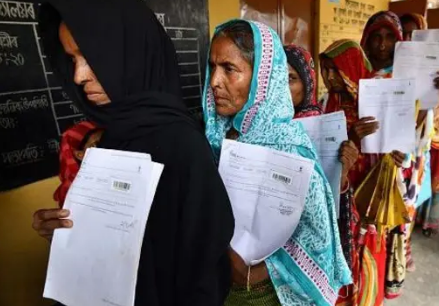
The issue of ‘D’ (Doubtful) voters recently resurfaced in the Assam Legislative Assembly, with the Opposition demanding closure of the state’s lone detention centre (now termed a transit camp) and the tabling of the National Register of Citizens (NRC) report.
Who are ‘D’ Voters?
‘D’ voters are individuals whose Indian citizenship is under suspicion. Introduced by the Election Commission of India (ECI) in 1997 specifically for Assam, these individuals are barred from voting or contesting elections until their citizenship is verified.
Legal and Procedural Aspects:
- Not Defined in Law: The term 'Doubtful Voter' is not defined under the Citizenship Act, 1955 or the Citizenship Rules, 2003.
- As per Citizenship Rules, 2003:
- The Local Registrar must mark individuals with doubtful citizenship in the National Population Register (NPR) for further verification.
- Affected individuals must be informed through a prescribed format and granted a hearing before the Taluk or Sub-district Registrar.
- A decision on citizenship status must be made within 90 days.
- Foreigners Tribunal (FT): Cases of D-voters are referred to FTs, which decide whether the person is an Indian citizen or a foreigner. Based on the verdict, individuals can be:
- Cleared and subsequently included in the NRC and electoral rolls.
- Declared foreigners, leading to deportation or detention.
Key Features of D-Voter Status:
- Temporary Tag: The 'D' classification is not permanent and must be resolved within a set timeframe.
- Appeal Mechanism: Individuals can appeal to the Foreigners Tribunal for clearance.
- Impact on Families: Often, some members of a family are citizens while others are tagged as D-voters, leading to legal and social complications.
- Detention Concerns: Several individuals, including potential Indian citizens, have been detained for years without a clear mechanism for release.
Recent Developments:
- Political demands in Assam include the closure of detention centres and transparency regarding NRC implementation.
- Debates continue over the legal ambiguity and humanitarian implications of the D-voter category.
NAKSHA Programme
- 22 Feb 2025
In News:
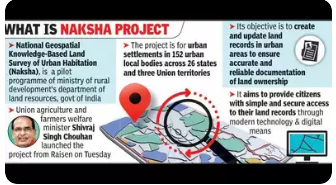
The Union Ministry of Rural Development has launched a pilot project titled NAKSHA(National Geospatial Knowledge-based Land Survey of Urban Habitations) in 152 Urban Local Bodies (ULBs) across 26 States and 3 Union Territories, with the inauguration taking place in Raisen, Madhya Pradesh.
Key Highlights:
Objective of NAKSHA
The NAKSHA initiative aims to:
- Create and update urban land records for accurate, reliable documentation of property ownership.
- Empower citizens by improving ease of access to land records.
- Facilitate urban planning and reduce land-related disputes.
- Promote transparency, efficiency, and sustainable development through an IT-based system.
Key Features
- Technical Partner: The Survey of India will carry out aerial surveys and provide orthorectified imagery via third-party vendors.
- Implementation Partners:
- Madhya Pradesh State Electronics Development Corporation (MPSEDC) will develop a web-based GIS platform.
- National Informatics Centre Services Inc. (NICSI) will provide data storage facilities.
- Execution at State Level: States and UTs will conduct field surveys and ground truthing, leading to the final publication of urban and semi-urban land records.