
Yildirimhan Missile
- 08 May 2026
In News:
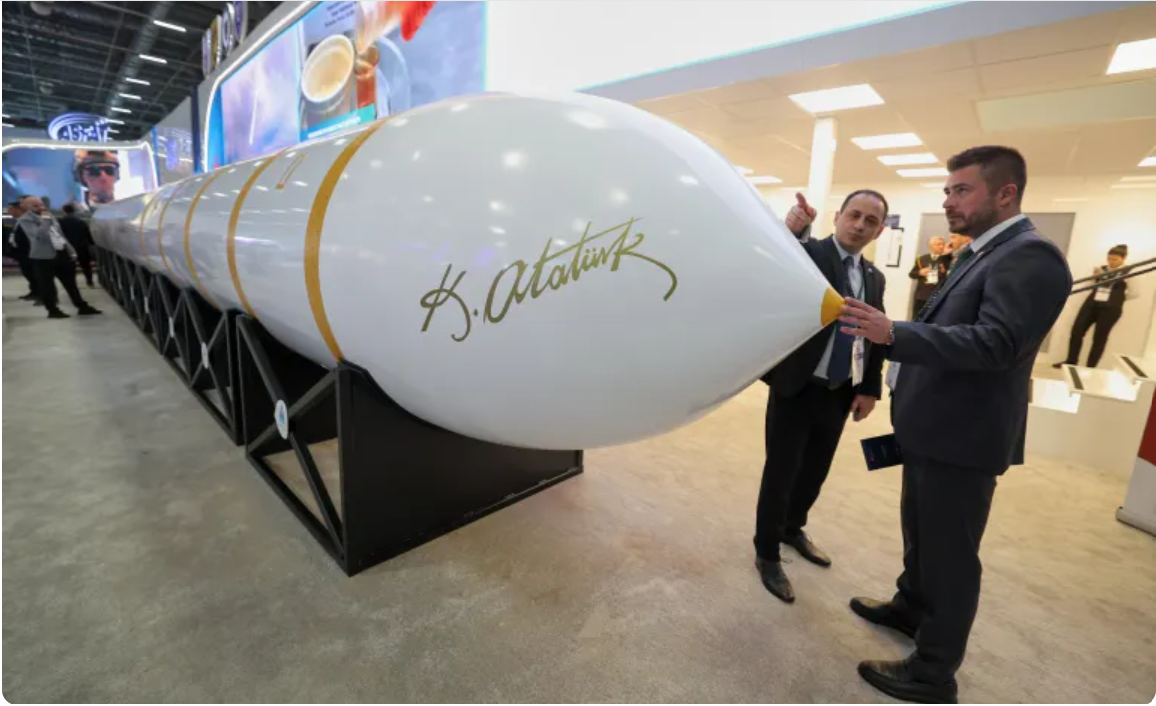
In a move that significantly alters the geopolitical landscape of the Middle East and the NATO alliance, Türkiye recently unveiled the prototype of its first Intercontinental Ballistic Missile (ICBM), named the Yildirimhan. This development marks a milestone in Türkiye’s decades-long pursuit of defense self-reliance and establishes the nation as a formidable global power with the ability to project force across three continents.
Technical Specifications of the Yildirimhan
The Yildirimhan is designed for long-range strategic deterrence, featuring engineering specifications that place it among the most advanced missile systems in the world.
- Range and Reach: With an operational range of 6,000 km, the missile can strike targets across Europe, Africa, and Asia from the Turkish mainland.
- Velocity: The missile is reported to reach extreme hypersonic speeds of up to Mach 25 (25 times the speed of sound), equivalent to nearly eight kilometers per second. This speed makes it exceptionally difficult for current missile defense systems to intercept.
- Propulsion and Fuel: It utilizes a four-rocket propulsion system fueled by liquid nitrogen tetroxide. While liquid-fueled missiles require more time for launch preparation compared to solid-fueled variants, they allow for superior optimization of the missile's range and payload capacity.
- Payload Capacity: The Yildirimhan is capable of carrying single or multiple warheads with a combined weight of up to three tonnes.
- Mobility: To enhance survivability against first-strike attacks, the missile is designed to be deployed from a mobile wheeled launcher, allowing it to be moved across various terrains.
Strategic Significance and Global Implications
The unveiling of the Yildirimhan represents more than just a technological achievement; it signals a shift in Türkiye’s strategic identity.
- Strategic Autonomy: By developing an indigenous ICBM, Türkiye reduces its dependence on foreign defense technology—primarily from NATO allies like the United States—and strengthens its "Strategic Autonomy" doctrine.
- NATO Dynamics: As a key member of NATO, Türkiye’s possession of an ICBM introduces new complexities within the alliance. While it adds to the collective deterrent of the bloc, it also gives Ankara more leverage in regional disputes.
- Middle Eastern Power Balance: The missile establishes Türkiye as the only nation in the Middle East, alongside Israel (with its undeclared capabilities) and Iran (with its satellite launch vehicles), to possess or be nearing long-range delivery systems.
- Deterrence and Regional Influence: The 6,000 km range ensures that Türkiye can deter threats far beyond its immediate borders, influencing geopolitics from the Mediterranean to Central Asia.
Challenges and Considerations
The transition from a prototype to an operational ICBM force involves several hurdles:
- Guidance and Re-entry: The most critical challenge for an ICBM is not just the launch, but the ability of the warhead to survive re-entry into the Earth's atmosphere at Mach 25 while maintaining precision guidance.
- International Reactions: The development of ICBMs often triggers concerns regarding the Missile Technology Control Regime (MTCR) and can lead to sanctions or increased diplomatic pressure from global powers wary of proliferation.
- Liquid Fuel Vulnerability: The choice of liquid nitrogen tetroxide necessitates a longer fueling window, during which the mobile launcher is most vulnerable to pre-emptive detection and strikes.