
Western Disturbances
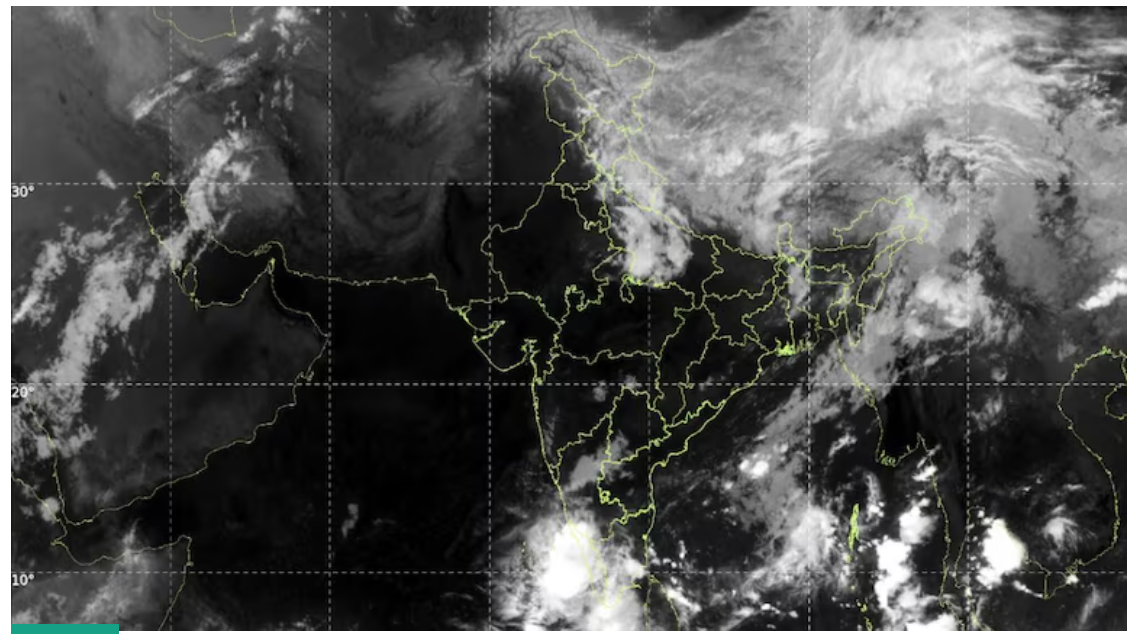
- 09 May 2026
In News:
Northwest India is currently experiencing a temporary cessation of rainfall and thunderstorms as the most recent Western Disturbance (WD) weakens and shifts eastward. However, satellite imagery indicates that this respite may be short-lived, as new systems continue to develop, highlighting the persistent role these extratropical storms play in the Indian meteorological cycle.
Defining Western Disturbances
Western Disturbances are extratropical storm systems that originate in the Mediterranean region. Unlike the tropical cyclones that form in the Bay of Bengal or the Arabian Sea, WDs are non-tropical in nature and are driven by the Subtropical Westerly Jet Stream. These systems carry moisture-laden air from the Mediterranean Sea, and occasionally from the Caspian and Black Seas, traveling thousands of kilometers eastward across West and Central Asia to reach the Indian subcontinent.
The Etymology: Why "Western Disturbance"?
The nomenclature is derived directly from the system’s trajectory and meteorological impact:
- Western: Refers to the direction of origin (the Mediterranean region, west of India).
- Disturbance: In meteorological terms, this denotes an area of "disturbed" or reduced air pressure, which typically leads to unstable weather conditions, cloud cover, and precipitation.
Seasonal Impact and Geographic Reach
While WDs can occur year-round, they are most influential during the winter months (November to March) and early pre-monsoon season. Their reach extends across a vast geographic belt including Pakistan, North and Northwest India, Nepal, and Bangladesh.
In India, the primary beneficiaries and victims are the Himalayan states (which receive heavy snowfall) and the plains of Punjab, Haryana, Rajasthan, and Delhi (which receive winter rains).
The Economic and Agricultural Significance
For the Indian economy, particularly the agricultural sector, Western Disturbances are a double-edged sword:
- The Rabi Crop Vitality: The winter rain brought by these systems is crucial for the Rabi season. It provides the necessary moisture for crops like wheat, gram, and mustard. In the absence of WDs, Northwest India often faces "dry winters," leading to lower agricultural yields.
- Water Security: The heavy snowfall in the Himalayas serves as a frozen reservoir. As this snow melts during the summer, it feeds perennial rivers like the Ganga, Indus, and Yamuna, ensuring water availability for irrigation and hydropower.
- The Downside: Intense WDs can cause "disturbances" in the literal sense—triggering flash floods, landslides in the hills, and hailstorms in the plains that can severely damage standing crops just before harvest.
Climatological Interaction: The Subtropical Jet Stream
The intensity of a Western Disturbance is closely linked to the position and strength of the Subtropical Westerly Jet Stream. During winter, this jet stream shifts southward over the Indian subcontinent. When a WD embeds itself within this high-altitude wind current, it gains the momentum necessary to cross the high altitudes of the Hindu Kush and the Himalayas, bringing sudden weather shifts to the northern plains.