
Fibre-Optic Drones
- 06 May 2026
In News:
In the evolving landscape of high-tech warfare, fibre-optic-guided drones have surfaced as a disruptive force, particularly in the Russia-Ukraine and West Asia conflicts. By replacing traditional wireless communication with a physical link, these drones—often referred to as "wire-guided" or "phantom" drones—are bypassing sophisticated electronic defense systems and redefining the tactical "front-line."
The Technology: A Shift from Radio to Light
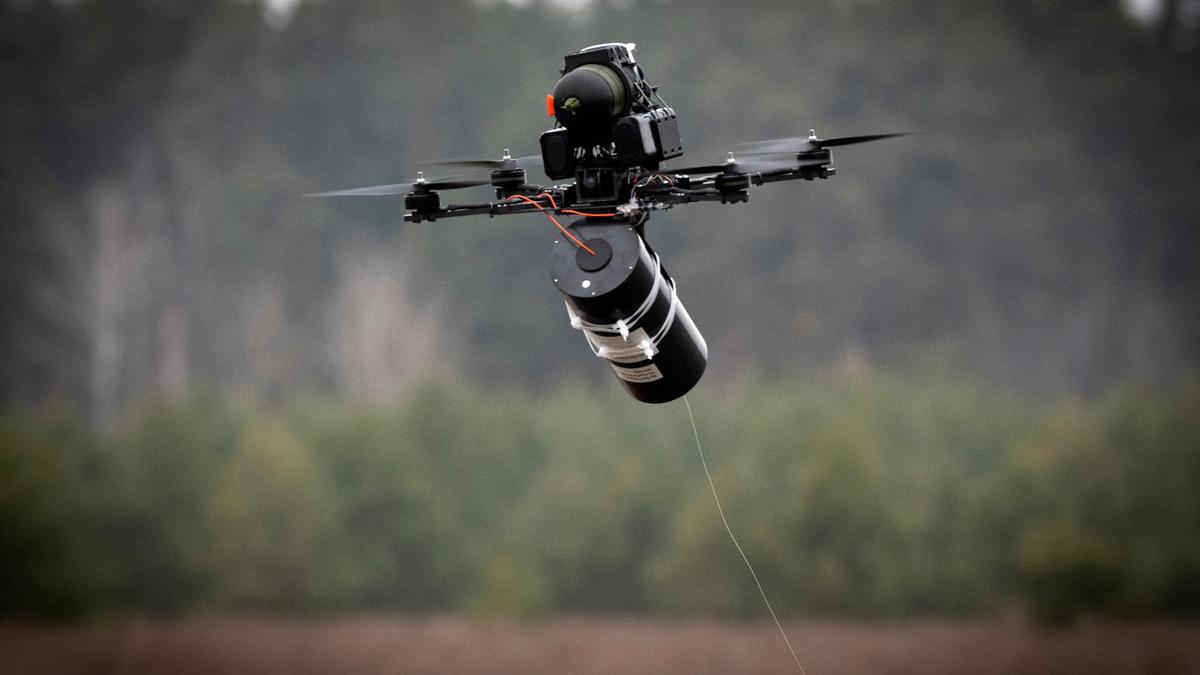
The core innovation of these drones lies in their communication link. While standard First-Person View (FPV) drones rely on Radio Frequency (RF) signals, fibre-optic drones are tethered to their operator via a thin, high-strength fibre-optic spool.
- Mechanism: As the drone flies, it unspools a micro-thin cable (extending up to 50 km). This cable transmits telemetry and high-bandwidth video data using light signals rather than radio waves.
- Material Composition: To maintain agility, these drones are often constructed from lightweight fibreglass. This material provides a secondary benefit: a minimal thermal and radar signature, making them difficult to detect using conventional sensors.
Strategic Advantages in Combat
The transition to wire-guidance offers several critical advantages that render traditional anti-drone measures obsolete:
- Immunity to Electronic Warfare (EW): Traditional jammers work by "drowning out" the radio frequency between the drone and the pilot. Since fibre-optic drones do not use RF, they are entirely immune to jamming and GPS spoofing.
- High-Fidelity Feedback: The fibre-optic link allows for uncompressed, high-resolution video feeds. Unlike RF drones, which often experience signal "snow" or total cutout as they approach the ground or fly behind obstacles, wire-guided drones provide crystal-clear imagery until the moment of impact.
- Stealth and Persistence: Because they do not emit a radio signal, these drones cannot be "triangulated" by enemy electronic intelligence units, protecting both the drone and the location of its operator.
Operational Limitations and Challenges
Despite their "unjammable" status, fibre-optic drones are not without technical hurdles:
- Weight vs. Range: The weight of the fibre canister, combined with the explosive payload, significantly drains battery life. Every kilometer of cable adds physical drag and weight.
- Physical Vulnerability: The physical cable is susceptible to snapping if it gets snagged on trees, caught in strong crosswinds, or intentionally cut by enemy combatants.
- Engineering Solutions: To counter these risks, manufacturers have begun using Kevlar-infused protective coatings to increase the tensile strength of the micro-cables without adding excessive weight.
Defensive Countermeasures: The Search for a Solution
As electronic jamming fails, defense forces are reverting to physical and emerging technologies:
- Physical Barriers: The use of "cope cages" (metal cages) and protective nets over tanks and trenches has become a rudimentary necessity.
- Advanced Detection: Research is shifting toward infrared (IR) and acoustic sensors that can detect the drone’s heat or sound signature since its "radio silence" makes it invisible to electronic scanners.
- Directed-Energy Weapons: Future defenses aim to use high-powered lasers to melt the physical optical lines or the drone’s fibreglass body.
Environmental Impact:
The widespread use of these drones introduces a new ecological threat. The thousands of kilometers of lightweight polymer optical fibres left behind on battlefields contribute to severe "conflict pollution."
- Toxic Degradation: When these cables are destroyed by explosions or fires, they release microplastics and toxic chemical byproducts into the soil, air, and water.
- Long-term Legacy: Unlike metal fragments that can be salvaged, these micro-thin plastic fibres are nearly impossible to clean up, posing a long-term threat to local ecosystems and agriculture.