
Mission for Cotton Productivity (2026–31)
- 07 May 2026
In News:
In a major push toward agricultural self-reliance and global textile dominance, the Union Cabinet has approved the “Mission for Cotton Productivity” with a dedicated outlay of ?5,659 crore for the period 2026–27 to 2030–31. The mission seeks to transform India’s cotton sector by transitioning from a focus on acreage to a focus on high-density productivity and quality.
Objectives and Framework
The mission is an integrated initiative announced in the Union Budget 2025–26, designed to strengthen the entire textile value chain. It operates under the government’s 5F Vision: Farm to Fibre to Factory to Fashion to Foreign.
- Implementation: It is a collaborative effort between the Ministry of Agriculture and Farmers Welfare and the Ministry of Textiles, supported by research from 10 institutes under the Indian Council of Agricultural Research (ICAR) and the Council of Scientific and Industrial Research (CSIR).
- Geographical Reach: In its initial phase, the mission targets 140 districts across 14 major cotton-growing states, grouped into three agro-ecological zones:
- Northern Zone: Punjab, Haryana, and Rajasthan.
- Central Zone: Gujarat, Maharashtra, and Madhya Pradesh.
- Southern Zone: Telangana, Andhra Pradesh, and Karnataka (including Odisha and Tamil Nadu).
- Target Outcomes by 2031:
- Yield Enhancement: To boost lint productivity from the current stagnant 440 kg/ha to 755 kg/ha (nearing the global average of 770 kg/ha).
- Production Volume: To increase total production to 498 lakh bales.
- Impact: Directly benefiting approximately 32 lakh cotton farmers.
Strategic Necessity: Why India Needs This Mission
India holds the distinction of having the largest cotton acreage globally (~11.4 million hectares), accounting for nearly 25% of global output. However, several systemic bottlenecks have hampered its potential:
- The Productivity Gap: Despite being the second-largest producer, India's yield remains among the lowest globally due to rainfed cultivation (65% of area) and fragmented landholdings.
- Pest Resistance: The initial success of Bt Cotton has wane as the Pink Bollworm and Whitefly have developed significant resistance, leading to crop failure and high input costs.
- Import Dependency for Premium Fibre: India relies heavily on imports from Egypt and the USA for Extra Long Staple (ELS) cotton (fibre length >30 mm), which is essential for high-end garment manufacturing.
- Climate Vulnerability: Predominantly grown in semi-arid regions like Vidarbha and Telangana, the crop is highly sensitive to erratic monsoons and waterlogging.
Key Technological Interventions
The mission pivots on modernizing agronomic practices to bridge the yield gap:
- High-Density Planting System (HDPS): Shifting from traditional wide spacing to closer spacing to increase the number of plants per hectare, thereby maximizing yield.
- Climate-Smart Breeding: Developing varieties of Gossypium barbadense (ELS cotton) that are drought-tolerant and pest-resistant using advanced biotechnology.
- Quality Branding (Kasturi Cotton Bharat): Targeting a trash content of below 2% to improve the global realization value of Indian cotton.
Critical Challenges and Implementation Gaps
Achieving the mission’s targets requires overcoming several "ground-level" hurdles:
- Irrigation Constraints: HDPS and High-Yielding Varieties (HYV) require assured moisture. Without integration with micro-irrigation, these crops remain at high risk during dry spells.
- Soil Fatigue: Decades of monocropping and chemical overuse have depleted soil organic carbon, reducing the efficacy of new seeds.
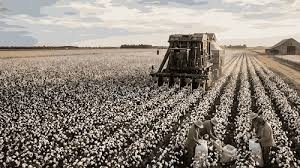
- Mechanization Hurdles: Modern cotton picking is labor-intensive. While mechanized harvesters are needed for HDPS, they are capital-intensive for small farmers owning less than 2 hectares.
- The Health Cost: Excessive pesticide use in cotton belts has triggered a silent health crisis, causing eye diseases and respiratory issues among farmers due to a lack of protective gear.
Way Forward: Strengthening the Ecosystem
To ensure the mission’s success, the following measures are essential:
- Integrated Pest Management (IPM): Moving beyond just Bt technology to include pheromone traps, biopesticides, and mandatory "refuge crops" to slow down pest adaptation.
- Custom Hiring Centres (CHCs): Establishing cooperative models for mechanized harvesting to make expensive technology accessible to marginal farmers.
- Digital Agriculture (Agri-Stack): Using AI and satellite data to provide real-time, hyper-local advisories on weather and pest attacks.
- Policy Synergy: Linking the mission with PM-Krishi Sinchayee Yojana (Per Drop More Crop) to ensure the necessary irrigation infrastructure in rainfed cotton belts.