
Mount Dukono
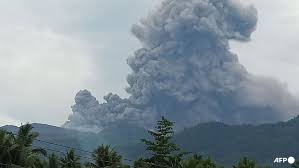
- 04 May 2026
In News:
Mount Dukono, an extremely active volcano in eastern Indonesia, experienced a significant eruption. The event produced a massive volcanic ash column reaching as high as 10,000 meters (10 km) into the atmosphere, accompanied by explosive sounds heard from monitoring posts.
The eruption has triggered an emergency response in North Maluku, underscoring the persistent volcanic hazards within the Pacific Ring of Fire.
Geographical and Geological Context
Mount Dukono is a complex volcano situated on Halmahera Island in the North Maluku province. Unlike simple cone volcanoes, it is characterized by a broad, low profile with multiple overlapping craters and summit peaks.
- Height and Profile: Standing at approximately 1,335 meters above sea level (with varying peak heights across its craters), it is one of the most active systems in Indonesia.
- The Pacific Ring of Fire:
- The Ring of Fire is a roughly 40,000 km-long horseshoe-shaped belt of intense tectonic activity encircling the Pacific Ocean. It is the single most seismically and volcanically active zone on Earth:
- Approximately 90% of the world's earthquakes, including the most powerful ones, occur within this belt.
- It contains between 750 and 915 active or dormant volcanoes — about 75% of the global total.
- Key tectonic plates involved include the Pacific, North American, Eurasian, Philippine Sea, and Indo-Australian plates, interacting primarily through subduction.
- Notable historical eruptions within the Ring include Indonesia's Mount Tambora (1815 — largest eruption in recorded history), Krakatoa (1883), and the Philippines' Mount Pinatubo (1991), all of which had measurable global climate effects.
- Active Vent: Current activity is primarily centered on the MalupangWarirang crater, which has been in a state of near-continuous eruption since 1933.
Historical and Eruptive Behavior
Since its first major recorded eruption in 1550, which produced significant lava flows, Dukono has remained a persistent threat.
- Continuous Activity: The volcano is known for its long-term, low-level eruptive state, characterized by frequent ash emissions, "booming" explosive sounds, and occasional lava and mudflows.
- Recent Trends: In 2026, the frequency of eruptions increased, with nearly 100 events recorded between late March and early May.
Ecological and Socio-Economic Impact
Beyond the geological threat, Mount Dukono is surrounded by lush tropical rainforests.
- Endemic Biodiversity: The region is a habitat for unique flora and fauna, including several endemic species of birds such as the White Parrot and various Halmahera-specific eagles.
- Propriety of Land: The volcanic soil provides high fertility for local plantations; however, the ongoing eruptions necessitate a delicate balance between leveraging agricultural potential and ensuring the safety of those living in the shadow of the volcano.