
Public Accounts Committee
- 26 May 2026
In News:
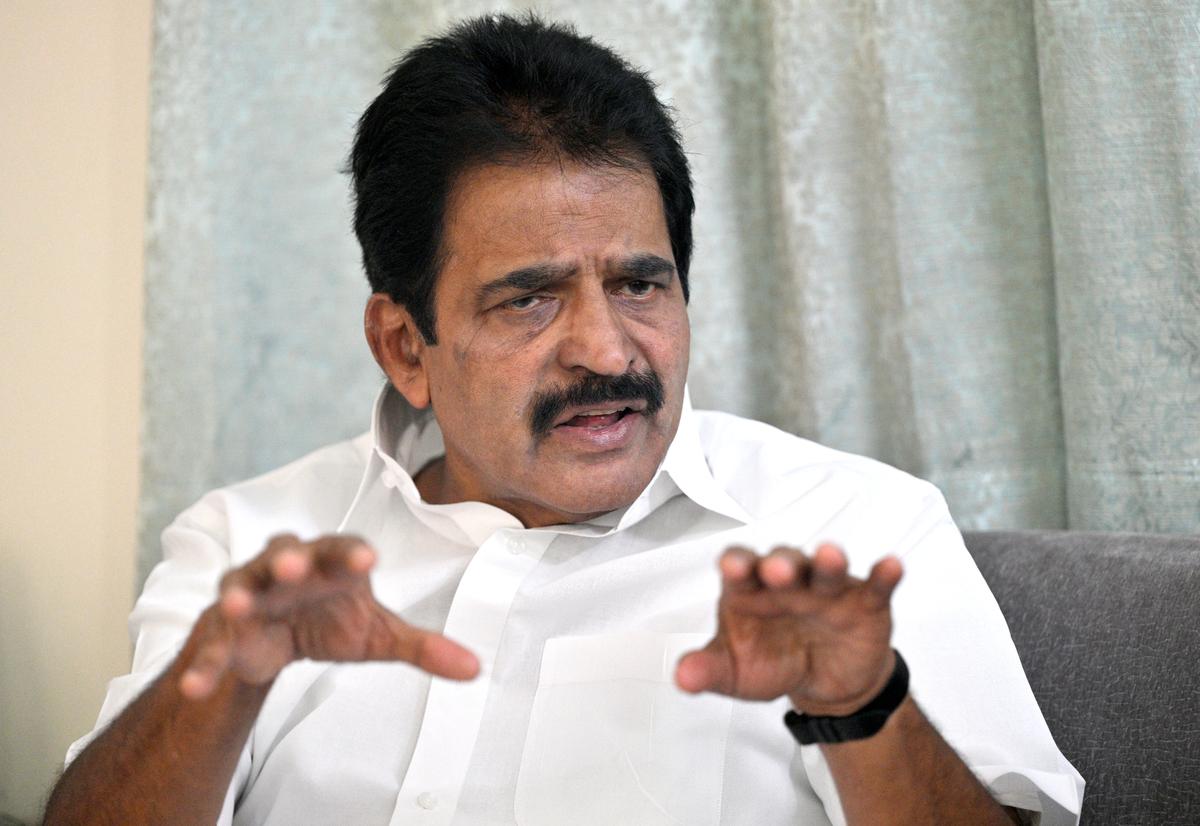
Lok Sabha Speaker Om Birla formally reconstituted four parliamentary committees for the 2026–27 financial year, with terms expiring on April 30, 2027. Congress leader KC Venugopal was reappointed as Chairperson of the Public Accounts Committee (PAC).
- The BJP raised objections regarding the committee's perceived inclination to take up issues suo motu — on its own initiative — without prior referral, highlighting a potential divergence in understanding the scope and operational autonomy of the PAC.
- The panel also expressed concern over pending Action Taken Notes and a heavy backlog in the Audit Para Monitoring System.
What is the PAC?
- The Public Accounts Committee is the oldest parliamentary committee in India, established in 1921 under British rule.
- It is constituted every year and serves as Parliament's primary instrument for scrutinising government finances after funds have been spent.
- Its core purpose is to audit the revenue and expenditure of the Government of India, ensuring that public funds are spent efficiently, legally, and in accordance with Parliamentary intent.
Composition and Membership
- The PAC consists of 22 members — 15 from Lok Sabha and 7 from Rajya Sabha. The Chairperson is appointed by the Speaker from amongst Lok Sabha members and is, by convention, drawn from the principal Opposition party. This tradition was formally established in 1967–68, when the Speaker for the first time appointed a member of the Opposition as Chairperson.
- Importantly, ministers cannot be members of the PAC, preserving the committee's independence from the executive. Each member serves a term of one year.
Functions of the PAC
- Examining CAG Reports — The PAC scrutinises the reports of the Comptroller and Auditor General (CAG) of India on government expenditure. The CAG acts as the eyes and ears of Parliament, and the PAC acts as the enforcement arm that follows up on audit findings.
- Ensuring Proper Utilisation of Funds — It verifies that money sanctioned by Parliament has been spent for the purposes for which it was granted — no more, no less.
- Investigating Irregularities — The committee investigates financial irregularities, losses, and inefficiencies in government spending, and can call senior government officials and even heads of regulatory bodies to depose before it.
- Action Taken Notes (ATNs) — Ministries and departments are required to submit ATNs explaining what action they have taken on the PAC's recommendations. Pending ATNs represent a significant accountability gap, which the reconstituted committee has flagged as a priority concern.
Public Accounts Committee
- 03 May 2026
In News:
In the latest development within the Indian parliamentary framework, K.C. Venugopal has been reappointed as the Chairman of the Public Accounts Committee (PAC) for the 2026–27 term. As one of the most powerful financial standing committees, the PAC serves as a vital instrument of the legislature to ensure that the executive remains accountable for every rupee spent from the public exchequer.
Historical Evolution and Genesis
- The PAC is the oldest of the parliamentary committees in India. Its origins trace back to the Montagu-Chelmsford Reformsof 1919, leading to its formal establishment in 1921. Post-independence, it evolved into a permanent parliamentary committee under the Constitution of India in 1950.
- A significant democratic tradition was established in 1967, since when the Chairman of the PAC is invariably appointed from the Opposition party. This convention is designed to ensure an unbiased and critical scrutiny of government expenditure, fostering a robust system of checks and balances.
Composition and Appointment
The committee represents both houses of Parliament, ensuring a bicameral oversight mechanism.
- Membership: It consists of 22 members—15 from the Lok Sabha and 7 from the Rajya Sabha.
- Election Process: Members are elected annually through the principle of proportional representation by means of a single transferable vote, allowing for the representation of various political parties in proportion to their strength.
- Exclusion of Ministers: To maintain independence and prevent a conflict of interest, ministers cannot be members of the committee.
- Tenure: The term of office for members is limited to one year.
- Chairmanship: The Chairman is appointed by the Speaker of the Lok Sabha.
Core Mandate and Scope of Scrutiny
The primary responsibility of the PAC is to examine the accounts showing the appropriation of sums granted by Parliament.
- Financial Audit: It scrutinizes the Appropriation Accounts and the Finance Accounts of the Union Government, along with any other accounts laid before the Lok Sabha.
- Beyond Legality: The PAC’s mandate is not limited to technical legality. It dives into the “Propriety Audit,” evaluating government spending on the grounds of efficiency, economy, and wisdom. It aims to uncover cases of waste, loss, or financial irregularity.
- Handling Excess Expenditure: If the government spends more than the amount sanctioned by Parliament, the PAC investigates the circumstances. These excesses must be regularized under Article 115 of the Constitution, based on the committee’s recommendations.
The PAC-CAG Synergy: "Friend, Philosopher, and Guide"
The functioning of the PAC is fundamentally supported by the Comptroller and Auditor General (CAG) of India. The CAG submits three main audit reports to the President, which are then laid before Parliament:
- Audit report on Appropriation Accounts.
- Audit report on Finance Accounts.
- Audit report on Public Undertakings.
The CAG assists the committee during its deliberations, helping members navigate complex financial data. This relationship is so integral that the CAG is often termed the “friend, philosopher, and guide” of the PAC.
Ensuring Impact: Follow-up and Monitoring
To ensure that its recommendations do not remain mere paper tigers, a structured follow-up mechanism exists:
- Action Taken Reports (ATRs): The government is required to submit "Action Taken Notes" on the committee's recommendations, usually within six months.
- Modern Monitoring: The Audit Para Monitoring System (APMS) has been implemented to electronically track the status of these notes, ensuring transparency and reducing the pendency of unresolved audit observations.