
Logistics Port Performance Index
- 31 May 2026
In News:
The Ministry of Ports, Shipping and Waterways (MoPSW) has launched the Logistics Port Performance Index (LPPI) for FY 2024–25 along with four major digital initiatives aimed at improving governance, operational efficiency and ease of doing business in India's maritime sector. These initiatives are expected to support India's ambition of becoming a globally competitive maritime and logistics hub under the Maritime India Vision 2030 and Maritime Amrit Kaal Vision 2047.
What is the Logistics Port Performance Index (LPPI)?
The Logistics Port Performance Index (LPPI) is a national benchmarking framework developed under the Sagar Aankalan initiative to assess, compare and improve the operational efficiency of Indian ports. It introduces a standardized performance assessment mechanism that enables ports to benchmark themselves against national best practices while encouraging continuous operational improvement.
Unlike conventional ranking systems, the LPPI evaluates not only the present performance of ports but also their year-on-year progress, thereby promoting sustained efficiency gains rather than one-time achievements. The framework supports evidence-based policymaking and facilitates healthy competition among ports.
Objectives
- Establish a uniform national benchmark for port performance.
- Improve cargo handling efficiency and reduce logistics costs.
- Promote transparency, accountability and data-driven governance.
- Strengthen India's competitiveness in global maritime trade.
- Support integrated multimodal logistics under the PM Gati Shakti National Master Plan.
- Contribute to the goals of Maritime India Vision 2030 and Maritime Amrit Kaal Vision 2047.
Assessment Parameters
The LPPI evaluates ports across three cargo segments:
- Dry Bulk Cargo
- Liquid Bulk Cargo
- Container Cargo
Performance is measured using key operational indicators such as:
- Cargo handled
- Vessel Turnaround Time (VTT)
- Berth Idle Time
- Pre-Berthing Waiting Time (PBWT)
- Container Dwell Time
- Ship Berth Day Output
A distinctive feature of the index is that it gives equal weightage (50:50) to:
- Absolute operational performance.
- Improvement over the previous year.
This approach incentivises both efficiency and continuous reform.
Top Performing Ports (FY 2024–25)
- Dry Bulk Cargo (>5 MillionTonnes):Paradip Port Authority
- Liquid Bulk Cargo:Sikka Port and Terminals
- Container Cargo (>0.5 Million TEUs):Mundra Port
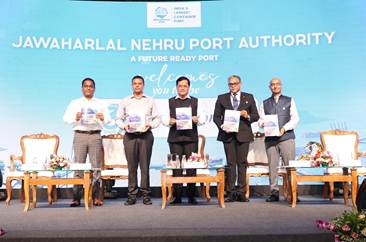
- Second among Major Container Ports:Jawaharlal Nehru Port Authority (JNPA)
Major Digital Initiatives Launched
To complement the LPPI, the Directorate General of Shipping introduced four digital platforms to improve service delivery and transparency across the maritime ecosystem.
1. 24×7 Grievance Redressal Module (e-Navik Platform)
- Enables round-the-clock grievance registration and monitoring for seafarers.
- Enhances transparency and accountability in grievance resolution.
2. Ship Registration Module (e-Samudra Platform)
- Digitises the ship registration process.
- Reduces paperwork and processing time while improving ease of doing business.
3. Medical Practitioner Module
- Creates a digital registry of authorised medical practitioners conducting medical examinations of seafarers.
- Improves standardisation and regulatory compliance.
4. Unified Ship Recycling Credit Note Module
- Integrated portal supporting the Ship Recycling Credit Scheme.
- Ship owners recycling vessels at Hong Kong Convention-compliant Indian ship recycling yards receive a credit note equal to 40% of the vessel's scrap value, which can be redeemed against new shipbuilding projects in India.
- The initiative forms part of the Government's ?70,000-crore Maritime Development Package (2025) to promote domestic shipbuilding and green ship recycling.
Significance for India
- Improves port productivity and operational efficiency.
- Reduces logistics costs and vessel turnaround time.
- Encourages digital governance in the maritime sector.
- Supports sustainable ship recycling and indigenous shipbuilding.
- Enhances India's integration with global supply chains.
- Strengthens India's position as a leading maritime and logistics nation under the Blue Economy framework.
India-China 35th WMCC Meeting
- 31 May 2026
In News:
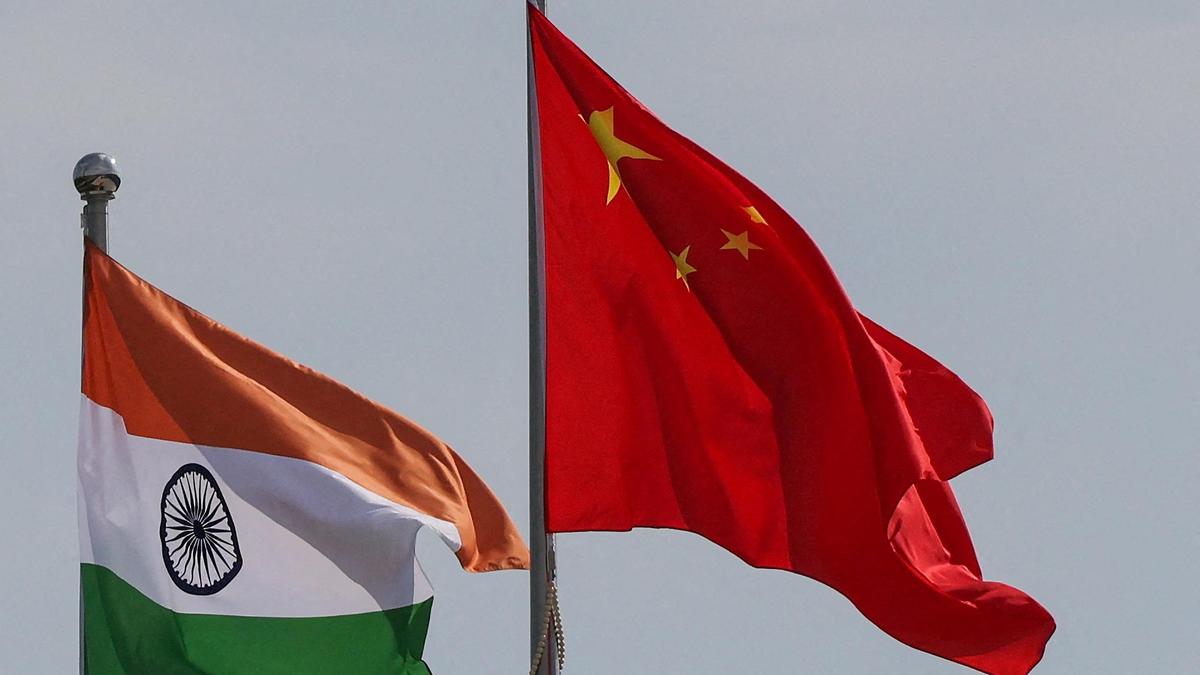
India and China recently held the 35th meeting of the Working Mechanism for Consultation and Coordination on India-China Border Affairs (WMCC) in Beijing. The discussions focused on maintaining peace along the Line of Actual Control (LAC) and advancing efforts towards the normalisation of bilateral relations.
Key Highlights of the WMCC Meeting
The meeting served as an important diplomatic platform to address ongoing border-related issues and strengthen coordination mechanisms between the two countries.
- Focus Areas of Discussion:
- Border delimitation and clarification of the LAC.
- Border management and confidence-building measures.
- Mechanism building for sustained dialogue.
- Cross-border cooperation initiatives.
- Peace and Stability:Both sides expressed satisfaction over the progress made in maintaining peace and tranquillity along the LAC, recognising that stability at the border is essential for improving overall bilateral relations.
- Trans-border Rivers Mechanism:India emphasised the need for an early meeting of the Expert Level Mechanism on Trans-border Rivers, highlighting its strategic and ecological importance, particularly in the context of water sharing and data exchange.
- Special Representatives (SR) Talks:Both countries agreed to actively prepare for the 25th round of Special Representatives (SR) talks on the boundary question, which will be hosted in China.
India-China Border: An Overview
India shares a 3,488 km-long border with China, spanning multiple states and union territories:
- Ladakh: 1,597 km
- Himachal Pradesh: 200 km
- Uttarakhand: 345 km
- Sikkim: 220 km
- Arunachal Pradesh: 1,126 km
The Line of Actual Control (LAC) emerged after the 1962 India-China War and functions as the de facto boundary between the two countries.
- India considers the LAC to be 3,488 km long, while China estimates it at approximately 2,000 km.
- The boundary remains undemarcated, and efforts to clarify and confirm its alignment are ongoing.
- The Indo-Tibetan Border Police (ITBP) is the primary force responsible for guarding the India-China border.
Sectors of the India-China Border
- The India-China border is divided into three sectors, each with distinct geographical and historical characteristics:
|
Sector |
Bordering States/UTs |
Key Dispute & Historical Claims |
|
Western |
Ladakh |
Dispute centred on Aksai Chin. India bases its claim on the Johnson Line (1865), while China relies on the McDonald Line (1893). |
|
Middle |
Himachal Pradesh, Uttarakhand |
Least contentious sector; the only region where both countries have exchanged maps. |
|
Eastern |
Sikkim, Arunachal Pradesh |
Dispute revolves around the McMahon Line (1914 Simla Convention). China rejects this line and claims Arunachal Pradesh as "South Tibet" |
India's First Indigenous Hydrogen Train

- 31 May 2026
In News:
Indian Railways has approved the operational rollout of India's first indigenous Hydrogen Fuel Cell-based train on the Jind–Sonipat section in Haryana. Developed by the Research Designs and Standards Organisation (RDSO), the train marks a significant milestone in India's transition towards clean, indigenous and sustainable rail transportation.
About the Hydrogen Fuel Cell Train
The hydrogen train is a 10-car passenger trainset powered entirely by a Hydrogen Fuel Cell Propulsion System, making it India's first indigenously developed hydrogen-powered train. Unlike conventional diesel locomotives, it does not burn fossil fuels. Instead, it generates electricity through an electrochemical reaction between compressed hydrogen stored onboard and oxygen from the atmosphere. The electricity produced powers the train's 1,200 kW propulsion system, while the only by-products released are water vapour and heat, making it a zero tailpipe emission mode of transport.
The project has been developed by the Research Designs and Standards Organisation (RDSO), the research and standards-setting body of Indian Railways, and supports the Railways' objective of achieving Net Zero Carbon Emissions by 2030.
How Does a Hydrogen Fuel Cell Work?
A hydrogen fuel cell converts the chemical energy of hydrogen directly into electrical energy without any combustion process.
The working mechanism involves the following steps:
- Hydrogen Storage: Compressed hydrogen is stored in onboard high-pressure tanks.
- Electrochemical Reaction: Hydrogen reacts with oxygen from the atmosphere inside the fuel cell stack across a specialised membrane.
- Electricity Generation: The reaction produces electricity, which powers the traction motors and onboard electrical systems.
- By-products: The only emissions are water vapour and heat, making the technology environmentally friendly.
Unlike batteries, fuel cells continue generating electricity as long as hydrogen fuel is supplied.
Key Features
The hydrogen train incorporates several technological and operational innovations:
- Pilot Route: Jind–Sonipat section in Haryana.
- Train Configuration: Indigenous 10-car passenger trainset.
- Propulsion System: 1,200 kW Hydrogen Fuel Cell.
- Maximum Operational Speed: 75 kmph.
- Refuelling Infrastructure: Dedicated hydrogen production, compression and refuelling facility at Jind station.
- Maintenance Base: Dedicated workshop at Shakurbasti.
- Safety Measures: Hydrogen leak detectors, flame detectors, automated monitoring systems, standby compressors and RDSO-approved Standard Operating Procedures (SOPs).
- Operational Monitoring: Initial operations will be supervised by trained technical personnel to ensure safety and performance.
Significance
The launch of the hydrogen train represents an important step in the decarbonisation of Indian Railways, particularly on non-electrified railway routes, where diesel locomotives continue to operate. Hydrogen fuel cell technology offers a clean alternative by eliminating carbon emissions at the point of use while reducing dependence on imported fossil fuels.
The project also complements the objectives of the National Green Hydrogen Mission, promotes indigenous technological capabilities under Atmanirbhar Bharat, and strengthens India's commitment towards achieving its climate goals. If the pilot project proves successful, hydrogen-powered trains could be deployed on other non-electrified routes where complete railway electrification is economically challenging.
Challenges
Despite its potential, hydrogen rail technology faces several constraints:
- High production cost of green hydrogen due to expensive electrolysers and renewable energy requirements.
- Limited hydrogen production, storage and transportation infrastructure.
- High initial capital investment for refuelling stations and fuel cell technology.
- Hydrogen is highly flammable, necessitating stringent safety standards and continuous monitoring.
- Long-term commercial viability depends on reducing hydrogen production costs and improving fuel cell efficiency.
Judiciary’s Role in Complete Justice
- 31 May 2026
In News:
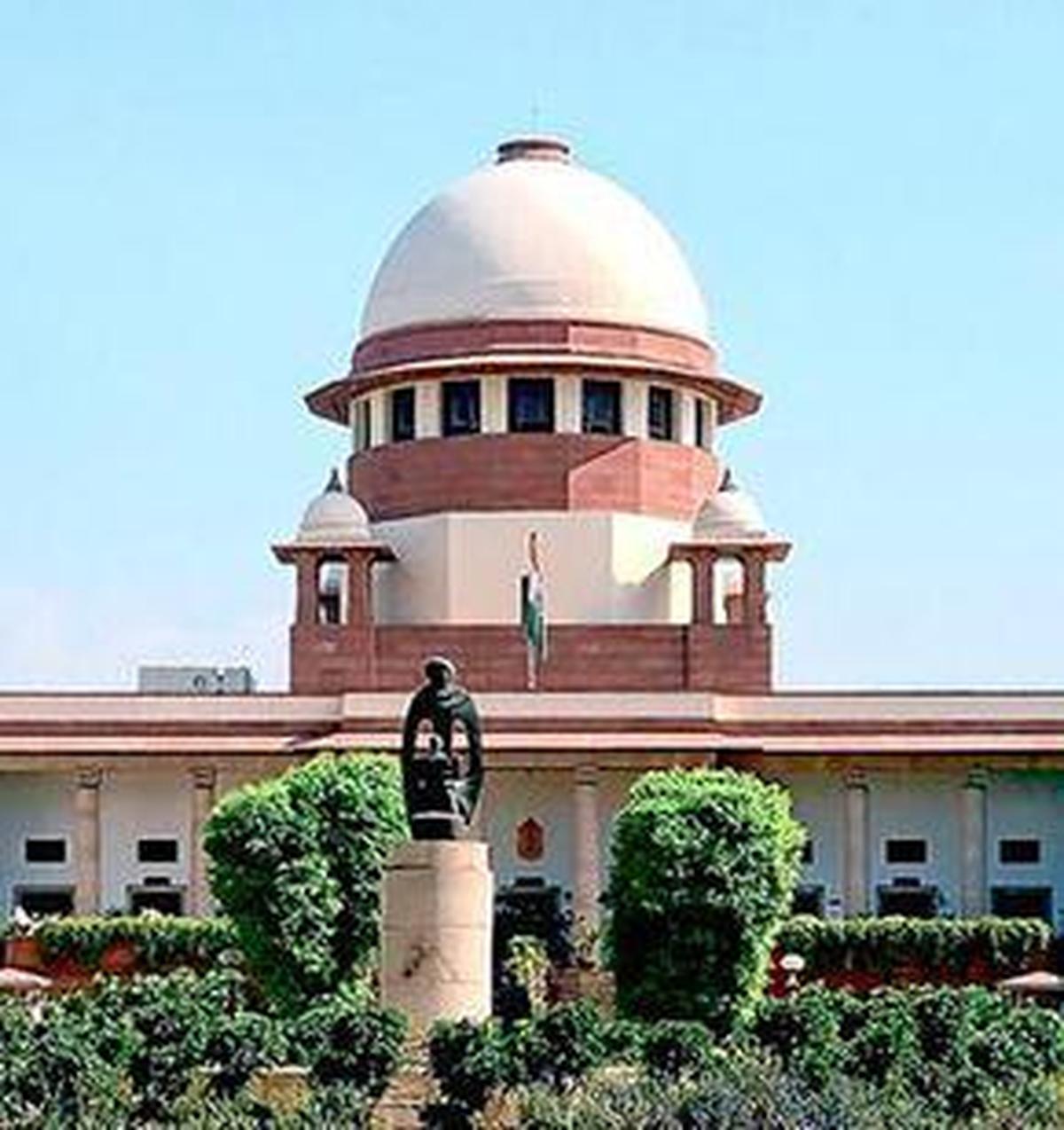
The Supreme Court of India, while taking suo motu cognisance of two fatal road accidents, held that the Right to Safe Travel on National Highways forms an integral part of the Right to Life under Article 21 of the Constitution. Invoking its extraordinary powers under Article 142, the Court issued directions aimed at strengthening road safety and ensuring accountability of highway authorities. The judgment has once again brought into focus the Supreme Court's constitutional role in delivering "complete justice."
What is the Doctrine of Complete Justice?
The doctrine of complete justice is a unique constitutional power vested exclusively in the Supreme Court under Article 142. Unlike ordinary judicial powers that operate within the boundaries of statutory law and procedural rules, Article 142 empowers the Court to pass any decree or order necessary to ensure that justice is fully achieved in matters pending before it.
This extraordinary jurisdiction acts as a constitutional safety valve, enabling the Court to bridge legislative gaps, remedy exceptional situations, and protect constitutional rights where existing laws prove inadequate. Rather than being confined to procedural technicalities, the Court is empowered to uphold substantive justice in accordance with the spirit of the Constitution.
Constitutional Framework Governing Complete Justice
The Supreme Court's exercise of complete justice is rooted in a combination of constitutional provisions that collectively strengthen its role as the guardian of fundamental rights.
- Article 142 grants the Supreme Court the authority to pass any order necessary for doing complete justice in any matter before it. This power is unique to the apex court and cannot ordinarily be curtailed by statutory limitations.
- Article 21, which guarantees the Right to Life and Personal Liberty, has been interpreted expansively over the years to include several derivative rights such as the right to livelihood, clean environment, education, privacy and, most recently, the right to safe travel on National Highways.
- Article 141 provides that the law declared by the Supreme Court is binding on all courts in India. Consequently, principles evolved while exercising Article 142 become authoritative precedents unless modified by a larger Bench or constitutional amendment.
- While Article 226 empowers High Courts to enforce fundamental rights through writ jurisdiction, it does not confer powers equivalent to Article 142. High Courts remain bound by statutory limitations and cannot exercise the same broad residuary jurisdiction available to the Supreme Court.
Judicial Recognition of Safe Highways as a Fundamental Right
Road accidents remain one of India's gravest public safety challenges, claiming over 1.7 lakh lives annually. Treating road safety as merely an administrative responsibility has often resulted in fragmented implementation and weak accountability.
Recognising this reality, the Supreme Court held that safe mobility is inseparable from the constitutional guarantee of life and dignity under Article 21. By declaring safe travel on National Highways a fundamental right, the Court transformed road safety from a policy objective into a constitutional obligation.
The judgment places a greater responsibility on governments, highway authorities and implementing agencies to ensure scientifically designed roads, effective enforcement of traffic laws, emergency medical response systems and continuous monitoring of highway safety standards.
Significance of the Doctrine of Complete Justice
The power under Article 142 has played a transformative role in the evolution of Indian constitutional jurisprudence. It enables the Supreme Court to respond effectively when statutory law fails to address emerging social realities or when procedural barriers prevent justice.
The doctrine allows the Court to protect fundamental rights even in situations where legislation is silent or inadequate. It has often served as a mechanism for advancing constitutional morality and adapting legal principles to changing societal needs.
Another important contribution of Article 142 lies in its ability to ensure effective implementation of constitutional values. By issuing binding directions in areas such as environmental protection, gender justice, police reforms and now road safety, the Court has sought to strengthen governance where executive action has been insufficient.
The recognition of safe highways as a constitutional right illustrates how judicial interpretation can convert public welfare objectives into enforceable constitutional guarantees.
Sample Registration System (SRS) Statistical Report 2024
- 31 May 2026
In News:
The Office of the Registrar General & Census Commissioner, under the Ministry of Home Affairs, has released the Sample Registration System (SRS) Statistical Report 2024, which reveals that India's Total Fertility Rate (TFR) has declined to 1.9, falling below the replacement level of 2.1 for the first time. The report highlights significant improvements in maternal and child health while also signalling the beginning of a new demographic challenge marked by population ageing and regional disparities.
About the Sample Registration System (SRS)
- The Sample Registration System (SRS) is India's largest continuous demographic survey and serves as the country's most reliable source of annual estimates on fertility and mortality.
- Conducted by the Office of the Registrar General & Census Commissioner under the Ministry of Home Affairs, the survey provides annual estimates of the Birth Rate, Death Rate, Infant Mortality Rate (IMR), Under-Five Mortality Rate (U5MR), Total Fertility Rate (TFR) and other demographic indicators between two Census operations.
- The 2024 report is based on the 2011 Census sampling frame and covers nearly 8.9 million individuals across 8,839 sample units, making it the principal macro-level demographic database for policy formulation.
India's Demographic Profile: Major Findings
- The report indicates that India has entered an advanced stage of demographic transition. The Total Fertility Rate (TFR) has declined to 1.9, significantly below the replacement level of 2.1, suggesting that Indian families are opting for fewer children. This decline is accompanied by a continuous fall in the Crude Birth Rate (CBR) from 21.0 in 2014 to 18.3 in 2024, while the Crude Death Rate (CDR) has stabilised at 6.4.
- The report also reflects substantial progress in public health outcomes. The Infant Mortality Rate (IMR) has fallen to 24 deaths per 1,000 live births, compared to 30 in 2019, while the Under-Five Mortality Rate (U5MR) has declined to 28 per 1,000 live births. These improvements are largely attributed to expanded immunisation coverage, institutional deliveries, improved neonatal care and better access to healthcare facilities.
- A notable achievement is the expansion of institutional healthcare, with 95.4% of all deliveries now taking place in hospitals or recognised healthcare institutions, indicating significant progress in maternal healthcare services.
- The report also reveals important demographic shifts. Children (0–14 years) now constitute 24% of the population, whereas the working-age population(15–59 years) accounts for 66.4%, reinforcing India's demographic dividend. Simultaneously, the elderly population (60 years and above) has increased to 9.7%, indicating the gradual onset of population ageing. Reflecting broader social transformation, the mean age at effective marriage for women has risen to 23.1 years, suggesting greater female educational attainment and delayed childbearing. The Sex Ratio at Birth (2022–24 average) has marginally improved to 918 females per 1,000 males, though it remains below the natural level.
What Do These Trends Indicate?
The findings indicate that India is progressing through the late stage of the Demographic Transition Model (DTM), characterised by low birth rates, low death rates and slowing population growth. Unlike previous decades when population explosion dominated policy discourse, India is now gradually shifting towards concerns related to ageing, labour force sustainability and social security.
The expansion of the working-age population presents a valuable demographic dividend. If complemented with quality education, skill development and employment generation, it can significantly accelerate economic growth and improve productivity. However, this demographic advantage is time-bound and requires effective policy intervention before the population begins ageing rapidly.
The report also reflects the positive outcomes of investments in public health. The sharp increase in institutional deliveries and the decline in infant and child mortality demonstrate the success of initiatives such as improved maternal healthcare, immunisationprogrammes and strengthened primary healthcare infrastructure.
Emerging Challenges
Despite encouraging national averages, the report highlights considerable regional disparities. Southern states such as Kerala and Tamil Nadu have already entered an advanced demographic stage with very low fertility levels, while several northern and central states continue to record relatively higher fertility and infant mortality rates. For instance, Kerala records an IMR of only 8, whereas Chhattisgarh reports an IMR of 36, revealing significant inequalities in healthcare outcomes and human development.
The report also exposes persistent rural-urban disparities. Rural areas continue to experience higher infant mortality and comparatively lower access to quality healthcare infrastructure than urban centres, indicating the need for stronger primary healthcare systems in underserved regions.
Another emerging concern is the rapid decline in fertility. Although lower fertility reflects improved education and healthcare, sustained fertility below replacement level could eventually reduce the size of the labour force and increase the old-age dependency ratio. States such as Delhi (TFR 1.2) and Kerala (TFR 1.3) already face the prospect of accelerated population ageing.
Equally concerning is the finding that 45.5% of deceased individuals received no medical attention before death, pointing to deficiencies in geriatric care, palliative care and end-of-life healthcare services.
Quad Foreign Ministers’ Meeting 2026
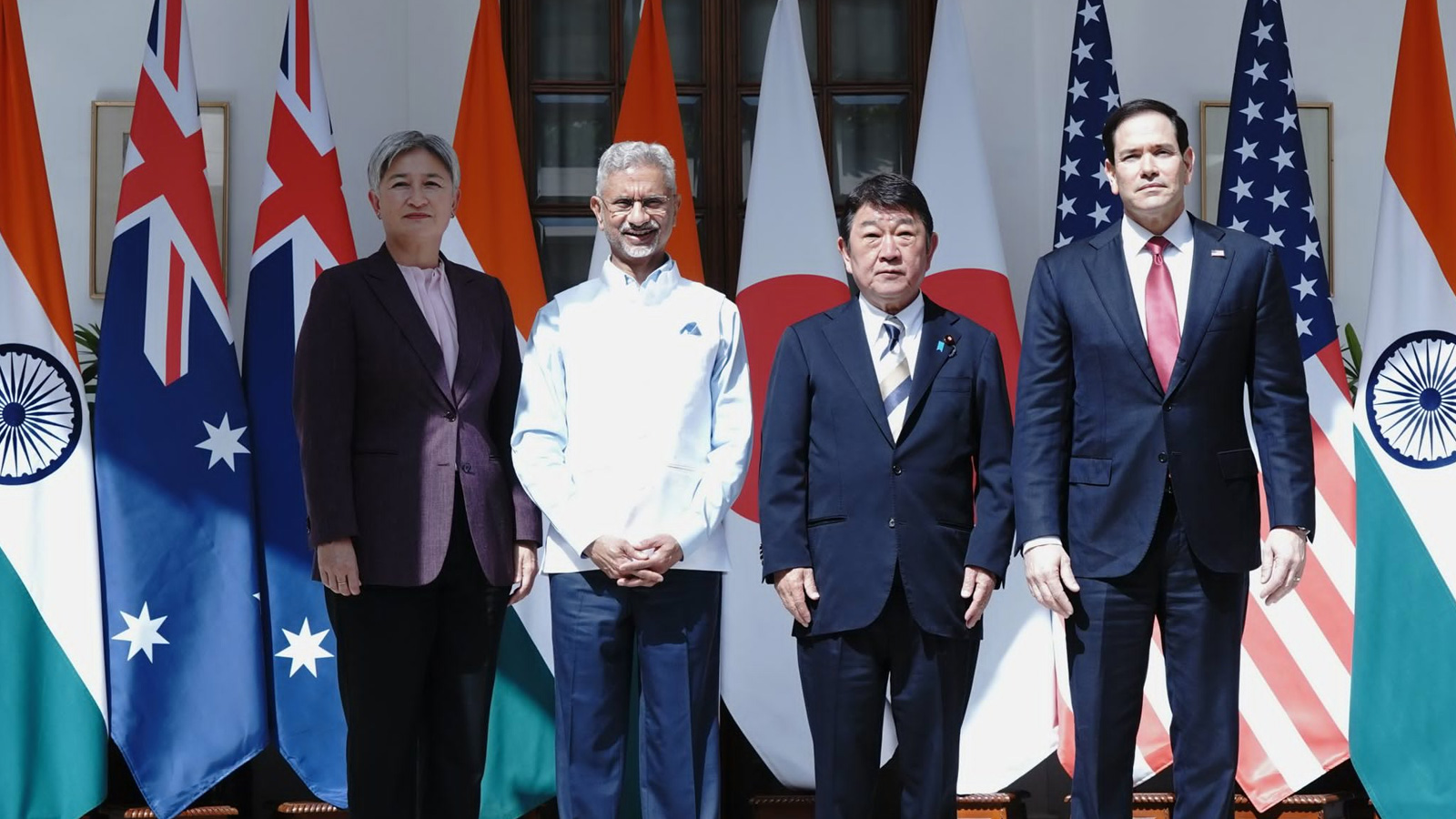
- 30 May 2026
In News:
The 11th Quad Foreign Ministers' Meeting was held in New Delhi amid growing geopolitical tensions in the South China Sea, Taiwan Strait, and Strait of Hormuz. The four Quad countries—India, the United States, Japan, and Australia—announced several new initiatives on maritime security, critical minerals, energy security, emerging technologies, and disaster response, reaffirming their commitment to a free, open, inclusive, and rules-based Indo-Pacific.
About the Quad
- The Quadrilateral Security Dialogue (Quad) is an informal strategic partnership comprising India, the United States, Japan, and Australia.
- It aims to promote a free, open, inclusive, prosperous, and resilient Indo-Pacific, based on respect for international law, freedom of navigation, territorial integrity, and peaceful resolution of disputes.
- The grouping originated as a humanitarian coordination mechanism following the 2004 Indian Ocean Tsunami, was first proposed by former Japanese Prime Minister Shinzo Abe in 2007, and was revived in 2017 in response to the changing strategic environment in the Indo-Pacific.
- At the 2021 Leaders' Summit, the Quad adopted the "Spirit of the Quad", reaffirming its commitment to democratic values, rule of law, and a region free from coercion.
- Some of its key initiatives include the Malabar Naval Exercise, Quad-at-Sea Ship Observer Mission, Indo-Pacific Partnership for Maritime Domain Awareness (IPMDA), and growing cooperation through the Quad Plus format with countries such as South Korea, New Zealand, and Vietnam.
Key Outcomes of the 11th Quad Foreign Ministers' Meeting
The meeting significantly expanded cooperation across security, economic resilience, technology, and humanitarian assistance.
Maritime and Security Cooperation
- The Quad launched the Indo-Pacific Maritime Surveillance Collaboration (IPMSC) to improve Maritime Domain Awareness (MDA) through information sharing and coordinated surveillance, with an initial focus on the Indian Ocean Region (IOR).
- It also expanded the Indo-Pacific Partnership for Maritime Domain Awareness (IPMDA) by developing a Common Operating Picture (COP) to integrate real-time maritime information across the Indo-Pacific.
- India will host the next Quad-at-Sea Ship Observer Mission, while Australia will organise the Quad Counterterrorism Tabletop Exercise (2026) focusing on state-sponsored terrorism and the misuse of Unmanned Aerial Vehicles (UAVs).
Economic Security and Supply Chain Resilience
- Recognising the strategic importance of critical minerals and secure supply chains, the Quad adopted the Quad Critical Minerals Initiative Framework to coordinate investments in mining, processing, recycling, and resilient supply chains.
- The partners also launched the Quad Initiative on Indo-Pacific Energy Security, committing over USD 25 million for technology collaboration, energy market analysis, emergency response, and resilient energy supply chains.
- Further, under the Ports of the Future Partnership, the Quad will work with Fiji to upgrade port infrastructure and committed to connecting all Pacific Island Forum countries through resilient undersea cable networks by 2026, strengthening regional digital connectivity.
Critical and Emerging Technologies
Technology cooperation emerged as another major pillar of the Quad.
The members agreed to collaborate on:
- Next-generation (6G) communication standards and Open RAN technologies.
- A Digital Identity Standards "Translation Guide" to enable cross-border interoperability.
- The AI-ENGAGE Initiative, under which over USD 6 million has been allocated for research using Artificial Intelligence, robotics, and remote sensing to improve agricultural productivity, pest management, and food security across the Indo-Pacific.
Humanitarian Assistance and Disaster Relief (HADR)
- Building on lessons from the 2025 Honolulu Tabletop Exercise, the Quad strengthened its disaster response architecture by enhancing coordination mechanisms for emergency response.
- The grouping also committed over USD 50 million to train health professionals, improve preparedness for disease outbreaks, and strengthen humanitarian assistance and disaster relief (HADR) capabilities across the Indo-Pacific.
Significance of the Quad for India
For India, the Quad has evolved into a crucial platform that complements its Act East Policy, Indo-Pacific Oceans Initiative (IPOI), and vision of SAGAR (Security and Growth for All in the Region).
It helps India:
- Counter China's growing strategic presence and the "String of Pearls" strategy in the Indian Ocean.
- Strengthen Maritime Domain Awareness through initiatives like IPMSC and IPMDA.
- Diversify critical mineral and technology supply chains under the global China 1 strategy.
- Enhance cooperation in AI, semiconductors, cyber security, telecommunications, and clean energy.
- Deepen defence interoperability while preserving India's policy of Strategic Autonomy, as the Quad is not a military alliance.
National e-Governance Service Delivery Assessment
- 30 May 2026
In News:
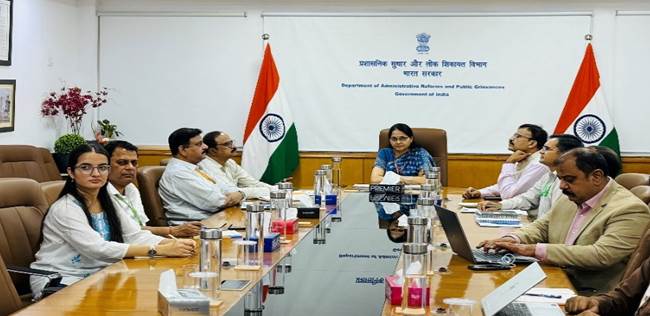
The Department of Administrative Reforms and Public Grievances (DARPG) has launched the National e-Governance Service Delivery Assessment (NeSDA) 2025 Portal to assess the quality and effectiveness of online public service delivery across States, Union Territories (UTs), and selected Central Ministries. The portal aims to strengthen digital governance by enabling standardized assessment, benchmarking, and continuous improvement in service delivery.
What is NeSDA?
- The National e-Governance Service Delivery Assessment (NeSDA) is a biennial assessment framework developed by DARPG to evaluate the maturity and effectiveness of e-governance services from a citizen-centric perspective.
- It is based on the Online Service Index (OSI) of the UN e-Government Survey, but has been adapted to India's federal governance structure.
- Rather than ranking governments solely on the number of services available online, NeSDA assesses how effectively these services are delivered, focusing on their accessibility, usability, transparency, and overall user experience.
- It also serves as a national benchmarking exercise, encouraging States, UTs, and Central Ministries to adopt best practices and bridge gaps in digital governance.
Key Features of NeSDA 2025
- NeSDA 2025 expands both the scope and depth of assessment. It evaluates State, UT, City, and Central Ministry portals, along with dedicated service portals, thereby covering the complete digital service delivery ecosystem.
- The framework assesses Government-to-Citizen (G2C) and Government-to-Business (G2B) services across major sectors such as finance, labour and employment, education, local governance, utility services, social welfare, health, agriculture, home security, environment, tourism, public grievance, and transport.
- A notable addition in NeSDA 2025 is the inclusion of services offered by the Ministry of Corporate Affairs, reflecting the increasing emphasis on digital business governance.
- To ensure uniform evaluation, the framework proposes assessment of 59 mandatory services for every State and Union Territory and 43 mandatory services for Central Ministries and Departments.
Assessment Parameters
The assessment examines the overall maturity of digital governance through multiple dimensions. It evaluates whether online services are accessible, easy to use, secure, and privacy-compliant, while also assessing end-to-end digital service delivery, integrated service delivery, status tracking, Open Government Data (OGD), e-participation, and the adoption of emerging technologies such as Artificial Intelligence. This comprehensive approach ensures that governments focus not only on digitization but also on the quality of citizens' digital experience.
Significance
NeSDA has emerged as an important instrument for promoting good governance and cooperative federalism by enabling evidence-based comparison of digital service delivery across governments.
It helps identify implementation gaps, encourages the adoption of best practices, and improves accountability through measurable performance indicators.
The launch of the NeSDA 2025 Portal will further streamline online data collection, stakeholder consultations, capacity-building programmes, and periodic reviews.
As India expands its Digital Public Infrastructure, NeSDA complements flagship initiatives such as Digital India, Ease of Living, and Minimum Government, Maximum Governance by ensuring that public services are not only digitized but are also citizen-friendly, inclusive, transparent, and efficient.
Memflation

- 30 May 2026
In News:
The global semiconductor industry is witnessing a phenomenon called 'Memflation', resulting in a shortage of conventional memory chips and a sharp rise in their prices. In India, this has led to a shortage of entry-level smartphones (?10,000–?15,000) as semiconductor manufacturers divert production capacity towards High Bandwidth Memory (HBM) required for Artificial Intelligence (AI) infrastructure. At the same time, global semiconductor revenues are projected to cross $1.3 trillion in 2026, a 64% increase over 2025, driven largely by AI-led demand.
What is Memflation?
Memflation is a term coined by Gartner to describe the structural inflation in semiconductor memory prices caused by the rapid expansion of AI infrastructure. The extraordinary demand for AI chips and advanced memory has diverted manufacturing resources away from conventional memory components, creating shortages and driving up prices for consumer electronics.
Unlike temporary supply disruptions, memflation represents a long-term structural shift in the semiconductor industry, where production is increasingly aligned with high-margin AI applications rather than mass-market consumer devices.
What is Driving Memflation?
The primary factor behind memflation is the global AI boom, which has significantly increased demand for High Bandwidth Memory (HBM) used in AI accelerators and data centres. Since manufacturing one HBM chip requires 2–3 times more wafer capacity than conventional memory chips, semiconductor manufacturers are allocating a larger share of fabrication resources to AI-related products.
Other contributing factors include:
- Production Shift: Major companies such as Micron Technology are prioritising high-margin AI memory and enterprise chips over consumer memory.
- Pre-emptive Stockpiling: Fearing tariffs and future price increases, companies accumulated large inventories during 2025–26, further tightening global supplies.
- Limited Manufacturing Capacity: Semiconductor fabrication and advanced packaging require enormous capital investment and years to expand, preventing quick supply-side responses.
Role of DRAM, NAND and HBM
The current shortage primarily affects conventional memory technologies used in consumer electronics.
- DRAM (Dynamic Random Access Memory): Temporary memory used by processors in smartphones, laptops and computers for active operations.
- NAND Flash Memory: Non-volatile storage that retains data even when power is switched off and is widely used in smartphones, SSDs and storage devices.
- High Bandwidth Memory (HBM): Advanced stacked memory offering significantly higher speed and bandwidth, primarily used in AI processors, GPUs and high-performance computing.
The rapid shift towards HBM production has reduced the availability of DRAM and NAND, thereby increasing their prices.
Impact on India
India is among the most vulnerable countries because it depends heavily on imported semiconductor components while having a highly price-sensitive consumer market.
The immediate consequences include:
- Shortage of smartphones priced below ?10,000–?15,000.
- Increase in smartphone prices by 15–20% for several brands.
- Rising production costs for entry-level laptops and consumer electronics.
- Smartphone manufacturers increasingly prioritising premium devices over budget models due to higher profitability.
- Greater dependence on global semiconductor supply chains.
Global Implications
Memflation is affecting both technology producers and consumers across the world.
- DRAM prices are expected to rise by nearly 125%, while NAND flash prices could increase by around 243%.
- The semiconductor industry is projected to expand from over $1.3 trillion in 2026 to nearly $1.6 trillion by 2027, with AI emerging as its principal growth driver.
- Rising memory prices are delaying enterprise IT upgrades, increasing hardware costs, and disrupting non-AI technology markets.
- Analysts expect supply constraints and elevated prices to continue through 2026–27, with gradual normalisation only after new fabrication capacities become operational.
150 Years of the Indian Association for the Cultivation of Science (IACS)
- 30 May 2026
In News:
The Indian Association for the Cultivation of Science (IACS) celebrated 150 years of its establishment. To mark the occasion, the Government inaugurated the Plasma Enhanced Chemical Vapor Deposition (PECVD) system for fabricating India's first amorphous silicon solar cell and launched RETINA (Research Entrepreneurship for Translation, Innovation and NAvigation), a centre dedicated to translating scientific research into innovation, startups, and societal applications.
Indian Association for the Cultivation of Science (IACS)
Founded in 1876 by Dr. Mahendralal Sircar, IACS is recognised as the first research institution in Asia established by Indians for the promotion of modern science through original research. Established during British rule, the institute played a pioneering role in fostering scientific temper and indigenous research at a time when scientific education in India was limited.
Key Features
- Established by Dr. Mahendralal Sircar with the vision of promoting original scientific research in India.
- Pandit Iswar Chandra Vidyasagar and Kesab Chandra Sen were members of its first Board of Trustees.
- Became the workplace of eminent Indian scientists such as: Jagadish Chandra Bose, Meghnad Saha, S.N. Bose, and Sir C.V. Raman
- Today, IACS undertakes cutting-edge research in physics, chemistry, biological sciences, materials science, nanotechnology, quantum materials, artificial intelligence, battery technologies, and environmental science.
IACS and the Raman Effect
One of the institute's greatest contributions to science was the discovery of the Raman Effect by Sir C.V. Raman, for which he received the Nobel Prize in Physics in 1930—the first Nobel Prize in Science awarded to an Indian.
What is the Raman Effect?
The Raman Effect refers to the inelastic scattering of light by molecules.
- When monochromatic light strikes a substance, most photons are scattered without any change in energy (Rayleigh scattering).
- A very small fraction exchanges energy with molecules and emerges with different wavelengths, producing the Raman Effect.
Applications
The discovery laid the foundation for Raman Spectroscopy, which is extensively used in:
- Chemical and pharmaceutical analysis
- Medical diagnostics
- Forensic science
- Materials characterization
- Nanotechnology and semiconductor research
New Initiatives Launched
1. Plasma Enhanced Chemical Vapor Deposition (PECVD) System
The newly inaugurated PECVD system is India's first indigenous facility for fabricating amorphous silicon (a-Si) solar cells.
Significance
- Uses plasma to deposit thin semiconductor films at relatively low temperatures.
- Enables production of lightweight, flexible, and cost-effective solar cells.
- Strengthens India's indigenous capability in renewable energy technologies and advanced semiconductor manufacturing.
- Supports the objectives of Atmanirbhar Bharat and clean energy transition.
2. RETINA (Research Entrepreneurship for Translation, Innovation and NAvigation)
RETINA has been established to bridge the gap between fundamental scientific research and commercial innovation.
It aims to:
- Promote technology transfer from laboratories to industry.
- Support startups and entrepreneurship based on scientific discoveries.
- Encourage industry-academia collaboration.
- Develop solutions for societal challenges in healthcare, clean energy, advanced materials, and sustainability.
Bundibugyo Virus Outbreak
- 30 May 2026
In News:
The World Health Organization (WHO) declared the Bundibugyo Ebola Virus Disease (BVD) outbreak in the Democratic Republic of the Congo (DRC) and Uganda as a Public Health Emergency of International Concern (PHEIC).
The outbreak has drawn global attention because, unlike the Zaire strain of Ebola, there is currently no licensed vaccine or specific treatment for the Bundibugyo virus, exposing serious gaps in global preparedness against emerging infectious diseases.
What is Bundibugyo Virus?
- Bundibugyo virus is one of the six species of the Orthoebolavirus genus that causes Ebola Virus Disease (EVD).
- It is a zoonotic disease, with fruit bats believed to be its natural reservoir. Human infection occurs through contact with infected wildlife such as bats and non-human primates, while subsequent transmission takes place through direct contact with the blood, body fluids, or contaminated objects of infected individuals. Healthcare workers and people participating in unsafe burial practices are particularly vulnerable to infection.
- The virus has an incubation period of 2–21 days, and infected individuals become contagious only after symptoms appear.
- Initial symptoms such as fever, fatigue, headache, muscle pain, and sore throat resemble common febrile illnesses like malaria, making early diagnosis difficult.
- In severe cases, patients develop gastrointestinal complications, multi-organ failure, and haemorrhagic manifestations.
- Previous outbreaks in Uganda and the DRC have reported case fatality rates ranging from 30% to 50%. Diagnosis requires laboratory confirmation through RT-PCR and antigen or antibody-based tests.
Ebola Virus Disease:
- Ebola Virus Disease is a rare but highly fatal viral haemorrhagic fever first identified in 1976 near the Ebola River in the DRC.
- Of the six known Orthoebolavirus species, Ebola virus, Sudan virus, Bundibugyo virus, and Taï Forest virus infect humans, while Reston and Bombali viruses have not caused human disease.
- Although WHO has approved monoclonal antibody therapies such as Ansuvimab and Inmazeb, and vaccines like Ervebo, Zabdeno, and Mvabea, these are effective only against the Zaire Ebola virus.
- No approved vaccine or targeted therapy currently exists for Bundibugyo or Sudan virus disease, making supportive care, rapid case detection, isolation, contact tracing, infection prevention, and safe burial practices the primary means of controlling outbreaks.
Why has vaccine development been delayed?
The Bundibugyo outbreak highlights a classic case of market failure in global health. Vaccine development is scientifically complex, expensive, and requires high-containment Biosafety Level-4 (BSL-4) laboratories and lengthy clinical trials. Since Bundibugyo outbreaks are infrequent and largely confined to low-income African countries with limited purchasing power, pharmaceutical companies have little commercial incentive to invest in vaccine research. Consequently, diseases with high public health risks but limited market demand continue to remain neglected, despite posing significant pandemic threats.
Mission Queen Pineapple
- 29 May 2026
In News:
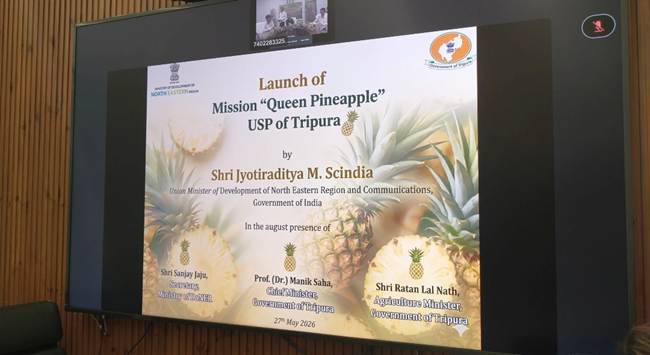
Recently, the Ministry of Development of North Eastern Region (MDoNER) has launched Mission Queen Pineapple.
The mission aims to transform Tripura’s Geographical Indication (GI)-tagged Queen Pineapple into a globally competitive horticultural brand by developing an integrated value chain encompassing production, processing, value addition, marketing, and waste utilisation.
About Mission Queen Pineapple
Mission Queen Pineapple is a flagship initiative of the Ministry for Development of North Eastern Region (MDoNER) designed to promote Tripura’s Unique Selling Proposition (USP)—the renowned Queen Pineapple.
The mission has been conceived as a three-year implementation roadmap covering the period from Q2 FY 2026 to Q4 FY 2028. Its primary objective is to establish a comprehensive and integrated pineapple value-chain ecosystem that connects farmers with processing industries, logistics networks, domestic markets, and export opportunities.
A distinguishing feature of the mission is its emphasis on circular economy principles, where agricultural waste, particularly discarded pineapple leaves, will be converted into commercially valuable products such as natural fibres, handicrafts, textiles, biodegradable products, and other value-added materials. This approach seeks to minimise waste while creating additional income opportunities for farmers and rural entrepreneurs.
Objectives of the Mission
The mission seeks to address structural bottlenecks that have limited the commercial potential of Tripura’s pineapple industry. Its major objectives include:
- Developing an integrated farm-to-market value chain.
- Improving post-harvest handling, storage, and transportation.
- Promoting food processing and value addition.
- Enhancing domestic and international market access.
- Encouraging entrepreneurship and agro-based industries.
- Generating additional livelihoods through utilisation of pineapple biomass.
- Increasing farmers' income through better price realisation.
By integrating production with processing and marketing, the mission aims to transform pineapple cultivation into a sustainable engine of rural economic growth.
Queen Pineapple: Tripura’s Signature Fruit
The Queen Pineapple is one of India's finest pineapple varieties and is widely recognised for its superior quality. It is a spiny, golden-yellow variety distinguished by its:
- Sweet taste.
- Pleasant aroma.
- Juicy flesh.
- Low fibre content.
- Rich nutritional value.
It contains essential Vitamins A, B, and C, along with minerals such as calcium, magnesium, potassium, and iron, making it nutritionally rich.
The fruit possesses Total Soluble Solids (TSS) ranging between 13 and 17.2° Brix, indicating high sweetness, while its acidity ranges between 0.6–0.8%, providing a balanced sweet-tart flavour that makes it highly suitable for fresh consumption as well as processing.
Recognising its unique geographical characteristics and reputation, the Queen Pineapple received the Geographical Indication (GI) Tag in 2015. It is also the State Fruit of Tripura, symbolising the state's horticultural identity.
Sanchi Stupa

- 29 May 2026
In News:
- India has decided to send the sacred relics of Lord Buddha's two foremost disciples—Sariputra and Maudgalyayana—from the Sanchi Stupa to Mongolia.
- The initiative aims to strengthen India's civilizational ties with Mongolia, promote Buddhist heritage, and reinforce cultural diplomacy under the shared legacy of Buddhism.
- The relics, revered by Buddhists across the world, symbolize India's role as the birthplace of Buddhism and underscore the country's efforts to preserve and globally showcase its rich cultural heritage.
Sanchi Stupa: A Symbol of India's Buddhist Heritage
The Sanchi Stupa, located in Madhya Pradesh, is one of the oldest and best-preserved Buddhist monuments in the world. It was originally commissioned by Emperor Ashoka in the 3rd century BCE following his conversion to Buddhism after the Kalinga War.
The construction of the Great Stupa is believed to have been supervised by Ashoka's wife, Devi, who hailed from nearby Vidisha. The expansion and embellishment of the Sanchi complex in subsequent centuries received considerable patronage from the prosperous mercantile community of Vidisha, contributing to its development as a major centre of Buddhist learning and pilgrimage.
Unlike many other Buddhist monuments, Sanchi remained an important religious site for several centuries, preserving valuable evidence of the evolution of Buddhist architecture and art from the Mauryan period to the Gupta era.
Sacred Relics of Sariputra and Maudgalyayana
The Sanchi Stupa enshrines the sacred relics of Sariputra and Maudgalyayana, two of the closest and most revered disciples of Lord Buddha.
- Sariputra is regarded as the foremost disciple renowned for his profound wisdom (Prajna).
- Maudgalyayana (Mahamoggallana) is remembered for his exceptional spiritual attainments and mastery of supernatural powers.
These relics are among the most sacred objects in Buddhist tradition and attract immense reverence from Buddhist communities across Asia.
The decision to temporarily send these relics to Mongolia reflects India's commitment to promoting international Buddhist cooperation and strengthening people-to-people ties with Buddhist-majority nations.
Architectural Features of the Sanchi Stupa
The Great Stupa at Sanchi represents one of the finest examples of early Buddhist architecture.
The monument is enclosed by a massive stone railing with four elaborately carved gateways (Toranas) facing the cardinal directions. These gateways are adorned with intricate sculptures depicting scenes from the life of the Buddha, Jataka tales, symbols of Buddhism, and contemporary social life. Since the Buddha was initially represented through symbols rather than human form, the carvings prominently feature motifs such as the Bodhi Tree, empty throne, footprints, wheel (Dharmachakra), and stupa.
The structural components of the stupa carry deep symbolic significance:
- Anda (Hemispherical Dome): Represents the cosmic mound and symbolizes the universe as well as the Parinirvana of the Buddha.
- Harmika: A square railing placed above the dome representing the sacred world mountain (Mount Meru).
- Yashti: The central mast symbolizing the cosmic axis connecting heaven and earth.
- Chatras (Umbrellas): Multiple umbrella discs mounted on the mast symbolize spiritual sovereignty, protection, and the various heavenly realms (Devaloka).
Together, these architectural elements reflect Buddhist cosmology and spiritual philosophy.
Rediscovery and Conservation
Following the decline of Buddhism in India, the Sanchi complex gradually fell into neglect. It remained largely abandoned until it was rediscovered by British officer Henry Taylor in 1818.
Later, Alexander Cunningham, often regarded as the father of Indian archaeology, conducted the first systematic survey and excavations at Sanchi in 1851, laying the foundation for its scientific conservation.
Today, the monument is one of India's most important archaeological sites and has been recognized as a UNESCO World Heritage Site since 1989.
Humboldtianairiana
- 29 May 2026
In News:
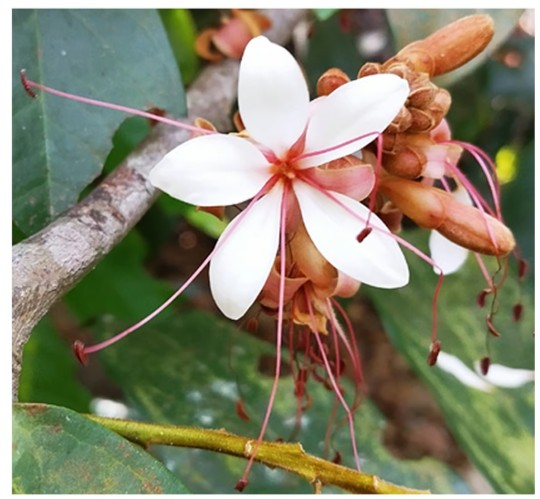
In a significant contribution to India's biodiversity documentation, researchers have discovered a new evergreen tree species in the southern Western Ghats of Kerala and named it Humboldtianairiana in honour of noted scientist Prof. G. Madhavan Nair.
The discovery highlights the immense biological richness of the Western Ghats, one of the world's eight “hottest hotspots” of biodiversity, and reinforces the need for continued taxonomic research and conservation of endemic flora.
About Humboldtianairiana
Humboldtianairiana belongs to the genus Humboldtia, a group of flowering plants largely restricted to the Western Ghats and known for their high levels of endemism. The newly discovered species is a medium-sized evergreen tree growing between 5 and 8 metres in height.
Researchers identified several distinctive morphological features that differentiate it from other members of the genus. These include:
- A unique warty pale-brown bark with a creamy-white blaze.
- Angled and glabrous branchlets.
- Distinctly shorter and sparsely hairy stipules and appendages.
- Larger flowers with comparatively longer pedicels.
- Elliptic-oblong fruits possessing a shorter beak.
These stable and distinguishing characteristics enabled scientists to classify it as a new species.
Endemism and Conservation Significance
One of the most important aspects of Humboldtianairiana is its highly restricted distribution. The species is strictly endemic to Kerala and is currently known only from the Agasthyamala Biosphere Reserve, where it occurs at an elevation of approximately 300 metres.
Such narrow endemism makes newly discovered species particularly vulnerable to habitat degradation, climate change, invasive species, and anthropogenic disturbances. The discovery therefore highlights the need for detailed population assessments, ecological studies, and conservation planning to ensure the long-term survival of the species.
The finding also underscores the importance of taxonomic research in identifying and documenting India's biological wealth, which forms the basis for effective conservation policies.
Shendurney Wildlife Sanctuary: A Biodiversity Hotspot
The discovery site, Shendurney Wildlife Sanctuary, is located in the southern part of the Western Ghats in Kerala and forms an integral component of the Agasthyamala Biosphere Reserve, recognized for its exceptional levels of biodiversity and endemism.
The sanctuary is characterized by rugged hilly terrain interspersed with ravines and supports diverse ecosystems. Its major rivers include the Shendurney, Kazhuthuruthy, and Kulathupuzha, which eventually merge to form the Kallada River.
The region supports a variety of vegetation types, including:
- Tropical evergreen forests
- Semi-evergreen forests
- Moist deciduous forests
These ecosystems provide habitat for numerous endemic and threatened plant and animal species, making the sanctuary an important centre for conservation and ecological research.
National Health Accounts (NHA) Estimates for India 2022-23
- 29 May 2026
In News:
The Ministry of Health and Family Welfare recently released the National Health Accounts (NHA) Estimates for India 2022–23, highlighting significant improvements in public health financing, increased government investment in healthcare, and a decline in the financial burden borne by households. The report reflects India's sustained efforts to strengthen its health system and move towards the goals of Universal Health Coverage (UHC) envisaged under the National Health Policy, 2017 and the Sustainable Development Goals (SDGs).
What are National Health Accounts?
The National Health Accounts (NHA) provide a comprehensive and systematic assessment of health expenditures incurred by the government, households, private sector, insurance providers, and external agencies. Released annually, the estimates offer a time-series analysis of healthcare financing patterns in the country.
The NHA Estimates 2022–23 represent the 10th edition of the series that began in 2013–14. They are prepared by the National Health Accounts Technical Secretariat (NHATS) under the National Health Systems Resource Centre (NHSRC), Ministry of Health and Family Welfare, using the internationally accepted System of Health Accounts (SHA) 2011 framework developed by international organizations such as the OECD, WHO, and Eurostat.
Rising Public Investment in Healthcare
One of the most significant findings of the report is the steady increase in government expenditure on healthcare over the past decade.
Government Health Expenditure (GHE) increased from ?1.30 lakh crore in 2013–14 to ?3.85 lakh crore in 2022–23, reflecting a nearly three-fold rise in public spending. The share of government health expenditure in GDP also increased from 1.15% in 2013–14 to 1.43% in 2022–23, which stands at 1.48% according to the revised GDP series with base year 2022–23.
Similarly, the share of health expenditure in total government expenditure rose from 3.78% to 4.89% during the same period, indicating greater prioritization of healthcare within public budgets.
Increased Per Capita Health Spending
The report reveals a substantial rise in per capita government health expenditure. Between 2013–14 and 2022–23, per capita spending increased from ?1,042 to ?2,786, representing a nearly 2.7-fold increase.
This increase reflects expanded investments in health infrastructure, primary healthcare services, disease control programmes, insurance coverage, and public health interventions across the country.
Declining Out-of-Pocket Expenditure
A major achievement highlighted in the report is the decline in Out-of-Pocket Expenditure (OOPE) by households, which remains a key indicator of financial protection in healthcare.
OOPE as a share of total health expenditure declined significantly from 64.2% in 2013–14 to 43.4% in 2022–23. This reduction suggests that government-funded schemes and insurance mechanisms are increasingly protecting citizens from catastrophic health expenditures.
The decline is particularly important in a country where healthcare-related expenses have historically pushed millions of households into poverty.
Expansion of Social Security and Health Insurance
The report also records a significant increase in Social Security Expenditure (SSE), which includes government-funded health insurance programmes such as Ayushman Bharat–Pradhan Mantri Jan Arogya Yojana (AB PM-JAY), social health insurance schemes, and medical reimbursements for government employees.
The share of SSE in total health expenditure increased from 6% in 2013–14 to 9.9% in 2022–23.
At the same time, the contribution of private health insurance rose from 3.4% to 9.2%, indicating increasing insurance penetration and risk pooling in the healthcare sector.
Strengthening Primary Healthcare
The report highlights a major increase in spending on primary healthcare, which forms the foundation of an effective health system. Government expenditure on primary healthcare increased from ?0.5 lakh crore in 2013–14 to ?1.4 lakh crore in 2022–23, more than doubling over the decade.
This reflects the government's focus on preventive, promotive, and community-based healthcare through initiatives such as Ayushman Arogya Mandirs (formerly Health and Wellness Centres), maternal and child health programmes, immunisation drives, and disease prevention strategies.
SARTHAK Public Distribution System (PDS) Scheme
- 29 May 2026
In News:
In a major step towards strengthening food security and improving the efficiency of welfare delivery, the Cabinet Committee on Economic Affairs (CCEA), chaired by the Prime Minister, has approved the SARTHAK Public Distribution System (PDS) Scheme.
The scheme seeks to modernise India's Public Distribution System by integrating technology, streamlining administrative processes, and enhancing transparency in the implementation of the National Food Security Act (NFSA), 2013.
What is SARTHAK PDS?
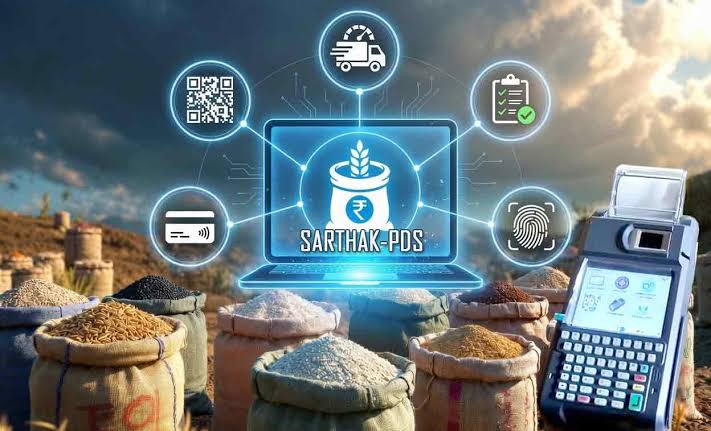
SARTHAK PDS stands for Scheme for Assistance in Ration Transport and Handling-Income with Automation in Public Distribution System. It has been conceived as an umbrella programme that consolidates two existing schemes into a unified framework:
- Assistance to State Agencies for Intra-State Movement of Foodgrains and Fair Price Shop (FPS) Dealers' Margin under NFSA, and
- Scheme for Modernization and Reforms through Technology in Public Distribution System (SMART-PDS).
By merging these initiatives, the government aims to create a single administrative and financial structure that supports both the physical movement of food grains and the technological transformation of the PDS ecosystem. The scheme is approved to continue until March 2031, ensuring long-term institutional support for food security reforms.
Strengthening the National Food Security Architecture
India's Public Distribution System is one of the world's largest food security programmes, serving millions of beneficiaries through an extensive network of Fair Price Shops. However, challenges such as leakages, delays, duplication of records, and monitoring inefficiencies have historically affected its effectiveness.
SARTHAK PDS seeks to address these concerns by creating a digitally integrated, transparent, and data-driven system that can facilitate efficient distribution, improve accountability, and strengthen implementation of the National Food Security Act.
Technology-Driven Transformation
A key feature of SARTHAK PDS is the extensive use of emerging technologies to modernise food grain distribution.
The scheme proposes the adoption of:
- Artificial Intelligence (AI)
- Machine Learning (ML)
- Natural Language Processing (NLP)
- Blockchain Technology
These technologies will be used to optimise supply chain management, improve beneficiary authentication, detect anomalies, minimise leakages, and enhance operational efficiency across the PDS network.
The use of AI-enabled analytics can help identify distribution gaps, forecast demand patterns, and improve decision-making, while blockchain-based systems can enhance transparency and traceability in food grain movement.
Unified Data Architecture and Real-Time Monitoring
One of the most significant reforms under SARTHAK PDS is the creation of unified databases and standardised digital architecture across states and Union Territories.
This integrated platform will enable:
- Real-time monitoring of food grain movement.
- Better coordination among stakeholders.
- Seamless data sharing across agencies.
- Improved beneficiary management.
- Enhanced transparency and accountability.
The scheme also envisages the establishment of State Command and Control Centres, which will use data-based oversight mechanisms to monitor operations and improve responsiveness.
Improved Governance and Grievance Redressal
To make the system more citizen-centric, SARTHAK PDS will incorporate AI-enabled grievance redressal mechanisms capable of processing complaints more efficiently and identifying recurring issues. This is expected to reduce delays in service delivery and improve beneficiary satisfaction.
Further, the introduction of ISO-certified process frameworks aims to strengthen transparency, operational security, quality assurance, and sustainability of PDS operations. Standardised procedures across states will help ensure uniform service delivery and reduce administrative inconsistencies.
PM-AJAY Portal and AJAY Mobile App
- 28 May 2026
In News:
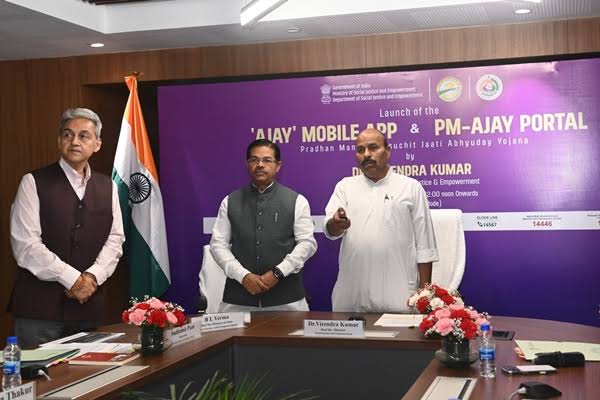
In a significant step towards strengthening digital governance and improving welfare delivery, the Ministry of Social Justice and Empowerment has launched the PM-AJAY Portal and the AJAY Mobile App under the Pradhan Mantri Anusuchit Jaati Abhyuday Yojana (PM-AJAY). The initiative aims to fully digitise grassroots-level planning, implementation, monitoring, and beneficiary management under the scheme, thereby enhancing transparency, accountability, and efficiency in the socio-economic development of Scheduled Caste (SC) communities.
The launch reflects the government's broader vision of leveraging technology to improve service delivery, ensure real-time monitoring, and promote evidence-based policymaking in social sector programmes.
About PM-AJAY
The Pradhan Mantri Anusuchit Jaati Abhyuday Yojana (PM-AJAY) is a Centrally Sponsored Scheme (CSS) implemented by the Ministry of Social Justice and Empowerment. It was introduced by rationalising and merging earlier schemes aimed at Scheduled Caste development.
The scheme seeks to improve the socio-economic conditions of Scheduled Castes through targeted interventions focused on poverty reduction, livelihood generation, skill development, infrastructure creation, and enhancement of human development indicators in SC-dominated areas.
Its broader objective is to enable inclusive growth by ensuring that historically disadvantaged communities have access to economic opportunities, quality infrastructure, education, and sustainable livelihoods.
PM-AJAY Portal: A Unified Digital Governance Platform
The newly launched PM-AJAY Portal serves as a central digital database and coordination platform integrating all components of the scheme. It aims to replace fragmented and paper-based processes with a transparent, technology-driven ecosystem.
A key feature of the portal is its comprehensive dashboard, which tracks socio-economic progress across more than 47,000 Scheduled Caste-majority villages and monitors the implementation of benefits reaching over 40 lakh beneficiaries. The dashboard provides real-time monitoring at the national, state, district, and local levels, facilitating data-driven decision-making and improved accountability.
Integration of the Three Components of PM-AJAY
The portal brings together all three major components of the scheme under a single digital architecture.
Adarsh Gram Component
Under this component, traditional paper-based planning will be replaced with digital Village Development Plans (VDPs). The progress of villages will be assessed through monitoring of 50 socio-economic indicatorsacross 10 development domains, enabling systematic tracking of development outcomes and identification of gaps.
Grant-in-Aid for Skilling and Employment
The portal functions as a comprehensive Management Information System (MIS) for this component. It tracks financial allocations, livelihood assistance, beneficiary registration, skill training programmes, placement outcomes, and employment generation activities. This will improve transparency in fund utilisation and facilitate better monitoring of livelihood interventions.
Hostel Component
The digital platform also supports the implementation of hostels for Scheduled Caste students in educational institutions. It enables online proposal submission, project monitoring, inspections, and verification through geo-tagged and time-stamped photographs, ensuring transparency in construction, renovation, and maintenance activities.
AJAY Mobile App: Extending Governance to the Last Mile
The AJAY Mobile App has been developed as a unified mobile platform that extends the functionalities of both the earlier PMAGY and PM-AJAY portals. The app enables stakeholders, field officials, and beneficiaries to access scheme-related services through a user-friendly mobile interface.
The app facilitates:
- Real-time reporting from the field.
- Mobile-based monitoring of development projects.
- Beneficiary-centric service delivery.
- Faster data collection and verification.
- Improved transparency and accountability.
- Strengthened digital governance at the grassroots level.
By enabling instant access to information and field-level updates, the app reduces administrative delays and enhances responsiveness.
Significance
The PM-AJAY Portal and AJAY Mobile App represent a major step towards digital inclusion, social justice, and evidence-based governance. By integrating planning, implementation, monitoring, and evaluation onto a single platform, the initiative is expected to improve scheme effectiveness, ensure better targeting of benefits, and strengthen the socio-economic empowerment of Scheduled Castes.
The initiative also aligns with the principles of Digital India, Minimum Government-Maximum Governance, and outcome-based public service delivery.
Sample Registration System (SRS) Statistical Report 2024
- 28 May 2026
In News:
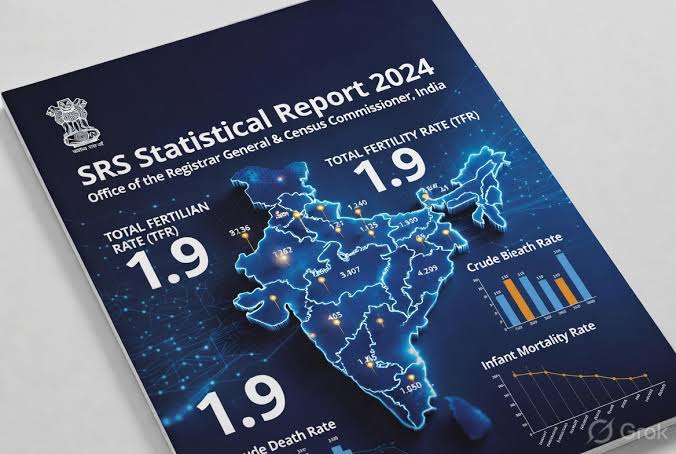
The Sample Registration System (SRS) Statistical Report 2024 highlights a major epidemiological transition in India, with Non-Communicable Diseases (NCDs) accounting for 60% of all deaths during 2022–2024, up from 52.8% during 2015–2017. The findings indicate that chronic diseases have firmly overtaken communicable diseases as the country's principal public health challenge, reflecting patterns increasingly observed in middle- and high-income economies.
India's Epidemiological Transition
The report demonstrates a steady shift from infectious diseases towards chronic and lifestyle-related illnesses. While the combined share of communicable diseases, maternal conditions, perinatal disorders, and nutritional deficiencies declined from 22% in 2015–2017 to 19.7% in 2022–2024, deaths due to NCDs increased significantly.
This transition is driven by rapid urbanisation, changing dietary habits, sedentary lifestyles, population ageing, environmental factors, and improved control over many infectious diseases. However, India continues to face a “double burden of disease”, where communicable diseases persist alongside a rapidly growing NCD burden.
Cardiovascular Diseases: The Biggest Killer
Among all NCDs, cardiovascular diseases (CVDs) emerged as the leading cause of mortality, accounting for 32.1% of all deaths, compared to 27.1% in 2015–2017. The situation is particularly concerning in the economically productive 30–69 years age group, where cardiovascular diseases account for 37.3% of deaths.
Health experts have noted a worrying increase in heart-related illnesses among adults in their thirties and forties. This trend has significant economic implications because it affects a large segment of the workforce, leading to productivity losses, rising healthcare costs, and increased social dependency.
Other major causes of death include:
- Cancer and other neoplasms
- Chronic respiratory diseases
- Digestive diseases
- Respiratory infections
Each of these contributes more than 5% of total mortality.
Demographic Dividend Under Pressure
The report raises concerns about the impact of premature mortality on India's demographic advantage. While 69.3% of deaths occur among individuals aged 55 years and above, the 30–44 years age group accounts for 19.5% of all deaths.
This trend assumes greater significance as India's Total Fertility Rate (TFR) continues to decline, with several states already below the replacement level of 2.1 children per woman. Premature deaths among working-age adults can undermine economic growth and reduce the benefits of the country's demographic dividend.
Rural, Urban and Gender Dimensions
NCDs remain more prevalent in urban areas, where they account for 64.8% of all deaths, compared to 58.8% in rural areas. Similarly, NCDs account for 62.3% of deaths among men and 56.9% among women.
However, the report reveals that NCDs are increasingly becoming the dominant cause of death even among rural populations and women, indicating the deep penetration of lifestyle-related risk factors beyond urban centres.
Mental Health Concerns Among Youth
A particularly alarming finding is that suicide remains the leading cause of death among the 15–29 years age group. Suicides accounted for 19% of deaths in this cohort, up from 16.3% in 2015–2017.
The rise reflects growing mental health challenges linked to unemployment, academic pressure, financial stress, social isolation, and changing societal dynamics. The trend underscores the need for stronger mental health services, awareness campaigns, and community-based interventions.
Regional Variations
The report highlights significant regional disparities. In the Empowered Action Group (EAG) States and Assam—comprising Bihar, Jharkhand, Madhya Pradesh, Chhattisgarh, Odisha, Rajasthan, Uttar Pradesh, Uttarakhand, and Assam—NCDs account for 53.9% of all deaths. In contrast, non-EAG states record a much higher NCD mortality share of 63.5%.
These differences largely reflect varying levels of urbanisation, healthcare access, socioeconomic development, and demographic ageing across regions.
Government Response: National Programme for Prevention and Control of NCDs
Recognising the growing challenge, the Government of India launched the National Programme for Prevention and Control of Non-Communicable Diseases (NP-NCD) in 2010 across 100 districts in 21 states during the Eleventh Five-Year Plan. The programme was subsequently expanded and integrated into the National Health Mission (NHM) in 2013–14.
The programme focuses on:
- Prevention and early detection of NCDs.
- Screening for diabetes, hypertension, and common cancers.
- Health promotion and behavioural change.
- Strengthening healthcare infrastructure and referral systems.
Article 142
- 28 May 2026
In News:
In a landmark judgment in In Re: Phalodi Accident vs National Highways Authority of India & Others (2025), the Supreme Court of India invoked its extraordinary powers under Article 142 of the Constitution to declare the Right to Safe Travel on National Highways as an integral component of the Right to Life under Article 21. Taking suo motu cognisance of two fatal road accidents in November 2025 that claimed 34 lives, the Court held that the maintenance of safe and motorable roads is not merely an administrative responsibility but a constitutional obligation of the State. The ruling marks a significant expansion of the jurisprudence surrounding Article 21 and reinforces the judiciary's role in ensuring “complete justice.”
Article 142: The Constitutional Instrument of Complete Justice
Article 142(1) empowers the Supreme Court to pass any decree or order necessary for doing “complete justice” in any matter before it. Often described as the Constitution's “safety valve,” this provision enables the Court to bridge legislative or procedural gaps when existing laws fail to provide an adequate remedy.
Unlike powers derived from ordinary statutes, Article 142 is an inherent constitutional authority vested exclusively in the apex court. In Delhi Judicial Service Association vs State of Gujarat (1991), the Supreme Court clarified that statutory limitations cannot curtail its powers under Article 142. Similarly, in Canara Bank vs Debasis Das (2003), the Court emphasized that substantive justice and principles of natural justice must prevail where rigid legal procedures prove inadequate.
The Court has also distinguished its powers from those of High Courts. In Anil Kumar Jain vs Maya Jain (2009), it held that the powers of High Courts under Article 226 are not co-extensive with the extraordinary residuary jurisdiction conferred upon the Supreme Court under Article 142. While High Courts operate within defined constitutional and statutory limits, Article 142 allows the Supreme Court to address emerging challenges and evolving societal needs where legal frameworks remain insufficient.
Highway Safety as a Constitutional Mandate
The judgment draws attention to India's alarming road safety crisis. Although National Highways constitute only about 2% of the country's road network, they account for nearly 30% of all road fatalities. Recognising this disproportionate burden, the Court elevated road safety from a policy objective to a justiciable constitutional right under Article 21.
The ruling is expected to strengthen governmental efforts to achieve the target of reducing road accident deaths by 50% by 2030 through the 4Es framework—Education, Engineering, Enforcement, and Emergency Medical Services. It also reinforces the accountability of road-owning agencies, particularly in ensuring timely maintenance, hazard removal, and adherence to safety standards.
Debate on Judicial Activism and Overreach
The expansive use of Article 142 has long generated debate. Critics argue that frequent judicial intervention risks undermining the doctrine of separation of powers by allowing courts to enter domains reserved for the legislature and executive. They contend that broad judicial directives may transform the Court into a de facto law-making body.
Supporters, however, view Article 142 as an essential tool of judicial activism that enables the Constitution to respond to rapidly changing social realities. They argue that when legislative or executive action is inadequate to protect fundamental rights, the judiciary must intervene as the guardian of constitutional values.
Acknowledging these concerns, the Supreme Court itself has repeatedly emphasized restraint. In Hitesh Bhatnagar vs Deepa Bhatnagar (2011), it held that Article 142 should be exercised with extraordinary care and caution due to its exceptional nature.
Vaccinium Piliferum
- 28 May 2026
In News:
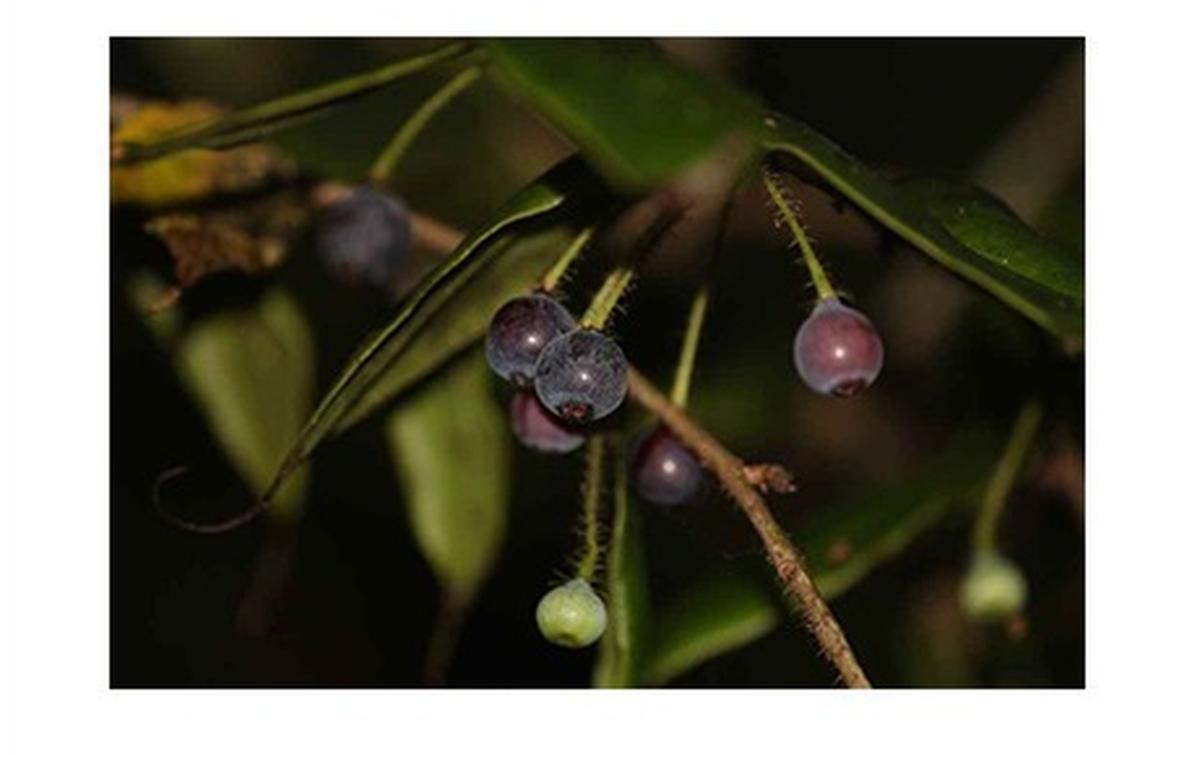
In a significant botanical discovery, researchers have rediscovered Vaccinium piliferum, a rare and endangered wild blueberry species, in the remote forests of Vijoynagar in Arunachal Pradesh's Changlang district after nearly 188 years. The species was last documented in 1836 during the colonial era and had remained unrecorded in scientific literature since then.
About Vaccinium piliferum
Vaccinium piliferum is a rare wild relative of cultivated blueberries and belongs to the Ericaceae family, commonly known as the heath family. This family includes economically and ecologically important plants such as blueberries, cranberries, bilberries, rhododendrons, and heathers.
The genus Vaccinium is globally recognized for its edible berry-producing species and their nutritional as well as medicinal value. Wild relatives such as Vaccinium piliferum are particularly important because they serve as reservoirs of genetic diversity that can help improve cultivated varieties through breeding programmes.
Conservation Status
The species is currently classified as Endangered by the International Union for Conservation of Nature (IUCN).
Its endangered status reflects:
- Restricted geographical distribution.
- Small and fragmented populations.
- Habitat degradation and ecological disturbances.
- Limited scientific documentation and monitoring.
The rediscovery provides an opportunity to undertake detailed population assessments, habitat mapping, and long-term conservation planning to ensure the survival of the species.
Ecological and Scientific Significance
The rediscovery of Vaccinium piliferum has significance beyond taxonomy.
A. Indicator of Eastern Himalayan Biodiversity
The finding reinforces the status of the Eastern Himalayas as a global biodiversity hotspot characterized by:
- High species richness.
- High levels of endemism.
- Diverse climatic and ecological zones.
- Presence of numerous rare and threatened species.
B. Genetic Resource for Agriculture
Wild relatives of crop plants are increasingly recognized as valuable genetic resources. They often possess traits such as:
- Disease resistance.
- Pest tolerance.
- Adaptation to climatic stress.
- Improved nutritional characteristics.
Such traits may become increasingly important for developing climate-resilient agricultural systems.
C. Need for Habitat Conservation
The discovery also highlights the importance of conserving remote forest ecosystems, particularly in northeastern India, where many species remain poorly documented and vulnerable to habitat loss.
Blueberries: An Overview
Blueberries belong to the genus Vaccinium under the Ericaceae family and are among the most economically important berry crops worldwide.
Major Types of Blueberries
- Lowbush Blueberry (Vaccinium angustifolium)
- Highbush Blueberry (Vaccinium corymbosum)
- Bilberry or Forest Blueberry (Vaccinium myrtillus)
These species are widely cultivated in North America and Europe and are increasingly gaining commercial importance globally.
Climatic and Soil Requirements
Blueberries require specific environmental conditions for growth.
Climate
- Prefer relatively cool climates.
- Require 150–1200 chill hours to break dormancy.
- Excessively low temperatures can damage shoots and flower buds.
- Moderate temperatures are essential for flowering and fruit development.
Soil
Blueberries thrive in:
- Well-drained soils.
- Acidic conditions (low pH).
- Sandy loam texture.
- High organic matter content (above 3%).
Their sensitivity to soil and climatic conditions makes them useful indicators of ecosystem health.
Nutritional Importance of Blueberries
Blueberries are widely regarded as a "superfood" because of their rich nutritional profile.
They contain:
- Vitamin C.
- Vitamin K.
- Dietary fiber.
- Manganese.
- Polyphenols and anthocyanins.
These compounds possess strong antioxidant properties that help neutralize free radicals and may contribute to improved cardiovascular, neurological, and metabolic health.
Babesia
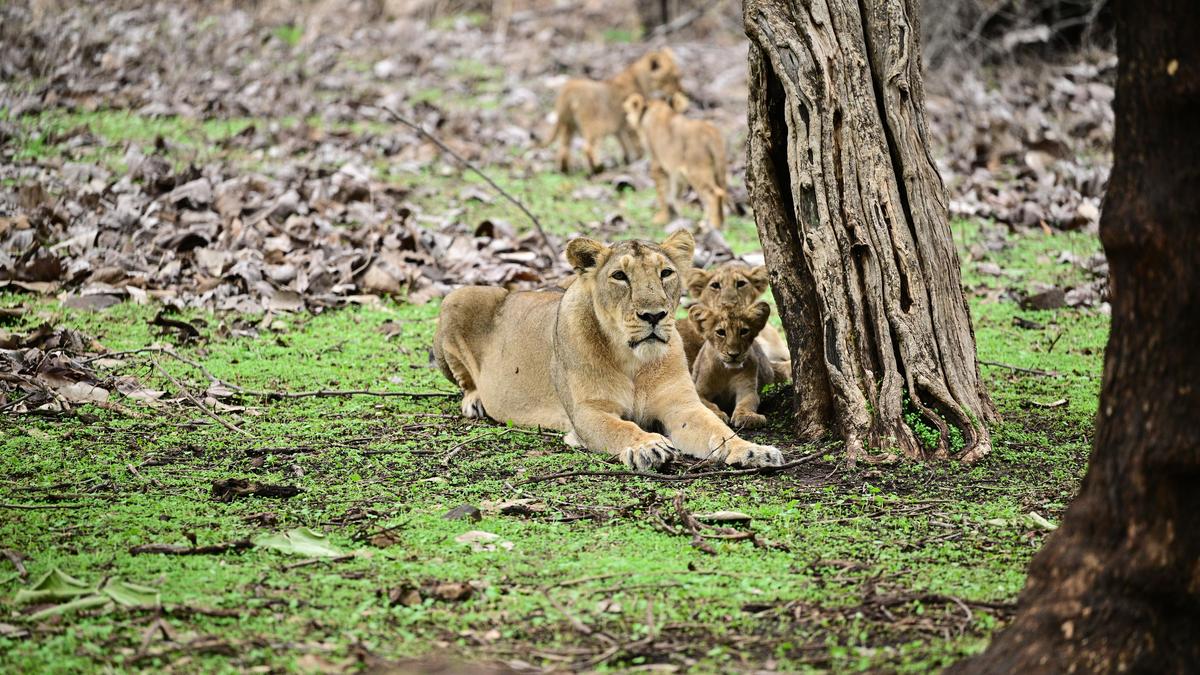
- 28 May 2026
In News:
The recent death of lion cubs in the Gir landscape of Gujarat has drawn attention to the growing challenge of wildlife diseases and the need for robust disease surveillance in protected areas. Authorities suspect that the deaths were linked to a Babesia infection, although laboratory confirmation was awaited at the time of reporting. The incident is significant because Gir is the world's only natural habitat of the Asiatic lion, making any disease outbreak a matter of national and global conservation concern.
What is Babesia?
- Babesia is a genus of microscopic protozoan parasites that infect the red blood cells (RBCs) of animals and humans, causing a disease known as babesiosis.
- The parasite is transmitted primarily through the bite of infected ticks, especially ticks belonging to the Ixodes genus (deer ticks), which are also known for spreading Lyme disease.
- Once inside the host, Babesia parasites invade and multiply within red blood cells, leading to their destruction. As a result, infected animals may suffer from anemia, fever, weakness, lethargy, and reduced immunity. The disease is much more common in animals than in humans and frequently affects cattle, dogs, deer, and other mammals.
- The geographical distribution of Babesia extends across the Americas, Europe, and parts of Asia, particularly in regions where tick populations are abundant.
Symptoms and Impact of Babesiosis
The severity of babesiosis varies depending on the host species, age, and immune status. While many infected individuals may remain asymptomatic or show only mild symptoms, severe infections can lead to:
- High fever
- Severe anemia due to destruction of RBCs
- Weakness and fatigue
- Respiratory distress
- Kidney and liver dysfunction
- Cardiac complications
- Blood clotting abnormalities (coagulopathy)
In wildlife populations, young animals and individuals with weakened immunity are particularly vulnerable.
Importantly, babesiosis is generally not contagious from one individual to another. Transmission occurs mainly through infected ticks. Rarely, the parasite may be transmitted from a pregnant mother to her offspring.
Why is the Incident Significant?
The deaths have renewed concerns about disease vulnerability among Asiatic lions. According to the 2025 lion census,Gujarat is home to approximately 891 Asiatic lions, all concentrated within the Gir landscape and adjoining regions. This concentration creates a unique conservation challenge because any major disease outbreak, natural disaster, or ecological disturbance could threaten the entire wild population of the species.
Wildlife experts have emphasized that Babesia is not a new pathogen in the Gir ecosystem and has existed at low levels among livestock and wildlife for years. However, changing environmental conditions, increasing wildlife densities, interactions with domestic animals, and climate-related factors can increase disease risks. Experts have also cautioned against other pathogens such as Canine Distemper Virus (CDV), which previously caused significant lion mortality and, when combined with Babesia infections, can pose a serious threat to lion populations.
Treatment and Management of Babesiosis
Babesiosis is generally treated using antimicrobial and antiparasitic drugs. The most commonly recommended treatment involves a combination of:
- Atovaquone (antiparasitic drug)
- Azithromycin (antibiotic)
In wildlife settings, however, prevention through vector control, surveillance, and early detection remains more effective than treatment after widespread infection.
PM-WANI (Prime Minister’s Wi-Fi Access Network Interface)
- 27 May 2026
In News:
The Department of Telecommunications (DoT) has introduced a series of citizen-centric reforms under the PM-WANI (Prime Minister’s Wi-Fi Access Network Interface) framework to make public Wi-Fi access simpler, more affordable, and widely accessible. The upgrades aim to accelerate broadband penetration and strengthen India's digital public infrastructure ecosystem.
What is PM-WANI?
Launched in December 2020, PM-WANI is a nationwide framework designed to expand affordable broadband access through a decentralized network of public Wi-Fi hotspots. It seeks to democratize internet access by enabling small shops, tea stalls, local businesses, and community establishments to act as internet access points without requiring a telecom licence.
The initiative is implemented by the Department of Telecommunications under the Ministry of Communications.
How Does the PM-WANI Ecosystem Function?
The framework operates through a distributed architecture comprising four components:
- Public Data Offices (PDOs) serve as the last-mile Wi-Fi providers that purchase internet bandwidth from telecom or internet service providers and offer Wi-Fi services to users.
- Public Data Office Aggregators (PDOAs) provide backend support such as authentication, accounting, and network management for multiple PDOs.
- App Providers offer mobile applications through which users can discover nearby Wi-Fi hotspots and access services.
- The Central Registry, maintained by Centre for Development of Telematics, ensures interoperability among all stakeholders.
A key feature of the framework is that PDOs require no licence, no registration and no fee, thereby reducing entry barriers and encouraging widespread participation.
Recent Reforms and Upgrades
To improve user experience, the government has introduced several enhancements.
A major upgrade allows users to connect laptops and other devices by simply scanning a QR code through an already authenticated smartphone, eliminating cumbersome login procedures.
The framework also encourages operators to introduce affordable short-duration "sachet" plans of 15, 30 and 60 minutes, making internet access more convenient for travellers, students and occasional users.
Additionally, standardized hotspot naming conventions incorporating PM-WANI branding have been introduced to help users easily identify authentic and secure public Wi-Fi networks.
Quad Critical Minerals Initiative Framework
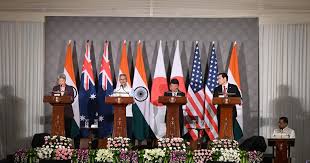
- 27 May 2026
In News:
On the sidelines of the 11th Quad Foreign Ministers’ Meeting, the Quad nations—India, the United States, Japan and Australia—unveiled the Quad Critical Minerals Initiative Framework. The initiative, along with a parallel India–US critical minerals partnership, marks a significant step towards securing strategic mineral supply chains and reducing vulnerabilities in emerging technology sectors.
What is the Quad Critical Minerals Initiative?
- The Quad Critical Minerals Initiative is a strategic economic and supply-chain cooperation framework aimed at ensuring reliable access to critical minerals and rare earth elements required for modern industries and national security.
- The initiative reflects the Quad's evolution from a security-focused grouping to a broader platform for economic resilience, technology cooperation and strategic infrastructure development in the Indo-Pacific.
- Its primary objective is to create diversified, secure and resilient supply chains by reducing excessive dependence on any single source, particularly China, which currently dominates the global processing and export of several critical minerals and rare earth elements.
Key Features
- The framework envisages the mobilization of nearly USD 20 billion through public funding, concessional finance and private investment to strengthen critical mineral ecosystems across Quad countries.
- It covers the entire value chain—from mineral exploration and mining to processing, refining, manufacturing inputs and recycling. The initiative also promotes the development of a circular economy through the recovery of strategic minerals from electronic waste and industrial scrap.
- To facilitate seamless cooperation, member countries intend to harmonize regulatory standards, customs procedures and environmental norms. The framework also incorporates national security safeguards through coordinated export controls and monitoring mechanisms to prevent strategic resources from reaching hostile actors.
- Projects supported under the initiative will largely be located within Quad countries and managed by companies based in member states, ensuring strategic ownership and supply security.
Strategic Significance
The initiative is driven by growing concerns regarding China's overwhelming dominance in critical mineral supply chains. China controls a substantial share of global rare earth processing and has increasingly used export restrictions as a strategic tool.
By diversifying supply sources, the Quad seeks to reduce the risk of supply disruptions that could affect key sectors such as electric vehicles, renewable energy, semiconductors, telecommunications and defence manufacturing.
The framework also complements emerging India–US cooperation in critical minerals, leveraging India's growing processing capabilities and manufacturing potential alongside American financing and technological strengths.
CLEAR Technology
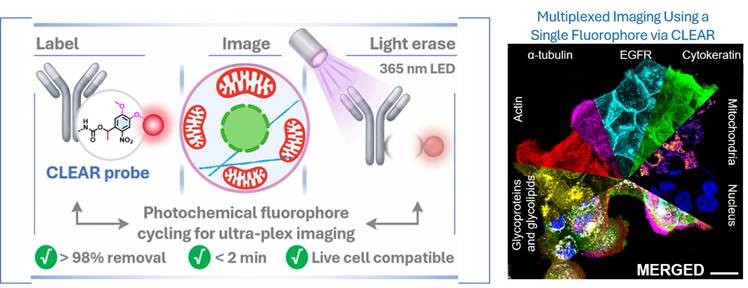
- 27 May 2026
In News:
Researchers at the Jawaharlal Nehru Centre for Advanced Scientific Research, Bengaluru, have developed an innovative protein imaging platform called CLEAR (Cleavable Light-Erased Antibody Reporter). The technology enables scientists to visualize and map a large number of proteins within the same biological sample using a single fluorescent marker, overcoming major limitations of conventional imaging techniques.
Why is Protein Imaging Important?
Proteins are the functional molecules that regulate virtually every biological process within cells. Understanding where proteins are located, how they interact, and how their distribution changes during disease is crucial for deciphering cellular behavior.
In diseases such as cancer, the spatial arrangement of proteins within tissues often determines how tumors grow, evade immunity, and respond to treatment. Therefore, high-resolution protein mapping has become an essential tool in modern biomedical research.
What is CLEAR Technology?
CLEAR (Cleavable Light-Erased Antibody Reporter) is a next-generation multiplex spatial protein imaging platform designed to visualize numerous proteins within the same tissue or cell sample while preserving their spatial organization.
Unlike conventional imaging methods that require multiple fluorescent colours for different proteins, CLEAR repeatedly uses a single fluorescent channel through a unique "erase-and-rewrite" mechanism. This allows scientists to build highly detailed molecular maps without being constrained by the limited number of fluorescent colours detectable by microscopes.
How Does CLEAR Work?
The technology is based on a cyclic imaging process.
Initially, specialized antibodies linked to fluorescent markers through light-sensitive chemical bonds are introduced into a tissue sample. These antibodies bind to specific target proteins, and the sample is imaged under a microscope.
Once imaging is completed, the fluorescent signal is removed by exposing the sample to a gentle pulse of 365 nm LED light. The light breaks the photosensitive linker, effectively erasing the fluorescence without damaging the biological specimen.
The sample then becomes available for a new round of protein labeling and imaging using the same fluorescent channel. By repeating this cycle multiple times, researchers can generate highly detailed spatial maps containing information on numerous proteins within a single specimen.
Key Features
One of the most important strengths of CLEAR is its high-plex multiplexing capability. It allows visualization of a much larger number of proteins than conventional fluorescence microscopy.
The technology is also notable for its live-cell compatibility. Traditional multiplex imaging often requires harsh chemicals or heat treatments to remove fluorescent signals, which can damage tissues and cells. CLEAR relies on gentle light-based erasure, preserving biological integrity.
Another major advantage is its ability to capture the precise spatial distribution of proteins within tissues. Such spatial information is critical for understanding cellular communication, tumor microenvironments, and disease progression.
By repeatedly utilizing a single fluorescent channel, CLEAR also reduces dependence on expensive multi-laser imaging systems, improving cost efficiency and workflow speed.
Significance for Cancer Research
Cancer is not merely a collection of abnormal cells but a complex ecosystem involving tumor cells, immune cells, blood vessels, and surrounding tissues. Understanding this microenvironment requires the simultaneous mapping of multiple proteins.
CLEAR enables researchers to:
- Identify protein interaction networks within tumors.
- Understand mechanisms of cancer progression and metastasis.
- Study immune cell infiltration and tumor immune evasion.
- Discover novel diagnostic biomarkers.
- Improve precision medicine and targeted therapies.
The technology can help researchers develop more personalized treatment approaches based on detailed molecular characteristics of individual tumors.
India’s First National Report on the Nagoya Protocol
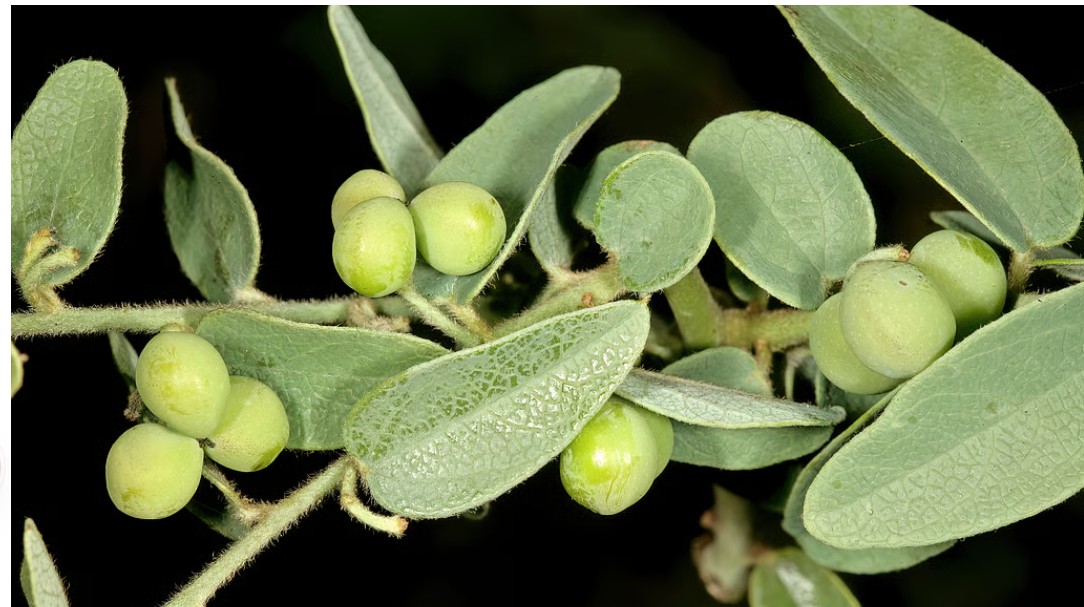
- 27 May 2026
In News:
The Ministry of Environment, Forest and Climate Change (MoEFCC) has released insights from India’s First National Report on the Nagoya Protocol on Access and Benefit Sharing (ABS). The report highlights India's progress in implementing a transparent and equitable framework for the utilization of biological resources while ensuring that benefits arising from their use reach local communities and traditional knowledge holders.
Understanding the Nagoya Protocol
- The Nagoya Protocol on Access to Genetic Resources and the Fair and Equitable Sharing of Benefits Arising from their Utilization is a supplementary agreement to the Convention on Biological Diversity. It was adopted in 2010 and came into force in 2014.
- The protocol seeks to ensure that countries and communities providing biological resources receive a fair share of the benefits generated from their commercial or research utilization.
- It aims to balance biodiversity conservation with economic development and scientific innovation.
- The framework rests on three core principles: Prior Informed Consent (PIC), Mutually Agreed Terms (MAT), and Fair and Equitable Benefit Sharing.
- It also protects traditional knowledge associated with biological resources and seeks to prevent biopiracy through international compliance mechanisms.
India's Performance under the Nagoya Protocol
- The report highlights India's robust implementation of the Access and Benefit Sharing framework between 2017 and 2025.
- During this period, India granted more than 12,800 ABS approvals, reflecting the growing use of biological resources for research, pharmaceuticals, agriculture, biotechnology, and industrial applications. The National Biodiversity Authority (NBA) and State Biodiversity Boards have played a central role in processing these approvals.
- A particularly notable achievement is India's dominance in the issuance of Internationally Recognized Certificates of Compliance (IRCCs). With over 3,500 certificates, India accounts for more than 60% of all such certificates issued globally, indicating strong compliance with international biodiversity governance standards.
- The ABS mechanism has also generated substantial economic benefits. Revenue collections exceeding ?216 crore have been realized, with a significant share already transferred to local communities, conservers, and biodiversity stakeholders. These funds support conservation activities, livelihood enhancement, and habitat restoration efforts.
Community-Based Biodiversity Governance
A major strength of India's ABS framework is its decentralized institutional architecture.
- The country has established a vast network comprising the National Biodiversity Authority, State Biodiversity Boards, and more than 2.76 lakh Biodiversity Management Committees (BMCs) functioning at the local level. These institutions play a critical role in documenting biological resources, safeguarding traditional knowledge, and facilitating benefit-sharing arrangements.
- The report also highlights extensive capacity-building efforts, including thousands of training programmes and workshops aimed at strengthening awareness among local communities, government officials, scientists, and biodiversity managers.
High-Level Committee on Demographic Change
- 27 May 2026
In News:
The Union Ministry of Home Affairs (MHA) has constituted a High-Level Committee to examine demographic changes arising from illegal immigration and other abnormal factors. The committee has been tasked with conducting a scientific assessment of demographic shifts and recommending policy measures to address their implications for national security, governance, resource allocation, and socio-cultural stability.
Background
Concerns regarding demographic changes linked to illegal migration have been particularly pronounced in border states such as Assam, West Bengal, Meghalaya, Tripura, and parts of Jharkhand. The issue has long featured in debates relating to border management, indigenous rights, internal security, and electoral integrity.
The committee comes at a time when India is preparing for the 2027 Census, making updated demographic assessment increasingly important.
Composition and Mandate
The committee is chaired by Justice Prakash Prabhakar Navlekar, former Supreme Court judge and former Lokayukta of Madhya Pradesh. It also includes the Census Commissioner and other experts.
The panel has been directed to submit its report within one year (by May 2027), with provision for a six-month extension if required.
Its key responsibilities include:
- Conducting a data-driven assessment of demographic changes linked to illegal immigration and abnormal migration patterns.
- Studying demographic variations across religious and social groups in regions showing unusual population trends.
- Recommending mechanisms for Centre–State coordination on demographic management.
- Suggesting institutional frameworks for identification, detention, and deportation of undocumented migrants.
- Strengthening border management, identity verification systems, and migration-monitoring mechanisms.
Why is the Study Important?
Internal Security and Sovereignty
Illegal migration across porous borders has long been viewed as a security concern. In Sarbananda Sonowal v. Union of India, the Supreme Court observed that large-scale illegal migration into Assam amounted to "external aggression" and invoked Article 355 of the Constitution.
Migration corridors are also vulnerable to exploitation by networks involved in:
- Human trafficking
- Arms smuggling
- Cross-border crime
- Potential infiltration by extremist elements
Protection of Indigenous Communities
Several tribal and indigenous regions, particularly in the Northeast and parts of Jharkhand, have expressed concerns regarding demographic pressures on land ownership, cultural identity, and political representation.
Protective mechanisms such as the Santhal Pargana Tenancy Act, 1876, and constitutional safeguards under the Fifth and Sixth Schedules seek to protect tribal interests. A demographic assessment may help evaluate the effectiveness of these protections.
Socio-Economic Pressures
Population growth beyond natural demographic trends can place pressure on: housing, healthcare, education, employment opportunities, and public infrastructure. Such pressures can contribute to social tensions and competition over limited resources.
Electoral Integrity
Concerns have also been raised regarding the alleged acquisition of identity documents by undocumented migrants. Accurate demographic data is considered essential for maintaining the integrity of electoral rolls and democratic processes.
Constitutional and Legal Framework
- Article 355: Article 355 imposes a duty on the Union to protect States against:External aggression and Internal disturbance. This provision is frequently cited in discussions concerning illegal immigration and border security.
- Citizenship Act, 1955: The Act provides the legal framework for acquisition and termination of Indian citizenship. Section 6A was inserted following the Assam Accord to address citizenship issues specific to Assam.
- Foreigners Act, 1946: The Act empowers the government to identify, regulate, detain, and deport foreigners. It places the burden of proof on the individual to establish Indian citizenship.
- Fifth and Sixth Schedules: These constitutional provisions safeguard tribal autonomy, land rights, and cultural identity in designated tribal regions.
Important Judicial Developments
- Sarbananda Sonowal v. Union of India (2005): The Supreme Court held that unchecked illegal migration into Assam constituted a threat to national security and invoked Article 355.
- Assam SanmilitaMahasangha v. Union of India (2014): The Court directed a time-bound update of the National Register of Citizens (NRC) in Assam to identify undocumented migrants.
Key Committee and Commission Reports
- Lt. Gen. S.K. Sinha Report (1998): Highlighted the security implications of demographic changes in border regions and their impact on national integration.
- Upamanyu Hazarika Commission (2015): Warned about demographic shifts affecting indigenous populations in Assam.
- Madhukar Gupta Committee (2016): Recommended the Comprehensive Integrated Border Management System (CIBMS), emphasizing technology-driven border surveillance through sensors, thermal imagers, and smart monitoring systems.
India's Broader Demographic Context
Declining Fertility
According to recent demographic estimates:
- India's Total Fertility Rate (TFR) has fallen below replacement level.
- NFHS-5 estimates place TFR at approximately 2.0.
- SRS data indicate a further decline to around 1.9.
This suggests long-term population stabilization.
Regional Demographic Divide
A significant North-South demographic divide is emerging:
- Southern states such as Kerala and Tamil Nadu have very low fertility rates and aging populations.
- Northern states such as Bihar and Uttar Pradesh continue to have relatively higher fertility rates and younger populations.
Demographic Dividend Window
India currently enjoys a demographic advantage with a median age of around 28 years. However, this window is expected to narrow as the elderly population grows substantially by 2050.
Public Accounts Committee
- 26 May 2026
In News:
Lok Sabha Speaker Om Birla formally reconstituted four parliamentary committees for the 2026–27 financial year, with terms expiring on April 30, 2027. Congress leader KC Venugopal was reappointed as Chairperson of the Public Accounts Committee (PAC).
- The BJP raised objections regarding the committee's perceived inclination to take up issues suo motu — on its own initiative — without prior referral, highlighting a potential divergence in understanding the scope and operational autonomy of the PAC.
- The panel also expressed concern over pending Action Taken Notes and a heavy backlog in the Audit Para Monitoring System.
What is the PAC?
- The Public Accounts Committee is the oldest parliamentary committee in India, established in 1921 under British rule.
- It is constituted every year and serves as Parliament's primary instrument for scrutinising government finances after funds have been spent.
- Its core purpose is to audit the revenue and expenditure of the Government of India, ensuring that public funds are spent efficiently, legally, and in accordance with Parliamentary intent.
Composition and Membership
- The PAC consists of 22 members — 15 from Lok Sabha and 7 from Rajya Sabha. The Chairperson is appointed by the Speaker from amongst Lok Sabha members and is, by convention, drawn from the principal Opposition party. This tradition was formally established in 1967–68, when the Speaker for the first time appointed a member of the Opposition as Chairperson.
- Importantly, ministers cannot be members of the PAC, preserving the committee's independence from the executive. Each member serves a term of one year.
Functions of the PAC
- Examining CAG Reports — The PAC scrutinises the reports of the Comptroller and Auditor General (CAG) of India on government expenditure. The CAG acts as the eyes and ears of Parliament, and the PAC acts as the enforcement arm that follows up on audit findings.
- Ensuring Proper Utilisation of Funds — It verifies that money sanctioned by Parliament has been spent for the purposes for which it was granted — no more, no less.
- Investigating Irregularities — The committee investigates financial irregularities, losses, and inefficiencies in government spending, and can call senior government officials and even heads of regulatory bodies to depose before it.
- Action Taken Notes (ATNs) — Ministries and departments are required to submit ATNs explaining what action they have taken on the PAC's recommendations. Pending ATNs represent a significant accountability gap, which the reconstituted committee has flagged as a priority concern.
Information Agents

- 26 May 2026
In News:
At its annual developer conference (Google I/O 2026), Google unveiled Information Agents, a feature built into Search that monitors the web on behalf of users. It represents one of the most significant shifts in how search engines interact with information since Google's founding.
What is an Information Agent?
An information agent is a computational software entity, a type of intelligent agent — that may access one or multiple, distributed, and heterogeneous information sources and proactively acquires, mediates, and maintains relevant information on behalf of its users.
The core purpose of information agents is to cope with the difficulties associated with information overload — the problem of too much data being available for a user to process and monitor manually.
How Information Agents Work — Key Capabilities
- Semantic Brokering of Information: Information agents go beyond simple retrieval. They semantically broker information by providing pro-active resource discovery, resolving the information impedance between information consumers and providers, and offering value-added information services and products to the user or other agents.
- Continuous Background Monitoring: Unlike traditional search tools that respond only when prompted, Google's information agents operate continuously — 24/7 — tracking topics a user has expressed interest in and pushing relevant updates proactively.
- Multi-Source Synthesis: The information sources accessible to agents may be of many types, including traditional databases, websites, and even other information agents — enabling a layered, interconnected web of intelligence gathering.
Illustrative Example
A user who has heard about a researcher proposing something called "agent-oriented programming" asks the agent to investigate. After carefully searching various sources, the agent returns not just with a relevant technical report, but also the name and contact details of the researcher involved — without the user having to visit a single website manually.
In Google's current implementation, similar scenarios play out in everyday life: a user tracking housing markets, flight prices, stock movements, or sports events simply sets a goal, and the agent does the continuous monitoring, notifying the user only when something relevant occurs.
Google's Implementation at I/O 2026
- How to Use It: Users open AI Mode in Google Search, enter a natural language prompt describing what they want to track, and the agent begins monitoring. Push notifications are sent when relevant updates are found. Active agents are visible in the AI Mode history, where users can manage, refine, or deactivate them.
- Rollout: Information agents will first be available to Google AI Pro and Ultra subscribers in the US during summer 2026, before expanding to additional markets.
- Beyond Google Alerts: The feature is considered the next evolution of Google Alerts (launched in 2003), but goes significantly further — rather than merely flagging keyword mentions, it synthesises information, explains context, compares perspectives, and offers actionable insights.
Concerns Raised
- Privacy: Always-on AI monitoring means users must share deeply personal data — budgets, schedules, preferences, locations — to get relevant results. This creates large pools of sensitive information concentrated within a single platform, raising serious data sovereignty concerns.
- Web Infrastructure: Since AI agents retrieve and summarise content without users visiting source websites, independent publishers and smaller platforms stand to lose significant web traffic — threatening the advertising-based economic model that sustains most of the open web.
- Centralisation: Critics warn that if a single platform becomes the primary gateway through which users access and filter online information, it could lead to dangerous centralisation of the internet — with Google acting as both the librarian and the library.
Significance
Information agents represent a paradigm shift from reactive search (user asks → engine responds) to proactive intelligence (agent monitors → agent informs). While they promise to dramatically reduce information overload, they simultaneously raise profound questions about privacy, the sustainability of independent web publishing, and the concentration of power in the hands of a few Big Tech platforms.
Padma Awards 2026
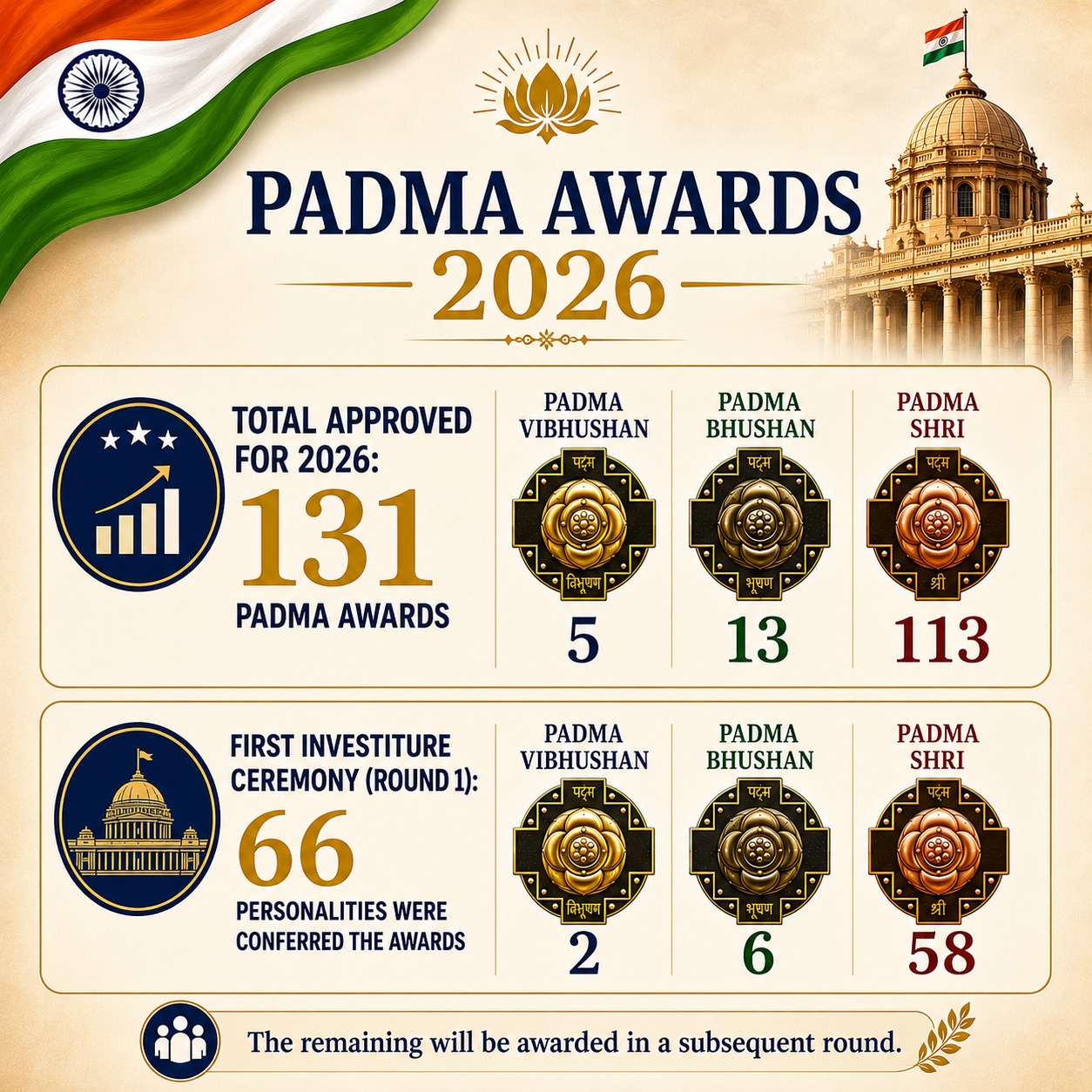
- 26 May 2026
In News:
President Droupadi Murmu today conferred Padma Awards to 66 eminent personalities for the year 2026 at the first Civil Investiture Ceremony held at Rashtrapati Bhavan.
About Padma Awards:
The Padma Awards are among the highest civilian honours of India, announced annually on the eve of Republic Day. They are designed to recognise works of distinction and celebrate exceptional achievements or service where an element of public service is involved. The awards are structured into three distinct tiers:
- Padma Vibhushan is conferred for exceptional and distinguished service — the highest of the three tiers.
- Padma Bhushan is conferred for distinguished service of a high order.
- Padma Shri is conferred for distinguished service in any specific field.
History
- The Government of India instituted two civilian awards in 1954 — the Bharat Ratna and the Padma Vibhushan. Originally, the Padma Vibhushan was classified into three tiers: Pahela Varg (First Class), Dusra Varg (Second Class), and Tisra Varg (Third Class). These were subsequently renamed as the Padma Vibhushan, Padma Bhushan, and Padma Shri via a Presidential Notification issued on January 8, 1955.
- The awards have been announced every year since their inception, except for brief suspensions during 1978–1979 and 1993–1997.
Process of Selection
- Open Nominations — The nomination process is heavily democratised and open to the general public. Citizens can nominate inspiring individuals, and self-nomination is also explicitly permitted.
- The Evaluating Committee — All entries are screened by the Padma Awards Committee, which is constituted by the Prime Minister every year. The panel is headed by the Cabinet Secretary and includes the Union Home Secretary, the Secretary to the President, and four to six eminent public personalities.
- Final Approval — The committee's recommendations are submitted directly to the Prime Minister and the President of India for final executive clearance.
Eligibility Criteria
- All individuals, without any distinction of race, occupation, position, or sex, are fully eligible for these awards. However, government servants — including professionals working with Public Sector Undertakings (PSUs) — are generally not eligible. Notably, doctors and scientists are completely exempt from this restriction and remain eligible based on their research, advancements, or clinical service.
Key Features
- Disciplines Covered — Awards are distributed across fields including Art, Social Work, Public Affairs, Science & Engineering, Trade & Industry, Medicine, Literature & Education, Civil Service, and Sports.
- Annual Cap — The maximum number of awards in a single year cannot exceed 120. This cap, however, excludes posthumous awards and those presented to NRIs, Foreigners, or Overseas Citizens of India (OCIs).
- Posthumous Clause — The award is normally not conferred posthumously. However, in highly deserving or exceptional cases, the government can break this convention.
- Five-Year Elapsing Rule — A recipient can only be upgraded to a higher tier if at least five years have elapsed since the conferment of their earlier category. The Awards Committee may relax this rule in extraordinary circumstances.
- Not a Title — In accordance with Article 18 of the Constitution of India, these awards do not amount to a title and cannot be used as a prefix or suffix to the awardee's name. Any commercial or public misuse forfeits the honour.
- Presentation Insignia — Recipients receive a Sanad (a formal certificate) signed directly by the President of India, along with a primary medallion and a small wearable replica for ceremonial state functions.
Oreshnik — Russia's Hypersonic Ballistic Missile
- 26 May 2026
In News:
The Ukrainian President recently confirmed that Russia used the Oreshnik missile during a mass drone and missile attack on Kyiv. This marks the third reported use of the weapon in the Russia-Ukraine war. It was first deployed in November 2024 to strike the Ukrainian city of Dnipro.
What is the Oreshnik?
- It is a Russian-made intermediate-range hypersonic ballistic missile, believed to be derived from the RS-26 Rubezh ballistic missile system. Its name means "hazel tree" or "hazelnut tree" in Russian. It is capable of carrying both nuclear and conventional warheads.
Key Technical Specifications
- The missile is estimated to be 15 to 18.5 metres long with a diameter of approximately 1.9 metres. It travels at Mach 10 — roughly 2.5 to 3 kilometres per second — and has a reported range of 5,000 kilometres. It is launched from a mobile transporter-launcher and carries 6 to 8 warheads via MIRV technology.
Defining Features
- Multiple Independently Targetable Re-entry Vehicles (MIRVs): The Oreshnik carries 6 to 8 warheads, each capable of being directed at a different target simultaneously. This multi-warhead capability complicates air defence interception and is typically associated with longer-range intercontinental ballistic missiles — making it unusual for an intermediate-range system.
- Hypersonic Speed: Travelling at Mach 10 — approximately ten times the speed of sound — the missile is extremely difficult to intercept using existing air defence systems.
- Mobile Launch Platform: Being mounted on a mobile transporter and launcher enables rapid deployment and concealment, making it harder to detect and neutralise before launch.
Strategic Range & Reach
- With a reported range of 5,000 km, the Oreshnik can strike targets across all of Europe and potentially reach the west coast of the United States — giving it significant strategic depth well beyond the immediate theatre of the Russia-Ukraine conflict.
BHAVYA Scheme
- 26 May 2026
In News:
Union Commerce Minister Piyush Goyal recently announced the launch of guidelines for the BHAVYA Scheme under which the Centre plans to develop 100 industrial parks across the country.
The scheme carries a financial outlay of ?33,660 crore and aims to create manufacturing and investment hubs through plug-and-play industrial parks in partnership with state governments.
Key Objectives
- Develop 100 investment-ready, world-class industrial parks over six years (2026–27 to 2031–32)
- Support Make in India and PM GatiShakti by creating integrated manufacturing zones
- Promote cluster-based industrial development, enabling manufacturers, suppliers, and service providers to operate in proximity — strengthening domestic supply chains and employment
Rollout Plan
- Applications for 20 parks will be invited in the first two months, followed by another 30 parks in the next two months, while the remaining 50 parks will be taken up in a subsequent phase. Goyal expects 50 parks to be operationalised within three years.
Financial Support
- Industrial parks will range from 100 to 1,000 acres, with financial assistance of up to ?1 crore per acre for infrastructure development. Support will cover internal roads, underground utilities, drainage systems, common treatment facilities, warehousing, testing labs, and worker housing.
- For proposals involving private sector partnerships, the Centre would provide assistance of ?50 lakh per acre. External infrastructure support of up to 25% of the project cost has also been proposed to improve connectivity with transport and logistics networks.
Implementation Framework
- The parks will be developed under the National Industrial Corridor Development Programme (NICDP) framework in partnership with states and private sector players. The National Industrial Corridor Development Corporation (NICDC), under DPIIT, will anchor implementation.
- States are required to set up Special Purpose Vehicles (SPVs) under the Companies Act, 2013, notify planning authorities, and establish single-window clearance systems for faster approvals.
Project Selection
Project selection will be carried out through a challenge-based process focused on investment-ready and reform-oriented proposals. States offering better facilities such as land, water, and power are likely to attract more investors. Rajasthan, Maharashtra, West Bengal, and Haryana have already shown interest.
Special Provisions
- Hilly states, NE states, UTs, and smaller states: Minimum land requirement reduced to 25 acres (vs. 100 acres for other states)
- Eligible for both greenfield and brownfield industrial parks
- Parks aligned with PM GatiShakti National Master Plan for multimodal connectivity and last-mile access
- Provisions for green energy and sustainable resource use
Significance
The BHAVYA Scheme is positioned as a major ease-of-doing-business initiative, providing pre-approved land, ready infrastructure, and integrated services to help industries begin operations faster — directly boosting India's manufacturing competitiveness and investment attractiveness.
Chandrayaan-3 Hop Experiment
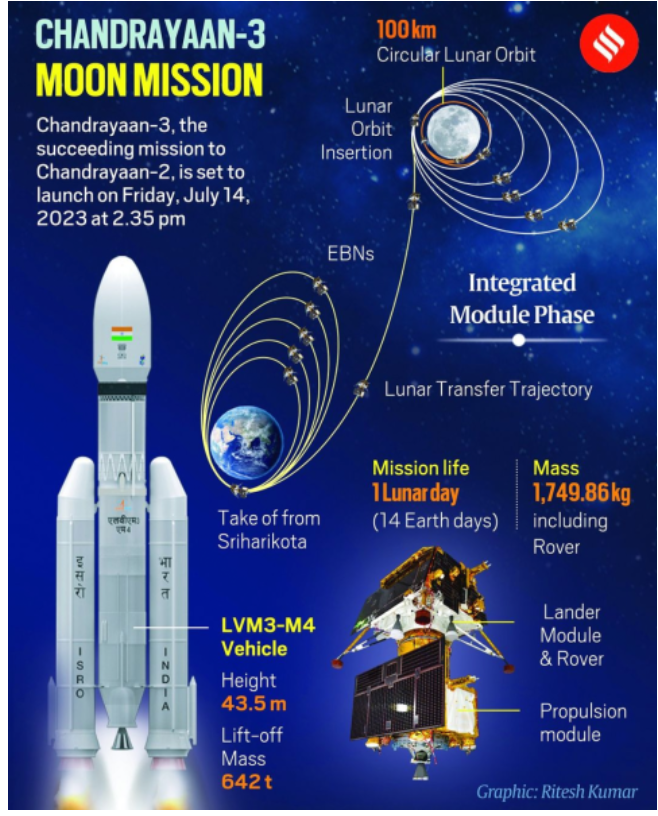
- 25 May 2026
In News:
Findings from the Chandrayaan-3 Vikram lander's "hop" experiment, published in The Astrophysical Journal in April 2026, demonstrate significant heterogeneity in the Moon's surface composition at local scales — challenging previous assumptions about lunar soil uniformity and providing India's first in-situ geotechnical data from the lunar south polar region.
The Hop Experiment:
On 2 September 2023, engineers reignited Vikram's engines to perform a short vertical hop of approximately 50 centimetres using residual propellant. The manoeuvre was initially designed to validate re-ignition capabilities for future sample-return missions, but the engine exhaust inadvertently stripped away the top three centimetres of loose lunar dust, exposing denser material beneath — providing a unique opportunity to study subsurface regolith properties at the south pole for the first time.
The Chandra's Surface Thermophysical Experiment (ChaSTE) — equipped with temperature sensors and a heating probe that penetrated the regolith — was then redeployed at the new post-hop location, measuring thermal profiles during the twilight transition (16:25–17:30 lunar local time), a slow cooling period lasting hours due to the Moon's month-long day-night cycle.
Key Scientific Findings
Two-Layer "Cake-Like" Structure
The Moon's surface at the south pole exhibits a distinct, two-layer structure within the top few centimetres — not a uniform pile of dust as previously assumed.
Upper Layer (0–6 cm) — The "Fluffy Thermal Blanket": The top layer is hyper-porous and highly cohesive, behaving like loose flour near the surface. Bulk density increases dramatically from 750 kg/m³ at the surface to 1,600 kg/m³ at a depth of just 6.5 cm — where the material becomes significantly stiffer, behaving more like damp clay.
Thermal Behaviour:ChaSTE captured a sharp temperature drop after 17:00 lunar local time, as the absence of an atmosphere allows heat to radiate rapidly into space once the Sun's rays are blocked by local shadows — demonstrating how the hyper-porous top layer functions as a critical thermal insulator.
Supporting Evidence: 3D simulations using Chandrayaan-2's OHRC (Orbiter High Resolution Camera) high-resolution imagery confirmed the regolith's layered stratigraphy.
What is Lunar Regolith?
Scientists emphasise that the Moon's surface layer is more accurately termed "lunar regolith" rather than "lunar soil" — it consists of shattered rock fragments and jagged glass-like shards formed by billions of years of micrometeorite bombardment. Unlike terrestrial soil, it lacks organic material or water-formed minerals, and its jagged, angular particles create unusual mechanical properties — high cohesion yet extreme looseness at the surface.
Why It Matters: Five Implications
- Water-Ice Storage: The hyper-porous top layer is particularly significant for trapping water-ice molecules in the subsurface — critical for assessing the viability of in-situ resource utilisation (ISRU) at lunar south polar bases.
- Future Lunar Base Planning: The dramatic density gradient within just 6.5 cm means that drilling, foundation engineering, and habitat construction at the lunar south pole will require significantly different approaches than originally modelled — directly informing NASA's Artemis programme and ISRO's own lunar ambitions.
- Rocket Plume-Surface Interaction: Understanding how engine exhaust erodes the regolith is essential for safe landing zone design for future crewed and cargo missions — preventing landing struts from sinking into loose surface material.
- Sample Return Missions: The hop experiment validates critical engine re-ignition capabilities, setting a precedent for future sample-return missions.
- Chandrayaan-4 Design Inputs: India's upcoming Chandrayaan-4 mission — designed for lunar sample collection and return — will directly incorporate these findings in its lander design and landing site selection.
Actinarctusodissi

- 25 May 2026
In News:
An international team including researchers from the CSIR-National Institute of Oceanography (CSIR-NIO), the University of Minho, Portugal, and the Academy of Scientific and Innovative Research (AcSIR) discovered a new species of tardigrade in the shallow marine waters of the Bay of Bengal, near the coastal region of Markandi, Odisha. This marks the first time in 43 years that a new member of the elusive Actinarctus genus has been identified — a landmark moment for India's marine biodiversity documentation.
About Actinarctusodissi
- The new tardigrade has been officially named Actinarctusodissi, with "odissi" chosen to honour the famous traditional classical dance form originating from Odisha, where the tiny animal was unearthed.
- Researchers collected sand samples from the ocean floor at a depth of 14 metres in shallow marine waters off the Odisha coast.
- The study was published in the journal Marine Biodiversity (Springer Nature). The new species belongs to the family Tanarctidae under Heterotardigrada, and can be distinguished from its congeners by the structure and ornamentation of the dorsal body cuticle, shape and arrangement of lateral epicuticular alae (wing-like flaps), structure and length of the leg IV sensory organ, and the presence of Van der Land's organ in cephalic and leg sensory organs.
Unique morphological features:
- A dome-shaped body surrounded by transparent, wing-like flaps called alae, supported by translucent pillars
- Noticeably shorter lateral wings compared to other members of the genus
- Blunt-tipped sensory appendages (rather than sharp ones)
- Back uniquely heavily sculptured with tiny, trombone-shaped pillars
- Simple, un-split sensory organs on back legs, shorter than those of its congeners
What are Tardigrades?
Tardigrades — colloquially known as "water bears" or "moss-piglets" — are microscopic animals, typically 0.05 mm–1.2 mm in body length. About 1,300 species have been identified globally. They are bilaterally symmetrical, segmented organisms with four pairs of legs, each ending in four to eight claws, feeding on plant cell fluids, animal cell fluids, and bacteria.
Marine tardigrades account for 17% of all known tardigrade species — a category that remains among the most understudied in global marine biodiversity.
Their most remarkable trait is extreme environmental resilience: they can survive punishing heat, freezing cold, ultraviolet radiation, and even the vacuum of outer space. Under unfavourable conditions, they enter a state of suspended animation called the "tun" state — during which the body desiccates and metabolism drops to as low as 0.01% of its normal rate. Tardigrades can survive as tuns for years or even decades, making them candidates for research in astrobiology, cryptobiosis, and pharmaceutical biotechnology.
Scientific and Policy Significance
Marine tardigrades from Indian waters represent an important but largely overlooked component of regional biodiversity, and every new record contributes significantly to understanding their distribution and taxonomy. The discovery highlights the hidden diversity of marine meiofauna in the Indian subcontinent.
The discovery carries broader implications:
- Biodiversity documentation: India's coastal and deep-sea environments remain significantly under-surveyed. The Actinarctusodissi find demonstrates that major taxonomic discoveries remain possible even in relatively shallow, accessible coastal zones — underlining the case for sustained marine biological surveys under India's Deep Ocean Mission.
- Biotechnology potential: Tardigrades' extraordinary survival mechanisms — particularly cryptobiosis and DNA repair under extreme stress — are of active interest to pharmaceutical research, space biology, and materials science. India's discovery of a new marine species adds to the genetic and biochemical resource pool accessible for future research.
- CSIR-NIO's Role: The involvement of CSIR-NIO — India's premier oceanographic research institution based in Goa — highlights the institution's expanding contribution to marine taxonomy beyond its traditional focus on physical and chemical oceanography.
I4C Advisory on iPhone Phishing

- 25 May 2026
In News:
The National Cybercrime Threat Analytics Unit (NCTAU) of the Indian Cybercrime Coordination Centre (I4C) under the Ministry of Home Affairs issued a nationwide advisory warning iPhone users about a sophisticated "hybrid cybercrime" campaign targeting people whose devices have been lost or stolen. The advisory highlights the growing convergence of physical theft with digital fraud — a new frontier in cybercrime requiring urgent public awareness.
The Modus Operandi: A Three-Stage Attack
Unlike mass phishing campaigns sent indiscriminately, this campaign focuses on a narrower group: people whose iPhones have recently been lost or stolen. The perpetrators may already possess the physical device, making the attack more dangerous because the phishing attempt is not random — it is linked to a real incident in the victim's life.
- Stage 1 — Targeted Victim Selection: Criminals identify individuals with recently lost or stolen iPhones, exploiting the psychological vulnerability of device loss — photos, contacts, bank-linked apps, and personal data.
- Stage 2 — Phishing SMS Delivery: Attackers impersonate Apple Support and exploit victims' urgency by sending fraudulent SMS messages containing phishing links. The messages closely resemble legitimate "Find My iPhone" or Apple Support notifications, typically sent from numeric SMS headers, claiming the lost device has been temporarily switched off or that urgent action is required to erase contacts, media, and other data.
- Stage 3 — Credential Theft and Account Takeover: The phishing links redirect users to fake websites designed to closely resemble legitimate Apple or iCloud login pages. Victims are prompted to enter their Apple ID credentials, followed by One-Time Passwords (OTPs) or two-factor authentication codes sent by Apple. Once obtained, perpetrators gain unauthorised access to the victim's iCloud account, remove the Apple ID linked to the stolen device, disable 'Find My iPhone,' and bypass security protections. The stolen device can then be resold or reused without restrictions.
What is Phishing?
Phishing is a social engineering cyberattack that uses deceptive messages from seemingly legitimate sources to trick victims into revealing sensitive information — login credentials, passwords, OTPs, or financial data. Modern phishing employs domain spoofing, fake websites, generative AI-crafted messages, and SMS-based smishing to maximise credibility and urgency. It commonly supports downstream crimes like account takeovers, ransomware attacks, and financial fraud.
About I4C: India's National Cybercrime Architecture
The Indian Cybercrime Coordination Centre (I4C) was established under the Ministry of Home Affairs as a nodal agency to coordinate India's fight against cybercrime. Its key components include:
- National Cybercrime Threat Analytics Unit (NCTAU) — threat identification and advisory issuance
- National Cybercrime Reporting Portal (NCRP) — centralised complaint platform
- National Toll-Free Helpline '1930' — citizen assistance for financial cyber fraud
- CyberDost — social media handle for cyber safety awareness
- Pratibimb — geospatial crime mapping platform for law enforcement
- Citizen Financial Cyber Fraud Reporting System — near-real-time fraud reporting and fund-siphoning prevention
- Cyber Crime Volunteers Program — citizen engagement in cybercrime prevention
Protective Measures Advised
I4C recommended the following safeguards:
- Approach any SMS links related to lost or stolen devices with healthy scepticism, particularly when messages originate from unfamiliar, numeric, or international identifiers.
- Never enter Apple ID credentials or OTPs on pages accessed through SMS links.
- Always access Apple services directly through the official website or the device itself.
- Keep "Find My iPhone" enabled and regularly update recovery contact information.
- Report suspicious messages to 1930 or via the NCRP portal.
Ayushman Bharat Digital Mission (ABDM)
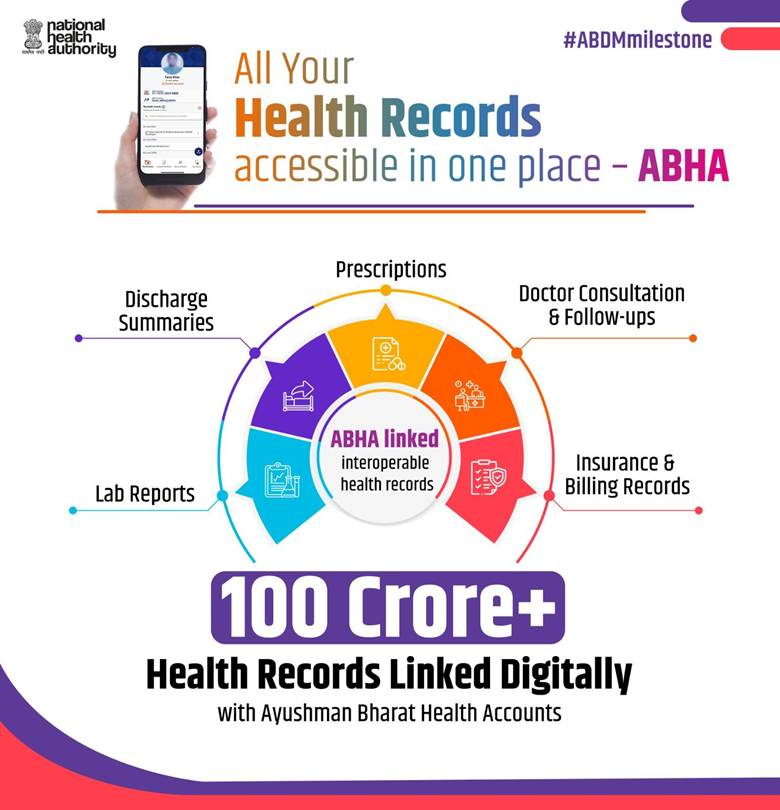
- 25 May 2026
In News:
The Ayushman Bharat Digital Mission (ABDM), implemented by the National Health Authority (NHA) under the Ministry of Health and Family Welfare, has achieved a landmark milestone with over 100 crore health records successfully linked with Ayushman Bharat Health Accounts (ABHA). The achievement positions ABDM as one of the world's largest digital health ecosystems — a defining moment for India's Digital Public Infrastructure (DPI) in healthcare.
Scale and Speed of Achievement
ABDM doubled the number of linked health records from 50 crore in February 2025 to over 100 crore in just 15 months, with nearly 10 crore health records now being added every two to three months. From fewer than 1,000 linked records during its initial phase, the mission has evolved into a continental-scale digital health infrastructure.
More than 450 public and private health technology solutions have successfully integrated with the ABDM ecosystem, accelerating digitisation and seamless exchange of health records across healthcare facilities nationwide.
State-Wise Performance
Uttar Pradesh has emerged as the leading contributor with over 15.03 crore ABHA-linked health records, followed by Andhra Pradesh with over 11.95 crore. Bihar, Rajasthan, and Gujarat have linked over 7.37 crore, 6.32 crore, and 4.77 crore records respectively.
Key Government Platforms Contributing to the Milestone
Major contributing programmes and platforms include the NCD Programme and CoWIN (MoHFW), PM-JAY, UP's eKavach platform, AP's health programmes, the Reproductive and Child Health (RCH)programme, eHospital (NIC), eSushrut (C-DAC), Gujarat's TeCHO platform, and Rajasthan's iHMS platform.
Key Components of ABDM
The mission operates through six digital building blocks:
- ABHA (Ayushman Bharat Health Account): A 14-digit unique health ID enabling citizens to securely link and access health records across hospitals, clinics, labs, and pharmacies.
- Healthcare Professionals Registry (HPR): Comprehensive repository of all healthcare professionals across modern and traditional medicine systems.
- Health Facility Registry (HFR): Registry of all public and private health facilities — hospitals, clinics, diagnostic labs, pharmacies.
- HIE-CM (Health Information Exchange and Consent Manager): Enables consent-based, secure sharing of health records — placing data sovereignty with the citizen.
- Unified Health Interface (UHI): Open protocol enabling interoperability across digital health service applications.
- National Health Claims Exchange (NHCX):Standardises health claim information exchange between payers, providers, and beneficiaries — streamlining insurance claim processing.
Significance
ABDM represents a pivotal application of India's DPI model — the same stack of interoperable, consent-based, open-protocol infrastructure that powers UPI in payments and Aadhaar in identity — now applied to healthcare data. The milestone has several transformative implications:
- Continuity of Care: Longitudinal digital health records empower citizens with secure, consent-based access to their health information — enabling seamless record sharing across providers and eliminating dependence on physical documents.
- Insurance Efficiency: NHCX integration reduces claim processing delays and fraud — a critical reform for PM-JAY's effective implementation at scale.
- Public Health Surveillance: Aggregated, anonymised ABHA-linked data can power population-level disease surveillance, NCD monitoring, and health planning — aligning with India's One Health Mission and post-pandemic preparedness frameworks.
- Global DPI Leadership: India's ABDM model — open, interoperable, consent-driven, and rapidly scalable — is increasingly cited by the WHO and G20 as a replicable template for low- and middle-income countries building digital health infrastructure.
Myopia
- 25 May 2026
In News:
The global prevalence of myopia has surged from 22.9% in 2000 to an estimated 34% in 2020 and is expected to reach 50% by 2050, affecting nearly 5 billion people — making it one of the most pressing public health challenges of the 21st century. Once regarded as a benign, correctable refractive error, myopia is now recognised as a progressive, potentially sight-threatening condition with significant socioeconomic consequences.
What is Myopia?
- Myopia — commonly known as nearsightedness — is a refractive error in which close objects appear clear while distant objects appear blurry.
- It occurs when the eyeball is elongated from front to back, causing incoming light to focus in front of the retina rather than directly on it. The longer the eyeball, the more severe the nearsightedness.
- Eye experts attribute myopia to a combination of hereditary and environmental factors. It typically begins in childhood or adolescence, worsening progressively until adulthood when it may stabilise.
The Scale of the Crisis
- Researchers predict that by 2050, 4,758 million people (49.8% of the world population) will be myopic, and 938 million will have high myopia — a severe form carrying significantly elevated risks of permanent vision loss.
- High myopia raises the risk of serious ocular diseases such as myopic macular degeneration (MMD), retinal detachment, glaucoma, and cataract — conditions that can cause irreversible blindness.
- Myopia's prevalence has dramatically increased in recent decades, now affecting as much as 88% of the population in some Asian countries — though its growing prevalence is by no means an exclusively regional trend.
Why is it Rising so fast? The "Changing Childhood" Factor
The sharp rise in myopia prevalence is strongly linked to urbanisation-driven lifestyle changes — particularly among children:
- Increased near-work activity: Prolonged screen time, reading, and digital device use force the eye to focus at short distances for extended periods — a key risk factor for axial elongation of the eyeball.
- Reduced outdoor time: Health officials increasingly highlight that children need more outdoor time as a countermeasure — natural light exposure and distant vision are believed to stimulate dopamine release in the retina, which inhibits excessive eye elongation.
- Earlier onset: As the number of people with myopia increases, the age of onset is decreasing — a critical concern since earlier onset leads to greater lifetime myopic progression and higher risk of complications.
- In South Asia, urban children show a 2–3 fold higher prevalence of myopia compared to rural children, predominantly due to increased near-work activity in urban school environments.
India's Burden
South Asia — comprising India, Pakistan, Bangladesh, and six other countries — hosts 23% of the world's population but bears a disproportionately large 30% share of global visual impairment. Uncorrected refractive errors, predominantly myopia, account for as much as 63% of visual impairment in the region — far exceeding the global average of 50%. India's rapid urbanisation, competitive education culture, and explosive growth in screen time among children are accelerating this trajectory.
Treatment and Prevention
- Corrective options: Glasses and contact lenses remain the primary correction tools. Negative (minus) powered lenses diverge light before it enters the eye, compensating for the elongated eyeball. Refractive surgeries (LASIK, PRK) are available for adults.
- Myopia control strategies — aimed at slowing progression rather than merely correcting existing refractive error — include orthokeratology (overnight contact lenses), low-dose atropine eye drops, and multifocal lenses. However, access to these therapies remains highly unequal globally.
The most cost-effective intervention remains behavioural: increasing children's daily outdoor exposure to at least 90–120 minutes and reducing near-screen time — a public health message with direct policy implications for India's school education and digital learning frameworks.
Rupee at Historic Lows: RBI's Multi-Pronged Currency Defence in 2026

- 24 May 2026
In News:
The Indian Rupee has faced persistent downward pressure, depreciating significantly against the US Dollar — piercing the 96.86 mark per USD to hit a new historic low, driven by rising crude oil prices, geopolitical strain from the West Asia conflict, and strong foreign fund outflows from Indian equity markets. In response, the RBI has deployed a multi-pronged intervention architecture — combining spot market dollar sales, forex swap auctions, and liquidity management tools.
The Triggers Behind Rupee Depreciation
- Geopolitical shock: Escalation of the US-Iran conflict pushed crude oil prices sharply higher — directly worsening India's import bill, as India imports approximately 87% of its crude requirements.
- Capital outflows: Foreign Portfolio Investors (FPIs) pulled capital from Indian equity markets amid global risk-off sentiment.
- Dollar strength: A stronger US Dollar globally — driven by elevated US Federal Reserve rates — exerted broad emerging market currency pressure.
RBI's Intervention Toolkit: 2026 Deployment
1. Spot Market Dollar Sales: The RBI has been selling dollars at an estimated pace of USD 1 billion per day in recent trading sessions to curb excessive depreciation. However, this drains rupee liquidity from the banking system — a side effect the RBI manages through Sterilised Interventions, using Open Market Operations (OMOs) to simultaneously inject rupees back via government bond purchases.
2. USD 5 Billion Buy-Sell Swap Auction: The RBI announced a USD 5 billion USD/INR buy-sell swap auction for a tenor of three years, aiming to ease prolonged cash tightness within the banking network caused by its heavy forex market interventions.
Mechanics: Banks sell dollars to the RBI now (receiving rupees at spot rate) and agree to buy them back at a pre-determined rate plus premium after three years. This is expected to inject ?42,000–43,000 crore of durable rupee liquidity back into the banking system.
Market participants noted the swap will be good for bonds by maintaining surplus liquidity, and should also cool forward premiums — reducing hedging costs that had been rising for two weeks — though the impact on the INR spot rate is expected to be broadly neutral.
3. Pre-Market Interventions:The RBI recently used off-market mechanics of selling dollars through state-run banks, driving a 70-paise intraday rally that pushed the rupee back from near-97 levels to an opening rate of 96.30.
4. Net Open Position (NOP) Cap: The RBI implemented a strict Capital Flow Management measure — capping banks' Net Open Position in foreign currencies at USD 100 million per day — forcing banks to unwind excess dollar holdings and increasing dollar supply in the forex market.
Historical Parallels: Crisis Playbook
India has navigated severe currency stress before through unconventional tools:
- 1998 (Post-nuclear test sanctions): Issued Resurgent India Bonds (RIBs) — raising ~USD 4.2 billion from NRIs.
- 2013 (Taper Tantrum): RBI Governor Raghuram Rajan opened a special FCNR(B) deposit window with subsidised hedging rates — mobilising USD 26 billion in weeks, instantly stabilising the rupee.
Jeevan App &SHATAYU Dashboard
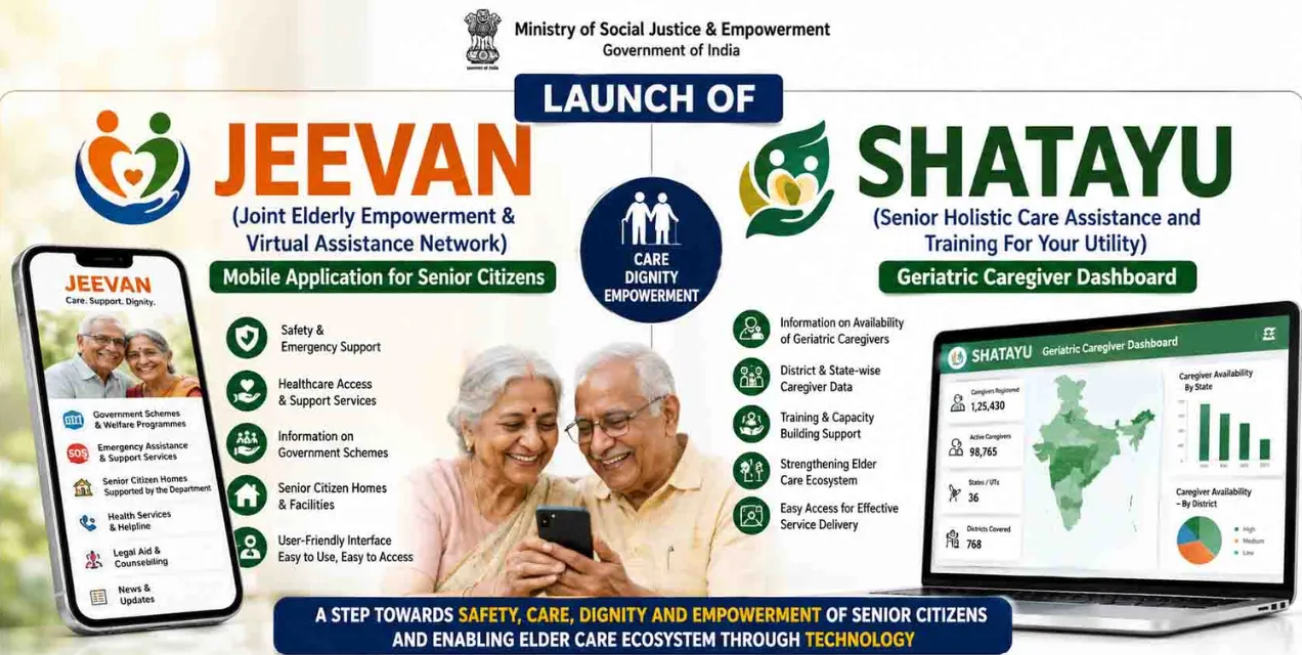
- 24 May 2026
In News:
The Ministry of Social Justice and Empowerment (MoSJE) officially launched the JEEVAN mobile application and the SHATAYU geriatric caregiver dashboard during a National Workshop in New Delhi — a significant policy intervention as India confronts the demographic reality of a rapidly ageing population. Both platforms are developed and managed by the Department of Social Justice and Empowerment.
The Demographic Imperative
India's elderly population (60 ) currently stands at approximately 149 million (2024) and is projected to reach 347 million by 2050 — nearly doubling its share of the total population. This demographic shift poses structural challenges: fragmented welfare delivery, an unorganised caregiving sector, social isolation, inadequate healthcare access, and digital exclusion of senior citizens. JEEVAN and SHATAYU are designed as twin digital solutions to these intersecting vulnerabilities.
JEEVAN: Joint Elderly Empowerment & Virtual Assistance Network
JEEVAN is a citizen-facing, single-window mobile application engineered specifically for senior citizens, with four core functions:
- Unified Welfare Gateway: Aggregates all active Central and State Government schemes, pension benefits, and healthcare entitlements for seniors — eliminating the need for elderly users to navigate multiple departmental portals.
- SOS Emergency Matrix: A simplified, high-visibility one-touch panic button that directly connects elderly users to local emergency services, medical networks, and the national elder helpline — critical for seniors living alone or in low-support environments.
- Institutional Home Locator: Provides geo-tagged, verified listings of all MoSJE-supported senior citizen welfare homes and day-care centres — enabling families to make informed placement decisions.
- Elder-Centric Accessibility Design: Built with large text fonts, voice-assisted navigation, and simplified screen interactions — explicitly addressing the sensory and motor limitations of older users, a dimension typically ignored in mainstream app design.
SHATAYU: Senior Holistic Care Assistance and Training For Your Utility
SHATAYU is a centralised, data-driven national dashboard targeting the supply side of India's eldercare ecosystem — the geriatric caregiver workforce:
- District-Level Micro-Mapping: Enables real-time visibility of verified geriatric caregivers available within specific districts and states — allowing both families and state planners to identify and address care-supply gaps geographically.
- Standardised Training Trackers: Monitors caregiver skill progression, certification benchmarks, and training completion — formalising what has historically been an informal, unregulated domain.
- Care-Economy Integration Hub: Aggregates data from NGOs, medical skill councils, and ecosystem partners to balance supply-demand in the eldercare labour market — directly supporting India's emerging care economy framework.
- Verified Service Directory: Maintains a secure backend with validated caregiver credentials, background checks, and legal compliance records — addressing the safety and trust deficit that has long deterred families from accessing formal care services.
Policy Context
Both platforms align with the Maintenance and Welfare of Parents and Senior Citizens (Amendment) Act, 2019, which expanded the state's obligations toward elderly welfare, and the National Policy for Senior Citizens framework. They also complement existing schemes under ATAL VAYO ABHYUDAY YOJANA (AVYAY) — the umbrella scheme for senior citizen welfare under MoSJE.
SHATAYU's data-driven approach is particularly significant for Skill India Mission targeting — by exposing district-level caregiving deficits, it enables the National Skill Development Corporation (NSDC) and healthcare skill councils to direct specialised geriatric care training camps to underserved rural and semi-urban regions.
Multilateral Exercise PRAGATI 2026
- 24 May 2026
In News:
The multilateral military exercise PRAGATI 2026 commenced at Umroi Military Station, Meghalaya, with 12 friendly nations participating alongside India — marking a significant step in India's evolving role as a Preferred Security Partner in the Indian Ocean Region (IOR) and a concrete expression of its Neighbourhood First and Act East foreign policy doctrines.
What is PRAGATI?
- PRAGATI stands for Partnership of Regional Armies for Growth and Transformation in the Indian Ocean Region, a premier multinational military exercise conducted under the core principles of mutual respect, equality, and shared regional security.
- It provides a unified institutional platform for regional armies to exchange battlefield experiences, harmonise tactical doctrines, and establish joint response mechanisms against contemporary security threats.
Participating Nations
- India hosts 12 friendly nations: Bhutan, Cambodia, Indonesia, Laos, Malaysia, Maldives, Myanmar, Nepal, Philippines, Seychelles, Sri Lanka, and Vietnam — a grouping that reflects India's strategic geography, spanning South Asia, Southeast Asia, and the Indian Ocean island states.
Key Features of PRAGATI 2026
- Operational Focus: The two-week exercise concentrates on counter-terrorism (CT) and counter-insurgency (COIN) operations in semi-mountainous and jungle terrain — the precise operational environment that characterises India's northeastern frontier and large parts of Southeast Asia's security landscape.
Training Modules:
- Joint command planning exercises and tactical-level field drills
- Coordinated live-fire simulation operations designed to improve adaptability, endurance, and tactical proficiency
- Intelligence synchronisation — developing real-time, secure intelligence-sharing frameworks in multinational operational environments — a critical capacity gap in regional CT cooperation
Atmanirbhar Bharat Exposition: PRAGATI 2026 uniquely incorporates a defence-tech showcase where Indian domestic companies display indigenous weapons, tactical gear, and military innovations — integrating defence diplomacy with defence export promotion under the Atmanirbhar Bharat framework.
Strategic Significance
- Preferred Security Partner: PRAGATI operationalises India's stated ambition of being the net security provider in the IOR — a role articulated in the SAGAR (Security and Growth for All in the Region) doctrine and the Indo-Pacific Oceans Initiative (IPOI). Training together builds practical interoperability for real-world crisis response, whether counter-terrorism, HADR, or maritime security operations.
- Geopolitical Positioning: The participant list is deliberately IOR-centric — covering India's immediate neighbourhood (Bhutan, Nepal, Maldives, Sri Lanka), ASEAN partners (Cambodia, Indonesia, Laos, Malaysia, Myanmar, Philippines, Vietnam), and strategic island states (Seychelles). This grouping mirrors the geography of China's expanding maritime footprint — making PRAGATI an implicit instrument of India's IOR balancing strategy.
- Northeast India as a Strategic Hub: The choice of Umroi, Meghalaya as the host location is symbolically and operationally significant — it demonstrates India's confidence in its northeastern security infrastructure and reflects the region's growing importance as India's gateway to Southeast Asia under the Act East Policy.
- Doctrine Building: By harmonising tactical doctrines across 13 armies with varying equipment, languages, and command cultures, PRAGATI contributes to building a regional security architecture that is India-led but genuinely multilateral — a format increasingly preferred by smaller IOR states as an alternative to great-power dependency.
Agni-1 Missile
- 24 May 2026
In News:
India successfully test-launched the Short Range Ballistic Missile (SRBM) Agni-I from the Integrated Test Range (ITR), Chandipur, Odisha, under the aegis of the Strategic Forces Command (SFC). The Ministry of Defence confirmed that the launch validated all operational and technical parameters. The test was conducted as part of a routine training exercise — signalling operational readiness rather than a developmental milestone.
About Agni-I: Key Features
- Type: Single-stage, solid-fuel Short Range Ballistic Missile (SRBM)
- Range: 700–1,200 km (heavier payload reduces range; lighter payload enables MRBM-class reach)
- Propulsion: Solid-propellant booster derived from ISRO's SLV-3 technology
- Warhead: Nuclear-capable; also carries conventional warheads
- Mobility: Deployable via rail-based platforms and road-mobile Transporter Erector Launchers (TELs) — enabling survivable second-strike positioning
- Induction: First deployed by the Indian Army's Strategic Forces Command in 2007
- Origin: Developed under India's Integrated Guided Missile Development Programme (IGMDP), 1983 — the landmark initiative that also produced Prithvi, Trishul, Akash, and Nag
The Agni Family: India's Strategic Backbone
The Agni series constitutes the core of India's nuclear triad's land-based component, spanning a comprehensive strike envelope:
|
Missile |
Type |
Range |
|
Agni-I |
SRBM/MRBM |
700–1,200 km |
|
Agni-II |
MRBM |
~2,000 km |
|
Agni-III |
IRBM |
~3,000 km |
|
Agni-IV |
IRBM |
~3,500–4,000 km |
|
Agni-V |
ICBM |
>5,000 km |
|
Agni Prime |
MRBM |
~1,000–2,000 km (advanced) |
Critical Context: MIRV Test and Escalating Capability
- The Agni-I test follows another significant achievementwhen India successfully flight-tested an advanced Agni missile fitted with a Multiple Independently Targetable Re-entry Vehicle (MIRV) system from Dr APJ Abdul Kalam Island, Odisha. The missile carried multiple payloads directed at different targets spatially distributed across a large area of the Indian Ocean Region, tracked by multiple ground-based and ship-mounted stations throughout the trajectory.
- MIRV capability i.e. the ability to deliver multiple warheads from a single missile to strike different targets simultaneously, is considered a quantum leap in strategic deterrence, as it exponentially complicates an adversary's missile defence calculations.
Strategic Significance
- Credible Minimum Deterrence: Regular Agni series tests are essential for maintaining operational readiness and validating deterrent credibility — particularly in the context of India's No First Use (NFU) nuclear doctrine, which requires assured second-strike capability. A road-mobile, solid-fuelled missile like Agni-I is ideally suited for survivable second-strike posturing.
- Layered Deterrence: The twin tests — Agni-I (short-range battlefield deterrence) and MIRV-equipped Agni (strategic deterrence at intercontinental scale) — within weeks of each other demonstrate India's full-spectrum deterrence architecture, covering both tactical and strategic nuclear scenarios.
- Geopolitical Signalling: These tests reinforce India's strategic deterrence posture at a time of heightened regional security tensions — including continued Pakistani nuclear modernisation, China's expanding ICBM arsenal, and the post-Pahalgam crisis security environment in South Asia.
Sanghmitra Patrol Vessel

- 24 May 2026
In News:
The Indian Navy's next-generation offshore patrol vessel 'Sanghmitra' was recently launched at Garden Reach Shipbuilders & Engineers (GRSE), Kolkata, marking a significant milestone in India's indigenisation of naval platforms and the country's growing blue-water maritime ambitions.
About the Vessel
- Type: Next Generation Offshore Patrol Vessel (NGOPV)
- Shipyard: Garden Reach Shipbuilders & Engineers (GRSE), Kolkata, a Defence Public Sector Undertaking (DPSU) under the Ministry of Defence.
- Programme Scale: Sanghmitra is part of India's ambitious programme to construct 11 NGOPVs simultaneously across two shipyards — reflecting the Navy's push for large-scale, parallel indigenous naval construction.
- Name: Named after Sanghmitra, the daughter of Emperor Ashoka, who played a pivotal role in spreading Buddhism to Sri Lanka — a name symbolising India's civilisational outreach and maritime heritage in the Indian Ocean Region.
- Crest Design: Features the constellation Ursa Major and a red-and-white lighthouse — symbols of navigation, maritime vigilance, and enduring guidance.
Technical Specifications
- Length: ~113 metres
- Beam (Width): 14.6 metres
- Displacement: 3,000 tonnes
- Endurance: 8,500 nautical miles at a cruising speed of 14 knots
- Maximum Speed: 23 knots
- Crew Accommodation: Designed for extended blue-water patrol operations with modern habitability standards.
Operational Capabilities
The NGOPV platform is designed for a wide spectrum of missions across the full conflict spectrum:
- Maritime Surveillance: Intelligence gathering and domain awareness in India's areas of interest — including the Exclusive Economic Zone (EEZ), which spans over 2.37 million sq km.
- Search and Rescue (SAR): Rapid response to maritime distress situations in the Indian Ocean Region.
- Protection of Offshore Assets: Security of oil rigs, underwater pipelines, and strategic maritime infrastructure.
- Humanitarian Assistance and Disaster Relief (HADR): Rapid deployment during natural disasters — a growing operational priority given India's increasing HADR footprint in the IOR.
- Anti-Piracy Operations: Sustained presence in piracy-prone corridors including the Gulf of Aden and the western Arabian Sea.
Strategic Significance
Atmanirbhar Bharat in Defence: GRSE's construction of Sanghmitra underscores India's accelerating naval indigenisation under the Atmanirbhar Bharat initiative. GRSE has previously built frigates, corvettes, landing craft, and fast attack crafts — establishing itself as a frontline warship builder. India's Defence Acquisition Procedure (DAP) 2020 mandates preference for indigenously designed, developed, and manufactured (IDDM) platforms — the NGOPV programme is a direct expression of this policy.
Indian Ocean Strategy: The 11-vessel NGOPV programme significantly enhances India's persistent maritime presence across the IOR at a time of heightened strategic competition — with China's expanding naval footprint through its String of Pearls strategy placing India's maritime neighbourhood under pressure. OPVs, by virtue of their endurance and multi-role capability, are ideally suited for grey-zone operations — below the threshold of conflict but above mere diplomatic signalling.
Naming Significance: The choice of Sanghmitra — a historical figure who carried India's civilisational influence across the Indian Ocean to Sri Lanka — is symbolically deliberate, reflecting India's conception of the IOR as a historically connected civilisational space rather than a purely contested strategic domain.
Suryastra: India's Indigenous Multi-Calibre Rocket System

- 23 May 2026
In News:
India achieved a major milestone in indigenous defence technology after private defence firm Nibe Limited successfully tested the long-range Suryastra rocket system at the Integrated Test Range (ITR), Chandipur, Odisha. Trials included both the 150 km and 300 km strike-range variants, both delivering highly accurate strikes with minimal error.
What is Suryastra?
- Suryastra is India's first indigenous universal multi-calibre rocket launcher system — a fully guided, precision rocket artillery platform designed for long-range strategic strikes.
- Developed by Pune-based Nibe Limited in collaboration with Israel's Elbit Systems, based on Elbit's PULS (Precise & Universal Launching System) technology.
- Mounted on a highly mobile 6×6 Tatra truck, enabling rapid deployment and shoot-and-scoot survivability against counter-battery fire.
- Mission profile: precision strikes against enemy command centres, radar installations, logistics hubs, and military infrastructure deep inside hostile territory.
Technical Specifications
- Multi-calibre, Modular Design: Uses interchangeable modular pods capable of firing:
- 122 mm rockets — shorter-range battlefield engagements
- 306 mm EXTRA missiles — range up to 150 km
- 370 mm Predator Hawk missiles — range up to 300 km
- SkyStriker loitering munitions (suicide drones) — range up to 100 km
- Precision: The 150 km variant achieved a Circular Error Probable (CEP) of 1.5 metres; the 300 km variant struck within 2 metres of the target — exceptional accuracy for long-range guided rocket artillery.
- Fire Control: Integrates GPS, inertial navigation, and digital ballistic computation for all-weather, day-night precision targeting.
- Semi-automated reload reduces crew exposure during operations.
Strategic Significance
- Operational Depth: The 300 km strike range allows India's military to engage high-value strategic targets deep inside enemy territory while keeping personnel and equipment outside conventional artillery range — a critical operational advantage in mountainous or contested border terrains.
- Multi-domain Lethality: The inclusion of loitering munitions (SkyStriker) alongside conventional rockets gives Suryastra a hybrid character — combining saturation fire with precision drone strike capability in a single platform, mirroring doctrinal lessons from the Ukraine and Nagorno-Karabakh conflicts.
- Atmanirbhar Bharat Validation: Private companies like Nibe are now stepping up to build missile platforms, drones, and advanced electronics — reducing India's reliance on imports and demonstrating the maturation of India's private defence-industrial ecosystem.
- Comparative Context:Suryastra's capability profile places it alongside systems like the US M270 MLRS and Russia's BM-30 Smerch, but with the added distinction of being indigenously integrated and domestically produced — a significant leap for a country historically dependent on imported artillery.
Policy Context
The Suryastra test aligns with India's Defence Acquisition Procedure (DAP) 2020, which prioritises indigenously designed, developed, and manufactured (IDDM) systems. India's Defence Production and Export Promotion Policy (DPEPP) 2020 targets defence exports of USD 5 billion by 2025 — systems like Suryastra, once inducted, could form the core of India's emerging guided rocket artillery export portfolio
Arunachal Kiwi Mission

- 23 May 2026
In News:
Union Minister for Development of North Eastern Region (DoNER), Shri Jyotiraditya Scindia, launched the "Arunachal Kiwi: The USP of Arunachal Pradesh" — a Cluster-based Kiwi Cultivation and Value Chain Development Mission — in New Delhi. With a financial outlay of approximately ?167 crore, the mission is designed through a whole-of-government and convergence-led approach, marking a significant step in building globally competitive agricultural value chains rooted in the Northeast's natural strengths.
Why Kiwi for Arunachal Pradesh?
- Arunachal Pradesh is India's largest kiwi-producing state and the first state in the country to receive organic kiwi certification under the Mission Organic Value Chain Development for North East Region (MOVCD-NER) in 2020.
- The state's high-altitude, organic agro-climatic conditions are ideal for producing premium-grade Hayward and Allison cultivars of kiwi — varieties with high domestic and export market value.
- Kiwi (Actinidia deliciosa, also called Chinese Gooseberry) thrives between 900–1,600 metres above mean sea level in warm, humid climates with well-distributed annual rainfall of around 150 cm and 700–800 chilling hours during winter — conditions naturally present across Arunachal's hill terrain.
- The fruit is a rich source of Vitamins B and C and minerals including phosphorus, potassium, and calcium, placing it in growing demand in health-conscious domestic and global markets.
Four Strategic Pillars of the Mission
The Arunachal Kiwi Mission is anchored on four pillars:
- Convergence: Integration of schemes across multiple ministries and departments to eliminate fragmented implementation and maximise fund utilisation.
- Value Addition: Moving beyond raw fruit production toward processed kiwi products — juices, jams, dried kiwi, nutraceuticals — to enhance farmer income and reduce post-harvest losses.
- Branding: Developing a distinct, recognisable identity for Arunachal kiwi in domestic and global markets — leveraging its organic certification as a premium differentiator.
- Market Integration: Creating structured supply chain linkages connecting farmers to retail, e-commerce, institutional buyers, and export channels.
Northeast's Unique Product Strategy: One State, One USP
The Arunachal Kiwi Mission is part of a broader DoNER strategy to identify one flagship agricultural or cultural product per Northeastern state with a distinct Unique Selling Proposition (USP):
- Mizoram — Ginger
- Nagaland — Coffee
- Sikkim — Organic Farming
- Manipur — Polo Heritage
- Assam — Muga Silk
- Meghalaya — Lakadong Turmeric
- Arunachal Pradesh — Kiwi
This state-specific, product-anchored approach reflects a shift from generic rural development to competitive, brand-led agricultural specialisation — a model aligned with global agri-value chain thinking.
Policy Context
The mission converges with several existing schemes:
- MOVCD-NER — organic value chain development specific to the Northeast.
- PM-KISAN and Pradhan Mantri Kisan SAMPADA Yojana — for farmer income support and food processing infrastructure.
- One District One Product (ODOP) — for cluster-level product specialisation.
- Agricultural Export Policy 2018 — for integrating Indian agricultural produce into global value chains.
UMMID Programme
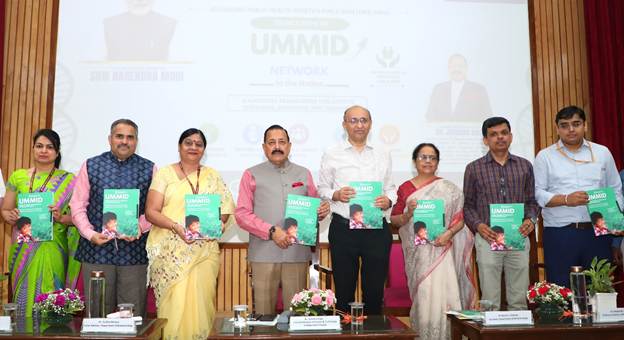
- 23 May 2026
In News:
Union Minister Dr. Jitendra Singh dedicated the UMMID (Unique Methods of Management of Inherited Disorders)Programme for Rare Genetic Disorders to the Nation at Prithvi Bhawan, New Delhi.
What is UMMID?
- Nodal Ministry: Department of Biotechnology (DBT), Ministry of Science & Technology.
- Nature: India's first comprehensive national initiative addressing inherited and rare genetic disorders through an integrated, multi-pronged public health approach.
- Policy linkage: Supports implementation of the National Policy for Rare Diseases (NPRD) 2021 by creating structured care pathways for affected patients.
Three Pillars of UMMID
- NIDAN Kendras: Nearly 30 NIDAN Kendras have been established for advanced genetic diagnostics and counselling, ensuring genomic healthcare reaches beyond metropolitan centres to ordinary citizens.
- Outreach in Aspirational Districts: Targeted screening and awareness programmes in underserved and aspirational district populations — addressing the equity gap in rare disease detection.
- Specialised Training Centres: Capacity-building for clinicians, genetic counsellors, and healthcare professionals — addressing the long-standing knowledge deficit around rare disorders in mainstream medical practice.
Key Achievements
- The programme has benefited nearly three lakh individuals through screening and diagnostic services.
- Services span prenatal and newborn screening, genetic counselling, diagnostics, clinician training, and community outreach — all under one unified public health model.
- The UMMID Dashboard launched alongside will enable real-time nationwide monitoring of programme reach and outcomes.
Why It Matters: The Silent Burden
- Inherited and rare genetic disorders remained neglected for decades because diagnosis was difficult, treatment inaccessible, and medicines either unavailable or prohibitively expensive.
- Families often spend years moving from hospital to hospital in search of a diagnosis — imposing enormous emotional, social, and financial hardship despite affecting comparatively smaller populations.
- India's vast genetic diversity compounds the challenge, requiring robust ecosystem-level responses rather than isolated interventions.
Fourth India-Africa Forum Summit (IAFS-IV)

- 23 May 2026
In News:
- The Fourth India-Africa Forum Summit (IAFS-IV), scheduled in New Delhi, has been postponed due to concerns over the spread of the Ebola Virus Disease (EVD) in parts of Africa.
- The summit was to be held after a gap of 11 years — the longest inter-summit interval since IAFS's establishment.
About the Ebola Outbreak
- The WHO has declared the latest Ebola outbreak in the Democratic Republic of Congo (DRC) a Public Health Emergency of International Concern (PHEIC) — the DRC's 17th Ebola outbreak.
- The outbreak has caused approximately 139 deaths with around 600 suspected cases, with the first case now confirmed in South Kivu province, controlled by Rwanda-backed M23 rebels.
- Containment efforts have been severely hampered by ongoing armed conflict in eastern DRC.
- India issued a health advisory for travellers arriving from or transiting through Ebola-affected countries; the Union Health Secretary chaired a high-level review with health secretaries of all states and UTs to assess preparedness.
About India-Africa Forum Summit (IAFS)
- Established: 2008 — the apex institutional platform for India-Africa dialogue and cooperation.
- Previous Summits: IAFS-I (2008, New Delhi) → IAFS-II (2011, Addis Ababa) → IAFS-III (2015, New Delhi).
- Purpose: Strengthens political dialogue, trade, investment, technology transfer, capacity building, and people-to-people ties between India and the 55 African Union member states.
- Reflects: Commitment to South-South cooperation, inclusive development, multilateralism, and sustainable partnerships.
Note: Ebola has twice disrupted India-Africa summitry — the IAFS-III was also delayed from 2014 to 2015 partly due to the West African Ebola epidemic.
Significance of IAFS-IV (What Was at Stake)
- IAFS-IV was expected to announce India's next 10-year Africa engagement roadmap, building on the USD 29 billion in Lines of Credit and 50,000 scholarships committed at IAFS-III.
- The summit coincided with India's growing strategic interest in Africa for critical minerals, maritime security (Indian Ocean Region), food security partnerships, and UN Security Council reform support.
- Africa's 54-member bloc is India's largest voting bloc in multilateral forums — including the UN, WTO, and Commonwealth.
About Ebola Virus Disease (EVD)
- Caused by the Ebola virus (genus Ebolavirus); transmitted through direct contact with blood or body fluids of infected persons.
- Incubation period: 2–21 days; symptoms include fever, weakness, vomiting, diarrhoea, and unexplained bleeding.
- WHO has noted a low global risk but warns that a vaccine could take nine months to deploy at scale.
- No established cure exists; treatment remains supportive; the rVSV-ZEBOV vaccine (Ervebo) has been used in outbreak response since 2019.
RAINMUMBAI
- 22 May 2026
In News:
The National Commodity Derivatives Exchange Limited (NCDEX) announced RAINMUMBAI as India's first SEBI-approved exchange-traded weather derivatives contract, with trading set to commence on 29 May 2026. The launch represents the emergence of a new climate-linked asset class in India and a significant step in strengthening the country's climate risk management ecosystem.
What are Weather Derivatives?
Weather derivatives are financial contracts that derive value from weather variables — such as rainfall, temperature, snowfall, or wind speed — rather than from conventional financial assets. Unlike traditional insurance products, weather derivatives are settled purely on observed weather data and do not require physical loss assessment, enabling faster settlement and greater operational efficiency. They are widely used globally in agriculture, power, construction, logistics, tourism, and energy — sectors where revenues are significantly impacted by weather variability. Their inclusion in India's financial architecture became possible after weather derivatives were formally included in the Securities Contracts (Regulation) Act, 1956 (SCRA) in 2024, clearing the regulatory pathway for their exchange-traded launch.
About RAINMUMBAI
RAINMUMBAI was developed in collaboration with IIT Bombay and is based on a scientifically structured Cumulative Deviation Rainfall (CDR) metric, which measures the deviation of actual rainfall from Mumbai's Long Period Average (LPA) during the monsoon months of June to September. Built using daily rainfall data benchmarked against a robust 30-year historical dataset (1991–2020 LPA), the framework ensures transparency, consistency, and reliability.
Underlying data will be sourced from IMD surface rainfall observations and Automatic Weather Stations (AWS) at Santacruz and Colaba — two of Mumbai's principal weather monitoring points. The contract is cash-settled, with a base price of ?50 per millimetre of rainfall, a tick size of 1 mm, and a maximum order size of 50 lots. Trading hours are Monday to Friday, 10:00 a.m. to 11:30/11:55 p.m.
Who Benefits?
The futures contract is designed for a broad range of stakeholders with financial exposure to rainfall fluctuations — farmers, construction companies, power utilities, logistics operators, and banks with agricultural loan portfolios. For farmers, it provides a market-based hedge against crop losses from deficient or excess rainfall, without the documentation burden associated with traditional crop insurance. For banks, it offers a tool to hedge the credit risk embedded in agriculture-linked loan portfolios — a significant concern given India's monsoon-dependent rural economy.
Institutional Architecture
The NCDEX-IMD MoU signed in December 2025 gave NCDEX access to IMD's historical and real-time weather data, enabling development of statistically validated weather indices that form the foundation of weather-linked futures contracts. NCDEX — established in 2003, headquartered in Mumbai, and regulated by SEBI — primarily focuses on agricultural commodity derivatives including wheat, sugar, spices, and cotton.
The RAINMUMBAI initiative is explicitly city-specific and monsoon-specific for now, but the underlying CDR framework can be scaled to other cities and weather parameters — potentially unlocking India's first temperature or wind-based derivatives in future iterations.
Ammonium Sulphate for Paddy
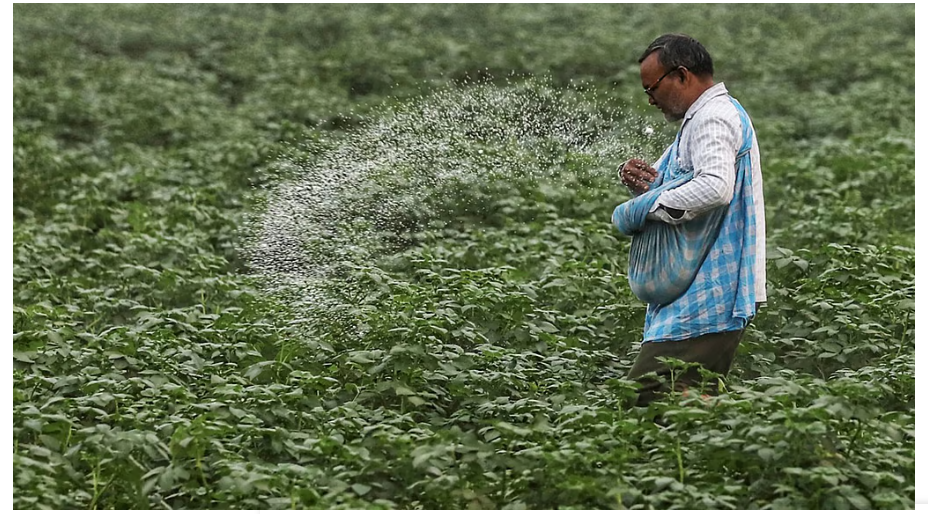
- 22 May 2026
In News:
The Indian Council of Agricultural Research (ICAR) has recommended the use of ammonium sulphate for paddy cultivation as a low-cost fertilizer option to help farmers improve crop nutrition and maintain soil fertility. The recommendation comes amid growing concerns over India's heavy dependence on urea, fertilizer import disruptions from West Asia, and widespread sulphur deficiency in Indian agricultural soils.
What is Ammonium Sulphate?
Ammonium sulphate — chemical formula (NH?)?SO? — is an inorganic, water-soluble mineral fertilizer produced by reacting ammonia with sulphuric acid. It is also recovered as a valuable industrial byproduct from coke-oven gases in steel plants and from the manufacture of caprolactam (used in nylon production) and other metallurgical and chemical processes. This dual origin — direct synthesis and industrial recovery — makes it a resource-efficient fertilizer with significant circular economy value.
Its key nutritional composition: 21% Nitrogen (in the ammonium form) and 24% Sulphur (as active sulphate) — making it one of the richest dual-nutrient fertilizers available.
Why Ammonium Sulphate for Paddy?
Rice farmers frequently apply ammonium sulphate to flooded soils since nitrate-based fertilizers are a poor choice for waterlogged paddy fields due to denitrification losses — the microbial conversion of nitrates into nitrogen gas under anaerobic conditions. The ammonium form of nitrogen in ammonium sulphate is more stable in flooded, oxygen-deficient paddy soils, making it agronomically superior to urea in such conditions.
Additionally, paddy cultivation in India is heavily concentrated in alkaline and sulphur-deficient soils across states like Uttar Pradesh, Punjab, and Haryana. Ammonium sulphate addresses both challenges simultaneously — its acidifying effect lowers soil pH in alkaline soils while replenishing sulphur, which is increasingly becoming a deficient macronutrient in Indian farmlands due to the shift away from sulphur-containing fertilizers.
Sulphur plays a critical role in protein synthesis, chlorophyll formation, oil content in oilseeds, and quality parameters of cereals — making sulphur nutrition essential for both yield and produce quality.
The Urea Problem: Why a Shift is Needed
India's fertilizer economy is dangerously skewed toward urea, which accounts for the bulk of nitrogen fertilizer consumption. This creates multiple structural problems: fiscal pressure through enormous subsidies (urea is the most heavily subsidised fertilizer), soil nutrient imbalance (urea provides only nitrogen, exacerbating sulphur and other micronutrient deficiencies), and import vulnerability (India imports significant quantities of urea and its feedstocks).
Fertilizer imports from West Asian suppliers including Saudi Arabia, Qatar, UAE, Oman, and Israel are facing major shipping and logistics disruptions due to ongoing regional conflict in 2026 — making diversification of India's fertilizer basket both an agronomic and a strategic food security imperative.
Broader Applications of Ammonium Sulphate
Beyond agriculture, ammonium sulphate finds use across several industries: water treatment (as a coagulation aid), food processing (as a dough conditioner and food additive approved under FSSAI standards), pharmaceuticals (protein precipitation in biologics manufacturing), and textile processing (in dyeing and printing). Its multisectoral utility underscores its importance as an industrial chemical beyond the farm
Blue Straggler Star

- 22 May 2026
In News:
In a breakthrough that could reshape astronomers' understanding of how stars evolve, researchers have made the world's first confirmed discovery of a blue straggler star hosting a brown dwarf companion in an extraordinarily compact binary system. The findings have been published in the prestigious journal Monthly Notices of the Royal Astronomical Society: Letters.
The Research Team: India's Scientific Institutions at the Forefront
Scientists from Gauhati University (supported under the INSPIRE programme of the Department of Science and Technology), the Indian Institute of Astrophysics (IIA), Bengaluru, the Aryabhatta Research Institute of Observational Sciences (ARIES), Nainital, and the INAF-Catania Astrophysical Observatory, Italy collaborated on the discovery. The study demonstrates how innovative analysis of archival astronomical data can yield landmark discoveries without requiring new or expensive observational facilities — a significant lesson for India's growing space science community.
What are Blue Straggler Stars?
Blue Straggler Stars (BSS) are anomalous stellar objects found in old, dense stellar systems such as globular and open star clusters. In a cluster, all stars are expected to be of roughly similar age — meaning they should evolve at comparable rates. Yet blue stragglers appear brighter, hotter, and bluer than their peers, defying the standard stellar evolution timeline. Instead of cooling and expanding as expected at a certain stage, they remain on — or even extend beyond — the main sequence.
Three formation mechanisms are hypothesised: the star accretes mass from a companion (mass transfer); two stars directly merge; or a third star facilitates mass transfer through gravitational perturbations — known as Kozai-Lidov oscillations.
The Historic Discovery
The team found that the binary system has an exceptionally short orbital period of approximately 5.6 hours (0.234 days) and contains the lightest companion ever detected around a blue straggler, with a mass of approximately 0.056 times the mass of the Sun — placing it firmly below the hydrogen-burning limit.
This companion is a brown dwarf — an object too massive to be classified as a planet, but too small to ignite nuclear fusion and become a true star. The study reveals the shortest-period binary system discovered inside the so-called "brown dwarf desert" — a region in stellar science where such companions are considered extremely rare.
Formation Pathway: The Triple-Star Origin
The researchers propose that the system originated as a hierarchical triple-star system — with an inner binary containing a brown dwarf companion and an outer evolved tertiary star. Mass transfer and Kozai-Lidov oscillations induced orbital excitation and merger of the progenitor and the tertiary star, forming the blue straggler. Subsequent tidal dissipation then circularised the inner orbit, producing the present-day compact BSS-BD binary with a short-period, nearly circular orbit.
Scientific Significance
The discovery has multi-layered implications for astronomy. It refines theoretical models of stellar evolution, binary interactions, and substellar object formation — models that underpin data interpretation from both ground-based observatories and space telescopes globally. It also advances understanding of how extreme stellar environments affect orbital dynamics and evolutionary pathways — essential for modelling the long-term structure of the universe.
Ayush Anudan Portal
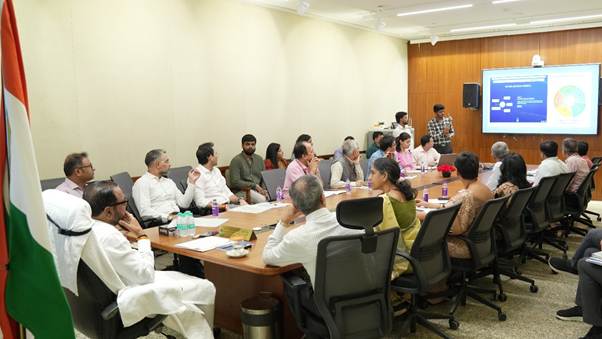
- 21 May 2026
In News:
Union Minister of State (IC) for Ayushlaunched the Ayush Anudan Portal at Kartavya Bhawan, New Delhi, a significant step towards strengthening digital governance and enhancing transparency in the Ayush sector. The portal is developed under the Ayush Grid initiative, the Ministry's overarching digital transformation framework.
What is the Ayush Anudan Portal?
The portal is developed by the Ministry of Ayush under the Ayush Grid initiative, marking a major milestone in streamlining the submission, processing, approval, and monitoring of funding proposals under various Central Sector Schemes of the Ministry.
The Central Sector Schemes covered under this portal include:
- Ayurgyan (research and innovation in Ayush systems)
- Ayurswasthya (health promotion through Ayush)
- Conservation, Development and Sustainable Management of Medicinal Plants
- International Co-operation
- Promotion of Information, Education and Communication (IEC)
The primary objective of this portal is to ensure 100% transparency, efficiency, accountability and easy accessibility in the grant management process.
Key Features
- Paperless Governance: The portal enables organisations and institutions to submit funding proposals entirely through an online process, eliminating dependency on manual and paper-based systems.
- Scheme-Wise Application Management: The platform categorises, processes, and monitors proposals according to the specific requirements of each Central Sector Scheme — ensuring targeted and structured grant disbursement.
- Real-Time Tracking: A real-time application tracking mechanism allows both applicants and officials to monitor proposal status at every stage of processing — bringing process visibility that was previously absent in grant administration.
- NGO Darpan Integration: Integration with the NGO Darpan Portal facilitates seamless authentication and verification of applicant organisations, making the validation process faster, automated, credible, and error-free. NGO Darpan, managed by NITI Aayog, is the central government's registry of civil society organisations.
- Single-Window Access: The portal is accessible through the My Ayush Integrated Services Portal (MAISP) — the Ministry's single-window digital platform — ensuring integration with the broader Ayush digital ecosystem.
Ayush Grid: The Broader Digital Framework
- Ayush Grid is a visionary digital initiative of the Government of India aimed at establishing an integrated, transparent, and citizen-centric digital ecosystem for the Ayush sector through modern technology.
- It is compliant with the Ayushman Bharat Digital Mission (ABDM) architecture and has already produced digital platforms across education, research, healthcare services, medicinal plant administration, drug regulation, capacity building, and global outreach.
- The Anudan Portal represents the grant management pillar of this ecosystem — a critical component since much of Ayush sector R&D, institution-building, and medicinal plant conservation is funded through central grants to universities, hospitals, research bodies, and NGOs.
Significance
The launch reflects a broader policy shift in governance: moving from discretionary and opaque grant allocation toward rules-based, technology-mediated, and auditable fund flows. For the Ayush sector — which encompasses Ayurveda, Yoga, Naturopathy, Unani, Siddha, and Homoeopathy — this is particularly significant given the sector's expanded role post-COVID and its growing international visibility through initiatives like the WHO Global Centre for Traditional Medicine (GCTM) in Jamnagar, Gujarat
MAVEN Discovers Zwan-Wolf Effect on Mars

- 21 May 2026
In News:
In December 2023, scientists examining data from NASA's MAVEN (Mars Atmosphere and Volatile Evolution) mission stumbled upon something completely unexpected — observations of an atmospheric effect never before seen in Mars' atmosphere. A new study published in Nature Communications now provides the first comprehensive observations of the Zwan-Wolf effect in Mars' atmosphere — a phenomenon previously believed exclusive to planetary magnetospheres like Earth's.
What is the Zwan-Wolf Effect?
Discovered in 1976, the Zwan-Wolf effect describes a process in which charged particles are squeezed and redistributed along magnetic structures called flux tubes — much like toothpaste being pressed through a tube. When the solar wind — a continuous stream of charged particles emanating from the Sun — approaches a planet's magnetic boundary, it becomes compressed near those boundaries. This creates a pressure gradient that pushes charged particles along magnetic field lines, leaving a region of lower particle density near the stream.
On Earth, this mechanism plays a crucial role in deflecting solar wind and protecting the planet's surface. Until now, it had only been documented within planetary magnetospheres, never in an atmosphere.
The Discovery: Why Mars Makes It Surprising
Unlike Earth, Mars lacks a global magnetic field, which significantly impacts how it interacts with solar wind and space weather. Instead, Mars possesses only an induced magnetosphere — generated by the interaction of solar wind with its ionosphere — that can vary dramatically in size and shape during large solar weather events.
MAVEN detected the Zwan-Wolf effect within Mars' ionosphere — less than 200 km above the surface — where a substantial number of electrically charged particles reside. The detection occurred during a powerful solar storm in December 2023, which appears to have amplified the effect to detectable levels.
Based on their findings, the Zwan-Wolf effect may be occurring constantly in the Martian ionosphere but at levels undetectable by MAVEN's instrumentation — the solar storm effectively made the invisible visible.
Scientific Significance
The discovery carries multiple implications.
- First, it demonstrates that solar wind interactions in unmagnetised planetary atmospheres are far more complex than previously modelled.
- Second, understanding the Zwan-Wolf effect at Mars offers new insight into how this phenomenon might occur at similarly unmagnetised bodies such as Venus and Saturn's moon Titan.
- Third, it advances understanding of Mars' atmospheric loss — MAVEN has already established that Mars lost approximately two-thirds of its early atmosphere to space, a process central to why the planet transitioned from a potentially habitable, water-bearing world to the cold desert observed today.
About MAVEN
Launched in November 2013 and arriving at Mars in September 2014, MAVEN is the first spacecraft mission dedicated to surveying Mars' upper atmosphere. It carries three instrument packages — studying solar wind impacts on the ionosphere, ultraviolet activity in the upper atmosphere, and atmospheric composition through mass spectrometry. Notably, MAVEN lost contact with ground stations on 6 December 2025, and NASA launched an anomaly review board in February 2026 to assess its condition and likelihood of recovery — making this discovery among its potentially final scientific contributions.
SHE-MART Initiative
- 21 May 2026
In News:
The Ministry of Rural Development (MoRD) has initiated a nationwide roadmap for women-led rural marketing ecosystems through the SHE-MART (Self Help Entrepreneurs–Marketing Avenues for Rural Transformation) initiative announced in the Union Budget 2026. A two-day National Consultationorganised by Deendayal Antyodaya Yojana–National Rural Livelihoods Mission (DAY-NRLM) was held in Bhubaneswar, hosted by the Odisha Livelihoods Mission under the state's Mission Shakti Department, to finalise operational guidelines for national rollout.
What is SHE-MART?
SHE-MART is a Government of India initiative under DAY-NRLM to create community-owned, women-led retail and aggregation platforms at the cluster-level federation of Self-Help Groups (SHGs). Unlike conventional subsidy-driven retail outlets, SHE-MARTs are envisioned as decentralised, professionally managed enterprise ecosystems that provide SHG members direct, structured access to formal markets — without intermediaries.
Products supported under SHE-MARTs include SHG-made goods across sectors: handicrafts, textiles, food products, agricultural produce, and value-added processed items.
Key Features
- Community Ownership: Retail outlets are owned and managed by women's collectives within cluster-level federations — ensuring governance remains with the community rather than external agencies.
- Market Integration: SHE-MARTs provide permanent retail infrastructure and aggregation points, reducing dependence on informal and exploitative marketing channels.
- Economic Value Chain Progression: The initiative explicitly aims to shift women from income generation to enterprise ownership — transforming SHG members from earners to business owners with control over branding, pricing, and distribution.
- Convergence with VB-GRAM-G: The consultation highlighted significant convergence opportunities between SHE-MARTs and the VB-GRAM-G initiative — particularly in women-centric infrastructure development, demand generation, and market support systems.
- Technology Integration: Discussions covered technology-enabled business processes, monitoring mechanisms, and professional retail management systems while preserving community governance.
Institutional Context and Strategic Vision
The consultation brought together Senior officials from State Rural Livelihoods Missions (SRLMs), NABARD, financial institutions, development practitioners, and sector experts. The MoRD Additional Secretary emphasised that SHE-MARTs must evolve as community-owned platforms rather than subsidy-dependent structures — a critical design principle distinguishing this initiative from earlier rural retail schemes.
Odisha's experience through Mission Shakti in building decentralised women-led enterprise ecosystems was highlighted as a replicable model for other states.
The Ministry reaffirmed its overarching target of creating three crore additional LakhpatiDidis by 2029 — women SHG members earning over ?1 lakh annually — with SHE-MARTs serving as a critical vehicle for scaling enterprise incomes beyond basic livelihood support.
Genomic Mapping of Pangolin Trafficking

- 21 May 2026
In News:
A landmark study published in the journal PLOS Biology has developed a DNA-based genomic reference map capable of tracing the geographic origin and trafficking routes of illegally traded pangolins with remarkable precision. The findings have significant implications for wildlife crime enforcement, including in India.
The Scientific Breakthrough
Pangolins account for nearly a third of all recorded international wildlife seizures in recent years, making them the world's most heavily trafficked mammals. Despite this, forensic tracing has long been hampered by the difficulty of extracting usable DNA from degraded pangolin samples confiscated at borders.
The research team overcame this barrier by employing a gene-capture method to recover usable genomic information from degraded samples. The team sequenced DNA from more than 700 samples — drawn from museum collections, field sites, bushmeat markets, and international trade seizures — covering Sunda, Chinese, and white-bellied pangolins. Using genetic data from specimens of known geographic origin, they constructed a genomic reference map capable of tracing each trafficked individual back to its source population.
A key innovation was the development of a single gene-capture kit that works across all eight pangolin species and on degraded museum specimens, making genomic tracing more accessible, scalable, and practical for real-world conservation and forensic use.
Global Poaching Hotspots Identified
The data revealed several hotspots of illegal pangolin collection, including southwestern Cameroon, Myanmar, and multiple locations across Africa. The genetic record also tracks major trade routes across the borders of China and between Indonesian islands.
A particularly significant finding for India: the genomic data exposed an active illicit wildlife network originating from northeastern India — around Arunachal Pradesh and Assam — and potentially Bhutan, directly supplying Yunnan province in China. This makes India's northeastern biodiversity corridor a critical front in the global battle against wildlife trafficking.
Dismantling the Domestic-International Divide
One of the study's most consequential revelations is that domestic pangolin trade is largely local but overlaps with the same sourcing regions that supply international trafficking — revealing a connected supply chain rather than separate markets. This disproves the earlier assumption that local and global pangolin trafficking operate independently.
About Pangolins: Conservation Context
There are eight pangolin species globally — four African (Black-bellied, White-bellied, Giant Ground, Temminck's Ground) and four Asian (Indian, Philippine, Sunda, Chinese). All eight are listed under Appendix I of CITES, prohibiting commercial trade. On the IUCN Red List, the Indian Pangolin (Manis crassicaudata) is Endangered, while the Chinese Pangolin (Manis pentadactyla) — found in India's Northeast — is Critically Endangered. Both species receive the highest domestic legal protection under Schedule I of the Wildlife (Protection) Act, 1972.
Pangolins are ecologically vital — their digging aerates soil and controls ant and termite populations — but biologically vulnerable. Females produce only a single offspring at a time, meaning population recovery after depletion is extremely slow. Their defensive instinct of rolling into a ball, effective against natural predators, makes them trivially easy for poachers to collect by hand.
ULPGM-V3
- 21 May 2026
In News:
The Defence Research and Development Organisation (DRDO) successfully conducted flight trials of the Unmanned Aerial Vehicle Launched Precision Guided Missile Version 3 (ULPGM-V3) at the National Open Area Range (NOAR), Kurnool, Andhra Pradesh. The trials were carried out in the Anti-armour configuration, marking a significant milestone in India's indigenous drone-based precision strike capability.
About ULPGM-V3
ULPGM-V3 is an advanced drone-launched precision guided missile capable of engaging both surface and aerial targets. It is an upgraded version of the earlier ULPGM-V2, developed and delivered by DRDO. The missile was tested in two operational modes:
- Air-to-Ground mode — primarily for destroying tanks and armoured vehicles, as well as fortified bunkers.
- Air-to-Air mode — for targeting hostile drones, helicopters, and other airborne threats.
The missile was launched from an indigenously developed UAV built by NewSpace Research Technologies, Bengaluru — a domestic start-up — underscoring India's growing defence-industrial ecosystem. Development-cum-Production Partners (DcPPs) Adani Defence and Bharat Dynamics Limited (BDL), Hyderabad, along with 30 MSMEs and start-ups, contributed to the project.
Key Technical Features
- Precision Targeting: Equipped with a high-definition dual-channel seeker, the missile can engage a wide range of targets with high accuracy across varying terrain types.
- All-Weather Operations: ULPGM-V3 possesses full day-and-night operational capability, ensuring reliability under adverse visibility conditions.
- Terrain Versatility: Deployable in both plain terrains and high-altitude regions — a critical requirement given India's operational theatres in Ladakh and the northeastern highlands.
- Real-Time Guidance: A two-way data link enables post-launch target updates and mid-course aim-point corrections, making the missile highly responsive to dynamic battlefield conditions.
Three Modular Warhead Options
One of ULPGM-V3's defining features is its modular warhead architecture, offering mission-specific lethality:
- Anti-armour warhead — designed to neutralise modern armoured vehicles protected by Rolled Homogeneous Armour (RHA) combined with Explosive Reactive Armour (ERA), the two principal passive protection systems on contemporary main battle tanks.
- Penetration-cum-Blast warhead — optimised for destroying fortified structures and underground bunkers.
- Pre-fragmentation warhead — designed for area suppression and high-lethality anti-personnel effects.
Collaborative Development
The missile was jointly developed by six DRDO laboratories: Research Centre Imarat (RCI), Defence Research and Development Laboratory (DRDL), Terminal Ballistics Research Laboratory (TBRL), High-Energy Materials Research Laboratory (HEMRL), Integrated Test Range (ITR), and Defence Electronics Research Laboratory (DLRL). DRDO is actively pursuing integration of ULPGM weapons with long-range, high-endurance UAVs from multiple Indian companies.
Strategic Significance
The ULPGM-V3 trial is significant across several dimensions. First, it advances India's loitering and precision strike from unmanned platforms, a defining feature of modern warfare demonstrated in conflicts in Ukraine, Nagorno-Karabakh, and West Asia. Second, it reflects the maturation of India's defence start-up ecosystem — a UAV built by a private Indian start-up launching a DRDO missile represents genuine civil-military industrial integration. Third, the modular warhead design offers the Indian Army and Air Force operational flexibility across counter-armour, counter-infrastructure, and counter-drone missions.
SMILE Mission
- 20 May 2026
In News:
Recently, the SMILE spacecraft lifted off on a Vega-C rocket from Europe's Spaceport in French Guiana, marking the successful launch of one of the most ambitious international space science collaborations in recent years — and a landmark moment in China-Europe scientific cooperation.
What is SMILE?
SMILE stands for Solar wind Magnetosphere Ionosphere Link Explorer. It is the first mission-level, all-round, in-depth collaborative space science exploration project between the Chinese Academy of Sciences (CAS) and the European Space Agency (ESA), selected from a pool of 13 candidate missions proposed under a joint ESA-CAS call in 2015 and adopted into ESA's Science Programme in 2019.
SMILE's core objective is to study how Earth's magnetosphere — the planet's invisible magnetic shield — responds to the continuous bombardment of charged particles and radiation from the Sun, collectively called the solar wind. It will make the world's first X-ray observations of Earth's magnetic shield and use an ultraviolet camera to watch the northern lights non-stop for 45 hours at a time.
Orbit and Technical Specifications
SMILE will be placed in a highly inclined 73-degree, highly elliptical orbit, reaching approximately 121,000 km above the North Pole at apogee — about a third of the distance to the Moon. This vantage point allows continuous, uninterrupted observation of the magnetosphere's entirety during each orbit. Following launch, SMILE will spend around one month travelling to its operational orbit, with scientific data collection expected to officially begin in September 2026. The spacecraft weighs approximately 2,300 kg and has a nominal mission lifetime of three years.
Four Scientific Instruments
The mission carries four complementary instruments operating across X-ray and ultraviolet wavelengths, combining both remote sensing and in situ measurements:
- Soft X-ray Imager (SXI) — developed by ESA (University of Leicester/UKSA): It detects X-rays produced when heavy ions in the solar wind collide with neutral particles in Earth's exosphere through a process called solar wind charge exchange (SWCX), yielding the first global X-ray images of Earth's magnetosphere.
- Ultraviolet Aurora Imager (UVI) — jointly contributed by ESA and CAS: captures continuous ultraviolet imagery of auroral activity across polar regions.
- Light Ion Analyser (LIA) — developed by CAS: measures properties and behaviour of solar wind ions in situ near Earth.
- Magnetometer — developed by CAS: records magnetic field variations along SMILE's orbit.
Why It Matters: Space Weather and Civilisational Risk
Earth's magnetosphere is not merely a scientific curiosity — it is the essential shield that makes life possible. Without it, solar radiation would strip away the atmosphere and irradiate the surface. Understanding its dynamics has urgent practical implications: geomagnetic storms triggered by intense solar activity can disrupt power grids, satellite communications, GPS navigation, and aviation systems — risks that grow as human civilisation becomes more technologically dependent.
Barda Wildlife Sanctuary
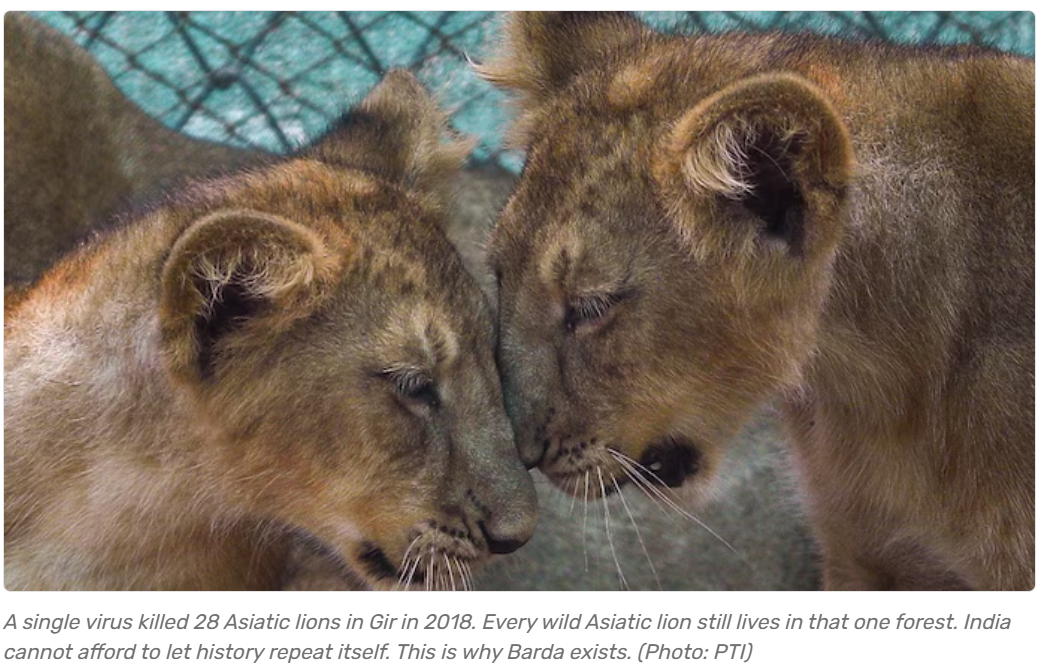
- 20 May 2026
In News:
With the 16th Asiatic Lion Census (May 2025) recording 891 lions in Gujarat — a 32% rise from 674 in 2020 — conservation attention has sharply shifted to Barda Wildlife Sanctuary as India races to establish a second, genetically secure habitat for Panthera leo persica, the world's last surviving population of wild Asiatic lions.
The Single-Point-of-Failure Problem
Every wild Asiatic lion on Earth inhabits a single forest — Gir, Gujarat. This geographic concentration represents one of conservation science's most dangerous configurations: a single point of failure. The consequences became starkly visible in 2018, when Canine Distemper Virus, spread by feral dogs on Gir's periphery, killed 28 lions within weeks. Had the outbreak spread further, it could have triggered a species-level extinction event.
Gir covers just 1,412 sq km. Of the 891 lions counted in 2025, over 507 now live outside the Gir Protected Area — on farmland, near open wells, and along railway tracks — creating dangerous human-wildlife conflict. Population growth, paradoxically, has amplified vulnerability rather than reduced it.
About Barda Wildlife Sanctuary
- Located in the Barda Hills of Gujarat, approximately 100 km west of Gir near the coastal city of Porbandar, Barda Wildlife Sanctuary spans 192.31 sq km of rugged, semi-arid terrain in the Saurashtra region.
- Known locally as Jam Barda, it was historically a private hunting ground for the royal families of Jamnagar and Porbandar. The sanctuary is drained by the Bileshvary and Joghri rivers, with Khambala and Fodara dams within its landscape. Local communities including Maldharis, Bharvads, Rabaris, and Gadhvis inhabit surrounding areas.
- Its flora encompasses approximately 650 plant and tree species including Babul, Bamboo, Amli, and Jamun, alongside medicinal plants. Fauna includes leopards, wolves, sambar deer, chinkara, hyenas, nilgai, and diverse avifauna such as crested serpent eagles.
Conservation Milestones
Lions had been absent from Barda since 1879 — a silence of 143 years. The Gir-Barda Project was initiated in 1979 to restore the sanctuary as a satellite lion habitat. After sustained ecological restoration, a male lion walked in independently in 2023. Five lionesses were subsequently translocated under scientific supervision, bred naturally, and produced 11 cubs. The 2025 census recorded 17 lions at Barda.
It has since been designated Satellite Population 8 under Project Lion — PM Modi's ?2,927 crore national conservation programme — making Barda the first fully protected satellite lion habitat in Gujarat.
Scientific Interventions
Prey base restoration was the immediate priority. Early surveys found only 119 chital (spotted deer) across Barda. The Gujarat Forest Department employed the Boma technique — an African method using funnel-shaped canvas enclosures to gently herd animals — to translocate chital from Gir (where population exceeds 90,000), avoiding the risks of capture myopathy associated with chemical tranquilisers.
Genetic vulnerability poses an equally serious long-term threat. Historical hunting reduced Asiatic lions to fewer than 50 individuals in the early 20th century, causing severe genetic bottlenecks. Scientists are now deploying satellite telemetry and targeted relocations to maximise genetic diversity within Barda's pride, strengthening disease resistance and reproductive viability.
On World Lion Day 2025, Gujarat announced ?180 crore for Barda's development, including a ?75 crore safari park.
Broader Policy Context
India is hosting the first-ever IBCA (International Big Cat Alliance) Summit in New Delhi on 1–2 June 2026, underscoring the global significance of big cat conservation. Union Environment Minister Bhupender Yadav recently reiterated the scientific consensus: one forest is categorically insufficient to secure the species' future.
Jaggery Production
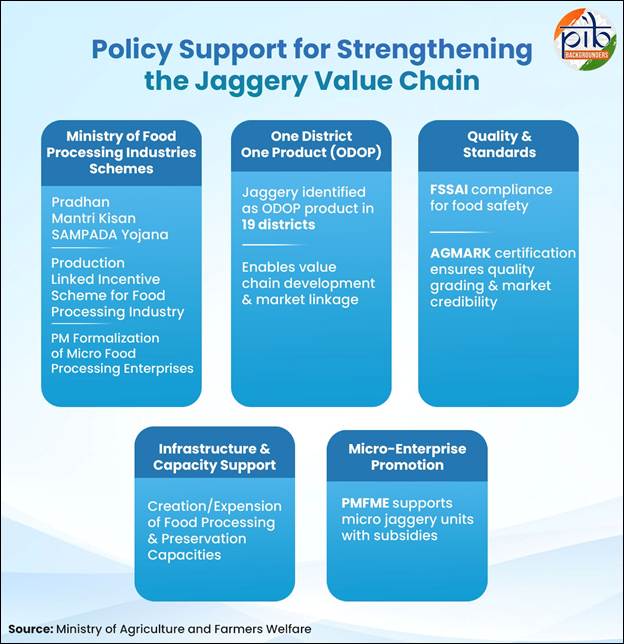
- 20 May 2026
In News:
The Ministry of Food Processing Industries (MoFPI) recently highlighted India's dominant position in global jaggery production, underscoring the sector's nutritional, economic, and export significance through a PIB release titled "The Superfood Sweetener."
India's Global Leadership
- India accounts for over 70% of global jaggery production, cementing its status as the world's largest natural sweetener producer. Nearly 20–30% of the country's total sugarcane output — estimated at 444.9 million tonnes in 2024–25 — is diverted towards jaggery making. The sector supports approximately 2.5 million rural livelihoods through decentralised cottage industries, low-cost processing, and small-scale entrepreneurship.
- In terms of state-wise production, Uttar Pradesh leads with 48.5% of total output, followed by Maharashtra (24.1%) and Karnataka (10.5%), with other contributors including Gujarat, Tamil Nadu, Bihar, and Uttarakhand.
What is Jaggery?
- Commonly known as gur, jaggery is a traditional, unrefined natural sweetener produced by concentrating sugarcane juice without chemical refining. Unlike white sugar, it retains essential minerals — calcium, magnesium, potassium, phosphorus, sodium, iron, zinc, copper, and manganese — along with trace vitamins including folic acid, B-complex, and vitamins A, C, D, and E. A good-quality jaggery contains over 70% sucrose, with approximately 5% mineral content.
- Its iron content (10–13 mg per 100 g) supports haemoglobin levels, making it valuable in addressing anaemia — a critical public health challenge in India.
- Its history dates to the Vedic period (1400–1000 BCE), with the word "sugar" itself derived from the Sanskrit sarkara, reflecting deep civilisational roots.
Export Performance
Jaggery exports have recorded impressive growth — rising by 106.5% in value (from USD 197 million in 2015–16 to USD 406.8 million in 2024–25) and 61.2% in volume. Major export destinations include Indonesia, the USA, the UAE, Nigeria, and Nepal. During April–January 2025–26, exports further grew by 15.9% in value year-on-year, reflecting strong and sustained international demand for natural sweeteners.
Government Policy Support
Several central schemes promote the jaggery sector:
- Pradhan Mantri Kisan SAMPADA Yojana (PMKSY): Five jaggery processing units approved with grants-in-aid of ?17.07 crore.
- PM Formalization of Micro Food Processing Enterprises (PMFME) Scheme: 3,528 jaggery-based micro units supported with subsidies totalling ?102.31 crore, including 50% branding and marketing assistance to FPOs, SHGs, and cooperatives.
- One District One Product (ODOP): Jaggery identified as an ODOP product in 19 districts, facilitating value chain development.
- AGMARK Certification: Ensures quality standardisation, market credibility, and export readiness.
GI-Tagged Jaggery Varieties
India's rich regional diversity is reflected in its Geographical Indication (GI)-tagged jaggery products: Kolhapur Jaggery (Maharashtra) — prized for golden colour and high sucrose; Muzaffarnagar Gur (Uttar Pradesh) — export-oriented, made from high-quality cane; and Marayoor and Central Travancore Jaggery (Kerala) — recognised for purity, medicinal value, and traditional processing methods.
India-Italy Special Strategic Partnership

- 20 May 2026
In News:
Prime Minister Narendra Modi and Italian Premier Giorgia Meloni, during Modi's official visit to Italy, co-authored a joint op-ed titled "A Strategic Partnership for the Indo-Mediterranean", outlining an expanded roadmap for bilateral cooperation. The two nations formally elevated their relationship to a Special Strategic Partnership — a significant diplomatic milestone grounded in shared democratic values and complementary economic strengths.
The Indo-Mediterranean: A New Strategic Concept
The joint op-ed introduced the geopolitical concept of the "Indo-Mediterranean" — a corridor linking the Indian Ocean to Europe through trade, technology, energy, data, and ideas. Both nations occupy strategic positions at the intersection of two globally critical economic hubs: India in the Indo-Pacific and Italy in the Mediterranean. The leaders argued these regions must no longer be viewed as separate spheres but as increasingly interconnected spaces shaping global dynamics.
Key Pillars of Cooperation
- Trade and Economy: India and Italy have set an ambitious target of exceeding €20 billion in bilateral trade by 2029. Priority sectors include defence and aerospace, clean technologies, machinery, automotive components, chemicals, pharmaceuticals, textiles, agri-food, and tourism. The ongoing EU-India Free Trade Agreement negotiations provide an enabling multilateral framework for this goal. Currently, over 1,000 businesses from each country operate in the other's territory.
- Digital Infrastructure and AI: India's Digital Public Infrastructure (DPI) model has found resonance globally, particularly in the Global South. Italy and India committed to responsible, human-centred AI development — combining India's digital scale with Italy's ethical and industrial expertise. Both leaders underscored that technology must not undermine fundamental rights or manipulate democratic processes. This commitment aligns with the outcomes of the AI Impact Summit 2026 held in New Delhi and Italy's ongoing G7 Presidency.
- Defence, Space, and Energy: Cooperation was outlined in security of critical maritime routes, renewable energy, hydrogen technologies, smart grids, and resilient infrastructure. Both nations also affirmed collaborative participation in key India-led multilateral initiatives — the International Solar Alliance (ISA), the Coalition for Disaster Resilient Infrastructure (CDRI), and the Global Biofuels Alliance (GBA).
- IMEC: India and Italy reaffirmed commitment to the India-Middle East-Europe Economic Corridor (IMEC), announced at the G20 Summit in New Delhi in September 2023, as a transformative connectivity project linking the regions through transport, digital networks, energy systems, and supply chains.
Civilisational Resonance
The leaders drew a cultural parallel between India's VasudhaivaKutumbakam ("The world is one family") and Italy's humanist Renaissance tradition — both emphasising human dignity and the unifying power of culture. This civilisational alignment reinforces the depth of the partnership beyond mere transactional diplomacy.
India’s 1st Satellite-Tagged Ganges Soft-shell Turtle

- 17 May 2026
In News:
In a pioneering move for freshwater conservation, India’s first satellite-tagged Ganges soft-shell turtle (Nilssonia gangetica) was released into the Kaziranga National Park and Tiger Reserve in Assam. This landmark event, which coincided with Endangered Species Day on May 15, 2026, represents a significant technological and scientific leap in monitoring aquatic wildlife within the Brahmaputra river basin.
The project was executed by the Wildlife Institute of India (WII) under the Ministry of Environment, Forest and Climate Change (MoEFCC), in collaboration with the Assam Forest Department and with funding from the National Geographic Society. Under veterinary supervision, a healthy adult turtle was fitted with a satellite transmitter and released along the northern bank of the Brahmaputra River.
The Satellite-Tagging Initiative: Objectives and Significance
Freshwater ecosystems face severe ecological pressures, yet riverine reptiles historically receive less conservation tracking compared to terrestrial megafauna. Satellite telemetry bridges this critical data gap.
- Tracking Spatial Dynamics: The primarily objective of the initiative is to map the turtle's precise seasonal movement patterns and home range within highly dynamic river corridors.
- Identifying Critical Micro-Habitats: The telemetry data will allow scientists to pinpoint essential nesting, breeding, and basking grounds, allowing for targeted spatial protections rather than broad, unmanageable mandates.
- Informed Active Management: In a river basin heavily impacted by shifting sandbanks and seasonal floods, real-time data ensures that habitat management strategies remain adaptive and scientifically robust.
Species Profile:
The Ganges soft-shell turtle is a large, freshwater species native to the northern plains of the Indian subcontinent, distributed across the Indus, Ganga, Brahmaputra, Narmada, and Mahanadi river systems.
Morphological and Behavioral Traits
It is uniquely distinguished from other riverine turtles by prominent, arrowhead-shaped markings on the dorsal surface of its head. It possesses an oval, green carapace with compressed, flexible edges that enable rapid underwater locomotion. It features an elongated neck and a tube-like snout adapted for breathing while remaining submerged or buried in turbid, muddy riverbeds.
Ecological Role
As an omnivorous apex predator and apex scavenger within riverine food webs, the species performs a crucial regulatory role. By feeding on dead, decaying organic matter and carrion, it acts as a natural biological filter, maintaining water quality and preventing the proliferation of pathogens across the aquatic ecosystem.
Threat Matrix
Despite its historical distribution, populations are declining rapidly due to a combination of anthropogenic stressors:
- Habitat Destruction: Severe riverbed degradation caused by commercial sand mining and large-scale bank alterations.
- Exploitation: Persistent illegal poaching for its meat and calipee (the fatty cartilage layer prized in traditional medicine and exotic cuisine markets).
- Bycatch Mortality: Incidental drowning resulting from entanglement in commercial fishing nets.
Legal and Conservation Status
The species is afforded the highest tiers of domestic and international protection:
- Wildlife Protection Act (WPA), 1972: Schedule I (affording it absolute legal protection and the highest penalties for wildlife crimes).
- IUCN Red List Status: Endangered.
- CITES: Appendix I (prohibiting all international commercial trade).
Assam and Kaziranga: A Global Freshwater Turtle Hotspot
The release highlights the unique ecological position of Northeast India. Assam functions as one of Asia's richest turtle habitats, supporting 21 distinct turtle species. This high concentration renders the region a global priority zone for freshwater chelonian conservation.
The Kaziranga landscape alone—a 1,302 square kilometer floodplain ecosystem recognized as a UNESCO World Heritage Site—hosts five of India’s eight known soft-shell turtle species. Its intricate matrix of rivers, wetlands (beels), and seasonal alluvial grasslands offers an ideal sanctuary for testing next-generation wildlife tracking technologies.
India’s Water Scarcity
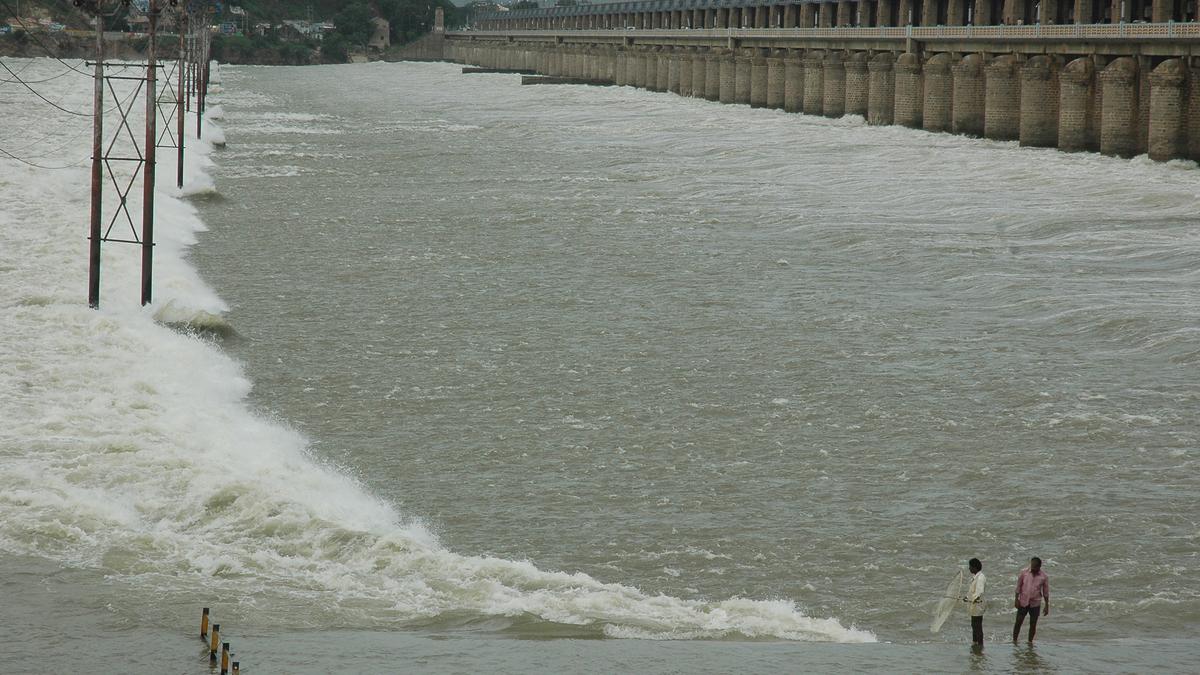
- 17 May 2026
In News:
India faces a severe structural challenge: it supports nearly 18% of the global population with only 4% of the world's freshwater resources, leaving over 600 million people under high-to-extreme water stress. Per capita water availability has plummeted from over 5,000 cubic meters in 1947 to nearly 1,400 cubic meters today, dangerously close to the official water-scarcity threshold<1,000m3. Achieving UN Sustainable Development Goal 6 (Clean Water and Sanitation) requires bridging deep institutional gaps and managing a rapidly depleting resource.
Key Drivers of Water Scarcity
- Precipitation and Usability Gaps: India receives nearly 4,000 Billion Cubic Metres (BCM) of annual rainfall, but only 1,123 BCM is utilisable. This is due to highly seasonal monsoons (70% falling in 3–4 months) and inadequate infrastructure. In April 2026, the Central Water Commission (CWC) reported that water levels in 166 major reservoirs dropped below 45% of capacity, with the southern region hit hardest.
- The Groundwater Crisis: India accounts for 25% of global groundwater extraction. The Central Ground Water Board (CGWB) classifies 14% to 17% of assessment units as "over-exploited," particularly in Punjab, Haryana, and Rajasthan.
- Agricultural Dominance: Agriculture consumes 85–90% of freshwater, driven by water-intensive crops like paddy and sugarcane. Free or heavily subsidized electricity encourages unrestricted 24/7 pumping. This inefficient resource use risks causing a 6% loss in India's GDP by 2050.
- Urban Inefficiencies & Pollution: Unplanned urbanization blocks natural aquifer recharge zones, pushing cities toward "Day Zero" scenarios. Concurrently, aging distribution networks lose up to 40% of piped water to leakages. On the quality front, nearly 70% of surface water is contaminated by untreated industrial and domestic waste.
Constitutional and Institutional Architecture
Water governance is shared between the Union and the States under the Indian Constitution:
- State List (Entry 17): Gives states control over water supply, irrigation, and storage.
- Union List (Entry 56): Empowers the Center to regulate inter-state rivers in the public interest.
- Article 262: Authorizes Parliament to adjudicate inter-state river disputes, bypassing court jurisdictions via specialized Tribunals (e.g., Cauvery, Krishna).
- Directives & Duties: Article 48A (State) and Article 51A(g) (Citizens) mandate the protection of rivers and lakes.
- Nodal Agencies: The Ministry of Jal Shakti oversees national missions alongside the CWC (surface water) and CGWB (groundwater). Core initiatives include the National Water Policy (2012), Pradhan Mantri Krishi Sinchayee Yojana (PMKSY), Jal Jeevan Mission (JJM), and the Jal Shakti Abhiyan.
Strategic Roadmap for Sustainable Water Governance
1. Transition to a Circular Water Economy: Deploy Membrane Bioreactors (MBR) in commercial and industrial sectors to treat greywater for non-potable reuse. Municipalities should mandate the sale of treated urban sewage to nearby thermal power plants and industries, preserving freshwater for drinking.
2. Community-Led Groundwater Management: Empower Gram Panchayats to draft localized water budgets that align crop cultivation with annual aquifer recharge cycles. Scale up the Jal Sanchay Jan Bhagidari initiative to build decentralized recharge structures like check dams and recharge shafts.
3. Agricultural Transformation: Accelerate the shift from flood irrigation to micro-irrigation (drip and sprinklers) under PMKSY to improve water efficiency by up to 60%. Provide policy and price incentives for farmers in water-stressed regions to switch from paddy to climate-resilient alternatives like millets and pulses.
4. Deploy Smart Water Infrastructure: Equip major urban areas with SCADA (Supervisory Control and Data Acquisition) systems for real-time flow monitoring and immediate leak detection. Install smart volumetric meters in residential complexes to curb wasteful consumption through usage-based billing.
5. Implement Nature-Based Solutions (NbS): Integrate green infrastructure, such as urban wetlands, permeable pavements, and intensive afforestation catchments, to regulate runoff. Expand Mission Amrit Sarovar to restore traditional water bodies, creating ecological buffers that recharge groundwater tables naturally.
India’s Rising Leadership in Global Telecom Governance and the ITU

- 17 May 2026
In News:
India is rapidly positioning itself as a central pillar in global digital cooperation and telecommunications policy. At the International Telecommunication Union (ITU) Council meeting held in Geneva, Switzerland, an Indian delegation led by the Department of Telecommunications (DoT) actively advanced India's strategic leadership in the global information and communication technology (ICT) ecosystem.
Key Developments in India-ITU Engagements
- Hosting the Plenipotentiary Conference-2030 (PP-2030): The ITU Council accepted India’s formal proposal to host the ITU Plenipotentiary Conference in 2030. This decision marks a significant milestone in India's role in shaping future digital frameworks. The proposal is expected to receive final ratification at the upcoming ITU PP-2026 scheduled for November in Doha, Qatar.
- ITU Council Re-election and Leadership Bids: India is actively seeking re-election to the ITU Council, a body it has served on continuously since 1952. Furthermore, India has strongly canvassed for its candidate, Dr. Revathi Mannepalli, for the post of Director of the Radiocommunication Bureau (BR). If elected, she will be the first woman to lead this bureau, reflecting India's vision of inclusive digital growth and universal spectrum equity.
- Voluntary Strategic Contributions: Underscoring its commitment, India announced voluntary financial contributions aimed at executing World Telecommunication Standardization Assembly (WTSA) resolutions. These funds will target emerging domains like 6G, Artificial Intelligence (AI), Digital Public Infrastructure (DPI), and Sustainable Digital Transformation.
About the ITU
Founded in 1865 originally as the International Telegraph Union, the ITU is the United Nations' specialized agency for ICTs. Headquartered in Geneva, Switzerland, it is the oldest surviving international organization within the UN system.
Membership Structure
The ITU maintains a unique public-private partnership structure comprising:
- 194 Member States possessing treaty-voting powers.
- Over 1,000 Sector Members, including major private technology conglomerates (such as Google, Apple, and Jio), academia, and regional telecom bodies.
Core Governance: The ITU Council
The ITU Council serves as the organization’s primary governing body between Plenipotentiary Conferences. It consists of 48 elected Member States that meet annually in Geneva. The Council is responsible for overseeing the ITU's overarching strategy, policy frameworks, budget allocations, and rigorous financial controls.
The Three Operational Pillars of the ITU
The ITU distributes its functions across three core specialized sectors, each designed to ensure cohesive global connectivity:
- ITU-R (Radiocommunication Sector): Focuses on spectrum and orbits. It manages the international radio-frequency spectrum and satellite orbit resources. This is essential to prevent signal interference across cross-border communication systems, space broadband, aviation, and next-generation mobile technologies.
- ITU-T (Telecommunication Standardization Sector): Focuses on global technical standards. It develops international recommendations to ensure that communication networks and frontier technologies (including 5G/6G, Artificial Intelligence, and the Internet of Things) interconnect seamlessly across boundaries.
- ITU-D (Telecommunication Development Sector): Focuses on bridging the global digital divide. It facilitates equitable digital access by offering technical assistance, capacity building, and digital infrastructure support to developing and least-developed nations.
Common Criteria Development Board (CCDB)
- 17 May 2026
In News:
Recently, India has been nominated as the Chair of the Common Criteria Development Board (CCDB). Confirmed during the first quarter meeting of the Common Criteria Recognition Arrangement (CCRA) in Tokyo, Japan, India's leadership term spans a two-year duration from April 2026 to April 2028. This elevated responsibility reflects global recognition of India's robust digital governance frameworks and technical competence in the information technology (IT) security evaluation domain.
Institutional Framework: CCRA and CCDB
To fully comprehend the mechanism of this global body, it is essential to distinguish between the parent arrangement and its technical wing:
- Common Criteria Recognition Arrangement (CCRA):
- This is a foundational international treaty established to enable cross-border mutual recognition of IT security certificates.
- By standardizing security claims, the CCRA removes the need for redundant, expensive re-certification when a product is traded internationally.
- The arrangement comprises 38 member nations, sub-divided into 20 certificate-authorizing nations (which evaluate and issue certificates) and 18 certificate-consuming nations (which recognize and accept those certificates).
- Common Criteria Development Board (CCDB):
- While other high-level committees within the CCRA framework handle administrative and policy mandates, the CCDB functions as the technical core and engine of the arrangement.
- It is directly tasked with managing the international work program for the development and evolutionary maintenance of the Common Criteria (ISO/IEC 15408) and the Common Methodology for Information Technology Security Evaluation (CEM).
Architecture of Global IT Product Evaluation
The CCDB regulates how global governments and organizations assess cybersecurity protections embedded in software and hardware architectures. Its critical operational components include:
- Standardization: Defining rigorous evaluation methodologies that determine the baseline security parameters of widely used commercial IT products, including firewalls, operating systems, smart cards, and hardware security modules.
- Portal Management: Maintaining the integrity and functional reliability of the Common Criteria Portal. This portal serves as the definitive "single source of truth" and an authoritative global repository for all certified secure IT products.
- Technical Working Groups: Coordinating specialized technical divisions to formulate updated security baselines, ensuring that evaluation methods remain resilient against rapidly evolving and sophisticated cyber threats.
India’s Role and Institutional Nodal Agencies
India’s engagement with this international framework is deep-rooted. The country joined the CCRA on September 16, 2013, as a Certificate Authorizing Nation, empowering it to evaluate IT infrastructure and issue internationally valid certificates.
India participates in this framework through a coordinated approach by two pivotal domestic entities:
- Ministry of Electronics and Information Technology (MeitY): Acting as the apex policy-formulating ministry guiding digital governance, tech regulation, and cyber resilience initiatives.
- Standardisation Testing and Quality Certification (STQC) Directorate: An attached office under MeitY, the STQC acts as the official national Certification Body for IT security evaluations. It underpins India's functional contributions by operating independent, licensed laboratories that evaluate tech assets under the Common Criteria framework.
Under-the-Skin Immunotherapy for Lung Cancer
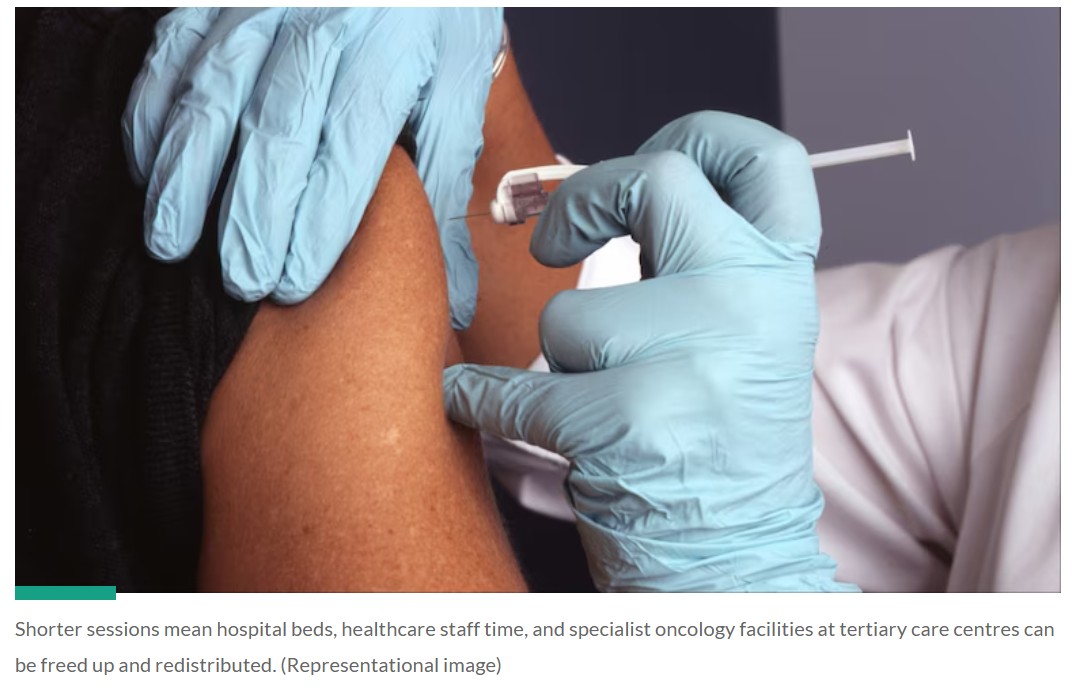
- 17 May 2026
In News:
- In a major advancement for oncological care, Swiss pharmaceutical company Roche has launched India’s first under-the-skin (subcutaneous) immunotherapy drug, Tecentriq SC (atezolizumab).
- Approved by the Central Drugs Standard Control Organisation (CDSCO), this formulation marks a significant departure from traditional intravenous (IV) cancer treatments.
- Given that lung cancer is among the most prevalent malignancies in India—with approximately 80,000 to 81,000 new cases diagnosed annually, frequently at advanced stages—this clinical innovation is poised to reshape cancer management frameworks.
Mechanism of Action: Re-engineering Immunotherapy
Tecentriq SC functions by targeting and blocking the Programmed Death-Ligand 1 (PD-L1) protein. Cancer cells often express PD-L1 to suppress the host immune response and evade detection by T-cells. By inhibiting this specific interaction, atezolizumab removes the biochemical "off-signal," effectively allowing the body's native immune system to identify, target, and dismantle tumor cells.
To achieve rapid delivery under the skin, Tecentriq SC integrates Halozyme Therapeutics' Enhanze drug delivery technology. This process utilizes recombinant human hyaluronidase PH20 (rHuPH20), an enzyme that temporarily enhances permeability in the subcutaneous tissue, enabling the medication to disperse rapidly into the bloodstream.
Clinical Efficacy, Suitability, and Medical Advantages
The drug is indicated for the treatment of adult patients presenting with:
- Adjuvant Non-Small Cell Lung Cancer (NSCLC) (early-stage post-surgical treatment)
- Metastatic NSCLC (advanced-stage, spreading cancer)
As NSCLC accounts for nearly 80% to 85% of all lung cancer occurrences in India, the therapeutic scope of this innovation is broad. However, treatment suitability requires precise diagnostics. Patients must display high levels of PD-L1 expression on their tumor cells, making approximately half of the diagnosed NSCLC cohort eligible for this targeted, and occasionally chemotherapy-free, monotherapy.
Medical benefits include:
- Drastic Time Reduction: Administration drops from several hours of IV infusion to a localized injection (typically in the thigh) lasting roughly 7 minutes, reducing treatment time by approximately 80%.
- Enhanced Patient Well-being: Subcutaneous administration eliminates the physical distress and pain of finding viable veins in frail individuals. Shorter clinic stays also alleviate travel fatigue and emotional stress for both patients and caregivers.
- Improved Compliance: Streamlined administration enhances adherence to treatment schedules, crucial for positive long-term clinical outcomes.
Socio-Economic Realities and Health Economics
While clinically transformative, the introduction of Tecentriq SC highlights the persistent challenge of affordability in tertiary healthcare.
- Financial Implications: The maximum retail price is set at ?3.7 lakh per vial/dose. With a standard treatment regimen requiring roughly six cycles administered every 21 days, the cumulative expenditure poses a heavy financial burden on the average Indian family.
- Mitigation and Access Pathways: To alleviate this financial strain, Roche has introduced a patient assistance mechanism called the "Blue Tree" program, which offers financial support and Equated Monthly Instalment (EMI) options. Crucially, the drug has been integrated into the Central Government Health Scheme (CGHS), providing substantial relief to eligible public sector beneficiaries. Furthermore, medical experts point out that despite a slightly higher baseline cost for the subcutaneous drug formulation over its IV counterpart, the overall economic impact balances out by eliminating hospital bed charges, prolonged day-care monitoring fees, and ancillary costs.
Significance for India's Healthcare Infrastructure
For a developing nation grappling with an escalating non-communicable disease (NCD) burden, the deployment of subcutaneous immunotherapy has profound systemic implications:
- Optimization of Healthcare Resources: Because Tecentriq SC can be safely administered by trained nursing staff in outpatient departments, one infusion station can treat up to five patients in the time previously occupied by a single IV recipient. This dramatically increases patient throughput.
- Decentralization of Oncology Care: By mitigating the need for specialized, complex intravenous infrastructure, this model facilitates the shift of cancer care from overburdened tertiary hospitals in metropolitan zones to localized daycare centers, advancing the objective of equitable healthcare distribution.
‘Lion’ Species Spotlight Programme
- 16 May 2026
In News:
The Union Ministry of Environment, Forest and Climate Change (MoEFCC) inaugurated the ‘Lion’ Species Spotlight Programme at Sasan Gir, Gujarat. Serving as a crucial technical curtain-raiser ahead of the International Big Cat Alliance (IBCA) Summit, this forum highlights India's field leadership in protecting the Asiatic Lion (Panthera leo persica), a critical apex predator.
Biological Profile and Key Distinctive Characteristics
The Asiatic Lion is a genetically distinct subspecies and stands as the only wild lion population existing outside the African continent.
Morpho-Behavioral Distinctions
- Longitudinal Belly Fold: The most definitive physical trait of the Asiatic Lion is a prominent, longitudinal fold of skin running along its abdomen, which is highly rare or absent in African lions.
- Mane Density: Shorter and more moderate compared to African males, leaving the ears of the Asiatic male clearly visible.
- Size and Coloration: Slightly smaller than African lions (males: 160–190 kg; females: 110–120 kg). The fur ranges from ruddy-tawny to sandy or buff-grey, often with a distinctive silvery sheen.
- Social Structure: They live in smaller prides. Males exhibit more solitary or tightly paired bachelor behavior, associating with females primarily for mating or large kills.
Geographic Distribution and Population Dynamics
Spatial Matrix & The Greater Gir Landscape
- Current Abode: The Gir National Park and Wildlife Sanctuary in Gujarat’s Saurashtra region remains its exclusive primary natural habitat globally. The ecosystem consists of dry deciduous forests and open, thorny grassy scrublands.
- Range Expansion: Due to successful conservation and community protection, the population has expanded into the Greater Gir Landscape, covering adjacent human-dominated districts like Amreli, Bhavnagar, and Gir Somnath.
- The "Second Home" Insurance: To safeguard the species against localized, catastrophic threats like forest fires or viral epidemics (e.g., Canine Distemper Virus), the government is developing the Barda Wildlife Sanctuary as a second home for natural dispersal.
Demographic Trends
- According to the 16th Lion Population Estimation, the wild population has successfully grown to 891 individuals, marking a robust 32% population increase over the previous census baseline.
Statutory Protection and Legal Safeguards
The Asiatic Lion is protected under the highest tiers of domestic and international wildlife legislation:
- Wild Life (Protection) Act, 1972: Categorized under Schedule I, granting it maximum statutory protection against hunting, poaching, and habitat alteration.
- IUCN Red List of Threatened Species: Listed globally as Vulnerable, reflecting its status as a single, geographically restricted wild population.
- CITES: Classified under Appendix I, strictly prohibiting any commercial international trade of the species, its body parts, or derivatives.
Strategic Conservation Paradigms: Project Lion
Launched in 2020, ‘Project Lion’ focuses on a landscape-based conservation strategy divided into three core operational areas:
- Habitat Restoration: Systematically clearing invasive alien plant species from the dry deciduous scrublands and managing local water holes to strengthen the wild ungulate prey base.
- Eco-Medicine & Wildlife Health: Establishing state-of-the-art veterinary centers, mobile health vans, and strict disease surveillance networks to prevent epidemiological shocks.
- Community-Led Conservation: Investing in local communities through programs like the Gadhvi network (local wildlife trackers) to foster human-wildlife co-existence, minimize retaliatory conflicts, and secure traditional migratory corridors.
Ecological Significance
As an apex predator, the Asiatic Lion is vital for regulating the population density of large herbivores (nilgai, sambar, chital). By preventing overgrazing, these big cats maintain the health of the Saurashtra dry deciduous forest ecosystem, protect native forest cover, and secure localized soil and water tables.
Mizoram Ginger Mission
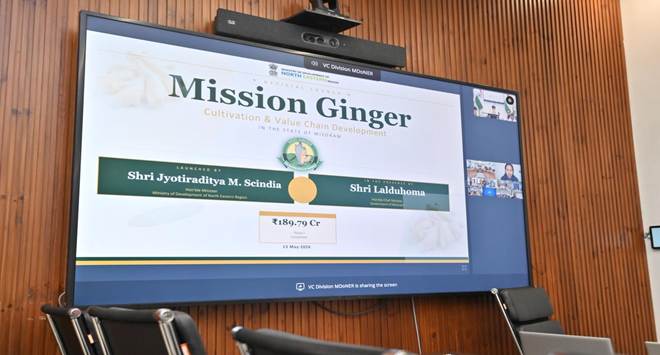
- 16 May 2026
In News:
The Ministry of Development of North Eastern Region (MDoNER), along with the Government of Mizoram, has launched the ?189.79 crore Mizoram Ginger Mission (also designated as the Mizoram Ginger Unique Selling Proposition (USP) – Sustainable Cultivation & Value Chain Development Project).
The initiative utilizes a multi-ministerial convergence model to move away from fragmented departmental schemes. It pools the administrative resources of the Ministries of Agriculture & Farmers Welfare, Rural Development, and Food Processing Industries, alongside critical institutional stakeholders like NABARD (rural credit and cooperative development), ICAR (scientific inputs), and APEDA (export protocols and international logistics).
Core Economic Rationale: Quality vs. Value Disparity
The Superior Quality Profile
Mizoram holds a distinct natural edge in ginger cultivation, leading NITI Aayog to designate it as the “Ginger Capital of India.”
- Genetic Advantage: The state grows indigenous, premium varieties—most notably Thingpui and Thinglaidum—both of which secured Geographical Indication (GI) certification.
- Chemical Distinctiveness: Mizo ginger is premium, pharma-grade ginger due to its exceptionally high oleoresin content of 6% to 8% (the concentrated compound responsible for flavor, aroma, and medicinal properties). This is more than double the global baseline average of approximately 3%.
The Price Disparity Paradox
Despite producing world-class agricultural raw materials, local cultivators face severe market exploitation:
- The Valuation Gap: Farmers traditionally receive just ?8 to ?15 per kg at the farm gate. In contrast, the processed commodity commands upwards of ?500 per kg on international retail shelves.
- The Cause: This gap stems from high post-harvest handling losses, a complete lack of regional processing units, and a dependence on long networks of informal middlemen.
Structural Interventions: The Four Strategic Pillars
To build a sustainable agrobusiness ecosystem, the project operates as a structural "movement" built on four functional pillars:
- Convergence: Aligning existing central public funds (such as a dedicated ?30.13 crore allocation via the North Eastern Council’s Focused Development Component) to build infrastructure efficiently.
- Value Addition: Transitioning the local economy from selling raw, perishable ginger to manufacturing high-margin derivatives like dried ginger flakes, fine powders, and distilled pharmaceutical oleoresins.
- Branding: Marketing the product globally based on its certified origin, low fiber content, high chemical potency, and chemical residue-free composition.
- Market Integration: Directly connecting local farmers with institutional pharmaceutical houses, nutraceutical enterprises, and international buyers.
Hub-and-Spoke Infrastructure Layout
To manage logistical challenges in the hilly terrain, the mission deploys a coordinated Hub-and-Spoke model to support nearly 20,000 farming households:
- The Core Processing Hub: Established at Mualkawi in the Champhai District, this central facility handles advanced high-tech processing, mechanized peeling, industrial dehydration, and extraction.
- The Spoke Centers: Three dedicated satellite units are positioned at Tualcheng, Vaphai, and Zotlang to handle initial sorting, cleaning, grading, and slicing. This primary processing reduces transport weight and minimizes post-harvest rot.
- Ancillary Focus Areas: The project integrates more than 30 targeted interventions covering field mechanization, the introduction of solarized storage units, strict food safety controls, and blockchain-backed farm-to-fork traceability.
Macro Policy Implications: "Brand North East"
The mission is an operational component of MDoNER's broader "Brand North East" regional development strategy. This macro policy assigns specific agro-climatic Unique Selling Propositions (USPs) to individual states to foster specialized production:
- Sikkim: India's premier 100% Organic State.
- Meghalaya: Global hub for high-curcumin Lakadong Turmeric.
- Tripura: Mass export center for Queen Pineapple.
- Arunachal Pradesh: Large-scale commercialization of Kiwi fruit.
- Nagaland: High-altitude, specialty Coffee plantations.
- Mizoram: Globally integrated source for premium Pharma-Grade Ginger.
Through this structured value-chain integration, the mission aims to "disintermediate the intermediary" via robust Farmer Producer Organizations (FPOs), targeting a six-fold increase in net income realization for local farmers while exporting directly into quality-sensitive markets across South-East Asia, the Middle East, and Europe.
Coal Gasification Scheme
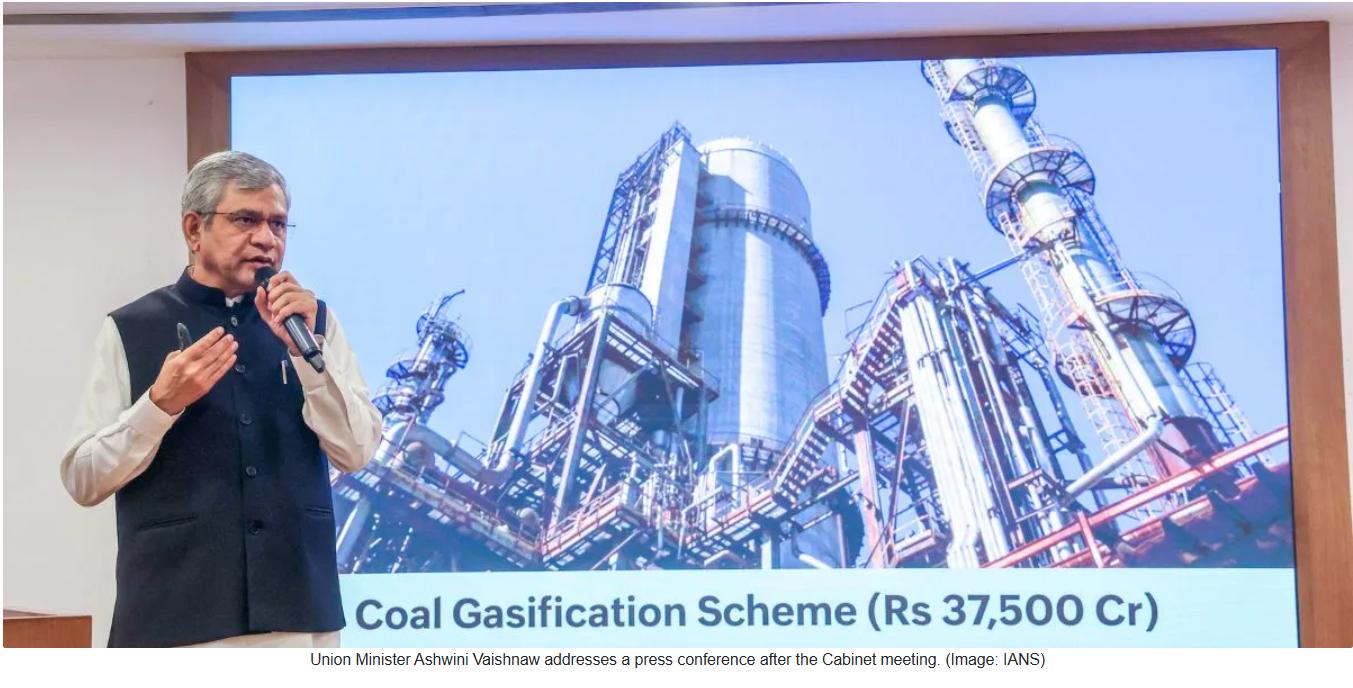
- 16 May 2026
In News:
The Union Cabinet approved the “Scheme for Promotion of New Surface Coal/Lignite Gasification Projects for Production of Syngas and Downstream Products” with a financial outlay of Rs. 37,500 crore.
This initiative represents a strategic shift in India’s energy policy: shifting away from the direct combustion of solid fossil fuels toward advanced thermochemical conversion. Amid rising geopolitical supply chain vulnerabilities in West Asia, the scheme aims to reduce India’s high-value hydrocarbon and chemical import bill, which reached approximately Rs. 2.77 lakh crore in FY2025 for substitutable commodities alone.
Understanding the Technology: Coal Gasification and Syngas
- Coal gasification is a high-temperature, high-pressure thermo-chemical process rather than conventional burning.
- Instead of directly combusting coal to generate steam for electricity, gasification subjects coal or lignite to a controlled, oxygen-lean atmosphere with steam. This breaks down the molecular bonds of the hydrocarbon chain, triggering partial oxidation.
- The primary output of this process is Synthesis Gas (Syngas), a gas mixture composed mostly of Carbon Monoxide (CO) and Hydrogen (H2).
The Surface vs. Underground Distinction
- Surface Gasification: The primary focus of this Cabinet-approved scheme. Coal is extracted via traditional mining methods and processed above ground in highly engineered industrial reactors.
- Underground Coal Gasification (UCG): Involves gasifying coal in situ while it is still buried deep within unmined seams by injecting air or oxygen through injection wells and drawing the generated syngas to the surface through production wells.
Industrial Applications of Syngas
Once generated, syngas serves as a versatile chemical feedstock that can be converted into several downstream industrial products:
- Fertilizers: Providing the basic chemical components needed to manufacture Ammonia and Urea.
- Alternative Fuel and Energy: Processing into Synthetic Natural Gas (SNG), Methanol, Ethanol, and Dimethyl Ether (DME).
- Industrial Chemicals: Generating crucial inputs like Ammonium Nitrate (essential for civil explosives and mining infrastructure).
- Hydrogen Economy: Serving as an alternative source for pure industrial Hydrogen extraction.
Salient Features and Financial Architecture of the Scheme
The operational and financial mechanics of the scheme are designed to mitigate risks for private and public sector investments in this capital-intensive sector:
- Target Capacity: The scheme explicitly targets the gasification of approximately 75 MillionTonnes (MT) of coal and lignite. This will serve as a core pillar to achieve the broader national cumulative target of 100 MT by 2030 set under the National Coal Gasification Mission (2021).
- Incentive Outlay and Capital Subsidy: Out of the Rs. 37,500 crore framework, the government provides a fiscal grant capped at a maximum of 20% of the total cost of Plant and Machinery.
- Milestone-Linked De-risking: To prevent capital hoarding and project delays, the financial incentive is disbursed in four equal installments, each tied to the verifiable achievement of specific physical project milestones.
- Equitable Allocation Caps: To prevent market monopolization and encourage diverse participation, the financial guidelines enforce strict upper thresholds:
- Capped at Rs. 5,000 crore for any single gasification project.
- Capped at Rs. 9,000 crore for any single downstream product category (with explicit exemptions granted to Synthetic Natural Gas and Urea).
- Capped at Rs. 12,000 crore for any single corporate entity group across all bids under the scheme.
- Co-existence of Incentives: The policy does not restrict operations; these fiscal benefits are in addition to, and independent of, any incentives gained under the commercial coal mining regime or other state and central line ministries.
- Technology Agnosticism with an Indigenous Focus: While the guidelines remain technology-neutral, the selection framework prioritizes the deployment of domestic engineering capabilities to reduce reliance on foreign Engineering, Procurement, and Construction (EPC) contractors.
- Competitive Bidding Design: Projects will be awarded through a transparent bidding mechanism. Bids will be evaluated using an objective benchmarking framework that evaluates project cost, raw coal input requirements, and net syngas output efficiency.
Policy Reform: Long-Term Fuel Security
A key obstacle for capital-intensive energy projects has been the risk of fuel supply disruptions. To address this, the government introduced a major structural reform alongside the financial package:
- 30-Year Coal Linkage Tenure: Under the "Production of Syngas leading to Coal Gasification" sub-sector within the Non-Regulated Sector (NRS) linkage auction framework, the government extended the guaranteed coal linkage tenure up to 30 years.
- This policy reform aligns fuel availability with the typical operational lifespan of an advanced chemical plant, offering long-term regulatory certainty to de-risk institutional investments.
Strategic, Economic, and Fiscal Benefits
The implementation of the Surface Coal Gasification scheme offers several multi-dimensional benefits for India's macroeconomy:
Macroeconomic and Import Substitution
India holds one of the largest resource bases globally, with 401 billion tonnes of estimated coal reserves and 47 billion tonnes of lignite reserves. Solid coal accounts for over 55% of the country's primary energy mix.
Despite this abundance, India remains highly vulnerable to global supply chain shocks due to its heavy reliance on chemical imports. Surface gasification allows India to utilize its abundant domestic solid fuels to substitute for high-value imported commodities:
- Natural Gas: Substituting for Liquefied Natural Gas (LNG), where India currently imports over 50% of its domestic requirements.
- Industrial Feedstocks: Reducing foreign dependence on Ammonia (nearly 100% imported) and Methanol (extensively imported at 80% to 90% of total consumption).
- Agricultural Security: Boosting self-reliance in Urea, where import dependencies still hover around 20%.
Capital Mobilization and Employment Generation
- The state’s initial Rs. 37,500 crore fiscal layout is projected to function as multiplier seed capital, expected to mobilize private and public investments worth Rs. 2.5 to 3.0 lakh crore across 25 planned industrial projects.
- Furthermore, this industrial shift is expected to generate approximately 50,000 direct and indirect jobs, diversifying employment in India’s underdeveloped, coal-bearing geographic regions.
Fiscal Gains for the State
- Far from being a net drain on the exchequer, the industrial utilization of the targeted 75 MT of coal and lignite is projected to generate Rs. 6,300 crore in annual mineral revenue through standard royalties and mining levies, supplemented by long-term Goods and Services Tax (GST) collections from high-value downstream chemical sales.
Delhi Ridge Ecosystem
- 16 May 2026
In News:
The Delhi government has officially notified approximately 670 hectares of Delhi’s Central Ridge as a "Reserved Forest" under Section 20 of the Indian Forest Act, 1927. This statutory declaration grants this highly fragmented urban eco-sensitive zone the highest tier of domestic legal protection.
Geomorphology and Zonal Classification
Geographical Profile
- Origin: The northernmost extension of the ancient Aravalli Range, which stands as one of the world's oldest fold mountain systems.
- Topography: Spans 35 km across Delhi; characterized by undulating terrain, highly weathered quartzitic rocks, and thin, nutrient-poor topsoil.
- Macro-Climate Function: Acts as a critical natural barrier shielding Delhi from the hot, dry desert winds (Loo) blowing in from Rajasthan.
The Four Distinct Zones
Spread over nearly 8,000 hectares, the ridge is divided into four non-contiguous zones:
- Northern Ridge (Kamla Nehru): The smallest patch; holds immense historical value tied to the 1857 Uprising.
- Central Ridge: Covers ~864 hectares; 670 hectares of this specific zone were recently notified as a Reserved Forest.
- South-Central Ridge (Mehrauli): Contains ecologically vital patches like Sanjay Van.
- Southern Ridge (Asola Bhatti): The largest contiguous section; contains the Asola Bhatti Wildlife Sanctuary and bears deep scars from historic, unregulated quartzite and sand mining.
Ecological Significance: "The Green Lungs"
- Climate Regulation: Functions as Delhi’s primary carbon sink and oxygen provider, mitigating the Urban Heat Island (UHI) effect and absorbing particulate matter PM2.5and PM10.
- Native Vegetation Type: Classified as a Tropical Dry Deciduous and Thorny Scrub Forest. Native, drought-resilient flora includes Dhauk (Anogeissus pendula), Salai, Palash, and native Babul.
- Ecosystem Engineers: Native termites maintain soil health by recycling nutrients and improving moisture retention. Experts strongly oppose chemical anti-termite plans, warning they destroy this crucial "living soil."
Legal Framework: Reserved Forests
Reserved Forests represent the baseline of strict statutory conservation in India's environmental jurisprudence.
- Statutory Standing: Notified under Section 20 of the Indian Forest Act, 1927. They enjoy the highest degree of statutory protection for state-managed forests and account for 55.1% of India's total Recorded Forest Area (RFA).
- The Governance Rule: They operate under a Prohibited-by-Default regime. All human activities (such as cattle grazing, hunting, and timber extraction) are barred unless explicitly permitted through a written order by a designated Forest Officer. This stands in contrast to Protected Forests, where activities are generally permitted unless explicitly banned.
- Settlement of Rights: Before final notification under Section 20, a Forest Settlement Officer must legally investigate, adjust, or extinguish any existing customary or land rights claimed by local communities to ensure undisputed state boundaries.
- Administrative Authority: Reserved Forests are declared and managed exclusively by State and UT Governments. This differentiates them from National Parks and Sanctuaries, which fall under the stricter mandates of the Central Wildlife (Protection) Act, 1972.
Major Threats and Restoration Dilemmas
- Invasive Alien Species: The colonial-era introduction of Vilayati Kikar (Prosopis juliflora) has resulted in a severe ecological crisis. This invasive weed aggressively outcompetes other flora, depletes groundwater reserves with its deep roots, and forms a dense canopy that chokes out native Aravalli flora.
- Urban Encroachment: Infrastructure sprawl, road widening, and illegal settlements cause severe habitat fragmentation, breaking contiguous wildlife corridors into isolated patches.
- The "Native" Plantation Dilemma: Municipal drives frequently plant popular Indian trees like Mango, Jamun, and Shisham. Because these species are water-intensive and unsuited to the rocky, arid terrain, the plantations fail the moment artificial irrigation stops.
- Commercialization Bias: The Forest Research Institute (FRI) Working Plan (2026-27) faces criticism for treating the Ridge as a commercial timber plantation (focusing on timber volume increments) rather than an irreplaceable biodiversity hotspot.
- Artificial Landscaping: Creating themed public parks (Tirthankara Van, Panchvati Van) involving hardscaping violates the Forest (Conservation) Act, 1980. Furthermore, ultra-dense plantation models like the Miyawaki Method are ecologically incompatible with the Ridge's natural dry-scrub ecosystem.
Way Forward
- Scientific Rewilding: Shift focus from commercial silviculture to genuine ecological restoration by systematically clearing Vilayati Kikar and replanting native Dhauk, Salai, and local wild lianas.
- Strict Enforcement: Leverage digital geofencing and zero-tolerance policies to protect the newly notified 670 hectares of Central Ridge from municipal encroachment and hardscape development.
- Soil Conservation: Halt chemical interventions against native termites to preserve the soil microbiome, allowing natural nutrient cycling and moisture retention to continue.
- Trans-boundary Management: Collaborate across state lines with Haryana and Rajasthan to establish a contiguous Aravalli ecological corridor, structurally halting the expansion of the Thar Desert.
Periodic Labour Force Survey 2025
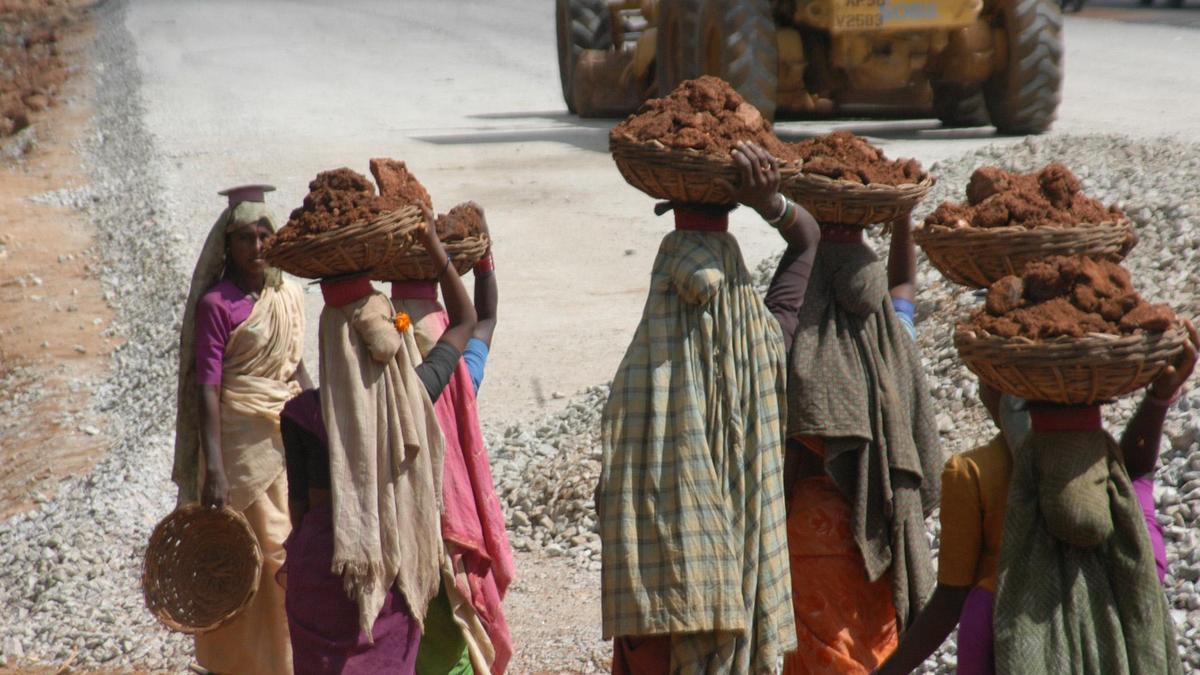
- 16 May 2026
In News:
The National Statistical Office (NSO) under the Ministry of Statistics and Programme Implementation (MoSPI) released the Annual Report of the Periodic Labour Force Survey (PLFS) 2025. This marks a significant methodological transition as the first comprehensive report based on the calendar year (January–December 2025) as the survey period.
Core PLFS Analytical Framework
The health of the labor ecosystem is evaluated using three foundational pillars and two distinct time frameworks:
Key Metrics
Labour Force Participation Rate (LFPR) = Employed Unemployed Total Population × 100
Worker Population Ratio (WPR) = Employed Total Population × 100
Unemployment Rate (UR) = Unemployed Total Population × 100
Time-Tested Frameworks
- Usual Status (ps ss): Based on the activity status over the preceding 365 days. Measures long-term, stable structural trends by combining Principal Status (ps) and Subsidiary Status (ss).
- Current Weekly Status (CWS): Based on a 7-day reference window (employed if worked ≥hour on any day). Key Update: Since January 2025, NSO provides monthly all-India estimates and quarterly bulletins for both rural and urban areas under CWS to track short-term fluctuations.
Key Findings of PLFS 2025: Data and Facts
Headline Employment Data
- Stable LFPR & UR: Overall LFPR stands at 59.3%, while the Unemployment Rate (UR) declined marginally to 3.1%.
- WPR & Total Employed: WPR reached 57.4%, translating into approximately 61.6 crore employed Indians (41.6 crore males and 20.0 crore females).
Structural Fractures & Core Challenges
- The Gender Fault Line: A stark gap persists between Male LFPR (79.1%) and Female LFPR (40.0%).
- Barriers:44.4% of females remain out of the labor force due to childcare and home-making commitments. Conversely, 69.8% of males cite continuing studies.
- Time Deficit: Urban self-employed men log 17.5 more hours weekly than their female counterparts, restricting female income capacity.
- The Youth "NEET" Crisis: While youth unemployment (15–29 years) improved to 9.9%, urban youth face a severe bottleneck at 13.6% (vs. 8.3% in rural areas). Alarmingly, 25.0% of youth fall into the NEET (Not in Employment, Education, or Training) category, highlighting a massive underutilization of the demographic dividend.
- The Technical Skill Void: While 67.8% of the population (aged 15 ) has attained at least a secondary level of education (average formal schooling: 10.0 years), only 4.2% of the workforce (15–59 years) has formal vocational or technical training.
Sectoral Realignment & Earnings
- Shift toward Formalization: Self-employment dropped to 56.2%, while regular wage/salaried employment rose to 23.6%, signaling a modest shift toward formal contracts.
- Sectoral Transitions: Agriculture dependency decreased to 43.0%, with workers transitioning into Manufacturing (12.1%) and Services (13.1%). Young women are increasingly driving this shift away from agriculture.
- Wage Growth & Parity Deficit: Nominal earnings for females grew faster than males (Self-employment: 8.8%; Regular salaried: 7.2%). However, the absolute gap remains high: women in salaried roles still earn only about 76% of male earnings.
Key Structural Bottlenecks Identified
- Low-Quality Female Integration: A significant chunk of rising female participation remains locked in unpaid family labor or low-yield rural activities.
- High Informality: Nearly 85-90% of India's total workforce remains informal, lacking statutory social security (PF/ESI).
- Premature De-industrialization Threat: The slow pace of high-quality manufacturing job creation risks pushing labor back into agriculture during economic shocks.
- Regional Imbalances: Disparities persist between industrialized southern/western states and high-underemployment eastern states (e.g., Bihar, UP).
Way Forward / Policy Imperatives
- De-burdening the Female Workforce: Invest in affordable, high-quality community crèches and elderly care centers (aligned with the Code on Social Security, 2020). Promote remote/hybrid models in formal sectors to prevent female dropout.
- Apprenticeship-Linked Higher Education: Restructure university degrees to make the final year a mandatory, industry-paid internship to eliminate the skill-employment mismatch.
- Overhauling Vocational Infrastructure: Re-align ITIs with Production Linked Incentive (PLI) sectors. Create vocational hubs focused on growing Manufacturing (12.1%) and Service (13.1%) segments.
- SME Formalization Incentives: Provide tax and regulatory fiscal incentives to MSMEs that transition contract workers into regular salaried positions with formal social security covers.
- Agro-Industrialization: Establish Integrated Agro-Processing Clusters locally. Moving rural labor from subsistence farming to sorting, grading, and packaging stabilizes year-round income and checks distress migration.
Intellectual Property Catalyst Initiative
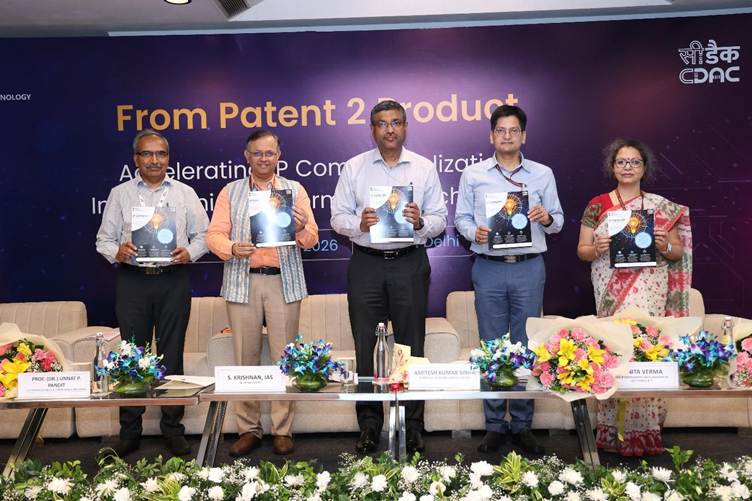
- 15 May 2026
In News:
The Ministry of Electronics and Information Technology (MeitY), Government of India, recently inaugurated a one-day national conference titled “From Patent to Product: Accelerating IP Commercialization in Electronics & IT” at the India Habitat Centre, New Delhi. During this event, the government officially unveiled the Intellectual Property (IP) Catalyst Initiative along with its dedicated, unified online gateway and digital platform hosted at cipie.in.
Institutional Framework and Core Objectives
The IP Catalyst Initiative is an institutional framework designed to convert technological ingenuity into domestic economic value.
Institutional Structure
- Nodal Ministry: Ministry of Electronics and Information Technology (MeitY).
- Implementing Agency: Centre for Development of Advanced Computing (C-DAC), Pune.
- Target Beneficiaries:MeitY-supported organizations, grantee institutions, academic research laboratories, early-stage startups, MSMEs, and domestic industrial enterprises.
Core Objectives
The initiative targets a traditional weakness in India's public research infrastructure: the gap between laboratory innovation and commercial viability.
- End-to-End Lifecycle Support: It establishes a digital and administrative framework that covers the entire innovation lifecycle—spanning fundamental research, domestic patent generation, multi-jurisdictional licensing, and final marketplace deployment.
- Breaking Institutional Silos: It builds a collaborative bridge connecting public R&D facilities with market-ready industry players, facilitating faster commercial adoption of state-backed innovations.
- Paradigm Shift in IP Management: The initiative aims to shift the domestic technology landscape from a traditional, volume-based "Patent Filing" mindset toward an economic, value-driven "Patent àProductàProfit" model. This ensures that publicly-funded R&D generates direct financial and strategic value rather than remaining underutilized in laboratory archives.
Structural Features and Support Mechanisms
The IP Catalyst Initiative provides structural, financial, and analytical support through its digital platform to address specific challenges faced by innovators:
Financial and Advisory Facilitation
- Domestic Filing Subsidies: The initiative offers direct financial assistance to cover IP filing expenses incurred by MeitY-affiliated laboratories and authorized grantee institutions.
- Global Market Protection: Recognizing the high cost of cross-border legal compliance, it provides international patent filing support tailored specifically for eligible startups and MSMEs.
- Prior-Art and Analytics: It provides access to expert IP advisory services and prior-art search tools, enabling innovators to verify the novelty and strength of their inventions prior to filing.
Commercialization and Technology Transfer
- Technology Maturity Mapping: The framework incorporates tools to evaluate Technology Readiness Levels (TRL) and maturity assessments, ensuring technologies are viable before market entry.
- IP Valuation Frameworks: It provides standardized IP valuation methodologies to help innovators determine the financial value of their intellectual property during commercial negotiations.
- Licensing and Transfer Channels: The initiative offers administrative and legal support to manage technology transfer agreements and complex licensing frameworks between researchers and commercial buyers.
Ecosystem Integration and Prototyping
- National Technology Repository: The digital platform (cipie.in) acts as a central repository for technologies developed via MeitY-funded research, giving startups and MSMEs an accessible catalog of indigenous solutions.
- Prototype-to-Product Scaling: Beyond basic registration, the initiative supplies strategic and physical support systems to guide innovators through engineering adjustments, shifting a prototype into a mass-manufacturable product.
PCOS renamed as PMOS
- 15 May 2026
In News:
In a landmark development for global public health and endocrinology, Polycystic Ovary Syndrome (PCOS) has been officially renamed Polyendocrine Metabolic Ovarian Syndrome (PMOS).
Key Administrative and Timeline Details
- Origin: Published in The Lancet, this transition is the culmination of a 14-year global consensus process led by institutions such as Monash University.
- Global Collaboration: The effort involved 56 international clinical organizations and survey data from over 14,000 patients and healthcare practitioners across six continents.
- Implementation Plan: The new nomenclature features a three-year progressive global rollout.
- Clinical Impact: The update does not immediately alter established diagnostic criteria (e.g., Rotterdam criteria) or treatment protocols. Instead, it builds a comprehensive, multi-systemic framework for future screening, diagnosis, and therapeutic management.
Structural Deficiencies of the Legacy Term (PCOS)
The historical designation, Polycystic Ovary Syndrome, introduced several clinical and communication bottlenecks that severely impacted patient care:
- The Pathological Misnomer: The term "polycystic" is scientifically inaccurate. Ultrasonography reveals that affected individuals do not possess abnormal, fluid-filled cysts. Instead, the observed morphology corresponds to arrested follicles—immature ovarian structures that stall midway through their physiological development due to a disrupted maturation process, preventing normal ovulation.
- Organ-Centric Misconception: By focusing entirely on the ovaries, the name "PCOS" reduced a complex, long-term systemic endocrine disorder to an isolated gynecological disease.
- The Diagnostic Delay: This localized definition created massive diagnostic blind spots. Approximately 70% of affected individuals globally remain undiagnosed, often enduring years of fragmented care and missed windows for early preventive interventions.
- Socio-Cultural Stigma: In many traditional societies, anchoring a multi-system metabolic disorder exclusively to reproductive and ovarian health inadvertently heightens the psychological distress and social stigma surrounding fertility, body weight, and associated skin changes.
Anatomy of the New Nomenclature: PMOS Explained
The updated term, Polyendocrine Metabolic Ovarian Syndrome, systematically breaks down the complex biological architecture of the condition:
Polyendocrine
This underscores the complex interplay of multiple hormone-producing pathways. The condition is driven by coordinated disruptions in several hormonal systems, including:
- Elevated androgens (male hormones) that disrupt steroidogenesis.
- Imbalances in luteinizing hormone (LH) and follicle-stimulating hormone (FSH).
- Neuroendocrine and stress-related hormonal dysregulations.
Metabolic
This acknowledges that insulin resistance and metabolic dysfunction are central pathophysiological drivers of the syndrome, rather than secondary complications. Elevated insulin triggers increased ovarian androgen secretion and significantly elevates the risk of long-term cardiometabolic morbidities.
Ovarian
This element preserves the reproductive health dimension, ensuring that chronic anovulation, menstrual irregularities, and implications for fertility remain addressed within the clinical framework.
Pathophysiology and Multi-Dimensional Risk Factors
The development of PMOS is driven by an intricate mix of fixed and modifiable elements:
- Genetic and Neuroendocrine Drivers: Strong hereditary links intertwined with disruptions in the brain-ovary signaling pathways (specifically the altered pulsatility of Gonadotropin-Releasing Hormone or GnRH).
- Modifiable Lifestyle Factors: Sedentary behavior, high-glycemic diets, and obesity aggravate insulin resistance, creating a feedback loop that worsens hormonal imbalances.
Clinical Characterization and Systemic Manifestations
PMOS is a chronic, multifaceted disorder affecting women of reproductive age. It presents a comprehensive array of symptoms across diverse biological systems:
- Reproductive and Gynecological: Chronic anovulation, highly irregular or absent menstrual cycles, and infertility. It also carries an elevated long-term risk of endometrial cancer due to prolonged unopposed estrogen exposure.
- Metabolic and Cardiometabolic: Impaired glucose tolerance, Type 2 diabetes, gestational diabetes, hypertension, dyslipidemia (abnormal cholesterol and triglyceride profiles), and Metabolic Dysfunction-Associated Steatotic Liver Disease (MASLD/fatty liver).
- Dermatological and Physical: Clinical hyperandrogenism presenting as hirsutism (excessive facial and body hair), severe treatment-resistant acne, male-pattern hair loss, and rapid weight gain.
- Psychological: Significant associations with anxiety, depression, mood swings, and eating disorders driven by both hormonal fluctuations and body image distress.
Metabolic Significance in the Indian Context
The transition to PMOS carries immense public health relevance for India, where the condition affects an estimated 16% to 18% of women of reproductive age.
The Thrifty Genotype Hypothesis
The Indian population carries a genetic predisposition known as the "thrifty genotype"—an evolutionary adaptation designed to conserve energy and store fat efficiently during periods of famine. In modern, urbanized environments characterized by sedentary routines and caloric excess, this genotype triggers heightened insulin resistance, rising obesity rates, and a sharp vulnerability to Type 2 diabetes.
The Paradox of "Lean PMOS"
Indian women frequently develop metabolic complications at a much younger age and at lower Body Mass Index (BMI) thresholds compared to Western populations. Under the old framework, individuals with "lean PCOS" (normal or low body weight) were frequently missed because they lacked the stereotypical physical signs of metabolic distress. The explicit inclusion of "metabolic" in PMOS ensures early screening for blood sugar, blood pressure, and lipid profiles in non-obese patients.
Evolving Management Frameworks: Modern vs. Traditional Paradigms
The recognition of PMOS as a systemic endocrine-metabolic disease is transforming the therapeutic landscape, shifting nutrition and lifestyle modification from supportive care to core clinical interventions.
Conventional Pharmacotherapy
- Metformin: An insulin sensitizer used to combat metabolic dysfunction and restore spontaneous ovulation.
- Oral Contraceptive Pills (OCPs): Prescribed to regulate menstrual cycles and suppress excess androgen levels.
- Advanced Metabolic/Fertility Options: The clinical shift has paved the way for utilizing modern metabolic treatments (such as GLP-1 receptor agonists/semaglutides) alongside advanced assisted reproductive technologies (IUI/IVF) for managing complex anovulatory infertility.
The Shift Toward Traditional and Herbal Paradigms
Due to the side effects associated with long-term reliance on synthetic drugs (e.g., gastrointestinal distress from Metformin or thromboembolic risks with specific OCPs), a notable research paradigm shift is underway toward traditional, complementary, and herbal medicines.
Natural supplements such as Myo-inositol are increasingly integrated to improve insulin sensitivity with fewer adverse effects. This highlights the growing need for integrative, evidence-based medicine that combines targeted lifestyle adjustments, metabolic therapies, and holistic care pathways to manage this chronic condition.
Kimberley Process (KP)
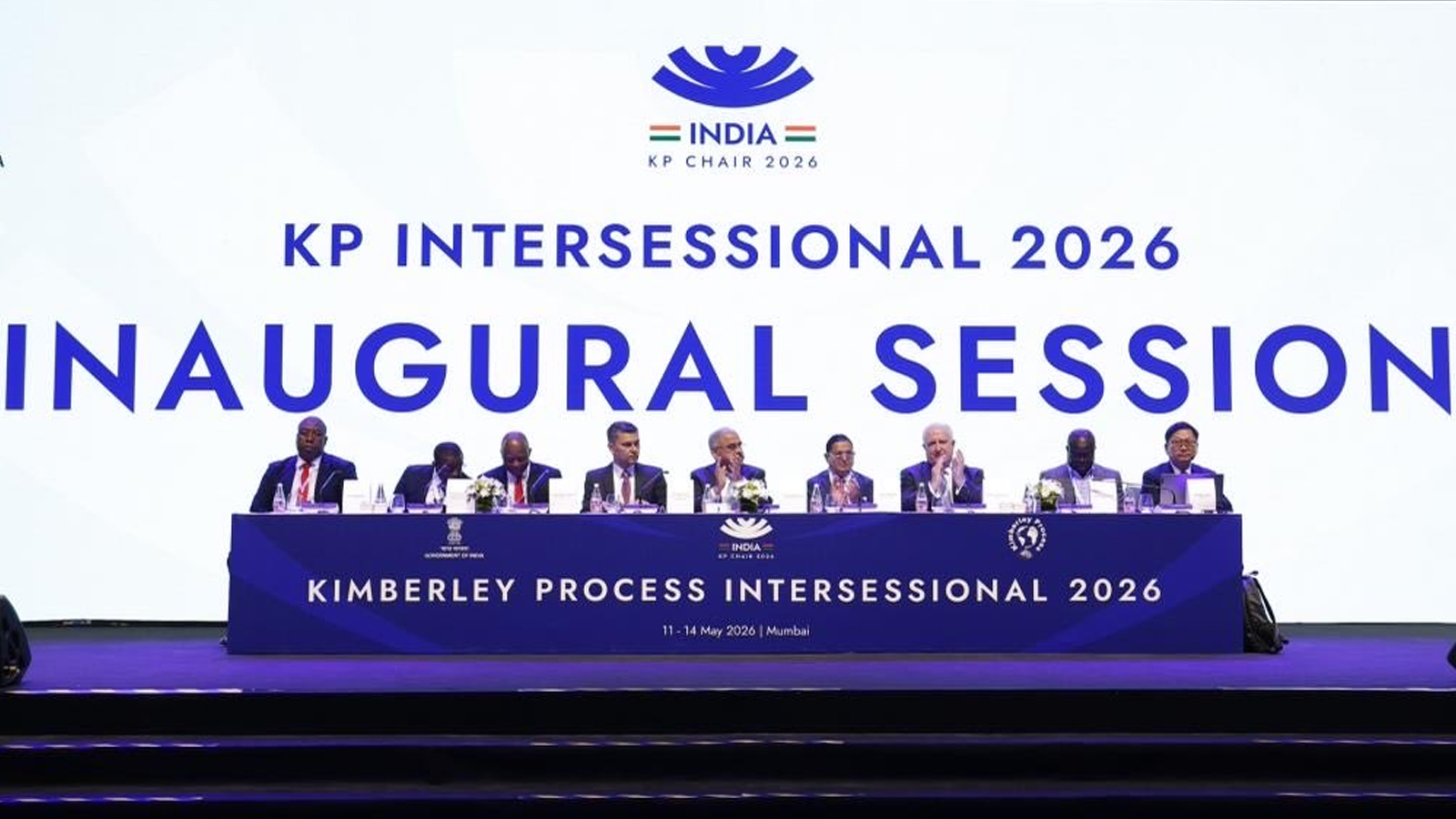
- 15 May 2026
In News:
Recently, India commenced the Kimberley Process (KP) Intersessional Meeting in Mumbai, marking its third tenure as the Chair of this critical global body. As the world’s leading hub for diamond cutting and polishing—where 14 out of every 15 diamonds are processed—India’s leadership is pivotal in shaping the future of ethical trade.
What is the Kimberley Process (KP)?
The Kimberley Process is a multi-stakeholder international initiative that brings together governments, the diamond industry, and civil society.
- Genesis: The initiative was sparked in May 2000 in Kimberley, South Africa, following global outcry over "blood diamonds." It was formally launched in January 2003 under UN General Assembly Resolution 55/56.
- Mission: Its primary mandate is to eradicate the trade in "conflict diamonds"—defined as rough diamonds used by rebel movements or their allies to finance armed conflict aimed at undermining legitimate governments.
- India’s 2026 Chairship: Having assumed office on January 1, 2026, India has adopted the theme of the "3Cs": Credibility, Compliance, and Consumer Confidence.
Kimberley Process Certification Scheme (KPCS)
The KPCS is the operational "engine" of the process, acting as a rigorous regulatory "passport" for rough diamonds.
- Core Requirements: Every shipment of rough diamonds crossing an international border must be transported in a tamper-resistant container and accompanied by a government-validated Kimberley Process Certificate.
- Exclusionary Principle: To maintain the integrity of the chain, member states are strictly prohibited from trading rough diamonds with any non-member or any participant that fails to meet the scheme's minimum requirements.
- Legislative Mandate: Participants are required to implement national laws and internal controls to prevent smuggling and ensure the legality of the supply chain.
India’s 2026 Agenda: Digitalization and Reform
As the Chair, India is steering the KP toward modernization to meet the challenges of the 21st-century digital economy.
- Blockchain Integration: A major priority of the Mumbai Intersessional is the transition toward digital, tamper-proof certificates. By utilizing blockchain technology, India aims to provide real-time traceability, significantly reducing the risk of document fraud.
- Ad Hoc Committee on Review and Reform (AHCRR): India is leading discussions to broaden the definition of conflict diamonds. While the current definition focuses on rebel groups, there is a growing global demand to include broader human rights violations.
- Technical Cooperation: India is focusing on capacity building for African diamond-producing nations, ensuring that the legitimate diamond trade continues to support the livelihoods of millions.
Key Functions of the Kimberley Process
Beyond certification, the KP performs several systemic functions:
- Periodic Peer Reviews: Working groups conduct on-site visits to member countries to verify compliance.
- Statistical Accountability: Member states are obliged to share detailed trade and production data to maintain transparency.
- Market Stabilization: By filtering out illicit diamonds, the KP ensures the stability of the legitimate market, protecting the economy of countries where diamonds are a major export.
Justice Aravind Kumar Committee
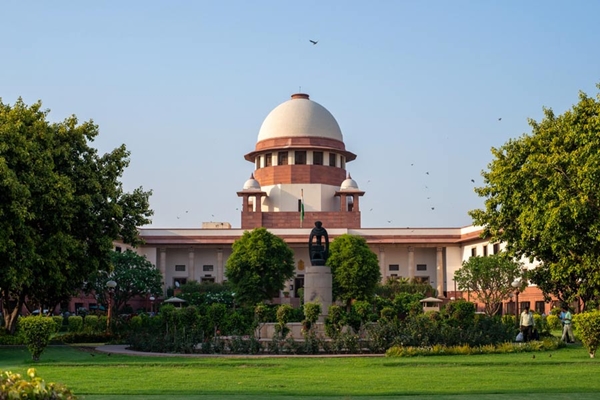
- 15 May 2026
In News:
Chief Justice of India (CJI) Surya Kant announced a landmark initiative to overhaul the Indian judiciary's physical and technological backbone. By constituting the high-powered Judicial Infrastructure Advisory Committee (JIAC), the Supreme Court has signaled a decisive shift toward solving the chronic infrastructural gaps that have long hampered the delivery of justice.
Structural Composition and Leadership
The committee is designed as a multi-disciplinary expert panel, blending judicial wisdom with administrative and technical expertise.
- Chairperson:Justice Aravind Kumar (Judge, Supreme Court of India).
- Judicial Members:
- Justice Debangsu Basak (Calcutta High Court)
- Justice Ashwani Kumar Mishra (Punjab and Haryana High Court)
- Justice Somasekhar Sundaresan (Bombay High Court)
- Technical & Administrative Members:
- Director General of the Central Public Works Department (CPWD).
- Secretary General of the Supreme Court of India (serving as Member Secretary).
A Visionary Mandate: Seven Focus Areas
The primary objective of the Justice Aravind Kumar Committee is to create a blueprint for a unified, pan-India judicial ecosystem. To achieve this, the committee has identified seven key focus areas:
- Systemic Constraints: Identifying physical and procedural bottlenecks faced by judges and court staff.
- Litigant & Lawyer Facilities: Improving basic amenities such as waiting areas, accessible toilets, and dedicated chambers for bar members.
- Digital Transformation (e-Courts): Strengthening virtual and hybrid hearing infrastructures to bridge the digital divide between urban and rural courts.
- Technological Integration: Implementing cutting-edge tools (AI-assisted research, automated case management) to accelerate case disposal.
- Modern Court Complexes: Overseeing the design of sustainable, accessible, and 21st-century-ready buildings.
- Economic Alignment: Quantifying the fiscal requirements for judicial modernization.
- Institutional Synergy: Ensuring seamless coordination between the Judiciary, Central Government, and State Governments.
Strategic Funding and Economic Coordination
One of the committee's most significant features is its direct link to national economic policy.
- Projected Investment: The committee seeks a massive allocation of ?40,000–?50,000 crore. This represents one of the largest single-project investments in judicial history, aimed at treating judicial infrastructure as a vital component of national infrastructure.
- Collaboration with PM-EAC: The panel is tasked with submitting its detailed findings and specific funding requirements to Sanjeev Sanyal, a member of the Economic Advisory Council to the Prime Minister (EAC-PM), by August 31, 2026. This ensures that judicial requirements are integrated into the central government's budgetary planning.
Why This Matters: The State of Indian Judiciary
The constitution of this committee comes at a critical juncture. As of March 2026, the Supreme Court's case pendency reached a record high of over 93,000 cases, with millions more pending in subordinate courts.
- The Infrastructure-Pendency Link: Research consistently shows that case delays are often caused by "non-legal" factors, such as a lack of courtrooms for new judges, poor digital connectivity for remote hearings, and inadequate storage for physical records.
- Tribunal Crisis: Many specialized tribunals currently operate from inadequate rented spaces or hotel complexes (e.g., Hotel Samrat in New Delhi), compromising the dignity and efficiency of the legal process.
Bharat Maritime Insurance Pool (BMIP)
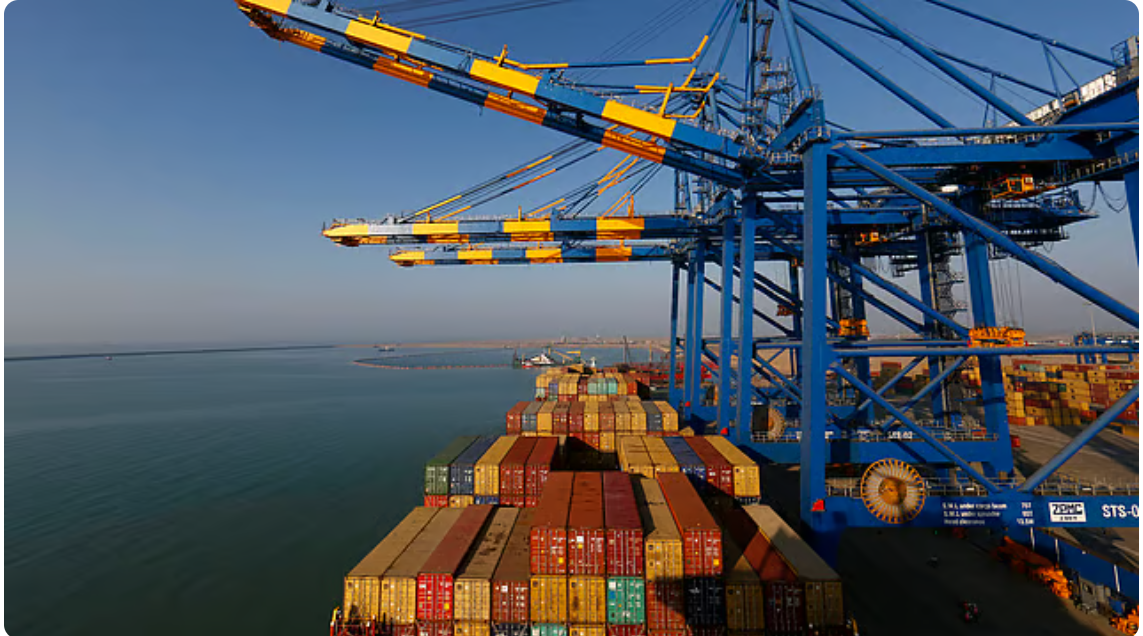
- 15 May 2026
In News:
The Department of Financial Services (DFS) recently inaugurated the Bharat Maritime Insurance Pool (BMIP), marking a watershed moment in India’s maritime and financial history. Amidst escalating geopolitical tensions in West Asia and the Red Sea, this domestic insurance mechanism is designed to insulate Indian maritime trade from global supply chain disruptions.
Strategic Framework and Financial Structure
The BMIP is a robust domestic insurance ecosystem designed to reduce India's reliance on international Protection and Indemnity (P&I) clubs and foreign reinsurers.
- Financial Capacity: The pool is launched with a total capacity of $1.5 billion.
- Sovereign Backstop: A critical feature is the sovereign guarantee of $1.4 billion (approx. ?12,980 crore). This government guarantee ensures that the pool remains solvent even in the event of catastrophic losses.
- Claim Settlement Mechanism:
- Layer 1: Claims up to $100 million are met through the pooled capacity of domestic members.
- Layer 2: Claims exceeding the pooled capacity, after exhausting existing reserves and private reinsurance arrangements, are backed by the Sovereign Guarantee.
Core Objectives and Coverage
The primary mandate of the BMIP is to provide uninterrupted insurance coverage for Indian-flagged or Indian-controlled vessels, as well as international ships trading with Indian ports.
- Risk Spectrum: The pool offers comprehensive coverage across four critical maritime domains:
- Hull and Machinery: Physical damage to the ship’s structure and equipment.
- Cargo: Protection against loss or damage to goods being transported.
- Protection and Indemnity (P&I): Third-party liabilities, including environmental damage (oil spills) and injury to crew.
- War Risk: Coverage for damages arising from hostilities, sabotage, or piracy—a vital component given current West Asian crises.
Operational Governance
The BMIP operates as a collective of domestic insurance companies, ensuring that premium outflows remain within the Indian economy (reducing invisible service imports).
- Pool Administrator: The General Insurance Corporation of India (GIC Re) has been designated as the administrator, leveraging its expertise in global reinsurance.
- Underwriting Committee (UC): A specialized committee has been formed to ensure that risks are assessed with technical precision and consistency.
- Governing Body: A high-level governing body oversees the pool’s functionality and provides the final approval for invoking the sovereign guarantee.
- The Reinsurance Model: Domestic pool members issue policies using their combined capacity. The risks are then shared among all members in proportion to their committed capacity, creating a diversified risk-sharing model.
India’s First AI-Enabled Block-Level Monsoon Forecasting System
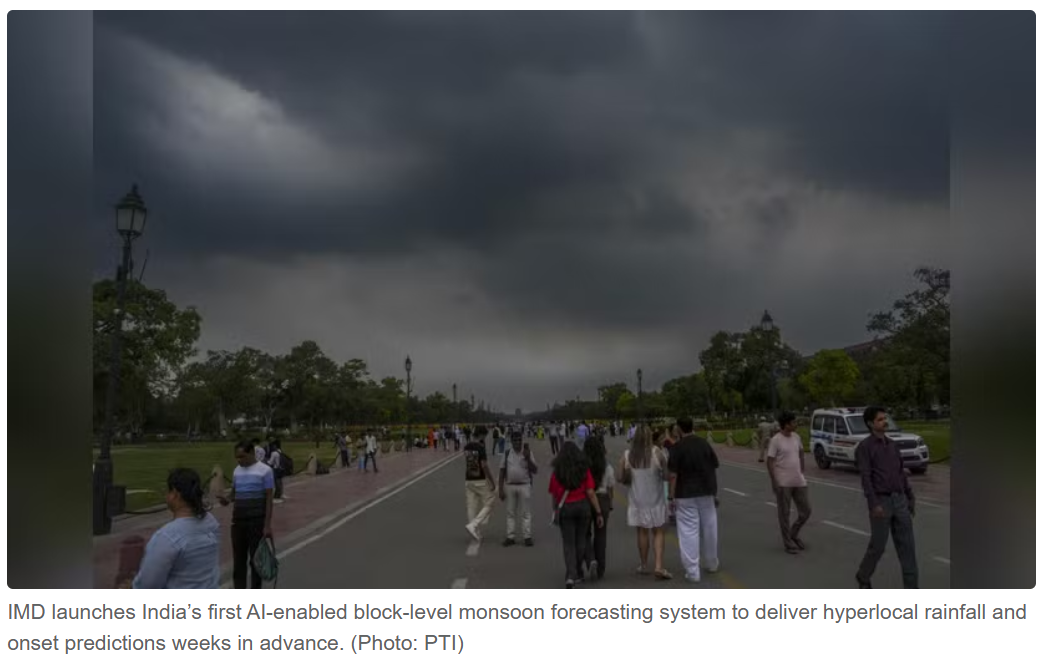
- 14 May 2026
In News:
In a landmark shift toward precision meteorology, the India Meteorological Department (IMD) recently launched the country's first Artificial Intelligence (AI)-enabled block-level monsoon forecasting system. This technological leap, aims to transform traditional weather forecasting into hyperlocal, actionable intelligence.
Structural Framework and Collaboration
The system is the result of an inter-institutional synergy between India's premier atmospheric science bodies:
- Lead Agency: India Meteorological Department (IMD).
- Collaborators: The Indian Institute of Tropical Meteorology (IITM), Pune, and the National Centre for Medium Range Weather Forecasting (NCMRWF).
- Methodology: The system utilizes a "Hybrid Approach," integrating traditional Numerical Weather Prediction (NWP) models—which rely on physical atmospheric equations—with advanced Machine Learning algorithms to refine accuracy and reduce computational lag.
Technical Features and Forecasting Logic
The new system departs from broad regional forecasts to provide Hyperlocal Impact-based Services.
- Temporal Precision: The model generates probabilistic forecasts of monsoon progression every Wednesday, providing outlooks up to four weeks in advance.
- Reliability: It maintains a remarkably narrow error margin of approximately four days, allowing for high-confidence planning.
- The "Onset" Criteria: Unlike general rainfall predictions, this model defines a successful monsoon onset based on a specific dual-metric:
- A continuous five-day rainfall spell.
- The absence of any prolonged dry spells within the subsequent 30 days.
Geographic Coverage and Strategic Focus
The initial rollout of the system is strategically targeted to maximize socio-economic impact.
- Current Scope: The system presently covers 3,196 blocks across 15 States and one Union Territory.
- Priority Zones: The coverage is largely concentrated in rainfed agricultural regions. In these areas, the timing of sowing is entirely dependent on the precise onset of the monsoon, making hyperlocal data a life-saving asset for farmers.
- Future Expansion: The IMD plans a phased expansion to eventually cover every administrative block in India, ensuring universal access to AI-driven weather alerts.
Dissemination and Last-Mile Connectivity
Recognizing that data is only useful if it reaches the end-user, the IMD has established a multi-channel dissemination strategy:
- Digital Platforms: Real-time updates via dedicated mobile applications and SMS alerts.
- Human Networks: Integration with local agricultural extension networks and Krishi Vigyan Kendras (KVKs) to interpret data for illiterate or semi-literate farmers.
National Florence Nightingale Awards 2026

- 14 May 2026
In News:
On May 12, 2026, coinciding with International Nurses Day, the President of India, Smt. Droupadi Murmu, conferred the National Florence Nightingale Awards for the year 2026 at a ceremony in Rashtrapati Bhavan. This prestigious recognition serves as a testament to the indispensable role of nursing professionals in India’s healthcare architecture, aligning with the 2026 global theme: "Our Nurses. Our Future. Empowered Nurses Save Lives."
Institutional Framework of the Award
The National Florence Nightingale Award is the highest national honor for nursing professionals in India.
- Genesis: Instituted in 1973 by the Ministry of Health and Family Welfare, the award aims to recognize meritorious services rendered by nursing personnel to society.
- Eligibility: The awards are presented to a wide spectrum of health workers, including Registered Nurses, Midwives, Auxiliary Nurse Midwives (ANMs), and Lady Health Visitors. These professionals serve across Central and State Governments, Union Territories, and voluntary organizations.
- Components of the Award: Each recipient is honored with a Certificate of Merit, a Medal, and a cash prize of ?1,00,000.
Highlights of the 2026 Award Ceremony
A total of 15 nursing professionals were honored this year for their exemplary service, particularly in challenging and remote terrains.
- Geographic Diversity: The awardees represented a broad cross-section of India, including professionals from Ladakh, Lakshadweep, Sikkim, Mizoram, Kerala, and Maharashtra.
- Notable Awardees:
- Ms. Kulwinder Parhi (ANM, Ladakh): Recognized for nearly 30 years of service in high-altitude, extreme-weather regions, providing care to both civilians and troops.
- Ms. Aysha Beebi K (Nurse, Lakshadweep): Honored for conducting a critical, life-saving midnight delivery on a remote island during an emergency.
- Major Gen Lissamma P V (IHQ of MoD, Army): Additional Director General of the Military Nursing Service, recognized for her leadership and distinguished service in military healthcare.
- Dr. Sharwan Kumar Dhaka (Nurse, Delhi): Commended for his outreach in public health services and extensive contribution to vaccination drives in underserved communities.
The Legacy of Florence Nightingale
The award is named after Florence Nightingale (1820–1910), the British social reformer and statistician who is widely regarded as the founder of modern nursing.
- The Crimean War: Nightingale rose to prominence for her management of nurses during the Crimean War, where she organized care for wounded soldiers in Constantinople (Istanbul). Her habit of making rounds at night earned her the moniker "The Lady with the Lamp."
- Scientific Contribution: She was a pioneer in using statistical graphics to demonstrate that most deaths in the war were due to poor sanitation rather than battle wounds.
- Educational Impact: In 1860, she established the Nightingale School of Nursing at St. Thomas’ Hospital in London, the first scientifically based nursing school in the world.
- Historical Milestone: She was the first woman to be awarded the Order of Merit (1907).
Indian Ocean Rim Association

- 14 May 2026
In News:
Recently, the Ministry of External Affairs (MEA), in collaboration with the Indian Council of World Affairs (ICWA) and the Indian Ocean Rim Association (IORA) Secretariat, hosted the 10th Indian Ocean Dialogue (IOD) in New Delhi. Held under the theme "Indian Ocean Region in a Transforming World," the dialogue underscored India's pivotal role as the current IORA Chair (2025–2027).
What is IORA?
Established in 1997 (originally as the Indian Ocean Rim Initiative), IORA is the premier intergovernmental organization for regional cooperation among littoral states of the Indian Ocean.
- Evolution: Formerly known as IOR-ARC, it has evolved into a robust platform for 23 Member States and 12 Dialogue Partners.
- Geographic Breadth: It spans five continents, including members like India, Indonesia, and Thailand (Asia), South Africa and Mauritius (Africa), Australia (Oceania), and France (Europe—via its overseas territories).
- Governance: The Council of Foreign Ministers (COM) serves as the apex decision-making body, meeting annually. The Secretariat is headquartered in Ebène, Mauritius, currently led by Secretary-General Sanjeev Ranjan (appointed in 2025).
The 10th Indian Ocean Dialogue: Key Highlights
The 10th edition focused on India's chairship priority: “Innovation, Openness, Resilience, and Adaptability.” Unlike formal summits, the IOD is a Track 1.5 forum, bringing together government officials, scholars, and policy experts for open, constructive debate.
- Vision MAHASAGAR: India reiterated its commitment to Mutual and Holistic Advancement for Security and Growth Across Regions (MAHASAGAR). This vision expands traditional security to include climate resilience and digital connectivity.
- Economic Integration: Discussions prioritized the Blue Economy, emphasizing sustainable fisheries and marine biotechnology as drivers of GDP for island nations.
- Social Inclusion: A notable highlight from the 2026 session was the focus on Nari Shakti (Women’s Empowerment), with reports indicating a 340% increase in women’s participation in the maritime sector since 2020.
The Six Priority Pillars of Cooperation
To achieve "balanced development," IORA operates through six distinct priority areas, which formed the core agenda of the 10th Dialogue:
- Maritime Safety and Security: Addressing piracy, drug trafficking, and ensuring freedom of navigation.
- Trade and Investment: Reducing barriers to enhance the flow of goods and services.
- Fisheries Management: Promoting sustainable practices to prevent overexploitation.
- Disaster Risk Management: Establishing regional early-warning systems for tsunamis and cyclones.
- Blue Economy: Sustainable use of ocean resources for economic growth.
- Tourism and Cultural Exchanges: Strengthening the "Indian Ocean identity."
Strategic Significance: Why the Indian Ocean Matters
The Indian Ocean is often called the "Global Lifeline," and the 10th Dialogue highlighted several modern realities:
- Energy Security: Approximately 80% of global seaborne oil trade passes through the region's chokepoints (Strait of Hormuz, Malacca, and Bab-el-Mandeb).
- Digital Connectivity: Over 90% of global internet traffic is carried via undersea fiber-optic cables on the Indian Ocean floor.
- Geopolitical Balancing: IORA provides a leadership platform for India that remains distinct from other groupings like the Quad or BRICS, specifically focusing on the unique needs of Global South littoral states.
MelanoserisPendryi
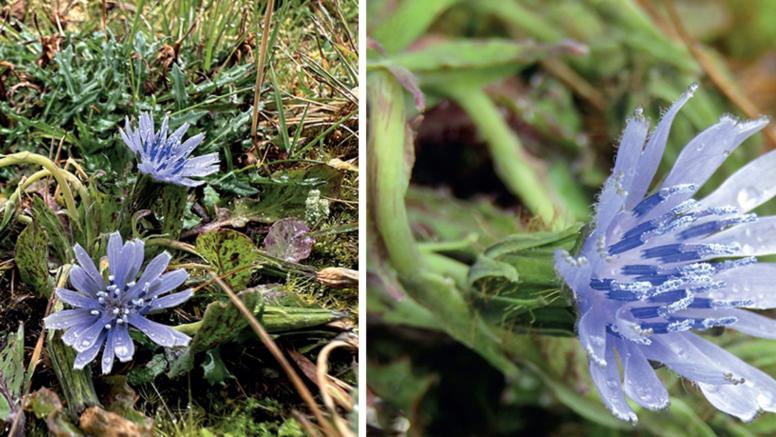
- 14 May 2026
In News:
In a significant contribution to India’s botanical diversity, a team of researchers from the University of Calcutta and the University of Kashmir has discovered a new plant species, Melanoserispendryi, in the high-altitude alpine regions of the Sikkim Himalayas. This discovery, published in 2026, highlights the ecological richness of the Eastern Himalayas, a global biodiversity hotspot, and provides critical data for conservation efforts in fragile mountain ecosystems.
Taxonomic Classification and Global Distribution
The newly identified species belongs to the Asteraceae family (commonly known as the daisy or sunflower family), specifically under the genus Melanoseris.
- Genus Characteristics: The genus Melanoseris is distributed across a wide geographical range stretching from Iran to Southern Central China, extending into Northern Central Indo-China and Java.
- Indian Context: In India, approximately 16 species of Melanoseris have been documented, primarily concentrated across the Himalayan belt and the Northeastern states.
- Etymology: The species name pendryi honors David C. Pendry, a renowned botanist noted for his extensive work on the flora of the Himalayas and Nepal.
Habitat and Environmental Adaptation
Melanoserispendryi is uniquely adapted to thrive in the harsh, low-oxygen environments of the Sikkim Himalayas, specifically at altitudes exceeding 4,000 meters above sea level.
- Geographic Niche: It is primarily found in the moist alpine grasslands of Eastern Sikkim, often growing in close proximity to cushionoid shrubs like Rhododendron campanulatum.
- Resilience Mechanisms: To survive extreme cold and high-velocity winds, the plant grows close to the ground (prostrate habit) and utilizes a fleshy, branching root system that stores essential nutrients and moisture.
- Growth Cycle: The plant is a perennial herb that flowers from August to October, producing fruits shortly after in September and October.
Distinctive Morphological Features
What sets M. pendryi apart from its close relatives (such as M. lessertiana) are its unique floral and seed structures, which were previously unknown in this genus.
- The "Bearded" Petals: The species features striking lavender-colored petals (ligules). Uniquely, the undersides (ventral surface) of these petals are covered in long, white ciliate hairs, a feature that has led some to describe it as the "flower with a beard."
- Reproductive Anatomy: It possesses a shorter reproductive tube and a distinctly stout, compressed seed structure (cypsela).
- Physical Stature: The plant is relatively small, reaching a height of only 5–18 cm, including the peduncle. Its stem is often purplish and may be glabrous (smooth) or slightly hairy at the base.
Conservation Status and Ecological Threats
Despite its recent discovery, researchers have raised urgent concerns regarding the survival of Melanoserispendryi. Based on IUCN Red List criteria, scientists have proposed classifying the species as Critically Endangered.
- Tourism Pressure: The high-altitude regions of Sikkim are increasingly accessible to tourists, leading to habitat trampling and soil compaction.
- Grazing Pressure: Competitive land use for livestock grazing in alpine meadows poses a direct threat to the sparse populations of this plant.
- Climate Change: As a high-altitude specialist, M. pendryi is highly vulnerable to "mountain-top extinction," where rising temperatures force species to migrate upward until no suitable habitat remains.
National Panchayat Awards 2025
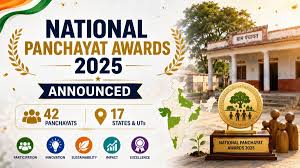
- 14 May 2026
In News:
The Ministry of Panchayati Raj recently announced the winners of the National Panchayat Awards (NPA) 2025, a cornerstone initiative designed to recognize and incentivize Panchayati Raj Institutions (PRIs) that have excelled in localizing Sustainable Development Goals (SDGs).
Core Framework and Objectives
The National Panchayat Awards are conferred annually to foster a spirit of healthy competition among PRIs. The primary goal is to promote inclusive, participatory, and sustainable rural development.
- Incentivization Scheme: The awards are implemented under the Incentivization of Panchayats (IoP) scheme, which is a central component of the Rashtriya Gram Swaraj Abhiyan (RGSA)—a Centrally Sponsored Scheme.
- Alignment with Global Goals: Since the 2023 revamp, the framework has been strictly aligned with the nine themes of Localization of Sustainable Development Goals (LSDGs). This shift ensures that the assessment of a Panchayat's performance is holistic, data-driven, and transparent.
Key Award Categories and Winners
A total of 42 Panchayats were selected for the 2025 cycle from 17 States and Union Territories. The awards are broadly divided into two prestigious categories:
A. Deen Dayal Upadhyay Panchayat Satat Vikas Puraskar (DDUPSVP)
This category focuses on Gram Panchayats (GPs) that have shown exceptional performance in specific thematic areas.
- Thematic Focus: It evaluates performance across 9 LSDG themes, including Poverty-free and Enhanced Livelihoods, Healthy Panchayat, Water Sufficient Panchayat, Clean and Green Panchayat, and Women-friendly Governance.
- Selection Mechanism: Winners are determined based on their Panchayat Advancement Index (PAI) 2.0 scores.
- Scale of Recognition: 34 Gram Panchayats were selected in this category for Ranks 1, 2, and 3 across different themes.
B. Nanaji Deshmukh Sarvottam Panchayat Satat Vikas Puraskar (NDSPSVP)
Unlike the thematic focus of DDUPSVP, this award recognizes the best-performing Panchayats overall at all three tiers of the PRIs.
- Distribution: Eight Panchayats were honored, comprising three District Panchayats, two Block Panchayats, and three Gram Panchayats.
- Top Honorees:
- Best District Panchayat:Sepahijala (Tripura) secured the first rank, followed by Ganjam (Odisha) and Coimbatore (Tamil Nadu).
- Best Block Panchayat:Harippad (Kerala) stood first.
- Best Gram Panchayat: New Napam (Assam) was recognized as the top-performing village unit.
State-wise Performance Trends
The 2025 awards highlight the regional excellence in rural administration. Karnataka emerged as the leading state, securing the highest number of awards with 6 winning Panchayats. This was followed closely by Andhra Pradesh and Odisha, each securing 5 awards. Other states like Maharashtra, Tripura, and Kerala also showed strong representation across various thematic rankings.
Financial Incentives and Empowerment
To ensure that recognition translates into further development, the awards carry significant financial incentives. These funds are intended to be utilized by the winning Panchayats for furthering their developmental projects:
- Grant Range: Incentives range from ?50 lakh to ?5 crore per awardee.
- Tier-based Funding: The amount varies depending on the tier (Gram, Block, or District) and the specific category of the award. For instance, the top District Panchayat (Sepahijala) is set to receive ?5 crore, while thematic Gram Panchayat winners typically receive ?1 crore for the first rank.
Special Recognition for Emerging Challenges
In addition to the main categories, the Ministry also utilizes the National Panchayati Raj Day (April 24) to highlight specialized achievements:
- Climate Action Special Panchayat Award (CASPA): Encouraging environmental stewardship.
- Atma Nirbhar Panchayat Special Award (ANPSA): Recognizing self-reliance in local economy and infrastructure.
- Panchayat Kshamta Nirman SarvottamSansthan Puraskar: Awarded to institutions facilitating capacity building for PRIs.
Global Forest Goals Report 2026
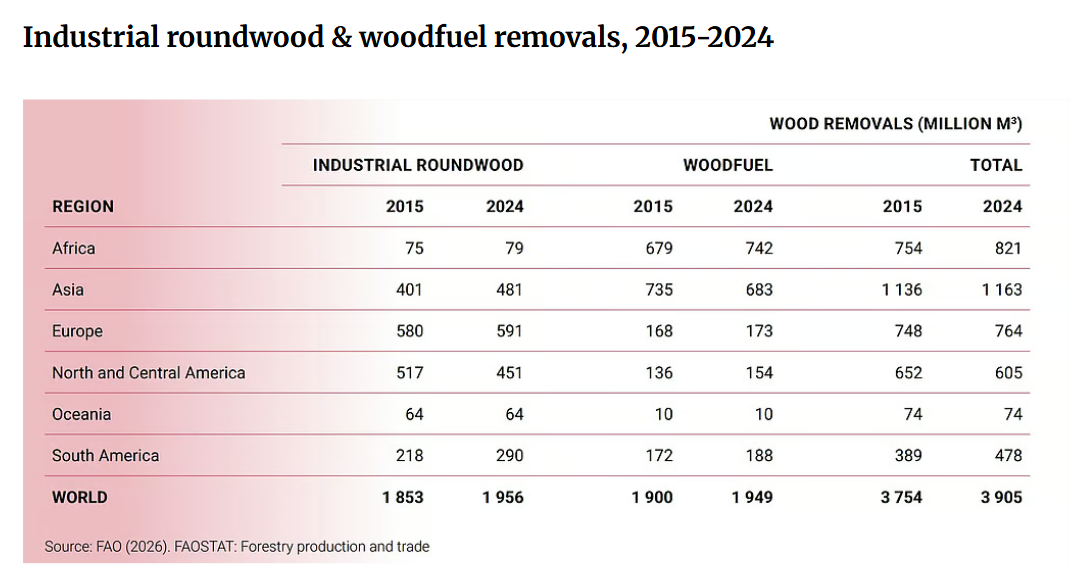
- 13 May 2026
In News:
A landmark United Nations assessment, the Global Forest Goals Report 2026, has sounded a critical alarm regarding the state of the world’s terrestrial ecosystems. Prepared by the UN Department of Economic and Social Affairs (UNDESA) and the UN Forum on Forests Secretariat, the report highlights a shift in the drivers of environmental decline. While agricultural expansion remains the primary cause of deforestation, the rising demand for fuelwood and charcoal has emerged as a dominant driver of forest degradation, particularly across Africa and Asia.
The State of Global Forest Cover: 2015–2025
The report provides a sobering quantitative analysis of a decade of forest loss. Global forest cover has diminished from 4.18 billion hectares in 2015 to 4.14 billion hectares in 2025, representing a staggering net annual loss of 4.12 million hectares.
Perhaps most concerning is the fate of primary forests—undisturbed, biodiverse ecosystems that are essential for climate regulation. The world lost nearly 16 million hectares of primary forests in just ten years, with South America witnessing the most severe decline. This loss is irreversible in human timescales, as primary forests harbor unique genetic diversity and sequester significantly more carbon than secondary or plantation forests.
Emerging Drivers: The Fuelwood and Energy Poverty Nexus
While the conversion of forests for large-scale agriculture (industrial soy, palm oil, and cattle ranching) continues to lead in total deforestation, forest degradation—the thinning of forest density and health—is now increasingly driven by the energy needs of the poor.
- Sub-Saharan Africa and Asia: In these regions, a lack of access to clean cooking fuels (like LPG or electricity) forces millions to rely on wood and charcoal.
- The Vicious Cycle of Energy Poverty: Dependence on fuelwood creates a direct link between poverty and environmental decline. As forests are thinned for fuel, the ecosystem’s ability to provide services (water regulation, soil fertility) diminishes, further impoverishing the communities that depend on them.
- Charcoal Production: The report identifies charcoal as an especially destructive commodity, as its production is often inefficient and unregulated, leading to the rapid depletion of hardwood species.
Intensifying Environmental Pressures
The report stresses that forests are no longer just fighting human encroachment; they are also battling a changing climate. Abiotic and biotic stressors are accelerating degradation:
- Extreme Weather: Prolonged droughts and heatwaves are weakening tree resilience.
- Natural Disasters: An increase in the frequency and intensity of wildfires is turning forests from carbon sinks into carbon sources.
- Biological Threats: Rising temperatures have expanded the range of pests and diseases, devastating vast tracts of temperate and tropical forests alike.
The Restoration Gap: Pledges vs. Reality
A significant portion of the report is dedicated to the "Restoration Gap." While global awareness has led to ambitious pledges, implementation remains sluggish:
- The Deficit: 91 countries pledged to restore 190 million hectares of forest by 2025. However, only 44 million hectares—less than a quarter—have actually been restored.
- Asia as a Silver Lining: Asia has emerged as a global leader in forest recovery, accounting for the highest restoration performance. The region successfully restored over 31 million hectares, achieving 42.2% of its pledged area. This success is largely attributed to large-scale afforestation programs in countries like China and India.
National Technology Day 2026

- 13 May 2026
In News:
On May 11, 2026, India celebrated National Technology Day, marking the 28th anniversary of the historic Pokhran-II nuclear tests. Recalling the events of 1998, the Prime Minister described the tests as a defining symbol of India’s scientific excellence and strategic self-reliance. This day serves not only as a tribute to past achievements but as a roadmap for India’s technological trajectory toward becoming an Aatmanirbhar Bharat (Self-reliant India).
Historical Significance: Operation Shakti (1998)
National Technology Day commemorates Operation Shakti, conducted at the Pokhran Test Range in Rajasthan under the leadership of then-Prime Minister Atal Bihari Vajpayee and the technical guidance of Dr. APJ Abdul Kalam.
- The Nuclear Milestone: On May 11, 1998, India successfully conducted a series of five nuclear tests. This followed the 1974 Operation Smiling Buddha (Pokhran-I), officially establishing India as a nuclear-weapon state and reinforcing its strategic autonomy on the global stage.
- A Triple Triumph: The significance of May 11, 1998, extends beyond nuclear physics. On the same day, India achieved two other major milestones:
- The successful test-firing of the Trishul surface-to-air missile.
- The maiden flight of Hansa-3, India’s first indigenous composite aircraft.
- Institutionalization: Recognizing these multifaceted breakthroughs, May 11 was officially declared National Technology Day in 1999.
Theme 2026: Responsible Innovation for Inclusive Growth
The theme for 2026, “Responsible Innovation for Inclusive Growth,” reflects India’s current focus on balancing rapid technological advancement with ethical considerations and social equity. It underscores the vision that innovation must not only be cutting-edge but must also bridge the digital divide and reach the last mile of society.
The New Technological Frontier: Major Missions
India has transitioned from traditional strategic technology to emerging and disruptive fields. The government has launched several "Mission Mode" projects to secure leadership in the 4th Industrial Revolution:
- Strategic Missions: The National Quantum Mission and India Semiconductor Mission 2.0 aim to build indigenous capabilities in high-compute and hardware manufacturing, reducing dependence on global supply chains.
- Exploratory Missions: The Deep Ocean Mission is exploring the "Blue Economy," while the Anusandhan National Research Foundation (ANRF) has been established to provide a unified funding and regulatory framework for R&D across the country.
- Policy Support: The Vigyan Dhara Scheme and the National Mission on Interdisciplinary Cyber-Physical Systems are fostering a culture of research and interdisciplinary collaboration.
- Sector-Specific Innovations: Programs like iDEX (Innovation for Defence Excellence) and Biotech-KISAN are successfully bridging the gap between laboratories and the field, empowering both the defense sector and the farming community.
25 Years of Pradhan Mantri Gram Sadak Yojana
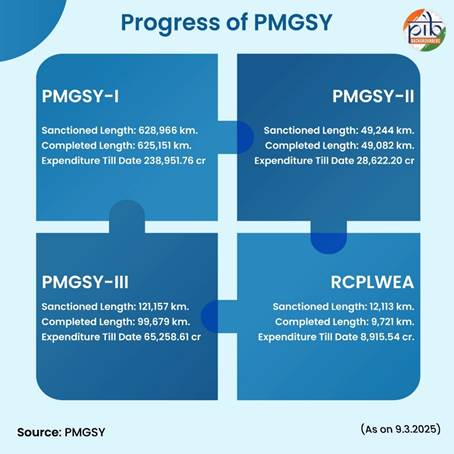
- 13 May 2026
In News:
The Union Ministry of Rural Development recently marked the Silver Jubilee of the Pradhan Mantri Gram Sadak Yojana (PMGSY) in Bhairunda, Madhya Pradesh. This milestone was distinguished by the national launch of PMGSY-IV, a strategic evolution of India’s flagship rural infrastructure program. Since its inception in 2000, PMGSY has transitioned from a basic connectivity project into a high-tech engine for socio-economic transformation, bridging the rural-urban divide and fostering a "Viksit Bharat."
The Evolution of a Rural Lifeline (2000–2024)
PMGSY began as a Centrally Sponsored Scheme to provide all-weather road connectivity to unconnected rural habitations. Over two and a half decades, its scope has expanded through distinct phases:
- Phase-I (2000): Focused on establishing the first link for previously isolated habitations.
- Phase-II (2013): Shifted the objective toward upgrading existing rural routes to streamline the movement of goods and people to service hubs.
- RCPLWEA (2016): A specialized vertical for 44 districts affected by Left Wing Extremism (LWE). By facilitating the mobility of security forces and integrating underserved populations, this initiative is a cornerstone in the goal to make India "Naxal-free" by March 2026.
- Phase-III (2019): Focused on "Through Routes" that link villages to critical social infrastructure like Gramin Agricultural Markets (GrAMs), hospitals, and schools. As of late 2025, over 80% of the 1,25,000 km target has been met.
PMGSY-IV (2024–2029): The Next Frontier
Launched with a financial outlay of ?70,125 crore, Phase IV aims to construct 62,500 km of roads to connect 25,000 remaining unconnected habitations.
New Connectivity Criteria
Eligibility for Phase IV is based on Census 2011 data:
- Plain Areas: Habitations with a population of 500 .
- NE & Himalayan States/UTs: Habitations with a population of 250 .
- Special Categories: Tribal (Schedule V) areas, Aspirational Districts/Blocks, and desert areas.
Convergence and Inclusion
PMGSY-IV is intricately linked with tribal development schemes such as PM-JANMAN and the Dharti Aaba Janjatiya Gram Utkarsh Abhiyan, ensuring that the most marginalized tribal settlements receive priority connectivity.
Digital Governance and Quality Assurance
The success of PMGSY is anchored in its rigorous Three-Tier Quality Control mechanism, which ensures that infrastructure is both durable and transparently built:
- First Tier: Internal quality control by state executing agencies.
- Second Tier: Monitoring by independent State Quality Monitors (SQM).
- Third Tier: Oversight by National Quality Monitors (NQM) under the National Rural Infrastructure Development Agency (NRIDA).
Technology acts as a force multiplier in this framework. The OMMAS (Online Management, Monitoring, and Accounting System) provides real-time tracking, while the e-MARG platform monitors maintenance during the 5-year Defect Liability Period, linking contractor payments directly to road performance. Furthermore, all alignments are now mapped via the PM Gati Shakti portal and the PMGSY Gram Sadak Survey App to prevent infrastructure overlap.
Green Technology and Sustainability
Aligning with global climate goals, PMGSY-IV mandates the use of "Green Technologies." As of mid-2025, over 1.24 lakh km of roads have been constructed using:
- Waste Utilization: Waste plastic, fly ash, and construction debris.
- Cold Mix Technology: Reduces the carbon footprint by eliminating the need to heat bitumen.
- Full Depth Reclamation (FDR): Recycles existing road base, reducing the need for stone aggregate mining.
- Bio-Engineering: Use of geosynthetics and cell-filled concrete to stabilize roads in flood-prone and mountainous terrains.
Jute Crop Information System
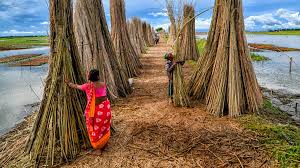
- 13 May 2026
In News:
India’s jute sector, historically a cornerstone of the rural economy in the eastern states, is undergoing a profound digital transformation. Spearheaded by the National Jute Board (NJB), the implementation of the Jute Crop Information System (JCIS) marks a shift from fragmented, manual monitoring to a sophisticated, evidence-based technological framework.
Launched in 2023, JCIS is a collaborative endeavor involving the Indian Space Research Organisation (ISRO), the Jute Corporation of India (JCI), and the NJB. This platform addresses long-standing structural limitations in the sector by integrating space technology with ground-level intelligence.
The Technological Architecture: BHUVAN JUMP and PATSAN
The JCIS ecosystem is built upon two specialized digital pillars that synchronize field data with satellite observations:
- BHUVAN JUMP: A dedicated mobile application used by field personnel for on-ground monitoring. It facilitates the large-scale collection of geo-tagged field data, ensuring that every data point is linked to a specific geographic coordinate for scientific validation.
- PATSAN (Prospective Assessment of Jute Using Mobile App-Based Field Observations): A web-based analytics dashboard that serves as a command center for officials. It provides near real-time surveillance, vegetation indices, and crop-related assessments, enabling stakeholders to make data-driven policy decisions.
Addressing Structural Limitations
Before the introduction of JCIS, the jute industry faced several systemic challenges:
- Fragmented Estimates: Area and yield assessments were often based on manual, non-standardized reports, leading to inconsistencies and delayed responses.
- Data Silos: Satellite data, weather analytics, and field inputs operated independently, preventing a holistic view of crop health.
- Vulnerability to Disasters: A lack of real-time detection for floods and droughts resulted in significant crop and quality losses.
Key Features and Operational Impact
The JCIS framework has introduced a "Smart-Sampling" approach to agricultural management through several high-tech interventions:
- Geospatial Smart-Sampling: The system supports Crop Cutting Experiments (CCEs) by combining satellite-derived crop maps with robust statistical sampling. This has drastically improved the accuracy of yield estimation and production modeling.
- Flood Impact Modeling: Using satellite data and field validation, the NJB can now generate quantitative models to estimate yield and quality losses in flood-affected regions, facilitating objective insurance and relief assessments.
- Early Warning Systems: The integration of weather analytics allows the platform to issue district-level alerts regarding rainfall variations, dry spells, and temperature fluctuations, supporting proactive planning.
- I-CARE Field Network: Leveraging its extensive field network, the NJB has institutionalized the use of technology at the grassroots level, ensuring that the transition is not just top-down but deeply embedded in field operations.
National Mission for Sustainable Agriculture
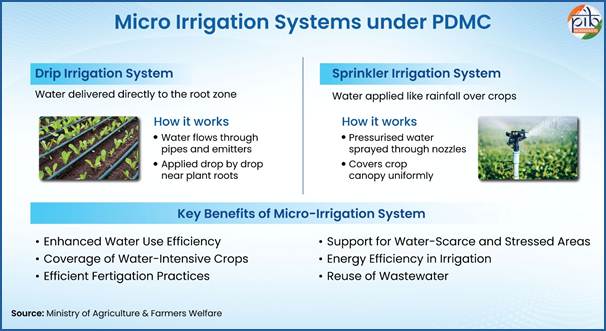
- 13 May 2026
In News:
Under the updated framework of the National Mission for Sustainable Agriculture (NMSA), a transformative target has been set: bringing 100 lakh hectares under micro-irrigation over the five-year period from 2025-26 to 2029. This initiative underscores the critical shift from traditional irrigation to precision water management as a cornerstone of national food security.
Evolution and Institutional Framework
- Launched in 2014-15 as one of the eight missions under the National Action Plan on Climate Change (NAPCC), NMSA was designed to mitigate the adverse impacts of weather variability on Indian farming. Since the fiscal year 2022-23, the mission has been integrated into the umbrella scheme of Pradhan Mantri Rashtriya Krishi Vikas Yojana (PMRKVY).
- Operated by the Ministry of Agriculture and Farmers Welfare, the mission acts as a strategic intervention to ensure that agricultural productivity does not come at the cost of environmental degradation.
Strategic Interventions: The Four Pillars of NMSA
The mission employs a multi-pronged strategy to enhance water-use efficiency, improve soil health, and build climate-resilient farming systems:
1. Per Drop More Crop (PDMC): Precision in Water Management
The PDMC initiative is the primary vehicle for achieving the newly set 100 lakh hectare target. By promoting micro-irrigation technologies—specifically drip and sprinkler systems—it aims to maximize crop productivity per unit of water used. This is vital for India, where agriculture consumes nearly 80% of the country’s freshwater resources.
2. Rainfed Area Development (RAD): Diversifying Risks
Recognizing that nearly 60% of India’s cultivated area is rainfed, RAD encourages Integrated Farming Systems (IFS). This approach integrates crops with livestock, fisheries, and horticulture, providing farmers with multiple income streams and a buffer against localized crop failures caused by erratic rainfall.
3. Soil Health Management (SHM): Sustaining the Foundation
Supported by the SHC Scheme, SHM focuses on the scientific testing of soil to promote balanced nutrient application. By discouraging the overuse of chemical fertilizers, it protects long-term soil fertility and reduces the input costs for small and marginal farmers.
4. Climate Change Monitoring and Networking (CCSAMMN)
The CCSAMMN component serves as the mission’s intellectual backbone. It facilitates a bidirectional flow of information: translating high-level scientific research into actionable data for farmers, while feeding grassroots field observations back to research establishments.
One Case One Data Initiative
- 12 May 2026
In News:
In a major leap toward "Justice 2.0," the Chief Justice of India (CJI) recently unveiled two transformative digital tools: the 'One Case One Data' initiative and an AI-powered chatbot named 'Su Sahay'. These projects, spearheaded by the Supreme Court of India, represent a strategic move to leverage technology to reduce judicial delays, enhance transparency, and simplify the legal process for the common citizen.
About the Initiative:
The 'One Case One Data' initiative is a flagship digital infrastructure project aimed at ending the era of data fragmentation within the Indian legal system. Historically, records at the Taluka, District, High Court, and Supreme Court levels often existed in silos, leading to administrative hurdles during appeals or transfers.
Core Objectives and Mechanics
The primary goal is to establish a National Case Management System that acts as a "single source of truth" for every legal matter in the country.
- Multi-Level Integration: The system synchronizes data across all tiers of the judiciary, ensuring that a development in a lower court is instantly updated across the entire national network.
- Interconnected Tracking: It allows judges and lawyers to track a case’s entire history—from its first filing to its current status—through a seamless digital trail.
- Efficiency and Transparency: By eliminating the need for manual record-gathering and physical movement of files, the initiative significantly reduces the time required for case processing.
‘Su Sahay’ AI Chatbot: Making Justice Accessible
While 'One Case One Data' focuses on backend infrastructure, 'Su Sahay' is a front-end innovation designed specifically for litigants and the general public. Developed by the National Informatics Centre (NIC) in collaboration with the Supreme Court Registry, this AI-powered chatbot is integrated directly into the Supreme Court’s official website.
Bridging the Information Gap
- Litigant-Centric Guidance: The chatbot provides step-by-step assistance for complex procedures such as filing processes, understanding court protocols, and checking case statuses.
- 24/7 Digital Helpdesk: As a real-time assistance tool, it functions as a round-the-clock helpdesk, minimizing the need for citizens to make physical visits to court premises or navigate difficult telephonic inquiries.
- User-Friendly Interface: By using a simple, conversational format, 'Su Sahay' demystifies legal jargon, making it easier for non-experts to interact with the highest court in the land.
VB—G RAM G Act, 2025
- 12 May 2026
In News:
In a transformative shift for India’s rural landscape, the Central Government has notified that the Viksit Bharat—Guarantee for Rozgar and Ajeevika Mission (Gramin), or VB–G RAM G, will officially replace the Mahatma Gandhi National Rural Employment Guarantee Act (MGNREGA) starting July 1, 2026.
This legislative overhaul aims to pivot from a demand-driven "survival" model toward a productivity-linked framework aligned with the Viksit Bharat @2047 vision. By integrating wage employment with high-impact asset creation, the mission seeks to build long-term economic resilience in rural India.
The Statutory Guarantee: Expanding the Safety Net
The VB—G RAM G Act, 2025 strengthens the rights of rural workers by enhancing the legal entitlement to employment.
- 125 Days of Work: The statutory guarantee has been increased from 100 days to 125 days of unskilled manual work per financial year for every rural household.
- Legal Protections: The Act retains critical safeguards, such as the Unemployment Allowance (payable if work is not provided within 15 days of demand) and a Transport Allowance (an additional 10% of the wage rate if the worksite is beyond a 5 km radius).
- Wage Security: Wages are strictly mandated to be paid weekly (or within a maximum of 14 days) directly via Direct Benefit Transfer (DBT).
Thematic Focus: Productive Asset Creation
Unlike its predecessor, which often faced criticism for creating "ephemeral" or temporary assets, VB–G RAM G restricts projects to four strategic "Thematic Work Domains" to ensure the creation of durable infrastructure:
- Water Security: Prioritizing groundwater recharge and irrigation.
- Core Rural Infrastructure: Roads, markets, and connectivity.
- Livelihood Infrastructure: Facilities that directly support income generation (e.g., storage, processing units).
- Extreme Weather Mitigation: Specifically designed works to build climate resilience against floods and droughts.
A New Financial & Planning Architecture
The mission introduces a revised funding and planning mechanism to foster a more disciplined "Centrally Sponsored" partnership:
- Fund Sharing Ratio:
- 90:10 for North-Eastern and Himalayan States.
- 60:40 for other States and UTs with legislatures.
- 100% Central funding for UTs without legislatures.
- Agricultural Season Pause: To prevent labor shortages during critical farming periods, States must notify a 60-day pause annually during peak sowing and harvesting seasons.
- The Viksit Gram Panchayat Plan (VGPP): Every project must originate from a participatory, evidence-based plan integrated with the PM Gati Shakti National Master Plan. This ensures that local development aligns with national logistics and infrastructure priorities.
Technological Integration & Monitoring
The Act leverages "Next-Gen" technology to enhance transparency and curb leakages:
- Attendance & Transactions: Mandatory Face Authentication for worker attendance and biometric authentication for all financial transactions.
- Geospatial Tracking: Real-time monitoring of work sites using geospatial technology and GPS-linked data.
- Viksit Bharat National Rural Infrastructure Stack: A unified digital repository that tracks all assets created under the mission for better maintenance and accountability.
PM MITRA Park
- 12 May 2026
In News:
In a significant stride toward making India a global textile powerhouse, the Prime Minister recently inaugurated the nation's first PM MITRA (Pradhan Mantri Mega Integrated Textile Region and Apparel) Park in Warangal, Telangana. This initiative is the cornerstone of the government's "5F" vision—Farm to Fiber to Factory to Fashion to Foreign—aiming to create a self-reliant and internationally competitive textile sector.
Vision and Institutional Framework
The PM MITRA scheme, overseen by the Ministry of Textiles, is designed to overcome the fragmented nature of India’s traditional textile industry. By consolidating the entire value chain—from spinning and weaving to processing and garmenting—into a single geographical zone, the mission seeks to eliminate logistical inefficiencies and reduce the carbon footprint of production.
Implementation Model
These parks are developed through a Special Purpose Vehicle (SPV), a collaborative entity owned by both the State Government and the Government of India. This Public-Private Partnership (PPP) model ensures that the government provides the regulatory and financial foundation, while private players bring in operational efficiency and innovation.
Strategic Geographical Footprint
The government has approved the establishment of seven PM MITRA Parks across the country, strategically located to leverage regional strengths:
- Southern India: Virudhunagar (Tamil Nadu), Warangal (Telangana), and Karnataka.
- Western India: Gujarat and Maharashtra.
- Central & Northern India: Madhya Pradesh and Lucknow (Uttar Pradesh).
These sites can be developed as either Greenfield projects (entirely new infrastructure) or Brownfield projects (upgrading existing facilities).
Key Features and Infrastructure Design
A PM MITRA Park is more than just a manufacturing zone; it is a world-class industrial ecosystem designed with specific land-use allocations to ensure holistic growth:
- Manufacturing Core: 50% of the area is dedicated to pure manufacturing activities.
- Support Utilities: 20% of the land is earmarked for essential utilities, such as power, water, and effluent treatment.
- Commercial Growth: 10% of the area is reserved for commercial development to support business operations and logistics.
The Integrated Value Chain
By integrating spinning, weaving, dyeing, printing, and apparel manufacturing in one location, the parks drastically reduce transport time and costs. This "plug-and-play" infrastructure allows manufacturers to scale quickly without the burden of building individual support systems.
Financial Incentives and Capital Support
To attract investment and ensure the viability of these mega-projects, the Ministry of Textiles provides substantial financial backing:
- Greenfield Projects: Financial assistance of up to ?800 crores per park.
- Brownfield Projects: Support of up to ?500 crores per park.
- State Contribution: Respective State Governments are responsible for providing encumbrance-free land (at least 1,000 acres) and ensuring augmented utility infrastructure like roads and power.
Kerala’s Draft Oil Spill Contingency Plan and the National Framework

- 12 May 2026
In News:
In response to increasing maritime risks and recent disasters involving vessels like the MSC Elsa 3 and MV Wan Hai 503, Kerala has finalized its draft Oil Spill Contingency Plan (OSCP). Designed to safeguard the state’s 590 km coastline, this plan aligns with the newly updated National Oil Spill Disaster Contingency Plan (NOS-DCP) 2024, marking a significant step toward maritime environmental security and disaster resilience.
Kerala’s OSCP: A Localized Strategy for a Fragile Coastline
Kerala’s draft plan is a specialized regional adaptation of national guidelines, focusing on the state's unique ecological and geographical needs.
1. Scope and Jurisdiction: The OSCP is designed to manage spills occurring within 12 nautical miles (India’s Territorial Waters). Recognizing the interconnectedness of Kerala’s water bodies, the plan uniquely extends its reach 40 km into inland riverine systems that are influenced by tidal actions, ensuring a holistic "ridge-to-reef" protection strategy.
2. Environmental Sensitivity Index (ESI) Mapping: A cornerstone of the plan is the ESI mapping, which identifies vulnerable marine ecosystems. This allows authorities to prioritize the protection of:
- Mangrove forests and coastal wetlands.
- Fish breeding grounds, which are vital for the state’s blue economy.
3. Technological and Scientific Interventions: The state will utilize hydrodynamic and oil spill modeling to predict the movement of hazardous cargo. This was prompted by the sinking of the MSC Elsa 3, which resulted in the loss of calcium carbide and plastic nurdles—pollutants that behave differently than traditional oil and require specialized recovery techniques.
4. Shoreline Response and Management: The plan establishes a clear chain of command for clean-up operations. It incorporates Net Environmental Benefit Analysis (NEBA), a scientific process used to weigh the advantages and disadvantages of different response options (e.g., using dispersants versus manual cleaning) to ensure the intervention does not cause more harm than the spill itself.
NOS-DCP 2024
Kerala’s efforts are anchored in the National Oil Spill Disaster Contingency Plan (NOS-DCP), India’s apex policy framework for marine pollution.
The Tiered Response Mechanism
The 2024 updates have refined the "Trigger Points" for different spill sizes to ensure a streamlined response:
- Tier 1 (Small): Handled by individual ports or oil facilities (Up to 700 tonnes).
- Tier 2 (Medium): Managed using regional resources and District Administration (700 to 10,000 tonnes).
- Tier 3 (Large): Classified as a National Disaster, requiring the Indian Coast Guard (ICG) and national-level authorities (Over 10,000 tonnes).
Recent National Enhancements
- Integrated Digital Tracking: Leveraging INCOIS (Hyderabad) models and the Online Oil Spill Advisory (OOSA) system, authorities can track oil trajectories using real-time satellite imagery and Automatic Identification Systems (AIS).
- HNS Preparedness: With a rise in chemical transport, there is an increased focus on Hazardous and Noxious Substances (HNS).
- Sustainable Dispersants: The 2024 guidelines approved "low-toxicity" chemical dispersants to minimize the ecological footprint on marine life.
- Green Energy Inclusion: For the first time, response protocols have been added for the offshore wind energy sector within India’s Exclusive Economic Zone (EEZ).
Institutional Framework and Coordination
The success of these plans depends on seamless inter-agency cooperation:
- Indian Coast Guard (ICG): The Central Coordinating Authority responsible for the National Inventory of pollution response equipment.
- Directorate General of Shipping: Oversees legal issues, salvage operations, and international regulations.
- Ministry of Environment (MoEFCC): Identifies and prioritizes Environmentally Sensitive Areas (ESAs).
- State Governments: Responsible for shoreline clean-up and local coordination within their jurisdiction.
SEHAT Mission
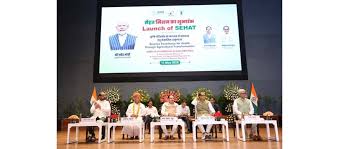
- 12 May 2026
In News:
In a landmark shift toward preventive healthcare, the Union Ministers of India recently launched the ‘SEHAT Mission’ (Science Excellence for Health through Agricultural Transformation) in New Delhi. This initiative represents the first formal convergence of India’s agricultural and medical sectors, aiming to address the twin challenges of persistent malnutrition and the escalating burden of Non-Communicable Diseases (NCDs).
The Philosophy: From Reactive Treatment to Proactive Nutrition
For decades, India’s healthcare strategy has been largely reactive—focusing on the treatment of diseases. The SEHAT Mission seeks to overhaul this paradigm by adopting a "whole-of-government" approach. By shifting the focus to "preventive nutrition," the mission bridges the gap between what is grown on the farm and what is required for public health.
The mission is driven by a joint national partnership between two of India’s premier scientific bodies:
- Indian Council of Agricultural Research (ICAR): Providing the technical expertise in crop science and farming systems.
- Indian Council of Medical Research (ICMR): Offering clinical insights into nutritional requirements and disease prevention.
Core Pillars and Scientific Framework
The mission is built upon the vision of “Healthy Food, Healthy Farms, and a Healthy India.” To achieve this, it employs several scientific and strategic interventions:
- Bio-fortification of Crops: Rather than relying solely on external supplements, the mission promotes the development of crop varieties naturally enriched with essential micronutrients such as iron, zinc, and Vitamin A. This ensures that nutritional security is embedded within the primary food source.
- Revival of Traditional and Nutri-Cereals: There is a renewed emphasis on climate-resilient millets (Sri Anna), including Kodo, Kutki, Ragi, Jowar, and Bajra. These grains are not only sustainable to grow but are also nutrient-dense compared to traditional staples like polished rice and wheat.
- Integrated Farming Systems (IFS): The mission encourages rural households to move beyond monoculture. By integrating crop cultivation with animal husbandry, fisheries, and beekeeping, the initiative ensures that farming families have access to a diverse and balanced diet.
- Food as Medicine for NCDs: With lifestyle diseases like diabetes, hypertension, and certain cancers on the rise, the SEHAT Mission focuses on research-backed dietary solutions. It explores how specific agricultural products can function as preventive "medicine" to manage and mitigate these chronic conditions.
- The ‘One Health’ Approach: Recognizing that human health is inextricably linked to animal and environmental health, the mission facilitates joint planning between medical and agricultural scientists to monitor zoonotic threats and environmental contaminants.
Safeguarding the Producers: Farmer Health and Safety
A unique aspect of the SEHAT Mission is its focus on the health of the farmers themselves. Scientific interventions are being designed to reduce the risks associated with pesticide exposure and the handling of hazardous agricultural chemicals. By improving the health and safety of the primary producer, the mission ensures the sustainability of the entire food value chain.
Technological Integration and Policy Support
To ensure the mission's objectives are met with precision, the government is leveraging data-driven governance. This includes:
- Real-time Dashboards: For monitoring nutritional outcomes across different regions.
- Science-Based Policy Support: Aligning agricultural production targets with the specific nutritional requirements of the Indian population.
Psyche Spacecraft

- 11 May 2026
In News:
In a significant milestone for deep-space exploration, NASA’s Psyche spacecraft recently captured a rare and striking crescent view of Mars from a distance of approximately 5 million kilometers. This imaging feat occurred during a critical gravity-assist maneuver, where the spacecraft utilized the Red Planet's gravitational pull to slingshot itself toward its ultimate destination: the metal-rich asteroid, 16 Psyche.
Mission Overview and Timeline
Launched on October 13, 2023, the Psyche mission represents NASA’s first endeavor to explore a world that is not made of rock or ice, but largely of metal.
- Journey to the Belt: The spacecraft is currently navigating toward the outer main asteroid belt between Mars and Jupiter.
- Arrival and Orbit: The gravity of Asteroid Psyche is expected to capture the spacecraft in late July 2029.
- Scientific Operations: The primary mission is slated to begin in August 2029. The spacecraft will spend roughly two years in orbit, performing comprehensive mapping, surface photography, and composition analysis.
The Target: Asteroid 16 Psyche
Scientists believe that Asteroid Psyche might be the exposed nickel-iron core of an early planet—a "planetesimal"—that lost its rocky outer layers due to violent collisions billions of years ago. By studying it, researchers hope to gain a "look inside" the cores of terrestrial planets like Earth, which are otherwise unreachable due to extreme heat and pressure.
Spacecraft Features and Propulsion
The Psyche spacecraft, roughly the size of a small van, incorporates cutting-edge deep-space technology:
- Solar-Electric Propulsion: Unlike traditional chemical rockets, Psyche utilizes Xenon gas as propellant. This system uses electricity from solar arrays to accelerate xenon ions, creating a gentle but consistent thrust that allows the craft to gain immense speed over time.
- Efficiency: This propulsion method is highly efficient for long-duration missions, allowing for greater payload capacity and more precise orbital maneuvering.
Scientific Payload: The Instruments of Discovery
To decode the history of the asteroid, the spacecraft carries a suite of high-precision instruments:
- Magnetometer: Designed to detect if the asteroid possesses a remnant magnetic field. Finding such a field would strongly indicate that the asteroid was once the core of a molten planet.
- Gamma-Ray and Neutron Spectrometer: This instrument allows scientists to identify the specific chemical elements (such as iron, nickel, and silicon) that comprise the asteroid's surface material by measuring the energy of particles rebounding from it.
- Multispectral Imager: Comprising a pair of identical cameras with telescopic lenses, this tool will photograph the surface in various wavelengths of light to reveal its topography and geological features.
Strategic Significance for Space Science
The Psyche mission is a prime example of "Discovery Class" missions aimed at fundamental questions of planetary origin. It highlights:
- Origin of Life and Earth: Understanding how planetary cores form is essential to understanding why Earth developed a magnetic field, which shields us from lethal solar radiation.
- Innovation in Interplanetary Navigation: The successful imaging of Mars during the gravity assist demonstrates the precision of modern deep-space navigation and the utility of planetary flybys to save fuel and increase mission longevity.
India–Vietnam Strategic Partnership
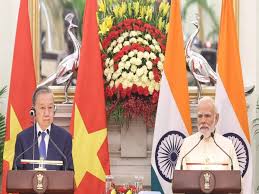
- 11 May 2026
In News:
In May 2026, the bilateral relationship between India and Vietnam reached a historic milestone as both nations elevated their ties to an Enhanced Comprehensive Strategic Partnership during the state visit of Vietnamese President Tô Lâm to India. This elevation reflects a deep-seated convergence of interests regarding Indo-Pacific stability, maritime security, and the pursuit of strategic autonomy in an increasingly multipolar world.
The Strategic Backbone: Defence and Maritime Security
Defence cooperation has transitioned from mere buyer-seller interactions to a robust strategic pillar. The partnership is defined by a mutual commitment to a "free, open, and rules-based Indo-Pacific."
- Capacity Building: India continues to provide advanced training assistance and defence financing to Vietnam.
- Asset Transfers: The transfer of military assets, such as the INS Kirpan, serves as a symbol of India’s commitment to enhancing Vietnam’s maritime patrol capabilities.
- Maritime Domain Awareness (MDA): Both nations have intensified cooperation in maritime security to counter common challenges in the South China Sea, ensuring the protection of Sea Lines of Communication (SLOCs).
Economic Resilience and Trade Expansion
Economic engagement is being leveraged as a tool for strategic resilience. As both nations seek to de-risk their supply chains, trade has become a primary vehicle for integration.
- Trade Volume: Bilateral trade has officially surpassed the $16 billion mark.
- Vision 2030: A roadmap has been established to scale this trade to $25 billion by 2030, focusing on diversifying the basket of goods and services.
- Critical Sectors: New avenues for cooperation have opened in critical minerals, green energy, and the development of a resilient economic architecture to withstand global market volatility.
Vietnam’s Role in India’s ‘Act East’ Policy
Vietnam stands as a central pillar of India’s Act East Policy and its broader Indo-Pacific Oceans Initiative (IPOI).
- ASEAN Linkage: As one of the most vibrant economies in Southeast Asia, Vietnam acts as a gateway for India’s deeper engagement with the ASEAN bloc.
- Strategic Balancing: The partnership contributes to regional balancing alongside powers like Japan, Australia, and the US. Notably, both India and Vietnam maintain strategic autonomy, choosing to collaborate based on shared principles rather than joining formal military alliance systems.
Emerging Technology and Connectivity
The "Enhanced" nature of the partnership in 2026 emphasizes the transition into high-technology domains:
- Emerging Tech: Joint ventures in semiconductors, AI, and telecommunications are being prioritized.
- Connectivity: Improving physical and digital connectivity remains a priority to facilitate smoother movement of goods and people between the two regions.
- Space Cooperation: Collaborative efforts in satellite tracking and remote sensing for disaster management and resource mapping.
Solid Waste Management (SWM) Rules, 2026
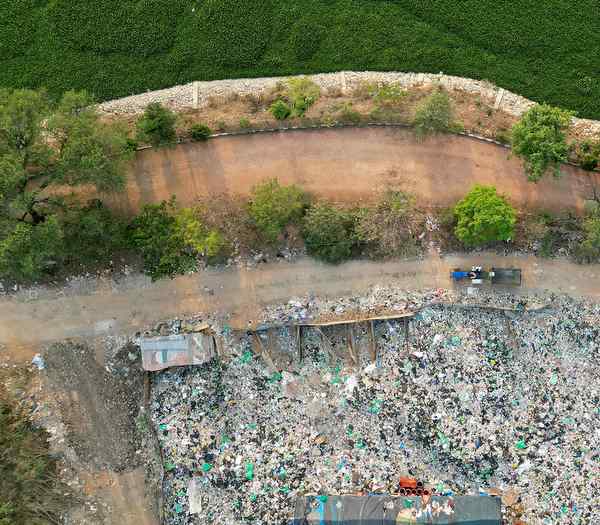
- 11 May 2026
In News:
The Solid Waste Management (SWM) Rules, 2026, which came into effect on April 1, 2026, were intended to be a watershed moment for India’s environmental governance. However, the framework has sparked a nationwide debate regarding the "Centralisation Reflex" of the Union government. While the rules aim for uniformity, critics argue they overlook the principles of subsidiarity and federalism, potentially prioritizing bureaucratic compliance over actual ecological restoration.
The Scale of India’s Ecological Emergency
India is currently grappling with a waste crisis that has evolved into a multi-dimensional ecological emergency. Centralized management has often failed to address the granular realities of this crisis:
- Fiscal Inefficiency: Currently, 40%–50% of municipal budgets are drained by secondary transport (moving waste to distant landfills) rather than processing it at the source.
- The Landfill Menace: Urban centers are ringed by "mountains of methane." The 2024 fires in Kochi and Delhi underscored the catastrophic air pollution and greenhouse gas emissions stemming from these legacy dumpsites.
- Urban and Rural Clogging: In cities like Bengaluru and Mumbai, plastic-clogged drains were identified as the primary driver of the 2025 monsoon floods. Meanwhile, rural India is facing a new crisis: a surge in e-waste and hazardous pesticide containers without any localized collection mechanisms.
- Water Contamination: Toxic leachate from landfills adjacent to water bodies—visible in the hyacinth-choked lakes of Bengaluru—is leading to irreversible nutrient loading and groundwater poisoning.
The Centralisation Reflex: Why Top-Down Models Persist
The 2026 Rules lean heavily toward a "one-size-fits-all" technocratic vision. This centralization is driven by several institutional beliefs:
- The Incapacity Argument: A prevailing assumption that Gram Panchayats and Urban Local Bodies (ULBs) lack the technical competence to manage waste, leading the Centre to design a single operational blueprint for both a metropolis like Mumbai and a remote Himalayan village.
- Trust Deficit: The mandate for a centralized online portal managed by the Central Pollution Control Board (CPCB) forces local bodies to act as mere "data suppliers" rather than autonomous governors.
- Judicialised Administration: To meet court-mandated timelines and avoid litigation, the Centre creates rigid, uniform standards that are easier to defend legally but difficult to implement administratively at the grassroots level.
- Atrophy of Local Expertise: By shifting decision-making to New Delhi, local bodies lose the opportunity to "learn by doing," becoming dependent on central instructions rather than developing indigenous composting or recycling models.
Implications for Governance and Federalism
The shift toward centralized control carries significant risks for India’s democratic and administrative fabric:
- Blurred Accountability: When a village fails to manage waste based on a design made in Delhi, officials often engage in a "blame game"—local bodies cite a lack of funds, while the Centre alleges poor implementation.
- Erosion of the State List: Sanitation and public health are State subjects under the Seventh Schedule. The 2026 Rules effectively reduce States to mere implementing agencies, stifling their ability to act as "policy laboratories."
- Unproductive Compliance: The current system prioritizes "paper-based compliance." Sanitation workers are frequently diverted from street-level waste management to perform data entry for central dashboards.
- Fiscal Stress: New mandates often arrive without formula-based financing, forcing small local bodies to purchase expensive equipment they cannot maintain, leading to the quiet evasion of the rules.
A Decentralised Way Forward: The Path to Subsidiarity
To transform the SWM Rules, 2026, from a technocratic exercise into a successful ecological tool, the following reforms are essential:
- Embrace Subsidiarity: Authority must shift to the lowest level of governance—the Ward and Gram Sabha. Decisions should be made by those closest to the waste generation, utilizing local knowledge and informal worker networks.
- State-Led Policy Laboratories: States should be allowed to frame their own rules for a five-year period to test novel solutions, such as Kerala’s model of Self-Help Group-led composting.
- Phased and Tiered Rollout: Strict, high-tech compliance should be prioritized for megacities (population >1 crore), while rural hamlets should be allowed to adopt simplified, nature-based processing models.
- Shared Federal Data Platforms: The CPCB portal should evolve from a "monitoring tool" into a "service platform" where local bodies can customize dashboards for their own specific governance needs.
- Predictable Financing: Every new obligation mandated by the Rules must be backed by statutory, formula-based financial transfers to ensure local bodies are not set up for failure.
Cyrtodactylus varadgirii

- 11 May 2026
In News:
In a significant boost to urban biodiversity records, wildlife enthusiasts and researchers recently spotted the relatively uncommon gecko species, Cyrtodactylus varadgirii, within the Aarey forest of Mumbai. Commonly known as Giri’s Geckoella, this elusive reptile has long been considered a "disappearing resident" of the city's green lungs. Its recent sighting underscores the critical role that urban forests play as refugia for endemic wildlife amidst rapid metropolitan expansion.
Taxonomy and Discovery
The species belongs to the Gekkonidae family and was formally described in 2016. It is named in honor of the renowned Indian herpetologist Dr. Varad Giri, acknowledging his extensive contributions to the study of Indian reptiles. While it was once grouped with other similar geckos, detailed morphological and genetic analysis established it as a distinct species.
Biological and Behavioral Characteristics
Cyrtodactylus varadgirii is a specialized ground-dwelling reptile with distinct life-history traits:
- Nocturnal and Terrestrial: Unlike common house geckos that climb walls, this species is terrestrial. It is primarily active at night, navigating the forest floor.
- Diet and Habitat: It is strictly insectivorous, playing a vital role in controlling insect populations. It resides primarily in dense leaf litter, which provides both camouflage and hunting grounds.
- Adaptability: One of its most unusual features is its presence in both pristine natural habitats and human-modified landscapes. It has been recorded in urban green spaces and open areas, marking a departure from many of its close relatives who are restricted to deep forests.
Geographical Distribution
Giri’s Geckoella is endemic to India, with a distribution range covering parts of:
- Western India: Primarily Maharashtra (including Mumbai and the northern Western Ghats) and Gujarat.
- Central India: Recorded in parts of Madhya Pradesh.
Despite this relatively wide distribution across three states, the species remains "poorly known" due to a lack of long-term ecological studies. Most sightings are recorded during the monsoon season, when increased moisture levels likely drive activity or visibility.
Conservation Significance and Challenges
The rediscovery of the gecko in Aarey Forest is particularly relevant for environmental governance and conservation biology:
- Urban Biodiversity: Its survival in a city like Mumbai highlights the resilience of certain endemic species, provided their micro-habitats (like leaf litter and soil quality) remain undisturbed.
- Data Deficiency: There is a significant gap in the "natural history" of the species. Beyond occurrence records, little is known about its breeding cycles, population density, or specific threats.
- Habitat Fragmentation: As a terrestrial gecko dwelling in leaf litter, it is highly vulnerable to forest fires, land clearing, and the "beautification" of parks which involves removing natural debris.
Orbital Data Centres and the Pathfinder Mission

- 11 May 2026
In News:
In a landmark collaboration that signals a paradigm shift in space-based technology, Bengaluru-based satellite startup Pixxel and Indian AI firm Sarvam AI have partnered to develop Pathfinder. Scheduled for launch by the final quarter of 2026, Pathfinder is set to be India’s first “orbital data centre” satellite. This mission represents a move toward decentralized, space-based computing, aimed at overcoming the physical and economic constraints of terrestrial AI infrastructure.
What is an Orbital Data Centre?
Traditionally, satellites function as data collectors; they capture high-resolution imagery or signals and transmit these massive raw files to ground stations for processing. This creates a significant "bandwidth bottleneck."
An Orbital Data Centre utilizes edge computing, placing high-performance hardware—specifically data-centre-grade Graphics Processing Units (GPUs)—directly into Low Earth Orbit (LEO). Instead of sending raw data back to Earth, the satellite processes the information in space, transmitting only "actionable insights" or finished analysis to the ground.
The Strategic Significance of Space-Based Computing
The shift from Earth to orbit is driven by several critical factors:
- Overcoming Terrestrial Constraints: Ground-based data centres are increasingly burdened by high land costs and the massive water requirements for cooling. Furthermore, the energy consumption of generative AI is hitting the limits of local power grids.
- Continuous Energy Supply: In specific orbits, solar power is effectively continuous. This provides a source of "free" electricity, making space an economically attractive location for high-intensity computation.
- Solving Data Bottlenecks: Hyperspectral imaging generates enormous datasets. Processing this data in-situ (at the source) eliminates the expensive and slow downlink of high-resolution files.
- Scalability and Commercial Viability: Emerging launch capabilities, such as high-payload rockets and the potential for large constellations (100–500 satellites), suggest that space-based computing could eventually rival terrestrial cloud infrastructure.
The Pathfinder Mission: India’s Technology Demonstrator
Pathfinder is a 200-kg class satellite designed to validate the technical feasibility of in-orbit data processing.
Key Components & Objectives:
- Datacentre-grade GPUs: It will carry high-performance GPUs similar to those used in Earth-based AI clusters.
- Hyperspectral Payloads: The satellite will feature Pixxel’s flagship hyperspectral camera, providing high-fidelity Earth observation data.
- Sovereign AI Backbone: Sarvam AI will integrate full-stack language models and an AI inference platform. This allows for AI training and inference to occur entirely within the satellite’s systems.
- Manufacturing: The craft is being built at Gigapixxel, Pixxel’s advanced facility designed for large-scale satellite production.
Note: While this is an Indian mission, the name "Pathfinder" also references NASA’s 1997 Mars Pathfinder mission, which deployed the Sojourner rover.
Formidable Challenges: The Harsh Reality of Space
Despite the benefits, computing in a vacuum presents unique engineering hurdles:
- Thermal Management: On Earth, fans and water systems use convection to cool hardware. In the vacuum of space, heat must be dissipated through radiative cooling using complex heat-transfer loops and radiating panels.
- Radiation Exposure: Cosmic radiation can cause “bit flips” (random changes in computer code) and degrade semiconductors. Hardware must be shielded or made "radiation-hardened," which adds weight and cost.
- Redundancy and Repair: Unlike a server room on Earth, a satellite cannot be easily repaired. High levels of redundancy are required to manage "eclipse periods" (when the satellite is in Earth's shadow) and potential hardware failures.
- Miniaturization: Scaling down power-hungry GPUs into a compact 200-kg payload requires extraordinary breakthroughs in power management and engineering.
European Central Bank (ECB)

- 10 May 2026
In News:
Recently, the Reserve Bank of India (RBI) and the European Central Bank (ECB) have signed a revised Memorandum of Understanding (MoU). This agreement establishes a structured framework for the exchange of information and best practices, reflecting the growing necessity for coordinated central banking in an increasingly interconnected global economy.
As noted by ECB President Christine Lagarde, such partnerships are essential to monitor systemic risks and sustain global cooperation amid evolving financial sector developments.
European Central Bank (ECB): An Overview
The ECB serves as the prime monetary authority for the European Union (EU) and is the central pillar of the Eurosystem and the European System of Central Banks (ESCB). It is one of the most influential financial institutions globally, overseeing a combined balance sheet of approximately €7 trillion.
- Establishment: Founded on June 1, 1998, under the Maastricht Treaty, it preceded the official launch of the Euro on January 1, 1999.
- Institutional Status: It was formally recognized as an official EU institution on December 1, 2009, through the Treaty of Lisbon.
- Headquarters: Frankfurt, Germany.
- Ownership: The ECB's capital stock of €11 billion is owned by the central banks of all 27 EU member states. Individual shares are determined based on a "capital key" reflecting each nation’s population and GDP.
Objectives and Expansion of the Eurozone
The primary mandate of the ECB is to maintain price stability within the Eurozone. By keeping consumer price inflation low and stable, the bank supports sustainable economic growth and job creation.
While the Eurozone began with 11 members, it has expanded to 21 countries as of 2026. Recent milestones include:
- Croatia: Joined the Eurozone in January 2023.
- Bulgaria: Became the latest member to adopt the Euro in January 2026.
Core Functions of the ECB
The ECB operates through a sophisticated governance structure to manage the world’s second most important reserve currency.
- Monetary Policy Formulation: The Governing Council sets key interest rates and defines monetary objectives for the Eurozone to control liquidity and inflation.
- Currency Issuance: The ECB holds the exclusive legal right to authorize the issuance of Euro banknotes. It also oversees the volume of Euro coins minted by individual member states.
- Foreign Exchange Management: It manages the foreign exchange reserves of the member states and conducts market operations to influence exchange rates when necessary.
- Payment Systems: The bank operates T2 (formerly TARGET2), a real-time gross settlement system that ensures the smooth and secure transfer of large-value payments across Europe.
- Policy Enforcement: The Executive Board is responsible for implementing the Governing Council's decisions and provides direct instructions to the national central banks of the Eurozone.
Strategic Significance of the MoU for India
The renewed agreement between the RBI and the ECB carries profound implications for India’s economic diplomacy and financial security:
- Framework for Information Exchange: The MoU facilitates a regular dialogue on central banking challenges, including digital currency development (CBDCs), inflation targeting, and climate-related financial risks.
- Monitoring Systemic Risks: Collaboration between two major central banks allows for a more comprehensive assessment of global financial vulnerabilities, protecting the domestic economy from external shocks.
- Global Financial Governance: By strengthening ties with the ECB, India enhances its footprint in global monetary policy discussions, ensuring that the perspectives of emerging economies are considered in international financial standards.
- Best Practices: The partnership enables the RBI to adopt and adapt sophisticated tools for financial oversight and payment system management used in the Eurozone.
Baksa Honey

- 10 May 2026
In News:
In a significant milestone for India’s agricultural diplomacy and rural entrepreneurship, the Agricultural and Processed Food Products Export Development Authority (APEDA) recently facilitated the first-ever export of 20 Metric Tons of "One District One Product" (ODOP) honey from Assam’s Baksa district to the United States. This achievement highlights the potential of the North Eastern Region (NER) to serve as a hub for niche, high-value agricultural products while specifically empowering "Aspirational Districts" through global market integration.
Baksa Honey:
Baksa, located within the Bodoland Territorial Region (BTR) of Assam, is characterized by its rich forest cover and agricultural biodiversity. The honey produced here has been identified as the district’s signature product under the ODOP initiative due to its traditional heritage and superior quality.
Key Attributes of Baksa Honey:
- Purity and Eco-friendly Origin: Sourced from pesticide-free environments, it is recognized for its near-organic characteristics, meeting the high standards of health-conscious global consumers.
- Floral and Medicinal Profile: Collected from diverse forest flora by indigenous communities, particularly the Bodo tribes, the honey is prized for its high nutritional value and traditional medicinal properties.
- Rigorous Quality Control: To penetrate the stringent US market, the honey is processed in facilities supported by APEDA-accredited laboratories, ensuring compliance with international food safety and traceability requirements.
The Strategic Framework: One District One Product (ODOP)
The ODOP initiative is a transformative policy designed to convert every Indian district into a self-sustaining export hub. By focusing on a single specialized product (agricultural, handicraft, or industrial), the program aims to achieve balanced regional development.
Core Objectives of ODOP:
- Value Addition: Moving beyond the sale of raw materials to processed, branded, and high-quality products.
- Market Linkage: Connecting small-scale rural producers directly to national and international supply chains, bypassing multiple layers of intermediaries.
- Infrastructure Support: Providing financial and technical assistance through schemes like the PM Formalisation of Micro food processing Enterprises (PMFME) to set up processing units and testing labs.
- Skill and Design Innovation: Training local artisans and farmers to refine their techniques to meet contemporary global aesthetics and quality standards.
Economic and Social Impact
The export of Baksa Honey serves as a case study for the success of the Aspirational Districts Programme. The impact is multifaceted:
- Price Realization: Local beekeepers are expected to receive nearly 43% higher prices through international exports compared to traditional local farm-gate sales.
- Rural Empowerment: Beekeeping provides a sustainable, low-investment income source for indigenous communities, reducing migration and fostering local entrepreneurship.
- North East Integration: Such initiatives help bridge the economic gap between the North Eastern Region and the rest of the country, showcasing the region's "soft power" through its unique biodiversity.
11 Years of Jan Suraksha Schemes
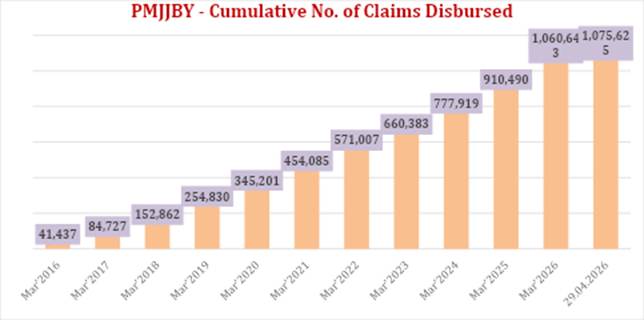
- 10 May 2026
In News:
On May 9, 2026, India celebrated the 11th anniversary of its three flagship Jan Suraksha (Social Security) Schemes. Launched in 2015, these initiatives—Pradhan Mantri Jeevan Jyoti Bima Yojana (PMJJBY), Pradhan Mantri Suraksha Bima Yojana (PMSBY), and Atal Pension Yojana (APY)—were designed to bridge the massive gap in insurance and pension coverage, particularly for the unorganized sector and vulnerable populations.
By leveraging the "JAM Trinity" (Jan Dhan, Aadhaar, and Mobile), these schemes have successfully transitioned India from a country with negligible social security to one with a digitized, high-volume, and affordable safety net.
Overview of the Triple Pillar Framework
The Jan Suraksha ecosystem is built on three distinct but complementary products that address the lifecycle risks of death, disability, and old age.
1. Pradhan Mantri Jeevan Jyoti Bima Yojana (PMJJBY): Life Cover
- Nature: A pure-term, one-year life insurance plan renewable annually.
- Coverage: Provides ?2 lakh in the event of death due to any reason.
- Eligibility: Bank or Post Office account holders aged 18 to 50 years.
- Affordability: The premium is set at ?436 per annum (approximately ?1.20 per day), deducted via a seamless auto-debit facility.
2. Pradhan Mantri Suraksha Bima Yojana (PMSBY): Accidental Cover
- Nature: A low-cost accidental death and disability insurance scheme.
- Coverage: Offers ?2 lakh for accidental death or total permanent disability, and ?1 lakh for permanent partial disability.
- Eligibility: Available to account holders in the 18 to 70 years age bracket.
- Affordability: At just ?20 per annum, it remains one of the cheapest insurance products globally.
3. Atal Pension Yojana (APY): Retirement Security
- Nature: A guaranteed pension scheme targeted at the unorganized sector to provide financial stability in old age.
- Benefits: A guaranteed monthly pension ranging from ?1,000 to ?5,000 starting at age 60.
- Eligibility: Open to bank account holders aged 18 to 40 years who are not income tax payers.
- Spousal Protection: After the subscriber’s death, the pension continues for the spouse. Subsequently, the entire accumulated corpus is returned to the nominee.
Achievements and Impact Analysis (2015–2026)
After eleven years, the scale of these schemes reflects a significant shift in India’s financial landscape:
- Massive Enrolment: The cumulative enrolment has crossed a staggering 94.56 crore, indicating high public trust. PMSBY alone accounts for over 58.09 crore enrolments.
- Financial Safety Net: The schemes have provided tangible relief during crises. For instance, PMJJBY has settled claims worth over ?21,512.50 crore, supporting more than 10.7 lakh bereaved families.
- Gender and Inclusive Growth: Gender inclusivity has been a standout feature; nearly 49% of subscribers under the Atal Pension Yojana are women, promoting financial autonomy for females.
- Integration with PMJDY: The schemes have successfully tapped into the Pradhan Mantri Jan Dhan Yojana (PMJDY) ecosystem, bringing over 19.30 crore of the country's poorest account holders under the protective umbrella of accidental insurance.
- Securing the Future: APY has empowered over 9.04 crore individuals to build a formal retirement corpus, essential for a country with a growing elderly population.
Critical Challenges in Implementation
Despite remarkable success, several hurdles persist in the "last mile" of social security:
- Persistence Issues: Maintaining the "auto-debit" success rate is difficult. If account holders fail to maintain a balance of ?436 or ?20, the insurance cover lapses, often without the subscriber realizing it.
- Literacy and Claim Errors: There remains confusion between "accidental" and "natural" death. Many families attempt to file claims for natural deaths under the PMSBY accidental policy, leading to rejections and distress.
- Inflationary Pressures: The ?2 lakh sum assured, fixed in 2015, has seen its purchasing power eroded by inflation over the last decade, potentially making the payout insufficient for a family’s long-term survival in 2026.
- Awareness in Remote Belts: While enrollment is high, awareness of the procedure to claim benefits is still low in tribal and deep-rural pockets, where the "silent grief" of lost benefits often goes unrecorded.
The Road Ahead: Jan Suraksha 2.0
To evolve into a truly universal system, the next phase of these schemes must focus on:
- Dynamic Coverage: Periodically reviewing and increasing the sum assured (e.g., from ?2 lakh to ?5 lakh) to keep pace with the rising cost of living.
- Digital Claim Settlement: Enhancing the Jan Suraksha Portal to allow real-time, paperless claim filing for beneficiaries, reducing their dependence on bank intermediaries.
- Incentivized Persistence: Developing a "No-Claim Bonus" or loyalty reward for subscribers who maintain uninterrupted auto-debits for over a decade.
- Integrated Bundling: Moving toward a Unified Jan Suraksha Product that offers life, accident, and pension benefits through a single enrollment process, simplifying the experience for the semi-literate population.
Gurudev Rabindranath Tagore

- 10 May 2026
In News:
On the occasion of Pochishe Boishakh (the 25th day of the Bengali month of Baishakh), the Prime Minister of India paid a heartfelt tribute to Gurudev Rabindranath Tagore, describing him as a "timeless voice" who continues to guide the nation's moral and intellectual identity. As a polymath who transcended the boundaries of art, education, and politics, Tagore remains a central figure in the Indian Renaissance and a global ambassador of humanism.
Early Life and Philosophical Roots
- Born on May 7, 1861, into the illustrious Jorasanko Tagore family of Bengal, Rabindranath was the son of Maharshi Debendranath Tagore, a leading light of the Brahmo Samaj. Growing up amidst the Bengal Renaissance, he was deeply influenced by a period of intellectual awakening that sought to synthesize traditional Indian wisdom with modern rationalism.
- His core philosophy was centered on Universalism and Harmony. He believed in the inherent unity of the world, rejecting narrow nationalism in favor of a "single nest" where all of humanity could reside in peace.
Contributions to the National Movement and Self-Reliance
While Tagore often remained distant from active party politics, his influence on the Indian freedom struggle was profound and spiritual.
- The Mantra of Atmashakti: He pioneered the concept of Atmashakti (Self-Strength/Self-Reliance), urging Indians to focus on social reform and moral education rather than solely on political agitation.
- A Global Protest: In a powerful act of defiance against British colonial atrocities, Tagore renounced his Knighthood in 1919 following the Jallianwala Bagh Massacre, marking a significant moment in India's struggle for dignity.
- The Anthem of Nations: He holds the unique distinction of being the only person to compose the national anthems of two sovereign nations: India's Jana Gana Mana and Bangladesh's Amar Shonar Bangla.
- Rural Reconstruction: Long before modern rural development programs, Tagore established Sriniketan in 1922, initiating practical experiments in agricultural self-reliance and community upliftment.
Literary Brilliance and Artistic Versatility
Tagore’s creative output was staggering in its scope and depth.
- Gitanjali and the Nobel Prize: In 1913, he became the first Asian to win the Nobel Prize in Literature for Gitanjali (Song Offerings), a collection that bridged Eastern spirituality and Western literary forms.
- Novels and Plays: His works like Ghare-Baire (The Home and the World) and Gora explored complex themes of identity, tradition, and the conflict between narrow nationalism and global humanism.
- Rabindra Sangeet and Painting: He founded a unique genre of music known as Rabindra Sangeet, which remains the heartbeat of Bengali culture. Remarkably, he took up painting in his 60s, producing nearly 3,000 works that broke traditional aesthetic norms.
Visionary Educationist: Santiniketan and Visva-Bharati
Dissatisfied with the "factory-like" colonial education system, Tagore founded Santiniketan in 1901. This later evolved into Visva-Bharati University (1921), established with the motto “Yatra visvam bhabatyeknidam” (Where the world makes a home in a single nest). His educational philosophy emphasized learning in the lap of nature and the amalgamation of Eastern and Western cultures.
An Enduring Legacy of Peace
In the aftermath of World War I, Tagore travelled extensively as a global peacemaker, warning against the dangers of "intellectual parochiality" and the darkness of moral decay. He passed away on August 7, 1941, but his legacy remains a "lambent light" for modern India.
India Semiconductor Mission

- 10 May 2026
In News:
India’s ambition to become a global electronics powerhouse has reached a pivotal juncture. With the recent approval of two major projects in Gujarat—including the nation’s first commercial Gallium Nitride (GaN)-based Mini/Micro-LED display facility and a semiconductor packaging unit—the total number of approved plants under the India Semiconductor Mission (ISM) 1.0 has risen to twelve. These facilities, spread across Gujarat, Assam, Andhra Pradesh, Uttar Pradesh, and Odisha, signal the beginning of a domestic chip revolution.
ISM 1.0: Building the Foundation (2021–2025)
Launched in 2021 under the Ministry of Electronics and Information Technology (MeitY), ISM 1.0 was initiated with a financial outlay of ?76,000 crore. The primary objective was to break India’s near-total dependence on imported chips by incentivizing:
- Semiconductor Fabrication (Fabs): Setting up the complex plants required to print circuits on silicon wafers.
- Display Manufacturing: Reducing reliance on foreign displays for consumer electronics.
- Compound Semiconductors and Packaging: Focusing on Outsourced Semiconductor Assembly and Test (OSAT) and Assembly, Testing, Marking, and Packaging (ATMP) units.
The current trajectory suggests that by 2029, India will possess the capability to design and manufacture chips for 70–75% of domestic applications, with a long-term goal of becoming a top-tier semiconductor nation by 2035.
ISM 2.0: The Shift Toward Indigenous IP and Localisation
Building on the success of the first phase, the Union Budget 2026–27 introduced ISM 2.0. This phase represents a strategic shift from merely attracting global manufacturers to building a "full-stack" indigenous ecosystem.
Key Features of ISM 2.0:
- Strategy and Funding: A broader $11 billion strategy aimed at deepening ecosystem localization.
- Indigenous IP Design: Moving beyond assembly to creating Indian-owned Intellectual Property (IP) and chip designs.
- Supply Chain Fortification: Supporting ancillary industries, including specialty chemicals, gases, and capital goods (manufacturing equipment), which are critical for chip production.
- Materials and Equipment: Reducing the "import intensity" of the manufacturing process itself by encouraging the domestic production of raw materials.
Technological and Strategic Significance
The development of specialized facilities, such as the GaN-based Micro-LED plant, is particularly significant. Gallium Nitride is a "wide-bandgap" semiconductor that is more efficient than traditional silicon, especially for power electronics and advanced displays.
The integration of these twelve plants into the national landscape serves several strategic purposes:
- Supply Chain Resilience: By diversifying manufacturing across five states, India mitigates the risk of localized disruptions and strengthens its position in the global value chain.
- Cross-Sectoral Impact: The chips produced will cater to high-growth sectors, including Automotive (EVs), Telecom (5G/6G), Aerospace, Industrial Automation, and Power.
- Reduced External Dependence: Domestic packaging and testing facilities ensure that even if some wafers are imported, the value addition and final security checks happen on Indian soil.
- Economic Multiplier: The mission fosters a "hub-and-spoke" model where large fabrication units (hubs) attract hundreds of smaller component and material suppliers (spokes).
Hanamkonda’s Thousand Pillar Temple
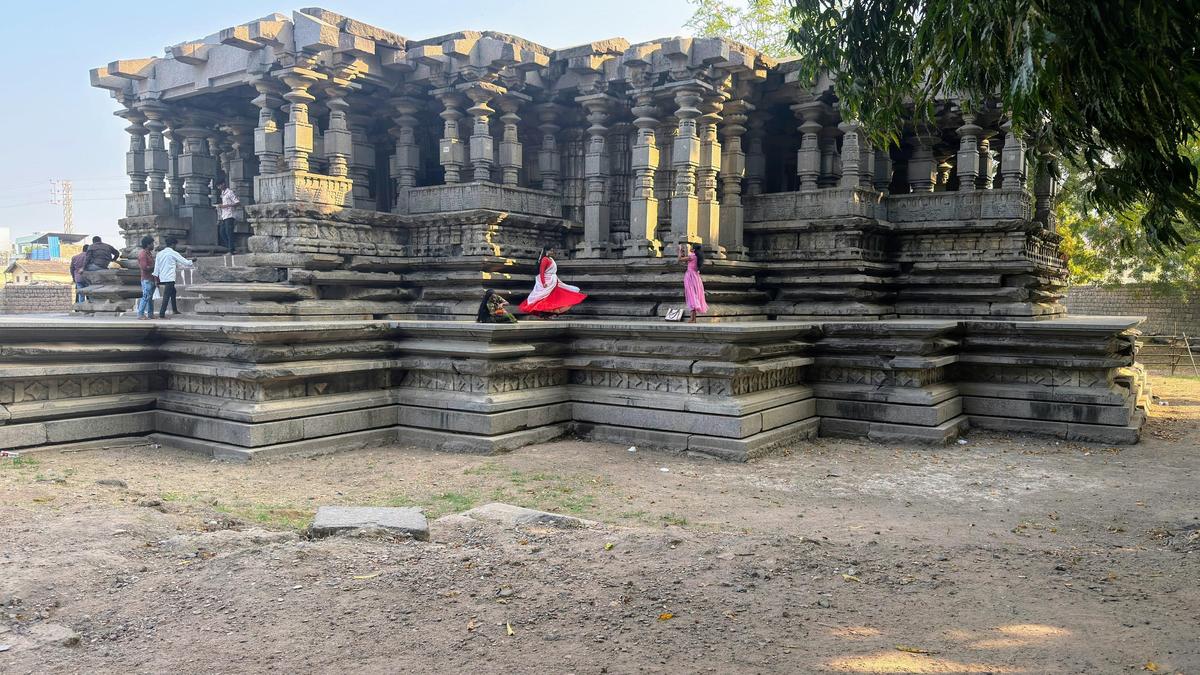
- 09 May 2026
In News:
The Archaeological Survey of India (ASI) has achieved a monumental milestone by completing the 42-year-long restoration of the 12th-century dance pavilion (Kalyana Mandapam) at the Thousand Pillar Temple in Hanamkonda, Telangana. This meticulous reconstruction, which involved dismantling and reassembling the structure piece-by-piece, has not only revived a ransacked heritage site but also brought the ingenious "Sandbox Technology" of the Kakatiya era back into the global spotlight.
Hanamkonda’s Thousand Pillar Temple: A Trikutalaya Marvel
- Constructed in 1163 AD by the Kakatiya ruler Rudra Deva, the Thousand Pillar Temple is a masterpiece of medieval Indian architecture. It is a Trikutalaya—a triple-shrine temple—dedicated to the troika of Lord Shiva, Vishnu, and Surya Deva.
- Located in the historic city of Warangal, the temple is renowned for its star-shaped architecture, a design that provided greater surface area for the intricate carvings that characterize the Kakatiya style. While the temple is famous for its namesake "thousand pillars," the name actually derives from the sophisticated vertical carvings on many columns that create the visual illusion of multiple pillars.
- A major highlight of the temple complex is the monolithic Nandi. Carved from a single block of black basalt stone, this massive sculpture has also undergone recent restoration to repair its tail and folded leg, returning it to its original grandeur.
The Fall and Rise of the Kalyana Mandapam
The dance pavilion has endured a turbulent history. It was largely ransacked and damaged during the conquest by Ulugh Khan in 1323-24, leading to centuries of neglect. Over time, the structure suffered from foundational failure, causing it to sink into the earth. The restoration process was a complex "jigsaw puzzle" of stone, requiring modern engineers to re-learn the ancient geotechnical techniques used by the Kakatiyas to ensure the structure would remain stable for centuries to come.
Kakatiya-era Sandbox Technology: Ancient Earthquake Engineering
The most significant aspect of the temple’s durability is the use of Sandbox Technology, an indigenous geotechnical technique that predates modern seismic isolation methods.
How the Sandbox Works: Instead of building on conventional hard-rock foundations, Kakatiya engineers dug deep pits which were filled with a specific mixture:
- Primary Material: Fine sand.
- Binding Agents: A cocktail of lime, jaggery (unrefined sugar), and karakkaya (black myrobalan fruit).
This mixture created a flexible yet firm base. When the heavy stone pillars and beams were raised on this "sandbox," the foundation acted as a giant shock absorber.
Scientific Advantages:
- Seismic Resilience: During an earthquake, the sand acts as a cushion. Vibrations lose their intensity as they pass through the sand before reaching the stone structure. Laboratory tests indicate that this method can reduce vibration impact by nearly 60%.
- Unmatched Longevity: While modern rubber-based earthquake dampers degrade within 40 years, sand weathers at an incredibly slow rate. This technology has allowed Kakatiya monuments, including the UNESCO-listed Ramappa Temple, to survive for over 800 years.
- Sustainability: The technique is highly cost-effective and environmentally friendly, utilizing naturally available materials rather than industrial synthetics.
Western Disturbances
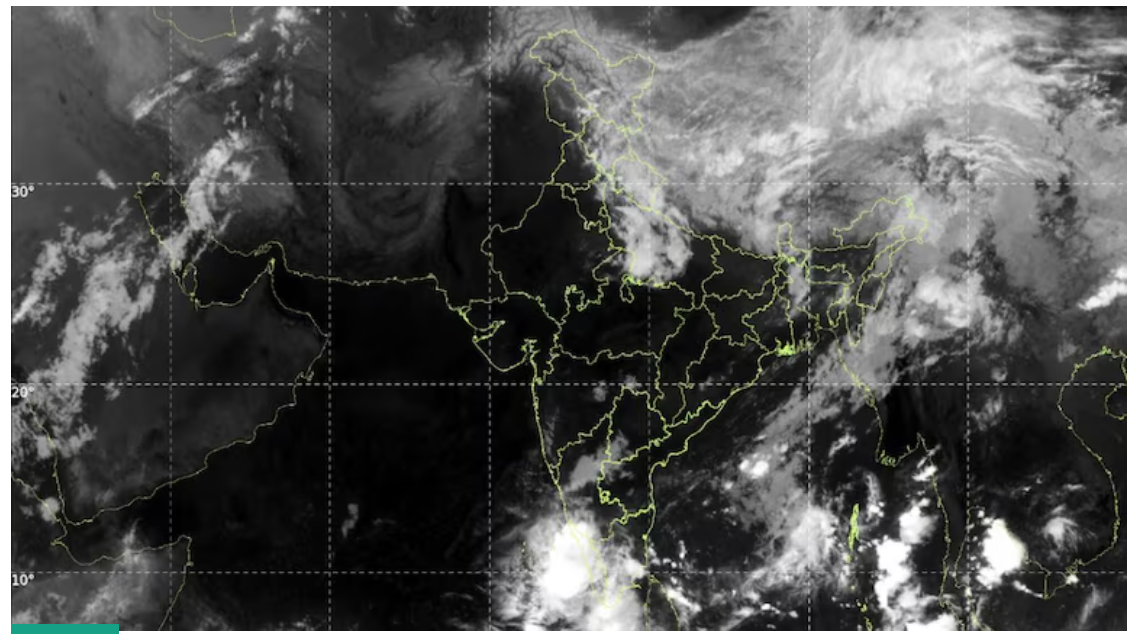
- 09 May 2026
In News:
Northwest India is currently experiencing a temporary cessation of rainfall and thunderstorms as the most recent Western Disturbance (WD) weakens and shifts eastward. However, satellite imagery indicates that this respite may be short-lived, as new systems continue to develop, highlighting the persistent role these extratropical storms play in the Indian meteorological cycle.
Defining Western Disturbances
Western Disturbances are extratropical storm systems that originate in the Mediterranean region. Unlike the tropical cyclones that form in the Bay of Bengal or the Arabian Sea, WDs are non-tropical in nature and are driven by the Subtropical Westerly Jet Stream. These systems carry moisture-laden air from the Mediterranean Sea, and occasionally from the Caspian and Black Seas, traveling thousands of kilometers eastward across West and Central Asia to reach the Indian subcontinent.
The Etymology: Why "Western Disturbance"?
The nomenclature is derived directly from the system’s trajectory and meteorological impact:
- Western: Refers to the direction of origin (the Mediterranean region, west of India).
- Disturbance: In meteorological terms, this denotes an area of "disturbed" or reduced air pressure, which typically leads to unstable weather conditions, cloud cover, and precipitation.
Seasonal Impact and Geographic Reach
While WDs can occur year-round, they are most influential during the winter months (November to March) and early pre-monsoon season. Their reach extends across a vast geographic belt including Pakistan, North and Northwest India, Nepal, and Bangladesh.
In India, the primary beneficiaries and victims are the Himalayan states (which receive heavy snowfall) and the plains of Punjab, Haryana, Rajasthan, and Delhi (which receive winter rains).
The Economic and Agricultural Significance
For the Indian economy, particularly the agricultural sector, Western Disturbances are a double-edged sword:
- The Rabi Crop Vitality: The winter rain brought by these systems is crucial for the Rabi season. It provides the necessary moisture for crops like wheat, gram, and mustard. In the absence of WDs, Northwest India often faces "dry winters," leading to lower agricultural yields.
- Water Security: The heavy snowfall in the Himalayas serves as a frozen reservoir. As this snow melts during the summer, it feeds perennial rivers like the Ganga, Indus, and Yamuna, ensuring water availability for irrigation and hydropower.
- The Downside: Intense WDs can cause "disturbances" in the literal sense—triggering flash floods, landslides in the hills, and hailstorms in the plains that can severely damage standing crops just before harvest.
Climatological Interaction: The Subtropical Jet Stream
The intensity of a Western Disturbance is closely linked to the position and strength of the Subtropical Westerly Jet Stream. During winter, this jet stream shifts southward over the Indian subcontinent. When a WD embeds itself within this high-altitude wind current, it gains the momentum necessary to cross the high altitudes of the Hindu Kush and the Himalayas, bringing sudden weather shifts to the northern plains.
Chief of Defence Staff (CDS)
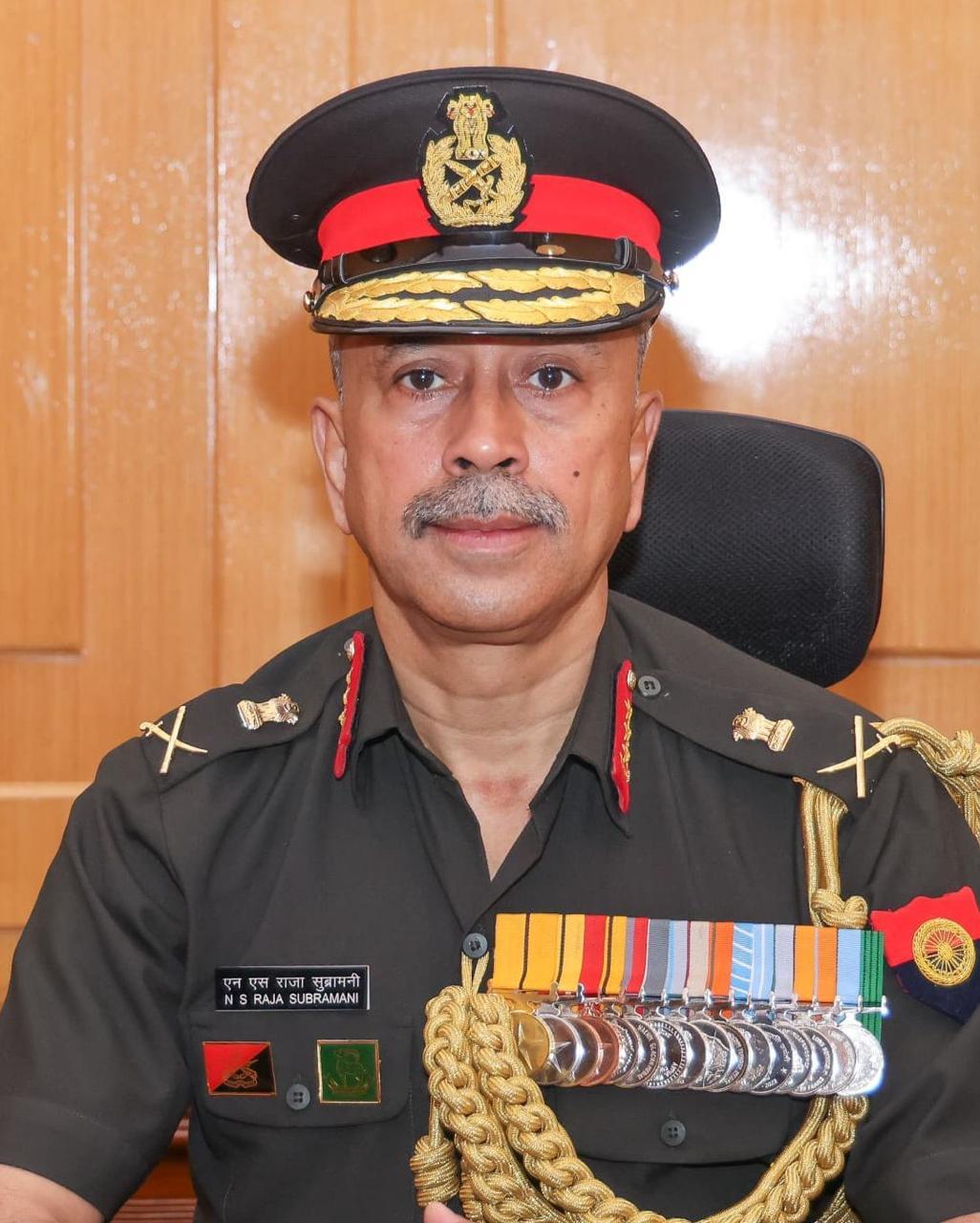
- 09 May 2026
In News:
In a significant transition within India’s top military echelons, the Government of India has appointed Lieutenant General NS Raja Subramani as the next Chief of Defence Staff (CDS). Set to succeed General Anil Chauhan on May 30, 2026, Lt Gen Subramani brings a wealth of strategic experience to a role designed to revolutionize the Indian Armed Forces through integration and modernization.
About Lt Gen NS Raja Subramani
Lieutenant General NS Raja Subramani is a distinguished officer with a career spanning over four decades. Commissioned into the 8th Battalion of the Garhwal Rifles in December 1985, his trajectory reflects a blend of operational command and high-level strategic planning.
- Educational Excellence: An alumnus of the National Defence Academy (NDA) and Indian Military Academy (IMA), he has pursued advanced studies at the Joint Services Command Staff College (UK) and the National Defence College. His academic credentials include a Master’s Degree from King’s College London and an M.Phil in Defence Studies.
- Strategic Experience: Before his appointment as CDS, he served as the Military Adviser in the National Security Council Secretariat (NSCS) starting in September 2025, providing him with a holistic view of India's national security architecture.
Understanding the CDS: Role and Institutional Framework
The Chief of Defence Staff is the highest-ranking uniformed officer in the Indian Armed Forces, acting as a bridge between the political leadership and the military. The CDS holds three primary concurrent roles:
- Principal Military Adviser: Provides single-point military advice to the Union Defence Minister on all tri-services matters.
- Permanent Chairman of the Chiefs of Staff Committee (COSC): Leads the committee comprising the heads of the Army, Navy, and Air Force to ensure functional harmony.
- Secretary of the Department of Military Affairs (DMA): Heads a dedicated department within the Ministry of Defence created to handle military-specific administrative and structural tasks.
Historical Context:
The necessity for a CDS emerged from the lessons of the 1999 Kargil War. The Kargil Review Committee, led by K. Subrahmanyam, highlighted critical gaps in inter-service coordination. While a Group of Ministers (GoM) echoed the recommendation for a CDS in 2001, political and bureaucratic hurdles delayed the appointment for nearly 20 years.
The post was finally institutionalized on December 24, 2019, with General Bipin Rawat taking charge as India’s first CDS on December 31, 2019.
Mandate and Key Functions
The overarching objective of the CDS is to foster "Jointness"—a state where the three services operate as a single cohesive unit rather than independent entities. Key responsibilities include:
- Theatre Commands: The CDS is the primary driver behind the creation of Integrated Theatre Commands, which aim to unify the Army, Navy, and Air Force under a single operational commander for specific geographical regions.
- Unified Procurement and Planning: Rationalizing the acquisition of weapon systems to avoid duplication and ensure that the needs of all three services are met through a common budgetary framework.
- Indigenous Manufacturing: Strengthening the "Atmanirbhar Bharat" initiative by promoting Positive Indigenisation Lists and supporting domestic defence production.
- Joint Training and Logistics: Establishing common doctrines, joint training facilities, and integrated logistics nodes to optimize resource utilization and manpower.
Andaman & Nicobar Islands Set Guinness World Records

- 09 May 2026
In News:
The Andaman and Nicobar Islands have recently garnered global attention by securing two Guinness World Records in the span of just two days. These feats, centered around Swaraj Dweep (formerly Havelock Island), are part of a broader strategy to position the archipelago as a premier global hub for adventure and eco-tourism.
Record-Breaking Feats at Swaraj Dweep
The islands hosted two unprecedented underwater events designed to showcase the region's pristine marine environment:
- Largest Flag Unfurled Underwater: Near the world-renowned Radha Nagar Beach, divers successfully unfurled a massive Indian national flag measuring 60 meters by 40 meters.
- Tallest Human Stack Underwater: In the lighthouse area of the islands, a team of divers achieved a 10-meter-high human stack, setting a new benchmark for underwater coordination and skill.
These events hold particular significance for Swaraj Dweep. Renamed in 2018 to honor India’s independence struggle, the island is a vital part of the Ritchie’s Archipelago and serves as the face of the territory’s tourism industry.
Geographic and Administrative Profile
The Andaman and Nicobar Islands are a strategically vital Union Territory comprising 836 islands, islets, and rocks situated in the Bay of Bengal. With Port Blair as the capital, the archipelago is geographically divided into two primary groups:
- The Ten Degree Channel: Following the 10° North latitude, this maritime passage separates the Andaman group in the north from the Nicobar group in the south.
- Great Nicobar: This is the largest island in the Nicobar cluster, spanning approximately 910 sq. km.
- Indira Point: Located on Great Nicobar, this landmark represents the southernmost point of India.
Ecological Wealth and Indigenous Heritage
The region is one of India’s most significant biodiversity hotspots. It is characterized by dense tropical rainforests, extensive mangrove ecosystems, and vibrant coral reefs. This environment supports a high degree of endemism in both flora and fauna.
Equally critical is the human geography of the islands. The archipelago is the ancestral home of five Particularly Vulnerable Tribal Groups (PVTGs):
- The Great Andamanese
- The Jarwa
- The Onge
- The Shompen
- The Sentinelese (noted for their continued isolation)
The preservation of these tribes and their habitats remains a cornerstone of the islands’ administrative and environmental policies.
Strategic and Geopolitical Importance
Beyond tourism and ecology, the Andaman and Nicobar Islands are central to India’s maritime security and its "Act East" Policy.
- Maritime Chokepoints: The islands sit in close proximity to the Strait of Malacca, one of the world’s most critical and busiest maritime trade routes. This location allows India to monitor vital Sea Lines of Communication (SLOCs).
- Military Significance: The archipelago hosts the country's only integrated tri-service command (the Andaman and Nicobar Command), where the Army, Navy, and Air Force operate under a single operational commander. This unique setup enhances India’s rapid response capabilities in the Indian Ocean Region (IOR).
International Big Cat Alliance (IBCA)
- 09 May 2026
In News:
India is set to host the inaugural International Big Cat Alliance (IBCA) Summit in New Delhi from June 1st to 2nd, 2026.
Core Vision and the Delhi Declaration
The summit operates under the evocative theme: “Save Big Cats, Save Humanity, Save Ecosystem.” This underscores the ecological reality that big cats are "umbrella species"; by protecting their vast habitats, we inherently safeguard biodiversity, water security, and carbon sinks essential for human survival.
A primary outcome of this gathering will be the adoption of the ‘Delhi Declaration’. As the first global framework of its kind, the declaration aims to institutionalize:
- Transboundary Cooperation: Recognizing that wildlife does not adhere to political borders.
- Landscape-based Approaches: Moving beyond fragmented protected areas to holistic ecosystem management.
- Shared Priorities: Harmonizing anti-poaching protocols and habitat restoration efforts across range countries.
Genesis and Institutional Framework
The IBCA was envisioned by the Prime Minister of India in 2023, coinciding with the 50th anniversary of Project Tiger. Following its formal approval by the Union Cabinet in February 2024, the alliance was established through the National Tiger Conservation Authority (NTCA) under the Ministry of Environment, Forest & Climate Change (MoEFCC).
The IBCA is designed as a centralized global platform that serves three critical functions:
- Knowledge Repository: A digital and technical hub for sharing best practices in conservation.
- Expertise Exchange: Facilitating the transfer of technology and scientific research between nations.
- Financial Resource Mobilization: Funding localized conservation initiatives in developing range countries.
Target Species and Membership
The alliance focuses on the conservation of seven major big cat species: the Tiger, Lion, Leopard, Snow Leopard, Cheetah, Jaguar, and Puma. Out of these, India is the only nation in the world to provide a natural home to five of these species (excluding the Jaguar and Puma).
Currently, the alliance boasts 24 member countries and 5 observer countries (Kazakhstan, Namibia, Thailand, Ecuador, and Vietnam). Eligibility is inclusive, extending to all United Nations member countries, regardless of whether they are "range countries" (nations where these cats naturally reside) or "non-range countries" interested in supporting the cause.
The Crisis and the Need for IBCA
The initiative arises from an urgent ecological crisis. Big cat populations worldwide are plummeting due to:
- Habitat Loss and Fragmentation: Expanding infrastructure and agriculture are shrinking the territories these predators require.
- Poaching and Illegal Trade: High demand for body parts in various markets remains a persistent threat.
- Human-Wildlife Conflict: As habitats shrink, interactions between humans and predators often lead to retaliatory killings.
- Climate Change: Shifting weather patterns are altering the prey base and vegetation of sensitive ecosystems like the Himalayas (home to the Snow Leopard).
Financial Commitment and Future Outlook
To ensure the alliance’s initial viability, the Government of India has committed Rs. 150 crore for the period of 2023-2028. Beyond this initial corpus, the IBCA is actively exploring diverse funding streams, including bilateral and multilateral aid, as well as contributions from international donor organizations and the private sector.
For India, the IBCA is an extension of its domestic success with Project Tiger and Project Lion. By leading this alliance, India transitions from a regional conservation player to a global steward, providing a template for how the Global South can lead in environmental preservation through South-South cooperation and indigenous conservation models.
NCRB’s Crime in India 2024 Report

- 08 May 2026
In News:
The National Crime Records Bureau (NCRB) recently released its annual 'Crime in India - 2024' and 'Accidental Deaths & Suicides in India (ADSI) - 2024' reports.
National Crime Trends: A Statistical Overview
In 2024, India recorded 58.85 lakh cognisable crimes, marking a 6% decline from the 62.41 lakh cases in 2023. The national crime rate (cases per lakh population) subsequently dropped to 418.9, the lowest since 2019.
- The 'BNS' Factor: The decline is partially attributed to the implementation of the Bharatiya Nyaya Sanhita (BNS), 2023. Specifically, the reclassification of "simple hurt" as a non-cognisable offence led to a 30.58% drop in that category, artificially deflating the overall crime figures.
- Traditional Offences: Murder cases dipped marginally by 2.4%, while kidnapping and abduction saw a significant 15.4% decrease. Property crimes like theft and robbery also trended downward.
- Vulnerable Sections:
- Children: Crimes rose by 5.9%, with the crime rate reaching 42.3 per lakh children.
- Senior Citizens: A stark 16.9% surge was recorded, primarily driven by theft, forgery, and fraud.
- Women: Reported cases declined slightly (1.5%), but the rate remains high at 64.6, with "cruelty by husband or relatives" being the most prevalent crime.
- Marginalised Communities: Crimes against Scheduled Tribes (STs) saw a sharp decline of 23.1%, while those against Scheduled Castes (SCs) dipped by 3.6%.
The Cybercrime Epidemic
The most alarming finding is the 17% surge in cybercrime, totaling over 1.01 lakh cases. This highlights a shift from physical to "borderless" digital crimes.
Drivers of the Surge
- AI Weaponization: Criminals are using Generative AI for deepfakes, voice cloning, and hyper-personalized phishing.
- 'Digital Arrest' Scams: A prominent new trend where scammers pose as law enforcement (CBI/Police) over video calls to extort life savings through psychological coercion.
- Human Firewall Deficit: Only 38% of Indian households are digitally literate, leaving a vast population vulnerable to social engineering.
- Organised Syndicates: Crime has moved from isolated acts to institutionalized operations in hubs like Jamtara and Mewat, exploiting "mule" bank accounts.
- Critical Infrastructure Threats: The Election Commission reported over 68 lakh cyberattack attempts during state assembly elections, targeting key digital portals.
Public Health and Mental Well-being (ADSI 2024)
The ADSI report highlights a deepening mental health and substance abuse crisis.
- Suicides: India recorded 1,70,746 suicides in 2024. Among metros, Bengaluru reported the highest suicide rate at 20 per lakh population.
- Drug Overdose: Fatalities due to drug overdoses saw a staggering 50% increase compared to 2023, reflecting a critical need for targeted de-addiction and mental health interventions.
Strengthening India’s Security and Governance Framework
To address these emerging threats, a multi-pronged strategy is required:
1. Structural and Administrative Reforms
- Specialised Cyber Cadre: Moving away from a "generalist" police model to a technical cadre within state and central agencies via lateral entry for tech experts.
- Statutory I4C: Elevating the Indian Cyber Crime Coordination Centre (I4C) into a statutory national agency to resolve jurisdictional deadlocks.
2. Legal and Technological Fortification
- Digital Evidence Standards: Streamlining protocols under the Bharatiya SakshyaAdhiniyam (BSA), 2023 to ensure digital evidence stands up in court.
- Zero-Trust Architecture: Integrating "Security by Design" into India’s Digital Public Infrastructure (UPI, Aadhaar) to protect against sophisticated phishing.
3. Social Justice and Awareness
- Senior Citizen Security Grid: Implementing station-level security for the elderly to combat the 16.9% spike in crimes against them.
- National Digital Hygiene Mission: Using "Nudge Theory" to educate citizens on digital arrests and phishing, creating a "Human Firewall."
National Crime Records Bureau (NCRB)
Established in 1986 under the Ministry of Home Affairs, the NCRB serves as the national repository of crime data.
- Major Publications:Crime in India, ADSI, and Prison Statistics India.
- Key Platforms:
- CCTNS: Connects 15,000 police stations for real-time FIR sharing.
- NAFIS: A searchable fingerprint database assigning a unique 10-digit ID to offenders.
- NDSO: A central registry for tracking convicted sexual offenders.
Project Freedom
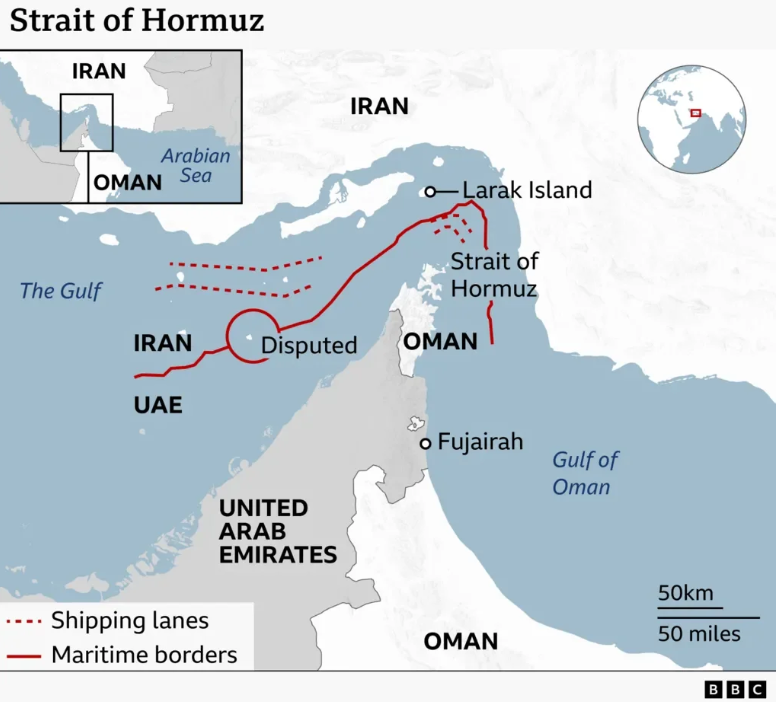
- 08 May 2026
In News:
Recently, the United States announced a temporary suspension of Project Freedom—a high-stakes military and humanitarian mission in the Persian Gulf. This pause is intended to provide space for diplomatic negotiations mediated by Pakistan, aiming for a comprehensive agreement with Iran to end the maritime blockade.
Overview of Project Freedom
Launched in early May 2026, Project Freedom was the U.S.-led response to an Iranian blockade of the Strait of Hormuz, which had effectively paralyzed one of the world's most vital maritime arteries.
- Humanitarian Mission: The operation’s most immediate priority was the extraction of approximately 23,000 civilians hailing from 87 different nations. these individuals had been stranded aboard merchant vessels in the Persian Gulf for several weeks due to the geopolitical standoff.
- Economic Imperative: The mission aimed to restore global commercial flows. The Strait of Hormuz is a "chokepoint" of unparalleled importance, facilitating the passage of nearly 20% of the world's total oil supply.
- Strategic Overwatch: U.S. Central Command (CENTCOM) established an "Enhanced Security Area" utilizing Omani territorial waters on the southern side of the Strait. This corridor was designed to provide a safe passage for neutral vessels, shielding them from asymmetric threats such as Iranian drones, fast-attack boats, and naval mines.
Military Assets and Tactical Challenges
The mission involved a massive mobilization of "overwatch" capabilities to deter escalation while facilitating rescue operations:
- Naval Presence: The deployment was spearheaded by guided-missile destroyers, including the USS Tripoli amphibious ready group.
- Air Superiority: Over 100 aircraft, including F-16s, F-35s, and Sea Hawk helicopters, provided 24-hour aerial surveillance and defensive cover.
- Technological Edge: The mission utilized multi-domain unmanned platforms (sea and air drones) to detect subsurface threats.
- The Mine Menace: Despite the technological superiority, CENTCOM officials highlighted that traditional shipping lanes remain "extremely hazardous." The presence of Iranian-laid naval mines continues to be a primary obstacle to the full resumption of commercial traffic.
The Role of Diplomacy and Mediation
The suspension of active military maneuvers under Project Freedom marks a shift toward a "diplomacy-first" approach.
- Pakistan’s Mediation: In a rare diplomatic alignment, Pakistan has emerged as the primary mediator between Washington and Tehran. This role underscores Islamabad's strategic interest in regional stability and its unique ability to engage with both the Western bloc and its neighbor, Iran.
- The Threat of Escalation: The suspension comes amidst a backdrop of high-intensity rhetoric. While a diplomatic window has opened, the U.S. administration has simultaneously warned of "higher-level" military consequences should negotiations fail or if Iran continues to threaten global shipping.
Geopolitical Significance for India
The Hormuz crisis and the subsequent Project Freedom have direct implications for India's national interests:
- Energy Security: India imports a vast majority of its crude oil from the Gulf region. Any prolonged closure of the Strait leads to a surge in global oil prices, impacting India’s fiscal deficit and domestic inflation.
- Diaspora Safety: With thousands of Indian seafarers often employed on global merchant fleets, the humanitarian aspect of Project Freedom is of direct concern to the Ministry of External Affairs.
- Strategic Autonomy: India has traditionally maintained a balanced relationship with both Iran and the U.S., often advocating for freedom of navigation while respecting regional sovereignty.
Rusty-Spotted Cat

- 08 May 2026
In News:
In a significant breakthrough for wildlife conservation, researchers have documented the first photographic evidence of a rusty-spotted cat (Prionailurus rubiginosus) breeding within the Aravalli hills of Delhi-NCR and Haryana. The sighting of a female with a kitten in the scrublands of Faridabad confirms that the species is actively reproducing outside traditionally protected areas. This discovery underscores the critical ecological role of the Aravallis as a biodiversity corridor amidst rapid urban expansion.
Profile of the "Hummingbird of the Cat Family"
The rusty-spotted cat is an evolutionary marvel, holding the title of the world's smallest wild cat species. Due to its diminutive size—weighing a mere 1 to 1.5 kg—it is often colloquially referred to as the "hummingbird of the cat family."
- Physical Features: It is characterized by a fawn-grey coat adorned with distinct rust-colored spots along its back and flanks. Its small stature and specialized markings provide excellent camouflage in dense scrub and rocky terrains.
- Behavioral Traits: The species is primarily nocturnal, highly agile, and significantly arboreal. Its diet is diverse, consisting of rodents, insects, frogs, and small birds.
- Adaptability: While traditionally thought to be shy and reliant on deep forests, the recent evidence suggests the cat is remarkably adaptable, surviving in agricultural fringes and human-modified landscapes.
Distribution and Global Significance
The rusty-spotted cat is endemic to the Indian subcontinent, found only in India, Sri Lanka, and Nepal.
- India’s Role: India is the primary stronghold for the species, harboring approximately 80% of its global population.
- Indian Range: Its presence in India is widespread, stretching from Tamil Nadu in the south to Jammu and Kashmir in the north, including significant populations in Madhya Pradesh, Odisha, and Gujarat.
- The Aravalli Context: The sighting in the Haryana-Delhi stretch of the Aravallis is pivotal. It proves that the "waste" scrublands of this ancient mountain range are vital habitats capable of supporting the full life cycle of rare carnivores.
Conservation Status and Legal Protection
Given its restricted range and small population size, the rusty-spotted cat is accorded high priority under various international and national legal frameworks:
- IUCN Red List: Classified as Near Threatened.
- Wildlife (Protection) Act, 1972: Listed under Schedule I, granting it the highest level of legal protection in India, equivalent to that of the Tiger or the Asiatic Lion.
- CITES: Included in Appendix I for the Indian population (prohibiting international trade) and Appendix II for the Sri Lankan population.
Critical Threats and Conservation Challenges
Despite its adaptability, the species faces multifaceted challenges that threaten its long-term survival in the Delhi-NCR region and beyond:
- Habitat Fragmentation: The Aravallis face relentless pressure from real estate development, illegal mining, and agricultural encroachment. This fragments the landscape, isolating breeding populations.
- Infrastructure Hazards: As nocturnal animals moving between forest patches, these cats face high roadkill mortality on the dense network of highways cutting through the Aravalli corridor.
- Human-Wildlife Conflict: In rural and semi-urban fringes, they are often victims of retaliatory killings by farmers who mistake them for pests or fear for their poultry.
- Environmental Degradation: Deforestation and the spread of invasive species reduce the availability of its natural prey base, such as rodents and small birds.
JANANI Platform
- 08 May 2026
In News:
The Union Ministry of Health and Family Welfare recently launched the JANANI (Journey of Antenatal, Natal, and Neonatal Integrated Care) platform. Designed as a sophisticated, service-oriented digital ecosystem, JANANI represents an upgraded evolution of the existing Reproductive and Child Health (RCH) portal.
Core Objectives and Vision
The primary goal of the JANANI platform is to provide a comprehensive, end-to-end digital lifecycle for monitoring health records of women during their reproductive years and their children. It aims to bridge the gap between "point-of-care" and "data-tracking" by ensuring that no critical health milestone—from conception to early childhood—is missed.
The platform covers a broad spectrum of services, including:
- Antenatal Care (ANC): Early registration and monitoring of pregnancies.
- Delivery Preparedness: Ensuring institutional readiness for safe childbirth.
- Neonatal and Postnatal Care: Monitoring the health of both the mother and the newborn immediately after birth.
- Early Childhood Care: Home-based newborn and young child care (HBYC), including immunization and nutrition tracking.
- Family Planning: Digital integration of reproductive health choices.
Key Technological Features
JANANI leverages India’s growing Digital Public Infrastructure (DPI) to enhance service delivery through the following features:
- QR-Enabled MCH Cards: The platform introduces digital Mother and Child Health (MCH) cards equipped with QR codes. This ensures portability, allowing a migrant mother to access her records at any health facility across India.
- Interoperability and Integration: A standout feature is its ability to sync with existing national platforms. It integrates seamlessly with U-WIN (for immunizations) and POSHAN (for nutritional tracking), creating a unified health profile.
- Unique Identification and Registration: Beneficiaries can register using unique identifiers such as ABHA (Ayushman Bharat Health Account), Aadhaar-based authentication (OTP/Biometric), or mobile numbers. The platform also offers a pan-India search functionality for healthcare providers to locate records quickly.
- Smart Tracking and Automated Alerts: To reduce maternal and infant mortality, the platform incorporates automated alerts for high-risk pregnancies. It generates "due-lists" for frontline health workers (ASHAs and ANMs), ensuring targeted interventions and timely follow-ups.
- Beneficiary Empowerment: Through web and mobile self-registration, women can actively participate in their healthcare journey, receive reminders for upcoming ANC visits, and track their child's immunization schedule.
Strategic Significance for Public Health
The launch of the JANANI platform aligns with India's commitment to achieving the Sustainable Development Goals (SDGs), particularly Goal 3 (Good Health and Well-being).
- Reduction in MMR and IMR: By identifying high-risk cases in real-time and ensuring the "continuum of care," the platform is expected to significantly contribute to reducing the Maternal Mortality Ratio (MMR) and Infant Mortality Rate (IMR).
- Data-Driven Governance: Real-time dashboards provide supervisory authorities with actionable data, allowing for better resource allocation and performance monitoring of health facilities.
- Inclusive Reach: By providing a multilingual and portable interface, it addresses the needs of the mobile and rural population, ensuring that quality healthcare is not restricted by geography.
Comparison: RCH Portal vs. JANANI Platform
While the RCH portal laid the groundwork for tracking maternal health, JANANI introduces a more user-centric and interoperable approach. Unlike the older system which was largely a data-entry tool for health workers, JANANI is a service-delivery tool that provides direct value to the citizen through self-registration and real-time health milestone tracking.
Yildirimhan Missile

- 08 May 2026
In News:
In a move that significantly alters the geopolitical landscape of the Middle East and the NATO alliance, Türkiye recently unveiled the prototype of its first Intercontinental Ballistic Missile (ICBM), named the Yildirimhan. This development marks a milestone in Türkiye’s decades-long pursuit of defense self-reliance and establishes the nation as a formidable global power with the ability to project force across three continents.
Technical Specifications of the Yildirimhan
The Yildirimhan is designed for long-range strategic deterrence, featuring engineering specifications that place it among the most advanced missile systems in the world.
- Range and Reach: With an operational range of 6,000 km, the missile can strike targets across Europe, Africa, and Asia from the Turkish mainland.
- Velocity: The missile is reported to reach extreme hypersonic speeds of up to Mach 25 (25 times the speed of sound), equivalent to nearly eight kilometers per second. This speed makes it exceptionally difficult for current missile defense systems to intercept.
- Propulsion and Fuel: It utilizes a four-rocket propulsion system fueled by liquid nitrogen tetroxide. While liquid-fueled missiles require more time for launch preparation compared to solid-fueled variants, they allow for superior optimization of the missile's range and payload capacity.
- Payload Capacity: The Yildirimhan is capable of carrying single or multiple warheads with a combined weight of up to three tonnes.
- Mobility: To enhance survivability against first-strike attacks, the missile is designed to be deployed from a mobile wheeled launcher, allowing it to be moved across various terrains.
Strategic Significance and Global Implications
The unveiling of the Yildirimhan represents more than just a technological achievement; it signals a shift in Türkiye’s strategic identity.
- Strategic Autonomy: By developing an indigenous ICBM, Türkiye reduces its dependence on foreign defense technology—primarily from NATO allies like the United States—and strengthens its "Strategic Autonomy" doctrine.
- NATO Dynamics: As a key member of NATO, Türkiye’s possession of an ICBM introduces new complexities within the alliance. While it adds to the collective deterrent of the bloc, it also gives Ankara more leverage in regional disputes.
- Middle Eastern Power Balance: The missile establishes Türkiye as the only nation in the Middle East, alongside Israel (with its undeclared capabilities) and Iran (with its satellite launch vehicles), to possess or be nearing long-range delivery systems.
- Deterrence and Regional Influence: The 6,000 km range ensures that Türkiye can deter threats far beyond its immediate borders, influencing geopolitics from the Mediterranean to Central Asia.
Challenges and Considerations
The transition from a prototype to an operational ICBM force involves several hurdles:
- Guidance and Re-entry: The most critical challenge for an ICBM is not just the launch, but the ability of the warhead to survive re-entry into the Earth's atmosphere at Mach 25 while maintaining precision guidance.
- International Reactions: The development of ICBMs often triggers concerns regarding the Missile Technology Control Regime (MTCR) and can lead to sanctions or increased diplomatic pressure from global powers wary of proliferation.
- Liquid Fuel Vulnerability: The choice of liquid nitrogen tetroxide necessitates a longer fueling window, during which the mobile launcher is most vulnerable to pre-emptive detection and strikes.
Metamaterials

- 07 May 2026
In News:
In a pioneering study published in Nature Physics in April 2026, researchers from the University of Amsterdam and across Europe have engineered synthetic metamaterials capable of "learning" and autonomously adapting their physical shape. By mimicking the adaptive behaviors of living organisms without a centralized processor or "brain," this breakthrough introduces the concept of embodied intelligence to materials science.
Core Technology: Structure Over Chemistry
Unlike traditional substances, metamaterials derive their properties from their engineered physical geometry rather than their chemical makeup.
- The Architecture: The material consists of chains of identical motorized hinges connected by an elastic skeleton.
- Hardware-Based Learning: Instead of relying on external software, each unit features a microcontroller that senses rotation and stores movement history. This allows the material to perform "reflex actions" and learn through direct physical interaction with its environment.
Key Mechanisms of Physical Adaptation
The research highlights three specialized physical behaviors that allow the material to "evolve":
- Contrastive Learning Scheme: The material utilizes a hardware-based contrastive learning mechanism. It compares different physical states—such as a "clamped" target shape versus a "free" spontaneous state—and adjusts its internal torque and stiffness until it achieves the desired configuration.
- Non-Reciprocity: This metamaterial breaks the standard laws of symmetry in physics. It responds differently based on the direction of the input. For example, a nudge from the left may result in a different bending pattern than a nudge from the right, allowing the material to discover multiple pathways to a final shape.
- Bistable Units: The inclusion of units that can exist in two stable states allows the material to switch and store shapes with minimal energy expenditure, effectively giving the material a "physical memory."
Strategic Significance and Applications
The ability of a material to learn, forget, and relearn shapes has transformative potential across several high-tech sectors:
- Soft Robotics: Enables "brainless" locomotion where robots can crawl, roll, or grab objects by adapting to unpredictable terrain without complex central programming.
- Biomedical Engineering: Development of adaptive prosthetic limbs and implants that can physically "learn" to adjust to a patient’s specific movements and anatomical changes.
- Intelligent Infrastructure: Smart materials that autonomously stiffen or change shape in response to environmental stresses like wind, vibration, or seismic activity.
- Distributed Systems: Swarm-like robotic systems where each component adapts independently, enhancing overall system resilience.
Current Challenges and Limitations
While a milestone in material physics, the technology currently faces several hurdles:
- Scalability: The system presently relies on relatively large hardware components and microcontrollers, making miniaturization a key future objective.
- Fabrication Complexity: Designing non-reciprocal and bistable structures requires highly specialized laboratory setups, hindering immediate mass production.
- Environmental Durability: The long-term reliability of these motorized hinges and elastic skeletons under real-world weather and stress conditions remains to be tested.
Mayon Volcano Eruption
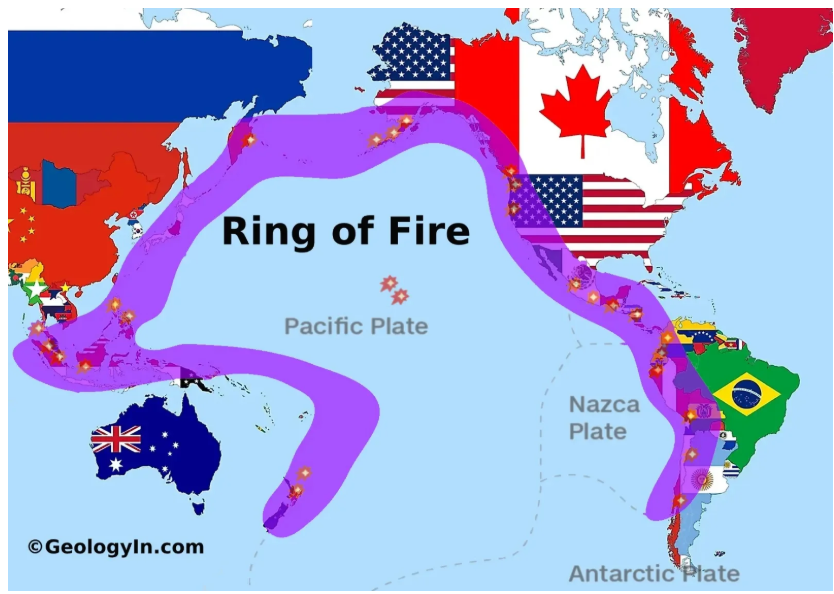
- 07 May 2026
In News:
As of May 2026, the Mayon Volcano in the Philippines remains under Alert Level 3, indicating a high level of volcanic unrest. The current eruptive phase, which began in late 2025, has recently intensified, with satellite data from the Philippine Space Agency (PhilSA) confirming that ashfall and pyroclastic flows have affected over 1,000 hectares of farmland and buried more than 120 villages in Albay province.
Mayon Volcano: The "Perfect Cone" Stratovolcano
Located in the Albay province on the island of Luzon, Mayon is the most active volcano in the Philippines. It is globally recognized for its near-perfect symmetrical cone, a physical characteristic that also makes it highly dangerous.
- Classification: It is a stratovolcano (or composite volcano), characterized by a steep profile and periodic explosive and effusive eruptions. Its structure is built from alternating layers of hardened lava, tephra, and volcanic ash.
- Eruption Profile: Mayon typically exhibits Strombolian activity—relatively mild but frequent bursts of glowing lava. However, it is also prone to more hazardous phenomena:
- Pyroclastic Density Currents (PDCs): Locally known as uson, these are fast-moving clouds of extremely hot gas and volcanic debris.
- Lahars: Mudflows triggered by heavy rainfall mixing with accumulated volcanic ash, which can bury entire communities.
- Historical Context: Its most destructive eruption occurred in February 1814, when ash and lava buried the town of Cagsawa, resulting in over 1,200 fatalities.
The Geologic Driver: The Pacific Ring of Fire
The persistent activity of Mayon is a direct consequence of its location on the Pacific Ring of Fire (Circum-Pacific Belt).
- Definition: A horseshoe-shaped zone stretching approximately 40,000 kilometers, home to roughly 75% of the world’s active volcanoes and the source of 90% of global earthquakes.
- Tectonic Mechanism: The activity is driven by plate tectonics, specifically subduction zones. In the Philippines, the Philippine Sea Plate is being subducted beneath the Philippine Mobile Belt. As the oceanic plate sinks into the mantle, it melts, and the resulting magma rises to the surface, creating volcanic chains.
- Geographic Scope: The belt extends from the southern tip of South America, through the West Coast of North America, across the Aleutian Islands, and down through Japan, the Philippines, Indonesia, and New Zealand.
2026 Eruption: Impact and Disaster Management
The current unrest has triggered significant socio-economic disruptions, emphasizing the importance of disaster resilience in volcanic regions.
- Evacuations and Safety Zones: Authorities have enforced a 6-kilometer Permanent Danger Zone (PDZ). Over 200,000 residents have been affected, with thousands relocated to emergency shelters.
- Aviation and Visibility: Massive ash plumes have restricted airspace near Manila. On the ground, ashfall has turned roads into "grey seas," reducing visibility to near-zero and necessitating the use of specialized clearing equipment.
- Agricultural Loss: Pyroclastic flows in May 2026 destroyed over 1,039 hectares of rice crops, threatening local food security in the Bicol region.
- Monitoring Infrastructure: The Philippine Institute of Volcanology and Seismology (PHIVOLCS) utilizes real-time monitoring, including seismic sensors and satellite imagery, to track magma ascent and predict potential explosive pulses.
Caracal

- 07 May 2026
In News:
The recent confirmation of the rare Caracal (Caracal caracal) in the Thar Desert, situated near the India-Pakistan border, has sparked significant interest within the conservation community. This elusive wild cat, long thought to be on the verge of extinction in the Indian subcontinent, represents a critical link in the arid ecosystem.
Taxonomic and Cultural Context
Despite its common moniker, the "Desert Lynx," the caracal is not a true lynx. Genetic studies reveal it is more closely related to the African golden cat and the serval.
- Etymology: In India, it is historically known as "Siya Gosh," a Persian term meaning "black ear," referring to the distinctive black tufts of fur on its ears.
- Historical Significance: Caracals were traditionally used by royalty in India and Persia for hunting birds, prized for their incredible agility and jumping ability.
Physical Characteristics and Specialized Adaptations
The caracal is an evolutionary marvel, designed for survival in harsh, water-scarce environments.
- Appearance: It possesses a solid, muscular build with disproportionately long legs and a short face. Its fur is typically a uniform reddish-tan or sandy-brown—providing perfect camouflage in desert terrain—though rare melanistic (black) variants have been documented.
- The "Leaping Hunter": The caracal is a remarkable jumper, capable of leaping up to 3 meters (10 feet) vertically into the air to strike down birds with its paws.
- Speed and Stealth: They are highly agile predators, reaching speeds of up to 80 kph (50 mph). Being predominantly nocturnal and shy, they are rarely seen by humans, earning them the reputation of being "ghosts of the desert."
Habitat and Distribution
While the species as a whole has a wide range, the Indian sub-population is critically restricted.
- Global Distribution: Native to Africa, Central Asia, the Middle East, and Northwest India.
- Indian Context: In India, they are found primarily in the arid and semi-arid regions of Rajasthan (Thar Desert and Ranthambore) and Gujarat (Kutch).
- Preferred Environment: They favor dry climates with low rainfall, such as shrublands, savannahs, and semi-deserts. The recent spotting near the international border in the Thar Desert indicates that the species still finds a refuge in the undisturbed, sparsely populated frontier zones.
Ecological Role and Diet
As obligate carnivores, caracals play a vital role as meso-predators in the desert food web. Their diet is diverse, consisting of rodents, small mammals, gazelles, and birds. By controlling the population of smaller herbivores and rodents, they help maintain the balance of the fragile desert vegetation.
Conservation Status and Protection in India
There is a stark contrast between the global and national conservation status of the caracal, which is a critical point for environmental policy discussions.
- IUCN Red List: Least Concern (on a global scale, due to stable populations in Africa).
- Wildlife (Protection) Act, 1972: Schedule I. This provides the caracal with the highest level of legal protection in India, on par with the Tiger and the Asiatic Lion.
- CITES: Listed under Appendix I (for Asian populations), which prohibits international commercial trade.
Major Threats:
The caracal in India faces a "silent extinction" due to several factors:
- Habitat Fragmentation: The conversion of "wastelands" (which are actually vital scrub forests) into agricultural land or industrial zones.
- Loss of Prey Base: Overgrazing by livestock and hunting of small mammals reduces the caracal's food supply.
- Human-Wildlife Conflict: Although rare, caracals sometimes prey on small livestock, leading to retaliatory killings.
Methane Alert and Response System
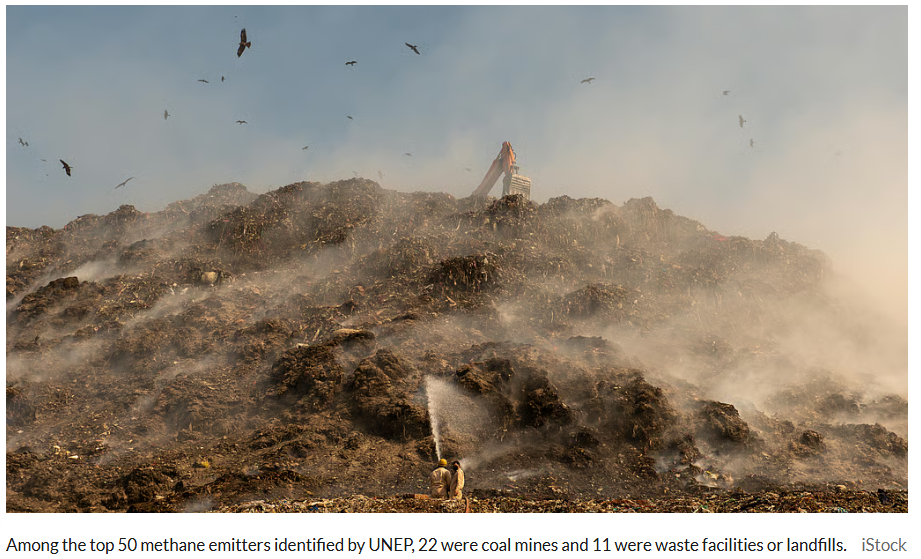
- 07 May 2026
In News:
In a significant expansion of global climate surveillance, the United Nations Environment Programme (UNEP) recently announced that its Methane Alert and Response System (MARS) will now monitor emissions from coal mines and waste facilities. This expansion follows reports identifying specific high-emission sites, including Indian landfills, as among the world’s top methane emitters.
What is the Methane Alert and Response System (MARS)?
MARS is a sophisticated "data-to-action" platform integrated into the International Methane Emissions Observatory (IMEO). It represents the world's first public satellite-based system designed to detect and notify stakeholders of massive methane leaks in near real-time.
- Genesis: Announced at COP27 in November 2022, MARS began its pilot phase in January 2023. It serves as a technical engine to support the goals of the Paris Agreement and the Global Methane Pledge.
- Expansion: Initially focused solely on the oil and gas industry, the system now encompasses the coal and waste sectors, recognizing their substantial contribution to global warming.
Operational Framework: How MARS Functions
The system operates through a four-stage cycle designed to ensure that satellite data translates into atmospheric improvement:
- Detection: Utilizing high-resolution satellite imagery, MARS scans the globe to identify "super-emitter" events—large-scale, human-caused methane plumes.
- Notification: Once a major source is identified, the system alerts the relevant national governments and private companies responsible for the site.
- Response: Notified stakeholders are encouraged to investigate and mitigate the leak, shifting from a passive observation model to an active intervention model.
- Tracking: MARS monitors the site to verify whether corrective actions have been taken, providing a transparent record of progress and collaboration.
International Methane Emissions Observatory (IMEO)
Launched during the G20 Leaders Summit in 2021, the IMEO acts as the overarching body that gathers and reconciles methane data. It creates a "single version of the truth" by integrating information from four primary sources:
- Scientific Studies: Direct measurement-based research.
- Satellite Data: Primarily through the MARS framework.
- Industry Reporting: Specifically the Oil and Gas Methane Partnership 2.0 (OGMP 2.0), which is UNEP’s flagship program involving companies committed to transparent emissions reporting.
- National Inventories: Official data submitted by individual countries.
Strategic Significance for Climate Governance
Methane is a potent greenhouse gas with a global warming potential over 80 times that of carbon dioxide over a 20-year period. Addressing methane is considered the "fastest way" to slow down temperature rise in the short term.
- Accountability and Transparency: MARS removes the "invisibility" of methane leaks. By making data public, it creates reputational and environmental incentives for companies to fix leaks promptly.
- Addressing the Waste Sector: The inclusion of landfills and waste facilities is particularly relevant for rapidly urbanizing nations like India. Landfills often experience spontaneous fires and constant methane discharge due to organic waste decomposition.
- Support for Global Pledges: It provides the technical verification needed for the Global Methane Pledge, which aims to reduce global methane emissions by at least 30% from 2020 levels by 2030.
Challenges and the Path Ahead
While MARS provides the "alert," the "response" remains voluntary. The effectiveness of the system depends on:
- National Cooperation: Governments must be willing to act on the data provided by UNEP.
- Technology Gap: Distinguishing between natural methane seeps and human-caused leaks in complex topographies requires high-precision instrumentation.
- Infrastructure Investment: In sectors like waste management, capturing methane requires significant capital investment in "Waste-to-Energy" plants and scientific landfill capping.
Mission for Cotton Productivity (2026–31)

- 07 May 2026
In News:
In a major push toward agricultural self-reliance and global textile dominance, the Union Cabinet has approved the “Mission for Cotton Productivity” with a dedicated outlay of ?5,659 crore for the period 2026–27 to 2030–31. The mission seeks to transform India’s cotton sector by transitioning from a focus on acreage to a focus on high-density productivity and quality.
Objectives and Framework
The mission is an integrated initiative announced in the Union Budget 2025–26, designed to strengthen the entire textile value chain. It operates under the government’s 5F Vision: Farm to Fibre to Factory to Fashion to Foreign.
- Implementation: It is a collaborative effort between the Ministry of Agriculture and Farmers Welfare and the Ministry of Textiles, supported by research from 10 institutes under the Indian Council of Agricultural Research (ICAR) and the Council of Scientific and Industrial Research (CSIR).
- Geographical Reach: In its initial phase, the mission targets 140 districts across 14 major cotton-growing states, grouped into three agro-ecological zones:
- Northern Zone: Punjab, Haryana, and Rajasthan.
- Central Zone: Gujarat, Maharashtra, and Madhya Pradesh.
- Southern Zone: Telangana, Andhra Pradesh, and Karnataka (including Odisha and Tamil Nadu).
- Target Outcomes by 2031:
- Yield Enhancement: To boost lint productivity from the current stagnant 440 kg/ha to 755 kg/ha (nearing the global average of 770 kg/ha).
- Production Volume: To increase total production to 498 lakh bales.
- Impact: Directly benefiting approximately 32 lakh cotton farmers.
Strategic Necessity: Why India Needs This Mission
India holds the distinction of having the largest cotton acreage globally (~11.4 million hectares), accounting for nearly 25% of global output. However, several systemic bottlenecks have hampered its potential:
- The Productivity Gap: Despite being the second-largest producer, India's yield remains among the lowest globally due to rainfed cultivation (65% of area) and fragmented landholdings.
- Pest Resistance: The initial success of Bt Cotton has wane as the Pink Bollworm and Whitefly have developed significant resistance, leading to crop failure and high input costs.
- Import Dependency for Premium Fibre: India relies heavily on imports from Egypt and the USA for Extra Long Staple (ELS) cotton (fibre length >30 mm), which is essential for high-end garment manufacturing.
- Climate Vulnerability: Predominantly grown in semi-arid regions like Vidarbha and Telangana, the crop is highly sensitive to erratic monsoons and waterlogging.
Key Technological Interventions
The mission pivots on modernizing agronomic practices to bridge the yield gap:
- High-Density Planting System (HDPS): Shifting from traditional wide spacing to closer spacing to increase the number of plants per hectare, thereby maximizing yield.
- Climate-Smart Breeding: Developing varieties of Gossypium barbadense (ELS cotton) that are drought-tolerant and pest-resistant using advanced biotechnology.
- Quality Branding (Kasturi Cotton Bharat): Targeting a trash content of below 2% to improve the global realization value of Indian cotton.
Critical Challenges and Implementation Gaps
Achieving the mission’s targets requires overcoming several "ground-level" hurdles:
- Irrigation Constraints: HDPS and High-Yielding Varieties (HYV) require assured moisture. Without integration with micro-irrigation, these crops remain at high risk during dry spells.
- Soil Fatigue: Decades of monocropping and chemical overuse have depleted soil organic carbon, reducing the efficacy of new seeds.
- Mechanization Hurdles: Modern cotton picking is labor-intensive. While mechanized harvesters are needed for HDPS, they are capital-intensive for small farmers owning less than 2 hectares.
- The Health Cost: Excessive pesticide use in cotton belts has triggered a silent health crisis, causing eye diseases and respiratory issues among farmers due to a lack of protective gear.
Way Forward: Strengthening the Ecosystem
To ensure the mission’s success, the following measures are essential:
- Integrated Pest Management (IPM): Moving beyond just Bt technology to include pheromone traps, biopesticides, and mandatory "refuge crops" to slow down pest adaptation.
- Custom Hiring Centres (CHCs): Establishing cooperative models for mechanized harvesting to make expensive technology accessible to marginal farmers.
- Digital Agriculture (Agri-Stack): Using AI and satellite data to provide real-time, hyper-local advisories on weather and pest attacks.
- Policy Synergy: Linking the mission with PM-Krishi Sinchayee Yojana (Per Drop More Crop) to ensure the necessary irrigation infrastructure in rainfed cotton belts.
Hantavirus Outbreak

- 06 May 2026
In News:
A recent suspected outbreak of the rare Hantavirus has gained international attention after approximately 150 individuals were quarantined aboard the Dutch cruise ship MV Hondius off the coast of Cape Verde, West Africa. This incident underscores the persistent challenge of zoonotic diseases in an interconnected world and highlights critical gaps in global health security.
Nature and Classification of Hantavirus
Hantaviruses belong to a family of viruses that primarily target the respiratory and renal systems of the human body. Depending on the strain and geographic location, the virus manifests in two distinct, severe clinical forms:
- Hantavirus Pulmonary Syndrome (HPS): Predominantly found in the Americas, this version leads to acute respiratory distress and severe lung congestion.
- Hemorrhagic Fever with Renal Syndrome (HFRS): More common in Europe and Asia, this form is characterized by internal bleeding (hemorrhage) and acute kidney failure.
Vector and Transmission Dynamics
Hantavirus is a zoonotic disease, meaning it jumps from animals to humans. It is carried by specific rodent species, including the deer mouse, white-footed mouse, and cotton rat.
- Aerosolization: This is the primary mode of transmission. Humans contract the virus by inhaling airborne particles from disturbed infected rodent waste, such as dried urine, droppings, or saliva. Common activities leading to infection include sweeping or cleaning storage areas where rodents have nested.
- Contagion Profile: Generally, Hantavirus is less contagious than airborne pathogens like COVID-19 or Influenza because it typically does not spread between humans.
- The Exception: The Andes virus, a specific strain endemic to South America (Argentina and Chile), is the only known Hantavirus strain capable of rare human-to-human transmission.
Clinical Symptoms and Diagnosis
The disease is particularly dangerous because its early stages mimic common seasonal illnesses, often leading to delayed medical intervention.
- Initial Phase: Following an incubation period of 1 to 8 weeks, patients experience "flu-like" symptoms, including high fever, fatigue, and muscle aches.
- Severe Phase: The condition can rapidly escalate into a life-threatening respiratory crisis. Patients suffer from extreme shortness of breath and chest tightness as the lungs fill with fluid.
- Diagnosis: Similar to the protocols for COVID-19, the Hantavirus is diagnosed using a Polymerase Chain Reaction (PCR) test, which detects the viral genetic material in the patient's system.
At-Risk Populations and Vulnerability
While anyone exposed to infected rodents can contract the virus, certain groups are at a higher statistical risk:
- Occupational Risk: Farmers, construction workers, and campers are frequently exposed to rodent-prone environments.
- Biological Vulnerability: Children under the age of five, pregnant women, and immunocompromised individuals are significantly more susceptible to severe complications and mortality.
Treatment and Prevention Challenges
The global health burden of Hantavirus is significant, with an estimated 150,000 to 200,000 cases reported annually. However, the medical response is currently limited.
- Absence of Specific Cure: There is currently no specific antiviral treatment, cure, or vaccine available for Hantavirus.
- Supportive Care: Treatment is purely symptomatic. In severe HPS cases, patients require intensive care, including oxygen therapy and mechanical ventilation to maintain lung function until the body can clear the infection.
- Primary Prevention: In the absence of a vaccine, the only effective strategy is rodent control. Maintaining strict sanitation protocols, sealing entry points in buildings, and using proper protective gear (like masks) when cleaning potentially infested areas are critical preventive measures.
Fibre-Optic Drones

- 06 May 2026
In News:
In the evolving landscape of high-tech warfare, fibre-optic-guided drones have surfaced as a disruptive force, particularly in the Russia-Ukraine and West Asia conflicts. By replacing traditional wireless communication with a physical link, these drones—often referred to as "wire-guided" or "phantom" drones—are bypassing sophisticated electronic defense systems and redefining the tactical "front-line."
The Technology: A Shift from Radio to Light
The core innovation of these drones lies in their communication link. While standard First-Person View (FPV) drones rely on Radio Frequency (RF) signals, fibre-optic drones are tethered to their operator via a thin, high-strength fibre-optic spool.
- Mechanism: As the drone flies, it unspools a micro-thin cable (extending up to 50 km). This cable transmits telemetry and high-bandwidth video data using light signals rather than radio waves.
- Material Composition: To maintain agility, these drones are often constructed from lightweight fibreglass. This material provides a secondary benefit: a minimal thermal and radar signature, making them difficult to detect using conventional sensors.
Strategic Advantages in Combat
The transition to wire-guidance offers several critical advantages that render traditional anti-drone measures obsolete:
- Immunity to Electronic Warfare (EW): Traditional jammers work by "drowning out" the radio frequency between the drone and the pilot. Since fibre-optic drones do not use RF, they are entirely immune to jamming and GPS spoofing.
- High-Fidelity Feedback: The fibre-optic link allows for uncompressed, high-resolution video feeds. Unlike RF drones, which often experience signal "snow" or total cutout as they approach the ground or fly behind obstacles, wire-guided drones provide crystal-clear imagery until the moment of impact.
- Stealth and Persistence: Because they do not emit a radio signal, these drones cannot be "triangulated" by enemy electronic intelligence units, protecting both the drone and the location of its operator.
Operational Limitations and Challenges
Despite their "unjammable" status, fibre-optic drones are not without technical hurdles:
- Weight vs. Range: The weight of the fibre canister, combined with the explosive payload, significantly drains battery life. Every kilometer of cable adds physical drag and weight.
- Physical Vulnerability: The physical cable is susceptible to snapping if it gets snagged on trees, caught in strong crosswinds, or intentionally cut by enemy combatants.
- Engineering Solutions: To counter these risks, manufacturers have begun using Kevlar-infused protective coatings to increase the tensile strength of the micro-cables without adding excessive weight.
Defensive Countermeasures: The Search for a Solution
As electronic jamming fails, defense forces are reverting to physical and emerging technologies:
- Physical Barriers: The use of "cope cages" (metal cages) and protective nets over tanks and trenches has become a rudimentary necessity.
- Advanced Detection: Research is shifting toward infrared (IR) and acoustic sensors that can detect the drone’s heat or sound signature since its "radio silence" makes it invisible to electronic scanners.
- Directed-Energy Weapons: Future defenses aim to use high-powered lasers to melt the physical optical lines or the drone’s fibreglass body.
Environmental Impact:
The widespread use of these drones introduces a new ecological threat. The thousands of kilometers of lightweight polymer optical fibres left behind on battlefields contribute to severe "conflict pollution."
- Toxic Degradation: When these cables are destroyed by explosions or fires, they release microplastics and toxic chemical byproducts into the soil, air, and water.
- Long-term Legacy: Unlike metal fragments that can be salvaged, these micro-thin plastic fibres are nearly impossible to clean up, posing a long-term threat to local ecosystems and agriculture.
Modern Orbital Conflict

- 06 May 2026
In News:
In the contemporary geopolitical landscape, outer space has transitioned from a "Global Commons" dedicated to peaceful exploration to a contested "Fourth Frontier" of warfare. Modern orbital conflict is no longer defined solely by kinetic destruction, such as missiles; instead, it has evolved into a "silent war" of digital intrusions, signal manipulation, and the strategic blurring of civilian and military assets.
Key Characteristics of Modern Space Warfare
Modern conflict in orbit is increasingly characterized by "non-kinetic" engagements that aim for functional disruption rather than physical debris-creating destruction.
- Weaponization of Infrastructure: Current conflicts utilize cyber-attacks and GPS spoofing to paralyze critical infrastructure. For instance, the Viasat KA-SAT cyberattack during the Russia-Ukraine conflict demonstrated how disabling a satellite's digital logic can sever communications across an entire continent without a single shot being fired.
- The "Starlink Precedent" and Dual-Use Technology: One of the most significant shifts is the collapse of the civilian-military divide. Commercial mega-constellations (like Starlink) now provide "Space as a Service" for military kill-chains. This complicates international law, as these civilian objects become legitimate military targets, endangering global commercial connectivity.
- The Attribution Gap: Digital attacks—such as "dazzling" sensors with lasers or hacking ground stations—offer strategic anonymity. Without the ability to definitively prove the perpetrator (attribution), traditional deterrence mechanisms often fail, leading to a "Grey Zone" of perpetual tension.
- Functional Strike Doctrine: There is a growing legal consensus that a digital intrusion which "bricks" or permanently disables a satellite violates Article 2(4) of the UN Charter (Prohibition of Use of Force), regardless of whether physical "smoke and fire" are present.
The Cascading Consequences of Orbital Conflict
The impact of space-based conflict extends far beyond the vacuum of orbit, threatening the very foundations of modern civilization.
- Kessler Syndrome and Orbital Denial: The most catastrophic physical threat is a chain reaction of collisions. Kinetic Anti-Satellite (ASAT) tests create clouds of high-velocity debris. These fragments collide with other satellites, creating more debris in an exponential cascade known as the Kessler Syndrome. This could render Low Earth Orbit (LEO) unusable for generations.
- Global Socio-Economic Paralysis:
- Financial Meltdown: Global markets rely on the precise atomic clocks of satellites for time-stamping transactions. A synchronization failure could freeze international banking.
- Collapse of Navigation (PNT): The loss of Global Navigation Satellite Systems (GNSS), including India’s NavIC, would cripple aviation, maritime trade, and global logistics.
- Digital Divide: Satellite internet is vital for disaster management and education in rural regions; its loss would isolate vulnerable populations.
- Strategic Destabilization: Attacking early-warning satellites could be misinterpreted as a precursor to a nuclear strike, potentially leading to accidental nuclear escalation between superpowers.
- Environmental Degradation: Increased debris re-entry releases metallic particles into the atmosphere, potentially damaging the Ozone Layer. Furthermore, "light pollution" from mega-constellations hinders astronomical research.
The Existing Legal Framework and Its Limitations
While several treaties govern space, they were designed for an era of state-led exploration, not private-sector-led warfare.
- Outer Space Treaty (1967): Article VI makes states responsible for all national space activities, including private ones. However, it lacks specific enforcement mechanisms for modern cyber-warfare.
- Liability Convention (1972): Imposes absolute liability for damage caused by space objects on Earth but remains weak in addressing "soft" damage like hacking or jamming.
- The Compliance Gap: While the UN recommends deorbiting satellites within 25 years to prevent debris, the compliance rate remains a low 30%.
Strategic Solutions and the Way Forward
To prevent the transition of space into a permanent battlefield, a multi-pronged approach is required:
- Finalizing PAROS and PPWT: India and other spacefaring nations must push for the Prevention of an Arms Race in Outer Space (PAROS) treaty. This would move beyond the 1967 treaty by prohibiting the placement of any weapons in orbit, not just WMDs.
- Norms for Responsible Behavior: A global, permanent ban on kinetic ASAT tests is essential. Additionally, clear protocols for Rendezvous and Proximity Operations (RPO) are needed to ensure that "repair" missions are not mistaken for "stalker" or "killer" satellites.
- Enhanced Space Situational Awareness (SSA): Global cooperation in tracking debris and satellite movements is vital. Initiatives like India’s Project NETRA and the US Space Surveillance Network serve as the "eyes and ears" for orbital security.
- Resilient Architectures: Shifting from a few expensive, large satellites to Distributed Constellations (many small satellites) makes a target-rich environment strategically pointless for an adversary, as destroying a few units does not disable the entire network.
- Strengthening Attribution: Developing the technological capability to prove who interfered with a satellite is the most powerful deterrent against "silent" electronic warfare.
Project Deepak
- 06 May 2026
In News:
Project Deepak, a premier unit of the Border Roads Organisation (BRO), recently marked its 66th Raising Day in Shimla, Himachal Pradesh.
Origins and Mandate
Launched in 1962, Project Deepak is one of the oldest and most vital initiatives under the BRO. It was conceived during a period of heightened geopolitical tension to ensure that India’s northern borders remained accessible and secure.
- Geographical Jurisdiction: The project operates in some of the most unforgiving topographies of the Himalayas. Its primary area of responsibility includes the key districts of Shimla, Kinnaur, Kullu, and Lahaul-Spiti in Himachal Pradesh.
- Strategic Objective: The project’s core mission is to provide all-weather connectivity to the border outposts and facilitate the movement of the Indian Armed Forces, while simultaneously fostering the socio-economic development of remote tribal belts.
Major Achievements and Contributions
Over six decades, Project Deepak has transitioned from a basic road-building unit to an engineering marvel handler. Its contributions are pivotal to both civil and military logistics:
- Hindustan-Tibet Road (NH-5): The project has been instrumental in the maintenance and development of this historic road, which serves as the lifeline for the Kinnaur district and a critical artery for border defense.
- Manali-Leh Axis: Project Deepak maintains key stretches of this strategic route, ensuring that the logistical chain to the Ladakh sector remains functional despite extreme weather conditions and heavy snowfall.
- Humanitarian Assistance and Disaster Management: Beyond engineering, the project plays a "first responder" role. Whether it is clearing massive landslides, snow excavation to reopen mountain passes, or providing aid during natural calamities, Project Deepak is central to Himachal’s disaster response framework.
About Border Roads Organisation (BRO):
Established on May 7, 1960, the BRO serves as a bridge between civilian infrastructure and military requirements.
- Institutional Shift: Initially working under multiple stakeholders, the BRO was brought entirely under the administrative control of the Ministry of Defence in 2015 to streamline strategic projects.
- Motto: The organization operates under the Sanskrit motto "Shramena Sarvam Sadhyam" (Everything is achievable through hard work), reflecting its commitment to overcoming physical and climatic barriers.
- Global Footprint: While its primary focus is the north and northeastern borders of India, the BRO also executes projects in friendly neighboring countries (such as Tajikistan, Afghanistan, and Bhutan), acting as a tool of India's soft power and neighborhood diplomacy.
Cell Broadcast System (CBS)
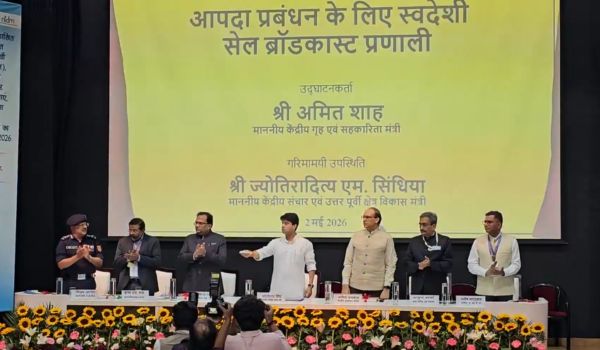
- 06 May 2026
In News:
In a significant stride toward a "Disaster Resilient India," the Ministry of Communications recently launched the indigenously developed Cell Broadcast System (CBS). Developed by the Centre for Development of Telematics (C-DOT) in collaboration with the National Disaster Management Authority (NDMA), this technology marks a paradigm shift from a reactive to a proactive disaster management framework.
What is the Cell Broadcast System (CBS)?
The Cell Broadcast System is a mobile communication technology that allows the government to send critical, un-queued emergency alerts to all mobile devices within a specific geographical area. Unlike traditional Point-to-Point SMS, CBS is a one-to-many service.
- Developer: Centre for Development of Telematics (C-DOT).
- Protocol: Based on the Common Alerting Protocol (CAP), a global standard recommended by the International Telecommunication Union (ITU).
- Integration: It is integrated with the SACHET platform (India’s National Disaster Alert Platform), which consolidates alerts from various agencies like IMD, CWC, and INCOIS.
Core Mechanism: How it Works
CBS functions by broadcasting messages from a central platform to designated Base Transceiver Stations (BTS) or cell towers. These towers then transmit the alert to every active handset within their signal radius.
- No Queuing: Unlike SMS, which is delivered individually and can be delayed by network congestion, CBS messages are delivered to millions of users simultaneously.
- Network Independence: It does not require the recipient’s phone number or internet connectivity. As long as a phone is connected to a cell tower, it will receive the alert.
- Override Capabilities: The alerts bypass "Silent" or "Do Not Disturb" modes, appearing as a pop-up with a distinct loud siren and vibration to ensure immediate attention.
Key Features of the Indigenous CBS
|
Feature |
Deion |
|
Precise Geo-Targeting |
Alerts can be narrowed down to a single cell tower, a neighborhood, or scaled to an entire state. |
|
Multilingual Support |
Alerts are disseminated in English, Hindi, and local regional languages to ensure inclusivity. |
|
Accessibility |
Includes a "Read-Aloud" capability for the visually impaired and distinct tones for the hearing impaired. |
|
Device Compatibility |
Works across all generations of mobile technology, from 2G to 5G. |
|
Data Privacy |
Since it is a broadcast and does not require phone numbers, it does not track or store personal user data. |
CBS vs. Traditional SMS: A Comparative Analysis
- Bandwidth Efficiency: SMS uses the signaling channel which can crash during emergencies due to high traffic; CBS uses a dedicated broadcast channel.
- Speed: SMS is delivered in a "store and forward" manner (queuing), whereas CBS is "near real-time."
- Targeting: SMS targeting depends on the database of phone numbers; CBS targets anyone within the physical reach of a radio cell.
Significance for India’s Disaster Management
- Zero Lead Time Disasters: Highly effective for "now-casting" events like flash floods, lightning strikes, landslides, and gas leaks where every second counts.
- Technological Sovereignty: By developing this indigenously, India joins a select group of nations (like the USA and Japan) with homegrown emergency alert capabilities, reducing dependency on foreign vendors.
- Last-Mile Connectivity: Ensures that even the most remote populations with basic handsets receive life-saving information.
- Strengthening National Security: Provides a verified, official channel for government-to-citizen communication, which helps in curbing rumors and panic during crises.
Santa Marta Climate Conference

- 05 May 2026
In News:
In a bold departure from the traditional, consensus-heavy climate negotiations of the United Nations, representatives from over 50 countries—representing nearly half of the global GDP—convened in Santa Marta, Colombia, for the First International Conference on Transitioning Away from Fossil Fuels (April 2026). Co-hosted by Colombia and the Netherlands, the summit was established as a "safe harbor" for nations ready to move beyond the political deadlocks of the UNFCCC’s Conference of the Parties (COP).
The Santa Marta Climate Conference: Strategic Shift in Climate Action
The conference emerged from a sense of urgency and frustration with the slow pace of global fossil fuel phase-outs within the UN system.
- Objectives: The summit focused on creating actionable national and international roadmaps to terminate fossil fuel use. It aimed to align trade, finance, and carbon pricing with a transition toward renewable energy.
- The "Coalition of the Willing": Unlike the UNFCCC, which requires consensus from nearly 200 nations, this "informal" group focuses on "first-movers" ready to implement aggressive supply-side governance.
- A New Legal Instrument: Significant momentum was observed for a Fossil Fuel Non-Proliferation Treaty, an initiative strongly supported by Small Island Developing States (SIDS) to address the gaps in international law regarding the extraction of coal, oil, and gas.
Key Highlights and Country Roadmaps
One of the most concrete outcomes of the Santa Marta summit was the unveiling of Europe's most detailed energy transition plan.
- France’s Exit Roadmap: France launched Europe’s first fuel-by-fuel exit strategy, setting definitive deadlines: Coal by 2030, Oil by 2045, and Gas by 2050. This move translates vague Net Zero pledges into measurable, sectoral timelines.
- Global Equity: Participants emphasized that for an equitable shift, wealthier nations must provide robust financial and technical support to developing countries, ensuring that the transition does not deepen global economic inequalities.
Limitations and the Finance Hurdle
Despite its ambitious tone, the conference faces significant structural challenges:
- Absence of Top Emitters: The world’s three largest greenhouse gas emitters—the United States, China, and India—did not participate, limiting the immediate global impact of the conference's decisions.
- Lack of Binding Authority: Operating outside the UNFCCC means the conclusions reached in Santa Marta are not legally binding on a global scale.
- The Funding Gap: Creating the massive financial mechanisms required to shift poorer nations toward zero-carbon pathways remains a formidable hurdle that voluntary coalitions are yet to solve.
The Evolving Landscape of UNFCCC COPs
While the Santa Marta process seeks faster action, the UNFCCC remains the supreme global decision-making body for climate change.
- The Framework: The COP oversees the Kyoto Protocol (CMP) and the Paris Agreement (CMA), supported by technical bodies like the SBI (Implementation) and SBSTA (Scientific Advice).
- Upcoming Milestones:
- COP31 (November 2026): To be hosted by Türkiye in Antalya, with a unique arrangement where Australia serves as the "President of Negotiations."
- COP32 (2027): Scheduled to be held in Addis Ababa, Ethiopia, continuing the tradition of geographical rotation.
Mission Drishti by GalaxEye
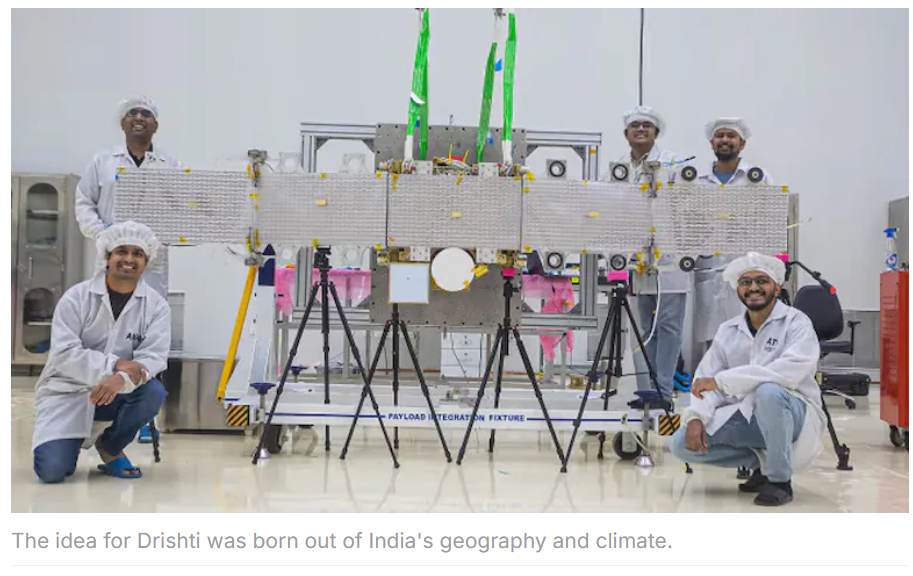
- 05 May 2026
In News:
In a milestone for the Indian private space sector, Bengaluru-based startup GalaxEye has successfully launched ‘Mission Drishti’, the world’s first OptoSAR satellite. Launched aboard a SpaceX Falcon 9 rocket from Vandenberg, California, this mission represents a paradigm shift in Earth observation (EO), moving beyond the limitations of traditional imaging to provide high-clarity, all-weather data.
The Innovation: OptoSAR Technology
The core of Mission Drishti lies in its unique OptoSAR platform—the first of its kind globally. Traditional satellites typically use either optical sensors (which rely on sunlight) or radar (which can be difficult to interpret). Mission Drishti integrates both on a single platform:
- Synthetic Aperture Radar (SAR): An active sensor that can "see" through thick cloud cover, smoke, and total darkness.
- Electro-Optical (EO) Sensors: Provide high-resolution, intuitive visual details in various spectral bands.
By fusing these two datasets, the satellite provides "analysis-ready" imagery. This fusion eliminates the need for complex, time-consuming post-processing, allowing decision-makers to access fused data that is inherently aligned.
Technical Specifications and Launch Details
Mission Drishti is a testament to India's growing indigenous space-tech capabilities, supported and facilitated by IN-SPACe (Indian National Space Promotion and Authorization Center).
- Mass and Scale: At 190 kg, it holds the distinction of being India’s largest privately developed Earth observation satellite.
- Orbit: It operates in a Sun-synchronous Low Earth Orbit (LEO) at an altitude of approximately 500 km.
- Resolution and Spectrum: The satellite offers a spatial resolution of 1.2 to 3.6 meters. It operates across multiple spectral bands, including X-Band (SAR), PAN (Panchromatic), RGB, NIR (Near-Infrared), Coastal Blue, and Red Edge.
- Revisit Frequency: The satellite is designed for high-frequency monitoring, capable of revisiting the same geographic location every 4 days.
Strategic Significance for India and Global Stakeholders
The deployment of Mission Drishti addresses critical gaps in current orbital monitoring, particularly for tropical regions:
1. All-Weather Capability:Standard optical satellites are often rendered ineffective by cloud cover. For a country like India, which experiences heavy monsoons and frequent cloud cover, OptoSAR ensures uninterrupted surveillance and data collection throughout the year.
2. Dual-Use Applications:As a dual-use satellite, its data serves both civilian and strategic sectors:
- National Security & Defense: Monitoring borders and maritime boundaries regardless of lighting or weather conditions.
- Disaster Management: Real-time assessment of floods or cyclones where clouds typically obstruct conventional satellites.
- Environmental & Infrastructure: High-resolution monitoring for urban planning, agriculture, and red-edge sensing for vegetation health.
Rashtriya Bal Swasthya Karyakram
- 05 May 2026
In News:
In a major step toward enhancing pediatric healthcare and ensuring early childhood development, the Ministry of Health and Family Welfare recently released the Rashtriya Bal Swasthya Karyakram (RBSK) 2.0 Guidelines. This updated framework marks a significant shift from traditional screening to a more holistic, tech-driven approach, aimed at securing the "Right to Health" for India’s future generations.
Foundations of RBSK
Launched in February 2013 under the National Rural Health Mission (now part of the National Health Mission), RBSK was envisioned as a systemic intervention to improve the quality of life for children.
The Core Strategy: The Four Ds
The program targets children from birth to 18 years, screening them for a broad spectrum of conditions categorized into the "Four Ds":
- Defects at Birth
- Diseases
- Deficiencies
- Developmental Delays (including disabilities)
Originally, the program covered 32 common health conditions, providing not just early detection but also free treatment, management, and surgical interventions at the tertiary level.
Implementation Ecosystem
RBSK operates through a multi-layered screening and management strategy that leverages existing community networks:
- At Birth: Comprehensive newborn screening is conducted at delivery points to identify visible birth defects immediately.
- At Home: Accredited Social Health Activists (ASHAs) conduct screenings during home visits under the Home Based Newborn Care (HBNC) and Home Based Care for Young Children (HBYC) programs.
- In the Community: In a unique convergence with the Ministry of Women and Child Development and the Ministry of Education, mobile health teams screen children at Anganwadi centers (0–6 years) and Government schools (6–18 years).
- Referral and Management: Children identified with any of the Four Ds are referred to District Early Intervention Centres (DEIC). These centers act as hubs for therapeutic management and facilitate further referrals for specialized surgeries if required.
The RBSK 2.0 Paradigm Shift
The 2.0 version of the guidelines introduces several critical expansions to address the emerging health challenges of the 21st century.
1. Expanded Clinical Scope
Beyond the original 32 conditions, RBSK 2.0 now includes:
- Mental and Behavioral Health: Addressing psychological concerns and developmental disorders early.
- Non-Communicable Diseases (NCDs): Screening for lifestyle-related risk factors such as juvenile diabetes and hypertension.
- Specialized Conditions: Inclusion of critical areas like kidney disorders, ensuring that complex chronic illnesses are caught in their nascent stages.
2. Digital Transformation
The new guidelines integrate the program with the Ayushman Bharat Digital Mission (ABDM) ecosystem.
- Digital Health Cards: Every child will have a trackable health profile.
- Real-time Monitoring: Introduction of data systems for seamless tracking of a child's journey from screening to surgery.
- Integrated Platforms: Enhancing service delivery through a unified digital interface for health officials and parents.
Sikkim Becomes India’s First Paperless Judiciary State
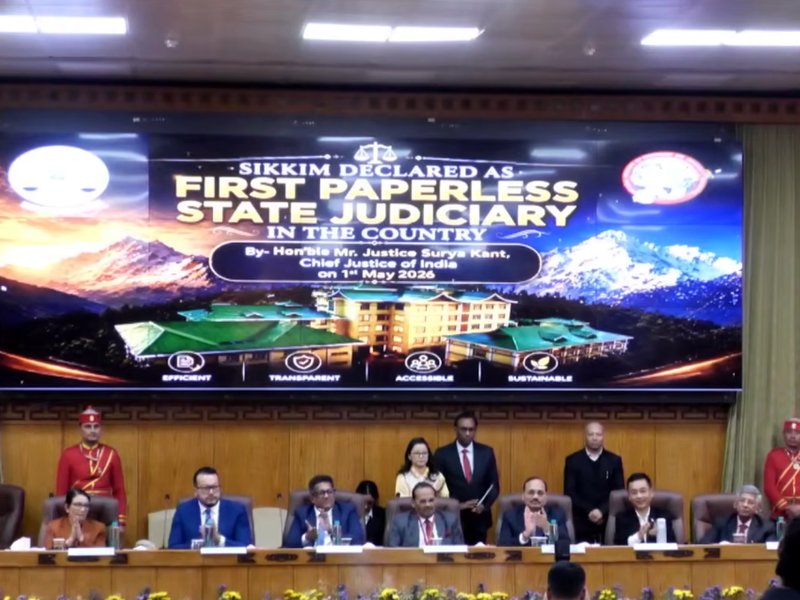
- 05 May 2026
In News:
In a landmark moment for India’s legal landscape, Sikkim has been officially declared the first state in the country to adopt a fully paperless judiciary. This historic announcement was made by Justice Surya Kant during the National Conclave on Technology and Judicial Education held in Gangtok. The transition signifies a paradigm shift from traditional, cumbersome manual processes to a streamlined, technology-driven judicial ecosystem.
The National Conclave on Technology and Judicial Education
The declaration took place at a high-level conclave organized by the High Court of Sikkim in collaboration with the Sikkim Judicial Academy. The event focused on the integration of modern technological tools into the judicial framework to enhance the speed, transparency, and accessibility of justice.
Key Components of the Paperless Ecosystem
Sikkim’s transition is not merely about digitizing old files but creating a Complete Digital Ecosystem that covers every stage of the legal process. The core pillars of this transformation include:
- E-Filing: Allowing lawyers and litigants to file cases online from any location, reducing the need for physical presence and the consumption of vast quantities of paper.
- Digital Case Records: Transitioning from physical "files" to digital dockets that are easily searchable and accessible to authorized stakeholders.
- Virtual Hearings: Institutionalizing video conferencing to allow for remote testimonies and arguments, thereby saving time and travel costs.
- Automated Workflows: Utilizing software to manage case scheduling, notice serving, and order tracking, which minimizes human error and administrative delays.
Integration of Advanced Technology: AI in Law
The Sikkim judiciary is leveraging cutting-edge tools developed by the Supreme Court of India to assist judicial officers:
- SUPACE (Supreme Court Portal for Assistance in Court’s Efficiency): An AI-driven tool designed to collect relevant facts and laws, aiding judges in legal research.
- SUVAS (Supreme Court Vidhik Anuvaad Software): An AI system used for translating judicial documents and judgments into regional languages, ensuring that justice is linguistically accessible to the common citizen.
Exercise CINBAX-II

- 05 May 2026
In News:
In a significant move to strengthen defense cooperation in South East Asia, an Indian Army contingent recently departed for Cambodia to participate in the second edition of the India-Cambodia Bilateral Military Exercise, CINBAX-II. The exercise, taking place in the Kampong Speu Province of Cambodia, marks a pivotal chapter in the burgeoning security relationship between the two nations.
Key Highlights of the Exercise
Exercise CINBAX-II is designed as a company-level joint training program, focusing on tactical proficiency and mutual cooperation.
- Participating Forces: The Indian contingent consists of 120 personnel, primarily drawn from a Battalion of the Maratha Light Infantry Regiment, renowned for its expertise in diverse terrains.
- Operational Framework: The exercise is conducted under Chapter VII of the United Nations Mandate, which pertains to "Action with Respect to Threats to the Peace, Breaches of the Peace, and Acts of Aggression."
- Core Objectives:
- Interoperability: Enhancing the ability of both armies to operate together seamlessly.
- Sub-conventional Environments: Focusing on operations in semi-urban combat settings where traditional warfare tactics are supplemented by counter-insurgency measures.
- UN Peacekeeping Scenarios: Simulating real-world conditions to prepare both forces for international peacekeeping missions, with a heavy emphasis on counter-terrorism.
Strategic Significance for India-Cambodia Relations
Beyond tactical drills, CINBAX-II carries significant diplomatic and strategic weight:
- Defense Diplomacy: The exercise is a platform for the exchange of best practices and operational experiences. It allows both armies to learn from each other's unique challenges and successes.
- Act East Policy: Strengthening ties with Cambodia is a vital component of India’s Act East Policy and its vision of SAGAR (Security and Growth for All in the Region).
- Regional Stability: By focusing on counter-terrorism and UN peacekeeping, the exercise contributes to regional stability in the Indo-Pacific, demonstrating a shared commitment to a rules-based international order.
Whitley Awards
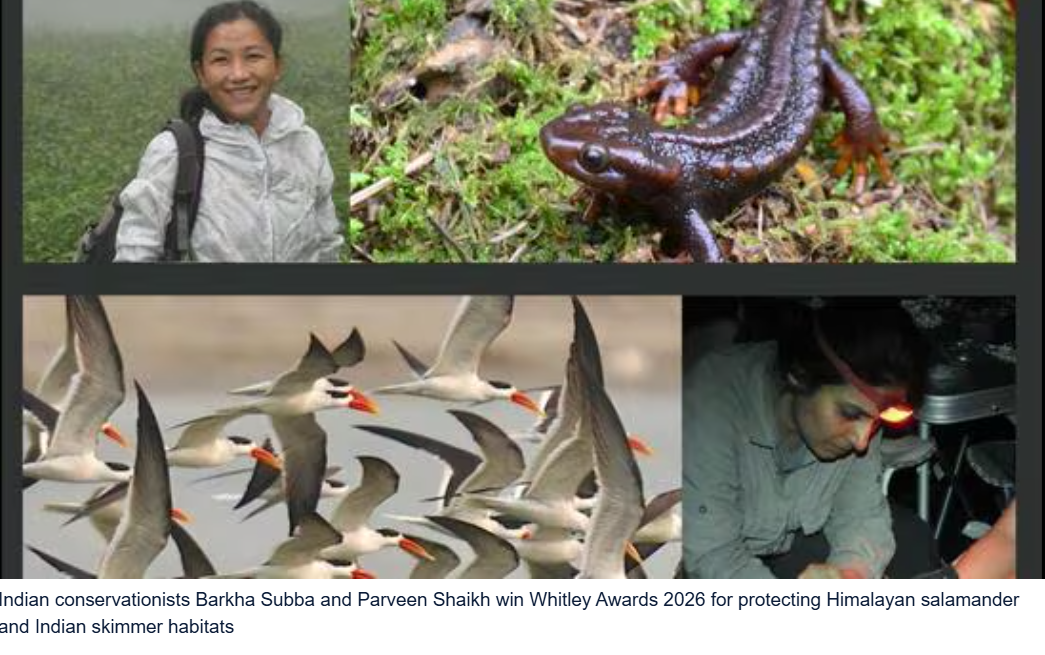
- 04 May 2026
In News:
In a proud moment for Indian biodiversity conservation, two conservationists—Parveen Shaikh and Barkha Subbahave been honored with the prestigious Whitley Awards 2026. These awards recognize their pioneering grassroots efforts to protect two of India’s most threatened wetland-dependent species: the Indian Skimmer and the Himalayan Salamander.
The Whitley Awards: The "Green Oscars"
The Whitley Awards are among the world's most coveted prizes for environmental conservation, often referred to as the “Green Oscars.”
- Granting Body: Established by the UK-based charity Whitley Fund for Nature (WFN).
- Focus: The awards specifically target grassroots conservation leaders working in the Global South, providing them with the resources to scale up local solutions to the global biodiversity crisis.
- Support: Each winner receives £50,000 in project funding over a one-year period, alongside international recognition and networking opportunities.
Pioneering Conservation: The Indian Skimmer
- Parveen Shaikh, associated with the Wildlife Conservation Trust, has been awarded for her efforts in the Chambal River landscape.
About the Species:
- The Indian Skimmer (Rynchops albicollis) is a unique waterbird belonging to the Laridae family. It is distinguished by its peculiar feeding mechanism, where it flies low and "skims" the water surface with its elongated lower mandible to catch fish.
- Distribution & Habitat: While it is found across India, Bangladesh, and Pakistan, the Chambal River remains its most critical stronghold in India. It prefers large, sandy, lowland rivers and lakes.
- Conservation Status: Currently listed as Endangered on the IUCN Red List.
- Threats: The species faces severe pressure from habitat loss, sand mining, and the fluctuation of water levels due to dam management, which can wash away nesting sites on sandy banks.
Safeguarding Ancient Lineages: The Himalayan Salamander
Barkha Subba has been recognized for her work in the Eastern Himalayas, specifically focusing on the ecological and cultural protection of the Himalayan Salamander.
About the Species:
- The Himalayan Salamander (Tylototriton verrucosus) is a primitive, lizard-like amphibian. Despite its appearance, it lacks scales and possesses the permeable skin characteristic of amphibians.
- Biology: These creatures can grow up to 17 cm and live for about 11 years. They exhibit philopatry, meaning they return to their exact natal sites to breed. This trait makes them exceptionally sensitive to any degradation of their specific wetland habitats.
- Distribution: It is endemic to the Darjeeling region of India, as well as parts of Nepal and Bhutan.
- Cultural Connection: Interestingly, the wetlands utilized by these salamanders are often considered sacred by local communities, associated with indigenous deities and rituals.
- Conservation Status: Listed as Vulnerable by the IUCN.
India’s Health Diplomacy: Deploying Aarogya Maitri in Jamaica
- 04 May 2026
In News:
In a significant stride for India’s "Vaccine Maitri" and broader humanitarian outreach, India has recently deployed its flagship Aarogya Maitri portable healthcare infrastructure in Jamaica. This move is a cornerstone of India’s diplomatic engagement with the CARICOM (Caribbean Community) nations, reinforcing its image as the "Pharmacy of the World" and a first responder in global crises.
Understanding Aarogya Maitri and Project BHISHM
The Aarogya Maitri project is a humanitarian initiative under which India provides essential medical supplies to developing nations hit by natural disasters or humanitarian crises.
- Project BHISHM: Central to this initiative is the Bharat Health Initiative for Sahyog Hita & Maitri (BHISHM). It is an innovative emergency medical aid program designed to bridge the gap in healthcare during golden-hour emergencies.
- The "Cubes" Innovation: The infrastructure consists of compact, portable "mini cubes." These cubes are modular, lightweight, and contain a comprehensive range of essential medicines, surgical equipment, and diagnostic tools.
- Operational Utility: Designed for rapid deployment via land, air, or sea, these cubes can be set up in minutes to provide life-saving treatment in remote or disaster-stricken areas.
Jamaica: A Strategic Partner in the Caribbean
Jamaica’s geographic and economic profile makes it a vital partner for India in the West-Central Caribbean.
Geographical Profile: Jamaica is the third-largest island in the Greater Antilles archipelago, surrounded entirely by the Caribbean Sea. Its strategic location places it south of Cuba, west of Hispaniola (Haiti and the Dominican Republic), and northwest of the Cayman Islands. The capital, Kingston, serves as a major commercial and cultural hub for the region.
Physical Features and Climate:
- Topography: The island is mountainous, dominated by the Blue Mountains—which host the country's highest point—alongside the John Crow, Don Figuero, and Santa Cruz ranges.
- Hydrology: Key rivers include the Rio Minho (the longest in Jamaica), the Black River, and the Rio Cobre.
- Climate: Jamaica experiences a tropical climate, heavily moderated by the sea and the persistent northeast trade winds.
- Natural Resources: The nation is rich in mineral wealth, particularly bauxite (essential for aluminum production), gypsum, and limestone.
Mount Dukono
- 04 May 2026
In News:
Mount Dukono, an extremely active volcano in eastern Indonesia, experienced a significant eruption. The event produced a massive volcanic ash column reaching as high as 10,000 meters (10 km) into the atmosphere, accompanied by explosive sounds heard from monitoring posts.
The eruption has triggered an emergency response in North Maluku, underscoring the persistent volcanic hazards within the Pacific Ring of Fire.
Geographical and Geological Context
Mount Dukono is a complex volcano situated on Halmahera Island in the North Maluku province. Unlike simple cone volcanoes, it is characterized by a broad, low profile with multiple overlapping craters and summit peaks.
- Height and Profile: Standing at approximately 1,335 meters above sea level (with varying peak heights across its craters), it is one of the most active systems in Indonesia.
- The Pacific Ring of Fire:
- The Ring of Fire is a roughly 40,000 km-long horseshoe-shaped belt of intense tectonic activity encircling the Pacific Ocean. It is the single most seismically and volcanically active zone on Earth:
- Approximately 90% of the world's earthquakes, including the most powerful ones, occur within this belt.
- It contains between 750 and 915 active or dormant volcanoes — about 75% of the global total.
- Key tectonic plates involved include the Pacific, North American, Eurasian, Philippine Sea, and Indo-Australian plates, interacting primarily through subduction.
- Notable historical eruptions within the Ring include Indonesia's Mount Tambora (1815 — largest eruption in recorded history), Krakatoa (1883), and the Philippines' Mount Pinatubo (1991), all of which had measurable global climate effects.
- Active Vent: Current activity is primarily centered on the MalupangWarirang crater, which has been in a state of near-continuous eruption since 1933.
Historical and Eruptive Behavior
Since its first major recorded eruption in 1550, which produced significant lava flows, Dukono has remained a persistent threat.
- Continuous Activity: The volcano is known for its long-term, low-level eruptive state, characterized by frequent ash emissions, "booming" explosive sounds, and occasional lava and mudflows.
- Recent Trends: In 2026, the frequency of eruptions increased, with nearly 100 events recorded between late March and early May.
Ecological and Socio-Economic Impact
Beyond the geological threat, Mount Dukono is surrounded by lush tropical rainforests.
- Endemic Biodiversity: The region is a habitat for unique flora and fauna, including several endemic species of birds such as the White Parrot and various Halmahera-specific eagles.
- Propriety of Land: The volcanic soil provides high fertility for local plantations; however, the ongoing eruptions necessitate a delicate balance between leveraging agricultural potential and ensuring the safety of those living in the shadow of the volcano.
India’s 1st Green Methanol Production Plant
- 04 May 2026
In News:
Prosopis juliflora — the invasive shrub that has degraded Kutch's Banni grasslands for decades — is set to become the feedstock for India's first green methanol production plant, bridging ecological restoration with clean energy.
Background
The Mexican-origin shrub Prosopis juliflora — known locally as gandobaval in Gujarat, vilayatikeekar in North India, and velikathan in Tamil Nadu — was first introduced by the British in the 1920s to green Delhi, and again by Gujarat's forest department in 1961 to check the advancing salt desert in the Rann of Kutch. Over decades, it spread aggressively across the Banni grasslands, crowding out native species and degrading one of India's most ecologically sensitive landscapes. Listed among the top 100 invasive species in the world, its removal has long been a conservation priority. India's first green methanol plant now proposes a productive use for this ecological liability.
About the Project
The plant and process
The facility, sited at the Deendayal Port Authority (DPA) in Kandla, will produce five tonnes of green methanol per day in its demonstration phase. The production follows a two-step pathway:
- Step 1 — Gasification (Ankur Scientific, Vadodara): Juliflora biomass is heated in the absence of oxygen, converting it into syngas — a mix of hydrogen (H?), carbon monoxide (CO), and CO?. Once the reaction begins, it sustains its own heat, requiring only about 10–15 litres of oil for a half-hour startup.
- Step 2 — Methanol synthesis (Thermax Energy, Pune): The syngas is catalytically converted into methanol, a liquid fuel suitable for ocean-going ships.
The plant will also be certified to run on other agricultural residues such as bagasse and cotton stalk, which could potentially displace up to a third of India's oil imports at maximum scale.
Why juliflora makes a good feedstock
- It is a hardwood with high density and a strong energy profile.
- Low acid content makes it technically well-suited for gasification.
- Its removal simultaneously serves Gujarat's ecological restoration goals — the state government already wants the species cleared.
Commercially viable plants will need to scale up to 100–500 tonnes per day. The Kandla project is explicitly a demonstration unit to prove the technology and build the business case.
Green Methanol — Key Facts
Methanol is conventionally produced from fossil fuels — natural gas or coal gasification — and used in shipping as a cleaner replacement to bunker oil. Green methanol differs fundamentally in its feedstock and carbon profile:
- Produced from biomass (bio-methanol) or green hydrogen (e-methanol), making it a renewable fuel.
- Reduces vessel CO? emissions by up to 95% and NOx by up to 80%, while eliminating sulphur oxides and particulate matter entirely.
- Overall lifecycle GHG reduction of 60–95% compared to conventional fossil methanol.
- E-methanol — produced using green hydrogen — represents the highest-purity form but currently costs around USD 2,000 per tonne vs. USD 700–800 for bio-based green methanol.
Policy and Regulatory Context
IMO and international shipping obligations
The International Maritime Organization's 2023 GHG Strategy mandates net-zero emissions from international shipping by or around 2050. The European Union has already begun levying charges on ships entering EU ports without a minimum share of green fuel — a regulatory pressure that is directly driving demand for green methanol in the near term.
India's policy alignment
- India amended its shipbuilding financial assistance policy in August 2023 to offer a flat 30% subsidy for vessels propelled by green fuels, including methanol, ammonia, and hydrogen.
- The government is developing "green ports" along India's western coast, for which facilities like the Kandla plant would supply fuel.
- The project supports India's broader push to reduce fossil fuel import dependence and meet its climate commitments under the Paris Agreement.
Cost challenge
Conventional methanol from natural gas costs approximately ?30 per kg under normal conditions, rising to ?70–80 during supply disruptions. Green methanol at USD 700–800 per tonne remains uncompetitive on price alone, making regulatory penalties the primary commercial driver for now. Scaling to 100–500 tonnes per day is considered the threshold for cost viability.
Significance
- Ecological: Converts a damaging invasive species into an economic resource, incentivising large-scale removal of juliflora from vulnerable grassland ecosystems.
- Energy: Advances India's green fuel production capacity and reduces dependence on imported bunker oil and fossil methanol.
- Maritime: Positions Indian ports as compliant with emerging IMO green fuel mandates, enhancing competitiveness of the shipping sector.
- Technological: Demonstrates indigenous gasification-to-methanol technology developed by Indian firms (Thermax and Ankur Scientific), with potential for replication at scale.
- Limitation: Grid electricity still powers the plant's motors and controls; for stricter carbon-intensity compliance, this must eventually come from renewables.
Citizenship (Amendment) Rules, 2026
- 04 May 2026
In News:
The Union Ministry of Home Affairs notified the Citizenship (Amendment) Rules, 2026 on 30 April 2026 (effective 1 May), marking the most significant overhaul of the Overseas Citizen of India (OCI) framework since the scheme began in 2006.
Background
The OCI scheme draws its authority from Sections 7A–7D of the Citizenship Act, 1955. It grants foreign nationals of Indian origin a lifelong multiple-entry visa and parity with NRIs in economic, educational, and cultural matters — but not citizenship. India's Constitution prohibits dual citizenship, a distinction these rules now sharpen. The 2026 amendment replaces the earlier hybrid paper-and-digital system with a fully electronic architecture and closes a loophole that let some families maintain both an Indian passport and a foreign passport for minor children.
Key Provisions
1. Ban on dual passports for minors: A new proviso to Rule 3 explicitly bars a minor from simultaneously holding an Indian passport and the passport of any other country. The earlier system only required parents to declare their child did not hold a foreign passport at birth registration — a gap now firmly shut.
- Families must choose: retain the Indian passport or wait until the child turns 18 to apply for OCI.
- Non-compliance can result in the OCI being deemed cancelled, even without physical surrender of the card.
2. Introduction of electronic OCI (e-OCI):Applicants may now receive an electronic OCI credential alongside, or in place of, the familiar physical blue booklet. A centralised, real-time registryallows immigration officers to verify OCI status instantly at airports and seaports.
3. Fully online applications — mandatory
All OCI services — registration (Form XXVIII, Section 7A), renunciation (Form XXXI), and cancellations — must now be filed exclusively through ociservices.gov.in. Physical submissions and couriered forms have been abolished.
- Processing time is expected to fall from 6–8 weeks to approximately 15 working days.
- Existing cardholders must update new passport details within 3 months of issuance; late updates attract a USD 25 fine.
4. Biometric integration with fast-track immigration:Applicants must consent to share biometric data, enabling automatic enrolment in the Fast Track Immigration – Trusted TravellerProgramme (FTI-TTP). This links OCI holders to e-gate corridors at major airports, reducing immigration queuing times for the Indian diaspora.
5. Strengthened appellate mechanism:Appeals against rejected OCI applications are now routed to an authority one rank higher than the original decision-maker, ensuring a defined and fairer right of hearing.
Significance
- Constitutional alignment: The dual-passport ban for minors closes a regulatory gap and brings OCI practice in line with India's constitutional prohibition on dual nationality.
- Digital governance: The shift aligns with the Digital India agenda — eliminating paperwork, reducing discretion, and enabling real-time verification.
- Diaspora convenience: e-OCI and biometric fast-tracking materially ease airport immigration for the ~4.5 million OCI cardholders worldwide.
- Privacy concerns: Mandatory biometric collection may face scrutiny under the right to privacy (Puttaswamy, 2017) and the Digital Personal Data Protection Act, 2023.
- Implementation challenge: The online-only mandate places pressure on portal reliability, especially for diaspora applicants in time zones far from India.
OCI is not dual citizenship. OCI holders carry only a foreign passport and enjoy specified parity rights — they cannot vote, hold constitutional offices, or purchase agricultural land in India.
Ru-Soam Bridges
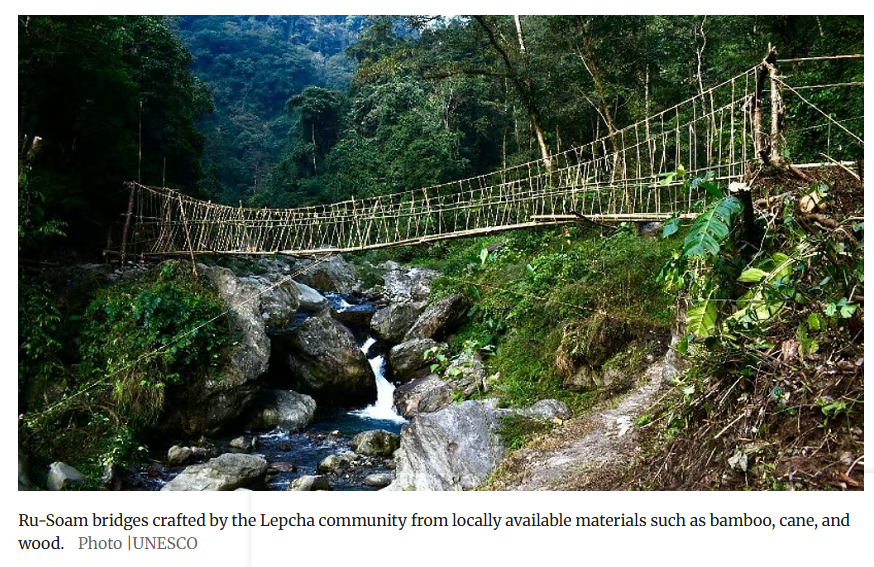
- 03 May 2026
In News:
UNESCO partnered with the Government of Sikkim supported by Airbnb to formally document Ru-Soam, the traditional cane bridges of the Lepcha community, and nominate them for UNESCO's Intangible Cultural Heritage (ICH) list.
What is Ru-Soam?
Ru-Soam are traditional suspension bridges built by the Lepcha community of Sikkim, found primarily in the Khangchendzonga Biosphere Reserve (Dzongu Tribal Reserve, North Sikkim). In the Lepcha language, 'Ru' means cane or rattan and 'Soam' means bridge. Regarded as one of the oldest suspension bridge traditions in the Eastern Himalaya, British botanist Joseph Dalton Hooker documented them in the 19th century as "works of art."
Structural Features
The bridge rests on two parallel cane cables (soamgyang) anchored to trees at both ends. Cane loops called ahool serve as handrails, while bamboo planks (soamgur) form the walkway. Bridges span over 100 metres and hang 30 metres above rivers, supporting 2–3 persons at a time. Construction is led by master craftsmen (Soam-nokbu) alongside ritual specialists (Bongthing), with knowledge passed entirely through oral tradition.
The critical engineering advantage is flexibility — the bridge sways and absorbs flood force rather than rigidly resisting it, a property decisive during recent Himalayan disasters.
Climate Resilience
During the 2023 South Lhonak Lake GLOF (Glacial Lake Outburst Flood), modern bridges across the Teesta basin were destroyed, cutting off Dzongu for weeks. Several Ru-Soam bridges survived and sustained critical connectivity for villages and relief operations. A 2024 cloudburst repeated the pattern — modern infrastructure failed while communities rapidly rebuilt cane bridges, restoring access within days. Scholar Sonam R. Lepcha, in a study published in the journal Pleione, documented how these bridges became lifelines for the region.
About Khangchendzonga:
Declared UNESCO World Heritage Site in 2016 (Mixed Category) — India's first Mixed World Heritage Site. Part of the World Network of Biosphere Reserves since 2018.
Past Risk and Return Verification Agency (PaRRVA)
- 03 May 2026
In News:
In a significant move to bolster investor protection and curb misleading claims in the capital market, the Securities and Exchange Board of India (SEBI) has operationalized the Past Risk and Return Verification Agency (PaRRVA). This regulatory initiative is aimed at introducing a standardized, independent verification mechanism for performance claims made by various financial intermediaries, ensuring that the "past performance" shown to investors is both accurate and reliable.
Key Institutional Framework
The implementation of PaRRVA involves a strategic partnership between specialized financial entities:
- The Verification Body:CARE Ratings Limited has been designated and recognized as the primary agency responsible for the verification process.
- The Data Infrastructure: The National Stock Exchange of India Limited (NSE) will serve as the PaRRVA Data Centre (PDC), providing the necessary technological backbone and data repository for the agency's operations.
Objective and Scope of PaRRVA
The primary objective of PaRRVA is to eliminate the practice of "cherry-picking" performance data, where intermediaries might highlight only their most successful periods to lure investors.
Eligible Entities and Users: The agency’s services are tailored for a wide spectrum of market participants:
- Investment Advisers (IA) and Research Analysts (RA): To validate their advice-based performance history.
- Trading Members (TM): Specifically those providing algorithmic or automated trading services.
- Investors: As the ultimate beneficiaries, they can now access a centralized pool of verified, credible data.
Core Features and Functionalities
PaRRVA acts as a "Trust Layer" in the investment ecosystem through the following features:
- Standardization of Metrics: It ensures that risk-return metrics are calculated and presented using a uniform methodology, making comparisons between different advisors or analysts more meaningful.
- Independent Validation: By moving away from self-certification, SEBI ensures that performance claims are vetted by an independent third party (CARE Ratings) against data hosted by the NSE.
- Advertisement Compliance: Regulated entities are now permitted to use PaRRVA-verified data in their advertisements. This provides a legal and ethical framework for marketing, ensuring that promotional materials remain compliant with SEBI’s stringent disclosure guidelines.
- Informed Decision Making: By providing access to reliable data, PaRRVA empowers retail investors to move beyond marketing hype and evaluate intermediaries based on factual, long-term performance records.
Significance for the Indian Capital Market
The operationalization of PaRRVA is a proactive step toward building a more transparent and mature financial market.
- Curbing Mis-selling: It acts as a deterrent against fraudulent claims and exaggerated "get-rich-quick" schemes often promoted on social media by unregistered "finfluencers" or unscrupulous analysts.
- Enhancing Accountability: By requiring independent verification, SEBI places the onus of accuracy squarely on the intermediary.
- Boosting Investor Confidence:This initiative aligns with the broader goal of Financial Inclusion and Investor Education, ensuring that the influx of new retail investors into the Indian stock market is protected by robust regulatory safeguards.
Public Accounts Committee
- 03 May 2026
In News:
In the latest development within the Indian parliamentary framework, K.C. Venugopal has been reappointed as the Chairman of the Public Accounts Committee (PAC) for the 2026–27 term. As one of the most powerful financial standing committees, the PAC serves as a vital instrument of the legislature to ensure that the executive remains accountable for every rupee spent from the public exchequer.
Historical Evolution and Genesis
- The PAC is the oldest of the parliamentary committees in India. Its origins trace back to the Montagu-Chelmsford Reformsof 1919, leading to its formal establishment in 1921. Post-independence, it evolved into a permanent parliamentary committee under the Constitution of India in 1950.
- A significant democratic tradition was established in 1967, since when the Chairman of the PAC is invariably appointed from the Opposition party. This convention is designed to ensure an unbiased and critical scrutiny of government expenditure, fostering a robust system of checks and balances.
Composition and Appointment
The committee represents both houses of Parliament, ensuring a bicameral oversight mechanism.
- Membership: It consists of 22 members—15 from the Lok Sabha and 7 from the Rajya Sabha.
- Election Process: Members are elected annually through the principle of proportional representation by means of a single transferable vote, allowing for the representation of various political parties in proportion to their strength.
- Exclusion of Ministers: To maintain independence and prevent a conflict of interest, ministers cannot be members of the committee.
- Tenure: The term of office for members is limited to one year.
- Chairmanship: The Chairman is appointed by the Speaker of the Lok Sabha.
Core Mandate and Scope of Scrutiny
The primary responsibility of the PAC is to examine the accounts showing the appropriation of sums granted by Parliament.
- Financial Audit: It scrutinizes the Appropriation Accounts and the Finance Accounts of the Union Government, along with any other accounts laid before the Lok Sabha.
- Beyond Legality: The PAC’s mandate is not limited to technical legality. It dives into the “Propriety Audit,” evaluating government spending on the grounds of efficiency, economy, and wisdom. It aims to uncover cases of waste, loss, or financial irregularity.
- Handling Excess Expenditure: If the government spends more than the amount sanctioned by Parliament, the PAC investigates the circumstances. These excesses must be regularized under Article 115 of the Constitution, based on the committee’s recommendations.
The PAC-CAG Synergy: "Friend, Philosopher, and Guide"
The functioning of the PAC is fundamentally supported by the Comptroller and Auditor General (CAG) of India. The CAG submits three main audit reports to the President, which are then laid before Parliament:
- Audit report on Appropriation Accounts.
- Audit report on Finance Accounts.
- Audit report on Public Undertakings.
The CAG assists the committee during its deliberations, helping members navigate complex financial data. This relationship is so integral that the CAG is often termed the “friend, philosopher, and guide” of the PAC.
Ensuring Impact: Follow-up and Monitoring
To ensure that its recommendations do not remain mere paper tigers, a structured follow-up mechanism exists:
- Action Taken Reports (ATRs): The government is required to submit "Action Taken Notes" on the committee's recommendations, usually within six months.
- Modern Monitoring: The Audit Para Monitoring System (APMS) has been implemented to electronically track the status of these notes, ensuring transparency and reducing the pendency of unresolved audit observations.
Cauvery Water Management Authority
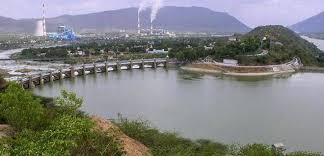
- 03 May 2026
In News:
In a significant step toward resolving one of India’s longest-standing inter-state water conflicts, the Cauvery Water Management Authority (CWMA) has directed Karnataka to release 2.5 TMC (Thousand Million Cubic feet) of water to Tamil Nadu for the month of May 2026. This directive reaffirms the 2018 Supreme Court verdict and emphasizes the role of statutory bodies in maintaining federal harmony during periods of climatic stress.
The Kaveri River:
- The Kaveri, popularly known as the "Ganga of the South" (Dakshin Bharat ki Ganga), is the lifeblood of agricultural and urban centers in Southern India.
- Origin and Course: The river rises at Talakaveri in the Brahmagiri Range of the Western Ghats (Kodagu, Karnataka). It flows approximately 800 km through Karnataka and Tamil Nadu before emptying into the Bay of Bengal.
- Drainage Basin: The basin is shared by Karnataka, Tamil Nadu, Kerala, and Puducherry.
- Key Tributaries:
- Left Bank: Harangi, Hemavati, Shimsha, and Arkavati.
- Right Bank: Lakshmana Tirtha, Kabini, Suvarnavathi, Bhavani, Noyyal, and Amaravati.
- Strategic Infrastructure: Major reservoirs like Krishna Raja Sagara (KRS) in Karnataka and the Mettur Dam in Tamil Nadu serve as the primary control points for water regulation.
The Legal Evolution of the Dispute
The conflict over Kaveri's waters is rooted in colonial-era agreements (1892 and 1924) between the Madras Presidency and the Princely State of Mysore. Post-independence, Karnataka contested these agreements as unfair, leading to decades of legal friction.
1. Constitutional and Statutory Framework
Under Article 262 of the Constitution, which empowers Parliament to adjudicate inter-state river disputes, the Inter-State River Water Disputes Act, 1956 was enacted. This led to the formation of the Cauvery Water Disputes Tribunal (CWDT) in 1990.
2. The Landmark 2018 Supreme Court Verdict
In February 2018, the Supreme Court modified the earlier Tribunal award, establishing several key principles:
- National Asset Doctrine: The Court declared that no single state has proprietary rights over a river; it is a shared national asset.
- Bengaluru’s Needs: Karnataka was granted an additional 14.75 TMC to meet the drinking water requirements of Bengaluru.
- Final Share Allocation (Annual):
- Tamil Nadu: 404.25 TMC
- Karnataka: 284.75 TMC
- Kerala: 30 TMC
- Puducherry: 7 TMC
CWMA and CWRC
To move away from ad-hoc management and frequent litigation, the Centre established the Cauvery Water Management Authority (CWMA) and its subordinate body, the Cauvery Water Regulation Committee (CWRC), in June 2018.
Structure and Governance
The CWMA is a statutory, quasi-judicial body notified under Section 6A of the 1956 Act.
- Headquarters: New Delhi, under the Union Ministry of Jal Shakti.
- Composition: Led by a Chairperson (eminent engineer or IAS officer), it includes full-time members for Water Resources and Agriculture, alongside part-time members representing the four basin states.
Core Functions
- Water Apportionment: Regulating reservoir releases to ensure each state receives its mandated share.
- Distress Sharing: During years of poor monsoon, the CWMA determines the proportionate sharing of water shortages (distress) among states.
- Data Monitoring: Collecting real-time data on storage positions and inflows via the CWRC.
- Technological Advisory: Encouraging micro-irrigation and crop diversification to improve water-use efficiency.
Padma Doree

- 03 May 2026
In News:
The North Eastern Handicrafts and Handlooms Development Corporation (NEHHDC) has officially unveiled‘Padma Doree’, a landmark cross-regional textile initiative. By merging the Eri (Ahimsa) silk of Northeast India with the sophisticated Chanderi weaving traditions of Madhya Pradesh, the project creates a unique fusion of "fiber and finesse." This collaboration marks a significant step toward integrating India’s diverse craft heritage into a cohesive, sustainable fashion ecosystem.
The Essence of Padma Doree:
Padma Doree is more than just a textile collection; it is a strategic bridge between Central and Northeast India. The initiative is designed to modernize indigenous knowledge systems, making them competitive in the global luxury and sustainable fashion markets while ensuring the economic upliftment of local artisans.
- Material Innovation: The project utilizes Eri Silk, famously known as Ahimsa Silk because it is processed after the moth leaves the cocoon, ensuring no harm to the silkworm. This rugged, warm, and wool-like fiber is intricately woven with the delicate motifs and sheer, lightweight textures characteristic of Chanderi.
- Artisan Collaboration: The initiative fosters a direct exchange of skills. Weavers from Madhya Pradesh and artisans from the Northeast work together, blending the durability of Eri with the refined zari work and transparency of traditional Chanderi.
- A Multi-Sensory Experience: The launch featured a three-day interactive exhibition that showcased the entire "fiber-to-fabric" journey through live demonstrations. To provide a holistic cultural experience, the event also integrated regional culinary showcases from both participating regions.
Key Components:
Eri Silk (Northeast India)
- Predominantly produced in Assam and Meghalaya, Eri silk is derived from the Samia ricini silkworm. It is unique among silks for its matte appearance and thermal properties, making it "cool in summer and warm in winter." Its status as a sustainable and ethical fiber aligns with the growing global demand for "slow fashion."
Chanderi Weaving (Madhya Pradesh)
- Hailing from the historic town of Chanderi, this craft is renowned for its shimmering texture and "Butti" (motifs). Traditionally a blend of silk and cotton, Chanderi is characterized by its transparency and sophisticated aesthetics, long favored by Indian royalty.
Kanha Tiger Reserve
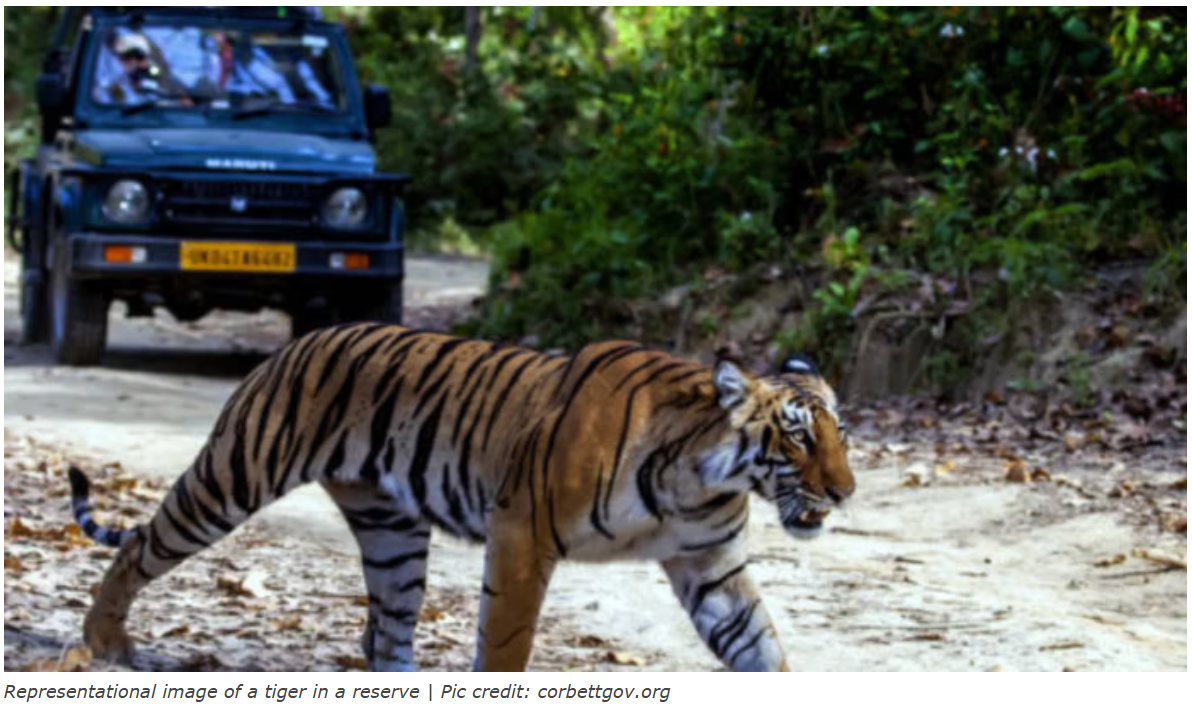
- 02 May 2026
In News:
In early 2026, the Kanha Tiger Reserve (KTR) in Madhya Pradesh witnessed a tragic wildlife crisis as a tigress and her four cubs died within a short span of ten days. Preliminary investigations and post-mortem findings point toward an outbreak of the Canine Distemper Virus (CDV) as the primary cause. This event has pushed the state’s tiger mortality count to nearly 30 fatalities within the first five months of the year, raising serious concerns regarding the biosecurity of India’s premier tiger habitats.
Kanha Tiger Reserve:
Kanha Tiger Reserve is a cornerstone of India’s wildlife preservation strategy, situated in the Maikal ranges of the Satpuras across the Mandla and Balaghat districts of Madhya Pradesh.
- Evolutionary History: One of India’s oldest protected areas, it was declared a reserve forest in 1879, a National Park in 1955, and was among the first nine reserves to be brought under 'Project Tiger' in 1973.
- Landscape and Zoning: Spanning over 2,074 sq. km, the reserve is divided into a Core Area (940 sq. km) of critical habitat and a Buffer Zone (1,134 sq. km). It also manages the Phen Wildlife Sanctuary as a satellite micro-core.
- Biodiversity Landmarks: The park is dominated by lush Sal (Shorea robusta) and mixed deciduous forests. It is most famous for saving the Hard Ground Barasingha (Rucervusduvauceliibranderi) from the brink of extinction.
Canine Distemper Virus (CDV):
CDV is a highly contagious viral disease caused by a single-stranded RNA virus from the Paramyxoviridae family. While traditionally associated with domestic dogs, it has increasingly crossed over into wild carnivore populations, including tigers and lions.
- Symptoms and Pathology: The virus attacks the respiratory, gastrointestinal, and central nervous systems. In the Kanha tigress and her cubs, post-mortems revealed acute lung infections and respiratory distress. In chronic stages, the virus causes neurological symptoms like disorientation, loss of fear, and seizures.
- Transmission Vectors: Wildlife experts suggest that domestic and stray dogs in the forest-village interface are the primary reservoirs. Tigers may contract the virus by predating on infected dogs or through contaminated water sources and prey remains.
- Conservation Impact: CDV can be catastrophic for small, isolated populations. A 2018 outbreak in Gir, Gujarat, led to the deaths of nearly 30 Asiatic lions, highlighting the vulnerability of apex predators to spillover infections.
The 2026 Crisis and State-wide Mortality
The deaths at Kanha are part of a broader, alarming trend in Madhya Pradesh, often referred to as the "Tiger State of India."
- Rising Toll: By May 2026, the state recorded approximately 28–30 tiger deaths. High-density areas like Kanha and Bandhavgarh are increasingly prone to stress-induced deaths, infighting, and disease transmission due to crowding.
- Human-Animal Interface: The seasonal collection of forest produce like Mahua and Tendu leaves increases the presence of domestic dogs in the buffer zones, heightening the risk of CDV spillover.
Management Strategies
The National Tiger Conservation Authority (NTCA) has issued urgent advisories to create "Immunization Buffers" around tiger reserves. Key strategies include:
- Ring Vaccination: Implementing a mandatory 5-km vaccination zone for all domestic dogs around reserve boundaries to achieve herd immunity.
- Surveillance and Sanitization: Using digital tools like the M-STrIPES app for real-time health monitoring and disinfecting sensitive areas or contaminated kills.
- Biosecurity Protocols: Restricting the movement of stray dogs into core areas and ensuring the safe disposal of carcasses to prevent the virus from lingering in the ecosystem.
- Strengthening Veterinary Infrastructure: Deployment of mobile veterinary units and rapid response teams at the forest-village interface.
Preah Vihear Temple

- 02 May 2026
In News:
The centuries-old Preah Vihear Temple, an architectural marvel dedicated to Lord Shiva, has recently returned to the global spotlight due to renewed military tensions between Thailand and Cambodia.
Historical and Cultural Genesis
The Preah Vihear Temple is a testimony to the grandeur of the Khmer Empire. Unlike many other Khmer structures, this temple offers a unique glimpse into the religious evolution of Southeast Asia.
- Construction: While its foundations date back to the 9th century, the most significant expansion occurred in the 11th and 12th centuries under King Suryavarman I (1002–1050) and Suryavarman II (1113–1150)—the latter famously known for building Angkor Wat.
- Dedication: Originally a Hindu temple dedicated to Lord Shiva, it symbolized Mount Meru, the sacred multi-peaked mountain of Hindu and Buddhist cosmology.
- Religious Transition: As the Khmer Empire’s influence waned and Buddhism became the dominant faith in the region, the temple was adapted for Buddhist worship. This transition is evident in the Buddhist motifs and decorations found alongside its original Hindu carvings.
Architectural Masterpiece
Preah Vihear is celebrated as a "masterpiece of Khmer stone carving." Its layout is distinct from typical Khmer temples like Angkor Wat, which are usually rectangular and face east.
- Axis and Layout: The temple is built on an 800-meter-long north-south axis. It consists of a series of sanctuaries connected by pavements and staircases that ascend toward a cliff’s edge.
- Gopuras (Gateway Pavilions): The complex features five successive gopuras. These gateways are intricately carved and vary in material; some possess stone roofs, while others were historically topped with wooden structures.
- Location: Perched atop a 525-meter cliff in the Dangrek Mountain range, the temple offers a commanding view of the Cambodian plains, emphasizing its strategic and spiritual significance.
The Century-Long Border Dispute
- Colonial Treaties (1904–1907): In 1904, France (ruling Cambodia) and Siam (Thailand) signed a treaty. While the treaty suggested the border should follow the natural watershed line of the mountains (placing the temple in Thailand), a map drawn by French officers in 1907 placed the temple within Cambodian territory.
- The 1962 ICJ Ruling: After Thailand occupied the site in the 1950s, Cambodia moved the International Court of Justice (ICJ). The court ruled in 1962 that the temple belonged to Cambodia, primarily because Thailand had used the French map for decades without protest.
- UNESCO Designation (2008): Tensions reignited when the temple was named a UNESCO World Heritage Site in 2008. Thailand contested the surrounding 4.6 sq km of scrubland, leading to deadly skirmishes.
- 2013 Reaffirmation: The ICJ again ruled in 2013 that the 1962 decision intended for Cambodia to own the temple and its immediate vicinity, calling for a withdrawal of Thai forces.
Current Status: 2025–2026 Conflict
Despite previous ceasefires, the region saw a severe escalation in late 2025 and early 2026.
- Military Escalation: Renewed fighting involving artillery and airstrikes broke out in December 2025. Reports indicate that hundreds of thousands of civilians have been displaced along the border.
- Heritage at Risk: Preliminary assessments by the International Coordinating Committee (ICC-Preah Vihear) in March 2026 confirmed that the temple sustained damage in over 560 locations. All five gateway pavilions (Gopuras) have suffered structural degradation or scarring from weaponry.
- India’s Role: India, which co-chairs the ICC-Preah Vihear along with China, has expressed "deep concern" over the damage. The Archaeological Survey of India (ASI) has a long-standing history of restoring Khmer temples in Cambodia, making the preservation of this site a point of cultural diplomacy for New Delhi.
Mission SAKSHAM
- 02 May 2026
In News:
Recently, the Governor of the Reserve Bank of India (RBI) launched Mission SAKSHAM (Sahakari Bank Kshamta Nirman), a landmark initiative designed to revolutionize the Urban Co-operative Banking (UCB) sector. This mission-mode, all-India project represents a significant shift toward professionalizing and modernizing the cooperative banking landscape, ensuring it remains resilient in an increasingly complex financial environment.
Understanding Mission SAKSHAM
Mission SAKSHAM is a comprehensive capacity-building and certification framework. Its primary mandate is to address the historical gaps in managerial and operational capabilities within UCBs. By transitioning the sector toward a sustainable ecosystem for continuous learning, the RBI aims to strengthen the financial health and institutional resilience of these community-focused institutions.
Key Pillars and Targeted Reach
The mission is distinguished by its scale and inclusivity, aiming to reach 1.40 lakh participants across the nationwide UCB sector. Unlike generic training programs, it adopts a "top-to-bottom" cultural shift by targeting specific, critical roles within the banking hierarchy:
- Governance & Leadership: Board Members and Senior Management.
- Risk & Control: Heads of Risk Management, Compliance, and Audit functions.
- Technical Operations: Employees specializing in IT functions and other critical operational areas.
Operational Model and Features
To ensure effective penetration, especially among smaller and regional cooperatives, Mission SAKSHAM utilizes a blended learning model that combines in-person (offline) sessions with digital (e-learning) modules.
- Linguistic Accessibility: Recognizing India’s diversity, the training content is delivered in regional languages to ensure the "intent of the law" is accessible to local board members and staff.
- Institutional Collaboration: The mission was not designed in isolation; it was developed in close consultation with the Umbrella Organisation for UCBs (such as the NUCFDC) and various National and State Cooperative Federations.
- Certification Framework: A standardized certification process is integrated into the mission to ensure that skills and competencies are uniform across the sector.
Op Netra 1.0
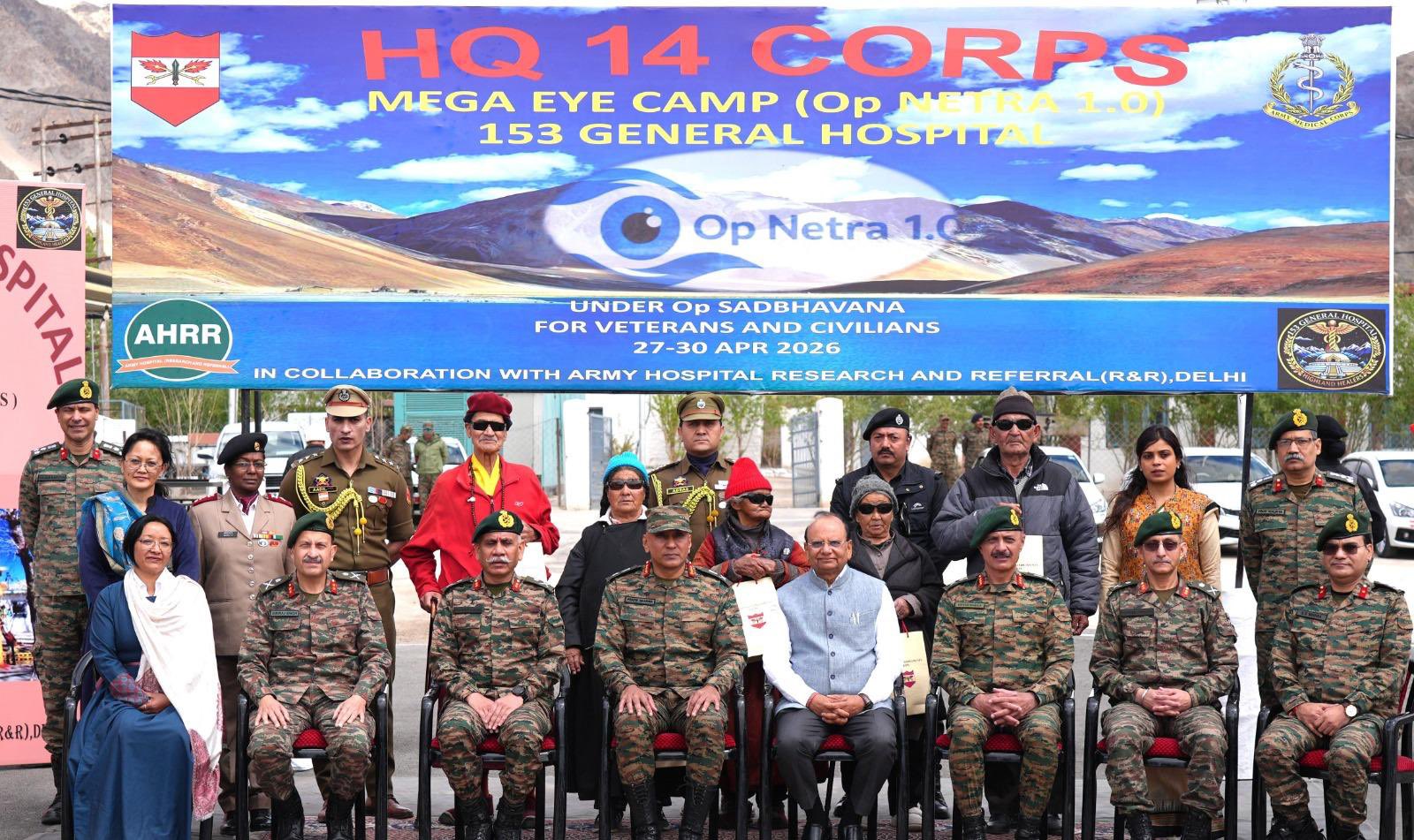
- 02 May 2026
In News:
The Indian Army recently achieved a significant humanitarian milestone with the successful conclusion of ‘Op Netra 1.0,’ a four-day mega eye camp held in the challenging terrain of Leh, Ladakh. Conducted at the 153 General Hospital, the mission underscores the military’s commitment to "Winning Hearts and Minds" by delivering advanced surgical care to the remotest corners of the Union Territory.
A Mission of Specialized Care and Vision Restoration
Under the leadership of the Director General Armed Forces Medical Services (DGAFMS), Op Netra 1.0 was designed as a high-end ophthalmic outreach program. The camp specifically targeted citizens in high-altitude regions where geographical barriers and thin oxygen levels often impede access to sophisticated medical infrastructure.
During the four-day intensive program, the medical team screened a total of 950 patients hailing from seven districts of Ladakh. The outreach extended to some of the most isolated border villages, including Chushul, Hanle, Demchok, and Turtuk. The mission was life-altering for many, successfully restoring sight to 15 individuals who were previously suffering from total visual impairment.
Surgical Excellence and Technological Innovation
Op Netra 1.0 was not merely a screening camp but a hub for advanced ophthalmic interventions. The surgical teams performed 214 complex procedures, which included:
- 197 cataract surgeries using modern techniques.
- 10 vitreo-retinal interventions, including vitrectomies.
- Specialized procedures such as Glued Intraocular Lens (IOL) implantation and Minimally Invasive Glaucoma Surgery (MIGS).
A standout feature of the operation was the integration of Indigenous Technology. The Army launched the Op Netra App, a dedicated digital platform that utilized QR code-based identification. This system ensured end-to-end digitization of patient records, automated scheduling, and enhanced surgical safety, setting a new benchmark for mobile medical camps in India.
Inter-Service Synergy and National Impact
The success of the mission was a testament to seamless Inter-Service Cooperation. The Indian Air Force (IAF) played a pivotal role by airlifting heavy, sophisticated medical equipment to the high-altitude environment of Leh, ensuring that the surgeons had access to the same quality of technology available in metropolitan super-specialty hospitals.
Furthermore, this operation is part of a broader military-medical momentum. Since November 2025, the Indian Armed Forces have completed over 2,500 sight-restoring surgeries across various parts of the country.
India Post Payments Bank Launches SHG Savings Account
- 02 May 2026
In News:
Recently, the India Post Payments Bank (IPPB) announced a significant milestone in India’s journey toward universal financial inclusion with the launch of its dedicated Self Help Group (SHG) Savings Account. Designed to empower women-led groups in rural India, this initiative bridges the gap between the unbanked population and the formal financial ecosystem.
India Post Payments Bank (IPPB):
Established on September 1, 2018, IPPB is a 100% Government of India-owned entity operating under the Department of Posts. The bank’s primary mandate is to dismantle barriers for the underbanked by utilizing India’s vast postal network.
- Infrastructure: IPPB leverages approximately 1,65,000 Post Offices, with roughly 1,40,000 of these strategically located in rural regions.
- Workforce: A massive workforce of 3,00,000 postal employees—including Postmen and Gramin Dak Sevaks (GDS)—acts as the frontline for doorstep banking services.
- The India Stack: The bank’s operating model is built on India Stack, enabling paperless, cashless, and "presence-less" banking via CBS-integrated smartphones and biometric devices.
- Linguistic Inclusivity: To ensure accessibility, the bank provides services through intuitive interfaces available in 13 languages.
The SHG Savings Account: A Tool for Women’s Empowerment
Self Help Groups are vital drivers of rural economic transformation, closely linked with flagship programs like the National Rural Livelihoods Mission (NRLM) and initiatives supported by NABARD. The new IPPB SHG account is specifically tailored to the unique financial needs of these groups.
Core Financial Features:
- Zero-Cost Banking: The account is a zero-balance facility with no requirement for an initial deposit or a Monthly Average Balance (MAB).
- Transaction Benefits: To encourage active participation, IPPB offers nil charges for cash deposits, withdrawals, account closures, and QR card issuances.
- Interest and Reporting: Groups receive quarterly interest payouts on their savings and one free physical account statement every month.
Operational Advantages:
- Simplified Onboarding: Digital enrollment is assisted by the trusted network of Postmen and GDS at the group's doorstep.
- Balance Flexibility: The account supports a maximum balance limit of ?2,00,000, allowing SHGs to manage substantial operational funds for their micro-enterprises.
50th Anniversary of Sikkim’s Integration with India
- 01 May 2026
In News:
The 50th year of Sikkim’s statehood marks a historic milestone in India’s democratic journey. Celebrating its integration in 1975, the "Land of the Peaks" has transitioned from a protectorate Himalayan kingdom to a national vanguard of ecological sustainability. During the closing ceremony in Gangtok, the Prime Minister emphasized that Sikkim’s organic model now serves as the blueprint for "Viksit Bharat" (Developed India).
Historical Evolution and Integration (1642–1975)
Sikkim’s journey into the Indian Union is a unique chapter in constitutional history, marked by a gradual transition from monarchy to democracy.
- The Chogyal Monarchy: From 1642, Sikkim was ruled by the Namgyal dynasty. During the British era, the Treaty of Tumlong (1861) established it as a British protectorate, while the Calcutta Convention (1890) demarcated its sensitive border with Tibet.
- The Protectorate Era (1947–1974): Upon India's independence, the Indo-Sikkim Treaty of 1950 maintained Sikkim’s autonomy while vesting India with responsibility for its defense, external affairs, and communications.
- The Transition Phases:
- Associate State (1974): Responding to popular democratic fervor, the 35th Constitutional Amendment Act created a unique "Associate State" status, the only instance in Indian history.
- Full Statehood (1975): Following a public referendum where 97.5% voted for integration, the 36th Constitutional Amendment Act officially established Sikkim as the 22nd State of India on May 16, 1975.
Constitutional Safeguards: Article 371F
To preserve the distinct socio-cultural fabric of the region, Article 371F was inserted into the Constitution.
- Legislative Protection: It safeguards "old laws" of Sikkim and restricts land ownership to indigenous residents to prevent demographic shifts.
- Fiscal Autonomy: Under this article and Section 10(26AAA) of the Income Tax Act, native Sikkimese residents are exempt from central income tax on earnings generated within the state, honoring the terms of the 1975 merger.
The "Sikkim Model": Global Pioneer in Organic Farming
In 2016, Sikkim became the world’s first 100% organic state. This transition was not merely agricultural but a holistic shift in governance recognized by the UN FAO Future Policy Gold Award (2018).
Strategic Significance of the Model:
- Ecological Balance: By banning chemical fertilizers, the state has halted groundwater contamination and protected critical pollinators.
- Climate Resilience: Organic soil structures exhibit higher carbon sequestration and water-holding capacity, vital for the fragile Himalayan ecosystem.
- Economic Livelihoods: The "Sikkimese Premium" allows farmers to command higher market prices, while the "100% Organic" tag has catalyzed wellness-based eco-tourism.
Geography and Strategic Biodiversity
Sikkim’s location makes it one of India’s most strategically vital and ecologically dense regions.
- The Teesta River System: Often called the lifeline of Sikkim, the Teesta (a tributary of the Brahmaputra) and the Rangit drain the state. The management of Teesta waters remains a focal point in Indo-Bangladesh hydro-diplomacy.
- Strategic Borders & Passes: Bordered by Nepal, Bhutan, and China (Tibet), it hosts critical passes like Nathu La and Jelep La, which are essential for border trade and national security.
- Kanchenjunga National Park: Inscribed as India's first UNESCO Mixed World Heritage Site (2016), it honors both the natural biodiversity and the cultural sacredness of Mt. Kanchenjunga—India’s highest peak.
- Endemic Fauna: The state is a stronghold for the Red Panda (State Animal), Snow Leopard, and Blue Sheep.
Kavu Nurseries

- 01 May 2026
In News:
The Kerala State Biodiversity Board (KSBB) has initiated a landmark pilot project for the ecological restoration of Sacred Groves (Kavus). This initiative represents a sophisticated model of "Community-Based Conservation," blending traditional ecological knowledge with modern scientific management.
The Decline of the 'Kavu'
Sacred groves are traditionally protected forest patches dedicated to local deities (such as Naga or Bhagavati) and are preserved through social taboos. In Kerala, these Kavus act as "mini-biosphere reserves."
However, recent decades have seen a sharp decline in their health due to:
- Fragmentation: Urbanization and land-use changes.
- Invasive Species: Colonization by non-native flora like Lantana camara.
- Cultural Erosion: Transformation from nature worship to formal temple structures, leading to the "paving over" of forest floors with concrete.
Kavu Nurseries: The Restoration Strategy
The cornerstone of this pilot program is the establishment of Kavu Nurseries—specialized hubs designed to produce high-quality planting material specific to these micro-ecosystems.
Key Operational Features:
- Biodiversity Hubs: Unlike generic nurseries, these focus on over 100 indigenous and threatened species (e.g., Vatica chinensis, Saracaasoca, and Vateria indica).
- Salvo Replantation: The program aims to reintroduce approximately 3,000 saplings into degraded sites to restore canopy density.
- Invasive Species Management: Systemic removal of exotic weeds, replaced by ecologically compatible native vegetation.
- Participatory Governance: Implementation is led by local Biodiversity Management Committees (BMCs), ensuring that conservation efforts have community "buy-in."
Ecological and Cultural Significance
The restoration project yields multi-dimensional benefits that align with India's National Biodiversity Action Plan:
- In-situ Conservation: Acts as a refuge for endemic and medicinal plants that might not survive in larger, unprotected forests.
- Hydrological Services: Sacred groves are often associated with temple ponds (Kulam). They act as natural sponges, recharging groundwater and maintaining soil moisture during dry summers.
- Climate Resilience: By preserving dense green pockets, they regulate local micro-climates and act as carbon sinks in urbanized landscapes.
- Heritage Preservation: It revives the concept of "Social Fencing," where traditional beliefs provide more effective protection than legal barriers.
Pilot Implementation Sites
The project is currently being rolled out across five strategic locations in Kerala:
- Ezhikkara (Ernakulam)
- Pattanchery (Palakkad)
- Villiappally (Kozhikode)
- Iritty (Kannur)
- Uduma (Kasaragod)
Panchayat Advancement Index 2.0
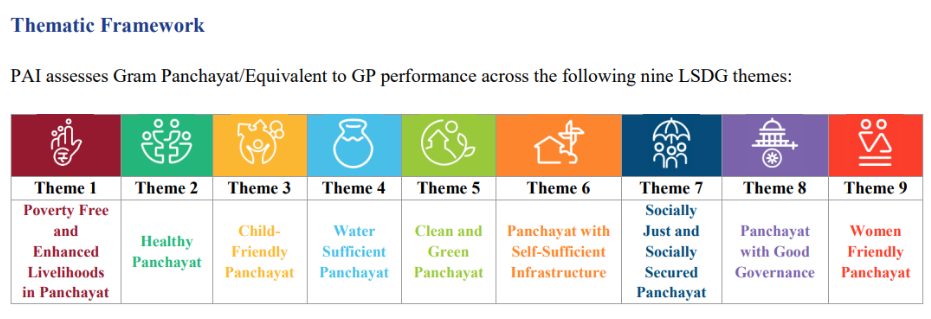
- 01 May 2026
In News:
The release of the Panchayat Advancement Index (PAI) 2.0 Report for the fiscal year 2023–24 marks a pivotal shift toward data-driven governance in India's rural landscape. Prepared by the Union Ministry of Panchayati Raj, this index serves as a comprehensive "report card" for more than 2.5 lakh Gram Panchayats, aligning local performance with global benchmarks through a localized framework.
Conceptual Framework: Localization of SDGs (LSDGs)
The PAI 2.0 is built on the Localization of Sustainable Development Goals (LSDGs). This strategy condenses the 17 global United Nations SDGs into nine thematic areas tailored for the functional domain of Panchayati Raj Institutions (PRIs). By doing so, the framework translates high-level international targets into actionable local objectives.
The Nine Thematic Pillars:
- Poverty Free and Enhanced Livelihoods
- Healthy Panchayat
- Child-Friendly Panchayat
- Water Sufficient Panchayat
- Clean and Green Panchayat
- Self-Sufficient Infrastructure in Panchayat
- Socially Just and Socially Secured Panchayat
- Panchayat with Good Governance
- Women-Friendly Panchayat
Methodology and Scoring Mechanism
PAI 2.0 employs a rigorous, evidence-based assessment model that utilizes 150 indicators and 230 specific data points. This enables the Ministry to move beyond subjective evaluations to a quantifiable monitoring system.
Performance Classification:
Gram Panchayats are categorized based on their composite PAI scores (0–100):
- Achiever (A ): 90 and above
- Front Runner (A): 75 to below 90
- Performer (B): 60 to below 75
- Aspirant (C): 40 to below 60
- Beginner (D): Below 40
Key Findings of the 2023–24 Report
The PAI 2.0 report highlights a significant surge in institutional engagement and data transparency across the country:
- Exceptional Participation: A record 97.3% of eligible Gram Panchayats (over 2.59 lakh) across 33 States and UTs participated in the exercise. This is a substantial increase from the 80.79% recorded in Version 1.0.
- State-Wise Highlights:
- Chhattisgarh achieved a milestone of 100% participation, with all its 11,643 local bodies submitting validated data.
- Tripura emerged as a leader in high-performance grades, hosting the largest number of "Front Runner" (Grade A) Panchayats.
- The Jugal Kishorenagar Gram Panchayat in Tripura secured the top national rank with a score of 88.44.
- Performance Trends: While participation is nearly universal, the results indicate that a majority of Panchayats currently fall within the Performer (B) and Aspirant (C) categories. No single Panchayat has yet reached the coveted Achiever (A ) status in the composite score, though thousands have achieved A in individual themes like "Poverty Free" and "Healthy Panchayat."
Naval Anti-Ship Missile Short Range

- 01 May 2026
In News:
In a significant milestone for India’s maritime defense, the Defence Research & Development Organisation (DRDO) and the Indian Navy recently conducted the maiden salvo flight trial of the Naval Anti-Ship Missile-Short Range (NASM-SR). The test, carried out from a Sea King 42B helicopter at the Integrated Test Range in Chandipur, Odisha, demonstrated the weapon’s "fire-and-forget" capability. A salvo launch involves firing multiple missiles in quick succession to overwhelm an enemy’s defense systems, a capability essential for modern naval warfare.
Origins and Development
The NASM-SR is India’s first indigenously designed and developed helicopter-launched anti-ship missile.
- Replacement Strategy: It is specifically engineered to replace the aging British-origin Sea Eagle missiles, which have been the mainstay of the Navy’s Sea King fleet for decades.
- Indigenous Partnership: The project was spearheaded by the Research Center Imarat (RCI) in Hyderabad, in collaboration with several other DRDO laboratories and Indian industry partners, aligning with the "Aatmanirbhar Bharat" (Self-Reliant India) initiative.
Technical Specifications and Features
The NASM-SR incorporates several high-end technologies that enhance the precision and lethality of naval air operations:
- Propulsion and Range: The missile is powered by a solid propulsion booster and a long-burn sustainer motor, providing it with an operational range of approximately 55 kilometers.
- Navigation and Guidance: It is equipped with a state-of-the-art seeker and an Imaging Infrared (IIR) system for terminal guidance. Its navigation is supported by a Fiber-Optic Gyroscope-based Inertial Navigation System (INS) and a radio altimeter.
- Control Systems: The missile utilizes Jet-Vane Control (JVC) technology, which allows for extreme maneuverability immediately after launch, and high-bandwidth two-way data links for real-time communication.
- Tactical Advantage: The system supports all-weather, day-and-night operations. It is designed for low-level sea-skimming, a flight profile that allows the missile to fly just above the water's surface to evade enemy radar detection.
- Lethality: The missile is designed for a precise waterline hit, a critical tactical feature intended to cause maximum structural damage and flooding to hostile vessels.
Strategic Significance for the Indian Navy
The induction of the NASM-SR holds several strategic advantages for India's maritime security architecture:
- Self-Reliance in Niche Tech: By developing an indigenous helicopter-launched missile, India reduces its dependence on foreign Original Equipment Manufacturers (OEMs) for critical airborne anti-ship weaponry.
- Enhanced Maritime Domain Awareness: The ability to launch these missiles from helicopters allows the Navy to project power far beyond the visual horizon of its surface fleet, providing a quick-reaction capability against small and medium-sized enemy combatants.
- Modernization of the Air Arm: The successful salvo trials pave the way for the integration of this weapon system onto other platforms, including the Indigenously Developed Dhruv (Advanced Light Helicopter) and the MH-60R Romeo helicopters, thereby modernizing the offensive reach of the Navy’s air wing.
Piprahwa Relics

- 01 May 2026
In News:
Leh recently emerged as a focal point of spiritual and historical significance as it hosted the sacred Piprahwa relics of Gautam Buddha. This landmark event, marked by the arrival of the relics in Ladakh, represents a rare confluence of faith and history. Carried via a special Indian Air Force aircraft and received with state honors, the exposition marks the first time these "AA" category antiquities have been moved from their original place of preservation for domestic exposition within India, following several high-profile international tours to nations like Thailand, Mongolia, and Vietnam.
Historical and Archaeological Context
The Piprahwa Relics are among the most authentic and significant archaeological links to the mortal remains of the Buddha. Their history is rooted in the late 19th century:
- Discovery (1898): The relics were unearthed by William Claxton Peppé, a British colonial engineer, at the Piprahwa Stupa in the Basti district of Uttar Pradesh.
- Identification of Kapilavastu: Archaeological evidence from the site associates Piprahwa with ancient Kapilavastu, the capital of the Shakya kingdom where Siddhartha Gautama spent his formative years before his Great Renunciation (Mahabhinishkramana).
- The Brahmi Inion: A critical find was a sandstone coffer containing crystal caskets. One casket bore an inion in the ancient Brahmi , explicitly linking the contents to the Shakya clan. This epigraphic evidence suggests the remains were enshrined by the Buddha’s own kinsmen around the 3rd century BC.
- Later Excavations (1971–1977): Subsequent excavations by the Archaeological Survey of India (ASI) led by K.M. Srivastava uncovered further steatite caskets containing 22 sacred bone fragments. These are currently preserved at the National Museum in New Delhi.
Legal Status and Repatriation
The trajectory of these relics reflects India’s evolving policy on heritage management and cultural diplomacy:
- The Treasure Trove Act, 1878: Under colonial law, the British Crown claimed Peppé’s original find. While some bones were presented to King Chulalongkorn of Siam (Thailand), a significant portion of the gems and ornaments remained in private hands or were moved to the Indian Museum in Kolkata.
- Antiquity Classification: In modern India, the Piprahwa relics are classified as ‘AA’ antiquities. This legal designation under the Antiquities and Art Treasures Act prohibits their sale and strictly regulates their movement, reflecting their "inestimable" value to national heritage.
- Modern Repatriation (2025-2026): In a significant victory for cultural restitution, a collection of associated gems and artifacts that had remained with the Peppé family for 127 years was repatriated to India. This was achieved through a unique public-private partnership involving the Government of India and the Godrej Industries Group, successfully preempting a planned auction in Hong Kong.
Socio-Cultural and Strategic Significance
The exposition in Ladakh transcends religious ritual, touching upon several key themes relevant to the Indian state:
- Cultural Diplomacy: The movement of these relics to various Buddhist-majority nations serves as a pillar of India’s "Act East" policy, utilizing "Soft Power" to strengthen ties with the Global South and Southeast Asia.
- Regional Integration: The ceremony in Leh, attended by the Lieutenant Governor and senior monastic leaders (including Drukpa Thuksey Rinpoche), underscores the integration of Himalayan Buddhist culture into the broader national narrative.
- The 2569th Buddha Purnima: The timing of the exposition, coinciding with Buddha Purnima, highlights the continuity of the Dhamma in the region, drawing thousands of devotees and global attention to the Dharma Center in Leh and Zanskar.