
Cauvery Water Management Authority
- 03 May 2026
In News:
In a significant step toward resolving one of India’s longest-standing inter-state water conflicts, the Cauvery Water Management Authority (CWMA) has directed Karnataka to release 2.5 TMC (Thousand Million Cubic feet) of water to Tamil Nadu for the month of May 2026. This directive reaffirms the 2018 Supreme Court verdict and emphasizes the role of statutory bodies in maintaining federal harmony during periods of climatic stress.
The Kaveri River:
- The Kaveri, popularly known as the "Ganga of the South" (Dakshin Bharat ki Ganga), is the lifeblood of agricultural and urban centers in Southern India.
- Origin and Course: The river rises at Talakaveri in the Brahmagiri Range of the Western Ghats (Kodagu, Karnataka). It flows approximately 800 km through Karnataka and Tamil Nadu before emptying into the Bay of Bengal.
- Drainage Basin: The basin is shared by Karnataka, Tamil Nadu, Kerala, and Puducherry.
- Key Tributaries:
- Left Bank: Harangi, Hemavati, Shimsha, and Arkavati.
- Right Bank: Lakshmana Tirtha, Kabini, Suvarnavathi, Bhavani, Noyyal, and Amaravati.
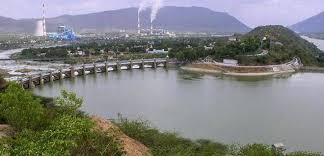
- Strategic Infrastructure: Major reservoirs like Krishna Raja Sagara (KRS) in Karnataka and the Mettur Dam in Tamil Nadu serve as the primary control points for water regulation.
The Legal Evolution of the Dispute
The conflict over Kaveri's waters is rooted in colonial-era agreements (1892 and 1924) between the Madras Presidency and the Princely State of Mysore. Post-independence, Karnataka contested these agreements as unfair, leading to decades of legal friction.
1. Constitutional and Statutory Framework
Under Article 262 of the Constitution, which empowers Parliament to adjudicate inter-state river disputes, the Inter-State River Water Disputes Act, 1956 was enacted. This led to the formation of the Cauvery Water Disputes Tribunal (CWDT) in 1990.
2. The Landmark 2018 Supreme Court Verdict
In February 2018, the Supreme Court modified the earlier Tribunal award, establishing several key principles:
- National Asset Doctrine: The Court declared that no single state has proprietary rights over a river; it is a shared national asset.
- Bengaluru’s Needs: Karnataka was granted an additional 14.75 TMC to meet the drinking water requirements of Bengaluru.
- Final Share Allocation (Annual):
- Tamil Nadu: 404.25 TMC
- Karnataka: 284.75 TMC
- Kerala: 30 TMC
- Puducherry: 7 TMC
CWMA and CWRC
To move away from ad-hoc management and frequent litigation, the Centre established the Cauvery Water Management Authority (CWMA) and its subordinate body, the Cauvery Water Regulation Committee (CWRC), in June 2018.
Structure and Governance
The CWMA is a statutory, quasi-judicial body notified under Section 6A of the 1956 Act.
- Headquarters: New Delhi, under the Union Ministry of Jal Shakti.
- Composition: Led by a Chairperson (eminent engineer or IAS officer), it includes full-time members for Water Resources and Agriculture, alongside part-time members representing the four basin states.
Core Functions
- Water Apportionment: Regulating reservoir releases to ensure each state receives its mandated share.
- Distress Sharing: During years of poor monsoon, the CWMA determines the proportionate sharing of water shortages (distress) among states.
- Data Monitoring: Collecting real-time data on storage positions and inflows via the CWRC.
- Technological Advisory: Encouraging micro-irrigation and crop diversification to improve water-use efficiency.