
Shekha Jheel Bird Sanctuary
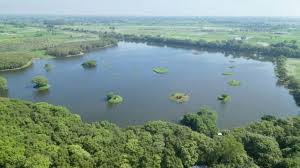
- 23 Apr 2026
In News:
In a significant milestone for India’s conservation efforts, the Shekha Jheel Bird Sanctuary in Aligarh, Uttar Pradesh, has been designated as a Ramsar Site. This addition brings India’s total tally of "Wetlands of International Importance" to 99, reinforcing the nation's leadership in biodiversity preservation under the Ramsar Convention.
Geographic and Historical Context
Shekha Jheel is a quintessential example of a monsoonal wetland nestled within the fertile Gangetic Plains of Uttar Pradesh. Unlike many natural oxbow lakes in the region, Shekha Jheel has a unique anthropogenic origin.
- Origin: The lake emerged as a perennial freshwater body following the construction of the Upper Ganges Canal in 1852. The canal flows adjacent to the lake, maintaining its water levels throughout the year.
- Location: It is situated in the Aligarh district, serving as a critical aquatic ecosystem in an otherwise semi-arid and agricultural landscape.
Ecological Profile: Flora and Fauna
The sanctuary's ecosystem is characterized by diverse strata of vegetation that support a complex food web:
1. Diverse Vegetation
The wetland hosts a variety of aquatic flora, categorized by their growth patterns:
- Submerged Species: The depths are populated by Hydrilla verticillata, Ceratophyllum demersum, and Vallisneria spiralis.
- Floating Species: The surface is covered by free-floating plants like Salvinia, Azolla, and the invasive Eichhornia crassipes (Water Hyacinth), alongside rooted floating plants such as Nymphoides cristata.
2. Avian Diversity and the Central Asian Flyway
Shekha Jheel serves as a vital "refueling station" on the Central Asian Flyway (CAF). During the winter months, the lake transforms into a bustling habitat for thousands of long-distance migratory birds.
- Key Migrants: The sanctuary provides refuge to the Bar-headed Goose (known for flying over the Himalayas), the Painted Stork, and numerous species of migratory ducks.
- Ecosystem Services: Beyond providing a habitat, the lake aids in groundwater recharge for the surrounding agricultural belt and acts as a natural buffer for flood control.
The Ramsar Framework in India
The designation of Shekha Jheel under the Ramsar Convention (1971) signifies that the site meets rigorous international criteria for biodiversity conservation.
- India’s Standing: With 99 sites spread across 28 states and Union Territories, India has the largest network of Ramsar sites in South Asia.
- Criteria for Selection: To be listed, a wetland must support vulnerable or endangered species, provide habitat for at least 20,000 waterbirds, or play a significant role in the biological diversity of its specific region.
- Conservation Status: Ramsar status mandates the "wise use" of the wetland, encouraging sustainable management that balances human needs (like local fishing) with ecological integrity.