
Super El Niño
- 23 Apr 2026
In News:
Climate experts are sounding alarms over a potential "Super El Niño" developing in the 2026-27 cycle. With projections suggesting it could be the strongest in 140 years, this climate phenomenon is poised to redefine global temperature benchmarks in 2027 and trigger severe socio-economic disruptions.
Decoding the ENSO Mechanism
The El Niño-Southern Oscillation (ENSO) is a periodic fluctuation in sea surface temperatures (SST) and atmospheric pressure across the tropical Pacific Ocean. It consists of three phases: El Niño (warm), La Niña (cool), and Neutral.
Normal vs. El Niño Conditions
- Normal (Neutral) Phase: Strong trade winds blow from east to west (Easterlies), piling up warm surface water near Asia and Indonesia. This allows cold, nutrient-rich water to rise (upwelling) along the South American coast (Peru).
- El Niño Phase: Trade winds weaken or reverse into Westerly Wind Bursts. This allows the warm water pool to slide eastward toward the Americas as a Kelvin wave. This warm layer pushes down the thermocline (the transition layer between warm surface and cold deep water), shutting off the upwelling of cold water.
What Makes it a "Super" El Niño?
While a standard El Niño involves an SST anomaly of 0.5°C, a Super El Niño is defined by an extreme spike in the Niño 3.4 region (the central-eastern equatorial Pacific).
- Intensity Threshold: SST anomalies must soar at least 2.0°C (3.6°F) above the long-term average.
- Subsurface Heat Reservoir: A massive buildup of subsurface heat—currently measured at 7-8°C above average in localized areas—acts as high-octane fuel for surface warming.
- Westerly Wind Bursts: Unusually strong wind bursts from the west prevent the system from neutralizing, accelerating the eastward migration of heat.
- Global Warming Synergy: Human-induced climate change has raised the "baseline" temperature of the Pacific. Consequently, modern El Niños are "supercharged," starting from a warmer foundation and reaching unprecedented peaks.
Global and Regional Implications
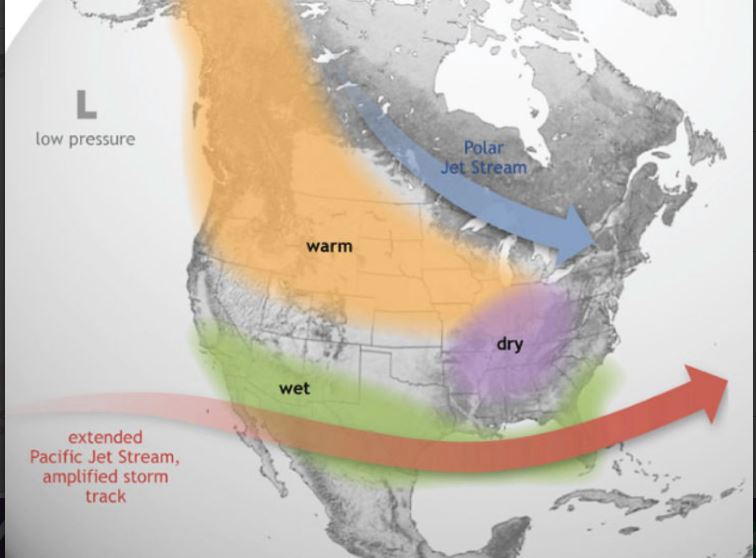
The atmospheric response to such extreme ocean warming alters global jet streams, creating a "domino effect" of weather disasters.
1. Global Consequences
- Record Temperatures: 2027 is projected to become the hottest year on record, potentially pushing global warming past the 1.5°C threshold temporarily.
- Hydrological Extremes: While the southern US and Peru face devastating floods and deluges, regions like Ethiopia, Central Africa, and Australia are likely to endure severe, multi-year droughts.
- Hurricane Dynamics: High-altitude winds (wind shear) in the Atlantic tend to "shred" developing hurricanes, leading to a quieter Atlantic season but a more active and vicious season in the Central and Eastern Pacific.
2. The "India Factor": Monsoon and Economy
For India, a Super El Niño is traditionally a harbinger of distress:
- Monsoon Failure: There is a strong correlation between El Niño and deficient Southwest Monsoon rainfall. A "Super" event could lead to widespread drought across the subcontinent.
- Agricultural Stress: Deficient rains during the Kharif season (rice, pulses, sugarcane) can lead to crop failure, triggering food inflation and a decline in rural demand.
- Heatwaves and Health: The phenomenon intensifies and prolongs summer heatwaves, straining the national power grid and increasing heat-related mortality.
- Economic Impact: The World Meteorological Organization (WMO) warns of billions in economic losses in climate-sensitive sectors like water management and hydroelectric power.
The impending 2026-27 Super El Niño is not just a weather event; it is a stress test for global climate adaptation strategies. For India, this underscores the urgency of strengthening Climate-Resilient Agriculture (CRA), improving water-use efficiency through the Jal Jeevan Mission, and enhancing early warning systems under the National Disaster Management Plan. As the planet enters uncharted thermal territory, proactive policy intervention will be the only shield against the "Super" extremes of a warming world.