
Jumping Spiders
- 21 Apr 2026
In News:
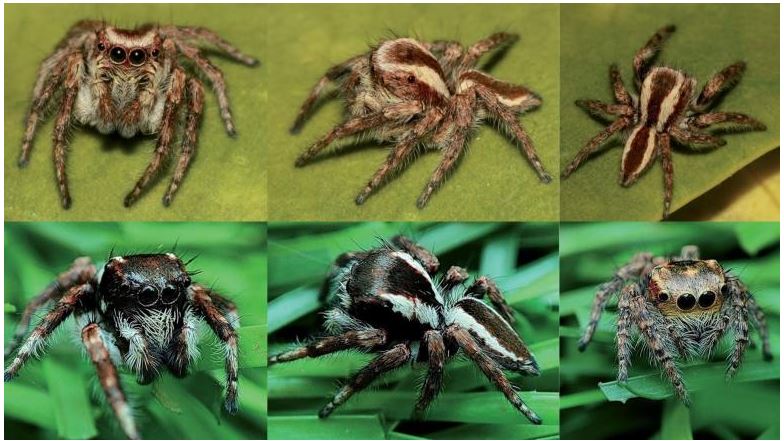
The biodiversity landscape of India continues to expand with the recent identification of two new species of jumping spiders: Mogrus shushka and Mogrus pune.
Understanding the Genus: Mogrus
The newly identified spiders belong to the genus Mogrus, a group of medium-sized jumping spiders. Members of this genus are primarily distributed across the arid and semi-arid landscapes of Africa, Europe, and Asia. Jumping spiders (family Salticidae) are renowned for their exceptional vision and agile hunting techniques, often pouncing on prey rather than weaving traditional webs.
1. Mogrus shushka: The Arid Specialist
Discovered in the Desert National Park (DNP), Rajasthan, Mogrus shushka represents the hardy nature of the Thar Desert’s micro-fauna.
- Etymology: The species name is derived from the Sanskrit word ‘shushka’, meaning ‘dry’. This nomenclature directly references the hyper-arid environment of its habitat.
- Adaptations: It is evolutionarily tuned to survive extreme thermal fluctuations, negligible humidity, and the shifting sandy terrain of the desert.
- Morphological Distinctions:
- Males: They are distinguished from their close relative, M. cognatus, by a unique triangular-shaped bump on their pedipalp (mating appendage), as opposed to a thumb-shaped structure.
- Females: They possess a deep, semi-circular epigynal depression (on the underside) characterized by short, tightly spaced internal ducts.
2. Mogrus pune: The Urban Biodiversity Indicator
In a significant finding for urban ecology, Mogrus pune was discovered in the Alfa Laval Biodiversity Park, Maharashtra.
- Etymology: The species is named after the city of Pune, emphasizing the role of urban green spaces in sustaining undiscovered life forms.
- Morphological Distinctions:
- Males: These are identified by a heart-shaped bump on their reproductive organs and specific, uniquely curved anatomical structures.
- Females: They are characterized by a central depression that is notably wide and membranous, a key feature used for taxonomic classification.
Significance for Biodiversity and Conservation
These discoveries underscore several critical points regarding India’s environmental health:
- Arid Ecosystem Value: The discovery in Desert National Park highlights that even "wastelands" or hyper-arid zones are reservoirs of unique genetic diversity that require stringent protection.
- Urban Green Spaces: The presence of a new species in Pune’s biodiversity park validates the "Oases in Concrete" concept, proving that urban parks can serve as vital refugia for wildlife amidst industrialization.
- Taxonomic Gap: Identifying new species helps scientists better understand the evolutionary lineage of the Salticidae family in the Indian subcontinent, which is essential for building robust ecological conservation strategies.
New Species of Jumping Spiders Discovered in Western Ghats
- 08 Mar 2025
In News:
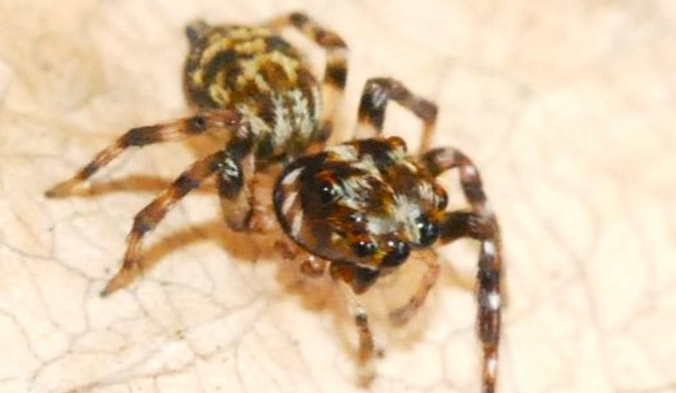
Two new species of jumping spiders belonging to the genus Epidelaxia have been discovered from the Shendurney Wildlife Sanctuary in Kollam, Kerala, marking the first recorded presence of this genus in India. Previously, Epidelaxia was considered endemic to Sri Lanka.
Details of the Discovery
- Species: Epidelaxiafalciformis sp. nov. and Epidelaxiapalustris sp. nov.
- Discovered during field studies in December 2022 and April 2023.
- Conducted by researchers from:
- University of Kerala
- Saveetha Medical College, Chennai
- Bharata Mata College, Kochi
- Published in Zootaxa (Feb 2025), a peer-reviewed journal.
Physical Features
- Females: Yellow triangular mark on the prosoma (front body) and white orbital setae around the eyes.
- Males of E. falciformis: Brown carapace with a yellow-brown stripe.
- Males of E. palustris: Pale brown band along the side of the body.
- Size:
- E. falciformis: 4.39 mm
- E. palustris: 4.57 mm (males), 3.69 mm (females)
Ecological Context
- These species are highly adapted to dense foliage in the Western Ghats, a recognized global biodiversity hotspot.
- The discovery extends the known geographical range of the genus and highlights the rich, yet underexplored, arachnid diversity of the Western Ghats.