
Whole-Exome Sequencing (WES)

- 15 Apr 2026
In News:
In a significant milestone for medical genetics, scientists recently utilized Whole-Exome Sequencing (WES) to identify a previously unknown rare genetic disease. This breakthrough underscores the increasing importance of targeted genomic tools in clinical diagnostics and the pursuit of personalized medicine.
Understanding the Exome: The "Blueprint" of Proteins
To understand WES, one must first distinguish between the entire genome and the exome:
- The Genome: The complete set of genetic material in an organism.
- Exons: These are the specific "coding" sequences of DNA that provide the instructions for building proteins.
- The Exome: This is the collective term for all the exons in a genome.
Notably, while exons make up less than 2% of the human genome, they are disproportionately significant, containing approximately 85% of all known disease-related genetic variants.
Mechanism of Whole-Exome Sequencing (WES)
WES is a genomic technique that ignores the vast "non-coding" regions of DNA (sometimes referred to as "junk DNA," though its regulatory roles are still being studied) to focus exclusively on the protein-coding regions.
How it differs from Whole-Genome Sequencing (WGS):
- Whole-Genome Sequencing (WGS): Reads every single base pair in the entire 3-billion-letter DNA sequence, including non-coding regions.
- Whole-Exome Sequencing (WES): Specifically captures and sequences only the exome.
Advantages of the WES Approach
The recent discovery of a new rare disease highlights why WES is often preferred in clinical and research settings:
- Diagnostic Efficiency: Since the majority of mutations causing rare diseases occur in the exons, WES is a highly effective "first-look" tool for identifying the root cause of undiagnosed conditions.
- Cost-Effectiveness: By sequencing only 2% of the genome, WES is significantly cheaper than WGS, making it more accessible for large-scale research and patient care.
- Faster Data Processing: The smaller volume of data generated simplifies the bioinformatic analysis, allowing clinicians to reach a diagnosis more quickly.
- Targeted Insight: It is particularly adept at identifying both common and rare variants that alter protein function, which are the primary drivers of many hereditary disorders.
Amaravati Quantum Reference Facility (AQRF)
- 15 Apr 2026
In News:
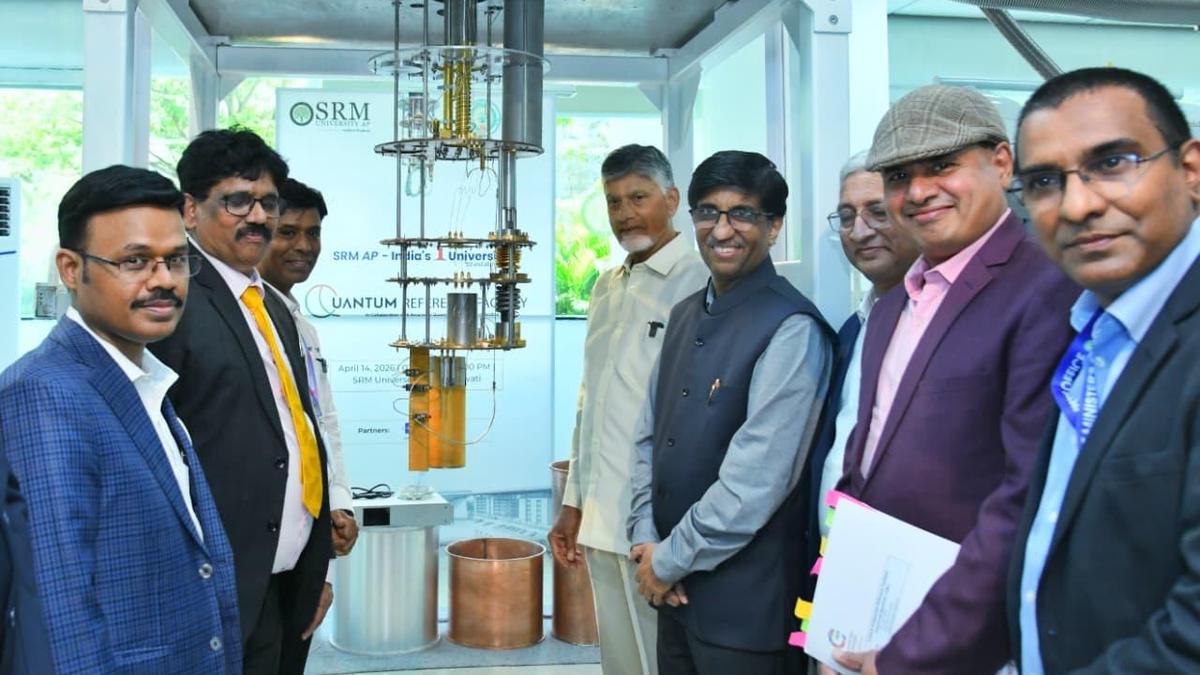
On April 14, 2026, marking the centennial celebration of quantum science and World Quantum Day, Andhra Pradesh inaugurated the Amaravati Quantum Reference Facility (AQRF). As India’s first open-access quantum hardware testing and certification hub, the AQRF represents a critical step toward achieving "Atmanirbhar Bharat" (self-reliance) in deep-tech and advanced computing.
The Facility: Amaravati 1S and Amaravati 1Q
The AQRF consists of two state-of-the-art twin centers designed to catalyze the domestic quantum ecosystem:
- Amaravati 1S (SRM University, Neerukonda): An open-access platform built using superconducting technology. It is designed for experimentation, validation, and training for students, researchers, and startups.
- Amaravati 1Q (Medha Towers, Gannavaram): A specialized unit focused on rigorous testing and certification of critical quantum components, including control systems, cryogenic hardware, and amplifiers, under extreme conditions (near -273°C).
Strategic Collaboration and Indigenization
The facility is a product of a premier national consortium, showcasing a high degree of domestic integration:
- Institutional Partners: Developed in collaboration with the Tata Institute of Fundamental Research (TIFR), Indian Institute of Science (IISc), DRDO, and IIT Bombay.
- Industry Synergy: Tech startups such as Qubitech and Qbit Force served as key contributors.
- Sovereign Hardware: Approximately 85% of the components were manufactured within India, aiming to break global monopolies in critical subsystems like dilution refrigerators and precision hardware.
Core Objectives and Sectoral Impact
The AQRF provides the necessary infrastructure to benchmark indigenous hardware, which is vital for the National Quantum Mission (NQM).
- Drug Discovery: Exponentially faster molecular simulations to accelerate pharmaceutical research.
- Agriculture: Precision modeling for crop optimization and soil health.
- Climate Science: Enhancing the accuracy of climate prediction models.
- Secure Communication: Advancing quantum-secured encryption for national defense and financial sectors.
Andhra Pradesh’s "Quantum Valley" Vision
The state government aims to transform Amaravati into a global ‘Quantum Valley’, attracting an estimated $1 billion in investment by 2029. This hub is part of a broader distributed innovation strategy in Andhra Pradesh:
- Tirupati: Space City hub.
- Orvakal: National Drone Hub.
- Anantapur & Visakhapatnam: Semiconductor and Med-tech clusters.
World Quantum Day
World Quantum Day is celebrated annually on April 14 (4.14). This date is a tribute to the fundamental constant of quantum physics, Planck’s Constant, which is approximately 4.135×10⁻¹⁵ eV. This constant represents the quantization of energy and serves as the bedrock of modern quantum mechanics.
Atlantic Meridional Overturning Circulation (AMOC)
- 15 Apr 2026
In News:
The Atlantic Meridional Overturning Circulation (AMOC) is currently at the center of global climate discourse. Recent studies published in Nature Communications and Science Advances (2026) warn that this vital oceanic system is showing signs of a steady decline, potentially nearing a "tipping point" that could trigger irreversible shifts in the Earth's climate and carbon cycles.
Understanding the AMOC: The "Oceanic Conveyor Belt"
The AMOC is a large-scale system of ocean currents that acts as a vertical loop spanning the entire length of the Atlantic Ocean. It is a critical component of the Earth's thermohaline circulation (driven by temperature and salinity).
- The Mechanism: It transports warm, salty water from the tropics northward along the surface. In the North Atlantic, this water cools, becomes denser, and sinks to the deep ocean. This cold, dense water then flows southward along the ocean floor, eventually resurfacing in other regions to complete the cycle.
- The Gulf Stream: A major component of the AMOC, the Gulf Stream is responsible for maintaining the relatively mild climates of Western Europe and the Eastern coast of North America.
Reasons for the Current Weakening
Scientists have observed a consistent decline in AMOC strength over the past two decades, particularly along the western boundary.
- Greenhouse Gas Forcing: Rising global temperatures are the primary driver of this instability.
- Freshwater Influx: The rapid melting of the Greenland Ice Sheet pours massive amounts of freshwater into the North Atlantic. This reduces the salinity and density of the water, preventing it from sinking and thereby "stalling" the conveyor belt.
- Tipping Point Projections: Research suggests a complete collapse could occur as early as 2037, or at least by 2109, if current warming trends continue.
Consequences of an AMOC Collapse
A shutdown of the AMOC would lead to a dramatic redistribution of heat and carbon across the planet, with impacts categorized into three main areas:
A. Global Warming & Carbon Feedback
- Source vs. Sink: Traditionally, the Southern Ocean acts as a "carbon sink," absorbing $CO_2$. A collapse would turn it into a carbon source, releasing deep-ocean $CO_2$ back into the atmosphere.
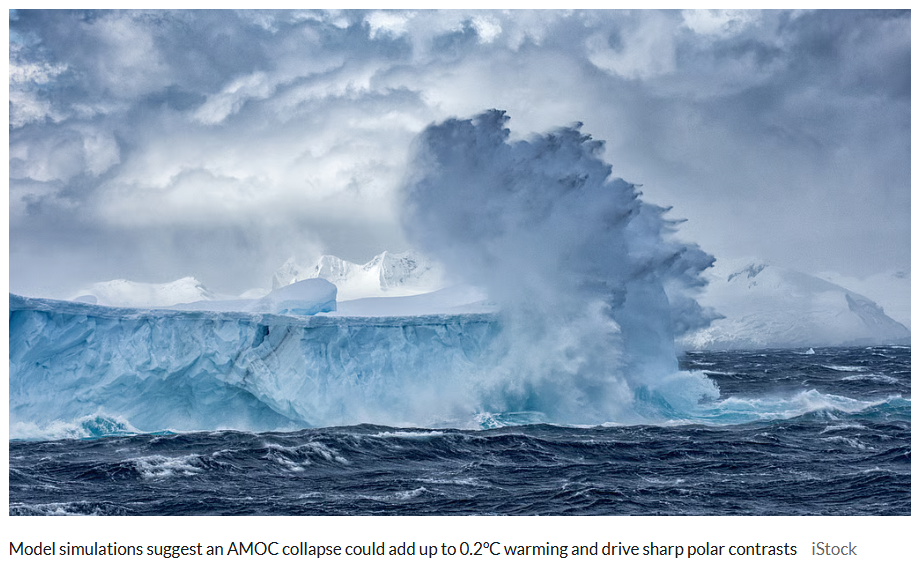
- Extra Warming: This release of 47–83 gigatonnes of $CO_2$ could add an additional 0.2°C to global average temperatures, exacerbating the greenhouse effect.
B. Regional Temperature Shifts
The collapse would create a "bipolar seesaw" effect in global temperatures:
- Northern Hemisphere Cooling: Without warm water transport, the Arctic and North Atlantic could see temperatures plummet by up to 7°C. This would be amplified by the sea-ice-albedo feedback, where increased ice cover reflects more sunlight, causing further cooling.
- Southern Hemisphere Warming: Conversely, parts of Antarctica could see a temperature rise of 6°C to 10°C as heat that was once transported north remains trapped in the south.
C. Ecological and Meteorological Disruptions
- Rainfall Patterns: Europe would likely face a significant decrease in rainfall, impacting agriculture and water security.
- ENSO Interaction: Changes in Atlantic circulation are expected to influence the El Niño-Southern Oscillation (ENSO), potentially leading to more frequent or extreme weather events globally.
e-SafeHER
- 15 Apr 2026
In News:
In a major stride toward a "Cyber Secure Bharat," the Ministry of Electronics and Information Technology (MeitY) has launched e-SafeHER. This specialized cybersecurity training initiative is designed to empower one million women across rural India by 2029, ensuring that the rapid expansion of digital access is matched by robust digital security.
Overview and Institutional Framework
- The e-SafeHERprogramme addresses the critical awareness gap for rural women who are increasingly entering the digital economy.
- It operates as a strategic partnership under MeitY’s larger Information Security Education and Awareness (ISEA) framework.
- The initiative is a collaborative effort involving several key stakeholders. While MeitY serves as the nodal ministry, the Centre for Development of Advanced Computing (C-DAC), Hyderabad, acts as the technical partner, leading the development of technical content and localized training modules.
- To ensure grassroots reach, the Reliance Foundation serves as the implementation partner, leveraging its extensive community network to deliver the programme on the ground.
Core Objectives
The programme is built around three primary pillars:
- Safe Digital Participation: Enabling women to navigate the digital ecosystem securely and protecting them from rising risks such as financial fraud and identity theft.
- Economic Empowerment: Building the necessary confidence for women to utilize digital platforms for banking, micro-enterprises, and online livelihoods.
- Grassroots Integration: Extending the national cybersecurity framework to the remotest regions of India through a gender-responsive and sustainable model.
Key Features of the Initiative
- The Cyber Sakhi Model: At the heart of the programme is a peer-led, community-based model. It identifies and trains local women to become "Cyber Sakhis" (Cyber Friends). These women act as peer educators, translating complex technical concepts into relatable advice for their local communities.
- Leveraging Social Capital through SHGs: Rather than building new infrastructure, e-SafeHER utilizes the existing network of Self-Help Groups (SHGs). This allows the initiative to penetrate deep into rural regions and foster trust, as the training is delivered by familiar faces within established social circles.
- Multilingual and Localized Content: To overcome literacy and language barriers, C-DAC has developed audio-visual modules adapted into multiple Indian languages. This localization ensures that the training is accessible to women regardless of their formal educational background.
- Phased Implementation and Scaling: The programme follows an evidence-based scaling strategy. It is initially being implemented in Madhya Pradesh and Odisha, with insights from these regions serving as a blueprint for national expansion. The goal is to reach the one-million-women milestone over a three-year horizon.
- Blended Learning for Behavioral Change: The initiative combines structured technical training with community-based interventions. By focusing on blended learning, the programme aims for measurable behavioral shifts, such as the adoption of secure password practices and the ability to identify phishing attempts.
Startup India Fund of Funds 2.0 (FoF 2.0)
- 15 Apr 2026
In News:
In a significant move to bolster India's entrepreneurial landscape, the Government of India officially notified the Startup India Fund of Funds 2.0 (FoF 2.0). With a massive corpus of ?10,000 crore, this second iteration aims to bridge funding gaps and catalyze domestic capital for the next generation of Indian innovators.
Background and Evolution
FoF 2.0 is the successor to the original Fund of Funds for Startups (FFS 1.0), which was launched in 2016 under the Startup India Action Plan. While the first phase focused on establishing the startup culture, the 2.0 version is designed to scale the ecosystem, particularly in capital-intensive and frontier technology sectors.
Core Objective
The primary goal is to mobilize venture and growth capital from domestic sources. By providing a "cornerstone" government commitment, the fund encourages private institutional investors to contribute, thereby reducing the Indian startup ecosystem's over-reliance on foreign capital.
Operational Mechanism: How it Works
The Startup India FoF 2.0 does not invest directly in startups. Instead, it follows a "Fund of Funds" model:
- Investment in AIFs: The government contributes capital to the corpus of SEBI-registered Alternative Investment Funds (AIFs).
- Downstream Investment: These AIFs then identify and invest in individual entities recognized as 'startups' by the Central Government.
- Implementation Agencies:SIDBI (Small Industries Development Bank of India) is the primary agency to operationalize the scheme. Notably, provisions exist to appoint an additional domestic implementing agency to expand the reach.
Key Features and Strategic Focus
|
Feature |
Details |
|
Total Corpus |
?10,000 Crore |
|
Time Frame |
Spread across the 16th and 17th Finance Commission cycles. |
|
Nodal Dept. |
Department for Promotion of Industry and Internal Trade (DPIIT). |
|
Priority Segments |
Deep Tech, Innovative Manufacturing, and Early Growth-stage startups. |
|
Flexibility |
Sector and stage agnostic; allows for larger corpus and longer-duration AIFs for capital-intensive sectors. |
Governance and Oversight
To ensure transparency and high-quality fund selection, a robust three-tier governance structure has been established:
- Venture Capital Investment Committee (VCIC): Composed of industry veterans, the VCIC undertakes the screening and selection of eligible AIFs.
- Empowered Committee (EC): This body provides high-level monitoring and oversight of the scheme's implementation and performance.
- Umbrella Framework: Includes provisions for co-investment by the government and institutional investors, backed by strict governance safeguards.
E-PRAAPTI Portal
- 30 Apr 2026
In News:
In a significant move toward financial inclusion and digital transparency, the Employees’ Provident Fund Organisation (EPFO) is launching E-PRAAPTI (EPF Aadhaar-Based Access Portal for Tracking Inoperative Accounts). This specialized digital platform is designed to help millions of workers reclaim funds lying dormant in inoperative accounts, effectively bridging the gap between old records and the modern Universal Account Number (UAN) system.
Understanding Inoperative EPF Accounts
An EPF account is officially classified as "inoperative" under two primary conditions:
- Cessation of Contributions: When no new contributions have been made to the account for 36 consecutive months after an individual leaves their job.
- Fragmentation: When old PF records from previous employers are not linked to the current, active UAN of the member.
Since 2014, the EPFO has utilized the 12-digit UAN to ensure portability of benefits; however, a vast amount of capital remains stuck in older accounts created prior to this system or accounts that were abandoned during job transitions.
The E-PRAAPTI Mechanism: Aadhaar-Based Reclamation
The E-PRAAPTI portal serves as a dedicated "track and link" engine. It simplifies a previously cumbersome manual process through a streamlined, secure digital interface:
- Aadhaar-Based Authentication: The portal uses Aadhaar to verify the identity of the member, ensuring that the rightful owner is accessing the funds.
- Identification and Tracking: It allows members to securely search for and identify old accounts that are currently detached from their UAN.
- Profile Updating and Activation: Once identified, members can initiate a process to update their profiles and link these old accounts to their current UAN, thereby "activating" the dormant funds.
Phased Rollout Strategy
To ensure security and administrative efficiency, the EPFO has planned a tiered launch for E-PRAAPTI:
- Initial Phase (Member ID-Based): In the first stage, the portal will cater to members who possess their Old Member IDs. This allows for a swift rollout for the segment of the workforce that has retained their previous employment documentation.
- Expansion Phase: The scope will eventually be broadened to assist members who have lost or cannot recall their old member IDs. This phase will likely utilize advanced search parameters based on demographic data and Aadhaar history.
UAE to exit OPEC and OPEC
- 30 Apr 2026
In News:
In a move that has sent ripples through international energy markets, the United Arab Emirates (UAE) formally withdrew from the Organization of the Petroleum Exporting Countries (OPEC) and the broader OPEC alliance on May 1, 2026. This departure marks a significant turning point for the Middle East’s third-largest producer, signaling a shift from collective production constraints toward individual strategic autonomy and long-term economic diversification.
Understanding OPEC: The Core of Oil Diplomacy
OPEC is a permanent intergovernmental organization established during the Baghdad Conference (September 1960). Its foundational mission was to ensure that oil-producing nations could exercise permanent sovereignty over their natural resources—a principle solidified in its 1968 Declaratory Statement.
- Founding Members: Iran, Iraq, Kuwait, Saudi Arabia, and Venezuela.
- Organizational Structure: While headquartered in Vienna, Austria (since 1965), its influence is global. It seeks to unify petroleum policies to secure stable pricing for producers and a regular supply for consuming nations.
- Fluctuating Membership: The UAE joins a growing list of nations—including Qatar, Ecuador, and Angola—that have recently exited the group to pursue independent production targets.
The Rise of OPEC : Expanding the Coalition
Formed in December 2016 via the Declaration of Cooperation (DoC), OPEC expanded the original group to include 10 non-OPEC countries, most notably Russia, Mexico, and Kazakhstan.
- The Aim: To provide a more robust mechanism for market stabilization, especially during crises like the COVID-19 pandemic, where the alliance coordinated massive voluntary production cuts to prevent a total collapse in prices.
- The Mechanism: The group relies heavily on countries with "Spare Capacity"—the ability to rapidly adjust production levels—to act as market "swing producers."
- The 2019 Charter: This established a long-term platform for dialogue and information exchange among the 23 member nations.
Strategic Rationale: Why the UAE Withdrew
The UAE’s decision to exit is rooted in its long-term vision to maximize the value of its hydrocarbon assets before the global energy transition reduces demand.
- Production Disparities: The UAE has invested billions in expanding its production capacity to over 5 million barrels per day. Under OPEC quotas, much of this capacity remained "shut-in" or unused, hindering the country's return on investment.
- Economic Diversification: Under its "We the UAE 2031" vision, the country seeks to fund its transition to a non-oil economy. Independent control over its oil revenues allows for more aggressive funding of renewable energy and technology sectors.
- Geopolitical Divergence: The exit reflects a growing strategic divergence from the Saudi-led "price-over-volume" strategy, as the UAE prioritizes capturing market share in a rapidly evolving energy landscape.
Implications for Global Markets and India
The UAE’s exit significantly weakens the collective bargaining power of OPEC , as the group loses one of its few members with genuine spare capacity.
- Market Volatility: The immediate aftermath may see increased price volatility as the UAE ramps up production, potentially leading to a "market share war" similar to those seen in the past.
- India’s Energy Security: For India, the UAE is a primary strategic partner and a reliable supplier. An independent UAE may offer more flexible, long-term supply contracts, aiding India's efforts to manage its Current Account Deficit (CAD) and inflation.
- Investments: The shift might open new avenues for Indian public sector undertakings (PSUs) to invest in UAE’s upstream sectors, which are now free from the constraints of multinational production caps.
Multilateral Exercise Pragati

- 30 Apr 2026
In News:
In a significant stride toward regional security and military cooperation, the Indian Army has launched the inaugural edition of its new multilateral military engagement, Exercise PRAGATI. Conducted at the Foreign Training Node in Umroi, Meghalaya, this platform marks a transformative chapter in India’s "Neighborhood First" and "SAGAR" (Security and Growth for All in the Region) initiatives.
Decoding PRAGATI: Scope and Scale
The name PRAGATI stands for "Partnership of Regional Armies for Growth and Transformation in the Indian Ocean." This acronym underscores the exercise's specific focus on the Indian Ocean Region (IOR), a strategically vital maritime corridor that handles a massive share of global trade.
- Host and Location: The exercise is hosted by the Indian Army at the specialized Foreign Training Node in Umroi. This location is renowned for providing a world-class environment for tactical maneuvers and joint planning.
- Participants: Military delegations from 11 friendly countries are participating alongside India, representing a diverse coalition of regional forces.
Core Objectives and Tactical Focus
Exercise PRAGATI is designed to move beyond traditional bilateral drills, focusing instead on Collective Security and the seamless integration of diverse military protocols.
- Interoperability: A primary goal is to enhance the ability of different armies to operate together effectively. This involves standardizing communication, tactical procedures, and joint command structures.
- Mutual Trust: By bringing together 11 nations, the exercise seeks to build a shared commitment to regional stability and foster trust among ground forces that may need to respond to shared threats.
- Growth and Transformation: As the name suggests, the drills focus on modernizing regional armies through the exchange of best practices, technological insights, and innovative combat strategies.
Strategic Significance for India
The launch of Exercise PRAGATI positions the Indian Army as a central pillar of cooperative security in the IOR.
- Defense Diplomacy: This inaugural edition signals India's intent to lead regional security discourse, moving from a passive observer to a proactive facilitator of multilateral defense partnerships.
- Indian Ocean Primacy: While much focus is often on naval cooperation in the IOR, PRAGATI highlights the critical role of land forces in maintaining regional stability, disaster response, and counter-terrorism.
- Geopolitical Balancing: By engaging 11 nations simultaneously, India strengthens its strategic ties and creates a unified front against non-traditional threats like piracy, smuggling, and regional insurgency.
TheridionHimalayana

- 30 Apr 2026
In News:
In a significant addition to India’s Himalayan biodiversity, a team of scientists, including experts from Odisha, has discovered a new species of spider named Theridionhimalayana. Found in the high-altitude landscapes of the Western Himalayas, this discovery highlights the ecological richness of the region and the complex evolutionary traits of the Theridiidae family.
Classification and Distinctive Features
Theridionhimalayana is categorized as a "happy-face spider" due to the striking patterns on its abdomen that resemble a smiling human face. It belongs to the Theridiidae family, commonly known as cobweb spiders or tangle-web spiders.
1. Extreme Polymorphism
One of the most remarkable characteristics of this species is its polymorphism. Both males and females exhibit a vast array of physical variations.
- 32 Different Morphs: Scientists have identified 32 distinct color variations (morphs).
- Facial Patterns: These patterns consist of dots in shades of red, black, and white, arranged in different configurations to mimic a "smiling" appearance.
2. Unique Reproductive Anatomy
The species is distinguished from its relatives by its specialized reproductive structures:
- Copulatory Ducts: These are notably long and strongly curved. They project forward and run nearly parallel before bending downward at their distal ends.
- Fertilization Ducts: In contrast, these are short and thin, pointing upward and spreading apart in a characteristic V-shape.
Ecological Role and Importance
The discovery of Theridionhimalayana is not just a taxonomic milestone but also an indicator of forest health.
- Biological Pest Control: The species preys primarily on small flies and various forest insects. By maintaining the balance of these populations, it plays a vital role in natural insect control within the Himalayan ecosystem.
- Potential Pollinator: Preliminary observations suggest that the species may serve as a crucial pollinator for specific high-altitude plants, a role that is relatively rare among spiders and requires further research.
DPI@2047: NITI Aayog’s Strategic Blueprint for a Developed India
- 30 Apr 2026
In News:
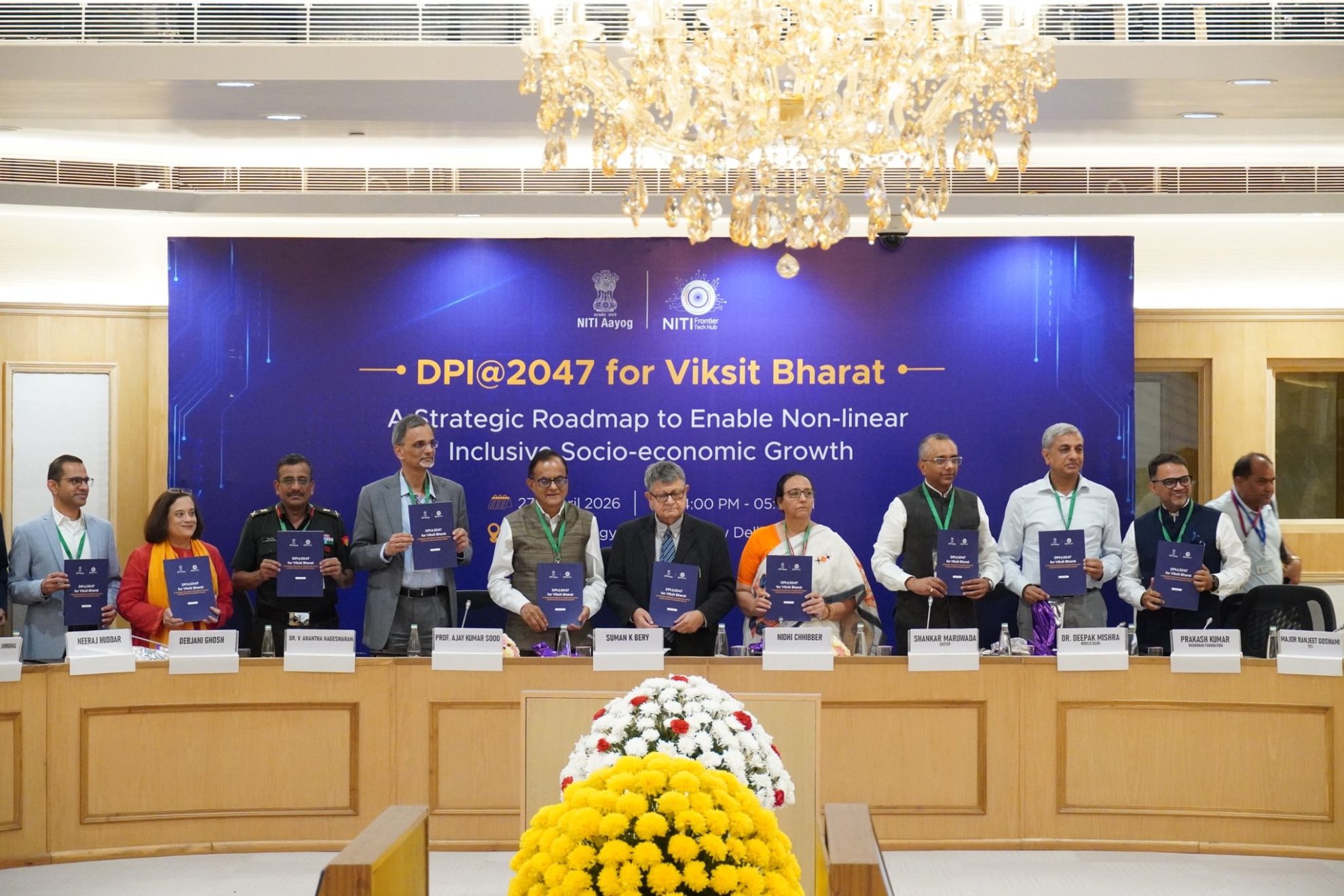
In a major step toward achieving the "Viksit Bharat" vision, NITI Aayog has launched the DPI@2047 Roadmap. Developed by the NITI Frontier Tech Hub (FTH) in collaboration with the EkStep Foundation and Deloitte, this strategic framework marks the evolution of India’s Digital Public Infrastructure (DPI).
The roadmap seeks to transition India from foundational digital inclusion (identity and payments) to a high-productivity, livelihood-led growth trajectory, aiming for a $30 trillion economy with a per capita income of $18,000 by 2047.
The Evolutionary Phasing: DPI 2.0 and 3.0
The roadmap adopts a two-phased approach to ensure non-linear, inclusive socio-economic growth:
Phase 1: DPI 2.0 (2025–2035) – "Realising Aspirations": This phase focuses on building a broad base of capable citizens by empowering livelihoods at scale. The objective is to move beyond mere welfare delivery and drive productivity in core sectors like MSMEs, agriculture, education, and healthcare. It aims to establish the mass inclusion required for a high-income society.
Phase 2: DPI 3.0 (2035–2047) – "Achieving Prosperity": The final phase envisions a compounding effect where grassroots innovation leads to sustained, high-value local economic growth across all regions. This phase will culminate in the realization of a developed India characterized by inclusive and widespread prosperity.
Core Pillars of the Roadmap
The DPI@2047 initiative rests on several strategic pillars designed to unlock economic potential:
- Mass Inclusion and Livelihoods: Expanding market access for MSMEs, improving job discovery for local talent, and enhancing the income of smallholder farmers.
- Human Capability Foundations: Achieving universal health coverage and implementing learner-centric education that utilizes local languages to eliminate learning inequities.
- Systemic Enablers: Democratizing access to credit through asset tokenization, enabling decentralized energy markets, and ensuring proactive, automated benefit delivery.
- AI-DPI Convergence: Integrating Artificial Intelligence as a "first-response assistant" to provide personalized, vernacular guidance to citizens, such as farmers and small business owners.
Economic Impact and Execution Imperatives
NITI Aayog projects that these DPI initiatives could contribute up to 4% of India’s GDP by 2030. To achieve this, the roadmap identifies four execution imperatives:
- Aggregating Demand: Using district-level programs to create a predictable pipeline for digital solutions.
- Scaling Entrepreneurship: Fostering a local ecosystem of tech entrepreneurs.
- Leveraging AI: Using AI to bridge knowledge gaps and language barriers.
- Strategic Unlocks: Utilizing open networks to expand digital transactions and unlocking data for actionable insights.
Addressing Structural Bottlenecks
Despite the potential, the roadmap identifies several challenges that must be navigated:
- Fragmented Ecosystems: A shortage of local entrepreneurs ready to meet new digital demands.
- Implementation Sinks: The risk of creating "technology looking for a problem" rather than market-driven solutions.
- Platform Dependency: Walled-garden models that exclude small providers from larger value chains.
- Knowledge Gaps: The difficulty for citizens to navigate complex digital procedures in their native languages.
Strategic Recommendations for Implementation
To ensure the success of the roadmap, NITI Aayog recommends a decentralized, state-led execution model. Solutions should be hyper-localized and context-specific, driven by states and districts.
The Aayog suggests two-year iterative transformation cycles, beginning with MSMEs and Agriculture in 2026-2027. Furthermore, India aims to establish a neutral global body by 2027 to lead international collaboration and showcase its successful DPI models to the world.
Printed Circuit Boards (PCB)
- 29 Apr 2026
In News:
In April 2026, the global electronics industry faced a severe shock as the conflict in the Middle East intensified, leading to a dramatic 40% surge in the price of Printed Circuit Boards (PCBs). This crisis underscores the fragility of high-tech supply chains and the critical dependence of the modern digital economy—especially the burgeoning AI sector—on specific raw materials sourced through volatile trade routes.
The Anatomy of a Crisis: Why Prices Scalated
The primary driver behind the price hike is the disruption of maritime trade and the supply of specialized raw materials.
- PPE Resin Shortage: High-purity Polyphenyleneether (PPE) and epoxy resins are the foundational "glue" of PCB laminates. The disruption in West Asia has choked the supply of these chemical precursors, which are essential for high-frequency circuit boards.
- Shipping Bottlenecks: As a vital transit point for global trade, the instability in the Middle East has forced rerouting, increasing freight costs and lead times for other components like copper foil and glass fiber.
What is a Printed Circuit Board (PCB)?
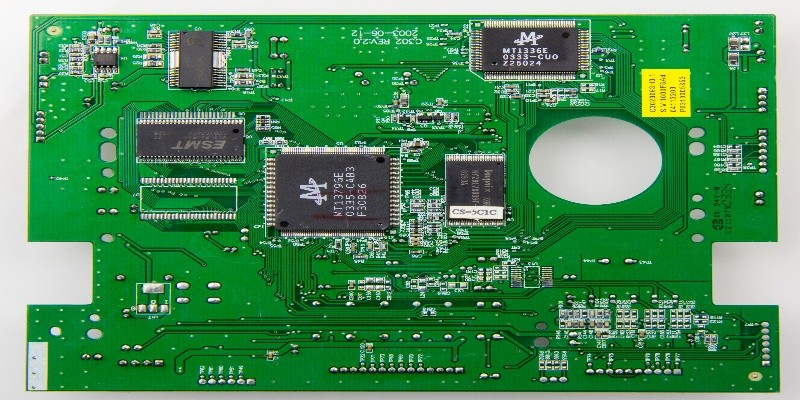
Often referred to as the "nervous system" of electronic devices, a PCB is a rigid or flexible substrate used to electrically connect and mechanically support electronic components. It utilizes conductive pathways, known as traces, which are etched from copper sheets laminated onto a non-conductive base.
Critical Raw Materials and Their Economics
- Copper Foil: The most expensive element, typically accounting for 60% of total raw material costs. It provides the conductive paths necessary for electricity to flow.
- Resins (PPE/Epoxy): These act as the insulating base. In advanced high-speed applications like AI, specialized resins like PPE are non-negotiable for maintaining signal integrity.
- Glass Fiber: Integrated into the substrate to provide mechanical strength, structural durability, and electrical insulation.
The Manufacturing Process: From Substrate to Circuit
The production of high-end PCBs is a high-precision engineering feat involving several stages:
- Lamination: Intense heat and pressure bond the resin and glass fiber to create a solid substrate.
- Etching: A chemical process removes excess copper, leaving behind the precise "roads" (conductive pathways) required for the circuit to function.
- Multi-layering: For complex hardware, such as AI servers, manufacturers stack multiple layers of circuitry. These high-end boards can cost thousands of dollars per square meter due to their complexity.
Global Impact and Applications
The current price surge affects the entire spectrum of technology, from household gadgets to national infrastructure:
- AI and Data Centers: Cloud service providers are seeing increased costs for the massive AI servers that power large language models and neural networks.
- Consumer Tech: Smartphones, laptops, and wearables are facing upward price pressure as manufacturers pass on the 40% increase in component costs to consumers.
- Industrial Automation: Semiconductors produced by giants like Nvidia, AMD, Samsung, and SK Hynix rely on these boards as the essential interface for their chips. Without stable PCB supplies, factory automation and large-scale manufacturing equipment face significant delays.
Holocene Fossil Discovery in Thoothukudi
- 29 Apr 2026
In News:
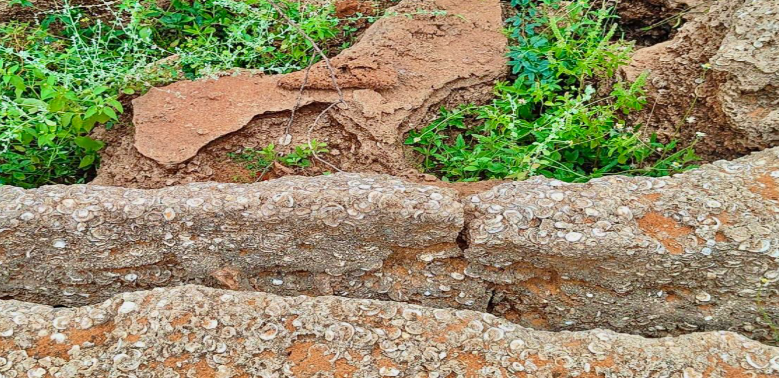
In a landmark paleontological discovery, a significant fossil bed dating back to the middle-to-late Holocene period (approximately 8,000 to 12,000 years ago) has been unearthed in the Panaiyur area of Thoothukudi district, Tamil Nadu. This discovery, revealed in late 2025 and scientifically validated in early 2026, marks the first documented fossil bed in the Thoothukudi region and a vital addition to India’s Quaternary fossil record.
The Discovery and Scientific Response
The site was initially exposed by torrential rains in 2023, which caused significant soil erosion and revealed buried sedimentary layers.
- Identification: Following a request from the local administration, the Zoological Survey of India (ZSI) conducted a swift and thorough field survey between January 5 and 10, 2026.
- Findings: Scientists collected 104 fossil specimens, primarily comprising marine invertebrate organisms such as bivalves (clams, oysters) and gastropods (snails).
- Geological Context: The fossils are embedded in sedimentary formations consisting of condensed sandstones and lateritic red soils. The presence of features like submarine canyons and water channels within these layers suggests a complex coastal history.
The Holocene Epoch: Context and Characteristics
The Holocene is the current geological epoch, the second part of the Quaternary Period (which also includes the preceding Pleistocene).
- Timeline: It spans roughly the last 11,700 years, beginning after the Earth’s last major ice age.
- Post-Glacial Transition: This epoch is defined by the melting of massive ice sheets, leading to a global sea-level rise (estimated at 35 meters in its early phase) and the stabilization of a warmer, tropical climate.
- The Anthropocene Link: Often associated with the rise of modern wildlife and the flourish of human agriculture and permanent settlements, the Holocene represents the environmental stage upon which human civilization developed.
Scientific Significance of the Panaiyur Discovery
This discovery is of immense value for reconstructing India’s paleoclimatic and biological past.
1. Paleoenvironmental Reconstruction: The marine fossils discovered are located 5 to 7 kilometers inland from the current coastline. This serves as critical evidence of past sea-level fluctuations, indicating that the area was once submerged. The assemblage points toward a shallow-marine to estuarine setting with warm, tropical temperatures and moderate water circulation.
2. Environmental Continuity: The species found in the fossil bed show a striking similarity to modern marine fauna in the Gulf of Mannar. This suggests a high degree of environmental continuity over the last 12,000 years, helping scientists understand how regional ecosystems remained stable or responded to historical climate shifts.
3. Enhancing the Quaternary Record: Quaternary fossil sites in southern India are relatively rare. The Panaiyur find fills a significant gap in the national inventory, providing high-resolution data on Holocene sedimentology, including bioturbation (organism burrowing) and cross-stratification (layering by currents).
Lake Issyk-Kul
- 29 Apr 2026
In News:
In a major archaeological breakthrough in 2026, underwater explorers discovered a hidden city beneath the waters of Lake Issyk-Kul in Kyrgyzstan. Divers followed a trail of ancient, preserved brickwork to reveal a lost civilization dating back seven centuries. This discovery adds a profound layer of historical depth to a lake already renowned for its unique geological and ecological characteristics.
Geographical and Geological Profile
Situated in northeastern Kyrgyzstan, Lake Issyk-Kul is cradled by the snowcapped Tian Shan (Heaven’s Mountains). Its formation dates back approximately 25 million years, making it one of the oldest lakes on the planet.
- Endorheic Basin: The lake is an endorheic system, meaning it has no outflow to rivers or oceans. This isolation has contributed to its unique chemical composition.
- Physical Dimensions: Located at an altitude of 1,600 meters, it is the world’s second-largest high-mountain lake, surpassed only by Lake Titicaca in South America. It spans 182 km in length, 61 km in width, and covers a surface area of 6,280 sq. km.
- Depth and Ranking: With a maximum depth of 668 meters and an average depth of 280 meters, it ranks as the seventh deepest lake globally.
The "Hot Lake": Why It Never Freezes
Despite being surrounded by frigid alpine peaks, Lake Issyk-Kul remains unfrozen throughout the winter. Its name, "Issyk-Kul," literally translates to "Hot Lake." This phenomenon is driven by a combination of factors:
- High Salinity: It is the world’s second-largest saline lake after the Caspian Sea. Its brackish waters have a lower freezing point than freshwater.
- Heat Storage: Its immense depth allows it to act as a heat reservoir.
- Geothermal Activity: The presence of underwater warm springs further prevents ice formation.
Archaeological Significance: The Submerged City
The 2026 discovery of the 700-year-old city confirms long-standing local legends of ancient settlements swallowed by the rising waters. The submerged brickwork suggests a sophisticated urban center that was part of the silk road trade routes before being inundated.
The site serves as a "time capsule," offering insights into the medieval architecture and daily life of Central Asian civilizations that were previously lost to history. Scholars believe fluctuations in the lake's water levels, caused by tectonic shifts or climatic changes, likely led to the city's eventual submergence.
Ecological and Environmental Importance
Lake Issyk-Kul is not just a geological wonder but a vital biological sanctuary.
- Biodiversity: The lakeshore is remarkable for its rapid succession of landscape types, ranging from subtropical zones to tundra, all occurring within a close geographic span.
- Ramsar Site: In 1976, the lake was designated a wetland of international importance under the Ramsar Convention. It serves as a crucial stopover for migratory birds and supports diverse endemic fish species.
Google AI Data Hub
- 29 Apr 2026
In News:
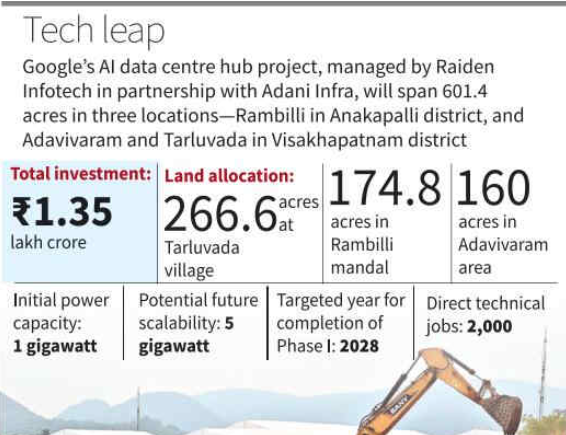
In a landmark move for India’s digital economy, the foundation stone for Google’s $15 billion AI Data Centre Hub was laid near Visakhapatnam, Andhra Pradesh. This project, executed through Google’s subsidiary Raiden Infotech in partnership with Adani Infra, represents one of the largest Foreign Direct Investment (FDI) inflows in India’s technology sector to date.
Project Overview and Geographical Footprint
The Google AI Data Hub is a large-scale, artificial intelligence-driven data centre campus. Its strategic location spans across:
- Tarluvada and Adavivaram in the Visakhapatnam district.
- Rambilli in the Anakapalli district.
The selection of Andhra Pradesh’s coast leverages the state’s maritime advantage for submarine cable connectivity, making it a critical node for global data traffic.
Core Features and Technical Specifications
The hub is engineered to be a cornerstone of India’s high-capacity digital infrastructure. Key technical pillars include:
- Gigawatt-Scale Capacity: The campus is planned with a massive capacity of 1 gigawatt (GW), positioning it among the most significant data centre installations in the country.
- Global Connectivity: The facility will house high-capacity submarine cable landing stations. These, combined with dedicated fibre networks, will provide low-latency international connectivity, essential for real-time AI processing.
- Advanced AI & Cloud Operations: Beyond simple data storage, the hub is designed for complex cloud computing, cybersecurity operations, and global AI-driven services.
Strategic Significance for India and Andhra Pradesh
1. Economic and Employment Catalyst: The project is set to be a major engine for regional growth. It is expected to generate thousands of high-value employment opportunities in specialized fields such as:
- Data Science and Artificial Intelligence.
- Cybersecurity and Network Engineering.
- Cloud Infrastructure Management.
2. Fostering a 6.5 GW Digital Ecosystem: This investment aligns with Andhra Pradesh’s ambitious vision to develop a 6.5 GW digital ecosystem. The data hub will act as an anchor, drawing in allied sectors including renewable energy (to power the high-energy demands of the hub) and advanced manufacturing.
3. Strengthening "Digital India" and FDI Profile: By establishing its first major AI-focused data centre campus in India, Google is signaling confidence in India’s digital infrastructure. This reinforces India’s standing as a preferred global destination for large-scale tech investments, moving the country closer to becoming a global hub for cloud computing.
India–New Zealand Free Trade Agreement
- 29 Apr 2026
In News:
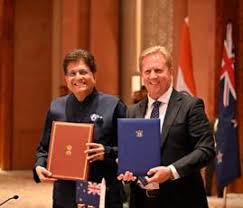
India and New Zealand signed a landmark Free Trade Agreement (FTA) at Bharat Mandapam, New Delhi. Concluded in a record nine months, this pact represents India’s 9th agreement with advanced economies, covering nearly 70% of global GDP. The deal is a "next-generation" partnership aimed at doubling bilateral trade to USD 5 billion within five years, while securing a massive USD 20 billion investment commitment from New Zealand over the next 15 years.
1. Trade in Goods: Unprecedented Market Access
The FTA provides a significant competitive edge to Indian exporters, particularly in labor-intensive sectors like textiles, leather, gems, and engineering goods.
- 100% Duty-Free Access for India: New Zealand will grant immediate duty-free access to all Indian exports. This removes previous peak tariffs of up to 10% on items like ceramics, carpets, and auto components.
- Duty-Free Inputs for Manufacturing: India secures zero-duty access to key industrial inputs such as wooden logs, coking coal, and metal scrap, which will lower production costs for domestic manufacturers.
- Calibrated Access for New Zealand: India has liberalized 70.03% of its tariff lines (covering 95% of trade value). While 30% of lines see immediate duty elimination, others will undergo phased reductions over 3 to 10 years.
2. Protection of Sensitive Sectors & Agriculture
A core pillar of the agreement is the "Productivity to Prosperity" model, which balances market opening with the protection of rural economies.
- The Exclusion List: To shield domestic farmers, India has kept 29.97% of tariff lines out of the deal. This includes all dairy products (milk, cheese, yogurt), sensitive vegetables (onions, peas, corn), sugar, edible oils, and arms/ammunition.
- Tariff Rate Quotas (TRQ): For specific high-demand items like Apples, Kiwifruit, and Manuka Honey, India will allow limited imports through a TRQ system. These are tied to Agriculture Productivity Action Plans, ensuring that New Zealand provides technical support to Indian farmers in exchange for market access.
- Centres of Excellence: The pact establishes partnerships for research, better planting material, and cold-chain logistics to improve Indian orchard management and food safety.
3. Services, Talent, and Mobility
This FTA marks a "first" in many categories regarding the movement of professionals and students.
- Temporary Employment Entry (TEE): A dedicated quota of 5,000 visas (up to 3 years) has been created for Indian professionals. This specifically includes AYUSH practitioners, yoga instructors, Indian chefs, and professionals in IT, healthcare, and engineering.
- Student Mobility: New Zealand has removed numerical caps on Indian students.
- Work Rights: Students can work 20 hours per week during studies.
- Post-Study Rights: 3 years for STEM Bachelor’s/Master’s graduates and 4 years for Doctoral scholars.
- Working Holiday Visas: 1,000 young Indians (annually) can access 12-month multiple-entry visas for global skill acquisition.
4. Strategic and Regulatory Breakthroughs
- USD 20 Billion Investment: A binding commitment from New Zealand to invest in India's infrastructure, renewable energy, and startups, backed by a "Rebalancing Clause" to address any shortfalls.
- Pharma Fast-Track: Market entry for Indian pharmaceuticals is accelerated by recognizing global standards (like US FDA/EMA), reducing duplicative inspections and costs.
- Geographical Indications (GI): New Zealand will amend its laws within 18 months to protect iconic Indian GIs (like Basmati rice or Darjeeling tea) beyond just wines and spirits.
- Traditional Knowledge & AYUSH: A first-of-its-kind chapter promotes Ayurveda, Yoga, and traditional wellness systems on a global scale.
5. India–New Zealand Relations: Strategic Context
The relationship has evolved from shared Commonwealth history to a modern strategic partnership in the Indo-Pacific.
- Indo-Pacific Alignment: New Zealand is aligning with India’s Indo-Pacific Oceans Initiative (IPOI) to counter regional maritime challenges and ensure a rules-based order.
- Economic Diversification: For New Zealand, the "Opening Doors to India" policy is a strategic move to reduce economic over-reliance on China.
- Diaspora: The Indian diaspora makes up 6% of New Zealand's population, acting as a vital bridge for "Track II" diplomacy.
Challenges to Overcome
Despite the optimism, the bilateral relationship faces hurdles:
- Strategic Ambivalence: New Zealand’s heavy economic dependence on China sometimes limits its geopolitical alignment with India.
- Security Frictions: The presence of pro-Khalistan elements in New Zealand remains a point of concern for Indian sovereignty.
- Transactional Views: Transitioning the relationship from a "labor and education market" to a deep-tech and defense partnership remains a work in progress.
Right to Safe Travel on National Highways under Article 21
- 28 Apr 2026
In News:
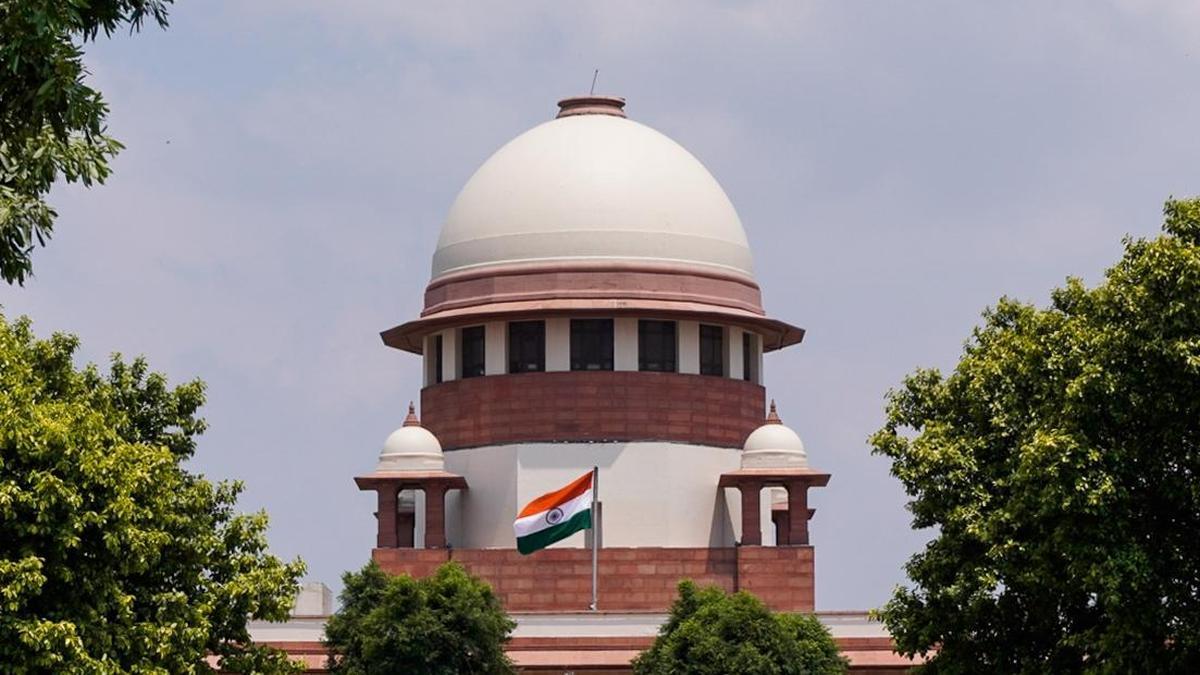
In a transformative judicial intervention, the Supreme Court of India has elevated the right to safe passage on highways to the status of a Fundamental Right. By interpreting Article 21 (Protection of Life and Personal Liberty) to include the safety of commuters, the Court has shifted the responsibility of road safety from a mere administrative task to a non-negotiable constitutional obligation of the State.
The Constitutional Shift: Expanding the Right to Life
The Supreme Court ruled that Article 21 imposes a "positive obligation" on the State to create a safe environment for its citizens.
- Beyond Survival: The Court clarified that the right to life extends beyond protection from unlawful killing; it includes protection from avoidable hazards.
- State Liability: Fatalities resulting from poor infrastructure, unauthorized encroachments, or administrative negligence are now viewed as a failure of the State’s constitutional duty to protect life.
The Crisis on the Arteries: Alarming Statistics
The ruling was prompted by a staggering disparity in India’s road safety data:
- Disproportionate Fatalities: While National Highways (NHs) constitute a mere 2% of India’s total road network, they are responsible for nearly 30% of all road fatalities.
- Vulnerability: This identifies NHs as zones of severe infrastructural and administrative vulnerability, requiring immediate and drastic systemic overhaul.
Judicial Mandates: Cleansing the Right-of-Way
To address the root causes of highway accidents, the Court issued several "Immediate Prohibitions" aimed at clearing the Right-of-Way (RoW)—the strip of land reserved for the highway and its future expansion.
1. Ban on Commercial Structures: The Court has issued an immediate ban on the construction or operation of any new commercial entities, including dhabas, eateries, or shops, within the highway's Right-of-Way. Existing unauthorized structures must be identified and addressed.
2. Demolition and Licensing
- 60-Day Ultimatum: District Magistrates are directed to demolish or remove all unauthorized structures within 60 days.
- Mandatory Clearances: No trade licenses or approvals for structures within highway safety zones can be granted without prior NOC (No Objection Certificate) from the National Highways Authority of India (NHAI) or the Public Works Department (PWD).
3. Strict Parking Norms: To prevent high-speed collisions with stationary objects, the Court prohibited heavy and commercial vehicles from stopping or parking on any National Highway, carriageway, or paved shoulder. Parking is strictly restricted to officially designated lay-bys and wayside amenities.
Institutional Mechanism: District Highway Safety Task Force
To ensure these directives do not remain on paper, the Court mandated the creation of a ‘District Highway Safety Task Force’ in every district across the country. This body will be responsible for:
- Constant monitoring of highway safety protocols.
- Enforcing the ban on unauthorized parking and structures.
- Ensuring inter-departmental coordination between the Police, NHAI, and District Administration.
The Bnei Menashe and "Operation Wings of Dawn"
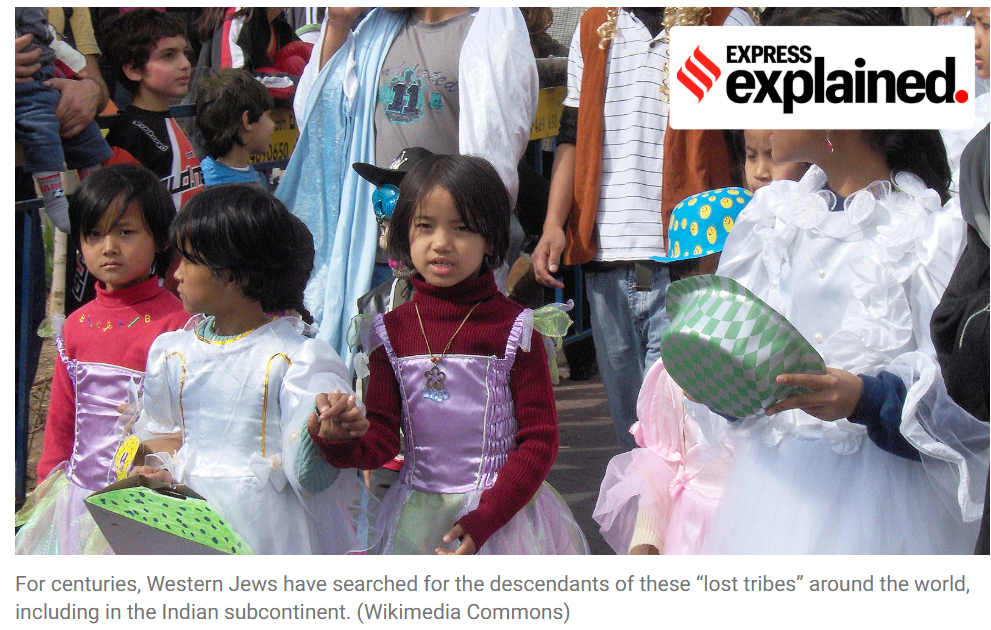
- 28 Apr 2026
In News:
In a significant diplomatic and humanitarian development, Israel recently airlifted approximately 240 individuals from Mizoram to Tel Aviv under "Operation Wings of Dawn." This operation, conducted amid heightened security concerns in West Asia, marks a new phase in the migration of the Bnei Menashe community from Northeast India to their perceived ancestral homeland.
Understanding "Operation Wings of Dawn"
The operation facilitated the relocation of members of the Bnei Menashe community to absorption centers in Israel, specifically in areas like NofHaGalil in northern Israel.
- India’s Diplomatic Stance: The Government of India has clarified that it did not actively facilitate the operation. India’s role remained restricted to its sovereign responsibility of ensuring that migration was legal, voluntary, and conducted in a manner that prevents any form of human trafficking.
- Logistical Support: The migration is largely managed by agencies such as Shavei Israel and the Jewish Agency for Israel (JAFI), which assist "Lost Tribes" in their journey toward Israeli citizenship.
The Bnei Menashe: History and Belief Systems
The Bnei Menashe (meaning "Sons of Manasseh") are a community primarily comprising individuals from the Mizo and Kuki tribal groups in Manipur and Mizoram.
The Ten Lost Tribes Theory
The community claims descent from the Tribe of Manasseh, one of the Ten Lost Tribes of Israel exiled by the Assyrian Empire around 722 BCE. Their oral traditions describe a centuries-long journey through Persia (modern-day Iran), Afghanistan, and eventually into the hills of Northeast India.
Religious Evolution
While most members of these tribal groups were converted to Christianity by missionaries during the 19th and 20th centuries, a "Judaising" movement emerged in the late 20th century. Influenced by local religious visions and organizations like Amishav, many members began adopting Jewish rituals, dietary laws (Kosher), and the Hebrew language by the 1980s.
Legal and Religious Recognition
The pivotal moment for the community came in 2005, when Israel’s Chief Rabbinate formally recognized the Bnei Menashe as the "Lost Seed of Israel."
- Basis for Recognition: This decision was based on deep-rooted cultural claims and traditional practices, as genetic evidence remained largely inconclusive.
- The Right of Return (Aliyah): This recognition cleared the path for members to perform Aliyah (the act of migrating to Israel). However, because they had been separated from mainstream Judaism for millennia, they are typically required to undergo a formal conversion process upon arrival in Israel to gain full citizenship.
Socio-Political Challenges and Integration
Despite the spiritual fulfillment of "returning" to Israel, the Bnei Menashe face several systemic hurdles:
- Integration Issues: Like many immigrant groups from non-Western backgrounds, the community has faced challenges related to language barriers, economic disparity, and cultural assimilation.
- Security Concerns: Many Bnei Menashe families have been settled in peripheral areas or sensitive northern regions like NofHaGalil, placing them on the frontlines of regional security tensions.
- Discrimination: Reports have surfaced regarding instances of social discrimination and the struggle for the community to be fully accepted within the complex mosaic of Israeli society.
Reconstitution of NITI Aayog
- 28 Apr 2026
In News:
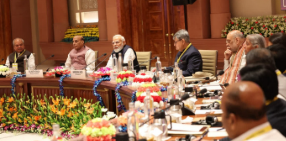
The Government of India has formally reconstituted the NITI Aayog (National Institution for Transforming India), marking a strategic shift in the country's premier policy think tank. This overhaul, announced aims to infuse multidisciplinary expertise into India’s developmental roadmap, particularly in health, deep tech, and economic reforms, to align with the goal of becoming a "Viksit Bharat" by 2047.
A New Leadership for Economic and Strategic Reform
The reconstitution is led by the appointment of eminent economist and former Chief Economic Advisor Ashok Kumar Lahiri as the Vice Chairperson, succeeding Suman K. Bery. Holding the rank of a Cabinet Minister, Lahiri brings decades of experience in public policy and economic strategy to the Aayog.
The restructuring also introduces a diverse cohort of Full-Time Members, moving beyond traditional economist-heavy compositions to include experts from science, medicine, and technology:
- Rajiv Gauba: Former Cabinet Secretary (retained).
- Dr. M. Srinivas: Director of AIIMS Delhi, bringing extensive medical and public health expertise.
- Prof. Abhay Karandikar: Secretary, Department of Science and Technology, specializing in telecommunications and deep tech.
- Prof. Gobardhan Das: Renowned molecular scientist and immunologist.
- Prof. K. V. Raju: Expert in agricultural economics and rural development.
Core Philosophy: From Planning to Catalyzing
Formed on January 1, 2015, through a Cabinet resolution, NITI Aayog replaced the 65-year-old Planning Commission. This transition represented a paradigm shift in Indian governance:
- Bottom-Up Approach: Unlike the top-down "one-size-fits-all" model of the Planning Commission, NITI Aayog emphasizes that strong states make a strong nation.
- Cooperative Federalism: It serves as a primary platform to involve State Governments in the policy-making process, treating them as equal partners.
- Competitive Federalism: It encourages states to compete on developmental parameters through various indices, such as the SDG India Index and State Health Index.
Key Functions and Mandate
NITI Aayog operates as the Knowledge and Innovation Hub of the government, tasked with:
- Strategic Policy Design: Formulating long-term program frameworks while incorporating national security interests into economic strategy.
- Monitoring and Evaluation: Actively tracking the implementation of government schemes to ensure last-mile delivery.
- Ease of Living: Driving reforms to reduce the compliance burden on citizens and enhance quality of life.
- Resource Center: Acting as a repository of best practices and research on good governance.
Organizational Structure
As a non-constitutional, non-statutory, and advisory body, its structure is designed for maximum institutional flexibility:
- Chairperson: The Prime Minister of India.
- Vice Chairperson: Appointed by the PM; enjoys Cabinet Minister rank.
- Governing Council: Comprises Chief Ministers of all States and Union Territories with legislatures, and Lieutenant Governors of other UTs.
- Chief Executive Officer (CEO): An officer with the rank of Secretary to the Government of India, appointed for a fixed tenure.
- Ex-Officio Members: Maximum of four members from the Union Council of Ministers, nominated by the PM.
40 years of the Chernobyl Disaster

- 28 Apr 2026
In News:
April 2026 marks the 40th anniversary of the Chernobyl disaster, an event that remains the most expensive man-made catastrophe in human history. With total costs exceeding $700 billion over four decades, the accident serves as a somber benchmark for the risks inherent in nuclear power when engineering flaws meet human error.
The Catastrophe: What Happened at Unit 4?
On the night of April 25–26, 1986, technicians at the Chernobyl nuclear power station—located near Pripyat in the former Soviet Union (present-day Ukraine)—initiated a safety experiment on the Unit 4 RBMK reactor. The goal was to test if the cooling pumps could still function during a power outage using the residual energy from a spinning turbine.
The experiment triggered a sequence of catastrophic failures:
- Design Vulnerabilities: The RBMK reactor was a graphite-moderated system with a critical flaw: it lacked a containment structure. In modern nuclear plants, this thick concrete and steel shell acts as a final physical barrier to prevent the escape of radiation during a meltdown.
- The Explosion: The chain reaction surged out of control, causing a massive steam explosion that blew the heavy lid off the reactor. Approximately 3.5% of the nuclear fuel was immediately dispersed into the atmosphere.
- The Graphite Fire: A subsequent fire in the graphite moderator burned for several days, acting as a chimney that sent plumes of radioactive isotopes high into the air, eventually spreading across Ukraine, Belarus, Russia, and reaching as far as Scandinavia.
Human and Environmental Toll
The scale of the disaster necessitated an unprecedented humanitarian and logistical response.
- Mass Displacement: Within 36 hours, the industrial town of Pripyat was evacuated. Ultimately, around 200,000 people were permanently relocated as their homes became part of a contaminated landscape.
- Environmental Impact: Nearly 150,000 square km of land across Eastern Europe was contaminated. Today, a 30-kilometer Exclusion Zone remains around the plant, where human habitation is strictly restricted due to high levels of soil radiation.
- Health Crisis: The health consequences were profound and long-lasting. Between 1991 and 2005, authorities documented at least 5,000 cases of thyroid cancer specifically in children who were exposed to radioactive iodine through contaminated milk and air.
Containment and Current Status
To prevent further leakage, the remains of Unit 4 were initially encased in a temporary concrete "sarcophagus." In recent years, this was replaced by the New Safe Confinement, a massive, arch-shaped steel structure designed to entomb the radioactive debris for the next century, allowing for the eventual stable decommissioning of the site.
Nilgiri Tahr

- 28 Apr 2026
In News:
In a major cross-border conservation effort, the Tamil Nadu Forest Department, in collaboration with Kerala, has commenced the third synchronized Nilgiri Tahr survey. This scientific census is a critical component of Project Nilgiri Tahr, aimed at safeguarding the only mountain ungulate in southern India and understanding the ecological health of the high-altitude Western Ghats.
Biological Profile and Ecological Significance
The Nilgiri Tahr (Nilgiritragushylocrius) is a unique species among the 12 mountain ungulates found in India. As an endemic species to the Western Ghats, it serves as a "vital indicator species"—its population stability directly reflects the health of the fragile montane grasslands it inhabits.
- State Identity: It is the State Animal of Tamil Nadu.
- Physical Adaptation: Known for extreme agility, these ungulates are exceptionally sure-footed, allowing them to navigate steep, rocky cliffs to evade predators.
- Conservation Status: The species is currently categorized as Endangered on the IUCN Red List.
Habitat and Geographic Distribution
Historically, the Nilgiri Tahr roamed the entire length of the Western Ghats. Today, their range is restricted to a narrow 400 km stretch from the Nilgiris in the north to the Kanyakumari hills in the south.
- Altitude: They are strictly montane, favoring open grasslands at elevations between 1,200 and 2,600 meters.
- Population Strongholds:
- Eravikulam National Park (Kerala): Home to the largest single population.
- Anamalai Hills and the Nilgiris: Other significant clusters.
- Fragmentation: Due to historical habitat loss and anthropogenic pressures, the species survives in small, isolated pockets, which poses a risk to genetic diversity.
Modern Survey Methodology and Conservation Research
The current synchronized survey is timed specifically after the winter calving season. This ensures that the young "kids" are visible and can be accurately counted alongside the adults. The 2026 survey incorporates several advanced scientific interventions:
- Digital Monitoring: The Varudai mobile app is used for standardized reporting and real-time tracking, reducing human error and ensuring data transparency.
- Genetic Management: Researchers are conducting behavioral studies to evaluate the feasibility of translocation—moving individuals between fragmented pockets to prevent inbreeding and improve the gene pool.
- Health Assessment: Specific research is being directed toward the prevalence of tumors observed in certain herds, providing a baseline for the overall pathological health of the species.
Hindu Kush Himalaya
- 27 Apr 2026
In News:
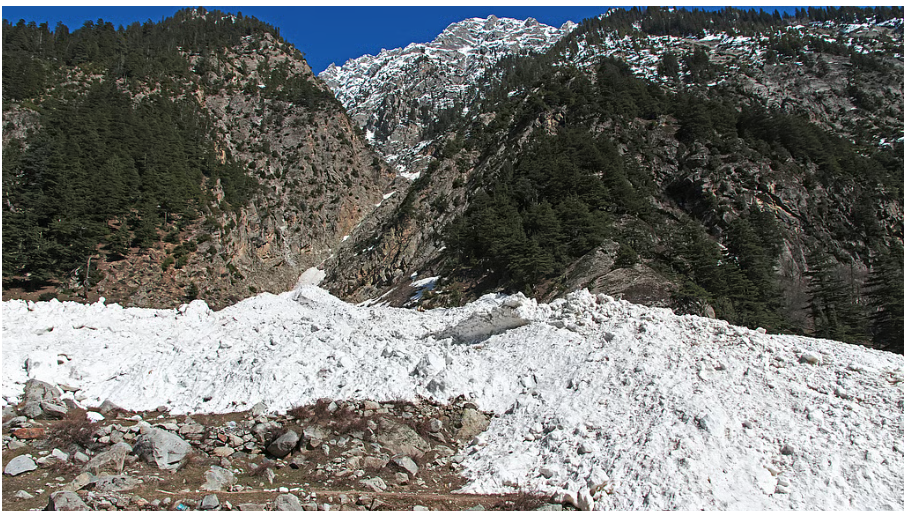
A recent report by the International Centre for Integrated Mountain Development (ICIMOD) has sounded a critical alarm for the Hindu Kush Himalaya (HKH) region. The findings reveal a record 27% drop in snow persistence—the duration for which snow remains on the ground—marking the fourth consecutive year of significant decline. This trend poses an existential threat to water security, biodiversity, and the livelihoods of nearly 2 billion people downstream.
Geographical Profile: The Water Tower of Asia
The Hindu Kush Himalaya is often referred to as the "Third Pole" because it contains the largest volume of permanent ice and snow outside the North and South Poles.
- Extent: It stretches approximately 3,500 km across eight countries: Afghanistan, Bangladesh, Bhutan, China, India, Nepal, Myanmar, and Pakistan.
- Topography: The range runs from northeast to southwest, acting as a colossal geographical divide between the Amu Darya valley to the north and the Indus River valley to the south.
- Highest Peak: The highest point is Tirich Mir (7,708 meters) located in the Chitral district of Pakistan.
- Sub-sections: The range is traditionally divided into three sections: the Eastern, Central, and Western Hindu Kush (the latter known as the B?b? Mountains).
Hydrological and Ecological Significance
The HKH region is the primary source of ten major Asian river systems:
- Amu Darya
- Indus
- Ganges
- Brahmaputra
- Irrawaddy
- Salween
- Mekong
- Yangtze
- Yellow River
- Tarim
These rivers support agriculture, energy, and industry for roughly a quarter of the global population. Furthermore, the region is an ecological powerhouse, home to four global biodiversity hotspots and a mosaic of ecosystems including glaciers, alpine meadows, wetlands, and desert vegetation in the arid inner valleys.
The Crisis: Declining Snow Persistence
Snow persistence is a vital indicator of mountain health. Unlike glaciers, which provide long-term water storage, seasonal snowmelt is the immediate driver of river flow during the spring and summer.
The ICIMOD report highlights that the current 27% decline is significantly below the historical average. This "snow drought" leads to:
- Water Scarcity: Reduced runoff affects irrigation and drinking water for downstream communities long before the monsoon arrives.
- Ecological Shift: Altered timing of snowmelt disrupts the life cycles of flora and fauna in alpine ecosystems.
- Increased Hazards: Warmer temperatures lead to unstable permafrost and a higher frequency of Glacial Lake Outburst Floods (GLOFs) and landslides.
RBI Eases Rupee NDF Curbs
- 27 Apr 2026
In News:
In a significant regulatory shift, the Reserve Bank of India (RBI) has partially rolled back restrictions on rupee-linked Non-Deliverable Forward (NDF) transactions. This decision follows a period of improved market stability and aims to streamline hedging operations for banks and their clients while maintaining a vigilant stance on exchange rate volatility.
The Policy Shift: From Restriction to Partial Relaxation
Previously, the RBI had tightened norms on NDFs to curb excessive speculation and arbitrage during periods of heightened global uncertainty. The recent relaxation introduces specific changes:
- Related-Party Transactions: Banks are now permitted to undertake limited related-party transactions, specifically the cancellation and rebooking (rollover) of existing NDF contracts.
- Targeted Relief: This move is primarily aimed at providing operational flexibility to clients who need to manage their long-term currency risks without being hampered by rigid "one-time" transaction rules.
- Maintained Safeguards: The regulatory framework remains cautious. The $100 million cap on net open positions in the onshore market remains intact, and broader restrictions on complex forex derivatives continue to stay in force to prevent systemic risks.
Understanding Non-Deliverable Forwards (NDFs)
For a clear understanding of the context, it is essential to define the NDF mechanism:
- Definition: An NDF is a cash-settled, short-term forward contract on a foreign currency. Unlike standard forward contracts, there is no physical delivery of the underlying currencies.
- Settlement: At maturity, the profit or loss is calculated based on the difference between the agreed-upon NDF rate and the prevailing spot rate. The difference is settled in a freely traded currency, typically the US Dollar.
- Purpose: They are primarily used by offshore investors and multinational corporations to hedge currency exposure in "restricted" currencies like the Indian Rupee (INR), which are not fully convertible on the capital account.
Why were the Curbs Imposed?
The original restrictions were a defensive measure against external shocks. Two primary factors led to the tightening:
- Geopolitical Volatility: Escalating tensions in West Asia triggered capital outflows and unpredictable swings in the rupee’s value.
- Arbitrage Risks: A significant price gap often emerges between the onshore market (regulated by RBI) and the offshore market (Dubai, Singapore, London). Speculators exploit these "arbitrage" opportunities, which can lead to artificial pressure on the rupee’s spot price in India.
Impact Assessment: Will the Rupee Strengthen?
While the relaxation is a positive signal for market liquidity, analysts suggest its impact on the spot rupee (the current exchange rate) will be minimal. The rupee’s trajectory remains heavily influenced by "macro-fundamentals":
- Crude Oil Prices: As a major importer, India’s currency is sensitive to energy costs.
- The Dollar Index: Strengthening of the US Dollar globally often leads to depreciation in emerging market currencies like the INR.
- Capital Flows: Foreign Portfolio Investment (FPI) trends and global risk appetite continue to be the primary drivers of the exchange rate.
1st Structured Pulse Procurement in Bihar

- 27 Apr 2026
In News:
In a major push toward agricultural self-reliance, the Government of India has significantly scaled up Minimum Support Price (MSP)-based procurement operations. This expansion, driven by the National Cooperative Consumers’ Federation of India Limited (NCCF) and the National Agricultural Cooperative Marketing Federation of India Limited (NAFED), marks a strategic shift under the Pradhan Mantri Annadata Aay Sanrakshan Abhiyan (PM-AASHA) and the newly launched Atmanirbhar Pulses Mission.
The Atmanirbhar Pulses Mission: A Vision for 2030
Announced in the Union Budget 2025–26 and formally launched in October 2025, this Centrally Sponsored Scheme aims to eliminate India’s dependency on pulse imports by the end of the 2030–31 fiscal year.
- Priority Crops: The mission specifically targets Tur (Arhar), Urad, and Masoor (Lentil)—crops that are vital to Indian nutritional security but currently suffer from production deficits.
- Core Strategy: The mission focuses on improving crop yields, adopting climate-resilient agricultural practices, and ensuring long-term price stability to incentivize farmers.
State-Level Milestones: Bihar and Chhattisgarh
The government’s strategy is currently manifesting through intensified procurement drives in key states, utilizing both cooperative networks and digital infrastructure.
1. Bihar’s First Structured Procurement
For the first time, Bihar has initiated an organized procurement of Masoor (Lentil). This milestone is supported by the NCCF, which utilizes WDRA-approved warehouses in collaboration with the Central Warehousing Corporation to ensure scientific storage and minimize post-harvest losses.
- Target: 32,000 MT of Masoor.
- Progress (as of April 2026): Over 100 MT has already been procured, with Primary Agricultural Credit Societies (PACS) and Farmer Producer Organizations (FPOs) being rapidly onboarded.
2. Chhattisgarh’s Digital Procurement Ecosystem
Procurement in Chhattisgarh has crossed 12,000 MT, primarily focusing on Chana and Masoor. The state’s success is attributed to:
- E-Samyukti Portal: A digital platform facilitating seamless farmer registration and transparent transactions.
- Infrastructure: A robust network of 85 PACS centers across districts like Durg, Raipur, and Raigarh, with plans to expand into Sarguja and Kondagaon.
- Performance: Thousands of farmers have already benefited, with Chana procurement alone nearing 13,000 MT between NCCF and NAFED operations.
PM-AASHA: The Institutional Backbone
Launched in 2018, PM-AASHA provides the regulatory framework to ensure farmers receive remunerative prices. It operates through three distinct pillars:
- Price Support Scheme (PSS): Physical procurement of pulses, oilseeds, and copra by central agencies.
- Price Deficiency Payment Scheme (PDPS): Direct compensation to farmers when market prices fall below the MSP, without physical procurement.
- Private Procurement &Stockist Scheme (PPSS): Encouraging private sector participation in the procurement process.
Project DANTAK
- 27 Apr 2026
In News:
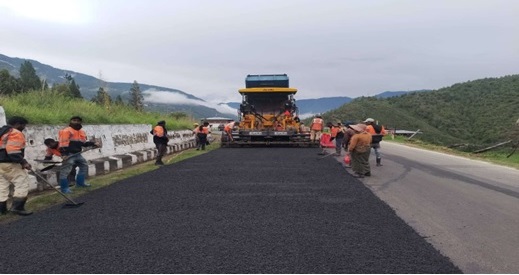
Project DANTAK of the Border Roads Organisation (BRO) celebrated its 66th Raising Day in Thimphu, Bhutan. This milestone commemorates over six decades of infrastructure development and serves as a testament to the enduring diplomatic and developmental ties between India and the Kingdom of Bhutan.
Historical Genesis and Mandate
Project DANTAK was established on April 24, 1961, following a landmark agreement between the third King of Bhutan, Jigme Dorji Wangchuck, and India’s then-Prime Minister, Jawaharlal Nehru. As an overseas project of the BRO—operating under the Ministry of Defence—its primary mandate was to break the geographical isolation of remote Bhutanese regions by constructing the country's pioneering motorable roads.
Transformative Infrastructure Achievements
Over the past 65 years, Project DANTAK has been a cornerstone of Bhutan’s socio-economic transformation. Its contributions span various sectors:
- Road Connectivity: The project has constructed over 1,500 km of roads, including the strategically vital East–West Highway linking Trashigang to Thimphu. It was also instrumental in building the Phuentsholing–Thimphu Highway.
- Aviation: DANTAK played a pivotal role in the development of Paro International Airport and the Yongphula Airfield.
- Institutional Development: Beyond transport, the project contributed to telecommunications, hydropower infrastructure, hospitals, and educational institutions like Sherubtse College in Kanglung and the India House Estate.
Recent Advancements and Modernization
In alignment with modern developmental priorities, Project DANTAK has shifted focus toward capacity enhancement and climate resilience:
- Double Laning Projects: Significant stretches such as the Confluence–Haa road (inaugurated August 1, 2025) and the 168-km SamdrupJongkhar–Trashigang highway have been upgraded to improve safety and reduce travel time.
- Strategic Corridors: Ongoing works include road construction in the South-Eastern regions (Nganglam–Dewathang, Samrang–Jomotsangkha) and the strengthening of the Damchu–Chhukha axis.
- Disaster Resilience: The project has demonstrated an exceptional ability to restore connectivity in record time following landslides and road washouts, ensuring Bhutan's lifelines remain open during natural calamities.
The Border Roads Organisation (BRO): An Overview
The BRO serves as the executive force behind these projects, providing critical support to the Indian Armed Forces while fostering regional connectivity.
- Established: May 7, 1960.
- Governance: Originally a joint effort, the BRO was brought entirely under the Ministry of Defence in 2015 to streamline strategic infrastructure projects.
- Mission: To secure India's borders and develop infrastructure in remote areas of the North and North-Eastern states, as well as in friendly neighboring countries.
- Motto:Shramena Sarvam Sadhyam ("Everything is achievable through hard work").
Nasha Mukt Bharat Abhiyaan
- 27 Apr 2026
In News:
The Ministry of Social Justice & Empowerment (MoSJE) is set to launch the Nasha Mukt Bharat Abhiyaan (NMBA) App 2.0. This upgrade marks a pivotal shift toward data-driven governance under the National Action Plan for Drug Demand Reduction (NAPDDR), aiming to create a "Drug-Free India" through enhanced institutional coordination and public participation.
Evolution of the Campaign
Launched on August 15, 2020, the NMBA was initially targeted at 272 vulnerable districts. Recognizing the pervasive nature of substance abuse, the government extended the campaign to all districts nationwide on August 15, 2023.
The initiative has achieved significant scale since its inception:
- Massive Reach: Over 26 crore people sensitized, including 9.5 crore youth and 6.47 crore women.
- Ground-level Action: More than 8.3 lakh activities conducted across educational institutions and community spaces.
- Human Capital: Mobilization of 28,000 "Master Volunteers" (Nasha Mukti Mitrs).
Objectives and Strategy
The NMBA operates on a multi-pronged strategy to reduce drug demand by:
- Awareness Generation: Targeting schools, university campuses, and higher educational institutions.
- Community Outreach: Identifying dependent populations and facilitating early intervention.
- Treatment and Rehabilitation: Strengthening counseling and clinical facilities in hospitals.
- Capacity Building: Training service providers to handle the complexities of substance use disorders.
The Digital Leap: Features of NMBA App 2.0
While the original app served as an internal tracking tool, the 2.0 version transforms the platform into a comprehensive digital ecosystem for both administrators and the general public.
1. Enhanced Public Engagement: Unlike its predecessor, the 2.0 app is citizen-centric. Users can now take an e-Pledge, access Information, Education, and Communication (IEC) materials, and utilize a dedicated feedback mechanism to help improve the campaign’s efficacy.
2. Institutional Transparency & "Anudan" Tracking: A critical addition is the dedicated access for Grant-in-Aid Institutions (GIAs). The app provides real-time visibility of Anudan (Grant) status, allowing the Ministry, State governments, and the institutions themselves to track fund utilization. This ensures greater financial accountability and streamlines the administrative bottleneck.
3. Location-Based Support: The 'Nearest De-addiction Centre' feature uses geolocation to help users find immediate treatment services, bridging the gap between awareness and clinical referral.
4. Real-time Monitoring: The app serves as a centralized dashboard for real-time reporting from National to District levels. This allows for evidence-based policy adjustments and ensures that ground-level activities are aligned with national goals.
Sea Slugs
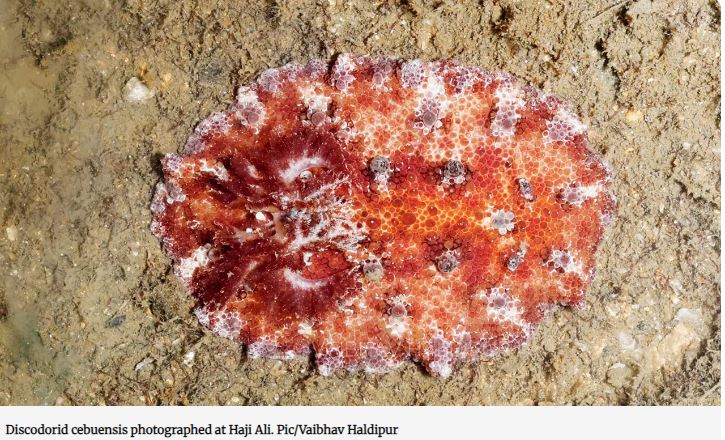
- 26 Apr 2026
In News:
India's marine biodiversity documentation reached a significant milestone with the first-ever recorded sighting of a rare sea slug, Discodoriscebuensis (also referred to as Discodoridcebuensis), at Haji Ali, Mumbai. Previously documented in regions such as the Philippines and parts of the tropical Indo-West Pacific, this discovery highlights the ecological richness of Mumbai’s rocky intertidal zones and underscores the importance of urban coastal conservation.
Decoding the Sea Slug: Nature's Vibrant Gastropods
Sea slugs, often called nudibranchs, are soft-bodied marine mollusks. They belong to the class Gastropoda, a diverse group that includes common land snails and slugs. However, unlike their terrestrial relatives, marine sea slugs have undergone an evolutionary transition where they have completely lost their protective shells, quills, and mantle cavities.
Key Biological and Physiological Traits
- Sensory Mechanisms: On their heads, they possess specialized tentacles known as rhinophores. These act as chemo-sensory organs, allowing the slug to detect chemical signals and movement in the water to locate food or mates.
- Defense and Toxicity: Despite their lack of shells, they are far from defenseless. Many species utilize aposematism—bright, vibrant colors and intricate patterns that warn predators of their toxicity.
- Pigment Absorption: Interestingly, sea slugs derive their color and chemical defenses from their diet. By consuming sponges, algae, and jellyfish, they absorb pigments and can even store the stinging cells (nematocysts) of their prey within their own bodies for protection.
Ecological Significance: Sentinels of the Sea
Sea slugs are more than just visual marvels; they serve as critical bio-indicators of marine health.
- Habitat Indicators: They are primarily found in coral reefs and sponge-rich environments. A high diversity of sea slugs typically indicates a robust and thriving coral ecosystem.
- Ecological Balance: As slow-moving grazers, they control the populations of sponges, algae, and other small invertebrates, maintaining the delicate equilibrium of the seafloor.
- Genetics and Regeneration: Some species exhibit extraordinary biological traits, such as the ability to regenerate lost limbs, photosynthesize using chloroplasts stolen from algae (kleptoplasty), or even incorporate prey genes into their own DNA.
The Mumbai Discovery: Discodoriscebuensis
The specific species found at Haji Ali belongs to the family Discodorididae. Unlike some of its flashier relatives, Discodoriscebuensis is characterized by:
- A flat, oval body with a mottled brown or light red-brown appearance, helping it camouflage against rocks and sponges.
- Distinctive tubercles (small bumps) along its back, which may have white or dusky violet tips.
- A size typically ranging between 35 mm and 50 mm.
The discovery was made by local wildlife enthusiasts during a coastal survey, proving that even highly urbanized shorelines like Mumbai’s can harbor undocumented and rare marine life.
National Institute for Pre-Clinical Research (NIPCR)
- 26 Apr 2026
In News:
The Indian Council of Medical Research (ICMR) has upgraded and renamed its Hyderabad-based National Animal Resource Facility for Biomedical Research (NARFBR) as the National Institute for Pre-Clinical Research (NIPCR) to strengthen India’s capabilities in drug discovery and medical technology.
Key Highlights:
- Established in 2016 following approval by the Cabinet Committee (2015), the NIPCR is a flagship institute under ICMR, located in Genome Valley, Hyderabad. The renaming reflects a strategic shift from a specialised animal resource centre to a comprehensive hub for pre-clinical and translational research, acting as a critical bridge between laboratory research and human clinical trials.
- The institute provides advanced infrastructure for testing drugs, vaccines, biologicals, medical devices, and Cell and Gene Therapies (CGT). It adopts a dual research approach—combining advanced in vivo animal models with New Approach Methodologies (NAMs) such as Microphysiological Systems (MPS), cell-based assays, and organoid models. These technologies enhance accuracy, generate human-relevant data, and reduce reliance on traditional animal testing.
- NAMs enable applications like drug toxicity screening, disease modelling, high-throughput testing, and efficacy validation, thereby improving the quality and safety assessment of biomedical products. The institute also supports academia, industry, and startups by offering infrastructure, expertise, and validation platforms.
- Aligned with the Department of Health Research (DHR), Ministry of Health and Family Welfare, NIPCR is expected to play a key role in advancing “Made in India” healthcare solutions, strengthening India’s biomedical research ecosystem, and enhancing self-reliance in healthcare innovation.
Atlas Drone Swarm System

- 26 Apr 2026
In News:
China’s People’s Liberation Army (PLA) has unveiled the Atlas Drone Swarm System, a mobile, AI-enabled platform capable of launching and controlling nearly 100 drones through a single operator.
Key Highlights:
- Developed by the state-owned China Electronic Technology Group Corporation (CETC), the Atlas system is a mobile battlefield network designed for reconnaissance, electronic warfare, deception, and precision strikes. It consists of three components—Swarm-2 combat vehicle, command unit, and support vehicle—enabling integrated and flexible operations.
- The Swarm-2 platform can carry and launch up to 48 fixed-wing drones, while the system as a whole can deploy and control up to 96 drones simultaneously. With a rapid launch interval of under 3 seconds, the entire swarm can be airborne within 300 seconds, ensuring swift battlefield response.
- A key feature is its AI-driven swarm coordination, where drones operate with collective intelligence while retaining individual autonomy, allowing dynamic reconfiguration, target identification, and mission execution. Each drone can carry varied payloads such as electro-optical sensors, strike munitions, and communication relays, enabling multi-role capabilities including surveillance, attack, and battlefield communication.
- Strategically, the system enhances China’s ability to conduct swarm warfare, potentially overwhelming adversary air defence systems through low-cost, high-volume drone deployment. Its possible deployment in regions like the Tibet Military District raises concerns for India, as it could target logistics networks and forward positions, highlighting evolving challenges in modern warfare and border security.
Amazon–TGRA Deal for Sustainable Rice Farming
- 26 Apr 2026
In News:
Amazon has signed a $30 million (?280 crore) long-term carbon credit offtake agreement with the Good Rice Alliance (TGRA) to support sustainable rice farming and methane reduction in India.
Key Highlights:
- The agreement marks one of India’s largest agricultural carbon market deals, with Amazon committing to purchase over 685,000 metric tonnes of CO?-equivalent carbon credits. TGRA—backed by Bayer, GenZero, and Shell—is implementing the initiative across 13,000 small farmers over 35,000 hectares.
- The programme promotes climate-smart agriculture practices such as Alternate Wetting and Drying (AWD) and Direct Seeded Rice (DSR), which reduce methane emissions and water usage in paddy cultivation. Emission reductions are measured in collaboration with the International Rice Research Institute (IRRI), supported by digital monitoring and third-party verification under the Verified Carbon Standard (VCS).
- Since rice cultivation contributes 8–10% of global methane emissions, the initiative has strong climate mitigation potential for India. It also enhances farmer livelihoods through training, financial incentives, improved yields, and reduced input costs, reflecting the growing role of carbon markets in sustainable agriculture.
Skill Development Under Vibrant Villages Programme
- 26 Apr 2026
In News:
The strategic landscape of India’s border management has undergone a paradigm shift, moving from a purely security-centric approach to one that integrates socio-economic development with national defense. Central to this vision is the Vibrant Villages Programme (VVP), a flagship initiative designed to transform border areas from isolated peripheries into self-reliant, well-connected "first villages."
Genesis and Expansion: VVP to VVP-II
Initially launched in 2023 to address developmental gaps in villages along the China border, the initiative has seen a massive scale-up. Recently, the Union Cabinet approved VVP-II, expanding the scheme's footprint significantly. Unlike typical developmental projects, VVP-II is a 100% centrally funded Central Sector Scheme.
The program now spans across a vast geographical arc including Arunachal Pradesh, Assam, Bihar, Gujarat, Himachal Pradesh, Jammu and Kashmir, Ladakh, Manipur, Meghalaya, Mizoram, Nagaland, Punjab, Rajasthan, Sikkim, Tripura, Uttarakhand, Uttar Pradesh, and West Bengal. This expansion reflects the government's commitment to securing the entire length of India’s international borders through community empowerment.
The Socio-Economic Mandate: Skill-Led Growth
A critical pillar of the VVP is the integration of skill development with regional economic needs. The Ministry of Skill Development and Entrepreneurship (MSDE) has taken a proactive role by organizing capacity-building workshops to accelerate development in these remote regions.
The focus is on demand-driven, locally relevant skilling. By identifying the specific economic potential of each border cluster—whether in high-altitude agriculture, local handicrafts, or adventure tourism—the MSDE ensures that training translates into sustainable livelihoods. This "bottom-up" approach promotes innovation and peer learning, ensuring that the youth in these areas become active participants in the regional economy rather than being forced to migrate to urban centers.
Security Through Prosperity: The "Eyes and Ears" Strategy
From a national security perspective, the VVP addresses a critical vulnerability: the security vacuum created by out-migration. When border populations leave their ancestral lands due to lack of opportunities, it leads to demographic changes that can be exploited by adversarial elements.
By creating sustainable livelihood opportunities, the Ministry of Home Affairs (MHA) aims to:
- Prevent Migration: Retaining the population ensures a continuous human presence in strategically sensitive zones.
- Intelligence Gathering: Empowering local residents makes them the "eyes and ears" of the Border Guarding Forces (BGF). A prosperous, loyal community is the first line of defense against illicit activities and trans-border crimes.
- Trust Building: The MHA emphasizes culturally sensitive outreach. This ensures that security agencies and local communities work in tandem, fostering a sense of national belonging and mutual trust.
Infrastructure and Saturation: The "Viksit Gaon" Vision
The VVP operates on the principle of saturation of government schemes. This involves ensuring that every household in the identified 662 villages has access to basic amenities—electricity, clean water, digital connectivity, and healthcare.
These villages are being developed as "growth centres" through:
- Strengthened Infrastructure: Improving all-weather road connectivity and telecommunications to bridge the digital and physical divide.
- Economic Assimilation: Linking local products to national markets to ensure that the economic benefits of India's growth reach the last mile.
- Cultural Integration: Encouraging border tourism to showcase the unique heritage of these regions, thereby strengthening their cultural ties with the rest of the country.
India–Sri Lanka Diving Exercise (DIVEX) 2026

- 25 Apr 2026
In News:
INS Nireekshak, the Indian Navy’s Diving Support and Submarine Rescue Vessel, arrived in Colombo to participate in the fourth edition of the India–Sri Lanka Diving Exercise (DIVEX 2026).
DIVEX 2026: Enhancing Underwater Interoperability
The 2026 edition of DIVEX is designed as a high-intensity engagement focusing on specialized underwater operations. The primary objectives include:
- Operational Cohesion: Synchronizing complex diving procedures between the two navies.
- Interoperability: Sharing best practices in salvage, underwater repair, and search-and-rescue protocols.
- Maritime Security: Strengthening the collective capacity to secure vital sea lanes in the IOR.
INS Nireekshak: The Vanguard of Deep-Sea Operations
A pivotal asset in this exercise, INS Nireekshak is a sophisticated Dive Support and Submarine Rescue Vessel. Built by Mazagon Shipbuilders and operational since 1989, it holds the prestigious national record for the deepest dive at 257 metres. Its presence in Colombo highlights India’s advanced technical capabilities in submarine rescue and deep-sea intervention.
Medical Diplomacy: The BHISM Initiative
In a move that aligns with India’s ‘Neighbourhood First’ policy and the Aarogya Maitriprogramme, the mission includes the handover of two BHISM (Bharat Health Initiative for Sahyog Hita & Maitri) cubes to Sri Lanka.
- Capabilities: These are portable, integrated medical units equipped to manage up to 200 emergency cases autonomously.
- Strategic Intent: By gifting these "mini-hospitals," India reinforces its role as a "First Responder" in the region, significantly enhancing Sri Lanka's Disaster Management and Humanitarian Assistance and Disaster Relief (HADR) capabilities.
Evolution of India-Sri Lanka Defence Ties
The exercise takes place against the backdrop of a landmark 5-year Memorandum of Understanding (MoU) signed in April 2025. This agreement has institutionalized military engagement across several pillars:
- Strategic Trust: Sri Lanka has reiterated its commitment to ensuring its territory is not utilized for activities detrimental to India’s security interests.
- Institutionalized Drills: Regular engagements like SLINEX (Naval) and Mitra Shakti (Army) have become cornerstones of the bilateral relationship.
- Proven Reliability: India’s proactive role during previous crises, such as the MV X-Press Pearl maritime disaster (2021) and Operation Sagar Bandhu, has cemented its reputation as a reliable security partner.
Sustainable Aviation Fuel

- 25 Apr 2026
In News:
Recently, the Government of India notified an amendment to the Aviation Turbine Fuel (ATF) (Regulation of Marketing) Order, 2001. This administrative measure formally brings ATF blended with Sustainable Aviation Fuel (SAF) under the regulatory ambit of the ATF Control Order, aligning India’s energy policy with global environmental standards.
The Core of the Amendment: Redefining ATF
Previously, Aviation Turbine Fuel was defined strictly as a petroleum-based product meeting Bureau of Indian Standards (BIS) specifications. The 2026 amendment expands this definition to include:
- Co-processed SAF: Sustainable fuel produced alongside traditional ATF in petroleum refineries.
- Blended SAF: SAF conforming to IS 17081 which is blended with traditional ATF meeting IS 1571 standards.
This regulatory shift is essential for operationalizing India’s blending targets and ensuring the domestic aviation industry remains integrated with the global supply chain.
Understanding Sustainable Aviation Fuel (SAF)
SAF is a "drop-in" biofuel, meaning it is chemically similar to conventional jet fuel derived from crude oil. It consists of specially processed aviation-grade hydrocarbons that are fully compatible with existing aircraft engines and infrastructure.
Key Characteristics and Sources:
- Performance: It does not alter the safety, fundamental nature, or performance of the fuel, requiring no modifications to aircraft engines.
- Feedstock: SAF is produced from renewable biomass and waste resources, including waste oils and fats, municipal solid waste, green waste, and non-food crops.
- Synthetic Production: It can also be produced synthetically by capturing carbon directly from the atmosphere.
- Rigorous Testing: To ensure safety, SAF undergoes International Civil Aviation Organization (ICAO) recognized testing as per ASTM International standards before being cleared for use.
The Global Context: CORSIA and Emission Mandates
The primary driver for SAF adoption is the Carbon Offsetting and Reduction Scheme for International Aviation (CORSIA), implemented by ICAO.
- CORSIA Compliance: Starting in 2027, the mandatory phase of CORSIA requires international flights to offset CO2 emissions that exceed a specific baseline.
- Strategic Advantage: Utilizing SAF reduces the "offsetting" requirements for airlines, as it significantly lowers life-cycle greenhouse gas (GHG) emissions compared to fossil fuels.
India’s Blending Roadmap and International Comparison
Recognizing the global shift, India has announced ambitious indicative blending targets for international flights:
- 1% SAF blend by 2027
- 2% SAF blend by 2028
- 5% SAF blend by 2030
These targets place India among other leading economies taking proactive climate action:
- European Union: Mandates 2% SAF by 2025, scaling to 70% by 2050.
- United Kingdom: Targeting 10% by 2030.
- Japan: Aiming for a 10% SAF mandate by 2030.
- Singapore: Requiring 1% SAF usage starting in 2026.
Dolphin Friends Initiative
- 25 Apr 2026
In News:
In a significant push toward community-led conservation, the Forest Department in Prayagraj has operationalized the "Dolphin Friends" (Dolphin Mitras) volunteer network. This initiative aims to safeguard the endangered Gangetic River Dolphin (Platanista gangetica) by integrating grassroots participation with formal ecological monitoring.
The "Dolphin Friends" Framework
The initiative is designed as a participatory conservation model that bridges the gap between policymakers and the local populace. By leveraging the traditional knowledge of those who live and work along the river, the project ensures a 24/7 "eyes-on-the-water" approach.
- Core Stakeholders: The network primarily recruits fishermen and boatmen, as their daily proximity to the river makes them the most effective first responders and monitors of dolphin movement.
- Academic Integration: To ensure scientific rigor, the network also includes research scholars and teachers who assist in data documentation and lead awareness campaigns regarding the river's ecological health.
- Geographic Focus: Intensive surveillance is concentrated in recognized "hotspots" across the Ganga belt, including Phaphamau, Chhatnag, Meja, and stretching toward Fatehpur.
Strategic Objectives and Seasonal Monitoring
A primary goal of the Dolphin Friends network is to provide protection during the monsoon season, which is the critical breeding period for the species. During these months, surveillance is intensified to prevent human interference and ensure a safe environment for reproduction.
Beyond physical protection, the initiative focuses on:
- Habitat Assessment: Monitoring changes in water levels and flow patterns that affect dolphin navigation.
- Breeding Documentation: Recording sightings of calves to track the population's growth rate.
- Public Awareness: Educating riverside communities on the importance of reducing plastic pollution and avoiding harmful fishing nets (such as monofilament nets) that lead to accidental entanglements.
New Species of Dragonflies
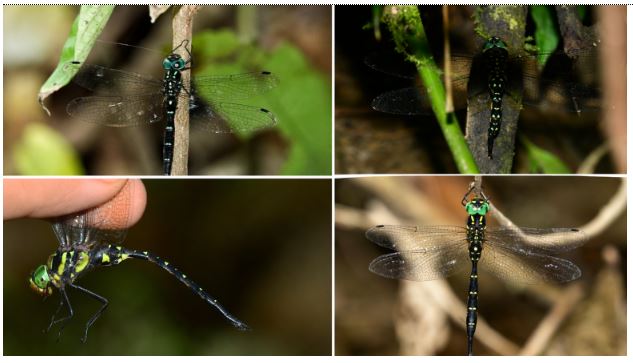
- 25 Apr 2026
In News:
The recent discovery of three new dragonfly species in Northeast India marks a significant milestone for Indian entomology and underscores the region's status as a global biodiversity hotspot. Published in the journal Zootaxa, the study by researchers from the National Centre for Biological Sciences (NCBS) and local naturalists highlights the "micro-endemic" nature of species in the Siang Valley and Assam’s forest fringes.
The New Additions to India’s Odonate Fauna
The discoveries belong to the rare genus Sarasaeschna (commonly called Boghawkers), which are known for their preference for shaded, high-altitude forest ponds and wetlands.
- Clouded Boghawker (Sarasaeschna nuboides)
- Location: Discovered in the Siang Valley of Arunachal Pradesh, near the periphery of Mouling National Park.
- Characteristics: It is named for the distinctive "cloudy" or nebulous wing markings. It was observed flying rapidly over shallow, shaded forest ponds.
- Siang Boghawker (Sarasaeschna sigotaayo)
- Location: Also found in the Siang Valley, Arunachal Pradesh.
- Etymology: The name "Sigotaayo" is derived from the local Adi language, where ‘Siang’ refers to the big river. It possesses bolder thoracic stripes compared to its relatives.
- Long-tailed Boghawker (Sarasaeschna dosdewaensis)
- Location: Discovered in the Karimganj district of Assam (specifically the Dosdewa forest village).
- Background: This area is increasingly recognized as an "Odonate Diversity Hotspot." The species is characterized by its exceptionally elongated male caudal appendages (tail structures).
Ecological and Biological Significance
Dragonflies belong to the order Odonata and are among the oldest living insect lineages, predating dinosaurs by over 100 million years. Their role as bio-indicators is crucial:
- Environmental Health: Dragonflies are sensitive to changes in water quality and habitat structure. Their presence indicates healthy, oxygen-rich freshwater ecosystems.
- Apex Predators of the Insect World: Equipped with nearly 360-degree vision, they are voracious predators of mosquitoes and flies, acting as natural biological control agents.
- Taxonomic Milestone: Along with the three new species, the researchers also rediscovered the Khasi Boghawker (Sarasaeschna khasiana) in Meghalaya after a gap of 58 years, confirming its persistence in the Khasi Hills.
Dragonflies vs. Damselflies: Key Distinctions
While both belong to the order Odonata and share similar life cycles, they can be differentiated by their morphology and behavior:
- Resting Posture: This is the most visible difference. Dragonflies hold their wings horizontally (spread out) when at rest. In contrast, damselflies typically fold their wings together, holding them straight up above their bodies.
- Physical Build: Dragonflies are generally larger and more robust with powerful flight capabilities. Damselflies are smaller, more slender, and appear "delicate" in flight.
- Eye Position: Dragonfly eyes are very large and often touch at the top of the head. Damselfly eyes are separated, resembling dumbbells on either side of the head.
Narcotics Analysis & RAG-based Investigation Tool (NARIT-AI)
- 24 Apr 2026
In News:
In a pioneering move for Indian law enforcement, the Gujarat Police has launched the Narcotics Analysis & RAG-based Investigation Tool (NARIT-AI). Developed by the Western Railway Police (Vadodara Division) in collaboration with private partner Gradiante Creative Services, this system makes Gujarat the first state in India to deploy a specialized AI-driven platform for narcotics investigations.
The Technology: Retrieval-Augmented Generation (RAG)
The core strength of NARIT-AI lies in its Retrieval-Augmented Generation (RAG) architecture. Unlike standard Generative AI (like ChatGPT) that relies on broad, sometimes unreliable internet data, RAG allows the tool to operate within a "walled garden" of verified information.
- Closed Database: The tool analyzes First Information Reports (FIRs) against a specific, high-authority database containing Supreme Court and High Court judgments, Government of India circulars, and the new criminal laws—Bharatiya Nyaya Sanhita (BNS), Bharatiya Nagarik Suraksha Sanhita (BNSS), and Bharatiya Sakshya Adhiniyam (BSA).
- Privacy and Accuracy: By avoiding the general internet, NARIT-AI ensures sensitive case data remains private and prevents "AI hallucinations"—a phenomenon where AI generates plausible-sounding but legally incorrect information.
Strategic Functions in Narcotics Enforcement
The Narcotic Drugs and Psychotropic Substances (NDPS) Act, 1985, is one of India's most stringent laws, characterized by complex procedural requirements. NARIT-AI acts as a "digital legal consultant" to assist Investigating Officers (IOs) in the following ways:
1. Procedural Compliance and Evidence Checklists: The tool provides real-time procedural guidance to ensure that officers do not commit technical errors during search and seizure (such as violations of Section 50 of the NDPS Act, regarding personal search). It generates an evidence checklist tailored to the specific details of a case.
2. Predictive Legal Analysis: NARIT-AI evaluates the strengths and weaknesses of an FIR. Crucially, it can predict potential defense arguments that may be raised in court, allowing prosecutors to prepare robust rebuttals in advance.
3. Real-Time Legal Research: Instead of manual searches through voluminous law books, the tool provides immediate citations of relevant precedents, ensuring that the investigation is aligned with the latest judicial interpretations.
Significance for the Criminal Justice System
The deployment of NARIT-AI addresses several systemic bottlenecks in the Indian legal framework:
- Improving Conviction Rates: NDPS cases often result in acquittals due to procedural lapses. By providing an AI-driven "compliance check," the tool ensures that the prosecution's case is watertight.
- Capacity Building: It empowers junior officers with the expertise of seasoned legal analysts, standardizing the quality of investigations across the state.
- Modernizing the 3Cs: It aligns with the national goal of digitizing the three pillars of criminal justice—Courts, Police, and Prisons—by integrating advanced analytics into daily policing.
‘Yellow Line’ Security Strategy
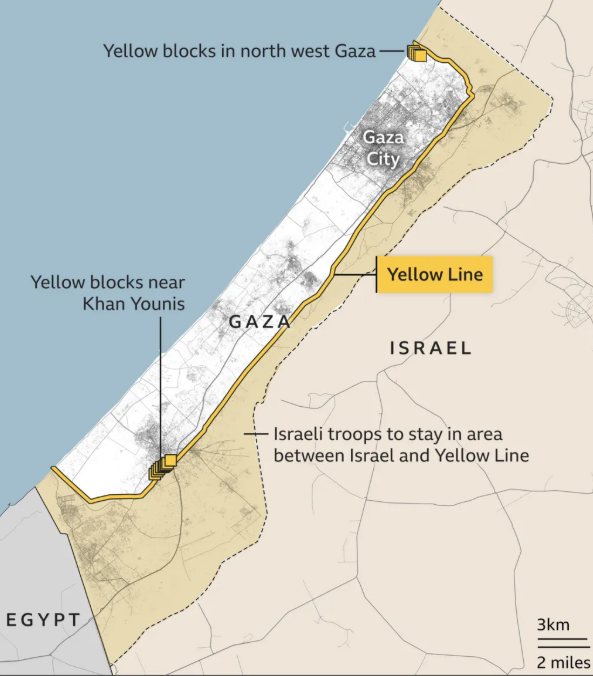
- 24 Apr 2026
In News:
In a significant shift of military doctrine, the Israeli government has officially expanded its Yellow Line strategy from the Gaza Strip to Southern Lebanon. By April 2026, following a ceasefire with Hezbollah, the Israel Defense Forces (IDF) began replicating the "Gaza Model" in the north, establishing a militarized buffer zone that extends up to the strategic Litani River.
Defining the 'Yellow Line'
The Yellow Line is not a political border but a military demarcation and a strategic construct. It is a fortified, static boundary placed deep within hostile territory to create a free-fire zone under direct and open-ended Israeli military control.
- Physical Manifestation: The line is literally color-coded. It is marked by yellow-painted concrete bollards spaced at 200-meter intervals and 3.5-meter-high poles.
- Operational Context: Unlike the Green Line of 1967, which was a traditional ceasefire line, the Yellow Line is an internal partition that divides an enclave into Israeli-occupied zones and local administrative areas.
Chronology and Historical Roots
The philosophy behind the Yellow Line draws from historical Israeli deployment boundaries like the Green Line and the Area A demarcations in the West Bank. However, its modern application is far more intrusive:
- Gaza Strip (October 2025): First introduced as part of a peace framework proposed by US President Donald Trump. It placed approximately 58% of the Gaza Strip under Israeli military control, confining the local population to just 42% of the territory.
- Southern Lebanon (April 2026): Following the northern conflict, the strategy was applied to Lebanon, creating a forward defensive posture designed to prevent militant groups from launching close-range attacks on Israeli border communities.
Strategic Objectives and Military Features
The primary goal of the Yellow Line is forward defense—transitioning from mobile combat to a permanent, static presence.
- Static Defense Infrastructure: The line is reinforced with fortified outposts, earth mounds, radio towers, and surveillance sensors.
- Total Control Zones: The area east of the line is classified as a closed military zone. The IDF maintains the authority to level infrastructure and prevent civilian return within this perimeter to ensure a "clear view" for security forces.
- Resource Intensity: This strategy is high-maintenance. Sustaining the line in Gaza alone requires two full IDF divisions, creating a continuous strain on Israel’s reserve forces and national budget.
International and Humanitarian Significance
The "Yellow Line" has sparked intense global debate, with international bodies like the OHCHR (Office of the High Commissioner for Human Rights) and Euro-Med raising significant alarms.
1. Creeping Annexation: Critics argue the doctrine represents a shift toward "creeping annexation," where permanent military buffers become the standard response to regional conflicts, effectively shrinking the sovereign territory of neighboring entities.
2. Forced Displacement and Ghettoization: The strategy has been classified by human rights organizations as a tool for "ghettoization." By cutting off access to vital agricultural lands, urban centers, and water resources (like the Litani River), it induces long-term displacement of the local population.
3. Regional Stability: While Israel views the line as a necessary shield for its border communities, regional analysts suggest it may become a flashpoint for future friction, as the permanent occupation of foreign soil often fuels long-term insurgency.
Online Gaming Authority of India (OGAI)

- 24 Apr 2026
In News:
The landscape of India’s digital economy has reached a significant milestone with the official operationalization of the Online Gaming Authority of India (OGAI) on May 1, 2026. Established under the Promotion and Regulation of Online Gaming Act 2025, this central regulatory body marks a shift from fragmented state-level oversight to a unified, "digital-first" national framework.
Understanding the Online Gaming Authority of India (OGAI)
The OGAI is an attached office under the Ministry of Electronics and Information Technology (MeitY). Headquartered in Delhi, it operates primarily as a digital office to minimize physical processes and enhance governance efficiency in the fast-evolving gaming sector.
Core Objectives and Functions
- Classification and Registration: The OGAI holds the exclusive power to determine if a game qualifies as a permissible e-sport, an online social game, or a prohibited "online money game."
- Regulatory Oversight: It issues mandatory guidelines, codes of practice, and directions to ensure platforms comply with user safety standards.
- Grievance Redressal: It serves as the second tier of a two-tier grievance mechanism. Users dissatisfied with a platform's resolution can appeal to the OGAI, which aims to resolve disputes within 30 days.
- Enforcement and Coordination: OGAI coordinates with financial institutions and law enforcement agencies to block payment gateways for prohibited money games, effectively acting as a financial gatekeeper.
A New Categorization System
Under the 2025 Act and the subsequent 2026 Rules, the traditional "Skill vs. Chance" debate has been replaced by a tripartite classification:
- E-Sports: Recognized as legitimate competitive skill-based sports. Registration is mandatory for games seeking this status, granting a digital certificate valid for 10 years.
- Online Social Games: Primarily skill-based games for entertainment (e.g., Ludo or social puzzles) with no stakes involved. Registration for these is generally voluntary, though the OGAI can review them based on scale or risk.
- Online Money Games: Defined as any game where users pay stakes with an expectation of monetary gain. These are entirely prohibited under the new law, along with their advertising and financial facilitation.
Institutional Framework and Membership
The OGAI is a high-level body comprising six members, ensuring a "whole-of-government" approach to regulation:
- Chairperson: Additional Secretary, Ministry of Electronics and Information Technology (MeitY).
- Members: Joint Secretaries from the following key departments:
- Ministry of Home Affairs (MHA)
- Ministry of Information and Broadcasting (MIB)
- Ministry of Youth Affairs and Sports
- Department of Financial Services (DFS)
- Department of Legal Affairs
The "Gatekeeper" Model: Enforcement and User Safety
A standout feature of the 2026 regulatory regime is the role of financial intermediaries. Banks and UPI platforms are now legally required to verify the OGAI registration status of a service before processing transactions.
Mandatory User Safety Standards:
- Age-Gating: Robust age verification to prevent minors from accessing age-restricted content.
- Time Restrictions: Limits on excessive play to prevent digital addiction.
- Parental Controls: Tools allowing parents to monitor and restrict gaming activities.
- KYC and Data Localization: All user data must be stored within India to ensure national security and regulatory accountability.
Limnonectes motijheel
- 24 Apr 2026
In News:
In a significant breakthrough for Indian herpetology, scientists have discovered a rare species of fanged frog, Limnonectes motijheel, within the pristine ecosystems of the Namdapha Tiger Reserve in Arunachal Pradesh. This discovery underscores the immense, yet often hidden, biodiversity of the Eastern Himalayas and provides new insights into the evolution of amphibian breeding behaviors.
The Anatomy and Behavior of Limnonectes motijheel
The newly identified species belongs to the genus Limnonectes, a group of amphibians spread across South and Southeast Asia. With this addition, the number of known Limnonectes species in India has risen to six.
Key Biological Features:
- The "Fangs": The frog is characterized by small, bony, fang-like projections in the lower jaw of the males. These are not true teeth but are believed to be used for territorial combat or as an aid in feeding.
- Physical Appearance: It possesses a distinct dark-brown line between the eyes, an inverted "V"-shaped ridge on its back, and broken longitudinal folds along its flanks.
- Dimensions: As a medium-sized amphibian, adults typically measure between 2.3 to 3.5 centimeters.
- Naming: The species is named after Motijheel, a site within Namdapha renowned for its exceptionally high amphibian density and diversity.
Unique Breeding: The Mud-Nester
Perhaps the most striking feature of Limnonectes motijheel is its reproductive strategy. Unlike most frogs that deposit eggs in water bodies or on overhanging foliage, this species constructs a mud nest beneath leaf litter on the forest floor. This specific "house-building" behavior is a unique adaptation for moisture retention and predator avoidance, and it represents the first recorded instance of mud-nesting within this genus in India.
Namdapha Tiger Reserve
The discovery highlights the ecological importance of Namdapha, a National Park and Tiger Reserve located in the Changlang District of Arunachal Pradesh, bordering Myanmar.
Geographic and Ecological Significance:
- Biogeographical Junction: Namdapha sits at the confluence of the Indian Sub-Continent and Indo-China Biogeographic Regions. It is nestled between the Mishmi Hills (Dapha Bum ridge) and the Patkai ranges.
- Hydrology: The reserve is drained by the Namdapha River, a tributary of the Noa-Dihing, which flows through the heart of the park.
- Vegetation Gradient: Due to its vast altitudinal range, the park exhibits a diverse floral spectrum, ranging from Tropical Evergreen and Moist Deciduous forests to Temperate and Alpine Scrub forests.
Biodiversity Highlights:
- The Four Big Cats: Namdapha is the only park in the world that serves as a habitat for four species of big cats: Tiger, Leopard, Snow Leopard, and Clouded Leopard.
- Rare Fauna: It is home to the Hoolock Gibbon (India’s only ape), the Slow Loris, and the Himalayan Sun Bear.
- Endangered Flora: The park hosts the rare Blue Vanda orchid and the medicinal plant Mishimi Teeta (Copti teeta), which is central to the traditional medicine of local tribes.
NBA Revised Guidelines on Biological Diversity Act (BDA), 2002
- 24 Apr 2026
In News:
In a significant stride toward strengthening India’s ecological governance, the National Biodiversity Authority (NBA), during its 77th meeting in March 2026, approved a comprehensive policy overhaul. This drive focuses on two critical pillars: streamlining the utilization of Access and Benefit Sharing (ABS) funds and modernizing the management of Designated Repositories.
These measures align with the Biological Diversity Act (BDA), 2002, ensuring that the commercial use of India’s vast bio-resources translates into tangible benefits for local communities and the environment.
Rationalizing the Access and Benefit Sharing (ABS) Framework
The ABS mechanism is a legal mandate ensuring that those who access biological resources for commercial purposes share a portion of their gains with the "custodians" of that biodiversity. The 2026 guidelines introduce a transparent, formula-based approach to resolve long-standing ambiguities in fund distribution.
1. The New Fund Sharing Formula
The NBA has rationalized the allocation of funds based on the identifiability of the resource's source:
- Identifiable Source: In cases where the origin of the bio-resource is known, 25–40% of the ABS amount is allocated to the concerned institutions or repositories to reward their role in documentation and value addition. The lion’s share, 60–75%, is channeled back to local communities and beneficiaries via State Biodiversity Boards (SBBs) and Union Territory Biodiversity Councils (UTBCs).
- Non-Identifiable Source: Where the specific origin is difficult to trace, a standard ratio of 30% (to institutions) and 70% (to the NBA) is applied. These funds are then utilized for broader biodiversity conservation and management under Section 32 of the Act.
2. Addressing Complex Supply Chains
Bio-resources are often accessed through traders and intermediaries, making it difficult to ascertain a single point of origin.
- Widely Distributed Resources: If resources are spread across the country with no clear origin, the funds are utilized collectively for socio-economic development and conservation in accordance with Section 27 of the BDA.
- State-Specific Data: If data allows for the identification of specific states, the NBA will distribute the funds to the respective SBBs/UTBCs for localized utilization.
Modernizing Designated Repositories
Designated Repositories act as the "banks" for India’s biological heritage, housing voucher specimens of resources accessed under the Act. The revised guidelines seek to transform these from mere storage units into centers of scientific integrity.
Key Reforms in Repository Management:
- Provenance and Traceability: Repositories must now maintain robust "provenance" records—the complete history of ownership and origin—to prevent biopiracy and ensure legal compliance.
- Digitization of Specimens: A major policy shift involves the digitization of voucher specimens. This enhances global accessibility for verification and scientific identification while minimizing the physical transfer of sensitive biological materials, which often carries ecological and legal risks.
- Strict Standard Operating Procedures (SOPs): Revised guidelines mandate rigorous documentation practices and safe custody protocols to maintain the scientific integrity of samples.
Strategic Significance for Biodiversity Governance
- Equity and Social Justice: By defining clear percentages for local communities, the NBA prevents institutional monopolies over ABS funds. This ensures that the primary conservers—tribal and rural communities—receive their fair share of commercial returns.
- Socio-Economic Development: The directive to utilize funds for the development of the "area of origin" ensures that biodiversity conservation is linked with local prosperity.
- Scientific Integrity: The emphasis on digitization and provenance records aligns Indian standards with global best practices, making the regulatory framework more efficient for researchers and industry players alike.
- Strengthening Federalism: The active role of SBBs and UTBCs in fund distribution reinforces the three-tier structure (National, State, and Local) envisaged under the Biological Diversity Act.
Asia-Pacific Economic Outlook 2026
- 23 Apr 2026
In News:
The recently released "Economic and Social Survey of Asia and the Pacific 2026" by the United Nations Economic and Social Commission for Asia and the Pacific (UN ESCAP) paints a challenging picture for the region. As the Asia-Pacific continues to be the world's fastest-growing developing bloc, its resilience is currently being tested by heightened geopolitical tensions in West Asia, leading to a sharp reversal in price stability.
Key Projections: Growth Slowdown and Inflation Spike
The report highlights a significant shift in the regional economic landscape for 2026:
- Regional Inflation Surge: Average inflation in developing economies of the Asia-Pacific is projected to climb to 4.6% in 2026, a steep rise from 3.5% in 2025.
- Economic Growth Deceleration: Correspondingly, real GDP growth is expected to slow to 4.0%, down from 4.6% in the previous year.
- The "West Asia Conflict" Catalyst: The primary driver of this volatility is the conflict in West Asia, which has disrupted energy markets and global trade routes.
- Brent Crude: Spiked to approximately $120 per barrel (a 45% increase from pre-conflict levels).
- Global Gas & Fertilizers: Natural gas prices surged by 55%, while urea prices jumped by 35%, directly inflating agricultural input costs.
Impact on the Indian Economy
India, sourcing roughly 50% of its oil and a vast majority of its LPG from West Asia, remains particularly vulnerable to these external shocks.
- GDP & Inflation Forecast: India’s growth is projected to ease to 6.4% in 2026 (from 7.4% in 2025), while domestic inflation (CPI) is expected to spike to 4.4%.
- The CAD-Oil Nexus: Historically, every $10 increase in crude oil prices widens India’s Current Account Deficit (CAD) by approximately 0.55% of GDP.
- Monetary Policy Strains: Rising "Imported Inflation" complicates the Reserve Bank of India's (RBI) mandate. High price levels limit the RBI’s ability to lower interest rates, thereby keeping borrowing costs high and potentially suppressing domestic investment.
About UN ESCAP: The Institutional Framework
Established in 1947 and headquartered in Bangkok, Thailand, UN ESCAP serves as the most inclusive intergovernmental platform for the Asia-Pacific region.
- Mandate: To promote economic and social development through regional cooperation. It is one of the five regional commissions of the United Nations.
- Membership: Comprises 53 member states and 9 associate members, focusing on solutions for sustainable development challenges.
- Core Areas of Work: UN ESCAP provides critical analytical insights into Macroeconomic Policy, Poverty Reduction, Trade, Environment, and Disaster Risk Reduction.
Challenges: "Greenflation" and Vulnerable Populations
The report introduces the concept of "Greenflation"—the rising cost of materials and energy associated with the clean energy transition. While the transition is necessary for long-term climate goals, poorly managed shifts can fuel inflation and widen income inequality.
Furthermore, these macroeconomic shocks disproportionately affect low-income households and informal workers. For the nearly 20% to 28% of the undernourished population in some regional economies, food inflation becomes a direct threat to survival as they spend a larger share of their income on basic essentials.
Policy Recommendations
To navigate this period of "polycrisis," UN ESCAP and economic experts suggest a strategic pivot:
- Strategic Reserves: For India, expediting the expansion of Strategic Petroleum Reserves (SPR) at sites like Chandikhol and Padur is crucial to buffer against sudden supply disruptions.
- Domestic Demand Pivot: Moving away from a fragile export-led growth model toward strengthening domestic and regional demand to bypass fragmented global supply chains.
- Fiscal Prudence: Adhering to fiscal discipline (as per FRBM Act guidelines) during stable periods to create the "fiscal space" necessary to respond to external shocks without spiraling into debt.
- Targeted Support: Replacing broad-based subsidies with temporary, targeted support for vulnerable households and viable firms.
Shekha Jheel Bird Sanctuary
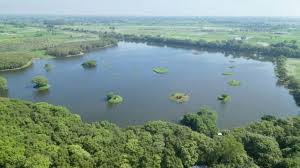
- 23 Apr 2026
In News:
In a significant milestone for India’s conservation efforts, the Shekha Jheel Bird Sanctuary in Aligarh, Uttar Pradesh, has been designated as a Ramsar Site. This addition brings India’s total tally of "Wetlands of International Importance" to 99, reinforcing the nation's leadership in biodiversity preservation under the Ramsar Convention.
Geographic and Historical Context
Shekha Jheel is a quintessential example of a monsoonal wetland nestled within the fertile Gangetic Plains of Uttar Pradesh. Unlike many natural oxbow lakes in the region, Shekha Jheel has a unique anthropogenic origin.
- Origin: The lake emerged as a perennial freshwater body following the construction of the Upper Ganges Canal in 1852. The canal flows adjacent to the lake, maintaining its water levels throughout the year.
- Location: It is situated in the Aligarh district, serving as a critical aquatic ecosystem in an otherwise semi-arid and agricultural landscape.
Ecological Profile: Flora and Fauna
The sanctuary's ecosystem is characterized by diverse strata of vegetation that support a complex food web:
1. Diverse Vegetation
The wetland hosts a variety of aquatic flora, categorized by their growth patterns:
- Submerged Species: The depths are populated by Hydrilla verticillata, Ceratophyllum demersum, and Vallisneria spiralis.
- Floating Species: The surface is covered by free-floating plants like Salvinia, Azolla, and the invasive Eichhornia crassipes (Water Hyacinth), alongside rooted floating plants such as Nymphoides cristata.
2. Avian Diversity and the Central Asian Flyway
Shekha Jheel serves as a vital "refueling station" on the Central Asian Flyway (CAF). During the winter months, the lake transforms into a bustling habitat for thousands of long-distance migratory birds.
- Key Migrants: The sanctuary provides refuge to the Bar-headed Goose (known for flying over the Himalayas), the Painted Stork, and numerous species of migratory ducks.
- Ecosystem Services: Beyond providing a habitat, the lake aids in groundwater recharge for the surrounding agricultural belt and acts as a natural buffer for flood control.
The Ramsar Framework in India
The designation of Shekha Jheel under the Ramsar Convention (1971) signifies that the site meets rigorous international criteria for biodiversity conservation.
- India’s Standing: With 99 sites spread across 28 states and Union Territories, India has the largest network of Ramsar sites in South Asia.
- Criteria for Selection: To be listed, a wetland must support vulnerable or endangered species, provide habitat for at least 20,000 waterbirds, or play a significant role in the biological diversity of its specific region.
- Conservation Status: Ramsar status mandates the "wise use" of the wetland, encouraging sustainable management that balances human needs (like local fishing) with ecological integrity.
Prajna System
- 23 Apr 2026
In News:
In a major boost to India’s technological self-reliance in the defense sector, the Union Ministry of Home Affairs (MHA) has officially integrated 'Prajna', an indigenously developed AI-enabled satellite imaging system.
Developed by the Centre for Artificial Intelligence and Robotics (CAIR), a premier laboratory under the Defence Research and Development Organisation (DRDO), the system is set to redefine how security agencies monitor and respond to internal threats.
Overview of the Prajna System
Prajna is a state-of-the-art surveillance and decision-support platform that bridges the gap between raw satellite data and actionable intelligence. Unlike traditional systems that rely on manual interpretation of images, Prajna utilizes Artificial Intelligence (AI) to process information at high speeds, providing real-time support to decision-makers.
Key Features and Capabilities:
- AI-Driven Analytics: The core of the system lies in its ability to process vast volumes of high-resolution satellite imagery. It employs deep learning algorithms to identify specific patterns, detect changes in terrain, and flag anomalies that might be invisible to the human eye.
- Real-Time Decision Support: By automating data processing, Prajna significantly reduces the "sensor-to-shooter" or "data-to-decision" time, allowing security forces to respond to emerging situations with greater accuracy.
- Situational Awareness: The system provides a comprehensive "common operating picture" by integrating various data streams, which is vital during complex operations in varied topographical conditions.
Strategic Applications in Internal Security
The induction of the Prajna system into the MHA’s toolkit marks a shift toward proactive rather than reactive security management:
- Counter-Terrorism Operations: The system is designed to monitor sensitive regions, including border areas and dense forest tracts used as hideouts. By identifying illegal movements or suspicious infrastructure, it aids in planning precise counter-terror strikes.
- Border Management: Prajna facilitates the surveillance of India’s vast and porous borders, helping to detect infiltration attempts and the movement of contraband in real time.
- Critical Infrastructure Protection: The system monitors key installations, such as dams, power plants, and communication hubs, for any signs of sabotage or unauthorized encroaching.
- Disaster Management: While primarily a security tool, its real-time imaging capabilities can be repurposed for disaster response, such as monitoring flood levels or landslide-prone areas to coordinate rescue efforts.
Super El Niño
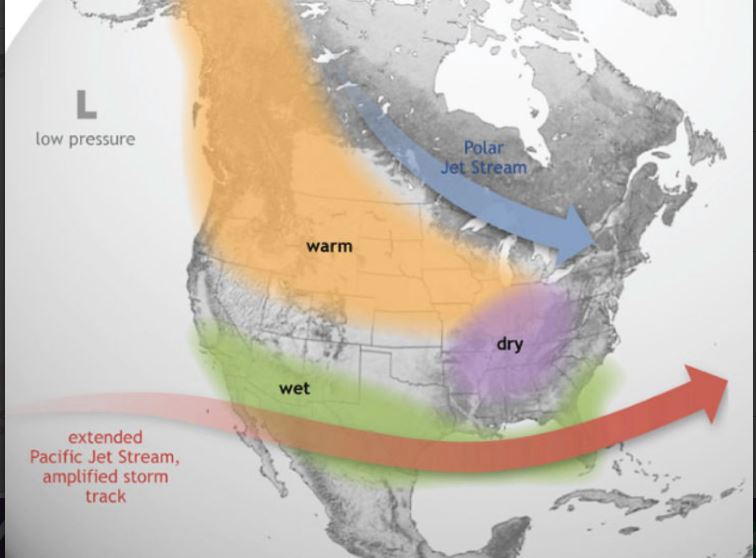
- 23 Apr 2026
In News:
Climate experts are sounding alarms over a potential "Super El Niño" developing in the 2026-27 cycle. With projections suggesting it could be the strongest in 140 years, this climate phenomenon is poised to redefine global temperature benchmarks in 2027 and trigger severe socio-economic disruptions.
Decoding the ENSO Mechanism
The El Niño-Southern Oscillation (ENSO) is a periodic fluctuation in sea surface temperatures (SST) and atmospheric pressure across the tropical Pacific Ocean. It consists of three phases: El Niño (warm), La Niña (cool), and Neutral.
Normal vs. El Niño Conditions
- Normal (Neutral) Phase: Strong trade winds blow from east to west (Easterlies), piling up warm surface water near Asia and Indonesia. This allows cold, nutrient-rich water to rise (upwelling) along the South American coast (Peru).
- El Niño Phase: Trade winds weaken or reverse into Westerly Wind Bursts. This allows the warm water pool to slide eastward toward the Americas as a Kelvin wave. This warm layer pushes down the thermocline (the transition layer between warm surface and cold deep water), shutting off the upwelling of cold water.
What Makes it a "Super" El Niño?
While a standard El Niño involves an SST anomaly of 0.5°C, a Super El Niño is defined by an extreme spike in the Niño 3.4 region (the central-eastern equatorial Pacific).
- Intensity Threshold: SST anomalies must soar at least 2.0°C (3.6°F) above the long-term average.
- Subsurface Heat Reservoir: A massive buildup of subsurface heat—currently measured at 7-8°C above average in localized areas—acts as high-octane fuel for surface warming.
- Westerly Wind Bursts: Unusually strong wind bursts from the west prevent the system from neutralizing, accelerating the eastward migration of heat.
- Global Warming Synergy: Human-induced climate change has raised the "baseline" temperature of the Pacific. Consequently, modern El Niños are "supercharged," starting from a warmer foundation and reaching unprecedented peaks.
Global and Regional Implications
The atmospheric response to such extreme ocean warming alters global jet streams, creating a "domino effect" of weather disasters.
1. Global Consequences
- Record Temperatures: 2027 is projected to become the hottest year on record, potentially pushing global warming past the 1.5°C threshold temporarily.
- Hydrological Extremes: While the southern US and Peru face devastating floods and deluges, regions like Ethiopia, Central Africa, and Australia are likely to endure severe, multi-year droughts.
- Hurricane Dynamics: High-altitude winds (wind shear) in the Atlantic tend to "shred" developing hurricanes, leading to a quieter Atlantic season but a more active and vicious season in the Central and Eastern Pacific.
2. The "India Factor": Monsoon and Economy
For India, a Super El Niño is traditionally a harbinger of distress:
- Monsoon Failure: There is a strong correlation between El Niño and deficient Southwest Monsoon rainfall. A "Super" event could lead to widespread drought across the subcontinent.
- Agricultural Stress: Deficient rains during the Kharif season (rice, pulses, sugarcane) can lead to crop failure, triggering food inflation and a decline in rural demand.
- Heatwaves and Health: The phenomenon intensifies and prolongs summer heatwaves, straining the national power grid and increasing heat-related mortality.
- Economic Impact: The World Meteorological Organization (WMO) warns of billions in economic losses in climate-sensitive sectors like water management and hydroelectric power.
The impending 2026-27 Super El Niño is not just a weather event; it is a stress test for global climate adaptation strategies. For India, this underscores the urgency of strengthening Climate-Resilient Agriculture (CRA), improving water-use efficiency through the Jal Jeevan Mission, and enhancing early warning systems under the National Disaster Management Plan. As the planet enters uncharted thermal territory, proactive policy intervention will be the only shield against the "Super" extremes of a warming world.
Truck Mounted Attenuators (TMAs)
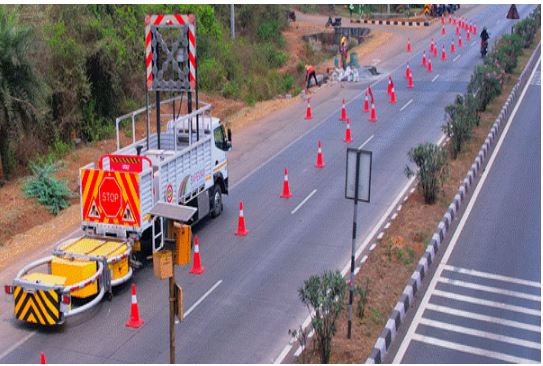
- 23 Apr 2026
In News:
As India aggressively expands its National Highway network, the Ministry of Road Transport and Highways (MoRTH) has shifted its focus from mere connectivity to achieving global standards in road safety. A critical component of this transition is the deployment of Truck Mounted Attenuators (TMAs), a technology-driven intervention designed to safeguard both highway commuters and the personnel maintaining India's high-speed corridors.
Understanding Truck Mounted Attenuators (TMAs)
A Truck Mounted Attenuator is an advanced, energy-absorbing safety device attached to the rear of a service vehicle. It acts as a sacrificial barrier, designed to crumple and absorb the kinetic energy of an errant vehicle before it can strike maintenance crews or construction machinery further ahead.
Key Technical Standards
To ensure reliability, the units deployed on Indian highways comply with rigorous international crash-test protocols:
- MASH Test Level-3 (TL-3): This modern standard ensures the device can handle impacts from heavier vehicles at higher speeds.
- NCHRP 350 Test Level-3: A globally recognized benchmark for roadside safety hardware.
- Impact Resilience: These systems are engineered to withstand and dissipate the force of a collision at speeds of up to 100 km/h.
Core Functions and Impact Mitigation
The deployment of TMAs serves a dual purpose: active prevention and passive protection.
1. Kinetic Energy Dissipation: In the event of a rear-end collision, the attenuator structure collapses in a controlled manner. This dissipation of force significantly:
- Reduces the severity of injuries for the occupants of the crashing vehicle.
- Prevents the service truck from being pushed forward into the maintenance zone where workers are operating.
2. Early Warning Systems: Prevention is achieved through integrated Wig-Wag Warning Lights. These high-intensity lights flash in alternating patterns to form clear directional arrows. This is particularly vital in:
- High-speed corridors where reaction times are minimal.
- Low-visibility conditions, such as heavy fog or nighttime operations.
- Advanced Alerting: By providing a visual cue well in advance, these signals nudge drivers to change lanes safely, preventing the accident entirely.
Strategic Significance for India
The integration of TMAs into the Indian road ecosystem carries profound implications:
- Reduction in Work-Zone Fatalities: Construction zones are high-risk environments. TMAs provide an "invisible shield" for ground workers who are often vulnerable to speeding traffic.
- Economic Resilience: By minimizing accident severity, the government reduces the massive economic loss associated with road fatalities and long-term disability.
- Global Best Practices: The move aligns India with the infrastructure standards of developed nations, making Indian highways safer for international logistics and transit.
Aspero
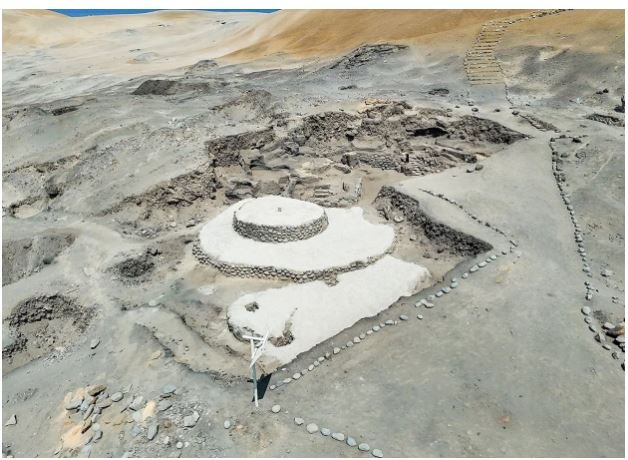
- 22 Apr 2026
In News:
In a landmark finding for pre-Columbian history, archaeologists in Peru have recently uncovered an architectural structure at Áspero specifically designed for celestial observation. This discovery provides unprecedented insight into the early scientific prowess of the Caral Civilization (Norte Chico), one of the oldest known urban societies in the Americas.
The Maritime Capital of Caral
Áspero serves as a coastal counterpart to the Sacred City of Caral. Located on the right bank of the Supe River, just 500 meters from the Pacific Ocean, it functioned as the primary fishing and marine supply hub for the inland urban centers of the Supe Valley.
- Timeline: Occupied during the Late Archaic (Preceramic) period, approximately 3000 BC to 1800 BC.
- Civilizational Link: It is a key site of the Norte Chico/Caral-Supe civilization, characterized by its monumental architecture without the use of ceramics.
- Social Complexity: The site features 25 architectural complexes, including platform mounds and sunken circular plazas, reflecting a highly organized society capable of large-scale cooperative labor.
The Discovery: An Ancient Observatory
The newly identified structure, located in Sector J1, represents a specialized "astronomical center." This find confirms that the inhabitants of Áspero were not just expert fishers but also early scientists who mastered the observation of natural cycles.
Key Features of the Structure:
- Strategic Positioning: The observatory is situated near the settlement's main pyramid buildings. From this elevated vantage point, there is a clear, unobstructed view of both the coastline and the lower Supe Valley.
- Dual-Level Design: Unlike similar astronomical markers found in inland Caral, the Áspero observatory is a two-level structure. Researchers suggest this design was specifically tailored to its coastal location to monitor maritime and riverine phenomena simultaneously.
- The Shadow Effect: Constructed using rounded stones and pebbles bound with clay, the structure was engineered to cast specific shadows on its surfaces. By tracking these shadows, the ancient inhabitants could determine the cycles and movements of the sun, moon, and stars.
Functional Significance: Science in Service of Survival
The ability to "read the sky" was not merely a ritualistic endeavor; it was a critical tool for sustainable environmental management:
- Predicting Tides: Precise astronomical knowledge allowed the Caral people to predict tide changes, essential for their primary industry—fishing and shellfish gathering.
- Climate and Agriculture: While Áspero was maritime-focused, it engaged in intensive trade with agricultural inland sites. Monitoring celestial cycles helped predict El Niño events and the seasonal drying of the Supe River (which occurs between April and November), facilitating food security through exchange.
- Ritual and Governance: Such scientific knowledge likely reinforced the authority of the elite. Notable finds like the Lady of the Four Tupus and high-status child burials indicate a stratified society where "knowledge-keepers" held significant power.
Global and Comparative Significance
The discovery at Áspero challenges the notion that complex science only followed the advent of agriculture. It supports the "Maritime Foundations of Andean Culture" theory, suggesting that abundant marine resources provided the caloric surplus necessary to support a class of people dedicated to architecture, trade, and astronomy.
- Comparative Link: This observatory mirrors structures in the Sacred City of Caral, proving a unified civilizational knowledge system across the Supe Valley.
- Advanced Urbanism: The presence of such specialized scientific infrastructure 5,000 years ago places the Caral Civilization on par with the early civilizations of Mesopotamia, Egypt, and the Indus Valley.
Stauranthera aureoglossa

- 22 Apr 2026
In News:
In a significant contribution to India’s botanical diversity, a team of researchers has identified a new plant species, Stauranthera aureoglossa, within the pristine but fragile ecosystems of the Eastern Himalayas. This discovery underscores the role of Arunachal Pradesh as a global biodiversity hotspot and highlights the urgent need for conservation in the face of infrastructure expansion.
Botanical Profile and Identification
Stauranthera aureoglossa is a perennial herb belonging to the family Gesneriaceae. It was specifically located in the mid-elevation evergreen forests of the Kamle and Upper Subansiri districts of Arunachal Pradesh.
- Habitat and Ecology: The species is highly specialized, thriving in shaded, humid environments. It is typically found clinging to damp rocks and soil in the immediate vicinity of perennial streams and rivulets.
- Morphological Features: The plant is characterized by its diamond-shaped or spear-shaped leaves. Unlike its closest relatives, its flower is uniquely bell-shaped with a bluish-purple hue.
- The ‘Golden Tongue’: The defining feature of this species—and the inspiration for its name—is the absence of a basal "spur" (a tubular projection) found in similar plants. Instead, it possesses a prominent raised, bumpy, yellow patch on the internal lower lip of its petals.
- Etymology: The specific epithet "aureoglossa" is derived from Latin, where aureo (golden) and glossa (tongue) refer to this distinct yellow appendage.
Ecological Significance and Conservation Status
The discovery of Stauranthera aureoglossa is a reminder of the "taxonomic gap" in the Eastern Himalayas, where many species remain unknown to science. However, the joy of discovery is tempered by the immediate threats facing its habitat.
- Endangered Status: Due to its extremely limited geographical range and the specific nature of its habitat, scientists have provisionally classified the species as Endangered.
- Threats to Habitat: The streamside niches where this herb thrives are under immense pressure from:
- Infrastructure Development: Road-widening projects in the border state often lead to debris being dumped into stream beds.
- Deforestation: Logging activities disrupt the canopy cover, altering the micro-climate required for these moisture-loving plants.
- Natural Disasters: The region is prone to landslides, which are often exacerbated by the aforementioned human activities, leading to the destruction of fragile populations.
Vishwa Sutra Initiative
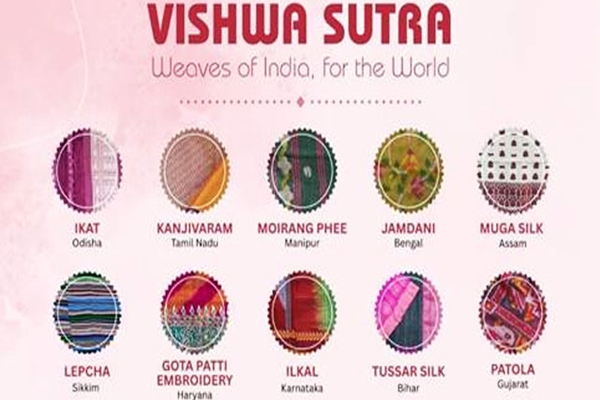
- 22 Apr 2026
In News:
In a significant stride toward elevating India’s traditional craftsmanship, the Ministry of Textiles recently launched the ‘Vishwa Sutra – Weaves of India for the World’ initiative. Orchestrated by the Office of the Development Commissioner (Handlooms) in partnership with the National Institute of Fashion Technology (NIFT), this program seeks to bridge the gap between ancient heritage and modern international aesthetics.
The Core Vision: Globalizing Tradition
The "Vishwa Sutra" initiative is designed to place Indian handlooms within a contemporary global design framework. Rather than viewing handlooms as static relics of the past, the project treats them as dynamic canvases capable of resonating with international consumers.
- Diverse Representation: The initiative brings together 30 distinct handloom weaves, each curated to represent a specific Indian state.
- Cultural Fusion: Each of these 30 weaves has been creatively reinterpreted using design inspirations from 30 different countries. This cross-cultural dialogue blends traditional Indian techniques with global fashion sensibilities.
Notable Cross-Cultural Reinterpretations:
- Odisha Ikat: Reimagined through the lens of Greek geometric forms.
- Kanchipuram (Tamil Nadu): Infused with Norwegian minimalist lines.
- Muga Silk (Assam): Integrated with structural Egyptian elements.
- Patola (Gujarat): Reinterpreted with vibrant Spanish influences.
- Banarasi (Uttar Pradesh): Designed into UAE-inspired ensembles.
Strategic and Economic Significance
1. The 5F Framework: Vishwa Sutra acts as a practical implementation of the government’s 5F Vision:
- Farm (Cotton/Silk cultivation) Fibre(Spinning) Factory(Weaving) Fashion(Design) Foreign (Export).
This linear progression ensures that the benefits of global demand reach the primary producers—the weavers—strengthening the rural economy.
2. From "Vocal for Local" to "Local to Global": The initiative marks a transition in the government's industrial policy. By making traditional industries globally competitive, it aims to increase India's share in the global textile market, which is currently dominated by mass-produced fast fashion.
3. Preservation of Intangible Heritage: By providing a modern market for traditional techniques, the initiative ensures the survival of skills that have been refined over generations. It provides a financial incentive for the younger generation of weaver communities to continue their ancestral crafts.
R-37M Missile

- 22 Apr 2026
In News:
In a major strategic recalibration following the air combat lessons of 2025, Russia has officially greenlit the export of the R-37M (AA-13 Axehead) ultra-long-range air-to-air missile to India. Valued at approximately $1.2 billion for nearly 300 missiles, this deal is designed to restore the "Beyond Visual Range" (BVR) edge for the Indian Air Force (IAF) against the growing influence of Chinese-made missile systems in the region.
The Strategic Context: Operation Sindoor (2025)
- The urgency of the R-37M acquisition stems from the aftermath of Operation Sindoor (May 2025). Triggered by a terror attack in Pahalgam, the operation involved high-intensity air skirmishes where the IAF encountered Pakistani J-10C fighters armed with Chinese-origin PL-15 missiles.
- Reports from the clash suggested that the PL-15's range created a "technological gap," allowing adversary aircraft to threaten Indian fighters before they could return fire. To counter this, and the even more formidable PL-17 (range ~400 km) deployed by China, India has opted for the R-37M as a vital interim stabilizer while domestic programs like Astra Mk-2 and Mk-3 move toward operationalization.
The "AWACS Killer": Technical Specifications
The R-37M is not a standard dogfight missile; it is a specialist weapon designed for long-range air denial.
- Hypersonic Speed: It is the world’s fastest air-to-air missile in its class, reaching speeds of Mach 6. This velocity is critical for intercepting fast-moving jets and high-value assets.
- Massive Engagement Range: With a range of 300 to 400 kilometers, it enables the IAF to strike from deep within its own territory.
- Trajectory Profile: The missile employs a lofted trajectory, climbing into the thinner atmosphere before diving onto its target. This conserves kinetic energy and maximizes the "No-Escape Zone" for the enemy.
- The Target Profile: Its primary role is that of an "AWACS Killer." It targets high-value enablers such as Airborne Warning and Control Systems (AWACS), refueling tankers, and jamming aircraft, effectively "blinding" the enemy's air network.
Integration with the Su-30MKI Fleet
A major factor in selecting the R-37M is its compatibility with the Su-30MKI, the backbone of the IAF.
- Seamless Fit: Since the missile is already integrated into the Russian Su-30SM (a variant very similar to India’s MKI), technical risks are minimal.
- Modernization Link: The deployment is being synchronized with the "Super Sukhoi" upgrade program, which involves 84 aircraft. A fully upgraded Su-30MKI will be capable of carrying between six to eight R-37M missiles.
- Force Multiplier: By integrating the R-37M, the IAF can more than triple the current BVR engagement envelope of its frontline fighters.
Impact on Regional Air Dynamics
The acquisition shifts the focus from fighter-versus-fighter dogfights to network-centric warfare:
- Standoff Parity: It neutralizes the range advantage currently held by the Chinese PL-15 and PL-17 missiles.
- Deterrence: By threatening support aircraft (like the KJ-500 AEW&C), India forces the adversary to push their "enablers" further back from the frontline, reducing their coordination and radar coverage.
- Strategic Stabilizer: While India pursues indigenous "Astra" variants, the R-37M ensures there is no "capability vacuum" during the transition period.
Marine Heatwaves
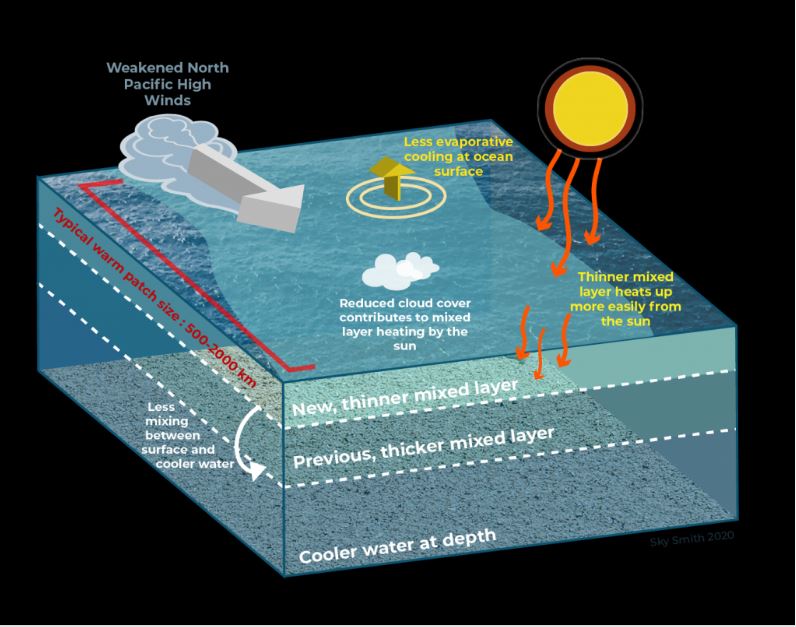
- 22 Apr 2026
In News:
In early 2026, a groundbreaking study published in Science Advances revealed a perilous synergy between the ocean and the atmosphere: Marine Heatwaves (MHWs) are now acting as high-octane fuel for tropical cyclones. This phenomenon has led to a 60% increase in billion-dollar disasters due to the "rapid intensification" of storms.
Understanding Marine Heatwaves (MHWs)
A Marine Heatwave is defined as a prolonged period (lasting days to months) of abnormally high ocean temperatures in a specific region.
- The Threshold: Typically, an anomaly of 1°C to 3°C above the long-term seasonal average is characterized as an MHW.
- Duration and Intensity: These events are not just about surface spikes; they often involve a "heat dome" effect within the water column, measured by their cumulative intensity and annual frequency.
The Mechanics of Formation
MHWs form when the ocean’s natural cooling mechanisms break down. This is driven by both atmospheric and oceanic factors:
- Weakening Winds: Strong winds normally cool the ocean via evaporation and by mixing the warm upper layer with cooler, deeper waters. When winds fail, this mixing stops.
- Ocean Stratification: Without wind-driven mixing, the top layer of the ocean becomes thin and "trapped."
- Solar Heating: This thin surface layer absorbs solar radiation rapidly. Because it cannot transfer heat to the depths, the temperature spikes, creating localized extreme heat.
- Global Drivers: Climate change ensures the oceans absorb 90% of excess global heat. Events like El Niño and shifts in atmospheric pressure (e.g., the North Pacific High) further trigger these massive pools of warm water.
How MHWs "Supercharge" Tropical Cyclones
The most critical takeaway for disaster management is the role of MHWs in Rapid Intensification (RI).
- Fueling the Engine: Tropical cyclones draw energy from the evaporation of warm ocean water. Passing over an MHW is like a car hitting a "gas station"; it provides an abundance of energy that boosts wind speeds by 20% and rainfall by 12%.
- Stalling and Decay: These "supercharged" storms tend to move more slowly over land and decay at a much lower rate, leading to catastrophic flooding.
- Economic Fallout: MHW-influenced cyclones are 1.6 times more likely to become billion-dollar disasters. This was evidenced by the back-to-back devastation of Hurricanes Helene and Milton in late 2024, where record-high sea surface temperatures in the Gulf of Mexico led to unprecedented destruction.
Ecological and Economic Implications
Beyond storm intensification, MHWs trigger a cascade of environmental crises:
- Ecosystem Collapse: MHWs are the primary cause of massive coral bleaching and the death of kelp forests, which are vital carbon sinks.
- Harmful Algal Blooms (HABs): Toxic algae thrive in warm water. These blooms produce neurotoxins like domoic acid, which contaminate the food chain and force the closure of commercial fisheries.
Biodiversity Loss: While some species migrate north ("the Winners"), cold-water species like salmon face mass die-offs ("the Losers").
The Union Territories Laws (Amendment) Bill, 2026
- 21 Apr 2026
In News:
As India undergoes a transformative phase in its parliamentary structure, the introduction of The Union Territories Laws (Amendment) Bill, 2026 in the Lok Sabha marks a pivotal step. Introduced alongside the 131st Constitutional Amendment and the Delimitation Bill, 2026, this legislation serves as a supplementary framework to ensure that structural reforms in the Indian legislature are inclusive of Union Territories (UTs).
Overview and Purpose
The primary objective of the Bill is to extend the benefits of the national-level constitutional shifts—specifically the expansion of Parliament and the implementation of women’s reservation to UTs with their own Legislative Assemblies. It targets the legal frameworks of the National Capital Territory (NCT) of Delhi, Puducherry, and Jammu & Kashmir.
Historically, major legislative changes often faced a "notification lag" when being applied to UTs due to their unique administrative status. This Bill bridges that gap, ensuring that the Nari Shakti Vandan Adhiniyam and the redrawing of electoral boundaries happen simultaneously across states and relevant UTs.
Key Features of the 2026 Bill
1. Accelerated Women’s Reservation
A cornerstone of this Bill is the delinking of women’s reservation from the 2027 Census. Under previous frameworks, the implementation of the one-third reservation for women was tied to the publication of the first census after 2023. The 2026 Bill modifies this requirement for UTs, allowing reservation to be implemented based on the 2011 Census data. This ensures that women can contest reserved seats in these UTs as early as the 2029 elections.
2. Integration with Parliamentary Expansion
The Bill aligns UT-specific statutes with the 131st Amendment, which increases the maximum number of representatives from UTs in the Lok Sabha from 20 to 35 members. This expansion reflects the demographic shifts and the need for more granular representation in India’s growing democracy.
3. Synchronized Delimitation
The Bill empowers the Delimitation Commission, constituted under the Delimitation Bill, 2026, to redraw assembly constituencies within Delhi, Puducherry, and Jammu & Kashmir. This ensures that the redrawing of seats is not a fragmented process but is synchronized with the national effort to rebalance electoral representation based on the latest available data.
4. Rotational Allotment
To maintain electoral fairness and prevent the entrenchment of specific seats, the Bill mandates that seats reserved for women in UT Assemblies will be allotted by rotation. This means the specific constituencies reserved for women will change in successive election cycles, ensuring diverse representation across all regions of the UT.
Strategic Significance
- Uniformity in Federal Structure: By passing this Bill, the government prevents a legal discrepancy where states could have moved forward with gender parity reforms while UTs remained stalled due to census-linked timelines. It enforces a uniform legislative timeline across the Union.
- Democratic Deepening: The increase in Lok Sabha seats for UTs (from 20 to 35) ensures that the voices of citizens in these administratively unique regions carry more weight in the national discourse.
- Empowerment of Nari Shakti: By bypassing the wait for the 2027 Census, the Bill translates the intent of the Nari Shakti Vandan Adhiniyam into reality at the grassroots level of UT governance.
CAFE-III Norms
- 21 Apr 2026
In News:
In a significant move toward decarbonizing the transport sector, the Indian government and the automobile industry have reached a consensus on the implementation of Corporate Average Fuel Efficiency (CAFE) Phase III norms. These standards represent a critical pillar of India’s strategy to achieve its climate commitments and reduce energy dependency.
Understanding CAFE Norms
Unlike Bharat Stage (BS) emission standards, which regulate the pollutant levels of individual vehicle models, CAFE norms focus on the weighted average fuel consumption and CO2 emissions of an automaker’s entire fleet. This holistic approach ensures that high-emission vehicles are balanced by the sale of more efficient or zero-emission models.
- Regulating Authority: The standards are formulated by the Bureau of Energy Efficiency (BEE) under the Ministry of Power.
- Target Segment: The norms specifically target M1 category passenger vehicles, which include vehicles weighing under 3,500 kg and designed to seat up to nine individuals.
- Timeline: CAFE-III is set to commence on April 1, 2027, and will remain in effect until March 31, 2032.
Core Objectives: Strategic and Environmental
- Energy Security: By improving fuel efficiency, India aims to reduce its massive crude oil import bill, a vulnerability highlighted by recent geopolitical instabilities such as the West Asia crisis.
- Climate Mitigation: The norms align with India’s Panchamrit goals, pushing the transport sector toward a lower carbon footprint.
- Technological Leapfrogging: The standards necessitate the transition from traditional Internal Combustion Engines (ICE) to advanced technologies, including Strong Hybrids, Battery Electric Vehicles (BEVs), and Flex-Fuel systems.
Key Features of the CAFE-III Framework
The transition from CAFE-II to CAFE-III involves a significant tightening of compliance parameters:
- Aggressive Emission Targets: Automakers must bring down their fleet-wide average CO2 emissions from the current target of approximately 113 g/km (at the end of FY27) to a stringent 78.9 g/km by FY32.
- The "Flatter Curve" Approach: To ensure parity, the government scrapped a proposal that would have given a 3 g/km relief to small petrol cars (under 909 kg). This encourages efficiency across all vehicle sizes rather than subsidizing smaller, less efficient engines.
- The Super Credit Scheme: To incentivize "green" production, the policy uses a multiplier system for every clean vehicle sold. Each sale of a Battery EV counts as 3.0 units, a Plug-in Hybrid (PHEV) as 2.5, and a Strong Hybrid as 1.6 toward the fleet average.
- Technological Incentives: Manufacturers can earn "discounts" on their emission scores by adopting any of the 12 approved energy-efficient technologies, such as 6-speed transmissions, start-stop systems, and high-efficiency air conditioning units.
- Regulatory Flexibility: Recognizing the challenges of a rapid transition, the framework allows for credit trading between manufacturers and the ability to carry forward excess compliance from previous years.
Anticipated Socio-Economic Implications
The implementation of CAFE-III will reshape the Indian automotive landscape in several ways:
- Shift in Market Share: As petrol engines become harder to justify under strict fleet averages, there will be a decisive shift toward CNG, which is expected to dominate a significant market share by 2032, alongside Hybrids and EVs.
- Impact on Affordability: The integration of advanced hybrid systems and lightweight materials is likely to drive up the manufacturing costs, potentially making entry-level vehicles more expensive for the average consumer.
- Infrastructure Demand: The "Super Credit" push for EVs and Hybrids will necessitate a rapid expansion of charging and fueling infrastructure across the country.
Jumping Spiders

- 21 Apr 2026
In News:
The biodiversity landscape of India continues to expand with the recent identification of two new species of jumping spiders: Mogrus shushka and Mogrus pune.
Understanding the Genus: Mogrus
The newly identified spiders belong to the genus Mogrus, a group of medium-sized jumping spiders. Members of this genus are primarily distributed across the arid and semi-arid landscapes of Africa, Europe, and Asia. Jumping spiders (family Salticidae) are renowned for their exceptional vision and agile hunting techniques, often pouncing on prey rather than weaving traditional webs.
1. Mogrus shushka: The Arid Specialist
Discovered in the Desert National Park (DNP), Rajasthan, Mogrus shushka represents the hardy nature of the Thar Desert’s micro-fauna.
- Etymology: The species name is derived from the Sanskrit word ‘shushka’, meaning ‘dry’. This nomenclature directly references the hyper-arid environment of its habitat.
- Adaptations: It is evolutionarily tuned to survive extreme thermal fluctuations, negligible humidity, and the shifting sandy terrain of the desert.
- Morphological Distinctions:
- Males: They are distinguished from their close relative, M. cognatus, by a unique triangular-shaped bump on their pedipalp (mating appendage), as opposed to a thumb-shaped structure.
- Females: They possess a deep, semi-circular epigynal depression (on the underside) characterized by short, tightly spaced internal ducts.
2. Mogrus pune: The Urban Biodiversity Indicator
In a significant finding for urban ecology, Mogrus pune was discovered in the Alfa Laval Biodiversity Park, Maharashtra.
- Etymology: The species is named after the city of Pune, emphasizing the role of urban green spaces in sustaining undiscovered life forms.
- Morphological Distinctions:
- Males: These are identified by a heart-shaped bump on their reproductive organs and specific, uniquely curved anatomical structures.
- Females: They are characterized by a central depression that is notably wide and membranous, a key feature used for taxonomic classification.
Significance for Biodiversity and Conservation
These discoveries underscore several critical points regarding India’s environmental health:
- Arid Ecosystem Value: The discovery in Desert National Park highlights that even "wastelands" or hyper-arid zones are reservoirs of unique genetic diversity that require stringent protection.
- Urban Green Spaces: The presence of a new species in Pune’s biodiversity park validates the "Oases in Concrete" concept, proving that urban parks can serve as vital refugia for wildlife amidst industrialization.
- Taxonomic Gap: Identifying new species helps scientists better understand the evolutionary lineage of the Salticidae family in the Indian subcontinent, which is essential for building robust ecological conservation strategies.
Rising Labour Protests in India
- 21 Apr 2026
In News:
Industrial hubs in North India, specifically Noida (Uttar Pradesh) and Manesar (Haryana), have recently emerged as epicenters of violent labour protests. These demonstrations represent a critical inflection point in India’s industrial relations, highlighting a deepening rift between the workforce, employers, and state regulatory frameworks.
The Landscape of Discontent: Current Realities
The contemporary wave of labour unrest is characterized by a "decoupling" of wages from the actual cost of living. While the Indian industrial sector has seen recovery in production, the benefits have not trickled down to the grassroots level. Workers are currently agitating against stagnant base pays and the ambiguity surrounding the transition to the 2025 Labour Codes.
Statistical Overview of Labour Vulnerability
- The Inflation-Wage Gap: Between 2021 and 2026, the Consumer Price Index for Industrial Workers (CPI-IW) surged by 24.8%. In contrast, wage increments in industrial states like Haryana averaged only 15%, leading to a significant contraction in real income and purchasing power.
- The Minimum Wage Chasm: Before the most recent emergency revisions, an unskilled worker in Haryana earned approximately ?11,274.60. This stood in stark contrast to the Central Sphere rate of ?20,358, fueling a sense of systemic deprivation.
- Administrative Inertia: Legal mandates require a revision of base minimum wages every five years. However, Uttar Pradesh had not updated its base rate since 2012, and Haryana faced a ten-year delay, highlighting a breakdown in the statutory machinery.
Core Drivers of the Unrest
- Legislative Ambiguity and the 2025 Labour Codes: The notification of four new Labour Codes in November 2025 was intended to streamline regulations. However, it has inadvertently created a "notification lag." While the Codes exist, the absence of finalized state-level rules has led to confusion regarding "spread-over hours." Workers fear that the provision for a 12-hour workday (meant to facilitate a four-day week) is being exploited to increase workloads without corresponding overtime pay.
- Geopolitical and Economic Headwinds: External shocks have played a disproportionate role in domestic labour stability. The closure of the Strait of Hormuz and escalating conflict in West Asia have triggered a dual crisis:
- Input Cost Inflation: Factories are reeling under high raw material costs, leading to squeezed margins and delayed wage disbursements.
- Living Cost Spikes: Migrant workers have reported paying up to ?4,000 for LPG cylinders on the black market due to disrupted supply chains.
- The Information Vacuum: Misinformation on social media platforms specifically regarding a rumored uniform national minimum wage of ?20,000 has set unrealistic benchmarks, leading to friction when actual paychecks do not match digital expectations.
State and Central Responses
To mitigate the escalating violence, several interim measures have been enacted:
- Uttar Pradesh: The state government announced an interim hike, raising the minimum wage for unskilled workers in Noida to ?13,690.
- Haryana: Following the Manesar protests, a 35% hike was notified, bringing the minimum wage to ?15,220.71.
- Central Benchmark: In September 2024, the Union government revised wages for central sphere establishments to over ?20,000 per month, attempting to set a "floor" for states to follow.
Critical Challenges in the Industrial Ecosystem
The crisis reveals deep-seated structural flaws:
- Erosion of Collective Bargaining: The new codes grant states significant discretion in recognizing trade unions. This has weakened the institutionalized "safety valve" where grievances are settled through negotiation, pushing workers toward street protests.
- Race to the Bottom: Regional disparities in wage notifications create a risk where industries migrate to states with the lowest labour costs, undermining the concept of a "living wage" across India.
- External Vulnerabilities: US-imposed tariffs and global shipping disruptions have made employers reluctant to pass on any financial gains to workers, citing "global uncertainty."
The Way Forward: Towards Industrial Harmony
To ensure long-term stability and align with the "Make in India" vision, the following steps are essential:
- Automaticity in Wage Revision: Base minimum wage revisions must be made mandatory and automatic every five years, linked directly to the CPI-IW to prevent real-wage erosion.
- Legislative Clarity: The Centre and State governments must fast-track the notification of final rules for the 2025 Labour Codes to eliminate the "grey areas" regarding working hours and social security.
- Energy Security for Labour: During global energy crises, the government should consider Direct Benefit Transfer (DBT) for energy subsidies (like LPG) specifically targeted at registered industrial and migrant workers.
- Strengthening Institutional Dialogue: Rather than bypassing trade unions, the state must formalize their role to ensure that industrial disputes are resolved through tripartite mechanisms (Government-Employer-Worker) rather than law-and-order interventions.
Apis mellifera
- 21 Apr 2026
In News:
In a significant advancement for India's apiculture sector, the CSIR-Indian Institute of Integrative Medicine (IIIM), Pulwama, has successfully demonstrated that Apis mellifera (the Western Honey Bee) can survive sub-zero temperatures. This breakthrough is set to revolutionize beekeeping in the Himalayan regions, particularly in Jammu and Kashmir, by eliminating the need for the traditional, expensive, and stressful winter migration of hives to the plains.
Profile of Apis mellifera: The Global Generalist
Apis mellifera, commonly known as the Western or European Honey Bee, is the most widely distributed and well-known domesticated insect species globally.
- Native Range & Global Spread: While native to Europe, Western Asia, and Africa, human introduction since the 17th century has established them across every continent except Antarctica.
- Commercial Importance: They are the primary species exploited commercially for honey, beeswax, propolis, and royal jelly. Furthermore, they play a critical role in global food security by providing pollination services for a vast array of crops.
- Biological Features:
- Appearance: Reddish-brown to yellow with black bands and orange-yellow rings. They possess forked or frayed hairs on their thorax and abdomen.
- Architecture: They construct sophisticated nests consisting of multiple vertical beeswax combs, typically built inside protective cavities like hollow trees.
- Social Structure: They are eusocial insects. A single colony consists of tens of thousands of bees, including one fertile Queen, thousands of non-reproductive female Workers, and a small number of fertile male Drones.
The Challenge: Winter Migration
Historically, beekeepers in high-altitude regions like Kashmir faced a major logistical hurdle: the extreme winter. Since Apis mellifera was perceived as vulnerable to sub-zero temperatures, beekeepers were forced to migrate their hives to warmer states like Rajasthan, Punjab, and Haryana. This "transhumance" of bees involved:
- High transportation and labor costs.
- Increased mortality rates due to the stress of travel.
- Exposure to pesticides and different pathogens in the plains.
The Innovation: The "Warm Womb" Approach
The CSIR-IIIM breakthrough involves creating a "warm womb" environment for the bees, allowing them to remain in the Valley during the harsh winters. By utilizing specialized hive insulation and optimized feeding strategies, researchers proved that these colonies can thrive even when temperatures drop significantly below freezing.
Key Impacts of the Breakthrough:
- Economic Relief: Beekeepers save significantly on transportation and logistics, making the practice of apiculture more profitable and sustainable.
- Healthier Colonies: Avoiding the stress of long-distance migration results in lower colony collapse rates and healthier bees ready for the spring pollination season.
- Local Ecosystem Support: Maintaining bee populations year-round supports the local flora and ensures that pollination begins immediately as the first spring blossoms appear in the Valley.
Bharat Maritime Insurance Pool
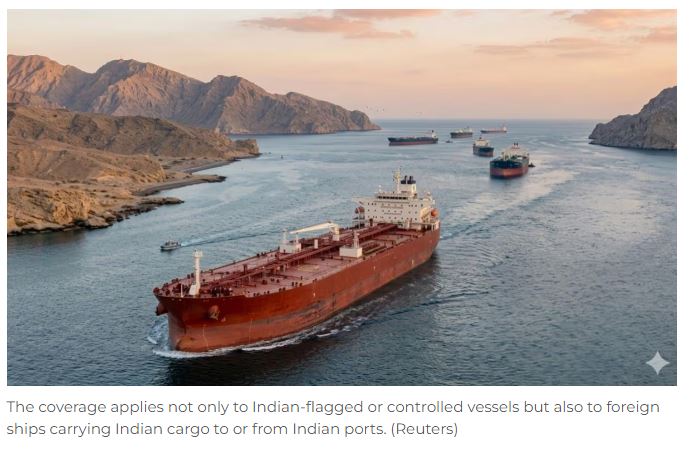
- 20 Apr 2026
In News:
In a strategic move to insulate its seaborne trade from the volatility of global geopolitics, the Union Cabinet has approved the creation of the Bharat Maritime Insurance Pool (BMI Pool). With a substantial financial backing of ?12,980 crore, this domestic safety net is designed to ensure that India's supply chains remain resilient, even when international insurance markets become restrictive or volatile.
The Need for a Domestic Insurance Pool
Global maritime trade is frequently subjected to disruptions, ranging from regional conflicts in the Red Sea and the Strait of Hormuz to international sanctions. Traditionally, Indian shipping has been heavily dependent on global insurance conglomerates, particularly the International Group of P&I Clubs. During crises, these entities may hike premiums or withdraw coverage for "high-risk" zones, leaving Indian trade vulnerable. The BMI Pool serves as a sovereign-backed alternative to mitigate such external dependencies.
Key Features of the BMI Pool
1. Financial and Sovereign Backing: The pool is supported by a sovereign guarantee of ?12,980 crore. This government backing provides the necessary financial credibility to honor large-scale claims, which is essential for building trust among shipowners and international trade partners.
2. Scope of Coverage: The BMI Pool is comprehensive in its risk assessment. It covers:
- Hull and Machinery: Insurance for the physical structure and equipment of the ship.
- Cargo Insurance: Protection against the loss or damage of goods being transported.
- Protection and Indemnity (P&I): Coverage for third-party liabilities.
- War Risk Insurance: Critical coverage for vessels navigating through active conflict zones or volatile maritime routes.
3. Eligibility and Tenure: The scheme is inclusive of:
- Indian-flagged vessels.
- Indian-controlled ships.
- International vessels carrying cargo specifically destined for or originating from Indian ports.
The initiative is set for an initial duration of 10 years, with a provision for a five-year extension based on performance and necessity.
Strategic Significance for India
1. Enhancing Strategic Autonomy: By creating a domestic pool, India reduces its reliance on Western-dominated insurance markets. This is particularly vital when navigating trade routes impacted by unilateral sanctions or regional instabilities, ensuring that India's energy security and export-import (EXIM) trade are not held hostage to global market fluctuations.
2. Strengthening Domestic Expertise: The BMI Pool will serve as a catalyst for developing homegrown expertise in maritime underwriting and claims management. Currently, a significant portion of insurance premiums flows out of the country; this initiative aims to retain that capital while building a robust domestic financial services ecosystem in the maritime sector.
3. Ensuring Trade Continuity: During global disruptions, the pool guarantees "uninterrupted and affordable" coverage. This prevents sudden spikes in freight costs, which otherwise lead to inflationary pressures on the Indian economy.
Pradhan Mantri Gram Sadak Yojana-III (PMGSY-III)
- 20 Apr 2026
In News:
In a significant move to bolster rural infrastructure and economic resilience, the Union Cabinet has approved the continuation of the Pradhan Mantri Gram Sadak Yojana-III (PMGSY-III) beyond its initial deadline of March 2025. The scheme has now been extended until March 2028, with a revised financial outlay of ?83,977 crore. This extension underscores the government’s commitment to "Viksit Bharat 2047" by ensuring that the last-mile connectivity in rural India is not just established but modernized to meet contemporary socio-economic needs.
Core Framework of the PMGSY Initiative
Launched on December 25, 2000, PMGSY is a flagship rural development program under the Ministry of Rural Development. Its primary mandate is to provide single, all-weather road connectivity to eligible unconnected habitations.
Eligibility and Population Thresholds (Based on 2001 Census):
- Plain Areas: Habitations with a population of 500 or more.
- Special Category Areas: In North-Eastern states, Himalayan states, and Himalayan Union Territories, the threshold is reduced to 250 or more due to difficult terrain and strategic importance.
PMGSY-III: A Shift Toward Consolidation
While the earlier phases of PMGSY focused on new connectivity, Phase III represents a strategic shift toward the consolidation of the existing rural road network. It prioritizes the upgradation of Through Routes and Major Rural Links that connect habitations to critical social and economic hubs:
- Gramin Agricultural Markets (GrAMs): Enhancing the farmer-to-market linkage.
- Higher Secondary Schools: Ensuring better access for rural students to pursue higher education.
- Hospitals: Facilitating timely medical interventions in remote areas.
Key Cabinet Decisions and Revised Timelines
The 2026 Cabinet approval introduced several vital adjustments to ensure the scheme's objectives are fully met:
- Extended Deadlines:
- March 2028: For the completion of roads and bridges in plain areas and road works in hilly regions.
- March 2029: Specifically for the completion of complex bridges in hilly areas.
- Financial Revision: The total outlay has been increased from the original ?80,250 crore to ?83,977 crore to account for pending works and cost escalations.
- Special Provisions for Bridges: Approval has been granted for 161 Long Span Bridges (LSBs), estimated at ?961 crore, which are essential for completing sanctioned road alignments.
- Operational Flexibility: Works sanctioned before March 31, 2025, which remained un-awarded, are now permitted to proceed to the tendering and award stage.
Institutional Mechanism for Implementation
The program follows a decentralized implementation structure:
- State Level: State Governments/UT Administrations designate Executing Agencies to oversee the broader program.
- District Level: Implementation is managed by Programme Implementation Units (PIUs), staffed by technical personnel.
- Financial Flow: Funds are released to District Rural Development Agencies (DRDAs), ensuring local administrative involvement in progress monitoring.
Socio-Economic Impact and Significance
The extension of PMGSY-III is poised to deliver a multi-dimensional impact on the rural landscape:
- Economic Empowerment: Reduced transportation costs and time significantly improve rural incomes by providing better market access for both farm and non-farm products.
- Human Capital Development: Reliability in all-weather connectivity directly correlates with improved school attendance and healthcare accessibility in underserved regions.
- Employment Generation: The scheme acts as a catalyst for job creation, offering direct employment in construction and indirect growth through the emergence of rural enterprises.
- Sustainable Development: By bridging the rural-urban divide, the scheme fosters inclusive growth, ensuring that remote habitations are integrated into the national development narrative.
Tehri Lake
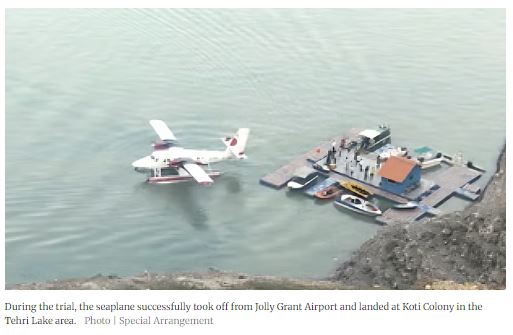
- 20 Apr 2026
In News:
Uttarakhand achieved a historic milestone in its aviation and tourism sectors as a 19-seater seaplane successfully completed trial landings on Tehri Lake. Conducted by Sky Hop Private Limited, the trial saw the aircraft fly from Dehradun’s Jolly Grant Airport to Koti Colony on the lake's reservoir. This development marks the beginning of a transformative era for regional connectivity, utilizing India’s water bodies as natural runways to bypass the logistical challenges of Himalayan terrain.
Geographical Profile of Tehri Lake
Tehri Lake is not just a scenic reservoir but a marvel of modern engineering and geography:
- Scale and Origin: One of the largest man-made lakes in Asia, it covers approximately 42 square kilometers. It was formed by the impoundment of the Bhagirathi River by the Tehri Dam, leading to the submergence of Old Tehri town.
- Location: Situated in the Tehri Garhwal district at an altitude of 1,700 meters, the lake is cradled by the Himalayan foothills.
- Hydrological Source: The reservoir is primarily fed by the confluence of the Bhagirathi and Bhilangna rivers, collecting glacial meltwater and monsoon runoff.
- Hydro-geology: As a deep-water reservoir, it maintains the year-round water volume and surface stability necessary for both massive power generation and safe seaplane operations.
The Strategic Significance of the Seaplane Project
The introduction of seaplane services is a cornerstone of Uttarakhand’s Adventure Tourism Policy and the broader national goal of regional air connectivity (UDAN).
1. Revolutionizing Connectivity
- Time Efficiency: Seaplanes drastically reduce travel time from Dehradun and Rishikesh to the remote Tehri region, facilitating easier access for tourists and pilgrims.
- Disaster Management: Beyond tourism, these aircraft can play a critical role in rapid medical evacuations and disaster relief in the fragile Himalayan ecosystem, where road blockages are frequent.
2. Socio-Economic and Sustainable Development
- Tourism Hub: The lake already hosts jet skiing, paragliding, and kayaking. Seaplanes add a premium layer to this eco-tourism portfolio, attracting global travelers.
- Multisectoral Impact: The lake serves the 2,400 MW Tehri Dam, provides irrigation for 270,000 hectares, and supplies drinking water to millions in Delhi and Uttar Pradesh. The seaplane project complements these utilities by boosting local commerce and employment.
Governance and Institutional Support
The project aligns with the "Sustainable, Inclusive, and Climate-Resilient Tourism Development at Tehri Lake Area" initiative, supported by the Asian Development Bank (ADB) with a funding of approximately $126 million.
- Climate Resilience: The project emphasizes nature-based solutions and climate-smart infrastructure to protect the 87,000 residents and 2.7 million annual visitors.
- Integrated Management: Authorities have ensured that seaplane corridors are designed to harmonize with existing boating and fishing activities, preventing disruption to local livelihoods.
Dalma Wildlife Sanctuary
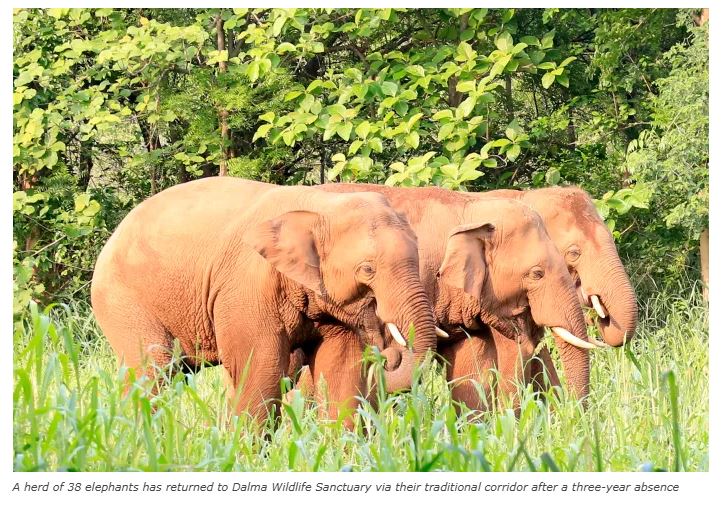
- 20 Apr 2026
In News:
In a significant development for regional biodiversity, a herd of 38 elephants has returned to the Dalma Wildlife Sanctuary in Jharkhand after a hiatus of nearly three years. This migratory return highlights the sanctuary’s role as a critical corridor for the Asian Elephant and underscores the importance of the Chota Nagpur Plateau in India’s wildlife conservation efforts.
Geographical and Cultural Context
- The Dalma Wildlife Sanctuary is nestled within the Dalma Hills of the Chota Nagpur Plateau in Jharkhand.
- The sanctuary holds profound cultural value, deriving its name from “Dalma Mai,” a local goddess revered by the tribal communities and villagers inhabiting the fringes of the forest.
- The sanctuary’s landscape is characterized by a rugged, hilly, and rocky terrain, interspersed with dense forest canopies and sprawling grasslands. This diverse topography provides a variety of ecological niches for a wide range of flora and fauna.
Hydro-Geology and Ecosystem
The sanctuary serves a vital hydrological function as the entire forest area falls within the catchment of the Subarnarekha River. The presence of water is a defining feature of the sanctuary, which is home to two prominent waterfalls: Sitaguldi and Dassam. These water sources are essential for the survival of the resident megafauna, particularly during the dry months.
Flora and Vegetation
The vegetation in Dalma is classified primarily under two categories:
- Dry Peninsular Sal: Dominated by Shorea robusta, these forests are hardy and well-adapted to the plateau's climate.
- Northern Dry Mixed Deciduous Forest: This type supports a high variety of plant species that shed their leaves seasonally.
The sanctuary is also a repository of botanical wealth, particularly medicinal plants. Species such as Anantmula, Satawari, and Sarpgandha (Rauvolfia serpentina) are found in abundance. Additionally, the ecosystem supports various orchids, climbers, herbs, and shrubs, contributing to a complex and resilient forest structure.
Fauna: Beyond the Elephant
While Dalma is most famous as a terminal for elephant migration, it supports a diverse array of wildlife. The return of the elephant herd indicates a healthy habitat, but the sanctuary also protects:
- Mammals: Barking deer, wild boar, giant squirrel, and sloth bears.
- Unique Species: The sanctuary provides a refuge for the Indian pangolin and porcupines, species that are increasingly under threat due to habitat loss and poaching.
India’s Startup Revolution
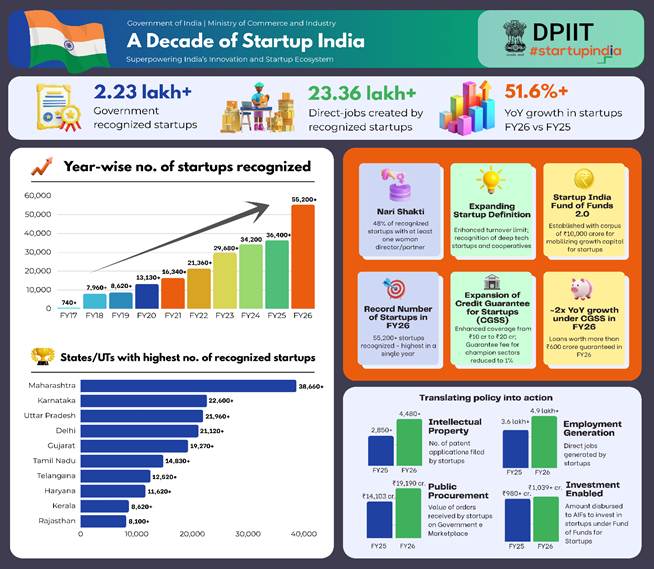
- 20 Apr 2026
In News:
The Financial Year 2025–26 has emerged as a watershed moment for India’s entrepreneurial landscape. According to the latest data from the Department for Promotion of Industry and Internal Trade (DPIIT), the Startup India initiative witnessed its strongest performance since its inception in 2016. With over 55,200 startups recognized in a single year—a 51.6% year-on-year increase—India is rapidly cementing its position as a global innovation hub, transitioning from a job-seeking to a job-creating economy.
Key Performance Indicators (FY 2025–26)
The scale of growth in the startup ecosystem is reflected in several record-breaking metrics:
- Total Ecosystem Strength: The total number of recognized startups has crossed 2.23 lakh.
- Employment Generation: Startups have generated over 23.36 lakh direct jobs to date. In FY 2025-26 alone, direct job creation rose by 36.1%, adding nearly 5 lakh jobs in a single year.
- Women Empowerment: Demonstrating inclusive growth, approximately 48% of total recognized startups (over 1.07 lakh) have at least one-woman director or partner.
- Intellectual Property: Innovation is peaking, with patent filings by startups jumping from 2,850 in the previous year to over 4,480 in FY 2025–26.
Geographical Spread and Competitive Federalism
The startup movement is no longer confined to traditional tech hubs but has reached every State and Union Territory. However, five regions lead the charge in concentration and employment:
- Maharashtra: 38,660 startups; 4.13 lakh jobs.
- Karnataka: 22,600 startups; 2.46 lakh jobs.
- Uttar Pradesh: 21,960 startups; 2.11 lakh jobs.
- Delhi: 21,120 startups; 2.36 lakh jobs.
- Gujarat: 19,270 startups; 2.14 lakh jobs.
To sustain this momentum, the States’ Startup Ranking Framework (SRF) promotes competitive federalism, evaluating states on policy implementation and classifying them into categories like "Best Performers" and "Top Performers."
The Support Pillars: Flagship Schemes
The government provides a multi-layered financial and regulatory support system to nurture startups throughout their lifecycle:
- Fund of Funds for Startups (FFS): To address the funding gap, FFS 1.0 has disbursed over ?7,000 crore to Alternative Investment Funds (AIFs), which in turn invested over ?26,900 crore in startups. Building on this, FFS 2.0 has been notified with a fresh corpus of ?10,000 crore.
- Startup India Seed Fund Scheme (SISFS): Focuses on early-stage needs like proof of concept and prototyping. The entire ?945 crore corpus has been committed, supporting over 3,400 startups through 219 incubators.
- Credit Guarantee Scheme (CGSS): Facilitates collateral-free loans. In FY 2025–26, the guarantee cover was doubled from ?10 crore to ?20 crore per borrower to enhance capital mobilization.
- Government e-Marketplace (GeM): Startups are increasingly participating in public procurement. Over 38,600 startups are onboarded on GeM, with the total value of orders placed reaching ?19,190 crore in the current fiscal year.
Institutional Mechanisms for Mentorship
Beyond capital, the ecosystem emphasizes "ease of doing business" through digital integration:
- MAARG Portal: (Mentorship, Advisory, Assistance, Resilience, and Growth) serves as a single-stop platform for mentorship across sectors.
- Startup India Hub: A single-window digital platform connecting founders with investors, incubators, and government bodies.
- Startup India Investor Connect: Specifically bridges the gap between high-potential founders and the global investor community.
Biomass-based Improved Cookstoves (ICS)
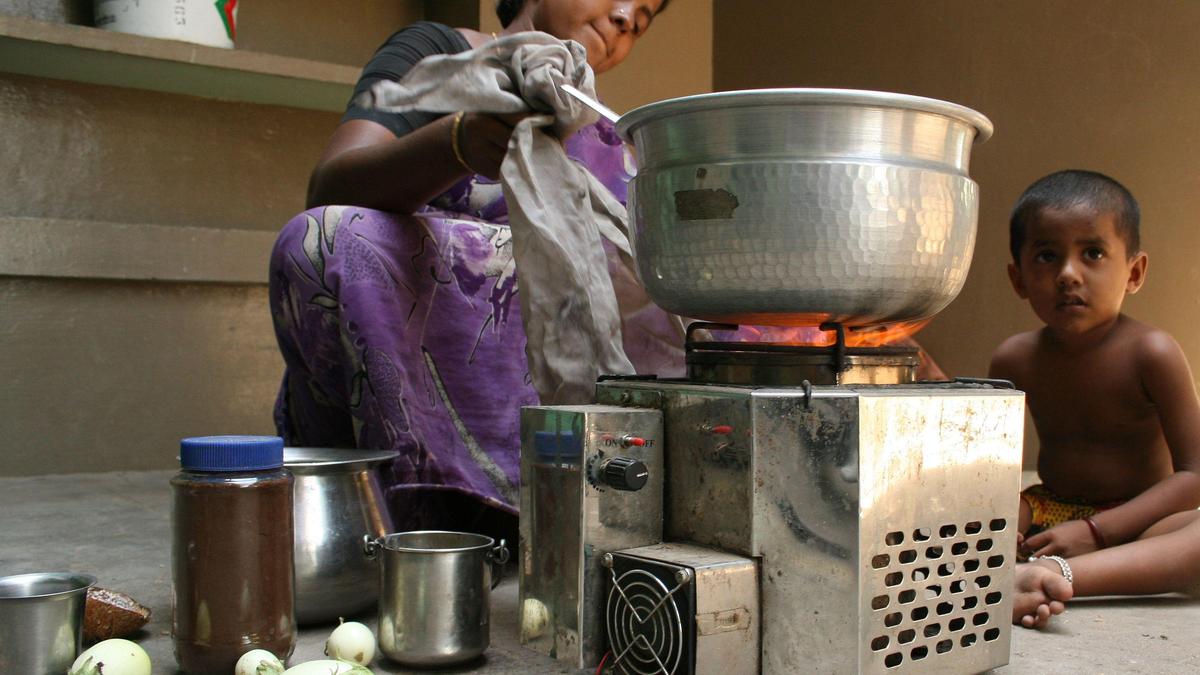
- 19 Apr 2026
In News:
In the wake of recent LPG supply disruptions and rising fuel costs, the conversation around India's energy transition has pivoted toward Modern Biomass-based Improved Cookstoves (ICS). While the Pradhan Mantri Ujjwala Yojana (PMUY) significantly expanded LPG access, many rural households have begun "stacking" fuels or shifting back to traditional firewood due to affordability issues. In this context, ICS emerges not as a step backward, but as a sophisticated, cost-effective bridge to cleaner energy.
The Technology: Redefining Biomass Combustion
Improved Cookstoves are advanced thermal devices engineered to maximize combustion efficiency while minimizing the release of harmful pollutants. Unlike the traditional mud chulha, which is plagued by poor airflow and massive heat loss, ICS integrates modern thermodynamic principles.
- Efficiency Gains: Traditional stoves operate at a dismal efficiency of roughly 10%. In contrast, ICS achieves an efficiency of 38–45%.
- Secondary Aeration: A key technological feature in ICS is the introduction of secondary air. This process captures soot and volatile gases—which would otherwise escape as smoke—and re-combusts them. This "double burn" significantly improves indoor air quality.
The Economic and Environmental Value Proposition
For a rural household, the transition to ICS offers a compelling alternative to both traditional wood-firing and expensive LPG:
- Cost Efficiency: With firewood priced at approximately ?10/kg compared to LPG costs often exceeding ?100/kg, ICS can offer savings of over 60% for economically vulnerable families.
- Resource Conservation: Due to superior thermal efficiency, ICS can reduce the volume of firewood required by 50–66%, directly reducing the drudgery of fuel collection for women and lessening the pressure on local forests.
- Fuel Versatility: ICS models are increasingly designed to be "fuel-agnostic," capable of burning processed biomass such as pellets and briquettes, as well as raw materials like crop residues and dung cakes.
A Sustainable Financing Model: Carbon Credits
One of the most innovative aspects of modern ICS deployment is its link to the global carbon market. Because these stoves demonstrably reduce CO2 and black carbon emissions, they generate carbon credits. These credits can be traded to:
- Subsidize Upfront Costs: Making the stoves affordable for low-income households.
- Fund CSR Initiatives: Encouraging corporate involvement in rural energy health.
- Support Microfinance: Creating a circular economy where emission reductions pay for the hardware.
Implementation Challenges and the Way Forward
Despite their benefits, the large-scale adoption of ICS faces significant hurdles:
- The "Last-Mile" Logistical Gap: Unlike LPG, which relies on a centralized bottling infrastructure, ICS success depends on decentralized, local distribution networks and robust after-sales support to ensure stoves remain functional.
- Emission Trade-offs: While ICS is significantly cleaner than a traditional chulha, its emissions are generally higher than those of LPG or electric cooking. It is a "transitional" technology rather than an ultimate "zero-emission" solution.
- Awareness and Behavioral Change: Deep-seated cultural cooking habits often act as a barrier to adopting new stove designs, requiring sustained community engagement.
River Basin Management Scheme
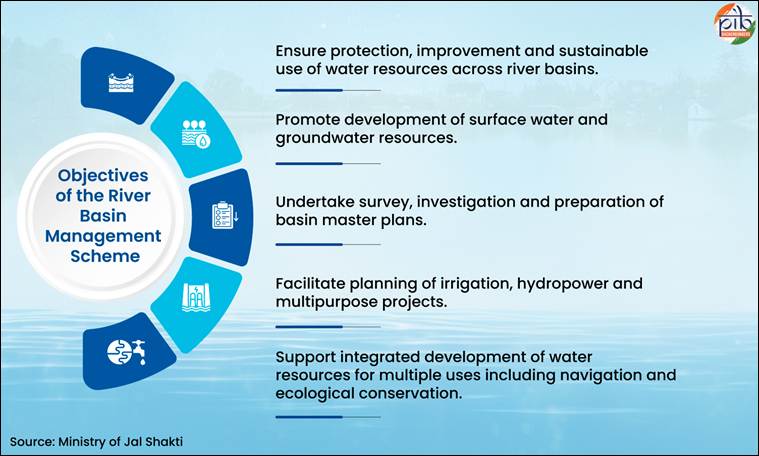
- 19 Apr 2026
In News:
Water security is a cornerstone of national stability, supporting agriculture, industry, and ecological health. In India, the complexity of transboundary rivers and diverse climatic zones necessitates a shift from fragmented water use to Integrated Water Resources Management (IWRM). The River Basin Management (RBM) Scheme, a central sector initiative under the Ministry of Jal Shakti, serves as the institutional bedrock for this transition, focusing on the sustainable development of both surface and groundwater.
Overview and Institutional Framework
The RBM Scheme is implemented by the Department of Water Resources, River Development, and Ganga Rejuvenation. It functions through three specialized nodal agencies:
- Central Water Commission (CWC): Focuses on surveys, investigations, and the preparation of Detailed Project Reports (DPRs) for irrigation and hydropower, particularly in the Indus, Brahmaputra, and Teesta basins.
- Brahmaputra Board: Manages flood control, bank erosion, and drainage improvement in the North Eastern Region (NER), including the Brahmaputra and Barak valleys.
- National Water Development Agency (NWDA): Leads the Interlinking of Rivers (ILR) program, conducting feasibility studies for inter-basin water transfers.
Strategic Scope and Financial Outlay
The scheme prioritizes strategically sensitive and water-rich but underdeveloped regions, including the Indus Basin (J&K and Ladakh) and the North Eastern Region.
- 16th Finance Commission Period: The Union Government has approved the continuation of the scheme from 2026–27 to 2030–31.
- Financial Commitment: A fully funded outlay of ?2,183 crore has been allocated, a significant increase from the ?1,276 crore allocated in the previous cycle (2021–26).
Core Objectives and Action Areas
The RBM framework is designed to move beyond traditional engineering to a holistic "ecosystem approach":
- Basin Planning: Developing and updating Master Plans that act as long-term roadmaps for resource conservation and utilization.
- Modern Survey Techniques: Leveraging advanced technologies such as GIS, Remote Sensing, LiDAR (Light Detection and Ranging), and Drone-based surveys to enhance planning accuracy in difficult terrains.
- Flood and Erosion Management: Implementing critical structural interventions, such as bank revetment and spurs, to protect vulnerable areas like Majuli Island in Assam.
- Community Interventions: Strengthening local resilience through Springshed management and the integration of indigenous water management practices with modern scientific methods.
Measurable Outcomes and Progress (2021–2026)
The scheme has achieved several milestones that bolster India's hydro-diplomacy and internal water security:
- Infrastructure Readiness: Completion of DPRs in remote Himalayan regions, creating a pipeline for future hydropower and irrigation investments.
- Interlinking Progress: The NWDA has identified 30 river links; feasibility reports for 26 and DPRs for 15 (including the Kosi–Mechi link) have been finalized.
- Erosion Control: Successful post-construction bank revetment works (e.g., at Sumoimari, Majuli) have mitigated the devastating impact of the Brahmaputra’s annual floods.
- Capacity Building: Providing technical support to "Special Category" states (Sikkim, Mizoram, Manipur, etc.) that lack the independent financial capacity for large-scale water planning.
Borrowers’ Platform

- 19 Apr 2026
In News:
At the 2026 IMF-World Bank Spring Meetings, developing nations reached a historic milestone by launching the first-ever Borrowers’ Platform. This initiative aims to rebalance a global financial architecture that has traditionally been dominated by creditor interests, such as the Paris Club. By creating a unified front, the platform seeks to address the mounting sovereign debt crisis, which saw the external debt of developing countries reach a staggering $11.7 trillion by 2024.
Objectives and Institutional Framework
The Borrowers’ Platform is designed as a technical and cooperative mechanism rather than a forum for collective bargaining or debt restructuring.
- Peer Learning and Knowledge Exchange: It facilitates a space for finance ministers and central bank governors to share practical experiences in debt management and navigate complex financial instruments like debt swaps.
- Technical Cooperation: Supported by the United Nations Conference on Trade and Development (UNCTAD) as its Secretariat, the platform leverages technical expertise to strengthen the debt-tracking systems of member states.
- Collective Voice: For the first time, borrowing nations have a formal institutional framework to articulate shared positions in global debt discussions, moving away from the "passive standard-setting" imposed by lenders.
Governance and Membership
The platform represents a diverse coalition of the Global South, bridging major economies with vulnerable states.
- Leadership: The platform is currently led by a working group chaired by Egypt, with Pakistan serving as the Vice-Chair.
- Membership: It comprises 30 member nations, including major emerging economies like India and South Africa, alongside countries such as Colombia, Honduras, Nepal, and Zambia.
- Institutional Backing: The initiative was first proposed by the UN Secretary-General’s Expert Group on Debt in 2025 and later codified in the Sevilla Commitment 2025 and the UNCTAD16 Geneva Consensus.
Significance for the Global South
The platform addresses several structural gaps in the international financial system:
- Rebalancing Power Dynamics: Historically, creditors coordinated through the Paris Club or the London Club, leaving borrowers to negotiate in isolation. This platform provides a necessary counterweight.
- Market Signaling: By improving transparency and data accuracy, the platform aims to reduce "perceived risk" among global investors, potentially lowering borrowing costs and interest rates—which are often twice as high for developing nations compared to advanced economies.
- Fiscal Space for Development: With 54 countries currently spending more on debt servicing than on healthcare or education, the platform’s emphasis on sustainable financing is critical for achieving the Sustainable Development Goals (SDGs).
Delhi High Court’s Landmark Ruling on IVF
- 19 Apr 2026
In News:
In a significant judicial intervention that bridges the gap between medical jurisprudence and constitutional rights, the Delhi High Court recently permitted a woman to proceed with In-vitro Fertilization (IVF) using the genetic material of her husband, an Indian Army soldier currently in a vegetative state. The ruling underscores the evolution of Article 21 of the Indian Constitution, expanding the interpretation of reproductive autonomy and the "Right to Life" in extraordinary circumstances.
The Judicial Context: Article 21 and Reproductive Rights
The core of the petitioner’s plea rested on the fundamental right to motherhood and dignity. The court recognized that the right to reproduce is an essential facet of a person's liberty. By invoking Article 21 (Right to Life and Personal Liberty), the court emphasized that reproductive choices are central to an individual’s dignity and autonomy.
In this unique case, the soldier had expressed a prior intent to have a child before entering a permanent vegetative state (a disorder of consciousness). The court held that his current inability to provide "active" consent does not negate his prior intent or the wife's right to pursue motherhood within the marital bond.
Legal Interpretation of the ART Act, 2021
- The primary legal challenge involved the Assisted Reproductive Technology (Regulation) Act, 2021, which typically mandates the written consent of both parties for any ART procedure.
- However, the Delhi High Court adopted a purposive interpretation of the law. It ruled that in this exceptional scenario, the wife's consent could be legally treated as valid consent on behalf of her husband. This ruling prevents a "legal vacuum" where a spouse’s medical tragedy would otherwise permanently extinguish the other spouse’s reproductive rights.
- Despite a medical board’s observation that the chances of retrieving viable sperm were "meagre," the court prioritized the woman’s right to try, rather than the statistical probability of success.
Understanding Assisted Reproductive Technology (ART) and IVF
In-vitro Fertilization (IVF) is a complex series of procedures used to help with fertility or prevent genetic problems and assist with the conception of a child.
- The Process: Mature eggs are collected (retrieved) from ovaries and fertilized by sperm in a laboratory. The fertilized egg (embryo) is then transferred to a uterus. One full cycle of IVF takes about three weeks.
- Regulatory Framework: In India, these procedures are governed by the ART (Regulation) Act, 2021. This Act provides for the regulation and supervision of ART clinics and banks, preventing misuse and ensuring safe and ethical practices.
- Government Support: Recognizing infertility as a significant reproductive health issue, the Central Government Health Scheme (CGHS) provides financial assistance by reimbursing IVF cycles for eligible beneficiaries, thereby increasing accessibility to these expensive technologies.
Delimitation and Women’s Reservation in Legislatures
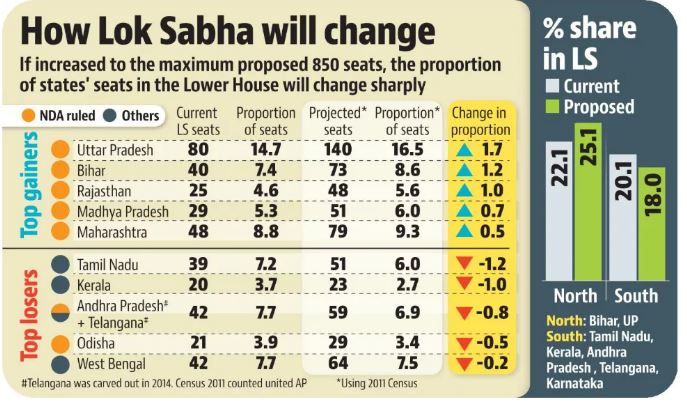
- 19 Apr 2026
In News:
The Union government has introduced a historic legislative package aimed at reshaping India's parliamentary landscape. Through the Constitution (131st Amendment) Bill, 2026, the Delimitation Bill, 2026, and the Union Territories Laws (Amendment) Bill, 2026, the government seeks to synchronize three critical democratic objectives: the expansion of the Lok Sabha, the conduct of a fresh delimitation exercise based on recent data, and the immediate operationalization of the Nari Shakti Vandan Adhiniyam (33% women’s reservation).
Key Legislative Provisions
1. The Constitution (131st Amendment) Bill, 2026
- Expansion of Lok Sabha: The Bill proposes amending Article 81 to increase the maximum strength of the Lok Sabha from 550 to 850 members. This includes 815 representatives from States and 35 from Union Territories.
- Decoupling from the Post-2026 Census: Current provisions under Article 81 and 82 freeze seat allocation based on the 1971 Census until the first census after 2026 is published. The new amendment removes this "delimitation freeze," allowing the government to use the 2011 Census (or any census Parliament decides by law) to redraw boundaries immediately.
- Legislative Hurdles: As a constitutional amendment affecting federal representation, this Bill requires a special majority in both Houses of Parliament and ratification by at least 50% of State Legislatures.
2. The Delimitation Bill, 2026
- The Commission: This Bill replaces the Delimitation Act of 2002 and establishes a new Delimitation Commission. The body will be chaired by a Supreme Court judge and include the Chief Election Commissioner and State Election Commissioners.
- Mandate: The Commission is tasked with redrawing territorial constituencies to ensure they are geographically compact and reflect population shifts, upholding the principle of “one person, one vote, one value.”
- Finality of Orders: Once the Commission’s orders are notified, they carry the force of law and cannot be challenged in any court.
3. The Union Territories Laws (Amendment) Bill, 2026
- This enabling legislation extends the structural changes and women’s reservation to UTs with legislatures, specifically Delhi, Puducherry, and Jammu & Kashmir.
Operationalizing Women’s Reservation
The impending delimitation acts as the "trigger" for the 106th Constitutional Amendment Act, 2023.
- Implementation Timeline: By fast-tracking delimitation, the government aims to implement the 33% quota for women in the 2029 General Elections.
- Quota Dynamics: The reservation includes a sub-quota for SC/ST women but currently lacks a separate provision for OBC women. These seats will be rotated after every delimitation cycle and are subject to a 15-year "sunset clause," unless extended by Parliament.
The Core Conflict: Representation vs. Federalism
While the government emphasizes democratic parity, the move has ignited a debate over India’s federal equilibrium:
Arguments in Favor (Democratic Equity):
- Parity of Representation: Currently, an MP from a high-population state like Uttar Pradesh represents significantly more voters than an MP from a southern state, diluting the democratic weight of citizens in the north.
- Ease of Transition: Expanding the House to 850 seats ensures that while northern states gain more, no state will see a reduction in its absolute number of seats. All states are projected to see a nearly 50% increase in their total seat count.
Arguments Against (Regional Imbalance):
- The "Penalty" for Success: Southern states (Kerala, Tamil Nadu, etc.) argue that they are being punished for their success in population control and socio-economic development. Their relative political weight in the Lok Sabha is set to shrink.
- Financial Disparity: Critics argue that southern states contribute a higher share to the national GDP and tax pool. Reduced political say leads to a "taxation without representation" sentiment.
- Presidential Election Impact: Changing the number of MPs and MLAs will alter the Electoral College, potentially giving northern states a disproportionate influence in electing the President of India.
The Judicial Perspective
Historically, delimitation orders have been immune from judicial interference to prevent election delays. However, in the Kishorchandra Chhanganlal Rathod Case (2024), the Supreme Court clarified that such orders can be reviewed if they are found to be "manifestly arbitrary" or violate core constitutional values.
Hubble Tension

- 17 Apr 2026
In News:
The quest to determine the rate at which our universe is expanding is currently facing a significant scientific bottleneck known as the Hubble Tension. Recent high-precision observations have narrowed the local expansion rate to approximately 73.5 km/s/Mpc, further intensifying a debate that suggests our standard model of cosmology may be incomplete.
Historical Context: Hubble’s Law
In 1929, Edwin Hubble revolutionized our understanding of the cosmos by establishing a quantitative relationship between a galaxy’s distance and its recessional velocity. This principle, known as Hubble’s Law, provided the foundational evidence that the universe is not static but is continuously expanding. The rate of this expansion is captured by a value called the Hubble Constant (H0).
The Core Conflict: Two Paths, Two Results
The "tension" arises because the two primary methods used to calculate the Hubble Constant yield results that are statistically incompatible, despite both being highly precise.
1. The Local Measurement (Late Universe)
This approach utilizes the Cosmic Distance Ladder. Astronomers observe "standard candles"—objects with known luminosity such as pulsating Cepheid stars and Type Ia supernovae. These measurements of the "nearby" universe indicate a faster expansion rate of roughly 73 to 73.5 km/s/Mpc. Recent data from April 2026 has confirmed these figures using multiple cross-validation methods, making the data incredibly robust.
2. The Early Universe Measurement
Scientists analyze the Cosmic Microwave Background (CMB), which is the relic radiation left over from the Big Bang. By applying mathematical models of the early universe's physics, they project this ancient data forward to the present day. This "top-down" approach predicts a significantly slower expansion rate of approximately 67 km/s/Mpc.
Key Discrepancies at a Glance
- The Gap: The difference between the 73.5 km/s/Mpc (Local) and 67 km/s/Mpc (Early Universe) values is what physicists call the Tension.
- Data Source Differences: The Local method relies on direct observation of nearby stars and explosions, while the Early Universe method relies on radiation from the dawn of time projected through mathematical modeling.
- Inference vs. Observation: The local rate is an observation of how the universe behaves now, whereas the CMB rate is an inference of how it should behave based on its state 13.8 billion years ago.
Significance
The persistence of this gap is not merely a mathematical quirk; it represents a potential "crisis in cosmology." If neither side has made a measurement error, the discrepancy implies deep challenges for our current scientific framework:
- Incomplete Physics: The current Standard Model of Cosmology may be missing critical components that explain how the expansion rate changed over time.
- New Physics: There might be undiscovered properties of Dark Energy or Dark Matter driving expansion differently than predicted by current Einsteinian gravity.
- Evolution of Gravity: Our understanding of how gravity operates over cosmic timescales and vast distances may require a fundamental revision.
Physicists are currently investigating whether this mismatch is the result of a subtle systematic error or the first hint of a "new physics" that could reshape our understanding of the origin and ultimate fate of the universe.
Memristors
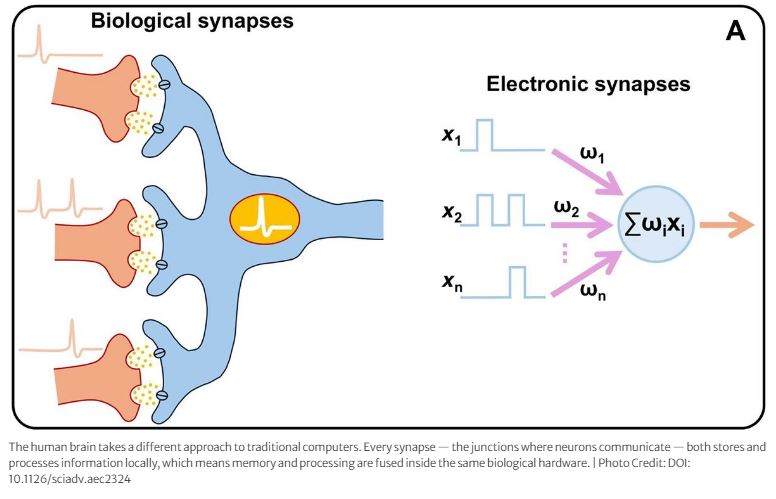
- 17 Apr 2026
In News:
In a significant leap for Neuromorphic Computing, researchers from the University of Cambridge have developed a new type of nanodevice—a hafnium-oxide memristor. Published in Science Advances (2026), this innovation promises to slash the energy consumption of Artificial Intelligence (AI) by over 70%, addressing one of the most critical sustainability challenges of the digital age.
What is a Memristor?
The term ‘Memristor’ is a portmanteau of “memory” and “resistor.” It is the fourth fundamental circuit element (alongside the resistor, capacitor, and inductor), first theorized by Leon Chua in 1971 and physically realized by HP Labs in 2008.
- Core Function: Unlike a standard resistor which has a fixed resistance, a memristor has a variable resistance that depends on the history of the electric current that has passed through it.
- The "Memory" Aspect: Even when the power is turned off, the memristor "remembers" its last resistance state. This makes it a non-volatile device, meaning it retains information without needing a continuous power supply.
The Cambridge Breakthrough: Hafnium-Oxide Memristors
While memristors traditionally used titanium dioxide (TiO2), the Cambridge team utilized Hafnium Oxide (HfO2), a material already common in the semiconductor industry.
Key Innovations:
- Shift from Filaments to Interfaces: Older memristors relied on "conductive filaments" that were often unpredictable and unstable. The new device uses p-n junctions (electronic gates) created by adding strontium and titanium. This allows for smooth, uniform resistance changes.
- Ultra-Low Power: It operates at switching currents nearly a million times lower than conventional oxide-based devices.
- Analogue Capability: Unlike binary systems (0 and 1), these memristors can achieve hundreds of distinct conductance levels, allowing for analogue "in-memory" computing.
Why is this relevant for AI?
Current computer architecture (Von Neumann architecture) separates the Processing Unit (CPU) from the Memory (RAM). In AI tasks, moving massive amounts of data back and forth between these two units creates a "bottleneck" that consumes enormous energy.
- Mimicking the Brain: In the human brain, neurons and synapses both process and store information in the same place.
- Synaptic Plasticity: The new memristor replicates Spike-Timing-Dependent Plasticity (STDP)—the mechanism where biological connections strengthen or weaken based on the timing of signals.
- Efficiency: By performing "In-Memory Computing," memristors eliminate the energy-intensive data shuffling, making AI hardware significantly more efficient.
Applications and Significance
- Sustainable AI: As global demand for AI (like ChatGPT and Large Language Models) explodes, memristors can prevent an energy crisis in data centers.
- Edge Computing: Their small size and low power demand make them ideal for "Edge devices" like smartphones, sensors, and wearable medical tech that need to process AI locally without draining batteries.
- Internet of Things (IoT): Enables smart devices to "learn" and adapt to user patterns autonomously.
- Industrial Automation: Reliable Non-Volatile RAM (NVRAM) for systems that cannot afford data loss during power failures.
Challenges to Overcome
Despite the promise, commercialization faces hurdles:
- Thermal Constraints: Current fabrication requires temperatures of 700°C, which is higher than what standard silicon chip manufacturing (CMOS) can typically tolerate.
- Scalability: Moving from laboratory prototypes to mass-produced integrated circuits (ICs) requires further refinement of the material layers.
CAR-T Cell Therapy
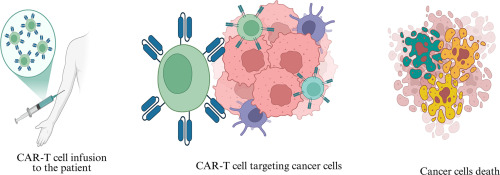
- 17 Apr 2026
In News:
In a landmark medical achievement reported in early 2026, scientists successfully utilized Chimeric Antigen Receptor (CAR) T-cell therapy to treat a patient suffering from three concurrent, life-threatening autoimmune diseases. This patient, who had remained resistant to traditional treatments for years, entered remission, marking a paradigm shift in how "living drugs" can be used beyond oncology.
What is CAR-T Cell Therapy?
CAR-T cell therapy is an advanced form of immunotherapy and gene therapy that re-engineers a patient’s own immune system to target specific diseased cells.
- The Component Cells: It focuses on T-lymphocytes (T cells), a type of white blood cell responsible for identifying and destroying foreign pathogens and abnormal cells.
- The "Chimeric" Aspect: In a laboratory, these T cells are genetically modified to produce synthetic proteins called Chimeric Antigen Receptors (CARs). These receptors act like "navigation systems," allowing T cells to recognize and bind to specific antigens (proteins) on the surface of target cells.
Mechanism of Action: The Step-by-Step Process
The production and administration of CAR-T cells involve a highly sophisticated multi-step process:
- Leukapheresis: T cells are extracted from the patient’s blood through a specialized filtering process.
- Genetic Engineering: Using viral vectors, the gene for the synthetic CAR receptor is inserted into the T cells.
- Expansion: The modified CAR-T cells are grown in large quantities in a laboratory setting.
- Infusion: The "supercharged" cells are infused back into the patient’s bloodstream.
- Targeted Destruction: The CAR-T cells identify the target antigens, bind to them, and trigger a lethal immune response against the diseased cells. Unlike traditional drugs, these cells can continue to multiply in the body, providing long-term surveillance.
Expanding Horizons: From Oncology to Autoimmunity
Traditionally, CAR-T therapy has been the last line of defense for specific B-cell malignancies (blood cancers), including:
- B-cell Acute Lymphoblastic Leukemia (ALL)
- Multiple Myeloma
- Various types of Lymphoma (Follicular, Mantle cell, and Diffuse large B-cell).
The 2026 Breakthrough:
Autoimmune diseases occur when the immune system mistakenly attacks healthy tissues. By programming CAR-T cells to eliminate the specific B-cells producing "auto-antibodies," doctors have successfully induced remission in patients with multiple systemic autoimmune conditions simultaneously. This offers hope for treating diseases like Lupus, Scleroderma, and Myositis where standard immunosuppressants fail.
Challenges and Adverse Effects
Despite its revolutionary potential, CAR-T therapy is associated with significant clinical risks that require intensive monitoring:
- Cytokine Release Syndrome (CRS): A severe immune overreaction leading to hyperinflammation, high fever, and potential organ damage. Clinical data indicates this occurs in approximately 12% of cases.
- Hematological Toxicity: * Neutropenia: Low neutrophil count (seen in 96% of participants), which drastically increases the risk of life-threatening infections.
- Thrombocytopenia: Low platelet count (reported in 65% of patients), raising the risk of internal bleeding.
- Anemia: Low red blood cell count (reported in 61% of participants), causing extreme fatigue.
- Cost and Accessibility: As a personalized "living drug," the therapy remains prohibitively expensive and requires specialized infrastructure found only in advanced tertiary care centers.
Significance for India
India has recently entered the CAR-T space with the indigenous NexCAR19 (developed by IIT Bombay and Tata Memorial Hospital). The expansion of this technology into autoimmune treatment is significant for India’s healthcare landscape, as it could eventually provide a one-time "cure" for chronic conditions that currently require lifelong, expensive medication.
First Semiconductor Fab in India
- 17 Apr 2026
In News:
In a historic milestone for India’s technological sovereignty, the Government officially notified the establishment of the country’s first semiconductor fabrication plant (Fab) at Dholera, Gujarat. This facility, spearheaded by Tata Semiconductor Manufacturing Private Limited (TSMPL), is situated within a newly designated Special Economic Zone (SEZ). This move transitions India from the "back-end" of the value chain (assembly and testing) to the "front-end" of core chip manufacturing, marking a decisive shift toward Aatmanirbhar Bharat in electronics.
Understanding Semiconductor Fabrication ("The Fab")
A semiconductor "Fab" is among the most complex and capital-intensive manufacturing environments globally.
- The Process: It involves producing integrated circuits (microchips) on ultra-pure silicon wafers. Key stages include photolithography (etching circuits), doping (altering electrical properties), and metallization (interconnecting transistors).
- Environment: Fabrication occurs inside Class 1 Cleanrooms, where air is thousands of times cleaner than a hospital operating room to prevent even a speck of dust from ruining a circuit.
- Utility: These chips power everything from basic consumer electronics and automobiles to advanced AI systems, defense hardware, and telecommunications.
Strategic Significance: India Semiconductor Mission (ISM) 2.0
The Dholera Fab is a centerpiece of the India Semiconductor Mission 2.0, which aims to build a comprehensive, full-stack domestic ecosystem.
- Investment & Employment: With a proposed investment of approximately ?91,000 crore, the project is expected to generate 21,000 high-skilled jobs in electronic hardware, software, and IT/ITeS.
- Reducing Import Dependence: Currently, India’s semiconductor market is projected to reach $100–110 billion by 2030. Domestic fabrication is essential to reduce the $20 billion annual import bill for chips.
- Technological Sovereignty: ISM 2.0 focuses on advancing toward 3nm and 2nm technology nodes by 2035, ensuring India is not just a consumer but a global supplier.
Policy Enablers: 2025 SEZ Rule Amendments
To attract the multi-billion dollar investments required for semiconductors, the Ministry of Commerce and Industry introduced landmark amendments to the SEZ Rules, 2006 in June 2025.
|
Reform Feature |
Previous Provision |
Amended Provision (2025) |
|
Minimum Land |
50 Hectares |
Reduced to 10 Hectares (for semiconductor/electronics SEZs). |
|
NFE Calculations |
Restricted inputs |
Inclusion of free-of-cost supplies in Net Foreign Exchange (NFE) calculations. |
|
Domestic Sales |
Restricted/Complex |
Permitted sales in the Domestic Tariff Area (DTA) upon payment of duties. |
|
Encumbrance Norms |
Strict "encumbrance-free" |
Flexibility allowed if land is mortgaged/leased to Government agencies. |
The Dholera Special Investment Region (SIR) Advantage
Dholera was chosen due to its "plug-and-play" infrastructure, essential for the high-precision requirements of a Fab:
- Utilities: Dedicated supply of ultra-pure water and uninterrupted high-voltage power.
- Logistics: Proximity to the Dholera International Airport and the Delhi-Mumbai Industrial Corridor (DMIC).
- Cluster Effect: The SEZ spans 66.166 hectares, creating a hub for ancillary industries like chemicals, gases, and specialized machinery manufacturing.
State of India’s Bats Report
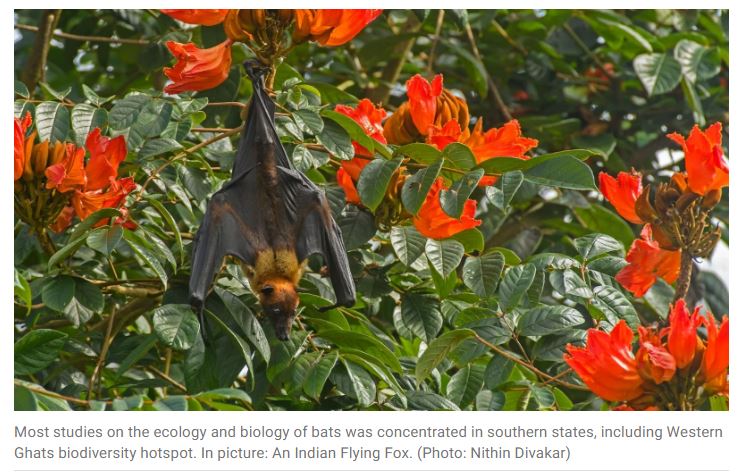
- 17 Apr 2026
In News:
The first-ever national assessment, "State of India’s Bats (2024–25)," was recently released by experts from the Nature Conservation Foundation and Bat Conservation International. The report paints a concerning picture of declining populations and "data dark spots," urging a policy shift to protect these nocturnal mammals that are vital for both environmental stability and public health.
Biodiversity and Endemism
India serves as a significant hub for chiropteran (bat) diversity in the Global South.
- Species Count: India is home to approximately 135 bat species.
- Endemism: Out of these, 16 species are endemic to the region, meaning they are found nowhere else in the world.
- Conservation Status:
- 7 species are currently classified as "Threatened" by the IUCN.
- 35 species remain "Data Deficient" or unassessed, highlighting a critical knowledge gap that hinders effective conservation planning.
- A specific concern was raised regarding the Khasian Leaf-nosed bat, which faces severe pressure from mining and hunting but remains under-classified in terms of protection.
Ecological Functions: The "Silent Providers"
- Pollination: Many bats are primary pollinators for economically significant plants, including durian, agave, and various wild fruit trees.
- Seed Dispersal: Fruit bats (Megachiroptera) play a pivotal role in "reforesting" degraded lands by dispersing seeds over vast distances.
- Pest Control: Insectivorous bats act as natural biopesticides, consuming massive quantities of insects that would otherwise destroy crops, thereby reducing the need for chemical fertilizers.
- Nutrient Cycling: Bat droppings, or guano, are rich in nitrogen and phosphorus, serving as high-quality natural fertilizer for cave and forest ecosystems.
Critical Habitats and Roosting Patterns
Bats are highly selective about their roosting sites, which provide stable microclimates and safety from predators.
- Types of Roosts: Caves, old-growth trees, and historical man-made structures like abandoned buildings and monuments.
- Significant Sites: The report identifies Robber’s Cave in Mahabaleshwar as a site of national importance, hosting one of the largest known roosts of Phillip’s long-fingered bat.
- Threats to Habitats: Urbanization, the demolition of old structures, and mining in karst (limestone) landscapes are destroying these sensitive micro-environments.
Challenges and "Data Dark Spots"
The assessment highlights that the biggest hurdle to bat conservation in India is not just habitat loss, but a lack of scientific data.
- Bureaucratic Hurdles: Researchers often face significant delays in obtaining permissions for field studies, contributing to the "data deficiency" of over 35 species.
- The "Stigma" Factor: Post-COVID-19, bats have been unfairly demonized. While they are linked to certain zoonotic diseases, the report emphasizes that the risk of spillover increases only when humans encroach upon bat habitats, not through the bats' natural existence.
- Anthropogenic Pressures: Land-use changes, deforestation, and the impacts of climate change are altering the migration and hibernation patterns of several species.
Tharu Tribe
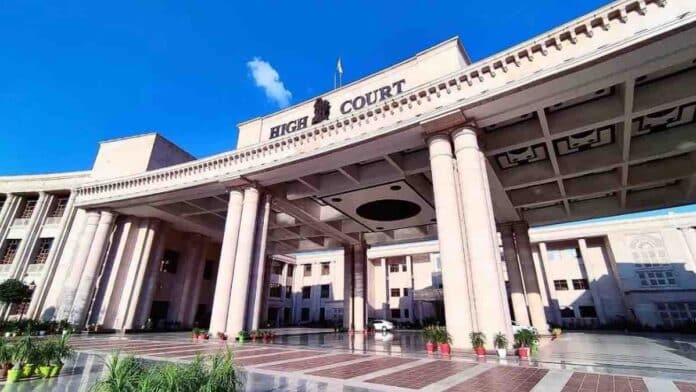
- 18 Apr 2026
In News:
The Tharu community, an ancient indigenous group inhabiting the Himalayan foothills, recently gained significant judicial attention. The Lucknow Bench of the Allahabad High Court intervened to protect their ancestral heritage by setting aside a district-level committee’s decision that had rejected the community forest rights claims of the Tharu tribe in Lakhimpur Kheri, Uttar Pradesh. This ruling reinforces the legal safeguards provided under the Forest Rights Act (FRA) and highlights the ongoing struggle for tribal land recognition in India.
Geographic Distribution and Origins
- The Tharu people are the largest and oldest ethnic group residing in the Terai plains, a belt of marshy grasslands, savannas, and forests located along the Indo-Nepal border.
- In India, their population is primarily concentrated across the states of Uttarakhand, Uttar Pradesh, and Bihar.
- Recognized as a Scheduled Tribe by the Government of India in 1967, they represent a vital link to the historical and ecological landscape of the region.
Social Structure and Unique Customs
The Tharu society is characterized by a fascinating blend of traditional patriarchy and progressive gender norms. While they follow a patrilineal system (tracing descent through the father), women in the Tharu community enjoy property rights that are significantly more expansive than those traditionally recognized in orthodox Hindu society.
Key social features include:
- The Joint Family System: Tharus traditionally reside in long houses under a joint family structure, fostering strong communal bonds.
- Settlement Patterns: Their villages are typically compact and situated within forest clearings, reflecting their deep connection to the woods.
- Traditional Housing: Tharu homes, known as "Badaghar," are architectural marvels of sustainability, constructed using indigenous materials like mud, wood, and thatch.
- Governance: The community maintains a robust internal Panchayat system (Local Social Council). The head of this council is referred to as the "Pradhan," who plays a pivotal role in dispute resolution and social management.
Language and Religious Identity
The community speaks Tharuhati (or simply Tharu), which belongs to the Indo-Aryan subgroup of the Indo-European language family. Their spiritual life is a syncretic "unique blend," where they simultaneously practice animism, nature worship, and Hinduism. This diverse religious identity allows them to maintain a spiritual connection with the natural elements of the forest while participating in broader regional traditions.
Economic Life and the Environment
The Tharu economy is intrinsically tied to the Terai ecosystem. Their primary livelihoods include:
- Agriculture and Animal Husbandry: Most Tharus are settled agriculturists, with a diet centered on rice, lentils, and vegetables.
- Forest Reliance: Beyond farming, they engage in hunting, fishing, and the collection of minor forest products—the very activities currently at the heart of their legal claims for community forest rights.
India-Austria Strategic Partnership
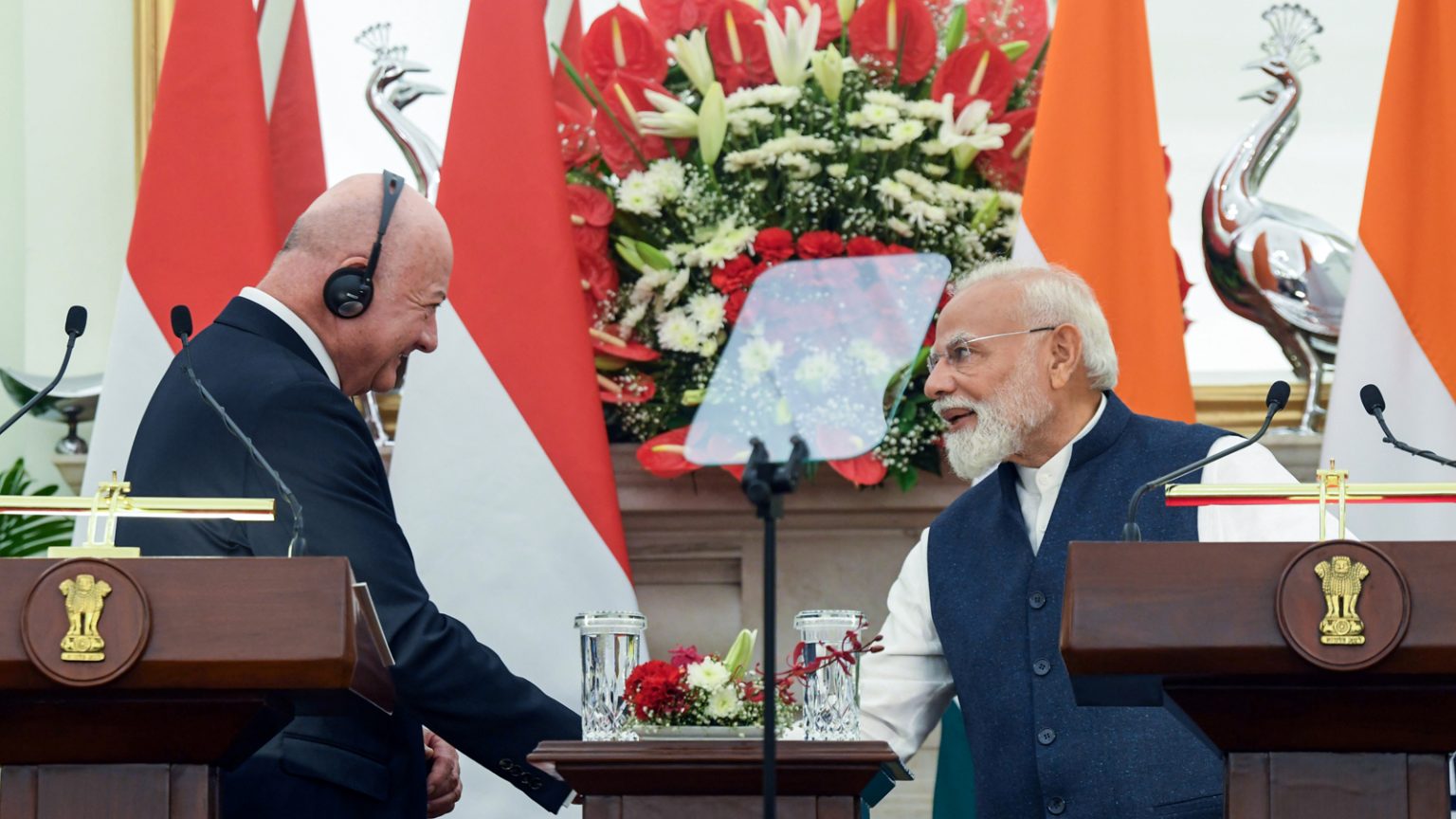
- 18 Apr 2026
In News:
The recent official visit of the Federal Chancellor of the Republic of Austria, Dr. Christian Stocker, to India marks a watershed moment in bilateral diplomacy. As the first visit by an Austrian Chancellor to India in over 40 years, it significantly elevates the "Enhanced India-Austria Partnership" established in 2024. The visit resulted in a series of landmark agreements designed to bridge India’s burgeoning economy with Austria’s high-technology expertise.
Geographic and Historical Context of Austria
- Geography: Austria is a mountainous, landlocked country in south-central Europe. Nearly 70% of its territory is covered by the Alpine Region. It shares borders with eight nations: Germany, Czech Republic, Slovakia, Hungary, Slovenia, Italy, Switzerland, and Liechtenstein.
- The Danube: As the second-longest river in Europe, the Danube serves as a vital artery for Austrian commerce and a link to the Black Sea.
- Historical Legacy: From a Celtic kingdom to a Roman province (Noricum), Austria rose to prominence under the Habsburg Dynasty, becoming a great European power. Historically, Vienna has been a global hub for classical music, synonymous with legends like Mozart and Beethoven.
- Political Status: Today, Austria is a federal parliamentary republic. Notably, it maintains a policy of permanent neutrality (since 1955), similar to Switzerland, positioning it as a unique mediator in international affairs.
Key Outcomes of the 2026 Bilateral Summit
The discussions between Prime Minister Narendra Modi and Chancellor Stocker resulted in six major agreements and several strategic announcements:
Defence and Security
- Defence Industrial Cooperation: A Letter of Intent (LoI) was signed to enhance cooperation in military matters, focusing on defense technology, policy dialogue, and capacity building. This builds upon the broader India-EU Defence and Security Partnership of 2026.
- Counter-Terrorism: Both nations agreed to establish a Joint Working Group on Counter-Terrorism, focusing on intelligence sharing and combating cross-border terror.
- Cybersecurity: Launch of an institutional Cybersecurity Dialogue to address emerging digital threats.
Trade and Economy
- Fast-Track Mechanism: To improve the "Ease of Doing Business," a dedicated platform was established to solve operational bottlenecks for investors from both sides.
- Startups: Expansion of the India-Austria Startup Bridge, linking Indian unicorns with Austrian innovation networks and venture capital.
Technology and Research
- High-Tech R&D: Cooperation has been solidified in "frontier" technologies, including Quantum Technology, Machine Learning, Lasers, and Wastewater Treatment.
- Space Cooperation: Both nations announced a Bilateral Space Industry Seminar to be held in Vienna in Autumn 2026.
Skill Development and Mobility
- Working Holiday Programme: Now operationalized, this allows youth from both countries to engage in professional development and cultural exchange.
- Vocational Training: A Letter of Intent was exchanged for dual vocational training and the mutual recognition of vocational qualifications, facilitating the movement of skilled Indian workers to Austria.
Sectoral Synergy: A Comparative View
|
Sector |
Focus Areas |
Significance |
|
Infrastructure |
Intelligent Transport Systems (ITS), Tunneling, and Road Safety. |
Utilization of Austrian expertise in mountainous road construction. |
|
Education |
"Focus India" portal by Austrian Technical Universities. |
Streamlining admissions for Indian students in engineering and masters programs. |
|
Agriculture |
MoU between FSSAI (India) and AGES (Austria). |
Harmonizing food safety standards and risk assessment to boost agri-trade. |
|
Culture |
Audiovisual Co-production Agreement. |
Facilitating joint film productions and creative exchanges between Bollywood and European cinema. |
Astra Mk2 Missile
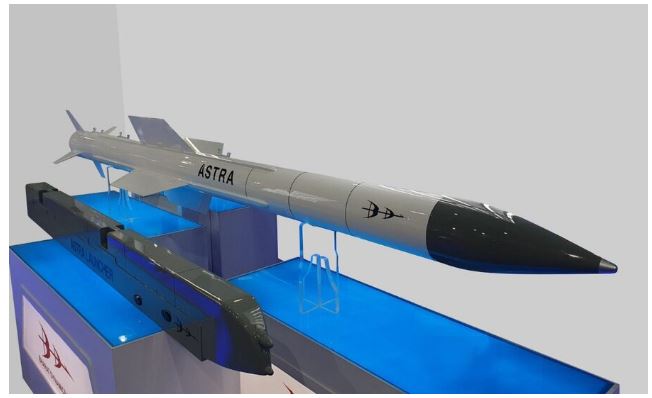
- 18 Apr 2026
In News:
The Indian Air Force (IAF) is embarking on a transformative upgrade of its Mirage 2000 "Vajra" fleet by integrating the indigenously developed Astra Mk2 Beyond-Visual-Range (BVR) air-to-air missile. This development, spearheaded by the Defence Research and Development Organisation (DRDO), marks a paradigm shift from traditional interceptor roles to long-range "aerial sniping," significantly bolstering India's air dominance in the region.
Astra Mk2: The Technological Leap
The Astra Mk2 is the second iteration of India’s premier BVR missile family. While the Astra Mk1 established indigenous capability with a range of ~110 km, the Mk2 variant represents a generational leap in propulsion and guidance.
- Dual-Pulse Rocket Motor: Unlike the single-pulse motor of the Mk1, the Mk2 uses a dual-pulse solid rocket motor. The first pulse launches the missile into high altitudes to conserve energy, while the second pulse ignites during the terminal (kill) phase. This provides a final burst of speed and maneuverability, ensuring it can intercept agile enemy jets at extreme ranges.
- Extended Range: Under high-altitude conditions, the Astra Mk2 boasts a strike range of 200–240 km. This effectively doubles the reach of the Mk1 and surpasses the capabilities of regional adversaries' primary BVR missiles.
- Advanced Seeker & ECCM: It features an indigenous Ku-band Active Electronically Scanned Array (AESA) seeker manufactured by Bharat Electronics Limited (BEL). This is paired with robust Electronic Counter-Countermeasures (ECCM) to resist sophisticated jamming and electronic warfare.
Strategic Integration with Mirage 2000
Integrating the Astra Mk2 onto the French-origin Mirage 2000 is a significant feat of "bridge-building" between Western platforms and indigenous weaponry.
- Feasibility and Trials: As of April 2026, feasibility studies are underway to sync the missile with the Mirage's avionics and radar systems. This integration aims to replace or supplement older missiles like the MICA (~60–80 km range).
- Tactical Transformation: With a 240 km reach, the Mirage 2000 can engage targets without entering the "No Escape Zone" (NEZ) of enemy surface-to-air missiles or interceptors. This enhances aircraft survivability and allows for "first-look, first-shot" advantages.
- Universal Applicability: Beyond the Mirage, the Astra Mk2 is being integrated with the Su-30MKI (as the lead platform), LCA Tejas Mk-1A, and potentially the Rafale, promoting fleet standardization.
Comparison: Astra Mk1 vs. Astra Mk2
|
Feature |
Astra Mk1 |
Astra Mk2 |
|
Range |
110 km |
200–240 km |
|
Propulsion |
Single-pulse smokeless solid motor |
Dual-pulse solid rocket motor |
|
Dimensions |
3.6m length / 178mm diameter |
Larger body / 190mm diameter |
|
Weight |
~154 kg |
~175 kg |
|
Guidance |
Two-way data link Active Homing |
Two-way data link AESA Seeker |
First BRICS Health Working Group Meeting 2026
- 18 Apr 2026
In News:
The Union Ministry of Health and Family Welfare recently hosted the First BRICS Health Working Group (HWG) Meeting 2026 in New Delhi. Guided by the philosophy of a "People-Centric and Humanity-First" approach, the meeting underscored India's leadership in steering the expanded BRICS bloc which now includes members like Egypt, Ethiopia, UAE, and Indonesia toward a more resilient and equitable global health architecture.
The HWG Framework and Theme
- The BRICS Health Working Group serves as a specialized forum for senior health officials and technical experts to coordinate on pressing public health challenges. Under India's 2026 Chair-ship, the meeting operated under the overarching theme: "Building for Resilience, Innovation, Cooperation, and Sustainability"
- The aim is to foster a transition from reactive crisis management to proactive, evidence-based health cooperation that ensures Universal Health Coverage (UHC) and pandemic preparedness.
India’s Strategic Additions: The New Pillars
India introduced two significant priority areas that reflect a shift toward holistic and preventive healthcare:
- BRICS Mission for Healthy Lifestyles: This initiative targets the growing burden of Non-Communicable Diseases (NCDs) by addressing critical risk factors, including:
- Unhealthy diets and physical inactivity.
- Tobacco and harmful alcohol consumption.
- Promotion of Mental Health and Wellness: Moving beyond physical ailments, this pillar seeks to:
- Strengthen national mental health service frameworks.
- Actively reduce social stigma associated with mental illness.
- Integrate mental health support into broader public health systems.
The Nine Priority Areas of Collaboration
The 2026 meeting consolidated action across nine strategic domains, blending India's new initiatives with ongoing BRICS commitments:
- BRICS TB Research Network: Continued focus on R&D to eliminate Tuberculosis.
- Regulatory Cooperation: Harmonizing standards among Medical Products Regulatory Authorities to ensure the safety and efficacy of health technologies.
- Digital Health Architecture: Leveraging technology for a "continuum of care," focusing on tele-health for remote and vulnerable populations.
- Integrated Early Warning Systems: Developing a coordinated mechanism to detect, prevent, and respond to mass infectious disease outbreaks.
- Evidence-Based Traditional Medicine: Promoting Traditional, Complementary, and Integrative Medicine (TCIM) rooted in biodiversity.
- BRICS Mission for Healthy Lifestyles (India's Initiative).
- Promotion of Mental Health and Wellness (India's Initiative).
- Network of National Public Health Institutes: Strengthening institutional ties for peer-to-peer learning and capacity building.
- Social Determinants of Health (DDSDH): Tackling the underlying socio-economic drivers of disease, such as poverty and environmental factors.
Urban Challenge Fund (UCF)
- 18 Apr 2026
In News:
In a decisive step toward achieving the vision of Viksit Bharat @2047, the Ministry of Housing and Urban Affairs (MoHUA) has launched the operational guidelines for the Urban Challenge Fund (UCF) and the Credit Repayment Guarantee Sub-Scheme (CRGSS). This initiative marks a paradigm shift in India’s urban development strategy, transitioning from a grant-dependent model to a market-linked, reform-driven framework.
Understanding the Urban Challenge Fund (UCF)
The UCF is a catalytic instrument designed to de-risk large-scale urban projects, making them attractive to private investors and capital markets. Unlike traditional schemes, funding is challenge-based, meaning only cities demonstrating financial discipline and implementing specific reforms will secure assistance.
- Implementation Period: FY 2025–26 to FY 2030–31 (Extendable to FY 2033–34).
- Central Outlay: ?1 Lakh Crore.
- Investment Goal: To leverage the central assistance to mobilize a total investment of ?4 Lakh Crore (4x leverage).
- Disbursement Timeline: The first tranche of funds (approximately 30%) is expected to flow to cities by September 2026.
The 25:50:25 Funding Formula
To ensure fiscal responsibility, the UCF follows a strict financing structure:
- Central Assistance: Capped at 25% of the project cost.
- Market Mobilization: At least 50% must be raised through Municipal Bonds, Bank Loans, or Public-Private Partnerships (PPPs).
- States/ULBs Contribution: The remaining 25% is provided by the respective State Governments or Urban Local Bodies.
Credit Repayment Guarantee Sub-Scheme (CRGSS)
A major hurdle in urban financing is the "credit gap" faced by smaller or geographically disadvantaged cities. The ?5,000 Crore CRGSS acts as a safety net for lenders, encouraging them to provide credit to:
- Tier-II and Tier-III Cities
- Hilly and North-Eastern Regions
- Smaller ULBs (Population < 1 Lakh)
The Guarantee Structure:
- First-time Loans: The Centre provides a guarantee of up to ?7 Crore or 70% of the loan amount (whichever is lower).
- Subsequent Loans: Upon successful repayment of the first loan, a guarantee of 50% (up to ?7 Crore) is provided to help cities build a sustainable credit history.
Sectoral Focus and Implementation Verticals
The UCF is structured around three primary verticals to ensure holistic urban transformation:
- Cities as Growth Hubs: Development of economic nodes, industrial corridors, and trunk infrastructure to enhance city competitiveness.
- Creative Redevelopment: Revitalizing congested Central Business Districts (CBDs), historic cores, and old markets while upgrading legacy infrastructure like drainage and public spaces.
- Water and Sanitation: Achieving service saturation through climate-resilient water grids, waste-to-energy systems, and circular economy practices (reuse of treated water).
Key Innovations and Reforms
The scheme introduces several "new-age" governance tools:
- Special Purpose Urban Infrastructure Manager (SPUIM): ULBs can designate private entities to manage integrated delivery of housing and civic infrastructure.
- ROPE Framework: A strategy focused on Removing Obstacles and Promoting Enablers by dismantling rigid procurement rules and granting operational autonomy.
- Digital Tools: Launch of an e-directory and "Digital Twins" for cities to facilitate transparent project monitoring and deal-making with credit rating agencies.
LanjiaSaora
- 16 Apr 2026
In News:
The LanjiaSaora, a distinct subgroup of the ancient Saora (or Savara) tribe, has recently gained attention for the resilient yet evolving nature of its cultural identity. Primarily recognized as a Particularly Vulnerable Tribal Group (PVTG) in Odisha, the community is navigating a delicate balance between preserving centuries-old rituals and adapting to modern socio-economic shifts.
I. Geographical and Demographic Profile
- Primary Habitat: The tribe predominantly inhabits the rugged, forested hills of the Rayagada (Gunupur division) and Gajapati (Parlakhemundi) districts of southern Odisha.
- Broader Distribution:Saoras are also found across Andhra Pradesh, Jharkhand, Madhya Pradesh, and Assam, making them one of India’s most widely distributed ancient communities.
- Tribal Subdivisions:
- LanjiaSaora: Hill-dwelling, traditionally isolated, and practitioners of shifting cultivation.
- Sudha Saora: Residents of the plains who have integrated more closely with settled agriculture and mainstream wage labor.
II. Cultural Identity and Art: The Idital Heritage
The spiritual and social life of the LanjiaSaora is deeply intertwined with their unique visual and performing arts.
- Idital (Saora Paintings):
- These are sacred wall murals painted on the red-ochre exterior or interior walls of mud houses using rice paste.
- Significance: Known as Italons or Ikons, these 62 varieties of paintings depict tribal folklore, the "Tree of Life," and daily activities to appease deities and ancestors.
- GI Tag: In early 2024, LanjiaSaora paintings received the Geographical Indication (GI) tag, providing a global platform for their conservation and commercial viability.
- Language: They speak Saora, a Mundari language from the Austroasiatic family. It notably possesses its own unique , 'Sorang Sompeng', developed in 1966.
- Dance and Music: Their "scintillating" dances are spontaneous and communal. Performers wear turbans decorated with white crane feathers, peacock plumes, and carry traditional umbrellas and swords. Instruments include brass pipes, cymbals, and gongs.
III. Traditions in Transition: Modernity vs. Rituals
Recent observations highlight a shift in how the younger generation perceives traditional markers of identity:
- Physical Adornments: Older members are known for permanent tattoos with geometric motifs and large metal earrings that permanently stretch the earlobes. Younger Saoras are increasingly opting for temporary tattoos and detachable, hooked ornaments to navigate modern professional and social environments without abandoning their roots.
- Ritualistic Shifts: Traditional practices like the Guar ceremony (a grand funeral ritual involving animal sacrifice) remain central, but increasing contact with Christianity and Hinduism is subtly altering the community's magico-religious landscape.
IV. Economy and Livelihood
- Agriculture: They are renowned for their indigenous engineering skills in terraced cultivation and water management. They also practice shifting cultivation (PoduChasa or BagadoChaas).
- Social Structure: They follow an egalitarian system with the Birinda (lineage) as the primary social unit.
- Trade: While moving toward cash crops, the barter system remains prevalent in local weekly markets (haats).
'MyLIC' and 'Super Sales Saathi' Initiatives

- 16 Apr 2026
In News:
In a strategic move to modernize its operational framework and enhance user engagement, the Life Insurance Corporation of India (LIC) has launched two sophisticated mobile applications: MyLIC (for policyholders) and Super Sales Saathi (for agents). These applications are central to LIC’s broader digital overhaul, aiming to bridge the gap between traditional insurance practices and the evolving expectations of a tech-savvy populace.
I. The DIVE Platform: The Backbone of Digital Innovation
Both applications are built upon LIC's proprietary DIVE (Digital Innovation & Value Enhancement) platform.
- Purpose: To provide a secure, integrated, and scalable digital environment.
- Goal: To ensure a seamless "omnichannel" experience for customers, intermediaries, and employees, reducing processing times and enhancing data security.
II. MyLIC App: Empowering the Policyholder
The MyLIC app is designed to provide a 360-degree digital experience, moving away from the cumbersome paperwork traditionally associated with life insurance.
Key Digital Features:
- Portfolio Management: A consolidated view of all active and inactive insurance plans.
- Financial Transactions: Facilitates instant premium payments and paperless policy loans, significantly improving liquidity access for users.
- Policy Servicing: Real-time tracking of benefits, online updates for personal details, and the ability to revive lapsed policies digitally.
- Onboarding: Features fast and secure e-KYC and the option to purchase new insurance plans directly through the app.
III. Super Sales Saathi: Enhancing Agent Productivity
Recognizing that its vast network of intermediaries is its greatest strength, LIC developed the Super Sales Saathi app to digitize the sales lifecycle.
Core Capabilities:
- AI-Driven Insights: Uses data analytics to provide agents with insights into customer needs, improving the quality of financial advice.
- Efficiency Tools: Automated reminders for policy renewals and follow-ups, integrated customer communication, and real-time policy status tracking.
- Sales Kits: Provides digital product explainers and marketing materials, ensuring a standardized and professional pitch.
- Performance Tracking: Dedicated dashboards allow agents to monitor their achievements and targets in real-time.
Scarborough Shoal
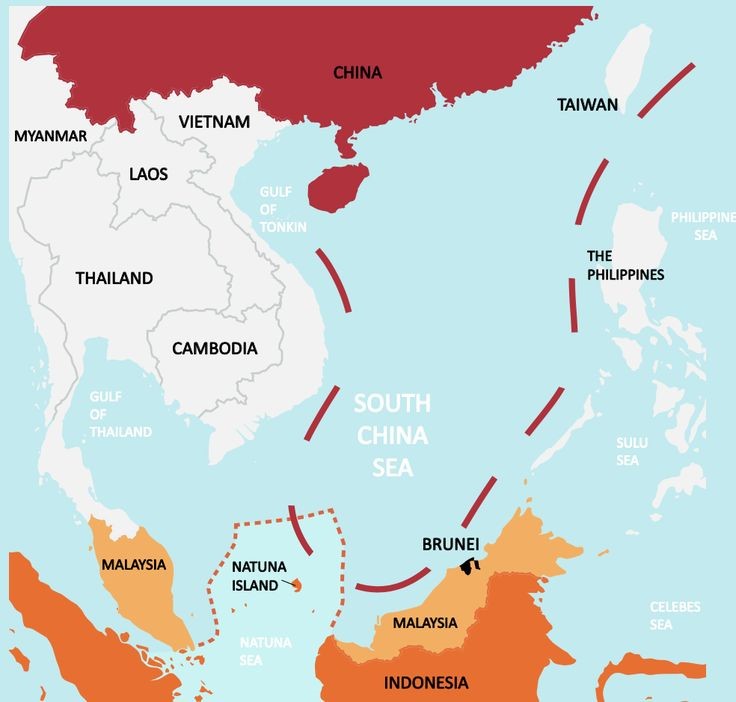
- 16 Apr 2026
In News:
Recent satellite imagery confirmed a significant escalation at the Scarborough Shoal, as China deployed floating barriers and an increased fleet of Coast Guard and maritime militia vessels to block the entrance to the atoll’s lagoon. This move, aimed at tightening de facto control over the disputed feature, has reignited diplomatic and security concerns between Manila and Beijing, making it a critical case study for international maritime law and regional geopolitics.
I. Geographical and Strategic Profile
- Location: Situated in the eastern South China Sea, approximately 120 nautical miles (222 km) west of Luzon (Philippines) and about 470 nautical miles from the Chinese coast.
- Physical Character: It is a triangular coral atoll formed on an underwater volcanic mount, covering an area of 150 sq. km. It is not a permanent island but a high-tide feature where several rocks (notably "South Rock") remain above water at high tide.
- Nomenclature: Known as Bajo de Masinloc or Panatag Shoal in the Philippines, and Huangyan Island in China. It was named after the HMS Scarborough, an East India Company ship that struck the reef in the 18th century.
- Economic Value: The shoal serves as a traditionally rich fishing ground for local communities (particularly from Zambales) and is believed to harbor significant seabed mineral resources, including petroleum and natural gas.
II. The Legal and Territorial Dispute
The conflict involves overlapping claims based on disparate legal and historical interpretations:
|
Feature |
The Philippines' Claim |
China’s Claim |
|
Legal Basis |
Based on UNCLOS (1982); the shoal lies within the Philippines' 200-nautical-mile Exclusive Economic Zone (EEZ). |
Claims "historical rights" dating back to the Yuan Dynasty (1200s) and the controversial Nine-Dash Line. |
|
Current Status |
Maintains legal rights reinforced by the 2016 Permanent Court of Arbitration (PCA) ruling. |
Maintains de facto control since a 2012 standoff, despite the 2016 ruling invalidating its expansive claims. |
|
Recent Strategy |
Protesting "barrier diplomacy" and seeking international support. |
Using the "Nature Reserve" pretext to justify permanent presence and potential artificial construction. |
III. Key Conflict Drivers (2026 Context)
- Barrier Diplomacy: China’s use of floating barriers is a tactical maneuver to deny Filipino fishermen access to the lagoon, effectively weaponizing maritime infrastructure.
- Militarization & Grey Zone Tactics: The deployment of the "Maritime Militia"—fishing trawlers acting as paramilitary units—allows China to project power while staying below the threshold of direct military conflict.
- Legal Pretexts: Manila views China's recent declaration of the area as a "national nature reserve" as a sophisticated legal strategy to normalize permanent occupation and provide a facade for future construction.
IV. Broader Geopolitical Implications
- U.S.-Philippines Alliance: Under the U.S.-Philippines Mutual Defense Treaty, an armed attack on Philippine vessels or personnel could necessitate U.S. intervention. China’s current blockade tests the "red lines" of this alliance.
- Regional Stability: Diplomats fear that China is capitalizing on global distractions (such as conflicts in the Middle East) to shift the status quo in the South China Sea.
- Livelihood Security: The blockade creates significant economic distress for Filipino coastal provinces, transforming a territorial dispute into a socio-economic crisis for local populations.
Bacille Calmette-Guerin (BCG) vaccines
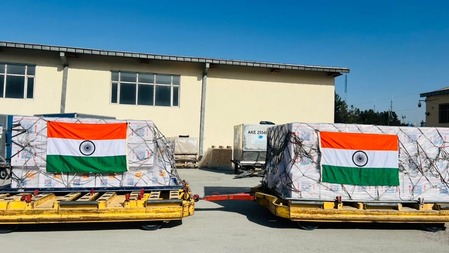
- 16 Apr 2026
In News:
In a significant move reinforcing its "Neighbourhood First" policy and commitment to humanitarian aid, India dispatched 13 tonnes of Bacille Calmette-Guerin (BCG) vaccines to Afghanistan. This consignment, delivered to the Afghan Ministry of Public Health in Kabul, aims to bolster the country's national child immunization program against Tuberculosis (TB), particularly in the wake of recent natural disasters and a strained healthcare infrastructure.
I. Understanding the BCG Vaccine
- Nature: The BCG vaccine is a live attenuated vaccine derived from a weakened strain of Mycobacterium bovis (a bacterium that causes TB in cows but is related to the human strain).
- Historical Context: Developed by French bacteriologists Albert Calmette and Camille Guérin, it was first administered to humans in 1921.
- Clinical Utility:
- Primary Use: It remains the only widely available vaccine against Tuberculosis.
- Off-label Uses: It offers cross-protection against other non-tuberculous mycobacterial infections such as Leprosy and Buruli ulcer.
- Immunotherapy: It is used as a standard treatment for superficial bladder cancer (carcinoma).
- Administration & Storage:
- Method: Administered intradermally (into the skin).
- Storage: Requires a strict cold chain between 2°C and 8°C.
- Composition: Supplied as a two-part kit—a freeze-dried vaccine (in amber glass ampoules to protect from light) and a diluent (colorless ampoules) for reconstitution.
II. Tuberculosis (TB): The Global and Regional Burden
TB continues to be a major public health challenge, especially in developing and conflict-affected nations.
- Pathogen: Caused by Mycobacterium tuberculosis, which primarily targets the lungs (pulmonary TB) but can affect other organs (extra-pulmonary TB).
- Transmission: An airborne disease spread through respiratory droplets (coughing, sneezing, or spitting).
- Symptoms: Persistent cough (often with blood), weight loss, night sweats, high fever, and fatigue.
- Vulnerability in Afghanistan: Coverage for BCG vaccination among one-year-olds in Afghanistan has historically hovered around 68%, leaving thousands of children susceptible to severe forms of the disease like miliary TB and TB meningitis.
Andaman Sea
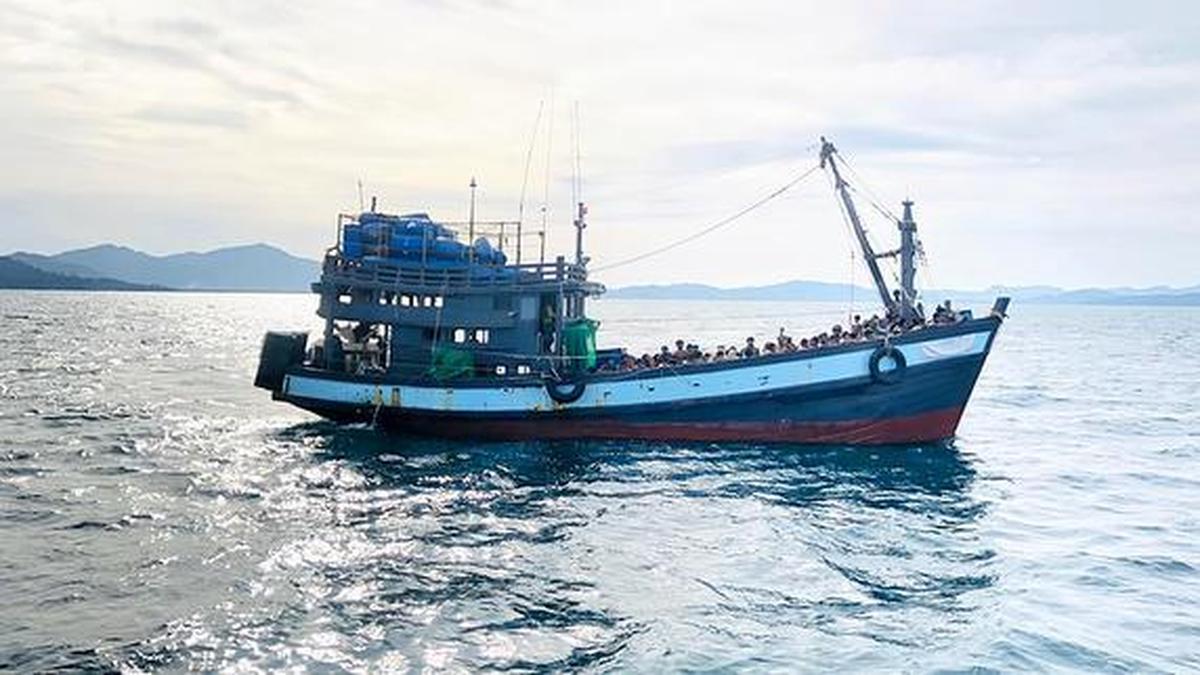
- 16 Apr 2026
In News:
The Andaman Sea has recently witnessed one of the deadliest maritime disasters in recent years. Recently, an overcrowded trawler carrying approximately 250 individualscomprising Rohingya refugees and Bangladeshi nationalscapsized while en route to Malaysia. This incident, reported by the UNHCR and the International Organization for Migration (IOM), underscores the growing desperation of displaced communities and the complex humanitarian challenges in South and Southeast Asia.
I. Geography and Ecology of the Andaman Sea
- Location & Boundaries: It is a semi-enclosed marginal sea in the northeastern Indian Ocean.
- West: Bounded by the Andaman and Nicobar Islands (India) and the Bay of Bengal.
- East: Bordered by the Malay Peninsula and the Strait of Malacca.
- North: Bordered by the Irrawaddy Delta of Myanmar.
- South: Bordered by the Indonesian island of Sumatra.
- Geological Significance: The region is tectonically active, situated on the Sunda Plate. It is bordered by the Indian Plate to the northwest and the Australian Plate to the southeast, making it prone to underwater seismic activity.
- Climate: Dominated by a tropical monsoon climate. The Southwest Monsoon (May–September) and Northeast Monsoon (November–February) dictate maritime safety; the recent capsize was attributed to strong winds and rough seas typical of seasonal transitions.
- Biodiversity: The sea is a global biodiversity hotspot featuring extensive coral reefs, seagrass meadows, and mangrove forests, which serve as critical habitats for diverse marine life.
II. The Humanitarian Crisis: Context and Causes
The recent tragedy is not an isolated event but a symptom of a protracted humanitarian crisis involving the Rohingya—a stateless Indo-Aryan ethnic group from Myanmar’s Rakhine State.
- Push Factors from Bangladesh:
- Overcrowded Camps: Over one million Rohingya live in the Cox’s Bazar district (Teknaf).
- Socio-Economic Restrictions: Limited access to formal education, restricted movement, and lack of employment opportunities in the camps drive desperation.
- Security Concerns: Rising violence within refugee camps and dwindling international humanitarian aid (funding cuts) have made life unsustainable for many.
- Pull Factors and Human Trafficking:
- False Promises: Human traffickers lure vulnerable individuals with promises of high-paying jobs in Malaysia or Indonesia.
- Regional Instability: Ongoing conflict in Myanmar’s Rakhine State makes the "safe, voluntary, and dignified" return of refugees nearly impossible in the current geopolitical climate.
- The Perilous Journey:
- Refugees use "rickety" and overcrowded fishing trawlers to cross the Andaman Sea.
- Statistically: 2025 was recorded as one of the deadliest years for sea crossings, with nearly 900 deaths. In 2026, fatalities in the Andaman Sea and Bay of Bengal have reportedly increased by over 40% compared to previous years.
III. Strategic and Legal Dimensions
- The "Search and Rescue" Gap: In the recent incident, the Bangladesh Coast Guard rescued nine survivors from the M.T. Meghna Pride (a Bangladesh-flagged vessel), but official search operations were limited as the capsize occurred outside Bangladesh's territorial waters. This highlights the need for a regional maritime SAR (Search and Rescue) framework.
- International Obligations: While many regional countries are not signatories to the 1951 Refugee Convention, the principle of Non-Refoulement (not returning refugees to a place where they face persecution) and the UN Convention on the Law of the Sea (UNCLOS) mandate assistance to those in distress at sea.
- Human Trafficking Prevention: The survivors were handed over to the police in Teknaf, and cases were filed under the Human Trafficking Prevention Act, emphasizing the criminal dimension of these migrations.
China establishes Cenling County
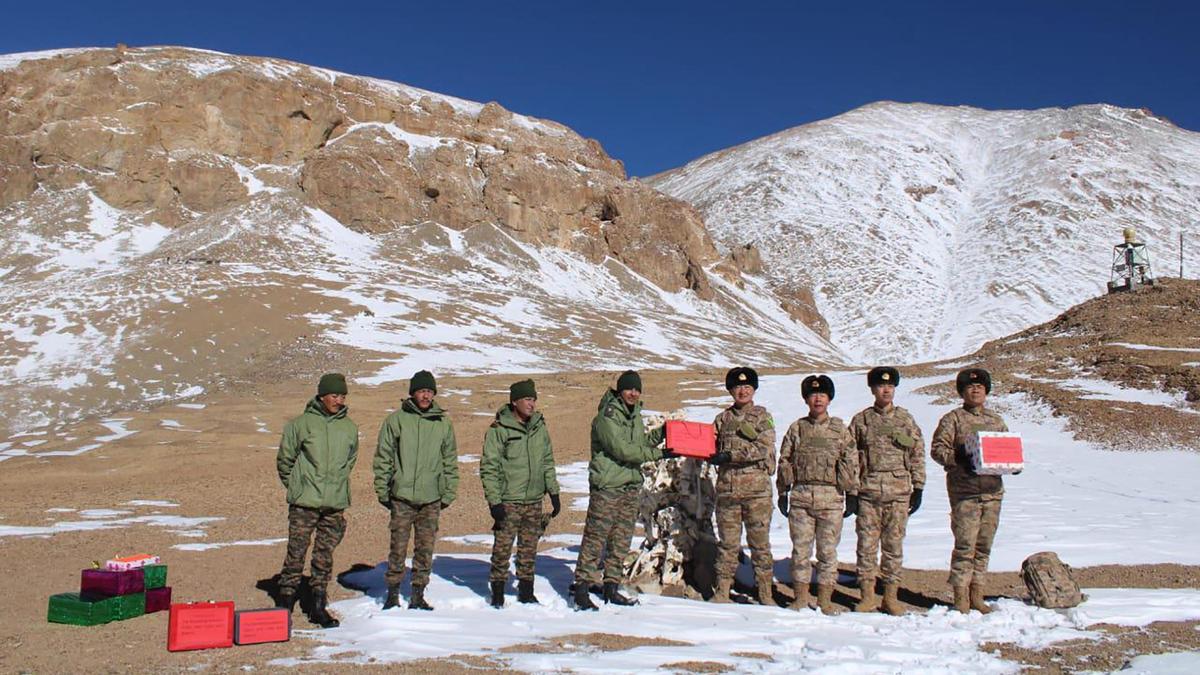
- 14 Apr 2026
In News:
In a strategic move aimed at tightening its grip on border security and administrative control, China has established a new county named “Cenling” in the Xinjiang Uyghur Autonomous Region. This administrative restructuring is positioned near the highly sensitive borders of Pakistan-occupied Kashmir (PoK) and Afghanistan, carrying significant implications for regional security and India’s territorial integrity.
Geopolitical Significance of Cenling County
Cenling is the third new county established by Beijing in Xinjiang recently, following the creation of Hean and Hekang under the Hotan prefecture.
- Strategic Location: Administered under the Kashgar prefecture, Cenling sits at a vital junction of the ancient Silk Road. It serves as a gateway for the China-Pakistan Economic Corridor (CPEC), a project India has consistently opposed due to its passage through sovereign Indian territory in PoK.
- Security Objectives: The establishment of this county is seen as an attempt to bolster surveillance over the Wakhan Corridor—a narrow strip of land in Afghanistan that connects to China. Beijing’s primary motive is reportedly to curb the infiltration of Uyghur separatist militants and stabilize its western frontier.
- Administrative Context: In China, a county (xian) is a third-level administrative division. By creating a formal government unit here, China transitions from mere military presence to permanent civilian and administrative governance.
Encroachment into Indian Territory
The creation of these counties is part of a broader pattern of "salami slicing" and administrative normalization in disputed areas:
- Hean County: Much of this newly designated county covers the Aksai Chin plateau, a region in the Union Territory of Ladakh that has been under illegal Chinese occupation since the 1962 war.
- Hekang County: Like Hean, this unit falls within areas that India considers part of its sovereign territory, leading to strong diplomatic protests from New Delhi.
India’s Official Stance: Rejecting "Fictitious Names"
The Ministry of External Affairs (MEA) has issued a stern rebuff to China’s administrative and cartographic maneuvers. India’s response focuses on two main pillars:
- Rejection of Baseless Narratives: India has dismissed these actions as “mischievous attempts” to create a legal veneer for illegal occupations.
- Sovereignty over Arunachal Pradesh: Parallel to the Xinjiang developments, China has frequently attempted to rename places in Arunachal Pradesh. India maintains that assigning “fictitious names” does not alter the ground reality—Arunachal Pradesh was, is, and will always be an integral part of India.
Ganges River Dolphin
- 14 Apr 2026
In News:
A recent report by the Wildlife Institute of India (WII) has sounded an alarm for India’s national aquatic animal. Drastic reductions in the water flow of the Chambal River are forcing the endangered Ganges River Dolphin to abandon its traditional territory and migrate downstream toward the confluence with the Yamuna. This displacement highlights the growing conflict between human water demands and ecosystem preservation.
Profile of the Ganges River Dolphin (Platanista gangetica)
Often described as one of the world's oldest living creatures, the Ganges River Dolphin is a flagship species that serves as an indicator of the river ecosystem's health.
- Taxonomy & Discovery: Formally discovered in 1801, it is popularly known as the ‘Susu’—an onomatopoeic name derived from the sound it makes when breathing.
- National Status: Recognized as India’s National Aquatic Animal.
- Conservation Status:
- IUCN Red List: Endangered.
- Wildlife Protection Act (1972): Schedule I.
- Biological Traits:
- Blindness: They are essentially blind and rely entirely on echolocation (ultrasonic sound waves) to navigate and hunt in murky river waters.
- Size: Females (approx. 2.7m) are larger than males (approx. 2.1m).
- Strictly Freshwater: Unlike most marine dolphins, this species cannot survive in saline water.
- Distribution: Found across the Ganges-Brahmaputra-Meghna and Karnaphuli-Sangu River systems in India, Nepal, and Bangladesh. In India, they are spread across seven states, including Assam, Uttar Pradesh, Rajasthan, and Bihar.
The Chambal Crisis: Flow Reduction and Its Impacts
The Chambal River was traditionally a safe haven for these dolphins due to its relatively pollution-free waters. However, the river is currently facing a hydrological crisis.
1. Habitat Shrinkage: Dolphins require a minimum water depth of 3 meters for survival. Extensive water extraction for irrigation and industrial use has lowered the Chambal’s flow to levels that make the upper reaches uninhabitable. This has triggered a forced migration toward the Yamuna confluence, where deeper pools are still available.
2. Fragmentation by Infrastructure: The construction of dams and barrages has fragmented the dolphin population. These physical barriers prevent migration, isolate groups, and lead to a narrowed gene pool, making the species more vulnerable to disease and environmental changes.
3. Collateral Ecological Damage
The low water levels have ripple effects on other biodiversity:
- Land Bridges: Receding water creates land bridges to river islands that were previously protected from terrestrial predators.
- Threat to Avifauna: Predators like jackals and stray dogs can now access these islands, destroying the nests of rare birds such as the Indian Skimmer and the Black-bellied Tern.
South Atlantic Anomaly (SAA)
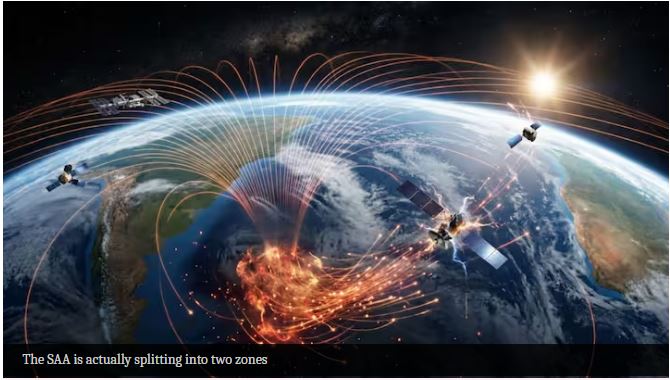
- 14 Apr 2026
In News:
The Earth’s magnetic field, which serves as a vital shield against solar and cosmic radiation, is currently undergoing significant changes. Scientists have observed that the South Atlantic Anomaly (SAA), a region where this magnetic protection is notably weak—is not only expanding but is now splitting into two distinct zones. This evolution poses increasing risks to global satellite infrastructure and space exploration.
Understanding the South Atlantic Anomaly (SAA)
The SAA is an area characterized by a significant "dip" or weakening in the Earth's magnetic field. This allows charged particles and cosmic rays from the Sun to penetrate much deeper into the atmosphere than elsewhere on the planet.
- Location: Geographically situated between South America and Africa (roughly 5° to 40° S latitude and 0° to 80° W longitude).
- Discovery: First identified in the 19th century, its shape, size, and intensity fluctuate seasonally and over long-term geological cycles.
- Scientific Monicker: Often referred to as the "Bermuda Triangle of Space" due to its tendency to cause technical malfunctions in passing spacecraft.
The Role of Van Allen Radiation Belts
To understand why the SAA occurs, one must look at the Van Allen Belts—two doughnut-shaped zones of energetic charged particles trapped by Earth's magnetosphere.
- The Outer Belt: Primarily composed of high-energy particles from solar winds.
- The Inner Belt: Formed by the interaction of cosmic rays with the Earth's atmosphere.
- Mechanism of SAA: The SAA exists because the inner Van Allen belt comes closest to the Earth's surface in this specific region. Because the Earth’s magnetic axis is slightly tilted and offset from its rotational axis, the radiation belt "dips" lower toward the South Atlantic, creating a high-flux zone of energetic particles.
Recent Developments: The "Splitting" Phenomenon
Recent data indicates that the SAA is weakening further and undergoing a structural change. It is currently developing two separate centers of minimum magnetic intensity.
- The Eastern Cell: Moving toward the southwest of Africa.
- The Western Cell: Positioned near South America.
This split makes the region "trickier" for satellite operators to navigate, as the area of potential interference is becoming more complex and geographically dispersed.
Impacts and Risks
The increased flux of particles in the SAA has direct consequences for modern technology and safety:
|
Sector |
Impact |
|
Satellites & LEO |
Low Earth Orbit (LEO) satellites passing through the SAA face "Single Event Upsets" (SEUs)—momentary glitches or permanent damage to electronic circuits. |
|
Space Stations |
Critical missions, such as the International Space Station (ISS), often shut down non-essential systems or delay spacewalks when passing through the anomaly to protect astronauts and equipment. |
|
Aviation & Marine |
High-energy particles can interfere with positioning systems (GPS/GNSS), complicating land, sea, and air navigation in the South Atlantic region. |
|
Scientific Data |
Delicate instruments on board space telescopes (like Hubble) are often "blinded" or powered down while traversing the SAA to avoid data corruption. |
SagarmalaProgramme
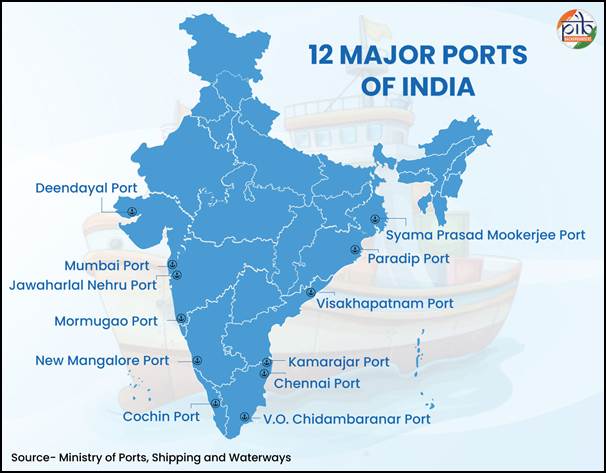
- 14 Apr 2026
In News:
The maritime sector is the lifeline of India’s economy, with a vast coastline of 11,099 km and approximately 14,500 km of navigable waterways. Currently, maritime routes handle 95% of India’s trade by volume and 70% by value. To leverage this natural advantage, the Government of India launched the SagarmalaProgramme in March 2015, aiming to transform the nation through port-led development.
Vision and Strategic Pillars
The program is designed to reduce logistics costs, enhance trade competitiveness, and improve the lives of coastal communities. It operates through 5 Strategic Pillars across 24 categories:
- Port Modernization & New Port Development: Upgrading existing infrastructure and building new "Greenfield" ports to expand capacity.
- Port Connectivity Enhancement: Integrating ports with the hinterland via multimodal transport, including heavy-haul rail and expressways.
- Port-Led Industrialization: Establishing industrial clusters and Coastal Economic Zones (CEZs) near ports to minimize domestic logistics costs.
- Coastal Community Development: Focused on skill development, sustainable fisheries, and coastal tourism.
- Coastal Shipping & Inland Waterways: Shifting cargo from congested road/rail networks to more eco-friendly water-based transport.
Implementation Progress (As of March 2026)
The scale of Sagarmala is immense, involving a total of 845 projects with an estimated investment of ?6.06 lakh crore.
- Completed: 315 projects (?1.57 lakh crore).
- In Progress: 210 projects.
- Planning Stage: 320 projects.
Key Performance Indicators (FY 2025–26)
- Cargo Handling: Major ports handled a record 915.17 million tonnes (MT), reflecting a 7.06% year-on-year growth.
- Efficiency: Average vessel turnaround time dropped from 96 hours (2014) to 49.5 hours (2025).
- Waterway Growth: Inland waterway cargo movement surged by 700%, from 18.10 MTPA in 2014 to 145.50 MTPA in 2025.
- Global Standing: 9 Indian ports now rank in the Global Top 100, with Visakhapatnam Port breaking into the Top 20 for container traffic.
Socio-Economic Impact
- Urban Connectivity: 17 Ro-Pax and ferry projects are operational. For instance, the Ghogha–Hazira service reduced travel time from 10 hours (road) to 4 hours (sea).
- Livelihoods: 11 fishing harbor projects have been completed, benefiting 30,000 fishermen.
- Employment: The program has an estimated cumulative potential to create 1 crore jobs (40 lakh direct, 60 lakh indirect).
- Skill Development: Over 7,600 candidates trained under the DDU-GKY convergence, with many placed directly in maritime sectors.
Institutional Framework
A robust multi-tier governance structure ensures coordinated execution between the Union and State governments:
- National Sagarmala Apex Committee (NSAC): Provides overall policy guidance and oversight.
- Maritime States Development Council (MSDC): Facilitates critical Centre-State coordination.
- State Sagarmala Committees (SSCs): Responsible for project identification and monitoring at the state level.
- Sagarmala Finance Corporation Limited (SMFCL): Restructured in June 2025 (formerly SDCL), SMFCL is India’s first NBFC dedicated to the maritime sector, addressing the financing gap with loan sanctions already reaching ?4,300 crore.
The Future: Sagarmala 2.0 & Amrit Kaal
Building on the foundation of the initial phase, Sagarmala 2.0 aligns with the Maritime India Vision (MIV) 2030 and Maritime Amrit Kaal Vision 2047.
- Budgetary Support: Proposed at ?85,482 crore.
- Investment Target: Aims to catalyze ?3.6 lakh crore in total investment.
- Core Focus: Deepening modernization, fostering maritime innovation, and achieving the goal of Viksit Bharat 2047 by making India a global maritime hub.
Exercise DUSTLIK 2026
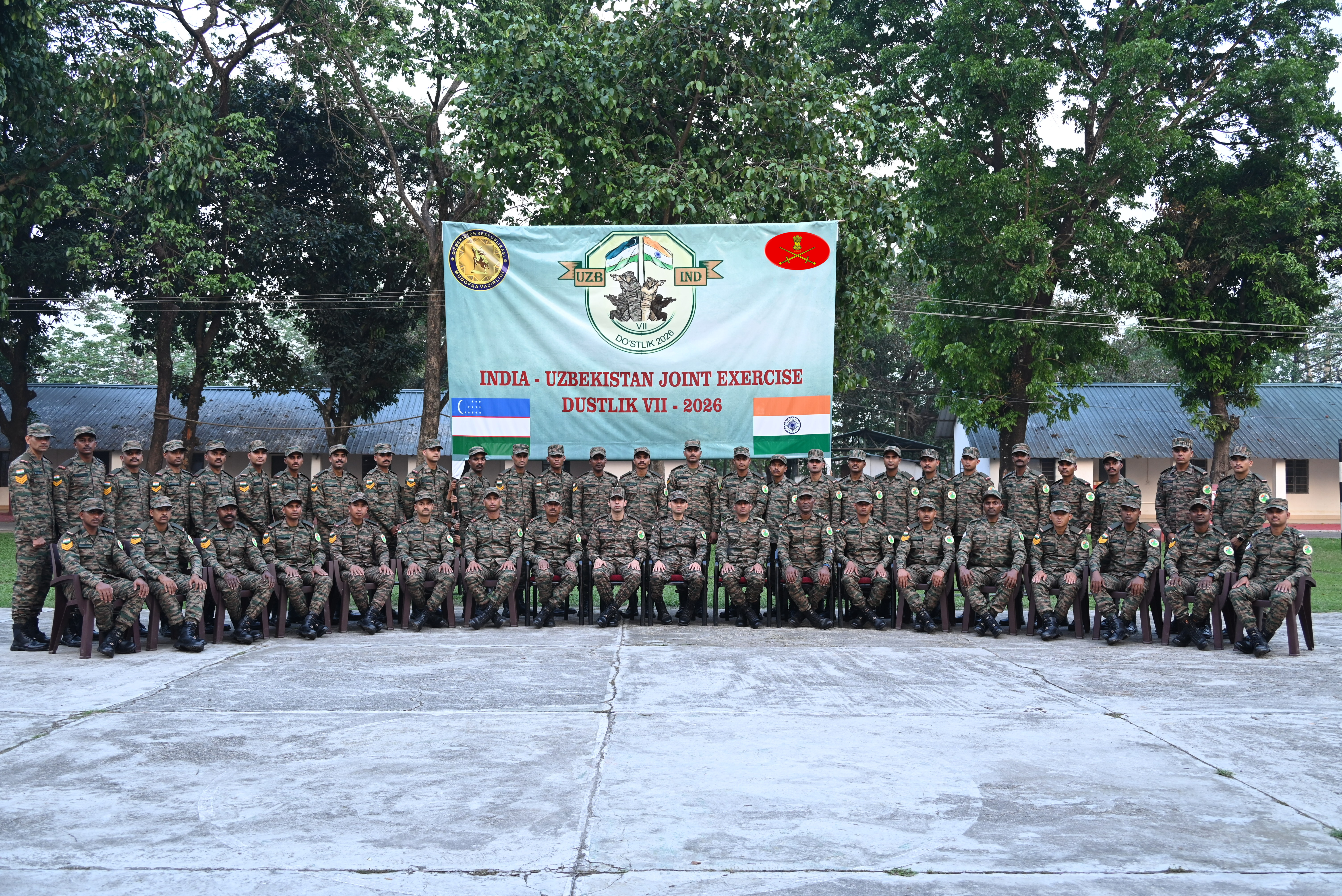
- 14 Apr 2026
In News:
The 7th edition of Exercise DUSTLIK, a bilateral joint military exercise between India and Uzbekistan, commenced recently. This annual training event underscores the growing defense cooperation between the two nations, particularly in the context of Central Asian security and counter-terrorism.
Overview of the 7th Edition
- Location:Gurumsaray Field Training Area, Namangam, Uzbekistan.
- Duration: April 12 to April 25, 2026.
- Participants:
- India: A 60-member contingent comprising 45 personnel from the MAHAR Regiment (Indian Army) and 15 personnel from the Indian Air Force.
- Uzbekistan: Approximately 60 personnel from the Uzbekistan Army and Air Force.
- Format: The exercise is a yearly event, conducted alternately in India and Uzbekistan. The 2025 edition was held in Aundh, Pune.
Core Objectives and Scope
The primary aim of Exercise DUSTLIK is to foster military cooperation and enhance the combined capability of both forces to execute joint operations in semi-mountainous terrain.
1. Operational Synergy: The exercise focuses on establishing a unified operational algorithm. This involves aligning command-and-control structures to ensure seamless planning and execution of joint missions.
2. Tactical Drill & Skills: Key operational aspects practiced during the two-week program include:
- Advanced land navigation techniques.
- Strike missions on simulated enemy bases.
- Seizure of enemy-held territories.
- Special arms skills and joint tactical drills.
3. Interoperability: By sharing "Tactics, Techniques, and Procedures" (TTPs), both contingents aim to improve their interoperability. This is crucial for future scenarios where both nations might need to coordinate in a multilateral or bilateral security environment.
The Validation Phase
The exercise culminates in a rigorous 48-hour validation exercise. This final phase is designed to test the effectiveness of the joint training, specifically focusing on the neutralization of unlawful armed groups through joint special operations.
Digital Payments Revolution
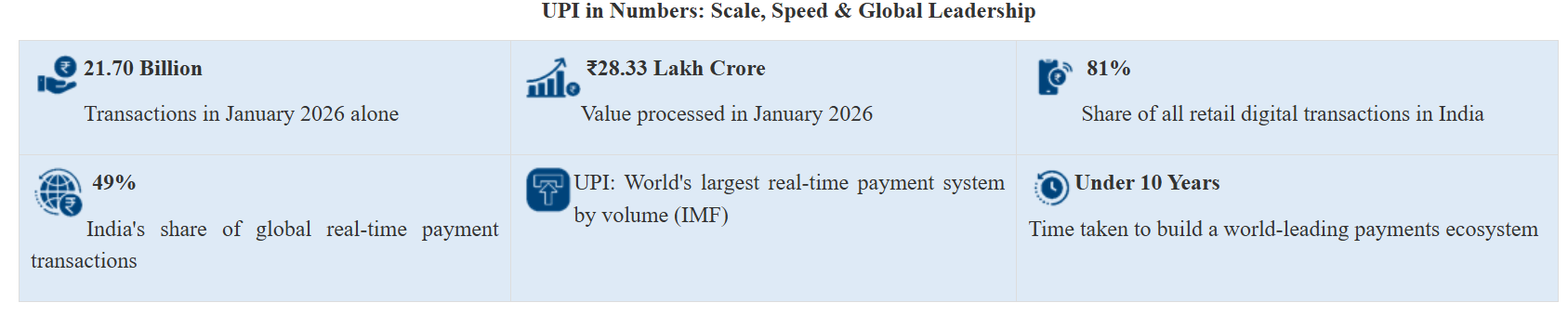
- 13 Apr 2026
In News:
India’s financial landscape has undergone a radical metamorphosis, transitioning from a cash-heavy, urban-centric banking model to a world-leading, real-time digital infrastructure. As of January 2026, India has solidified its global leadership in fintech, processing a record 21.70 billion transactions worth ?28.33 lakh crore in a single month.
The Evolution of Payment Systems
The journey from "Queues to QR Codes" can be categorized into four distinct phases:
- The Traditional Era: Reliance on physical cash, barter, and cheques; limited to urban centers.
- Institutional Formalization (2004–2010): Introduction of RTGS and IMPS, enabling 24/7 transfers, yet restricted to the banked elite.
- The Structural Breakthrough (JAM): The combination of Jan Dhan (Access), Aadhaar (Identity), and Mobile (Connectivity) created the bedrock for mass financial inclusion.
- The UPI Radicalization (2016–Present): The launch of the Unified Payments Interface (UPI) by NPCI democratized payments via Virtual Payment Addresses (VPA) and QR codes.
The Architectural Pillars: JAM Trinity & DBT
The JAM Trinity acted as a catalyst for "Aatmanirbhar" banking:
- Pradhan Mantri Jan-Dhan Yojana: Brought the "unbanked" into the formal fold via zero-balance accounts.
- Aadhaar: Provided a digital, biometric identity for seamless authentication.
- Mobile Connectivity: Served as the primary interface for transactions.
- The DBT Effect: This framework enabled the Direct Benefit Transfer (DBT) system, ensuring government aid reaches beneficiaries without intermediaries, thereby reducing leakages and building public trust in digital systems.
UPI: The Global Gold Standard
UPI is now the world’s largest real-time payment system by volume. Key 2026 statistics highlight its dominance:
- Market Share: UPI accounts for 81% of all retail digital transactions in India.
- Global Footprint: India contributes 49% of total global real-time payment transactions.
- Institutional Growth: The network has expanded from 216 banks (2021) to 691 banks (2026).
- International Reach: Operational or linked in countries including France, UAE, Singapore, Bhutan, Nepal, Sri Lanka, Mauritius, and Qatar.
Beyond Payments: Socio-Economic Significance
- Financial Inclusion: Dissolves the urban-rural divide; village mandis and street vendors now transact with the same speed as metropolitan hubs.
- Formalization of Credit: Digital footprints allow informal workers (auto drivers, domestic help) to access formal credit, insurance, and pre-approved credit lines.
- Economic Efficiency: Reduces the heavy "cost of cash" (printing, storage, transport) and speeds up the velocity of money.
- Enhanced Security: Effective April 1, 2026, the RBI mandated Multi-layer/Two-factor authentication (biometrics, secure tokens, and PINs) to combat digital fraud.
Critical Challenges
Despite its success, the ecosystem faces several hurdles:
- Cybersecurity: Sophisticated phishing and identity theft remain persistent threats.
- Digital Literacy: A gap exists in the deep-tech understanding required to resolve transaction failures among first-time rural users.
- Infrastructure Load: Processing 20 billion monthly transactions puts immense pressure on bank servers and the NPCI central switch.
- Data Privacy: The massive volume of financial data necessitates a robust legal framework to prevent commercial misuse.
Way Forward: The Road to 2030
To sustain this momentum, the focus must shift toward:
- Product Diversification: Scaling UPI Lite (small-value offline payments) and UPI AutoPay (recurring bills).
- Credit Integration: Leveraging "Credit on UPI" to turn a payment tool into a comprehensive financial services platform.
- Deep-Rural Outreach: Ensuring 100% connectivity in remote regions to digitize the "last mile" of the economy.
- Cross-Border Dominance: Positioning UPI as a cheaper, faster alternative for global remittances.
1,000-km Quantum Communication Network

- 13 Apr 2026
In News:
India has achieved a significant milestone under the National Quantum Mission (NQM) by developing a 1,000 km quantum communication network. Developed using indigenous technology by QNu Labs with support from the Department of Science and Technology (DST), this achievement comes less than two years after the mission’s launch, putting India well ahead of its interim targets.
The National Quantum Mission (NQM): Overview
- Launch: Approved in April 2023; officially launched in October 2024.
- Nodal Agency: Department of Science and Technology (DST).
- Budget: ?6,003 crore for a period of eight years (2023-24 to 2030-31).
- Objective: To seed, nurture, and scale up R&D in quantum technologies, positioning India among the top six nations globally (joining the US, China, Canada, Austria, Finland, and France).
Key Pillars of NQM & Targets
The mission is structured around four primary domains:
- Quantum Computing: Developing computers with 50 to 1,000 physical qubits using superconducting and photonic platforms.
- Quantum Communication:
- Terrestrial: Inter-city QKD networks over 2,000 km using existing optical fibers.
- Satellite: Secure satellite-based communication between ground stations over 2,000 km (including international links).
- Quantum Sensing & Metrology: High-sensitivity magnetometers and atomic clocks for precision navigation (GPS/Aviation) and defense.
- Quantum Materials: Synthesis of superconductors, topological materials, and semiconductors for device fabrication.
Technical Spotlight: Quantum Key Distribution (QKD)
The 1,000-km network relies on QKD, which is the "gold standard" for secure communication.
- How it works: It uses quantum particles (photons) to share secret encryption keys.
- The "Observer Effect": Based on the laws of quantum mechanics (No-cloning theorem), any attempt to intercept or eavesdrop on the key disturbs the quantum state of the photons.
- Instant Detection: This disturbance alerts the communicating parties immediately, making the communication virtually unhackable.
Significance of the 1,000-km Milestone
- Global Standing: This is one of the longest terrestrial QKD deployments globally, demonstrating India’s rapid execution capabilities.
- Strategic Security: Essential for protecting sensitive data in Defense, Finance, and Critical National Infrastructure (Power grids, nuclear plants).
- Terrain Versatility: The indigenous technology is designed to function across diverse and challenging terrains, including underwater and underground environments.
- Aatmanirbharta (Self-Reliance): Reduces dependence on foreign encryption patents and imported hardware, fostering a home-grown deep-tech ecosystem.
Institutional & Startup Ecosystem
- Thematic Hubs (T-Hubs): Four dedicated hubs have been established in top academic and R&D institutes to drive the mission’s goals.
- Support for Deep-Tech: The mission currently supports 17 ventures.
- Innovative Financing: The government is employing Optionally Convertible Debt (OCD). This allows startups to access capital without immediate equity dilution, encouraging private sector participation in high-risk, high-reward quantum research.
Hib Disease
- 13 Apr 2026
In News:
Haemophilus influenzae type b (Hib), once a major cause of childhood mortality and morbidity, is re-emerging as a significant public health threat. Recent reports from the United States indicate a resurgence of the disease linked directly to a decline in childhood vaccination rates. For India, which transitioned to universal Hib vaccination only in the last decade, these global trends offer a critical warning on the "immunity debt" and the dangers of vaccine hesitancy.
Understanding the Pathogen: Hib
- Nature: It is a Gram-negative bacterium. Contrary to its name, it does not cause influenza (which is viral).
- Affected Population: Primarily children under 5 years; however, adults with comorbidities (immunocompromised) or those in crowded settings are also vulnerable.
- Transmission: Spread via respiratory droplets (coughing/sneezing) or prolonged close contact with an infected person.
- Clinical Profile:
- Invasive Disease: Causes meningitis (lining of brain/spinal cord), septicemia (bloodstream infection), epiglottitis (severe swelling of the throat), and pneumonia.
- Non-Invasive Disease: Ear infections (Otitis media) and bronchitis.
- Long-term Impact: Even with treatment, survivors of Hib meningitis may suffer from permanent brain damage, hearing loss, or learning disabilities.
Current Global Concern: The US Scenario
- Declining Coverage: Recent CDC data (2024-2025) reveals a 1-2 percentage point drop in the primary Hib series coverage among children by age 24 months.
- The "Vulnerability Gap": The decline is attributed to post-pandemic disruptions in routine healthcare and rising vaccine skepticism.
- Adult Clusters: Recent outbreaks have also been noted among specific adult populations, including those experiencing homelessness or housing instability, highlighting that Hib can exploit gaps in community immunity.
The Indian Context & Universal Immunization Programme (UIP)
- Historical Burden: Before the public sector rollout, India accounted for nearly 20% of global Hib-related deaths.
- Policy Intervention (The Pentavalent Vaccine):
- India introduced the Pentavalent Vaccine in a phased manner starting in 2011, reaching national scale by 2015.
- Components: It protects against five diseases: Diphtheria, Pertussis, Tetanus, Hepatitis B, and Hib.
- Impact: Hib incidence in India has plummeted by over 90% in regions with high pentavalent coverage.
- Recent Trends: As per WUENIC (WHO/UNICEF) 2024-2025 estimates, India’s Hib (3rd dose) coverage remains robust at approximately 93-94%, significantly higher than the global average of 78%.
Challenges in Management
- Antibiotic Resistance: While antibiotics are the primary treatment, H. influenzae is increasingly showing resistance to common drugs, making vaccination the only sustainable defense.
- Asymptomatic Carriage: Many people carry the bacteria in their noses and throats without being ill, acting as "silent spreaders" to unvaccinated infants.
- Catch-up Gaps: Children who missed doses during the COVID-19 pandemic remain at risk. In India, catch-up is recommended up to age 5.
GLP-1 Drugs
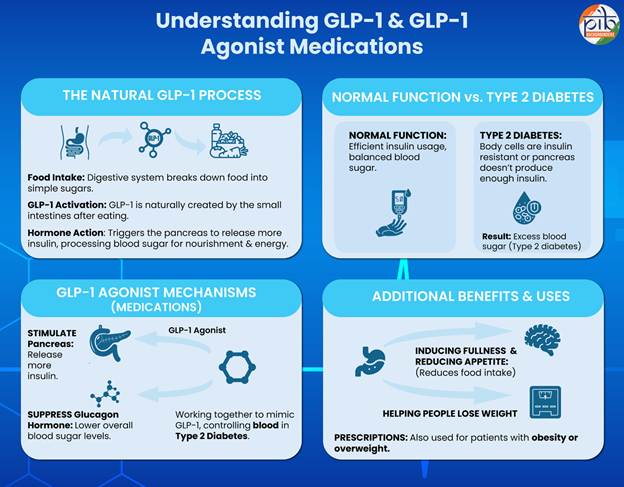
- 13 Apr 2026
In News:
The Drugs Controller General of India (DCGI) has recently intensified regulatory surveillance over the unauthorized sale and unsupervised use of GLP-1 (Glucagon-Like Peptide-1) receptor agonists. This move comes amid rising concerns over misleading advertisements and the "on-demand" availability of these drugs for weight loss without medical supervision.
What are GLP-1 Drugs?
- Mechanism: These drugs mimic the natural GLP-1 hormone produced in the gut.
- Functions:
- Insulin Regulation: Stimulate the pancreas to release insulin and suppress glucagon, helping control blood sugar in Type 2 Diabetes.
- Appetite Suppression: They slow gastric emptying (keeping food in the stomach longer), signaling the brain to feel full.
- Medical Use: Primarily approved for Type 2 Diabetes mellitus and, in specific formulations, for Chronic Weight Management (Obesity).
The Dual Burden: Diabetes & Obesity in India
- Diabetes: A chronic condition where the body cannot effectively use insulin. Untreated, it leads to complications like kidney failure, stroke, and blindness.
- Obesity: Defined by a Body Mass Index (BMI) ≥25kg/m2 in the Indian context. It is a major driver for cardiovascular diseases and insulin resistance.
- Trend: India is witnessing a "twin epidemic," making the demand for weight-loss medications like GLP-1 agonists surge.
Key Regulatory Concerns
- Unsupervised Use: Use of these drugs without a doctor's preion for "cosmetic weight loss" can lead to severe side effects (e.g., gastrointestinal issues, potential thyroid risks, or pancreatitis).
- Unauthorized Sales: Availability through online platforms, wholesalers, and wellness clinics without valid preions.
- Misleading Advertisements: Promotion of these drugs as "magic pills" for weight loss, violating the Drugs and Magic Remedies (Objectionable Advertisements) Act.
Punatsangchhu-I Hydroelectric Project
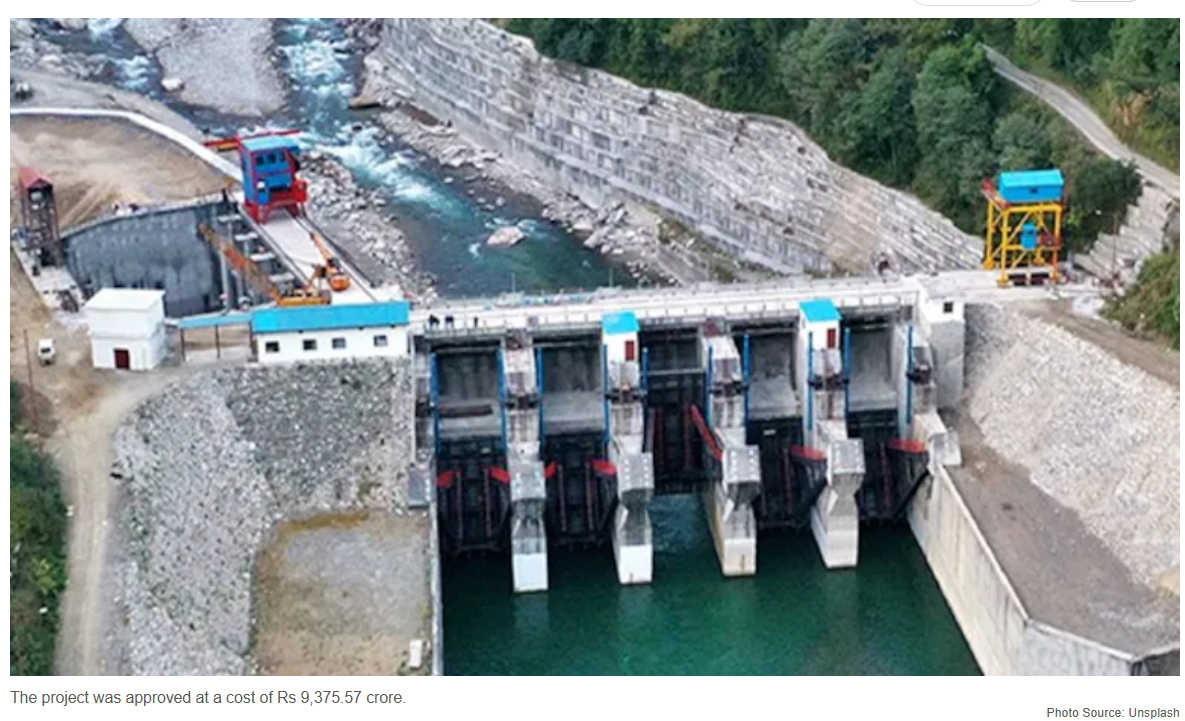
- 13 Apr 2026
In News:
Recently, a significant milestone in India-Bhutan bilateral relations was achieved with the resumption of dam construction at the 1,200 MW Punatsangchhu-I Hydroelectric Project. After a seven-year hiatus caused by complex geological setbacks, India’s Union Power Minister attended the concrete pouring ceremony, signaling a renewed commitment to complete Bhutan's largest ongoing hydropower venture.
Key Project Specifications
- Capacity: 1,200 MW (comprising six 200 MW turbines).
- Type: Run-of-the-river (RoR) scheme.
- Location: Left bank of the Punatsangchhu River, Wangdue Phodrang district, Southern Himalayas (approx. 80 km from Thimphu).
- Infrastructure:
- Concrete Dam: 130m height x 239m length.
- Powerhouse: Underground facility for electricity generation.
- Implementing Agency:Punatsangchhu-I Hydroelectric Project Authority (PHPA), a joint autonomous body of the Royal Government of Bhutan and the Government of India.
Financing Model: The 60:40 Framework
The project is a hallmark of India’s development assistance to Bhutan, following a unique financial arrangement:
- 40% Grant: Non-repayable aid from the Government of India.
- 60% Loan: Provided at a 10% annual interest rate.
- Repayment: 12 equated annual installments beginning one year after the project’s commercial operation date.
- Revenue Model: Bhutan will export all surplus power to India, providing a steady stream of revenue for its national exchequer.
Why was the project suspended?
The project, which began in 2008, was originally slated for completion in 2015. However, it encountered severe "Geological Surprises":
- Right-Bank Instability: In 2013, a massive landslide destabilized the right bank slope at the dam site.
- Geological Fragility: The Himalayan terrain posed unforeseen challenges in both surface and underground excavations, leading to multiple design changes.
- Suspension (2019–2026): Main dam works were halted in 2019 to conduct comprehensive technical studies and ensure the structural safety of the project.
Strategic Significance of PHEP-I
- Economic Backbone for Bhutan: Upon completion, it will boost Bhutan's total hydropower capacity by nearly 30%. Hydropower currently contributes ~14% to Bhutan's GDP and over 25% of government revenue.
- India’s Green Energy Goals: The surplus power (approx. 5,670 million units annually) will help India meet its Nationally Determined Contributions (NDCs) under the Paris Agreement by increasing the share of renewable energy in its grid.
- Grid Stability: Hydropower provides "peaking power," which is essential for balancing India’s national grid, especially with the increasing integration of intermittent solar and wind energy.
- Strategic Interdependence: These projects create deep economic linkages that act as a buffer against external geopolitical shifts in the Himalayan region.
Current Status & Future Outlook
- Physical Progress: As of early 2026, the project has achieved approximately 88% physical completion and 93.7% financial progress.
- Estimated Completion: The revised timeline aims for commissioning within the next five years (by 2031), subject to the success of new stabilization measures.
- Bilateral Momentum: The restart of PHEP-I follows the successful operationalization of Punatsangchhu-II (1,020 MW) in late 2025, reinforcing the long-term goal of developing 10,000 MW of hydropower in Bhutan.
Kalai-II Hydroelectric Project
- 12 Apr 2026
In News:
The Cabinet Committee on Economic Affairs (CCEA) has sanctioned a massive investment of ?14,105.83 crore for the Kalai-II Hydro Electric Project (HEP). Located in the Anjaw district of Arunachal Pradesh, this project represents a critical milestone in India’s mission to harness the hydroelectric potential of the Brahmaputra river basin.
1. Technical Profile
The project is designed to be a high-capacity, efficient power generation unit with the following specifications:
- River System: It is a run-of-river with pondage project situated on the Lohit River, a major tributary of the Brahmaputra.
- Capacity: Total installed capacity of 1,200 MW, featuring a unique configuration of six units of 190 MW and one unit of 60 MW.
- Energy Generation: Expected to contribute 4,852.95 million units of green energy annually to the national grid.
- Engineering Scope: Includes the construction of a concrete gravity dam, diversion tunnels, pressure shafts, an underground powerhouse, and a tailrace tunnel.
2. Financial & Administrative Framework
The project follows a collaborative model between the Union and the State:
- Implementation Agency: A Joint Venture (JV) between THDC India Limited (formerly Tehri Hydro Development Corporation) and the Government of Arunachal Pradesh.
- Central Budgetary Support: * ?5.99 billion allocated for infrastructure (roads, bridges, and transmission lines).
- ?7.5 billion provided as central financial assistance to cover the state's equity share.
- Total Investment: ?14,105.83 crore.
3. Socio-Economic Impact
The Kalai-II project is envisioned as a catalyst for regional transformation:
- State Revenue: Arunachal Pradesh will receive 12% free power once operational.
- Community Development: An additional 1% free power is dedicated to the Local Area Development Fund (LADF) for regional welfare.
- Infrastructure: The project will provide the remote Anjaw district with permanent roads and bridges, improving connectivity in a strategically sensitive border area.
Quantum Computing
- 12 Apr 2026
In News:
In a landmark experiment, researchers have successfully demonstrated a method to create perfect copies of quantum states by navigating a technical loophole in the No-Cloning Theorem. This discovery addresses one of the most significant bottlenecks in quantum information science, offering a blueprint for resilient quantum cloud storage and more reliable quantum memories.
The Fundamental Constraint: The No-Cloning Theorem
- The Rule: In quantum mechanics, the No-Cloning Theorem states that it is physically impossible to create an identical, independent copy of an arbitrary, unknown quantum state.
- The Mechanism: Unlike classical bits (0 or 1), which can be copied infinitely without degradation, quantum bits (qubits) exist in a state of superposition. The act of measuring or observing a quantum state causes its "wavefunction" to collapse, effectively destroying the original information.
- Significance: This theorem is the bedrock of Quantum Cryptography (e.g., Quantum Key Distribution), as it ensures that any attempt by an eavesdropper to copy or intercept data will be instantly detectable.
The Breakthrough: The "Noise Encryption" Loophole
The researchers did not "break" the laws of physics but rather utilized a sophisticated encryption method to store quantum information across multiple locations simultaneously.
1. Individual Encryption with Quantum Noise
The team established that perfect copies can be created if each clone is individually "masked" or encrypted using quantum noise.
- Noise Qubits: Special qubits act as "locking patterns." They store the noise signature used to encrypt the clones.
- Security: Without the corresponding decryption key (the noise pattern), a clone appears to be meaningless, random data. This ensures that even if a copy is intercepted, the underlying information remains naturally secure.
2. Distributed Information
- The original quantum information is not residing in a single qubit but is spread across multiple qubits. To an outside observer, each qubit looks like random noise; only the holder of the key can reconstruct the perfect state.
- The "One-Time Use" Constraint
Crucially, the method adheres to the spirit of quantum mechanics through a self-destruct mechanism:
- Key Destruction: Once a decryption key is utilized to recover one perfect copy, the key is permanently destroyed.
- Irreversibility: All other existing clones immediately become unreadable and useless.
- Result: While multiple "potential" copies exist, only one can ever be successfully recovered, maintaining the fundamental "uniqueness" required by quantum laws.
Strategic Applications & Future Infrastructure
This achievement has transformative implications for the future of the "Quantum Internet" and digital infrastructure:
- Quantum Cloud Storage: Clients can store data across multiple servers (redundancy). Even if several servers fail or are destroyed, the client can recover the perfect data as long as one server and the decryption key survive.
- Reliable Quantum Memories: It provides a method for backing up fragile quantum information, which is currently prone to "decoherence" (data loss due to environmental interference).
- Resilient Quantum Networks: Enhances the robustness of quantum communication channels against hardware failures.
FIU-IND and I4C MoU on Financial Crimes
- 12 Apr 2026
In News:
In a major step toward securing India’s burgeoning digital payment landscape, the Financial Intelligence Unit-India (FIU-IND) and the Indian Cyber Crime Coordination Centre (I4C) recently signed a Memorandum of Understanding (MoU). This partnership establishes a sophisticated intelligence-sharing framework designed to preemptively tackle the rising menace of cyber-enabled financial crimes and money laundering.
The Collaboration: A "Whole of Government" Approach
The synergy between these two premier agencies aims to move beyond reactive measures, focusing instead on a proactive, integrated defense mechanism for the national financial infrastructure.
Key Objectives and Strategic Impact
- Proactive Detection: The development of "Red Flag Indicators" allows financial institutions to identify and report suspicious transaction patterns before significant damage occurs.
- Asset Recovery: By streamlining communication between intelligence and law enforcement, the framework facilitates the rapid freezing and recovery of proceeds from digital fraud.
- Resource Safeguarding: The collaboration targets the misuse of telecom and banking resources, ensuring that the digital transformation of the Indian economy is supported by robust security guardrails.
- Policy Formulation: The partnership will lead to the creation of standardized guidelines for banks and FinTech companies to enhance their internal fraud detection protocols.
Profile of the Participating Agencies
1. Financial Intelligence Unit-India (FIU-IND)
FIU-IND is the nodal national agency reporting directly to the Economic Intelligence Council (EIC) headed by the Finance Minister.
- Mandate: It is responsible for receiving, processing, and analyzing information related to suspect financial transactions.
- Focus Areas: Its primary mission is to coordinate global and domestic efforts against Money Laundering (ML) and the Financing of Terrorism (FT) under the Prevention of Money Laundering Act (PMLA), 2002.
2. Indian Cyber Crime Coordination Centre (I4C)
Established as an attached office under the Ministry of Home Affairs (MHA), I4C acts as a central hub for Law Enforcement Agencies (LEAs).
- Infrastructure: It manages critical platforms like the National Cybercrime Reporting Portal (NCRP), which allows citizens to report cybercrimes in real-time.
- Tools for Enforcement: I4C maintains the Suspect Registry and the Cyber-Police platform, enabling seamless data exchange between banks, telecom companies, and police forces to block fraudulent accounts and mobile numbers immediately.
PACE Satellite
- 12 Apr 2026
In News:
In a significant breakthrough for atmospheric sciences, researchers have confirmed that NASA’s Plankton, Aerosol, Cloud, and ocean Ecosystem (PACE) satellite, launched in early 2024, possesses the high-resolution capability to pinpoint air pollution at an unprecedented scale. The satellite can now isolate nitrogen dioxide (NO2) emissions from individual point sources, such as specific factories and narrow highway corridors, marking a new era in environmental monitoring and policy enforcement.
The PACE Mission:
- Technical Specifications: Launched in February 2024 into a Sun-synchronous orbit, PACE is designed to provide a holistic view of the Earth’s "living" systems.
- It offers hyperspectral coverage of the entire globe every1 to 2 days, a frequency and detail level previously unavailable to the scientific community.
Key Scientific Instruments
PACE’s ability to "see" the Earth in high definition is driven by three primary instruments:
- Ocean Color Instrument (OCI): A state-of-the-art optical spectrometer that measures the ocean’s color across a continuous spectrum from ultraviolet to shortwave infrared. By breaking down light into finer wavelength resolutions, OCI identifies the specific "signatures" of different substances in the water and air.
- SPEXone and HARP2 (Polarimeters): The Spectro-polarimeter for Planetary Exploration (SPEXone) and the Hyper Angular Research Polarimeter (HARP2) measure the polarization of sunlight. As light passes through clouds, aerosols, and water, its oscillation plane changes. These instruments analyze these changes to determine the size, shape, and composition of particles in the atmosphere.
Breakthrough in Pollution Tracking: Nitrogen Dioxide (NO2)
While PACE was primarily envisioned for oceanography, its hyperspectral capabilities have proven revolutionary for atmospheric chemistry.
- Precision: Traditional satellites could detect regional pollution clouds; PACE can isolate emissions at the scale of individual industrial facilities.
- The Nitrogen Dioxide Factor: NO2 is a major byproduct of fossil fuel combustion (vehicles and power plants) and a key contributor to smog and respiratory issues. PACE’s ability to track this gas at a "fine scale" allows for more accurate attribution of pollution to specific sources.
Scientific and Socio-Economic Significance
The data harvested by PACE has far-reaching implications for climate science and public health:
- Marine Ecosystem Health: It monitors microscopic life, such as phytoplankton, which forms the base of the marine food web. This aids in managing fisheries and predicting Harmful Algal Blooms (HABs).
- Aerosols and Air Quality: By tracking wildfire smoke and industrial aerosols, PACE provides better data for air quality indexes, helping vulnerable populations mitigate health risks.
- Climate Change Research: The satellite investigates the complex ocean-atmosphere interface, revealing how the exchange of carbon dioxide and heat between the sea and sky is evolving under global warming.
ALH Mk-III Helicopter
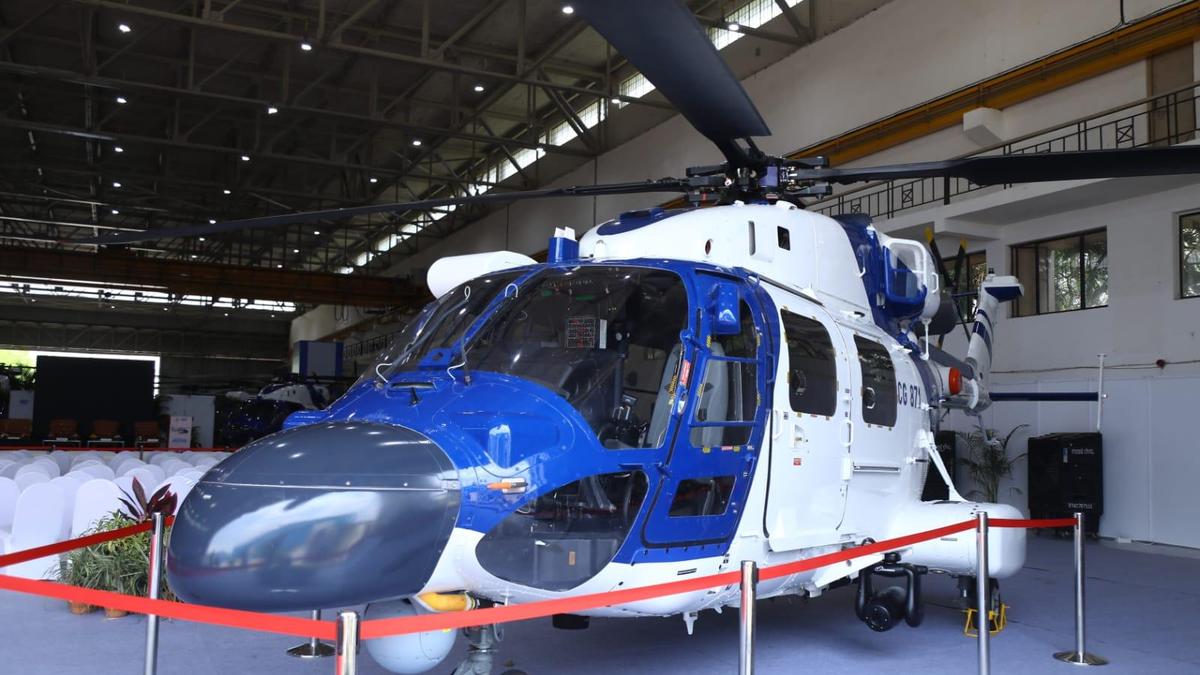
- 12 Apr 2026
In News:
In a significant boost to India’s indigenization efforts in defense (Aatmanirbhar Bharat), Hindustan Aeronautics Limited (HAL) recently delivered four Advanced Light Helicopter (ALH) Mk-III Maritime Role (MR) units to the Indian Coast Guard (ICG). This development marks a pivotal step in enhancing the nation’s coastal surveillance and search-and-rescue capabilities.
The ALH Mk-III (Maritime Role): An Overview
The ALH Mk-III is the specialized maritime variant of the indigenous Dhruv helicopter platform. Engineered specifically for the rigorous demands of the marine environment, these helicopters represent a leap in domestic aerospace engineering.
Technical Features and Specifications
- Engine & Design: It is a multi-role, twin-engine helicopter designed for high performance in humid and saline maritime conditions.
- Avionics & Cockpit: The Mk-III variant features a state-of-the-art glass cockpit and advanced integrated avionics.
- Night Capabilities: It is equipped with advanced sensors and night-vision technology, allowing for 24/7 seamless operations, which is critical for midnight interceptor missions.
- Indigenous Manufacturing: Developed and produced by Hindustan Aeronautics Limited (HAL), it underscores India's growing self-reliance in high-end defense technology.
Operational Versatility
The ALH Mk-III is designed to handle a diverse array of responsibilities, including:
- Surveillance & Security: Monitoring Coastal Regulation Zones (CRZ) and the Exclusive Economic Zone (EEZ).
- Humanitarian Aid: Conducting Search and Rescue (SAR) missions and casualty evacuations (CASEVAC).
- Law Enforcement: Anti-piracy operations and preventing maritime smuggling.
- Logistics: Troop transport, VIP movement, and supplies delivery to remote islands or offshore installations.
The Indian Coast Guard (ICG): The Sentinel of the Seas
The induction of these helicopters is vital for the ICG, which serves as the primary agency for non-military maritime security.
Organizational Framework
- Establishment: While raised in 1977, it was formally constituted as an independent armed force under the Coast Guard Act, 1978.
- Jurisdiction: It operates under the Ministry of Defence, distinguishing it from the Indian Navy, which focuses on external aggression and naval warfare.
- Motto:“VayamRakshamah” (We Protect).
- Command Structure: Headquartered in New Delhi, it is led by the Director General of the Indian Coast Guard (DGICG).
Mandate and Functions
The ICG is tasked with safeguarding India's vast maritime interests, which include:
- Protection of artificial islands and offshore terminals.
- Protection and assistance to fishermen at sea.
- Preservation and protection of the marine environment, including pollution control.
- Assisting the Customs department in anti-smuggling operations.
Methanol
- 11 Apr 2026
In News:
In a major leap toward decarbonizing the maritime sector, the Deendayal Port Authority (Kandla Port) on India's western coast has successfully advanced its methanol bunkering capabilities. This milestone, aligns with the Maritime Amrit Kaal Vision 2047 and India’s commitment to achieving a net-zero maritime future by 2050.
Methanol: The Fuel of the Future
Methanol, also known as wood alcohol (CH3OH), is the simplest alcohol and is emerging as a critical alternative to traditional bunker fuels (like Heavy Fuel Oil) in shipping.
1. Production and Properties
- Process: Typically produced via steam-reforming natural gas to create synthesis gas (syngas), which is then reacted over a catalyst to produce methanol.
- Physical State: A colorless, volatile liquid with a faintly sweet odor. It is completely miscible in water.
- Performance: It is a high-octane, clean-burning fuel. Unlike solid or heavy liquid fuels, its combustion results in significantly lower emissions of SOx (Sulfur Oxides), NOx (Nitrogen Oxides), and particulate matter.
2. Why Methanol for Shipping?
- Energy Security: It can be manufactured from various domestic feedstocks, including coal, natural gas, and biomass, reducing dependency on imported crude.
- Safety: Methanol has a lower risk of flammability compared to gasoline and is biodegradable in marine environments.
- Cost-Efficiency: It is relatively cheaper to produce and store than other emerging alternatives like liquid hydrogen.
- Existing Infrastructure: Since Kandla Port has handled "grey methanol" as cargo for years, much of the necessary storage, pipeline, and jetty infrastructure is already compatible.
Milestone at Deendayal Port (Kandla)
The port has transitioned from a cargo-handling hub to a bunkering hub (a location where ships refuel).
Key Achievements:
- Trial Success: On April 2, 2026, the port successfully conducted a shore-to-ship methanol bunkering trial in collaboration with partners like Indian Oil (IOCL) and Stolt Tankers. This validated safety protocols and transfer processes.
- Port Readiness Level (PRL): Following an assessment by DNV Maritime Advisory Services, the port was rated at Level 6 on the International Association of Ports and Harbors (IAPH) scale, indicating high operational readiness.
- Future Target: The port aims to supply 500 KTPA of e-methanol (Renewable Fuel of Non-Biological Origin) by 2028-29 to support dual-fuel vessels on the Asia-Europe trade route.
Woolly-Necked Stork
- 11 Apr 2026
In News:
The recent sighting of the Woolly-Necked Stork (Ciconia episcopus) in the paddy fields near Thanjavur, Tamil Nadu, has garnered significant attention from ornithologists and conservationists.
Biological Profile and Key Features
The Woolly-Necked Stork, colloquially known as the White-necked Stork or Bishop Stork, is a large wading bird belonging to the Ciconiidae family.
- Distinctive Morphology: It is characterized by its almost entirely black plumage, contrasted sharply by a white, "woolly" textured neck and a white lower belly. The upper body often exhibits a dark green gloss, while the breast and belly areas can display a subtle purple hue.
- Flight Dynamics: As a broad-winged soaring bird, it utilizes thermals (rising columns of hot air) to sustain long-distance flight with minimal energy expenditure.
- Dietary Habits: It is predominantly carnivorous. Its diet is diverse, including fish, amphibians (frogs and toads), reptiles (snakes and lizards), and a wide array of invertebrates such as large insects, crabs, and mollusks.
- Foraging Behavior: The species is a patient hunter, typically foraging by walking slowly through shallow water or dense vegetation, using its powerful bill to stab at prey.
Habitat and Global Distribution
The Woolly-Necked Stork is a widespread tropical species with a distribution range extending across Africa and Asia (from India to Indonesia).
- Ecosystem Preferences: It thrives in varied environments, including open grasslands, riverbanks, ponds, and freshwater wetlands.
- Agricultural Synergy: Interestingly, this species has shown a high degree of adaptability to man-made landscapes, particularly paddy fields. These fields act as artificial wetlands, providing a rich supply of aquatic prey, which explains the recent sightings in Thanjavur.
- Breeding: Unlike some other stork species that form massive colonies, the Woolly-Necked Stork tends to breed singly or in small, loose groups.
Conservation Status and Threats
- IUCN Red List: It is currently classified as 'Near Threatened'.
- Conservation Concerns: While the species is adaptable, it faces threats from habitat loss due to the drainage of wetlands, the intensification of agriculture (leading to a reduction in prey diversity), and the contamination of water bodies by pesticides.
- Importance of the Thanjavur Sighting: The presence of the bird in Tamil Nadu’s "rice bowl" underscores the ecological health of the region's traditional irrigation systems. It serves as an indicator species, suggesting that the local paddy ecosystem still supports a robust food chain.
Prototype Fast Breeder Reactor
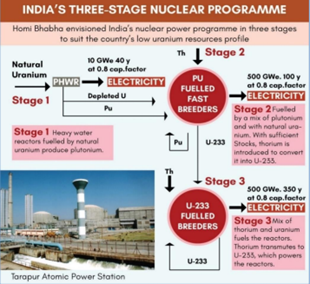
- 11 Apr 2026
In News:
In a landmark achievement for its energy security, India’s indigenously designed 500 MWe Prototype Fast Breeder Reactor (PFBR) at Kalpakkam, Tamil Nadu, successfully attained first criticality on April 6, 2026. This milestone signifies the initiation of a sustained nuclear chain reaction and officially transitions India into the Second Stage of its visionary three-stage nuclear power programme.
With this breakthrough, India becomes only the second country in the world, after Russia, to operate a commercial-scale fast breeder reactor, reinforcing its position as a global leader in advanced nuclear technology.
Understanding the Fast Breeder Reactor (FBR)
Developed by the Indira Gandhi Centre for Atomic Research (IGCAR) and built by BHAVINI, the PFBR is an engineering marvel that "breeds" more fuel than it consumes.
- Fuel Mechanism: Unlike conventional reactors that use natural uranium, the PFBR utilizes Uranium-Plutonium Mixed Oxide (MOX) fuel.
- The Breeding Process: The reactor core is surrounded by a "blanket" of fertile Uranium-238. When fast neutrons strike this blanket, they transmute it into fissile Plutonium-239, effectively creating new fuel during operation.
- Coolant Technology: It uses liquid sodium as a coolant, which is highly efficient for heat transfer but requires precision engineering due to its reactive nature with air and water.
The Three-Stage Nuclear Roadmap:
Formulated by Dr. Homi J. Bhabha in the 1950s, this programme is designed to tackle India’s unique resource profile: possessing only 1–2% of global uranium but over 25% of the world’s thorium reserves.
|
Stage |
Technology |
Fuel Source |
Key Outcome |
|
Stage 1 |
PHWRs |
Natural Uranium |
Power generation Plutonium by-product |
|
Stage 2 |
FBRs (Current) |
Plutonium Uranium |
Breeds more fuel; converts Thorium to U-233 |
|
Stage 3 |
AHWRs |
Thorium U-233 |
Massive, long-term energy independence |
Strategic Significance for India
- Energy Sovereignty: FBRs extract up to 60 times more energy from the same amount of uranium compared to conventional reactors, crucial for a uranium-scarce nation.
- The Thorium Bridge: Stage 2 is the essential "gateway" to Stage 3, where India’s vast monazite sands (found in Kerala, Odisha, and Tamil Nadu) will finally be utilized for power.
- Net-Zero by 2070: Nuclear power currently provides a stable baseload of 3.1% of India’s electricity. Scaling this is vital to displace coal and meet climate targets.
- Waste Management: The "closed fuel cycle" reprocesses spent fuel, drastically reducing the volume and long-term radiotoxicity of nuclear waste.
Challenges and the Road to 100 GW
Despite the milestone, accelerating nuclear capacity to the targeted 100 GW by 2047 faces hurdles:
- Technological Complexity: The PFBR faced over a decade of delays due to safety testing and supply chain bottlenecks.
- Supply Chain Vulnerability: Dependence on global partners (like Russia for Kudankulam) remains a risk, as seen during recent geopolitical disruptions.
- Capital Intensity: High initial costs and the "Plutonium Economy" invite intense international safeguards and security requirements.
Future Outlook: Policy and Innovation
The Union Budget 2025–26 and the newly enacted SHANTI Act, 2025 (Sustainable Harnessing and Advancement of Nuclear Energy for Transforming India) have modernized the sector's governance:
- Private Participation: For the first time, limited private sector investment is permitted under strict regulatory oversight.
- Small Modular Reactors (SMRs): A ?20,000 crore allocation aims to develop five indigenous SMRs by 2033, providing flexible, decentralized power.
- Next-Gen Designs: Development of the BSMR-200 and reactors for hydrogen generation is underway to diversify nuclear applications.
United Nations Economic and Social Council (ECOSOC)
- 11 Apr 2026
In News:
India achieved a major diplomatic milestone by winning elections to four key subsidiary bodies of the United Nations Economic and Social Council (ECOSOC).
Understanding the ECOSOC
Established by the UN Charter in 1945, ECOSOC is one of the six principal organs of the United Nations. It serves as the primary venue for fostering innovative thinking, forging consensus on international development goals, and coordinating policy across economic, social, and environmental sectors.
Core Mandate and Functions:
- The Triple Integration: It aims to harmonize the three pillars of sustainable development: Economic, Social, and Environmental.
- 2030 Agenda: It is the specialized body responsible for policy-making and monitoring the implementation of the Sustainable Development Goals (SDGs).
- Global Coordinator: ECOSOC links regional economic commissions and specialized UN agencies, translating high-level commitments into actionable changes.
- Partnership Gateway: It facilitates dialogue between policymakers, academics, businesses, and over 6,500 registered Non-Governmental Organizations (NGOs).
- Emerging Challenges: The council identifies and addresses new global threats, such as pandemic recovery and climate crises, through intergovernmental discussions.
India’s 2026 Election Success
During the elections held in April 2026, India was elected to the following four distinct and influential bodies:
- Committee on Economic, Social and Cultural Rights (CESCR): In a notable personal victory, former diplomat Preeti Saran was re-elected. This ensures that India’s 36-year diplomatic legacy continues to influence international normative frameworks regarding cultural and social rights.
- Commission on Science and Technology for Development (CSTD): A platform where India can share its digital public infrastructure (DPI) expertise and advocate for technological equity for developing nations.
- Committee on Non-Governmental Organisations: A critical body that monitors the consultative status of NGOs with ECOSOC, giving India a say in how civil society engages with the UN.
- Committee for Programme and Coordination (CPC): The main subsidiary organ of ECOSOC and the General Assembly for planning, programming, and coordination.
Naphthalene Diimide (NDI)
- 11 Apr 2026
In News:
In a significant breakthrough for the field of material science, researchers from the Centre for Nano and Soft Matter Sciences (CeNS) and the Jawaharlal Nehru Centre for Advanced Scientific Research (JNCASR)—both autonomous institutes under the Department of Science and Technology (DST)have pioneered a method to manipulate the structural and electrical properties of organic nanomaterials using temperature as a sole trigger. This discovery centers on the molecule Naphthalene Diimide (NDI) and leverages the principles of supramolecular self-assembly.
The Science of Naphthalene Diimide (NDI)
NDI is characterized as an amphiphilic molecule, a dual-natured chemical entity containing both hydrophilic (water-attracting) and hydrophobic (water-repelling) components. This unique "Janus-like" nature drives the molecule to organize itself into intricate architectures when introduced to an aqueous environment.
The Mechanism of Aqueous Assembly: The transformation is governed by noncovalent interactions (weaker than traditional chemical bonds), which allow for a reversible and dynamic "Lego-like" building process at the molecular level.
- Room Temperature (Phase 1): At standard temperatures, NDI molecules naturally group into circular nanodisks. In this state, the material is highly conductive and exhibits specific interactions with polarized light.
- Thermal Trigger (Phase 2): Upon heating, the molecules undergo a structural reorganization.
- State Switch (Phase 3): The circular nanodisks transform into two-dimensional nanosheets. This morphological shift results in the loss of light-interacting properties and a dramatic sevenfold drop in electrical conductivity.
Supramolecular Self-Assembly: Nature’s Engineering
The research highlights the potential of supramolecular self-assembly, a process where molecules spontaneously organize into well-defined structures without human intervention. By using environmental factors like temperature or solvent type as a "switch," scientists can dictate the final shape and functional behavior of the material. This mimics biological processes where nature builds complex systems using weak interactions to maintain flexibility and responsiveness.
Potential Applications and Significance
The ability to use temperature as an "electrical dimmer switch" for nanomaterials opens diverse avenues in technology and medicine:
- Next-Generation Electronics: Development of organic circuits where electrical flow can be precisely tuned or switched without mechanical parts.
- Smart Thermal Sensors: Creation of sensors that provide immediate optical or electrical feedback in response to minute thermal changes.
- Tunable Optoelectronics: Advancing photonics and display technologies by switching between different optical states.
- Bioelectronic Interfaces: Designing adaptive materials for medical monitoring that can respond dynamically to the biological environment.
- Adaptive Surfaces: Developing "smart" coatings that change their physical properties based on external environmental conditions.
Skills Outcomes Fund
- 10 Apr 2026
In News:
In a decisive step toward realizing the "Viksit Bharat 2047" vision, the Minister of State (Independent Charge) for Skill Development and Entrepreneurship, Shri Jayant Chaudhary, launched a national campaign to establish the Skills Outcomes Fund. This first-of-its-kind initiative marks a paradigm shift in India's human capital strategymoving away from measuring "inputs" (enrollment and certification) toward "outcomes" (verified employment and job retention).
Understanding the Skills Outcomes Fund
The Skills Outcomes Fund is designed to unlock aspirational livelihoods for youth from low-income backgrounds by institutionalizing Outcomes-Based Financing (OBF).
- Mechanism: It mobilizes both public and private capital, linking financial investments directly to verified employment results.
- Institutional Framework: The fund is anchored by the National Skill Development Corporation (NSDC) under the aegis of the Ministry of Skill Development and Entrepreneurship (MSDE).
- Partnerships: It operates through a collaborative model involving the government, not-for-profit organizations, and philanthropic stakeholders (such as the British Asian Trust, Michael & Susan Dell Foundation, and various corporate foundations).
- Blended Finance Model: Government funding from MSDE is supplemented by private sector capital, creating a diversified and sustainable financial pool.
Evolution: From Skill Impact Bond to Outcomes Fund
The fund builds upon the proven success of the Skill Impact Bond (SIB), India’s first OBF initiative launched in 2021.
Success Metrics of the Skill Impact Bond:
- Outlay: Approximately ?130 crore.
- Reach: 34,000 youth across 21 states; 74% are women.
- Performance: * 92% Certification rate.
- 76% Job placement rate.
- 62% Job retention rate (significantly higher than traditional benchmarks).
The Skills Outcomes Fund represents the "Scale and Institutionalization" phase of this pilot, aiming to become the largest OBF initiative for skilling globally.
Key Features and Strategic Focus
1. Employer-Led & Demand-Driven
Unlike traditional models where training is supply-heavy, this fund uses an employer-led model. This ensures that the skills provided are exactly what the industry requires, reducing the "employability gap."
2. High-Growth Aspirational Sectors
The fund targets sectors that are critical to India’s future economic growth:
- Emerging Tech: IT and IT-enabled services (IT-ITeS), Electronics, and Semiconductors.
- Service Excellence: Banking, Financial Services, and Insurance (BFSI), Healthcare, and Logistics.
- Sustainability:Green Jobs and sustainability-oriented roles.
- Core Industry: Automotive and advanced manufacturing.
3. Rigorous Verification
The model relies on Independent Verification to ensure that funds are only released when specific milestones—such as placement, wage levels, and job retention—are met.
Emperor Penguin and Antarctic Fur Seal
- 10 Apr 2026
In News:
In a significant move reflecting the accelerating degradation of polar ecosystems, the International Union for Conservation of Nature (IUCN) has officially uplisted two iconic Antarctic species, the Emperor penguin and the Antarctic fur seal—to the Endangered category in its latest Red List update (April 2026). This reclassification highlights a critical shift from "Near Threatened" and "Least Concern," respectively, driven primarily by human-induced climate change.
1. The Emperor Penguin (Aptenodytes forsteri)
The Emperor penguin, the largest of all penguin species, is considered a sentinel species—an indicator of the overall health of the Antarctic ecosystem.
- Habitat and the "Fast Ice" Crisis: These birds rely on fast ice (sea ice fastened to the coastline or ocean floor) for breeding, raising chicks, and the annual moulting season.
- The Climate Threat: Rising global temperatures cause early spring ice break-ups. Because penguin chicks are not waterproof until they grow adult feathers, early ice collapse leads to the catastrophic loss of entire breeding colonies.
- Population Data: Satellite imagery confirms a 10% population loss (over 20,000 adults) between 2009 and 2018. Projections suggest that without rapid decarbonization, populations could be halved by the 2080s.
2. The Antarctic Fur Seal (Arctocephalus gazella)
Previously listed as "Least Concern," the Antarctic fur seal has seen one of the most drastic status jumps due to a collapse in the marine food web.
- The Krill Dependency: Fur seals rely almost exclusively on Antarctic Krill. As oceans warm, krill move deeper into colder waters or further south, moving out of reach for foraging seals.
- Population Collapse: The population has plummeted by over 50%, dropping from 2.18 million in 1999 to just 944,000 in 2025.
- Demographic Crisis: Extreme pup mortality in their first year due to starvation has resulted in an ageing breeding population, making it difficult for the species to replenish its numbers.
- Compounding Factors: They face increased competition from recovering baleen whale populations and heightened predation from killer whales and leopard seals.
3. Emerging Threats: The Southern Elephant Seal and Bird Flu
The IUCN has also moved the Southern elephant seal from "Least Concern" to Vulnerable. This is largely attributed to a biological threat exacerbated by warming: Highly Pathogenic Avian Influenza (HPAI) - H5N1.
- Mortality: In some colonies, the virus has killed over 90% of newborn pups.
- Vulnerability: Animals living in dense colonies are particularly susceptible to rapid disease transmission, a risk that increases as warming temperatures allow pathogens to survive in previously cold-protected polar regions.
8th Poshan Pakhwada
- 10 Apr 2026
In News:
The Ministry of Women and Child Development (MWCD) has launched the 8th edition of Poshan Pakhwada, observed from 9th April to 23rd April 2026. This fortnightly campaign is a strategic component of the larger POSHAN Abhiyaan (launched in 2018), aiming to transform nutrition and child development into a massive people’s movement (Jan Andolan) through widespread community participation (Jan Bhagidari).
Core Theme: Maximizing Brain Development (0–6 Years)
The 2026 edition shifts focus toward the cognitive dimension of nutrition with the theme “Maximizing Brain Development in the First Six Years of Life.” This priority is rooted in scientific evidence that:
- 85% of Brain Development occurs before a child turns six.
- The First 1,000 Days (conception to age two) are the "window of opportunity" for physical growth, mental well-being, and cognitive mapping.
Strategic Framework: Mission Poshan 2.0
Poshan Pakhwada 2026 operates under the umbrella of Mission Poshan 2.0, an integrated nutrition support program that seeks to converge efforts across Union Ministries and States.
Key Pillars of the Campaign:
- Maternal and Child Nutrition: Intensified advocacy for exclusive breastfeeding for the first six months and timely introduction of complementary feeding.
- Early Stimulation (0–3 Years): Promoting "responsive caregiving"—the practice where caregivers react to a child’s signals to build neural connections and emotional security.
- Play-Based Education (3–6 Years): Utilizing the "Aadharshila" curriculum to ensure school readiness through holistic, activity-based learning rather than formal rote teaching.
- Lifestyle & Digital Wellness: Encouraging families to minimize screen time for young children to prevent developmental delays and promote physical play.
- Strengthening Anganwadis: Mobilizing community support and CSR initiatives to transform regular Anganwadi Centres (AWCs) into "Saksham Anganwadis"—modernized hubs equipped with smart learning tools and nutri-gardens.
Institutional Scale and Reach
The campaign leverages India's massive grassroots network to take the vision of a Viksit Bharat (Developed India) to every household:
- The Frontline Force: Mobilization of Anganwadi Workers (AWWs), ASHAs, Auxiliary Nurse-Midwives (ANMs), and Self-Help Groups (SHGs).
- Beneficiary Coverage: Currently, 14 lakh Anganwadi Centres serve nearly 8.9 crore beneficiaries, including children, pregnant women, and lactating mothers.
- Technological Monitoring: The "Poshan Tracker" app provides real-time data on growth monitoring and service delivery, ensuring transparency and accountability.
Focus on Aspirational Districts
A significant priority of the 8th Poshan Pakhwada is bridging the developmental gap in Aspirational Districts. These regions receive targeted interventions and are encouraged to adopt "best practices" to improve their health and nutrition indicators, ensuring that geographical location does not dictate a child’s developmental potential.
Pradhan Mantri MUDRA Yojana (PMMY)
- 10 Apr 2026
In News:
Launched on April 8, 2015, the Pradhan Mantri MUDRA Yojana (PMMY) has completed 11 years as a cornerstone of India’s financial inclusion strategy. By focusing on the philosophy of "Funding the Unfunded," the scheme has successfully integrated millions of non-corporate, non-farm micro and small enterprises (MSEs) into the formal financial ecosystem.
Core Philosophy: The Three Pillars of Financial Inclusion
The PMMY is built upon three strategic objectives designed to serve the underserved:
- Banking the Unbanked: Bringing the informal sector into the fold of institutional finance.
- Securing the Unsecured: Providing credit without the requirement of traditional collateral.
- Funding the Unfunded: Ensuring capital reaches those traditionally overlooked by banks.
Key Features and Loan Structure
PMMY provides collateral-free institutional credit up to ?20 lakh. The loans are categorized based on the stage of growth and funding requirements of the micro-unit:
|
Category |
Loan Range |
Focus Area |
Share (No. of Loans) |
|
Shishu |
Up to ?50,000 |
Initial seed capital for micro-startups. |
74% |
|
Kishor |
?50,000 to ?5 Lakh |
Mid-stage expansion and equipment purchase. |
24% |
|
Tarun |
?5 Lakh to ?10 Lakh |
Scaling established small businesses. |
2% |
|
Tarun Plus |
?10 Lakh to ?20 Lakh |
For successful entrepreneurs graduating from Tarun. |
0.004% |
MUDRA (Micro Units Development & Refinance Agency Ltd.), a subsidiary of SIDBI, provides refinance support to Member Lending Institutions (MLIs) such as Scheduled Commercial Banks, RRBs, NBFCs, and MFIs.
11-Year Performance Analysis (As of March 2026)
The scheme has witnessed exponential growth, transitioning from a sanction of ?1.37 lakh crore in its first year to over ?5.65 lakh crore in FY 2025-26.
- Total Disbursement: Over ?40.07 lakh crore across 57.79 crore loan accounts.
- Democratization of Credit:
- Women's Empowerment: Approximately 67% (two-thirds) of all loans have been sanctioned to women entrepreneurs.
- Social Equity: Over 51% of beneficiaries belong to SC/ST/OBC categories.
- New Entrepreneurs: Over 12.15 crore loans (amounting to ?12 lakh crore) were extended to first-time entrepreneurs.
Challenges and Structural Hurdles
Despite its massive reach, PMMY faces several critical challenges that impact its long-term economic utility:
- The "Missing Middle": 74% of loans remain in the 'Shishu' category, indicating a struggle to graduate micro-units into larger, sustainable medium enterprises.
- Sectoral Skewness: Loans are heavily concentrated in trading and services, with limited penetration in manufacturing, which limits the employment multiplier effect.
- Asset Quality: The collateral-free nature, combined with inadequate credit checks in some cases, has led to concerns regarding Non-Performing Assets (NPAs) in public sector banks.
- Credit-Absorption Deficit: A lack of financial literacy and market access means many borrowers struggle to deploy funds productively, leading to high mortality rates for micro-enterprises.
Way Forward: Moving Toward a 'Credit-Plus' Approach
To align with the vision of Viksit Bharat 2047, PMMY must evolve beyond mere credit dispensation:
- Cash-Flow Based Lending: Transitioning from collateral-based models to using Digital Public Infrastructure (DPI) like the Account Aggregator framework and GSTN for real-time credit assessment.
- Enterprise Development: Integrating PMMY with platforms like ONDC and the Skill India Mission to provide market linkages and technical handholding.
- Incentivizing Micro-Manufacturing: Offering interest subventions specifically for manufacturing units to boost Gross Fixed Capital Formation (GFCF).
- AI-Driven Monitoring: Using data analytics to track the end-use of funds, preventing the diversion of business loans toward personal consumption.
The Pradhan Mantri MUDRA Yojana has effectively dismantled the entry barriers to formal credit for India's grassroots entrepreneurs. By addressing current structural asymmetries and adopting a holistic "Credit-Plus" model, the scheme will continue to be a vital engine for inclusive growth and self-reliance (Atmanirbhar Bharat).
Direct-to-Device (D2D) Technology
- 10 Apr 2026
In News:
The Department of Telecommunications (DoT), via the Telecommunication Engineering Centre (TEC), recently convened a high-level technical workshop titled “The D2D Frontier: Technology, Global Precedence and Indian Context.” This initiative aligns with the Government of India’s vision of “Connectivity for All,” focusing on Direct-to-Device (D2D) technology as a cornerstone for inclusive digital access.
What is Direct-to-Device (D2D) Technology?
Direct-to-Device (D2D) is an emerging satellite communication (SatCom) innovation that allows standard, off-the-shelf smartphones to connect directly to satellites. Unlike traditional satellite communication, it requires no specialized hardware, satellite phones, or intermediate ground equipment (like VSAT terminals).
How D2D Works:
- Space-Based Cell Towers: A network of Low Earth Orbit (LEO) satellites acts as "cell towers in space," equipped with powerful antennas to pick up signals from standard mobile devices.
- Spectrum Integration: These satellites utilize existing terrestrial LTE or 5G frequency bands, ensuring compatibility with current mobile networks.
- Non-Terrestrial Network (NTN): The satellite serves as a relay, transmitting signals to a ground gateway, which then links to the service provider's core network.
- Seamless Handover: When a user exits the range of a terrestrial tower, the device automatically switches to a passing satellite without user intervention.
Key Technical Features and Standards
- Standard Device Compatibility: Works with existing 4G and 5G smartphones, avoiding the need for bulky, expensive satellite handsets.
- Low Latency: By utilizing LEO satellites (altitudes of 500–2,000 km), D2D significantly reduces the signal delay common in traditional geostationary satellites.
- Global Standardization: Integration into 3GPP Release 17 and 18 ensures that D2D becomes a globally recognized and interoperable telecom standard.
- Evolving Capabilities: Initial deployments focus on low-bandwidth services (Emergency SOS and messaging), with a roadmap toward full voice and high-speed data.
Mount Semeru
- 09 Apr 2026
In News:
In early 2026, Mount Semeru, one of Indonesia’s most volatile volcanoes, underscored its reputation by erupting repeatedly, propelling thick ash columns up to 1,100 metres above its summit. This recent activity is a stark reminder of the geological instability inherent in the Indonesian archipelago, a region that sits at the crossroads of major tectonic movements.
Geographical and Topographical Profile
Mount Semeru, affectionately known as Mahameru ("The Great Mountain"), is a landmark of the Indonesian landscape.
- Location: It is situated in East Java, Indonesia.
- Peak Altitude: Standing at 3,676 metres (12,060 feet), it holds the title of the highest peak on Java Island.
- Morphology: It is a stratovolcano located at the southern terminus of a volcanic massif that extends northward to the Tengger caldera. Its summit is characterized by complex topography due to the historical shifting of craters from the Northwest (NW) to the Southeast (SE).
The Tectonic Engine: Why It Erupts
Semeru’s frequent activity is the result of its position in one of the world's most active geological zones.
- Subduction Dynamics: The volcano is positioned within a subduction zone, where the Indo-Australian Plate is being forced beneath the Eurasian Plate. This process generates intense heat and pressure, melting the mantle and creating magma that rises to the surface.
- Pacific Ring of Fire:Semeru is a critical link in the Pacific Ring of Fire, a horseshoe-shaped belt in the Pacific Ocean basin where a large majority of the world's earthquakes and volcanic eruptions occur due to the continuous movement of continental and oceanic plates.
Eruption Patterns and Historical Context
Semeru is classified as one of Indonesia’s most active volcanoes, with a documented history of eruptions spanning over 200 years.
- Frequent Activity: It is famous for its "Strombolian" style of regular ash explosions, which historically occur at frequent intervals of 10 to 30 minutes.
- Hazards: Beyond ash fall, Semeru is notorious for producing Lahars (volcanic mudflows) and pyroclastic flows (fast-moving clouds of hot gas and volcanic matter), which pose significant risks to the densely populated agricultural plains of East Java.
Arogya Van Initiative

- 09 Apr 2026
In News:
In a significant move toward ecological sustainability and environmental health, the National Highways Authority of India (NHAI), under the aegis of the Ministry of Road Transport & Highways (MoRTH), has launched the ‘Arogya Van’ initiative. This program seeks to utilize vacant land parcels along National Highways (NH) for the development of thematic medicinal tree plantations, moving beyond traditional landscaping to functional, biodiversity-rich green belts.
Core Objectives and Vision
The Arogya Van initiative is designed to create "Health Forests" along the country's transit arteries. Its primary goals include:
- Biodiversity Enrichment: By introducing diverse medicinal tree species, the initiative aims to create habitats for pollinators (bees, butterflies), birds, and microfauna.
- Ecosystem Resilience: The systematic planting of native and medicinal species strengthens the local environment's ability to withstand climate stressors and pollution.
- Productive Land Use: It transforms idle or vacant government land into productive ecological assets.
Implementation Strategy: Phase-I
The NHAI has formulated a structured action plan for the inaugural phase of the project, focusing on geographical diversity and scientific selection.
- Geographic Coverage: The first phase targets 17 land parcels across several states, including:
- North & West: Delhi-NCR, Haryana, Rajasthan, Gujarat, and Maharashtra.
- Central: Madhya Pradesh and Chhattisgarh.
- South & East: Andhra Pradesh, Karnataka, Tamil Nadu, and Odisha.
- Site Selection: Priority is given to high-visibility and strategic locations such as toll plazas, wayside amenities, cloverleaf junctions, interchanges, and prominent highway stretches.
- Agro-Climatic Customization: Tree species are not chosen randomly; they are identified based on their established medicinal properties and their suitability to the specific agro-climatic zone of the site to ensure high survival rates.
Exercise Cyclone-IV
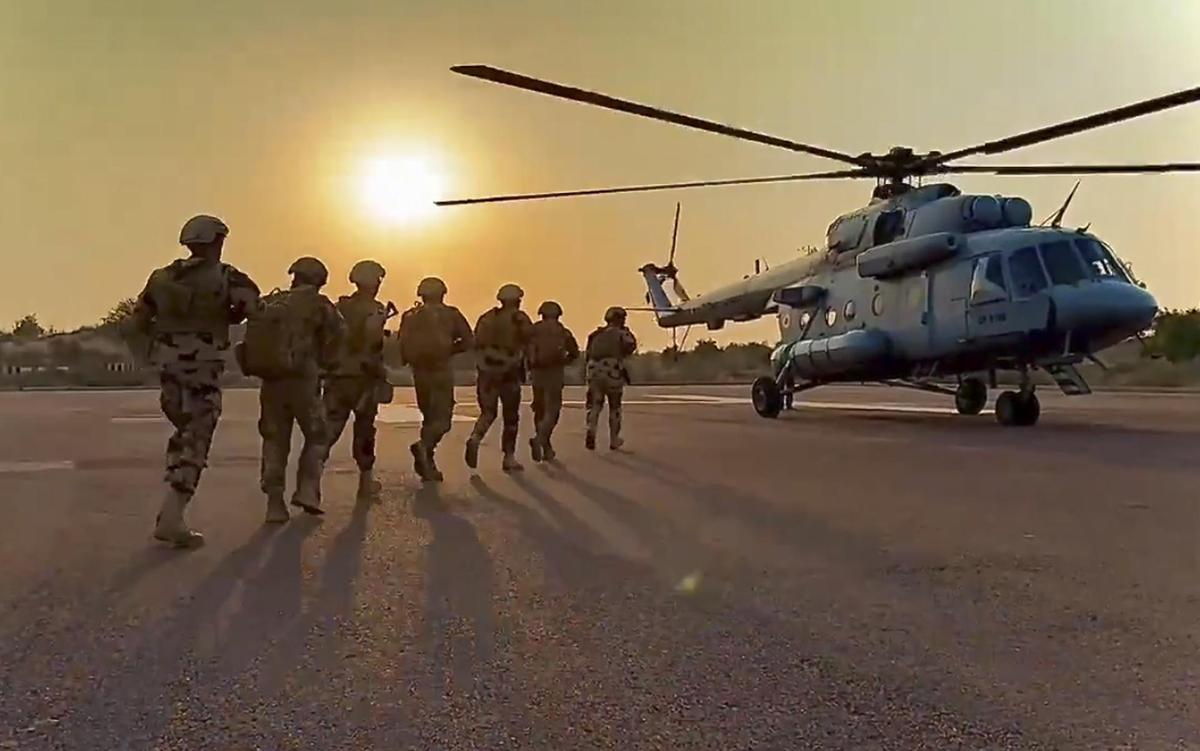
- 09 Apr 2026
In News:
The 4th edition of the joint military exercise Cyclone-IV is being conducted between the Indian Army and the Egyptian Army. Taking place at Anshas, Egypt, this exercise marks a critical milestone in the bilateral defense cooperation between the two ancient civilizations, specifically focusing on the capabilities of their elite Special Forces.
Evolution and Operational Scope
Exercise Cyclone is a relatively young but high-impact bilateral maneuver that began in 2023. It is designed to alternate annually between India and Egypt to ensure familiarity with diverse geographical terrains.
- The 2026 Contingent: The Indian Army is represented by its premier Special Forces units, training alongside their counterparts from the Egyptian Special Forces.
- Core Philosophy: The exercise is built on the exchange of Tactics, Techniques, and Procedures (TTPs), moving beyond basic drills to complex, high-stakes joint planning.
Strategic Objectives and Training Focus
The curriculum of Cyclone-IV is tailored to address modern unconventional security threats:
- Counter-Terrorism (CT): Rehearsing the neutralization of terrorist threats within dense urban and semi-urban environments, a shared security concern for both nations.
- Specialized Combat Skills: The drills include sniper-based operations, long-range reconnaissance, and Tactical Combat Casualty Care (TCCC) to ensure medical resilience during active firefights.
- Arid Terrain Expertise: Given the vast desert landscapes of Egypt and Northern India, a primary focus remains on Desert Warfare, including survival, navigation, and combat in extreme heat and sandy conditions.
The Broader Strategic Context
The military synergy between New Delhi and Cairo is not an isolated event but a key pillar of the India-Egypt Strategic Partnership signed in January 2023.
- Geopolitics: Egypt is a "swing state" in the Arab world and a gateway to both Africa and Europe via the Suez Canal. Strengthening ties aligns with India’s West Asia Policy and its desire to be a "Net Security Provider" in the Indian Ocean Region and beyond.
- Other Joint Engagements:
- Exercise Desert Warrior: A bilateral exercise involving the Air Forces of both nations.
- Exercise Bright Star: A multilateral tri-service exercise hosted by Egypt, in which India has become a regular high-profile participant.
New Archaeological Discoveries at Elephanta Island
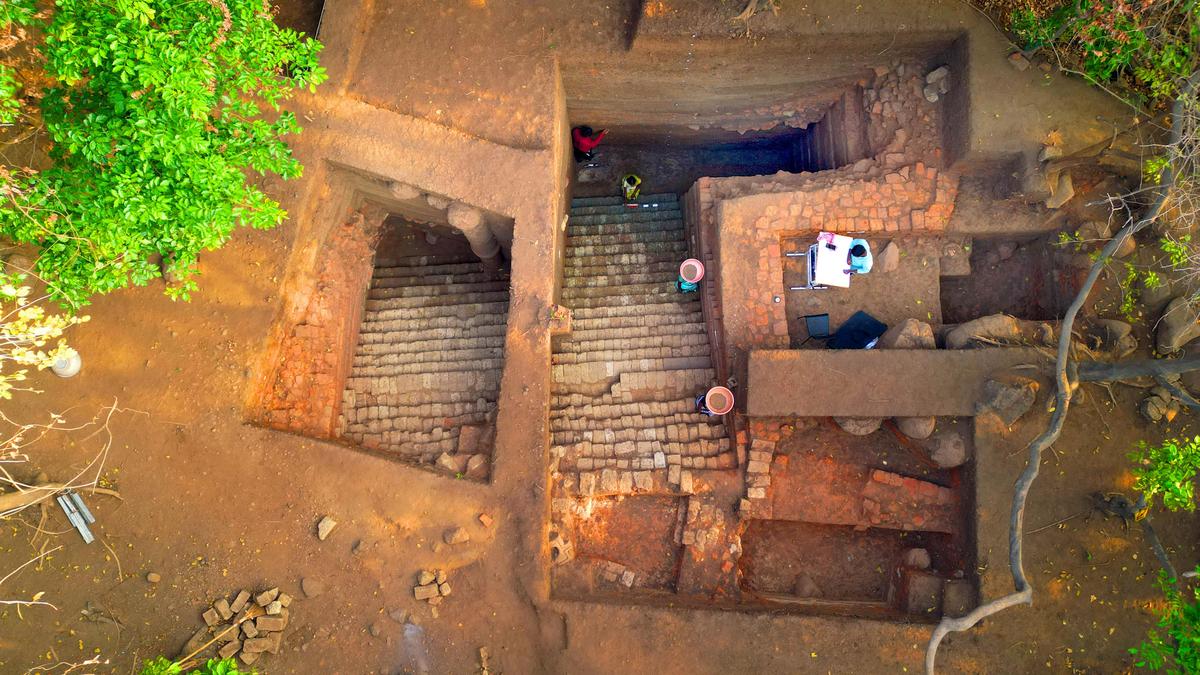
- 09 Apr 2026
In News:
Recent excavations by the Archaeological Survey of India (ASI) have unearthed a sophisticated 1,500-year-old stepped reservoir on Elephanta Island (historically known as Gharapuri).
Advanced Water Management: The Stepped Reservoir
The centerpiece of the discovery is a massive T-shaped stepped reservoir dating back approximately 1,500 years.
- Engineering Excellence: The structure features 20 precisely aligned stone steps. Remarkably, the basalt blocks used for construction were not native to the island; they were transported from the mainland, indicating a highly organized labor and logistics system.
- Functional Design: The reservoir was engineered to capture and store monsoon runoff on the island’s naturally rocky and sloped terrain, ensuring a year-round water supply for a growing settlement or a busy port.
Numismatic Evidence and Chronology
The excavation yielded approximately 60 coins made of copper, lead, and silver, providing a clear chronological framework for the site.
- The Kalachuri Connection: Several copper coins belong to King Krishnaraja of the Kalachuri dynasty (6th century CE).
- Iconography: These coins feature a distinctive seated bull motif (Nandi) on the obverse and a temple symbol with the legend "Sri Krishnaraja" on the reverse. This confirms the political influence of the Kalachuris over the Konkan coast during this period.
A Global Maritime Hub
The findings firmly establish Elephanta Island as a crucial node in the Ancient Indian Ocean Trade.
- Mediterranean Links: Archaeologists discovered nearly 3,000 amphorae sherds (pottery used for transporting wine or oil) of Mediterranean origin, indicating direct or indirect trade links with the Roman Empire.
- West Asian Ties: The presence of torpedo jars from West Asia (Mesopotamia/Persia) suggests the island functioned as a transshipment point for goods moving between the Gulf and the Indian hinterland as early as the 2nd century CE.
- The Port Triad: Historically, the island operated through three distinct port localities: Morabandar, Rajbandar, and Shethbandar, each likely serving different mercantile functions.
Industrial and Cultural Landscape
Beyond trade, the island was a center of production and sophisticated lifestyle:
- Textile Industry: The discovery of a brick structure, identified as a possible dyeing vat, suggests that the island was involved in textile processing—a major export commodity for ancient India.
- Material Culture: Recoveries of carnelian and quartz beads, glass and stone bangles, and terracotta figurines reflect a vibrant local craft tradition and an affluent resident population.
Designated Repositories
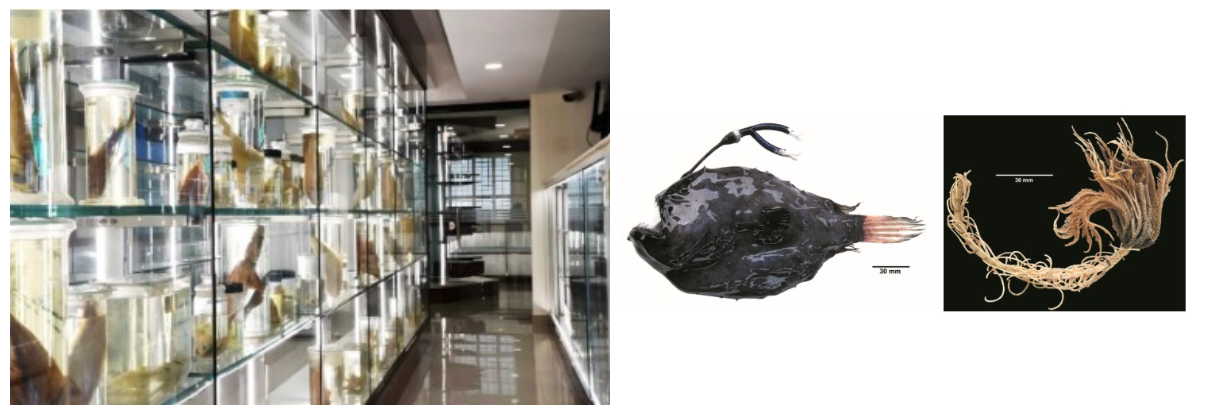
- 09 Apr 2026
In News:
In a strategic move to bolster India’s conservation framework, the National Biodiversity Authority (NBA), in collaboration with the Ministry of Environment, Forest and Climate Change (MoEFCC), has notified two new institutions as Designated Repositories. This expansion under the Biological Diversity Act (BDA), 2002, reflects India's commitment to the systematic documentation and safe custody of its vast genetic and biological wealth.
The New Additions to the National Network
The notification brings two specialized research centers into the national fold, taking the total number of designated repositories in India to 20.
- Referral Centre Bhavasagara (CMLRE, Kochi): Located at the Centre for Marine Living Resources and Ecology, this center specializes in marine biological resources, critical for India's "Blue Economy" ambitions.
- MACS Collection of Microorganisms & National Fungal Culture Collection (ARI, Pune): Housed at the Agharkar Research Institute, this repository focuses on microbial and fungal diversity, essential for biotechnological and agricultural innovation.
Statutory Framework: Repositories under Section 39
Under Section 39 of the Biological Diversity Act, 2002, the Central Government is empowered to designate specific institutions as repositories for different categories of biological resources.
- Mandate: These institutions are entrusted with the safe custody of biological materials. They ensure that samples are preserved under rigorous scientific conditions.
- Legal Obligation for Discovery: A key provision of the Act requires any person discovering a new taxon (a new species or group) to notify and deposit samples with the designated repository.
- Accessibility: Beyond preservation, these centers act as libraries of life, making biological materials accessible for legitimate research, innovation, and intellectual property claims.
The National Biodiversity Authority (NBA): An Overview
The NBA serves as the apex body overseeing the implementation of the BDA, 2002.
- Nature: A statutory and autonomous body established in 2003, headquartered in Chennai.
- Core Functions: It performs advisory, regulatory, and facilitative roles regarding the conservation of biological diversity, sustainable use of its components, and the Fair and Equitable Sharing of Benefits (ABS) arising from the use of biological resources.
- Three-Tier Structure: The Act mandates a decentralized decentralization model to ensure grassroots participation:
- National Level: National Biodiversity Authority (NBA).
- State Level: State Biodiversity Boards (SBBs).
- Local Level: Biodiversity Management Committees (BMCs) at the village/local body level.
Hectocotylus in Octopus Reproduction
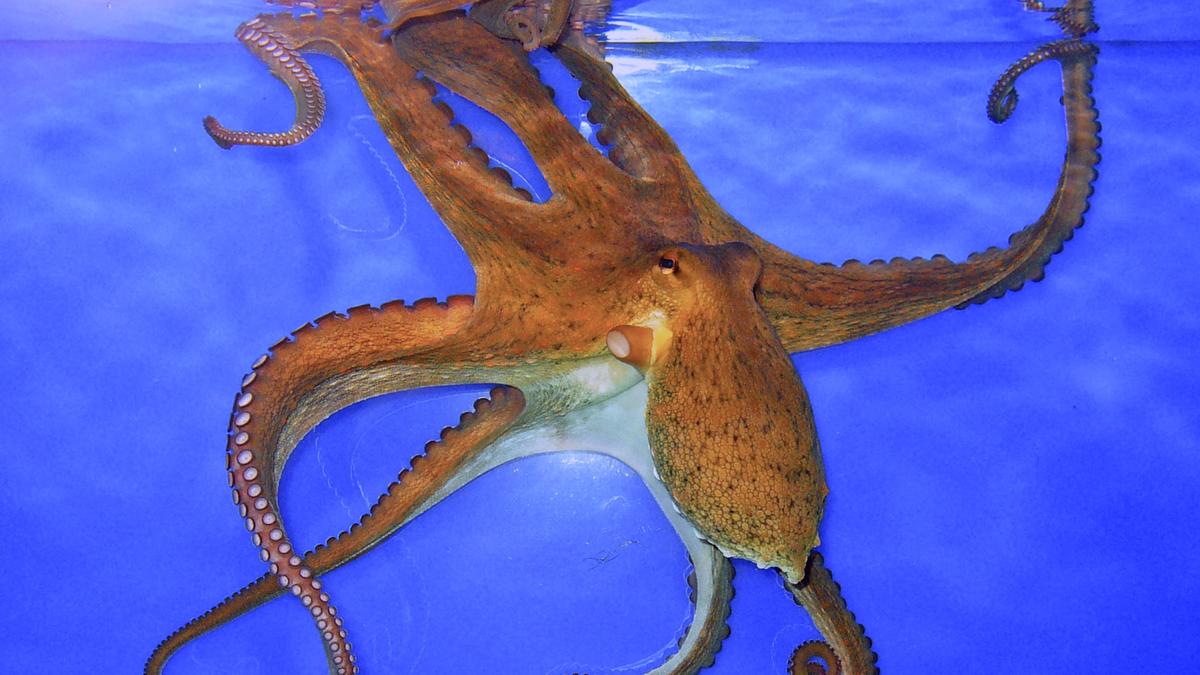
- 08 Apr 2026
In News:
Recent biological research has unveiled groundbreaking insights into the reproductive and sensory mechanisms of octopuses. Scientists have discovered that the hectocotylus, a specialized arm in male cephalopods—serves a dual purpose: it acts as both a conduit for genetic material and a sophisticated sensory organ capable of "tasting" mates. This discovery provides a window into how molecular evolution drives complex behaviors in solitary marine species.
Understanding the Hectocotylus
In the class Cephalopoda (mollusks including octopuses, squids, and cuttlefish), the hectocotylus is a modified arm used by males to transfer sperm packets, known as spermatophores, into the female’s mantle cavity.
Key Biological Findings:
- Chemosensory "Tasting": Beyond physical transfer, the arm functions as a sensory probe. It can detect chemical signals through touch, effectively "tasting" the female.
- Detection of Progesterone: The arm is equipped to sense progesterone present on the female’s skin and within her reproductive tract.
- The Role of CRT1 Receptor: The process is mediated by a specific receptor called CRT1. Interestingly, this receptor evolved from ancient neurotransmitter receptors. It has now adapted to perform a "dual-use" function:
- Prey Detection: Identifying food sources in the marine environment.
- Mate Recognition: Distinguishing potential mates and locating the oviduct for successful insemination.
Evolutionary Significance and Survival Strategy
The evolution of the hectocotylus into a sensory powerhouse is a direct response to the ecological challenges faced by cephalopods.
- Overcoming Solitude: Octopuses are primarily solitary creatures. In the vastness of the ocean, encounters between males and females are rare. The ability to instantly identify a female through chemical "taste" ensures that mating opportunities are not wasted.
- Navigation in Darkness: Many cephalopods inhabit deep-sea or nocturnal environments. The sensory receptors on the hectocotylus allow males to locate the female’s oviduct with precision, even in complete darkness.
- Molecular Adaptation: This discovery highlights how subtle changes in protein structures (like the CRT1 receptor) can lead to the development of highly complex reproductive behaviors, ultimately contributing to the vast biodiversity of our oceans.
General Characteristics of Cephalopods
Cephalopods are among the most intelligent invertebrates, characterized by:
- Physiology: Soft bodies, prominent heads, and highly developed, large eyes.
- Appendages: A ring of arms or tentacles used for locomotion, grasping prey, andas now confirmedsophisticated sensing.
- Neurology: They possess complex nervous systems, with a significant portion of their neurons located within their arms, allowing for semi-autonomous movement and sensing.
Yuva Sangam
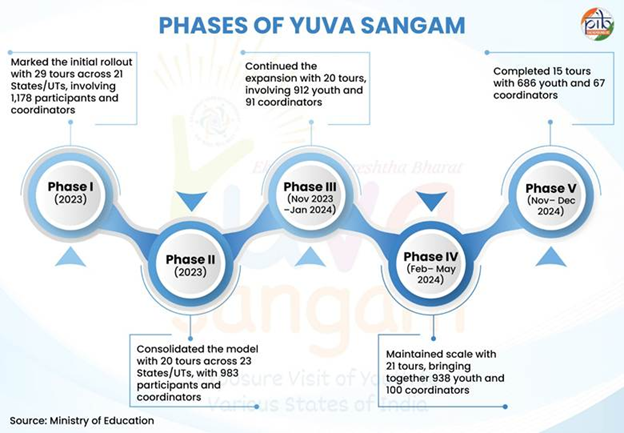
- 08 Apr 2026
In News:
Yuva Sangam is a landmark youth exchange initiative under the Government of India’s Ek Bharat Shreshtha Bharat (EBSB) program. Launched in 2023, it has rapidly evolved into a high-impact platform for strengthening the emotional and cultural bonds between the youth of diverse regions. As of April 2026, the program has entered its Phase-VI, expanding its footprint to 22 States and Union Territories and reflecting a "whole-of-government" commitment to national unity.
The Ideological Foundation: Ek Bharat Shreshtha Bharat
The program is rooted in the vision of Ek Bharat Shreshtha Bharat, launched on October 31, 2015, to mark Rashtriya Ekta Diwas (National Unity Day).
- Objective: To celebrate India’s "Unity in Diversity" by pairing different States and UTs for sustained engagement.
- Mechanism: Paired regions collaborate across various domainsincluding language, cuisine, sports, and best practicesto dismantle regional prejudices and foster mutual respect.
Structural Framework of Yuva Sangam
Yuva Sangam operationalizes this vision through structured, immersive tours.
- Target Group: Designed for youth aged 18–30 years, encompassing university students (UG, PG, PhD), young professionals, and volunteers from the National Service Scheme (NSS) and Nehru Yuva Kendra Sangathan (NYKS).
- Implementation: Anchored by the Ministry of Education, the program is executed via Higher Education Institutions (HEIs) that serve as nodal centers. For instance, in Phase-VI, 22 eminent HEIs (like NIT Rourkela and IIM Ahmedabad) coordinate these exchanges.
- Digital Integration (2026): Aligning with the digital education push, Phase-VI requires participants to register using their APAAR ID (Automated Permanent Academic Account Registry).
The "5-P" Framework: The Core Pillars of Exposure
Every Yuva Sangam tour (typically lasting 5–7 days) is curated around five thematic pillars to provide a holistic understanding of the host state:
- Paryatan (Tourism): Visiting historical monuments and natural wonders to understand the geography and history.
- Parampara (Tradition): Immersive experiences in local arts, crafts, music, and culinary traditions.
- Pragati (Progress): Gaining insights into major developmental landmarks and government initiatives.
- Prodyogiki (Technology): Exposure to innovation hubs, startups, and research institutions.
- Paraspar Sampark (People-to-People Connect): Meaningful interactions with local heroes, SHGs, and dignitaries, including Governors and Chief Ministers.
Indian Softshell Turtles
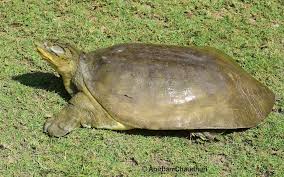
- 08 Apr 2026
In News:
The Indian Softshell Turtle (Nilssoniagangetica), a critical component of India’s freshwater ecosystems, has recently been in the spotlight following successful enforcement actions against illegal wildlife trafficking. In a significant operation, police in Greater Noida rescued 16 turtles from a smuggler during a routine check, highlighting the persistent threat of poaching to this endangered species.
Taxonomy and Biological Profile
Commonly known as the Gangetic Softshell Turtle, this species belongs to the family Trionychidae. Unlike traditional turtles characterized by hard, bony scutes, these reptiles possess a flat, leathery carapace (upper shell) that lacks a keratinized cover.
- Distinctive Anatomy: They feature a large head with a prominent snout-like proboscis, an evolutionary adaptation that allows them to breathe while remaining almost entirely submerged.
- Size: They are among the largest freshwater turtles in the region, with carapaces reaching up to 94 cm in length.
- Diet: They are omnivorous scavengers. By feeding on mollusks, fish, frogs, and decaying organic matter, they act as natural "cleaners" of river systems.
Habitat and Distribution
The Indian Softshell Turtle is native to the major river systems of South Asia, specifically the Ganges, Indus, and Mahanadi.
- Range: Found across India, Pakistan, Nepal, and Bangladesh.
- Ecological Niche: They prefer deep, turbid (cloudy) waters including rivers, large canals, and lakes. They favor habitats with mud or sand bottoms, which allow them to bury themselves for camouflage and hunting.
Conservation Status and Legal Protection
Due to its dwindling population, the Indian Softshell Turtle is afforded the highest levels of legal protection, mirroring that of the Bengal Tiger.
- Wildlife Protection Act (1972): Listed under Schedule I, making any trade or harm to the species a non-bailable offense with rigorous punishment.
- IUCN Red List: Classified as Endangered.
- CITES: Included in Appendix I, which prohibits international commercial trade.
Threats: The "20-Claw" Myth and Trafficking
The primary drivers of the decline in their population are habitat loss, pollution, and illegal poaching. A unique and destructive driver is the "20-Claw Myth."
- Superstition: Poachers specifically target individuals with 20 claws (five on each limb). There is a deep-seated superstition in the black market that these specific turtles bring immense "good luck" or possess superior medicinal properties.
- Commercial Value: Beyond superstition, they are also trafficked for their meat and for the pet trade, often being transported in cramped, inhumane conditions across state borders.
Ecological Significance for India
From a conservation and civil services perspective, the health of the Indian Softshell Turtle population is a direct indicator of the health of the riverine ecosystem. As scavengers, they are vital to the Clean Ganga Mission (Namami Gange), as they help maintain water quality by consuming organic waste and carcasses that would otherwise pollute the river.
Annual Survey of Incorporated Services Sector Enterprises
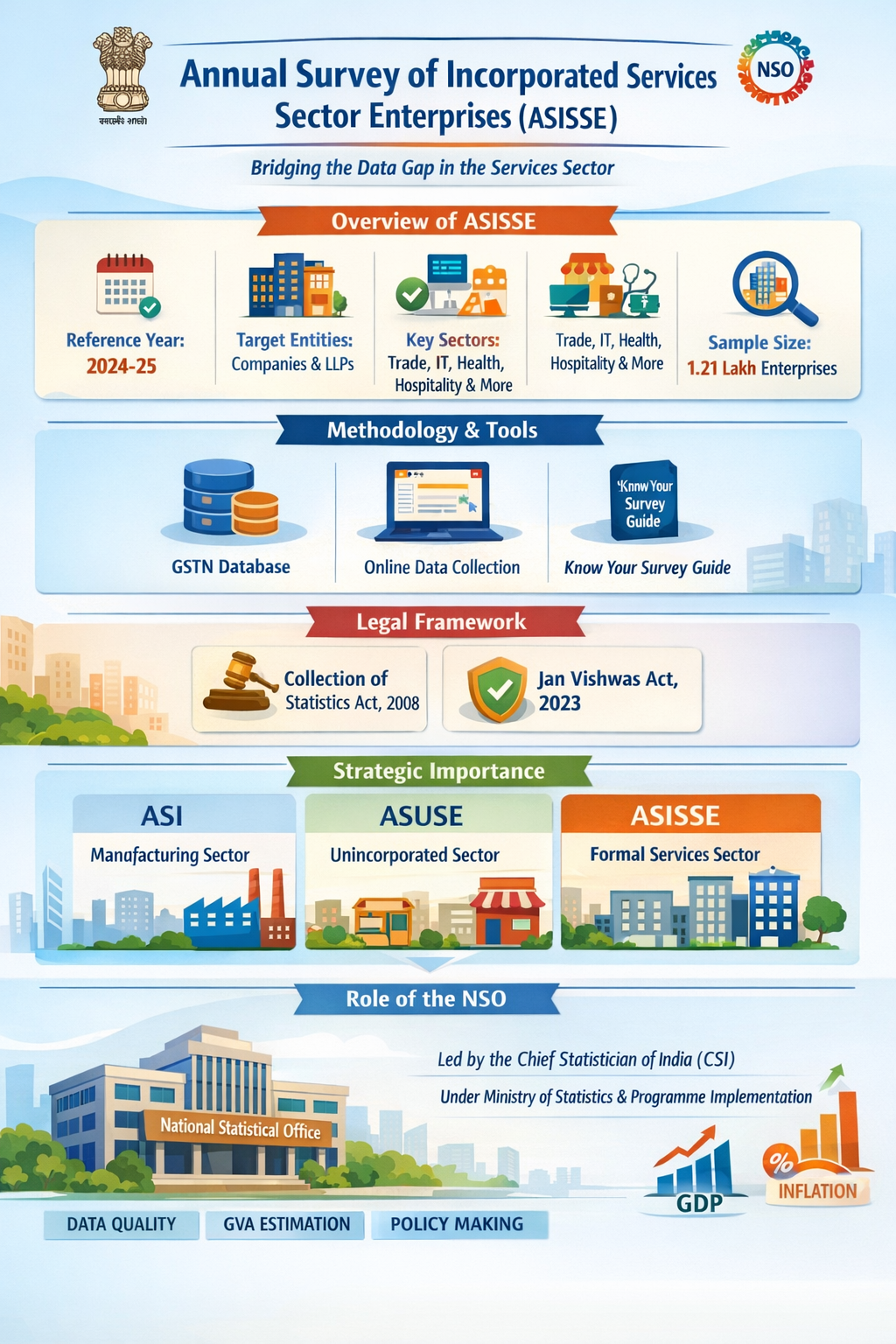
- 08 Apr 2026
In News:
The National Statistics Office (NSO), operating under the Ministry of Statistics and Programme Implementation (MoSPI), launched the inaugural Annual Survey of Incorporated Services Sector Enterprises (ASISSE). This landmark initiative is designed to bridge a critical data gap in the services sector, which is the backbone of the Indian economy, contributing over 50% to the national GDP.
Overview and Scope of ASISSE
The ASISSE is the first dedicated annual exercise to create a formal, comprehensive database for the incorporated (registered) services sector. Historically, while the manufacturing sector was tracked via the Annual Survey of Industries (ASI), the formal services sector lacked a similar structured annual data collection mechanism.
- Reference Period: The survey focuses on the financial year 2024-25.
- Target Entities: It covers corporate entities registered under the Companies Act (1956/2013) or the Limited Liability Partnership (LLP) Act, 2008.
- Key Sectors: The survey encompasses a wide range of industries, including Trade, Transport, Hospitality (Hotels/Restaurants), Information Technology (IT), Education, Health, and other professional services.
- Sample Size: With more than 1.21 lakh enterprises being surveyed, it stands as one of the largest statistical operations of its kind in India.
Methodology and Digital Integration
To ensure high data quality and transparency, the NSO has integrated modern digital tools and outreach strategies:
- The Sampling Frame: The survey uses the Goods and Services Tax Network (GSTN) database as its primary source to identify and sample businesses, ensuring that the data reflects currently active and tax-compliant entities.
- Data Collection Mode: In line with "Digital India" initiatives, data is collected through a secure web-based portal, facilitating faster processing and better security.
- Transparency Measures: The NSO released a reader-friendly user guide titled "Know Your Survey" to help participating enterprises understand definitions, reporting requirements, and the survey's overall purpose.
Legal Framework
The ASISSE is not a voluntary exercise but is backed by stringent legislative provisions to ensure compliance and data integrity:
- It is conducted under the Collection of Statistics Act, 2008 (as amended in 2017).
- It also falls under the provisions of the Jan Vishwas (Amendment of Provisions) Act, 2023, which streamlines reporting and emphasizes trust-based governance.
Strategic Importance for India
The launch of ASISSE completes a vital "statistical trio" that allows the government to view the entire non-agricultural economy holistically:
- ASI (Annual Survey of Industries): Covers the registered manufacturing sector.
- ASUSE (Annual Survey of Unincorporated Sector Enterprises): Covers the informal/unregistered non-agricultural sector.
- ASISSE: Fills the gap for the formal, incorporated services sector.
By generating key operational and economic indicators, ASISSE enables evidence-based policymaking. It allows for more accurate estimation of Gross Value Added (GVA) and provides insights into job creation and economic transformation within the most dynamic segment of the Indian economy.
The Role of the National Statistical Office (NSO)
The NSO serves as India’s central statistical agency. Formed in 2019 through the merger of the Central Statistics Office (CSO) and the National Sample Survey Office (NSSO), it aims to improve coordination and data quality across the country.
Headed by the Chief Statistician of India (CSI), the NSO is responsible for disseminating official data—such as GDP and inflation figures—that are crucial for national planning and governance under the Ministry of Statistics and Programme Implementation.
Tar Balls Management
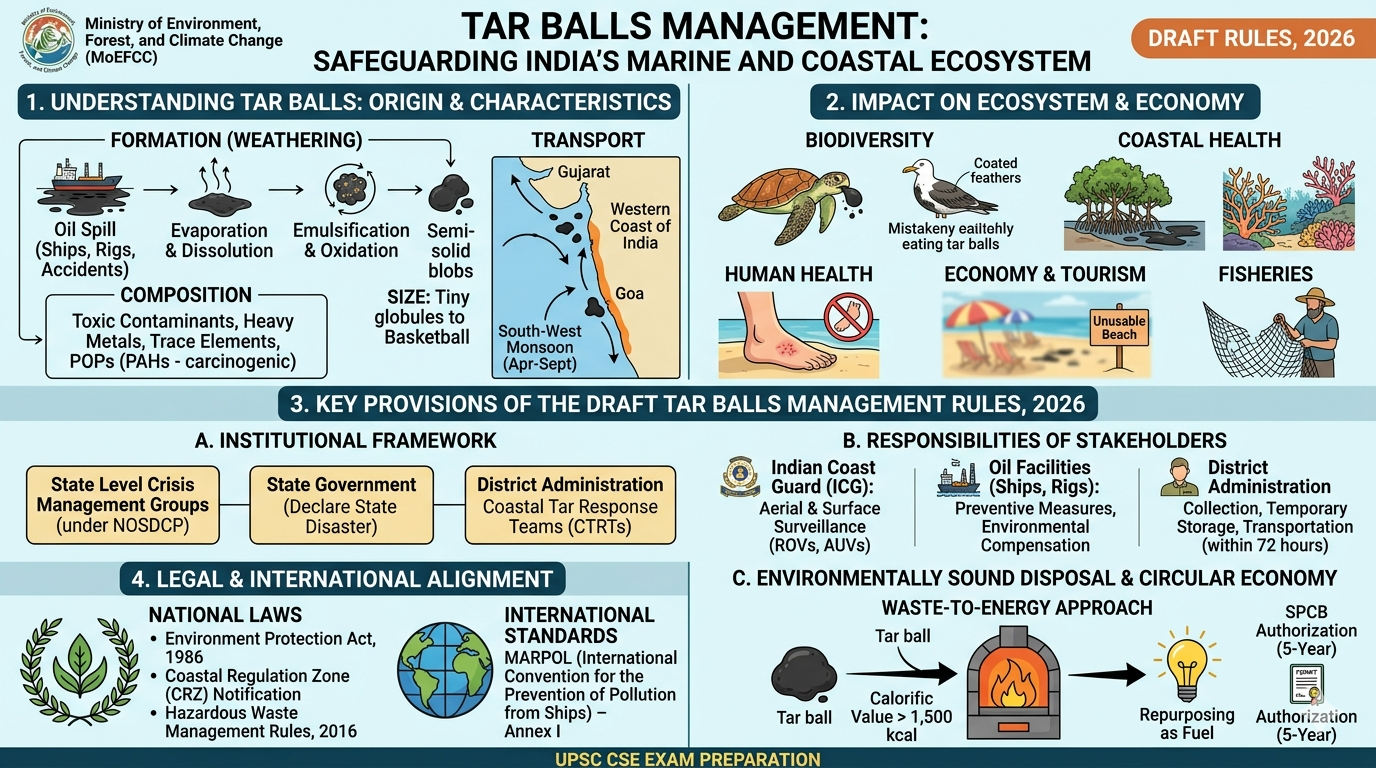
- 08 Apr 2026
In News:
Recently, the Ministry of Environment, Forest, and Climate Change (MoEFCC) introduced the Draft Tar Balls Management Rules, 2026. This marks India's first dedicated regulatory framework aimed at managing "tar balls"—a recurring environmental hazard that plagues the Indian coastline, particularly the western stretch from Gujarat to Goa.
Understanding Tar Balls: Origin and Characteristics
Tar balls are small, dark, sticky, and semi-solid blobs of weathered crude oil. They are the physical residue of oil spills or natural seeps that undergo various transformative processes in the ocean.
- Formation (Weathering): When oil is spilled (from ships, offshore rigs, or accidents), it undergoes physical, chemical, and biological changes. Lighter components evaporate or dissolve, while the heavier residue emulsifies with seawater and oxidizes, eventually hardening into lumps.
- Transport: These blobs are transported from the open sea to the shore by sea currents and waves.
- Size: They vary significantly in size, ranging from tiny globules to masses as large as a basketball.
- Composition: Tar balls are not just oil; they are concentrated reservoirs of toxic contaminants, including heavy metals, trace elements, and Persistent Organic Pollutants (POPs) like Polycyclic Aromatic Hydrocarbons (PAHs), which are carcinogenic.
Impact on Ecosystem and Economy
The seasonal appearance of tar balls, especially between April and September (linked to the South-West Monsoon), has severe multi-dimensional impacts:
- Biodiversity: Marine animals like sea turtles and fish often mistake tar balls for food, leading to ingestion and death. Seabirds get their feathers coated, hindering their ability to fly or regulate body temperature.
- Coastal Health: They contaminate intertidal zones, harming mangroves and coral reefs.
- Human Health: Exposure to tar balls on beaches can cause skin irritation and long-term health risks due to the presence of toxic contaminants.
- Economy & Tourism: India’s western coast is a global tourism hub. Tar ball deposition makes beaches unsightly and unusable, leading to significant revenue loss.
- Fisheries: Tar balls damage fishing nets and gear, impacting the livelihoods of coastal communities.
Key Provisions of the Draft Tar Balls Management Rules, 2026
The rules shift the approach from ad-hoc beach cleaning to a structured, institutionalized response based on the "Polluter Pays Principle."
A. Institutional Framework
- State Level Crisis Management Groups: To be formed under the National Oil Spill Disaster Contingency Plan (NOSDCP).
- Declaration of State Disaster: State governments are empowered to declare tar ball pollution as a "State Disaster" under the Disaster Management Act, ensuring a coordinated emergency response.
- Coastal Tar Response Teams (CTRTs): To be constituted by district administrations for rapid action.
B. Responsibilities of Stakeholders
- Indian Coast Guard (ICG): Tasked with aerial and surface surveillance using advanced technology like Remotely Operated Vehicles (ROVs) and Autonomous Underwater Vehicles (AUVs) to detect underwater oil plumes.
- Oil Facilities: Owners of ships, oil tankers, and offshore rigs are defined as "Oil Facilities." They must comply with the Merchant Shipping Act, 2025, and take preventive measures. Failure to do so attracts Environmental Compensation.
- District Administration: Responsible for the collection, temporary storage, and transportation of tar balls to treatment facilities within a 72-hour window of a sighting.
C. Environmentally Sound Disposal & Circular Economy
The rules emphasize a "waste-to-energy" approach:
- Repurposing as Fuel: Tar balls with a calorific value over 1,500 kcal can be used as an alternative fuel source in cement kilns.
- Authorization: Any entity handling or disposing of tar balls must obtain a 5-year authorization from the State Pollution Control Board (SPCB).
Legal and International Alignment
- National Laws: The rules derive authority from Section 3 of the Environment Protection Act, 1986. They also link with the Coastal Regulation Zone (CRZ) Notification and Hazardous Waste Management Rules, 2016.
- International Standards: The rules align India’s domestic policy with its obligations under MARPOL (International Convention for the Prevention of Pollution from Ships), specifically Annex I, which deals with oil pollution.
Challenges and Gaps
While the rules are a significant step forward, critics and experts point out certain gaps:
- Community Engagement: There is a lack of explicit provisions for "citizen science" or involving local fishing communities in monitoring.
- Digital Reporting: No mandated digital platform yet exists for real-time reporting by the public.
- Source Attribution: Identifying the exact vessel responsible for weathered tar balls remains a technical challenge, requiring advanced chemical fingerprinting.
INS Aridhaman
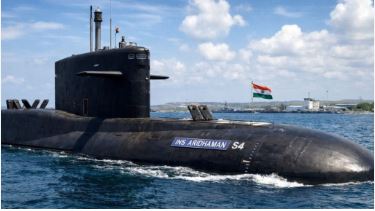
- 06 Apr 2026
In News:
In a milestone for India’s strategic autonomy, the Indian Navy has officially inducted INS Aridhaman, the nation’s third nuclear-powered ballistic missile submarine (SSBN). This induction marks a significant expansion of the Arihant-class fleet and cements India's position as one of the few nations capable of designing, building, and operating a credible underwater nuclear deterrent.
Strategic Significance: Completing the Nuclear Triad
The induction of INS Aridhaman is a critical component of India’s "No First Use" (NFU) nuclear doctrine. For a credible NFU policy, a robust survivable second-strike capability is essential.
- Nuclear Triad: With land-based missiles (Agni series) and air-launched weapons (Mirage/Rafale), the SSBN represents the third and most survivable leg of the triad.
- Undetectability: Unlike land silos or aircraft, nuclear submarines can remain submerged for months, making them nearly impossible to track or neutralize in a preemptive strike.
Technical Profile of INS Aridhaman
Developed under the secretive Advanced Technology Vessel (ATV) project at the Ship Building Centre in Visakhapatnam, INS Aridhaman is an evolutionary step forward from its predecessors, INS Arihant and INS Arighaat.
1. Design and Propulsion
- Classification: Submersible Ship Ballistic Nuclear (SSBN).
- Displacement: Approximately 6,000 tonnes on the surface, increasing to 7,000 tonnes when submerged.
- Power Plant: Driven by an indigenous 83 MW pressurized water reactor (PWR), developed by the Bhabha Atomic Research Centre (BARC) using enriched uranium.
2. Enhanced Survivability
- Acoustic Stealth: The submarine is equipped with anechoic tiles for acoustic damping, which absorb sonar waves and minimize the vessel's noise signature.
- Advanced Sensors: It features state-of-the-art indigenous sonar suites and electronic warfare systems to detect and evade enemy anti-submarine warfare (ASW) assets.
Armament and Strike Range
INS Aridhaman boasts a superior missile configuration compared to the lead ship of the class, allowing for more flexible strategic deployments.
- Vertical Launch System: It features eight vertical launch tubes, doubling the capacity of the earlier Arihant-class design.
- Missile Variants:
- K-15 (Sagarika): Short-to-medium range missiles with a reach of 750 km. The submarine can carry up to 24 of these.
- K-4 Missiles: Intermediate-range ballistic missiles with a strike range of 3,500 km. This enables the submarine to target deep inland targets from a safe distance in the Indian Ocean.
- Strategic Reach: The inclusion of the K-4 effectively gives India an intercontinental strike capability from the sea, providing a shield against regional adversaries.
The Evolution of the Arihant Class
|
Feature |
INS Arihant |
INS Arighaat |
INS Aridhaman |
|
Status |
Commissioned (2016) |
Commissioned (2024) |
Inducted (2026) |
|
Launch Tubes |
4 |
4 |
8 |
|
Primary Role |
Technology Demonstrator |
Operational SSBN |
Enhanced Strategic Deterrent |
Rongali Bihu

- 06 Apr 2026
In News:
In April 2026, the state of Assam is once again enveloped in the vibrant spirit of Rongali Bihu, also known as Bohag Bihu. As the premier festival of the Assamese people, it marks the beginning of the Assamese New Year and the arrival of the spring season. This festival is a quintessential representation of Assam's syncretic culture, transcending barriers of caste, creed, and religion.
The Three Dimensions of Bihu
To understand Rongali Bihu, one must place it within the annual cycle of the three Bihu festivals that dictate the rhythm of life in the Brahmaputra Valley:
|
Festival Name |
Alternative Name |
Month (Approx.) |
Significance |
|
Rongali Bihu |
Bohag Bihu |
April |
Celebrates the New Year, Spring, and the sowing season. |
|
Kati Bihu |
Kongali Bihu |
October |
A solemn occasion marking the growing season; prayers for crop protection. |
|
Magh Bihu |
Bhogali Bihu |
January |
The harvest festival; characterized by community feasting and bonfires. |
Significance of Rongali (Bohag) Bihu
The term ‘Rongali’ is derived from the Assamese word 'Rong', meaning joy or celebration. Unlike the thriftiness of Kati Bihu or the feast-centric Magh Bihu, Rongali Bihu is a week-long celebration of life, fertility, and nature’s renewal.
- Agricultural Link: It signals the commencement of the seeding time. Farmers seek blessings for a bountiful harvest.
- Cultural Identity: It serves as a platform for the display of traditional folk music and the world-renowned Bihu Dance, which was recently featured in the Guinness World Records for the largest performance.
- Social Cohesion: It is a secular festival where indigenous communities and various ethnic groups (Tibeto-Burman and Tai origins) unite to celebrate a shared Assamese identity.
Rituals and Traditions: The Seven Days of Bihu
While celebrations can last for a month, the first few days carry specific ritualistic weight:
- Goru Bihu (First Day): Dedicated to the welfare of livestock. Cattle are taken to rivers, bathed with turmeric and pulse paste (Maah-Halodhi), and stroked with sprigs of Makhiyati and Dighaloti to ward off insects.
- Manuh Bihu (Second Day): The "Bihu of the People." This is the official New Year's Day. People wear new clothes, seek blessings from elders, and exchange gifts.
- Huçori: Groups of elders and youth visit households to perform traditional carols and dances, offering blessings in exchange for small tokens of appreciation.
Material Culture and Attire
The festival is a showcase of Assam's rich textile heritage:
- The Attire: Women wear the Mekhela Chador, a two-piece traditional dress made from Pat (mulberry silk), Muga (golden silk), or cotton. Men typically wear Dhoti-Gamosa.
- The Gamocha (Bihuwaan): A hand-woven rectangular cotton cloth with red borders and floral motifs. During Bihu, it is gifted as a 'Bihuwaan'—a symbol of respect, love, and hospitality. The Gamocha has also been granted a Geographical Indication (GI) Tag.
- Traditional Delicacies: The celebration is incomplete without Larous (sweet balls) and Pithas (rice cakes) made of glutinous rice, coconut, and jaggery.
Musical Heritage
The atmosphere of Assam during Rongali Bihu is defined by the rhythmic beats of traditional instruments:
- Dhol: A barrel-shaped drum.
- Pepa: A hornpipe made from a buffalo horn.
- Gogona: A bamboo mouth organ.
- Toka: A bamboo clapper.
- Xutuli: A clay or bamboo whistle.
Kar Saathi

- 06 Apr 2026
In News:
In a significant step toward Digital India and "Minimum Government, Maximum Governance," the Income Tax Department has launched ‘Kar Saathi’. This initiative features a newly revamped website and an advanced AI-powered chatbot designed to simplify tax processes, enhance transparency, and foster a taxpayer-friendly environment.
The launch is particularly relevant as India transitions into the fiscal framework governed by the Income Tax Act, 2025, which aims to modernize direct tax administration.
What is Kar Saathi?
Kar Saathi (meaning "Tax Friend") is the Income Tax Department's dedicated AI Chatbot and virtual assistant. It is integrated directly into the department's official portal to provide seamless, round-the-clock assistance to millions of taxpayers across the country.
- Platform: A digital assistant embedded within the revamped income tax website.
- Availability: Accessible 24x7, ensuring that taxpayers can resolve queries outside of traditional office hours.
- Target Audience: Individual taxpayers, businesses, and professionals seeking clarity on direct tax compliance.
Core Objectives and Purpose
The primary philosophy behind Kar Saathi is to shift the tax department's role from a mere enforcement agency to a service-oriented facilitator.
- Simplifying Compliance: Navigating the complexities of the Income Tax Act, 2025 can be daunting; Kar Saathi breaks down legal jargon into actionable steps.
- Streamlining Procedures: It provides real-time guidance on critical tasks such as filing Income Tax Returns (ITR) and verifying tax status.
- Real-Time Query Resolution: Instead of waiting for manual support or navigating lengthy FAQ pages, users receive automated, instant responses to specific inquiries.
Key Features of the Kar Saathi Ecosystem
- Virtual Tax Assistant: Acts as a "one-stop solution" for taxpayers, covering the entire lifecycle of tax compliance—from registration to final filing.
- Step-by-Step Guidance: The tool can walk users through the selection of correct tax forms and the interpretation of updated tax provisions.
- Navigation Support: It assists users in finding specific tools, calculators, and links within the newly designed website, reducing the "drop-off" rate for digital filings.
- Direct Tax Focus: While primarily an ITR assistant, it is equipped to handle broader queries regarding direct tax rules and compliance mandates.
Significance for India’s Tax Administration
1. Promoting Voluntary Compliance
By reducing the "cost of compliance" (time and effort spent understanding rules), the government encourages more citizens to enter the formal tax net.
2. Reduction in Litigation
Misinterpretation of tax laws often leads to errors in filing and subsequent legal disputes. Kar Saathi provides standardized information, which can help minimize errors at the source.
3. Leveraging Emerging Technology
The use of Artificial Intelligence (AI) in Kar Saathi aligns with the National Strategy on AI. It demonstrates how the government can use Machine Learning to handle massive datasets and varied user queries efficiently.
Raja Ravi Varma

- 06 Apr 2026
In News:
In April 2026, the Indian art market witnessed a watershed moment when Raja Ravi Varma’s iconic oil painting, "Yashoda and Krishna," was sold for a record-breaking ?167.2 crore ($17.9 million) at a Saffronart auction in Mumbai.
- Significance: This sale established a new global benchmark, making it the most expensive work of Indian art ever sold at auction, surpassing the previous record held by M.F. Husain’s Untitled (Gram Yatra).
- The Work: Painted in the 1890s, the canvas depicts an intimate, domestic scene from the Shrimad Bhagavatam where an infant Krishna approaches his mother, Yashoda, as she milks a cow. It is celebrated for its mastery of chiaroscuro (the treatment of light and shade) and its ability to render the divine through a human lens.
About Raja Ravi Varma (1848–1906)
Born on April 29, 1848, in the village of Kilimanoor, Kerala, Raja Ravi Varma belonged to the family of the Koil Thampurans (chieftains). His artistic journey revolutionized Indian art by bridging the gap between traditional Indian aesthetics and Western academic techniques.
Artistic Style and Contribution
- Synthesis of Traditions: He is renowned for blending Hindu mythological themes with European Realism and Naturalism. This style is often referred to as "Academic Realism."
- Pioneer of Oil Painting: Varma was among the first Indian artists to adopt oil paints, a medium previously dominated by European artists in India.
- The "Mona Lisa of Indian Art": His works are characterized by their "everyday divinity," where gods and goddesses are depicted with human emotions, draped in rich silks and adorned with intricate jewelry.
Democratization of Art: The Lithographic Press
Ravi Varma’s greatest legacy lies in making art accessible to the masses:
- In 1894, he established the Ravi Varma Fine Arts Lithographic Press in Maharashtra (initially in Ghatkopar and later moved to Lonavala).
- By producing affordable oleographs (lithographic prints), he ensured that depictions of Hindu deities reached ordinary households, fundamentally shaping the visual imagination of modern India.
Notable Works
- Shakuntala Writing a Love Letter to Dushyanta
- Shri Rama Vanquishing the Sea
- Nair Lady Adorning Her Hair (Won the Governor’s Gold Medal in Madras, 1873, and a Certificate of Merit in Vienna).
Awards and Recognition
- Kaiser-i-Hind Gold Medal (1904): Awarded by Viceroy Lord Curzon on behalf of the British King Emperor for his contribution to the arts. It was during this time that he became popularly known as "Raja."
- International Acclaim: He won prestigious awards at exhibitions in Vienna (1873) and the World’s Columbian Exposition in Chicago (1893).
Legal and Heritage Status: "National Art Treasure"
Under the Antiquities and Art Treasures Act of 1972, Raja Ravi Varma is one of nine designated "National Treasure" artists.
- Implication: His works are considered "non-exportable." While they can be sold within India, they cannot be taken out of the country, ensuring that India’s cultural heritage remains within its borders.
RBI’s Crackdown on NDDs and Related Party Transactions
- 06 Apr 2026
In News:
In a strategic move to insulate the Indian Rupee (INR) from offshore speculative pressures and enhance corporate governance, the Reserve Bank of India (RBI) has introduced stringent restrictions on Non-Deliverable Derivative (NDD) contracts and Related Party Transactions (RPTs). These measures, effective from April 2026 (with immediate impacts on currency markets), aim to reinforce the primacy of the onshore market and ensure that financial instruments are used for genuine hedging rather than pure speculation.
Following the announcement, the Rupee exhibited a sharp recovery, rallying from historic lows below 95 to 93.10 against the US Dollar, demonstrating the market's positive reception to reduced volatility.
Understanding Non-Deliverable Derivatives (NDDs)
Definition: An NDD is a foreign exchange derivative contract used to hedge or speculate on currencies that are non-convertible or subject to capital controls (like the INR). Unlike standard derivatives, there is no physical exchange of the underlying currency.
Working Mechanism:
- Settlement: Contracts are settled strictly in a freely convertible currency, typically the US Dollar (USD).
- The "Fixing" Process: Parties agree on a "contract rate" and a "fixing date." On the fixing date, the difference between the agreed rate and the prevailing spot market rate is calculated.
- Cash Settlement: No "principal" is exchanged. The "loser" simply pays the "winner" the net difference in USD.
Key Features:
- Offshore Nature: Historically traded in global hubs like Singapore, London, Dubai, and Hong Kong to bypass domestic Indian regulations.
- Regulatory Arbitrage: These markets often operate outside the direct jurisdiction of the RBI, allowing offshore sentiment to diverge from domestic economic fundamentals.
Why has the RBI restricted NDDs?
The RBI’s intervention is prompted by several systemic risks identified in the offshore market:
- Curbing Currency Manipulation: Large offshore traders often take massive "short" positions against the Rupee during geopolitical tensions (e.g., the West Asia conflict), creating artificial downward pressure that spills over into the Indian onshore market.
- Distortion of Price Discovery: Offshore NDD markets frequently act as a "lead" indicator, influencing the opening rates of the INR before Indian markets even open, thus undermining the RBI's control over domestic exchange rates.
- Speculative Misuse: Many participants were found cancelling and re-entering contracts to exploit short-term price swings. By banning the rebooking of cancelled contracts, the RBI ensures these tools are used for their intended purpose: Hedging risk, not gambling on volatility.
- Stabilizing the Rupee: By restricting banks (Authorised Dealers) from offering NDDs to residents and non-residents alike, the RBI reduces the "leakage" of liquidity into unregulated speculative pools.
Restriction on Related Party Transactions (RPTs)
Parallel to the currency measures, the RBI has overhauled the framework for Related Party Transactions (effective April 1, 2026). This is a critical pillar of corporate governance in the banking and NBFC sectors.
- Objective: To prevent intra-group dealings from being used to hide true risk exposure, shift profits across jurisdictions, or engage in "circular financing."
- Broadened Definition: The RBI has expanded the definition of "Related Parties" to include promoters, directors, KMPs (Key Managerial Personnel), and shareholders with 10% or more equity, aligning with Ind AS 24 and global accounting standards.
- Materiality Thresholds: For the first time, specific monetary thresholds have been set (ranging from ?5 crore to ?50 crore depending on the bank’s asset size). Any transaction exceeding these limits requires approval from a high-level Board Committee.
- Governance Impact: By mandating that interested directors recuse themselves from decision-making, the RBI aims to boost investor confidence and ensure "arm's length" transparency.
Mission MITRA
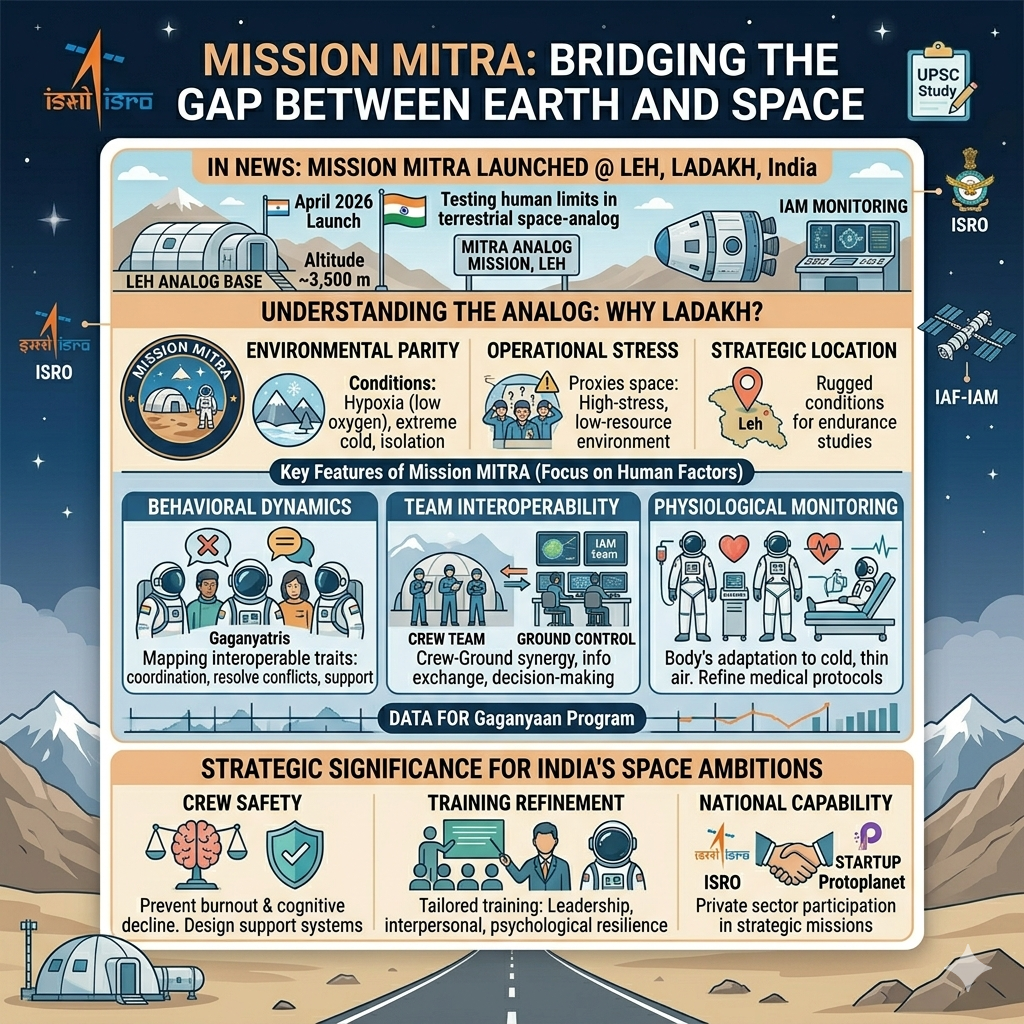
- 07 Apr 2026
In News:
Recently, the Indian Space Research Organisation (ISRO) launched Mission MITRA (Mapping of Interoperable Traits and Response Assessment) in Leh, Ladakh. This pioneering study, conducted in collaboration with the IAF-Institute of Aerospace Medicine (IAM), marks a critical step in India’s Gaganyaan program by testing the behavioral and physiological limits of astronauts in a terrestrial space-analog environment.
The Terrestrial Analog: Why Ladakh?
Space exploration is as much a psychological challenge as it is a technological one. To prepare for the vacuum of space, scientists utilize terrestrial analogues—locations on Earth that mimic space-like stressors.
- Environmental Parity: Situated at an altitude of approximately 3,500 meters, Leh offers conditions of hypoxia (low oxygen), extreme cold, and geographical isolation.
- Operational Stress: These rugged conditions serve as a natural proxy for the high-stress, low-resource environment of a spacecraft, allowing researchers to study human endurance without leaving Earth's atmosphere.
Core Objectives and Design
Mission MITRA is a first-of-its-kind multidisciplinary study focused on the "Human Factor" of spaceflight. It involves India's four designated Gaganyatris (astronauts) and a supporting team of scientists, engineers, medical doctors, and psychologists.
- Behavioral Dynamics: The mission maps interoperable traits—the ability of crew members to coordinate, resolve conflicts, and support one another under pressure.
- Team Interoperability: A key focus is the synergy between the Crew and Ground Control Teams, assessing how information is exchanged and how decision-making holds up under operational stress.
- Physiological Monitoring: Scientists track how the body adapts to freezing temperatures and thin air, providing data that will refine medical protocols for actual spaceflight.
Strategic Significance for India’s Space Ambitions
As India prepares for its first human spaceflight and eyes future long-duration missions to a space station or the Moon, the data from Mission MITRA is invaluable.
- Crew Safety: Understanding psychological resilience helps in designing better support systems to prevent "burnout" or cognitive decline during isolation.
- Training Refinement: Insights from this study will help the Human Space Flight Centre (HSFC) tailor training modules that move beyond physical fitness to include specialized interpersonal and leadership training.
- National Capability: Collaborative efforts with Indian startups like Protoplanet Pvt. Ltd. for facility management signify the growing participation of the private sector in India’s strategic space missions.
BioNEST
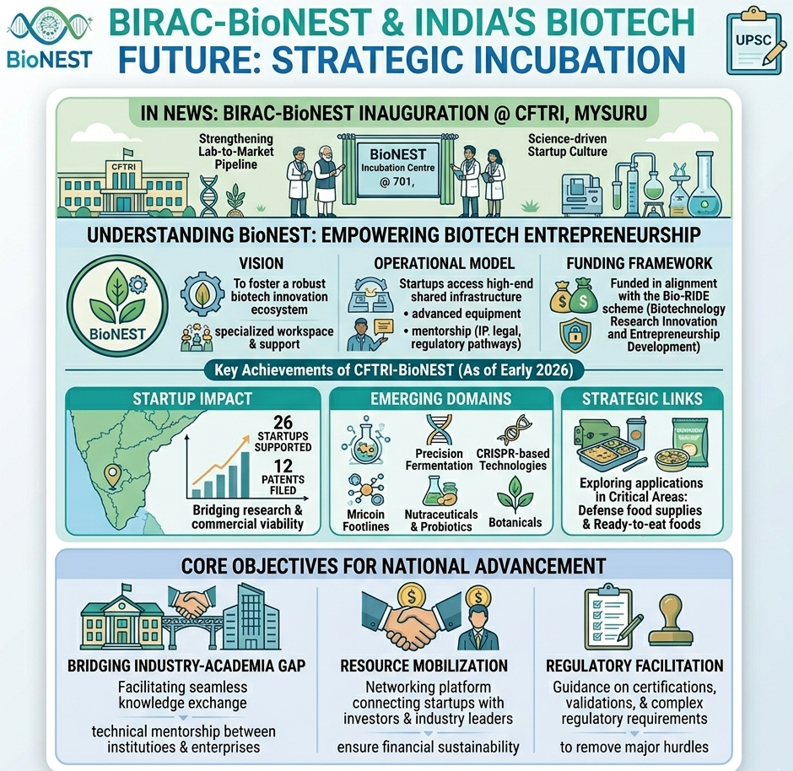
- 07 Apr 2026
In News:
In a significant stride toward strengthening India's "lab-to-market" pipeline, the Union Minister recently inaugurated the BIRAC-BioNEST Incubation Centre at the Central Food Technology & Research Institute (CFTRI) in Mysuru. This development, coinciding with CFTRI’s 75th anniversary, underscores the government's commitment to fostering a science-driven startup culture, particularly in the high-value food and biotechnology sectors.
Understanding BioNEST:
The Bioincubators Nurturing Entrepreneurship for Scaling Technologies (BioNEST) is a flagship scheme launched by the Biotechnology Industry Research Assistance Council (BIRAC), a Public Sector Enterprise under the Department of Biotechnology (DBT).
- Vision: To foster a robust biotech innovation ecosystem by providing specialized workspace and support to entrepreneurs.
- Operational Model: BioNEST centers offer startups access to high-end shared infrastructure, advanced equipment, and comprehensive mentorship spanning Intellectual Property (IP), legal frameworks, and regulatory pathways.
- Funding Framework: These centers are funded in alignment with the Bio-RIDE (Biotechnology Research Innovation and Entrepreneurship Development) scheme, the government's umbrella initiative for promoting biotech R&D and entrepreneurship.
The CFTRI-BioNEST Milestone: A Focus on Food Tech
The newly inaugurated center at CFTRI Mysuru is uniquely positioned to revolutionize the food processing landscape. As of early 2026, the ecosystem has already demonstrated tangible success:
- Startup Impact: The center has supported 26 startups, which have collectively filed 12 patents, bridging the gap between academic research and commercial viability.
- Emerging Domains: Innovation at the center is focused on cutting-edge fields such as precision fermentation, CRISPR-based technologies, nutraceuticals, probiotics, and botanicals.
- Strategic Links: Startups within this ecosystem are exploring applications in critical areas, including defense food supplies and high-growth segments like ready-to-eat convenience foods.
Core Objectives for National Advancement
The broader BioNEST scheme serves three primary functions essential for India’s economic and scientific growth:
- Bridging the Industry-Academia Gap: Facilitating seamless knowledge exchange and technical mentorship between research institutions and private enterprises.
- Resource Mobilization: Providing a networking platform that connects startups with investors and industry leaders to ensure financial sustainability.
- Regulatory Facilitation: Offering guidance on certifications, validations, and complex regulatory requirements, which are often major hurdles for biotech ventures.
S?dhana Saptah Initiative
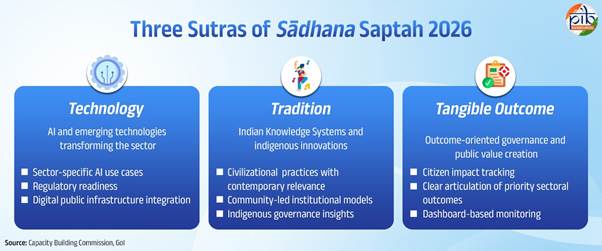
- 07 Apr 2026
In News:
The S?dhana Saptah (Strengthening Adaptive Development and Humane Aptitude for National Advancement) initiative, held from April 2 to April 8, 2026, represents a landmark in India’s administrative reforms. Organized by the Department of Personnel and Training (DoPT), the Capacity Building Commission (CBC), and Karmayogi Bharat, the event commemorates the foundation of the CBC and five years of Mission Karmayogi.
Mission Karmayogi: The Philosophical Bedrock
S?dhana Saptah is a flagship event under Mission Karmayogi (National Programme for Civil Services Capacity Building). This Central Sector Scheme seeks to shift the civil service paradigm from a "rule-based" to a "role-based" approach. The vision is to create a future-ready, transparent, and accountable bureaucracy equipped with the right competencies to achieve the goals of Viksit Bharat 2047.
The mission is supported by two critical pillars:
- Capacity Building Commission (CBC): Established in 2021, it acts as the custodian of the mission, designing frameworks and setting standards for all ministries.
- Karmayogi Bharat (SPV): A Special Purpose Vehicle set up in 2022 to operate the iGOT (Integrated Government Online Training) digital learning platform.
The Three Sutras of S?dhana Saptah
The 2026 initiative is structured around three foundational "Sutras" designed to modernize governance while remaining rooted in Indian values:
1. Technology (Focus: April 3–4) This theme explores how emerging tools can make governance more efficient and citizen-centric. Key areas include the application of Artificial Intelligence (AI) in policy making, utilizing Digital Public Infrastructure (DPI), data-informed decision-making, and mastering modern tools like prompt engineering and automation platforms.
2. Tradition (Focus: April 5–6) This pillar emphasizes the Indian Knowledge Systems (IKS) and ethical frameworks derived from Indian philosophy. It seeks to integrate historical examples of community-based governance into contemporary public administration to make it more attuned to the local needs of citizens.
3. Tangible Outcomes (Focus: April 7–8) The final focus is on accountability. It stresses the importance of measuring "public value," strengthening monitoring frameworks, and ensuring that policies translate into visible grassroots improvements. This includes tracking citizen impact and utilizing dashboard-based monitoring for real-time evaluation.
Key Initiatives Launched in 2026
To deepen the impact of capacity building, several specialized sub-programmes were introduced during the week:
- UNNATI Portal: The Unified New-Age National Training Institutions portal serves as a digital backbone, enabling real-time monitoring and collaboration across the training ecosystem.
- Karmayogi Kshamata Connect: Specifically targets frontline functionaries to improve digital awareness and the efficiency of service delivery.
- Rashtriya Jan Sewa Programme: Promotes the Sewa Bhav (spirit of service) by training youth volunteers and officials as facilitators.
- AI-Powered Amrit Gyaan Kosh Suite: Uses AI tools to analyze and integrate governance case studies into training modules for better problem-solving.
- Capacity Building for Viksit Panchayat: Strengthens grassroots governance through e-learning and AI enabled tools for local decision-makers.
- Administrative Capacity Building for Scientists: A specialized program for scientists transitioning into administrative and leadership roles.
Scale and Expected Impact
S?dhana Saptah has evolved into a massive national movement, involving over 100 Central Ministries, 36 States and Union Territories, and more than 250 Civil Services Training Institutions.
By the end of the week, every Ministry and Department is expected to commit to two priority technology interventions, two sector-relevant traditional models, and three measurable outcome commitments for the 2026–27 financial year. These are compiled into a cross-sectoral compendium covering ten identified sectors, ranging from Infrastructure and Security to Welfare and Agriculture.
Project Chetak
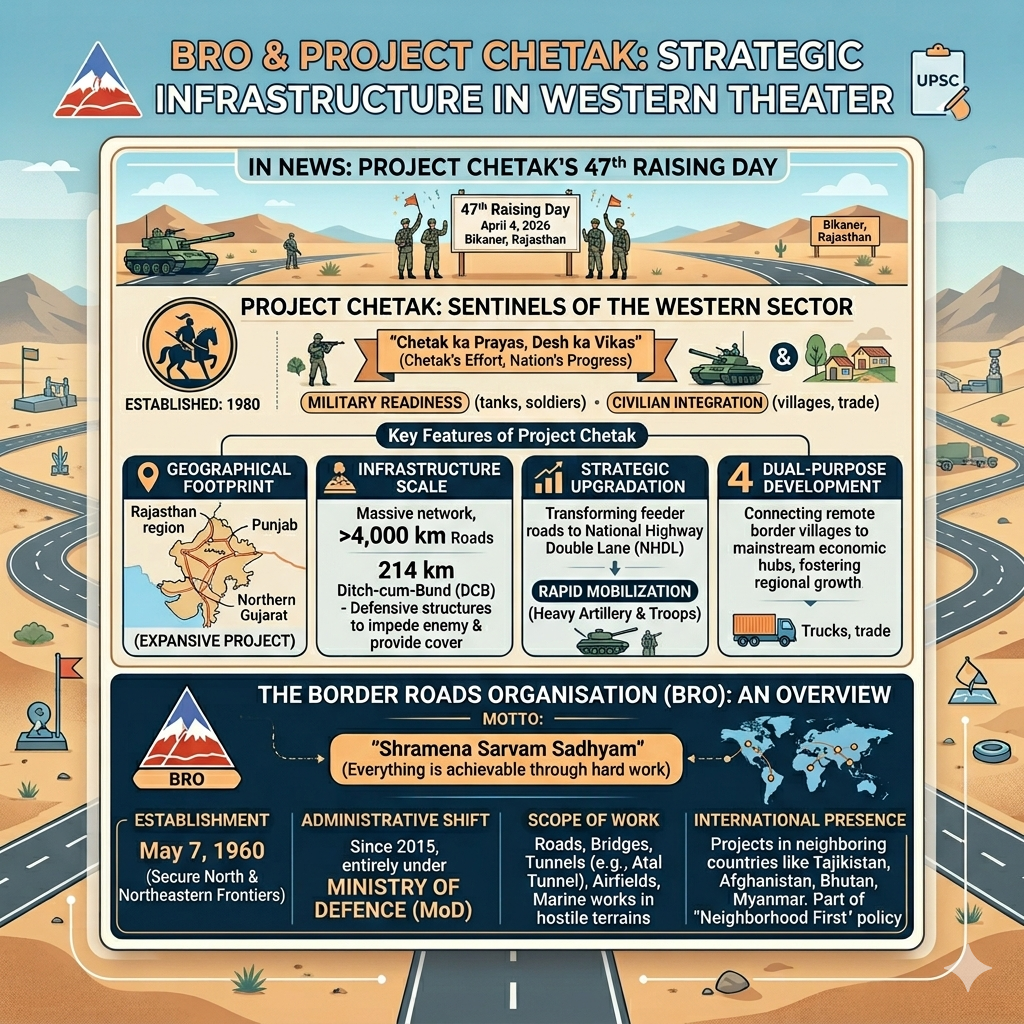
- 07 Apr 2026
In News:
The Border Roads Organisation (BRO) recently commemorated the 47th Raising Day of Project Chetak on April 4, 2026, in Bikaner, Rajasthan.
Project Chetak: Sentinels of the Western Sector
Established in 1980, Project Chetak is a cornerstone of India’s strategic infrastructure in the western theater. Operating under the motto "Chetak ka Prayas, Desh ka Vikas" (Chetak’s Effort, Nation’s Progress), the project is essential for both military readiness and civilian integration.
Key Features and Strategic Reach
- Geographical Footprint: It is one of the BRO’s most expansive projects, overseeing infrastructure in Rajasthan, Punjab, and Northern Gujarat.
- Infrastructure Scale: The project manages a massive network exceeding 4,000 km of roads and 214 km of Ditch-cum-Bund (DCB)—defensive structures designed to impede enemy movement while providing cover for Indian forces.
- Strategic Upgradation: A primary focus remains the conversion of vital feeder roads leading to the International Border into National Highway Double Lane (NHDL) specifications, ensuring rapid mobilization of heavy artillery and troops.
- Dual-Purpose Development: While its primary role is supporting the Indian Armed Forces, the project bridges the gap between remote border villages and mainstream economic hubs, fostering regional development.
The Border Roads Organisation (BRO): An Overview
The BRO serves as a premier construction executive force, specializing in the world's most hostile terrains.
- Establishment: Formed on May 7, 1960, to secure India's north and northeastern frontiers.
- Administrative Shift: Originally working under various ministries, the BRO was brought entirely under the Ministry of Defence (MoD) in 2015 to streamline strategic projects.
- Scope of Work: Its expertise extends beyond roads to include bridges, tunnels (e.g., Atal Tunnel), airfields, and marine works.
- International Presence: The BRO also executes projects in friendly neighboring countries (e.g., Tajikistan, Afghanistan, Bhutan, and Myanmar), serving as a tool for India’s "Neighborhood First" policy.
- Motto: “Shramena Sarvam Sadhyam” (Everything is achievable through hard work).
Coal Gasification Incentive Scheme
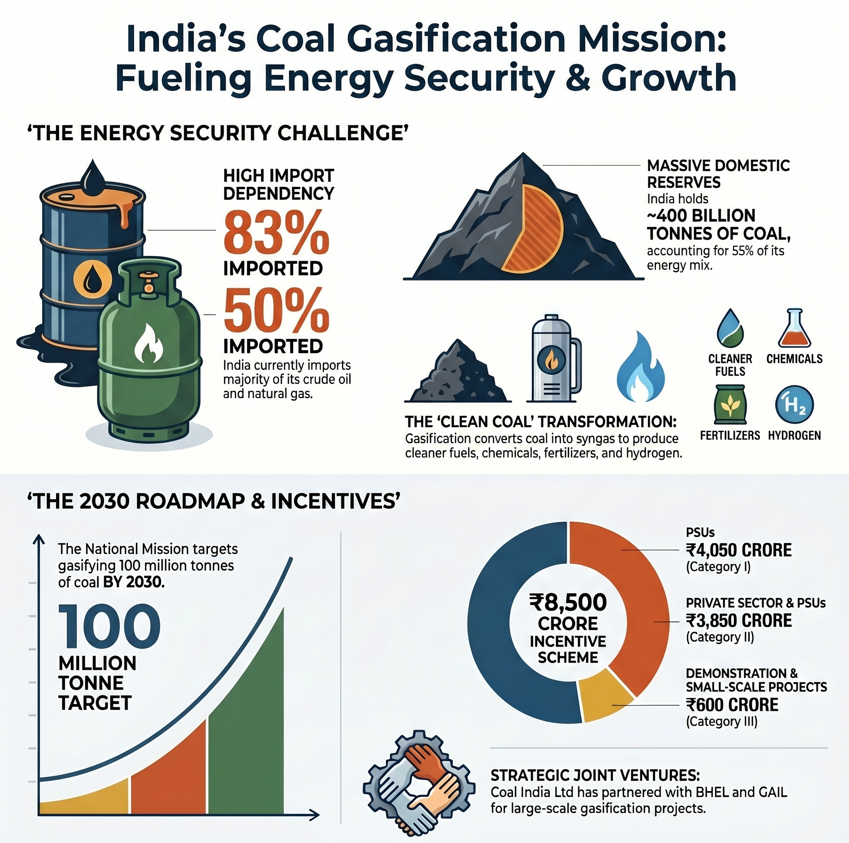
- 07 Apr 2026
In News:
India has unveiled an ambitious roadmap to reduce its dependency on imported petroleum, ammonia, and fertilizers through the promotion of coal gasification technology.
Overview and Objectives
- Approved by the Union Cabinet, the Coal Gasification Incentive Scheme allocates ?8,500 crore to promote coal and lignite gasification projects involving both public sector undertakings (PSUs) and private players.
- The scheme's primary target is to achieve 100 million tonnes of coal gasification by 2030, positioning it as a key component of India's clean coal transition strategy.
Project Categories
The scheme classifies projects into three categories:
|
Category |
Deion |
|
Category I |
PSU-led projects |
|
Category II |
Private sector and PSU joint projects |
|
Category III |
Demonstration and small-scale projects |
This tiered structure encourages participation across the spectrum—from large-scale industrial ventures to pilot projects that test emerging technologies.
Understanding Coal Gasification
The Process
Coal gasification is a thermo-chemical process that converts coal into syngas (synthetic gas), composed primarily of:
- Carbon monoxide (CO)
- Hydrogen (H?)
- Carbon dioxide (CO?)
- Methane (CH?)
- Water vapour (H?O)
The process involves reacting coal at high temperatures (1000–1400°C) with controlled amounts of oxygen and steam.
Steps in Coal Gasification
- Preparation — Coal is finely crushed to increase surface area for efficient reaction
- Gasification reactor — Powdered coal enters a reactor with limited oxygen/air and steam
- Chemical reactions — Partial oxidation breaks coal down into syngas components
- Gas cleaning — Impurities such as tar, sulfur, and dust are removed from raw syngas
Strategic Significance for India
Energy Security
By leveraging domestic coal reserves, India can substantially reduce its reliance on imported petroleum and related products, insulating the economy from global price volatility and supply disruptions.
Industrial Applications
The syngas produced through coal gasification serves as feedstock for manufacturing:
- Ammonia and fertilizers
- Methanol and synthetic fuels
- Chemicals and petrochemical intermediates
This diversification supports the broader goal of Atmanirbhar Bharat in critical industrial sectors.
Environmental Considerations
While coal gasification is positioned within the "clean coal" framework, it represents an incremental improvement over direct coal combustion. The technology enables:
- More efficient capture of pollutants during gas cleaning
- Potential integration with carbon capture technologies
- Controlled emissions compared to conventional coal use
Transitioning from LPG to PNG
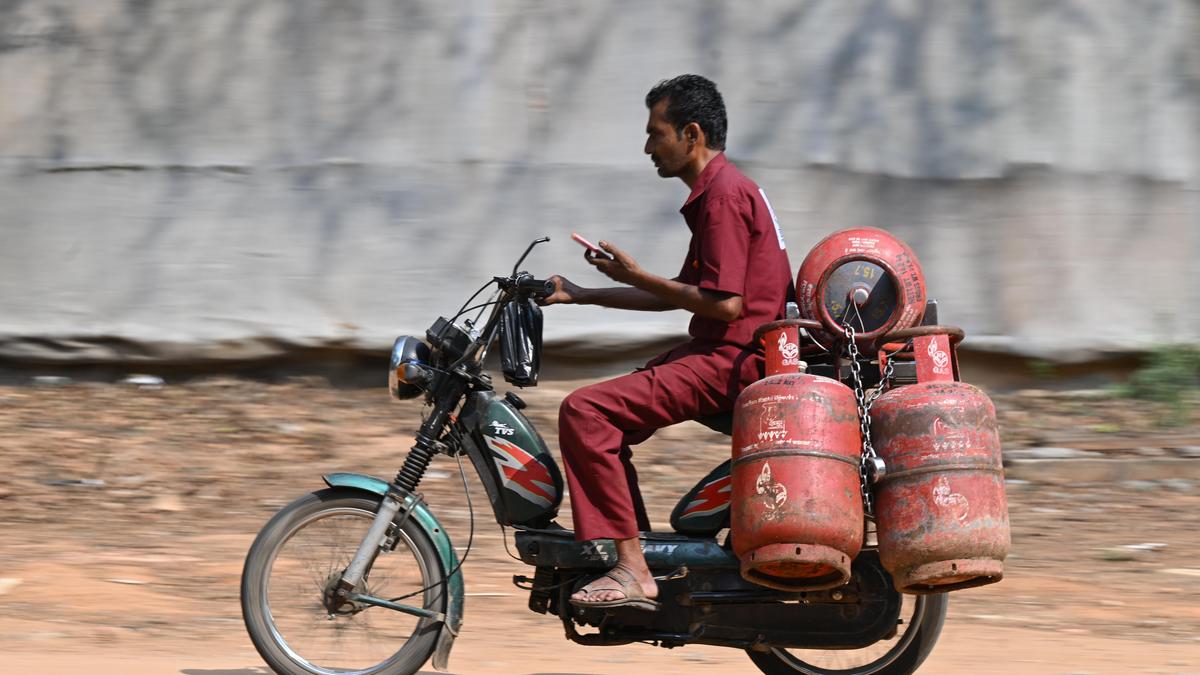
- 05 Apr 2026
In News:
India is currently witnessing a significant strategic shift in its domestic energy landscape, moving from the traditional Liquefied Petroleum Gas (LPG) cylinders to a Piped Natural Gas (PNG) network. While LPG has been the backbone of Indian kitchens for decades, recent geopolitical vulnerabilitiesmost notably the potential blockade of the Strait of Hormuzhave exposed the fragility of India's LPG supply chain, prompting the government to accelerate the "Piped Gas" mission.
Comparative Analysis: LPG vs. PNG
|
Feature |
Liquefied Petroleum Gas (LPG) |
Piped Natural Gas (PNG) |
|
Composition |
Primarily Propane and Butane. |
Primarily Methane. |
|
Physical State |
Liquefied under moderate pressure; heavier than air (settles on the floor during leaks). |
Gaseous at low pressure; lighter than air (disperses quickly if leaked). |
|
Logistics |
Distributed via pressurized cylinders; involves bottling plants and manual delivery. |
Distributed via a reticulated pipeline network (City Gas Distribution). |
|
Supply |
Requires periodic booking and physical delivery. |
Uninterrupted 24/7 supply, similar to water or electricity. |
|
Energy Value |
Higher calorific value (heats faster). |
More efficient for continuous flow; requires nozzle retrofitting for LPG stoves. |
Evolution of Domestic Cooking Fuel in India
- The LPG Journey: Introduced in 1955 in Mumbai by Burmah Shell, organized distribution began in 1965 with Indian Oil's Indane. The Pradhan Mantri Ujjwala Yojana (PMUY), launched in 2016 from Ballia, was a major milestone that scaled LPG access to nearly 33 crore connections, focusing on women’s health and rural empowerment.
- The PNG Pioneer:Vadodara became the first Indian city to implement a city-wide PNG network in the 1970s. Despite this early start, PNG penetration currently stands at only 1.5 crore connections.
- Future Targets: The government aims to expand PNG reach to 12 crore connections by 2034, potentially replacing a massive portion of the LPG market.
The Strategic Imperative: Import Dependence and Geopolitics
The push for PNG is largely driven by the need for Strategic Autonomy in energy:
- Supply Chain Vulnerability: India imports approximately 60% of its LPG. Crucially, 90% of these imports pass through the Strait of Hormuz. Recent regional instabilities have made this maritime chokepoint a major risk factor for India’s energy security.
- Domestic Production: Unlike LPG, where India remains heavily import-dependent, the country has significant domestic natural gas potential. Major contributors include the Krishna-Godavari (KG) Basin (the largest contributor), alongside fields in Assam and Tripura.
- Efficiency and Cost: While domestic LPG production has increased by 25% due to government measures, PNG offers a more cost-effective long-term solution by eliminating the heavy logistics costs (transportation and bottling) associated with cylinders.
Forms of Natural Gas: A Logistical Spectrum
Natural gas is utilized in various forms to suit different transportation and industrial needs:
- CNG (Compressed Natural Gas): Methane compressed to less than 1% of its volume. It is primarily used as a green fuel for the transportation sector (cars, buses).
- LNG (Liquefied Natural Gas): Natural gas cooled to -162°C, turning it into a liquid. This form is essential for long-distance trans-oceanic transport via specialized tankers before being regasified at terminals for pipeline distribution.
- PNG (Piped Natural Gas): The gaseous form delivered directly to the end-consumer (domestic or industrial) via pipelines.
Qdenga Vaccine for Dengue
- 05 Apr 2026
In News:
In a watershed moment for India's public health, the Drugs Controller General of India (DCGI), following a recommendation from the Subject Expert Committee (SEC), has approved Takeda's TAK-003 (brand name Qdenga). This marks India’s transition from a reactive model of vector control (fogging and sanitation) to a proactive, preventive immunization strategy against one of the world's most widespread mosquito-borne diseases.
Understanding Qdenga (TAK-003)
Qdenga is a live-attenuated tetravalent vaccine designed to protect against all four serotypes of the dengue virus (DENV-1, DENV-2, DENV-3, and DENV-4).
- Target Group: Approved for individuals aged 4 to 60 years.
- Scientific Backbone: The vaccine uses a weakened DENV-2 virus as its genetic skeleton, with surface proteins from the other three serotypes engineered into it.
- Administration: It is a two-dose regimen administered three months apart.
- A Major Advantage: Unlike the earlier vaccine Dengvaxia, Qdenga does not require pre-vaccination screening for prior infection. It can be safely administered to both "seropositive" (previously infected) and "seronegative" (never infected) individuals.
Clinical Significance and Limitations
While the approval is a historic milestone, health experts emphasize that the vaccine is a disease-modifying tool, not a "silver bullet."
- Efficacy Disparity: While highly effective against DENV-2 (due to its genetic backbone), its efficacy against DENV-3 and DENV-4 is significantly lower, especially in people who have never had dengue before.
- Severity vs. Infection: TAK-003 is primarily designed to reduce clinical severity, hospitalization, and death. It does not necessarily prevent a person from getting infected or eliminate the possibility of outbreaks.
- Shifting Epidemiology: In India, the prevalence of serotypes varies by region. Recent data shows a rise in DENV-3 (now contributing 20–30% of cases), which could potentially limit the vaccine's overall impact on the population level.
Challenges to Universal Rollout
For the vaccine to be integrated into India’s Universal Immunization Programme (UIP), several hurdles must be cleared:
- Affordability: The estimated cost of the full two-dose course is between ?6,000 and ?12,000. This poses a major barrier for low-income and rural populations without government subsidies.
- Real-world Data: The SEC has mandated post-marketing studies to track the vaccine's effectiveness across India’s diverse geographical regions and serotype patterns.
- Supply Chain: Maintaining the cold chain for a live-attenuated vaccine remains a logistical challenge in India's hotter climates.
The Indigenous Pipeline: "DengiAll"
While Qdenga provides an immediate solution, India is betting on domestic innovation for long-term sustainability. The Indian Council of Medical Research (ICMR) and Panacea Biotec are developing DengiAll.
- Status: Currently in Phase III clinical trials involving over 10,000 participants across 19 sites.
- Advantage: It aims for a more balanced immune response across all four serotypes and is being developed specifically for the Indian epidemiological context.
- Timeline: If successful, it could be available by 2027, potentially as a more affordable, single-dose alternative.
E20 Petrol

- 05 Apr 2026
In News:
India achieved a landmark in its energy transition by mandating the nationwide rollout of E20 petrol (20% ethanol blended with 80% petrol). Originally set for 2030, this target was advanced by five years through the National Biofuel Policy (revised 2022), underscoring India's urgency in tackling climate change and energy vulnerability.
As of April 2026, E20 has become the standard fuel available at gas stations across all states and Union Territories, marking the successful completion of one of the fastest fuel transitions in global history.
The Science and Composition of E20
E20 fuel is a sophisticated blend designed to optimize engine performance while utilizing renewable resources.
- Feedstock and Production: Ethanol is a 1G (first-generation) biofuel derived primarily from sugarcane, maize, and agricultural residues like damaged food grains and surplus rice. It is produced through fermentation and distillation processes.
- Octane Rating: One of the most significant technical upgrades is the shift in Research Octane Number (RON). While regular petrol typically ranges between 91–92 RON, E20 petrol carries a minimum rating of 95 RON.
- Performance: Higher octane levels prevent "engine knocking" (pre-ignition), leading to smoother combustion and better performance in high-compression modern engines.
Significance for India’s Strategic Interests
The E20 mandate serves three core pillars of national development:
1. Energy Security and Forex Savings
India currently imports over 85% of its crude oil requirements. By substituting 20% of petrol with domestically produced ethanol, India has saved more than ?1.36 lakh crore in foreign exchange (as of 2025). This reduces vulnerability to global supply shocks, such as those caused by ongoing geopolitical tensions in West Asia.
2. Strengthening the Agrarian Economy
The Ethanol Blended Petrol (EBP) Programme creates a "Waste-to-Wealth" circular economy:
- Direct Income: Between 2020 and 2025, the policy injected approximately ?45,000 crore into rural incomes, benefiting over 5 million sugarcane farmers and maize growers.
- Stabilizing Sugar Industry: By diverting surplus sugar to ethanol, mills can clear arrears to farmers more efficiently, preventing price crashes during bumper harvests.
3. Climate Commitments (NDCs)
Aligned with the Paris Agreement, the E20 shift has avoided approximately 700 lakh tonnes of $CO_2$ emissions. Ethanol carries more oxygen in its molecular structure, resulting in a cleaner burn that reduces carbon monoxide (CO) by nearly 30-50% and particulate matter by 15% compared to unblended petrol.
Vehicle Compatibility and Consumer Concerns
With the rollout, a key concern for the public is the compatibility of existing vehicle fleets.
- Post-2023 Vehicles: Most vehicles manufactured after April 2023 are designed to be E20-compliant (materially compatible with ethanol’s corrosive nature).
- Older Vehicles: Vehicles manufactured before 2023 can run on E20 but may experience a slight drop in fuel efficiency (estimated at 3-7%) because ethanol has a lower energy density than petrol.
- Corrosion Risks: Ethanol is hygroscopic (absorbs moisture), which can lead to rust in older steel tanks and the degradation of rubber hoses or plastic seals in non-compliant engines.
Institutional Framework and Policy Support
The transition is governed by a robust inter-ministerial mechanism:
- Nodal Agencies: Jointly implemented by the Ministry of Petroleum and Natural Gas (MoPNG) and the Bureau of Indian Standards (BIS) to ensure fuel quality.
- Incentives: The government reduced the GST on ethanol from 18% to 5% and introduced Interest Subvention Schemes to help set up distilleries.
- LTOAs: Oil Marketing Companies (OMCs) signed Long-Term Offtake Agreements to provide market certainty for ethanol producers.
Earthquake Lights

- 05 Apr 2026
In News:
Recent seismic activity in the Aegean Sea (late March to early April 2026), affecting parts of Turkey and Greece, has brought global attention to a rare atmospheric phenomenon known as Earthquake Lights (EQL).
What are Earthquake Lights?
Earthquake Lights are luminous atmospheric displays that appear in various forms—flashes, streaks, balls, or tall iridescent pillars. They can manifest before, during, or shortly after an earthquake.
- Forms: Luminous spheres, vertical beams, sheet lightning, or steady glows.
- Colors: Often pale blue (attributed to Rayleigh Scattering) but can include red, green, or white hues.
- Heat: These are "cold" lights; they produce visible plasma but no fire or heat.
The Science of Formation: From Tectonic Stress to Plasma
While scientists have debated the exact physical mechanisms for centuries, the most widely accepted theory involves the release of electrical energy from the Earth's crust:
- Lithospheric Stress: During an earthquake, tectonic plates grind together, exerting immense pressure on rocksparticularly those rich in quartz or igneous minerals.
- Activation of "P-Holes": This stress activates "p-holes" (charge carriers/positive holes). The rocks act like a natural battery, generating high-voltage electric charges.
- Upward Propagation: These charges travel rapidly toward the surface through geological conduits, specifically straight, vertical faults common in rift zones.
- Atmospheric Ionization: Upon reaching the surface, the charges interact with air molecules, stripping away electrons and ionizing the air.
- Plasma Discharge: This ionization creates a glowing plasma discharge in the atmosphere, similar to the gas in a neon sign or the Auroras, though triggered by terrestrial rather than solar energy.
Geological Context and Fault Systems
Research published in Seismological Research Letters highlights that approximately 97% of EQL cases occur in or near rift zone environments.
- Rift Zones: Areas where tectonic plates are pulling apart, creating sub-vertical faults.
- Conduits: These vertical faults act as "high-speed pathways" for electrical pulses to reach the surface.
- Precursors: Because the stress builds up before the actual slip of the fault, EQL can serve as a rare, visible pre-seismic warning signal.
Modern Monitoring and Research
- Satellite Tracking: NASA and the International Union of Radio Science (URSI) now use satellite sensors to track "energetic coupling", the process where electrical potentials from the crust couple with the lower atmosphere and ionosphere.
- Laboratory Verification: Scientists have successfully replicated these electrical effects by squeezing granite and other igneous rocks in controlled lab settings.
Multi-Hazard Early Warning Decision Support System (MHEW-DSS)
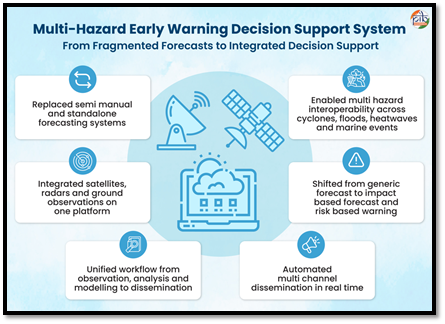
- 05 Apr 2026
In News:
The Multi-Hazard Early Warning Decision Support System (MHEW-DSS) represents a paradigm shift in India’s meteorological capabilities. Developed in-house by the India Meteorological Department (IMD) under the Ministry of Earth Sciences (MoES), it is a flagship digital transformation initiative under Mission Mausam. Launched officially in January 2024, the system transitions India from fragmented, manual forecasting to an integrated, automated, and impact-based warning regime.
Core Objectives and Vision
The primary goal of MHEW-DSS is to build an indigenous, real-time forecasting ecosystem that translates complex scientific data into actionable insights. It aligns with the government’s vision of a "Weather Ready and Climate Smart Nation," encapsulated in the philosophy “Har Har Mausam, Har Ghar Mausam.”
Key Features and Technological Innovations
The MHEW-DSS leverages open-source technology and Geographic Information System (GIS) maps to streamline the forecasting pipeline:
- Automation: Over 90% of weather data collection and quality checks are automated, enabling faster detection of weather systems.
- Enhanced Modeling: The system utilizes more than 95% of Numerical Weather Prediction (NWP) model inputs, a massive leap in data integration.
- Extended Lead Time: Forecast lead time has increased from 5 days to 7 days, providing authorities with a critical window for preparation.
- WAFES Core: The Weather Analysis and Forecast Enabling System (WAFES) serves as the central engine, allowing meteorologists to visualize weather conditions through GIS-based maps and generate real-time alerts.
Economic and Operational Impact
- The implementation of MHEW-DSS has yielded significant tangible benefits across various metrics. It has achieved a 30% improvement in forecast accuracy while reducing the time required to prepare forecasts by 50% (from 6 hours down to 3).
- From a fiscal perspective, the system has saved approximately ?250 crore by eliminating dependence on foreign vendors. Furthermore, the accuracy in predicting cyclone landfall points has reduced evacuation costs to one-third of what they were in 1999. Environmental sustainability is also a key byproduct; the digital workflow saves 23.4 tonnes of paper and approximately 210,240 kWh of electricity annually.
Case Study: Zero Casualty Success
- During Cyclone Biparjoy and Cyclone Dana, the precision of MHEW-DSS enabled timely evacuations, resulting in zero casualties in the affected regions of Gujarat and Odisha.
Sectoral Benefits: Impact-Based Forecasting
The system employs Impact-Based Forecasting, which assesses how weather affects specific socio-economic sectors rather than just predicting rain or wind levels.
- Agriculture: It provides twice-weekly Agromet advisories. Farmers adopting these reports have seen a 52.5% increase in annual income, with potential economic benefits in rain-fed districts estimated at ?13,331 crore.
- Public Health: The system supports Heat Action Plans and aids in predicting vector-borne diseases like Dengue and Malaria by analyzing weather patterns.
- Energy: It optimizes renewable energy planning (Solar/Wind) and protects grid infrastructure from extreme events through early warnings.
- Last-Mile Connectivity (Mausamgram): This hyper-local portal provides location-specific forecasts for over 6.2 lakh villages and 1.5 lakh pin codes, ensuring the most remote citizens are reached.
Institutional Framework
The MHEW-DSS ecosystem is supported by three major pillars:
- Ministry of Earth Sciences (MoES): The nodal ministry providing administrative and scientific oversight.
- India Meteorological Department (IMD): The operational lead responsible for data generation and dissemination.
- Mission Mausam: The strategic umbrella (approved Sept 2024) that funds and guides the enhancement of observation networks, data assimilation, and modeling.
Antariksh Venture Capital Fund
- 04 Apr 2026
In News:
Recently, the Union Minister announced that India’s dedicated Antariksh Venture Capital Fund has achieved steady progress, with the deployment of capital into selected startups scheduled to commence in the first quarter of FY2027. This initiative marks a strategic shift from a purely state-led space program to a vibrant, public-private partnership model, aimed at capturing a larger share of the global space economy.
The Antariksh Venture Capital Fund: Financial Architecture
The fund is designed to bridge the "valley of death" for capital-intensive space startups by providing stable, long-term equity.
- Regulatory Structure: It is a close-ended fund registered with the Securities and Exchange Board of India (SEBI) as a Category II Alternative Investment Fund (AIF).
- Key Stakeholders:
- Investor: The Indian National Space Promotion and Authorization Centre (IN-SPACe), under the Department of Space.
- Sponsor: The fund is sponsored by SIDBI Venture Capital Limited, leveraging SIDBI’s expertise in managing professional investment vehicles.
- Investment Mandate: The fund exclusively targets Indian companies operating in the space sector. Crucially, it focuses on firms with a Technology Readiness Level (TRL) of 4 and above, ensuring that investments are directed toward proven concepts moving toward commercialization.
IN-SPACe: The Institutional Catalyst
The Indian National Space Promotion and Authorization Centre (IN-SPACe)serves as the backbone of these reforms. Established as a single-window, independent nodal agency, it functions autonomously under the Department of Space (DOS).
Core Functions:
- Authorization & Supervision: It authorizes and oversees the activities of Non-Governmental Entities (NGEs), including the construction of launch vehicles and satellites.
- Infrastructure Sharing: It facilitates the use of ISRO’s world-class infrastructure and premises by private players.
- Interface Role: Acts as a bridge between the technical expertise of ISRO and the commercial agility of NGEs to optimize India's space resources.
Organizational Structure: The agency operates through three specialized directorates:
- Promotion Directorate (PD): Focused on market development and startup handholding.
- Technical Directorate (TD): Handles the technical vetting and support of private projects.
- Program Management and Authorization Directorate (PMAD): Manages the regulatory and licensing aspects.
Strategic Objectives: Beyond Just Capital
The Antariksh Fund is not merely a financial tool; it is a strategic instrument for Aatmanirbhar Bharat:
- Scaling Operations: It provides the "patient capital" required for startups to transition from prototypes to industrial-scale production.
- Commercialization: Supports the market entry of indigenous technologies like small satellite launch vehicles (SSLVs) and satellite-based internet services.
- Global Ambitions: Aims to increase India’s share in the global space market (currently ~2%) by empowering domestic companies to compete internationally.
Samrat Samprati
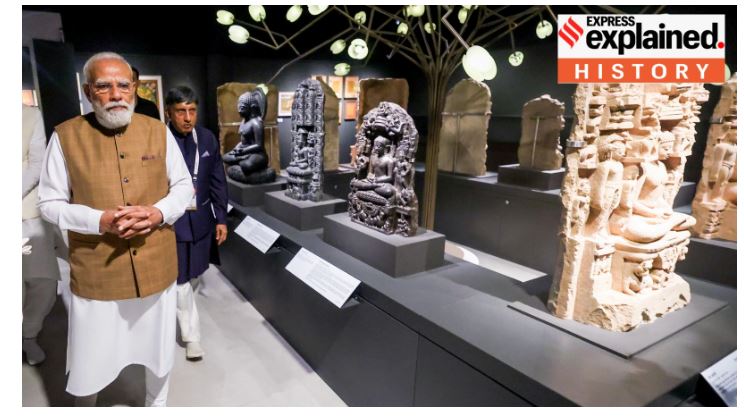
- 04 Apr 2026
In News:
Recently, the Prime Minister of India inaugurated the Samrat Samprati Museum in Gujarat. This developmental milestone, alongside the launch of high-tech semiconductor facilities, highlights a dual focus on India’s "Vikas" (Development) and "Virasat" (Heritage). The museum serves to institutionalize the legacy of a Mauryan ruler often overshadowed by his grandfather, Samrat Ashoka, yet pivotal to the religious geography of ancient India.
Samrat Samprati: The 'Jain Ashoka' (224–215 BC)
Samrat Samprati was the grandson of the Mauryan Emperor Ashoka. While Ashoka is synonymous with the global spread of Buddhism, Samprati is revered for his unparalleled contribution to the expansion of Jainism.
- Historical Identity: In various historical and literary records, he is referred to by names such as Indrapalit, Sangat, and Vigatashok.
- Literary Sources: Detailed accounts of his life and administration are found in prominent Jain ures, including the ‘Sampratikatha’, Hemachandra’s ‘Parishistaparva’, and the ‘Prabhavakcharita’.
- Cultural Expansion: Samprati’s influence was not limited to the Indian subcontinent. Historical traditions suggest he established centers of Jain culture as far west as Iran and Arab countries, marking an early instance of Indian cultural diplomacy.
- Architectural Legacy: Much like Ashoka’s pillars and stupas, Samprati is credited with building thousands of Jain temples across Western and Southern India, earning him the title of the "Jain Ashoka."
Foundational Tenets of Jainism (Sramana Tradition)
To understand Samprati’s patronage, it is essential to analyze the Sramanic roots of Jainism—a tradition that emphasizes asceticism and individual effort over ritualistic orthodoxy.
- The Tirthankara Lineage: Jainism is guided by twenty-four Tirthankaras (Ford-makers), who are believed to have established a path across the ocean of rebirth. While Vardhamana Mahavira was the 24th and most prominent teacher, the religion views its wisdom as eternal and handed down through this lineage.
- The Goal of Liberation: The central objective of Jainism is the attainment of Moksha (Nirvana)—liberation from the cycle of birth and death.
The Triple Gems and Ethical Vows
Jainism prescribes a rigorous ethical code categorized into principles for spiritual progress and rules for daily conduct.
The Triratna (Three Jewels): According to Jainism, liberation is achieved through the harmony of:
- Samyakdarshana (Right Faith): Conviction in the truth of the teachings.
- Samyakjnana (Right Knowledge): Clear and precise understanding of reality.
- Samyakcharita (Right Action): Implementing truth through ethical conduct.
The Panchamahavratas (Five Great Vows): These are the strict ethical guidelines followed by Jain monks (and in a modified form by laypeople):
- Ahimsa: Non-violence (the cornerstone of Samprati’s administration).
- Satya: Truthfulness.
- Asteya: Non-stealing.
- Aparigraha: Non-attachment/Non-hoarding.
- Brahmacharya: Celibacy/Chastity.
Rice's Whale
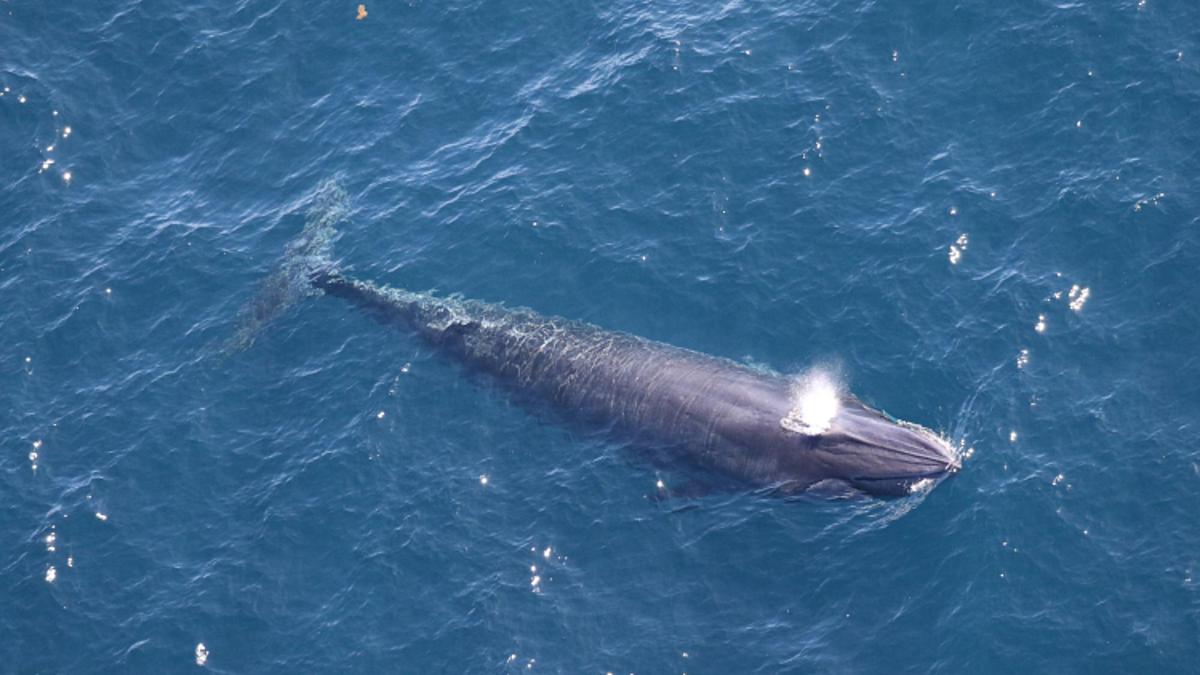
- 04 Apr 2026
In News:
Scientists fear that the USA administration's plan to expand oil drilling in the Gulf of Mexico will push Rice's Whales to extinction.
Biological Profile: The Rice’s Whale (Balaenoptera ricei)
Recognized as a distinct species only in 2021, the Rice’s whale is an evolutionary marvel unique to the waters of North America.
- Taxonomy: Member of the baleen whale family (Balaenopteridae). It was previously misclassified as a sub-population of the Bryde’s whale but was found to be genetically and morphologically distinct.
- Distinctive Features:
- Identified by three prominent ridges in front of the blowhole.
- Medium-sized body (up to 41 feet), uniformly dark gray on top with a pale to pinkish belly.
- Endemic Distribution: It is the only whale species that resides year-round in the Gulf of Mexico (often referred to in conservation texts as the Gulf of America). They are typically found in a narrow "core habitat" at depths of 100–400 meters in the northeastern Gulf.
- Diet and Reproduction: They primarily consume silver-rag driftfish and reach sexual maturity late (age 9), reproducing only once every 2 to 3 years, which makes population recovery exceptionally slow.
Major Threats to Survival
The Rice's whale faces a "polycrisis" of anthropogenic threats:
- Oil Spills: The species never fully recovered from the 2010 Deepwater Horizon spill, which contaminated nearly 50% of its habitat and caused a 22% population decline.
- Noise Pollution: Seismic airgun blasting for oil exploration interferes with the whales' low-frequency communication and echolocation, disrupting their ability to find food.
- Vessel Strikes: Because these whales often rest near the surface at night, they are highly susceptible to being struck by high-speed industrial ships.
- Climate Change: Rising sea temperatures affect the distribution of their specialized prey, potentially forcing the whales out of protected areas into busier shipping lanes.
Conservation Status and International Protections
- IUCN Red List: Critically Endangered.
- ESA (USA): Listed as Endangered (though current exemptions threaten this status).
- CITES: Listed under Appendix I (the highest level of protection, prohibiting international trade).
- MMPA (USA): Classified as "Depleted" under the Marine Mammal Protection Act.
Survey Vessel Sanshodhak
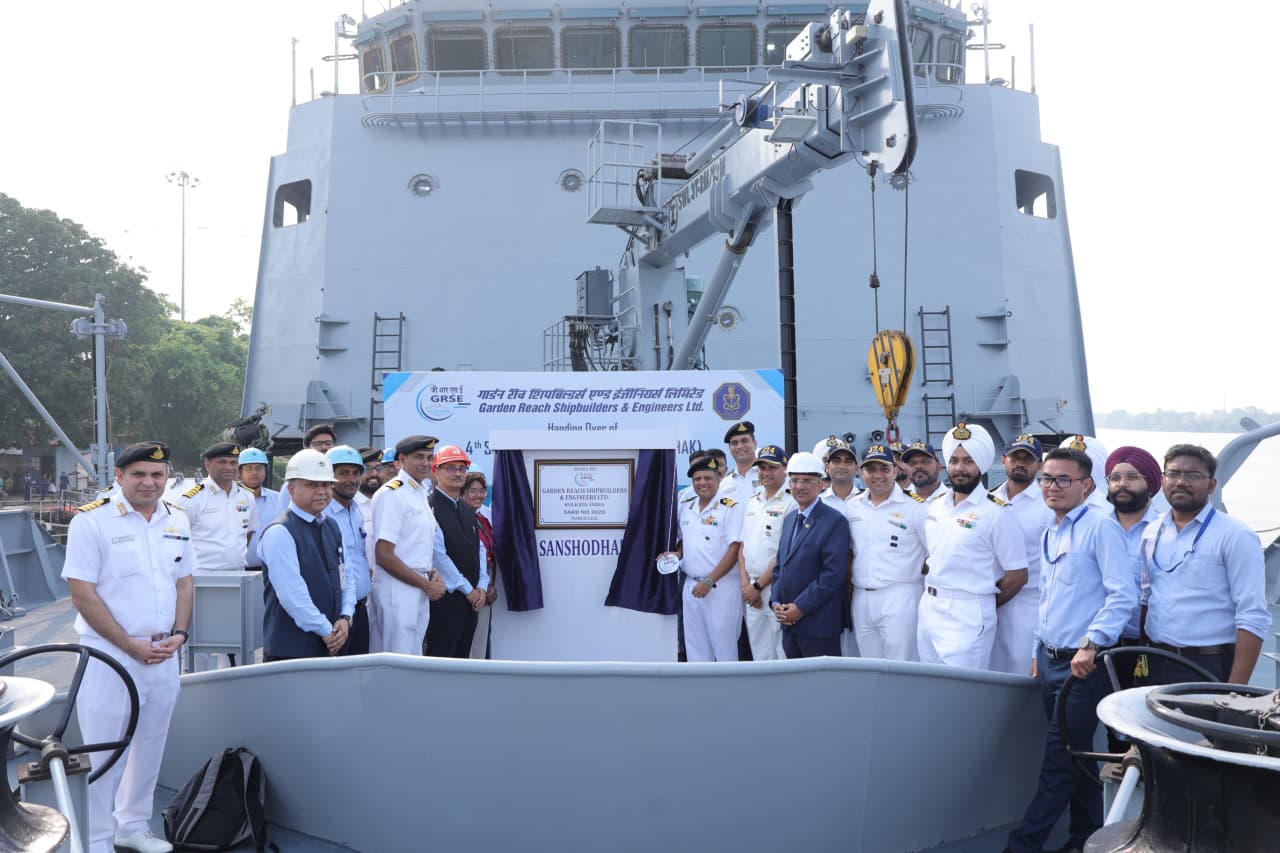
- 04 Apr 2026
In News:
In a significant boost to India’s maritime survey capabilities, the Indian Navy has officially received ‘Sanshodhak’ (Yard 3028), the fourth and final vessel of the Survey Vessel (Large) (SVL) project. This delivery marks the successful completion of a strategic shipbuilding program designed to replace aging platforms with state-of-the-art indigenous technology, reinforcing India's commitment to Aatmanirbhar Bharat.
The SVL Project: Evolution and Fleet
The SVL project was initiated through a contract signed in October 2018 between the Ministry of Defence and Garden Reach Shipbuilders and Engineers (GRSE), Kolkata. The project aimed to modernize the Navy's hydrographic fleet by constructing four large-scale survey ships.
- The Fleet Composition: Sanshodhak joins its three sister ships—INS Sandhayak, INS Nirdeshak, and INS Ikshak, to provide the Navy with a complete quartet of modern survey platforms.
- Etymology: The name ‘Sanshodhak’ translates to ‘Researcher’, a title that reflects the ship's primary function as a high-tech platform for underwater data collection and oceanographic analysis.
Technical Specifications and Indigenization
Designed by the Indian Navy’s Warship Design Bureau, the ship stands as a symbol of domestic engineering prowess.
- Dimensions and Displacement: The vessel measures 110 meters in length and has a displacement of approximately 3,400 tons.
- Propulsion and Speed: It is powered by two diesel engines, enabling the ship to reach speeds in excess of 18 knots.
- Indigenous Content: A standout feature for governance and economy modules is that the ship boasts over 80% indigenous content by cost. This involved collaboration with a vast network of Indian industries and MSMEs, stimulating the domestic defense-industrial ecosystem.
Advanced Capabilities: The "Eyes" of the Ocean
Sanshodhak is equipped with a sophisticated suite of sensors and equipment to map the depths of the Indian Ocean Region (IOR).
- Autonomous Systems: It carries Autonomous Underwater Vehicles (AUVs) and Remotely Operated Vehicles (ROVs), allowing for deep-sea exploration without putting divers at risk.
- Sonar and Imaging: The vessel features Digital Side Scan Sonar for high-resolution underwater imaging and a comprehensive Data Acquisition and Processing System to analyze geophysical data in real-time.
- Positioning: High-precision DGPS long-range positioning systems ensure the vessel can map the seabed with centimeter-level accuracy.
Strategic and Civil Applications
The data collected by Sanshodhak serves a dual-purpose, making it a vital asset for both national security and economic development.
- Hydrographic Surveys: It performs full-scale surveys of coastal and deep-water regions, specifically targeting port and harbor approaches.
- Navigational Safety: By determining critical navigational channels, the ship ensures safe passage for both naval warships and commercial merchant vessels.
- Oceanographic Research: It gathers vital oceanographic and geophysical data essential for understanding climate change, marine biology, and underwater topography.
- Defense and Civil Synergy: While the data is used for naval operations, it is also utilized for maritime trade, environmental research, and supporting the Blue Economy.
GLP-1 Drugs
- 04 Apr 2026
In News:
The Indian government intensified its oversight of the pharmaceutical market following a surge in the availability of Glucagon-like peptide-1 (GLP-1) receptor agonists. Originally expensive, patented drugs, the recent expiration of key patents (like Semaglutide) has led to a flood of affordable generic versions. While this democratizes treatment for chronic conditions, it has also triggered a "quiet frenzy" of off-label use for rapid weight loss, prompting the Central Drugs Standard Control Organisation (CDSCO) to conduct nationwide inspections across 49 businesses.
What are GLP-1 Drugs?
GLP-1 receptor agonists are a class of medications that mimic a natural hormone produced in the intestines.
- Mechanism of Action:
- Insulin Stimulation: They signal the pancreas to release insulin and suppress glucagon in response to rising blood glucose levels.
- Appetite Regulation: They target the brain’s hypothalamus to regulate satiety (the feeling of fullness).
- Gastric Emptying: They slow down the movement of food through the stomach, prolonging the sensation of satiety.
- Primary Indications: Developed originally by global giants like Novo Nordisk and Eli Lilly, these are FDA and CDSCO-approved for Type 2 Diabetes mellitus and the medical management of chronic obesity.
- Key Molecules: Semaglutide (oral/injectable), Liraglutide, Tirzepatide, and Dulaglutide.
The "Generic Boom" and Economic Impact
The Indian market for obesity drugs is projected to grow from ?1,500 crore to ?8,000 crore by 2030.
- Price Crash: Leading Indian firms have slashed prices significantlysome by over 50%to as low as ?3,999 per month.
- Market Dynamics: The expiration of patent protection has allowed domestic manufacturers to launch biosimilars and generics, making India a global hub for these "lifestyle-altering" medications.
Regulatory Framework and Government Response
Due to the high risk of misuse, the Government of India has classified these as Preion-Only Medicines.
- Authorized Prescribers: To prevent indiscriminate use, only Endocrinologists, Internal Medicine Specialists, and Cardiologists are authorized to prescribe these drugs.
- Central and State Coordination: The Drug Controller General of India (DCGI), in collaboration with State Drug Controllers, has implemented a three-pronged strategy:
- Nationwide Audits: Inspections of online pharmacy warehouses, drug wholesalers, and wellness clinics to check for sales without valid preions.
- Ban on Surrogate Advertising: On March 10, 2026, the CDSCO issued a comprehensive advisory prohibiting indirect promotion and misleading advertisements that frame these as "quick-fix" cosmetic solutions.
- Post-Marketing Surveillance: The Indian Pharmacopoeia Commission (IPC) has been tasked with compiling bi-monthly reports on "Adverse Events" to monitor long-term safety.
Public Health Risks: Misuse and Side Effects
The trend of viewing GLP-1 drugs as "lifestyle products" rather than clinical medication has raised alarms among the medical fraternity (including the Indian Medical Association).
- Common Side Effects: Nausea, vomiting, diarrhea, and constipation.
- Severe Complications: Rare but serious risks include pancreatitis, kidney injury, gallbladder disease, and delayed gastric emptying (gastroparesis).
- "Ozempic Face": Rapid weight loss leading to facial fat depletion and skin sagging.
- Rebound Effect: Without supervised lifestyle changes, patients often face "rebound weight gain" immediately after discontinuation.
Nyaya Setu AI Chatbot
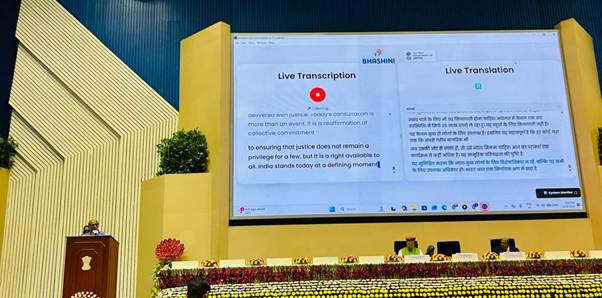
- 03 Apr 2026
In News:
In March 2026, the Vice-President of India, along with the Minister of Law and Justice, unveiled the Nyaya Setu AI Chatbot and its mascot, Dishika, during a national consultation for the DISHA programme. This initiative is designed to democratize legal information, ensuring that geographical, linguistic, and literacy barriers do not impede a citizen's access to the justice system.
Understanding Nyaya Setu: The AI Legal Bridge
Nyaya Setu is a voice-first, multimodal, and multilingual AI assistant. It acts as a digital intermediary that translates complex legal jargon and procedures into simplified, actionable guidance for the common man.
- Development: The platform is a turnkey implementation built and owned by the Digital India BHASHINI Division (DIBD) under the Ministry of Electronics and Information Technology (MeitY).
- The AI Stack: It utilizes an integrated end-to-end voice stack, featuring:
- BHASHINI ASR (Automatic Speech Recognition): To understand diverse Indian accents and spoken queries.
- Natural Language Processing (NLP): To provide context-aware, conversational responses.
- Legal Guardrails: The AI is specifically trained on the Bharatiya Nyaya Sanhita (BNS) and other legal frameworks to ensure responses are legally accurate and safe.
Key Features of the Chatbot
- Linguistic Inclusivity: Supports 36 text languages and 23 voice languages, including complex tribal dialects, catering to India’s diverse demographic.
- User-Centric Design: By prioritizing voice interactions, it assists those who may struggle with formal literacy or digital navigation.
- Scale and Speed: Managed by the National Hub for Language Technology (NHLT), it is capable of processing millions of inferences daily, providing real-time legal guidance.
Dishika: The "Friendly" Face of Justice
To make the digital experience less intimidating, the government introduced Dishika, the official mascot of Nyaya Setu.
- Role: Dishika serves as a digital guide, leading users through their legal queries and explaining the "next steps" in a simplified manner.
- Objective: The mascot is a trust-building tool aimed at rural and digitally underserved populations, transforming a cold AI interface into a relatable digital presence.
Integration with the DISHA Programme
Nyaya Setu is a component of the broader DISHA (Designing Innovative Solutions for Holistic Access to Justice) scheme.
- Context: DISHA is a central sector scheme (2021–2026) that consolidates various legal aid initiatives like Tele-Law, Nyaya Bandhu (Pro-bono services), and Legal Literacy programmes.
- Synergy: While Tele-Law connects citizens with lawyers, Nyaya Setu provides immediate, preliminary legal awareness and procedural information, acting as a "pre-litigation" digital tool.
Indian Accounting Standards (Ind AS)
- 03 Apr 2026
In News:
In March 2026, the Insurance Regulatory and Development Authority of India (IRDAI) notified a comprehensive roadmap for the implementation of Indian Accounting Standards (Ind AS) across the insurance sector. Effective from April 1, 2026, this transition marks the end of the traditional Indian GAAP (Generally Accepted Accounting Principles) era for insurers, aligning them with global financial reporting norms
Key Features and Implications of the Ind AS Framework
Indian Accounting Standards (Ind AS) are a set of accounting principles notified by the Ministry of Corporate Affairs (MCA) in 2015. They are largely converged with the International Financial Reporting Standards (IFRS).
The transition to Ind AS is not merely a bookkeeping change but a structural shift in how financial health is perceived in the industry:
- Principle-Based Reporting: Unlike the rigid rules of IGAAP, Ind AS focuses on the economic substance of transactions. This ensures that the financial statements reflect the actual risks and rewards associated with insurance contracts.
- Fair Value Measurement: Ind AS mandates that assets and liabilities be valued at current market rates. This provides a more realistic and "mark-to-market" view of an insurer’s solvency and financial standing.
- Enhanced Disclosures: The new standards require granular transparency regarding risk management, future cash flows, and the assumptions used in calculating insurance liabilities.
- Ind AS 117: This specific standard is the cornerstone of the transition, as it addresses the complexities of insurance contracts, ensuring that profits are recognized as services are provided rather than when premiums are collected.
The Role of IRDAI: Governance and Supervision
The Insurance Regulatory and Development Authority of India (IRDAI) is the statutory and autonomous body responsible for this transition. Established under the IRDAI Act, 1999, it operates under the Ministry of Finance and is headquartered in Hyderabad.
The authority is composed of a Chairman, five full-time members, and four part-time members, all of whom are appointed by the Government of India. Its primary objectives include:
- Protecting Policyholders: Ensuring fair business conduct and the timely settlement of claims.
- Financial Prudence: Monitoring the solvency and stability of insurers to prevent financial collapses.
- Market Regulation: Licensing insurance and reinsurance companies and preventing unscrupulous pricing or unaffordable premiums.
Humpback Whale
- 03 Apr 2026
In News:
In March and April 2026, a 12.35-meter humpback whale drew global attention after becoming repeatedly stranded in the shallow waters of the Baltic Sea (specifically near Poel Island and the Bay of Wismar, Germany). While the whale successfully freed itself three times, its presence in this region underscores a growing ecological anomaly: the Baltic Sea is not a natural habitat for this species due to its low salinity, shallow depth, and lack of adequate food sources.
Species Profile: Megaptera novaeangliae
The Humpback whale is a quintessential "rorqual" (baleen whale) known for its complex vocalizations and acrobatic breaches.
- Scientific Name:Megaptera novaeangliae (derived from Greek for "big-winged," referring to its massive pectoral fins).
- Distinctive Features:
- Bubble-Net Feeding: A sophisticated cooperative behavior where whales create "nets" of air bubbles to trap schooling fish.
- Sexual Dimorphism: Unlike many mammals, females are larger than males to support the energy demands of gestation and nursing.
- Migration: They hold the record for some of the longest mammal migrations, traveling from polar feeding grounds to tropical breeding waters.
The Baltic Stranding: Causes and Concerns
Strandings, particularly in non-native waters like the Baltic, are often "sentinel events" indicating broader environmental issues.
- Disorientation & Acoustic Pollution: Intense underwater noise from shipping, military sonar, or seismic surveys can interfere with a whale's echolocation, leading to "atypical stranding events."
- Climate Change: Warming ocean temperatures and shifting prey (like capelin and krill) can lure whales into treacherous, shallow coastal corridors.
- Physical Threats: During the 2026 Baltic incident, rescuers found and removed fishing nets wrapped around the whale’s body, highlighting the persistent threat of "ghost gear" and entanglement.
Conservation and Legal Framework
The Humpback whale’s status reflects both the success and the ongoing challenges of international maritime law.
|
Parameter |
Status/Details |
|
IUCN Red List |
Least Concern (following a significant recovery since the 1966 commercial whaling ban). |
|
CITES |
Appendix I (prohibits international commercial trade). |
|
CMS |
Included under the Convention on Migratory Species, requiring trans-boundary protection. |
Strengthening the Blue Water Navy
- 03 Apr 2026
In News:
Recently, Garden Reach Shipbuilders and Engineers Ltd (GRSE) achieved a significant milestone by delivering three frontline naval platforms—INS Dunagiri, INS Sanshodhak, and INS Agrayto the Indian Navy in a single day. This achievement brings GRSE’s total warship count to 118, with 80 delivered specifically to the Indian Navy, underscoring the shipyard's role in India's indigenous defense ecosystem.
INS Dunagiri: The Stealth Vanguard (Project 17A)
The INS Dunagiri is the second of three Advanced Stealth Frigates built by GRSE under Project 17A (Nilgiri-class). It is a reincarnation of the erstwhile Leander-class frigate that served from 1977 to 2010.
- Specifications: A 149-meter long, 6,670-tonne vessel.
- Propulsion: Utilizes a Combined Diesel or Gas (CODOG) system for high-speed intercepts and long-endurance patrols.
- Offensive Power: Armed with BrahMos supersonic cruise missiles for precision land and sea strikes.
- Defense & Sensors: Features an Advanced AESA radar and an integrated combat management system (CMS).
- Strategic Role: Designed for multi-dimensional warfare, it can engage threats across air, surface, and sub-surface domains simultaneously.
INS Sanshodhak: The Hydrographic Pioneer (Survey Vessel – Large)
INS Sanshodhak (meaning "Researcher") is the fourth and final vessel in the Survey Vessel (Large) class, replacing the older Sandhayak-class ships.
- Primary Mission: To conduct full-scale hydrographic surveys of ports, harbors, and deep-sea navigation channels.
- Capabilities: Equipped with advanced Autonomous Underwater Vehicles (AUVs) and Remotely Operated Vehicles (ROVs) to collect geophysical and oceanographic data.
- Secondary Roles: Its versatile design allows it to function as a Hospital Ship during Humanitarian Assistance and Disaster Relief (HADR) missions and carry out limited combat roles.
INS Agray: The Littoral Warrior (ASW Shallow Watercraft)
INS Agray is the fifth ship of the Arnala-class, specifically designed for Anti-Submarine Warfare (ASW) in littoral (coastal) waters.
- Indigenous Prowess: Boasts approximately 88% indigenous content, including a GRSE-built 30 mm naval surface gun.
- Weaponry: Features lightweight torpedoes and ASW rockets specifically tuned for shallow-water threats.
- Agility: Powered by waterjet propulsion with a shallow draught of only 2.7 meters, allowing it to operate in coastal areas where larger frigates cannot navigate.
Comparison of Key Features
|
Vessel |
Class/Project |
Primary Role |
Key Technology |
|
INS Dunagiri |
Project 17A Frigate |
Multi-role Combat |
Stealth Design & CODOG |
|
INS Sanshodhak |
Survey Vessel (Large) |
Mapping & HADR |
Hydrographic Data Suite |
|
INS Agray |
ASW SWC |
Coastal Defense |
Waterjet Propulsion |
Census 2027
- 03 Apr 2026
In News:
India is transitioning into a new era of data-driven governance with the 16th Census (8th since Independence). Scheduled to commence its field operations in 2026 and conclude by March 1, 2027, this exercise is not merely a headcount but a structural re-engineering of how India understands its demographic and socio-economic fabric.
Conceptual and Legal Framework
A census is the most credible source of information on demographics (age, sex, literacy), economic activity, and migration.
- Constitutional & Legal Basis: While the Constitution mandates enumeration, the specific timing and periodicity are governed by the Census of India Act, 1948. Notably, the Act does not specify a fixed 10-year interval, though it has historically been decennial.
- Administrative Authority: Conducted by the Office of the Registrar General and Census Commissioner of India (ORGI) under the Ministry of Home Affairs (MHA).
- NPR Integration: The National Population Register (NPR) is conducted alongside the Census but is legally distinct, governed by the Citizenship Act, 1955. Registration in NPR is mandatory for every "usual resident" (one who has resided in a local area for 6 months or more).
Landmark Features of Census 2027
The 2027 exercise introduces three transformative shifts:
- First Fully Digital Census: Moving away from paper schedules, enumerators will use a mobile application (Census HLO/PE App) for real-time data entry.
- Self-Enumeration: A secure web-based portal (se.census.gov.in) will allow citizens to fill their details in 16 scheduled languages before the enumerator’s visit.
- Caste Enumeration: For the first time since 1931, the Census will capture granular data on castes beyond SC/ST. This is expected to provide an empirical basis for "precision governance" and affirmative action policies.
Structural Reorganization: 2011 vs. 2027
The administrative landscape of India has shifted significantly since the last census in 2011, reflecting rapid urbanization and administrative decentralization.
|
Feature |
Census 2011 |
Census 2027 (Projected) |
|
States/UTs |
35 |
36 |
|
Districts |
640 |
784 |
|
Statutory Towns |
4,041 |
5,128 |
|
Census Towns |
3,892 |
4,580 |
|
Methodology |
Paper-based |
Digital/Hybrid (App Portal) |
Implementation Phases and Timeline
The government has allocated an outlay of ?11,718.24 crore for the exercise, which will follow a two-phase rollout:
- Phase I: House Listing & Housing Census (April–September 2026): Focuses on 33 parameters including housing conditions, amenities (water, electricity, LPG), and digital assets. A new question regarding the "main cereal consumed" has been added.
- Phase II: Population Enumeration (February 2027): Captures individual socio-economic data, including the reference date of March 1, 2027 (October 1, 2026, for snow-bound areas).
WTO MC14 Conference
- 02 Apr 2026
In News:
The 14th Ministerial Conference (MC14) of the World Trade Organization (WTO) concluded in Yaoundé, Cameroon (March 2026). As the highest decision-making body of the WTO, the conference aimed to modernize global trade rules, reform the dispute settlement mechanism, and address the digital economy. While it introduced a more "nimble" working methoddubbed the Yaoundé Way, the meeting ended without a final consensus on critical issues like e-commerce duties and agricultural reforms.
The "Yaoundé Package" and Key Outcomes
Although no final legally binding agreement was reached, the Yaoundé Package was developed as a draft ministerial declaration to serve as a roadmap for finalization at the General Council in Geneva.
A. Fisheries Subsidies
Ministers reached a crucial agreement to continue negotiations aimed at implementing comprehensive disciplines on harmful subsidies. The objective is to present final recommendations at MC15 to eliminate subsidies that contribute to overcapacity and overfishing, as outlined in the Agreement on Fisheries Subsidies.
B. Trade and Climate Agenda
Significant progress was noted through the Integrated Forum on Climate Change and Trade (IFCCT), which will launch a three-year work programme in June 2026.
- Fossil Fuel Subsidy Reform: Member nations reaffirmed their commitment to reform subsidies that distort trade and harm the environment.
- Voluntary Climate Actions: A communiqué was adopted, outlining a menu of voluntary actions to better align trade policies with global climate goals.
C. Small Economies and Least Developed Countries (LDCs)
- LDC Package: Dedicated support measures for the world's poorest nations were advanced, serving as a core component for finalization in Geneva.
- Inclusivity: Decisions were adopted to enhance the integration of small economies into the multilateral trading system, specifically targeting Sanitary and Phytosanitary (SPS) and Technical Barriers to Trade (TBT) agreements to aid developing nations.
Major Stalestales and Failures
A. The E-commerce Deadlock
A major disappointment was the failure to extend the E-commerce Moratorium on customs duties for digital transmissions (software, e-books, and digital music).
- The Conflict: The United States pushed for a permanent extension of the moratorium to ensure a free digital market, while Brazil opposed it, seeking the right to levy duties.
- Implication: This poses a significant risk of disrupting global digital trade if the moratorium expires before the Geneva General Council meeting.
B. TRIPS and Intellectual Property
No agreement was reached on the TRIPS Non-Violation Complaint Moratorium, which is scheduled to expire at the end of March 2026. This lapse could lead to increased litigation over intellectual property rights between member states.
C. Agriculture and Dispute Settlement
- Agriculture Impasse: Negotiations between the US and Brazil remained deadlocked over domestic support and market access, mirroring long-standing disputes that have stalled WTO progress for decades.
- Dispute Settlement Reform: Despite discussions, there was no convergence on restoring the WTO’s Appellate Body, which has been non-functional since 2019.
D. Investment Facilitation: The Role of India and South Africa
India and South Africa successfully blocked the inclusion of the Investment Facilitation for Development (IFD) agreement into the formal WTO legal framework. They argued that such agreements fall outside the WTO’s trade-centric mandate and should not be negotiated as plurilateral agreements under the WTO umbrella.
Solid Waste Management (SWM) Rules, 2026
- 02 Apr 2026
In News:
In a decisive step toward achieving a "Zero Waste to Landfill" goal, the Ministry of Environment, Forest and Climate Change (MoEFCC) has notified the Solid Waste Management Rules, 2026. Set to replace the decade-old 2016 framework starting April 1, 2026, these rules shift India's urban governance from a "collect-and-dump" model to a robust Circular Economy approach.
The rules are issued under the statutory powers of the Environment (Protection) Act, 1986, and aim to formalize the waste management sector through digital tracking and enhanced generator accountability.
Key Pillars of the 2026 Framework
A. Mandatory Four-Stream Segregation
Unlike the previous three-stream model, the 2026 rules mandate source segregation into four distinct categories to improve the efficiency of processing:
- Wet Waste: Organic and food waste for composting or bio-methanation.
- Dry Waste: Recyclables like plastic, paper, and metal destined for Material Recovery Facilities (MRFs).
- Sanitary Waste: Diapers and napkins must now be wrapped securely for specialized handling.
- Special Care Waste: Domestic hazardous items, including expired medicines, paint cans, and bulbs.
B. Extended Bulk Waste Generator Responsibility (EBWGR)
The rules tighten the definition and responsibility of "Bulk Generators." Entities generating over 100 kg/day, consuming 40,000 liters of water/day, or occupying 20,000 sq.m. must:
- Process organic waste on-site.
- Or, purchase EBWGR certificates to ensure their waste is managed scientifically elsewhere.
C. Digital Governance & Transparency
A Centralised Online Portal will be established to track the waste lifecycle. All stakeholdersfrom municipal bodies to private recyclersmust register, report data, and undergo digital audits. This aims to eliminate "leakage" where waste is illegally dumped.
D. Industrial Integration & RDF
To reduce the burden on landfills, the rules promote Refuse-Derived Fuel (RDF). Industries such as cement plants are mandated to increase their use of RDF as a fuel substitute from the current 5% to 15% over the next six years.
Remediation and Regional Provisions
- Legacy Waste: The rules mandate time-bound biomining and bioremediation of existing dumpsites (legacy waste) to reclaim land and prevent leachate contamination.
- Landfill Restrictions: Landfills are strictly limited to non-recyclable, non-combustible, and inert waste only.
- Hilly and Island Regions: Acknowledging the ecological sensitivity of these areas, local bodies are empowered to levy user fees on tourists and can regulate tourist inflow based on the local waste-processing capacity.
- Buffer Zones: New facilities must maintain mandatory buffer zones, with graded criteria to expedite land allocation for waste processing units.
Enforcement: The "Polluter Pays" Principle
The 2026 Rules introduce a stringent Environmental Compensation regime. Penalties will be levied for:
- Operating without mandatory registration.
- Submission of fraudulent data on the centralized portal.
- Failure to adhere to segregation or processing timelines.
The SWM Rules 2026 complement the Swachh Bharat Mission (Urban) 2.0 and India’s commitments under the UN Sustainable Development Goals (SDG 11 & 12) regarding sustainable cities and responsible consumption.
Bonn Convention & COP15
- 02 Apr 2026
In News:
Recently, at 15th Conference of Parties (COP15) to the Convention on the Conservation of Migratory Species of Wild Animals (CMS) forty new species were added to the protected list category.
Key Details:
The Convention on the Conservation of Migratory Species of Wild Animals (CMS), widely known as the Bonn Convention, is the only global intergovernmental treaty dedicated exclusively to the conservation of terrestrial, aquatic, and avian migratory species.
- Genesis: Signed in Bonn, Germany, on June 23, 1979.
- Aegis: It operates under the United Nations Environment Programme (UNEP).
- Core Philosophy: Recognizes that migratory species do not respect political borders and their survival depends on international cooperation across their entire migratory range ("Range States").
Statutory Structure: Appendices and Agreements
The Convention provides for varying degrees of protection through two primary Appendices:
- Appendix I (Endangered Species): Lists migratory species in danger of extinction. Parties that are Range States of these species must strictly prohibit the "taking" (hunting, fishing, capturing) of these animals.
- Appendix II (Unfavourable Conservation Status): Lists species that would benefit significantly from international cooperation. It encourages Range States to conclude global or regional Agreements or less formal Memoranda of Understanding (MoUs).
Milestone Outcomes of COP15 (Campo Grande, Brazil, 2026)
The 15th Conference of Parties (COP15), held in March 2026 under the theme "Connecting Nature to Sustain Life," marked a pivotal moment for global biodiversity.
A. Expanded Protection for 40 New Species
Governments agreed to grant new or enhanced protection to 40 species facing steep population declines. Significant additions include:
- Terrestrial: The Cheetah (Zimbabwe population), Striped Hyena, and Giant Otter.
- Avian: The Snowy Owl, Hudsonian Godwit, and several Gadfly petrels.
- Aquatic: The Great Hammerhead Shark, Scalloped Hammerhead, and the Amazonian Migratory Catfish (Dourada and Piramutaba).
B. The "State of the World’s Migratory Species" Interim Report (2026)
The conference highlighted alarming scientific data:
- 49% of CMS-listed species are currently experiencing population declines.
- 24% of these species are now at risk of extinction.
- Primary Threats: Habitat loss/fragmentation, overexploitation (illegal hunting and bycatch), and infrastructure barriers (such as dams and wind turbines).
C. Key Resolutions and Initiatives
- Atlas of Migratory Routes of the Americas: A first-of-its-kind scientific tool consolidating data on 622 species to guide integrated environmental policies.
- Amazonian Multi-Species Plans: Specific conservation frameworks were approved for the Amazon region, focusing on freshwater connectivity.
- Emerging Threats: Resolutions were passed to address deep-sea mining, underwater noise, and plastic pollution.
- Multilateralism: Brazil assumed the CMS COP Presidency, emphasizing that "ecological connectivity" is essential for achieving the Kunming-Montreal Global Biodiversity Framework.
India’s 1st National Repository for Deep-Sea Fauna
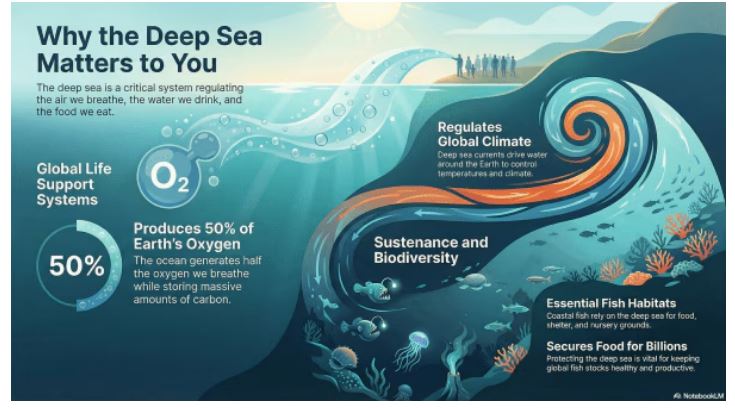
- 02 Apr 2026
In News:
In a significant boost to India’s marine conservation framework and the Blue Economy mission, the Ministry of Environment, Forest and Climate Change (MoEFCC) has officially designated the "Bhavasagara" Referral Centre at Kochi as a National Repository for Deep-Sea Fauna.
This designation was conferred under Section 39 of the Biological Diversity Act, 2002, recognizing the facility as a critical hub for preserving India’s deep-sea biological heritage.
About the Bhavasagara Referral Centre
Located within the campus of the Center for Marine Living Resources & Ecology (CMLRE) in Kochi, Kerala, "Bhavasagara" serves as a specialized scientific repository.
- Current Holdings: It houses over 3,560 taxonomically identified and geo-referenced voucher specimens.
- Biological Diversity: The collection includes a vast range of marine life:
- Invertebrates: Cnidarians (corals/jellyfish), molluscs, arthropods (crabs/shrimp), annelids, and echinoderms.
- Vertebrates: Elasmobranchs (sharks/rays) and teleostean (bony) fishes.
- Coverage: Over 70% of the specimens represent deep-water and open-ocean species collected from the Indian Exclusive Economic Zone (EEZ) and adjacent high seas.
Key Responsibilities & Statutory Powers
Under the Biological Diversity Act, 2002, the repository is mandated with the following:
- Secure Custody: Maintaining physical biological samples (voucher specimens) alongside their DNA sequences and genetic data.
- Official Custodian of New Species: It is the mandatory repository for any new deep-sea species (Type Specimens) discovered within Indian waters.
- Capacity Building: Acting as a training hub for deep-sea taxonomy, directly aligning with the UN Decade of Ocean Science for Sustainable Development (2021–2030).
- Digital Documentation: Integration with databases like the Indian Ocean Biodiversity Information System (IndOBIS) for global and regional knowledge sharing.
The Institutional Framework: CMLRE
The Center for Marine Living Resources & Ecology (CMLRE) is a premier research institute under the Ministry of Earth Sciences (MoES).
- Mandate: Exploration, management, and conservation of living resources within the Indian EEZ.
- Research Pillars:
- Fishery Resource Assessment: Utilizing research cruises (e.g., in the Arabian Sea and Bay of Bengal) to map biodiversity hotspots and spawning grounds.
- Advanced Technology: Employing environmental DNA (eDNA) metabarcoding and genomic analysis for non-invasive biodiversity assessment.
- Community Engagement: Development of the "Ocean Eyes" mobile app, a citizen-science initiative to record marine species sightings
IONS Maritime Exercise (IMEX)
- 01 Apr 2026
In News:
In a significant stride toward regional maritime stability, the Indian Navy recently hosted the IONS Maritime Exercise (IMEX) Table Top Exercise (TTX) 2026. Held at the Maritime Warfare Centre under the Southern Naval Command in Kochi, the exercise underscores India’s proactive role in the Indian Ocean Region (IOR) under the vision of SAGAR (Security and Growth for All in the Region).
Key Highlights
The 2026 edition of IMEX was designed as a Table Top Exercise (TTX), providing a simulated environment to refine strategic responses without the deployment of actual fleet assets.
- Core Focus: The exercise prioritized non-traditional maritime security threats, including maritime terrorism, piracy, illegal fishing (IUU), and humanitarian crises.
- Objectives:
- Enhancing interoperability and coordination among diverse navies.
- Streamlining real-time information sharing and collective decision-making.
- Validating existing maritime security frameworks to ensure they are robust enough for complex, multi-dimensional scenarios.
- Participating Nations: A diverse group of 12 littoral states participated, including Bangladesh, France, Indonesia, Kenya, Maldives, Mauritius, Myanmar, Seychelles, Singapore, Sri Lanka, Tanzania, and Timor-Leste.
Understanding the Indian Ocean Naval Symposium (IONS)
The IONS is a cornerstone of India’s naval diplomacy and serves as a vital "Track 1.5" or formal diplomatic initiative for the Indian Ocean.
Genesis and Structure
- Inception: Conceived and launched by the Indian Navy in 2008. The inaugural edition was held in New Delhi, with India serving as the first Chair (2008–2010).
- Nature: A voluntary and inclusive initiative that brings together the navies of the littoral states of the IOR.
- Operational Framework: It functions through a rotating chairmanship, biennial Conclaves of Chiefs (CoC), and specialized Working Groups (WGs) focusing on areas like HADR and Maritime Security.
Geographic Scope
The IONS membership is divided into four sub-regions to ensure equitable representation:
- South Asian Littorals (e.g., India, Bangladesh, Sri Lanka)
- West Asian Littorals (e.g., UAE, Oman, Iran)
- East African Littorals (e.g., Kenya, South Africa, Mauritius)
- South East Asian & Australian Littorals (e.g., Australia, Indonesia, Singapore)
Balirajgarh site
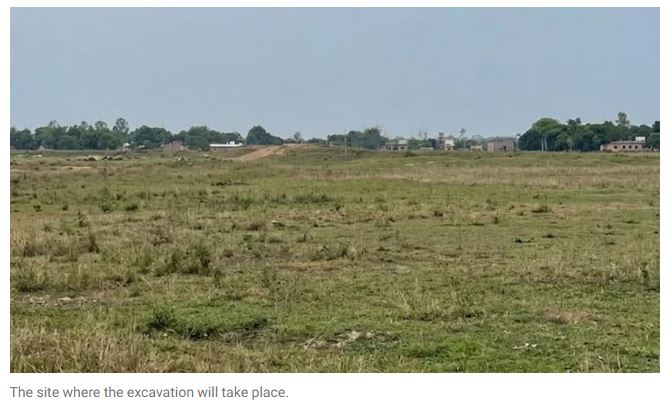
- 01 Apr 2026
In News:
The Archaeological Survey of India (ASI) officially commenced a large-scale scientific excavation at the historic Balirajgarh site in Bihar’s Madhubani district in March 2026. This project seeks to bridge the gap between ancient Indian mythology and material history, potentially pushing back the timeline of urban civilization in the Mithila region to the Iron Age.
The Balirajgarh Site: Gateway to Ancient Mithila
Located in the Babubarhi block of Madhubani, Balirajgarh (officially the "Remains of Ancient Fort of Garh") is a centrally protected monument of national importance.
- Mythological Roots: Local folklore identifies the site as the capital of the legendary King Bali.
- Historical Identity: It is widely believed to have been a major administrative and political hub of the ancient Videha Kingdom (associated with King Janaka in Vedic texts).
- Physical Scale: The site spans approximately 176 acres and features a massive brick fortification and over 20 archaeological mounds.
Chronology of Habitation (Five-Fold Sequence)
Previous excavations conducted between 1962 and 2014 established that Balirajgarh was a site of continuous habitation for over 1,500 years. The discovered layers correspond to:
- Northern Black Polished Ware (NBPW) Phase (c. 700–200 BCE): Represents the earliest urban layer, characterized by high-quality deluxe pottery.
- Sunga Period (c. 2nd Century BCE): Notable for the construction of massive brick fortifications.
- Kushan Period: Evidence of trade and sustained urban life.
- Gupta Period: Represents the "Classical Age" of settlement.
- Pala Period (c. 8th–12th Century CE): Marks the later medieval stages before the site’s eventual decline.
Objectives of the 2026 Excavation
The current phase of excavation, led by the ASI Patna Circle, employs modern archaeological tools to answer specific historical questions:
- The "Virgin Soil" Quest: Archaeologists aim to reach the deepest, undisturbed layers of soil to determine if settlement predates the NBPW phase, possibly linking it directly to the early Iron Age Videha tribe.
- Advanced Technology: To overcome previous challenges like the high water table, the ASI is using Satellite Imagery, Ground Penetrating Radar (GPR), and systematic 3D mapping.
- Mithila Civilization: The overarching goal is to reconstruct the "early Mithila civilization" and its socio-economic networks.
Institutional Profile: Archaeological Survey of India (ASI)
- Genesis: Founded in 1861 by Sir Alexander Cunningham (the "Father of Indian Archaeology").
- Statutory Status: Post-independence, it became a statutory body under the Ancient Monuments and Archaeological Sites and Remains (AMASR) Act, 1958.
- Nodal Ministry: Functions under the Ministry of Culture, Government of India.
- Key Responsibilities: * Maintenance of over 3,600 monuments of national importance.
- Regulation of the Antiquities and Art Treasure Act, 1972.
- Conducting scientific research, excavations, and chemical preservation of heritage.
Solar Radio Burst
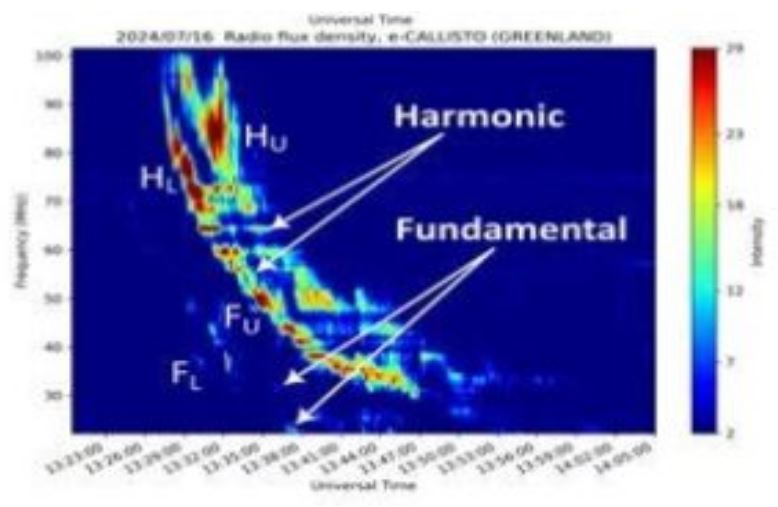
- 01 Apr 2026
In News:
In a major advancement for heliophysics, researchers from the Indian Institute of Astrophysics (IIA), an autonomous body under the Department of Science and Technology (DST)have recently solved a decades-old mystery regarding Solar Radio Bursts (SRBs). This breakthrough, published in early 2026, significantly enhances our ability to predict space weather and protect critical technological infrastructure.
Understanding Solar Radio Bursts (SRBs)
Solar Radio Bursts are intense emissions of radio waves from the Sun, typically triggered by solar transients such as Solar Flares and Coronal Mass Ejections (CMEs).
- Scientific Nature: They serve as direct signatures of accelerated electrons moving through the solar atmosphere.
- Wavelength Diversity: SRBs are observed across a massive spectrum, from millimeters (GHz range) to kilometers (kHz range).
- Short wavelengths indicate activity near the solar surface.
- Long wavelengths reflect activity occurring at greater distances from the Sun as shocks travel outward.
- Classification: Morphologically, SRBs are divided into five categories (Types I through V). Among these, Type II bursts are "slow-drifting" emissions that track shock waves moving through the solar corona at speeds of approximately 1,000 km/s.
The IIA Breakthrough: The "Fundamental vs. Harmonic" Puzzle
For years, scientists were puzzled by the varying relative strengths of the two components of Type II bursts: the Fundamental emission (the base frequency) and the Harmonic emission (the overtone). While theory suggests the fundamental should be stronger, observations often showed the opposite.
The Discovery
The IIA team, led by Dr. K. Sasikumar Raja, analyzed 58 Type II bursts using the global CALLISTO (Compound Astronomical Low Frequency Low Cost Instrument for Spectroscopy and Transportable Observatory) network and the Gauribidanur Low Frequency Solar Spectrograph (GLOSS).
- The Longitude Factor: The study found that the location of the solar active region (heliographic longitude) determines which emission reaches Earth more strongly.
- The 75° Rule: * Events < 75° (Disk Center): Exhibit stronger Fundamental emissions.
- Events > 75° (Solar Limb/Edges): Exhibit stronger Harmonic emissions.
- The Mechanism: This is due to refractive effects in the solar corona and "viewing angles." Fundamental emissions have narrow "cone angles" and get blocked or weakened when originating from the Sun's edges. Harmonic emissions have broader angles, allowing them to bypass these obstacles and reach Earth effectively.
Implications for Space Weather and Technology
- GNSS Interference: SRBs reduce the signal-to-noise ratio of Global Navigation Satellite Systems (like GPS and India’s NavIC), potentially causing a "loss of lock" and affecting aviation and maritime navigation.
- Satellite Health: Understanding these bursts helps in predicting the arrival of solar storms that can damage satellite electronics and solar panels.
- Communication Hubs: High-intensity bursts can disrupt high-frequency (HF) radio communications used by emergency services and the military.
- Forecasting Models: By understanding how these waves propagate, scientists can now develop more accurate models to provide earlier warnings for geomagnetic storms.
The Path Ahead: AI and Machine Learning
The IIA researchers have indicated that the next phase of this study involves applying Machine Learning (ML) to the vast datasets collected by spectrometers like CALLISTO. This will help automate the detection of solar shocks and further refine the accuracy of space weather alerts.
Government Revises PM e-DRIVE Scheme

- 01 Apr 2026
In News:
The Ministry of Heavy Industries (MHI) recently revised the PM Electric Drive Revolution in Innovative Vehicle Enhancement (PM e-DRIVE) scheme. This recalibration introduces strict "terminal dates" and unit-specific caps to manage the transition from a subsidy-led market to a self-sustaining EV ecosystem.
Context and Evolution
- Launched in October 2024 with a total outlay of ?10,900 crore, the PM e-DRIVE scheme replaces the earlier FAME (Faster Adoption and Manufacturing of Hybrid and Electric Vehicles) phases.
- It aims to synchronize India’s transport sector with the Aatmanirbhar Bharat vision and the Panchamrit climate goals.
Revised Timelines and Deadlines
The government has established clear cut-off dates for vehicle registrations to qualify for incentives:
- Electric Two-Wheelers (e-2W): Subsidy extended until 31st July 2026.
- Electric Three-Wheelers (e-3W): Incentives for e-rickshaws and e-carts extended until 31st March 2028.
- L5 Category (High-speed e-3W): This sub-component was officially closed on 26th December 2025 after achieving its target volume.
Key Components and Targets
The scheme operates on a "first-come, first-served" basis and is fund-limited. If the budget is exhausted before the terminal dates, the portal will close automatically.
A. Demand Incentives and Caps
To ensure support reaches the mass market, the scheme imposes ex-factory price ceilings:
Vehicle Category Ex-Factory Price Cap Unit Support Cap
Electric 2-Wheelers ?1.5 Lakh ~24.79 Lakh units
Electric 3-Wheelers ?2.5 Lakh ~3.16 Lakh units*
e-Rickshaws & e-Carts - 39,034 units
Note on Incentives: The subsidy has been recalibrated to approximately ?2,500 per kWh, with a maximum cap of ?5,000 for e-2Ws and ?12,500 for e-3Ws.
B. Infrastructure & Specialized Segments
- Public Transport: Allocation of ?4,391 crore for the procurement of 14,028 e-buses across nine major cities (including Delhi, Mumbai, and Bengaluru).
- e-Ambulances & e-Trucks: A combined fund of ?1,000 crore is dedicated to these emerging segments. For e-trucks, incentives are linked to scrapping certificates from MoRTH-approved centers.
- Charging Infrastructure: A budget of ?2,000 crore to install 72,300 public fast chargers (including 22,100 for e-4Ws and 48,400 for e-2Ws/3Ws).
Technology and Quality Standards
- Advanced Batteries: Only vehicles equipped with advanced battery chemistry (e.g., Lithium-ion) qualify. Outdated lead-acid batteries are excluded.
- The "Super App": Developed by BHEL, this digital platform will allow users to locate chargers, check real-time availability, and make payments seamlessly.
- Testing Agencies:?780 crore allocated to modernize MHI testing agencies to ensure high safety and performance standards for domestic EV manufacturing.
1st Inter-State Initiative for Great Indian Bustard (GIB)
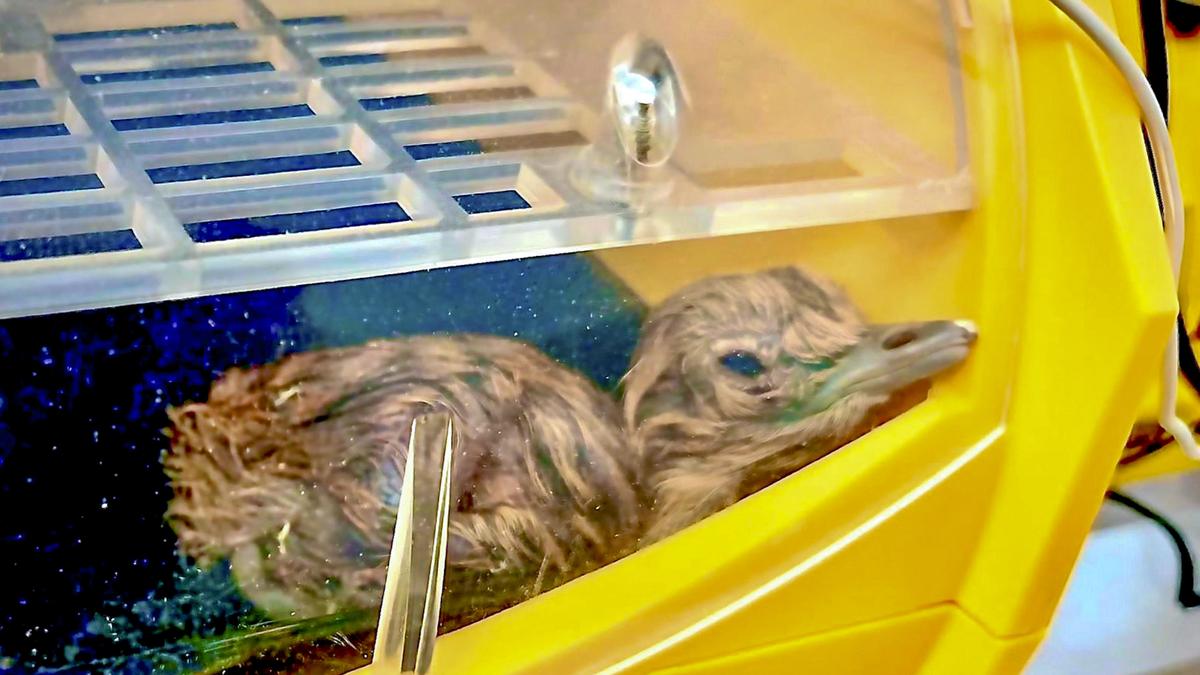
- 01 Apr 2026
In News:
The Great Indian Bustard (Ardeotis nigriceps), a flagship species of the Indian grasslands and the state bird of Rajasthan, is currently at the center of one of India’s most complex conservation battles. Recent breakthroughs in "jumpstart" technology and legal interventions have provided a renewed glimmer of hope for a species that was once on the verge of extinction.
The "Jumpstart" Breakthrough: A Milestone in Kutch
In March 2026, a Great Indian Bustard chick was hatched in Gujarat’s Kutch region for the first time in over a decade. This was achieved through the “Jumpstart” Approach, a sophisticated conservation method coordinated by the Ministry of Environment, Forest and Climate Change (MoEFCC), the Wildlife Institute of India (WII), and the Forest Departments of Rajasthan and Gujarat.
- The Mechanism: The process involved identifying a wild female in Gujarat that had laid an infertile egg (due to the absence of wild males in the region). A fertile, captive-bred egg from Rajasthan’s breeding center was transported 770 km over a 19-hour road journey in a portable incubator.
- The Outcome: The fertile egg was placed in the wild nest. The female GIB accepted the egg, completed the incubation, and is currently rearing the chick in the wild.
- Significance: This is the first inter-state trans-location of its kind, ensuring the chick grows up with natural survival instincts under a foster mother, rather than being reared in a lab.
Species Profile and Ecological Role
The GIB is an indicator species for the health of grassland ecosystems. Its presence ensures that the "barren" looking grasslands are actually vibrant, functional biomes.
- Physical Traits: One of the heaviest flying birds in the world; lacks a preen gland and has poor frontal vision (making it prone to collisions).
- Diet: Omnivorous (insects, rodents, seeds).
- Current Range: Primarily the Thar Desert (Rajasthan). Small, fragmented populations exist in Gujarat (Kutch), Maharashtra, Karnataka, and Andhra Pradesh.
Conservation Status and Legal Framework
The GIB enjoys the highest level of legal protection both nationally and internationally:
- IUCN Red List: Critically Endangered.
- Wildlife (Protection) Act, 1972: Schedule I.
- CITES & CMS: Appendix I.
- Project GIB (2016): Launched to create breeding enclosures and mitigate human pressure.