
UNICORN (Unified Complex Radio Antenna) Mast
- 03 Jul 2026
In News:
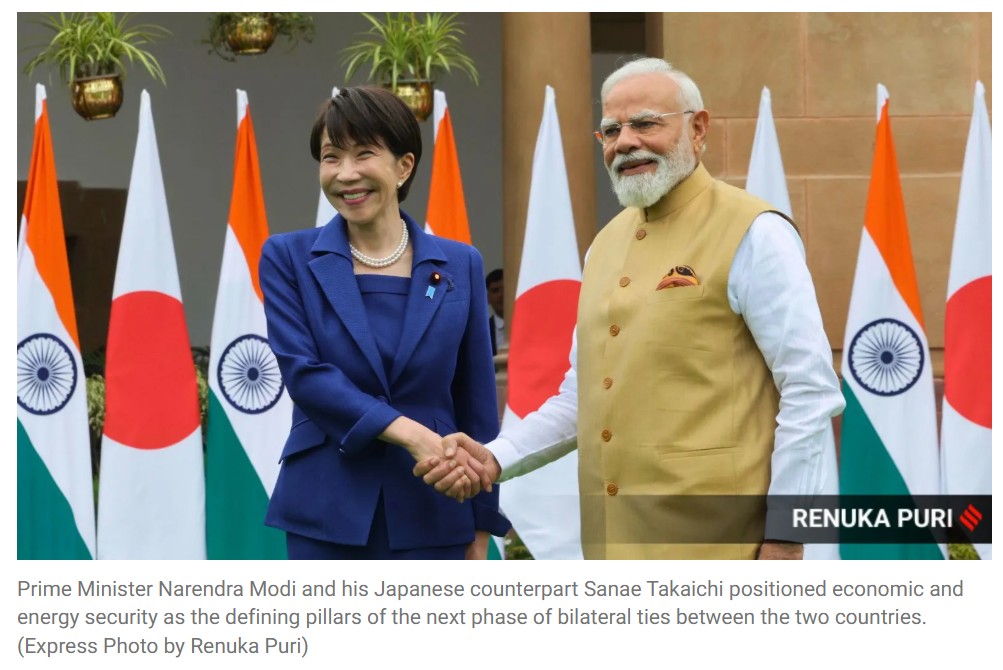
At the 16th India–Japan Annual Summit held in New Delhi (July 2026), India and Japan announced their first-ever joint defence co-development project to manufacture the UNICORN (Unified Complex Radio Antenna) Mast for the Indian Navy. The project follows the Memorandum of Implementation (MoI) signed between the two countries in 2024 for the co-development of the system.
About UNICORN Mast
The UNICORN (Unified Complex Radio Antenna) Mast, also known as NORA-50, is a next-generation integrated communication and radar mast designed for modern naval warships. Developed by Japan, it combines multiple communication systems and radar antennas into a single integrated mast, replacing the conventional arrangement of several externally mounted antennas.
This integrated design significantly reduces the Radar Cross Section (RCS) of a warship, thereby improving its stealth capabilities, survivability, and operational effectiveness in modern maritime warfare. The system also provides secure, high-performance communication and supports network-centric naval operations in electronically contested environments.
Key Features
The UNICORN mast incorporates advanced stealth antenna technology and offers several operational advantages:
- Integrates multiple communication and radar antennas into a single mast.
- Reduces the Radar Cross Section (RCS), enhancing stealth.
- Improves secure voice and data communication.
- Minimises electromagnetic interference between communication systems.
- Enhances survivability and tactical evasion capabilities during naval operations.
- Supports advanced network-centric and digitally integrated warfare.
India–Japan Defence Collaboration
The project marks a major milestone in India–Japan defence cooperation, as it is the first joint defence manufacturing initiative between the two countries. Under the collaboration:
- Bharat Electronics Limited (BEL) will manufacture the UNICORN mast in India.
- Japanese partners will provide advanced design and technological expertise.
- India will undertake system integration, production, and installation on future Indian Navy warships.
The initiative also makes India the second Asian country, after the Philippines, to receive Japanese defence technology.
Significance for India
The project aligns closely with the 'Make in India' and Atmanirbhar Bharat initiatives by strengthening indigenous defence manufacturing and promoting technology transfer. The UNICORN mast is expected to gradually replace the Indian Navy's existing Advanced Composite Communication System (ACCS)-based external communication infrastructure with a more secure and stealth-oriented integrated system.
Strategically, the project enhances India's maritime domain awareness, strengthens naval operational capability, and deepens defence-industrial cooperation with Japan. It also reflects the growing strategic convergence between the two countries in promoting a free, open, inclusive, and rules-based Indo-Pacific, while contributing to regional maritime security and technological self-reliance.
Unified Health Interface (UHI)

- 01 Jul 2026
In News:
The Union Minister of Health and Family Welfare recently launched the Unified Health Interface (UHI), a key digital platform under the Ayushman Bharat Digital Mission (ABDM) aimed at creating an interoperable, inclusive, and citizen-centric digital healthcare ecosystem.
About Unified Health Interface (UHI)
The Unified Health Interface (UHI) is an interoperable digital network developed under the Ayushman Bharat Digital Mission (ABDM). It serves as the service layer of ABDM, enabling seamless interaction between patients and healthcare providers through multiple digital health applications.
The platform seeks to eliminate information asymmetry, improve access to healthcare services, and provide citizens with a wider choice of verified healthcare providers without restricting them to a single application or platform. By adopting an open-network model, UHI allows different health applications to communicate with one another through common digital protocols.
How Does UHI Work?
UHI functions through open protocols operating on the ABDM Gateway, which has been developed and is maintained by the National Health Authority (NHA).
When a citizen searches for a healthcare service using any UHI-enabled application, the request is transmitted through the ABDM Gateway to all registered healthcare providers on the network. The entire process—from discovering a healthcare provider and booking an appointment to receiving healthcare services—is carried out through a common interoperable framework, irrespective of the application being used.
The platform is integrated with key components of the Ayushman Bharat Digital Mission:
- Ayushman Bharat Health Account (ABHA) serves as the unique patient identifier.
- Healthcare Professionals Registry (HPR) verifies registered healthcare professionals.
- Health Facility Registry (HFR) authenticates healthcare institutions.
- Health Information Exchange (HIE) enables secure, consent-based sharing of health records.
Key Objectives
The Unified Health Interface has been designed with four major objectives:
- Interoperability: Enables patients and healthcare providers to use any UHI-enabled application for accessing or delivering healthcare services without platform dependency.
- Fair Discoverability: Ensures that every verified healthcare provider—irrespective of size, location, or digital platform—has an equal opportunity to be discovered by patients.
- Verification and Trust: Allows participation only by healthcare professionals and facilities verified through the HPR and HFR, thereby ensuring authenticity and trust.
- Open Protocols: Provides publicly accessible technical standards that allow developers to build innovative health applications in multiple languages and across different devices.
Drunix Platform
- 21 Jun 2026
In News:
The National Payments Corporation of India (NPCI) has launched Drunix, an enterprise-grade Distributed Ledger Technology (DLT) platform to support large-scale deployment of blockchain-based applications, digital assets, and tokenization ecosystems.
What is Drunix?
Drunix is an enterprise-grade private blockchain framework developed by NPCI to enable organizations to build, deploy, and scale tokenization platforms, digital asset ecosystems, and multi-organization blockchain networks.
Built as a high-performance enhanced fork of Hyperledger Fabric, Drunix is designed to deliver high scalability, low latency, and optimized performance, making it suitable for enterprise applications as well as public digital infrastructure. The platform aims to facilitate secure, interoperable, and large-scale blockchain adoption across sectors.
Key Features
Drunix has been developed with a focus on enterprise deployment and offers:
- High scalability for large-volume transactions and enterprise networks.
- Support for tokenization of digital and real-world assets.
- Creation of multi-organization blockchain ecosystems with secure data sharing.
- Optimized performance for public infrastructure and financial applications.
- Enterprise-grade security and interoperability.
- Built on an enhanced version of Hyperledger Fabric, an open-source blockchain framework developed under the Linux Foundation.
What is Blockchain Technology?
Blockchain, also known as Distributed Ledger Technology (DLT), is a decentralized digital ledger that records transactions across multiple computers, ensuring transparency, security, and tamper resistance without relying on a central authority.
Instead of maintaining a single centralized database, every participating node maintains a synchronized copy of the ledger, making records highly secure and verifiable.
Key Features of Blockchain
- Distributed Ledger: Data is stored simultaneously across multiple nodes in a peer-to-peer network.
- Immutability: Once recorded, data cannot be altered easily due to cryptographic hashing.
- Security: Transactions are protected using cryptography, hashing, and digital signatures.
- Consensus Mechanism: Transactions are validated only after agreement among participating nodes.
- Decentralization: No single entity exercises complete control over the network.
India's Progress Towards Universal Health Coverage (UHC)
- 17 Jun 2026
In News:
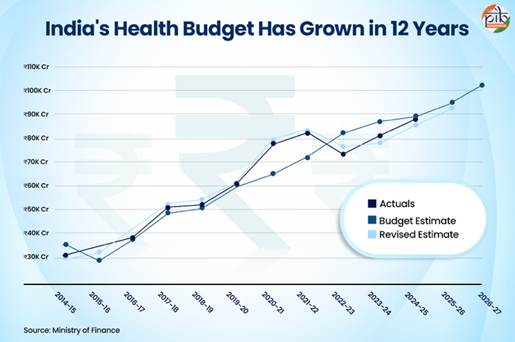
India's progress towards Universal Health Coverage (UHC) has come into focus following the National Statistical Office (NSO) 2025 Survey, which reported increased utilisation of public healthcare facilities, lower out-of-pocket expenditure (OOPE), and improved access to affordable healthcare, driven by initiatives such as Ayushman Bharat and the National Health Mission (NHM).
What is Universal Health Coverage (UHC)?
According to the World Health Organization (WHO), Universal Health Coverage ensures that all individuals receive quality health services they need without suffering financial hardship. It encompasses promotive, preventive, curative, rehabilitative, and palliative healthcare.
India's Achievements towards UHC
India has significantly strengthened its healthcare ecosystem through expanded insurance coverage, digital health, public health infrastructure, and disease control programmes.
Universal Health Coverage & Insurance
- Ayushman Bharat-Pradhan Mantri Jan Arogya Yojana (AB-PMJAY) provides health insurance cover of ?5 lakh per family per year to 12 crore vulnerable families.
- 44.14 crore Ayushman Cards issued and 12.03 crore hospitalisations funded.
- Ayushman Bharat Vay Vandana (2024) extends coverage to all citizens aged 70 years and above; by June 2026, 1.20 crore senior citizens had enrolled.
Primary Healthcare
- Over 1.86 lakh Ayushman Arogya Mandirs (AAMs) provide 12 comprehensive healthcare services.
- AAMs have recorded 540 crore cumulative footfalls, strengthening preventive and primary healthcare.
Health Infrastructure
- Under PM-Ayushman Bharat Health Infrastructure Mission (PM-ABHIM):
- 744 Integrated Public Health Laboratories
- 631 Critical Care Hospital Blocks approved in districts with populations above 5 lakh.
- During COVID-19, India administered over 220 crore vaccine doses and expanded ICU beds from 2,168 to 1.45 lakh.
Disease Control & Public Health
- Mission Indradhanush vaccinated 5.46 crore previously unvaccinated children; the zero-dose child population declined to 0.06% (April 2026).
- PM TB Mukt Bharat Abhiyaan screened 20 crore people.
- Malaria mortality declined by 78%, while mother-to-child HIV transmission fell by 74.5% since 2010.
Digital Health
- 20.49 crore ABHA IDs created under the Ayushman Bharat Digital Mission (ABDM).
- eSanjeevani has delivered 47 crore teleconsultations.
- U-WIN digitally tracks immunisation of 11.87 crore children and 3.96 crore pregnant women.
- AI-based initiatives such as MadhuNetrAI and Cough Against TB are improving early disease detection.
Affordable Healthcare
- Over 18,000 Jan Aushadhi Kendras provide medicines at 50–90% lower prices.
- 255 AMRIT Pharmacies have helped patients save ?8,400 crore.
- PM National Dialysis Programme has delivered 4 crore free haemodialysis sessions.
Major Challenges
Despite notable progress, several structural challenges remain:
- Public health expenditure remains below the National Health Policy (2017) target of 2.5% of GDP.
- Non-Communicable Diseases (NCDs) account for 60% of all deaths.
- Persistent regional disparities, governance gaps, and shortages of healthcare professionals.
- 65% of PM-JAY beneficiaries reportedly incurred out-of-pocket expenditure in private hospitals, indicating implementation gaps.
- India still lacks a comprehensive Right to Health legislation.
Way Forward
India should increase public health expenditure to 2.5–3% of GDP, strengthen primary healthcare through Ayushman Arogya Mandirs, expand AI-enabled diagnostics and drone-based healthcare delivery, deepen digital integration through ABHA and U-WIN, improve regulation of empanelled hospitals under PM-JAY, and enact a Right to Health framework to ensure equitable, affordable, and accountable healthcare delivery.
United Nations Security Council (UNSC)

- 09 Jun 2026
In News:
The United Nations General Assembly (UNGA) recently elected five countries as non-permanent members of the United Nations Security Council (UNSC) for a two-year term beginning on 1 January 2027. The newly elected members are Austria, Portugal, Trinidad and Tobago, Zimbabwe, and Kyrgyzstan.
- The election is particularly significant for Kyrgyzstan, which will serve on the Security Council for the first time since becoming a member of the United Nations in 1992. These countries will join Bahrain, Colombia, the Democratic Republic of Congo, Latvia, and Liberia, which were elected earlier and will continue serving through 2027.
United Nations Security Council (UNSC)
- The United Nations Security Council was established in 1945 under the United Nations Charter and is one of the six principal organs of the United Nations.
- It bears the primary responsibility for maintaining international peace and security.
- Unlike other UN organs, the Security Council possesses unique authority because its decisions are legally binding on all UN member states under the UN Charter.
Composition of the UNSC
The Security Council consists of 15 members:
- Permanent Members (P5): The five permanent members possess the power of veto: China, France, Russia, United Kingdom, and United States
- Non-Permanent Members: The remaining 10 seats are filled through elections conducted by the UN General Assembly for two-year terms.Regional distribution of non-permanent seats is as follows:
- 5 seats: African and Asia-Pacific States
- 1 seat: Eastern European States
- 2 seats: Latin American and Caribbean States
- 2 seats: Western European and Other States
Election Process
Non-permanent members are elected annually by the UN General Assembly through a secret ballot.
Key features include:
- Candidates require a two-thirds majority of members present and voting.
- The requirement applies even when a candidate is unopposed.
- Five non-permanent seats are renewed every year, ensuring continuity in the Council's functioning.
Importance of the Security Council
The UNSC performs several critical functions:
- Maintenance of international peace and security.
- Investigation of disputes and conflicts.
- Imposition of sanctions.
- Authorization of peacekeeping operations.
- Approval of military action when necessary.
- Recommendation of the UN Secretary-General to the General Assembly.
Its resolutions are binding on all member states, making it the most powerful organ within the UN system.
The Union Territories Laws (Amendment) Bill, 2026
- 21 Apr 2026
In News:
As India undergoes a transformative phase in its parliamentary structure, the introduction of The Union Territories Laws (Amendment) Bill, 2026 in the Lok Sabha marks a pivotal step. Introduced alongside the 131st Constitutional Amendment and the Delimitation Bill, 2026, this legislation serves as a supplementary framework to ensure that structural reforms in the Indian legislature are inclusive of Union Territories (UTs).
Overview and Purpose
The primary objective of the Bill is to extend the benefits of the national-level constitutional shifts—specifically the expansion of Parliament and the implementation of women’s reservation to UTs with their own Legislative Assemblies. It targets the legal frameworks of the National Capital Territory (NCT) of Delhi, Puducherry, and Jammu & Kashmir.
Historically, major legislative changes often faced a "notification lag" when being applied to UTs due to their unique administrative status. This Bill bridges that gap, ensuring that the Nari Shakti Vandan Adhiniyam and the redrawing of electoral boundaries happen simultaneously across states and relevant UTs.
Key Features of the 2026 Bill
1. Accelerated Women’s Reservation
A cornerstone of this Bill is the delinking of women’s reservation from the 2027 Census. Under previous frameworks, the implementation of the one-third reservation for women was tied to the publication of the first census after 2023. The 2026 Bill modifies this requirement for UTs, allowing reservation to be implemented based on the 2011 Census data. This ensures that women can contest reserved seats in these UTs as early as the 2029 elections.
2. Integration with Parliamentary Expansion
The Bill aligns UT-specific statutes with the 131st Amendment, which increases the maximum number of representatives from UTs in the Lok Sabha from 20 to 35 members. This expansion reflects the demographic shifts and the need for more granular representation in India’s growing democracy.
3. Synchronized Delimitation
The Bill empowers the Delimitation Commission, constituted under the Delimitation Bill, 2026, to redraw assembly constituencies within Delhi, Puducherry, and Jammu & Kashmir. This ensures that the redrawing of seats is not a fragmented process but is synchronized with the national effort to rebalance electoral representation based on the latest available data.
4. Rotational Allotment
To maintain electoral fairness and prevent the entrenchment of specific seats, the Bill mandates that seats reserved for women in UT Assemblies will be allotted by rotation. This means the specific constituencies reserved for women will change in successive election cycles, ensuring diverse representation across all regions of the UT.
Strategic Significance
- Uniformity in Federal Structure: By passing this Bill, the government prevents a legal discrepancy where states could have moved forward with gender parity reforms while UTs remained stalled due to census-linked timelines. It enforces a uniform legislative timeline across the Union.
- Democratic Deepening: The increase in Lok Sabha seats for UTs (from 20 to 35) ensures that the voices of citizens in these administratively unique regions carry more weight in the national discourse.
- Empowerment of Nari Shakti: By bypassing the wait for the 2027 Census, the Bill translates the intent of the Nari Shakti Vandan Adhiniyam into reality at the grassroots level of UT governance.
1,000-km Quantum Communication Network

- 13 Apr 2026
In News:
India has achieved a significant milestone under the National Quantum Mission (NQM) by developing a 1,000 km quantum communication network. Developed using indigenous technology by QNu Labs with support from the Department of Science and Technology (DST), this achievement comes less than two years after the mission’s launch, putting India well ahead of its interim targets.
The National Quantum Mission (NQM): Overview
- Launch: Approved in April 2023; officially launched in October 2024.
- Nodal Agency: Department of Science and Technology (DST).
- Budget: ?6,003 crore for a period of eight years (2023-24 to 2030-31).
- Objective: To seed, nurture, and scale up R&D in quantum technologies, positioning India among the top six nations globally (joining the US, China, Canada, Austria, Finland, and France).
Key Pillars of NQM & Targets
The mission is structured around four primary domains:
- Quantum Computing: Developing computers with 50 to 1,000 physical qubits using superconducting and photonic platforms.
- Quantum Communication:
- Terrestrial: Inter-city QKD networks over 2,000 km using existing optical fibers.
- Satellite: Secure satellite-based communication between ground stations over 2,000 km (including international links).
- Quantum Sensing & Metrology: High-sensitivity magnetometers and atomic clocks for precision navigation (GPS/Aviation) and defense.
- Quantum Materials: Synthesis of superconductors, topological materials, and semiconductors for device fabrication.
Technical Spotlight: Quantum Key Distribution (QKD)
The 1,000-km network relies on QKD, which is the "gold standard" for secure communication.
- How it works: It uses quantum particles (photons) to share secret encryption keys.
- The "Observer Effect": Based on the laws of quantum mechanics (No-cloning theorem), any attempt to intercept or eavesdrop on the key disturbs the quantum state of the photons.
- Instant Detection: This disturbance alerts the communicating parties immediately, making the communication virtually unhackable.
Significance of the 1,000-km Milestone
- Global Standing: This is one of the longest terrestrial QKD deployments globally, demonstrating India’s rapid execution capabilities.
- Strategic Security: Essential for protecting sensitive data in Defense, Finance, and Critical National Infrastructure (Power grids, nuclear plants).
- Terrain Versatility: The indigenous technology is designed to function across diverse and challenging terrains, including underwater and underground environments.
- Aatmanirbharta (Self-Reliance): Reduces dependence on foreign encryption patents and imported hardware, fostering a home-grown deep-tech ecosystem.
Institutional & Startup Ecosystem
- Thematic Hubs (T-Hubs): Four dedicated hubs have been established in top academic and R&D institutes to drive the mission’s goals.
- Support for Deep-Tech: The mission currently supports 17 ventures.
- Innovative Financing: The government is employing Optionally Convertible Debt (OCD). This allows startups to access capital without immediate equity dilution, encouraging private sector participation in high-risk, high-reward quantum research.
United Nations Economic and Social Council (ECOSOC)
- 11 Apr 2026
In News:
India achieved a major diplomatic milestone by winning elections to four key subsidiary bodies of the United Nations Economic and Social Council (ECOSOC).
Understanding the ECOSOC
Established by the UN Charter in 1945, ECOSOC is one of the six principal organs of the United Nations. It serves as the primary venue for fostering innovative thinking, forging consensus on international development goals, and coordinating policy across economic, social, and environmental sectors.
Core Mandate and Functions:
- The Triple Integration: It aims to harmonize the three pillars of sustainable development: Economic, Social, and Environmental.
- 2030 Agenda: It is the specialized body responsible for policy-making and monitoring the implementation of the Sustainable Development Goals (SDGs).
- Global Coordinator: ECOSOC links regional economic commissions and specialized UN agencies, translating high-level commitments into actionable changes.
- Partnership Gateway: It facilitates dialogue between policymakers, academics, businesses, and over 6,500 registered Non-Governmental Organizations (NGOs).
- Emerging Challenges: The council identifies and addresses new global threats, such as pandemic recovery and climate crises, through intergovernmental discussions.
India’s 2026 Election Success
During the elections held in April 2026, India was elected to the following four distinct and influential bodies:
- Committee on Economic, Social and Cultural Rights (CESCR): In a notable personal victory, former diplomat Preeti Saran was re-elected. This ensures that India’s 36-year diplomatic legacy continues to influence international normative frameworks regarding cultural and social rights.
- Commission on Science and Technology for Development (CSTD): A platform where India can share its digital public infrastructure (DPI) expertise and advocate for technological equity for developing nations.
- Committee on Non-Governmental Organisations: A critical body that monitors the consultative status of NGOs with ECOSOC, giving India a say in how civil society engages with the UN.
- Committee for Programme and Coordination (CPC): The main subsidiary organ of ECOSOC and the General Assembly for planning, programming, and coordination.
QS World University Rankings
- 29 Mar 2026
In News:
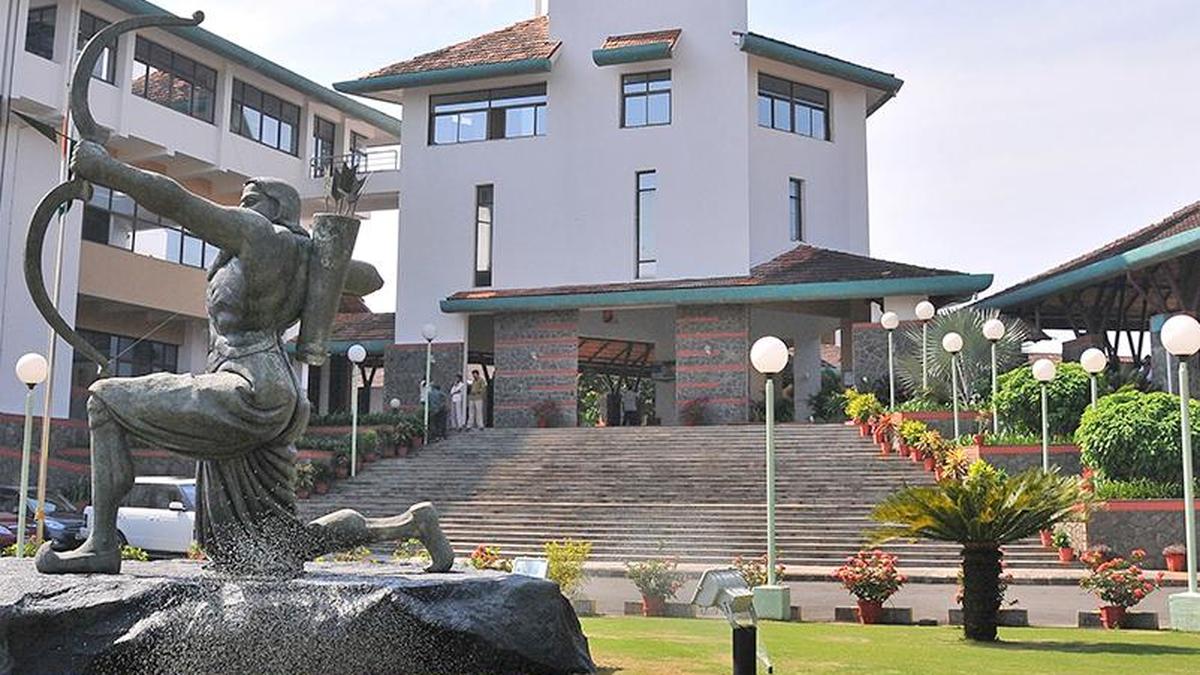
The Indian Institute of Management–Kozhikode (IIM-K) has entered the global Top 100 in the QS World University Rankings by Subject 2026, marking a significant milestone for Indian higher education.
About QS World University Rankings
- Published annually by Quacquarelli Symonds (QS).
- Provides global comparative assessment of universities across subjects and overall performance.
Evaluation Framework
QS uses a multi-layered methodology:
1. Lenses (Thematic Categories):
- Research & Discovery
- Employability & Outcomes
- Global Engagement
- Learning Experience
- Sustainability
2. Indicators (Performance Areas):
- Academic Reputation
- Employer Reputation
- Citations per Faculty
- Employment Outcomes
3. Metrics:
- Quantitative tools used to calculate scores within each indicator.
Key Highlights – QS Rankings 2026
India’s Performance
- 120 new Indian institutions entered the rankings.
- India ranks 4th globally in new entries:
- USA: 287
- China: 181
- UK: 159
- India now has the 4th largest institutional representation, after:
- USA
- China
- UK
Notable Achievements by Indian Institutions
- Indian Institute of Management Kozhikode : Entered Top 100 globally (by subject) for the first time.
- Indian Institute of Technology (ISM) Dhanbad
- Secured global rank 21 (India’s highest).
- Maintains dominance in Mineral & Mining Engineering.
- Indian Institute of Management Ahmedabad
- Achieved Top 25 globally in:
- Business & Management Studies
- Marketing
- Achieved Top 25 globally in:
- Computer Science Domain:
- 6 Indian institutions in global Top 100.
- All improved their rankings compared to the previous year.
African Union
- 16 Feb 2026
In News:
The African Union (AU), launched in 2002 to replace the OAU, is a continental body of 55 African states headquartered in Addis Ababa, Ethiopia.
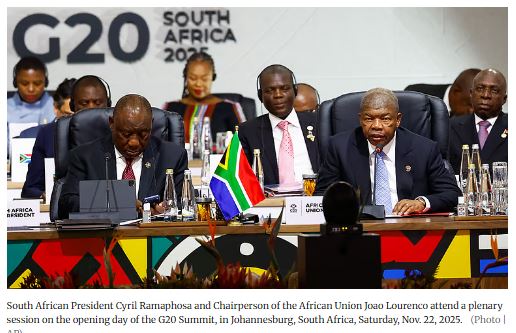
Recently, the African Union (AU) held its annual summit in Ethiopia amid growing discussions on governance reforms and youth representation within the bloc.
Origin and Evolution
The African Union was officially launched in 2002, replacing the Organization of African Unity (OAU), which had been established in 1963.
Why the Transition?
- The OAU primarily focused on decolonization and anti-apartheid struggles.
- The AU was created with a broader mandate including:
- Political and economic integration
- Conflict resolution
- Sustainable development
- Stronger global representation for Africa
Membership
- Comprises 55 member states (all internationally recognized African countries).
- It represents the entire African continent.
Headquarters
- Located in Addis Ababa, Ethiopia.
Objectives of the African Union
The AU aims to:
- Promote unity and solidarity among African countries.
- Foster peace, security, and stability.
- Advance economic integration and development.
- Protect sovereignty and territorial integrity.
- Enhance Africa’s voice in global governance.
Governance Structure
Assembly
- Highest decision-making body.
- Composed of Heads of State and Government.
- Determines policy direction.
Executive Council
- Consists of Foreign Affairs Ministers.
- Prepares decisions and policies for the Assembly.
AU Commission
- Administrative arm of the AU.
- Implements decisions of the Assembly and Executive Council.
- Headquartered in Addis Ababa.
Peace and Security Council (PSC)
- Responsible for:
- Conflict prevention
- Peacekeeping missions
- Crisis response mechanisms
The PSC functions somewhat similarly to the UN Security Council but at the continental level.
Participatory and Advisory Bodies
To promote democratic participation:
- Pan-African Parliament
- Ensures representation of African peoples.
- Economic, Social and Cultural Council (ECOSOCC)
- Civil society advisory body.
These institutions reflect the AU’s goal of citizen engagement and inclusive governance.
Contemporary Context
Recent summits have witnessed debates over:
- Youth representation in governance
- Leadership renewal within member states
- Democratic accountability
- Economic integration initiatives such as the African Continental Free Trade Area (AfCFTA)
With Africa having one of the world’s youngest populations, youth inclusion has become a prominent theme in AU deliberations.
United Nations Alliance of Civilizations (UNAOC)

- 18 Dec 2025
In News:
India recently reaffirmed its civilisational philosophy of VasudhaivaKutumbakam (“the world is one family”) and commitment to religious harmony at the 11th UNAOC Global Forum held in Riyadh, Saudi Arabia.
The Indian delegation highlighted India’s long-standing belief in pluralism, intercultural dialogue, and Sarva Dharma Samabhav (equal respect for all religions).
About the UNAOC
|
Feature |
Details |
|
Launched |
2005 |
|
Initiative of |
Kofi Annan (former UN Secretary-General) |
|
Co-sponsored by |
Governments of Spain and Türkiye |
|
Nature |
UN “soft-power” political initiative |
|
Secretariat |
New York, USA |
|
Funding |
Voluntary Trust Fund administered by the UN Secretariat |
|
Participants |
Governments, regional bodies, civil society, private sector, youth groups |
Core Objectives of UNAOC
UNAOC aims to:
- Promote intercultural and interreligious dialogue
- Reduce polarisation, extremism, xenophobia and hate speech
- Encourage mutual respect, inclusion and peaceful coexistence
- Serve as a platform for conflict prevention and resolution through dialogue
Global Forum of UNAOC
The Global Forum is the flagship event of UNAOC:
- Brings together political leaders, religious figures, youth, media and civil society
- Focuses on bridging cultural divides
- Acts as a high-level platform for policy dialogue and partnership-building
The 11th Forum marked two decades of UNAOC’s work in strengthening intercultural cooperation.
Funding Mechanism
- Operates through a Voluntary Trust Fund
- Contributions from:
- UN Member States
- International organizations
- Foundations
- Private sector
- Fund supports projects, outreach, and administrative functions
Rare Early-Universe Supernova Observed by JWST

- 16 Dec 2025
In News:
Astronomers using the James Webb Space Telescope (JWST) have detected a rare supernova in the early universe. The discovery was linked to a distant gamma-ray burst (GRB) that helped scientists trace the explosive death of a massive star dating back to just a few hundred million years after the Big Bang.
What is a Supernova?
A supernova is a powerful and catastrophic explosion marking the end of a star’s life cycle. It is among the most energetic events in the universe.
During a supernova, a star releases an enormous amount of energy in a short time — sometimes emitting more energy in a few seconds than the Sun will produce in its entire lifetime. These explosions can briefly outshine entire galaxies and are visible across vast cosmic distances.
Types of Supernovae
- Type I Supernova: This occurs in a binary star system where a white dwarf star pulls matter from a companion star. When the accumulated mass crosses a critical limit, a runaway nuclear reaction triggers a thermonuclear explosion.
- Type II Supernova: This occurs when a massive star exhausts its nuclear fuel. Without the outward pressure from fusion, gravity causes the core to collapse, leading to a violent explosion known as a core-collapse supernova.
Role of Supernovae in the Universe
Supernovae play a crucial role in cosmic evolution. They are the primary sources of heavy elements such as iron, gold, and uranium, which are later incorporated into new stars, planets, and even living organisms. Thus, they are fundamental to the chemical enrichment of the universe.
How Common are Supernovae?
In a galaxy like the Milky Way, astronomers estimate that about two to three supernovae occur per century. However, since the universe contains billions of galaxies, astronomers observe hundreds of supernovae every year beyond our galaxy.
Significance of the JWST Discovery
The recent observation is particularly important because it captures a supernova from the early universe, only a few hundred million years after the Big Bang. Studying such ancient stellar explosions helps scientists understand:
- The formation of the first generations of stars
- Early chemical enrichment of the universe
- The evolution of galaxies in the cosmic dawn era
The high sensitivity and infrared capabilities of the James Webb Space Telescope make it uniquely suited to observe such distant and ancient cosmic events.
Union Budget 2026–27 and the Rise of India’s Orange Economy
- 04 Feb 2026
In News:
The Union Budget 2026–27 marks a decisive shift in India’s development strategy by placing creative industries at the heart of a services-led growth model. By investing in digital content creation, design education, and skill development, the government has signalled strong support for the Orange Economy, a sector where ideas, culture and intellectual property generate economic value.
Understanding the Orange Economy
The Orange Economy, also known as the Creative Economy, refers to knowledge-based activities where value arises from creativity, cultural heritage, and intellectual property rather than physical production.
- The term was popularised by Iván Duque Márquez and Felipe Buitrago in their 2013 book The Orange Economy: An Infinite Opportunity.
- The colour orange symbolises culture, identity and creativity across civilizations.
- Globally, the creative economy generates over $2 trillion annually and supports nearly 50 million jobs.
For India, this sector represents the intersection of culture, technology, and entrepreneurship.
Key Budget Proposals for the Creative Sector
1. AVGC Content Creator Labs
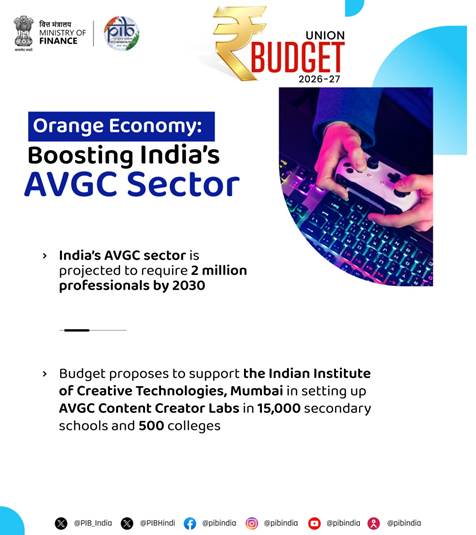
The Budget proposes setting up Animation, Visual Effects, Gaming and Comics (AVGC) Content Creator Labs in:
- 15,000 secondary schools
- 500 colleges
These labs will be anchored by the Indian Institute of Creative Technologies (IICT), Mumbai, envisioned as a premier institution for creative technology training.
Financial Allocation: ?250 crore earmarked for AVGC talent development.
Objective: Early exposure to digital storytelling tools, immersive technologies and creative entrepreneurship.
2. Expansion of Design Education
A new campus of the National Institute of Design (NID) will be established in Eastern India through a competitive “challenge route”.
Significance:
- Addresses shortage of trained designers
- Supports product innovation and branding for MSMEs
- Reduces regional disparities in access to design education
Why the Orange Economy Matters for India
1. Economic Growth Driver
- India’s media and entertainment sector was valued at ?2.5 trillion in 2024 (Economic Survey 2025–26).
- Creative exports grew by 20% in 2023–24, earning over $11 billion.
This highlights the sector’s potential to become a major contributor to services exports and GDP growth.
2. Employment Generation
- Employs around 8% of India’s workforce
- Offers large-scale opportunities for youth, freelancers, women and gig workers
- AVGC sector alone projected to need 2 million professionals by 2030
The sector’s low entry barriers and digital reach make it a powerful employment engine.
3. Strengthening Soft Power
Creative industries export stories, culture and intellectual property, enhancing India’s global influence.
- Indian films, gaming content, music, and digital art expand India’s cultural footprint
- Promotes Brand India globally
Thus, the Orange Economy is not just economic policy, but also cultural diplomacy.
4. Democratization of Creative Opportunity
By establishing AVGC labs in schools and colleges beyond metros, the budget aims to:
- Provide access to high-end creative tools in semi-urban and rural areas
- Unlock hidden talent across regions
- Reduce digital and opportunity divides
This aligns with the vision of inclusive and distributed growth.
India’s Structural Advantages
India is well-positioned to lead in the creative economy due to:
- A young demographic profile
- Rapid urbanisation and rising incomes
- Expanding internet and smartphone penetration
- Strong tradition of storytelling, arts and crafts
When combined with digital platforms, these factors create a fertile ecosystem for creative entrepreneurship.
Digital Hub for Reference and Unique Virtual Address (DHRUVA)
- 07 Dec 2025
In News:
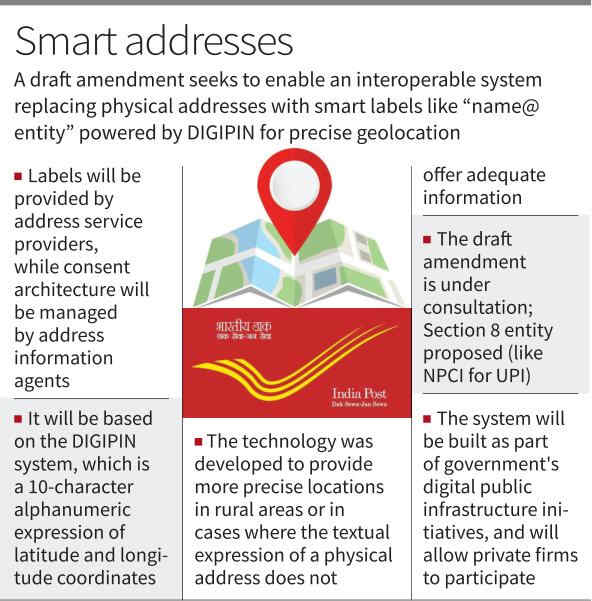
The Department of Posts (DoP) under the Ministry of Communications has proposed a new digital addressing framework called DHRUVA (Digital Hub for Reference and Unique Virtual Address). It aims to create a standardised, interoperable, and user-centric digital address system as part of India’s Digital Public Infrastructure (DPI) initiatives.
What is DHRUVA?
DHRUVA is designed as a national digital address framework that allows individuals to use UPI-like virtual address labels such as “name@entity” instead of repeatedly sharing full physical addresses.
These virtual labels act as proxies for real-world locations and are built on the concept of Address-as-a-Service (AaaS), a system for secure, consent-based management and sharing of address data.
Key Features
1. Virtual Address Labels: Users will be able to share a simple label (similar to a UPI ID or email ID) instead of filling out detailed address forms across platforms.
2. Consent-Based Access: Users can authorise companies to access their address information for a limited duration, after which access must be renewed. This gives citizens control over who can view their address.
3. Interoperability &Standardisation: DHRUVA aims to standardise address formats and ensure interoperability across government services, e-commerce platforms, logistics providers, and emergency services.
4. Public–Private Participation: Private firms can participate in the ecosystem, similar to how the UPI system involves banks and fintech firms. A not-for-profit entity (on the lines of NPCI) may oversee operations under government supervision.
DIGIPIN: Foundational Layer
DHRUVA builds upon the DIGIPIN (Digital Postal Index Number) system.
Key Facts about DIGIPIN:
- Developed by the Department of Posts with IIT Hyderabad and NRSC, ISRO
- A 10-character alphanumeric code representing precise geographic coordinates
- Each code corresponds to roughly a 4 m × 4 m grid (earlier approximated as ~14 sq m area)
- Open-source and covers the entire territory of India
- Useful in areas where traditional textual addresses are unclear or absent
DIGIPIN improves location accuracy for rural areas, logistics, emergency response, and public service delivery.
Institutional Framework
- Address labels will be issued by Address Service Providers (ASPs)
- Consent management will be handled by Address Information Agents (AIAs)
- The platform will be designed with multilingual and mobile-first access
- It may integrate with identity systems like Aadhaar for verification
Significance
- Reduces repetitive address entry across digital platforms
- Enhances privacy through consent-based data sharing
- Improves e-governance, e-commerce, logistics, and emergency services
- Strengthens India’s digital infrastructure alongside Aadhaar and UPI
Tensor Processing Units (TPUs)

- 07 Dec 2025
In News:
Recent reports indicate that Meta is in advanced discussions with Google to use its Tensor Processing Units (TPUs), highlighting growing competition in the global AI hardware ecosystem.
What is a TPU?
A Tensor Processing Unit (TPU) is a custom-designed semiconductor chip developed by Google to accelerate Artificial Intelligence (AI) and Machine Learning (ML) workloads. Unlike Central Processing Units (CPUs), which handle general computing tasks, or Graphics Processing Units (GPUs), which are versatile and widely used for AI and graphics processing, TPUs are application-specific integrated circuits (ASICs) built specifically for deep learning operations.
Google began developing TPUs in the early 2010s to meet the growing computational demands of AI applications such as Google Search, Translate, Photos, and voice recognition systems. The first TPU was introduced around 2015–16, and multiple generations have since been deployed in Google’s data centres and cloud platforms.
How TPUs Work
AI models depend heavily on tensor operations—mathematical calculations involving multi-dimensional arrays of numbers. Deep neural networks process data through repeated matrix multiplications and tensor algebra, which are computationally intensive.
TPUs are optimised for these operations through:
- Massive Parallelism: They perform a very large number of calculations simultaneously.
- Specialised Architecture: Circuits are tailored for AI workloads, reducing unnecessary processing steps.
- Energy Efficiency: TPUs often deliver high performance with lower power consumption compared to traditional GPUs.
This makes them particularly efficient for training and inference in large-scale AI models.
TPUs vs CPUs vs GPUs
|
Feature |
CPU |
GPU |
TPU |
|
Primary Use |
General-purpose computing |
Graphics & parallel tasks |
AI/ML acceleration |
|
Flexibility |
Very high |
High |
Limited to AI tasks |
|
Optimised for |
Sequential tasks |
Parallel processing |
Tensor/matrix operations |
|
Energy Efficiency for AI |
Low |
Moderate |
High |
Strategic Importance
The reported interest of major AI firms in TPUs reflects a shift in the AI hardware landscape. For years, NVIDIA GPUs dominated AI training and deployment due to their performance and software ecosystem. However, large technology companies are increasingly investing in custom AI chips to reduce costs, improve efficiency, and reduce dependence on external suppliers.
Google has begun offering TPU access through its cloud infrastructure, enabling external firms to run AI workloads on TPU clusters. This signals the rise of merchant AI silicon, where companies design chips not only for internal use but also for commercial deployment.
Unified Payments Interface (UPI) Block Mechanism

- 13 Nov 2025
In News:
The Unified Payments Interface (UPI) block mechanism is an emerging reform in India’s capital markets aimed at enhancing investor protection and fund safety in secondary market trading. Recently, the market regulator Securities and Exchange Board of India (SEBI) proposed making this facility mandatory for Qualified Stock Brokers (QSBs), drawing parallels with the well-established Application Supported by Blocked Amount (ASBA) system used in the primary market.
What is the UPI Block Mechanism?
- It allows investors to trade in the secondary market using funds blocked in their bank accounts, rather than transferring money upfront to the trading member.
- The actual debit occurs only when a trade is executed, while the remaining funds stay safely in the investor’s bank account.
- The mechanism is conceptually similar to ASBA, but extended to secondary market transactions.
Key Features
- Funds remain in the investor’s bank account, with only a lien/block created.
- Reduces the risk of misuse or diversion of client funds by intermediaries.
- Currently optional for investors and not mandatory for trading members, though SEBI has proposed mandatory adoption for QSBs.
- SEBI has also sought feedback on whether a “3-in-1 trading account” (bank + demat + trading) can be allowed as an alternative.
Role of Qualified Stock Brokers (QSBs)
- Trading members are classified as QSBs based on:
- Number of active clients
- Total client assets held
- Trading volumes
- End-of-day margins
- Being a QSB entails higher regulatory responsibilities and compliance standards.
- SEBI’s proposal targets QSBs first due to their scale and systemic importance.
Link with ASBA
Application Supported by Blocked Amount (ASBA):
- Introduced by SEBI in 2008.
- Mandatory for IPOs and rights issues.
- Allows investors to apply for issues by blocking funds in their bank account, with debit only after allotment.
- Prevents premature transfer of investor money and improves transparency.
The UPI block mechanism mirrors this principle but applies it to secondary market trading.
Regulatory Background
- UPI, developed by the National Payments Corporation of India (NPCI) and regulated by the Reserve Bank of India (RBI), was launched in 2016.
- SEBI mandated UPI-based payments with fund blocking for IPO applications in 2019.
- In January 2024, SEBI introduced a single-block, multiple-debits UPI mechanism for secondary market use, paving the way for the current proposal.
Significance
- Enhanced investor protection by keeping funds under the investor’s control.
- Improves trust and transparency in secondary market operations.
- Aligns with SEBI’s broader objective of segregation and safety of client funds.
- Reduces settlement risk and strengthens market integrity.
National Unity Day
- 31 Oct 2025
In News:
- National Unity Day (Rashtriya Ekta Diwas) is observed annually on 31 October to mark the birth anniversary of Sardar Vallabhbhai Patel, India’s first Deputy Prime Minister and Home Minister.
- Introduced in 2014, the day highlights Patel's pivotal role in consolidating the nation by integrating over 560 princely states into the Indian Union at the time of Independence— a task that earned him the enduring title, the “Iron Man of India.”
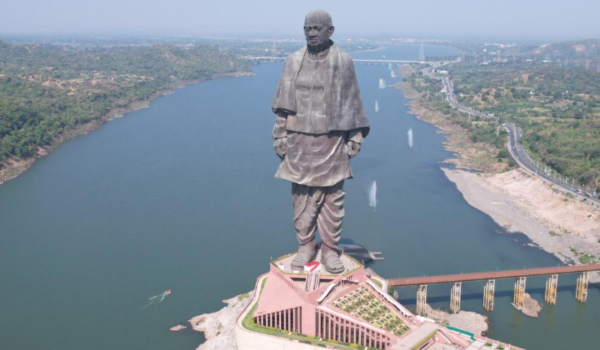
- The year 2025 marks the 150th birth anniversary of Sardar Patel, and the commemorative events have been organised on an unprecedented scale at the Statue of Unity in Ekta Nagar, Gujarat, led by Prime Minister Narendra Modi.
- The celebrations highlight the theme “Unity in Diversity”, underscoring India’s multicultural character and the importance of national cohesion.
Historical Significance of Sardar Vallabhbhai Patel
- Born on 31 October 1875 in Nadiad, Gujarat, Patel initially practised law before joining the national movement under Mahatma Gandhi.
- His leadership in the Kheda Satyagraha (1918) and Nagpur Flag Satyagraha (1923) marked his rise as a mass leader.
- As President of the Ahmedabad Municipal Board (1924), he reformed urban infrastructure, sanitation and civic systems.
- The Bardoli Satyagraha (1928) elevated him to national prominence, earning him the honorific “Sardar.”
- At Independence, he was entrusted with unifying the 17 British provinces and integrating the princely states—an immense administrative and diplomatic feat.
- Served as Deputy Prime Minister and Home Minister (1947–1950) and also held charge of the Information and Broadcasting Ministry.
India Re-elected to the Universal Postal Union’s Governing Bodies
- 23 Sep 2025
In News:
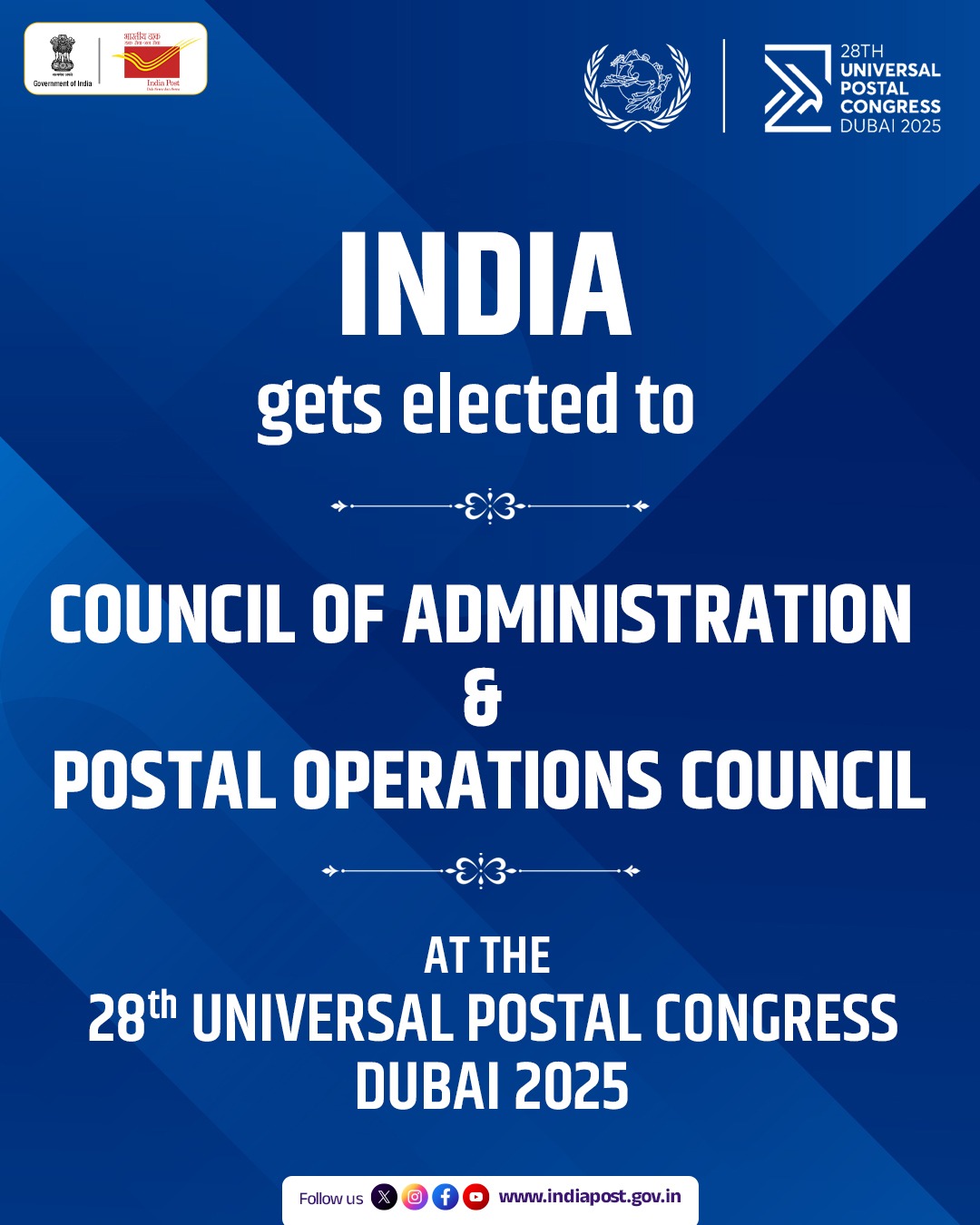
- India has been re-elected to the Council of Administration (CA) and the Postal Operations Council (POC) of the Universal Postal Union (UPU) during the 28th Universal Postal Congress held in Dubai.
- This re-election reaffirms global confidence in India Post’s leadership, digital reforms, and commitment to inclusive postal development, strengthening India’s voice in shaping international postal governance.
About the Universal Postal Union (UPU)
- Founded: 1874 under the Treaty of Bern
- Headquarters: Berne, Switzerland
- Members: 192 countries
- Status: A specialized agency of the United Nations, it is the second-oldest international organization after the International Telecommunication Union (ITU).
Mandate and Objectives
- To promote global postal cooperation and ensure universal connectivity in mail and parcel delivery.
- To establish standards, regulations, and tariffs for international postal exchanges.
- To enhance efficiency, affordability, and reliability of postal services globally.
- To facilitate the growth of e-commerce and cross-border logistics through modern postal systems.
Governance Structure of UPU
The UPU functions through four key organs:
- Congress:
- The supreme decision-making body, convened every four years.
- Sets the long-term strategy, budget, and policy framework for global postal operations.
- Council of Administration (CA):
- Handles policy, legal, administrative, and regulatory issues between Congress sessions.
- Oversees the implementation of Congress decisions and coordinates global postal governance.
- Postal Operations Council (POC):
- The technical and operational body comprising 48 elected member countries.
- Works on service innovation, quality enhancement, digital integration, and modernisation of global postal systems.
- International Bureau:
- The secretariat of the UPU providing logistical, analytical, and technical support to member states and councils.
Significance of India’s Re-election
- Endorsement of Leadership: India’s re-election underscores the international community’s trust in its postal transformation, particularly in digital and financial inclusion.
- Modernisation Initiatives: India Post’s progress in e-commerce facilitation, postal banking, logistics efficiency, and technology-driven governance has positioned it as a model for developing nations.
- Strategic Representation: Through its roles in both CA and POC, India can influence policy formulation, standard setting, and capacity-building initiatives within the UPU.
- Global Collaboration: Reinforces India’s vision of “One World, One Postal Network”, aligning with its broader digital diplomacy and South-South cooperation goals.
India and the UPU: A Historical Perspective
- India joined the UPU in 1876, just two years after its establishment.
- Over the decades, it has played a constructive role in strengthening postal connectivity across the Global South.
- Under the leadership of the Ministry of Communications, India Post has transitioned from traditional mail delivery to offering digital, financial, and logistical services, supporting Digital India and Atmanirbhar Bharat missions.
Kurmi Community
- 22 Sep 2025
In News:
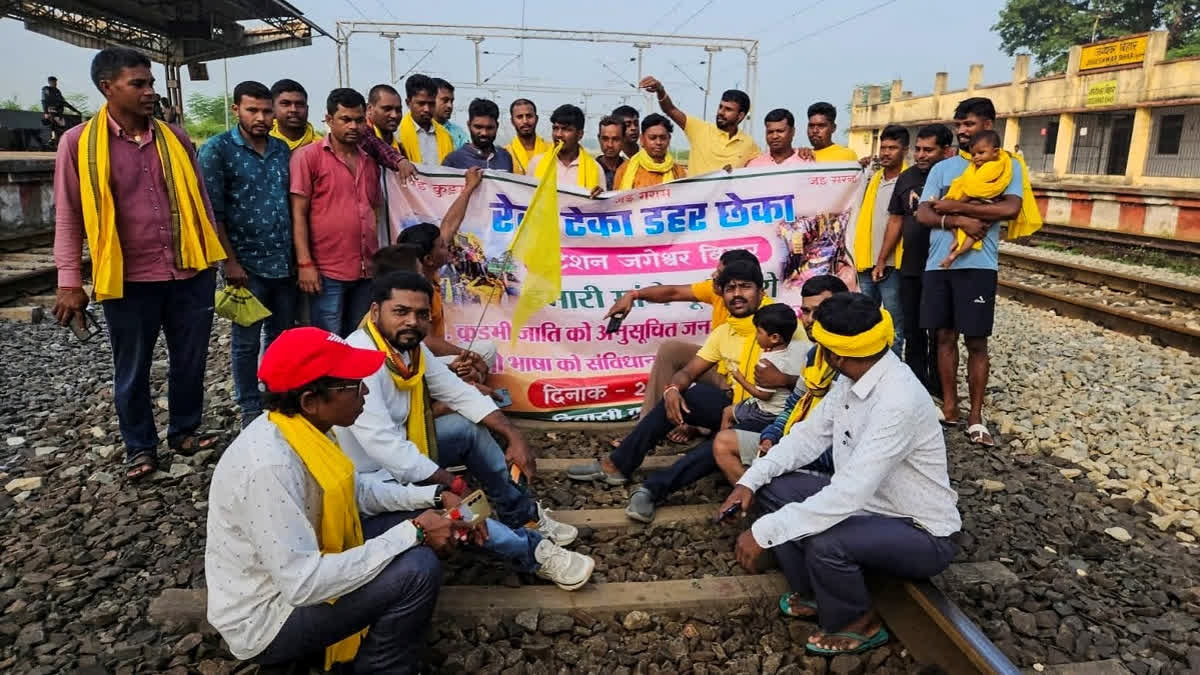
Defying prohibitory orders, members of the Kurmi community in Jharkhand launched a rail blockade across several stations to demand Scheduled Tribe (ST) status and the inclusion of the Kurmali language in the Eighth Schedule of the Constitution. The agitation, organized under the banner of the Adivasi KurmiSamaj (AKS), disrupted train services across the South Eastern and East Central Railway divisions.
About the Kurmi Community
- Origins and Identity:The Kurmis (also known as Kunbi in some regions) are traditionally an agricultural community, predominantly Hindu, found across eastern Uttar Pradesh, southern Awadh, Bihar, Jharkhand, and parts of Odisha.The name “Kurmi” is derived from the Sanskrit word “Krishi” (agriculture), symbolizing their deep connection with farming.
- Historical Background:Historically, Kurmis are believed to be descendants of Kshatriya warriors who took to agriculture. Renowned for their hard work, soil management, and egalitarian culture, the community was lauded by both Mughal and British administrators for its agrarian contributions.
- Social Status:Currently, Kurmis are classified as Other Backward Class (OBC) in most Indian states. However, the community contends that their socio-cultural roots align more closely with tribal heritage, warranting ST recognition.
- Sub-Groups and Culture:The community is divided into several gotras (clans), including Chandel, Chauhan, Solanki, Tomar, Baghel, and Sengar. They are known for maintaining strong community networks and gender-inclusive social practices.
About the Kurmali Language
- Linguistic Affiliation:Kurmali belongs to the Indo-Aryan language family and is primarily spoken in Jharkhand, Bihar, and Odisha.
- Cultural Significance:It serves as a marker of Kurmi identity and is used in folk traditions, oral histories, and local communication.
- Demand for Recognition:Inclusion in the Eighth Schedule would ensure state-supported promotion, education, and preservation of the language, similar to other recognized regional languages.
Government Response and Implications
The Jharkhand administration has maintained a cautious approach, emphasizing the need for maintaining law and order while acknowledging the sensitivity of the community’s demands.The demand for ST status involves constitutional and demographic considerations, requiring evaluation by the Ministry of Tribal Affairs and approval by Parliament under Article 342 of the Constitution.
Non-communicable Diseases
- 14 Sep 2025
In News:
Non-Communicable Diseases (NCDs) such as cardiovascular disorders, diabetes, chronic respiratory ailments, and cancers have emerged as the leading cause of premature mortality globally. A recent Lancet study tracking progress across 185 countries (2010–2019) highlighted a worrying trend for India: unlike most nations where mortality risk from NCDs declined, India witnessed an increase in NCD-related deaths, especially among women.
Key Findings from the Lancet Study
- Rising Mortality Risk: Between 2010–2019, NCD mortality in India increased by 2.1% for females and 0.1% for males, compared to a decline in the previous decade.
- Probability of Death Before 80:
- Women – rose from 46.6% (2010) to 48.7% (2019).
- Men – remained high at 57.9% (2019), up from 57.8% (2010).
- Major Drivers: Ischaemic heart disease and diabetes (including kidney disease due to diabetes) contributed most to the rising risk, especially in women over 40 and men over 55.
- Improvements: Declines in deaths from liver cirrhosis, stroke, COPD, and stomach cancer were recorded, largely due to better blood pressure awareness and management.
Causes of the NCD Burden in India
- Lifestyle Factors
- Rapidly rising obesity, driven by unhealthy diets and sedentary lifestyles.
- Increased consumption of processed foods, sugary beverages, and trans fats.
- Tobacco and alcohol use.
- Environmental & Social Factors
- Urbanization, pollution (ambient and indoor), and chronic stress.
- Ageing population and poverty-driven dietary imbalances.
- Health System Gaps
- Limited access to quality primary care and preventive services.
- Low penetration of screening and early detection programmes in rural areas.
Expert Insights
- Diabetes–Obesity–Heart Disease Spiral: Experts warn that India’s growing obesity rates are fuelling diabetes, which in turn increases risks of cardiovascular complications.
- Policy Solutions Suggested:
- Aggressive taxation (up to 40%) on sugary drinks and ultra-processed foods.
- Subsidies for vegetables, fruits, and nutrient-rich foods.
- Urban planning reforms to create walking spaces and encourage physical activity.
- Public campaigns against tobacco, alcohol, excess salt, and stress.
- Tackling pollution as a compounding risk factor.
National Initiatives to Combat NCDs
- National Programme for Prevention and Control of NCDs (NP-NCD): Launched in 2010, expanded in 2023, focuses on early detection, management, and referral.
- 75/25 Initiative (2023): Targets 75 million people with hypertension and diabetes by 2025 through standardized care.
- Ayushman Bharat–PMJAY: Provides financial protection for tertiary NCD treatment and upgrades PHCs into Ayushman Arogya Mandirs.
- Eat Right India Movement (FSSAI): Promotes healthier diets and reduction of trans fats.
- Fit India Movement: Encourages regular physical activity and fitness to reduce lifestyle-related risks.
Way Forward
India’s NCD challenge demands a multi-pronged strategy:
- Strengthening primary healthcare for screening and early detection.
- Fiscal measures (taxes and subsidies) to influence dietary choices.
- Health education campaigns to promote lifestyle modifications.
- Integration of NCD management into universal health coverage.
- Climate and pollution control measures, given their direct links to respiratory and cardiac illnesses.
Unique Disability ID (UDID) Scheme
- 08 Sep 2025
In News:
The Unique Disability ID (UDID) project, launched by the Department of Empowerment of Persons with Disabilities (DEPwD), Ministry of Social Justice and Empowerment, aims to create a national database of Persons with Disabilities (PwDs) and provide them with a single identification document that is valid across the country. Despite its importance, recent data highlight serious gaps in its coverage and implementation.
Current Status and Coverage
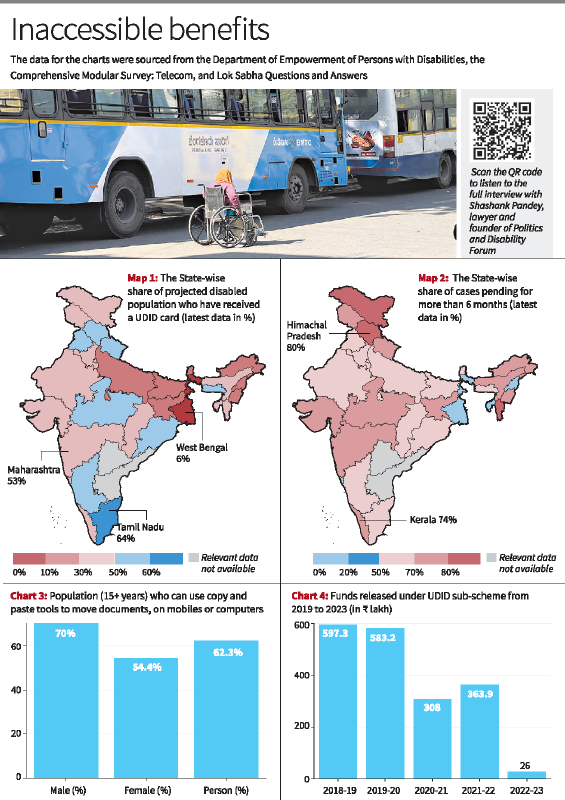
- Less than 40% of India’s projected PwD population have been issued UDID cards.
- Over 11 lakh applications remain pending, with more than 60% delayed for over six months.
- In most States, fewer than half of PwDs possess the card; only Tamil Nadu, Meghalaya, Odisha, and Karnataka have crossed the 50% coverage mark.
- West Bengal stands out with an extremely low coverage of around 6%.
- Data for Andhra Pradesh and Telangana were unavailable separately.
Features of the UDID Card
- Structure: An 18-character alphanumeric ID, encoding details such as state, district, disability type, year of birth, and a security checksum.
- Types of Cards (based on disability percentage):
- White: Below 40% disability.
- Yellow: 40%–80% disability.
- Blue: Above 80% disability.
- Issuance: Authorized by district hospitals or the hospital where the PwD is undergoing treatment, under the Rights of Persons with Disabilities (RPwD) Act, 2016.
Objectives of the UDID Project
- Creation of a centralized, nationwide database of PwDs.
- Elimination of duplicate records and ensuring portability across States.
- Online and offline submission of applications, with provision for renewal and updates.
- Tracking of physical and financial progress of beneficiaries through an integrated Management Information System (MIS).
- Facilitation of access to benefits under schemes such as:
- ADIP Scheme – providing assistive devices like wheelchairs, prostheses, and hearing aids.
- Scholarships for education.
- Reservations in employment and educational institutions.
Implementation Challenges
- Delayed Processing: Over half of all applications remain pending beyond six months, with Himachal Pradesh, Ladakh, and Mizoram having the highest backlog.
- Digital Divide: The application process requires online submissions and document uploads, which excludes many due to low digital literacy. Only about 60% of Indians above 15 years can use basic digital tools; the share is even lower among women and PwDs.
- Staggered Roll-out: Earlier, States issued disability certificates locally; the transition to UDID was not communicated effectively, leading to confusion.
- Reduced Funding: While overall allocation for PwD welfare has increased, budgetary support for the UDID sub-scheme has declined, constraining outreach.
- Political Marginalization: PwDs constitute only 2.68 crore people (2011 Census), making them a relatively small political constituency. This reduces policy priority, as their collective influence on electoral outcomes is limited.
Significance
- Welfare Access: UDID acts as a gateway to schemes, ensuring uniformity and portability across States.
- Data-Driven Policy: Enables real-time monitoring and evidence-based policymaking.
- Administrative Efficiency: Prevents duplication and leakages in welfare delivery.
- Social Inclusion: Supports the objectives of the RPwD Act, 2016 and aligns with India’s commitments under the UN Convention on the Rights of Persons with Disabilities (UNCRPD).
Famine in Gaza

- 28 Aug 2025
In News:
The United Nations has confirmed a famine in Gaza City and surrounding areas, describing it as a “failure of humanity” and a man-made disaster. The declaration follows a report by the Integrated Food Security Phase Classification (IPC), which raised food insecurity in parts of Gaza to Phase 5, the highest level, indicating catastrophic conditions of starvation, destitution, and death.
Scale of the Crisis
- Population affected: Nearly 641,000 people are facing IPC Phase 5 conditions, while 1.14 million (58% of Gaza’s population) are projected to experience emergency-level food insecurity (IPC Phase 4) between mid-August and end of September.
- Children at risk: By June 2026, 132,000 children under five may face life-threatening malnutrition.
- Mortality: Gaza’s Hamas-run health ministry reports 271 deaths due to malnutrition, including 112 children.
- Historical Context: Since 2004, IPC has officially classified only four famines, with the last one in Sudan, 2024.
Causes
The famine is described as “starvation by design” by UN officials:
- Aid Restrictions: Israel has been accused of systematically obstructing humanitarian aid. The UN estimates 600 aid trucks per day are needed, but only 300 trucks are entering daily.
- Conflict Impact: Israel launched a military campaign in response to the Hamas attack on southern Israel in October 2023, leading to mass casualties and displacement. Over 62,000 deaths have been reported in Gaza, with more than 90% of homes damaged or destroyed.
- Infrastructure Collapse: Healthcare, water, sanitation, and hygiene systems have collapsed, exacerbating malnutrition and disease.
International Response
- UN Officials:
- Secretary-General Antonio Guterres called the famine a “moral indictment” and a man-made disaster.
- UNRWA Chief Philippe Lazzarini termed it “starvation by design”.
- UN Human Rights Chief Volker Turk attributed the famine to Israel’s unlawful restriction of aid.
- Global Condemnation:
- UK Foreign Secretary David Lammy described it as a “moral outrage”.
- Humanitarian groups and UN bodies have called for an immediate, at-scale response to prevent widespread starvation.
- Israeli Position: Israel denies a policy of starvation, claiming it has allowed 2 million tons of aid since the conflict began and continues to organize humanitarian corridors and airdrops, though the UN calls these efforts insufficient and sometimes unsafe.
Landmark Study on Dengue Immunity
- 14 Aug 2025
In News:
A new study published in Science Translational Medicine has provided critical insights into dengue immunity and vaccine development. The research, conducted in the Philippines with nearly 3,000 children, highlighted the role of Envelope Dimer Epitope (EDE)-like antibodies as a key driver of broad, cross-serotype protection against dengue virus (DENV).
Dengue: Global Challenge
- Caused by four serotypes (DENV1–DENV4).
- Most common vector-borne viral disease, affecting nearly half the world’s population, particularly in Southeast Asia, Africa, and the Americas.
- Economic burden in Southeast Asia exceeds that of 17 other diseases including hepatitis B and Japanese encephalitis.
- Severe dengue typically occurs during secondary infection with a different serotype due to Antibody-Dependent Enhancement (ADE), where non-neutralising antibodies worsen infection.
Current Vaccines
- Dengvaxia – Licensed in some countries, but recommended only for those with prior dengue exposure (requires laboratory confirmation).
- QDENGA – Approved in some regions, effective mainly in pre-exposed individuals.
- Limitation: Both vaccines carry ADE risks for dengue-naïve individuals.
What are EDE-like Antibodies?
- Definition: Antibodies targeting Envelope Dimer Epitope (EDE), a quaternary structure formed by paired E proteins on the viral surface.
- Function: Broadly neutralise all four serotypes by preventing viral entry into cells.
- Key Features:
- Broadly neutralising, cross-reactive across serotypes.
- Common in individuals with multiple infections or vaccinated with prior exposure.
- Rare in primary infection (detected in only 4–12% of such cases).
- Strongly correlated with reduced disease severity and hospitalisation risk.
- Potential biomarker for evaluating vaccine efficacy.
Study Highlights
- Conducted during a dengue outbreak in Cebu, Philippines (DENV2 dominant, followed by DENV3).
- Children with secondary immunity showed high prevalence of EDE-like antibodies (82–90%).
- These antibodies explained 42–65% of the protective effect of neutralising antibodies and 41–75% of E protein-binding antibodies, making them the primary determinant of broad protection.
- Findings:
- Less protective against new infections but highly effective against severe disease.
- Boosted by both natural infection and vaccination.
- Strong predictor of reduced symptomatic dengue and hospitalisation.
Implications
- Vaccine Development: Targeting EDE could overcome ADE risks and provide universal dengue protection.
- Public Health: Potential for safer immunisation strategies in endemic regions like India.
- Therapeutics: Basis for developing monoclonal antibody treatments to deliver rapid, cross-serotype protection during outbreaks.
BlueBird Communications Satellite
- 04 Aug 2025
In News:
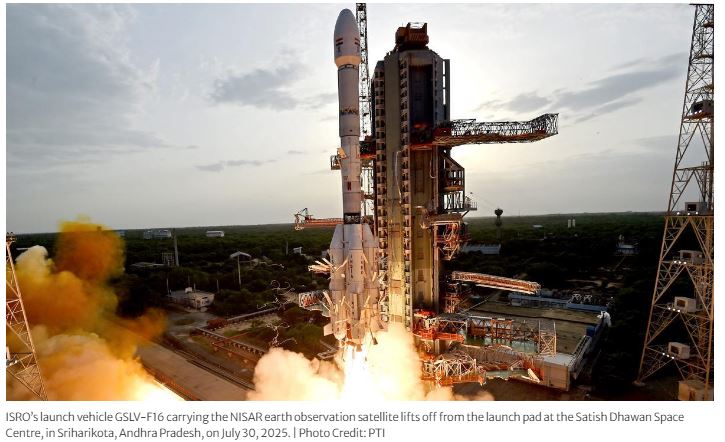
Following the successful NISAR (NASA–ISRO Synthetic Aperture Radar) mission, the Indian Space Research Organisation (ISRO)is preparing for its next major collaboration with the United States: the launch of the BlueBird communications satellite. The mission highlights India’s growing role as a reliable global launch partner and the expanding scope of Indo–U.S. space cooperation.
The BlueBird Satellite
- Developer: U.S.-based AST SpaceMobile
- Type: Advanced communications satellite designed for direct satellite-to-smartphone connectivity
- Weight: ~6,000 kg
- Antenna: Innovative 64-square-metre antenna array for high-capacity communication
- Orbit: Low Earth Orbit (LEO)
- Technology:
- Enables direct calling and broadband access from space without the need for ground-based mobile towers
- Supports beams up to 40 MHz capacity
- Offers peak speeds of up to 120 Mbps
- Service Plan: After deployment, BlueBird satellites will provide non-continuous broadband cellular service initially in the U.S. and select global markets.
Launch Details
- Launch Vehicle: LVM3 (Launch Vehicle Mark-3), ISRO’s heaviest rocket, formerly known as GSLV Mk-III
- Launch Site: Satish Dhawan Space Centre, Sriharikota
- Timeline: Expected launch in the next 3–4 months (as per ISRO chairman V. Narayanan)
Strategic Significance
- For India–U.S. Cooperation:
- Follows the joint NISAR Earth observation mission, reinforcing strategic space ties.
- Strengthens India’s position as a preferred partner for global commercial satellite launches.
- For India’s Space Economy:
- Enhances ISRO’s reputation in heavy-lift commercial launches, particularly with LVM3.
- Showcases India’s cost-effective access to space, attracting further foreign collaborations.
- For Global Communication Technology:
- Marks a breakthrough in direct-to-device (D2D) connectivity, reducing dependency on ground infrastructure.
- Could help expand mobile and broadband coverage to remote and underserved regions worldwide.
United Nations Educational, Scientific and Cultural Organization (UNESCO)
- 23 Jul 2025
In News:
In a significant development, the United States has announced its decision to withdraw from UNESCO (United Nations Educational, Scientific and Cultural Organization) by December 2026, citing what it perceives as the agency’s anti-Israel bias and its recognition of the State of Palestine as a full member. This marks the third withdrawal of the U.S. from UNESCO and the second under President Donald Trump’s leadership, having previously exited in 2018 and rejoined in 2023 under the Biden administration.
Reasons for U.S. Withdrawal
According to the U.S. State Department, the decision stems from:
- UNESCO’s admission of the State of Palestine as a member state, which contradicts official U.S. policy.
- Allegations that UNESCO promotes divisive social and cultural causes.
- Concerns about the proliferation of anti-Israel rhetoric within the organization.
About UNESCO
Founding and Mandate
- Founded: 16 November 1945 (Constitution in force from 1946).
- Headquarters: Paris, France.
- Parent Body: United Nations Economic and Social Council (ECOSOC).
- Membership: 194 member states and 12 associate members.
- Origin: Born out of post–World War II efforts to foster peace through education, science, and culture.
Objectives
UNESCO aims to build global peace and security by:
- Promoting international cooperation in education, science, culture, and communication.
- Supporting literacy, educational access, and free universal education.
- Acting as a clearinghouse of knowledge, especially in global South nations.
Focus Areas
UNESCO operates in five major sectors:
- Education
- Natural Sciences
- Social and Human Sciences
- Culture
- Communication and Information
Key Functions and Initiatives
Flagship Initiatives
- World Heritage Convention (1972): Protects cultural and natural sites of outstanding universal value.
- Man and the Biosphere Programme (1971): Promotes sustainable development through biosphere reserves.
- Convention for Safeguarding Intangible Cultural Heritage (2003): Preserves oral traditions, performing arts, and rituals.
- Global Education Coalition (2020): Formed during COVID-19 to ensure education continuity.
- Recommendation on the Ethics of Artificial Intelligence (2021): Sets global standards for ethical AI development.
Important Publications
- Global Education Monitoring Report
- World Water Development Report
- World Trends in Freedom of Expression and Media Development
Strategic Importance of UNESCO
- Acts as a platform for intercultural dialogue and peacebuilding.
- Enhances scientific cooperation for issues like climate change and disaster preparedness.
- Supports freedom of expression and combats misinformation globally.
- Promotes equity in global education and digital access.
- Plays a key role in setting ethical standards in science and technology.
U.S. and UNESCO: A Tumultuous Relationship
- The U.S. has historically had a strained relationship with UNESCO:
- 1984: First withdrawal under Ronald Reagan, citing mismanagement and politicization.
- 2002: Rejoined under George W. Bush.
- 2011: Stopped funding after UNESCO admitted Palestine as a member.
- 2018: Withdrew under Donald Trump.
- 2023: Rejoined under Joe Biden.
- 2026: Set to withdraw again.
Implications of U.S. Withdrawal
- Financial Impact: The U.S. has historically contributed around 22% of UNESCO’s budget.
- Geopolitical Signal: Reflects a broader American skepticism towards multilateral institutions.
- Operational Effect: May hamper UNESCO’s work, especially in politically sensitive or conflict regions.
- Diplomatic Fallout: Could weaken the U.S.'s soft power and global cultural influence.
Kounis Syndrome
- 25 Jun 2025
In News:
The recent sudden death of Indian industrialist Sanjay Kapur during a polo match in London has drawn national attention to Kounis Syndrome, a rare but serious medical condition. Reports suggest he may have inhaled a bee, which stung him inside the throat—leading to a cardiac arrest, potentially triggered by an acute allergic reaction. This tragic incident has raised awareness about the interaction between allergic reactions and cardiac emergencies, especially in seemingly healthy individuals.
What is Kounis Syndrome?
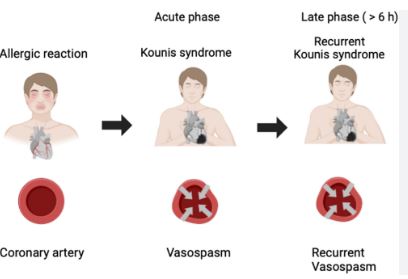
Kounis Syndrome is a rare medical condition in which a severe allergic or hypersensitivity reaction triggers a coronary event, such as a heart attack. It is often termed “allergic angina” or “allergic myocardial infarction.”
Mechanism
- Triggered by allergens such as insect stings, drugs, or foods.
- Leads to the activation of mast cells, which release histamine and cytokines.
- These chemicals cause spasms, plaque rupture, or clot formation in coronary arteries.
- Result: Reduced blood flow to the heart, causing ischemia or infarction.
Types of Kounis Syndrome
- Type I: In individuals with normal coronary arteries – allergic reaction causes artery spasm and possible heart attack.
- Type II: In those with existing coronary artery disease – allergic reaction destabilizes plaques, causing infarction.
- Type III: In patients with coronary stents – hypersensitivity leads to thrombosis within stents.
Triggers of Kounis Syndrome
- Insect stings (bee, wasp)
- Medications (NSAIDs, antibiotics)
- Foods (nuts, shellfish, kiwi)
- Environmental allergens (latex, contrast dyes)
- Underlying health conditions (e.g., mastocytosis)
Symptoms
- Chest pain
- Shortness of breath or wheezing
- Swelling (angioedema), hives, or rash
- Low blood pressure
- ECG changes: ST-segment elevation or depression
Diagnosis and Treatment
- Diagnosis: Clinical history, ECG, cardiac enzymes, allergy tests.
- Treatment includes:
- For allergy: Antihistamines, corticosteroids, epinephrine
- For cardiac care: Oxygen, nitrates, antiplatelet drugs, beta-blockers
Why Mouth/Throat Bee Stings Are Dangerous
- Immediate airway swelling
- Increased absorption of venom into bloodstream
- Enhanced risk of anaphylaxis and cardiac arrest
Even people without a history of allergy can experience severe reactions if stung inside the mouth or throat.
Warning Signs After a Bee Sting
- Difficulty breathing
- Swollen lips, tongue, or throat
- Rash or itching
- Dizziness or fainting
- Rapid or weak heartbeat
- Nausea or unconsciousness
Immediate emergency care is essential.
QS World University Rankings 2026
- 22 Jun 2025
In News:
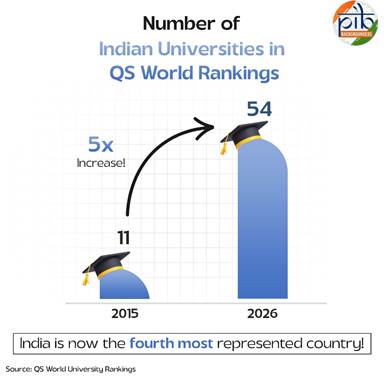
India has recorded its highest representation to date in the QS World University Rankings 2026, with 54 institutions featured—up from 11 in 2015. This marks a five-fold increase in a decade, making India the fourth most represented country, after the US, UK, and China.
Key Highlights
- Total Indian Institutions Ranked (2026): 54
- New Entrants from India: 8
- Top-performing Indian Institution: IIT Delhi (Rank 123)
- Fastest Rising Indian Institution: IIT Madras, up 47 places (from 227 in 2025 to 180 in 2026)
- Indian Institutes of Technology (IITs) Featured: 12
- Debut Institutions in 2026:
- IIT Gandhinagar
- Lovely Professional University (LPU)
- Kalinga Institute of Industrial Technology (KIIT)
- Ashoka University
- Galgotias University
- Shiv Nadar University
- CHRIST (Deemed to be University), Bengaluru
- Manav Rachna International Institute of Research and Studies (MRIIRS)
Significant Trends and Insights
- Global Standing:
- India now ranks 4th globally in terms of number of institutions in the QS Rankings.
- Only the US (192), UK (90), and China (72) rank higher.
- Improvements and Recognition:
- 48% of India’s ranked institutions have improved their positions over last year.
- 6 institutions are in the global top 250.
- 5 Indian universities are among the top 100 globally for Employer Reputation, showing high industry trust.
- 8 institutions rank in the top 100 for Citations per Faculty, with an average score of 43.7—higher than the UK, US, and Germany.
- Diverse Representation:
- Includes central universities, deemed-to-be universities, technical institutions, and private universities, reflecting a balanced and diversified higher education landscape.
QS Ranking Methodology: Key Indicators
Performance Lens Weightage Indicators Weightage
Research & Discovery 50% Academic Reputation 30%
Citations per Faculty 20%
Employability & Outcomes 20% Employer Reputation 15%
Employment Outcomes 5%
Global Engagement 15% International Faculty Ratio 5%
International Research Network 5%
International Student Ratio 5%
Learning Experience 10% Faculty-Student Ratio 10%
Sustainability 5% Sustainability 5%
- New Indicator in 2026: International Student Diversity (tracks number and diversity of international students; non-weighted this cycle)
Significance for India
- The consistent rise highlights the impact of reforms under the National Education Policy (NEP) 2020, with greater emphasis on research, global collaboration, academic excellence, and employer integration.
- India’s progress makes it the fastest-rising G20 nation in QS rankings.
- Reflects increasing global trust and recognition of India’s higher education system.
Ranthambore Tiger Reserve

- 09 Jun 2025
In News:
The Supreme Court of India has recently ordered the Rajasthan government to impose an immediate ban on all mining activities within the core area of the Ranthambore Tiger Reserve, citing concerns over wildlife protection and habitat preservation.
About Ranthambore Tiger Reserve
- Location: Sawai Madhopur district, southeastern Rajasthan.
- Named After: Ranthambore Fort, a UNESCO World Heritage Site, located within the reserve.
- Geographical Boundaries:
- North: Bounded by the Banas River
- South: Bounded by the Chambal River
- Terrain: High rocky plateaus, valleys, rivers, lakes, and historic ruins including forts and mosques.
- Total Area: ~1,411 sq.km, making it one of the largest tiger reserves in northern India.
- Surrounding Ranges: Located at the confluence of the Aravalli and Vindhya hill ranges.
Ecology and Biodiversity
Vegetation: Dominated by dry deciduous forests and open grassy meadows.
- Flora:
- Predominantly Dhok tree (Anogeissus pendula).
- Other species: Acacia, Capparis, Zizyphus, Prosopis, etc.
Water Bodies:
- Important lakes include:
- Padam Talab
- Raj Bagh Talab
- Malik Talab
Fauna:
- Apex predator: Royal Bengal Tiger
- Other mammals:
- Leopard, Caracal, Jungle Cat
- Sambar, Chital, Chinkara, Wild Boar
Historical Significance: Previously served as the royal hunting grounds of the Maharajas of Jaipur.
DHRUVA(Digital Hub for Reference and Unique Virtual Address)
- 01 Jun 2025
In News:
In May 2025, the Department of Posts, under the Ministry of Communications, released the policy framework for DHRUVA (Digital Hub for Reference and Unique Virtual Address) — a key initiative aimed at creating a standardized, geo-coded digital address infrastructure across India.
What is DHRUVA?
DHRUVA is a Digital Public Infrastructure (DPI) initiative that conceptualizes Address-as-a-Service (AaaS) — a secure, consent-based, and interoperable system for managing and sharing address data. It builds upon the earlier DIGIPIN (Digital Postal Index Number) system, which created a national-level, geo-tagged addressing grid for improved governance and service delivery.
Objectives of DHRUVA
- Transform address information into a digital public good.
- Enable secure, standardized, and interoperable access to address data across sectors.
- Empower users with control and consent over how their address data is shared.
- Promote public-private collaboration in areas like logistics, e-governance, and financial inclusion.
Key Features
- DIGIPIN Backbone: Utilizes the Digital Postal Index Number system, allowing logical and directional naming of addresses with precise geolocation.
- Address-as-a-Service (AaaS): Facilitates seamless address validation, authentication, and sharing across government and private platforms.
- User Autonomy: Individuals can manage and consent to how their address data is used, ensuring privacy and user-centric governance.
- Open & Inclusive Access: The infrastructure is freely accessible, promoting innovation and broad-based adoption.
- Consent Framework: Address data sharing will be user-approved, ensuring a secure and trusted digital ecosystem.
Significance of DHRUVA
- Geospatial Governance: Enhances planning, disaster management, and delivery of public services through precise address mapping.
- Improved Logistics & E-Commerce: Enables more efficient last-mile delivery, reducing ambiguity in address identification.
- Financial Inclusion: Facilitates smoother KYC, subsidy disbursement, and service access in rural and underserved areas.
- Ease of Living & Digital India: Aligns with broader national goals by supporting smart governance and digital transformation.
- Public-Private Synergy: Encourages co-creation of solutions by government bodies and private enterprises based on shared, trusted digital address data.
India and the United Nations Peacekeeping
- 30 May 2025
In News:
Two Indian peacekeepers—Brigadier General Amitabh Jha (UNDOF) and Havildar Sanjay Singh (MONUSCO)—are being posthumously awarded the Dag Hammarskjöld Medal by the United Nations. Their sacrifice will be honoured at the U.N. Headquarters during the International Day of U.N. Peacekeepers on May 29, 2025.
Overview:
- Instituted: 1997
- Purpose: Posthumous honour to U.N. peacekeepers who die in service under U.N. authority.
- Awarded on: Peacekeepers' Day (May 29) annually.
- Named after: Dag Hammarskjöld, the 2nd U.N. Secretary-General, who died in a 1961 plane crash during a peace mission in Congo.
- First award (1998): Dag Hammarskjöld and Commandant René de Labarrière (first peacekeeper to die in a U.N. mission, 1948).
Other UN Peacekeeping Awards
- Captain Mbaye Diagne Medal for Exceptional Courage: Recognizes U.N. personnel displaying exceptional bravery.
- UN Military Gender Advocate of the Year Award: Recognizes peacekeepers promoting gender equality under UNSC Resolution 1325.
- 2023 recipient: Major Radhika Sen (India, MONUSCO).
- 2024 recipients: Sqn. Ldr. Sharon Syme (Ghana) and Superintendent Zainab Gbla (Sierra Leone), both serving in UNISFA.
India’s Contribution to UN Peacekeeping
- Total personnel deployed (2025): Over 5,300 Indian troops in missions in: Abyei, Central African Republic, DR Congo, Lebanon, Somalia, South Sudan, and Western Sahara.
- Historical role:
- Since 1950s, India has contributed over 290,000 personnel to 50+ peacekeeping missions.
- India is among the top four contributors of uniformed personnel.
- Engagement includes training, capacity building, and technology support for U.N. missions.
UN Peacekeeping: Global Overview
- Established: 1948 (First mission: United Nations Truce Supervision Organization in the Middle East).
- Cumulative personnel served: Over 2 million in 71 operations.
- Current strength (2025): Around 68,000 personnel from 119 countries in 11 missions across Africa, Asia, Europe, and the Middle East.
- Peacekeepers who have died since 1948: Over 4,400.
Theme 2025: ‘The Future of Peacekeeping’
- Linked to: Pact for the Future adopted in 2024 by global leaders.
- Aim: To reform peacekeeping for modern challenges.
- UN Secretary-General António Guterres emphasized the need for a peacekeeping force ready to face "increasingly complex" global situations.
Landmine and Cluster Munition Treaties

- 07 Apr 2025
In News:
In a major shift that challenges global disarmament efforts, NATO members Poland, Finland, and the three Baltic states—Estonia, Latvia, and Lithuania—have announced their withdrawal from the 1997 Ottawa Convention banning anti-personnel landmines. These countries cite growing security threats from Russia amidst the ongoing Russia-Ukraine war as the primary reason for exiting the treaty.
Ottawa Convention (1997)
- Objective: To prohibit the use, stockpiling, production, and transfer of anti-personnel landmines, and to mandate the destruction of existing stockpiles within four years.
- Adoption and Enforcement: Finalized in Oslo on 18 September 1997, it came into force on 1 March 1999.
- Scope: The treaty bans anti-personnel mines but not anti-vehicle mines.
- Membership: 164 states are party to the convention. However, major powers like the US, Russia, China, and India have not signed or ratified it.
- Humanitarian Impact:
- Over 80% of landmine victims are civilians (ICRC).
- Ukraine has been declared the most mined country in the world (UN, October 2024), with 1,286 civilian victims reported as of August 2024.
- Victim Assistance: The Convention includes obligations to assist mine victims, many of whom suffer permanent disabilities.
Motivations Behind Withdrawals
- The withdrawing countries argue that their security environment has fundamentally changed, especially with the threat of Russian aggression.
- They fear that any ceasefire in Ukraine might allow Russia to regroup and pose a direct threat to bordering nations.
- By exiting the convention, these states aim to achieve military parity with Russia, which is not a party to the treaty.
- Poland has already indicated interest in resuming landmine production.
Impact on Global Demining and Humanitarian Efforts
- The move risks reversing decades of global advocacy and humanitarian work.
- Compounding the problem, global demining efforts are under stress due to sharp US funding cuts. The US had been the largest donor, contributing over $300 million annually, or 40% of global demining funds (Landmine Monitor 2024).
- Though the US has resumed some humanitarian demining programs (March 2024), specific details remain limited.
Convention on Cluster Munitions (2008)
- Purpose: Bans the use, production, transfer, and stockpiling of cluster munitions.
- Mechanism: These weapons disperse bomblets over large areas, posing serious risks to civilians long after deployment.
- Membership: 112 state parties and 12 signatories.
- Recent Withdrawal: Lithuania has signaled its withdrawal from this treaty.
- Non-Signatories: India, the US, Russia, China, Ukraine, and Israel have not joined the convention due to strategic and military considerations.
- Recent Usage: In 2023, the US supplied cluster munitions to Ukraine as part of its defense against Russian invasion.
20th Session of the United Nations Forum on Forests (UNFF20)
- 13 May 2025
In News:
India actively participated in the 20th session of the United Nations Forum on Forests (UNFF20) held from May 5 to 9, 2025, at the United Nations Headquarters, New York. UNFF, established in 2000 by the UN Economic and Social Council (ECOSOC), is the sole intergovernmental platform dedicated to global forest policy dialogue and coordination, aiming to promote sustainable forest management (SFM) and strengthen political commitment worldwide.
Key Objectives and Functions of UNFF
- Promotes conservation, management, and sustainable development of all forest types.
- Supports the implementation of Agenda 21, Rio Forest Principles, and the UN Strategic Plan for Forests 2017–2030.
- Oversees six voluntary Global Forest Goals (GFGs) and 26 targets, including reversing deforestation and enhancing forest governance.
- Facilitates cooperation through technical exchanges, policy development, financing mechanisms like the Global Forest Financing Facilitation Network, and advocacy linking forests with climate, biodiversity, and sustainable development.
India’s Highlights at UNFF20
India reaffirmed its commitment to the Voluntary National Contributions (VNCs) under the UN Strategic Plan for Forests 2017–2030, reporting progress in increasing its forest and tree cover, which now constitutes 25.17% of the country’s geographical area, as per the latest India State of Forest Report. Major achievements include:
- Restoration efforts under the Aravalli Green Wall project.
- A 7.86% increase in mangrove cover over the past decade.
- Afforestation of over 1.55 lakh hectares through the Green India Mission.
- Plantation of 1.4 billion seedlings under the “Ek Ped MaaKe Naam” (Plant4Mother) campaign.
Global Contributions and Initiatives
India extended an invitation to all UN member states to join the International Big Cat Alliance (IBCA)—a global platform launched by India to conserve seven big cat species through collaborative research, knowledge exchange, and capacity-building.
India also emphasized the importance of incorporating the outcomes of the Country-Led Initiative (CLI) on forest fire management and forest certification—hosted by India in Dehradun in October 2023—into formal global mechanisms. It acknowledged contributions from other countries such as the Republic of Congo, Democratic People’s Republic of Korea, and Austria in this initiative.
Policy and Technical Engagements
India hosted a side event titled “Restoring Degraded Forest Landscapes: India’s Approach to Sustainable Forest Management and Climate Resilience”, showcasing integrated forest restoration strategies combining policy innovation, resource convergence, community participation, and technology.
In a high-level panel on “Valuing Forest Ecosystems in National Policy and Strategy,” India shared pilot study findings from Uttarakhand, Rajasthan, and tiger reserves that quantified ecosystem services like carbon sequestration, water provisioning, and biodiversity conservation. India stressed the need to incorporate ecosystem valuation into national planning to enhance forest governance and ecological sustainability.
Significance of UNFF20
The session focused on advancing three Global Forest Goals:
- Reversing forest cover loss.
- Increasing protected and sustainably managed forests.
- Promoting forest governance and legal frameworks.
UNFF20 aimed to strengthen global dialogue following the 2024 midterm review of the international arrangement on forests and set the agenda for future policy deliberations in 2026. It underscored the critical role forests play in climate resilience, biodiversity, livelihoods, and sustainable development.
ECINET: India’s Unified Digital Platform for Elections
- 07 May 2025
In News:
The Election Commission of India (ECI) is set to launch ECINET, a single, unified digital platform aimed at consolidating and simplifying election-related services for voters, officials, political parties, and civil society organizations.
About ECINET:
ECINET will merge over 40 existing mobile and web applications—including the Voter Helpline, cVIGIL, Suvidha 2.0, ESMS, Saksham, KYC App, Voter Turnout app, Know Your Candidate app, and election results app—into one integrated system. This platform will also serve election officials such as Electoral Registration Officers and Booth Level Officers by providing a comprehensive interface.
Objectives:
- Simplify access to electoral services through a single window and one login (single sign-on).
- Eliminate the redundancy of multiple applications and multiple logins.
- Provide real-time access to verified and authenticated election data for all stakeholders.
- Strengthen electoral infrastructure by fostering digital innovation and integration.
- Enhance cybersecurity through robust testing and protocols.
Key Features:
- Unified Platform: Consolidates all election-related apps into one.
- Single Sign-On: One login credential for all services reduces confusion.
- Cross-Device Compatibility: Accessible on smartphones and desktops alike.
- Modern User Interface: Intuitive and user-friendly design.
- Data Integrity: Only authorized ECI officials can enter data, with statutory forms prevailing in case of discrepancies.
- Robust Cybersecurity: Rigorous trials to ensure safety and performance.
- Nationwide Coverage: Designed to serve nearly 100 crore voters and the entire electoral administration.
Timeline:
The ECINET platform is in advanced stages of development and testing and is expected to be launched before the Bihar Assembly elections later this year.
India’s First Certified Green Municipal Bond

- 03 May 2025
In News:
The Ghaziabad Nagar Nigam has become the first municipal body in India to issue a certified Green Municipal Bond, successfully raising ?150 crore to construct a Tertiary Sewage Treatment Plant (TSTP) — a major step toward sustainable urban water management.
What is a Green Municipal Bond?
A Green Municipal Bond is a financial instrument issued by Urban Local Bodies (ULBs) to finance projects with environmental benefits, such as:
- Renewable energy
- Water and wastewater treatment
- Pollution control
- Solid waste management
These bonds are aligned with international Green Bond Principles and require sustainability certification through independent third-party audits.
Key Features
- Targeted Use of Funds: Capital raised is exclusively allocated to environmentally certified projects.
- Independent Certification: Must meet Environmental, Social, and Governance (ESG) standards.
- Investor Confidence: Appeals to climate-focused investors, ESG funds, and global financial institutions.
- Municipal Creditworthiness: Encourages better financial management and credit ratings for ULBs.
Significance of the Initiative
- Supports SDGs: Contributes to UN Sustainable Development Goals, especially SDG 6 (Clean Water and Sanitation).
- Promotes Green Infrastructure: Enables low-emission urban development and enhances climate resilience.
- Enhances Water Security: Facilitates wastewater recycling, reducing dependence on freshwater sources.
- Replicable Model: Serves as a template for other municipalities to mobilize green capital for eco-projects.
Revival of Vikramshila University
- 26 Mar 2025
In News:
Following the revival of Nalanda University, another historic centre of learning—Vikramshila University in Bihar—is now set for rejuvenation. The Archaeological Survey of India (ASI) began developing the site in December 2023 to boost heritage tourism. Simultaneously, the Bihar government has earmarked 202.14 acres of land in Antichak village, Bhagalpur district, for setting up a Central University at the ancient site.
The revival project was approved by the Central Government in 2015 with a sanctioned budget of ?500 crore. However, work was delayed due to issues in land acquisition. With recent approval of ?87.99 crore for land procurement and the identification of suitable land, the project has regained momentum. The site is located about 3 km from the ancient ruins of the original university.
Historical Background:
- Vikramshila University was founded in the late 8th or early 9th century AD by King Dharmapala of the Pala Dynasty as a response to declining academic standards at Nalanda.
- Situated along the banks of the Ganges in eastern India, Vikramshila emerged as a major hub of Tantric Buddhism (Vajrayana) and occult studies, distinguishing itself from the broader curriculum of Nalanda.
- During its peak, Vikramshila housed over 1,000 students and 100 teachers, many of whom came from other parts of India and abroad.
- The university became renowned for its scholarship in theology, logic, metaphysics, grammar, philosophy, and especially tantric studies, which were popular in both Buddhism and Hinduism during that era. Among its most prominent scholars was AtisaDipankara, who played a key role in the spread of Buddhism to Tibet.
- The university featured a central cruciform brick stupa surrounded by 208 monk cells, arranged symmetrically on all four sides. A major architectural marvel of the site is its library, which had an innovative cooling system where water from a nearby reservoir was used to preserve manuscripts. This reflects the advanced engineering and scholarly focus of the institution.
- Although Nalanda and Vikramshila were separate entities, they often collaborated and shared scholars under the patronage of King Dharmapala. At one point, Vikramshila even held administrative authority over Nalanda.
Decline:
Vikramshila flourished for nearly four centuries before being destroyed around 1203 AD during the invasions of Muhammad Bin Bakhtiyar Khalji, the same event that marked the end of Nalanda University. The decline was also contributed to by the waning influence of Buddhism in India and the rise of Hinduism.
Recent Initiatives:
The ASI has divided the Vikramshila ruins into grids for careful excavation and preservation. A museum at the site displays several important antiquities, including sculptures of Buddhist and Hindu deities like Avalokiteshvara, Loknath, Surya, Vishnu, Ganesh, and more. Restoration work is also underway on NH-80, which connects Vikramshila to Bhagalpur city, about 50 km away.
Uniyalakeralensis
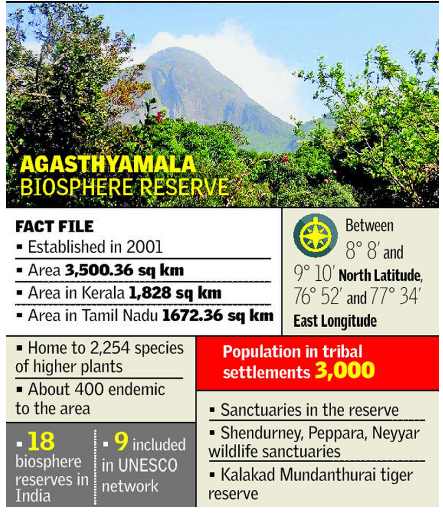
- 15 Mar 2025
In News:
Researchers have confirmed the discovery of a new flowering plant species named Uniyalakeralensis (family: Asteraceae) in the Agasthyamala Biosphere Reserve (ABR), located in the southern Western Ghats of Kerala. Endemic to southwest India, the species is named in honour of the state of Kerala.
Key Features:
- Plant Type: Dense shrub with light purple flowers, growing 1–3 metres tall.
- Distinctive Traits: Larger leaves, longer petioles (leaf stalks), and fewer lateral veins compared to related species like U. comorinensis and U. salviifolia.
- Flowering & Fruiting Period: August to April.
- Habitat: Open areas on western mountain slopes of ABR, at elevations between 700–1,400 metres.
- Distribution: Around 5,000 individuals across four subpopulations, covering an estimated area of 250 km².
- IUCN Status (2024): Data Deficient (DD) due to limited information on long-term population trends.
The plant was first collected in 1998 and initially misidentified as Vernonia multibracteata. Later taxonomic revisions led to the recognition of Uniyala as a separate genus, named after botanist B.P. Uniyal, with this species formally described as new.
About Agasthyamala Biosphere Reserve (ABR):
- Location: Spans parts of Kerala and Tamil Nadu in the southern Western Ghats.
- UNESCO Status: Recognized under the Man and the Biosphere (MAB) Programme in 2016.
- Biodiversity Highlights: Home to over 2,254 higher plant species, including 405 endemics; key fauna includesNilgiriTahr, Lion-tailed Macaque, Bengal Tiger, and Indian Elephant.
- Indigenous Communities: Inhabited by the Kani tribes in both states.
FulaniCommunity
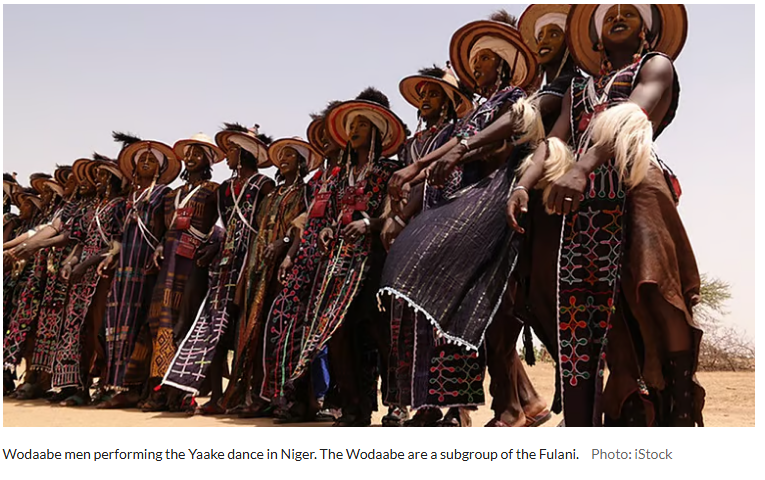
- 17 Feb 2025
In News:
The Fulani, one of Africa’s largest and most dispersed ethnic communities, trace their ancestry to the ‘Green Sahara’ period (12,000–5,000 years ago), according to recent genetic and anthropological research. This period, when the Sahara was a fertile, habitable landscape, marks the early development of African pastoralism.
The Fulani population is estimated at 40 million, spread across West and Central Africa, from Senegal and Guinea in the west to Lake Chad in the east. They are particularly concentrated in Nigeria, Mali, Guinea, Senegal, and Niger, and inhabit the Sahel-Savannah belt, straddling arid and semi-arid regions.
Nomadic Lifestyle and Social Structure
Traditionally known for their nomadic pastoralism, the Fulani have maintained a unique socio-cultural identity despite centuries of migration and contact with other African populations. Their society is internally diverse, divided into three main groups:
- Makiyaya: Nomadic herders
- FulaninSoro: Town dwellers
- Bararo: Forest dwellers, with strong ties to ancestral rituals and nature-based belief systems
Fulani communities are largely egalitarian, with a deep emphasis on kinship, family structure, and communal responsibility. Polygamy is widely practiced, and marriage ceremonies are elaborate, often involving intricate rituals and festive celebrations.
Women’s Role and Cultural Expression
Fulani women are recognized for their weaving, artisanal craftsmanship, and particularly their hairstyles, which are often elaborately styled and adorned with beads and cowrie shells—symbols of both identity and aesthetic tradition.
Linguistic and Religious Identity
The Fulani speak Fula (also called Fulfulde or Pulaar), a language belonging to the Atlantic branch of the Niger-Congo language family. Though largely Muslim, many retain spiritual connections with nature-based traditions, particularly among the Bararo groups.
Genetic Heritage and Historical Significance
A recent multinational study led by Uppsala University and Charles University analyzed biological and anthropological data from 460 Fulani individuals across 18 locations in seven African countries. It confirmed a complex genetic history, shaped by:
- Ancient North African ancestry, particularly linked to populations akin to modern-day Berbers of Morocco
- Historical interactions with West, Central, and East African communities
- A shared ancestral genetic component, likely rooted in early pastoral communities of the Green Sahara era
The research underscores that despite their high mobility and limited archaeological footprint, the Fulani have preserved a distinct genetic and cultural identity for millennia.
Tribal Welfare in Union Budget 2025–26
- 09 Feb 2025
In News:
India is home to over 10.45 crore Scheduled Tribe (ST) individuals, comprising 8.6% of the population. Concentrated largely in remote and underdeveloped regions, ST communities face persistent challenges such as land alienation, limited access to quality education, healthcare deficits, and socio-economic exclusion. The Union Budget 2025–26 signals a paradigm shift in tribal welfare, in line with the vision of Viksit Bharat.
Budgetary Commitment
The total allocation for tribal welfare has risen to ?14,925.81 crore in 2025–26—a 45.79% jump from the previous year and a staggering 231.83% increase from 2014–15 levels. The Ministry of Tribal Affairs has witnessed a consistent rise in budget: from ?7,511.64 crore (2023–24) to ?10,237.33 crore (2024–25), and now ?14,925.81 crore.
Flagship Schemes and Initiatives
- Eklavya Model Residential Schools (EMRS) received ?7,088.60 crore, up from ?4,748 crore, to provide quality residential education to ST students. EMDBS, a pilot initiative in high-density tribal areas, enhances outreach.
- Pradhan Mantri Janjatiya Vikas Mission (PMJVM) saw a sharp rise to ?380.40 crore. It promotes tribal entrepreneurship, sustainable Minor Forest Produce (MFP) use, and value chain development.
- Pradhan Mantri Adi Adarsh Gram Yojana (PMAAGY) was allocated ?335.97 crore (163% increase). It aims to convert tribal-majority villages into model habitations by ensuring convergence of development schemes.
- PM-JANMAN Multi-Purpose Centers (MPCs) received ?300 crore, targeting Particularly Vulnerable Tribal Groups (PVTGs) with essential services and institutional support.
- Dharti Aaba Janjatiya Gram Utkarsh Abhiyan (DAJGUA), launched in 2024, envisions the holistic development of 63,843 tribal villages. With an outlay of ?79,156 crore over five years, it integrates 17 ministries and 25 interventions. The Ministry of Tribal Affairs has allocated ?2,000 crore for 2025–26 alone.
Persistent Challenges
Despite constitutional safeguards (Articles 15(4), 46, 244, 275(1), etc.), tribal communities face significant hurdles:
- Land and Resource Rights: Only 50% of 42.76 lakh Forest Rights Act (FRA) claims have been approved (MoTA, 2022). Displacement from mining and infrastructure projects persists.
- Education: ST literacy stands at 59% (Census 2011) with high dropout rates due to poverty and language gaps.
- Health: Malnutrition, maternal mortality, and diseases like Sickle Cell remain endemic.
- Marginalization: Tribals face economic deprivation, exploitation (bonded labor, trafficking), and erosion of cultural identity.
- Underrepresentation: Despite reserved seats, policy influence remains limited.
The Way Forward
- Land Rights: Effective implementation of FRA and safeguards against forced displacement.
- Education: Expand EMRS/EMDBS and promote bilingual, culturally relevant curricula.
- Health: Improve rural health infrastructure and target tribal-specific diseases.
- Women’s Empowerment: Support SHGs and skill-based livelihood through schemes like Adivasi Mahila Sashaktikaran Yojana.
- Cultural Continuity: Support tribal art, festivals, and language preservation through digital and educational platforms.
- Inclusive Governance: Strengthen Gram Sabhas and tribal representation in policymaking.
Uniform Civil Code (UCC) in Uttarakhand
- 28 Jan 2025
In News:
On January 27, 2025, Uttarakhand became the first Indian state to formally implement the Uniform Civil Code (UCC) after Independence. The legislation was passed by the State Assembly on February 7, 2024, and received Presidential assent on March 12, 2024.
Historical Background:
- A five-member expert committee chaired by Justice (Retd.) Ranjana Prakash Desai was constituted to draft the UCC report.
- The committee submitted its report on October 18, 2023.
- Though initially scheduled for implementation by November 9, 2024 (Uttarakhand's Foundation Day), the rollout was delayed due to administrative preparedness and staff training.
Scope and Applicability:
- Applicable to all residents of Uttarakhand, including those in live-in relationships outside the state.
- Scheduled Tribes (as per Article 342) and migrated natives have been exempted to safeguard cultural rights.
Key Provisions of the UCC:
1. Marriage, Divorce & Live-in Relationships
- Legal marriage age: 21 years (men), 18 years (women).
- Mandatory registration of marriages, divorces, and live-in relationships.
- Prohibited practices: Triple talaq, halala, iddat, polygamy, and child marriage.
- Live-in Relationships:
- Mandatory registration for couples aged 21 and above.
- Parental consent required if under 21.
- Termination of live-in relationships requires mutual consent.
- Mandatory reporting of pregnancy within 30 days of childbirth.
- Landlords cannot deny housing to registered live-in couples.
2. Inheritance & Property Rights
- Equal inheritance rights for sons and daughters.
- Children born to live-in couples recognized as legitimate, eligible for inheritance.
3. Wills and Succession
- Wills can be:
- Submitted online.
- Uploaded as handwritten/typed documents.
- Recorded as a 3-minute video.
Digital Infrastructure – UCC Portal (ucc.uk.gov.in):
- Aadhaar-based verification for authenticity.
- AI-based multilingual translation in 22 Indian languages.
- Tatkal service for expedited registrations with a nominal fee.
- Integrated with 13+ departments, including police, civic bodies, and courts.
- Disaster recovery systems and cloud-based architecture ensure secure data management.
- Access to:
- Online registration of marriages, divorces, live-in relationships.
- Upload and registration of wills.
- Grievance redressal and appeal mechanisms.
Administrative Framework:
- Village Panchayat Development Officers appointed as sub-registrars in rural areas.
- Common Service Centres (CSCs) enabled to facilitate registration, especially in remote and mountainous areas.
- Registration applications processed within 15 days, or 3 days in emergencies.
- Appeals must be filed within 30 days of rejection, resolved within 60 days.
Penalties:
- Initial warnings for non-compliance.
- Fines imposed for repeated violations.
Significance:
- The UCC aims to promote gender equality, legal uniformity, and women's empowerment.
- Represents a constitutional vision under Article 44, reinforcing the idea of a common civil law for all citizens.
- Seen as a potential model for other states in India.
Disposal of Toxic Waste from Union Carbide Factory (Bhopal)
- 07 Jan 2025
In News:
The Madhya Pradesh government has begun disposing of the 337 tonnes of toxic waste from the premises of Union Carbide India Limited (UCIL) in Bhopal, 40 years after the gas tragedy.
Key Highlights:
- Packing and Transportation:
- Waste is packed in airtight containers under the supervision of the Central Pollution Control Board (CPCB) and Madhya Pradesh Pollution Control Board (MPPCB).
- 12 specially designed airtight containers are being used for packing, and each container will be loaded onto trucks for transport.
- The waste movement will be escorted with a green corridor of about 250 kilometers.
- Incineration Process:
- The waste will undergo incineration in Pithampur, with residue stored in a two-layer membrane landfill to prevent contamination.
- A trial incineration of 10 tonnes of the waste was done in 2015 with no harmful effects, and results were submitted to the High Court.
Bhopal Gas Tragedy: A Historical Overview
- About the Tragedy:
- In 1984, a chemical leak at the Union Carbide pesticide plant released methyl isocyanate (MIC), leading to one of the worst industrial disasters in history.
- The leak was caused by a failed maintenance attempt and malfunctioning safety systems.
- Immediate effects included respiratory issues, eye problems, and abdominal pain, while long-term effects included chronic lung conditions, genetic abnormalities, and higher infant mortality rates.
- Legal and Government Response:
- In 1985, the Indian government passed the Bhopal Gas Leak Disaster Act to represent victims in legal claims.
- UCIL initially offered USD 5 million, while the Indian government demanded USD 3.3 billion. The case was settled in 1989 for USD 470 million.
- In 2010, seven Indian nationals were convicted for causing death by negligence, but were released on bail.
Hazardous Waste Management in India
- Definition and Types:
- Hazardous waste refers to waste that poses significant risks due to toxicity, reactivity, or corrosiveness.
- Common sources include chemical production, outdated technologies, and wastewater treatment.
- Regulations and Disposal Methods:
- The Environment Protection Act (1986) and the Basel Convention (1992) govern hazardous waste management in India.
- India generates about 7.66 million tonnes of hazardous waste annually, with the majority being landfillable (44.3%) and recyclable (47.2%).
- Disposal methods include incineration, co-processing in cement plants, and material/energy recovery.
- Challenges in Hazardous Waste Management:
- Inadequate treatment technologies, especially in small and medium industries.
- The need for stricter compliance with waste management laws and more efficient remediation of hazardous sites like Bhopal.
IRIS²: The European Union's Ambitious Satellite Network
- 21 Dec 2024
In News:
The European Union (EU) has announced the launch of IRIS² (Infrastructure for Resilience, Interconnectivity, and Security by Satellite), a highly ambitious space program that aims to enhance satellite connectivity, security, and resilience for both governmental and civilian applications. The initiative is set to rival major global satellite systems, such as Elon Musk's Starlink, and aims to provide secure, high-speed broadband connectivity, particularly in underserved regions.
Key Features of IRIS²:
- Satellite Constellation: The system will consist of 290 satellites, including 264 in Low Earth Orbit (LEO) and 18 in Medium Earth Orbit (MEO).
- First Launch: The first satellite for the program is scheduled for launch in 2029.
- Secure Connectivity: IRIS² is designed to provide secure, high-speed broadband services, particularly for European regions that lack reliable connectivity.
- Collaboration: The project is a collaboration between the EU, the European Space Agency (ESA), and private sector partners, including SES, Eutelsat, and Airbus.
- Funding: The program is funded through a €10.6 billion (~$11 billion) investment, with a 12-year concession for its implementation.
Applications of IRIS²:
- Governmental Use:
- Border Surveillance: Enhanced monitoring for national security.
- Crisis Management: Reliable communication during natural disasters and emergencies.
- Infrastructure Security: Safeguarding key national infrastructure.
- Defense: Boosting military communication resilience.
- Civilian Use:
- Broadband Access: Providing internet access in rural and underserved areas.
- Smart Energy: Supporting management of energy grids and related technologies.
- Transportation: Ensuring reliable communication and navigation in aviation, maritime, and automotive sectors.
- Remote Healthcare: Improving healthcare access in remote locations.
Significance of IRIS²:
- Strategic Asset: The program will strengthen EU sovereignty in space technology and improve its technological independence, reducing reliance on non-European satellite systems.
- Cyber and Communication Resilience: IRIS² is designed to enhance resilience against cyber threats and communication disruptions, ensuring uninterrupted service for both public and private sectors.
- Commercial Benefits: The satellite network will provide high-speed connectivity for businesses across Europe, offering a boost to commercial activities in remote and underserved areas.
- Complementary to Existing EU Programs: IRIS² complements other EU space initiatives, such as Copernicus (Earth observation) and Galileo (satellite navigation), enhancing the EU's capabilities in the space sector.
Overview of the IRIS² Satellite Network:
- Deployment in LEO and MEO:
- 264 satellites in LEO will provide low-latency communication for a wide range of applications.
- 18 satellites in MEO will offer broader coverage and support for global connectivity.
- Funding and Partners: The program is funded by the EU, ESA, and private firms, including SES, Eutelsat, and Airbus, ensuring both public and private sector involvement in the project.
- Applications:
- The network will provide secure satellite services for critical government functions, including surveillance, defense, and crisis management.
- It will also support civilian uses, such as broadband, smart grids, and transportation, and will facilitate cloud-based services.
Strategic and Geopolitical Importance:
- Boost to European Competitiveness: By developing its own satellite system, the EU will enhance its competitive position in the global space sector.
- Security and Autonomy: IRIS² will help Europe maintain control over its communication infrastructure, strengthening its autonomy and reducing dependence on external players for critical services.
- Resilience in Crisis Situations: In times of disruption (e.g., natural disasters, cyberattacks), IRIS² will ensure that Europe can maintain secure, reliable connectivity.
Community and Individual Forest Rights in Anamalai Tiger Reserve (ATR)
- 08 Dec 2024
In News:
- The Coimbatore District Collector, granted community and individual forest rights under the Forest Rights Act, 2006, to tribal settlements in the Anamalai Tiger Reserve (ATR) on December 6, 2024.These rights were handed over to three tribal settlements and 14 families at a function in Coimbatore.
Key Highlights:
- Community Forest Rights:
- Three tribal settlements in ATR—Nagaroothu I, Nagaroothu II, and Chinnarpathi—were granted community rights.
- These rights allow the settlements to collect forest produce excluding timber, such as mango, amla, honey, tamarind, and grass for making brooms.
- Individual Forest Rights:
- Individual rights were granted to 14 families from the Old Sarkarpathy tribal settlement.
- The families had requested these rights for traditional cultivation practices passed down by their ancestors.
- The individual rights were approved after the recommendation of a sub-divisional committee and scrutiny by a district-level committee.
- About the Forest Rights Act (FRA), 2006:
- Purpose: The FRA was enacted to address historical injustices faced by forest-dwelling communities and ensure their livelihood and food security.
- Key Provisions:
- Individual Rights: Self-cultivation, habitation, and in-situ rehabilitation.
- Community Rights: Access to grazing, fishing, water bodies in forests, and protection of traditional knowledge and customary rights.
- Eligibility: Rights can be claimed by any community or individual who has lived in the forest for at least three generations (75 years) before December 13, 2005.
- Critical Wildlife Habitats: The Act mandates that critical wildlife habitats in national parks and sanctuaries remain inviolate for wildlife conservation.
- Authorities Involved in Vesting Forest Rights:
- Gram Sabha: Initiates the process for determining the nature and extent of rights.
- Sub-Divisional Level Committee: Examines resolutions passed by the Gram Sabha.
- District Level Committee: Grants final approval for forest rights.
- Challenges with Forest Rights Implementation:
- The Xaxa Committee pointed out several challenges in the implementation of the FRA, such as:
- Arbitrary rejection of claims.
- Lack of deadlines for claims processing.
- Unaddressed rights of communities displaced by development projects.
- The Xaxa Committee pointed out several challenges in the implementation of the FRA, such as:
- About Anamalai Tiger Reserve:
- Located in the Anamalai Hills of Pollachi and Coimbatore District, Tamil Nadu, at an altitude of 1,400 meters.
- Established as a tiger reserve in 2007, it is surrounded by multiple protected areas like the Parambikulam Tiger Reserve, Chinnar Wildlife Sanctuary, and Eravikulam National Park.
- Biodiversity in Anamalai Tiger Reserve:
- Habitats: The reserve contains wet evergreen forests, semi-evergreen forests, moist deciduous forests, dry deciduous forests, and unique habitats like montane grasslands and marshy grasslands.
- Flora: The reserve is home to around 2,500 species of angiosperms, including species like balsam, orchids, and wild relatives of cultivated crops such as mango, jackfruit, cardamom, and pepper.
- Fauna: It supports various wildlife species, including tigers, Asiatic elephants, sambars, spotted deer, leopards, jackals, and jungle cats.
The science of plant communication

- 23 Nov 2024
In News:
More than any organism, plants understand the significance of communication the best.
Communication Through Chemical Warning (Volatile Organic Compounds - VOCs):
- Plants release volatile organic compounds (VOCs) when threatened, such as during herbivore grazing.
- VOCs act as distress signals, alerting neighboring plants to potential dangers.
- Neighboring plants respond by producing defensive compounds or toxins to deter herbivores.
- VOCs can travel through air and soil, enabling distant plants to prepare for threats, thereby enhancing survival across larger areas.
Wood Wide Web (Symbiotic Relationship with Mycorrhizal Fungi):
- Plants form a network with mycorrhizal fungi, connecting their roots in a symbiotic bond.
- This "Wood Wide Web" allows plants to communicate by sending chemical signals through their roots when under stress (e.g., pest attacks or drought).
- Fungi extend the root system and help share nutrients between plants, especially in times of distress.
- The network facilitates collective resilience and survival by ensuring nutrient sharing among plants.
Cooperative Behavior: Sharing Resources for Survival:
- Plants in close proximity, especially in dense forests, often share resources like water, nutrients, and light.
- When a plant detects a neighboring plant in distress, it prioritizes resource allocation to support its growth.
- This cooperative behavior promotes ecosystem stability and the overall health of forests.
- The mutual support system shows how cooperation enhances the survival of individual plants and the broader ecosystem.
Significance of Plant Communication in Ecosystem Health:
- Plants communicate through chemical signals, underground fungal networks, and cooperative behaviors.
- These interactions foster resilience, ensuring the survival of both individual plants and entire ecosystems.
- The silent communication among plants contributes to a dynamic, cooperative environment that thrives on mutual support.
UNICEF’s State of the World’s Children 2024 (SOWC-2024) Report
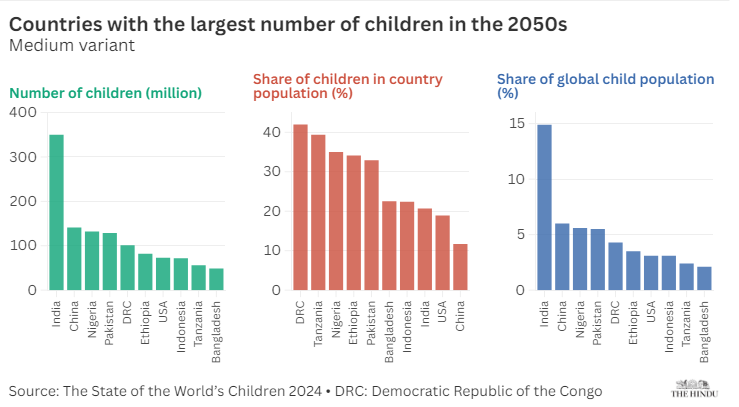
- 21 Nov 2024
In News:
The world is facing an unprecedented crisis with nearly half of all children – about 1 billion – living in countries that face a high risk of climate and environmental hazards, the UNICEF’s State of the World’s Children 2024 (SOWC-2024) report, said.
Key Highlights:
Environmental Hazards and Children’s Health:
- Children face an increasingly unpredictable and hazardous environment due to climate change, environmental crises, and frontier technologies.
- Nearly 1 billion children live in countries facing high risks from climate and environmental hazards.
- Children’s developing bodies are especially vulnerable to pollution, extreme weather, and environmental hazards.
- Air pollution, rising temperatures, and extreme weather events harm children's respiratory health, increase the spread of diseases like malaria and dengue, and impact food security and access.
Impact of Climate Change:
- Climate destabilization, biodiversity loss, and pollution are intensifying globally.
- Climate-related disasters (e.g., floods) affect water supplies, causing waterborne diseases, a leading cause of death in children under five.
- Extreme weather events, such as floods, can cause trauma, anxiety, and displacement for children.
- By the 2050s, more children will be exposed to extreme climate hazards compared to the 2000s.
- School closures, affecting 400 million children since 2022 due to extreme weather, disrupt education and hinder economic growth.
Projections for Child Survival and Life Expectancy:
- Newborn survival rates: Projected to rise by nearly 4 percentage points to over 98% globally by the 2050s.
- Probability of surviving to age 5: Expected to increase to 99.5%.
- Life expectancy: Expected to rise to 81 years for girls and 76 years for boys by the 2050s.
Child Population Trends by 2050:
- Global child population expected to stabilize at 2.3 billion by the 2050s.
- South Asia, Eastern/Southern Africa, and West/Central Africa will have the largest child populations, facing significant challenges in meeting children’s basic needs.
- These regions also face climate risks, inadequate digital infrastructure, and socio-economic challenges.
Technological Advancements:
- Artificial Intelligence (AI), neurotechnology, renewable energy, and vaccine breakthroughs could significantly improve childhood well-being.
- Digitalization: While it can empower children, it also exposes them to online risks, including sexual exploitation and abuse.
Socio-Economic Conditions and Inequality:
- 23% of children projected to live in low-income countries by 2050, a significant increase from 11% in the 2000s.
- GDP per capita in East Asia, Pacific, and South Asia expected to more than double from the 2020s to the 2050s.
- Growing inequalities between high- and low-income countries, particularly in terms of digital access and infrastructure.
Urbanization and Child Welfare:
- By the 2050s, nearly 60% of children globally will live in urban areas, up from 44% in the 2000s.
- Ensuring healthier and more secure urban environments is critical for improving future childhoods.
- Over 95% of people in high-income countries are connected to the internet, compared to just 26% in low-income countries, exacerbating inequalities.
Key Takeaways:
- Children are facing a more hazardous environment than ever before, influenced by climate change, technological developments, and demographic shifts.
- Proactive measures are needed to mitigate environmental risks, promote digital inclusion, and ensure equitable access to resources and opportunities for children globally.
Unified Complex Radio Antenna
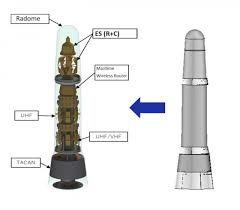
- 17 Nov 2024
In News:
- India and Japan recently signed a Memorandum of Implementation (MoI) to co-develop the UNICORN (Unified Complex Radio Antenna) mast for deployment on Indian Navy ships. This pact marks a significant milestone as it is India's first military technology transfer agreement with Japan.
- The deal follows a 2015 agreement on the transfer of defense equipment and technology, further strengthening defense ties between the two countries.
- The UNICORN mast is a cutting-edge communication and radar system designed to enhance the stealth characteristics of naval vessels. This agreement is seen as an important step towards deepening India-Japan defense cooperation.
What is UNICORN?
The UNICORN mast is an advanced, integrated antenna system that combines several communication and radar components into a single conical structure or radome (a radar-absorbing dome). It is designed to reduce the radar cross-section (RCS) of ships, improving their stealth capabilities.
Key features of the UNICORN mast include:
- Integration of multiple antennas: It consolidates various antennas used for tactical data links, communications, and navigation systems (e.g., TACAN - Tactical Air Navigation System).
- Stealth enhancement: By reducing the number of exposed components and consolidating them into a single radome, the mast significantly lowers the ship’s radar signature, making it harder to detect.
- Improved performance: The mast design minimizes mutual interference between antennas, enhances maintainability, and increases lightning resistance.
- Space efficiency: It saves valuable below-deck space and reduces ship-building time by integrating multiple systems into one mast.
The UNICORN system is currently deployed on Mogami-class frigates of the Japan Maritime Self-Defence Force.
India-Japan Defense Cooperation
- 2015 Defense Technology Transfer Agreement: This pact established a framework for defense cooperation between India and Japan, paving the way for joint projects like the UNICORN mast.
- Bilateral Military Exercises:
- Veer Guardian 2023: A bilateral exercise conducted between the Japan Air Self Defence Force (JASDF) and the Indian Air Force (IAF), which deepened defense interoperability between the two nations.
- Tarang Shakti 2024: The first multilateral air exercise hosted by the Indian Air Force, with Japanese fighter aircraft participating.
- Andaman and Nicobar Islands Development: Japan has also provided financial aid for infrastructure development in India’s strategically located Andaman and Nicobar Islands, contributing to enhancing India’s maritime security in the region.
QS World University Rankings
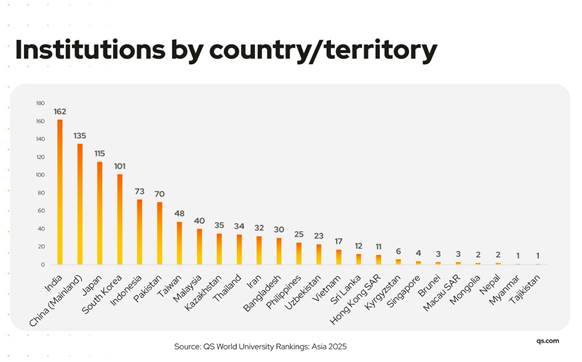
- 10 Nov 2024
In News:
The QS World University Rankings: Asia 2025 spotlights the top institutions in Eastern, Southern, South-Eastern, and Central Asia, emphasizing academic excellence, research, innovation, and internationalization.
India's Performance:
India has shown a remarkable upward trajectory, featuring:
- Two institutions in the Top 50:
- IIT Delhi ranked 44th (up from 46th), with a 99% employer reputation score.
- IIT Bombay ranked 48th, excelling with a 99.5% employer reputation score and 96.6% academic reputation score.
- Top 100 Institutions:
- IIT Madras (56th), IIT Kharagpur (60th), Indian Institute of Science (62nd), IIT Kanpur (67th), and University of Delhi (81st).
- Top 150 Institutions:
- IIT Guwahati, IIT Roorkee, Jawaharlal Nehru University, Chandigarh University (120th), UPES (148th), and VIT (150th).
Key Indicators for India:
- International Research Network and Citations per Paper contribute to India's growing global academic reputation.
- Papers per Faculty and Staff with PhD are India’s strongest indicators, reflecting robust research output and high teaching standards.
- Anna University achieved a perfect score of 100 in the Papers Per Faculty indicator, emphasizing high research output.
- North Eastern Hill University and University of Agricultural Sciences, Bangalore received a perfect score of 100 in the Faculty-Student Indicator.
Growth of Indian Institutions:
- India now has 46 institutions in the 2025 rankings, up from just 11 in 2015, marking a 318% increase over the past decade.
- India dominates Southern Asia with seven institutions in the top 10, showcasing the country's strengthening educational landscape.
India's Growing Global Influence:
- India's achievements underscore its commitment to academic excellence, competitiveness, and resilience in global higher education.
- Institutions like IIT Delhi and IIT Bombay highlight India’s ability to balance research productivity with high-quality teaching, enhancing its reputation as a global education hub.
United Nations Day 2024
- 25 Oct 2024
In News:
United Nations Day is celebrated each year on October 24 to mark the anniversary of the UN Charter's entry into force, aiming to raise awareness about the goals and achievements of the international body.
Key Highlights:
- Purpose: Celebrates the anniversary of the UN Charter coming into effect on October 24, 1945, after World War II.
- Goal: Raise awareness about the UN’s objectives and accomplishments.
UN Charter Overview
- Signing & Implementation:
- Signed on June 26, 1945, in San Francisco.
- Came into effect on October 24, 1945.
- India ratified the UN Charter on October 30, 1945.
- Predecessor: The League of Nations, created in 1919 after WWI, aimed at promoting international cooperation and peace.
- Content:
- Foundational document of the UN, binding all member states.
- Establishes principles of international relations, including equality of nations and the prohibition of force between countries.
- Amended three times: 1963, 1965, and 1973.
UN's Core Objectives
- Peace and Security: Maintaining global peace and preventing conflicts.
- Humanitarian Aid: Providing assistance to those in need.
- Human Rights: Protecting and promoting human rights globally.
- International Law: Upholding the rule of law on the global stage.
Main Organs of the UN
- General Assembly (UNGA):
- Comprises all 193 Member States, each with one vote.
- Main policy-making body, addressing international issues covered by the UN Charter.
- Security Council (UNSC):
- Consists of 15 members (5 permanent, 10 elected for two-year terms).
- Permanent members: China, France, Russia, UK, USA.
- India has been elected to the UNSC eight times.
- Economic and Social Council (ECOSOC):
- Composed of 54 members elected by the General Assembly.
- Coordinates policy and addresses economic, social, and environmental issues.
- Trusteeship Council:
- Established to oversee trust territories transitioning to independence.
- International Court of Justice (ICJ):
- The only international court resolving disputes between UN member states.
- Handles contentious cases and provides advisory opinions.
- Secretariat:
- Led by the Secretary-General, appointed by the General Assembly based on Security Council recommendations.
- Acts as the chief administrative body of the UN.
Note: Most UN organs, including the UNGA, UNSC, ECOSOC, Trusteeship Council, and Secretariat, are based in New York, while the ICJ is located in The Hague, Netherlands.
Advancements of Research & Global Opportunities for Holistic Ayurveda - AROHA-2024
- 17 Oct 2024
In News:
All India Institute of Ayurveda, New Delhi is organising its first-ever international conference - Advancements of Research & Global Opportunities for Holistic Ayurveda - AROHA-2024.
Key Details:
- Theme: "Advancements in Research & Global Opportunities for Holistic Ayurveda"
- Conference Goals
- Position Ayurveda as a key pillar of global health and wellness.
- Facilitate dynamic exchanges among scholars, industry leaders, and practitioners.
- Explore the integration of traditional Ayurvedic wisdom with modern scientific advancements.
- Agenda Highlights
- Topics Covered:
- Ayurveda and ethnomedicine
- Quality control and standardization
- Diagnosis and drug delivery
- Evidence-based understanding and globalization
- Topics Covered:
- Institute Background
- All India Institute of Ayurveda (AIIA): Apex institute for Ayurveda with NAAC A++, NABH, and ISO accreditations.
- Facilities: 200-bed referral hospital, 44 specialty departments.
- Global Collaborations: Partnerships with institutions in 17 countries, including London School of Hygiene and Tropical Medicine and Western Sydney University.
- Innovations: Focus on research, drug development, and scientific validation of Ayurvedic practices.
- Participant Benefits
- Networking Opportunities: Engage with experts in Ayurveda and holistic healthcare.
- Learning Experiences: Attend plenary sessions, round table discussions, and exhibitions on medicinal plants and startups in Ayurveda.
- Recognition: Awards for contributions to Ayurveda.
- Research and Innovation Focus: Discussions on technology integration, including AI and bioinformatics.
Universal Postal Union
- 10 Oct 2024
In News:
The Universal Postal Union (UPU) is set to assess the integration of the Unified Payment Interface (UPI) with cross-border remittances via the global postal network, according to a recent official announcement.
About the Universal Postal Union
The UPU is a specialized agency of the United Nations and serves as the main platform for international cooperation in the postal sector. Established by the Treaty of Bern in 1874, it stands as the second oldest international organization in the world.
Functions
The UPU coordinates postal policies among its member nations and oversees the global postal system. It establishes the rules for international mail exchanges and makes recommendations aimed at enhancing the volume and quality of mail, parcel, and financial services. Additionally, it plays an advisory, mediating, and liaison role while providing technical assistance when necessary.
Membership
Any member state of the United Nations is eligible to join the UPU. Non-member countries can also become UPU members, subject to approval by at least two-thirds of the existing member nations. Currently, the UPU comprises 192 member countries.
Structure
The UPU consists of four main bodies:
1. The Congress: The highest authority of the UPU, convening every four years.
2. The Council of Administration: Responsible for ensuring the continuity of UPU operations between Congresses and supervising activities related to regulatory, administrative, legislative, and legal matters.
3. The Postal Operations Council: Acts as the technical and operational hub of the UPU, composed of 48 member countries elected during Congress.
4. The International Bureau: Functions as the secretariat, providing logistical and technical support to the other UPU bodies.
The headquarters of the Universal Postal Union is located in Bern, Switzerland.
USCIRF Report on India: Key Highlights
- 04 Oct 2024
In News:
The United States Commission on International Religious Freedom (USCIRF), a Washington DC-based bipartisan U.S. federal government agency, has released a country update on India, flagging “collapsing religious freedom conditions”.
- Agency Overview:
- The United States Commission on International Religious Freedom (USCIRF) is an independent, bipartisan U.S. federal commission established under the 1998 International Religious Freedom Act (IRFA).
- Its primary functions include reviewing global religious freedom violations, providing policy recommendations to U.S. leaders, and publishing annual reports.
- Current Concerns:
- USCIRF's latest report indicates a “collapse” in religious freedom conditions in India, particularly worsening throughout 2024, especially around national elections.
- Legal and Policy Changes:
- Strengthening of discriminatory legislation, including:
- State-level anti-conversion and anti-terrorism laws.
- Implementation rules for the 2019 Citizenship (Amendment) Act (CAA).
- Passage of a State-level Uniform Civil Code (UCC) Bill in Uttarakhand.
- Strengthening of discriminatory legislation, including:
- Violations and Incidents:
- Expropriation of Places of Worship:
- Authorities have facilitated the construction of Hindu temples on former mosque sites.
- Increased attacks on religious minorities, particularly following the consecration of the Ayodhya temple in January 2024.
- Targeting of Religious Minorities:
- Arrests of Christians accused of forced conversions under anti-conversion laws.
- Anti-cow slaughter laws exploited by vigilante groups to target Muslims, Christians, and Dalits, often with little to no legal repercussions for perpetrators.
- Expropriation of Places of Worship:
- Recommendations:
- USCIRF urges the U.S. State Department to designate India as a “Country of Particular Concern” due to severe violations of religious freedom.
About USCIRF
- Composition: Comprised of nine commissioners appointed by the U.S. President or Congressional leaders, supported by non-partisan staff.
- Objective: To monitor and recommend actions on religious freedom violations aligned with international human rights standards.
Union Budget 2024-25: Corridor Projects for Bihar's Temples
- 18 Sep 2024
Why in News?
The Union Budget 2024-25 announced plans to develop corridor projects for the Vishnupad Temple at Gaya and the Mahabodhi Temple at Bodh Gaya in Bihar. These initiatives aim to enhance both temples as significant pilgrimage and tourist destinations, modeled after the successful Kashi Vishwanath Corridor. The temples are located approximately 10 kilometers apart and hold considerable cultural significance.
Key Facts About the Temples
Vishnupad Temple at Gaya
- Location: Situated on the banks of the Phalgu/Falgu River in Gaya district, Bihar.
- Deity: Dedicated to Lord Vishnu.
- Legend: Local mythology recounts that a demon named Gayasur sought the power to help others attain moksha (liberation). After misusing this power, he was subdued by Lord Vishnu, who left a footprint at the temple, symbolizing this event.
- Architectural Features: The temple stands about 100 feet tall and is supported by 44 pillars made from large gray granite blocks (Munger Black stone), joined with iron clamps. The octagonal shrine is oriented towards the east.
- Construction: Built in 1787 under Queen Ahilyabai Holkar's orders.
- Cultural Practices: The temple is especially significant during Pitra Paksha, a time for honoring ancestors, attracting many devotees. The Brahma Kalpit Brahmins, or Gayawal Brahmins, have served as traditional priests since ancient times.
Mahabodhi Temple at Bodh Gaya
- Historical Significance: Believed to be the location where Gautam Buddha attained enlightenment under the Mahabodhi Tree.
- Construction: Originally built by Emperor Ashoka in the 3rd century BC, with the current structure dating back to the 5th–6th centuries.
- Architectural Features: The temple complex includes the 50-meter-high Vajrasana (the Diamond Throne), the sacred Bodhi Tree, and six other sacred sites associated with Buddha's enlightenment. The site is surrounded by numerous ancient Votive stupas and is protected by circular boundaries.
- Sacred Sites:
- Bodhi Tree: A direct descendant of the original tree under which Buddha attained enlightenment.
- Animeshlochan Chaitya: Where Buddha spent the second week of meditation post-enlightenment.
- Ratnachakrama: Site of Buddha's third week after enlightenment.
- Ratnaghar Chaitya: Site of Buddha's fourth week after enlightenment.
- Ajapala Nigrodh Tree: Site of Buddha’s fifth week after enlightenment.
- Lotus Pond: Site of Buddha’s sixth week after enlightenment.
- Rajyatana Tree: Site of Buddha’s seventh week after enlightenment.
- Recognition: Designated a UNESCO World Heritage Site in 2002, the Mahabodhi Temple attracts numerous national and international pilgrims, emphasizing its spiritual importance.
Other Tourist Attractions in Bihar
Additional notable tourist sites in Bihar include:
- Vishwa Shanti Stupa in Rajgir
- Nalanda
- Ancient city of Patliputra
- Valmiki Nagar Tiger Reserve in West Champaran
What is the Pilgrim Corridor Project (PCP)?
The Pilgrim Corridor Project (PCP) aims to upgrade religious sites into world-class destinations for spiritual and tourism purposes.
Small Island Developing States
- 27 May 2024
Why is it in the News?
The Fourth International Conference on Small Island Developing States (SIDS-4) will be convened from May 27-30, 2024.
About Small Island Developing States (SIDS):
- Small Island Developing States (SIDS) are a distinct group of 39 States and 18 Associate Members of United Nations regional commissions that face unique social, economic and environmental vulnerabilities.
- The three geographical regions in which SIDS are located are:
- The Caribbean
- The Pacific
- The Atlantic, Indian Ocean and South China Sea (AIS)
- SIDS were recognized as a special case both for their environment and development at the 1992 United Nations Conference on Environment and Development held in Rio de Janeiro, Brazil.
- The aggregate population of all the SIDS is 65 million, slightly less than 1% of the world’s population, yet this group faces unique social, economic, and environmental challenges.
- SIDS face a host of challenges including for many, their remote geography.
- As a result, many SIDS face high import and export costs for goods as well as irregular international traffic volumes.
- For SIDS, the Exclusive Economic Zone (EEZ)—the ocean under their control—is, on average, 28 times the country’s land mass.
- Thus, for many SIDS the majority of the natural resources they have access to comes from the ocean.
- Factors like small population size, remoteness from international markets, high transportation costs, vulnerability to exogenous economic shocks and fragile land and marine ecosystems make SIDS particularly vulnerable to biodiversity loss and climate change because they lack economic alternatives.
- Climate change has a very tangible impact on SIDS.
- Slow onset events such as sea level rise pose an existential threat to small island communities, requiring drastic measures such as relocation of populations, and the related challenges this poses.
- These challenges are compounded by limited institutional capacity, scarce financial resources and a high degree of vulnerability to systemic shocks.
- Industries like tourism and fisheries can constitute over half of the GDP of small island economies.
- However, the importance of these natural resources extends beyond the economy; biodiversity holds aesthetic and spiritual value for many island communities.
- For centuries, these communities have drawn benefits from biodiversity in the form of food supply, clean water, reduced beach erosion, soil and sand formation, and protection from storm surges.
- At the regional level, SIDS are also supported by inter-governmental organisations, primarily the?Caribbean Community (CARICOM),?the?Pacific Islands Forum (PIF)?and the Indian Ocean Commission (IOC).
World Telecommunication and Information Society Day
- 18 May 2024
Why is it in the News?
To commemorate the World Telecommunication and Information Society Day, C-DOT, the premier Telecom R&D Centre of the Department of Telecommunications (DoT) celebrates and announces special Initiatives “NIDHI” & “STAR Program” for the development of indigenous telecom solutions & technologies.
What is World Telecommunication and Information Society Day?
- World Telecommunication and Information Society Day (WTISD) is celebrated every year in May to honour the founding of the International Telecommunication Union (ITU) on May 17, 1969.
- The day can be traced back to commemoration of the two significant events in the history of global communication.
- World Telecommunication and Information Society Day (WTISD) commemorates two significant events in the history of global communication.
- Firstly, it marks the founding of the International Telecommunication Union (ITU) in 1865, when the first International Telegraph Convention was signed.
- Followed by, in November 2005, the World Summit on the Information Society (WSIS) called upon the United Nations General Assembly to also declare May 17th as World Information Society Day.
- And then in 2006, the ITU Plenipotentiary Conference in Antalya, Turkey, agreed to combine the two events as World Telecommunication and Information Society Day.
- This year’s World Telecommunications and Information Society Day 2024 focuses on the theme, “Digital Innovation for Sustainable Development,” underlying how digital innovation may help link everyone and create sustainable prosperity for all.
About the International Telecommunication Union (ITU):
- The International Telecommunication Union (ITU) is the United Nations specialized agency for information and communication technologies (ICTs).
- Established in 1865, it is the oldest among the UN’s 15 specialized agencies.
- ITU is responsible for allocating global radio spectrum and satellite orbits, developing technical standards to ensure network interconnectivity, and improving ICT access for underserved communities.
- Headquartered in Geneva, Switzerland, ITU is part of the UN Development Group and operates 12 regional offices worldwide.
- It functions as an intergovernmental public-private partnership with 193 member states and around 800 sector members. India, a member since 1952, was re-elected to the ITU Council for the 2019-2022 term.
African Union (AU)

- 09 May 2024
Why is it in the News?
The African Union condemned Wednesday the Israeli military's moves into southern Gaza's Rafah, calling for the international community to stop "this deadly escalation" of the war.
About the African Union (AU):
- The African Union (AU) is a continental organization comprising 55 member states, representing the countries of the African continent.
- Established in 2002, it succeeded the Organization of African Unity (OAU), which was founded in 1963.
- The primary objective of the AU is to promote unity, cooperation, and development among African nations while advancing the continent's global interests.
- Guided by a vision of "An Integrated, Prosperous, and Peaceful Africa, driven by its own citizens and representing a dynamic force in the global arena," the AU plays a critical role in fostering collaboration and progress across the continent.
- To realize its objectives and attain the Pan-African Vision of an integrated, prosperous, and peaceful Africa, the AU developed Agenda 2063, a strategic framework for Africa's long-term socio-economic and integrative transformation.
- This ambitious agenda emphasizes the importance of collaboration and support for African-led initiatives to ensure the aspirations of the African people are achieved.
- The African Union is headquartered in Addis Ababa, Ethiopia, where it functions as a central hub for decision-making and policy development.
The African Union (AU) operates through a structured framework aimed at efficient decision-making and implementation. Its key components include:
- Assembly: Comprising the heads of state and government of member countries, the Assembly serves as the highest decision-making body within the AU.
- Executive Council: Comprised of foreign affairs ministers, the Executive Council focuses on policy matters and offers recommendations to the Assembly.
- AU Commission: Headquartered in Addis Ababa, the AU Commission serves as the administrative arm responsible for executing the decisions of both the Assembly and the Executive Council.
- Peace and Security Council: This council is entrusted with the vital task of preserving peace and security across the continent, addressing conflicts and promoting stability.
- Additionally, the AU structure fosters the active involvement of African citizens and civil society through institutions such as the Pan-African Parliament and the Economic, Social & Cultural Council (ECOSOCC), ensuring broader participation and representation in the union's endeavours.
Symbol Loading Units (SLUs)
- 27 Apr 2024
Why is it in the News?
Recently, the Supreme Court rejected the plea for full verification of VVPAT slips against EVM counts and directed the ECI to seal the Symbol Loading Unit (SLU) for 45 days post-election results announcement.
What is a Symbol Loading Unit (SLU) and How Does it Work?
- Symbol Loading Units (SLUs) were introduced around the same time as VVPATs, a little over a decade ago.
- VVPATs help voters verify their votes, they see a slip with a printed image of the party symbol they voted for.
- But for the VVPAT to print a symbol correctly, information pertaining to the list of candidates and their symbols must be loaded onto the VVPAT machine in the correct order.
- This is where the Symbol Loading Unit, or SLU, comes in.
- The introduction of VVPATs necessitated the use of SLUs.
- The SLU is used to load the symbols of the candidates onto the VVPAT.
- It is a matchbox-sized device that is first connected to a laptop or personal computer, from where a symbol-loading application is used to load a bitmap file containing the candidates’ names, serial numbers, and symbols.
- The SLU is then connected to the VVPAT to transfer that file onto the paper audit machine.
- This is done under the supervision of a district election officer.
At Which Point in the Election Process Are SLUs Used?
- The SLUs come into the picture only a few days before polling in a particular seat, when the EVMs are being commissioned and the list/ order of contesting candidates is decided and set on the ballot unit and the VVPAT.
- Candidate-setting can happen at any time from five to two days before voting at a seat.
- Once the SLU is used to load symbols onto the VVPAT, the EVM is ready for use.
- After this, the SLU is of no relevance to the actual voting process.
What Happens to an SLU After Symbols Are Loaded?
- Typically, a small number of SLUs are enough to load symbols onto all VVPATs for a seat.
- According to EC officials, it takes an SLU two to three minutes to load each VVPAT.
- Once the symbol-loading is complete, the SLUs are handed over to the concerned district election officer for safekeeping.
- They remain in the officer’s custody until the day after voting. Afterward, the SLUs are released to the engineers of the two EVM manufacturers, Bharat Electronics Ltd (BEL) or Electronics Corporation of India Ltd (ECIL), so they can be used to load symbols onto VVPATs for other seats in subsequent phases.
- Thus, in a multi-phase election like the ongoing one for the 18th Lok Sabha, an SLU is typically reused after one phase of polling to load symbols onto VVPATs meant for other seats in subsequent phases.
Golden trevally Fish
- 24 Apr 2024
Why is it in the News?
The golden trevally, a popular marine fish on Tamil Nadu’s coastline, has been successfully bred in captivity by scientists at ICAR-CMFRI’s Visakhapatnam station.
What is Golden trevally Fish?
- The Golden Trevally (Gnathanodon speciosus), also known as the Golden Kingfish or Banded Trevally, is a popular and fascinating marine fish species found in the Indo-Pacific and Eastern Pacific regions.
- It typically inhabits deep lagoons and seaward reefs, often in association with larger fish species.
- This fish is highly sought-after for both consumption and ornamental purposes due to its faster growth rates, good meat quality, and attractive appearance.
- According to fish landing observations in India, golden trevally are primarily landed at reef area fishing grounds in Tamil Nadu, Puducherry, Kerala, Karnataka, and Gujarat.
About the Central Marine Fisheries Research Institute (CMFRI):
- CMFRI was established in 1947 under India's Ministry of Agriculture and Farmers Welfare.
- It joined the Indian Council of Agricultural Research (ICAR) in 1967.
The institute's primary objectives include:
- Monitoring exploited marine fisheries resources and assessing under-exploited resources within India's Exclusive Economic Zone.
- Understanding fluctuations in marine fisheries resources in response to environmental changes.
- Developing sustainable mariculture technologies for finfish, shellfish, and other organisms to supplement capture fishery production.
- The CMFRI's notable achievements include developing the "Stratified Multistage Random Sampling Method" for estimating fishery catch and effort along India's 8,000 km coastline.
- Headquartered in Kochi, Kerala, the institute continues to contribute significantly to the growth and development of India's marine fisheries sector.
United Nations Conference on Trade and Development (UNCTAD)
- 17 Apr 2024
Why is it in the News?
Global trade dynamics are expected to remain sluggish in 2024, the United Nations Conference on Trade and Development (UNCTAD) has warned.
Key Highlights of the Report:
- UNCTAD’s latest projections indicate global growth of 2.6 percent in 2024, slightly slower than in 2023.
- This marks the third consecutive year in which the global economy will grow at a slower pace than before the pandemic when the average rate for 2015–2019 was 3.2 percent.
India’s growth is expected to be marginally lower than in 2023:
- Regarding India, the report stated that the economy grew at 6.7 percent in 2023 and is expected to be marginally lower at 6.5 percent in 2024.
- It noted that the expansion in 2023 was influenced by strong public investment and the services sector, which received a boost from robust local demand for consumer services along with assured external demand for business services exports.
- The Reserve Bank of India (RBI) is expected to keep interest rates constant in the near term, while strong public investment expenditures will offset restrained public consumption spending.
About the United Nations Conference on Trade and Development (UNCTAD):
- The United Nations Conference on Trade and Development (UNCTAD) is an intergovernmental organization established in 1964 to promote the interests of developing countries in global trade.
- With its headquarters in Geneva, Switzerland, UNCTAD has 195 member states and collaborates with numerous nongovernmental organizations worldwide.
- The organization focuses on formulating policies related to various aspects of development, including trade, aid, transport, finance, and technology.
- UNCTAD plays a crucial role in addressing the concerns of developing countries regarding international institutions, such as the World Trade Organization (WTO), the International Monetary Fund (IMF), and the World Bank.
- By providing a platform for these countries to discuss and tackle their unique challenges, UNCTAD contributes to global economic development and reduces inequalities.
- Some notable achievements of UNCTAD include the establishment of the Global System of Trade Preferences (now replaced by the World Trade Organization), which reduces tariffs and removes non-tariff trade barriers, the Common Fund for Commodities, providing financial assistance to countries dependent on commodity exports, and various agreements for debt relief.
- In recent years, UNCTAD has focused on addressing globalization challenges and helping the least developed countries integrate into the global economy.
Hubble Tension
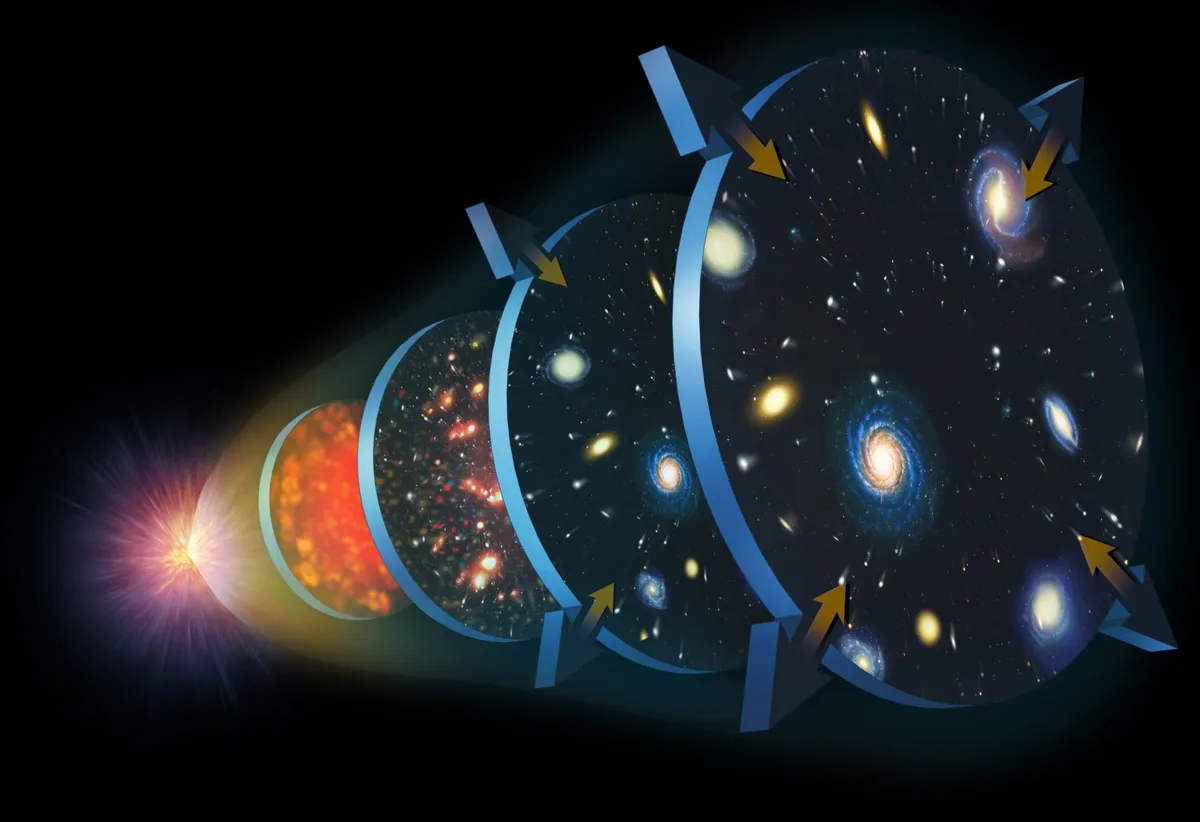
- 15 Apr 2024
Why is it in the News?
One of the biggest mysteries in cosmology is the ‘Hubble tension’, the puzzle that the expansion of the Universe we see today doesn’t match what we think it should be from looking at the early cosmos.
What is Hubble Tension?
- The Hubble tension refers to a puzzling disagreement between two methods of measuring the universe's expansion rate, represented by the Hubble constant (H0).
- The Hubble constant describes how fast galaxies move away from each other due to cosmic expansion.
- Researchers employ two primary approaches to estimate H0: the cosmic distance ladder and analysis of the cosmic microwave background (CMB).
Cosmic Microwave Background (CMB):
- CMB constitutes a ubiquitous sea of photons, remnants of the Big Bang's aftermath.
- Scientists scrutinize CMB for temperature variations and employ intricate trigonometric techniques to analyze its large-scale properties.
- This analysis culminates in an estimation of cosmic expansion at approximately 68 (km/s)/Mpc.
Cosmic Distance Ladder:
- This method facilitates the measurement of distances to celestial objects spanning various proximity ranges.
- Notably, Cepheid variable stars, which exhibit predictable luminosity fluctuations over time, serve as crucial distance indicators.
- By gauging the brightness of Cepheid variables, researchers can infer their distances, leading to an estimation of H0 around 73 (km/s)/Mpc.
Discrepancy and Hubble Tension:
- The utilization of these two distinct measurement methods yields slightly divergent values for H0, resulting in the emergence of the Hubble tension.
Significance of the Hubble Tension:
- The presence of the Hubble tension suggests potential implications, including unexplored physical phenomena or systematic errors in measurement techniques.
- Resolving this tension is imperative to enhance our comprehension of the universe's expansion dynamics and the fundamental laws governing it.
QS World University Rankings

- 11 Apr 2024
Why is it in the News?
Sixty-nine Indian universities made it to the rankings with 424 entries in the 2024 QS World University Rankings by Subject. This marks a 19.4 percent rise from the previous year’s 355 entries.
About QS World University Rankings:
- The QS World University Rankings, curated annually by Quacquarelli Symonds, are a comprehensive assessment of the world's top 1,000 universities.
- In the latest 2024 edition, universities were meticulously evaluated across 55 specific subjects and five broader subject areas, offering a nuanced perspective on academic excellence.
Key Highlights from the 2024 Rankings:
- Massachusetts Institute of Technology (MIT) maintains its prestigious position as the top-ranked university globally for the 12th consecutive year, a testament to its enduring academic prowess.
- The Indian Institute of Technology Bombay (IITB) shines as the leading Indian institution, securing the 149th spot on the global stage.
- Noteworthy Progress: India demonstrates remarkable advancement with a total of 69 universities making their mark in the QS rankings, showcasing a notable 19.4% increase from the previous year.
- India stands as the second most represented country in Asia, highlighting its growing significance in the global academic landscape.
- Jawaharlal Nehru University (JNU) emerges as a standout, clinching the 20th position globally in development studies, reaffirming its commitment to excellence in specialized fields.
- India's Rise in Research: The nation exhibits a commendable 20% improvement in the Citations per Paper indicator, underscoring its burgeoning research capabilities.
- With a staggering 1.3 million academic papers produced, India emerges as the world's fourth-largest contributor to research, trailing only behind academic powerhouses like China, the United States, and the United Kingdom.
- Challenges Ahead: Despite significant strides, India grapples with the challenge of securing citations in premier global journals, with only 15% of its research receiving recognition in these esteemed publications between 2017 and 2021.
- Overall, India's journey in the QS World University Rankings reflects a narrative of progress, innovation, and resilience, while also highlighting areas for continued growth and enhancement in the global academic arena.
Use of Green Hydrogen in the Transport Sector

- 06 Apr 2024
Why is it in the News?
The Ministry of New and Renewable Energy (MNRE) has announced a Rs-496-crore (until 2025-26) scheme to support pilot projects that either test the viability of green hydrogen as a vehicle fuel or develop secure supporting infrastructure such as refueling stations.
What is Green Hydrogen?
- Green hydrogen is a form of hydrogen gas produced through a process called electrolysis, where water (H2O) is split into hydrogen (H2) and oxygen (O2) using electricity.
- The electricity used in this process is generated from renewable sources such as solar, wind, or hydroelectric power, hence the term "green" hydrogen.
- Unlike conventional methods of hydrogen production, which often rely on fossil fuels and emit greenhouse gases, green hydrogen production is considered environmentally friendly because it doesn't generate carbon dioxide emissions.
- It can be used as a clean energy carrier in various sectors, including transportation, industry, and energy storage.
- The production of green hydrogen is still relatively expensive compared to other forms of hydrogen production, but ongoing advancements in renewable energy technologies and electrolysis processes are expected to reduce costs and increase the viability of green hydrogen as a sustainable energy source in the future.
India's Push for Green Hydrogen in the Transportation Sector:
- India is aggressively pushing for the adoption of green hydrogen in its transportation sector:
- Major Indian commercial vehicle manufacturers like Tata Motors, Volvo Eicher, and Ashok Leyland are intensifying their efforts to develop hydrogen-powered trucks and buses.
- Simultaneously, Indian energy companies are ramping up efforts to increase the production of green hydrogen while striving to decrease costs, making it competitive with other fuels.
- Given its vast and expanding market for both vehicles and energy, India stands poised to reap substantial benefits from widespread green hydrogen adoption as a vehicular fuel.
- India anticipates numerous advantages from this transition, including mitigating pollution, achieving climate objectives, and reducing reliance on expensive fossil fuel imports.
- Moreover, India views this shift as a significant business opportunity, aiming to establish itself as a global hub for the production and export of green hydrogen.
Scheme for Use of Green Hydrogen in the Transport Sector:
- The Scheme for Use of Green Hydrogen in the Transport Sector focuses on several key objectives:
- Validating the technical feasibility and performance of green hydrogen as a transportation fuel.
- Evaluating the economic viability of vehicles powered by green hydrogen.
- Demonstrating the safe operation of hydrogen-powered vehicles and refueling stations.
- Under the scheme, the Ministry of Road Transport & Highways will designate a scheme implementation agency responsible for inviting proposals for pilot projects.
- Once selected, the chosen company or consortium will serve as the project's executing agency and must complete the pilot project within a two-year timeframe.
- To support these initiatives, the Ministry of New and Renewable Energy (MNRE) will consider approving viability gap funding (VGF) based on the recommendations of a Project Appraisal Committee.
- The VGF amount will be determined by assessing the specific needs, merits, and feasibility of each project.
Advantages of Green Hydrogen in the Transportation Sector:
- Hydrogen Internal Combustion Engine (ICE) vehicles utilize hydrogen through combustion, akin to traditional diesel and petrol vehicles, but without emitting carbon.
- Hydrogen Fuel Cell Electric Vehicles (FCEVs) convert hydrogen electrochemically into electricity, leaving water as the sole byproduct, offering a clean and efficient alternative.
- While hydrogen ICE vehicles emit no carbon, studies indicate that converting hydrogen into electricity in a fuel cell is more energy efficient than burning it.
- Unlike Battery Electric Vehicles (BEVs) where the battery is heavy, hydrogen FCEVs are typically lighter due to hydrogen being a lighter element.
- This lightweight characteristic of hydrogen fuel cell technology makes it particularly promising for heavy-duty trucks, providing a viable alternative to EV battery technology.
- Green hydrogen presents a significant opportunity to reduce carbon emissions in the transportation sector without compromising revenue-generating payload capacity, addressing both environmental and economic concerns.
Challenges to the Large-Scale Adoption of Green Hydrogen in the Transportation Sector:
- Cost Prohibitions: The production cost of green hydrogen remains high, posing challenges to its viability as a fuel option.
- To compete with Battery Electric Vehicles (BEVs), the cost of green hydrogen needs to be reduced to between $3 and $6.5 per kilogram by 2030.
- Retail green hydrogen prices in California reached as high as $30 per kilogram in 2023, underscoring the current cost disparity.
- However, ongoing technological innovations and scale-up efforts are expected to drive cost reductions soon.
- Insufficient Infrastructure: Building hydrogen fueling stations for trucks can cost up to 72% more than those for battery electric trucks, according to the California Transportation Commission.
- Challenges with supply complications and market factors have led to the closure of hydrogen refueling stations, exemplified by Shell's recent decision in California.
- Storage and Transportation Challenges: Hydrogen storage requires high-pressure cylinders, which are costly and pose technical challenges.
- Existing natural gas pipeline infrastructure is unsuitable for transporting hydrogen.
- Specialized cylinders capable of safely storing green hydrogen are under discussion, necessitating infrastructure development.
- Handling and Safety Concerns: Hydrogen's flammability necessitates stringent safety protocols and infrastructure at refueling stations.
- Developing robust safety standards is imperative before widespread adoption can occur.
- Long-Term Viability: Advancements in battery technologies are continuously improving the weight and efficiency of EV batteries, potentially challenging the long-term viability of green hydrogen-powered vehicles, particularly in heavy-duty commercial applications.
3D Cosmic Map May Open Window To Dark Energy

- 05 Apr 2024
Why is it in the News?
An international team of researchers has just released the most comprehensive “three-dimensional” map of the universe, which, scientists hope, could reveal some clues about dark energy, the mysterious force that is believed to be causing the universe to expand uncontrollably.
Context:
- An international team of researchers has unveiled an extensive 3D map of the universe, aiming to unlock secrets about dark energy, the enigmatic force thought to be driving the universe's rapid expansion.
- Led by Shadab Alam from the Tata Institute of Fundamental Research in Mumbai, the team collaborated on this groundbreaking project, utilizing the Dark Energy Spectroscopic Instrument (DESI), a specialized tool capable of simultaneously gathering light from 5,000 galaxies when attached to a telescope.
- The DESI collaboration has measured that the expansion rate of the universe was increasing by 68.5 km per second after every 3.26 million light-years of distance, a unit astronomers define as megaparsec.
About Dark Energy Spectroscopic Instrument (DESI):
- The Dark Energy Spectroscopic Instrument (DESI) is a remarkable tool designed to capture light from an impressive 5,000 galaxies simultaneously when attached to a telescope.
- This collaborative effort involves over 900 researchers from institutions worldwide, with the Tata Institute of Fundamental Research (TIFR) representing India's sole participating institution.
- DESI, stationed atop the Mayall 4-Meter Telescope in Arizona, United States, has enabled researchers to analyze light emissions from an astounding six million galaxies, some dating as far back as 11 billion years ago.
- This wealth of data has facilitated the creation of the most intricate map of the universe to date.
Dark Energy Vs Dark Matter:
- Dark energy and dark matter are two distinct yet mysterious components of the universe, with vastly different properties and effects on cosmic structures.
Nature and Composition:
- Dark Energy: Dark energy is a hypothetical form of energy that permeates all of space and is responsible for the accelerated expansion of the universe.
- It is often associated with a cosmological constant or Einstein's "cosmological antigravity."
- Dark energy is thought to exert a repulsive force that counteracts gravity on cosmic scales, driving galaxies away from each other at an accelerating rate.
- However, its precise nature remains one of the greatest mysteries in modern physics.
- It's important to note that dark energy does not matter; rather, it's an energy density inherent in space itself.
- Dark Matter: Dark matter is a form of matter that does not emit, absorb, or reflect electromagnetic radiation, making it invisible and detectable only through its gravitational effects.
- Unlike dark energy, dark matter exerts an attractive gravitational force, influencing the motion of galaxies and other cosmic structures.
- It interacts with ordinary matter and with itself only through gravity and possibly through weak nuclear force, but not through electromagnetic forces like photons.
- Various astrophysical observations strongly suggest the existence of dark matter, but its precise composition and particle nature are still unknown.
Effects on the Universe:
- Dark Energy: The primary effect of dark energy is to drive the accelerated expansion of the universe.
- This expansion results in the increasing separation between galaxies over time. Dark energy is thought to dominate the energy density of the universe, comprising approximately 68% of the total mass-energy content.
- Dark Matter: Dark matter plays a crucial role in the formation and structure of galaxies and larger cosmic structures.
- Its gravitational influence binds galaxies together and provides the framework for the large-scale cosmic web.
- While dark matter does not emit or interact with light, its presence can be inferred from gravitational lensing, galaxy rotation curves, and the large-scale distribution of matter in the universe.
- Dark matter is estimated to constitute about 27% of the total mass-energy content of the universe.
Detectability:
- Dark Energy: Dark energy is challenging to detect directly because it does not interact with electromagnetic radiation.
- Its existence is inferred from the observational data related to the accelerating expansion of the universe, such as measurements of distant supernovae and the cosmic microwave background radiation.
- Dark Matter: Dark matter is also challenging to detect directly due to its non-interaction with light.
- However, its gravitational effects on visible matter and radiation allow astronomers to indirectly infer its presence.
- Various experimental efforts, such as those involving particle accelerators and underground detectors, aim to detect dark matter particles directly, though success has not yet been achieved.
PIB Fact Check Unit (FCU)
- 22 Mar 2024
Why is it in the News?
Recently, the Supreme Court stayed the Centre’s notification of the Fact Check Unit (FCU) under the Press Information Bureau (PIB) until the Bombay High Court arrives at a final decision on the challenge to the amended Information Technology (IT) Rules.
Background:
- Under the Government of India (Allocation of Business) Rules, 1961, the Ministry of Information and Broadcasting (MIB) is entrusted with the responsibility of disseminating information about government policies, schemes, and programs through various mediums of communication.
- In fulfilling its role, the Ministry publicizes the policies, initiatives, schemes, and programs of the Government of India through press releases, press conferences, webinars, publication of books, etc.
- To carry out this crucial function, the Ministry has several attached and subordinate offices, including the Press Information Bureau (PIB).
- A significant aspect of the responsibility of facilitating public information about the functioning of the Government of India involves countering the dissemination of fake, false, and misleading information.
- The PIB has been carrying out this function for a long through a wide distribution of accurate and reliable information, issuing rebuttals, etc.
- In the age of social media where information spreads rapidly, the spread of fake and manipulated information, especially related to the functioning of a democratically elected Government, is dangerous to society as it has the potential to intensify social, economic, and political conflicts, weaken public trust in democratic institutions, and even endanger the life of the citizens.
What is the PIB Fact Check Unit (FCU)?
- The Press Information Bureau has been at the forefront of taking proactive measures to combat fake news related to the Government of India.
- In November 2019, PIB established a Fact Check Unit (FCU) to tackle the issue of fake news about the Government of India, its various ministries, Departments, Public Sector Undertakings, and other Central Government organizations.
- The unit verifies claims about government policies, regulations, announcements, and measures.
- Through an established rigorous fact-checking procedure, the PIB Fact Check Unit helps dispel myths, rumors, and false claims and provides accurate and reliable information to the public.
Organization
- The PIB Fact Check Unit is headed by a senior DG/ADG level officer of the Indian Information Service (IIS).
- The day-to-day operations of the Unit are handled by IIS officers at various levels. The Unit reports to the Principal Director General, PIB who functions as the Principal Spokesperson of the Government of India.
Fact-Check Mechanism
- Users send requests over WhatsApp, email, or a web portal. Each such request received is considered a ‘Query’.
- Queries are segregated by the Unit based on their relevance to matters about the Government of India.
- Only queries about the Government of India are considered and taken up as Actionable Queries, while others are deemed not relevant for action.
- The information in question is checked rigorously through multiple layers of cross-checking through Government Open-source information, use of technological tools, and verification from the concerned Government of India organization.
- Should the Unit come across a piece of information that the Unit ascertains must be busted publicly for the larger benefit of the people of India, after investigation and verification from official & authoritative sources, it publishes a 'Fact Check' on its social media platforms.
- Often a single fact check can be a result of multiple queries.
Fact-checked content can be segregated into the following three categories:
- Fake: any factually incorrect news, content, or, piece of information related to the Government of India, spread intentionally or unintentionally, that can deceive or manipulate the audience, with or without the intention to cause potential harm, can be flagged as Fake
- Misleading: any information presented, either partially true or with selective presentation of facts or figures or with distortion of facts or figures and to deceive or mislead the recipient of the information.
- True: any information that is found to be factually correct after investigation
International Telecommunication Union (ITU)
- 22 Mar 2024
Why is it in the News?
Dr. Neeraj Mittal's unanimously elected as co-chair of the International Telecommunication Union (ITU)'s digital innovation board recently.
About the International Telecommunication Union (ITU):
- Established in 1865 as the International Telegraph Union, the ITU has evolved into the United Nations specialized agency for information and communication technologies (ICT).
- Recognized as a vital intergovernmental organization, the ITU facilitates collaboration between governments and private sector entities to advance global telecommunication and ICT services.
Key Points:
- Status: Designated as a specialized agency of the United Nations in 1947.
- Membership: Boasting a diverse membership of 193 countries and over 1000 companies, universities, and international and regional organizations.
Functions:
- Allocation of global radio spectrum and satellite orbits.
- Coordination and establishment of technical standards about telecommunication/ICT.
- Initiatives to enhance ICT accessibility in underserved communities worldwide.
- India's Engagement: India has maintained an active presence within the ITU since 1869, consistently participating in its endeavors.
- Notably, India has been a regular member of the ITU Council since 1952.
- Headquarters: Located in Geneva, Switzerland, the ITU serves as the global epicenter for fostering collaboration and innovation in the realm of ICT.
What is the Digital Innovation Board?
- The Digital Innovation Board is a pivotal component of the Innovation and Entrepreneurship Alliance for Digital Development, aimed at addressing pressing needs within the realm of innovation as outlined in the Kigali Action Plan, which was adopted at the World Telecommunication Development Conference 2022.
- Comprised of Ministers and Vice Ministers of Telecom/ICT from 23 Member Countries of the International Telecommunication Union (ITU), spanning across Asia, Europe, Africa, and North, and South America, this board serves as a strategic advisory body.
- ITU initiated the Innovation and Entrepreneurship Alliance for Digital Development to tackle significant challenges and opportunities in innovation.
- This alliance operates through three key mechanisms:
- The Digital Transformation Lab
- The Network of Acceleration Centers, and
- The Digital Innovation Board.
- The Digital Innovation Board's primary objective is to offer strategic guidance, expertise, and advocacy in promoting local capacity building, fostering innovation, and encouraging entrepreneurship in digital development.
- Its overarching mission is to cultivate a more inclusive and equitable digital future for all stakeholders.
Lisu and Singpho Communities

- 18 Mar 2024
Why is it in the News?
Children of the Lisu and Singpho communities in Arunachal Pradesh and Assam are named according to the order they are born in the family, incorporating numbers into their names.
News Summary:
- In the Lisu or Yobin community of Arunachal Pradesh, names reflect the birth order of children, a tradition emphasizing familial hierarchy and cultural heritage.
- This practice underscores the community's deep-rooted connection to family and tradition.
- Recently, Birdwatchers discovered a new species of wren babblers in remote northeastern Arunachal Pradesh, aptly named the Lisu wren babbler.
Lisu and Singpho communities:
- The Lisu and Singpho communities, belonging to the Tibeto-Burman ethnic family, share a unique tradition of employing numbered names to denote birth order within their families, serving as a testament to their ethnic cohesion and rich cultural legacy.
- This naming tradition is prevalent among the Lisus, spanning regions such as Arunachal Pradesh, China, Myanmar, and Thailand, as well as the Singphos, who are prominent in Arunachal Pradesh and Assam in India.
- The Singphos, an ethnic community believed to have originated from the Kachin peoples, migrated from regions including upper Myanmar, Southwestern China, and Northern Thailand to settle in the eastern areas of Arunachal Pradesh.
- Both communities adhere to specific naming sequences for boys and girls, supplemented by strategies to prevent confusion in cases of similar name counts within families, such as the use of prefixes or suffixes.
- Furthermore, names may incorporate clan or ancestral references, adding layers of cultural and familial significance to the naming tradition, which underscores the profound connection to tradition and the enduring importance of family and clan identities within these communities.
About Wren Babblers:
- Belonging to the babbler family Timaliidae, Wren Babblers encompass approximately 20 small Asian bird species.
- Characteristics: These birds typically measure between 10 to 15 centimeters (4 to 6 inches) in length, featuring short tails and straight bills.
- Natural Habitat: Primarily found in southern Asia, Wren Babblers inhabit various ecological niches.
- Grey-bellied Wren Babblers: A closely resembling species to this newly discovered one, predominantly inhabit regions of Myanmar, with smaller populations also found in China and Thailand.
Govt's new code bars unethical marketing of drugs by pharma firms

- 13 Mar 2024
Why is it in the News?
The government has notified a new legal code to curb the unethical marketing of drugs and banning medical representatives from using “inducement” to access healthcare professionals
About the Uniform Code of Pharmaceutical Marketing Practices (UCPMP) 2024:
- The UCPMP 2024 has been implemented to regulate unethical practices within the pharmaceutical industry, with a focus on promoting transparency and ethical conduct.
- The updated guidelines encompass various aspects, including drug endorsement, promotion, ethical behavior for medical representatives, and the maintenance of professional relationships with healthcare professionals.
Key provisions of the UCPMP 2024 include:
- Prohibiting the offering of gifts and travel facilities to healthcare professionals or their family members by pharmaceutical companies.
- Mandating that medical representatives should not use any form of inducement or subterfuge to gain interviews with healthcare professionals, nor should they provide payment for access under any guise.
- Holding pharmaceutical companies responsible for the actions of their medical representatives.
- Banning the supply of free drug samples to individuals who are not qualified to prescribe such products.
- Requiring each pharmaceutical company to maintain detailed records of free samples provided to healthcare practitioners, with the total value of distributed samples not exceeding two percent of the company's domestic sales per year.
- Compulsory constitution of an Ethics Committee for Pharmaceutical Marketing Practices (ECPMP) by all pharmaceutical associations, along with the establishment of a dedicated UCPMP portal on their websites for implementation and monitoring purposes.
- Detailed guidelines on how drugs should be promoted in textual and audio-visual marketing materials, ensuring that information is balanced, up-to-date, verifiable, and non-misleading.
- Restrictions on making unverified claims and comparisons about a drug's usefulness, as well as using terms like "safe" and "new" without proper qualification.
- Assigning responsibility for adherence to the UCPMP 2024 to the Chief Executive Officers of pharmaceutical companies.
- Outlining penalties for violating the code and establishing a clear process for handling complaints, ensuring accountability and effective oversight.
- The UCPMP 2024 serves as a comprehensive framework for promoting ethical practices within the pharmaceutical industry, aiming to protect the interests of patients, healthcare professionals, and other stakeholders while fostering an environment of transparency and integrity.
Decoding the Trillion-Dollar Impact of GPUs on the AI Industry

- 13 Mar 2024
Why is it in the News?
As the global demand for the latest AI technologies surges, one unexpected item has emerged as a highly sought-after commodity: the graphics processing unit (GPU).
What is a Graphics Processing Unit (GPU)?
- A Graphics Processing Unit (GPU) is a specialized computer chip designed to efficiently render graphics and images by performing rapid mathematical calculations.
- Widely used in both professional and personal computing, GPUs were initially developed to handle the rendering of 2D and 3D images, animations, and video content.
- Similar to a Central Processing Unit (CPU), a GPU is an integral component of computing devices.
- However, the primary distinction lies in the GPU's specialized design to handle and accelerate graphics workloads and display graphics content on devices like PCs or smartphones.
- While a typical modern CPU consists of between 8 and 16 "cores" that process complex tasks sequentially, GPUs contain thousands of smaller cores.
- These cores are engineered to work simultaneously ("in parallel") to achieve fast overall processing, making GPUs ideal for tasks involving numerous simple operations that can be executed concurrently.
- GPUs operate using a technique called parallel processing, where multiple processors manage separate parts of a single task.
- They also possess their own dedicated RAM to store and process large amounts of data for graphics-intensive applications.
- In graphics applications, the CPU sends instructions to the GPU for drawing graphics content on the screen.
- The GPU then executes these instructions in parallel at high speeds, displaying the content on the device—a process known as the graphics or rendering pipeline.
- They also possess their own dedicated RAM to store and process large amounts of data for graphics-intensive applications.
- Modern GPUs have expanded beyond their traditional role in graphics rendering and are now employed in various applications such as creative content production, video editing, high-performance computing (HPC), and artificial intelligence (AI).
- By offloading graphics-related tasks from the CPU, GPUs enable fast and smooth rendering of content on computer screens.
- As technology continues to advance, the applications of GPUs will likely expand even further, solidifying their position as an essential component in the computing landscape.
UGC notifies framework for private universities to set up off-campus centers
- 11 Mar 2024
Why is it in the News?
In line with the “future academic vision” instead of “commercial interests”, the UGC has notified modalities on March 6 for state private universities to set up off campus centers within their respective states.
News Summary:
- The University Grants Commission (UGC) recently permitted private universities to establish off-campus centers and outlined regulations for the same.
- Previously, private universities in the country were restricted from opening off-campus centers in other states.
- In a meeting held on March 5, the UGC decided to authorize state private universities to establish off-campus centers across the country, provided they meet specific criteria.
- Criteria include a minimum of five years of establishment and accreditation from the National Assessment and Accreditation Council (NAAC), without requiring an A or B grade.
- Universities seeking to establish off-campus centers must meet staff, infrastructure, and financial requirements mandated by the commission and obtain approvals from statutory and regulatory bodies.
- These universities must ensure the provision of infrastructure, faculty, and courses offered at the main campus to students at their off-campus centers.
- A one-time establishment fee of Rs 10 lakh is required to be paid to the UGC by the universities.
- The UGC reserves the right to conduct inspections and take punitive actions against universities in case of irregularities or complaints.
- Additionally, the UGC may order the closure of a university’s off-campus center for violations, with the university responsible for relocating affected students to the main campus.
About University Grants Commission (UGC):
- The University Grants Commission (UGC) of India operates as a statutory body established under the UGC Act, 1956.
- Its primary mandate encompasses coordinating, determining, and upholding standards within higher education institutions across India.
- UGC holds the authority to grant recognition to universities and colleges within the country and allocates funds to these recognized institutions.
- Nodal Ministry: Department of Higher Education, Ministry of Education.
Mandate of UGC:
- Facilitating and coordinating university education initiatives.
- Establishing and maintaining standards in teaching, examination, and research activities within universities.
- Formulating regulations to define minimum education standards.
- Monitoring advancements in collegiate and university education while disbursing grants to these institutions.
- Serving as a crucial intermediary between the Union and State governments and higher education institutions.
- Providing advisory services to the Central and State governments concerning measures aimed at enhancing university education standards.
Conclusion
Academic experts said that this decision may prove beneficial for students as they will get more options to choose from. However, it also means that the 16 government-run universities in the state will face more competition. More students may shift to these centers, leaving a large number of approved seats in the public universities vacant every year.
European Parliament adopts nature restoration law
- 29 Feb 2024
Why is it in the News?
The European Parliament recently adopted the first European Union (EU) law to restore degraded ecosystems across the 27-nation political and economic bloc.
About the Nature Restoration Law:
- The Nature Restoration Law is hailed as a significant stride toward rejuvenating Europe’s natural habitats, with a staggering 81% currently classified as being in poor health.
- It sets a pioneering example for global emulation, emphasizing the criticality of safeguarding and revitalizing our natural environment for the welfare of forthcoming generations.
Objectives:
- This legislation aims to rejuvenate ecosystems, habitats, and species across the European Union's (EU) terrestrial and marine domains, fostering the enduring recuperation of diverse and robust nature.
- Additionally, it endeavors to contribute to the EU's climate mitigation and adaptation objectives while fulfilling international commitments.
- These directives aspire to encompass a minimum of 20% of the EU's land and marine territories by 2030, with the ultimate goal of restoring all ecosystems in need by 2050.
Specific Targets:
- Wetlands, forests, grasslands, rivers, lakes, heath & scrub, rocky habitats, and dunes: The objective is to enhance and restore biodiverse habitats on a large scale, fostering the recovery of species populations through habitat improvement and expansion.
- Pollinating Insects: The target is to reverse the decline of pollinator populations by 2030, aiming for a positive trajectory in pollinator numbers.
- Forest Ecosystems: The aim is to promote an upward trend in standing and fallen deadwood, varied aged forests, forest connectivity, common forest bird populations, and organic carbon reserves.
- Urban Ecosystems: The objective is to achieve zero net loss of green urban spaces by 2030 and expand the total area covered by green urban spaces by 2040 and 2050.
- Agricultural Ecosystems: The goal is to bolster grassland butterfly and farmland bird populations, increase organic carbon reserves in cropland mineral soils, and augment the proportion of agricultural land featuring diverse landscape characteristics.
About the European Union (EU):
- The European Union (EU) is a political and economic union of 27 European countries that collaborate on various issues, including trade, security, and environmental protection.
- Founded after World War II to promote peace and economic cooperation, the EU has evolved into a complex organization with its own institutions, laws, and currency (the euro).
- It operates on the principles of democracy, human rights, and the rule of law, with the European Commission, European Parliament, and European Council among its key decision-making bodies.
- The EU's single market allows for the free movement of goods, services, capital, and people across member states, fostering economic growth and prosperity.
- Additionally, the EU plays a prominent role in global affairs, advocating for multilateralism, sustainable development, and climate action.
African leaders demand financial systems reform; launch ‘Africa Club’ at 37th African Union Summit
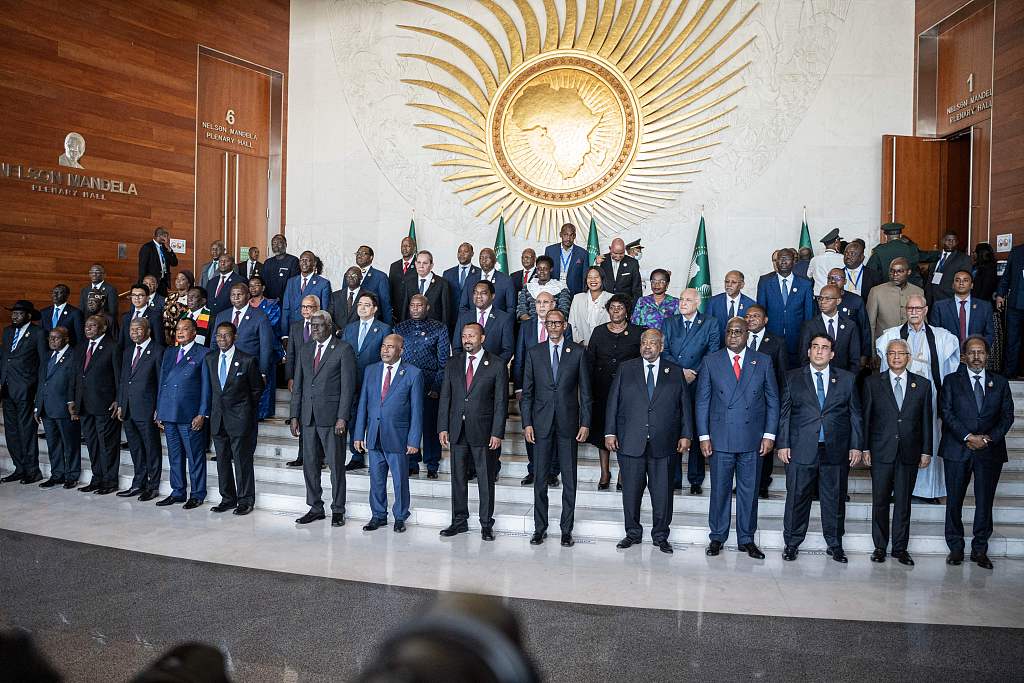
- 28 Feb 2024
Why is it in the News?
Recently, during the 37th African Union Summit, member countries initiated the formation of the Africa Club.
What is the Africa Club?
- The Africa Club is an alliance of African Multilateral Financial Institutions, established at the African Union summit, designed to enhance Africa's influence in the global financial system.
- The initiative aims to align its operations with the Sustainable Development Goals (SDGs) and the African Union's Agenda 2063, fostering innovative financial instruments, facilitating debt management discussions, and promoting collaborative efforts to address the specific needs of African nations.
- Its membership comprises key institutions such as the African Export-Import Bank, Trade and Development Bank, Africa Finance Corporation, African Reinsurance Corporation, African Trade and Investment Development Insurance, Shelter Afrique Development Bank, and ZEP – RE (PTA Reinsurance Co).
About the African Union:
- The African Union is a continental organization consisting of 55 member states across the African continent, established on May 26, 2001, in Addis Ababa, Ethiopia.
- The AU's objectives include promoting peace, security, and stability on the continent, accelerating political and socioeconomic integration, defending the sovereignty and territorial integrity of member states, and advancing sustainable development.
- It serves as a platform for African countries to coordinate their efforts in various fields, including governance, human rights, economic development, infrastructure, health, education, and culture.
- The AU's structures include the Assembly of Heads of State and Government, the Executive Council, the Pan-African Parliament, the African Court of Justice and Human Rights, and various specialized technical committees and organs.
- Through its initiatives and programs, the AU works towards realizing the vision of an integrated, prosperous, and peaceful Africa, driven by its citizens and representing a dynamic force in the global arena.
Revised Guidelines for Community Radio Stations (ET)

- 14 Feb 2024
Why is it in the News?
With a view to ensuring the growth of the community radio sector, the Union government on Tuesday increased the advertising time for community radio stations as well as the tariff rate for advertisements.
What are Community Radio Stations (CRSs?
- Community radio stations (CRSs) are low-power radio stations with a coverage area of approximately a 10-15 km radius, depending on the area’s geography, which is meant to be set up and operated by local communities.
- They offer a platform where content is disseminated in localized dialects and regional languages.
- Local, context-specific issues are raised and discussed in these stations in local idioms.
- India's first community radio station (CRS) was inaugurated on the campus of Anna University in 2004.
- Currently, there are 481 CRSs in India.
About the Revised Policy Guidelines:
- Under the revised policy, the government has permitted any eligible organisation functional in multiple districts to set up a maximum of six community radio stations in different districts.
- The advertising time for community radio stations has been increased from seven minutes per hour to 12 minutes per hour, while the rate of advertisement has been hiked from Rs 52 to Rs 74 per 10 seconds, the guidelines stated.
- The policy also fixed the validity of the letter of intent issued to an organisation to one year, with a buffer of three months to the applicant for any unforeseen circumstances.
- The revised policy guidelines are expected to fuel the growth of the community radio sector.
- The guidelines stated that the licensee would set up an advisory and content committee comprising members of the local community, with 50 per cent representation for women.
Water (Prevention and Control of Pollution) Amendment Bill, 2024 (Indian Express)
- 06 Feb 2024
Why is it in the News?
The Centre on Monday introduced a Bill that would enable it to prescribe the norms for nominating chairpersons of State Pollution Control Boards, exempt certain industrial units from restrictions, and decriminalize “minor offenses” related to water pollution.
News Summary:
- The Water (Prevention and Control of Pollution) Amendment Bill, 2024 has been introduced in the Rajya Sabha.
- It is applicable to Himachal Pradesh and Rajasthan, with the potential to extend to other states through resolutions under the Water (Prevention and Control of Pollution) Act, 1974.
- The Bill empowers the Centre to exempt certain industrial plants from restrictions and issue guidelines related to industry establishment.
About Water (Prevention and Control of Pollution) Amendment Bill, 2024:
- Enacted in 1974, the Water (Prevention and Control of Pollution) Act aimed to prevent and control water pollution, establishing penal provisions for non-compliance.
Rationale for the Amendment:
- The Amendment Bill underscores the importance of democratic governance, emphasizing trust in people and institutions. It addresses the outdated regulations leading to a trust deficit.
Key Amendments Proposed:
- The Amendment Bill seeks to modernize the existing penal provisions, replacing imprisonment with fines for minor violations. This move aligns with the principles of Ease of Living and Ease of Doing Business.
Major Features of the Amendment Bill:
- The Bill proposes several key changes, including:
- Prescribing the process for nominating the chairman of the State Pollution Control Board by the Central Government.
- Granting the Central government authority to exempt certain industrial plants from restrictions on new outlets and discharges.
- Issuing guidelines on matters related to the establishment of industries by the Central government.
- Decriminalizing minor offenses and substituting them with monetary penalties.
- Specifying the adjudication process for penalties by officers of appropriate rank.
- Outlining penalties for non-compliance with regulations regarding new outlets, discharges, and sewage.
- Allocation of penalty amounts to the Environmental Protection Fund established under the Environment (Protection) Act, 1986.
Uniform Civil Code (Indian Express)

- 05 Feb 2024
Why is it in the News
The Uttarakhand Cabinet on Sunday approved the final draft of the Uniform Civil Code (UCC) without any changes, a day before the state Assembly convenes for a special session to take up the Bill.
What is Uniform Civil Code (UCC)?
- A Uniform Civil Code signifies a unified legal framework for the entire country, applicable across all religious communities concerning personal matters like marriage, divorce, inheritance, and adoption.
- The objective is to replace the current fragmented personal laws that govern interpersonal relationships within different religious communities.
Constitutional Framework:
- Article 44 of the Constitution mandates the State to strive for a Uniform Civil Code applicable to all citizens.
- Positioned in Part-IV as a Directive Principle, Article 44, while not justiciable, serves as a fundamental governance guideline.
- These principles, outlined in Article 37, provide overarching ideas for the State to consider in policy formulation and law enactment.
Current Landscape of Personal Laws:
- In the Concurrent list of the Constitution, matters such as marriage, divorce, and inheritance fall under both Parliament and state legislature jurisdictions.
- Hindu personal laws have been codified into four parts since 1956, while Muslim laws, not codified per se, draw from religious texts.
- Christians, Zoroastrians, and Jews are governed by their own personal laws. Goa stands as an exception, following the Portuguese Civil Code.
Need for Uniform Civil Code:
- A UCC aims to establish equal status for all citizens, addressing the inconsistency and lack of uniformity in personal laws across different religions.
- This inconsistency, conflicting with Article 14's Equality before the Law guarantee, often results in gender disparities.
Challenges and Criticisms:
- While advocating equality, the UCC concept raises concerns about potential clashes with the Right to Freedom of Religion (Article 25).
- Critics argue that separate personal laws uphold the right to practice one's religion, particularly crucial for minorities.
- Striking a balance, the Law Commission's 2018 report suggests preserving diversity in personal laws while ensuring alignment with fundamental rights.
The Way Forward:
- Encouraging a progressive mindset through education, awareness, and sensitization is vital for understanding the spirit of the UCC.
- Simultaneously, discriminatory personal laws should be amended or abolished.
- The Law Commission recommends codifying different personal laws to derive universal principles prioritizing equity, rather than imposing a blanket Uniform Civil Code
GHAR (GO Home and Re-Unite) Portal for Restoration and Repatriation of Child (PIB)
- 03 Feb 2024
Why is it in the News?
The Ministry of Women and Child Development developed the “Track Child Portal”, which enables tracking of the missing and found children in all States/UTs including Maharashtra, Chhattisgarh, North Eastern States and Jharkhand.
What is the GHAR Portal?
- National Commission for Protection of Child Rights (NCPCR) has developed and launched the portal GHAR - Go Home and Reunite, with the sole purpose of restoration and repatriation of children.
- The GHAR portal has been developed to digitally monitor and track the restoration and repatriation of children.
- Here's how the portal can help strayed children go home and reunite with their families:
- The portal digitally tracks and monitors children who are in the juvenile justice system and have to be repatriated to another country, state or district.
- It allows the digital transfer of cases of children to the Juvenile Justice Board/Child Welfare Committee of the state concerned.
- It will help in speedy repatriation of children.
- Where there is a requirement for a translator/interpreter/expert, a request will be sent to the state government concerned.
- Child welfare committees and district child protection officers can ensure proper restoration and rehabilitation of children by digitally monitoring the progress of the case of the child.
- A checklist format will be provided in the forms so that the children who are being hard to repatriate or children who are not getting their entitled compensation or other monetary benefits can be identified.
- A list of government-implemented schemes will be provided so that at the time of restoration the Child Welfare Committees can link the child with the schemes to strengthen the family and ensure that the child remains with his/her family.
- The Ministry of Women and Child Development is administering the Juvenile Justice (Care and Protection of Children) Act, 2015 (JJ Act, 2015) (as amended in 2021) and the Rules thereunder, to ensure the safety, security, dignity and well-being of children.
- The Act provides for the protection of children in need of care and protection and those in conflict with the law by catering to their basic needs through care, protection, development, treatment and social reintegration.
- Under the JJ Act, 2015, the Child Welfare Committees have been empowered to make decisions regarding the children in need of care and protection for the children’s best interest.
- They are also mandated to monitor the functioning of the Child Care Institutions (CCIs).
- Similarly, under section 106 of the JJ Act, 2015, every state government has to constitute a District Child Protection Unit (DCPU) for every district to take up matters relating to children to ensure the implementation of the JJ Act, 2015 and its rules thereunder.
- To ensure effective coordination in child safety, protection and development, District Magistrates have been made the heads of DCPUs.
- DMs have been empowered to review the functioning of DCPUs and CWCs at regular intervals to ensure prompt decisions as per provisions of the JJ Act and Rules are taken by these bodies, keeping in mind the best interests of the children.
Telco body seeks USOF, tax reliefs in FY25 Union Budget (Live Mint)
- 19 Jan 2024
Why is it in the News?
Telecom services providers have urged the Ministry of Finance to suspend the Universal Service Obligation Fund (USOF) till the existing corpus is exhausted.
About Universal Service Obligation Fund (USOF):
- The USOF was established through a parliamentary amendment to the Indian Telegraph (Amendment) Act, 2003.
- Its primary goal is to ensure non-discriminatory access to affordable telecom services in rural and remote areas, thereby narrowing the digital gap between urban and rural regions.
- For financially unviable rural and remote areas, the USOF provides subsidy support in the form of Net Cost or Viability Gap Funding (VGF).
- This encourages telecom service providers to expand their services to these areas, enhancing telecommunications and broadband accessibility.
- Funding Mechanism: Telecom operators contribute to the USOF through a Universal Service Levy (USL), a percentage of their Adjusted Gross Revenue (AGR).
- Administration: The USOF is overseen by the Administrator, USO Fund, appointed by the Central Government.
- It operates as an attached office under the Department of Telecommunications (DoT), Ministry of Communications.
Telecom Technology Development Fund (TTDF):
- Launched by USOF on October 1st, 2022, the TTDF Scheme targets domestic companies and institutions engaged in designing, developing, and commercializing telecommunication products and solutions.
- The scheme aims to facilitate affordable broadband and mobile services in rural and remote areas.
- The initiative fosters connections between schools and diverse volunteers from the Indian Diaspora, including young professionals, retired teachers, retired government officials, NGOs, private sector companies, corporate institutions, and more.
- Under the scheme, USOF is committed to developing standards to meet nationwide requirements and establishing an ecosystem for research, design, prototyping, use cases, pilots, and proof-of-concept testing.
- The scheme provides grants to Indian entities, encouraging the integration of indigenous technologies tailored to domestic needs.
Cellular Operators Association of India (COAI)
- The Cellular Operators Association of India (COAI), was constituted in 1995 as a non-governmental society registered under the Societies Act, 1860.
- The Association is dedicated to the advancement of modern communications through the establishment of a world-class cellular infrastructure and to delivering the benefits of affordable mobile communication services to the people of India.
- Today it is regarded as an important interface between the main stakeholders of the Indian Telecom Ecosystem, i.e. Government, Operators, Consumers, Equipment Manufacturers, and Content Providers.
- COAI provides a forum for discussions and exchange of ideas between Service Providers, Policy Makers, Regulators, Technologists, etc., who share a common interest in the development of mobile telephony in the country.
Digital Crop Survey System (Indian Express)

- 19 Oct 2023
Why in the News?
Emphasizing the current manual nature of crop area and production estimation, the Central Government has urged states and Union Territories (UTs) to transition to a digital approach by implementing the Digital Crop Survey System starting in July next year.
About the Digital Crop Survey:
- As a part of the Digital Crop Survey initiative, the Ministry of Agriculture and Farmers Welfare (MoA&FW) has instructed states to capture data on essential parameters, encompassing:
- Village name, year, season, farmer ID, farm ID,
- Crop name (at the farm plot level),
- Crop variety,
- Crop sown area (at the farm plot level),
- Geotags of crop photos,
- Geotags of the farm boundary where the crop is cultivated,
- Sowing/planting date (at the farm plot level),
- Irrigation type (at the farm plot level), and
- Irrigation source (at the farm plot level).
- This directive follows the introduction of a pilot Digital Crop Survey across multiple states earlier this year.
- In a parallel initiative, the MoA&FW has also revised the release timelines for crop estimates.
- Previously conducted in five phases, the ministry has streamlined the process by eliminating the fourth phase traditionally released in August.
- The ministry now plans to unveil comprehensive final estimates encompassing all states and seasons (kharif, rabi, summer) in September-October, departing from the earlier practice of releasing final estimates in February of the subsequent year.
Guidelines for the Digital Crop Survey:
- According to sources, the Economics, Statistics and Evaluation Division (ESED) under the Ministry of Agriculture and Farmers’ Welfare (MoA&FW), has finalised the guidelines.
- According to the guidelines, all states/ UTs shall automate/digitise the process of area enumeration/girdawari of crops at field level, i.e., Digital Crop Survey, from 2024-25 Agricultural Year.
- In India, the agriculture year begins in July and ends in June, the following year.
- Under the guidelines, states and UTs shall use GPS-enabled mobile applications for collecting crop-sown data of each plot for each season and share the village-level aggregated data with DA&FW through API only.
Need for the Digital Crop Survey:
- The current methodology for gathering and consolidating crop statistics relies entirely on manual processes across most states, leading to delays and human errors in the data compilation.
- Only a handful of states, such as Karnataka, Telangana, and Andhra Pradesh, have embraced a digital approach to data collection through GPS-enabled mobile applications, particularly for the recording of crop area and Collection of Cost of Cultivation and Equipment Survey (CCEs) data directly from the fields.
- While Maharashtra and Madhya Pradesh have implemented digital systems, they are primarily focused on recording crop areas.
- India faces a challenge due to the lack of dependable agricultural production estimates, accentuating the necessity for a "real-time assessment estimate" of crops.
- Recognizing this gap, there is a compelling need to modernize the current production estimation system by incorporating technological interventions.
New Artificial Intelligence System BTSbot Discovers Supernova (India Today)

- 17 Oct 2023
Why in the News?
An international team led by Northwestern University has successfully created an artificial intelligence (AI) tool Bright Transient Survey Bot (BTSbot) that can detect, identify, and classify supernovae.
What is the Bright Transient Survey Bot (BTSbot)?
- The Bright Transient Survey Bot operates as a machine-learning algorithm, undergoing training with a vast dataset comprising over 1.4 million images from nearly 16,000 sources.
- Utilizing data from the Zwicky Transient Facility (ZTF), it successfully identified the recently discovered supernova named SN2023tyk.
- Functionality: The algorithm seamlessly automates the process of seeking potential supernovae across the night sky.
- In the case of SN2023tyk, it autonomously requested the supernova's spectrum from the Palomar Observatory.
- Subsequently, the Spectral Energy Distribution Machine (SEDM), another robotic telescope, performed comprehensive observations to obtain the source's spectrum.
- Advantages: This innovative system not only streamlines the entire workflow of searching, detecting, confirming, classifying, and announcing new supernovae but also eradicates human error, significantly enhancing the speed of the process.
- The Bright Transient Survey Bot showcases the potential of automated technology in advancing astronomical discoveries.
What is artificial intelligence?
- Artificial Intelligence (AI) refers to the interdisciplinary field of computer science dedicated to developing algorithms and computational models that emulate human cognitive processes.
- Rooted in machine learning and advanced data analytics, AI aims to create systems capable of reasoning, problem-solving, and decision-making.
- AI involves the study and design of intelligent agents, encompassing areas like natural language processing, computer vision, and expert systems.
- It seeks to enhance machines' ability to learn from experience, adapt to new information, and perform tasks that traditionally necessitate human intelligence, fostering innovation across diverse domains, including healthcare, finance, and robotics.
Vice President Interacted With Inter-Parliamentary Union (IPU) President During P20 Summit (PTI)
- 14 Oct 2023
Why in the News?
Vice President Jagdeep Dhankhar recently hosted a lunch for heads of parliamentary delegations attending the G20 Parliamentary Speakers' Summit (P20) and also interacted with Inter-Parliamentary Union (IPU) President Duarte Pacheco.
About the Inter-Parliamentary Union (IPU):
- Established in 1889 in Paris, the Inter-Parliamentary Union (IPU) is the international organization of Parliaments, dedicated to promoting representative democracy and world peace.
- It serves as the first multilateral political organization globally, fostering cooperation and dialogue among all nations.
- Mission and Slogan: The IPU's mission revolves around parliamentary diplomacy, empowering parliaments, and parliamentarians to advance peace, democracy, and sustainable development worldwide.
- Its slogan, "For democracy. For everyone," encapsulates its commitment to democratic values.
- Membership and Promotion of Democracy: Currently comprising 179 member parliaments and 13 associate members, the IPU actively promotes democracy by strengthening parliaments, and fostering youth inclusion, gender balance, and diversity.
- A dedicated committee defends the human rights of parliamentarians globally.
- Headquarters and Funding: The IPU relocated its headquarters to Geneva in 1921.
- Financed primarily by its members using public funds, the organization sustains its operations and initiatives.
Organizational Structure:
- IPU Assembly: Principal statutory body expressing IPU views on political issues.
- Gathers parliamentarians to study international problems and make actionable recommendations.
- Governing Council: Plenary policymaking body composed of three representatives from each member parliament.
- Establishes the IPU's annual program, and budget, and considers substantive issues.
- Executive Committees: A 17-member body overseeing IPU administration and advising the Governing Council.
- Fifteen members elected by the Council for a four-year term.
- Standing Committees: Three committees set up by the Governing Council to assist the Assembly in its work.
- Meeting of Women Parliamentarians: A separate organ meeting during the first round of Statutory Meetings, reporting to the Governing Council.
- Attended by parliamentarians of both sexes, focusing on specific substantive items for debate within the Assembly's competence.
India, Russia ink pacts on the construction of future power units of the Kudankulam nuclear plant (The Hindu)
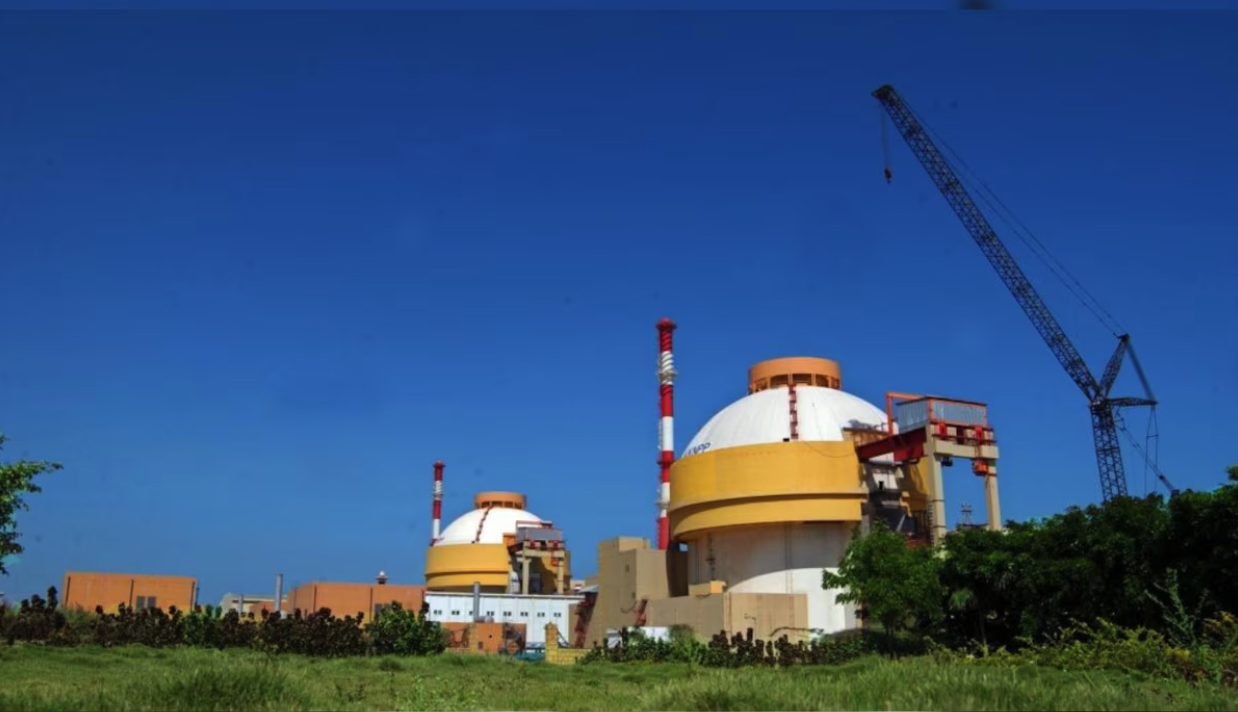
- 27 Dec 2023
Why is it in the News?
In a major boost to their time-tested partnership, India and Russia recently signed some "very important" agreements related to the construction of the future power-generating units of the Kudankulam nuclear power plant.
About the Kudankulam Nuclear Power Project:
- The Kudankulam Nuclear Power Project is India's largest nuclear power plant situated in the Tirunelveli district of Tamil Nadu.
- It is being developed by the Nuclear Power Corporation of India (NPCIL) in collaboration with Russia's Rosatom State Atomic Energy Corporation.
- The construction began in March 2002.
- Since February 2016, the first power unit of the Kudankulam NPP has been steadily operating at its design capacity of 1,000 MW.
- The plant is expected to start operating at full capacity in 2027.
- Water-Water Energy Reactor: The Kudankulam Nuclear Power Project employs VVER (Water-Water Energy Reactor) technology, a pressurized water reactor design developed in the former Soviet Union, known for its safety and reliability.
- Power Generation Capacity: The current power generation capacity is 2×1,000 MWe VVER, expected to significantly increase with the construction of four additional reactors, estimated at ?89,470 crore.
- All units are subject to International Atomic Energy Agency (IAEA) safety analysis, except the Kalpakkam nuclear plant, reserved for strategic use under the India-US Nuclear Agreement.
What is the 3-Stage Nuclear Programme of India?
- India's nuclear program is structured into three stages, strategically designed to harness the extensive Thorium deposits within the country, constituting approximately 25% of the world's total reserves.
- This focus on Thorium is crucial as India possesses limited Uranium reserves, accounting for about 2% of the global uranium reserves.
- 1st Stage: The initial stage employs Pressurized Heavy Water Reactors that operate on natural uranium, consisting of 99.3% U-238 and 0.7% U-235.
- The fissile U-235 triggers a chain reaction, while the non-fissile U-238 transforms into Pu-239 as a byproduct (spent fuel).
- This Pu-239 is subsequently utilized in the Fast Breeder Reactors in the 2nd stage.
- 2nd Stage: Fast Breeder Reactors primarily rely on Plutonium, utilizing a combination of Plutonium-239 from the 1st stage and the abundant U-238 found on Earth to generate additional Plutonium inside the reactor.
- As U-238 does not initiate a chain reaction, the reactors are termed Breeder reactors.
- To maximize the chances of neutron interaction with U-238, these reactors, known as Fast Breeder Reactors, omit a moderator to slow down neutrons.
- Once Plutonium-239 is fully consumed, Thorium is introduced to convert it into U-233, to be used in the 3rd stage.
- 3rd Stage: Thermal Breeder Reactors utilize U-233 produced in the 2nd stage, incorporating thorium-232.
- Notably, Thorium is non-radioactive and non-fissile. Since these reactors also generate U-233 from Thorium-232, they are classified as breeder reactors.
- India's significant reserves of thorium, particularly in the form of monazite sand, emphasize the critical role of the 3rd stage in India's nuclear energy portfolio.
Union Health Minister Launches MedTech Mitra Platform to Empower Medical Technology Innovators (NewsOnAir)
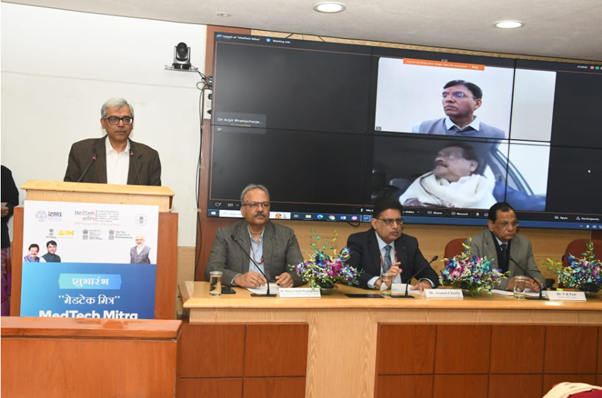
- 26 Dec 2023
Why is it in the News?
Union Health Minister Dr Mansukh Mandaviya has launched MedTech Mitra - a strategic initiative to empower MedTech innovators and advance healthcare solutions.
What is the MedTech Mitra Portal?
- The MedTech Mitra portal is an online platform designed to support medtech innovators by assisting in clinical evaluation, regulatory facilitation, and the adoption of new products in the medical technology sector.
- This collaborative initiative is overseen by the Indian Council of Medical Research (ICMR) and the Central Drugs Standard Control Organisation (CDSCO), operating under the direction/guidance of NITI Aayog’s Atal Innovation Mission.
Significance:
- In conjunction with recent policies and incentive schemes, such as the medical devices policy and the production-linked incentive scheme, the MedTech Mitra platform aims to catalyze growth in the medical devices sector and promote domestic manufacturing.
- These initiatives seek to foster the indigenous development of affordable and high-quality MedTech devices and diagnostics, thereby significantly reducing the sector's reliance on imports.
- The platform is envisioned to streamline the innovation process and facilitate research and development for emerging start-ups, ensuring a smoother journey from concept to product.
- By offering comprehensive guidance, including support for animal and clinical trials, the platform aims to bridge gaps for startups and promote ease of innovation.
- The MedTech Mitra portal is poised to foster collaborations between engineers, scientists, and clinicians, addressing a previously existing gap in partnerships within the sector.
About the Indian Council of Medical Research (ICMR):
- The Indian Council of Medical Research (ICMR) serves as the apex institution in India responsible for formulating, coordinating, and advancing biomedical research.
- With a primary mandate to conduct, coordinate, and implement medical research for societal benefit, ICMR is dedicated to translating medical innovations into tangible products and processes, subsequently integrating them into the public health system.
- Financial support for ICMR is provided by the Government of India through the Department of Health Research, Ministry of Health & Family Welfare.
Cabinet Approves Establishment of an Autonomous Body Mera Yuva Bharat (PIB)
- 11 Oct 2023
Why in the News?
The Union Cabinet, chaired by Prime Minister Shri Narendra Modi, has approved the establishment of an autonomous body Mera Yuva Bharat (MY Bharat).
About Mera Yuva Bharat (MY Bharat):
- Mera Yuva Bharat (MY Bharat), an autonomous body will benefit the youth in the age group of 15-29 years, in line with the definition of ‘Youth’ in the National Youth Policy.
- In the case of programme components specifically meant for adolescents, the beneficiaries will be in the age group of 10-19 years.
- It will help in Setting the focus of the Government on youth-led development and to make the Youth “active drivers” of development and not merely “passive recipients”.
- It will be launched on 31st October 2023 on National Unity Day.
Objective:
- The primary objective of Mera Yuva Bharat (MY Bharat) is to make it a whole of Government platform for youth development.
- With access to resources & connection to opportunities, youth would become community change agents and nation builders allowing them to act as the Yuva Setu between the Government and the citizens.
- It seeks to harness the immense youth energy for nation-building.
The establishment of Mera Yuva Bharat (MY Bharat) would lead to:
- Leadership Development in the Youth:
- Improve leadership skills through experiential learning by shifting from isolated physical interaction to programmatic skills.
- Investing more in youth to make them social innovators, and leaders in the communities.
- Setting the focus of the Government on youth-led development and making the Youth “active drivers” of development and not merely “passive recipients”.
- Better alignment between youth aspirations and community needs.
- Enhanced efficiency through Convergence of existing programmes.
- Act as a one-stop shop for young people and Ministries.
- Create a centralized youth database.
- Improved two-way communication to connect youth government initiatives and activities of other stakeholders that engage with youth.
- Ensuring accessibility by creating a digital ecosystem.
Why There is a Need for Such Initiative?
- India’s youth are to play a critical role in defining the future of the nation.
- There is a need to establish a new contemporary technology-led platform for the Government to engage with the present-day youth.
- Ensuring accessibility by creating a digital ecosystem
- Mera Yuva Bharat supported by a technology platform would help to increase the Youth outreach efforts of the Department of Youth Affairs.
Telecommunications Bill, 2023: The changes it seeks in the telecom sector, why some have raised concerns (Indian Express)
- 19 Dec 2023
Why is it in the News?
The Telecommunications Bill, 2023, was introduced in the Lok Sabha on Monday. The bill allows the government to take over, manage or suspend telecommunication services or a network over national security.
Key Features of the Telecommunications Bill, 2023
- Repeal of Existing Laws: The bill annuls the Indian Telegraph Act, 1885, the Indian Wireless Telegraphy Act, 1933, and the Telegraph Wires (Unlawful Possession) Act, 1950, while introducing amendments to the Telecom Regulatory Authority of India (TRAI) Act, 1997.
- Authorization for Telecom Activities: Central government approval is mandatory for telecommunication services, network establishment, operation, maintenance, expansion, or possession of radio equipment.
- Existing licenses remain valid for their granted period or five years if unspecified.
- Spectrum Assignment: Spectrum allocation, except for specific purposes, will be through auction.
- Exceptions include national security, disaster management, and services by state-owned entities.
- Interception and Search Powers: Messages may be intercepted, monitored, or blocked for public safety, emergencies, or specified grounds like state security and prevention of offences.
- Government's Extraordinary Powers: The government can take temporary possession of telecom infrastructure during public emergencies, with the authority to suspend telecom services.
- Authorized officers may search for unauthorized equipment.
- Standards Specification Authority: The central government can prescribe standards for telecom equipment, infrastructure, networks, and services.
- Right of Way for Telecom Infrastructure: Facility providers can seek a right of way over public or private property for telecom infrastructure on a non-discriminatory basis.
- User Protection Measures: The government may implement measures to protect users, including consent for specific messages, creation of Do Not Disturb registers, and a mechanism for reporting malware.
- TRAI Appointments and Experience Requirements: Amendments allow individuals with at least 30 years of professional experience to serve as TRAI chairperson and those with at least 25 years of membership.
- Digital Bharat Nidhi: The Universal Service Obligation Fund (USOF) is renamed Digital Bharat Nidhi, allowing its use for research and development (R&D).
- Adjudication Process: An adjudicating officer, of the rank of joint secretary and above, will handle inquiries and orders against civil offences.
- Appeals can be made to the Designated Appeals Committee and further to TDSAT.
- Offences and Penalties: The Bill outlines criminal and civil offences, imposing penalties and imprisonment for unauthorized telecom services, network access, and equipment possession.
- Civil penalties apply for breaches of authorization terms.
What are the Reasons behind the introduction of the Telecommunications Bill, of 2023?
- The telecommunications sector plays a pivotal role in fostering economic and social progress, serving as the conduit for digital services.
- Given its significance, the security of our nation relies substantially on the robustness of telecommunication networks.
- Hence, there is an imperative to establish a legal and regulatory structure that prioritizes the security and resilience of telecommunication networks, fostering a digitally inclusive trajectory for growth.
- The dynamic evolution of telecommunication, its patterns of use, and underlying technologies in recent years underscores the necessity for legislation that aligns with the evolving needs of our society.
World Local Production Forum (WLPF) (PIB)

- 07 Nov 2023
Why in the News?
The Indian delegation led by Shri Bhagwant Khuba, Union Minister of State for Chemicals and Fertilizers participated in the Second World Local Production Forum (WLPF) held in Hague, Netherlands.
About the World Local Production Forum (WLPF):
- The World Local Production Forum (WLPF) is an initiative by the World Health Organization (WHO).
- The inaugural WLPF took place virtually in 2021.
- Main Objective: The core aim of this forum is to enhance access to essential medicines and other health technologies.
- Role and Function: The WLPF serves as a regular platform for Member States and the global community to collaboratively develop strategies, mobilize collective efforts, and establish partnerships.
- These actions are directed towards promoting sustainable local production, ensuring timely and equitable access to high-quality health products.
- Secretariat: The Local Production and Assistance (LPA) Unit at the WLPF is responsible for overseeing the forum's activities.
- Second WLPF Goals: The second WLPF has several key objectives:
- To create a global platform for discussions addressing the primary challenges related to local production and technology transfer.
- To explore opportunities and mechanisms for overcoming obstacles in this regard.
- To champion sustainable local production capabilities that lead to improved access to safe, effective, and high-quality health products and technologies.
COP28: What was the most important deal short (Indian Express)
- 14 Dec 2023
Why is it in the News?
COP28: The annual climate conference this year saw some key resolutions on fossil fuels, methane emissions, and funds to fight global warming, among others. However, many concerns remain.
Context:
- The 2023 United Nations Climate Change Conference, also referred to as COP28 took place from November 30 to December 12 at Expo City in Dubai, United Arab Emirates.
- While the event yielded significant outcomes, it, akin to its predecessors, fell short of meeting the anticipated expectations.
Key Outcomes of COP28:
- Fossil Fuel Transition Ambiguity: Acknowledging the role of fossil fuels in global warming for the first time, the agreement calls for countries to contribute to transitioning away from fossil fuels to achieve net-zero emissions by 2050.
- However, the lack of specific time schedules and targets disappointed some nations that expected a more explicit commitment to a "fossil fuel phase-out."
- Renewable Energy Tripling: The agreement calls on countries to contribute to tripling the global installed capacity of renewable energy and doubling annual improvements in energy efficiency.
- This measure is expected to result in emissions avoidance of approximately 7 billion tonnes of carbon dioxide equivalent by 2030.
- However, the global nature of this target raises questions about individual country responsibilities.
- Coal Phase-Down Continuation: The agreement reiterates the commitment to the phase-down of coal, following up on the decision made at COP26.
- While there were considerations to impose restrictions on new coal-fired power plants without carbon capture and storage, these were dropped due to resistance from countries like India, China, and South Africa.
- The agreement lacks specifics on measurement criteria or baseline for this phase-down.
- Methane Emission Challenges: Despite the significance of methane as a greenhouse gas, responsible for nearly 25% of emissions and is 80 times more potent than CO2, the agreement avoids setting targets for methane emission cuts in 2030.
- Countries like India are opposed to mandates due to the agricultural sector's major role in methane emissions.
- Operational Loss & Damage Fund: A significant outcome for vulnerable nations, COP28 operationalized the Loss and Damage Fund, established in COP27.
- Commitments, totaling around US$ 800 million, were made during the conference to assist countries recovering from climate-induced disasters.
- Global Goal on Adaptation Establishment: COP28 adopted a global framework for adaptation, addressing a historic imbalance where adaptation efforts received less attention and resources compared to mitigation activities.
- The framework, though established, lacks financial provisions, necessitating further strengthening in subsequent years.
- Adaptation Challenges: While the global adaptation framework is a positive step, there is still work to be done, particularly in defining indicators for measuring progress on each global goal.
- Adaptation efforts historically focused on local initiatives, and the agreement aims to garner more attention and resources for these endeavours on a global scale.
- Climate Action Acceleration Shortcomings: The final agreement falls short of providing sufficient impetus for the acceleration of climate action in the immediate term.
What is the Conference of the Parties (COP)?
- In 1992, Rio Earth Summit, 154 countries joined an international treaty, the United Nations Framework Convention on Climate Change, as a framework for international cooperation to combat climate change by limiting average global temperature increases and the resulting climate change, and coping with impacts that were, by then, inevitable.
- The COP is the supreme decision-making body of the Convention.
- All States that are Parties to the Convention are represented at the COP, at which they review the implementation of the Convention and any other legal instruments that the COP adopts and take decisions necessary to promote the effective implementation of the Convention, including institutional and administrative arrangements.
- Currently, there are 198 'parties' or signatories of the Convention.
Green Rising initiative launched at RewirEd summit to empower Youth-Led climate solutions (DD News)

- 09 Dec 2023
What is the Green Rising Initiative?
- The "Green Rising" initiative focuses on engaging youth for impactful environmental actions at the grassroots level, aligning with the global effort to address the severe impacts of climate change.
- This initiative encompasses both the global "Green Rising" initiative and the "Green Rising India Alliance," a collaborative endeavor that brings together UNICEF, Generation Unlimited, and a diverse network of public, private, and youth partners.
- The primary objective is to mobilize millions of young individuals globally, encouraging their active engagement in green initiatives aimed at addressing and adapting to the profound impacts of climate change within their communities.
- In India, this effort is channelled through the YuWaah campaign, which specifically focuses on harnessing the energy and commitment of the youth to drive impactful environmental actions at the grassroots level.
About UNICEF:
UNICEF, or the United Nations International Children's Emergency Fund, is a specialized agency of the United Nations committed to promoting the well-being and rights of every child globally.
- Foundation and Establishment: Established in 1946 by the United Nations General Assembly, UNICEF was originally designed to provide emergency food and healthcare to children in countries devastated by World War II.
- Over time, UNICEF's scope evolved to include long-term developmental programs, focusing on education, healthcare, nutrition, clean water, sanitation, and protection for children in need.
- UNICEF is governed by an Executive Board consisting of 36 members who are elected to terms of three years by the United Nations Economic and Social Council.
- Universal Presence: UNICEF operates in over 190 countries and territories worldwide, making it one of the most extensive and widely recognized humanitarian organizations globally.
- Child Rights Advocacy: UNICEF is a leading advocate for children's rights, working to ensure that every child has the right to survive, thrive, and reach their full potential, regardless of their background or circumstances.
- Emergency Response: In times of crises, including natural disasters, conflicts, and pandemics, UNICEF plays a crucial role in providing immediate and life-saving assistance to affected children and communities.
- Partnerships and Collaborations: UNICEF collaborates with governments, non-governmental organizations (NGOs), other UN agencies, and the private sector to implement its programs and maximize its impact.
- Funding Mechanism: UNICEF is funded entirely by voluntary contributions from governments, private donors, businesses, and the general public. It relies on these funds to carry out its programs and respond to emergencies.
- Focus on Equality and Inclusion: UNICEF emphasizes the importance of equality and inclusion, working to address disparities and ensure that the most vulnerable children, including those with disabilities or from marginalized communities, are not left behind.
- Global Campaigns: UNICEF spearheads global campaigns to address critical issues affecting children, such as vaccination drives, education initiatives, and efforts to eliminate child labour and violence against children. These campaigns aim to rally public support and create awareness about the challenges faced by children worldwide.
- It was awarded the Nobel Prize for Peace in 1965 for the “promotion of brotherhood among the nations”.
- Headquarters: New York City
What is the Universal Declaration of Human Rights, which is marking its 75th anniversary? (Indian Express)

- 09 Dec 2023
Why is it in the News?
Seventy-five years ago on Sunday, the UN General Assembly approved the Universal Declaration of Human Rights at a meeting in Paris – laying one of the foundation stones of the international order that emerged following the horrors of World War II.
What is the Universal Declaration of Human Rights (UDHR)?
- On 10 December 1948, during a session in Paris, the United Nations General Assembly unanimously endorsed the Universal Declaration of Human Rights (UDHR), marking a pivotal moment in shaping the post-World War II international order.
- The UDHR emerged as a response to wartime atrocities and aimed to establish a shared understanding of the fundamental rights and freedoms inherent to all individuals.
- A concise yet impactful document, the declaration comprises a preamble and 30 articles that delineate essential rights and freedoms.
- These 30 articles encompass a comprehensive spectrum of civil, political, economic, social, and cultural rights.
- Emphasizing their universality, these rights are deemed applicable to all individuals, irrespective of nationality, ethnicity, gender, religion, or any other status.
- While not legally binding, the UDHR has functioned as a guiding force inspiring the development of international human rights law.
Key Features:
- Preamble: The preamble elucidates the reasons behind adopting the declaration, underscoring the inherent dignity and the equal and inalienable rights of all members of the human family.
- Articles: The UDHR articulates 30 articles outlining a wide array of civil, political, economic, social, and cultural rights. Examples of these rights include:
- The right to life, liberty, and security of person.
- The right to freedom of religion, expression, and assembly.
- The right to work and education.
- The right to an adequate standard of living.
- The declaration asserts that "all are equal before the law" and emphasizes the entitlement of everyone to "a fair and public hearing by an independent and impartial tribunal."
- It also affirms the right of "everyone to seek and to enjoy in other countries asylum from persecution.
Achievements of UNDHR:
- The United Nations Universal Declaration of Human Rights (UNDHR) is acknowledged for its significant impact, having served as the inspiration and foundation for over 70 human rights treaties at both global and regional levels, as noted by the United Nations.
- It played a pivotal role in inspiring movements such as decolonization, the anti-apartheid movement, and various struggles for freedom worldwide, including those related to gender, LGBTIQ+ rights, and opposition against racism.
What is the Current Situation?
- As the 75th anniversary is commemorated, human rights face challenges amid conflicts such as the Israel-Hamas war, Russia's actions in Ukraine, internal strife in Myanmar and Sudan, and numerous other global situations.
- UN Secretary-General Antonio Guterres has remarked that the Universal Declaration has been frequently misused and abused, exploited for political gain, and often ignored by those who should uphold it.
- Contrastingly, Amnesty International asserts that the declaration serves as living proof that a global vision for human rights is attainable and can be realized.
- Despite instances of neglect or exploitation, the declaration remains relevant, and the world is encouraged to recognize its successes while learning from its failures.
Voyager 2 Spacecraft (HT)
- 31 Jul 2023
Why in the News?
NASA’'s Voyager 2 spacecraft, which is venturing through space between stars, faces communication problems due to antenna misalignment. .
About Voyager 2 Spacecraft:
- Voyager 2 is an iconic interplanetary spacecraft launched by NASA on August 20, 1977, with the primary objective of exploring the outer planets of our solar system.
- It is part of the Voyager program, and along with its twin, Voyager 1, it has provided invaluable insights into the distant regions of our cosmic neighborhood.
- The spacecraft is equipped with a suite of scientific instruments to study various aspects of the planets it encounters, including their atmospheres, magnetic fields, and planetary surfaces.
- Voyager 2 successfully conducted close flybys of Jupiter in 1979, Saturn in 1981, Uranus in 1986, and Neptune in 1989, becoming the first and only spacecraft to visit these four giant gas planets.
- Beyond its initial mission, Voyager 2 continues to be operational and remains in communication with Earth, traveling at an impressive speed of approximately 34,000 miles per hour (55,000 kilometers per hour).
- It has since left the heliosphere, the region influenced by the Sun's magnetic field, and entered interstellar space, becoming the second human-made object to do so after Voyager 1.
- Throughout its journey, Voyager 2 has provided a wealth of data and discoveries about the outer planets and their moons, as well as valuable information about the space environment outside the solar system.
- It has captured breathtaking images of planetary systems, revealing the beauty and complexity of the outer planets and their fascinating moons.
- The spacecraft continues to be a remarkable testament to human ingenuity and curiosity as it ventures farther into the cosmos, providing us with an enduring legacy of exploration and knowledge about our celestial neighbors.
ULLAS Initiative (PIB)
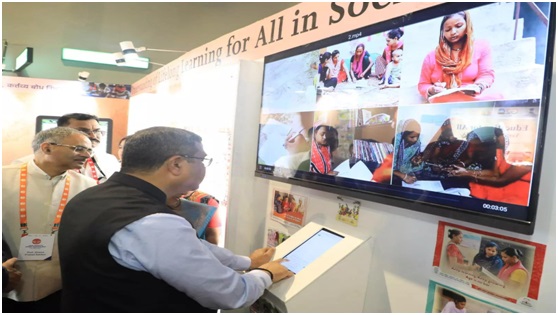
- 31 Jul 2023
Why in the News?
In New Delhi, the logo, slogan "Jan Jan Sakshar," and mobile application of ULLAS were recently unveiled by Shri Dharmendra Pradhan, the Union Minister of Education and Minister of Skill Development and Entrepreneurship.
About the ULLAS Initiative:
- The ULLAS (Understanding Lifelong Learning for All in Society) initiative, holds the potential to revolutionize education and literacy nationwide.
- Its primary objective is to create a learning ecosystem that reaches every individual, bridging the gaps in basic literacy and essential life skills.
- Targeting citizens aged 15 and above who missed the opportunity to attend formal schooling, the initiative imparts basic education, digital and financial literacy, and critical life skills.
- Implementation is driven by volunteerism, emphasizing community participation.
- The slogan of the initiative is "ULLAS: Nav Bharat Saksharta Karyakram."
- To support its goals, the ULLAS app was launched, designed with user-friendliness and interactivity in mind.
- Available on both Android and iOS platforms, the app serves as a digital gateway for learners to access a diverse range of learning resources through the DIKSHA portal of NCERT.
- The ULLAS app facilitates the registration of learners and volunteers, either through self-registration or with the assistance of surveyors.
- Significance:
- This app plays a crucial role in promoting functional literacy, vocational skills, and vital life skills such as financial literacy, legal literacy, digital literacy, and empowering citizens to actively participate in nation-building efforts.
- Furthermore, the ULLAS Initiative nurtures a culture of continuous learning and knowledge-sharing within communities across India, fostering a brighter future for the nation.
Maitree Super Thermal Power Project (STPP) (ET)
- 26 Jul 2023
Why in the News?
The synchronization of the 660-MW unit-2 of the 1,320-MW Maitree Super Thermal Power Project (STPP) with the electricity grid in Bangladesh was recently announced by the state-owned engineering firm Bharat Heavy Electricals.
- Location:
- It is situated in Rampal, in the Bagerhat district of Bangladesh's Khulna division.
- It will be one of the biggest coal-fired power plants in Bangladesh, along with the Payra Power Plant in Pataukhali, which commenced test production in January 2020.
- Capacity and Cost:
- The power station has a capacity of 1320 MW (2x660 MW) and is estimated to cost around $2 billion.
- Financing Plan:
- The project is being developed under India's tax concessions finance plan, aiming to enhance Bangladesh's national grid by an additional 1320 MW.
- Financed through a £1.3bn ($1.6bn) loan from the Export-Import (EXIM) Bank of India.
- Implementing Entity:
- India’s Bharat Heavy Electricals Limited (BHEL) is responsible for constructing the power plant on behalf of Bangladesh-India Friendship Electricity Company Private Limited (BIFPCL).
- Commercial Operation:
- The first unit of the super thermal power plant is expected to commence commercial operation in early October, representing a significant milestone in the growing cooperation between India and Bangladesh in the power industry.
- Future Expansion:
- In the subsequent year, the power plant's Unit-II, also known as the Rampal coal-fired power project, is scheduled for implementation.
UNITED NATIONS FORUM ON FORESTS (PIB)
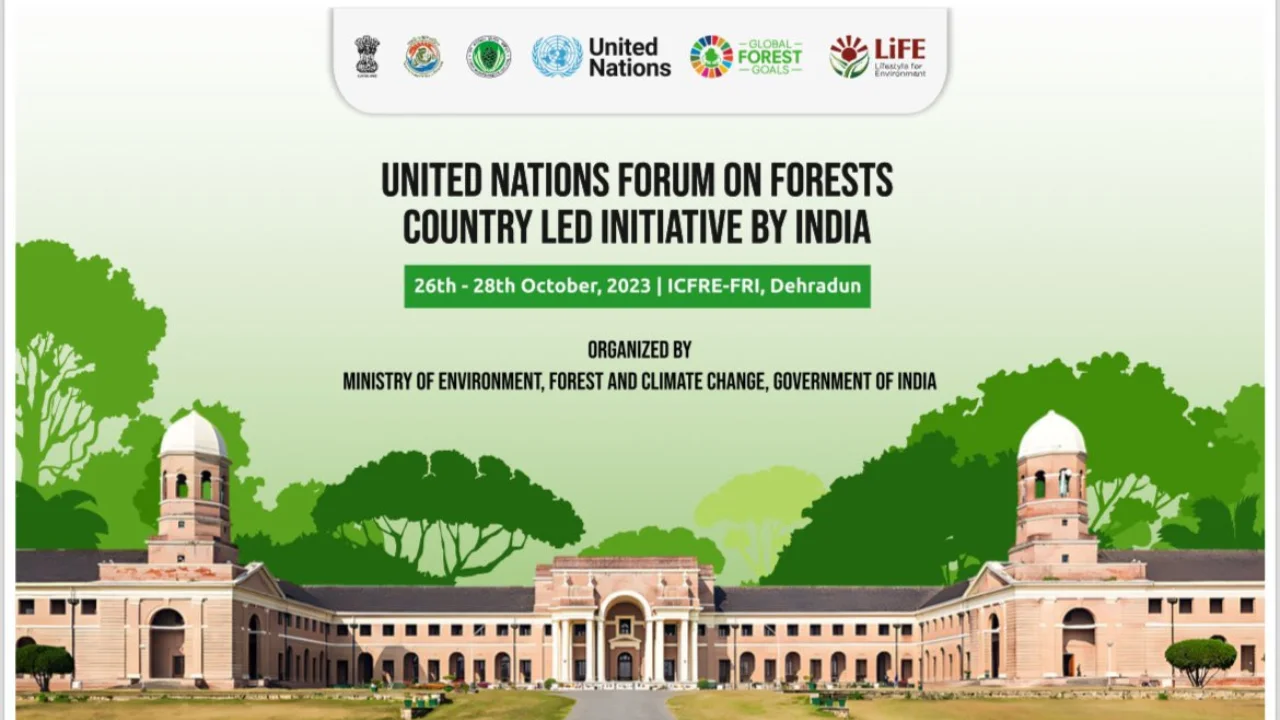
- 26 Oct 2023
What is the News ?
The United Nations Forum on Forests (UNFF) will organise a Country-Led Initiative (CLI) event hosted by the Ministry of Environment, Forests, and Climate Change from October 26–28, 2023, at the Forest Research Institute (FRI), Dehradun, Uttarakhand.
Facts About:
- It encourages the sustainable development, preservation, and management of all kinds of forests.
- The UNEconomic and Social Council of the United Nations (ECOSOC) was founded it in 2000.
- Every year, the Forum gathers at the UN Headquarters in New York to discuss high-level policy issues in even years and technical issues in odd years, bringing together representatives of all member states and agencies with an interest in forests.
- All United Nations members as well as specialized agencies make up the forum, which has universal membership.
- India is one of UNFF's founding members.
UNITED NATIONS WORLD TOURISM ORGANISATION (UNWTO) (PIB)
- 21 Oct 2023
What is the News ?
The Dhordo village in Gujarat's Kutch district was recently recognized as the Best Tourism Village by the United Nations World Tourism Organization (UNWTO), which was praised by India's Prime Minister.
Facts About:
- The United Nations World Tourism Organization (UNWTO) is a specialized agency of the United Nations responsible for promoting sustainable and responsible tourism on a global scale.
- Its functions include acting as a global forum for tourism policy issues and encouraging the adoption of the Global Code of Ethics for Tourism.
It was founded in 1975.
- Members: 159 countries are members of the UNWTO.
- Arabic, Chinese, English, French, Russian, and Spanish are the UNWTO's official languages.
- Structure of the organization:
The World Tourism Organization's General Assembly is the organization's main meeting.
It is made up of full members and associate members. It convenes every two years.
- The Executive Council serves as the UNWTO's governing body.
It is made up of 35 members, one for every five full members, who are elected by the General Assembly. It holds at least two meetings per year.
- Headquarters are in Madrid, (Spain).
Unified Portal for Agricultural Statistics (UPAg) (PIB)
- 16 Sep 2023
What is the News ?
The Ministry of Agriculture and Farmers' Welfare (DA & FW) recently introduced the Unified Portal for Agricultural Statistics, and its launch was attended by members of NITI Aayog.
Facts About:
- This innovative platform is specifically designed to improve the management of data within the agricultural sector.
- It represents a significant stride towards a more efficient and responsive framework for agricultural policies.
- As a vital part of the Digital Public Infrastructure for Agriculture, it's an initiative led by the Department of Agriculture and Farmers' Welfare to streamline data management in agriculture.
- The primary goal is to offer real-time, standardized, and verified data about agricultural commodities, simplifying data-driven decision-making for policymakers, researchers, and stakeholders.
- This initiative is in line with the principles of e-governance, introducing intelligence, transparency, and flexibility to India's agricultural sector.
Uniform Civil Code (Indian Express)
- 11 Aug 2023
What is the News ?
The Kerala Legislative Assembly has unanimously adopted a resolution expressing its concern over the Union Government move to impose a Uniform civil code (UCC).
Facts About:
- The Kerala Assembly resolution essentially strikes a cautious note that a proposed “UCC could harm the secular nature of the country. “
- The resolution also talks about federalism – that the Centre could make a unilateral move on the contentious issue without consulting states.
- The resolution also argued that, it is critical to note that the Uniform Civil Code was limited to Directive Principles.
What does Constitution say about UCC?
- The Constitution refers to civil code only in its Directive Principles.
- Implementation of Directive Principles is not mandatory.
- The court may order to enforce Fundamental rights. But the Directive Principles of Article 44 of the Constitution cannot be enforced even by the courts.
Can the state legislate on UCC?
- Article 162 of the Constitution:
- The issue of personal laws falls in List III —the Concurrent List of the Seventh Schedule to the Constitution.
- While subjects in the Union lists fall within the purview of the Parliament, states can legislate on subjects in the State List.
- For entries in the ‘Concurrent List’, Article 162 of the Constitution gives state governments the power to legislate on subjects where a central law does not occupy the field.
- If there is a central law, it automatically gains precedence over the state law on the subject.
- Entry 5 of Concurrent List:
- Also the Entry 5 of the Concurrent lists “Marriage and divorce; infants and minors; adoption; wills, intestacy and succession; joint family and partition; all matters in respect of which parties in judicial proceedings were immediately before the commencement of this Constitution subject to their personal law.
- This allows states the power to legislate on the subject but only in the absence of a central law.
Do states can bring their own personal laws again?
The answer to it is NO, due to following cases;
- State laws on the issues mentioned in Entry 5 of the Concurrent List will not have precedence over central legislation.
- On specific areas not covered by central legislation, states can legislate.
- But central legislation already covers all aspects of marriage, divorce, inheritance and succession.
Supreme Court’s stand:
- The Court mentioned that Article 162 of the Constitution indicates that the executive power of a State extends to matters with respect to which the Legislature of the State has power to make laws.
- In view of the provisions of Entry 5 of the Concurrent List of the Seventh Schedule, the constitution of a Committee per se cannot be challenged as ultra vires.
Source: https://indianexpress.com/article/explained/explained-law/kerala-assembly-resolution-against-uniform-civil-code-8885558/#:~:text=The%20Kerala%20Legislative%20Assembly%20on,a%20common%20personal%20law%20code.