
Iran-Pakistan-India (IPI) Pipeline
- 23 Mar 2026
In News:
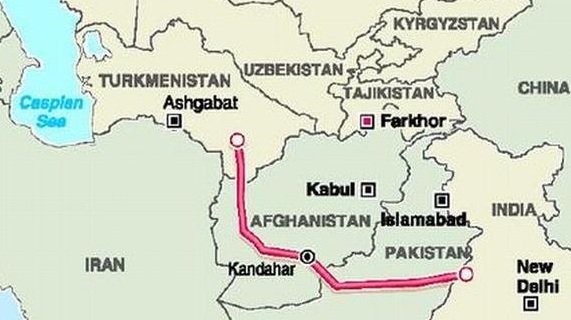
The ongoing geopolitical tensions in West Asia have disrupted global energy supply chains, exposing India’s high dependence on imported hydrocarbons, particularly natural gas. This has revived discussions around stalled transnational pipeline projects such as the Iran–Pakistan–India (IPI) and Turkmenistan–Afghanistan–Pakistan–India (TAPI) pipelines as alternatives to ensure long-term energy security.
Background: India’s Energy Vulnerability
India is heavily reliant on imports to meet its energy needs, especially for natural gas. Disruptions in maritime routes and geopolitical instability in West Asia increase price volatility and supply risks, highlighting the need for diversified and secure energy sources.
Pipeline-based supply was envisioned as a cost-effective and stable alternative to Liquefied Natural Gas (LNG), reducing dependence on sea routes and global spot markets.
Iran–Pakistan–India (IPI) Pipeline
- The IPI pipeline, often referred to as the “Peace Pipeline,” was conceptualised in the 1990s to transport natural gas from Iran’s South Pars field to South Asia.
- The project envisaged a 2,775 km pipeline supplying around 60 mmscmd of gas each to India and Pakistan, offering a relatively cheaper alternative to LNG imports. It also carried the promise of regional cooperation through economic interdependence.
- However, the project lost momentum and India withdrew in 2007 due to multiple concerns. These included U.S.-led sanctions on Iran, pricing disagreements, and security risks, particularly regarding the pipeline’s passage through Pakistan’s Balochistan region. As a result, the project remains effectively dormant.
Turkmenistan–Afghanistan–Pakistan–India (TAPI) Pipeline
- Following the stagnation of IPI, India shifted its focus to the TAPI pipeline, which aimed to bring natural gas from the Galkynysh gas field in Turkmenistan, one of the world’s largest reserves.
- Spanning about 1,814 km, the pipeline is designed to transport 33 billion cubic meters (bcm) of gas annually. It received support from the Asian Development Bank and was seen as part of broader efforts to integrate Central and South Asia economically.
- While progress has been made in parts of the project—particularly the Turkmenistan-Afghanistan section—the extension into Pakistan and India remains stalled due to security challenges in Afghanistan, financing constraints, and geopolitical uncertainties.
Comparative Analysis
The IPI and TAPI pipelines reflect two different strategic approaches to energy security. While IPI relied on West Asian resources with shorter routes, it faced geopolitical constraints. TAPI, on the other hand, sought to diversify supply through Central Asia, but has struggled due to instability along its transit route.
Both projects highlight the complexity of cross-border energy infrastructure, where geopolitics, security, and economic viability intersect.
Saudi–Pakistan Strategic Mutual Defence Agreement (SMDA)
- 23 Sep 2025
In News:
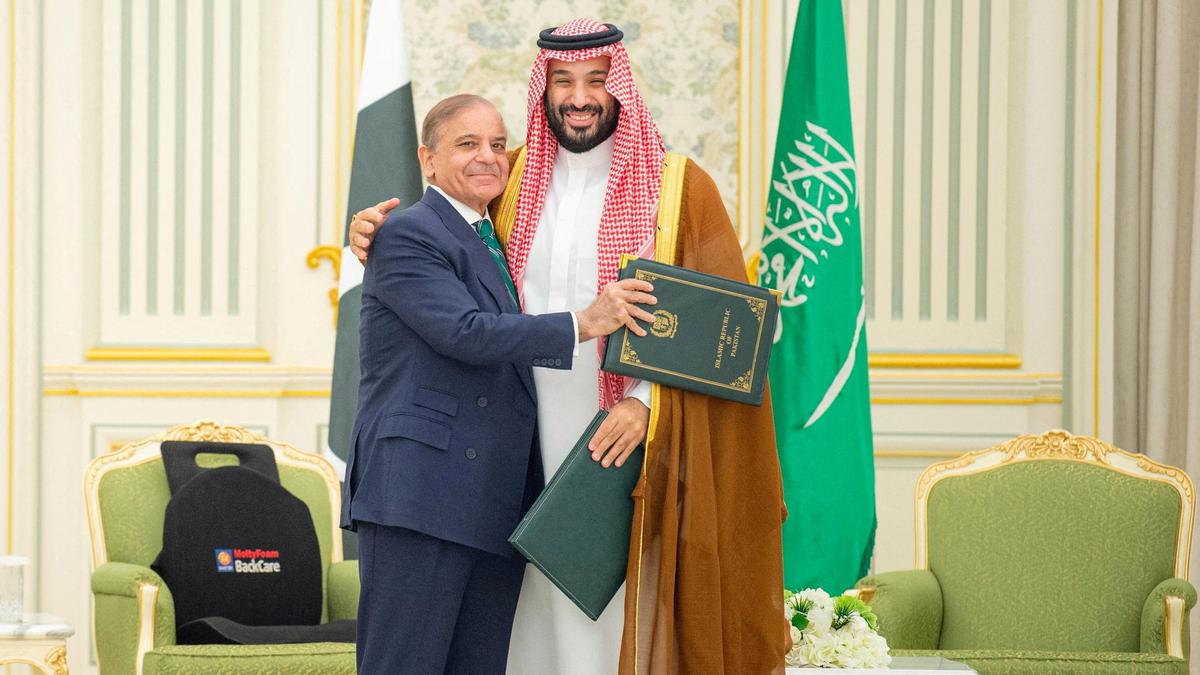
- Recently, Saudi Arabia and Pakistan signed a Strategic Mutual Defence Agreement (SMDA) in Riyadh, formalising a long-discussed framework for joint defence and mutual security.
- The agreement, viewed as a landmark in bilateral ties, symbolises a renewed effort to institutionalise their security partnership amid changing regional dynamics and waning U.S. influence in West Asia.
Nature and Scope of the Pact
- The SMDA commits both nations to collective defence, stipulating that any attack on one country will be treated as an attack on both.
- It builds upon the 1982 Bilateral Security Cooperation Agreement, strengthening channels of military coordination, intelligence exchange, training, and arms trade.
- The pact extends across conventional defence cooperation, advisory roles, and — in principle — joint deterrence, though not explicitly nuclear.
Strategic Context
- The timing of the agreement follows rising regional uncertainty, including Israel–Qatar tensions, Yemen conflict spillovers, and Iran–Saudi rivalry.
- By signing the SMDA, Riyadh signals its intent to pursue greater regional self-reliance in defence, moving beyond full dependence on the U.S. security umbrella.
- For Pakistan, it secures much-needed economic and energy support from Saudi Arabia amid a deep fiscal crisis, while reaffirming its role as a key security partner in the Islamic world.
Key Drivers
- Mutual Security Assurance: Establishes a framework for joint deterrence and defence coordination.
- Economic Complementarity: Opens avenues for Saudi financial assistance, arms procurement, and energy trade with Pakistan.
- Symbolic Islamic Solidarity: Positions Pakistan as a pan-Islamic security contributor, enhancing its strategic visibility.
- Regional Rebalancing: Demonstrates Saudi Arabia’s effort to diversify security partnerships beyond Washington and regional blocs.
Implications
1. For India
- Strategic Caution: While the pact theoretically enables Pakistan to seek Saudi backing in a potential India–Pakistan confrontation, Riyadh’s growing ties with India — including $42.9 billion in bilateral trade, defence collaboration, and major investments — make an overt anti-India stance unlikely.
- Diplomatic Opportunity: New Delhi can leverage its energy and economic partnerships to maintain Saudi neutrality in South Asian affairs.
- Policy Imperative: India must sustain strategic dialogue and ensure Arab neutrality in regional crises through proactive diplomacy.
2. Regional and Global Dimension
- Shift in Gulf Security Architecture: Reflects a decline in U.S. dominance and emergence of a multipolar Gulf order, with Riyadh exploring independent alliances.
- Iran–Saudi–Pakistan Equation: Enhances Saudi deterrence posture against Iran, Yemeni Houthis, and potentially Israel’s unilateral actions.
- Nuclear Sensitivities: Raises concerns about possible nuclear collaboration, though the actual transfer of Pakistani nuclear technology to Saudi Arabia remains highly improbable, constrained by global non-proliferation norms and Israeli sensitivities.
Way Forward for India
- Deepen Defence and Security Cooperation: Expand joint training, exercises, and intelligence exchanges with Saudi Arabia.
- Energy Diplomacy: Pursue long-term crude oil and green hydrogen partnerships to consolidate interdependence.
- Strategic Monitoring: Closely track SMDA implementation, including possible Pakistani troop deployments or defence projects.
- Maritime Synergy: Strengthen India’s presence in the Arabian Sea through naval cooperation to protect vital energy routes.
- Economic Leverage: Utilize India’s market potential and diaspora network as stabilising anchors in Indo-Saudi relations.
Antimony Discovery in Balochistan, Pakistan
- 07 Apr 2025
In News:
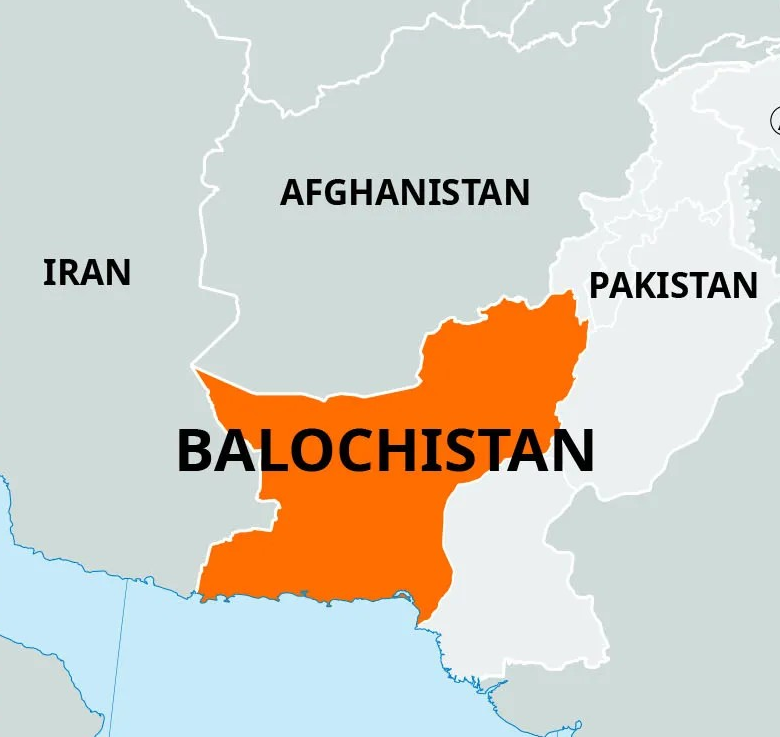
In a recent geopolitical development, Pakistan has reportedly discovered a significant deposit of Antimony in the Balochistan region — an area marred by conflict and instability. This finding holds both economic and strategic significance, given the growing global demand for rare and critical minerals.
About Antimony
- Chemical Element: Antimony (Symbol: Sb, Atomic Number: 51) is a metalloid, meaning it exhibits properties of both metals and non-metals.
- Physical Properties:
- Solid at room temperature.
- Poor conductor of heat and electricity.
- Found in commercial forms such as ingots, broken pieces, granules, and cast cakes.
Geological Occurrence
- Primary Ore: The chief ore of Antimony is Stibnite (Sb?S?).
- Mode of Occurrence: Found in volcanic-associated deposits and deep-seated veins, formed under moderate to high temperature and pressure.
- Also commonly obtained as a byproduct from lead-zinc-silver mining operations.
Global Production Landscape
- China is the dominant global producer, accounting for over 88% of world production.
- Other notable producers include Russia, Bolivia, and Tajikistan.
- India currently does not have significant reserves or production of Antimony, making it dependent on imports for industrial use.
Key Industrial and Strategic Uses
- Electronics Industry:Used in manufacturing semiconductors, infrared detectors, and diodes.
- Alloys:
- Alloyed with lead and other metals to increase hardness and strength.
- Lead-antimony alloys are extensively used in lead-acid batteries.
- Defense and Printing:Utilized in the production of bullets, type metal for printing, and cable sheathing.
- Flame-Retardants and Ceramics:Antimony compounds are key ingredients in flame-retardant materials, as well as in paints, enamels, glass, and pottery.
ASI Decodes Sanskrit Inscription Found in Pakistan-Occupied Kashmir (PoK)

- 29 Dec 2024
In News:
An ancient Sanskrit inscription found in Gilgit (PoK) was decoded by the Archaeological Survey of India (ASI).
About the Inscription:
- Location:
- Gilgit (PoK): Written in Brahmi script, dating back to 4th century CE.
- Peshawar (Pakistan): Written in Sharada script, dating to 10th century CE.
- Details of Gilgit Inscription:
- Mentions Pushpasingha, who installed a Mahesvaralinga for the merit of his guru.
- Written in Brahmi script, which was prevalent during the 4th century CE.
- Religious Context: Indicates significant religious connection, particularly with Shaivism.
- Details of Peshawar Inscription:
- Fragmentary: Engraved on a slab.
- Written in Sharada characters (10th century CE).
- Mentions Buddhist Dharini (chants), particularly referring to Da (Dha) rini in line six.
- The inscription is partially damaged, and further details are unclear.
- Earlier Discoveries:
- This is not the first Sanskrit inscription decoded from Pakistan. In the past, Sanskrit inscriptions have been found in various parts of Pakistan.
- Swat Valley: Known for numerous Buddhist rock inscriptions in Sanskrit using Nagari script, which were part of the Gupta Empire (circa 240–550 CE).
- Religious and Cultural Implications:
- The Gilgit inscription provides evidence of Shaivism as a prominent religious practice in the region during the 4th century CE.
- The Peshawar inscription suggests Buddhist influences, particularly related to Buddhist chants and rituals.
- Swat Valley's Role: The inscriptions found here highlight its importance as a center of Buddhist learning and cultural exchange.
India-Pakistan Kartarpur Corridor Agreement Renewal
- 23 Oct 2024
In News:
- India and Pakistan have extended the Sri Kartarpur Sahib Corridor Agreement for another five years (until 2029).
- Purpose: The extension ensures uninterrupted operation of the corridor, allowing Indian pilgrims to visit Gurdwara Darbar Sahib Kartarpur in Pakistan.
- Significance: The extension reflects continued cooperation between India and Pakistan, with potential implications for improving bilateral relations.
Background of Kartarpur Corridor:
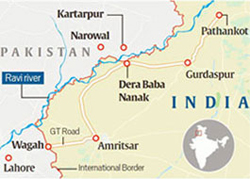
- Inception: The agreement was first signed on October 24, 2019, to allow visa-free access for Indian pilgrims to Gurdwara Darbar Sahib Kartarpur near Narowal in Pakistan.
- Pilgrimage Details:
- Eligibility: Indian nationals and Overseas Citizens of India (OCI) cardholders can visit the gurdwara on a daily basis.
- Return on Same Day: Pilgrims must return on the same day.
- No Religious Restrictions: Pilgrims of any faith can use the corridor.
- Capacity: Up to 5,000 pilgrims per day can visit the gurdwara.
- Historical Importance: The corridor facilitates the Sikh community's access to a key religious site, located just 4.7 km from the India-Pakistan border.
- Service Charge Dispute:
- Pakistan's Service Fee: Pakistan continues to charge a $20 service fee (approx. ?1,680) per pilgrim, which India has consistently urged Pakistan to waive.
- Pakistan’s Justification: Pakistan maintains the fee to cover the $17 million spent on refurbishing the gurdwara and developing infrastructure for the corridor.
- Geopolitical Context and Timing:
- Recent Developments: The agreement renewal follows External Affairs Minister S. Jaishankar’s visit to Pakistan to attend the Shanghai Cooperation Organization (SCO) Council of Heads of Government meeting.
- Improved Bilateral Relations: Jaishankar’s visit marked the first visit by an Indian foreign minister to Pakistan in nearly nine years, signaling potential thaw in relations, despite the lack of formal bilateral dialogue.
- Strategic and Religious Importance:
- Religious Diplomacy: The Kartarpur Corridor is viewed as a confidence-building measure and a symbol of religious diplomacy, particularly for the Sikh community.
- Historical Legacy: The corridor links Gurdwara Darbar Sahib Kartarpur in Pakistan to Gurdwara Dera Baba Nanak in India, facilitating access to a site of immense religious significance for Sikhs.
- Implications for India-Pakistan Relations:
- No Formal Bilateral Talks: Despite the successful renewal of the agreement, formal talks between India and Pakistan remain suspended, particularly after India’s revocation of Article 370 in Jammu and Kashmir in 2019, which led to a diplomatic freeze.
- Pakistan's Diplomatic Stance: Pakistan had recalled its high commissioner from India in August 2019, and tensions have remained high since then.
- Potential for Future Engagement:
- Diplomatic Channels Opened: The renewal of the Kartarpur agreement and Jaishankar’s visit suggest that diplomatic channels are still open, and there may be scope for further engagement if both sides take steps to address outstanding issues.