
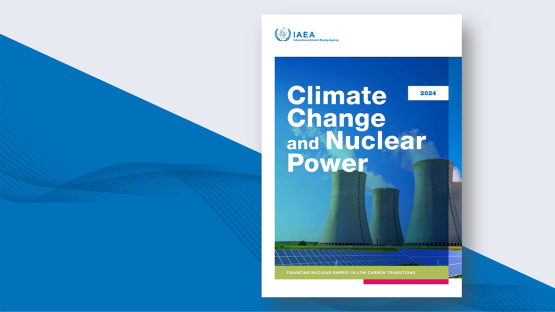
IAEA’s 2024 Climate Change and Nuclear Power Report
- 22 Oct 2024
In News:
- The 2024 edition of the IAEA’s Climate Change and Nuclear Power report has been released, highlighting the need for a significant increase in investment to achieve goals for expanding nuclear power.
- The new report was launched last week on the margins of the Clean Energy Ministerial (CEM) in Brazil.
Key Highlights:
- Nuclear Power's Role in Climate Change Mitigation:
- Nuclear energy is gaining global interest as nations seek to enhance energy security and decarbonize economies.
- To meet net-zero emissions by 2050, nuclear power is projected to play a pivotal role, with a projected capacity increase of 2.5 times the current level by mid-century in the IAEA's high case scenario.
- Investment Needs for Nuclear Expansion:
- Annual investment required to meet the IAEA's high case scenario (2050 nuclear capacity) is USD 125 billion, a significant increase from USD 50 billion annually from 2017-2023.
- If the aspirational goal to triple nuclear capacity (as pledged by over 20 countries at COP28) is to be met, USD 150 billion annually would be necessary.
- Challenges in Financing: Upfront capital for nuclear power plants is expensive, posing challenges, especially in market-driven economies and developing countries.
- Private Sector and Multilateral Support:
- The private sector will need to play a larger role in financing nuclear projects.
- The IAEA is engaging with multilateral development banks to improve financing options for developing countries to invest in nuclear energy.
- Private finance initiatives: In September 2024, 14 major financial institutions signaled readiness to help fund nuclear newbuild projects.
- Nuclear Financing at Clean Energy Ministerial (CEM):
- The IAEA report was launched during the 15th CEM in Brazil, a high-level forum for advancing clean energy technologies.
- Key stakeholders from Brazil, the IAEA, the International Energy Agency (IEA), and the U.S. discussed strategies for securing nuclear power financing, especially in the context of COP29 (2024) where clean energy financing will be a key focus.
- Nuclear Energy in the EU’s Sustainable Financing:
- The EU taxonomy for sustainable activities now includes nuclear power, facilitating the issuance of green bonds for nuclear projects in Finland and France (2023).
- EDF received €4 billion in green bonds and around €7 billion in green loans (2022-2024).
- Investment in Nuclear Power:
- To meet global climate goals, nuclear power capacity must increase by 1.8 times by 2035.
- Effective financing mechanisms are crucial to scale up nuclear power and develop the workforce and supply chains needed for the energy transition.
- Policy Reform and International Partnerships:
- The report advocates for policy reforms and international partnerships to bridge the financing gap and accelerate nuclear power deployment, particularly in emerging markets and developing economies.
- Focus on technologies such as small modular reactors (SMRs), which could play a role in the energy transition.
- Key Areas to Support Nuclear Growth:
- Robust regulatory frameworks and new delivery models are essential to unlock investments.
- Development of skilled labor and effective stakeholder engagement is crucial for the expansion of nuclear energy.
- Energy System Modelling and Planning:
- The IAEA’s energy system modelling tools assist countries like Brazil in planning nuclear power projects, including cost analyses for electricity generation and financing strategies.
Role of the International Atomic Energy Agency (IAEA):
- Mandate: The IAEA is the leading international body for promoting the safe, secure, and peaceful use of nuclear energy and technologies.
- Functions:
- Nuclear safeguards: Ensuring nuclear activities remain peaceful and preventing the diversion of nuclear materials for weapons purposes.
- Assisting member states with technical support, knowledge sharing, and strengthening nuclear safety and security.
- The IAEA also supports capacity-building and emergency response in case of nuclear or radiological incidents.
- Structure:
- The IAEA General Conference is made up of all 178 member states, meeting annually to approve budgets and policies.
- The Board of Governors (35 members) meets several times a year to oversee the agency's activities and appointments.
- Headquarters: Vienna, Austria
- The IAEA is part of the United Nations family, reporting to both the UN General Assembly and the Security Council.
Atomic watchdog report says Iran is increasing production of highly enriched uranium (Indian Express)
- 27 Dec 2023
Why is it in the News?
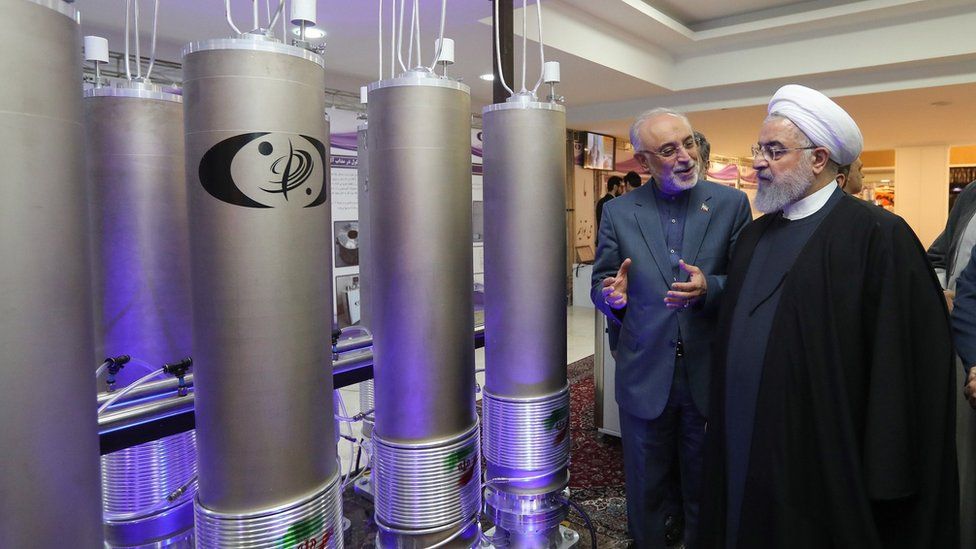
Iran has increased the rate at which it is producing near weapons-grade uranium in recent weeks, reversing a previous slowdown that started in the middle of this year, the International Atomic Energy Agency said in a report.
What is Uranium Enrichment?
- Natural uranium is comprised of two isotopes, with approximately 99% being U-238 and only about 0.7% being U-235.
- U-235 is a fissile material capable of sustaining a chain reaction within a nuclear reactor.
- The enrichment process involves increasing the proportion of U-235 through isotope separation, effectively isolating U-238 from U-235.
- For the production of nuclear weapons, enrichment is necessary up to 90% or more, referred to as weapons-grade uranium.
- Low-enriched uranium, typically containing a 3-5% concentration of U-235, is suitable for generating fuel for commercial nuclear power plants.
- In contrast, highly enriched uranium, boasting a purity of 20% or more, finds application in research reactors.
Key Facts About Uranium:
- Discovered in 1789 by the German chemist Martin Klaproth, Uranium is a silvery-white metallic chemical element found in the periodic table, characterized by its atomic number 92.
- This element holds the distinction of having the highest atomic weight among all naturally occurring elements.
- Naturally present in low concentrations in soil, rock, and water, uranium is commercially extracted from minerals like uraninite.
- The mining of uranium ore can be undertaken through open pits or underground excavations, followed by crushing and processing at a mill to isolate the valuable uranium.
- An alternative method involves the direct dissolution of uranium from ore deposits in the ground, known as in-situ leaching, with the extracted uranium then pumped to the surface.
About the International Atomic Energy Agency (IAEA):
- The International Atomic Energy Agency is an intergovernmental organization that seeks to promote the peaceful use of nuclear energy and to inhibit its use for any military purpose, including nuclear weapons.
- Established as an autonomous entity through its international treaty, the IAEA Statute, the organization, nonetheless, reports to both the United Nations General Assembly and the Security Council.
- Headquartered in Vienna, Austria, the IAEA collaborates with its Member States and various global partners to advance the safe and peaceful utilization of nuclear technologies.
- It employs nuclear safeguards, encompassing monitoring, inspection, information analysis, and other measures, to ensure the peaceful nature of nuclear activities and to detect and deter any potential diversion towards weapons-related purposes.
- The IAEA plays a crucial role in implementing comprehensive safeguards agreements mandated by the Nuclear Non-Proliferation Treaty (NPT), acting as a frontline defense against nuclear weapons proliferation.
- Additionally, the agency facilitates the exchange of scientific and technical information among its Member States.
- A key function of the IAEA is to bolster national, regional, and international capabilities to respond effectively to nuclear and radiological incidents, thereby minimizing their impact.