
Cicadas
- 16 Sep 2025
In News:
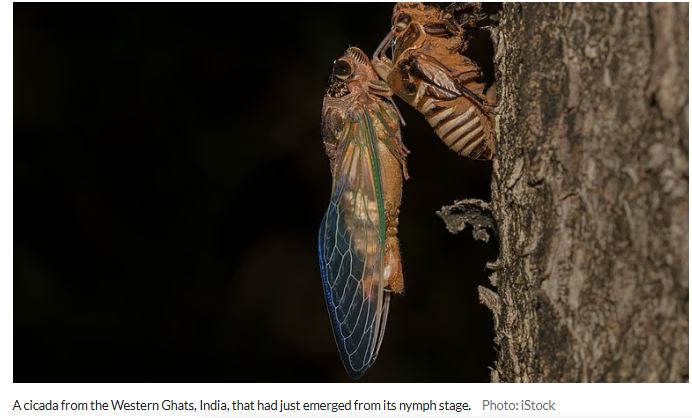
The recent reappearance of cicadas in Kerala’s Silent Valley National Park — after decades of absence — has intrigued ecologists. It is being seen both as a possible indicator of ecosystem recovery and as a warning signal of ecological disruption caused by climate change and habitat alteration.
About Silent Valley
Located in the Nilgiri Hills of Kerala’s Western Ghats, Silent Valley National Park spans about 90 sq. km and represents one of India’s most pristine tropical rainforests. The forest’s name owes itself to the striking absence of cicada calls, which are ubiquitous in most tropical forests. The absence of these insects — known for their high-decibel songs — was noted as early as the 1840s by British botanist Robert Wight, making it an ecological enigma.
Understanding Cicadas
Cicadas are hemipteran insects recognized for their loud, species-specific acoustic signals. They spend most of their lives underground as nymphs, feeding on tree root sap, before emerging for a short adult phase primarily to mate.
- Habitat: Mostly canopy dwellers in natural forests with mature trees.
- Types:
- Annual cicadas – emerge every year in summer, often camouflaged among trees.
- Periodical cicadas – emerge collectively after 13 or 17 years of dormancy.
- Ecological Roles:
- Aerate soil and enhance nutrient cycling.
- Serve as prey for birds, reptiles, and mammals.
- After death, their bodies enrich soil nitrogen, aiding forest regeneration.
The Mystery of Silence
Unlike most tropical forests, Silent Valley lacked the characteristic cicada chorus. Scientists have proposed several hypotheses for this anomaly:
- Microclimate Conditions: The valley’s bowl-shaped topography, constant mist, and moisture-rich soils may hinder nymph development that prefers drier soil.
- Vegetation Composition: Unique tree species and leaf litter dynamics may not support cicada life cycles.
- Historical Climatic Shifts: Subtle long-term climate variations might have altered habitat suitability.
- Natural Absence Hypothesis: Cicadas may never have colonized this particular ecosystem in significant numbers.
Return of the Cicadas
Recent field surveys and local observations indicate a gradual resurgence of cicada populations in certain forest patches.
- Possible Causes:
- Shifts in vegetation structure and canopy composition.
- Rising temperatures and erratic rainfall patterns altering habitat conditions.
- Natural dispersal from adjoining forest landscapes.
Ecological and Conservation Implications
The reappearance of cicadas serves as a bioindicator — revealing subtle ecological shifts often invisible to human monitoring.
- It may represent resilience and natural regeneration following decades of conservation success since the 1984 ban on the Silent Valley hydroelectric project.
- Alternatively, it might indicate climate instability and biodiversity imbalance, as species distributions shift in response to anthropogenic pressures.
Silent Valley’s surrounding areas now face deforestation, plantation expansion, and tourism pressure, threatening its delicate ecological balance. Continuous long-term monitoring of insect diversity, vegetation, and microclimate is essential to interpret whether this trend marks recovery or disruption.
Cicada
- 23 Nov 2024
In News:
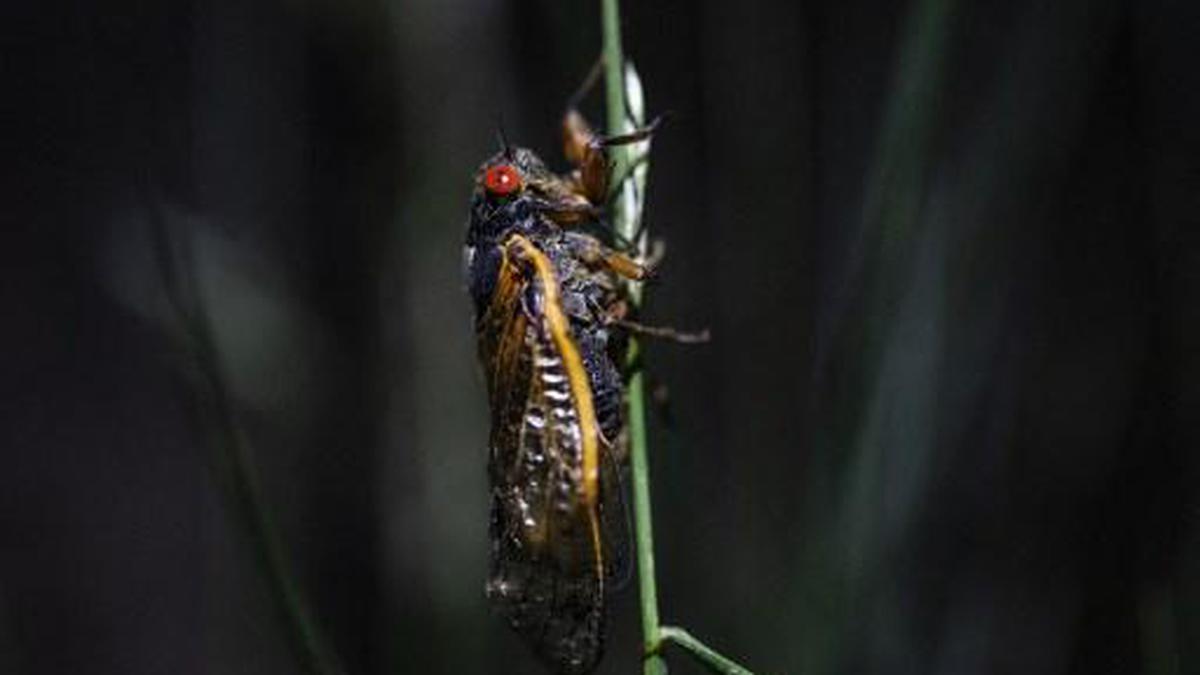
North American cicadas have life cycles that last for prime numbers of years, putting pressure on the idea that humans created mathematics.
What are Cicadas?
- Classification: Cicadas are insects that belong to the order Hemiptera and the superfamily Cicadoidea.
- Physical Features: Hemipteran insects (also known as true bugs) have piercing-sucking mouthparts and two pairs of wings.
- Life Span: Cicadas spend the majority of their life underground, feeding on plant sap. Once they emerge from the soil, they have a short adult life span of about 2 to 4 weeks.
Habitat:
- Preferred Environment: Cicadas are typically found in natural forests with large trees and are considered canopy dwellers.
- Global Distribution: Cicadas are found on every continent except Antarctica. The highest genetic diversity of cicadas is found in India and Bangladesh, followed by China.
Cicada Emergence and Life Cycle:
- Life Cycle: Cicadas have a complex life cycle, involving long periods of underground development followed by brief adult emergence.
- Periodical Cicadas: There are species of cicadas that emerge in 13-year and 17-year cycles.
- Broods: Initially, 30 broods were categorized based on geography and emergence times, but currently, only about 15 broods remain active due to some broods becoming extinct.
- Unique Phenomenon: In April 2024, a rare event is expected where a trillion cicadas from two different broods will emerge simultaneously in the Midwest and Southeast regions of the United States.
Cicada's underground Development:
- Feeding on Sap: During their underground phase, cicadas feed on the sap of plants.
- Purpose of Long Development: Researchers believe the long development period helps cicadas evade above-ground predators by keeping them hidden in the soil.
Vulnerability after Emergence:
- Emergence Behavior: Once cicadas emerge, they construct a "cicada hut" to shed their nymphal skins, then climb onto nearby trees or vegetation.
- Predator Vulnerability: Adult cicadas are vulnerable to predators such as turtles and other forest creatures because they are clumsy and defenseless, making them easy prey for predators.
Significance of the 2024 Emergence:
- The coinciding emergence of cicadas from different broods (13-year and 17-year cycles) is a rare event that highlights the complexity and mathematical precision behind the cicada life cycle.