
COP30, Belém (Brazil)
- 24 Nov 2025
In News:
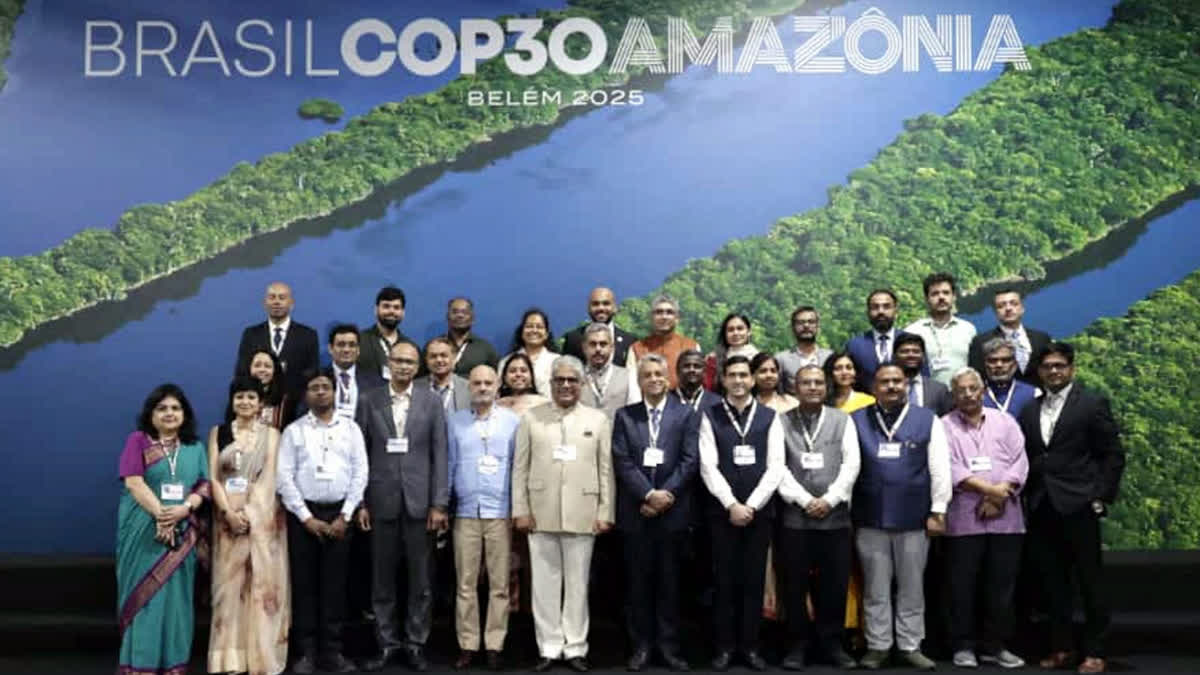
The 30th Conference of the Parties (COP30) to the United Nations Framework Convention on Climate Change (UNFCCC) concluded in Belém, Brazil, with the formal adoption of the Belém Package, marking a shift in global climate negotiations from ambition-setting to implementation and delivery.
Key Outcomes of COP30
1. Belém Package
- A set of 29 negotiated decisions focusing on implementation, not new binding targets.
- Emphasises climate finance, adaptation tracking, just transition, gender inclusion, and cooperative action to advance the Paris Agreement goals.
2. Global Mutirão Agreement & Platform
- Prioritises cooperation, collective action and deliverability over additional mandatory targets.
- Brazil launched the Global Mutirão Platform, a digital tool to narrow the gap between climate commitments and on-ground implementation, especially in energy, finance and trade.
3. Just Transition Mechanism (Belém Action Mechanism – BAM)
- Supports cooperation and capacity-building for workers and economies transitioning away from fossil fuels.
- Limitation: No assured or new financial commitments.
4. Tracking & Implementation Architecture
- Global Implementation Tracker and Belém Mission to 1.5°C launched to assess whether national actions and NDCs align with pathways limiting warming to 1.5°C.
- Signals a growing focus on monitoring delivery rather than announcing fresh pledges.
5. Adaptation-Focused Decisions
- National Adaptation Plan (NAP) Implementation Alliance launched to accelerate adaptation planning.
- Countries agreed to triple adaptation finance by 2030 (from 2025 levels), though sources and obligations remain unclear.
- Global Goal on Adaptation (GGA):Finalised the Baku Adaptation Roadmap with 59 voluntary indicators to track adaptation progress.
6. Sectoral & Thematic Initiatives
- Belém Health Action Plan: Strengthens climate-resilient health systems based on equity, climate justice and community participation.
- Tropical Forests Forever Facility (TFFF): A payment-for-performance mechanism using satellite monitoring to reward forest conservation; aims to mobiliseUSD 125 billion (Brazil committed USD 1 billion).
- Belém 4x Pledge: Quadrupling sustainable fuel use by 2035 (hydrogen, biofuels, biogas, e-fuels); progress to be monitored annually by the IEA.
- Belém Declaration on Hunger, Poverty & People-Centred Climate Action: Signed by 43 countries + EU, prioritising vulnerable communities, adaptation, and social protection.
- Belém Gender Action Plan (GAP): Strengthens gender-responsive climate governance and women’s participation.
India’s Position at COP30
Climate Finance as a Legal Obligation
- India, along with BASIC and LMDC groups, demanded predictable, grant-based climate finance under Article 9.1 of the Paris Agreement.
- Called for a universally accepted definition of climate finance and mobilisation of the USD 1.3 trillion goal under the Baku-to-Belém Roadmap (COP29).
- Highlighted the Adaptation Gap: Developing countries may need USD 310–365 billion annually by 2035, while current flows remain around USD 26 billion.
Equity & Climate Justice
- Reaffirmed CBDR–RC (Common But Differentiated Responsibilities and Respective Capabilities).
- Opposed trade-restrictive climate measures like the EU’s CBAM, calling them discriminatory.
Adaptation Priority
- Stressed that adaptation must receive equal priority with mitigation, especially for vulnerable countries.
Major Shortcomings of COP30
- No clear fossil fuel phase-out roadmap.
- Weak progress on climate finance, with no clarity on obligations or sources.
- Ambition gap persists due to delayed NDC submissions by major emitters.
- Implementation gap remains, with limited enforcement and accountability.
- Just Transition mechanism lacks dedicated funding.
COP30 (Belém) marked a transition from pledges to implementation, strengthened adaptation tracking and thematic actions, but fell short on finance clarity and fossil fuel transitionreinforcing India’s stance on equity, climate justice, and legally binding finance commitments.
Brazil Joins OPEC+
- 24 Feb 2025
Brazil Joins OPEC+
Source: Times of India
In News:
In February 2025, Brazil officially joined OPEC+, a coalition of oil-producing nations. This development comes ahead of Brazil hosting COP30, the annual UN climate summit.
About OPEC and OPEC+
- OPEC (Organization of the Petroleum Exporting Countries):
- A permanent intergovernmental organization established in 1960 at the Baghdad Conference.
- Aims to coordinate and unify petroleum policies to ensure stable prices and regular supply.
- Headquartered in Vienna, Austria.
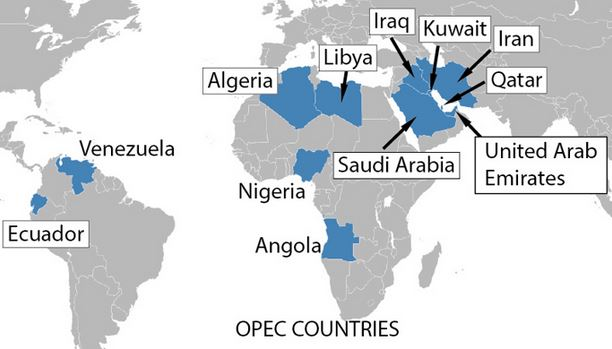
- Current members include Saudi Arabia, Iran, Iraq, UAE, Nigeria, Libya, Algeria, and others.
- OPEC+ Formation:
- Created in 2016 to stabilize oil markets, particularly in response to rising U.S. shale oil production.
- Includes 12 OPEC members plus 11 non-OPEC countries like Russia, Kazakhstan, Mexico, and now Brazil (2025).
- Functions as a forum for strategic discussions but not all members are bound by production quotas.
Brazil’s Role and Strategic Significance
- Oil Production Status:
- Seventh-largest oil producer globally, with around 4.3 million barrels/day.
- In 2024, crude oil became Brazil’s top export, overtaking soybeans.
- OPEC+ Membership:
- Brazil joins the Charter of Cooperation but retains autonomy in production decisions.
- It seeks to influence global oil policy while protecting its energy interests.
- Balancing Act:
- While focusing on oil revenue for economic growth and energy transition funding, Brazil also pursues renewable energy through agencies like IRENA.
- This dual approach reflects an attempt to align development with environmental commitments.
Environmental Concerns and Criticism
- Brazil’s decision to expand oil exploration—especially near sensitive ecosystems like the Amazon—has drawn criticism.
- Environmentalists argue it contradicts climate goals, particularly as Brazil prepares to host COP30.
Note:
- OPEC+ is not a formal organization but a strategic alliance.
- Brazil is part of OPEC+ but is not bound by production quotas.
- OPEC’s headquarters is in Vienna, Austria (Austria is not an OPEC member).
- India is not a member of OPEC or OPEC+.
IBSA (INDIA, BRAZIL, SOUTH AFRICA) GROUPING
- 28 Sep 2024
In News:
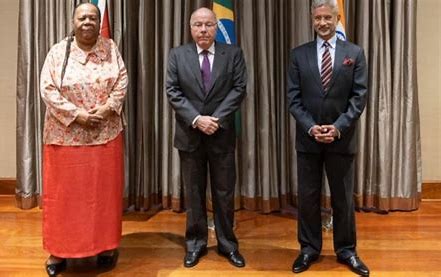
In a significant move for global security, the Foreign Ministers of the IBSA (India, Brazil, South Africa) grouping issued a strong declaration against terrorism during the 79th UN General Assembly in New York. This declaration condemned terrorism in all its forms and reaffirmed the collective responsibility of the international community to eliminate terrorist safe havens worldwide.
Key Points from the IBSA Declaration:
- Universal Threat: The ministers stressed that terrorism is a threat that transcends borders, cultures, and governments.
- Rule of Law: They emphasized that counter-terrorism efforts must adhere to international law, particularly the UN Charter and human rights laws, ensuring civil liberties are respected.
- International Framework: A call was made for establishing a comprehensive international counter-terrorism framework, with the United Nations at its core, to coordinate global efforts against terrorism.
- Cross-Border Security: The declaration highlighted the need for stringent actions against the movement of terrorists and the financing of terrorist networks, condemning groups like Al-Qaeda, ISIS/Daesh, Lashkar-e-Tayyiba (LeT), and Jaish-e-Mohammad (JeM).
- Comprehensive Convention: A renewed commitment to accelerate the adoption of the Comprehensive Convention on International Terrorism at the UN was emphasized, aiming to create a unified legal framework for combating terrorism.
Amazon River Hits Lowest Levels in a Century Amid Drought in Brazil (Business Standard)
- 16 Oct 2023
Why in the News?
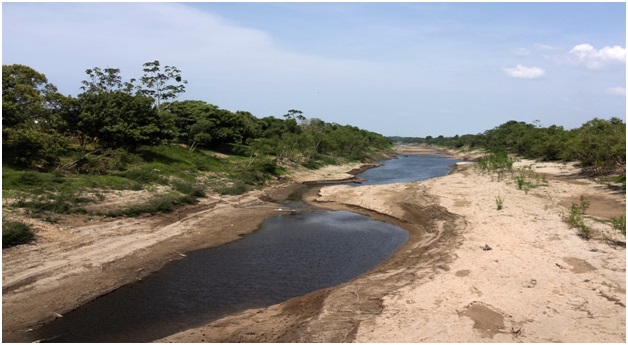
The Amazon River fell to its lowest level in over a century on Monday at the heart of the Brazilian rainforest as a record drought upended the lives of hundreds of thousands of people and damaged the jungle ecosystem.
About the Amazon River:
- The Amazon River holds the distinction of being the world's largest river in terms of both water volume and width.
- Length and Course: Spanning an impressive 6,400 kilometres, it is the second-longest river globally, surpassed only by the Nile.
- Originating high in the Andes Mountains, the river courses its way eastward through vast rainforests and lowlands before reaching its culmination at the northeastern coast of Brazil, where it empties into the Atlantic Ocean.
- Dynamic Width: During the dry season, the Amazon River exhibits a width ranging from 4 to 5 kilometres, expanding significantly to 50 kilometres in certain areas during the wet season.
- Unparalleled Drainage Area: The Amazon boasts the largest drainage area globally, with its watershed spanning across Brazil, Peru, Ecuador, Colombia, Venezuela, and Bolivia.
- Approximately two-thirds of the Amazon's mainstream and the majority of its basin lie within the borders of Brazil.
- Water Discharge and Global Impact: With a staggering water discharge of 300,000 cubic meters per second into the Atlantic Ocean, the Amazon contributes one-fifth of the total freshwater volume entering the world's oceans.
- This immense water flow plays a pivotal role in regulating global oxygen and carbon cycles.
- Extensive Tributaries: Featuring over 1,100 tributaries, including seventeen exceeding 1,500 kilometres in length, notable contributors include the Rio Negro, the Madeira River, and the Xingu River.
- Environmental Significance: The Amazon Rainforest, constituting approximately half of the Earth's remaining rainforest, stands as the largest repository of biological resources.
- Often referred to as the "lungs of the Earth," the Amazon plays a crucial role in maintaining the planet's oxygen and carbon balance.
Farlowichnus rapidus (The Hindu)

- 25 Nov 2023
Why is it in the News?
Brazil's geological service recently announced a new species of dinosaur, a speedy animal that lived in the desert during the early Cretaceous period.
About Farlowichnus Rapidus:
- The new species of dinosaur was a small carnivorous animal about the size of a modern-day seriema bird, or about 60-90 cm (2-3 feet) tall.
- it was a very fast reptile that ran across the ancient dunes.
- These fossilized dinosaur "trackways," were first found in the 1980s by Italian priest and paleontologist Giuseppe Leonardi in the city of Araraquara, in Sao Paulo (Brazil).
- It lived during the early Cretaceous period.
About Cretaceous Period:
- The Cretaceous Period, spanning from approximately 145 to 66 million years ago, represents the third and final epoch of the Mesozoic Era.
- It is characterized by significant geological and biological events.
- The climate was generally warm, and the world's continents were positioned closer to their present locations.
- The Cretaceous witnessed the proliferation of diverse and iconic dinosaurs, including the formidable Tyrannosaurus rex and the enormous herbivorous sauropods.
- Additionally, flowering plants, or angiosperms, experienced a remarkable evolutionary expansion during this period, transforming terrestrial ecosystems.
- Towards the end of the Cretaceous, a catastrophic event, possibly a large asteroid impact, led to the mass extinction of dinosaurs and numerous other species, marking the boundary between the Cretaceous and the subsequent Paleogene Period.
- This extinction event profoundly shaped the course of Earth's biological evolution.