
Trade Watch Quarterly Report
- 10 Oct 2025
In News:
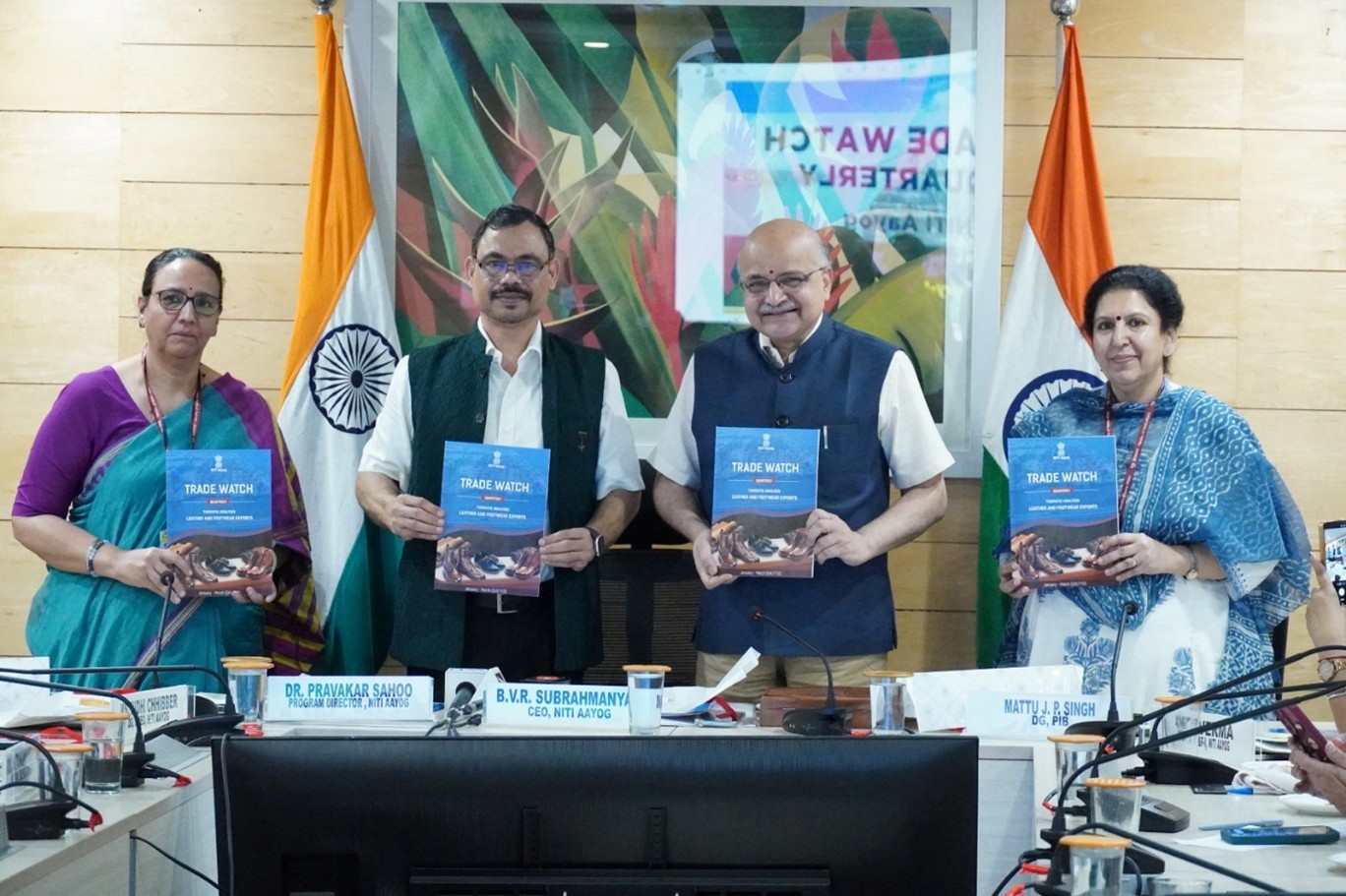
NITI Aayog released the fourth edition of the “Trade Watch Quarterly” report for Q4 of FY 2024–25 (January–March 2025) in New Delhi. The report, unveiled by B.V.R. Subrahmanyam, CEO of NITI Aayog, provides a detailed evaluation of India’s trade performance, identifies emerging opportunities, and suggests policy directions for enhancing export competitiveness.
About the “Trade Watch Quarterly”
- Publisher: NITI Aayog
- Nature: Flagship analytical publication assessing India’s quarterly trade trends across merchandise and services.
- Objectives:
- To offer evidence-based insights into trade patterns, export competitiveness, and sectoral challenges.
- To guide policy interventions for strengthening India’s manufacturing ecosystem and expanding participation in global value chains (GVCs).
Key Highlights of Q4 FY 2024–25
- Total Trade: USD $441 billion, registering a 2.2% year-on-year increase.
- Annual Trade (FY25):
- Total: USD $1.73 trillion (+6% YoY)
- Exports: USD $823 billion
- Imports: USD $908 billion
Merchandise and Services Trends
- Merchandise Exports: Witnessed a modest contraction, primarily due to lower shipments of mineral fuels and organic chemicals.
- Growth Sectors: Electrical machinery, pharmaceuticals, and cereals.
- Services Exports: Reached an all-time high of $387.5 billion, led by IT, aviation, and financial services, reflecting India’s growing strength in high-value services.
Regional Trade Patterns
- Top Export Market:North America, accounting for 25% of India’s exports and growing 25% YoY.
- Moderate Growth Regions:EU, GCC, and ASEAN, showing a slowdown in demand.
- Import Trends:
- UAE became India’s second-largest supplier, driven by gold inflows under the CEPA agreement.
- China’s imports surged due to strong demand for electronics and machinery.
Sectoral Focus: Leather and Footwear Industry
- Employs 4.4 million people, contributing significantly to export earnings.
- India’s share in the $296 billion global market remains modest at 1.8%.
- Strengths: Competitive in processed leathers and niche apparel.
- Challenges & Opportunities:
- Global demand shifting towards non-leather and sustainable products.
- India must invest in R&D, MSME strengthening, green manufacturing, anddesign-led innovation to boost competitiveness and diversify exports.
Policy Insights and Way Forward
- India must:
- Diversify its export basket to align with evolving global demand patterns.
- Leverage trade agreements (like CEPA with UAE) to expand market access.
- Enhance manufacturing competitiveness through innovation and integration withGVCs.
- Strengthen non-leather footwear and sustainable sectors to tap into emerging global trends.
Trade Watch Quarterly
- 05 Dec 2024
In News:
NITI Aayog released its first quarterly report, Trade Watch Quarterly (TWQ), on December 4, 2024, focusing on India's trade developments during Q1 FY2024 (April-June).
Overview:
- Purpose: The publication aims to provide a comprehensive analysis of India’s trade performance, highlighting key trends, challenges, and opportunities.
- Target: To leverage insights for evidence-based policy interventions and foster informed decision-making, contributing to sustainable growth in India’s trade.
Trade Performance Highlights (Q1 FY24):
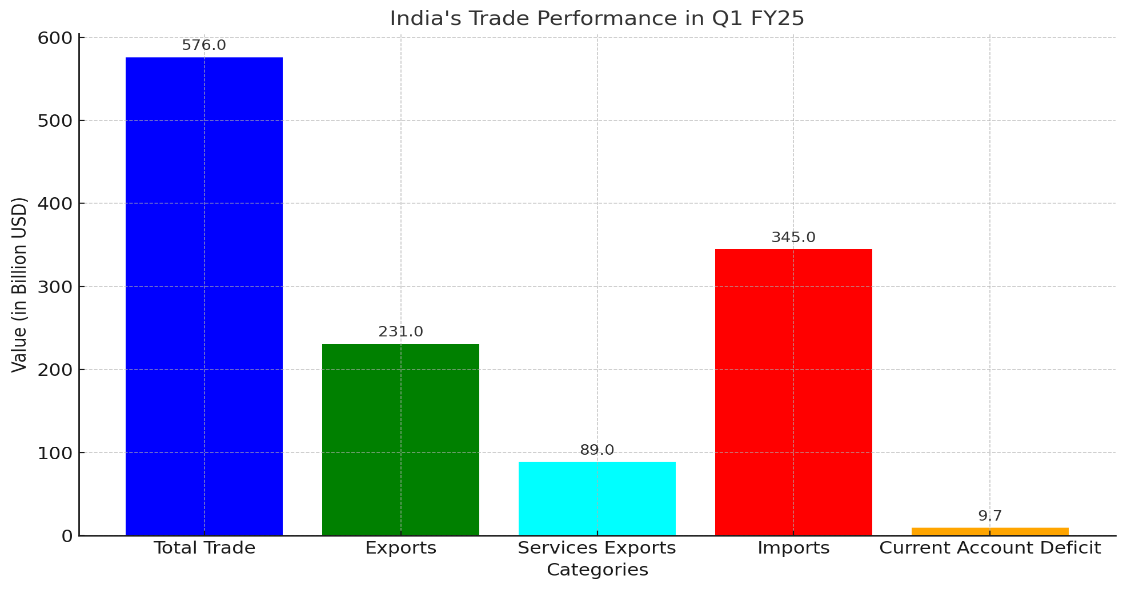
- Total Trade: $576 billion (5.45% YoY growth).
- Merchandise Exports: Growth was restrained due to declines in iron & steel, and pearls.
- Imports: Driven by high-value goods, including aircraft, spacecraft, mineral fuels, and vegetable oils.
- Services Exports: Displayed a surplus, particularly in IT services.
- Growth in Services Exports: A positive trend, rising by 10.09% YoY, particularly in IT services and business solutions.
Key Challenges for India’s Trade:
- Limited Success in China-Plus-One Strategy:Countries like Vietnam, Thailand, Malaysia have gained more from this strategy, benefitting from cheaper labor, simplified tax laws, and lower tariffs.
- CBAM (Carbon Border Adjustment Mechanism):Starting in 2026, CBAM will impose carbon taxes on imports like cement, steel, and fertilizers. India’s iron and steel industry could face significant risks due to this.
- Declining Share in Labor-Intensive Sectors:India’s global market share in labor-intensive sectors (e.g., textiles, leather) has declined despite a strong workforce.
- Geopolitical Instability (West Asia):
- Oil price hikes could increase India’s Current Account Deficit (CAD) and fuel inflation.
- Declining agricultural exports to markets like Iran further add to the challenges.
Strategic Recommendations for Overcoming Challenges:
- Infrastructure Modernization:
- Expansion of digital platforms like Trade Connect e-Platform to streamline processes and support exporters.
- Strengthening logistics via the National Logistics Policy.
- Export Incentives:Continuation of schemes like RoDTEP (Remission of Duties and Taxes on Exported Products) to maintain export competitiveness.
- Technological Integration:Leveraging digital trade to tap into high-growth sectors and foster innovation in trade.
- Strengthening FTAs (Free Trade Agreements):Focus on negotiating strategic FTAs with global partners (e.g., the UK and the EU) to reduce trade barriers and enhance global market access.
Geopolitical and Environmental Risks:
- U.S.-China Trade Tensions:Offers opportunities for India to diversify its supply chains, but also poses challenges in terms of overdependence on certain countries.
- Impact of CBAM:Risk to carbon-intensive Indian exports like steel and aluminium, which will face tariffs starting in 2026.
Sectoral Performance:
- Growing Sectors:
- IT Services: India’s market share of IT services reached 10.2%, continuing to be a strong contributor.
- Pharmaceuticals, Electrical Machinery, and Mineral Fuels: Significant contributors to export growth.
- Declining Sectors:Labor-Intensive Goods: Declines in global market share for textiles, pearls, and leather.
Pathway to $2 Trillion Exports by 2030:
- India's Export Aspirations:To achieve the target of $2 trillion in exports by 2030, India must address structural inefficiencies, diversify exports, and reduce trade barriers.
- Vision 2047:Aligning with India’s broader vision to become a developed nation, the report stresses the importance of strengthening trade, technology, and infrastructure to realize these ambitions.
- Trade's Role in Economic Growth:
- Trade is vital to India’s economic trajectory, contributing significantly to GDP growth.
- Through evidence-based policymaking, infrastructure modernization, and strategic global partnerships, India can achieve sustained growth in trade, leading to the realization of a Viksit Bharat (Developed India) by 2047.